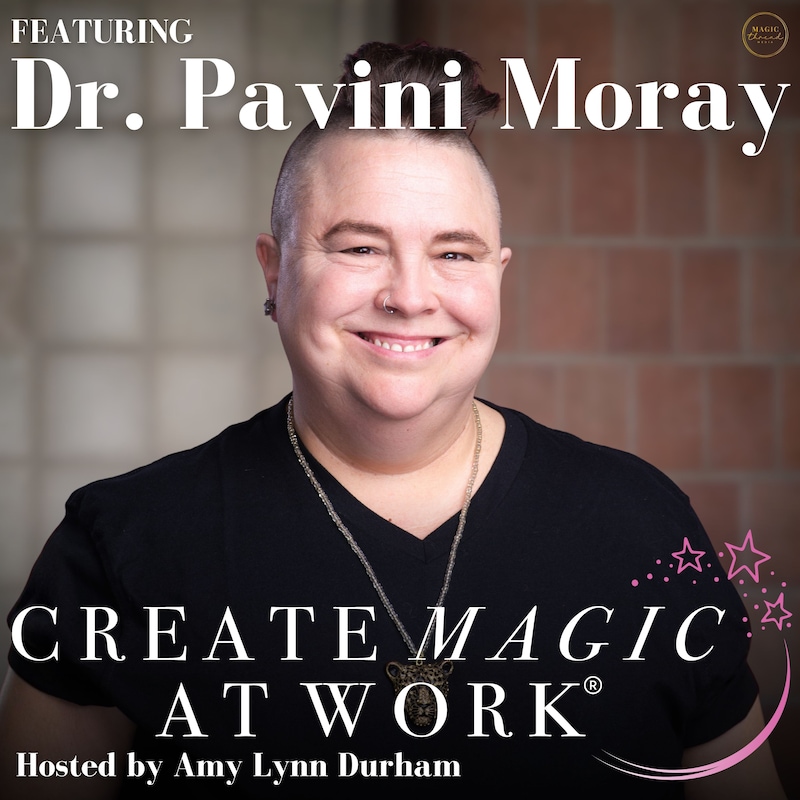
Shownotes
The way we love, fight, withdraw, and reconnect at home shapes how we lead everywhere else. Dr. Pavini Moray joins Amy to explore relational mindfulness, conflict patterns, leadership boundaries, shame, power dynamics, and the unconscious survival strategies that follow us from childhood into work, intimacy, and community. Together they unpack what happens when leaders overextend, when relationships become competitive instead of collaborative, and why healing relational patterns may be the deepest leadership work we ever do. The conversation moves through vulnerability, compassion, emotional accountability, mentorship, and the possibility of becoming more grounded, relational humans both at home and at work. By the end, what emerges is a hopeful truth: awareness creates choice, and choice creates the possibility for transformation.
Moments That Create Momentum:
- Why Home Relationships Shape Leadership – Explore how unresolved conflict and emotional patterns at home ripple directly into workplace leadership and culture.
- The Professional Paradox: Why is it that you can lead a team with total composure during an executive crisis, yet find yourself "acting like an asshole" the moment you walk through your front door?
- The "Juicy Energy" Drain: Are you accidentally starving your personal relationships by giving all your best, life-affirming energy to your company, leaving only the "leftover" conflict and divisiveness for your partner?
- The Corporate Affair Trap: Discover why high-pressure workplaces often become a "safe haven" while the home becomes a combat zone—and how this "reversal" is a leading driver of workplace infidelity.
- Understanding the Pursuer-Withdrawer Dynamic – See how common relationship cycles form and why interrupting even one small part of the pattern can begin healing.
- Conflict as a Pathway to Self-Awareness – Discover how shame around conflict can become an invitation toward growth instead of something to avoid.
- Holding Power Without Losing Humanity – Hear how conscious leaders balance compassion, boundaries, accountability, and healthy authority.
About the Guest:
Dr. Pavini Moray is the author of How to Hold Power: Becoming a Leader People Love and Respect and the Tending the Bones: Reclaiming Pleasure after Transgenerational Sexual Trauma. With over 30 years of experience as an educator, activist, and somatic coach, they help leaders and couples do the inner work that changes how they show up in every relationship they're in.
Dr. Moray holds an M.Ed. in Montessori Curriculum Design and a Ph.D. in Somatic Psychology, and works at the intersection of the body, relational patterns, and conscious leadership. They use Relational Life Therapy and somatic approaches to help people move from adaptive survival strategies into the kind of grounded, boundaried presence that actually leads well.
A queer, trans, nonbinary human walking the path of old magick and ridiculous delight, Pavini writes the Substack "Glitter Joyride" and believes that learning to be truly relational with the people we love most is the first step to learning how to do it everywhere.
https://www.linkedin.com/in/dr-pavini-moray
https://www.instagram.com/pavinicoakwellmoray
Substack: Glitter Joyride - https://pavinimoray.substack.com/
About Amy:
Amy Lynn Durham, known by her clients as the Corporate Mystic, is the founder of the Executive Coaching Firm, Create Magic At Work®, where they help leaders build workplaces rooted in creativity, collaboration, and fulfillment. A former corporate executive turned Executive Coach, Amy blends practical leadership strategies with spiritual intelligence to unlock human potential at work.
She’s a certified Executive Coach through UC Berkeley & the International Coaching Federation (ICF) In addition, Amy holds coaching certifications in Spiritual Intelligence (SQ21), the Edgewalker Profile, and the Archetypes of Change . In addition to being the host of the Create Magic At Work® podcast, Amy is the author of Create Magic At Work®, Creating Career Magic: A Daily Prompt Journal and the founder of Magic Thread Media™. Through her work, she inspires intentional leadership for thriving workplaces and lives where “magic” becomes reality.
Connect with Amy:
https://createmagicatwork.net/
https://www.linkedin.com/company/create-magic-at-work
https://www.facebook.com/112951637095427
https://www.instagram.com/createmagicatwork
https://www.youtube.com/channel/UCnEm4h3fUgaq8qgvZpz6dGg
Thanks for listening!
Thanks so much for listening to our podcast! If you enjoyed this episode and think that others could benefit from listening, please share it using the social media buttons on this page.
Do you have some feedback or questions about this episode? Leave a comment in the section below!
Subscribe to the podcast
If you would like to get automatic updates of new podcast episodes, you can follow the podcast on Apple Podcasts or your favorite podcast app.
Leave us an Apple Podcasts review
Ratings and reviews from our listeners are extremely valuable to us and greatly appreciated. They help our podcast rank higher on Apple Podcasts, which exposes our show to more awesome listeners like you. If you are enjoying the show, please leave us a review on Apple Podcasts.
Transcripts
Dr. Pavini Moray: The Gap between who we are at work and who we are at home, especially around conflict, can be super painful. Like, why can I show up like a grown up at work? And why am I an asshole at home? Right?
Speaker:Amy Lynn Durham: Yeah.
Speaker:Dr. Pavini Moray: So that can be a really painful place. And the, I mean, there's, there's some good news there, and that is that you can show up skillfully. When you're triggered, when the stakes are high, right? Your job's on the line, so you show up well, you have your you're invested, and because home is hopefully a little bit safer place, that's when we kind of let down our guard, and we're like, wow, I can, you know, show up however I want here, right? And so the good news is that you you can retain you can do it because you do it at work, right? When we get triggered at work, people handle it in different ways, right when they get activated at work, when we get activated at home, there's not really somewhere else to go, right, and so our stuff comes up, and we're either acting out what we saw in our families of origin, what was done to us, right, or we're acting out in response to that. I don't want to be the strong silent type who never shares anything.
Speaker:Amy Lynn Durham: hey, it's Amy, welcome to create magic at work, where we cast visions for a future of work, where business decisions ripple outward to our teams, our communities, the planet and humanity as a whole. If you're ready to edge, walk instead of sleep, walk through your leadership, you're in the right place. So let's start making magic at work.
Speaker:Hey everyone, welcome back to create magic at work. Super excited for the conversation today, because we are talking about relationships and how important they are in our lives, and how they intersect and interact, and how they affect how we show up, and we have Dr Pavani Marais here to help us hold that conversation. Dr Pavani Murray is the author of How to hold power becoming a leader people love and respect and the forthcoming, tending the bones, reclaiming pleasure after transgenerational sexual trauma. With over 30 years of experience as an educator, activist and somatic coach, they help leaders and couples do the inner work that changes how they show up in every relationship they're in. Pavani holds an M, E, D in Montessori curriculum design and a PhD in somatic psychology, and works at the intersection of the body relational patterns and conscious leadership. They use relational life therapy and somatic practices to help people move from Adaptive survival strategies into the kind of grounded, boundaried presence that actually leads well, a queer, trans, non binary human walking the path of old magic and ridiculous delight. Pavani writes the sub stack glitter Joy Ride, and believes that learning to be truly relational with the people we love most is the first step to learning how to do it everywhere. Oh, I love that. I can't wait to get into that. Let me say that again, learning to be truly relational with the people we love most, it's gonna make me cry, is the first step to learning how to do it everywhere. Oh, my God, I'm losing it on the podcast, welcome Dr Pavani Marais,
Speaker:Dr. Pavini Moray: Thanks, Amy, I'm so glad to be with you.
Speaker:Amy Lynn Durham: Okay, so, okay, production is gonna have to, like,
Speaker:Dr. Pavini Moray: no importance,
Speaker:Amy Lynn Durham: yeah,
Speaker:Dr. Pavini Moray: real, right. It's you being real, like you were just moved by something in your system. Something pushed you. Yeah?
Speaker:Amy Lynn Durham: Seriously, your work moves me so much. What really touched me in that last sentence is being truly relational with the people we love most. And I think that's so important. I think that it starts with who you are at home and how that ripples out when we show up at work and in the community and things like that. So you talk about something called relational mindfulness. So can you, like, explain a little bit about that? I'm probably gonna have to re record this question.
Speaker:Dr. Pavini Moray: Please don't, please don't I appreciate because I think it is, it's moving when we come to this new awareness of, oh, there's this other way to think about relationships, other than Win, lose. There's a way to hold that relationships can be win, win. In when we get really creative, right? And that there's not this like competition for needs that's happening. And so I learned about relational mindfulness from Terry real, is the founder of relational life therapy, which is my preferred, one of my preferred modalities, and this idea of that when we are relating with others. We're either in a mindset of, how can we move this forward together, right? How can we share this goal? How can we meet everyone's needs, or kind of the opposite of that, of like, well, I'm going to get my needs met, and then that's kind of being anti relational. So you can be relational, you can be anti relational. And this idea of like, oh, relationality is actually a it's something we have to learn. We're not, most of us from or living in a collectivist culture. And so we don't have, I think we have it in our bones. We have it in our DNA. We we remember it. And I think that's probably why the tears when you read that, right? It's like something calls out to us, something is remembered. Of like, Oh yes, I know this truth, but I don't know how to do it. Now, in the culture that we're living in, I don't know how to do it with my partner. I don't know how to do it. We work, right? I don't know even how to do it with my sister or my best friend necessarily. Because we're we've just been taught from such an early age that competition is what we do. So, you know, there's, there's so much that could be said about it, but it's like, when we're in that Win, Lose belief, it's absolutely in our bodies, right? We're also in like, a kind of delusion of someone is better than and someone is less than. Someone's going to get their needs met. Someone is not. This is supremacy
Speaker:culture, right? And so when we confront that, and we're like, oh, I'm actually shifting to a practice of relational mindfulness, I am going to learn what I need to learn to be relational, and I'm going to do the inner work of healing the parts of me that have experienced pain from not being relational. And I'm going to let that that vulnerability that you so beautifully modeled. And I'm going to let that vulnerability of like, hey, I need you and I need you to need me, and not in a, like, weird, codependent way, but like in a like, we're in this together way.
Speaker:Amy Lynn Durham: How does that shake out when someone feels like their needs aren't being met, and when they express them they're not being heard?
Speaker:Dr. Pavini Moray: Yeah, this is an excellent question, right? Because this happens in many of us, as kids, right? And as as a baby in this world, like, what do you do when your needs not met? Right? You you have a need to eat or to rest or to be cleaned or to be held in love, and like, if that needs not met, like, it's actually a survival crisis, right? And so when this question comes up in adult relating, for that younger part of us, it's still a survival crisis. It's life or death, right? And so like, if I need this thing, I want to unpack, like, what needs are and aren't a little bit because I think that's helpful. But if I need this thing and there's a threat to it, right, how am I going to get that need met? If the person who I've named it, if I've been able to name it and I've named it and they haven't responded well to it, you know, what do I do then, right? And then that's a wonderful adaptive strategies that cause hell in our relationships, right?
Speaker:Amy Lynn Durham: Yeah, because I would imagine anger appears,
Speaker:Dr. Pavini Moray: anger
Speaker:Amy Lynn Durham: not feeling heard, spare,
Speaker:Dr. Pavini Moray: collapse, fear, like, Is this ever getting it met? I should leave this relationship because it's not getting met. And I think you know that a lot of individual therapy often empowers that belief of, Oh, your needs not getting met, you should leave the relationship. And I'm like, Well, maybe, but like, maybe we could teach you and your partner, or you and your business partner, or you and your best friend, like, what's needed here is that, like, Oh, we're on the same team. We have to consider everybody's needs. This is not win or lose between us. Like, I'm heavily invested in making sure that my partner gets his needs met, because when his needs are met, guess what, he can support my needs. So, like, we're on the same team. We're not competing anymore. We used to compete a lot to get needs met. It was like, my need or his need, but like, not anymore.
Speaker:Amy Lynn Durham: You know, that sounds like a good space to be in.
Speaker:Dr. Pavini Moray: Yeah, it feels pretty healthy.
Speaker:Amy Lynn Durham: And I like how you mentioned sometimes in therapy, there's a lot of focus on that needs conversation, and that sometimes it can end up causing more divisiveness than actually healing. That's a whole other episode we could. Probably do. There's two things that I want to talk with you about, for myself and for the listeners of of the create magic with the create magic at work community. So after we met, I've been thinking a lot about our conversation, and then I started flashing back to when I was heavily in working in the corporate space, traveling, working with hundreds of employees, colleagues, all the things, and I witnessed a lot of relationships that seemed to be from the outside looking in, you know, with co workers or colleagues that seem to be in Crisis or I also saw a lot of endings to relationships from infidelity in relationships that were pledged to be monogamous. I saw a lot of just relationships ending, and I felt like part of it was due to our grueling schedule. And so I'm just wondering if you could help the leaders in the workplace that listen to create magic at work. You know, what are your thoughts on that if somebody is working right now and they feel like their home life is just kind of not good, and doesn't feel good. And so then you go to this grinding job, and then you come home, and then there's divisiveness and that doesn't feel good. And how do we break through that? What are some, some things that might help us with that?
Speaker:Dr. Pavini Moray: What I would say might be a little counter intuitive. It's to first focus on the home relationship, or if we are in a dyadic partnership, or whatever kind of partnership we're in, but like that primary connection is the place that our unhealed stuff is going to express it's going to be there. First, a lot of people can kind of hold it together at work, and then they come home and they lose it
Speaker:Amy Lynn Durham: on their partner.
Speaker:Dr. Pavini Moray: Yeah, the work at home is, in my opinion, what moves the needle on the work at work, if that makes sense, being able to be in a relational partnership at home, of being able to really listen to your partner's needs, have them have the option or the opportunity, really to hear your needs, right? You're forthcoming with your needs, and they able, they're able to receive it, even if they're not able to meet it, right? That that secure home place is the place where we can practice all the skills that we need at work. And if we're not happy at home, right? If we're not having a happy partnership at home or happy marriage at home, and work becomes like the safe place. It's a little bit reversed, right? And so we take whatever's happening at home, we absolutely carry it in our bodies to the workplace, right? And and so maybe we have affairs with people we work with. Maybe we pour our souls into our work, and all of our good, creative, like juicy, life affirming energy is going into our work, and we're not feeding the relationship at home, right? And so that's again, like a reversal. And so, yeah, I mean, I think that the the skills are the same, right? I mean, obviously there's different levels of sharing and vulnerability between an intimate partnership and a work relationship, but the skills of that I'm talking about this relational mindfulness of like caring about each other's needs and not being competitive, are totally and completely transferable. They're necessary at work, right? For us to have harmonious, thriving workplaces where we can give and receive feedback and name what's working and name what it's not working and nobody's getting offended, right? And we're really tuned into how we're using our power. That's how we're going to build those cultures right of right sized power. And I'm not saying to flatten power. I'm not saying because I can't. It's like, when you're a leader, it's really sticky, right? If you want to be a
Speaker:leader who listens and cares about the people who are reporting to you, you can't step out of your role of leadership, like you can't be like, like you're human to human, but like, you have to honor that you are in a position of power, because you're going to have to make decisions maybe that impact their lives, right? You're not friends, right? And how do we do that? Well, that was that is super tricky. That is super tricky territory, and I love working with people about that, of like, how do I hold my power in a way that is relational and yet claims my seat?
Speaker:Amy Lynn Durham: Interesting, very interesting. Okay, so something else that I want to ask you about that sort of ties into this. So. Sometimes I feel like it's easier at work stay with me to be relational, because we have all these guardrails, like, HR, you're not allowed to say this, or you'll get fired, or you can't mistreat someone, or, you know, you'll get written up. You know all of these rules that we have to follow to maintain how we relate to each other. And something that you mentioned to me in our pre interview discussion struck me was around relationships at home and how sometimes people carry a lot of shame for how they have conflict.
Speaker:Dr. Pavini Moray: Yes,
Speaker:Amy Lynn Durham: I'm actually thinking that's so interesting, because I don't have a lot of I don't think I have any shame for how I've behaved in in the workplace. But I also acknowledge there were a lot of guardrails and rules that I was very aware of, that I needed to follow as the leader, being the example for everyone, and as the person that wanted to not get in trouble and hyper achieve and all you know, all these things home behind closed doors, I think a lot of us find sometimes, if we're in conflict in a personal relationship, we say things or behave in ways we would never in a conflict at work. I guess there's a lot of passive aggressive emails that fly around, though, but yeah, could you talk to us about that? How do we reconcile that? What is that about?
Speaker:Dr. Pavini Moray: Okay, there's a few things I want to highlight in what you shared. One that the gap between who we are at work and who we are at home, especially around conflict, can be super painful. Like, why can I show up like a grown up at work, and why am I an asshole at home? Right?
Speaker:Amy Lynn Durham: Yeah,
Speaker:Dr. Pavini Moray: so that can be a really painful place. And the there's, there's some good news there, and that is that you can show up skillfully when you're triggered, when the stakes are high, right? Your job's on the line, so you show up well, you have, you're invested, and because home is hopefully a little bit safer place, that's when we let down our guard, and we're like, wow, I can, you know, show up however I want here, right? And so the good news is that you you can retain, you can do it because you do it at work. And so when, when I have clients who come to me and they're like, I just can't help it, I just fly off the handle at work or at home, and I'm like, Well, do you do that at work? No, okay, then there is, you do have a mechanism in you. When we get triggered at work, people handle it in different ways, right? When they get activated at work, when we get activated at home, there's not really somewhere else to go, right? And so our stuff comes up, and we're either acting out what we saw in our families of origin, what was done to us, or we're acting out in response to that. I don't want to be the strong, silent type who never shares anything, for example, and so I'm going to word vomit. So we are, in some way, when we're in conflict at home, we are, I take a really have a lot of grace for this. You know, we're just trying to heal. We're just trying to give ourselves opportunities to heal. Like, it's all unconscious, right, but like, that's why it's coming up, is so it's can be looked at, so it can be addressed. I think of personal, intimate relationships as like the really, the container where that transformation and that healing can happen if you are invested in having a transformative relationship and using your relationship in that way. So conflict is where the rubber meets the road. You know, it's where we get to decide who we want to be when we're really triggered. And okay, now that I know who I want to be, and that
Speaker:we're doing this from a not triggered place, right? We're thinking about it when I'm not triggered, when I'm not angry, when I'm not terrified or whatever, I am raging, I'm thinking about, okay, who do I want to be? I can do it at work. Who do I want to be at home? Okay? I, you know, I want to, I don't want to dismiss my partner's humanity anymore. This was a big one for me. Like, I don't want to get angry and dismiss his humanity anymore. Okay, so now, how am I going to do that when I'm triggered and that it's right there, right? I'm just gonna and how am I going to practice while triggered? And, you know, I think about people who train in high stakes situations like EMTs, professional athletes, emergency room doctors and nurses. Right? People, firefighters, people who have to learn how to manage their neurology in order to do their job. And that's basically what we have to do, like we know who we want to be in conflict. I don't want to dismiss my partner's humanity. Okay? My system gets flooded. My fight response comes up, and now what do I just let it or is there some little space where my wise adult can say, You know what? I know you want to fly off the handle right now. I totally get you want to fly off the handle, and it makes total sense, and it's totally unfair. And you you want to do it and and do you what happened the last time you did that? What do you think is going to happen this time? Oh, but I want to, like, I'm gonna tell that guy what's what you know and and you have to be able to work with that adaptive child part. And so it starts when we're not triggered, but then we build a capacity by working in with it when we're triggered, and it's like, never perfect. It's going to be messy, right? We're human. I think it really starts with intention,
Speaker:Amy Lynn Durham: there was something you you mentioned, there's the chaser, the pursuer, yeah, the pursuer, and then the person that flees. You probably didn't use those words, but yeah, is that a typical dynamic, or is that the most common dynamic?
Speaker:Dr. Pavini Moray: It's probably the most common dynamic that I see in my office. Yeah, pursuer pursued, and the the one who's pursued often walls off in response, like they become unavailable. They don't return calls or messages they get avoidant. They're not like they have they're responding to the intrusion of being pursued by the way they did when they were a kid, right? Like, they had an interesting parent who, like, came at them, was like, all up in their face, all up in their business, and they're like, this is what I learned. They're not a they're not a fight backer, necessarily, or maybe they are. And then they a wall offer. Because sometimes people have a two step, but there's a they develop this pattern really early in childhood, of like, this is how I keep myself safe. I stop engaging, I dissociate, I just compartmentalize. There's all these different ways that people do it, but like, I'm not engaging with that crazy and which, the more they do that, the more the pursuer is, like, angrily or relentlessly or emotionally pursuing, and the more that person pursues, the more the other person walls off, and the more distant they get, the farther away they get. And you know, the farther away they get, then the more it's just like that. More the more the more, the more the more the more I just cycling back and forth. Yeah, it's a really common dynamic.
Speaker:Amy Lynn Durham: So if somebody listening is either the pursuer or the what was the pursue what's something that each one of them can do to kind of dissipate that energy and let it heal?
Speaker:Dr. Pavini Moray: Yeah, I mean, I think that this is why I love RLT, because it gets the pattern really named. Like, what is our pattern? The more he does this, the more she does this, the more he does this, the more she does this, right? So, like, really getting the pattern clear of like, what happens, then what happens, then what happens, then what happens, then what happens. Because once you have that clarity around what the pattern actually is, the pattern is never around the content. The fight is always the same fight. It's always about these adaptive children like going at it. So once the pattern is defined, then you have so much leverage, because any one of those back and forths right, you can intervene. The person can do anything to intervene to something different, and it might be doing nothing like they usually say something, and this time they're like, oh, I want to say something. I'm not gonna say something. I think when we think of pursuit, we think of someone like chasing their partner from room to room, like, but, oh, you know, they won't leave them alone, but, but pursuit can also look like, I don't understand why you did that. So it's like a emotional pursuit. Or, you know, it's, oh, they did that. That's like, Well, why did you do that? This is my flavor of pursuit. Why did you do that? But once you have the pattern mapped out, any point on that pattern is becomes a usually, we just run it right. Just runs again, and it runs again. It runs again. But every point of it is a point for interruption. And so every time we're interrupting it, no matter how small, no matter what we're doing, it shifts it. And then we have, like, because we're shifting it, we have a little bit of distance from it. So that's like, the first thing is, like, just try something else. You know, no matter what they're doing, you can always, oh, instead of yelling, I'm gonna take a breath and then I'm gonna yell. Or instead of like, slamming the door, I'm gonna,
Speaker:like, give them a death stare, just try something else. I do think,
Speaker:okay, it's injury. Interesting to me. The next question that I want to ask is kind of around is surrounding your book, How to hold power becoming a leader? People love and respect. How to hold power becoming a leader, people love and respect. I see a few sides to that, having been in this for a while in this leadership thing, for a while, some people, I think, are really great at how to hold power. Maybe the love and compassion isn't there, but the respect is there. I also see some of my clients, even a lot of them, blurring the line with holding power and love
Speaker:for sure.
Speaker:Amy Lynn Durham: And in Sq, in the SQ teaching spiritual intelligence that is in those teachings under the under skill 19, which is how to be a leader that makes wise and compassionate decisions. There's a differentiation in the teachings between empathy and compassion, and in the SQ teachings, the way to move forward as a leader is to lead with compassion. And the the language in SQ is the empathetic leader. That's not really the route you want to go, because you're you, you're taking on other people's stuff. I want to hear a couple of things from the how to hold power with love and respect from your book. If you want to just share a couple of insights from that,
Speaker:Dr. Pavini Moray: yeah, hit. Maybe we should do a bibliomancy.
Speaker:Amy Lynn Durham: Okay?
Speaker:Dr. Pavini Moray: And just like you saw, I'll flip through the pages. You tell me when to stop, and then I'll read whatever's
Speaker:Amy Lynn Durham: love it.
Speaker:Dr. Pavini Moray: Okay, cool.
Speaker:Amy Lynn Durham: Do it. Yeah?
Speaker:Dr. Pavini Moray: Hey, time flipping. I'm flipping.
Speaker:Okay, stop left page or right page, right, top or bottom or middle?
Speaker:Amy Lynn Durham: Ooh, middle.
Speaker:Dr. Pavini Moray: All right. This speaks directly to your question.
Speaker:Amy Lynn Durham: So good.
Speaker:Dr. Pavini Moray: Allow people, including yourself, to feel whatever they feel. So this is a concept called allowability of feeling, which speaks directly to this issue about empathy and compassion, right? Like when somebody is having a big feeling, and you are going to that feeling is going to land in your nervous system, because we have mirror neurons. Of course, it's going to impact you, and you're going to have either a response to get closer to that. Oh, sweetheart. That's such a hard thing you're feeling. How can I make it better? You're going to have a push away response, I want nothing to do with that feeling, or you're going to have a stay present like, Oh, that's a really hard feeling where you're not taking it on or pushing it away, right? And so that's the nexus of allowability feeling. You just let people feel the way they feel, and it's not your responsibility to either lean in or lean out. You just get to like, and you can notice the impact that you feel. It's not like you're a robot. Of course, you're gonna like, and you can be really tender with yourself about that. Like, wow, I noticed that that person's feeling lands on my system. I feel it. I feel like I want to lean in. I'm gonna stay in relational mindfulness. And that means also, like staying connected with myself, like, oh, I have respect and care for that part of me that learns that leaning in was the best approach here, that wants to care take and I'm their boss, and if I care take them, that's going to set up a really weird power dynamic. This is me in my relational mindfulness, but centered place, right? And that's, I don't actually want to take care of their feeling like, that's just a feeling. Feelings happen. It's okay. They can feel whatever they feel. How do I feel? Oh, I feel shaky, I feel afraid, or I feel uncomfortable, you know, whatever you're feeling like just, I'm allowing it. I'm allowing the myself to feel what I'm feeling, and I'm allowing
Speaker:the other person to feel what they're feeling without taking any action about it. How's, how's that to hear?
Speaker:Amy Lynn Durham: You know, what's coming up for me is, and this is just my personal experience that was really easy for me to do in the workplace and not easy for me to do in my personal relationships.
Speaker:Dr. Pavini Moray: Yeah,
Speaker:Amy Lynn Durham: there was some sort of, I don't know if I just felt it, or if it was, you know, my personality or my upbringing, you know, whatever I felt like I could really hold i. Clear boundaries at work, but then in personal relationships, mainly romantic, I definitely struggle with that dynamic of wanting to either lean in or lean out and not be able to have the relational mindfulness of presence, is that really what what you're nodding, you know, nodding to? So I think there are, and then I'm like, well, was I shutting off part of my humanity as a leader at work? I don't know. But I also have clients that I'm like, Wait, what is going on here? I'll give you a story confidential, and I'd love to hear your thoughts on this one. This has an employee, and they made a mistake and didn't give their updated banking information, and so then they started barrage of text messages to the super small business, to the owner of the company, I need my money. I need my money. And then the owner of the company, this is somebody that blurs those lines of care taking. And so they they go above and beyond. They front the person the money they're stepping in, even though that person's emergency wasn't exactly theirs, because they were an adult and should have updated. I'm being super specific in this story. What would your advice be to someone that's a small business owner or an entrepreneur that is kind of getting walked all over. Because I see that too. I see both sides of it.
Speaker:Dr. Pavini Moray: Yeah.
Speaker:Amy Lynn Durham: I'm just curious what you would say to that,
Speaker:Dr. Pavini Moray: yeah, as a boss, you want to be a good boss, right? And we have so many examples of bad leaders. And I'm speaking here from my own experience, like I wanted to be a good boss, and sometimes that included flattening power, right? Being like, oh, you know what? Totally you forgot to give your your new bank account information. I totally get that. I have so much care for you, I'm gonna front you the money, and that comes from a genuine place of service, right, of being an employer who wants to take good care of your employees. And I think that the blur of that boundary right, of like, because, what did it teach that employee? Oh, I don't actually, if I have a crisis and I panic, I can panic. Text my boss a bunch of times and they're gonna, like, go over and above. They're gonna overextend to meet my need. And so all I have to do is complain. And so
Speaker:Amy Lynn Durham: then that sets
Speaker:Dr. Pavini Moray: up a dynamic, you know, the boss is trying to please them, and then that's what they learn. Of like, this is what I can do. And for this case, for the boss, I would guess, and I don't know for sure from your story, but I would guess that the boss has some appeasing strategies that they learned in childhood. And like, if I can just make everybody happy, if I can just keep everybody happy, I'll be safe. It's a, it's ironically, a strategy of control. I'm trying to control someone else's experience by being super likable. And that's where the the respect gets lost, right? Because the like, what the boss could do is extend like this. That's a really hard situation. And you know, of course, I want you to have your money, and you know, you didn't do this in a timely way. And so let me sit with it for a minute. Let me take the weekend and sit with it. Go ahead. You know, of course, obviously, update your bank information, and let me see what I can do for you. So just get that pause in there before they go into like, over extension. And then they can think about like, how do I want to support this employee, to not learn this bad dynamic with me, right? How do I want to, like, hold my own boundaries? How do I want to care for my business? What's important? To me about being a healthy, thriving business, that this kind of behavior, these kinds of dynamics, are just a time suck and an energy suck, right? And a financial suck, like, what if the employee was like, Great, see ya, the boss lost that money. And so I think these are the hard, painful lessons we learned in leadership. Like, you don't want to be a hard ass, like, I don't want to be like, sucks to be you you didn't do your because then you're stepping into the other side of it. You're parental and you're infantilizing your employee. You treat them as an adult, but you also get to be an adult who's like, has boundaries, right? How's that? Yeah, I.
Speaker:Amy Lynn Durham: So good,
Speaker:Dr. Pavini Moray: good
Speaker:Amy Lynn Durham: we should do like a mini series of people that phone in with their questions, yeah, what is something that you would say to someone that is carrying shame for how they fight in their personal relationships.
Speaker:Dr. Pavini Moray: I think self honesty is the most important thing. Of, like, being honest with yourself about I do this, and then taking a look of, how did I come by this, right? Like, being able to do that U turn of, like, where did this? How did this get installed in me? For me, I find that when I understand something about how I'm acting, it doesn't mean that I stopped acting like that, but it means I can have a little bit of self compassion, of like, oh yeah, that's how my dad was, like, Yeah, that's exactly that, okay, but the shame is really unpleasant, and What's it costing me? Oh, it's costing me connection. It's costing me self, trust. I think that's a big one when we have shame about how we do conflict and how do I want to be I had a, like a kind of an acquaintance who was posting something about I was in a poetry workshop, and the teacher, it was like an online workshop, right? And she posted this comment of class that's that was a fail on how to give feedback, and I had given, we were all supposed to give feedback. I had given some feedback, and I felt a little bit like I'm better than you. Like, you know why it was subtle, but I felt it when I made the feedback. So I was certain that this professor was talking to me in this comment, like, oh, Pavani was the person who gave ill feedback, and now we all have to have a talking to right? And I was like, oh, you know. So I just had all these feelings, and I, like, wrote a poem about it, and then I was like, That asshole deserved that feedback anyway. Like, you know, it's just like I had this whole process about it. And so then I go to Facebook, and I was like, Okay, what would you do, my adult friends? What would you do in this situation? And one of the people who I'm friends with on Facebook responded, Well, I'm not conflict avoidant, so I would just ask the professor, if they made that comment about me, I was like, what you can just do that, you know, I had blew my mind. And like, I'm
Speaker:not conflict avoidant. I was like, what is that? Oh, I would know what you're talking about. And so I took their advice, I wrote to the professor, and I said, you know, you said this thing, and I'm pretty sure it was about me, and I just want to be accountable for that, if so. But like, also, was it about me? And she was like, No, it wasn't about you. And I was like, you know, it's so shame. My shame about how I did conflict, or how I had given feedback, had spiraled me out so far, you know. And so I think that does that shame has that it has a tenacity, it has a, you know, a miasma that just like, gets on us and makes us feel bad about who we are. And so I think if that's you and you're having shame about how you're doing conflict, well, first of all, a lot of people do, and if you don't, it's like, Julie, you're grandiose, which is another whole other
Speaker:Amy Lynn Durham: that's good
Speaker:Dr. Pavini Moray: conversation, right? Yeah, and, like, we can talk about that too. But like, sometimes shame is, you know, it's actually kind of appropriate. Like, if you, if you do conflict and you're mean, yeah, you maybe should feel a little bit, you know, like appropriate remorse is what I would say, if you do conflict and you just feel bad about it, like it's worth teasing it apart. Like, where is this coming from? Where did I get it? You know, you know, you said something that I wanted to respond to, is this just me or my personality? That is a fair, legit question. And there's these other layers of shaping, right, including culture, gender, your religious background, your family of origin, like, there's all of these layers. That shape how you do conflict, or how you do anything, right? And so it's worth teasing it apart and seeing what's what. I hope that's helpful.
Speaker:Amy Lynn Durham: Yeah, really helpful. I mean, I don't know if this should be my takeaway, but my takeaway is like, Oh, if we're feeling a little bit of shame of how we're doing conflict then that that could be a good sign, because it's the it's something that's coming up for us to notice, to maybe
Speaker:Dr. Pavini Moray: do
Speaker:Amy Lynn Durham: something different next in the next time, and not to just sit with it, but be, have it, just be an awareness that this is here because maybe something needs to shift a little bit.
Speaker:Dr. Pavini Moray: Yeah, I really find that shame is an invitation to figure out. Like, it's a turning towards invitation. I think shame, like, how it lives in most of our systems. It's like, I don't want to feel that, I don't want to look at that. We turn away from it. But like, can we change that so that it's a turn? Towards of like, oh, what's uncomfortable here. And if you have done the work of loving yourself up and loving that AC up, that you're an adaptive child, up like, it's not it's not as painful anymore. It gets to the point where it's not as painful to turn towards.
Speaker:Amy Lynn Durham: It super interesting. Okay, I'm kind of bummed that this is towards the end of our conversation, because I could talk to you for much longer here, but I'm going to pull a card for us. This is a message for everyone listening from the create magic at work, journal, prompt, card deck. So we are going to get a message, and then Dr Pavani Murray gets to answer a question on the fly for all of us that is on the card that comes up. So let's see what we get. Okay, we got mentorship. I willingly share knowledge with others in order to leave a positive legacy. That's the message for everyone, listening mentorship, I willingly share knowledge with others in order to leave a positive legacy. So interesting, because you also have your work with tending the bones and your podcast there. Anyways, so Dr Pavani, I'm torn on which question to ask you. Okay, I got it. If somebody listening is thinking, I need to seek out someone experienced or knowledgeable in this area for I guess we'll call it mentorship. What would your recommend be
Speaker:Dr. Pavini Moray: gonna listen in for a minute. There are a lot of people who sell their expertise, and when someone is really certain of their path or their their way, their philosophy, it's really enticing, right? Like, oh, they know they know what I need to know. And it can be really easy to give over to that, like energetically, emotionally, financially, we can put our own power too quickly and too easily into The hands of someone else. Qualified mentorship is very selective about who they will take on as a mentee. You may. I'm thinking of a story one of my teachers told me, is it okay to share that? I think it'll be helpful. Yeah. So this is Parvati Bell B, A, U, L. She is of the bell tradition, Bell lineage, and she's a singer and a dancer and a performer in India. And it's a long, you know, centuries long, millennia long, tradition, ecstatic tradition, of singing and dancing and communing with the divine. And when she was 16, she told me that she, you know, she decided that this was her path. She fought it, and then she decided it was her path. And when she finally gave herself permission for that path, and she knew who she wanted her mentor to be, she went to him as a 16 year old girl, left her family, and said, I would like to apprentice with you. I'd like to study with you. And he looked at her, and he said, I'll talk to you, and please sit here. So he showed her where to sit. So she sat there, and for two weeks he did not talk to her, and for two weeks she showed up and she sat and she waited. And what he was doing was he was evaluating he didn't easily take on students. He was evaluating her commitment, he was evaluating her grit, her tenacity, her willingness, her desire, right? Do I want to take on the student? Because when you take on a mentee, you are, you're taking on their, let's say, their karma, right, like you are committing to support them with their life. And that's a big, big deal. And so real, genuine mentors, they're not
Speaker:just looking for your credit card number. They're really going to take it seriously. And it might be a time where you have to wait and you might have to ask them more than once, you might have to ask them three times, can I be your mentee? Can I be your student? And so I think that that for me, that provides a real level of trust, of like, it's not somebody who's just willing to, if somebody is just willing to take you on, it means they haven't really considered, what does that mean for my life if I take on this person and the other piece of that? So it's, it's really vetting. Seeing the mentor by watching their process with you. And then there's the other piece of it is like, if I get so quiet and so slow and so low in my body, what's there like? Is there anything? Is there any twinge of like, uncertainty? Is there any like, I'm moving really fast because I don't want to feel something I have several, like, lifelong mentors in my life, and these relationships have evolved, and they've changed, and they've shifted, and they're so valuable to me and and they took years to build, and they get richer and richer. But like, there, there's nothing in that, like, low, quiet register of my body that has doubt and so, like, I think it's worthwhile before you sign up with somebody like, oh, I want that person. Like, you can have teachers. You can have lots of teachers. So I have tons of teachers. But like, a teacher is different than a mentor. A mentor is different than a mentor. A mentor is like someone you're accepting into your heart, in your life, and like, be really discerning about it. Be really, really discerning.
Speaker:Amy Lynn Durham: Yeah,
Speaker:Dr. Pavini Moray: for the question, thank
Speaker:Amy Lynn Durham: you. Yeah. Thank you. I just launched a solo episode last week on the reputation of the coaching industry and why it's not that great, just your your advice and your answer to that question is just so in line with that energy. So thank you. Thank you for sharing that.
Speaker:Dr. Pavini Moray: I'm glad I want to listen to that
Speaker:Amy Lynn Durham: now. Yeah, I was on one when I recorded it. Definitely would love to hear your thoughts on it. Okay, so I hate to end this conversation. We're going to have to do something like I said something again, because this was incredible. If people want to follow your work and get to know you more, or even work with you. How can the create magic at work community? Connect with you?
Speaker:Dr. Pavini Moray: Yeah, two ways. One is to follow my sub stack, which is glitter Troy ride, and that is more musing, some podcasts, some writings. And then I have an email list, which I think if you're interested in this more specific to work relationship stuff, that's probably the place to follow me. You can sign up on my website for my email list,
Speaker:Amy Lynn Durham: perfect glitter joy ride on sub stack, and we'll put all of the links in the show notes, per usual, for everyone, and also the link to your latest book, How to hold power becoming a leader people love and respect so. Dr. Pavani Murray, thank you so much for being a guest on create magic at work today, and for sending some magic to everyone.
Speaker:Dr. Pavini Moray: It's truly an honor.




