Shownotes
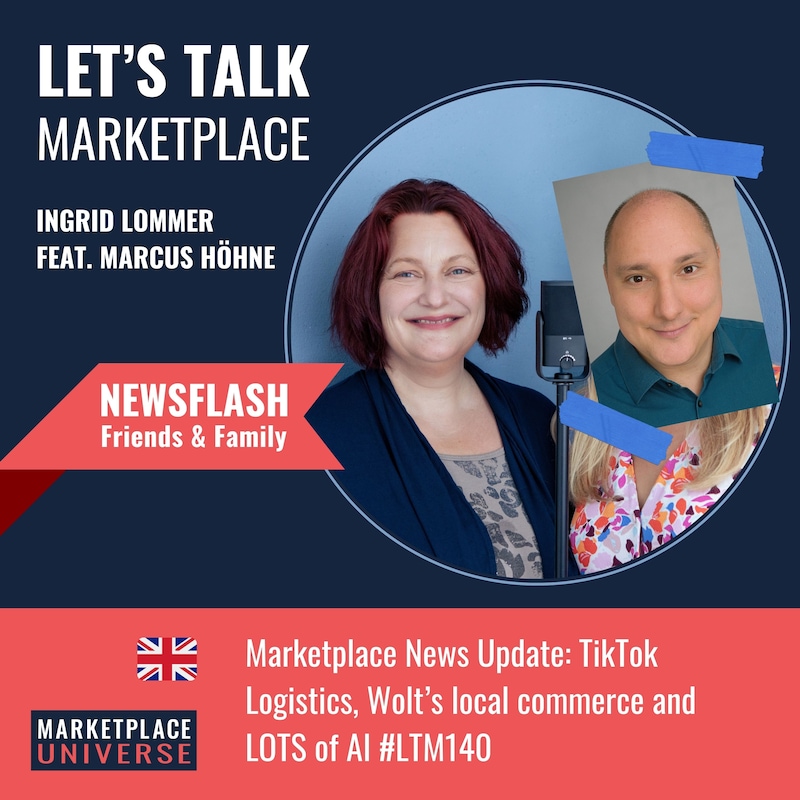
The marketplace landscape is changing rapidly - not through isolated innovations, but through a fundamental redistribution of control. TikTok is building its own logistics infrastructure in Europe, Google is opening up agent-based commerce via the Universal Commerce Protocol, Amazon and eBay are closing their catalogs to AI agents, OpenAI is introducing a new fee tier with Instant Checkout, and Temu continues to grow through radical control over prices and processes. In this news episode, Ingrid joins Marcus Höhne, entrepreneur in a family business and long-time marketplace practitioner, to examine what these developments mean from a retailer's perspective. Together, they discuss where operational complexity is really increasing—and where it is merely being shifted, when additional fees are still manageable and when margins are structurally eroding, how logistics or price control are creating new dependencies, and which platforms still offer optional access instead of implicit lock-in.
Note from the sponsor base:
Repricing on marketplaces is often seen as a margin killer. But that assumption is misleading. Base, a solution provider for marketplace integration and repricing, knows from his practical experience: It’s not repricing that’s the problem - it’s the lack of strategy behind it. On marketplaces, visibility isn’t determined by the lowest product price, but by the total offer price - including shipping, fees and overall cost logic. Without clear guardrails, automation can quickly lead to margin erosion. What’s needed are solid fundamentals: a clear definition of relevant competitors, category-specific repricing rules, minimum prices, margin thresholds - and a realistic understanding of how Buy Box mechanics actually work. That’s exactly what we break down in detail in our new blog article. Click here to learn more about repricing!
Note from the sponsor eDesk:
Marketplace customer support often feels chaotic. In reality, it is surprisingly predictable. Most tickets revolve around the same recurring questions: Where is my order? Has it shipped yet? Can I still cancel? When teams answer these requests manually, they are not doing customer support - they are doing administrative work. At significant cost. eDesk addresses exactly this problem. As a helpdesk solution built specifically for marketplace and multichannel sellers, eDesk connects the inbox directly to more than 300 marketplaces - from Amazon and eBay to Mirakl and Kaufland. Instead of simply centralizing messages, it adds context: order status, tracking data, and relevant marketplace information are immediately available and can be answered automatically. Less tab switching, less copy-pasting, and more reliable SLAs. Which ten support questions account for the majority of all tickets - and how they can be automated - is detailed in our new Deep Dive “Marketplace Support Reality".
Transcripts
This new opportunity, which OpenAI has, not interesting for us as it is not interesting for us to do commercial on retail media, on Amazon or other marketplaces.
Speaker A:There's not enough margin for this.
Speaker B:Let's Talk Marketplace the Marketplace podcast with Ingrid Lomar and Vana Ritistu.
Speaker B:Hello and welcome back to let's Talk Marketplace.
Speaker B:It's great to have you again and it's the beginning of the new month, so normally I would do my monthly Marketplace news recap together with Valerie where we normally discuss the most important things that happened in that month and what we think about it.
Speaker B:But as you know, if you have been following let's Talk Marketplace for the last month, Valerie is not here because she's not still on maternity leave with her a small baby boy.
Speaker B:So I'm lacking my host, my co host for the news episode.
Speaker B:So what I thought is, well, I could skip the news episode of course, but there's so many things happening and so many interesting things happening.
Speaker B:So I really don't want to skip it, I want to debate it.
Speaker B:So I wondered who could I debate it with.
Speaker B:And then I came up with the idea, let's do a let's call it Family and friends episode of let's Talk Marketplace.
Speaker B:So I invited a very dear business friend.
Speaker B:So, and that is Marcus.
Speaker B:Hi Markus, it's really great to have you on the show today.
Speaker A:Thank you for having me.
Speaker B:So normally we meet on conferences or Marketplace Universe Connect events very often, so this is the first opportunity I have to meet you on my podcast.
Speaker B:So that's great.
Speaker B:Yeah, maybe let's first introduce you a little bit.
Speaker B:Markus, tell people who are you, what are you doing, why are you here today.
Speaker A:From Hamburg working in a family owned business in shoe retail.
Speaker A: mortar stores built up in the: Speaker A: I joined in the middle of the: Speaker A:And on top, I'm having two kids and a wife and my own business aside from this.
Speaker A:And yeah, that's the main things to know about.
Speaker B:Yeah, absolutely.
Speaker B:So we are talking a lot about marketplaces and retailers and brands versus brands sometimes on marketplaces.
Speaker B:So these are the topics that we meet on.
Speaker B:So what would you say is your USP when it comes to marketplaces?
Speaker B:What do you do best in the marketplace business?
Speaker A:I started with like zero competence in that region, in that branch and worked really hard to get insights and connections and network in this business and I switched this the family business to mainly about 99% marketplace revenue from our e commerce business is marketplace revenue and I'm doing it now since 11 years and yeah, that's where I come from.
Speaker B:So great.
Speaker B:So you are following Marketplace Universe I think right from the start basically.
Speaker B:I think you were one of our first newsletter subscribers and first podcast listeners.
Speaker B:So huge fan, which is always nice.
Speaker B:So what, where are your main interests when we talk about marketplaces and what happens in the marketplace sphere?
Speaker B:Because I I know you always have a comment on my LinkedIn posts as well.
Speaker B:Always very interested in things that are happening, but people do have specialties and interests.
Speaker B:So where where are you most firing up when you read something?
Speaker B:New.
Speaker A:Things, mainly new marketplaces, new connections, new business opportunities and I have because of the background with the brick and mortar stores, I mainly have the the glasses from a multi channel or omnichannel background.
Speaker A:So I'm looking for opportunities for this business case.
Speaker B:Okay.
Speaker B:Yeah, I think I may have some stuff here to present you today in my news blog, which we will start to talk about right after a very short advertisement break.
Speaker B:Repricing on marketplaces is often seen as a margin killer.
Speaker B:Many automatically associate with price wars and race to the bottom, but that assumption can be misleading.
Speaker B:Together with our partner Base, a solution provider for marketplace integration and repricing, we took a closer look at the topic and one thing became quite clear.
Speaker B:It's not repricing that's the problem, it's the lack of strategy behind it.
Speaker B:On marketplaces, visibility isn't determined by the lowest product price, but by the total offer price.
Speaker B:So including shipping and fees and overall cost logic and without clear guardrails, automation can quickly lead to margin erosion.
Speaker B:What's needed instead are solid fundamentals, a clear definition of relevant competitors, category specific repricing rules, minimum prices, margin thresholds, and a realistic understanding of how buy box mechanics actually work.
Speaker B:That's exactly what we break down in detail in our new blog article on marketplace minus universe.com you'll find a link, as always, in the Show Notes, A recommended read for anyone who doesn't want to leave repricing decisions to the algorithm, but wants to manage them profitably.
Speaker B:And by the way, Base now also supports repricing for the Kaufland Marketplace, helping sellers get more out of their marketplace presence.
Speaker B:Just saying.
Speaker B:Okay then, let's dive into what I prepared today because I've been looking over the news of the last few weeks.
Speaker B:Our own newsletter is always a good possibility to keep up to Date by the way.
Speaker B:And one thing that is really up to date, and I think it just came up last week, is some new developments regarding TikTok shop and logistics.
Speaker B:Because TikTok shop at the moment is massively expanding their logistics infrastructure in Europe.
Speaker B:They are opening local fulfillment centers in Spain, in Germany, Italy and they already started that in the US but there TikTok's own logistics services are now so merchants have to use those.
Speaker B:They can't use their own seller fulfilled shipping anymore.
Speaker B:They have to use TikTok shop logistics.
Speaker B:So.
Speaker B:So we could think that this is what is going to come in Europe as well because now here they are building up the infrastructure to do exactly that.
Speaker B:So yeah.
Speaker B:Markus, what are we thinking about this first?
Speaker B:What are you thinking about TikTok shop anyway?
Speaker B:Are you active on TikTok shop already?
Speaker A:We have the connection via Shopify plug in and we are not online yet because it's not so convincing at the moment.
Speaker A:After the provisions, the commissions climbed up we thought about and the capacities we had were not focused in that direction.
Speaker A:But I've thought about this year to start there and then get a foot in the influence based selling.
Speaker B:Yeah, okay.
Speaker B:But I find that interesting that you were shying away from it when TikTok first raised their conditions, which I think happened last October or November or something.
Speaker B:So interesting.
Speaker B:So I guess this new development looks like more yeah, fees are coming towards the seller.
Speaker B:Is it.
Speaker B:I mean would you be using TikTok logistics or would you like to sell fulfill.
Speaker A:It's absolutely clear.
Speaker A:No stop sign.
Speaker A:It's a stop sign.
Speaker A:So we always need our shoes in our own fulfillment because we always take care of the stores and that they have all the shoes they need and there is no way to get a second warehouse in logistics within TikTok.
Speaker A:And also the question is if I do this, will TikTok be able to fulfill other marketplace orders?
Speaker A:So if that's not clear, we are definitely not going to take any step in this.
Speaker B:Yeah, that's interesting.
Speaker B:I haven't read anything about multi marketplace fulfillment from TikTok shop.
Speaker B:I mean we know that Amazon for example, FBA is offering that.
Speaker B:EBay is offering that as well with their fulfillment service.
Speaker B:But this is not really standard and from what I read, I don't know if TikTok is looking for that.
Speaker B:So interesting that you would say that this is a stop sign.
Speaker B:Do you think that is just because you have your own logistics set up or would that be a stop sign for many sellers and brands, multi channel.
Speaker A:Retailers, it's A stop sign perhaps only less a bit.
Speaker A:A small gate open for a small assortment to play around on TikTok.
Speaker A:But we, we don't have our full assortment power or another retailer would not put his whole assortment power online on TikTok if they need it.
Speaker A:Also for stores and also for their own shop and also for other marketplaces.
Speaker A:So for me it's cutting off a bit, a large bit of the business.
Speaker B:Yeah, I think so.
Speaker B:For me it also looks like TikTok is addressing more the D2C brand direction, smaller companies with no setup to speak of and they would appreciate if someone is taking over all this logistics business for them of course.
Speaker B:But that would include the established e commerce retailers.
Speaker B:That's absolutely true.
Speaker B:Yeah.
Speaker B:So that's TikTok shop.
Speaker B:Let's talk about another topic that is being discussed at the moment in a lot of detail and that is agent E commerce.
Speaker B:And of course I have the problem that today's Monday when we're recording this episode and it will come out on Thursday and possibly things will have happened between now and then that we don't have in this episode because things are happening so fast at the moment it's hard to keep track of Anyway.
Speaker B:So what happened in January was on the one hand Google with their new approach with their universal commerce protocol, they are aiming to standardize AI driven product search and checkout.
Speaker B:And then we had on the other hand Amazon and ebay closing their doors to AIM agents, shopping agents, not letting them in and not letting them crawl their catalog to be exact.
Speaker B:And we also had OpenAI introducing for the first time a commission for ChatGPT instant checkout.
Speaker B:So if they're actually ChatGPT is really buying stuff for their users, then the seller has to pay a 4% commission.
Speaker B:And they also introduced new advertisement options that are actually three times as expensive as meta ads.
Speaker B:So yeah, there's lots going on at the moment.
Speaker B:And of course from a journalistic point of view, I'm reading a lot of it, I'm writing a lot about it, but I wonder Marcus, from a retailer point of view, how are you looking at these movements in this area?
Speaker B:Is that something that you want to, I don't know, keep track of or would you say, ah, let's see how it all plays out and I'm going to look what came out in the end in about half a year or how are you looking at this?
Speaker A:We want to be from start in this agentic AI business but there's nothing surprising me at the moment.
Speaker A:You had a very interesting Episode with Malte regarding to the closing of Amazon or defending its own business.
Speaker A:It's not wondering that ebay is doing the same.
Speaker A:I think they need a strategic way to get on with this.
Speaker A:How do they want to play this game?
Speaker A:Not surprising that Google starts an open way to get all the data they need to provide a nice solution, nice shopping solution for the customers.
Speaker A:And so the open way with the partners they have already is very interesting.
Speaker A:So we are also selling on those partners.
Speaker A:Perhaps we are profiting from that.
Speaker B:Zalando is for example, one of them.
Speaker A:Yeah, and the 4% commission on OpenAI is also not surprising because which marketplace or which sales channel does not take any commission or convert any money out of it?
Speaker B:Yeah, they all want your money.
Speaker A:So the 4% are totally fine for me.
Speaker A:But the question is or was also on LinkedIn discussed with Stefan Wenzel who said if the normal marketplaces are winning the buy boxes within the agentic AI like the OpenAI instant checkout, who will pay the 4% in the end?
Speaker A:And it's very possible that this will also be at the end on our payroll.
Speaker B:And yeah, the marketplace takes 15% and the payment provider takes 2 and now ChatGPT comes and takes another 4 all for the same purchase.
Speaker A:It's getting very low in the margin region reacting.
Speaker A:And for us not being an own brand, just a reseller, we don't have the margin to do that merchandise which our brands doing.
Speaker A:So this new opportunity which OpenAI has, not interesting for us as it is not interesting for us to to do commercial on retail media on Amazon or other marketplaces.
Speaker A:There's not enough margin for this.
Speaker B:Interesting.
Speaker B:Are you thinking about optimizing your own online store so that it can be scrolled better by AI agents?
Speaker A:Yes, absolutely.
Speaker A:I'm still thinking on the way how to provide information on Reddit because it's a very broad part of the database which AI uses.
Speaker A:Still in this thinking about it, perhaps I should get things done.
Speaker A:But yeah, we will be open in my perspective.
Speaker A:We have to be where the customer is and it will be in agentic AI and commerce in the near future.
Speaker A:We will have a lot of years where it slowly, slowly turns the normal way customers buy to agentic buy.
Speaker A:But we want to be there at the start or from the beginning.
Speaker A:So we have to do our homework now and be present and then we will profit later on.
Speaker A:I think.
Speaker B:Yeah, problem here is that it's at the moment not easy to decide, you know, on which horse to put your money in a way because there's these different approaches, like Open Air has their own approach and now Google comes along with their framework that they put behind things and of course at the moment they are saying yeah, we are just creating the framework and that framework is open to everyone.
Speaker B:But well, I think of course they want to push Gemini to do the shopping work for them in the end.
Speaker B:So yeah, I think it's really hard to decide at the moment where to go to.
Speaker B:And I think you could still make a case for Amazon strategy in saying that Amazon has the product data that all the AI agents need if they want to give you a really good shopping consultation within the chat box.
Speaker B:And without all the products listed on Amazon and all the data listed on Amazon that comes with these products, it will be hard for ChatGPT to give you good advice.
Speaker B:So let's see.
Speaker B:Still open, I think.
Speaker B:Very interesting times indeed.
Speaker A:Yes, of course.
Speaker B:Absolutely.
Speaker B:We'll continue this discussion after another short break and a look at our partner Edesk with the next topic.
Speaker B:Just a minute.
Speaker B:Before we move on, I'd like to talk about something that drives every Marketplace operations manager crazy.
Speaker B:And that's the Monday morning Inbox.
Speaker B:We recently published a deep dive in our blog called Marketplace Support Reality where we analyze the data.
Speaker B:And here's the crazy part.
Speaker B:Even though your support box with all the customer questions might feel quite chaotic, it's actually totally predictable.
Speaker B:Our research showed that the vast majority of your tickets come from just 10 identical questions.
Speaker B:You know them.
Speaker B:You know where is my order?
Speaker B:Well, that's a no brainer.
Speaker B:Can I cancel?
Speaker B:Has this shipped yet?
Speaker B:So if your team is answering these questions manually typing out these same tracking updates 50 times a day, you aren't doing support, you are doing admin and burning cash.
Speaker B:This is where our friends at Edesk come in.
Speaker B:Edesk is our new partner and the only help desk solution built specifically for e commerce sellers.
Speaker B:They don't just pull your emails into one place, they connect directly to over 300 more marketplaces, from Amazon and ebay to Miracle Marketplaces and Kaufland.
Speaker B:And that means when a customer asks where is my order?
Speaker B:Edesk's AI already knows the answer, grabs the tracking data and can answer the customer automatically.
Speaker B:No tap switching, no copy pasting, just solved tickets and protected SLAs.
Speaker B:If you want to see the full list of the big ten questions and how to automate them, then go to marketplace universe.com and check out our new deep dive in our Insight section.
Speaker B:Or if you're ready to stop the inbox madness right now you can head over to eders.com and see how they can help you clear up your customer support.
Speaker B:Okay, let's look at another news that is a bit more down to earth and maybe a bit easier to digest, though it was still surprising to me and that was the news about Volt.
Speaker B:Volt is a delivery app.
Speaker B:Normally you would think about delivering food with Volt and they have now opened their app over the last years to not only deliver food, but also deliver other things from local stores in the vicinity directly to the customer.
Speaker B:And now they sort of turned the logic of their app around because up to now you would first choose a retailer in your vicinity and then say, okay, I want from their store this and that food or this and this product, and now deliver it within two hours to my home.
Speaker B:But now this search is turned around.
Speaker B:So you search for products first and across all the merchants that are connected to Vault and then a Vault delivery guy will bring you the product from the next Vault market.
Speaker B:So that basically turns Vault into a local commerce platform, doesn't it?
Speaker B:What would you say about that, Marcus?
Speaker A:Yeah, it turns them to a local platform, but the, the question is about the relevance.
Speaker A:So we tried a lot of local platforms.
Speaker A:There were also initiatives from, from a few other competitors from Volt and also the, the Click and Collect initiatives we, we had also Amazon with Click and Collect.
Speaker A:We tried and it was not very successful.
Speaker B:Really interesting.
Speaker B:I mean, you live in Hamburg.
Speaker B:I thought that would be a good city to try that, try that out with all these, you know.
Speaker A:Yeah, I thought that.
Speaker A:But geeky people there, the customer want, if they come to a platform like Amazon.
Speaker B:Yeah.
Speaker A:And if you don't push that Click and Collect on the platform itself, you don't have a chance.
Speaker A:So you need the local relevance.
Speaker A:So if you have the local customer and if he's looking for something local, if you then provide your data there, that's the right choice.
Speaker A:But if they come with an, with a broader vision of they just want a product and they don't care about from whom they get it, when they get it, it's important, but they don't want to go outside and take it themselves, they want to deliver it.
Speaker A:And so this is perhaps a new way to get to the local customers.
Speaker A:And with our local stores, we will definitely want to try that out.
Speaker B:I think it's also interesting because as you said, instant shop checkout does not really work out for Amazon and such likes and also not for ebay either, because people don't come to these platforms thinking that, oh, I, I'm looking for a product that I want here in two hours.
Speaker B:But with Volt it's different.
Speaker B:I mean you just open the Volt app if you have an instant need for something, whatever it is, otherwise you wouldn't be opening Volt.
Speaker B:Right.
Speaker B:So that need for local delivery is already there in the product itself.
Speaker B:And then that might be interesting.
Speaker B:Absolutely.
Speaker B:And I don't know about Hamburg, but there's a lot of vault delivery guys running around Munich.
Speaker B:So there seems to be quite the customer.
Speaker B:Customer base around here at least.
Speaker B:And I've seen them in other European cities as well, so could work out.
Speaker B:Yeah.
Speaker B:I'm just wondering if your products are the right ones for those.
Speaker B:I mean do you also just.
Speaker B:Do people have an instant need for.
Speaker A:Shoes sometimes ask a woman which needs to go to a wedding and the shoes she wanted to wear are broken.
Speaker B:And why not, why not deliver it in time?
Speaker B:Yeah, those would be interesting.
Speaker A:It's, that's the thing.
Speaker A:But wedding shoes in the Internet is another case, a very hard business, as.
Speaker B:Is the whole wedding business, I think.
Speaker B:Yeah, yeah.
Speaker B:But still.
Speaker B:Yeah, interesting.
Speaker B:Yeah.
Speaker B:If you try that out, let me know what your experiences is because as I would agree, I'm still looking for a successful local commerce case.
Speaker B:I've yet to see one actually because I've been in the market for a while and I haven't seen really a good local commerce case.
Speaker B:But with this one I've got a good feeling.
Speaker B:So we'll see.
Speaker B:Okay, what else do I have?
Speaker B:Yeah, let's talk a bit about TEMU again.
Speaker B:I mean we have been talking about TEMU a lot last year and things have been a bit slower now because now all people talk about agent e commerce.
Speaker B:But that doesn't mean that TEMU is going away.
Speaker B:I've got some new figures here.
Speaker B:According to an IPC study, around 25% of all cross border orders now go to Temu and that's the same share as Amazon.
Speaker B:So.
Speaker B:And together these two platforms, Amazon and TEMU together account for nearly half of all cross border e commerce.
Speaker B: ring that TEMU started out in: Speaker B:Yeah.
Speaker B:So yeah.
Speaker B:Timo, do you have an idea, an opinion on Timu?
Speaker A:Yeah, I think nothing at the moment.
Speaker A:What could stop them.
Speaker A: are going, as you said, from: Speaker A:And also the customs which are the custom cut, they have the €150 which will fall away, that will not stop them because most of the packages they had were in between.
Speaker A:Like 60, $60, €40.
Speaker A:So that's not the point which will stop them.
Speaker A:And the retention is now the interesting part because in the first place they play the price card to get the customers and the merchandising the retail media card to get customers from the Instagrams or Facebooks or meta platforms in this world or from Google.
Speaker A:So I heard a lot of brands talking about how the prices for, for the retail media went up and this, this also lays in, in the TEMU way.
Speaker A:Yeah, they are very fast and I think they will go further.
Speaker B:Are you considering selling on temu?
Speaker A:We considered it and it's not yet the platform for us.
Speaker A:Okay.
Speaker B:Because of the price point or it's.
Speaker A:The price point but not the price point itself.
Speaker A:It's the, a loss of control about the prices.
Speaker B:I see.
Speaker A:So we want to have control about that.
Speaker A:If we don't have it with our small wholesale or reseller margin, it will get very ugly.
Speaker B:Yeah, that's true.
Speaker B:So if they would change that system around because at the moment, if I understand it correctly, you hand TEMU sort of your lowest price that you could go and then TEMU does all the pricing around that.
Speaker B:So would normally try to get a bit of a higher price but if that doesn't work, they put you in sales campaigns and stuff like that without you even knowing.
Speaker B:So yeah, in the end it's really hard to get an idea on what price your product will actually sell.
Speaker B:But if they would change that to a more classic pricing strategy, would you then consider.
Speaker A:Yeah, as I said, we want to be where the customer is and a lot of customers are nowadays on TEMU or Shib and we want to be there too.
Speaker B:Yeah, interesting.
Speaker B:Yeah.
Speaker B:I guess this is why we talk so often about things because you're always open to any topic and open to considering any new opportunity, if there is one, to try that out.
Speaker B:So that's really great.
Speaker B:Yeah.
Speaker B:But that brings me to the last of my news for today, so thank you for that.
Speaker B:Markus, maybe on a personal note, if you were looking back on January, what was the thing that you talked most about in a business context.
Speaker A:In the first weeks of January?
Speaker A:Yes.
Speaker B:Yeah, lots of sickness.
Speaker B:That's true.
Speaker A:Yes.
Speaker A:And vacations at the beginning, the holidays were good for the employees to take a few more days off, I think.
Speaker A:And we made a lot of plans for, for this year and also had a lot of yearly based meetings and we want to take more, more marketplaces and want to check out new things, try, learn, test and Try again or even go out or stop things.
Speaker A:Yeah, just.
Speaker A:Just learning and making things working greater or putting more assortment on a marketplace, which works.
Speaker B:Okay, so if people would like to maybe debate this with you or try ask you about your experiences with this and that marketplace, where would they meet you this year?
Speaker B:What are you planning to go to?
Speaker A:Yeah, the first event this year for us is the E Commerce Expo in Berlin, of course, already booked.
Speaker A:I am happy that I did not come at the first day of the expo.
Speaker A:So there are a lot of events going around it and I will be there or perhaps in the karaoke bar.
Speaker A:We will see.
Speaker B:We see.
Speaker A:I am in Berlin in this case and in April I will meet with be the in Munich, I think two days before your local event.
Speaker A:Sadly, I'm not there.
Speaker B:That's bad.
Speaker A:Yeah.
Speaker A:But will be in Munich in April and in June, the K5, of course, and in April.
Speaker A:Don't forget the multichannel day from Michael Artuk.
Speaker A:And so the first half of the years already planned.
Speaker B:Yeah, that's fine.
Speaker B:Yeah, for me as well.
Speaker B:Right.
Speaker B:So thank you for today and for joining me for my small friends and family episode, for going through the news with me.
Speaker B:And next time, if you want to listen to us again, you can listen to another good friend of mine, but also Marcus's actually, because Ed Sander will be joining me again this time to talk about JD.com and what they are doing with the economy in Europe and other interesting things.
Speaker B:So that is going to be also worth a listen.
Speaker B:So for today, thank you and bye.
Speaker B:Bye.
Speaker A:Bye bye.
Speaker B:You listened to let's Talk Marketplace, the Marketplace podcast with Ingrid Lommer and Valerie Dichtel.



