Shownotes
Well I can’t quite believe it but this is the final episode in this Season. I have had so much fun recording these episodes and I really hope that you have enjoyed it too.
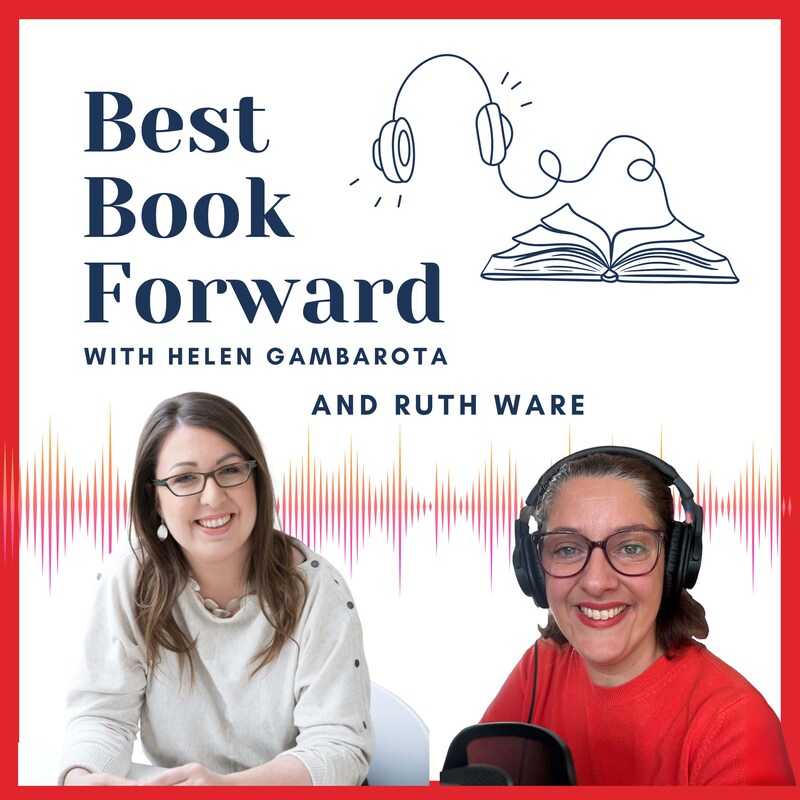
We’re ending the Season on a complete high as I am delighted to welcome the incredible Ruth Ware to the show. In this episode, Ruth takes us back to The Woman in Cabin 10 before talking about how readers were desperate to find out more from Lo, and how the moment of inspiration came for The Woman in Suite 11. We talk about her writing life, what it was like to see Kiera Knightely bring Lo Blacklock to the screen and we get a little glimpse into what she is working on now.
And of course, no episode of Best Book Forward would be complete without book recommendations! Here’s everything we mentioned, with links to buy:
📚 By Ruth Ware
The Woman in Cabin 10
✨ The Five Books That Shaped Ruth’s Life
Murder on the Orient Express by Agatha Christie
My Cousin Rachel by Daphne du Maurier
Love in a Cold Climate by Nancy Mitford
✨ Other Books Mentioned
The Girl on the Train by Paula Hawkins
And that’s a wrap for Season 4. Thank you so much to my wonderful guests; Jane Fallon, Ellie Levenson, Nicola Gill, Alexandra Potter, Emma Steele, Jennie Godfrey and Ruth Ware.
I’m currently hard at work on Season 5 and I hope to be able to share it with you soon. If you have subscribed to the show you’ll get a notification whenever a new episode lands. If you haven’t yet, I would be so grateful if you could please subscribe, rate, and review Best Book Forward, and don’t forget to tell your friends... it really helps new listeners discover the show.
Thanks for listening and see you soon.
Listen & Subscribe Now:
https://best-book-forward.captivate.fm/listen
To stay in touch with Best Book Forward news please follow me on Instagram @bestbookforward or visit my website: https://bestbookforward.org/
Transcripts
Welcome back to Best Foot Forward, the podcast where I talk to authors about the books that have shaped their lives.
Speaker A:You can think of it as like a book lover's version of Desert Island Discs.
Speaker A:I can't quite believe it that this is the final episode in this season.
Speaker A:Where have those seven weeks gone?
Speaker A:But don't worry, more episodes are coming soon and we are going out with the bang today as I am today.
Speaker A:Delighted to be welcoming the incredible Ruth Ware to the show.
Speaker A:Ruth is an international best selling author whose thrillers have appeared on bestseller lists around the world and have sold over 10 million copies.
Speaker A:Her novels have been optioned for both film and TV.
Speaker A:And recently the woman in cabin 10 was turned into a film with Netflix starring Keira Knightley and it was amazing.
Speaker A:In this episode we talk about what it was like for Ruth to revisit Low Blacklock for her latest novel, the Woman in Sweet Eleven.
Speaker A:We discuss why readers were so desperate to hear more from Low and what inspired Ruth to revisit these characters.
Speaker A:And we also chat about what it was like for Ruth to see her work brought to life with an all star cast.
Speaker A:Of course, no episode of Best Spoke Forward is complete without discovering the books that have shaped our authors lives.
Speaker A:And we'll be hearing more from Ruth about those.
Speaker A:So let's do it.
Speaker A:Let's jump straight in and give Ruth a warm welcome to the show.
Speaker A:Ruth, welcome and thank you so much for joining me on Best Foot Forward today.
Speaker B:Oh my gosh, thank you so much for having me.
Speaker B:It's such a pleasure to be here.
Speaker A:I'm so excited to chat to you.
Speaker A:We've just had a little talk before we've come on.
Speaker A:So obviously we're here today to talk about your new book, the Woman in Sweet Eleven, which came out in July and it is brilliant.
Speaker A:It's such a great read.
Speaker A:I was just saying it is the follow up to the women in cabin 10, which I don't actually have here but you have it behind you so that's great.
Speaker A:I do.
Speaker B:In many different editions.
Speaker B:Yeah, I'm sort of.
Speaker B:This is my zoom corner so I put up all the different and I can even show you my woman in cabin 10 popcorn bucket, which.
Speaker A:Oh, look at that.
Speaker A:We'll talk about that later as well.
Speaker A:So should we go back to the beginning?
Speaker A:Just as it is a follow up, so.
Speaker A:So if anyone hasn't read either of these books, I do feel like you could pick up Sweet eleven and read it and enjoy it.
Speaker A:But it'd be such a shame to miss out on the whole story.
Speaker A:So do you want to give listeners a little glimpse of where it all began?
Speaker B:Where it started?
Speaker B:Yeah.
Speaker B:So, as you mentioned, Suite 11 is written to be kind of a self contained mystery, so you don't have to know anything from cabin 10 in order to.
Speaker B:To figure out what's going on.
Speaker B:But definitely, I think there's a sort of greater emotional resonance.
Speaker B:Lots of the characters follow through.
Speaker B:There's some Easter eggs for people who enjoyed the first book.
Speaker B:But for anyone who hasn't read Cabin 10, my main character is Lo Blacklock and she's a travel journalist and she's kind of.
Speaker B:She's sort of scrapping her way up the career ladder and she gets this chance of a lifetime because her boss is off on maternity leave.
Speaker B:She gets invited to join this all expenses paid luxury cruise on this brand new boutique cruise ship called the Aurora Borealis.
Speaker B:And the owner is a wealthy businessman, Richard Bulmer.
Speaker B:He's launching his own kind of travel project and he's invited Low and a bunch of other journalists to kind of come on the.
Speaker B:Come on the cruise.
Speaker B:Lo turns up, everything's amazing.
Speaker B:You know, food is incredible.
Speaker B:The other guests are really interesting.
Speaker B:Her ex is there, which is a slight fly in the ointment, but, you know, these things happen.
Speaker B:Travel writing is a small community, but a couple of nights into the cruise, she wakes up in the middle of the night to hear this sound.
Speaker B:And she is coming from the balcony.
Speaker B:It sounds like there's kind of a kerfuffle going on.
Speaker B:And then she rushes to the balcony and sees what she is pretty certain is a woman's body being thrown overboard.
Speaker B:So of course she summons ship security, you know, explains what she's seen and heard.
Speaker B:And so they go into the cabin next door, but it's completely empty.
Speaker B:And more than that, it's always been empty.
Speaker B:There was no guest in there.
Speaker B:And it becomes increasingly apparent that nobody's missing from the ship.
Speaker B:There's no guests missing, there's no stop staff missing.
Speaker B:So Lo is forced to try and investigate a murder that no one but her believes happened.
Speaker A:That just gave me goosebumps.
Speaker A:I read it when it first came out and we'll talk about the movie later.
Speaker A:I've seen the movie twice, but still, listen to you.
Speaker A:I think there's always something about hearing an author describe their book that just gets me so excited.
Speaker A:It is such a brilliant, brilliant read.
Speaker A:So obviously that's out now in Paris paperback as well.
Speaker A:So let's move on then.
Speaker A:Let's sort of jump forward to where readers can find themselves when they pick up suite 11.
Speaker B:So suite 11 pretty much moves in real time.
Speaker B: was written in: Speaker B: comes out: Speaker B: I nearly said: Speaker B:So almost 10 years later.
Speaker B:And it's set almost 10 years later.
Speaker B:So at the end of cabin 10, lo ended up moving to New York with her then partner.
Speaker B:They're now married.
Speaker B:They have two little boys.
Speaker B:One of them was a kind of pandemic baby.
Speaker B:So Lo's taken a kind of enforced career break from bringing up her kids, you know, taking some time out during COVID which obviously wasn't great for travel journalism.
Speaker B:She's also written a book about her experience, experiences on board the Aurora Borealis in the first book.
Speaker B:And now she's kind of trying to get back on the horse career wise.
Speaker B:So she's applying for jobs, but it's kind of.
Speaker B:It's tricky.
Speaker B:You know, she's been out of the game for a while.
Speaker B:She's trying to kind of re establish her contacts and then out of the blue, she gets an invitation to attend the opening of a luxury hotel in Switzerland.
Speaker B:And this is great opportunity.
Speaker B:It's kind of, you know, it's going to get her back into the travel game.
Speaker B:It's a chance to go and visit her mum, who she hasn't seen for years because of, you know, all the logistics of traveling back and forth.
Speaker B:But more than that, the hotel owner is this really reclusive billionaire, Marcus Lydman.
Speaker B:And when she's in the process of sort of pitching stories about this possible trip, one of her contacts says, I wouldn't be interested in the hotel, but if you can snag an interview with Marcus, I could get you a really significant feature.
Speaker B:So Lo realizes this really is her chance to get back in the game.
Speaker B:So she accepts the invitation, she flies over to Switzerland.
Speaker B:The hotel's incredible.
Speaker B:There's a few surprises from her past there, a few guests that she wasn't expecting to see.
Speaker B:But she kind of settles in, starts the process of sort of trying to get an interview with Marcus, who is proving very hard to pin down.
Speaker B:One night she goes back to her hotel room and she finds a note on the bed, so saying, please come to suite 11 as soon as you can.
Speaker B:And she realizes that Suite 11 is Marcus Lydman's suite.
Speaker B:So this could be the opportunity to get the interview that she has been chasing this entire time.
Speaker B:Part of her knows that it's probably not the best idea to go to a strange man's hotel suite by herself in the middle of the night.
Speaker B:But she also knows that she's a journalist, you know, she's prepared to do what she needs to to get the scoop.
Speaker B:So she wanders off to suite 11, knocks on the door and what she finds there is a massive spoiler.
Speaker B:So I have to say, read the book if you want to find that out.
Speaker A:And I'm sat here having read it, going, yeah, yeah.
Speaker A:And it's like.
Speaker A:Because when it, when I heard it was coming out, there's always that sort of thing, isn't there, of like, oh, how is it going to pan out?
Speaker A:It is so such a perfect follow up.
Speaker A:It is so brilliant.
Speaker A:Let's talk about Lo, then.
Speaker A:She is such a great character.
Speaker A:She's.
Speaker A:She's funny, you know, she's very plucky as well.
Speaker A:She's got this sort of moral compass which gets her into some, some.
Speaker A:Well, I mean, thank goodness she does because it wouldn't be a book if she was like, I'm going to just.
Speaker B:Pretend the main character.
Speaker B:Yeah, really isn't that.
Speaker A:I was delighted to sort of pick up with her again and find that after everything you put her through in cabin 10, she's not quivering in the corner, you know, she's picked up her life, she's ready to start again and she's got this other situation to deal with.
Speaker A:How was it for you, stepping back into her shoes and were there sort of any challenges that you found sort of writing her follow up?
Speaker B:Well, actually, it was, I mean, I don't want to say sort of surprisingly easy, but I'd never written a sequel before.
Speaker B:All of my books have always been standalones and funnily enough, it was part of the reason why I wanted to do this.
Speaker B:I mean, part of it was, you know, we were talking about it earlier, it was the emails from readers who sort of kept asking me, you know, how she's doing.
Speaker B:What happened after the end of the book?
Speaker B:You know, various sort of not quite loose ends, but questions that I left in the mind of the reader.
Speaker B:People really wanted to talk, talk about those.
Speaker B:So that was the biggest part of it was, you know, the fact that people still cared about Low and I was still getting questions about her 10 years after writing the book.
Speaker B:But another big part of it was I was invited to contribute to the short story anthology Marple, which was an anthology of stories.
Speaker B:Twelve female writers, all recreating a Ms. Marple story and the Agatha Christie estate asked 12 incredible writers, not only crime writers, it was writers from all across different sort of parts of the literary spectrum to write a Marvel story.
Speaker B:And I was hugely intimidated by it because, you know, taking on such a beloved character is obviously a real challenge.
Speaker B:But I also had just such fun kind of working with a cast of characters that I just knew really well because I've, you know, been reading those books for 40 years almost, and just loved, loved, you know, really loved having that kind of sandbox of familiar faces and, you know, characters and settings.
Speaker B:And it really made me think what a joy it would be to write a sequel.
Speaker B:You know, obviously challenging, too.
Speaker B:And, yeah, cabin 10 was the book that I think I felt I had most to say about.
Speaker B:And it's funny, you know, you just.
Speaker B:In your question, you were saying, you know, after everything that Lo has been through, and I think there is a big part of that, and I think that's partly why I don't tend to write sequels.
Speaker B:I do strongly feel that, you know, my poor characters, I've put them through so much by the end of the book, and Low in particular, you know, she's been gaslit, sleep deprived, physically assaulted.
Speaker B:You know, she's gone through an enormous amount, including a couple of pretty near death experiences, experiences by the end of the book.
Speaker B:And I think I just felt that she just deserved a little bit of time to catch her breath.
Speaker B:And also that maybe by the end of the book, I'd sort of said what I needed to say.
Speaker B:Like, she'd had her emotional journey.
Speaker B:She had ended up in a, you know, overcome some challenges, ended up in a place that was sort of radically different from the one that she started in.
Speaker B:And maybe that was what I'd wanted to say.
Speaker B:But 10 years on, I felt like there was more to say.
Speaker B:And, you know, in the interim, I was pretty sure that Lo would have had kids.
Speaker B:I have kids.
Speaker B:I felt like there was interesting stuff to be said about, you know, the way that that changes you as a person.
Speaker B:Some of the kind of creative and personal and professional challenges that having, you know, it does radically change your kind of risk calculation.
Speaker B:Lo in Suite 11 is making very different calculations about the level of risk that she is prepared to undergo for other people.
Speaker B:You know, in cabin 10, she really doesn't anybody apart from herself anything.
Speaker B:You know, her, of course, she.
Speaker B:She wants to stay safe, but she, you know, she.
Speaker B:She doesn't have a responsibility to other people in that sense.
Speaker B:Whereas low and Sweet 11 is making the calculation that she needs to get home to her kids, because if she doesn't, that is going to radically change the course of their life as well as hers.
Speaker B:So that it just felt like, yeah, 10 years on, I'd given Low a bit of time to catch her breath.
Speaker B:And I was just really curious to find out who she was as a person and how the intervening years have changed her.
Speaker A:Because when I picked up the book, I quite often go into books blind.
Speaker A:So I obviously, I knew it was a follow up.
Speaker A:I knew Low, I knew some of the characters, but I was like, I wonder where we're going to pick up?
Speaker A:Because I was like, if it's.
Speaker A:If it's quite soon after cabin 10, I was like, oh, that's gonna be hard.
Speaker A:Sort of keep believability.
Speaker A:I mean, obviously, like, you know, she has a lot thrown at her in both books.
Speaker A:But what I loved is seeing her, as you say, she's changed so much.
Speaker A:You like, you talk about her anxiety and things as well.
Speaker A:And I was like, you know, I thought it was just perfect.
Speaker A:There was that gap, and it made it believable as a reader.
Speaker B:I mean, that is the other difficulty with the kind of books that I write is, you know, my characters are just regular, ordinary people for the most part.
Speaker B:There's a couple of characters who have sort of specific jobs or, you know, reasons why they might be tangled up in things.
Speaker B:But mostly I'm writing about ordinary people.
Speaker B:And I always think it's plausible that one terrible thing could happen to a regular person.
Speaker B:You know, unfortunately, we see that in the news all the time.
Speaker B:But what is less plausible is why the remarkable, agonizing strange things would keep happening book after book after book.
Speaker B:And that's partly why I, you know, I've not written a sequel thus far, but after 10 years, and there's some plot reasons why it's not perhaps the coincidence it appears to be, it did feel plausible that something else could drop into Lo's lap a decade later.
Speaker B:So that was.
Speaker B:Yeah, that was another reason for the gap.
Speaker A:Okay, so you dedicated the book to those who wanted more.
Speaker A:And you've talked about how you were getting all these emails once you sort of started thinking about it.
Speaker A:How did the idea for suite 11 form for you?
Speaker A:Did it sort of come quite easily, or was it over a long period of time?
Speaker B:It was over quite a long period of time.
Speaker B:I mean, I suppose it took a good seven or eight years for me to start thinking about the fact that I maybe did want to write a sequel.
Speaker B:And that was very much, you know, that was the questions from readers, it was the emails, it was the questions at events.
Speaker B:It was people on social media, you know, asking me about it.
Speaker B:And I guess that sort of kept the characters alive in my head.
Speaker B:And I do, you know, I think about all of my characters a lot after the books finish, you know, in the sort of way that you think about friends that you haven't seen for a while and kind of wonder how they're doing and, you know, wish you could catch up.
Speaker B:But definitely, you know, the questions from readers sort of.
Speaker B:It kept me wondering, like, you know, how.
Speaker B:How would Low have changed, how she would have grown in the interim?
Speaker B:But I didn't want to write a book that didn't have a really cracking mystery at the heart of it.
Speaker B:And I still had to kind of solve that conundrum of why Lo would stumble over a, you know, a completely new, compelling mystery, what that might look like.
Speaker B:And so I kept sort of chewing it over my head and thinking about her as a charact.
Speaker B:And then suddenly I had this idea for a locked room mystery that I was really excited about.
Speaker B:And I wrote to my editor and said, I think.
Speaker B:I think I want to do a sequel to cabin 10.
Speaker B:So it was kind of.
Speaker B:It was the two pieces coming together.
Speaker B:It was the sort of having.
Speaker B:Because I think most of my books, they have sort of two elements.
Speaker B:They have a kind of.
Speaker B:They have a mystery, but they also have some.
Speaker B:A journey for the character.
Speaker B:And I think Lowe's journey was.
Speaker B:Was there.
Speaker B:I sort of knew what I wanted to say about that.
Speaker B:But finding the right mystery to kind of wrap it around was.
Speaker B:Yeah, that took longer to come.
Speaker B:And when it did, it was a real, like, oh, this could be great.
Speaker A:Well, it feels.
Speaker A:I mean, I don't want to spoil it, but it feels like it's because I was a bit worried.
Speaker A:I was like, how.
Speaker A:How is this going to work?
Speaker A:Who is this woman in suite 11?
Speaker A:What.
Speaker A:You know, what's.
Speaker A:What's going to happen?
Speaker A:But it is so clever.
Speaker A:It is so brilliant.
Speaker A:I was literally reading, like, I've been sat here tabbing away because I tried to keep up with, like, all you.
Speaker B:Oh, my gosh.
Speaker B:Those tabs are incredibly.
Speaker B:For anyone who's just listening on audio.
Speaker B:This book is bristling like a hedgehog with little, Little page notes.
Speaker A:I get very tabby with my books.
Speaker A:So obviously, readers were asking for this book.
Speaker A:You've given it to them.
Speaker A:It came out in July.
Speaker A:What are they saying now?
Speaker A:I mean, I'm loving it.
Speaker B:I've had some lovely, lovely notes from.
Speaker B:From readers.
Speaker B:It's funny because often you don't obviously, you know, you get sort of messages on social media and stuff like that.
Speaker B:I don't read reviews anymore.
Speaker B:I used to, but I don't think they were great for my writing.
Speaker B:The sort of, the positive ones made me feel kind of big headed and complacent and the negative ones made me feel like I was a terrible person and should never write another book.
Speaker B:So neither of which is a great, you know, way to be going into your next project.
Speaker B:So after, after a few years I sort of weaned myself off reading reviews.
Speaker B:So and, and when I'm touring for a book, usually it's because it's just come out.
Speaker B:So most of the people in the audience probably haven't read it.
Speaker B:There's sometimes a few kind of real sort of first day, you know, people who've rushed out to get it and have read it before the event.
Speaker B:But often people are coming to the event to buy their copy.
Speaker B:So it's often.
Speaker B:You often only really get the sort of readers face to face view for the previous book.
Speaker B:You know, when, when you're touring again next year you hear all the people who loved it.
Speaker B:But yeah, the reaction on social media and sort of, you know, in messages has been lovely.
Speaker B:I think people are just really happy to, to see, to see Lo again and see how she's doing and yeah, that's been really hot one and see.
Speaker A:Her put through some more stress.
Speaker B:What does that say about even some more tough times?
Speaker A:I don't know what that says about us.
Speaker A:Like bring low back and give us some more hell to deal with.
Speaker B:Put her through the ringer once again.
Speaker A:She can handle it.
Speaker A:She's tough.
Speaker A:So do you think that you would ever revisit Lo again?
Speaker A:Could we have a woman in carriage 12 to look forward to or something else?
Speaker B:I don't know about carriage 12 because I did.
Speaker B:I was strongly tempted to set this book on a train partly because I love trains.
Speaker B:I'm completely obsessed with trains and I love sleeper trains in particular.
Speaker B:They're such a kind of, you know, I don't know, there's something so evocative about it.
Speaker B:And that was one of the things that I did toy with quite, quite a lot while I was sort of trying to come up with an idea.
Speaker B:But it just felt like, you know, obviously there's murder on the Orient Express, there's strangers on Train, there's the girl on the train.
Speaker B:It felt like it had been quite well trodden and I wasn't sure that I could completely come up with a new idea for it.
Speaker B:In fact, Even I hadn't read it when I wrote Cabin 10.
Speaker B:But the sort of central premise of Cabin 10 is not dissimilar to another book set on a train called.
Speaker B:Called.
Speaker B:It was filmed as the Lady Vanishes, but the book was the wheel turned.
Speaker B:So, yes, trains and crime do kind of go together.
Speaker B:But, you know, the ending of Sweet 11 does lead itself, you know, leave itself open to the possibility of another book.
Speaker B:So, yeah, I could maybe.
Speaker B:Maybe the woman in cell 12 or seat 12 or so.
Speaker B:I don't know.
Speaker A:Watch this space.
Speaker B:Never say never.
Speaker B:It might take another 10 years, though.
Speaker A:So we will wait patiently.
Speaker A:That's so exc.
Speaker B:So it's.
Speaker A:As we said, it's hard to talk about your books in a lot of detail because of spoilers, but I'd love to sort of understand how, how you go about writing them, because I think I read thrillers, like the characters experience them because I just walk blindly through and then I'm like looking back in hindsight going, oh, yeah, there was that.
Speaker A:Like, I miss every single red herring and plot twist.
Speaker A:I'm always.
Speaker B:You're my ideal readers.
Speaker B:That's exactly what I want.
Speaker A:When you're starting a new project, is there a character or scenario that you start with?
Speaker A:And do you always know how your books are going to end when you start out?
Speaker B:So, yes, there's sort of two ingredients that I usually have to have in place before I start a book, and one is the kind of starting point.
Speaker B:So just because of the way my kind of writing year tends to pan out, I'm usually thinking about the next book that I'm going to write about six months before I start it.
Speaker B:So that's sort of when I come to the end of the previous book and move into the sort of editing and back and forth stage with my publishers.
Speaker B:And I tend not to start the new book then, but I am thinking about it.
Speaker B:So I'm sort of thinking about the characters, thinking about the setting, which is often very important in my books, thinking about kind of what makes these people tick sort of thing.
Speaker B:So by the time I start my book, I've got a pretty good idea about who these people are, how they got into the sort of point where they're where the action is ready to begin.
Speaker B:And then the other piece of the puzzle that I, I think almost always have in place, it does sometimes change a little bit.
Speaker B:But generally speaking, I. I have to know this element before I start is the kind of the.
Speaker B:Who done it, the sort of central core of the mystery, like who killed the person often how?
Speaker B:Because that's frequently the sort of the sticking point in my books.
Speaker B:Sometimes.
Speaker B:Why?
Speaker B:Although sometimes the motive does change.
Speaker B:And I think that's because the kind of books that I write, I really want the reader to feel, you know, just as you described.
Speaker B:When they get to the end of the book, I want them to feel like they had a chance to, say, solve this mystery, like the clues were there, to think, oh, of course, you know, this and this, and that's why this happened, and that's why she said this.
Speaker B:I want the sort of moment of reveal to be.
Speaker B:Of course.
Speaker B:Of course it is.
Speaker B:I should have guessed.
Speaker B:I had all the ingredients.
Speaker B:I just didn't put them together.
Speaker B:Or sometimes I did.
Speaker B:You know, that's the other thing.
Speaker B:Crime readers, unfortunately.
Speaker B:Well, not unfortunately, it's very good.
Speaker B:They're.
Speaker B:They're very sophisticated readers.
Speaker B:Crime readers tend to read a lot of crime.
Speaker B:They get very, very good at spotting when you're to pull the wool over their eyes.
Speaker B:And there's only so many ways you can pull off a twist or a reveal.
Speaker B:There's only so many ways you can mislead people.
Speaker B:And the more crime novels you read, the better you get at spotting that.
Speaker A:There'S hope for me.
Speaker B:I've completely made my peace with, you know, the fact that some readers are going to get there ahead of my main character.
Speaker B:And that is okay.
Speaker B:That's.
Speaker B:That's.
Speaker B:As long as the.
Speaker B:The kind of.
Speaker B:The characters are compelling enough, as long as the world seems real enough, hopefully people will want to continue reading until they, you know, even if they've figured it out.
Speaker B:But the problem is, in order to scatter those clues and sort of give the reader the chance to figure it out, I need to know the solution.
Speaker B:Because you cannot scatter breadcrumbs that you don't already have.
Speaker B:So that's usually the two elements that I know.
Speaker B:I know the sort of the setup at the beginning of the novel and I know the solution at the end of it.
Speaker B:And everything that happens in between is pretty much up for grabs.
Speaker B:I often have like one or two kind of sort of juicy set piece scenes that I'm looking forward to writing.
Speaker B:Sometimes they don't make it in there.
Speaker B:I've had, in fact, the book that I'm working on at the moment.
Speaker B:I had a scene that I really wanted to write at the beginning of it.
Speaker B:I don't think there's going to be a place for it.
Speaker B:It just doesn't feel like something the characters would do, and that's okay.
Speaker B:You know, you get to know the characters as you're writing the book.
Speaker B:You get to know whether they would act in the way that you thought they would at the beginning.
Speaker B:And in this case, I don't think they will.
Speaker B:But it's just, yeah, sort of figuring out how to get from A to B.
Speaker B:What path they're going to take, what they're going to see on the way, what they're going to do on the way.
Speaker B:That's kind of what keeps it interesting for me.
Speaker A:And clearly you have fun doing.
Speaker A:I can see you light up as you're talking about it.
Speaker A:Sort of working it all out with that piece that you just wrote that doesn't fit in.
Speaker A:Would you take that and save it?
Speaker A:That it might go somewhere in future, or is that just sort of scrapped now for.
Speaker B:I'm not.
Speaker B:I mean, yes and no.
Speaker B:I have, like, topics that I'd love to write about, things that I'd love to address, ideas that I've had where I haven't found a place for them in the.
Speaker B:In a book.
Speaker B:And they are on my.
Speaker B:Kind of on my back burner, you know, in my sort of mental kind of rag bag of.
Speaker B:Of sort of potential ingredients and ideas.
Speaker B:In this case, no, it was so specific to the characters, and it was a pretty generic idea.
Speaker B:I mean, I could imagine something similar happening in a different book, but just not.
Speaker B:Not in this particular case.
Speaker B:But I'm not someone who keeps.
Speaker B:I know a lot of writers, you know, if they have to, like, delete a scene or scrap something, they'll have a file of unused material.
Speaker B:I don't do that.
Speaker B:I tend to think if I wrote it once the first time, I could probably write it better the second time.
Speaker B:And, you know, I've written.
Speaker B:Gosh, I don't even know.
Speaker B:I mean, I probably wrote like maybe 10 or 12 books before I even tried to get published.
Speaker B:And then I've written, you know, another 10 crime novels.
Speaker B:So at this point, well over 2 million words, probably closer to three, I can write another scene.
Speaker B:I have absolutely no doubt about that.
Speaker B:I don't feel my words are, you know, particularly sort of.
Speaker B:If they didn't work in the book, there's no point in saving them.
Speaker B:There'll be better ones ahead of me, I hope.
Speaker A:I always think when authors say that about a sort of story, and I was like, I'd love to know your filing system, because I quite often will write, like, little notes to myself, like, think, oh, that's a really good idea.
Speaker A:And then I sort of go back and look at my.
Speaker A:And I'm like, oh, don't know what any of that means.
Speaker A:It's also like random.
Speaker A:But it's like they must have really clever ways of filing it away to find.
Speaker B:I see.
Speaker B:I don't know if they, I mean, I'm speaking for a type of working that I don't do, so maybe they do.
Speaker B:My suspicion is they bung it all into a file and never look at it again.
Speaker B:It's sort of like, you know, when you have.
Speaker B:Yeah, kind of like when you, you've got something that you're never going to wear again and you know full well that you're never going to wear again but you can't quite bring yourself to give it to charity.
Speaker B:So you, I, you know, you pack it up and put it in the loft or in a cupboard or whatever.
Speaker B:You know full well you're never going to go back to that outfit.
Speaker B:But it's more a kind of, it's an inability to let go and say goodbye.
Speaker B:And yeah, I think in most cases, I mean at me on social media, otherwise if I'm, if I'm talking rubbish here, be honest.
Speaker B:Do you frequently go back and read through that file of unused material and think, I know where that scene will go?
Speaker B:Maybe you do.
Speaker A:We shall find out.
Speaker A:Okay, so I'd love to talk then a little bit.
Speaker A:Go back to the women in cabin 10.
Speaker A:Obviously it was made into a NETFLIX movie this year with Keira Knightley and Guy Pierce and it was such a great movie.
Speaker A:How was that journey for you from the moment you heard it was we made into movie to when you hear, you heard who was cast.
Speaker A:How was all that for you?
Speaker B:Oh my gosh, complete roller coaster.
Speaker B:So it was.
Speaker B:Rights were first sold like, gosh, I think probably same year the book was published.
Speaker B: So: Speaker B:So it's been a really, really long road.
Speaker B:And when I started writing the Woman in Sweet Eleven, it was still under option, it was with Netflix, but it hadn't been green lit.
Speaker B:So I started writing Sweet Eleven in the same sort of landscape as it had been for years, which was, you know, maybe this will get made one day, but who knows?
Speaker B:And I was about halfway through when I got a call from my film agent saying they've greenlit cabin 10.
Speaker B:And I had spent like the first half of this book wrestling with the fact that I was trying to please two audiences.
Speaker B:I was trying to please the group of people that I'd written the book for, for which was the people who had read and loved cabin 10.
Speaker B:But I was also trying to write it in a way that would work for people who hadn't read Cabin 10 but might potentially want to.
Speaker B:So I was trying to sort of fill in stuff that they needed to know about the first book without irredeemably spoiling it for anybody who might then go back and read it, which was proving quite tricky, as you can imagine.
Speaker B:And at this point, I suddenly realized that I might have a third audience, which might be people who had watched the film but had not read the first book.
Speaker B:And at that point, I had a mild kind of emotional breakdown and kind of went away and sort of had wrestled with this for about two weeks, and then just thought, I'm just gonna have to.
Speaker B:I'm gonna have to treat them as separate things.
Speaker B:And I knew from fairly early on, because I wasn't creatively involved with the film, but I was.
Speaker B:After it was greenlit, I was shown the script.
Speaker B:So I knew from fairly early on that there was some pretty significant changes.
Speaker B:There's a lot that's very similar.
Speaker B:Lo's character and the boat and everything and the sort of central mystery are very faithful to the book.
Speaker B:But there without.
Speaker B:I won't give any spoilers, but there are a number of other elements which are very different and a couple of characters that are very different.
Speaker B:And there was no.
Speaker B:It was clear to me that there was not going to be any way of sort of stuff stitching those two worlds together.
Speaker B:So at that point, I sort of just had to make my peace with the fact that I was in charge of the book world, and that was my job.
Speaker B:And the film world was related, but significantly different.
Speaker B:And I just made my peace with that and just carried on with.
Speaker B:With my sort of book version of events.
Speaker B:But, yeah, it was.
Speaker B:I mean, it was.
Speaker B:It was a really surreal moment and even more surreal.
Speaker B:So initially got the call saying it was green.
Speaker B:There was obviously amazing.
Speaker B:And then got the, you know, the call saying, keira Knightley has been cast as Low.
Speaker B:And I think that's when I suddenly realized, like, oh, my gosh, this isn't just a film.
Speaker B:This is like a film.
Speaker B:And then, you know, the rest of the cast started coming in, and it was like Hannah Waddingham and Dave Jala and Guy Pierce and, yeah, that with me sort of there typing away on suite 11, thinking, just keep your head down, Ruth.
Speaker B:Just keep writing.
Speaker B:So, yeah, that was.
Speaker B:It was a really crazy year.
Speaker A:I was wondering when I was preparing for this, because, like.
Speaker A:So when you heard that Keira Knightley had been cast, you were busy Writing Sweet eleven.
Speaker A:How did that affect your writing then?
Speaker A:Because obviously in your mind you had.
Speaker A:You knew Low as she is to you.
Speaker A:So did it sort of change at all knowing that Keira Knightley was going to be playing the part?
Speaker A:Or did you just as treat it as two separate projects and be like, that's the movie, that's movie Low and this is Milo?
Speaker B:Yeah, I think it might have been different if I'd seen the film at that point.
Speaker B:I might have found it more difficult to sort of keep the two characters apart in my head.
Speaker B:But as it was when I was writing, although I sort of objectively knew that Keira was going to be playing Low, I hadn't seen her do it.
Speaker B:So I had no idea what kind of like, what she would look like, what kind of physicality she would bring to the role.
Speaker B:So, no, it didn't.
Speaker B:Sort of.
Speaker B:While in, while I was writing, Low was very much just Milo, the same character as she is in, in the book of cabin 10.
Speaker B:And Kira is amazing as Lo.
Speaker B:Like, she brings a real kind of.
Speaker B:Just a kind of really sort of taut determination to the role, but she is significantly more beautiful than I imagined.
Speaker B:You know, Low in my head is a sort of, you know, like, she's really.
Speaker B:She's nice looking, but she's just a pretty regular ordinary person.
Speaker B:And Keira Knightley is not a regular ordinary looking person at all.
Speaker B:So.
Speaker B:But yeah, I think to me, Book Low and Film Low are related, but.
Speaker B:But separate.
Speaker A:Yeah, she.
Speaker A:I mean, I think it's my favorite role that Keira Knightley has played.
Speaker A:I thought she was so.
Speaker A:Because actually, when I heard, I was like, oh, how's that, like, how's that going to work?
Speaker A:But she is brilliant.
Speaker B:She's fantastic.
Speaker B:And actually, when I heard, I obviously, like, I was like, oh, my God, this is amazing.
Speaker B:But I also like you.
Speaker B:I did sort of think, gosh, you know, how is she?
Speaker B:Is she going to be able to pull this off?
Speaker B:I mean, I had no doubt that she would because she's a fantastic actress.
Speaker B:But funnily enough, it was when I saw Black Doves, which is also a Netflix production, if anyone hasn't seen it.
Speaker B:It's really good.
Speaker B:It's really funny.
Speaker B:And I suddenly thought, oh, I. I get it now.
Speaker B:I get the casting.
Speaker B:Because her character in Black Doves is very different.
Speaker B:She's not really remotely like Low as a character, but there's a sort of.
Speaker B:There's a toughness there, there's a humor there, there's a sort of determination, a kind of action.
Speaker B:And I just thought, I understand now I see where they're going with this.
Speaker B:And I felt complete, completely confident that she'd pull it off.
Speaker A:It was a great cast, actually.
Speaker A:All of them were terrific.
Speaker A:I was saying earlier, I was lucky enough to come along to the screening at BAFTA with the cast.
Speaker A:You were there as well, and I thought, so interesting for you to sit in a room, because the reaction from the audience, I mean, I said to you, I literally grabbed either side of me because I'm very jumpy.
Speaker A:But people were laughing.
Speaker A:You know, people were shocked.
Speaker A:You know, it's very.
Speaker A:The reaction was very obvious.
Speaker A:Obviously, you don't get to sit in a room and watch people read your book and see the reaction.
Speaker A:So what was that like for you to sit there and be in a room of people experiencing your movie?
Speaker B:It was.
Speaker B:I mean, it was awesome.
Speaker B:It was.
Speaker B:It was really fun.
Speaker B:And like, you.
Speaker B:Even though, you know, I'd obviously written the book, so I knew exactly what was going to happen at many moments.
Speaker B:I, I, I.
Speaker B:There's some cracking jump scares and I.
Speaker B:The BAFTA screening was my second time seeing it.
Speaker B:I've seen it at a previous screening for cast and crew, and I still jumped out of my skin.
Speaker B:A couple of moments, you know, there's a few moments are genuinely really, really scary, and watching everybody else do the same was amazing.
Speaker B:And there was.
Speaker B:There's a moment.
Speaker B:I won't say when it is, but there was a moment when the whole cinema burst out into cheers.
Speaker B:And that, funnily enough, was a moment that wasn't in the book.
Speaker B:It wasn't something that I'd written.
Speaker B:And that was really fun as well, because it sort of felt.
Speaker B:It didn't feel like my moment, but it was really nice watching people react to the film.
Speaker B:No, it's.
Speaker B:It was incredible, but it's.
Speaker B:It.
Speaker B:Because it is different.
Speaker B:I didn't feel like they were cheering me.
Speaker B:I felt like they were cheering something that was sort of related, but slightly different.
Speaker B:You.
Speaker A:A very important ingredient that deserved the cheering as well.
Speaker A:It was so brilliant.
Speaker A:I loved it.
Speaker A:And actually, the way it's filmed as well is so beautiful, isn't it?
Speaker A:Some of the locations.
Speaker B:Stunning.
Speaker B:Yeah.
Speaker B:There's a moment at the beginning where you see Lowe's in an elevator and you see, like, the reflection of her face and it looks like she's kind of underwater.
Speaker B:It almost looks like she's kind of drowning.
Speaker B:And it's so, so cleverly done and it just.
Speaker B:It makes me feel quite envious of filmmakers, actually.
Speaker B:I mean, There's a lot that as a writer, you can do on the page that you can't visually, and a lot of that goes on in cabin 10.
Speaker B:There's a lot of scenes that just were not translatable, but just a few of those moments where it was just so beautifully shot.
Speaker B:And I just thought, I wish I could do.
Speaker B:Do that on the page.
Speaker A:But you did it.
Speaker B:You.
Speaker A:You helped them bring that.
Speaker A:Like, that's a look at it as a partnership.
Speaker A:So you've mentioned that you're busy working on something new.
Speaker A:Do you feel like you're able to give us.
Speaker A:I know your fans are always hungry for more.
Speaker A:Do you feel like you'll be able to give us a little clue of what's coming next or.
Speaker B:I can talk about it a little bit, but it.
Speaker B:It.
Speaker B:Normally at this stage in the game, I'd be able to be kind of completely open about it because usually I write a book a year, so I'm at this time of year, I'm kind of editing and finalizing the book that I wrote the previous year.
Speaker B:And this year for various reasons to do with kind of deadlines and also just cabin 10 kind of craziness.
Speaker B:I'm taking a bit longer over the next book.
Speaker B: it won't be coming out until: Speaker B:And for that reason, I'm not as far down the line as I would normally be, but.
Speaker B:But I can tell you it's kind of about a woman who's trying to solve a murder in her family that happened years before.
Speaker B:So it's sort of one of my favourite themes of kind of delving back into the past and sort of twisted families.
Speaker B:It's set on the borders of Devon and Cornwall, which has been really nice, kind of going back to my beloved western country, south coast.
Speaker B:And it's got a little bit of kind of folk horror sort of element.
Speaker B:Not.
Speaker B:Not quite Wicker Man.
Speaker B:It doesn't sort of go quite into that territory, but there's definitely a bit of spookiness.
Speaker B:Yeah, it's been.
Speaker B:It's been really fun to write.
Speaker B:I can't wait for people to read it.
Speaker A:That's exciting.
Speaker A:I don't want to wish away.
Speaker A:I mean, we're literally.
Speaker A: sh away the year, but roll on: Speaker B:It'll be here sooner than we know it.
Speaker A:I know, I know, right?
Speaker A:Time flies.
Speaker A:Okay, so we're going to move on to talk about your book choices, but before we talk about those, just to remind listeners that all of the books that we talk about will be linked in the show notes, so they'll be easy for you to go and find.
Speaker A:So, Ruth, how did you find picking your five books?
Speaker A:Was it easy for you?
Speaker B:Quite hard.
Speaker B:I always find these things really tough, partly because, you know, know I'm the kind of person, I was like a voracious bookworm from the time I could sort of pretty much read a full book.
Speaker B:So being asked to kind of pick, you know, your favourite book or your five favourite books or whatever it is, I just find it impossible.
Speaker B:I could have a list of 200 books and it still wouldn't cover all of the books that have been meaningful to me in one way or another, and ranking them is just impossible, possible.
Speaker B:So I was very grateful that yours wasn't quite as.
Speaker B:It wasn't like, you know, the five best books.
Speaker B:It was sort of.
Speaker B:It was a bit more kind of.
Speaker B:So I was able to talk about some of the influences on Sweet 11.
Speaker B:But, yeah, it did.
Speaker B:It did take some thought and some whittling down and there.
Speaker B:I always feel a bit disloyal to all the books that I didn't pick so hard.
Speaker A:Do you know what, Ruth, though?
Speaker A:People always do on this is they sneak them in.
Speaker A:So I give five and then I come out and I'll like.
Speaker A:As I'm editing, I'm like, hang on.
Speaker B:All these other books mentioned, all of these others, I can't guarantee they won't.
Speaker A:That's okay.
Speaker A:Shall we get started, then?
Speaker A:Do you want to talk about your first book choice, then?
Speaker B:So the first one that I picked was Murder on the Orange Express, already name checked in this podcast.
Speaker B:And partly that was just partly it's just because it's one of the, you know, my favourite books.
Speaker B:I go back to it again and again.
Speaker B:It's brilliantly plotted and it does what Christie does so, so well, I think, which is that sort of feeling of kind of stifled luxury where the characters are in what should be an enviable situation and she just kind of turns up the heat more.
Speaker B:Or actually, in Orient Express, it's more turning down the heat because they're getting colder and colder, but it sort of becomes more and more kind of threatening and sort of claustrophobic and terrifying.
Speaker B:And she does that brilliantly, all in the course of about.
Speaker B:I don't know how long the book is, but I doubt it's more than 60 or 70,000 words, which is about two thirds of the length of one of mine.
Speaker B:So, yes, just, you know, just masterly but also it was a significant influence on cabin 10 and suite 11.
Speaker B:Cabin 10, because when my first book, In a Duck Duck Wood, came out, it sort of had these kind of comparisons to Agatha Christie that I wasn't entirely expecting, but was very welcome.
Speaker B:And when I sat down to write my second book, which was.
Speaker B:Turned out to be cabin 10, I really had the choice of kind of pulling away from that comparison or leaning into it.
Speaker B:And I chose to lean into it completely deliberately.
Speaker B:And when I did that, I thought about what I loved about Christie's novels.
Speaker B:And the setting and the sort of terrifying, kind of claustrophobia of the.
Speaker B:Of those kind of luxurious settings was one of the things that I love most.
Speaker B:And Orient Express was very much in the forefront of my mind as I was creating the Aurora Borealis.
Speaker B:But the other thing that Christie does brilliantly in Orient Express is create a really clever locked room mystery.
Speaker B:And Cabin Tennis has elements of a locked room mystery, but it's not a sort of.
Speaker B:In strict terms, it's not a locked room mystery.
Speaker B:Suite 11 is.
Speaker B:And that was fun to create and fun to write.
Speaker A:So Agatha Christie was.
Speaker A:When I started doing this series, I started it sort of in lockdown on Instagram, and I wrote her down.
Speaker A:I was like, she'll be an author that comes up all the time.
Speaker A:She was only picked for the first time earlier this year by Claire Douglas.
Speaker A:Yeah, the Moving Finger, which I just thought was so interesting, because I just thought she would be.
Speaker A:Unless people are not picking her because they sort of.
Speaker B:I don't know, but maybe they think it's too obvious.
Speaker B:I don't know.
Speaker B:But it's so interesting.
Speaker A:Yeah, because I thought.
Speaker A:Yeah, so.
Speaker A:But it's one.
Speaker B:I'm just gonna switch all my other books around as they're five Christie's.
Speaker B:No, I'm joking.
Speaker A:Just keep mentioning them in is what I want to go back and read again.
Speaker A:Actually, I was thinking about reading with my daughter because she's really sort of getting into sort of thrillers and things.
Speaker A:She's 13 and she's saying she wants to read like a classic.
Speaker A:And I was like, oh, I wonder whether she might quite enjoy that.
Speaker B:Yeah, well, I think, you know, 13, kind of early teens is a really great time to start reading Christie.
Speaker B:You're sort of old enough to cope with some of the more kind of what I say, terrifying elements.
Speaker B:But definitely, you know, there's definitely a darkness in Christie that I wouldn't, probably wouldn't want to give to, like a seven year old.
Speaker B:But they're very, you know, They're, I don't want to say simple prose, but they're often one of the books that's given to people who are reading in their second language, you know, as one of the sort of first quote unquote, real books that you'll read in, in your second language because they're just, you know, the prose is really clear.
Speaker B:It's really.
Speaker B:It's interesting.
Speaker B:She's got a good sort of, you know, wide range of words, but she's not confusing.
Speaker B:There's not sort of pages and pages of description.
Speaker B:So, yeah, great, great book for teens to read, I think.
Speaker A:Read that one together.
Speaker A:So watch this space.
Speaker A:Okay, let's move on to book number two, then, Ruth.
Speaker B:So my second choice was My Cousin Rachel by Daphne du Maurier, which is just.
Speaker B:It's just one of my favorite books, full stop.
Speaker B:I love du Maurier across the board.
Speaker B:You know, Rebecca is obviously an absolute masterpiece and a book that, you know, I've read again and again over the course of my life and, you know, found something new in it every single time.
Speaker B:I think a lot of people, including me, read it in their teens and see it as a love story and then go back to it in their sort of 20s and 30s and they're like, oh, no, no, no, no, no.
Speaker B:Very similar to Wuthering Heights in that regard.
Speaker B:But my cousin Rachel, I think, is her masterpiece.
Speaker B:Somewhat unfairly overshadowed by Rebecca.
Speaker B:It's an absolutely banging psychological thriller.
Speaker B:It's often not shelved as crime and psychological thriller, but as literary fiction, I think, because it's set in the past.
Speaker B:But in my view, that is incorrect.
Speaker B:It is straight up psychological thriller.
Speaker B:And the premise is the main character, his beloved guardian, dies abroad right after marrying his new wife, who's called Rachel.
Speaker B:And Philip, the narrator, becomes immediately convinced that.
Speaker B:That Rachel must have had something to do with it.
Speaker B:He received these very worrying letters from his guardian, basically implying that he might be being poisoned.
Speaker B:And Rachel comes back to this beautiful estate, which he's now inherited, and Philip makes it his business to basically try and trap her into a confession.
Speaker B:Except Rachel is not remotely who he had imagined her to be.
Speaker B:Be.
Speaker B:And the genius of the book is the way du Maurier pulls you back and forth between these possibilities.
Speaker B:Did Rachel kill Ambrose?
Speaker B:Is she completely innocent?
Speaker B:And sometimes you are in sync with Philip's suspicions or beliefs in the book, and sometimes you are wildly opposed to them.
Speaker B:And both are completely agonising.
Speaker B:You want to know the truth.
Speaker B:You're desperate, desperate to find out what happened.
Speaker B:And it's a story about poisoning and it.
Speaker B:You're.
Speaker B:You're never sure whether it's literal poisoning, the literal poisoning that Rachel has committed against Ambrose, or whether it's something much more subtle.
Speaker B:And Ambrose has brought Philip up as a misogynist to hate and distrust women.
Speaker B:And it's impossible to know how far that is warping his judgment as you read.
Speaker B:It's just, it's.
Speaker B:It's brilliantly done.
Speaker B:It's one of my favourite books and I would encourage anybody to.
Speaker B:Not just to read it, but to read it twice.
Speaker A:I haven't read it and I'm definitely gonna add it now.
Speaker A:I hadn't.
Speaker A:I really.
Speaker A:I really struggle with classics and I.
Speaker A:They're not my first thing to pick up, but through the series, Susan Fletcher, who wrote the Night in Question, recommended.
Speaker B:Jamaica Innocent Love Jamaica Inn book.
Speaker A:It's so good.
Speaker A:So I picked it up and I was really not expecting to like it or to.
Speaker A:I always think of classics as ones I won't get, but I loved it.
Speaker A:And then I read Rebecca with my book club and loved it.
Speaker A:So now hearing you talk about my cousin Rachel, I'm like, yep, definitely gonna pick it up.
Speaker B:So glad I've sold you on it.
Speaker A:I will let you know how I get on, but it sounds amazing.
Speaker A:Okay, so we're gonna move on to book number three.
Speaker B:Three then.
Speaker B:So for that I picked Love in a Cold Climate by Nancy Mitford.
Speaker B:Very different book.
Speaker B:Not crime or thriller.
Speaker B:Very bittersweet.
Speaker B:I love Nancy Mitford full stop.
Speaker B:I love all of her books, even some of the.
Speaker B:In my slightly less successful ones.
Speaker B:But Loving a Cold Climate and the suite of novels that it belongs to.
Speaker B:There's the same characters recur over and over again in several of her books.
Speaker B:They're just, just, just beautifully done and it's really hard to sum up.
Speaker B:They're basically sort of social comedies, I think, kind of thinly veiled versions of Nancy's own family and friends.
Speaker B:And there's a kind of heartbreaking love story at the center of it.
Speaker B:But you watch these women growing up falling in love, grappling with the realities of.
Speaker B:Of life in sort of early 20th century Britain, coping with politics, you know.
Speaker B:Nancy lived through some of the sort of most tumultuous years, the wars.
Speaker B:Was intimately acquainted with the sort of push me pull you of political affiliation, you know.
Speaker B:One of her sisters was famously a communist.
Speaker B:Jessica Mitford.
Speaker B:One, Diana, was married to the British fascist Oswald Mosley.
Speaker B:And Unity, her younger sister, fell in love with Hitler and tried to commit suicide on the day that war was declared.
Speaker B:So a fascinating family.
Speaker B:And she treats all of that very lightly in her books, but it's.
Speaker B:It's very much there.
Speaker B:And there's, you know, there's.
Speaker B:There's something.
Speaker B:There's something for everyone and there's a real lightness of touch, a kind of A sort of heartbreaking humor in it.
Speaker B:She's one of the few writers who can make you laugh and cry in the same paragraph, and she does it beautifully.
Speaker A:I've never read any of her books either.
Speaker A:Fran Littlewood, who wrote the favourite, she picked the Pursuit of Love when she was on.
Speaker B:I have.
Speaker A:It's funny, isn't it, how you have.
Speaker A:In my head, I just sort of have thought that's just not my thing at all.
Speaker A:But I'm completely sold, I think.
Speaker A:Would that.
Speaker A:Would that be the best place to start with her books?
Speaker A:I'm giving you an opportunity to get another one in.
Speaker B:Yes.
Speaker B:So actually, the Love in a Cold Climate and the Pursuit of Love are companion novels.
Speaker B:Okay.
Speaker B:And I could have very easily picked the Pursuit of Love as well.
Speaker B:They're.
Speaker B:They both follow the same family and the same characters, and the action runs kind of parallel to each other in both books, but just from slightly different perspectives.
Speaker A:I.
Speaker B:You could possibly read the Pursuit of Love first if you going to.
Speaker B:But Love in a Cold Climate is a little bit funnier.
Speaker B:The Pursuit of Love is heartbreaking.
Speaker B:Really heartbreaking.
Speaker B:So, yeah, they're both wonderful, wonderful books.
Speaker B:I would highly encourage anyone to read either of them.
Speaker B:They're both very funny.
Speaker B:In spite of.
Speaker B:In spite of the.
Speaker B:The sort of toughness with which she looks at the world.
Speaker B:Yeah.
Speaker A:It's becoming a dangerous episode or something like add to basket.
Speaker B:Everybody's water spirit stones.
Speaker B:Basket is filling up.
Speaker A:I know, I know.
Speaker A:Okay, so book number four, then.
Speaker A:What did you pick for that, Ruth?
Speaker B:So for my fourth choice, I picked Wide Sargasso Sea by Jean Rees.
Speaker B:And again, not a crime novel.
Speaker B:It's beautiful literary fiction.
Speaker B:I suppose.
Speaker B:I picked it because as well as being one of my favourite books, it's also one of the most kind of creative responses to another book that I've ever read.
Speaker B:And I'm not someone who generally likes sequels if they're not written by the original author.
Speaker B:I don't.
Speaker B:Having said that, you know, having written a Marvel story, I don't love it when other people do it.
Speaker B:Generally there's a few exceptions.
Speaker B:But Jean Reese takes the story of Jane Eyre and reimagines it from the point of view of the woman in the Attic who in Jane Eyre is called Bertha.
Speaker B:But Jean Reese re christens her Antoinette and begins the story at her girlhood home in the Caribbean or in the West Indies.
Speaker B:And it's just.
Speaker B:I don't want to speak spoil it.
Speaker B:But in a way, it's impossible to spoil because we all know where it ends up.
Speaker B:We know where this story finishes, and it's in the attics of Thornfield hall in Jane Eyre.
Speaker B:And we know Bertha's fate from page one.
Speaker B:We know Antoinette's fate.
Speaker B:But watching that sort of inexorable journey towards a very dark destination is just.
Speaker B:Is just really well done, really creatively daring.
Speaker B:And whenever I sort of feel, you know, writing's a courageous thing, you're essentially asking people to listen to you blether on for a hundred thousand words, which can feel very hubristic.
Speaker B:And I've, you know, I've.
Speaker B:I've sort of tackled reimaginings of classic novels in some of my previous books.
Speaker B:Like, the Turn of the Key is a.
Speaker B:Obviously a riff on the Turn of the Screw, although very differently done.
Speaker B:But whenever I feel like a project might be a bit more than I, you know, I've bitten off more than I can chew.
Speaker B:I think of Jean Reese's courage in taking one of the kind of touchstone books of our.
Speaker B:Of our culture and.
Speaker B:And just completely flipping it inside out and doing a totally different response.
Speaker A:That's so interesting.
Speaker A:So on this series, Jane Eyre has been picked twice.
Speaker A:And I'm just.
Speaker A:So we're recording this at the beginning of December.
Speaker A:I've just started rereading it because I haven't read it since I was.
Speaker A:I don't know how old I was, and I am ready so into it.
Speaker A:So I'm gonna have to go and have a look at this one.
Speaker B:It's very short and snappy compared to Jane Eyre.
Speaker B:So you'll race through it?
Speaker A:Yeah, I mean, Jane Eyre, I am finding it's like teeny, tiny print.
Speaker A:The lines are really close together.
Speaker B:I'm like, oh, come on, get on with it, Bronte.
Speaker A:Okay, so your final book choice then, Ruth.
Speaker A:What did you pick for that?
Speaker B:So my final choice was on writing by Stephen King, which I picked just because, you know, this is a podcast about writing about reading.
Speaker B:And if there's one book that's been sort of influential on my own writing, I guess from a craft point of view, I would have to say Stephen King.
Speaker B:I'm not a big reader of craft books.
Speaker B:You know, some writers love that.
Speaker B:I find it sort of a little Bit like if you start thinking about how you walk too much, it's the point where you kind of stumble over your own feet.
Speaker B:The moment you start analyzing something, you're like, wait, how, how do I do this?
Speaker B:But Stephen King has a sort of charmingly pragmatic approach to writing, which a lot of it is just pretty much like, I don't know what all the fuss is about.
Speaker B:Just sit down and write.
Speaker B:Which is both sort of what I kind of believe and also what I sometimes need to hear.
Speaker B:Like, stop making this more complicated than it needs to be.
Speaker B:Ruth.
Speaker B:A lot of it is, is his, you know, recipe for success is not remotely the same as everybody else's.
Speaker B:You know, like for example, when he talks about editing, he has this rule where he says the second draft is the first draft, but minus 10%.
Speaker B:And I'm sure that works for Stephen King because his books are enormous.
Speaker B:For my books, if I took 10% of the first draft, they'd turn into sort of wisps.
Speaker B:It's usually a pro for me.
Speaker B:My edits are a process of adding and, you know, fleshing things out, finding out who these characters are, making everything a bit deeper and more rich.
Speaker B:So I would never want to present it as the one true way of, of writing a novel.
Speaker B:But it's just an incredibly interesting look at how someone who is an absolute master at their craft approaches it.
Speaker B:And that's endlessly fascinating to me as a reader, as a writer and as a human being because, you know, Stephen King is an extraordinarily interesting person and the book reflects that.
Speaker B:So, yeah, it's a, it's a really banging read.
Speaker B:I would really recommend it if you are a writer.
Speaker B:I would really recommend it if you're a reader.
Speaker B:It's, it's really, it's fascinating.
Speaker B:Okay.
Speaker A:Do you.
Speaker A:I've never, should I admit, I've never.
Speaker B:Read a Stephen King well, so for a long time I thought they would be too scared.
Speaker B:Scary.
Speaker A:That's what I think.
Speaker B:Yeah.
Speaker B:And actually when I, I'd read a number of his sort of less kind of terrifying ones.
Speaker B:One of my favorite ones of his is pretty much less well known novel called Dolores Claiborne, which I read when I was trying to write the Turn of the Key and trying to convince myself that I could write this book that was essentially a letter from one.
Speaker B:It's the format, the turn of the Key, as one long letter pretty much from my main character to her solicitor.
Speaker B:And while I was researching it, I was trying to find other books that had done this Successfully.
Speaker B:And Dolores Claiborne is presented as a monologue from Dolores, who is speaking to the police officers who have arrested her.
Speaker B:And you never hear from them.
Speaker B:You never hear from anybody else.
Speaker B:And of course, it's completely implausible that this woman would sit down and just talk, talk to tape for, you know, 70, 000 words or however long it is, but he just makes you believe it.
Speaker B:And it was one of the books that made me think, if.
Speaker B:If I do this with enough conviction, I think I can pull this off.
Speaker B:So that's wonderful.
Speaker B:It's not particularly scary.
Speaker B:But then I, you know, I've read books like the Shining and things expecting them to be terrifying, and they, they, they are.
Speaker B:You know, he's a.
Speaker B:He said he's scary writer, but they weren't completely outside of my comfort zone.
Speaker A:Okay, maybe I should.
Speaker B:I would encourage any scaredy cats to give it a go.
Speaker A:Oh, that's me.
Speaker A:I'm a total chicken.
Speaker A:Okay, so I know it was really hard for you to pick those five, but now I'm gonna make it even harder and say, if you could only read one of those books again.
Speaker B:That'S almost impossible.
Speaker B:I think I'd probably have to say my cousin Rachel, partly because it really, really bears rereading.
Speaker B:So if I could only read one of them, it's a good one to choose.
Speaker B:And partly because it's quite long.
Speaker B:A lot of the other ones I've picked are quite short, so I'd want to get my money's worth if I could only have one book.
Speaker B:So.
Speaker B:Yes.
Speaker A:I would never do that to you, Ruth.
Speaker A:What a cruel thing.
Speaker B:Yes, thank you.
Speaker B:Okay, I'm gonna have to go away, have a little lie down now.
Speaker A:Oh, Ruth, it has been so wonderful to chat to you.
Speaker A:Thank you so much.
Speaker A:I've loved it.
Speaker B:Oh, my gosh.
Speaker B:Well, I've had the best time.
Speaker B:And thank you so much for having me on the podcast.
Speaker B:It has been such a pleasure and I've loved chatting books with you.
Speaker A:Me too.
Speaker A:It's been really lovely.
Speaker B:Thank you.
Speaker A:I absolutely loved chatting to Ruth, and I really hope that you've enjoyed that episode too.
Speaker A:The Woman in Sweet eleven is out now.
Speaker A:It's a brilliant read and one that I would highly recommend.
Speaker A:And I would also say do go and check out the movie of the woman in cabin 10.
Speaker A:It is brilliant.
Speaker A:And so that's a wrap on season four.
Speaker A:I have loved making these episodes, and I really hope that you have enjoyed them too.
Speaker A:A huge thank you to my guests this season.
Speaker A:Jane Fallon, Ellie Levinson, Nicola Gill, Alex Alexandra Potter, Emma Steele, Jenny Godfrey, and of course, Ruth Ware.
Speaker A:I'm currently hard at work on Season five, which I hope to be able to share with you soon.
Speaker A:If you have subscribed to the podcast, you'll get a notification whenever a new episode drops, and if you haven't, I would be so grateful if you could.
Speaker A:It makes a huge difference to the show.
Speaker A:In the meantime, if you're looking for more book chat and recommendations, you can find me on Instagram as estbook Forward.
Speaker A:Thank you so much for listening and see you in Season five.
Speaker A:Take care.



