Shownotes
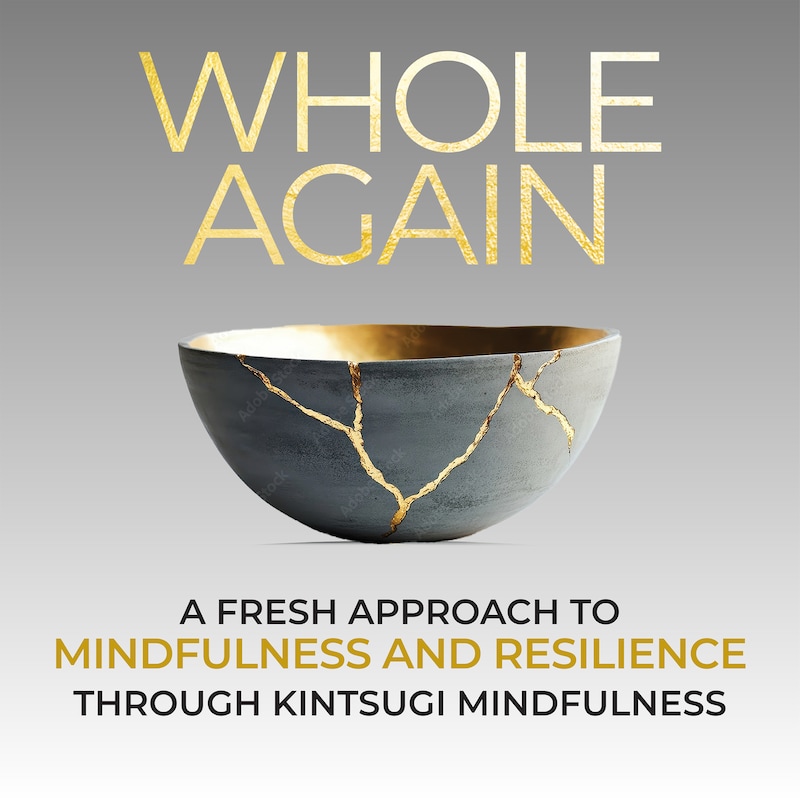
The Whole Again Podcast: Mindfulness and Resilience through Kinstugi Wisdom airs every Monday, Wednesday and Friday with Pause Breathe Reflect Microdose Meditations, Growth Mindset and Mindfulness Tips, Transformation our scars into healing and resilience, and a new series from May to August called A Perfectly Imperfect Union.
-------
Are the supplements you’re taking actually improving your health—or just draining your wallet?
With so many podcasts, influencers, and articles pushing the latest “must-have” supplement, it’s easy to feel like you’re falling behind or not on the growth mindset bus if you’re not taking them all. But what if most of that advice is based on incomplete science, short-term studies, or even hidden agendas? This episode challenges the noise and helps you rethink what’s truly necessary for your well-being.
- Gain clarity on how to evaluate supplement claims so you can make smarter, evidence-based decisions
- Understand the critical difference between statistical results and real-world health impact
- Learn how simplifying your routine and focusing on real nutrition can support long-term health without unnecessary expense
Press play to discover how to cut through the supplement hype and confidently choose what actually supports your health and performance.
You can now download my Pause Breathe Reflect App with Microdose EQ for FREE on Apple’s App Store or Google Play. Discover how to spend less time on your phone and more time on things that bring you joy. Also, find the support you need to navigate today’s uncertainty with more calm and grace.
Receive a FREE copy of my book: “My Last Bad Day Shift.”
We can also connect on LinkedIn.
Subscribe to be sure you don’t miss any of the micro-meditations, wellness tips, and guidance that I publish every Monday, Wednesday, and Friday at 7:11 am.
Transcripts
Hey there, it's Michael. Welcome to Whole again, the show that's here in support of you creating a meaningful life and the person you're becoming. And today we're gonna talk about supplements because it seems like everywhere you turn. Another podcast in news articles. Someone's telling you to take this supplement?
No, no, no. Wait. Take that one. No wait. Take both of them. Heck, why not take 'em all more is better. Right? Well, I wanna offer a different perspective on that because through my recovery from my last crash last July, I used it as a way to tabla Raza, create a clean slate, and really look at really everything when it comes to my wellness.
What's working, what's a placebo? What can I shed? And one thing I did was to stop most of the supplements I've been taking, and I'll share what's happened since. But I wanna start this conversation off with something really sexy. Some information about clinical trial design. I know. Like how, how good is this?
Wait. My background is in the pharmaceutical industry, so I know, I know Elise enough to be dangerous at cocktail parties when it comes to clinical trial design and the subtle differences that most people who go on podcasts and tell X, Y, or Z don't really share with the audience. So let's start here. One of the most rigorous kinds of trials that can be done is a double-blinded placebo controlled trial.
But in the supplement world, these are rarely conducted because they are super expensive. You need a lot of patients, as I would say. Since you need so many participants, you also need many study sites, which just makes everything much more complicated. So what's usually done are small trials. Sometimes they're not even human trials, but again, a lot of people who come on podcasts or write articles don't disclose what is an animal trial and what's a human trial.
They also don't talk about the characteristics of the humans in these trials. They just very top line share the results and they might say that the findings are statistically significant. That's one term you'll hear baned about from time to time. And what that means is that the results of the trial are unlikely due to chance.
They're not random, but. Generally, it's a math kind of conclusion. There's a difference between being statistically significant and clinically significant or clinically meaningful. That's what we wanna focus in on. The clinical significance is really about what effect does this supplement have in real life.
In essence, how will it make you feel? What's the ultimate impact of taking the supplement? Which by the way, there's no copay for, you're paying straight up cash ola and taking all these supplements. Well, it can get pretty pricey, right? So if you're gonna spend all that money, they better work. Now, I will say placebos work.
A lot of placebo controlled trials. You'll see the placebo arm of a trial actually showing promise and clinical significance at least for a period of time. The other challenge with. The supplement studies that people tout is that most of them are not long-term studies. They're not longitudinal studies.
They're usually very short in duration. It could be a month, it might be 12 weeks. At best, you get six months, and during these short trials, the intervention, the supplement in this case can show a benefit. Sometimes the participants feel different because they're in a study or we're getting a little bit of that placebo effect that I referenced just a minute ago.
But over the long haul, the effects or the results start to wane. This is key because a lot of the supplements we're recommended to take. People say you should take 'em forever. Stay on them. They also don't disclose if they have any type of financial connection with the supplement company. Basically, do they have a conflict of interest?
This is something that doesn't come up sometimes in news articles and certainly in podcast episodes I'll give you that really underscores. Cycling gels and nutrition and drinks and all that jazz from a particular company. And a few months ago, they announced a new product they were carrying and what they were touting was that it would help reduce cortisol.
So that sounds pretty cool, right? It would reduce cortisol by 36% and you're like 36%. That's amazing. Of course. Keep in mind, we don't know if 36% is good, average poor, but it's easy to draw a conclusion that it must make a difference in performance. Right? In the clinical trials for this particular product, though, they showed that drop one, it was only a four week study with very healthy pro soccer players from Italy, but they didn't translate.
The drop in cortisol to performance, did it help them perform better? Were the people taking this product doing better relative to their peers who weren't taking the product? Again, there might be statistical significance, but they didn't really talk about the clinical meaningful significance, and I expensive.
It's like a dollar and a half for each serving. And what they didn't share in the pitch for you to buy it is that you need to take three servings within 24 hours of a big workout in order to get even close to those benefits. And keep in mind that not everything works for everyone, even with creatine, which is all over the podcast landscape.
There's a 20 to 30% non-responder rate, and that stuff is also, well, it can be expensive as well. I share all this with you so you can have more discernment as you read articles about supplements or you listen to a podcast that is recommending that you take X, Y, or Z supplement. Pay attention to what the influencers are sharing and what they're not sharing.
During these interviews, and one thing that I'd like to see all podcasters do, all the hosts is actually put the studies that are referenced in the interview in the show notes. Instead of putting up all their links on selling you more shit, put the science in the show notes so we can. Access that and better understand exactly what these supplements will do for us and what they won't, and also where they can be harmful because there's not a lot of research on taking a boatload of supplements.
And some supplements are fat soluble, like Vitamin A, vitamin D, E, and K. Having too much of them can build up in the body and that can put a strain on certain body organs like the liver, or interfere with other nutrients, or even interfere with maybe some medicine you happen to be taking. 'cause as we're taking all these supplements, it's rare that we're really coordinating our supplementation with what our doctors are recommending so they could be on the same page with us.
So let's go back to my recovery in this blank slate I created. I really wanted to take a look at my overall strength and flexibility and stamina, and I did a lot of different things, or I have done a lot of different things in this recovery so I can be as strong as possible because as I went through what I went through.
If you don't know, I broke my femur in five places last July due to a low hanging utility cable that was stretched across the road that blended in with the background. I didn't see it. I got all snarled up in it. It threw me down to the ground like I was a rag doll and I broke my left femur in five places.
And if you know my. Sort of origin story. You know, I've already gone through a whole bunch of breaks. I like to joke that Lindsay Vaughn and I have a competition as to who has more hardware in their body. She doesn't know we have this competition, but it's just like between me and me, and me and her. I guess I digress.
So I took this approach to my balance, my flexibility, my overall strength. My stamina, my aerobic endurance, all that. But I also wanted to take a look at how I was approaching my nutrition. Generally, I have a pretty healthy game plan, at least I believe, so it's 97% plant-based. I try to get ample amount of fiber, which is one of the growth tips I've recommended during my series this year.
I try to eat with my gut microbiome in mind so I have good diversity in my gut, which then can help strengthen my immune system, yada, yada, yada. I think I was doing okay and I was taking a bunch of supplements and one supplement I was taking was a G one. I bought into the story, I bought into the marketing.
I listened to all the podcasts that I thought. They were all promoting this green powder that everyone should be having. And I was like, yeah, totally makes sense. It has 75 different ingredients. I was like, oh, that's cool. So I went deep into Ag one for a number of years, but that stuff is pricey. It's about a hundred bucks a month.
But I was like, yeah, this is part of my morning routine. First thing in the morning, mix up my a G one, just like the commercials say. And I thought I was doing something for my health. But as I mentioned through my recovery, I was like, wait a second, how do I know it's actually beneficial? Like, how do you really know Michael?
And at that time I was doing a little bit more research on. And the founder. I'm a big believer that the origin stories of companies matter, like how? I don't like Meta or Facebook because the origin story of Facebook, well, the bones aren't good. I think it's creepy. So I'm not a fan of Mark Zuckerberg and when I know other companies and their stories and they don't jive with my values, well, it's by Felicia time.
And as I was doing more research on AG one, I wasn't thrilled with how they started, and they're quite secretive about their ingredients. My feeling is if it's that good, why not be transparent? If you wish to do your own sleuthing on Ag one and their story, there are plenty of ways to do it. I'm not gonna get into all of it here because that's not the focus of this particular episode.
What I was most curious about was it actually doing anything for me? Now, one thing I have done over the last several years, really before the pandemic, is do a pretty comprehensive blood lab panel. It's more extensive than what you get at the doctor's office twice a year, every year, and it measures everything.
Or I guess almost everything. What I found after stopping a G one for about four months now, going on month six, is that none of my blood lab levels changed at all. Nothing got worse. Remarkable, right? So I drew the conclusion that a G one wasn't really doing anything except maybe making my urine. Super expensive.
So I stopped it and I feel great. I still have great energy, I feel healthy, and I've also made a commitment to continue to double down on eating as best as I can. Real food that provides those nutrients in a real form. So that has been my approach. Now a G one may work for you. My overall recommendation is do some testing to prove if it actually is or not.
Now you might take a G one or another supplement just because you have your reasons, and to that, I would say, who am I to judge? I simply want to encourage you. As you step into a meaningful life and the person you're becoming is use greater discernment. When you read articles about supplements and you listen to influencers on podcasts, generally speaking, they're trying to sell you something and that something may work for you, or it may just be something that works for them because it makes them richer, but it doesn't make you any healthier.
As always, thanks for being here. Thanks for listening. If this episode resonated with you and you think a friend might enjoy it, I hope you'll share it with them, and I hope you'll check out Friday's episode On Friday. I have another one of my growth mindset tips that I'm sharing. Each week as I celebrate my 25th anniversary of my last bad day, and coming up in May through the summer, I'm sharing a new series I'm doing called A Perfectly Imperfect Union.
These are real conversations with real life people, real, real folk, if you will, on their reflections as America turns 250 years old. I've already done a number of these and I'm really stoked to bring these conversations and these people to you this summer. And if you'd like to participate or know someone who might like to join me, send them my way.
The goal is to have a hundred different conversations, actually, 102. Two conversations per state, plus the District of Columbia. Well, until Friday's episode. Let's celebrate our scars as golden symbols of our strength and resilience. And don't forget to have fun Storm in the castle.
And if you wish to learn more about creating beautiful ripples and how to prevent a bad moment from turning into a bad day, please visit my website, Michael O'Brien schiff.com. And sign up for my newsletter called The Ripple Effect, and join us each Monday, Wednesday, and Friday here at Whole Again, and discover how you can heal, grow, and become more resilient and celebrate our scars as golden symbols of strength and resilience.
Until then, remember, you can always come back to your breath. You've got this. And. We've got you.