Shownotes
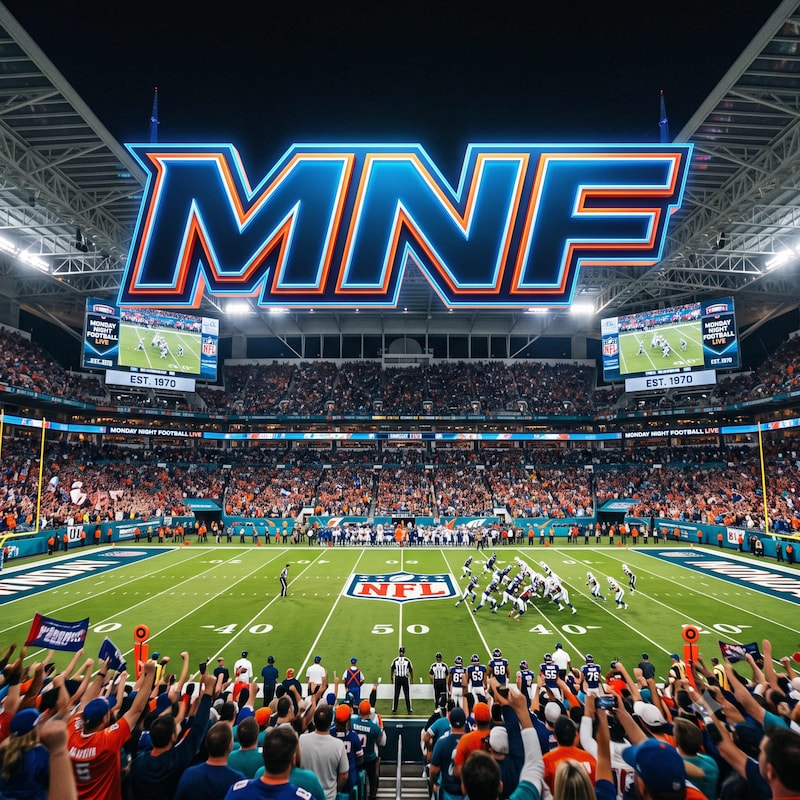
The inception of "Monday Night Football" in 1970 brought a new era in American sports culture, marking the unprecedented convergence of prime-time television and professional football. On a historic night, 85,703 spectators filled Cleveland's Municipal Stadium, while millions across the nation tuned into ABC, resulting in a collective experience that forever altered the landscape of televised sports. This episode delves into the visionary efforts of NFL Commissioner Pete Rozelle, who, despite initial failures, strategically identified Monday night as an unclaimed opportunity for football viewership. We explore the innovative production techniques introduced by Rune Arledge, which elevated the broadcast to a spectacle, capturing not only the game but also the emotions of players and spectators alike. Ultimately, we reflect on how "Monday Night Football" became more than mere entertainment; it evolved into a cultural phenomenon that redefined the American pastime and solidified football's place as the nation's foremost sport.
Don't forget to check out and subscribe to the Pigskin Dispatch YouTube channel for additional content and the regular Football History Minute Shorts.
Miss our football by the day of the year podcasts, well, don't, because they can still be found at the Pigskin Dispatch website.
Do you want more football history? Test your Gridiron Knowledge, we feed you Daily with our new FREE activity, The Pigskin Trivia Drive.
Grab a copy of our latest book, "Marooned," on the 1925 Pottsville Maroons NFL franchise saga.
*OR* Grab a copy of our book on Western Pennsylvania football history, "World's Greatest Gridiron Team" on the 1903 Franklin All-Stars
Drop us a line at PigskinDispatch@gmail .com and check out and subscribe to the Pigskin Dispatch YouTube channel.
Contact us directly at [email protected]
Miss our football by the day of the year podcasts, well, don't because they can still be found at the Pigskin Dispatch website.
[0:00–1:30] COLD OPEN — The Booth, The Lights, The Gamble
That night, 85,703 people packed Cleveland's Municipal Stadium — the largest crowd the Browns had ever drawn. Advertisers paid sixty-five thousand dollars per minute for the privilege of interrupting this experiment. One out of every three televisions in America was tuned to ABC. And the next morning, for the first time in history, millions of people walked into their offices, their factories, their schools, and asked the same question:
"Did you see that football game last night?"
Monday Night Football was born. And nothing — not the sport, not television, not the American week — would ever be the same.
ACT I: THE VISION — Pete Rozelle's Decade-Long Campaign
Pete Rozelle became NFL commissioner in 1960 at age thirty-three — the youngest man ever to hold the job. He inherited a league that was popular but provincial. Baseball was still the national pastime. College football had the pageantry and the tradition. The NFL had the players, the rivalries, and increasingly the television ratings — but only on Sunday afternoons.
B-roll: Young Pete Rozelle — the horn-rimmed glasses, the sharp suits, the commissioner's office in Manhattan. Newspaper headline: "ROZELLE NAMED NFL COMMISSIONER, 1960."
Rozelle believed football could dominate prime time. Not just championship games — he wanted a weekly game, under the lights, in the middle of the week, when America was home, eating dinner, watching television.
His first attempt failed before it started. In 1964, Rozelle proposed a package of Friday night games. The response was swift and brutal. High school football coaches across the country accused him of trying to destroy their sport. Congress had already passed the Sports Broadcasting Act of 1961, which explicitly prohibited the NFL from televising games on Friday nights and Saturdays, to protect high school and college football. Rozelle was boxed in.
But he wasn't done. He looked at the calendar. One night remained unclaimed, unprotected, and wide open: Monday.
B-roll: Tiger Stadium, Detroit — September 28, 1964. A sellout crowd of 59,203 — the largest ever for pro football in Detroit. The Packers and Lions. No TV cameras. No broadcast. Just an experiment.
That first Monday night game, Packers at Lions, wasn't televised. It didn't matter. The sellout crowd proved there was an appetite. Over the next four seasons, Rozelle kept pushing. CBS carried one Monday night game in 1966 and 1967, then two in 1968 and 1969. NBC followed with AFL Monday night games in 1968 and 1969. The ratings were strong. Rozelle had his proof of concept.
Now he needed a network to commit to a full season — thirteen Monday nights, every week, September through December — as part of the new television contract that would begin in 1970, coinciding with the AFL-NFL merger.
[3:30–5:30] ACT II: THE DEAL — How ABC Got Stuck with the Best Idea in Sports
Rozelle took his Monday night proposal to all three networks in 1969.
He went to CBS first. The "Tiffany Network" had carried the NFL since 1956. They were the league's natural partner. But CBS had a problem: Monday nights belonged to programming that worked. The Doris Day Show. The Carol Burnett Show. Mayberry R.F.D. These shows weren't spectacular, but they were stable. CBS executives looked at Rozelle's proposal, did the math, and said no. They weren't going to blow up their Monday schedule for a football experiment.
Rozelle went to NBC next. Same response. NBC's Monday lineup included Rowan & Martin's Laugh-In — the hottest comedy on television. The network wasn't about to preempt it for thirteen weeks of football. Pass.
That left ABC — the perennial third-place network. ABC had been a distant number three in prime time for years. Its Monday night lineup was a weakness, not a strength — a collection of low-rated shows nobody would miss. But even ABC was hesitant. A weekly three-hour prime-time sports broadcast was unheard of. The production costs would be enormous. The risk of failure was real.
B-roll: The three network logos — CBS, NBC, ABC — appearing one by one. Each fades to red except ABC. Then: Howard Hughes — the reclusive billionaire, beard, long fingernails, the hermetic Las Vegas penthouse — a single photograph.
Rozelle had one card left to play. He let it be known that if ABC passed, he would take the package to the Hughes Sports Network — an independent network bankrolled by the reclusive billionaire Howard Hughes. Hughes had the money. He had the satellite capacity. And if Rozelle signed with Hughes, ABC's affiliates — starved for football — might preempt the network's Monday programming anyway and carry the Hughes feed.
It was a bluff. But ABC blinked.
ABC signed for $8.5 million for the 1970 season. It was, by far, the cheapest of the three network contracts — CBS and NBC had paid far more for their Sunday afternoon packages. But ABC now owned Monday night. And Rozelle had one more demand.
He insisted that ABC assign the production to Roone Arledge — the thirty-eight-year-old producer who had revolutionized Olympic coverage and transformed Wide World of Sports into a cultural institution. Rozelle had seen what Arledge could do with cameras, storylines, and human drama. If Monday Night Football was going to work, Arledge had to run it.
ABC agreed. Arledge got the assignment. And he immediately started breaking every rule in sports television.
[5:30–7:30] ACT III: THE ARCHITECT — Roone Arledge's Revolution
Roone Arledge didn't want to produce a football game. He wanted to produce a spectacle.
B-roll: Arledge — the thick glasses, the intense stare, the reputation for genius and impossible behavior. Behind him: camera banks, monitors, the chaos of a control room.
His first decision: double the cameras. Standard NFL broadcasts at the time used four or five cameras to cover a game. Arledge ordered nine — more angles, tighter close-ups, better framing. He wanted viewers to see the sweat on a quarterback's face, the grass stains on a lineman's jersey, the steam rising from a bald head on the sideline. He wanted intimacy — the kind of visual storytelling that television dramas used, that sports had never attempted.
B-roll: Slow-motion replay — the first extensive use in NFL broadcasting. A play runs forward, then rewinds, then runs again from a different angle. Arledge's innovation.
His second decision: embrace instant replay. Replay technology had existed for years, but no NFL broadcast had used it extensively. Arledge made it the centerpiece. Every big play would be shown twice, three times, from multiple angles. The audience wouldn't just watch the game — they would study it.
His third decision was the most radical of all. Standard broadcast booths had two men: a play-by-play announcer and a color analyst. Arledge wanted three.
One voice to call the action. One voice to explain the strategy from a player's perspective. And one voice — the wildcard — to criticize, provoke, and entertain.
For play-by-play, Arledge pursued Curt Gowdy of NBC and Vin Scully of the Dodgers. Both were under contract and couldn't break free. He considered Jack Buck — but Buck, still angry about his treatment at ABC years earlier, refused to even respond to the offer. Arledge settled on Keith Jackson — the golden-voiced Georgia native who was already ABC's best college football announcer. Jackson was a pro. He could anchor anything.
For the analyst chair, Arledge wanted Frank Gifford — the former Giants star who had become a polished broadcaster at CBS. But Gifford was still under contract. He suggested an alternative: Don Meredith, the recently retired Dallas Cowboys quarterback. Meredith had a Texas drawl, a folksy charm, and absolutely no broadcasting experience. Arledge hired him anyway. He wanted a voice that sounded like the audience — a fan who happened to have played the game.
For the third chair, Arledge wanted controversy. He wanted someone America would talk about on Tuesday morning, whether they loved him or hated him. He hired Howard Cosell — a forty-nine-year-old attorney turned sportscaster, with a nasal Brooklyn accent, a vocabulary that belonged in a courtroom, and an unshakable belief that he was the smartest person in any room. Cosell had spent years irritating viewers on ABC's boxing broadcasts and local New York radio. Arledge didn't just tolerate Cosell's abrasiveness — he weaponized it.
The booth was set. Jackson, Meredith, Cosell. The stage was built. Nine cameras, instant replay, three voices, prime time, Monday night. All Arledge needed was the right game.
He demanded Joe Namath.
[7:30–9:30] ACT IV: THE GAME — September 21, 1970
Joe Namath was the most famous athlete in America. Broadway Joe — the fur coats, the white shoes, the Manhattan nightlife, the guarantee of Super Bowl III eighteen months earlier. He was a television star who happened to play quarterback. Arledge told Rozelle: the first Monday Night Football game must feature Namath and the New York Jets. The opponent didn't matter. Namath was the draw.
The league scheduled the Jets against the Cleveland Browns — a game that, on paper, looked like a mismatch in Cleveland's favor. The Browns had gone 10-3-1 the previous season, reaching the NFL Championship Game. The Jets had finished 10-4 in the AFL but missed the playoffs. But the records were beside the point. Namath was the story.
B-roll: Cleveland Municipal Stadium, September 21, 1970 — 85,703 fans. The field under the lights. Namath warming up, the white cleats, the left arm. Keith Jackson setting the scene: "Two powers in professional football meet for the first time ever as members of the new American Football Conference."
The game delivered. Cleveland struck first — Bill Nelsen, the Browns' steady veteran quarterback, took control early. The Jets answered. By halftime, the Browns led 14-7. Then, on the opening kickoff of the second half, came the moment that announced this show was different.
B-roll: Homer Jones — the Browns' explosive return man — catching the kickoff at the six-yard line. He cuts left, finds a seam, accelerates. Ninety-four yards. Touchdown. The stadium erupts.
Homer Jones, one of the fastest men in football, returned the second-half kickoff ninety-four yards for a touchdown. Cleveland led 21-7. The Jets wouldn't quit — Namath hit George Sauer for a thirty-three-yard touchdown to pull within a touchdown. But late in the fourth quarter, Billy Andrews — a Browns defensive back — intercepted Namath and returned it twenty-five yards for the game-clinching score.
Final: Browns 31, Jets 21.
B-roll: The final whistle. The scoreboard. The three men in the booth — Jackson professional to the end, Meredith adding the folksy touch, Cosell holding court.
But the game on the field was only half the story. The broadcast itself was unlike anything America had seen. The cameras captured faces — Namath's frustration, Nelsen's grim resolve, the crowd's delirium. The three-man booth crackled with energy — Jackson's steady narration, Meredith's aw-shucks humor, Cosell's biting commentary. At halftime, Cosell provided highlights from Sunday's games — for millions of viewers, this was the first time they saw what had happened around the league that weekend, three days late, in a pre-cable, pre-internet world where sports news traveled slowly.
There was one audience that didn't see the broadcast: the city of Cleveland. NFL blackout rules required home games to be blacked out in the local market through 1972. WEWS-TV, Cleveland's ABC affiliate, showed alternate programming. Eighty-five thousand people filled the stadium. Millions more watched across the country. But Clevelanders who stayed home missed it — a cruel irony for the city that hosted history.
The numbers told the story. Thirty-three percent of American televisions were tuned to ABC that night — a share that rivaled the biggest entertainment shows. Advertisers who had gambled $65,000 per minute felt like geniuses. The Tuesday morning verdict was unanimous: Monday Night Football was not an experiment. It was the future.
[9:30–10:30] ACT V: THE AFTERMATH — How Monday Night Changed America
The cultural impact was immediate and permanent.
Bars and restaurants that had never owned televisions installed them — and kept them tuned to ABC on Monday nights. What had been the slowest night of the week in the restaurant industry became one of the busiest. Monday became an event.
Women began watching professional football in numbers the sport had never seen. The three-man booth — with its entertainment-first approach, its personalities, its drama — made the broadcast accessible to viewers who didn't know a nickel defense from a two-deep zone. Cosell explained the game in English, not jargon. Meredith made jokes. Gifford — who replaced Jackson in 1971 — provided the steady, handsome center. You didn't need to know football to enjoy Monday Night Football. You just needed to be awake.
B-roll: The iconic trio — Cosell, Gifford, Meredith — in the booth. The 1975 introduction of "Heavy Action" — Johnny Pearson's theme that became synonymous with Monday night. Celebrity guests: John Lennon in the booth, 1974, laughing with Cosell. Muhammad Ali. Presidents.
By the mid-1970s, Monday Night Football was routinely the highest-rated show on television — not just among sports programs, among all programs. The 1977 season opener between the Cowboys and Vikings drew a 31.1 rating. A midseason game between the undefeated Dolphins and the Steelers in 1972 drew 35.7 million viewers. These were Super Bowl-level numbers arriving every Monday night.
The show's success changed the economics of professional football. The MNF contract proved that prime-time NFL programming could command premium advertising rates. Every subsequent television negotiation — every rights fee increase, every expansion of coverage — traced back to the proof of concept that Arledge and Rozelle established on September 21, 1970.
And the show transcended sports in ways no one could have predicted.
B-roll: December 8, 1980. The Orange Bowl — Dolphins vs. Patriots. A close game, fourth quarter. In the booth, Cosell receives a note. His face changes.
On December 8, 1980, during a tight game between the Dolphins and Patriots, a producer handed Howard Cosell a slip of paper. Cosell read it, hesitated, then looked into the camera. He told America, live, that John Lennon — the former Beatle, a cultural icon, a friend who had been a halftime guest on the program years earlier — had been shot and killed outside his apartment building in New York. The moment was surreal — a football game suddenly interrupted by tragedy, announced by the most controversial voice in sports. It is, to this day, one of the most famous moments in American television history.
Monday Night Football had become more than a game. It was the place where America gathered on Monday nights — for sport, for entertainment, for news, for community. It was appointment viewing in an era before DVRs, before streaming, before the fragmentation of attention. When Monday Night Football was on, the country stopped what it was doing and watched together.
[10:30–11:00] CLOSING — The Legacy
Visual: Fast cuts — the modern MNF broadcast on ESPN, Joe Buck and Troy Aikman, the Manningcast, the elaborate graphics packages. Then — a slow dissolve back to 1970: Keith Jackson's voice, the grainy footage, the packed Municipal Stadium, the original booth.
Monday Night Football aired on ABC for thirty-six years — from 1970 through 2005, one of the longest-running prime-time series in American television history. It moved to ESPN in 2006, where it continues today. As of 2026, the broadcast has aired 718 games. The current television contract runs through 2033. The show that CBS and NBC refused to touch is now worth billions.
But the real legacy isn't financial. Before Monday Night Football, the Super Bowl was the only NFL game that felt like national event television. After Monday Night Football, every week had a national game — a shared moment, a watercooler conversation, a collective experience that crossed regional loyalties and made football the universal language of American leisure.
Baseball had been the national pastime. By the end of the 1970s, football had taken the crown. Monday Night Football didn't do that alone — but it was the wedge that broke the door open. It proved that football wasn't just Sunday afternoon entertainment. It was prime time. It was
Transcripts
We're celebrating 1970 of American football.
Speaker A:And see if you remember this particular instance that happened in September of that year.
Speaker A:That night, 85,703 people packed Cleveland's Municipal Stadium, the largest crowds the Browns had ever drawn.
Speaker A:Advertisers paid $65,000 per minute for the privilege of.
Speaker A:Of interrupting this experiment.
Speaker A:One out of every three televisions in America had tuned into abc.
Speaker A:And the next morning, for the first time in history, millions of people walked into their offices or factories, their schools, and asked the same question.
Speaker A:Did you see that football game last night?
Speaker A:Monday Night Football was born, and nothing, not the sport, not television, not the American week, would ever be the same.
Speaker A:Pete Roselle became NFL commissioner in 1960 at the age of 33, the youngest man ever to hold the job.
Speaker A:He inherited a league that was popular, but provincial.
Speaker A:Baseball was still the national pastime.
Speaker A:College football had the pageantry and the tradition.
Speaker A:The NFL had the players, the rivalries and increasing television ratings.
Speaker A:But only on Sunday afternoons.
Speaker A:Roselle believed football would dominate primetime, not just championship games.
Speaker A:He wanted a weekly game under the lights in the middle of the week.
Speaker A:The America was home, eating dinner, watching television together.
Speaker A:His first attempt failed before it started.
Speaker A:In 1964, Roselle proposed a package of Friday night games.
Speaker A:The response was swift and brutal.
Speaker A:High school football coaches across the country accused him of trying to destroy their sport.
Speaker A:Congress had already passed the Sports broadcasting Act of 1961, which explicitly prohibited the NFL from televising games on Friday nights and Saturdays to protect high school and college football.
Speaker A:Roselle was boxed in, but he wasn't done.
Speaker A:He looked at the calendar.
Speaker A:One night remained unclaimed, unprotected and wide open.
Speaker A:And that's Monday.
Speaker B:Now.
Speaker A:The first Monday night game, the packers and Lions, wasn't televised.
Speaker A:It didn't really matter.
Speaker A:A sellout crowd proved that there was an appetite.
Speaker A:Over the next four seasons, Roselle kept pushing.
Speaker A:CBS carried one Monday night game in 1966 and 67, and in two in 68 and 69.
Speaker A:NBC followed with an AFL Monday night game in 1968 and 69, and the ratings were strong.
Speaker A:Roselle had his proof of concept.
Speaker A:Now he needed a network to commit for a full season.
Speaker A:13 Monday nights every week, September through December, as part of part of a new television contract that would begin in 1970, coinciding with the AFL NFL merger.
Speaker A:What a bigger time.
Speaker A:To get this proven out, Roselle took his Monday night proposal to all three networks.
Speaker A:In 1969, he went to CBS first.
Speaker A:The Tiffany network had carried the NFL since 1956.
Speaker A:They were the league's natural partner.
Speaker A:But CBS had a problem.
Speaker A:Monday nights belonged to a programming that worked.
Speaker A:The Doris Day show, the Carol Burnett Show, Mayberry, RFD These shows weren't spectacular, but they were stable.
Speaker A:CBS executives looked at Roselle's proposal, did the math and said, no, thank you.
Speaker A:They weren't going to blow up their Monday night schedule for a football experiment for just 13 weeks.
Speaker B:Roselle went to NBC next.
Speaker B:Same response.
Speaker A:NBC's Monday night lineup included Rowan and Martin's Laughing, the hottest comedy on television.
Speaker A:The network wasn't about to preempt it.
Speaker C:For 13 weeks of football.
Speaker A:Hard pass.
Speaker A:That left ABC the perennial third place network.
Speaker A:ABC had been a distant number three in primetime for years.
Speaker A:Its Monday night lineup was a weakness, not a strength.
Speaker A:A collection of low rated shows that nobody would miss.
Speaker A:But even ABC was hesitant.
Speaker A:A weekly three hour primetime sports broadcast was unheard of at that time.
Speaker A:The production costs would be enormous.
Speaker A:The risk of failure was absolutely real.
Speaker A:Roselle had one card left to play and he let it be known that if ABC passed, he would take the package to the Hughes Sports Network, an independent network bankrolled by the reclusive billionaire Howard Hughes.
Speaker A:Hughes had the money, he had the satellite capacity.
Speaker A:And if Roselle signed with Hughes, ABC's affiliates star for football might preempt the network's Monday night programming anyway and carry the Hughes feed now.
Speaker A:ABC signed for $8.5 million for that 1970 season and it was by far the cheapest of the three network contracts.
Speaker A:CBS and NBC had paid far more for their Sunday afternoon packages.
Speaker A:But ABC now owned Monday night.
Speaker A:And Rozelle had one more demand.
Speaker A:He insisted that ABC assign the production to Rune Arledge, the 83 year old producer who had revolutionized the Olympic coverage and transformed the wide world of sports into a cultural institution.
Speaker A:How about that for the agony of defeat?
Speaker A:Now Roselle had seen what R. Ledge could do with cameras, storylines and human drama.
Speaker A:If Monday Night Football was going to work, Arledge had to run it.
Speaker A:ABC agreed.
Speaker A:Arledge got the assignment and he immediately started breaking every rule in sports television.
Speaker C:Root.
Speaker A:Arledge didn't want to produce a football game.
Speaker A:He wanted to produce a spectacle.
Speaker A:His first decision?
Speaker A:Double the cameras.
Speaker A:Standard NFL broadcasts at the time used four or five cameras to cover a game.
Speaker A:Arledge ordered nine more angles, tighter close ups, better framing.
Speaker A:He wanted viewers to see the sweat on a quarterback's face, the grass stains on a lineman's jersey, and steam rising from the bald head on the sideline.
Speaker A:He wanted intimacy, the kind of visual storytelling that television dramas used, that sport, said never attempted before.
Speaker A:His second decision.
Speaker A:Embrace instant replay.
Speaker A:Replay technology had existed for years, but no NFL broadcast had used it extensively.
Speaker A:Arledge made it the centerpiece.
Speaker A:Every big play would be shown twice, three times from multiple angles.
Speaker A:Audiences wouldn't just watch the game, they would study it.
Speaker A:His third decision was the most radical of all.
Speaker A:Standard broadcast booths had two men, a play by play announcer and a color analyst.
Speaker A:Arledge wanted three.
Speaker A:One voice to call the action, one voice to explain the strategy from a player's perspective, and one voice, the wild card, to criticize, provoke and entertain.
Speaker A:For play by play, Arledge pursued Kurt Gowdy of NBC and Vin Scully of the Dodgers.
Speaker A:Both were under contract and could not break free.
Speaker A:He considered Jack Buck.
Speaker A:But Buck, still angry about his treatment at ABC years earlier, refused to even respond to the offer.
Speaker A:Arledge settled on Keith Jackson, the golden voice Georgia native who had already had ABC's best college football announcer in his pocket.
Speaker A:Jackson was a pro and he could anchor anything.
Speaker A:For the analyst chair, Arledge wanted Frank Gifford, the former Giants star who had become a published broadcaster at cbs.
Speaker A:But Gifford was still under contract.
Speaker A:He suggested an alternative.
Speaker A:Don Meredith, the recently retired Dallas Cowboys quarterback.
Speaker A:Meredith had a Texas draw, a folksy charm and absolutely no broadcasting experience.
Speaker A:Arledge hired him anyway.
Speaker A:He wanted a voice that sounded like the audience.
Speaker A:A fan that happened to have played the game.
Speaker A:For the third chair, Arledge wanted controversy.
Speaker A:He wanted someone America would talk about on a Tuesday morning, whether they loved.
Speaker B:Him or they hated him.
Speaker A:They hired Howard Cosell, a 49 year old attorney turned sports broadcaster.
Speaker A:That nasal Brooklyn accent, the vocabulary that belonged in a courtroom, and an unshakable belief.
Speaker A:Belief that he was the smartest person in any room.
Speaker A:Cosell had spent years irritating viewers on, on ABC's Boxing Broadcast and local New York radio.
Speaker A:Arledge didn't just tolerate Cosell's abrasiveness, he weaponized it.
Speaker A:The booth was set.
Speaker A:Jackson, Meredith, Cassell.
Speaker A:The stage was built.
Speaker A:Nine cameras, instant replay, three voices, prime time, Monday night.
Speaker A:All Arledge needed was the right game.
Speaker A:Joe Namath was the most famous athlete in America.
Speaker A:Broadway Joe.
Speaker A:The fur coats, the white shoes, Manhattan nightlife, the guarantee of Super Bowl 3.
Speaker A:Eighteen months earlier, he was a television star who happened to play quarterback.
Speaker A:Arledge told Roselle the first Monday night game must feature Namath and the New York Jets.
Speaker A:The opponent didn't matter.
Speaker B:Namath was the draw.
Speaker A:The league scheduled the jets versus the Cleveland Browns.
Speaker B:A game that on paper looked like.
Speaker A:A mismatch in Cleveland's favorite.
Speaker B:But the Browns had gone 1031 the previous season, reaching the NFL championship game.
Speaker B:The jets had finished just 104 in the AFL but missed the playoffs.
Speaker A:But the records were beside the point.
Speaker A:Namath was the entire story.
Speaker B:This game delivered.
Speaker A:Cleveland struck first.
Speaker B:Bill Nelson, the Browns steady veteran quarterback, took control early and the jets answered.
Speaker B:By halftime, the Brown Browns led 14 to 7.
Speaker B:Then on the opening kickoff in the second half came the moment that announced this.
Speaker B:The show was different.
Speaker B:Homer Jones, one of the fastest men in football, returned the second half kick 94 yards for touchdown.
Speaker B:Cleveland led 21 to 7, but the jets wouldn't quit.
Speaker B:Namath hit George Sauer for a 33.
Speaker A:Yard touchdown to pull within a touchdown.
Speaker B:But late in the fourth quarter, Billy Andrews, a Browns defensive back, intercepted Namath and and returned it 25 yards for a pick six.
Speaker B:The game clinching score, final score, Browns 31, Jets 21.
Speaker B:But the game on the field was only half the story.
Speaker B:The broadcast itself was unlike anything America had seen.
Speaker B:The cameras captured faces, Namus frustration, Nelson's grim resolve, the crowd's delirium.
Speaker B:The three man booth crackled with energy and Jackson's steady narration, Meredith's aw shucks humor and Cosell's biting commentary at halftime.
Speaker B:Cosell provided highlights from Sunday's games for millions of viewers.
Speaker B:And this was the first time they saw what happened around the league that weekend.
Speaker B:Three days late in a pre cable, pre Internet world where sports news traveled very slowly.
Speaker B:Now, one audience that didn't see the broadcast, the city of Cleveland.
Speaker B:The NFL blackout rules required home games to be blacked out in a local market.
Speaker B:Through 1972, WEWS TV, Cleveland's ABC affiliate, showed alternative programming.
Speaker B:85, 000 People filled the stadium.
Speaker B:Millions more watched across the country.
Speaker B:But Clevelanders who stayed home missed it.
Speaker B:A cruel irony for the city that hosted history.
Speaker B:The numbers told a story.
Speaker B:33% Of American televisions were tuned into ABC that night.
Speaker B:A share that rivaled the biggest entertainment shows.
Speaker B:Advertisers who had gambled 65,000 per minute felt like geniuses.
Speaker B:That Tuesday morning verdict was unanimous.
Speaker B:Monday Night Football was not an experiment.
Speaker B:It was the future of American football.
Speaker B:Now the cultural impact was immediate and permanent.
Speaker B:Bars and restaurants that had never owned televisions installed them and kept them tuned to ABC on Monday nights.
Speaker B:And what had been the slowest night of the week in the restaurant industry became one of the busiest.
Speaker B:Monday became an event.
Speaker B:Women began watching pro football in numbers in a sport had never seen before.
Speaker B:The three man booth, with its entertainment first approach, its personalities, its drama, made.
Speaker C:The broadcast accessible to viewers who didn't.
Speaker A:Know a nickel defense from a too deep zone.
Speaker A:But Cosell explained the game in English, not jargon.
Speaker A:Meredith made jokes.
Speaker A:Gifford, who replaced Jackson in 1971, provided the steady, handsome center.
Speaker A:You didn't need to know about football to enjoy Monday Night Football.
Speaker A:You just needed to be awake.
Speaker A:And by the mid-1970s, Monday Night Football was routinely the highest rated show on television.
Speaker A:Not just among sports programs.
Speaker A:Among all programs.
Speaker A:The 1977 season opener between the Cowboys and Vikings drew a 31.1 Nielsen rating.
Speaker A:A mid season game between the undefeated Dolphins and the Steelers in 72 drew 35.7 million viewers.
Speaker A:Now these were super bowl level numbers of arriving every Monday night.
Speaker A:The show's success changed the economics of pro football.
Speaker A:The Monday Night Football contract proved that prime time NFL programming could still command premium advertising rates.
Speaker A:Every subsequent television negotiating, every rights fee increase, every expansion of coverage traced back to the proof of concept that Arledge and Roselle established on September 21, 1970.
Speaker A:In the show transcended sports in ways to no one could ever have predicted.
Speaker A:On December 8, 1980, during a tight game between the Dolphins and the Patriots, a producer handed Howard Cosell a slip of paper.
Speaker A:Cosell read it, hesitated, and then looked into the camera.
Speaker A:He told America Live that John Lennon, the former Beatle, a culture icon, a friend who had been a lifetime a halftime guest on the program for years earlier, had been shot and killed outside his apartment building in New York.
Speaker A:The moment was surreal.
Speaker A:A football game suddenly interrupted by tragedy, announced by the most controversial voice in sports.
Speaker A:It is to say one of the most famous moments in American television history.
Speaker A:Monday Night Football become more than a game.
Speaker A:It was a place where America gathered on Monday nights for sport, for entertainment, for news, for community.
Speaker A:It was appointment viewing in an era before DVRs, before streaming, before before the fragmentation of attention.
Speaker A:When Monday Night Football was on, the country stopped what it was doing and watched it together.
Speaker A:Monday Night Football aired on ABC for 36 years from 1970 through 2005.
Speaker A:One of the longest running primetime series in American television history.
Speaker A:It moved to ESPN in 2006, where it continues today.
Speaker A:And as of 2026 the broadcast had aired 718 games.
Speaker A:The current television contract runs through 2033.
Speaker A:The show that CBS and NBC refused to to touch is now worth billions with a B.
Speaker C:The real legacy isn't financial.
Speaker C:Before Monday Night Football, the Super bowl was only NFL game that felt like a national television.
Speaker A:Now Monday Night Football every week had a national game, a shared moment, a water cooler conversation, a collective experience that crossed regional royalties and made football the universal language of American leisure.
Speaker A:Now, baseball had been the national pastime, but by the end of the 1970s, football had taken the crown.
Speaker A:Monday Night Football didn't do it alone, but it was a wedge that broke the door open.
Speaker A:It proved that football wasn't just Sunday afternoon entertainment anymore.
Speaker A:It was prime time.
Speaker A:It was culture.
Speaker A:It was America every Monday night from.
Speaker B:September to December for half a century and counting.
Speaker A:That's really hard to beat, but it's great football history.
Speaker C:It's a part of Americana, but it.
Speaker A:Belongs to our sport that we love.
Speaker C:And the history of the game that we love to talk about each and every time time we get together here.
Speaker C:And we hope that you enjoyed this great moment in history and hope that you spread the word.
Speaker C:You know.
Speaker C:Subscribe if you're listening to the podcast, tell your friends about it.
Speaker A:Check out our YouTube channel, and especially.
Speaker C:Check out pigskindispatch.com where we have a powerful search engine where you can search almost any term and either an article, a podcast or YouTube video will pop up from our library of pigskin dispatch.
Speaker C:And and by the way, our American football timeline is probably the most powerful timeline football's ever been assembled.
Speaker C:You can find almost anything there and we're building more onto it each and every day as we find more significant events.
Speaker C:Check out all of our games.
Speaker C:We have a a really a plethora of entertainment for you.
Speaker C:You can spend a whole day on pigskindispatch.com and not be disappointed.
Speaker A:Until next time.
Speaker C:Everybody have a great gridiron day.




