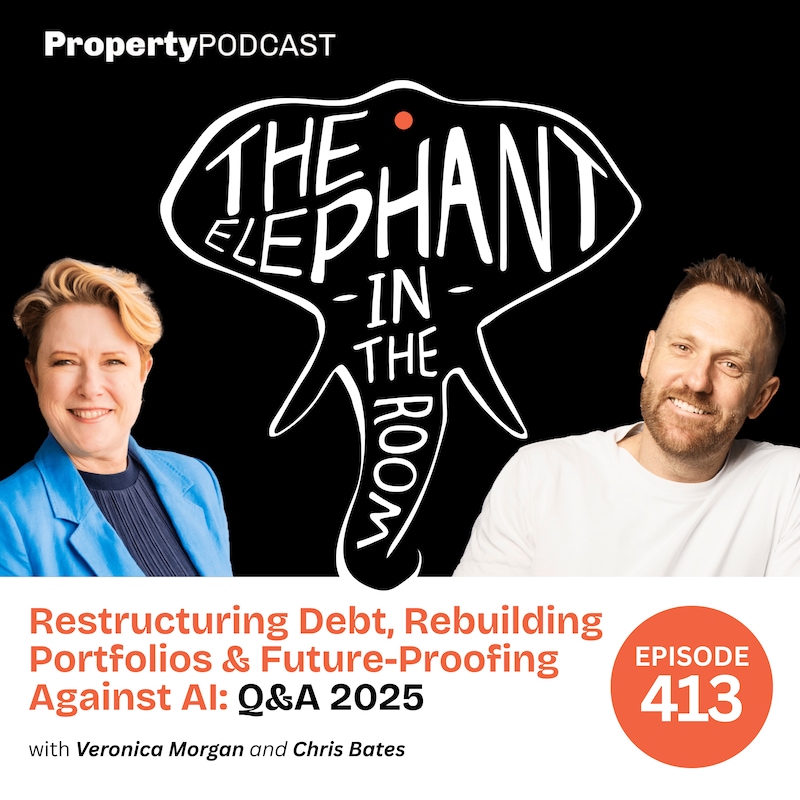
Shownotes
In this Q&A episode, Veronica and Chris unpack the real property questions investors are facing right now. From ATO debt rules to cashflow pressure and portfolio structure, this episode gets straight to the point and cuts through the myths.
They break down a $5.3M portfolio spread across Logan, Townsville, Shepparton, regional WA and Melbourne’s fringe, revealing why “affordable” properties often deliver slow long-term growth — and when selling is actually the smarter move.
The conversation also dives into rising insurance costs in flood-prone markets, including Gold Coast premiums hitting up to $20K a year. Veronica explains how underinsurance, flood overlays and lender behaviour could reshape future buyer demand.
Finally, Chris explores whether AI-driven job losses could weaken the property market, or simply concentrate demand into fewer suburbs. If you want clearer strategy and better decision-making, this Q&A delivers the insights investors need now.
Episode Highlights
00:00 — Introduction and Listener Questions Overview
00:25 — James' Question on Refinancing Loans
05:43 — Michael's Property Portfolio Deconstruction
18:14 — Nick's Question on Flood Insurance and Property Desirability
20:36 — Insurance Challenges and Borrowing Concerns
22:42 — Gold Coast Property Insights
26:42 — AI's Impact on White Collar Jobs and Property Market
27:59 — Future of Property Market Amid AI Revolution
37:14 — Investment Strategies in a Changing Market
41:50 — AI in Property Decision Making
Links
About the Guest
Mark Errichiello is a licensed buyers and vendors advocate and the Co-Founder & Director of Master Advocates, a Melbourne-based property advisory firm known for its strategic, data-driven approach to acquisitions, valuations, and auction representation. With decades of hands-on experience, Mark has attended every Block auction since the early seasons and understands the dynamics of high-pressure televised auctions better than most.
Mark has represented bidders in both metropolitan and regional markets — including acting as an anonymous strategic bidder during the Phillip Island Block season — giving him unique insight into how buyer psychology, auction order, and market fundamentals shape outcomes. His commentary cuts through hype and focuses on realistic pricing, fair value, and the long-term risks buyers often overlook.
Respected for his measured, forensic approach, Mark brings clarity to situations where emotion, spectacle, and production expectations collide with real market behaviour. His expertise helps buyers navigate fast-moving environments and make confident, well-informed decisions.
Connect with Guest
Resources
- Visit our website: https://www.theelephantintheroom.com.au
- If you have any questions or would like to be featured on our show, contact us at:
- The Elephant in the Room Property Podcast - questions@theelephantintheroom.com.au
- Looking for a Sydney Buyers Agent? https://www.gooddeeds.com.au
- Work with Veronica: https://www.veronicamorgan.com.au
- Looking for a Mortgage Broker? alcove.com.au
- Work with Chris:chrisbates@alcove.com.au
Enjoyed the podcast? Don't miss out on what's yet to come! Hit that subscription button, spread the word, and join us for more insightful discussions in real estate. Your journey starts now!
- Subscribe on YouTube: https://www.youtube.com/@theelephantintheroom-podcast
- Subscribe on Apple Podcasts: https://podcasts.apple.com/ph/podcast/the-elephant-in-the-room-property-podcast/id1384822719
- Subscribe on Spotify: https://open.spotify.com/show/3Ge1626dgnmK0RyKPcXMark0?si=26cde394fa854765
If you enjoyed today’s podcast, don’t forget to subscribe, rate, and share the show! There’s more to come, so we hope to have you along with us on this journey!
See you on the inside,
Veronica & Chris
Transcripts
TEITR413 (Q&A)
===
Introduction and Listener Questions Overview
---
Veronica Morgan: ~So, um, have you had a look at these ~
Veronica Morgan: ~questions? cool. So I'll just read very quick. Oh shit. I've meant to, I forgot to write the rest of the intro. Hang on a minute. I just will be covering when and if it's possible to reassign the debt you have in your own home to an investment A deconstruction will deconstruct a ~
Veronica Morgan: ~property portfolio containing a principal place of residence and five investments across four states, including one commercial poverty to determine whether selling down the residential to buy more commercial is a good idea.~
Veronica Morgan: ~Um, the resi, um, or also cover, um, flood. and flood and insurance risk. what was the last one? Um, uh, and, and what? Uh, AI could do to the property market. All right, that should do it. All right, let's get stuck into it. Ready? ~
rgan: ~why, but what it is.~ [:Veronica Morgan: Commercial is a wise idea, will also cover flood insurance risks and what AI could do to the property market.
Veronica Morgan: [:James' Question: Refinancing Loans for Tax Benefits
---
Veronica Morgan: The first one is, one that came by our website from James. Thank you very much, James.
Veronica Morgan: 'cause James actually used pipe button where you can record your questions. So over to you James,
Veronica Morgan: Hi Veronica and Chris,
Veronica Morgan: Thanks for continuing to provide so much value through the Elephant Property Podcast. I own an investment property in my name, which has gained about $350,000 in capital growth. It's cash flow neutral on an interest only loan. Currently holding about $200,000 in debt. I plan to continue to hold for the long term, hoping to pay off my PPR debt eventually.
oan with the aim to increase [:Veronica Morgan: ~ Uh, uh, ~
Chris Bates: That's a good question, James, and I think your thinking makes sense when as your properties go up, just shift your equity across to investment properties and, that would work if the a TO looked at it and said, well. Whatever debt is secured by investment properties would be deductible. Unfortunately, that's not how the a TO look at what debt is deductible or not.
Chris Bates: It doesn't matter where
Chris Bates: that
Chris Bates: debt sits in terms of what it's secured by. All that matters in the atos mind is
Chris Bates: what
Chris Bates: was that debt used for? Right? So, yes, you've got equity in your home equity in your investment property, and yes, you could have a bigger debt against that property, but if you go and increase that debt against that property, the atos gonna say, well, what did you use that money for?
Chris Bates: And you'd say, well.
Chris Bates: That's
Chris Bates: actually just some of my homeowner debt, you know, my owner occupier. ~Um, ~you haven't used that to buy further investment properties. And so even though it's secured on an investment property, you can't really
Chris Bates: just move
Chris Bates: debt across to investment assets. And so
Chris Bates: the
Chris Bates: only really way to have
Chris Bates: high
Chris Bates: [:Chris Bates: so while you have gotta build some equity on this property, what, the only way to really increase that would be to sell that property. Yes, you pay capital gains tax probably, yeah. You're gonna pay selling costs. ~Um, ~then
Chris Bates: you take those proceeds, pay off your home debt, and then you rebo
Chris Bates: the
Chris Bates: full purchase price plus stamp duty and go and buy another investment property.
Chris Bates: And that's something called like debt recycling or debt,
Chris Bates: ~you ~
Chris Bates: ~know, ~restructuring. But you have to sell the asset. You can't just hold the asset.
Chris Bates: And so
Chris Bates: you really need to weigh up whether that's a good decision, because you're gonna pay costs to do so, whether it's capital gains tax, whether it's transaction costs to get in and out.
Chris Bates: Yeah, there might be a cashflow benefit of lower home debt and
Chris Bates: higher
Chris Bates: non-deductible debt,
Chris Bates: which
Chris Bates: can be quite significant if their equity's quite a lot.
Chris Bates: I mean, I think there's a few hundred thousand in this situation. ~Um, ~is kind of a cost of
Chris Bates: holding that investment property. Now going forward, there's kind of like an opportunity cost of a better
Chris Bates: cashflow
Chris Bates: position that if you restructured your debt.
Chris Bates: But
Chris Bates: yeah, you have to really weigh up to that
Chris Bates: decision. Look, if it's a great asset
Chris Bates: and
: it's really,~ um,~ not the [:Chris Bates: it, and you really wanna
Chris Bates: hold long term, then. You go, well, yeah, maybe I could sell it and get a better
Chris Bates: tax position,
Chris Bates: but really what I've lost is the opportunity cost of
Chris Bates: holding that asset.
Chris Bates: ~Um, ~
Chris Bates: and
Chris Bates: so hopefully that,~ um,~ helps answer your question, Jay.
Veronica Morgan: if we expand the answer a little bit too, Chris, it just does highlight the importance of a borrowing strategy at the outset. So when you start off and you borrow money to buy an investment property, buy your own home, you think it's a good idea to pay down debt ~and, ~and often people don't sort of think too much about it, then it sort of dawns on them.
Veronica Morgan: Hang on, I'm paying tax on. This debt, I'm not paying tax or I'm getting my tax back on that debt. ~Um, ~oh. Now I can think about this a bit differently. It's,~ It's, ~after the horse is bolted. And, in my business and certainly on Home Buyer Academy coach and help first home buyers, we're always saying, talk to a broker who's gonna be thinking about the long term and asking you those questions about the long term, about what might happen in the future what potentially you've got planned.
ductibility of things. We do [:Veronica Morgan: a good asset We'll do well because of the magic of compounding over time. And that's a scary thing to let go of, to try to reset and recorrect. So again, it's so important to be thinking about this stuff before you're set off on your investment journey, not a couple of years down the track.
Chris Bates: And
Chris Bates: it does sound, James, you've done the right thing. You mean, it sounds like maybe if your property's gone up, hence why you built equity there, the investment property. And it sounds like it's on interest only. And so sounds like the right structure. Hopefully when you borrow the full purchase price plus stamp duty.
Chris Bates: So what you would do is you'd borrow 80% on that property and borrow another 20% plus stamp duty against your home. That's assuming that you bought that after you bought your home, but. ~Um, ~it's hard to know that one of the challenges of when you buy an investment
Chris Bates: property before you buy a house is you're putting cash into your investment property and you end up just compounding this problem because at some point the property goes up in value, you end up building more equity and it starts to go from,
Chris Bates: positive the gear and you get
Chris Bates: this,~ um,~ a lot of equity in an investment property.
Chris Bates: And,
es: ~um, ~why I don't really [:Chris Bates: if
Chris Bates: you do build a lot of equity in an investment property. You have to basically just take it on the chin, pay some transaction costs, and then reenter the market,~ um,~ with a much lower home debt, which is nice because you not less affected by interest rates going up and down.
Chris Bates: You know, you've got more cashflow available on a monthly basis
Chris Bates: and that
Chris Bates: allows you to go and invest further. And so, yeah, part of your overall strategy is reassessing all your properties, always making sure they're good assets, but
Chris Bates: always
Chris Bates: reassessing your lending. But,~ um,~ it sounds like you're on the right
Chris Bates: path here, Jamie.
Michael's Property Portfolio Deconstruction
---
Veronica Morgan: Alright, our second question is from Michael. It's got quite a lot of detail in it. So he
Veronica Morgan: is asked us to do our best to deconstruct his property portfolio, which is a bit of fun. So we don't actually know enough to deconstruct it
Veronica Morgan: properly. but We can talk about some broad concepts here. So let me just read what he sent us.
is constructed thus as this [:Veronica Morgan: So a little bit different James. got no debt on his principal place residence, all the debt on the investments. So he is thought about the structuring right. The next property's in Crestmead, which is,~ uh,~ suburb in Logan, Queensland, Brisbane. ~Uh, ~says that's worth 806 thousands. quite specific, isn't it?
Veronica Morgan: Neutral cash flow,~ uh,~ with an LVR 49%. Kerwin, another one ~in, ~in Queensland. This one is actually in Townsville suburb 692,000 value, positive cash flow. with a low LVR of 31%. Shepparton Victoria, so it's regional Victoria, 500, $4,000 value, negative cash flow, so it's costing him 11 grand a year, LVR 66%.
ted. I'm guessing it's a new [:Veronica Morgan: Happy to stay there. The portfolio itself is made up of those properties that I've mentioned. Overall portfolio is roughly cashflow neutral. but, Wife earns roughly 160,000 a year, and he earns between two 50 and 300,000 a year. No kids currently not planning on having kids.
ng two IES four years time by:Veronica Morgan: So he says he enjoys his job. but it does take a lot of his time. And if we've chosen not to have kids, he wants to really maximize lifestyle travel things that they love doing, then is it the best way to bring in as much income through our PA portfolio as possible in the way in please pick this to pieces.
Veronica Morgan: So, ~um, ~what are your initial thoughts on this, Chris?
Chris Bates: obviously this isn't personal advice, right?
those particular properties [:Veronica Morgan: So we can sort of make some broad brush strokes around the locations, but we don't know any detail beyond that.
Chris Bates: Yeah.
Chris Bates: So the first thing I sort of
Chris Bates: want to
Chris Bates: know is obviously you're still pretty young, Michael, you're 40 wife's 36, right?
Chris Bates: and I
Chris Bates: think, you know, absolutely I get that you want to start talking about transitioning to producing income, but you're not 60 and your wife's not 50 60, and you haven't got like this real.
Chris Bates: Short
Chris Bates: timeframe where you're looking to retire, you've got a lot of time ahead of you. And ~um, ~I think you just gotta really think about like, yeah, I'm sure you wanna
Chris Bates: travel
Chris Bates: and you wanna do that, but, you know, how's your work gonna evolve over time? And ~um, ~you know, does that mean you just have, you know, work 40 weeks a year and
Chris Bates: you know, you have a job that gives you that flexibility and you can still earn an income?
Chris Bates: Like, 'cause the problem is if you start shifting to a lot of income producing assets and you're starting to earn income as well, you're gonna be paying, 40, 50% tax on all that income just due to.
Chris Bates: Where
Chris Bates: your salaries are now. I mean, you're at top tax racket ba almost basically for both of you as well.
Chris Bates: So just be a little bit careful for that. Like, ~I, ~get that you wanna have more freedom, but~ but ~
Chris Bates: you know,
dom and still earn an income [:Chris Bates: ~um, ~you want to have
Chris Bates: this
Chris Bates: flexibility of this ideal of, ~uh, ~supplementing your income, but maybe you need to be focusing on doing that in maybe 10, 20 years time.
Chris Bates: ~Uh, ~not now. Maybe you're sort of jumping off the train a little bit too early. ~Um, ~the same thing here around your sort of PPOR in Western Sydney. I mean, absolutely you're happy there, right? And you could say, look, I'm, I don't really wanna move anywhere else. But,
Chris Bates: you know,
Chris Bates: there's always an opportunity there.
Chris Bates: And if you think about,~ um,~ grows for your tax free is your home. And so, ~um, ~while you might say, yeah, we're happy here, is it a strategic decision to potentially go and buy a better asset? and, you know, take some of the proceeds in Logan, take some of the proceeds from sort of Townsville, et cetera, or other assets and
Chris Bates: yeah,
Chris Bates: maybe not have a $1.3 million place paid off, but a $2 million place that a, will give you a, lifestyle benefit.
Chris Bates: B but ultimately is a much more scarce asset. And that,
Chris Bates: you know,
Chris Bates: over the next 20 years, if you need a base in Sydney,
Chris Bates: ~um, ~
Chris Bates: it can give you,~ give you, ~that, ~um. ~Because it's one ~ you ~
Chris Bates: ~know, not ~
Chris Bates: ~many, ~many assets you can buy that grow tax free, and that's your home. And so,
Chris Bates: ~um, ~
it might be a good strategic [:Chris Bates: to upgrade your home.
Chris Bates: ~Um, ~
Chris Bates: ~I ~
Chris Bates: ~mean, ~I mean, what you end up doing with these properties, always a, whether it's a great asset long term, or whether it's a good time to sell, they're sort of different things, right? So, bottom end of the market's done quite well. So you're placed in, Logan's probably gone up a lot over the last few years.
Chris Bates: ~Um, ~a
Chris Bates: just due to the demand and they just haven't been able to,~ um,~ release supply fast enough basically. And building costs have gone up and so every property's gone up because building costs have gone up as well. And so
Chris Bates: I
Chris Bates: think you just gotta realize is that, have you had a really good run there?
Chris Bates: ~Um, ~
Chris Bates: and
Chris Bates: is it really an asset that you want hold long term now that you build a lot of equity in it? and do you think that's really the asset that's likely to grow well over the next 10, 20 years? Or are you just gonna hold it because. You don't
Chris Bates: wanna pay, you know, capital gains tax. And,~ um,~
Chris Bates: I don't know how scarce it is because, I dunno what part of crest meat it is.
Chris Bates: I
Chris Bates: dunno where it's,~ where ~
Chris Bates: ~it's, um,~ a good block? Is it
Chris Bates: a block that's just
Chris Bates: gonna be replicated? And,~ um, is it, ~is it a new build? Is it not? Like, so we don't have that detail, but if it isn't a super scare piece of land, then ~um, ~you might say that ~it's, ~it's
Chris Bates: might
Chris Bates: be a good time to jump off that train at some point,
Chris Bates: ~Um,~ because you'd rather have,
Chris Bates: You [:Chris Bates: ~know, ~you know, lots of reason often in these markets because of investment focused buyers, agents are pushing these markets up.
Chris Bates: and
Chris Bates: so if you can capture a good amount of growth in these markets because they're still investors going there, but they're driving the market, is it better to jump off that party as well while ~um, ~other people are trying to buy? Because you don't want those markets to flip. To where a lot of investors are selling.
Chris Bates: ~Um, ~so that would be my concerns with the place in Townsville. ~Um, ~Shepparton, I around 500 grand. I mean,
Chris Bates: ~I ~be interesting to see how much that's actually
Chris Bates: gone up. It is quite far from sort of
Chris Bates: the
Chris Bates: capital city, you know? Right. So from Melbourne.
Chris Bates: So,
Chris Bates: is it driven by a local market there?
Chris Bates: Where does your property fit within the Shepparton? You know, economy, is it a scarce, is it a desirable property? Is it not? Is it more the affordable part? Like
Chris Bates: just find this plot property there that just plods along. It's just not driven
Chris Bates: by
Chris Bates: any scarcity or any internal
Chris Bates: demand. ~Um, ~
Chris Bates: and
Chris Bates: you gotta really question like, it's not making you any money.
Chris Bates: It's losing your money. Now, is it really where you want to have,
cash sitting? ~Um, ~would be [:Chris Bates: that one.
Chris Bates: Dunno
Chris Bates: too much about this place in,~ um, Um. I ~
Chris Bates: ~mean, ~I mean, Harkness is an outskirts of Melbourne, sort of new build.
Chris Bates: ~I, ~you know, ~um, ~a lot of,~ uh,~
Chris Bates: demand
Chris Bates: coming into Melbourne, and Melbourne is very pro development. ~Um, ~
Chris Bates: it
Chris Bates: has gone up a lot of these regions just because building prices have gone up, but there's no scarcity to that land. ~Um, ~
Chris Bates: ~uh, ~particularly
Chris Bates: out where that piece of land is, you can
Chris Bates: jump
Chris Bates: on the satellite now and you can see farms
Chris Bates: kilometers and kilometers. And might find that you bought, well there, you,~ you,~ signed an off the plan contract two, three years ago and building prices have gone up, but
Chris Bates: the
Chris Bates: cost of that land's not really going up.
Chris Bates: ~Um, ~
Chris Bates: and
Chris Bates: so I'd be really apprehensive of holding that property. just because the property is not a great property
Chris Bates: doesn't mean
Chris Bates: you sell
Chris Bates: it straight away.
Chris Bates: You always
Chris Bates: wanna try to sell it in decent buying conditions rather than.
Chris Bates: ~Um, ~poor ~ uh,~ selling conditions. but, and then what you did after that, it really depends, right? Like, ~it, it~ really
Chris Bates: depends on your future work prospects, how much income you're gonna earn.
Chris Bates: And,
Chris Bates: if you're really confident, you're gonna earn an income. You really the decision is whether you, do three things, right? Do you release equity to buy resi property? Do you buy commercial? Do you buy both? A bit of both. Do ~you, ~
Chris Bates: ~you ~
Chris Bates: ~know, ~you know, put more
per? Do you start building a [:Chris Bates: ~Um, do you~ upgrade your home? So there's lots of different options. ~Um, ~I'd
Chris Bates: be very,
Chris Bates: careful shifting too early to commercial. And my view on commercial is that the best assets are usually quite
Chris Bates: expensive. ~Um, ~and
Chris Bates: ~you ~probably be better off going, getting one really top quality and commercial property than trying to play on the,~ the, ~bottom end of the commercial market
Chris Bates: where you,~ you, ~to play in the poor retail or
Chris Bates: ~you ~
Chris Bates: ~know, ~small offices and feel like a lot of the good commercial returns come a bit higher
Chris Bates: up the price point.
Veronica Morgan: Yeah, you covered a lot of things that sort of, I was thinking to their Chris,
Veronica Morgan: and surprise there, I guess. But,~ um,~ you do talk more about, I guess ~the, ~the principal place of residence than I necessarily talk about, interestingly enough. But,~ um,~ what I would say the things that really stood out for me was that I sort of looked at those areas that you've been investing in and the price points.
Veronica Morgan: and My instinct is that you're not buying a great assets in those locations. So I'm not sure about the locations being that great, and then within those locations, at those price points, I'm thinking they can't be great assets if that's what they're worth today. and then I look at the commercial.
Veronica Morgan: [:Veronica Morgan: It might be in that location perhaps. ~Um, ~but I worry that you're gonna take a similar sort of approach to. residential approach has sort of been buying affordable. I don't love your approach to residential investing, I will say, but then taking that approach to commercial isn't necessarily setting yourself up for success. There's a hell of a lot more risk with commercial and there's a lot of players in that bottom end. ~Um, ~who seem to think that commercial is better than residential.
Veronica Morgan: so there's a lot of myths around that space. And I'd be a bit concerned if you're gonna take that mindset residential real estate is still risky. but commercials riskier. so that was sort of what I was thinking.
Veronica Morgan: The other thing too, that you touched on it, 'cause you said that, you know, like they're both. I say they're young, they're a lot younger than I am. ~Um, ~you've got a good runway there. You maybe have 20 years before you're really seriously thinking about retiring. even if you do take your foot off the pedal a bit,~ um,~ that is 20 years of compounding opportunity.
Veronica Morgan: If [:Veronica Morgan: So I just think also if you are transacting and not making the most of avoiding paying capital gains tax. And when I say avoiding, you can't avoid it when you sell,~ um,~ property. But if you had a grade assets, 'cause you're not, I don't think you're making the most out of having a grade assets and using the magic of compounding.
Veronica Morgan: But if you did, you'd be reinvesting that capital gain s tax liability for as long as you're held onto those assets. so where's it when you're gonna sell down in order to reinvest, you've gotta pay the tax at that point in time, which actually means you've got less money to invest.
Veronica Morgan: and these are the sorts of things that I think that when you're trading like this, that people do forget. So, having said that, I'm not necessarily saying you should hold all these properties 'cause I'm not necessarily convinced that they are the sorts of properties that are going to deliver that, magic compounding for you.
Veronica Morgan: So I guess [:Chris Bates: Yeah, I think that's what I'd probably say is, is not completely against commercial, particularly for someone who's got a lot of equity, who's got a bit of cash. ~ um, you ~
Chris Bates: ~know, ~you know, if you've got excess cash, you don't really wanna put that into resi, right?
Chris Bates: Like, I think, you might
Chris Bates: want to go, right, well I'll put that into a commercial property. ~Um, ~that can basically wash itself. I can get lending on that within its own sort of structure. ~Um, ~that means that, you know, that'll kind of wash its own face basically.
Chris Bates: buy an asset that maybe is a little bit lower yielding as well.
Chris Bates: There I'll go on something that is still got great
Chris Bates: growth
Chris Bates: potential, whether it's in time you're gonna increase the rents or maybe you're gonna do a bit of work to it you know, I think that's when you get really good, smart with commercial, you see an opportunity. ~The, ~market isn't pricing the commercial property the right way.
Chris Bates: And
Chris Bates: maybe it takes time as well. 'cause you've got time right. And then what you could do is then if you've restructured all your resi and you still wanna stay where you're living in Western Sydney, then maybe just use all your, equity there. ~Um, ~and you could leverage that pretty hard.
Chris Bates: And yes, you've got negative,
three high quality houses in [:Chris Bates: ~Um, ~and you
Chris Bates: don't have to worry about market cycles or what the world's gonna do. You just know that you bought really well.
Chris Bates: High quality assets in better parts of better suburbs. And so,
Chris Bates: ~um, ~
Chris Bates: that's
Chris Bates: probably the transition I would make ~is, ~
Chris Bates: ~is, ~
Chris Bates: is you know, just simplify your life. ~Um, ~mean, there probably is a negative cash flow cost to that, but don't know, like it depends on the lifestyle you live and your spending and your travel.
Chris Bates: Maybe you could still have a negative cash flow impact on some resi properties, your commercials washing itself. and you can
Chris Bates: still have flexibility with work and
Chris Bates: maybe
Chris Bates: don't earn as much money as ~you ~earn now, but maybe you don't need to. ~Um, ~because your house is paid off and your lifestyle can afford it.
Chris Bates: So, ~um, ~get flexibility. You've got great assets still growing for you, your house, your
Chris Bates: resi, and your
Chris Bates: commercial. and you can still afford your cash flow. So, yeah.
Nick's Question: Flood Insurance and Property Desirability
---
Veronica Morgan: Alright, our third question is from Nick. ~Uh, ~and this is what he says. ~Have, ~have we seen the flood overlay maps affecting so many properties on the Gold Coast recently?
va replacement values as cir [:Veronica Morgan: I can't imagine lenders being too comfortable with either of these strategies, but I'm not sure if they're factor insurance in when lending. Can you see this impacting the desirability of buying Gold Coast property in the future, or is it just overshadowed by the current demand from interstate migration these days?
Veronica Morgan: I obtain an insurance quote very early in my due diligence process, and it is already eliminating a lot of properties. is this just our personal risk assessment strategy? Interested to hear our thoughts. I, You said he's really enjoyed listening to the podcast for some time now. Thank you very much.
Veronica Morgan: what do you think?
Chris Bates: We have talked about this subject quite a lot on the elephant,
Chris Bates: and that's not to say I don't wanna talk about it, but is like one of those things that is a bit of an elephant in the room, hence why we've brought it up
Chris Bates: multiple
Chris Bates: times. And there's maybe like a bit of a recency bias.
Chris Bates: you know, touch wood, we haven't really had any,
Chris Bates: ~I ~
at we had a few years ago in [:Chris Bates: ~Um, ~
Chris Bates: you know, if insurers are
Insurance Challenges in High-Risk Areas
---
Chris Bates: gonna start not wanting to insure certain buildings. I think the DiFlex stuff ~ um,~ and the climate stuff's, I think gonna get more and more. ~Um, ~selective, even though that goes against what insurance is meant to do.
Chris Bates: But,~ I, I, I ~think this is a big issue.
Chris Bates: I think, you know, if you've got an asset that,~ um, is, ~gonna be higher risk,
Chris Bates: then
Chris Bates: you've gotta really question whether you wanna hold that asset because the cost to own a property or cost to insure a
Chris Bates: property,
Chris Bates: is gonna reduce its demands because a lot of
Chris Bates: people are gonna say, Hey, I can't be willing to buy this property whether I can get insurance or not with the bank's.
The Role of Banks in Property Insurance
---
Chris Bates: Is a bit of a gray area. We haven't seen banks like give you annual insurance assessments,
Chris Bates: but,
Chris Bates: ~um, ~
Chris Bates: if
Chris Bates: makes sense, right? If the bank's starting to see a lot of exposure where people are
Chris Bates: basically defaulting on mortgages because house gets taken over by a flood or a fire or storm or whatever it might be.
Chris Bates: Like, I
Chris Bates: do think this
Chris Bates: is gonna become more and more issue as the years tick over and a lot of insurers pull out of high risk
Chris Bates: properties, which pushes up premiums and,~ um,~ yeah, I
Chris Bates: think you gotta have that thought process before you buy.
ow the lender,~ um,~ from my [:Veronica Morgan: So. that leads to under insurance becoming an issue because people then perhaps get to a point where premiums rise to a point where they can't afford it. ~Um, ~is that the case? Do you know of any lenders that are not insisting on, at least at the beginning of,~ of, ~the loan? ~Or, ~or do you know of any that are doing annual checks?
Chris Bates: ~Uh, don't, Um, Um, ~I mean, just
Chris Bates: good governance for a bank, right? Like you, you're insuring a property, you know, make sure that you've got building insurance. You know, it needs to be insurable valuable.
Chris Bates: X. To be honest, that's always a little bit under, particularly as building prices have gone up.
Chris Bates: ~Um, um,~ you know, different insurance providers around sort of the, high density sort of
Chris Bates: issues that ~we've, ~
Chris Bates: yeah,
Chris Bates: and I think it makes a lot of sense, right, for if, if
Chris Bates: people haven't insured right? The. The
Chris Bates: banks are gonna say, hang on a sec, that was really bad for us. We had a lot of
Chris Bates: people that, you know, the value of their mortgage more than what the land value is.
Chris Bates: And you know, they have to walk away. The bank's gonna get carrying the can. And so I do think we're maybe just one or
Chris Bates: two,
Chris Bates: you know, disasters away till,~ um,~ some banks,~ um,~ go near certain buildings cause they've already got an over
Chris Bates: [:Chris Bates: want,
Chris Bates: you know, a much smaller LVR because they know it's a risk.
Chris Bates: and I reckon now who's to say at,
Chris Bates: years time
Chris Bates: that we don't have to provide a
Chris Bates: annual
Chris Bates: insurance
Chris Bates: sort of
Chris Bates: renewal with our mortgage.
Chris Bates: because
Chris Bates: bank wants to know and then it's it's much higher than where,
Chris Bates: you know,
Chris Bates: Current bill prices are today. ~Um, ~and so
Chris Bates: I
Chris Bates: reckon the under insurance problem is huge and,~ um,~ only get worse.
Local Knowledge and Flood Risks
---
Veronica Morgan: look, I've got a Gold Coast specialist on my team. So Maria, who works for me, has worked for me for ~many, ~many, many years. She's been on the Gold Coast now for I think about 12 or 13 years, and,~ um,~ knows, obviously, knows that area ~very, ~very well. And I guess what this highlights for my question, it's a Gold Coast question, but there are broader Because I asked her for her thoughts on this as well, because the, it really highlights why local knowledge is so important when you're buying some of the observations from her, she's saying that, you know, while the go Gold Coast does have flooding,~ um,~ and some flood zones, right, that usually the water disperses quickly and is annoying.
, right? Is basically saying [: ,~ and rain, February, March,:Veronica Morgan: And I think she said, before the last major flood, she's saying, I think it was back in the seventies, right? so the way that water behaves in the Gold Coast, very, very~ said, very,~ different to how it does. neighboring Brisbane ~and, ~and, Lismore know, they had over the last two years you said they've had a tornado and a downgraded cyclone, which is earlier this year that we knew about.
isk of flooding, but there's [:Veronica Morgan: So again, it's not something that you would normally, anyone coming from outside the area might make certain assumptions about what might be more risky than others, and so it really does pay to. To get in there and to understand that. ~Um, ~the other thing that she was saying that, you know, people are shopping around obviously for, quotes, for insurance, and she finds that sometimes, you know, the, quotes will vary substantially.
letely different to where it [:Veronica Morgan: And I think ~that ~that's something that's really typical of many areas. And something that Megan Wells often says about Brisbane is that everyone focuses. On the rising waters, but you've got Overland Flow as an issue in Brisbane. So Everywhere's got its unique characteristics that you need to be aware of.
Veronica Morgan: So I thought ~that ~that was just to bring in a bit of Gold Coast,
Veronica Morgan: ~um, ~on the ground Intel would sort of help with this All right. Now Nick also sent part two of his question, which I thought was a bit interesting. It's a bit of a tangent, right? ~He did, ~he did refer ~after, ~he sent that question through, he said, oh yeah, I can see that you've actually.
Veronica Morgan: ~Uh, ~tackled this in a few episodes. So I will mention episode 374,~ um,~ which was,~ um,~ earlier this year, I think, or was it last year now? So that's probably one of our most recent episodes on this topic. So if you wanna learn more, go and listen to that.
AI's Impact on the Job Market and Property Prices
---
Veronica Morgan: So this is the,~ the, ~second part or second question from Nikki said, aside from his immediate issue locally of finding a suitable property with minimal
bs are being replaced by ai. [:Veronica Morgan: And we are not gonna even try. I think they are, there are quite possibly a lot of fairly hefty mortgages being held by existing white collar workers. So what could the effect be on property prices when the redundancies do start to become more noticeable? sure there'll be some interesting boardroom meetings taking place with the banks and other lenders regarding some or maybe they're just kicking the can down the road for next generations to contend with.
Veronica Morgan: So look, this is a big question and vastly bigger than you or I can necessarily contend with, but I know we both think about this, and I know we both talked to a lot of people
r sort of thoughts on the AI [:Veronica Morgan: What do you think?
Chris Bates: I
Chris Bates: have thought about this. ~Um, ~I do think about it a bit. okay,
Chris Bates: let's say there are people who do lose their jobs, which is always happening, and maybe it happens at a greater
Chris Bates: rate,
Chris Bates: but it probably,~ um,~ happening. It's not all happening at once. It's
Chris Bates: not, that's just the, you know.
Chris Bates: ~Uh, ~a
Chris Bates: million people are gonna lose their job overnight. Strategically, some people are losing and faster, so maybe they're retraining and maybe they get another job straight away. You know,
Chris Bates: we've got full
Chris Bates: employment right now, you that's one of our issues, right?
Chris Bates: And that's why,
Chris Bates: ~um, ~
Chris Bates: inflation's running too hot. So.
Chris Bates: If there is this slowly increasing of people getting made redundant, whether they get retrained or whether they go into other things. ~Um, ~and ~um, you, ~you've got a sort of
Chris Bates: talent,
Chris Bates: the law needs to be talent who have jobs, right? ~Um, ~and even if people do start to sell, do they become a buyer at a different price point?
Chris Bates: ~You ~
Chris Bates: ~know, ~they probably get another job, but maybe it's a lower salary.
Chris Bates: Do
Chris Bates: they just default on their mortgage? Probably not. So you might see as redundancy go up, you might see transactions start to go up and people start selling more. They trade to a property that better suits they need.
Chris Bates: Maybe they sell from their $2.5 million house and they buy a $1.2 million apartment
ause an undersupply of them, [:Chris Bates: in their
Chris Bates: properties longer and longer. They can't afford to upgrade, so they just stay where they are. And~ uh,~ well, that's right. They don't need the bigger house, and then they, because they've delayed their upgrade later, they're like, oh, we can just make this work till the kids finish school, et cetera. So know, some properties though,~ um,~ have got more supply rights.
Chris Bates: If you talk about the fringes and house and land packages or the middle
Chris Bates: sub, as you go further,
Chris Bates: you get more supply. But you know, I do think you'll find that people are living in their houses longer and longer. The turnover rate's getting
Chris Bates: lower
Chris Bates: and lower,
Chris Bates: and so.
Chris Bates: We're getting this decreasing of supply, let alone with knocking houses down in capital cities ~to, ~build apartments.
Chris Bates: And ~that ~that'll
Chris Bates: be counteracting
Chris Bates: if there's this increase in,~ um,~ people selling,~ um, uh, ~increase the supply. B
The Future of Property Investment
---
Chris Bates: ut I do think you'll find that there's always naturally people who win out of these,~ these, ~pivots. There'll be people that,
Chris Bates: ~um, ~advantage of the technology and companies and business owners and people that are,
Chris Bates: driving profit with more product.
Chris Bates: You know, because they're able to.
Chris Bates: Do
Chris Bates: more with less.
Chris Bates: I
nd the inequality gets less. [:Chris Bates: to a
Chris Bates: certain part of the population and doesn't get spread evenly around the economy. And so if you buy an asset that
Chris Bates: is
Chris Bates: already really,~ um, um,~ scarce, it's likely to still stay scarce because, people are gonna live in their properties longer and longer.
Chris Bates: And I do think you'll find that there's still enough buyers that are
Chris Bates: wanting
Chris Bates: those properties that are doing well in this new world.
Chris Bates: ~Um, ~
Chris Bates: and,~ um,~ the people usually buying property anyway. There's, you know, not everyone in the market right now is buying. It's 5% of the market that are transacting right now.
Chris Bates: They're the
Chris Bates: buyer. Often the people that are doing well financially right now, it's the current people getting pay rises that are doing well, work and confident around their future. And matter what the world is in the future, there's still gonna be a bunch of people
Chris Bates: looking
Chris Bates: to make life decisions and buy properties for them and their families.
Chris Bates: ~Um, ~and whether they're buying to live in or whether they're buying investments, ~um. ~And,
Chris Bates: ~um, ~I don't think be a damn man problem is, it's just that some people are gonna probably find it hard to service mortgages and then when
Chris Bates: they do find it hard
Chris Bates: to service mortgages, they're gonna sell.
Chris Bates: ~Um, ~
Chris Bates: and,~ um,~ I think unfortunately AI will make inequality a lot worse. That's my biggest
Chris Bates: fear
ind companies will make more [:Chris Bates: companies.
Veronica Morgan: counter argument to that is that lots of job losses, you know, and erosion in the middle class have talked about this in the podcast before, actually, you know, it's gonna be less people to buy the things that those companies that supposedly are making more and more profits are gonna be manufacturing or providing services. And so if you've got. ~A, a, a, ~a hollowed out middle class, you know, that no one's got the money to spend on these things.
Veronica Morgan: Well, the companies aren't gonna be making that much money cause their marketplace is gonna be shrunk. so I guess ~ there's a, ~there's reconstruction, if of the marketplace. But also it's interesting too because I listen to some of university lectures around this and they're talking about the ability to learn.
Veronica Morgan: Unlearn relearn is something that is really important for success in the future. You know, that,~ that, ~everything changes and there's just such rapid, change with AI now and adoption. That if you are stuck in your ways and you're unable to,~ to, ~adapt and to learn and to change and all the rest of it, then you are gonna get left behind.
are others that will, and so [:Veronica Morgan: ~I, ~I like talking to people about how they're using it in their business, and I can look at myself ~and, ~and I think about My attitude's changing a little bit. It's not as good as I thought it was gonna be. listened to,~ um,~ podcast this morning ~and, ~and the person on that said something I've said very recently that I find that chat OBT is just like a really enthusiastic, but not very bright intern.
Veronica Morgan: can't just sit and forget there's a lot more,~ uh,~ human input that's required than I think a lot of people have, understood. You know, and so I think that as we get to understand what the capabilities of ai, the realities of what work will be done by an AI versus what won't be done, I think he's going to keep shifting ~and, ~and shaping differently.
ies, you know, we industrial [:Veronica Morgan: life keeps going on. And when I think of the property market in this country, we've seen so many, you know, ways in which government will intervene to make sure that it doesn't. fall in hold. So, I guess there might be finite, the amount of resources the government's repaired to throw at it.
Veronica Morgan: But we've already seen that commitment to not let the property market die in this country. So, that's more creativity from the government coming in there ~ to, ~to continue this. Ponzi scheme, if you wanna call it that. and I can't go. Oh, well that's why I think we're all okay.
Veronica Morgan: I mean, extremely naive position, but, you know, I'm forever marveled, at the ways in which the government can come up with ways to keep the property market from crashing.
Chris Bates: ~um, ~ you know, hypotheticals on what will happen to the market over the next 10, 20, 30 years, and. Major risks and black swan events and absolutely you could spend time
Chris Bates: putting all
Chris Bates: these,
Chris Bates: know, random scenarios and wars and other COVID outbreaks and et cetera like that.
no matter what. That market [:Chris Bates: people who
Chris Bates: either got earning a lot of money, or who are gonna get a lot of money through inheritance, right?
Chris Bates: And what are
Chris Bates: they gonna want to live in. so if you could buy assets that ~um, ~aren't gonna be replicated, that you can't build more of them, that are gonna stay super scarce and desirable and great to live in,~ um,~ all
Chris Bates: these other things that happen in the future.
Chris Bates: Well,
Chris Bates: yeah, you still got an asset that's gonna be desirable in that market and ~um, ~things usually do take slower, like what you're saying around their
Chris Bates: ai.
Chris Bates: I
Chris Bates: think you're right. people think it's gonna happen really fast and then it doesn't, and then people
Chris Bates: lose
Chris Bates: interest in it and then it slows down and then,
Chris Bates: you know, it doesn't work.
Chris Bates: And then people, you know, businesses try ai, it doesn't work, then they go rehire people. And
Chris Bates: so I
Chris Bates: do think it's gonna be this stop start,
Chris Bates: but I also think,
Chris Bates: ~um, ~gonna get better every day.
Chris Bates: And the test cases and the use cases of. Where it really does make a difference to people's lives ~are, ~gonna start to, you know, sprout out. ~Um, ~people might think it's gonna, you know, change the way that you do shopping. Well, yeah, maybe not now, but maybe in two or three years time it does,
Chris Bates: you know,
es automatically do all your [:Chris Bates: but,
Chris Bates: so I think it's just gonna take time.
Chris Bates: ~Um, ~and I do think though, the younger generation are growing up with this and so even if in 10 years time they're gonna be so
Chris Bates: well
Chris Bates: advanced of. How do they add value while also using ai? ~Um, ~and I think we're all gonna be much better. And so we're all gonna be improving our human capital
Chris Bates: and
Chris Bates: particularly those ones that are embracing it, I feel,~ um,~ rather than just, you know, taking the head in the sand approach.
Chris Bates: ~Um, ~ultimately no matter what happens in the future, that's why we're so big believers, 400 episodes in by probably saying the same thing. ~Um, ~because what you wanna do is buy scarce assets that are super desirable in any market. And,
Chris Bates: ~um, ~protects you the most.
nts are hurting, or should I [:Chris Bates: Or the other way around. You could connect with me and access all of the tools that I've created to help you make better property decisions at Veronica Morgan dot com au. And there you'll find resources for first home buyers, details about my buyer's agent mentoring program. You could connect with my Sydney based property management and buyer's agency teams, Australia wide vendor advocacy.
Chris Bates: Or ask me for introduction to the small group of buyer agents that I would personally recommend across the country. That's Veronica Morgan dot com au.
Chris Bates: If you're considering a property move, which is buying your first time, upgrading, renovating, or investing, the team here at Alcove would love to help you think through your decision and get the finance right.
Chris Bates: Please go to cove.com au to reach out.
erty,~ uh,~ following sort of: ies. Increase in value ever, [:Veronica Morgan: So I think you have to be very careful about that. And,~ um,~ if there are more people that are be playing in that,~ in that, ~lower price pool because they're losing their jobs and that's just gonna add more to that,~ to that, ~bottom end of the market.
Chris Bates: ~ um,~ you know, if we look at our.
Chris Bates: ~Uh, ~
Chris Bates: investment returns on resi property over the last three or four years, you can absolutely say that the lower end price point's been rising a lot faster than the. Medium and the high. That's typically not the case over the longer term. ~Um, ~it has been in recent years because of the compression of borrowing capacities, the appetite for investors to spend less competing with first time buyers,~ um,~ and the investors really dominating certain parts of the market,~ um,~ and pushing prices up and it become like a bit of a self-fulfilling prophecy.
Chris Bates: ~Um, ~I don't think they're gonna be the best performing properties over the next five years, and~ um, uh, that ~that would've been the best strategy if you pulled it off, if you ended up going in this market, but. It only matters when you sell. ~um, and, ~I think you've gotta really go well,
Chris Bates: is
Chris Bates: it better to reallocate out of those markets?
Chris Bates: ~Um, ~and, a lot of people have done well on that lower end. you know,
e, houses in Brisbane back in:Chris Bates: ~know, ~you know, like there's other parts of the market.
Chris Bates: You know, if you bought
Chris Bates: a, ~ a ~good house in Perth at a million, it's probably worth 2 million now.
Chris Bates: ~Um, you, ~and Adelaide, same,
Chris Bates: if you went and bought a nice little house near the,~ the, ~you would've probably seen it gone from 800 to 1.6, et cetera. So yes, there's been people who made money at the regional and the lower end investors, and they talk very loudly about that, particularly those investment SP buyers
Chris Bates: agents.
Chris Bates: But there's a lot of people who
Chris Bates: have made money
Chris Bates: just buying good quality assets and just riding the wave over the last, you know, five years,~ um,~ without doing anything technically, you know, or trying to find markets, just buying good assets. ~Um. ~And I mean, you mentioned before around I talk about the homeowner,
Chris Bates: you know,
Chris Bates: part of that question around sort of Western Sydney a bit more than you do,~ um,~ personally, that's because I
Chris Bates: think, you know, in this world where you do see there's a lower growth world and unemployment does maybe go up, which is kind of what he's talking about with AI here.
Chris Bates: ~Um, ~I think you'll find that interest rates will come back down. ~Um, ~and,~ uh,~ when interest rates come back down, that encourages people to.
Chris Bates: To
Chris Bates: buy houses,~ um,~ and to upgrade their home,~ um,~ renovate their home.
Chris Bates: ~Um, ~and
turally move to an owner opi [:Chris Bates: ~Um, ~
Chris Bates: and
Chris Bates: I think you'll find that, you know, particularly
Chris Bates: the
Chris Bates: better parts and the better houses and things that people,
Chris Bates: and
Chris Bates: that's also leads into a rental crisis. Like,
Chris Bates: it's just really the valve's been lifted on a rental crisis the last few years. Like you know, just renting for the wrecks 10, 15 years.
Chris Bates: ~Um, ~isn't exciting for any family. And so if they could potentially upgrade into a house they could live in long term, I think a lot of people will do that as rates fall. ~Um, ~and
Chris Bates: ~um, ~maybe it's best to,~ um,~ never forget that the opportunity of growing a house tax free.
Veronica Morgan: All right. So there's been some interesting,~ um,~ questions thrown at us this week. I hope you sort~ sort of~ enjoy just that sort of a bit of a thought bubble experiment really on the end of that with ai. ~Um, I, ~
Using AI in Property Decisions
---
some property understanding [:Veronica Morgan: Be able to determine whether or not that advice coming via chat GPT is reliable or not. But I think in ai, just sort of, not so much on the topic of job losses, but more thinking about how people are using it in their day-to-day. decision making and whether or not we're really giving it a little bit too much of an ear, we are really trusting it too much.
Veronica Morgan: It sounds very convincing, and I know it tells us when we, it thinks we have good ideas. It makes us really feel very clever. But ~I, ~I've seen some pretty shocking,~ uh,~ advices come through asking church BT for property decisions and I've gotta realize that doesn't know property.
Chris Bates: Yeah, I mean I've been using it so much personally.
Chris Bates: ~Um, ~and
Chris Bates: you know, we're launching
Chris Bates: a YouTube channel
Chris Bates: in the next few months,
Chris Bates: and ~this is, ~isn't a promotion for that, but why it's really powerful for us is,
Chris Bates: you know, we can basically categorize every single episode we've
Chris Bates: ever done.
Chris Bates: So that's 400 plus episodes. You know, all the Australian Property podcast.
Chris Bates: guests on others.
Chris Bates: ~Um, ~
Chris Bates: we can transcribe them, we can read,
Chris Bates: so like
Chris Bates: imagine all the learnings within that
Chris Bates: on top of.
s: all the content I've ever [:Chris Bates: ~is, ~
Chris Bates: is something that would just be impossible for an individual to do. But
Chris Bates: doing
Chris Bates: that,~ um,~ through chat GPT,~ um,~
Chris Bates: and actually building out and writing that is actually really powerful.
Chris Bates: ~Um, ~ I think it's about using the ai. Actually what it's good for is,~ um, is, um, the ~skill,~ uh,~ wouldn't say we're experts in it, but.
Chris Bates: ~Um, it, ~
Chris Bates: it's unable to do a lot more than say ~a, ~human could do by themselves.
Veronica Morgan: Absolutely. And for me, 'cause I come up with so many ideas, it's actually helps me remove ~my, ~my own bottleneck.
Veronica Morgan: So I come up with an idea and then it stops because I haven't got time to progress that idea. So it does actually help me progress and move through those,~ those, ~ Alright,
Conclusion and Final Thoughts
---
Veronica Morgan: great chat.
Chris Bates: talk soon.
Veronica Morgan: Good other episode. See you.
Veronica Morgan: If you have a question that you'd like us to answer in an upcoming q and a episode, you can send us a voicemail or written question via the website. The elephant in the room.com au. Or you can email us directly at questions at the elephant in the room.com
Veronica Morgan: au.
t leave us an iTunes review? [: