Shownotes
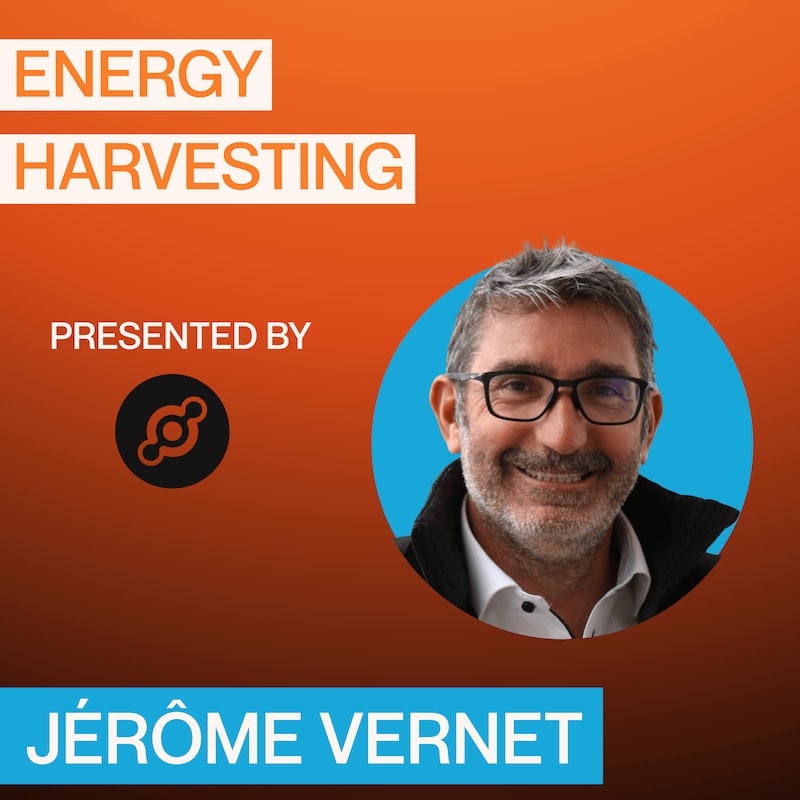
This episode examines how energy harvesting reshapes the iot data platform for smart cities by removing batteries from the equation. Jérôme Vernet from Dracula Technologies explains how ultra-thin, printed organic photovoltaic films optimized for indoor light can power low-power sensors that feed modern iot data integration platform tools. We discuss iot data ingestion best practices when devices must operate for years without maintenance, and how LoRaWAN and other low-power protocols support scalable, battery-free deployments. The conversation also touches on what is privacy and trust in iot data platform design when billions of events come from always-on labels and tags. If you’re planning the best database to store iot data or comparing iot data analytics vs network analytics for large fleets, this episode offers practical context from the hardware layer up. Listen to understand how energy harvesting changes both device architecture and long-term IoT operating models.
- Helium Global IoT Coverage - Want to know if Helium coverage exists where you need it? Check out this map!
- Helium Foundation - The Helium Foundation's IoT Working Group (IOTWG) has generously provided support for the first 6 months of shows, please go check them out and consider using the Helium LoRaWAN as a primary or backup on your next deployment. With over a quarter million gateways deployed worldwide, it's likely that you have and can use Helium coverage.
- Support The Show - If you'd like to support the MetSci Show financially, here's where you can donate on a one-time or an ongoing basis. Thank you!
- MetSci Show - If you'd like to use our IoT or AI Data Value calculators, or you'd like to contact me, the MetSci Show site is the best way to do it.
- MeteoScientific Console - Use LoRaWAN - The MeteoScientific Console allows you to use LoRaWAN today. As long as you have Helium coverage (and you probably do, about 90% of populated areas in the world have a gateway within 2 miles), you can onboard a sensor. You can always check coverage at https://explorer.helium.com and switch to the "IoT" tab in the top right.
Transcripts
Today's guest
2
:on MeteoScientific's
The Business of LoRaWAN is Jerome Vernet,
3
:VP strategy and co-founder of Dracula
Technologies, a French deep tech company
4
:turning indoor light into usable power
for IoT devices.
5
:Jerome brings a rare mix of industrial
manufacturing experience and ultra
6
:low power design thinking,
and in this conversation,
7
:we dig into what it actually takes to move
8
:from battery powered sensors to energy
harvesting LoRaWAN deployments.
9
:We talk about how Dracula evolved
from a small R&D lab
10
:with a glove box into a company
with large scale, clean room production.
11
:Why replacing batteries becomes
a financial decision at scale, and why
12
:designing for battery free LoRaWAN means
rethinking devices from scratch.
13
:Jerome also explains
where energy harvesting breaks down,
14
:how ultra low power
electronics unlock new markets,
15
:and what role autonomous sensors
will play in future edge AI systems.
16
:This episode is sponsored
17
:by the Helium Foundation and is dedicated
to spreading knowledge about LoRaWAN.
18
:If you'd like to try Helium’s
publicly available.
19
:Global LoRaWAN for free and support
this show, sign up at metsci.show/console.
20
:Now let's dig in.
21
:In conversation with Jerome Vernet.
22
:Jerome,
thanks so much for coming on the show.
23
:I'm excited to have you here today.
24
:Thanks for the invitation
and glad if I can bring some nice insight
25
:coming from a, you know, energy
harveesting devices, powered.
26
:Let's say for any kind of filter
application and so on.
27
:So. Yeah.
28
:Glad to be with you.
29
:Yeah, I first saw Dracula.
30
:I first saw it just,
I think a year or so ago in Barcelona,
31
:and you guys had the coolest card.
32
:Most people will just listen to this.
They won't see the video.
33
:But I'm holding up this card
that's got these little bat wings on it
34
:that are done in this little solar panel.
35
:And that's what Dracula does in
these kind of indoor solar panels.
36
:And a little copper
37
:connector is just like, it's
the coolest business card I've ever seen.
38
:So that's
that's like a nice, nice way to start.
39
:Let's see, how did you guys start?
40
:You guys are based out of France.
41
:Walk me through how long you've been
around, what you're doing, how it's grown.
42
:Yes. We are all located in Valence,
it's the southeast part of France.
43
:And early on,
mpany was established back in:
44
:It's a deep tech company,
so we started from scratch from an idea.
45
:So Bris my partner, was crucial, the CEO.
46
:He started the company
just getting that idea of printing
47
:something different than traditional
graphic inks, because Valence
48
:is very well-known and famous for graphic
printing and industries.
49
:The big player worldwide
which is Image part of Domino group,
50
:which is all printing
51
:for on the eggs, on the bottles
and so on for for the food mostly.
52
:And the idea was,
so can we use, this kind of equipment
53
:to print something different
than traditional graphic inks?
54
:And there it has been a European
project later and for two years,
55
:at the end of the two years,
the major company decided not to proceed.
56
:And Bris, my partner,
say there's something here, I do it.
57
:And I started the company
and he started Dracula end of:
58
:Just then they started
first with many years,
59
:you know, R&D
60
:and I mostly in the universities
and the resources we have as a, a CNRS,
61
:we chose center development
and will be able to bring some real
62
:activity in Valence in 2016 here,
where we start getting and hiring people.
63
:So at that time we were
64
:when I joined the campaign in 2016,
we are four people, we are now 47,
65
:and we started from a very small R&D lab
with, glove box and so on.
66
:And now we have a clean room
of 450 square meter
67
:and adding a new one of 200 square
meter now.
68
:So that's a huge project.
69
:Okay. Yes.
70
:So from glove box to cleanroom,
that's that's pretty good.
71
:That's a good move.
72
:That has been a very challenging move.
73
:But we made it short. Yeah.
74
:And for folks who have kind of missed it
so far, what you guys do is you make film
75
:that takes energy from light and turns it
into something that IoT devices can use.
76
:That's kind of the simplest way
to explain it.
77
:That's exactly this, basically.
78
:And why drag lighter solar for indoor?
79
:We didn't love the name Dracula
because we don't like the sun.
80
:We are much more efficient in the indoor
light indoor environment.
81
:So we use a graphic printer, traditional
graphic printers, and instead of printing
82
:basic inks,
we develop our own formulas and the blend.
83
:And we are printing
these functional inks to generate the,
84
:the PVC, the OPV, organic photovoltaic
and all the products are carbon.
85
:They no rarest, no heavy metals.
86
:And how thin is the film?
87
:I'm just getting into this
kind of thickness measuring phase.
88
:So tell me anything.
This stuff is the complete device.
89
:Thickness, about 300 micron.
90
:300. You said. Yes, 300. Okay.
91
:And only the biofilm
to encapsulate the product.
92
:All about 200 micron.
93
:Okay, so 500
total. The main thickness. Yes.
94
:So no, no.
95
:Among this, among the 300,
you have 200 already for the biofilm.
96
:So all layers the different printed layer,
the four different layers in two ways.
97
:Android micron remaining between ten
that we speak about nanometers.
98
:That's why we need clean room
also to to print this.
99
:Yeah. Yeah. Okay.
100
:So these things are super thin.
101
:They work best indoors.
I hadn't picked up on the.
102
:The Dracula doesn't like the sunlight.
103
:I'd only picked up
on the kind of vampire thing and
104
:and drawing the energy out of the room,
so that's cool.
105
:Er, yeah.
106
:For the folks listening to this,
they're into LoRaWAN.
107
:If you had to explain in one sentence
or maybe a couple more, why battery
108
:free IoT matters to the LoRaWAN ecosystem,
what would you say?
109
:I would say that everybody just,
going to big back to backward back.
110
:Ten years ago, 15 years ago,
everything was on grid powered.
111
:Nobody care about energy with
you was just on grid.
112
:Later on, we say it would be nice
if I want to add one more.
113
:It's always becoming
tricky to add a new sensor, a new IoT.
114
:And so I need to put some cables,
blah blah blah. Not that easy.
115
:So saying let's go wireless.
116
:So we've been wireless in that time.
117
:And yes, but we had another wire
which is the battery itself.
118
:That means when you use a product
you have to replace a battery.
119
:And the something very important,
it's when you display and you
120
:spread around the building, a few sensors,
tens of sensor, you can deal with that.
121
:So it's not a big deal.
122
:Now if you think about it's
pretty much more product.
123
:We speak about thousand, 10,000,
millions of units.
124
:You can't imagine you the battery.
125
:And I would take the example, the basic
one the 12 on the remote control.
126
:I'm home.
127
:I'm not battery
anymore on that remote control.
128
:There's no real pain.
129
:I can swap it.
130
:I can get one
used from another, remote or change it.
131
:And we figure out later.
132
:Now, as all the IoT are using and mostly
133
:using a lower protocol
and so on to transmit data,
134
:because the keys are data,
the hardware is only a way to get this.
135
:But without a decent
136
:and efficient Arduino, reliable hardware,
there's no data available.
137
:Yeah.
138
:So that's why we've seen
because the electric consumption went down
139
:so that now we are needing less
and less power and we're able to collect
140
:more and more energy.
141
:With all the energy
harvesting technologies around,
142
:we have the light,
which is what we do with Dracula.
143
:You have the RF, you have the Peltier.
144
:With temperature, you go to vibration,
you have many other opposing technologies.
145
:And combining them all
now to power autonomously
146
:many application and the main part
of the consumption in an IoT
147
:is not the sensing itself, it's
transmitting the data.
148
:So that's why being able now
to collaborate and work on some
149
:the project we developed also with a
we have a demo working with design
150
:with Laura, it's also with Murata EP's
and different of the large players
151
:in that market to work on independent
high sensors that would be able to
152
:get the vision in the case, use the hand
and to transmit that information
153
:in a in a real time, in very consuming,
very low power.
154
:So in that case, it's a lower one,
let's say short shortened distance.
155
:That makes sense.
156
:And that's we label
you working within our job is to inform
157
:this kind of application.
158
:Got it.
159
:So I mean it's it is a real shift
from where we were ten years ago
160
:and saying, look, there's
there's so much energy floating around.
161
:Let's harvest some of it. Yep.
162
:And use it for these things.
163
:And that eliminates
most of the battery requirements.
164
:But there's still got to be some where
165
:where it is kind of battery free IoT
break down in the real world.
166
:What would you say?
167
:Or some assumptions
that people just get wrong?
168
:No. The funny thing is that now
using these kind of full power
169
:electronics, combining this, combining
these kind of a new feature with energy
170
:harvesting power solution
bring you to unlock new markets.
171
:If we know what I speak one about,
let's say, for example, retail tracking,
172
:logistics, basic one everybody
now is aware about to everything.
173
:We all know how everything is working.
174
:It's a passive tag.
175
:And you send some some some waves RF
and you give the signal I'm here now
176
:what we do with these kind of new labels
with new communication protocol.
177
:Lora could also be the alien.
178
:So on the I also emit able to transmit.
179
:That means we extend the reading range
and you use some existing infrastructure.
180
:So that's why now we are looking
new application, a new feature.
181
:And again, because everybody's looking for
ways more and more and more data.
182
:The data is key.
183
:And again
nobody take care about the way itself.
184
:So the fact that we able to team up
with large corporates such as Lora
185
:so same tech and also player
big player would way to find new solution.
186
:And the push the boundaries
of traditional limitation of batteries.
187
:Because we've seen and still true.
188
:If you take your basic remote control
and you check the thickness of
189
:a remote control, the main space is given
by the battery itself.
190
:Yeah, the Tripoli.
191
:Now, if you remove it and you go in
very thin, you don't need all that space.
192
:So you also able to reduce the overall
old format and consumption
193
:of plastics and also product when you're
getting something much thinner.
194
:And that the interest also of all
technology of OPV, which is also flexible,
195
:is to be able
196
:to follow the deformation and go
and from the shape of the product itself.
197
:So this is an looking
mostly new application.
198
:Do not consider this to charge your phone.
199
:Many people ask me any time, oh great,
and you mentioned the call that you have.
200
:Yeah.
201
:Oh if I have somebody on my phone
I, we we made that.
202
:We made the exercise. Just do the math.
203
:If you want to recharge your phone
with something as big as the one you have
204
:on your under the card, we shown you
if we get two years 24 seven okay.
205
:So they're not super efficient for space.
206
:So you've got to optimize for power.
207
:But they work as long as there's lights on
208
:and everyone
you have human, you have lights.
209
:Yeah yeah yeah we do
we do like to be able to see that's.
210
:Yeah, that's a nice thing about humans
or the important thing about humans.
211
:Let's see.
212
:You talked a little bit
about reducing plastic but it's it's
213
:kind of blunt to see it.
214
:But most see folks
don't really care about sustainability.
215
:They care about dollars at what scale.
216
:And you talked about going to thousands
first just like one remote control.
217
:Now what scale does
removing batteries become
218
:a financial decision
rather than a sustainability decision?
219
:I would say that the first step
as being the fancy
220
:and kind of nice to have,
and it was a system and it was green.
221
:So we've come back
five years of six years ago.
222
:Oh, that's a fancy stuff.
223
:It's it was a nice to have reason
224
:why we have ten many times the year for
let's to the consumer market.
225
:I'm glad but I will not change the world
by getting one of the device in my,
226
:in my room.
227
:Now, if I'm using millions of sensors
228
:embedded with millions of batteries,
then rechargeable disposable thing,
229
:you have an issue
230
:and that start becoming a real pain
because you have to take care of this.
231
:Now the manufacturer need to figure out
how you will recycle the product
232
:at the end of the life.
233
:So that's the biggest issue.
234
:Also something very important material.
235
:We're using our carbon based product.
236
:No rehearsed movie metals fully recyclable
is he made
237
:this kind of a PVC is made at 99%
plus or 50.
238
:So you can recycle the same way.
239
:A traditional plastic bottle.
240
:Now coming back to
how much we unlock, let's say for the CFO,
241
:if you consider that the battery cost
ten cent for huge
242
:volumes, the ten cent
and this my device cost $1.
243
:Hey guys, your ten starting ten times
more expensive.
244
:What do you want me to put?
245
:I don't I agree it cost $0.10.
246
:Now how much does it cost you
to change one of these battery
247
:to send someone there to go?
248
:I know maybe on the stair
to unlock the sensor.
249
:Remove it, change
250
:it, swap it, take it with care
about the ten cent of the battery.
251
:Plus you have that
the first loss is array.
252
:That means how long it will cost me.
253
:If I have to swap to two batteries
in order for the product to learn.
254
:Yeah.
255
:So two way
to consider the retrofitting the battery.
256
:You do it as anticipation.
257
:Proactively say okay, every two years
I change the battery.
258
:Maybe your friend your way.
259
:Batteries are still full of energy,
so you're wasting energy or you want
260
:you make it.
261
:Let's say it's a corrosive maintenance for
my device is not blinking anymore.
262
:I need to go there.
263
:Maybe you lost much more money
by not having the data available.
264
:So this is another saving.
265
:Now we speak about battery
and embedded on a product with a new,
266
:let's say, regulation for sending overseas
lithium batteries and so on.
267
:You have to make specific paper works.
268
:You have to follow specific rules.
269
:This is costs also additional cost.
270
:So that's why 1 to 1 battery this.
271
:No. Now you speak about the
how many times you will use it.
272
:One year two years for years
four years, five years old.
273
:Technology is guaranteed 8 to 10 years
indoor 8 to 10 years.
274
:And it is not binary.
275
:It's not on or off.
276
:No, it will decrease slowly
and that when you consider 8 to 10 years,
277
:is because at that time we still get 80%
of the initial performance.
278
:But we consider that the more efficient
as initially but still have 80%.
279
:Okay, so after 810 years, 80% efficiency
okay.
280
:So it's not going down that much.
It could run it.
281
:You know depending on how you design it.
282
:You we take a little bit more time.
283
:Maybe you trust me to data.
284
:It was every minute.
285
:It could be every minute and five seconds
okay.
286
:But you'll get something done. The road.
287
:Okay.
288
:So if I'm an engineer
and I'm designing a LoRaWAN sensor today
289
:and I want it to be battery free,
what are some design compromises
290
:I'd have to accept
or how should I think about it?
291
:You have to restart from scratch.
292
:It's the same thing
293
:that if I go with my old fashioned
Peugeot car to a Tesla dealer.
294
:Okay, give me one of your electric engine.
295
:The guy will say thanks.
296
:Nice thinking in my company,
but no chance.
297
:It's only a matter of the engine
as a matter of the overall conception.
298
:So you have to restart from scratch
299
:because many people try to retrofit
quite easily.
300
:Oh, this is a battery powered device.
301
:Just plug your PV to replace it.
302
:We do the job.
303
:But the thing is, it's
a complete different way of thinking
304
:when you speak about battery.
305
:It's a tank full of energy, that tank
full of energy as may be untried inside.
306
:And any cycle you will consume
.00 1% after many, many cycle
307
:you reduce the volume of that,
the capacity of that to tank.
308
:But when it's empty it's anti you.
309
:My solution I will never get Android.
310
:It's huge Android of energy.
311
:I will give you 00.1.
312
:Hey that that's not that much.
313
:But that's good enough to the job.
314
:I'm giving you this any time you need it.
315
:So it it's that's way to a completely
different mindset to rubbing my.
316
:And that's why we support
also with by sharing some redesign
317
:just to help the people thinking
about the application.
318
:Exactly
319
:is not big is not always better.
320
:And mostly for that reason
because if you take many IoT
321
:and I have different in mind,
the form factor
322
:is given by the battery
or the size of the battery itself.
323
:I get a bigger battery
so it will be in mobile key.
324
:So mobile key means more expensive stuff
to recycle, more amenities inside
325
:and on the road.
326
:The real efficiency is it
what I'm looking for.
327
:Not that much.
Got it. Super cool to think about.
328
:Yes design completely mindset.
329
:And that's a funny thing that we have
a team in Dracula, but it's existing in
330
:many of our partners
active in the energy harvesting market
331
:that are expert in ultra ultra low powers.
332
:I remember the first time
I was presenting that kind of DMCA.
333
:I'm getting Android of my current people
look at me milliamp no micro.
334
:What do you all need to do with Michael?
335
:Now we add some customer
requesting about Nano
336
:for that application.
337
:We are using a BLT,
an example chip use worldwide
338
:the consumption 650 nano and
339
:nothing. Yeah nothing.
340
:You don't need the bulk of your stuff. So.
341
:And good enough to we to power
with 1% of that with a tiny little tiny
342
:little piece of of this film
that is maybe for my for our American
343
:listeners, about the size of a 50
cent piece, a half dollar.
344
:Correct. Okay. Yeah.
345
:Or I mean, you could cut a dollar
bill in half and get a little bit more.
346
:Okay, let's wrap
this up with this idea of AI at the edge.
347
:Do you think that battery free devices
will eventually do kind of meaningful
348
:edge intelligence will be
will they be able to power that
349
:or are they just constrained
to a simple sensor rule?
350
:No. All AI is related to data.
351
:And to get that out again, I get back
on what I told you a little bit earlier.
352
:You need hardware because that's
where we collect the real data.
353
:And after you'd be able to crush
all that data to to get a very agile AI.
354
:So that's why sure, we only pouring
sensor, but sensors on the road are key.
355
:You want to sense the temperature.
356
:You want to send the location,
the humidity.
357
:They want to sense
how many people are in the room you want,
358
:see how many people when there
to get all your calculation, and so on.
359
:So we are able to answer one
part of the answer, but not all for sure.
360
:But we know where we are
good at where we are not good.
361
:Right.
362
:Don't don't even
363
:you asked me to power your car
or even your phone and that does anything.
364
:No, no, we are good at very ultra low
power weights.
365
:Relevant.
366
:And that's that's the most important.
367
:And what we've seen on the on the way
with, with Laura for the past five years
368
:has been to showcase
that many applications can be powered
369
:autonomously, or we can even consider
to recharge the battery.
370
:Many people are not considering
the leakage current.
371
:The leakage current are huge.
372
:When you do, you keep your TV on.
373
:In sleep mode is not really sleep.
374
:There's a vampire drug? Sure.
375
:Let us manage that for you guys.
376
:Yeah. Oh, that's that's super cool.
377
:So there's this also this space
where you have your films
378
:working alongside a battery
or maybe your super cap or whatever.
379
:Exactly.
380
:That's a combination.
381
:But to get the perfect answer,
if everybody agrees on the way
382
:we are wrong and that's exactly
also what the gain lower
383
:I can demonstrate with a TTN show
last year in Amsterdam,
384
:it was the first time ever
that they where they invited
385
:all the different modes of protocol
communication protocol to team up,
386
:and by doing so they unlock many, many,
many applications
387
:and bringing new option, new solution
and opening new market.
388
:That's that's huge.
389
:And that's a great move for me.
390
:Yeah.
391
:Yeah yeah. It was it was good.
392
:They called it the Things Network
and not the LoRaWAN network
393
:from the beginning
because it opened the door to,
394
:you know, ten years later, being able
to connect with all the different things.
395
:I mean, you've seen
a lot of a lot of different devices.
396
:We talking about some cool stuff before
the show with just looking at gestures.
397
:And if you hold up one finger,
398
:it says 1 or 2 fingers, two,
two and three fingers three, etc., etc..
399
:What are some of the coolest
or most surprising
400
:use cases
you've seen for folks using Dracula?
401
:We had a request
from one tech manufacturer that has just
402
:because we mentioned about looks, we speak
about luminosity, we speak about Lux.
403
:And one sun for solar is Android 1000 lux.
404
:So we are working
405
:with some New Zealand
and traditionally OPV are powered.
406
:And we make the calculation,
407
:the measurement at 1000 lux,
which is 1% of the overall sun.
408
:The guy said, you said that
you are able to go down to 50.
409
:So yes, we go down to 50.
410
:You say, okay, what about ten?
411
:Yeah. What about 1 or 2 lux in it?
412
:No, we can let's do the, the the the test.
413
:We run the test. And that one.
414
:Lux, we've seen that our technology
was able to generate the voltage.
415
:Something crazy traditional PV
that normally generate 2.5V
416
:was able,
in that case to deliver 1.1V at one lux.
417
:Something crazy.
418
:And the guys at great
at good enough for me
419
:because my application require nano amps.
420
:So nano arms and E5, the voltage,
which is the most important part for me.
421
:I do the job.
422
:That has been the craziest request we had.
423
:It wasn't, it wasn't. How big
can you get? It's how small can you get?
424
:And do you see this?
425
:I mean, imagine
this gets used in mining companies
426
:where there just is
not a lot of light underground.
427
:No, no,
because even underground in a mining
428
:or you have light everywhere,
even in the, in the mine
429
:that are not in use as a safety feature,
they need to get light always on.
430
:Sure.
431
:So it's good enough to get enough power
to send data temperatures.
432
:Okay. There's nothing
there's no special gas and so on.
433
:But in that case UV was for complete.
434
:It was for label.
435
:That could be work in no lights,
roughly no light.
436
:And it was a pretty dark warehouse
or truck or something.
437
:Exactly.
438
:And it was the same thing
as a kind of a combination of technologies
439
:and say, I need a little bit of energy.
440
:What I can get at one looks,
we say nothing.
441
:First say, let's try it.
442
:And we discovered
it was still active. Yeah.
443
:Oh that's that's right.
444
:Is there anywhere
445
:where you guys want to be able to explore
that you haven't explored yet really
446
:like, oh, this you are going to be doing
in the next whatever, one, two, five years
447
:in the different verticals.
448
:We were active the first one,
449
:and it would come back to you
about the initial question
450
:about the consumer market
and so on, which is for me, something
451
:interesting to go green,
and it's something nice to consider.
452
:But more than the green stuff,
453
:I would say that
green it's additional value we need to do.
454
:Make sure you are to be reliable
at the right price available,
455
:and if we are green,
that's cherries on the cake.
456
:The different market we want to address.
457
:And there's something that we see.
458
:It's more and more basic sensor
we can of install and forget device.
459
:You leave it there and after
460
:after maybe ten years or whatever
the product will it will disappear
461
:because it's it's
basically it will be made on material.
462
:We are thinking and doing some testing
on a new materials paper
463
:or some of their normal patches
disintegrate.
464
:Oh, that's amazing.
465
:Disintegrate to make sure that okay,
at the end of the road, nothing special,
466
:just the kind of application
that we are dealing with.
467
:Oh, that's so cool.
468
:Right on.
469
:Well, Jerome,
thanks so much for carving out time.
470
:I know you're super busy.
471
:I appreciate you coming on
and telling us about Dracula.
472
:My pleasure. Thank you.
473
:That's it for this episode
of The Business of LoRaWAN.
474
:If you want to go deeper
and actually deploy devices,
475
:the MeteoScientific
Console is the fastest way to do that.
476
:And honestly, it's
also the best way to support the show.
477
:When you use the console, you're not just
listening, you're participating
478
:in the same real world LoRaWAN work
we talk about here every week.
479
:You can get started with a free trial
480
:at MeteoScientific.com Huge
thanks to the sponsor of this show,
481
:the Helium Foundation, for supporting open
LoRaWAN infrastructure worldwide.
482
:Check them out at helium.foundation
and if the show has been
483
:useful, a quick rating or review
on Apple Podcasts or wherever you listen.
484
:This really helps
485
:people find it and helps the show grow
so we can help more people.
486
:I'm Nik Hawks with MeteoScientific.
487
:I'll catch you on the next episode.


