Shownotes
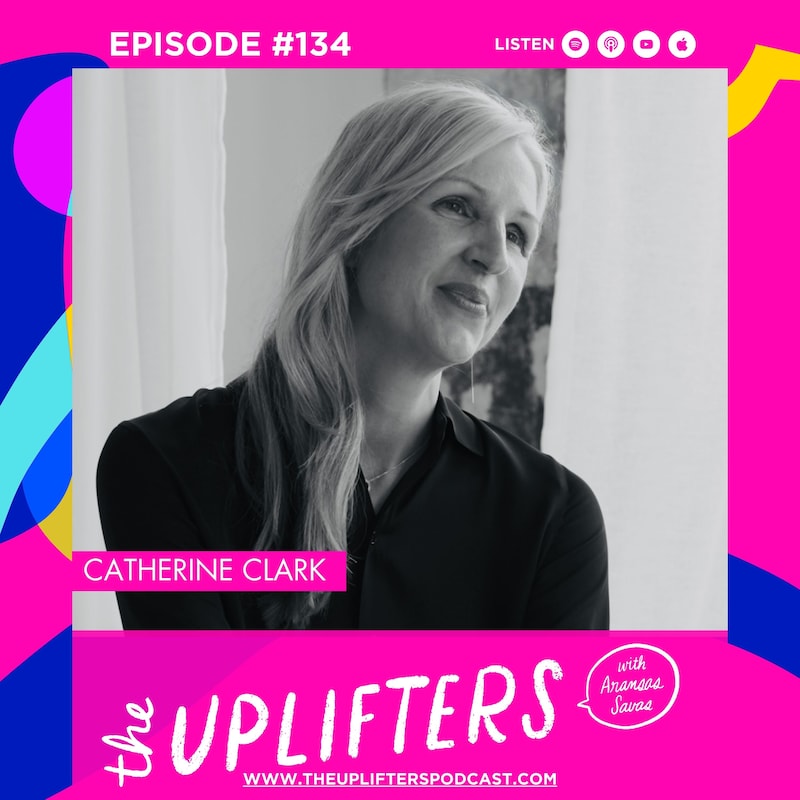
Midlife career change takes courage. Catherine Clark shares how women over 40 can leave burnout behind, trust impermanence, and create what's next.
DESCRIPTION:
After 30 years of building a successful branding agency, Catherine Clark made a radical choice in her 50s: she walked away. In this conversation, Catherine shares the truth about midlife career change—how to recognize when partnerships drain your energy, why movement unlocks emotional breakthroughs, and how women over 40 can reimagine success on their own terms.
This is a powerful story about burnout recovery, surrendering the need to push through, and building something fluid and graceful in midlife. If you've ever felt trapped by the success you've created, this episode will give you permission to move.
IN THIS EPISODE:
[00:00] Introduction: Reimagining success in the second half of life
[01:28] Catherine's journey: 30 years in branding and the ecosystem that started to fray
[04:06] Why women are trained to tolerate energy-depleting relationships
[06:24] The courage to address stagnation and trust what's on the other side
[08:11] Accepting that change happens whether we choose it or not
[09:42] The ocean and the wave: Thich Nhat Hanh's philosophy on impermanence
[14:30] What horses taught Catherine about movement as medicine
[35:42] The danger of being too strong: when resilience keeps us stuck
[36:52] Why surrender requires more strength than pushing through
[38:04] Building CREATRIS with fluidity and grace
[40:37] How moving your body helps you move emotionally
KEY TAKEAWAYS:
✨ Energy-multiplying vs. energy-depleting relationships: Learn to recognize the difference
✨ Everything has to work together: career, family, values—your ecosystem matters
✨ Movement is medicine: Physical movement unlocks emotional breakthroughs
✨ Surrender isn't weakness: Sometimes the bravest thing is to stop pushing
✨ Midlife opens doors: When children launch and parents age, new chapters emerge
ABOUT CATHERINE CLARK:
Catherine Clark is the founder of CREATRIS and spent nearly 30 years building a successful branding agency, Clarkmcdowell, working with companies like Starbucks and PepsiCo. After recognizing that her partnership and business model no longer fueled her energy, she made the courageous decision to start fresh in her 50s, creating something more aligned with fluidity, grace, and her evolving values.
RESOURCES MENTIONED:
• Thich Nhat Hanh's philosophy on impermanence
• Gyrotonics (movement practice)
• Caroline Weaver / The Locavore (NYC)
CONNECT WITH ARANSAS:
Subscribe to the Uplifters podcast for weekly conversations with women doing big, brave things in midlife and beyond.
TAGS:
#midlifemindset #careerchange40 #womenover40 #burnoutrecovery #midlifecareerchange #strongat40plus #thrivingmidlife #secondhalflife #perimenopause #menopause #womenleadership #careertransition
Transcripts
Aransas Savas: [00:00:00] Hey Uplifters. I wanna take a minute to talk about something personal to me. In my forties, I started noticing my hair was shedding more so a couple of months ago I [00:00:15] started using Nutrafol. I'm already seeing so much less shedding and my teenage daughter who notices absolutely everything keeps commenting on how thick my hair looks.
As someone who's built my career around [00:00:30] rigorous science, I super love that Nutrafol was the first brand to clinically study hair thinning on menopausal women, which is why I am so proud to have them as a sponsor. Nutrafol takes a whole body approach to [00:00:45] hair health supporting you throughout your life stages.
You can see thicker, stronger, faster growing hair with less shedding in just three to six months. For a limited time. Nutrafol is offering our listeners. $10 off your first month [00:01:00] subscription and free shipping when you go to nutrafol.com and enter the promo code Uplifters.
Welcome to the Uplifters podcast, where every week I get to talk to a woman out in the world who's doing [00:01:15] big, brave things, and together we listen to her stories and her mindset to teach us all how we can do bigger, braver things in our lives.
In my research, one of the things I found time and time again that doing big, [00:01:30] brave things, particularly in the second half of our lives, requires us to reimagine our metrics of success. It also requires us to leverage all of our lived experience and alchemize [00:01:45] it into something new that is uniquely meaningful to us.
My friend Catherine Clark has been out in the world doing big, brave things for a very long time. Yet I've noticed over the past couple of years, she's made some pretty radical [00:02:00] choices, so I wanted to get under the proverbial hood with her today and understand better with you how she's doing this.
Catherine, thank you so much for hanging out with me today.
Catherine Clark: Thank you for having [00:02:15] me. I am really flattered to be considered one of the uplifters. What you do is nothing short of extraordinary, getting extraordinary women sharing their passion, their courage with each other. So thank you for having me on podcast.
Aransas Savas: Oh my [00:02:30] gosh. Totally my pleasure. And I'm so excited to be here with you. So take us back a few years. What were you doing three years ago?
Catherine Clark: So I came to the US nearly 30 years ago and I started a business in my late [00:02:45] twenties, which was very intense. I had a branding agency with a business partner, and I did all that while having children and all of those things that many women have to juggle in life.
And it was a very successful business. We [00:03:00] worked with all the sort of big blue chip companies, Starbuckses, PepsiCos, and all of those. And so I would say my life was always pressured, but somehow I managed to create some kind of ecosystem for myself, really [00:03:15] focused on how to align all the different parts of my life, having time for my kids, um, having time in nature.
We went to Vermont pretty much three out of four weekends for about 15 years, which was a little crazy, just trying to make sure that my work environment reflected the values that I believed [00:03:30] in. So. For a very long time. I would say things were working in some sort of harmony, but like all things, they don't last forever.
I think we all have to know that, you know, there is impermanence that we have to accept. The thing that was [00:03:45] probably changing the most was my partnership with my business partner. We didn't have conflict, but that relationship was no longer fueling energy. It was no longer producing the magic and the energy that it did at the [00:04:00] beginning.
Time. Sometimes the things that we create no longer function in the way that we had hoped, and that's a very difficult thing to accept for us women, particularly when we feel responsible for our children, our employees, we feel all [00:04:15] these kind of pressures to continue the thing that other people seem to enjoy.
So I think I got myself a little trapped for a little while. And I'm sure my partner felt exactly the same way, and luckily neither of [00:04:30] us created any kind of tension or drama or anything like that, but certainly the beautiful ecosystem had started to fray for sure. So I think that kind of was my state of mind in the last [00:04:45] five years or so.
Aransas Savas: There's so much I relate to in that and that I hear echoed in so many of. The stories in this project, and the last one especially, was resonant to me [00:05:00] this idea that there are relationships that are energy multiplying and there are relationships both with ourselves, with our environment, with our humans that are energy depleting.
And yet I think the [00:05:15] point you're making about our willingness and ability to tolerate those energy depleting circumstances. Is so spot on because I feel like from earliest life, most women are trained to tolerate.
Catherine Clark: We are, [00:05:30] if my parents stayed married, but they definitely had their fair share of conflict over the years.
And so I grew up feeling that the Art of living was to navigate those things. Yeah. And it didn't necessarily occur to me that. [00:05:45] Maybe we can step away from these things and find harmony elsewhere. So I think many women and men, but I'll speak to women for today, are caught in that paradigm. And I think in particular, when you're able to navigate that well, you can put [00:06:00] forward this very harmonious experience on the outside and people love it, particularly when they see a power couple, for example, doing so well.
I think everybody wants to see that. Yeah. So when you're that person inside that's actually not happy, [00:06:15] it's doubly difficult to admit to it. You don't get a lot of empathy because everybody wants to believe the image that you're putting forward. So I would say, I think a lot of people end up trapped in these things and it's difficult to admit to it, and it's [00:06:30] difficult to admit to it with kindness.
I don't have resentment towards my business partner whatsoever, so it's very. A lot of times it turns into these horrendous outward conflicts that leave everybody traumatized. So I was very [00:06:45] worried about that in my process to try and figure out how to move to the next chapter in my life.
Aransas Savas: Yeah, and I think that we get to that place when we don't address these, and so it takes tremendous courage to address the stagnation [00:07:00] and to trust that.
On the other side, I think our tendency can be to act from a place of certainty in this place, in this situation, it may not be perfect, [00:07:15] but what's on the other side? It could be worse. It'll definitely be new. It could be uncomfortable. It could destroy some of what I've worked so hard to create. It requires me to rebuild, right?
[00:07:30] So when we start to spiral in all the what ifs and the worries and that burns all of our energy to act and create change. So what were some of those worries and what ifs that were on your mind when you [00:07:45] considered making this pretty radical change in your professional and personal life too?
Catherine Clark: I think all the ones who listed right this, um, not wanting to let people down.
Worried about what might happen. And also, [00:08:00] I'll say one thing I did learn along the way is that everything has to work together. It's not just your career, it's not just your role as a, as a mother or a wife or a friend. All those things somehow need to find an [00:08:15] ecosystem. And I knew that I couldn't change one piece without everything else changing.
So I kind of waited and I think. When we get to our fifties, something happens. Our, my children became adults. They left the nest. They started to [00:08:30] become more independent. That opened up a whole new dynamic in my life. So suddenly that chapter opens. Our parents were getting elderly, were traveling more to see them.
That's also a whole different phase of our life. So I think these things started to set [00:08:45] up in a way that meant that somehow, because all these other things were changing. There was an opportunity for me to change more. I would also say I felt this time last year exactly, just very [00:09:00] conscious of the changes that we're all going through in the world with planet melting down and AI upending the world, and all of those things happening.
And what I noticed was a lot of people being scared tight, [00:09:15] trying to cling onto what they had.
Music: Hmm.
Catherine Clark: It seemed to me that the best course of action was going to be figuring out how to move through this stuff. And so I think the timing was right for me. Things [00:09:30] opened up in my life and it seemed inevitable that something new needed to happen.
So that's how I got to this next phase really of, of what I'm doing now.
Aransas Savas: I think this is a really beautiful point you've made here. [00:09:45] About things changing constantly, whether we choose change or not, and so our fear for making the wrong choice is maybe a little bit easier to tolerate [00:10:00] when we accept that there will be change.
In fact, there is change happening at every moment. And so these binary questions that we ask ourselves, will this be the right choice? [00:10:15] Is one actually I've thought about a lot lately in my own life because we made the choice to move our family and it's been wonderful in so many ways and we are still grieving some of the things we gave up in that move.[00:10:30]
And I said to my husband the other day, I was like, I think we have to find another question choice. That question is not serving us any longer. That's right. Because who knows? We'll never answer that question.
Catherine Clark: One person that [00:10:45] really influenced me and not going into a religious conversation, but just his philosophy was a Buddhist monk named Tik Han and one of the images that I think has been the most powerful for me.
He likens us to [00:11:00] the ocean. So we are the ocean, but we're also the wave. And the wave comes out and then it melts back into the ocean. So we're all part of something, but then this sense of belonging to something that is constantly changing. And so I dug [00:11:15] deep and tried to unpack that a little bit when I was going through all these decision making moments, and I realized that.
Movement is the cure for so many things. And I went all the way [00:11:30] back to the things I learned growing up. I've been a horse rider my whole life, and one of the big lessons I learned with horses is that like humans, they sometimes get tight into their own heads and just like a little ball of. [00:11:45] Negative energy.
And the best thing to do is to make them move, give them free reign, push them forward, let them express themselves, and suddenly they become reconnected. They become open, they [00:12:00] become fluid, and you can start to reconnect with them. So I realize, I know this inside, I feel this in my body, this idea of how to move.
And so I think that really helped me in my transition [00:12:15] that there's nothing worse than actually being stuck and tight and bucking and actually just need to go forward.
Aransas Savas: How beautiful that image is so powerful, and it reminds me of something my friend carpool says often, which is [00:12:30] emotion is energy in motion.
It's emo. And I think it is that that movement through it, rather than trying to hold it, that lets us both release the [00:12:45] intensity of it, but also let it teach us away. I love
Catherine Clark: that emotion. Emotion, cool. Right? It's a beautiful thing. So then becomes, how do you move? Wow, how [00:13:00] do you move? You know, you could throw yourself all over the place, but you, you'll get hurt.
So it's really about learning how to move with grace and how to move with strength.
Aransas Savas: Well, and I think there's a writer in there too. And who was that writer for [00:13:15] you who helped guide your movement?
Catherine Clark: So I think for me, learning how to move came through a practice called Gers, which is a combination of. Tai Chi, yoga and dance, [00:13:30] but essentially it's a study of movement and how to move in a way that actually expands your body instead of hurting it.
So making space between all of your joints, making you a bigger, stronger [00:13:45] person. So I've been doing this for. 15 years or so, and I've become an instructor and some of the teachings that I learned about your inner strength and knowing where that is and being very [00:14:00] nurturing of that, what they call the seed center, if you like, is the key to everything.
The idea that things have to be connected, and I think that goes back to what I was saying earlier. How do you make the whole thing move in concert as opposed to [00:14:15] moving one piece and hurting all the other pieces? Mm-hmm. So I spent a lot of time trying to think through what I learned physically, whether it's the horses or the omics, and applying it to how I was going to move, what I was gonna offer my [00:14:30] clients, because I think they're all in desperate need of knowing how to move themselves.
They have no choice but to make big changes in there. Brands and their business. So how can I be a source of, of that fluidity and that momentum for [00:14:45] them?
Aransas Savas: How beautiful. And I wanna talk about how you did that for your clients. We've heard in a sense how you did that in your own life, talking about the alignment that allowed you to be in Vermont, to be present for your children, [00:15:00] to be impactful in your work.
And so as you began to. Reimagine your future, and you were sure you didn't want to stay where you were, but talk to me how you thought about where you wanted [00:15:15] to go and how you wanted to build that.
Catherine Clark: So, I love what I do.
Music: Mm-hmm.
Catherine Clark: I never stop loving what I do. Mm-hmm. Mm-hmm. Which is basically to help clients make their brands better.
Right. So that didn't change. I [00:15:30] think the, the thing that I really wanted to achieve was more creativity. I'm a strategist and I found that we are in an industry that thinks they're thinkers and then they're creatives. And to me, thinking without creativity [00:15:45] is not productive. So particularly when we have AI now to do the rational part for us.
So I wanted to create an environment where creativity was for everyone. And that meant breaking down roles, breaking down [00:16:00] silos and conventions, and hiring people that were ambidextrous in their brains so they didn't have the barriers between those things. And then the other thing I would say is I wanted to remove the frictions that I [00:16:15] observed in my business previously that get in the way of creativity and wellbeing.
Things like seeking perfection. Or disempowering people or starting something, stopping [00:16:30] something, starting something, stopping. So back to the movement. How do we make this flow? How do we make this a lot easier to get through? So I didn't change what I do, I just changed how we do it. Mm. And I changed it completely and it's been [00:16:45] the most pleasurable experience I've ever had working.
But that was really what I set out to do, is to bring movement into the business that I'm in.
Aransas Savas: I love that. And just to sort of recap what you're saying there, I think the first big lesson in [00:17:00] your approach is that we don't need to throw the baby out with the bath water necessarily. There can be that tendency to say, hard stop.
This thing was not working for me, so I never wanna do that again. And what you said is. [00:17:15] There are things I love about this and there are things that are not working for me, and I'm gonna piece those out instead of wholesale, just dumping it in the trash and starting from scratch without a sense of urgency, a sense of [00:17:30] clearing the way.
But you said, Nope, I'm gonna get very specific about which pieces serve me. And then the next thing you did, and this is in some ways I think the most powerful and I potent lesson in what you've said. Is [00:17:45] what's right for right now in my work, I often ask the question, what is this moment perfect for? And so we've heard that echoed in what you're saying in many different ways.
From what is this moment perfect for? Well, I have a little bit more freedom. I don't have my children at home. I have a bit more [00:18:00] flexibility to invest in the build phase of an organization. What is this moment perfect for? I need more freedom and flexibility to travel, to be present from, right, so it's like really folding in all of these different [00:18:15] domains while at the same time laying that alongside this Venn diagram of what does the world need?
There is AI and it is interacting with your business in new ways. There is your client, what do they need [00:18:30] in this time? And then re-imagining a new business and a new brand that is custom built for this moment.
Catherine Clark: That's right. It doesn't mean to say we have to follow threats. You can go against the grain, but as you [00:18:45] just said, I think.
Really thinking about the moment, I guess it's a, an interpretation of being in the moment, right? Yes. And not being separate from it. So I think we touch people more profoundly if we're in tune with what they're [00:19:00] going through, and that's very much influenced by culture and the times that we're in the economic forces, whatever it is that's going on.
So. I think that's, you have an ability to really summarize and [00:19:15] elevate things. But I think that's also super profound is, is being in tune with the moment
Aransas Savas: it is riding the wave. Instead of using our minuscule might to try to push up against the forces of the world, it's rather how do [00:19:30] we ride it in a way that feels in integrity and in alignment.
So with all of this in mind, what changed? In your ways of working,
Catherine Clark: I'll use this movement [00:19:45] analogy to walk us through it a little bit. Having strength and intent requires a lot of preparation. I was inspired early on in my career by working with the Oklahoma City Thunder basketball [00:20:00] team, which I knew nothing about basketball whatsoever, but I spent five or six years working with them.
And so you're with a cutting edge sports organization. Very different culture to me, but I learned what preparation looks like. And it's the same thing with a Formula One driver. They [00:20:15] are going through that circuit so many times in their head before they actually race it. They already know what they'll do if it rains, they'll know if somebody crashes in front of, they'll know if their, you know, their power's gone down.
So I think on the team [00:20:30] front, I've spent a lot of time. Helping people embrace the notion of preparation and planning, but thinking more of like collective visualization. So at first it sounds boring. Oh my goodness. We're gonna look at an [00:20:45] Excel sheet. I don't wanna do this. But when you start to visualize scenarios, oh, what if the client feels this way?
What if they put it on hold? What if they have a different idea? We suddenly we're in a safe space. We visualize what we'll do. And then when you're live, you're [00:21:00] in the moment. You just know what to do, you're not even thinking about it. You're able to react in the moment. So that removes all these, I don't know, what are you gonna say?
Let's regroup. I'll get back to you next week. And all your flow is completely finished. So [00:21:15] part of staying in the movement is preparation, really thinking through, so interesting what's coming at you so that you go in there strong.
Aransas Savas: I wanna hear more, but uh, this one is so interesting to me. Because most of the time [00:21:30] what ifs are paralyzing and you've translated them into something at the other end of a spectrum preparing.
So how are you shifting that or, or what did you have to guide your team through to [00:21:45] keep them activated in a state of what if thing
Catherine Clark: I turned the what ifs into exciting provocations? Instead of like, well, what if this happened? It's more, okay, take this scenario, what [00:22:00] will you do then? And it's like a challenge.
And you watch them think, Hmm, what would I do? And I think it started to create a culture where now they volunteer, oh, and if they do this, we're prepared. We're gonna do that. If this happens, this is what we're gonna do. And so I think [00:22:15] getting comfortable with the fact, we have no clue. We really have no clue what's gonna happen.
And going in there, not hoping for a specific outcome. But feeling that we're prepared for many outcomes.
Music: Mm-hmm.
Catherine Clark: And I did [00:22:30] definitely learn that from the Thunder because they, they can't control a, a, a game right at all. And so they have to go into each season fully prepared for so many event injuries, people leaving drama news, [00:22:45] other teams doing well, whatever it is.
And it's just, it became very aspirational to me to be able to. Be ready
Aransas Savas: for whatever's coming. I love that. And so it's actually boosting confidence instead of [00:23:00] depleting, which is what, what if paralysis stems from,
Catherine Clark: so it's problem solving. What if, yeah. Ooh, I will do something. What will I do? I will do this.
Okay, next. You know, as opposed to finding every eventuality [00:23:15] daunting, it's, I will have to overcome this. What will I do? Let me think about it now while I'm gone. Right. So. I think people who have done high performance, athletic stuff have, mm-hmm. And particularly team sports may have that a little bit ingrained, I don't know.
Mm-hmm. [00:23:30] But that's saved me, I really, and I think when I made the big move, I had very limited time to reincorporate and reopen. I had gone through so many scenarios and I felt excited. I was like, bring it, you know, I'm ready. Put me in [00:23:45] the game. Coach. Yeah.
Aransas Savas: So talk about some of the other major shifts that you made in this highly flexible and aligned organization that you built.
Catherine Clark: So you talked about getting rid of stuff.
Music: Mm-hmm.
Catherine Clark: What I [00:24:00] noticed in my industry is. Agencies became big business. So they became scaled and they started to copy their clients. Oh, we need organizational structure, we need decks, we need this, we need that. And actually our clients, what the [00:24:15] opposite of who they are because they need fresh thinking.
Yes. So I started to realize, why are we even writing decks? Who wants to write a deck? It's not creative, it's not necessary. Nobody ever sees it on the outside. So I said, no [00:24:30] debts. And I kind of went through the list of all those things that don't add value and thought, you know what, we're not gonna do that anymore.
And can I say, nobody's asked for a deck? What do you know? Nobody's, and I think [00:24:45] we all feel much happier. I think PowerPoints get people into a very boxed in mode. Of micromanagement, obsession over headlines, pie charts and horrible things like that. And once we got rid of [00:25:00] those, we had to find something else.
And I think that that fueled creativity. The other thing I think I did keep, and you talked about keeping things and getting rid of things, I kept my ops person who, for a company of five people to have a [00:25:15] ops person on staff seems excessive. I realized that if we have one person who's responsible for always being ahead of us on technology, what's the latest AI thing I should be looking at?
And also just making [00:25:30] our systems invisible has freed our team up to have no admin, no stress, and just focus on the work. So I think there are things you, you need to get rid of, and then there are things that you actually need to do more of if they work [00:25:45] well.
Aransas Savas: I love that. And you would never have been able to.
Isolate that variable had you not had decades of experience. And I firmly believe that in the second half of life, we are so much better [00:26:00] prepared to do bigger, braver things. And this whole story that we are less able to do this, that we should sort of quietly slip into the background is just complete and total nonsense because these poor kids coming up and trying to do it are just working from gut and instinct, which [00:26:15] has its power and.
We know some stuff. It's just that we don't necessarily, because of our risk aversion and for many of us, our fear of breaking down what we've worked so hard to create, don't take the calculated [00:26:30] risk that you're taking.
Catherine Clark: I think there's an atmosphere when you get in your fifties and it's very pronounced in the US that you're not a great employee anymore for some reason.
It's really hard for people to get a new job to [00:26:45] change something major in their career unless they're C-suite. Mm-hmm. And that's really quite depressing. Mm-hmm. And so I'm seeing more and more what I would call mid-level director level people who are in their fifties say, I'm gonna have to go do my own thing.
Which [00:27:00] is great because they actually have, as you say, so much knowledge. I'm hoping it creates a reverse. Economy where suddenly organizations are like, hang on a minute, I'm gonna go and get this 60-year-old over here because they've got something to offer. That is [00:27:15] knowledge and wisdom and insight and maybe more intuition in some ways.
But I think that second half of life, I think I need to rebrand that so it doesn't feel like the last half somehow,
Aransas Savas: but I think of it as [00:27:30] the grownup half.
Catherine Clark: True it feel. Yeah. You are not agonizing about all those things that Yeah. You know, maybe were difficult.
Aransas Savas: I feel like an adult now.
Catherine Clark: That was the goal.
In a good way, right? Yeah, in a good way. Yeah, so I think it's, I [00:27:45] hear a lot about retirement as well. I don't really aspire to personally, and I know lull of women are the same, to check out and do nothing. On the contrary, I'm thinking, what am I doing after this? You know, it might be [00:28:00] small, it might be whatever, but I'm going to keep going because you keep growing and you keep getting more
Aransas Savas: fulfilled.
Yes. And I mean, part of it too, I think is through your growth mindset orientation, and there is recent science that shows that [00:28:15] women's growth mindset peaks in our forties and our desire to learn is there. And yet I think this very damaging story that. It's too late for us to learn anything. Our brains are set and settled and we should kind of quiet quit in our [00:28:30] organizations and just check out, uh, draw a big paycheck is, is hurting a lot of our sense of self-belief.
Going back to this idea of how you built your team, and it is very much related to what you were just saying about, I hope this creates [00:28:45] a reverse trend in which companies are saying, oh, I do want this neurodiverse 25-year-old sitting beside this deeply traditional 60-year-old woman. And I wanna see [00:29:00] what magic comes outta their brains.
And I think you have very intentionally. Created a diverse, a team of diverse thinkers. And so talk about why that was [00:29:15] important to you.
Catherine Clark: I think first of all, what, back to the frictions, you definitely want to have a team that can build on each other and feel excited to come into work. Right? As soon as you have toxicity, I mean, that's over.
[00:29:30] I think one of the things also that I'm really committed to is getting people who, and it took me a long time to find the right word, I'm still not sure this is the right word, but people who have ambidextrous brains, I do love it so much. So they're [00:29:45] a little bit misfit most of the time. You know, they're either that creative that's.
Really very organized or very strategic in their mind, but they're a designer or vice versa. They're an account person, but they're an incredible writer or they're a strategist that [00:30:00] can somehow dabble into photography or design. So I am handpicking people who have that duality that makes them sometimes less desirable because they never quite fit where they need to be, [00:30:15] but they can find a home here.
And we are allowing them to stretch in different ways and connect the sides of their brains and create great things, and I would say at speed, because it's coming together to [00:30:30] that for them very quickly. So that's been a big requirement. And I would say for anybody who's trying something new, the most important thing actually is your ethos, your team, your culture.
I'm not the first person to say this. But that's where I spent most of [00:30:45] my energy in this particular next chapter that I've started is the team. Sure. And making sure that they are healthy and that they buy into what we're doing fully. Why is that the most important piece when it isn't? And I've seen this with [00:31:00] the 25 years that I had my previous agency.
We had incredible moments, but we also had some pretty bad moments and you know, we got out of them. But when things start to not work out, you can't tell. What's wrong? And you told me this. Oh, [00:31:15] you had this insight. You were able to isolate these things. When you have chaos, you don't know what's wrong. You don't know who the person is that's causing the problem or what the practice is that's needs to be changed.
So you're chasing all these [00:31:30] things and it's actually extremely difficult. So it's so important to start right and try and keep it right, because when it goes off, it's actually easier to tell what's wrong if the rest of it is healthy. And we can see just, I don't wanna get [00:31:45] political at all, but just macro.
Our humanity at the moment is in a state of a little disarray, and it's much harder to know what part to fix, right? Because everything's impacting everything else. [00:32:00] So create an ecosystem that you can somehow nurture, because then it's a lot easier to protect it.
Aransas Savas: One of the lessons from this is to go back to basics.
It was easier to [00:32:15] create this very cohesive team and unified organization because it was smaller and it was very conscious and very aware. And I, I find for my clients, when they are in [00:32:30] chaos, my first action with them is to get them back to basics. Like, let's talk about sleep, let's talk about eating and how much water in your body, let's.
Moving and it really is so [00:32:45] elemental and it's the stuff we've all been taught since we were five years old probably. And yet in chaos, those are the first things to go. And so we, we start at that elemental level and then that allows us [00:33:00] to build with our logical brains instead of that primal brain that is just fighting for survival.
Catherine Clark: That's right. And it's funny, same with horses. Mm-hmm. If you get a bit messed up, you're like, do a 10 meter circle, [00:33:15] just do a 10 meter circle. You know how to do that. You can feel the 10 and the horse knows what to do and suddenly you're back together. So I think it's hard when everything's moving at once and if you're running after yourself, which I was, that going back to basics is difficult, but it [00:33:30] is.
The only answer is going back to that and it does start with. Your own health. I think the other thing that happens when you hit 50 is the white knuckling that we do so well when we're younger just [00:33:45] getting through it doesn't work anymore. Your body just kind of says no, and so you're, you are obliged to get the message, and I think that's a healthy thing because it, it teaches you to say, okay, I [00:34:00] do have to.
Spend my Fridays offline working, but doing solo work. I can't speak five days a week. I can speak four days a week. You know, you, you get into these, these, these realities that you have to follow
Aransas Savas: and really honoring those boundaries. I [00:34:15] think we know that throughout our entire lives that there are fact, and yet it is only as we get older that we learn to hopefully advocate for those and take responsibility for those boundaries of self care.
Catherine Clark: I was a big [00:34:30] culprit actually in being proud of how much of a beating I could take. And I think that can happen too, is I managed to fly here, fly back, drive there, not sleep. And I think that unfortunately, inadvertently, that influences other people [00:34:45] too. So that is definitely something that is more in our cultural conscience today than it was when I first started working 35 years ago.
But it's something we should be conscious of for, for others as well.
Aransas Savas: That's really [00:35:00] beautiful.
Catherine Clark: How did you define success
Aransas Savas: then?
Catherine Clark: The first thing that comes to mind was, look at all the things I can take on and do, which capacity? Yeah. Yeah. Look at all the things I can do and I can do this with [00:35:15] a smile, and I can still look good in the morning and I can still do this.
Mm. And I think that's a very treacherous path. I don't have regrets, right? All these things are lessons. Mm-hmm. Mm-hmm. I'm still looking to keep expanding, but what I've learned is we have to breathe. [00:35:30] So, you know, you have to exhale a little bit while you, you know, you can't just keep ballooning. I have memories of being in my car and having to pull over on the side of the road thinking, oh my God, this is too much.
My stuff's in one country. I'm flying to this [00:35:45] place. My husband's over here. I don't know what's going on. And just breaking down a little bit. Feeling disjointed. So I think we have to remember to breathe and so that we could expand, but we have to just shrink a little bit before we expand again. [00:36:00] So I have shifted my goals.
Aransas Savas: How do you see success now?
Catherine Clark: I think it's that continued sense of expansion, like just reaching out, feeling more people, more experiences, but doing it in a very [00:36:15] soft way. I've also been very inspired by just being in Vermont and gardening and seeing this incredible wildlife. We have bears, we have deer, we have all these things around us.
It's just quite incredible and I think watching nature and how it [00:36:30] grows and it goes bonkers in the summer, it's just like wild. And then it just, you know, recuperate over the winter and I think spending more time connected, very close to what I would call. Very vivid nature in the [00:36:45] mountains has helped me respect my own rhythms as well.
Mm-hmm. And, and know when to push until after the little vines go out and when to, you know, take a moment to, to replenish, but is
Aransas Savas: [00:37:00] no less impactful. And I think that's when we're in that face of chasing capacity and tolerance and external perception, it is for impact. It's for value, [00:37:15] and that hasn't shifted, but how you're approaching it is so much gentler and so much more sustainable.
That's right. Instead of a short burst and burning out [00:37:30] and then having to recover and take a step back and then pushing forward. It is a steadier progression, I imagine.
Catherine Clark: Yep. And I think I can achieve in a weird way, you achieve more. It's a difficult way to hear. [00:37:45] It's not weird,
Aransas Savas: right? Like if everything isn't peaks and valleys, it's just a steady upward slope.
Catherine Clark: It took me a while to learn this. I think if you're strong inside, you can stay longer in the bad habits. Mm-hmm. So that's just a [00:38:00] word of caution for all these powerful women out there.
Aransas Savas: I'll tell you the image that comes to mind as you say that. When I was birthing my first daughter, I did it naturally, like with the midwife hippy birth, and [00:38:15] I labored for a really, really long time.
At that point, I had read a bunch of marathons and I had a strong brain and a strong body, and finally the midwife looked at me and she goes, your legs, [00:38:30] your pelvis are too strong. You're gonna have to let the body release the baby. Otherwise, they were gonna have to surgically take the baby and take the control out of my [00:38:45] hand.
It was such an eye-opening reminder in all of life that we have to let these passages happen. If our minds and our bodies have been trained for strength and endurance [00:39:00] and resilience, that release is often the scariest. And needs the most conscious awareness. In some
Catherine Clark: ways, you had to muster up the strength to surrender.
Yes, and actually, and I
Aransas Savas: didn't know that that's what [00:39:15] I needed to do. 'cause what they were saying was push. Right, right. But that was the wrong advice actually. I did not need to push. I was fine at pushing.
Catherine Clark: It's a very interesting thing you brought up about how we are [00:39:30] hired to push through to achieve. And I do think surrendering is part of the process of acceptance and it's part of the whole process of breathing in and out and all of those things.
And we're not taught [00:39:45] to learn how to accept and how to surrender. So I'm glad you had that lesson. Thank you. Thank you.
Aransas Savas: Our constant messages to go harder. [00:40:00] Often may misleading and what we need most perhaps, is to go softer and prea as you've built, it feels like a much softer organism.
Catherine Clark: It's, it's fluid, [00:40:15] it's graceful.
It is definitely, it's not less impactful, but it's being done with fluidity and suppleness.
Aransas Savas: Each guest on the Uplifters nominates another guest who she believes would [00:40:30] inspire us. Who would you like to nominate? Katherine?
Catherine Clark: I'm going to nominate somebody who's on the next generation for me, so she's coming sort of in the next wave and hopefully much more wise than, than us Gen Xers were [00:40:45] as we got through this, these big careers.
But her name is Caroline Weaver. And she created these quite amazing experiences in communities. She founded a company called CW Pencils, and I remember [00:41:00] coming across her thinking, you run an antique pencil shop and you make a living in New York City. But she did, and she became world renowned for what she was doing here in New York and really creating this very sort of [00:41:15] analog business in a very virtual world.
And her new venture is called the Locavore, and she's created a guide of local businesses all around New York. She personally walked every single block of all the borrows [00:41:30] and collected all these little businesses that aren't registered anywhere from a deli to a shoe store, to a flower shop. And so she's created this thing and she has a store now in New York City.
But the reason I want to nominate her is. I admire her [00:41:45] self-directedness. So this sense of agency that she has, she's doing this completely alone and through all kinds of challenges that she encountered personally. And I see her determination. I've seen her like white knuckling a little bit [00:42:00] at times, but certainly being driven to just follow her dream and do it, and she's creating something really special.
Aransas Savas: Thank you. Yes, and I think it's so wise for us to keep learning from those who. Those who are on the [00:42:15] road, and also those are coming up behind us. So honestly, excuse. That sounded creepy when I said it that way, but it's not, [00:42:30] I promise. It's, it's true. I just think they're
Catherine Clark: cool. They feed things differently.
They do. They have all that freshness and that innocence in a way of potential, and they're formed by different generation, [00:42:45] so they're Outlook is different and it's deeply refreshing.
Aransas Savas: It really has. It really has. So as Uplifters, we love to support and uplift other uplifters. How can we support you and the beautiful work that you're doing in the [00:43:00] world?
Catherine,
Catherine Clark: I think if I felt that any of what I said encourages anyone to move, maybe start by moving your body and noticing what's happening and try and apply that to maybe something that you are [00:43:15] struggling with, where you're blocked. You'll learn a lot from. Studying how your body moves and help yourself move emotionally.
This is my new thing. I love it. It's a beautiful thing. Thank you, Karin. So I think knowing that maybe somebody will try this [00:43:30] out or think about it for a minute or two would be of tremendous help to me, just knowing I've inspired
Aransas Savas: some other women that I can say with absolute certainty because I'm gonna go look at Gyrotonics as soon as we hang up and explore some different [00:43:45] ways of moving my body after all these years of running.
A more gentle, loving approach to movement. Sounds really delicious. And right,
Catherine Clark: right now. Thank you. Our thank you for really rich conversation. I absolutely [00:44:00] love this. Thank you. It's
Aransas Savas: been such a. Thank you for listening to the Uplifters podcast. If you're getting a boost from these episodes, please share them with the Uplifters in your life and [00:44:15] then join us in conversation [email protected].
Head over to Spotify, apple Podcast, or. Wherever you get your podcast and like, follow and rate our show, it'll really help [00:44:30] us connect with more uplifters and it'll ensure you never miss one of these beautiful stories.
Music: Mm Ah, big love painted water, sunshine. Throws Mary and [00:44:45] I dwelling. Not perplexing though.
You find it vexing. Toss a star for Be around. Best love for relish in a new prime land, a tree in springtime dance. With that [00:45:00] hindsight, bring the sun to twi. Lift you up. Whoa. Lift you up.
Lift you up.[00:45:15]
Lift you up.
Lift you up.
Lift you[00:45:30]
lift.
Mm. [00:45:45] Beautiful. I cried.
It's that little thing you did with your voice, right? In the pre-course, right? Uhhuh. Uhhuh. I was like, mommy, quiet mommy. Stop crying. You're disturbing the peace.