Shownotes
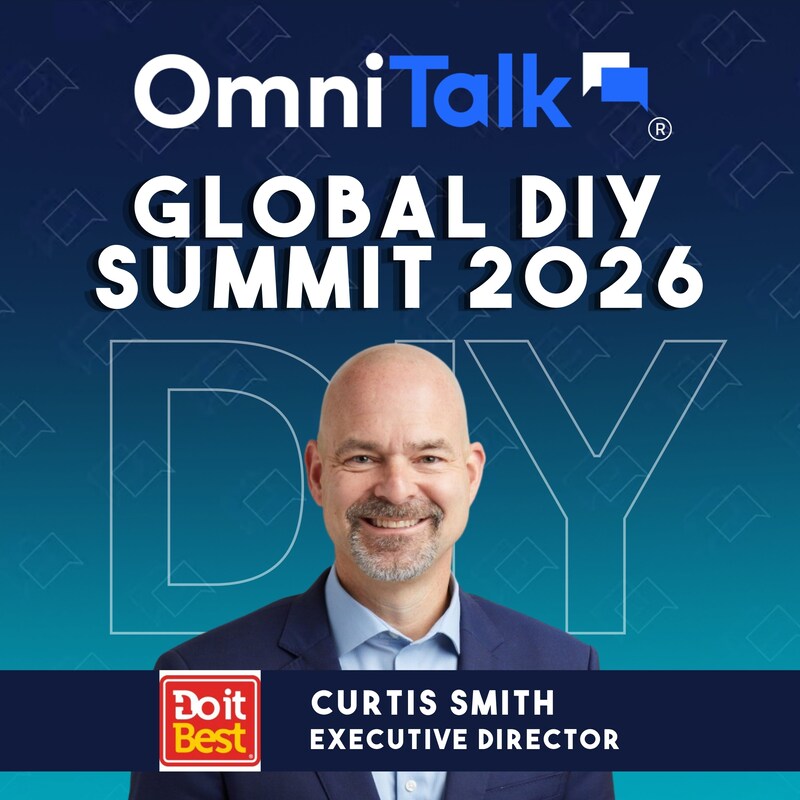
In this Omni Talk Retail interview, recorded live from the Global DIY Summit 2026 in Amsterdam, Chris Walton sits down with Curtis Smith, Executive Director of the Do it Best Foundation and True Value Foundation, to discuss the role of community impact in the future of retail.
Curtis shares the story behind Do it Best's acquisition of True Value, how the combined organization has expanded to roughly 9,000 locations across 60 countries, and what it takes to merge two philanthropic organizations into one unified mission.
The conversation explores how retailers can create meaningful impact beyond selling products, why community investment remains a competitive advantage, and how business leaders can balance growth, efficiency, and social responsibility in a rapidly changing world.
Most importantly, Curtis offers a powerful reminder to leaders attending the Global DIY Summit: every business ultimately serves people, and lasting success comes from creating value both inside and outside the store.
Key Topics Covered:
• The Do it Best acquisition of True Value and its impact on the organization
• Combining two foundations under one mission
• Building stronger communities through retail philanthropy
• Why retailers should think beyond products and transactions
• Lessons from supporting more than 150 nonprofit organizations
• The challenge of scaling charitable impact across markets
• How business growth and community investment work together
• The role of social responsibility in modern retail leadership
• Why the DIY industry naturally attracts people-first leaders
• Curtis Smith's message to executives on purpose, people, and legacy
Thank you to Vusion for supporting Omni Talk Retail's live coverage from the Global DIY Summit 2026 in Amsterdam.
This podcast uses the following third-party services for analysis:
Podcorn - https://podcorn.com/privacy
Transcripts
Hello, everyone.
Speaker A:This is Omnitalk retail.
Speaker A:I am Chris Walton coming to you live from the DIY Summit in Amsterdam from the Vuzion Podcast studio.
Speaker A:And joining me now is Curtis Smith.
Speaker A:Curtis is the executive director for Do It Best and the True Value Foundation.
Speaker A:Curtis, welcome to omnitalk.
Speaker B:Yeah, Chris, thanks for having me.
Speaker B:It's great to be here.
Speaker A:Yeah.
Speaker A:Your back.
Speaker A:We were kind of joking before we started even.
Speaker A:Your background is really fascinating.
Speaker A:Tell our audience about it and all that you oversee at the foundation as well.
Speaker B:Yeah, I've had an interesting career path, there's no doubt about that.
Speaker B:I work for Do It Best in True Value.
Speaker B:I am the executive director of the foundation.
Speaker B:I also play a little bit of a role for the communications work that we do on the corporate side, hosting a podcast with our CEO and appearing on stage occasionally, such as this conference.
Speaker A:You could probably teach me a few things.
Speaker A:I got to believe.
Speaker B:I'm not.
Speaker B:I'm not trying to say that.
Speaker B:Not saying that.
Speaker B:But yeah, for most of my career at this point, still, still, I can say most of my career, I was actually a television meteorologist and the chief meteorologist for the ABC station in Fort Wayne, Indiana, in the US obviously.
Speaker B:And yeah, did the weather, forecasted the weather, talked about it on TV.
Speaker B:I did the 5, 6 and 11 o' clock news.
Speaker B:I was there for 21 years in Fort Wayne doing that.
Speaker B:Left about 10 years ago, worked for a health organization in Fort Wayne and got into the corporate world that way and a variety of teams.
Speaker B:Then I was the chief marketing and communications officer for a large nonprofit in Indiana.
Speaker B:And about a year and a half ago, maybe about 20 months ago now, joined Do It Best as the executive director of the foundation.
Speaker A:Got it.
Speaker A:Okay.
Speaker A:And so a key piece of that, especially in your title two, is it's Do It Best and the True Value Foundation.
Speaker A:Right.
Speaker A:Because there was a big, you know, was it acquisition that took place.
Speaker A:Right.
Speaker A:Tell us about.
Speaker A:Tell the audience about that.
Speaker B:Yeah.
Speaker B:So I joined the company in October of 24.
Speaker B:One month later, do It Best, Acquire True Value out of bankruptcy.
Speaker A:Wow.
Speaker A:Did you know going in at all?
Speaker B:Well, I had an idea.
Speaker A:He had an idea.
Speaker B:The gentleman who had been running the foundation as the executive director had been a member of the communications team for a long time.
Speaker B:They asked him to step back into the communications role on the True Value side.
Speaker B:So that was why my position became available.
Speaker B:So I knew something was happening.
Speaker B:And it happened very quickly once I started.
Speaker A:Could read the tea leaves.
Speaker B:Yeah, yeah, exactly.
Speaker B:So Do It Best, Acquire True Value, became One organization.
Speaker B:And that process continues today, really turning into one very large organization with about 9,000 locations around the world, all 50 states, 60 countries.
Speaker B:And then the foundation followed suit by acquiring the True Value foundation about a year later.
Speaker B:So it was around January of this year that we got the paperwork all finalized and we truly became one foundation.
Speaker A:So what does that process look like in terms of, and maybe even step back to, in terms of, like, what is the mission of the foundation?
Speaker A:Let's start there.
Speaker A:And then what does it look like, like, when you're taking two separate entities with two different foundations with two different missions and trying to merge those together?
Speaker A:That's a question I've never thought about or asked anyone to this point.
Speaker B:Yeah.
Speaker B:So very complicated is how that looks.
Speaker B:The mission, though, Let me start with your first question.
Speaker B:The mission of who we are as a foundation is to build the best communities.
Speaker B:We want to invest into nonprofits and people doing great work in Fort Wayne, where we are, but all over the country and eventually all over the world.
Speaker B:So right now we have supported more than 150 organizations in our existence all over the United States.
Speaker B:We've given away millions of dollars of money, and I hope to expand that out to international markets as well.
Speaker B:And I think part of the combination of do it Best in True Value and the scale and the size and the scope that we've really gained through this acquisition allows us to have more of an impact in markets all over the globe.
Speaker B:I think that has been a very complicated process merging the two organizations into one.
Speaker B:But I also start.
Speaker B:I think that it's starting to go well now and really picking up some steam.
Speaker B:And we really are getting the symmetry that we need between the two and truly becoming one organization on the corporate side.
Speaker B:And that allows us to do the same on the foundation side.
Speaker A:Got it, Got it.
Speaker A:So you mentioned that it's international as well as a US Initiative.
Speaker A:How are the priorities different when you look at international versus back home?
Speaker B:Yeah, to be completely honest, I'm not sure yet.
Speaker A:Not sure yet.
Speaker B:Really?
Speaker B:We haven't taken that step on the foundation side.
Speaker B:We've not taken that step.
Speaker B:We have retailers and members on the corporate side in 60 countries, but our focus on the foundation side has been primarily the US So I'm actually not sure.
Speaker B:But I'll tell you this, I respect that answer.
Speaker A:I don't hear that very often, and I respect that because it shows me.
Speaker B:That you're thinking, yeah, I truly, I'm not going to lie to you, I don't have a well formed Answer on that, because we don't have a well formed plan yet.
Speaker B:But I will say this because I visited a number of different countries.
Speaker B:I've been to Europe several times now.
Speaker B:I'm always struck by how similar we all are.
Speaker B:I think if you listen to a lot of voices out there, there's a lot that can divide us.
Speaker B:There's a lot that makes it sound like people are wildly different, even across the street, much less around the country, much less around the world.
Speaker B:But I look at it the other way.
Speaker B:I find people to be remarkably similar no matter where I go.
Speaker B:And I think a lot of the same.
Speaker B:Homelessness, food insecurity, need for clothing, need for good education, need for physical and mental health.
Speaker B:I think those are the things we've been making a priority in the US And I think those are the things that are probably largely a priority around the globe.
Speaker A:That's a really good point, especially when you start talking about philanthropy.
Speaker A:The philanthropic side of how societies think tends to congeal towards the middle, right?
Speaker B:Yeah, I would think so.
Speaker B:And I would think at the end of the day, we're all humans.
Speaker B:And I just tend to.
Speaker B:I tend to see us more through what our shared experiences are, what our shared struggles are, rather than what makes us different.
Speaker B:So we speak a different language, so you have a different climate, so your business environment is slightly different that minute in comparison to what makes us similar.
Speaker B:We, every day we wake up and we're hungry and we want to be productive and we want to go to work and we have a family that we love.
Speaker B:And at the end of the day, we need sleep.
Speaker B:There's a lot that unites us, no matter what our lines of geography are.
Speaker B:Yeah, yeah.
Speaker A:And then it's just about activating it in the right way.
Speaker A:And that, to your point, is what you still want time to figure out because you're only, what, less than two years roughly, in the role you said?
Speaker B:Absolutely, yeah.
Speaker B:November of October of 24 is when I started, but not quite, not even two years.
Speaker B:And figuring it out, even in the US is a challenge, and figuring out the best ways to do it and the best partners to utilize to do it.
Speaker B:So in Fort Wayne, every quarter we're giving away money, and we usually give money away to about six, seven organizations, partnering with them to do great work in the community.
Speaker A:Okay.
Speaker B:But on average, through my year and a half or so, every quarter, while we're saying yes to six, seven, maybe eight organizations, we are being requested by 76 organizations.
Speaker B:So we're saying no to more than 90% of the partners, I think the vast majority of them do great work.
Speaker B:I would love to partner with them.
Speaker B:Resources are limited.
Speaker B:You've got to be very selective.
Speaker B:So just figuring it out in our current landscape is quite a task before we even broaden it out to the rest of the world.
Speaker A:Right.
Speaker A:You have to be planful.
Speaker A:You have to make choices.
Speaker A:That's always the way it works.
Speaker B:Absolutely.
Speaker A:So what brings you to that point?
Speaker A:What brings you to the DIY Summit?
Speaker B:You bet.
Speaker A:Is this your first time here?
Speaker B:It is.
Speaker B:It's our first time here.
Speaker B:For me personally, it's our first time here as a company.
Speaker A:Really?
Speaker B:Yeah.
Speaker B:It was the acquisition of True value.
Speaker B: f Do It Best since January of: Speaker B:But it was that acquisition of True Value that really broadened the scope of Do It Best.
Speaker B:We had about 4,500 locations.
Speaker B:That number literally doubled overnight when we acquired True Value.
Speaker B:And it took US over the 5 to 6 billion dollars rang.
Speaker B:So we're a fairly large company now.
Speaker A:Big size company.
Speaker B:And the size, the scale, the scope has expanded so rapidly overnight that Dan has become a much more important leader, I think, on a world scale.
Speaker B:He got this invite to be here and asked me to come with him.
Speaker B:Thought it would be a good opportunity for the two of us to share our story, but also to learn a little bit more about what DIY looks like here, what hardware looks like in Europe, and from a foundation perspective, get an idea of what the population looks like here and how best to serve them.
Speaker B:Got it, Got it.
Speaker A:Okay.
Speaker A:Well, so the theme of the DIY Summit is accelerating in a new global reality.
Speaker A:That's the theme.
Speaker A:Accelerating in a new global reality.
Speaker B:Yeah.
Speaker A:And for most executives in the room, you know, that means things like technology.
Speaker A:How do you gain market share?
Speaker A:How do you improve your efficiency?
Speaker A:I'm curious, though, from your perspective, leading a foundation, what does that theme mean for you?
Speaker A:Or is it the same?
Speaker B:I would say it's largely the same.
Speaker B:For me.
Speaker B:It's.
Speaker B:It's.
Speaker B:It is still, I would say it maybe is one step more basic than focusing on AI and technology and a lot of the things, Efficiency.
Speaker B:As a foundation, we want to be using technology well.
Speaker B:We want to understand how AI can help us.
Speaker B:We want to be efficient with what we do.
Speaker B:We don't want to waste a dollar because we live to a.
Speaker B:We exist to build the best communities and to pour into great organizations and partner with people doing amazing work.
Speaker B:So we want to do that well.
Speaker B:We want to do that thoughtfully and we want to do that efficiently.
Speaker B:How we go about figuring that out, maybe changes from location to location, but our goals are very similar.
Speaker A:So your last question here, then.
Speaker A:You're one of the few executives at this conference that has a social responsibility or community responsibility at hand every single day in your job versus, like, a business or commercial responsibility.
Speaker A:So I'm curious, like, what would you want to leave?
Speaker A:What message would you want to leave for those here at the conclusion of this summit that maybe they don't know now about the relationship between social missions and business sustainability?
Speaker A:How do you reconcile those two?
Speaker A:What is something that you've learned in your two years on the job that you'd like people in this audience to take home with them?
Speaker B:I don't think what I'm about to say is anything new to any executive.
Speaker B:I'm not sure I have anything to teach them.
Speaker B:I would phrase it as, I have something to remind them.
Speaker A:Okay?
Speaker B:And that is you serve people no matter what you do, no matter what you sell, no matter what the spreadsheet looks like.
Speaker B:Your business is people, right?
Speaker B:Serving people, giving to people, selling to people, whatever you do.
Speaker B:It's all about people in the end.
Speaker B:And as humans, I think we owe it.
Speaker B:I have a faith that drives me to think we have a responsibility to see intrinsic value in all humans, and there's a standard of living that we can help all humans live.
Speaker B:And maybe you're just selling paint or selling hardware or selling lumber materials or coming up with a new robotic lawnmower or whatever is going on in your hardware store, right?
Speaker B:You have the ability, through that work to impact your community, to make lives better wherever you live and to broaden that reach.
Speaker B:And I think when you do it, you make yourselves more appealing as a business, therefore producing better business results.
Speaker B:But I think there's a deeper value and a deeper sense of.
Speaker B:Of belonging to the community, a deeper sense of having an impact.
Speaker B:And you go to bed at night thinking, I did something truly meaningful.
Speaker B:Not that selling wrenches and hammers isn't meaningful, but to utilize that to actually impact lives and build better communities, I think is how we can all come together and have more value and meaning out of our own lives.
Speaker A:So if I was to paraphrase what you just said there, what I heard was our job is to go beyond just selling products to consumers.
Speaker A:It's actually to service our consumers to make their lives better for them.
Speaker B:Well, let me just.
Speaker B:At the risk of getting too philosophical, too deep, let me just say this.
Speaker B:I Believe that at the end of our lives, nobody lays on their deathbed and says these kinds of things.
Speaker B:Boy, I wish I'd worked a little harder.
Speaker A:Boy, I wish I'd sold another power drill.
Speaker B:Boy, I wish I had sold another power drill.
Speaker B:Or, man, if we had gotten into that one more market, my life would feel complete.
Speaker A:Right.
Speaker B:Don't believe that anybody in any country, in any industry, gets to the end of their life and says that kind of thing.
Speaker A:Right.
Speaker B:I think we all say these kind of things.
Speaker B:Boy, it was so short.
Speaker B:Boy, it went by so fast.
Speaker B:Boy, I wish I had spent more time with my family.
Speaker B:I. I cherished my loved ones.
Speaker B:I could have done even more.
Speaker B:I wish I'd given more to the people in my life that meant more to me.
Speaker B:I think that's where we all end up.
Speaker B:So I have talked to so many people in their 80s and 90s who approach death, know that death is soon.
Speaker B:Yeah.
Speaker B:And they approach their life with that mindset of, I'm giving back because I know my time here is short.
Speaker B:I wish we all did a better job of doing that and thinking that way in our 20s, 30s, 40s, and 50s.
Speaker A:Well.
Speaker A:Well said.
Speaker A:Well said.
Speaker A:Yeah.
Speaker A:It's a great reminder, too.
Speaker A:And I feel like I'm feeling that already.
Speaker A:I've only been at the conference for a couple hours, but I feel like already this.
Speaker A:This conference particularly has that mindset.
Speaker A:I don't know if it's because we're over here in Europe and it's more top of mind or what, but it feels like it's very palpable already.
Speaker B:I would say that it's very palpable in this industry.
Speaker A:In the industry, too.
Speaker A:Yeah.
Speaker B:So this conference is probably a byproduct of what's going on in the industry.
Speaker B:I think the industry is, by its nature, an industry that does help people.
Speaker A:Yeah, it does.
Speaker B:You help people do their DIY projects.
Speaker B:You help people get their yard mowed or their house painted or whatever has to happen.
Speaker B:So it's a helper mentality that I think a lot of people in this industry share.
Speaker B:I know that's true in our organization, so I think it's a natural leap to take it that one extra step.
Speaker A:All right, well, we've got the music from the main stage playing, so I think we'll close it up.
Speaker A:On that note, well, thank you for joining us.
Speaker A:It's been a real pleasure.
Speaker A:And thanks to Vuzion and the DIY Summit for asking us to come and cover this year's DIY Summit from Amsterdam.
Speaker A:And as always, to everyone out there watching, be careful out there.