Shownotes
“I think it was that intense sense of not belonging and being alone that actually created this beautiful spark of self-reflection.” — Sylvia LePoidevin
Some people inherit a clear sense of who they are. Others have to build it themselves.
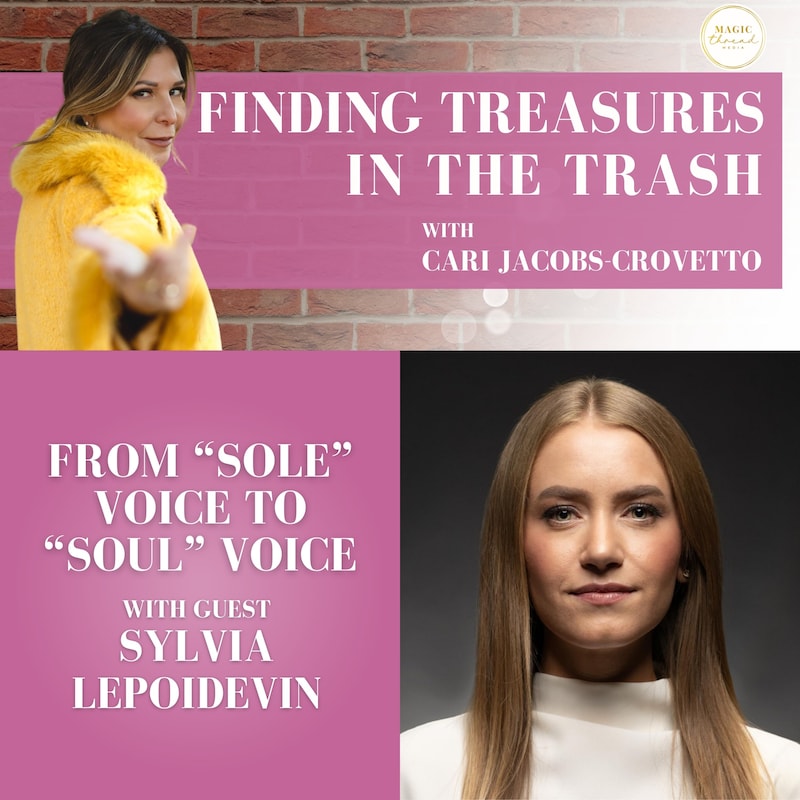
In this conversation, Sylvia LePoidevin shares what it was like growing up between worlds. Raised in remote parts of Africa while never fully belonging there or in the United States, she learned early what it meant to live without a clear mirror reflecting identity back to her. What began as loneliness slowly became something else. Curiosity. Intention. Self-authorship.
As a child, she would climb onto the roof alone and write about the kind of person she wanted to become. Calm. Wise. Grounded. Someone who could not be easily shaken. Years later, after becoming a successful startup executive known for helping companies go from zero to one, she began asking a deeper question: Did she become herself naturally, or did she consciously create herself in response to isolation?
What unfolds is a conversation about identity, conditioning, belonging, reinvention, and the quiet self underneath every role we play. Together, Cari and Sylvia explore what happens when there is no script handed to you, and how loneliness can sometimes become the very thing that teaches you how to come home to yourself.
And maybe the deeper truth is this: when no one tells you who you are, you get the rare chance to listen for yourself.
The Treasures in the Trash:
- Not belonging can become a form of freedom - When there is no clear script, mirror, or community telling you who to be, there is also space to consciously shape yourself from the inside out.
- Loneliness can deepen self-awareness - The moments that feel most isolating can also become the moments where reflection, imagination, and inner clarity begin to form.
- The identity you create may still be deeply real - Even the parts of ourselves we consciously shape often come from something honest and essential underneath. Self-creation and authenticity are not always opposites.
- Starting over reveals what is stable - Every return to zero strips away what is temporary and brings us back to the part of ourselves that remains unchanged beneath achievement, location, or circumstance.
- You are more capable of rebuilding than you think - The more connected you become to the deeper self beneath external identity, the less frightening change, reinvention, and uncertainty begin to feel.
About our Guest:
Sylvia LePoidevin has built marketing from zero four times. As the first marketing hire at FloQast ($1.6B) and Kandji ($850M+), she's helped build companies now worth over $2 billion combined. She turned down two CMO roles at $5B+ companies to make her fourth early-stage bet as CMO at Juno, where they've gone from zero to millions in under six months. Raised in remota Africa before moving to the US alone at 17, she writes "The Zero to One Marketer" on LinkedIn and Substack.
https://www.linkedin.com/in/sylvialepoidevin
https://substack.com/@sylvialepoidevin
About Cari:
Cari Jacobs-Crovetto is an executive and leadership coach and the founder of Brave Directions, where she works with senior leaders and C-suite executives to strengthen interpersonal and team relationships, navigate conflict skillfully, and deepen self-awareness, influence, and confidence.
Before becoming a coach, Cari spent three decades in marketing and product leadership roles across Fortune 100 companies, media networks, consulting firms, and venture-backed startups. In 2019, she was named one of Forbes’ Top 50 Chief Marketing Officers.
Cari brings together decades of operating experience with more than 45 years of Buddhist meditation study and practice, integrating deep inner work with practical leadership development.
She facilitates the renowned Interpersonal Dynamics (“Touchy Feely”) course at Stanford Graduate School of Business where she also coaches grad school students, leads meditation classes and leadership workshops, and hosts the podcast Finding Treasures in the Trash.
Her mantra: Fierce Heart — where compassion meets bold, badass leadership.
https://www.bravedirections.com/
https://www.linkedin.com/in/carisf/
https://www.instagram.com/cari_bravedirections/
Thanks for listening!
Thanks so much for listening to our podcast! If you enjoyed this episode and think that others could benefit from listening, please share it using the social media buttons on this page.
Do you have some feedback or questions about this episode? Leave a comment in the section below!
Subscribe to the podcast
If you would like to get automatic updates of new podcast episodes, you can follow the podcast on Apple Podcasts or your favorite podcast app.
Leave us an Apple Podcasts review
Ratings and reviews from our listeners are extremely valuable to us and greatly appreciated. They help our podcast rank higher on Apple Podcasts, which exposes our show to more awesome listeners like you. If you are enjoying the show, please leave us a review on Apple Podcasts.
Mentioned in this episode:
This show was brought to you in part by the Magic Thread Media Network. To learn more visit: https://magicthreadmedia.com/
Transcripts
Cari Jacobs-Crovetto: I want to come back for a minute to this blank sheet of paper, because I want to ask you something. There's somewhere in hearing this story that I could say, Well, is it all designed like the black and white wardrobe the, you know, I wrote out exactly who I was going to be, and now I'm that like you know that that almost could feel conditioned so but I know you, and I know you have a deeply spiritual side, but tell me about that.
Sylvia LePoidevia:Yeah, it's funny. Actually, after college, I had this whole sort of grappling with that, where I was like, did I just invent my personality because I was lonely and then, but who am I actually, under this thing that I've been so intentional about creating for my life? Like, is there some authentic version of me that's underneath that, that I'm somehow hiding. And so I did a lot a lot of exploration around that, because I was like, what if I just fabricated this entire being that I am and it's not actually real, and I was terrified of that.
Sylvia LePoidevia:Cari Jacobs-Crovetto: What if real, lasting transformation happens when we're willing to face our shadows, the messy, uncomfortable parts of ourselves we'd rather not look at. And what if the things we avoid out of fear or shame are actually the treasures that wake us up? I'm Cari Jacobs-Crovetto, executive coach and meditation teacher, and this is finding treasures in the trash through raw, unfiltered conversations, I invite you to turn toward what you've disowned and begin integrating it back into the whole beautiful human you were meant to be. Your treasure doesn't always live in the light. Sometimes it's buried in the trash. So grab your gloves. Let's go dumpster diving.
Sylvia LePoidevia:Hello friends. I'm Cari Jacobs-Crovetto, and welcome to finding treasures in the trash. Today, I'm so excited for who you're about to meet. Her name is Sylvia LePoidevin. She has been a friend, a client, a collaborator, and I will tell you a bit about her and why I wanted to share her and her story with you. First of all, she's just 32 years old, and in knowing her in just three decades of lifetime, I feel like she has lived multiple, multiple expressions of herself, lots and lots of layers to this woman. I also wanted you to hear about her success, but also her life story, which contains a lot of deep lessons, certainly for me and I think for listeners about how we can take things in our life that feel so hard, or maybe feel like we've been dealt a rough hand, and somehow that when we're willing to really be with those and turn towards those, our path unfolds. But I also want to tell you just a little bit about how badass Sylvia is. So first of all, she has built marketing from zero to one four times in her short career. Keep in mind, I worked for three decades in my career, not alone, just being three decades old and had done that, she was the first marketing hire in a number of startups. Her big goal was to become a CMO before she was 30, and she became a chief marketing officer when she was at kanji at just 29 years old, well deserved, I might add, she recently joined her fourth early stage startup at a company called Juno, which is an AI company where they've already gone from zero to millions with her at the helm, and we're going to get into her story, but just a couple of cool things about her. First of all, she has hacked her life. And I'm going to open up by saying, Sylvia, I need you to tell your listeners about how you've hacked your life, specifically around fashion and makeup.
Sylvia LePoidevia:I'm I'm so overwhelmingly just grateful to be here and just blown away by that introduction. Thank you so much, Cari, so fashion hacks. I i have this thing where I only wear black and white. Always. My entire closet is black and white. I've even gotten my fiance on this train. And so our shared clause is completely black and white. And it is such a hack, because it's like, I'm weirdly famous for it, because it's such a memorable thing. And people are always like, it makes so much sense. It's like. Like, when I travel, everything, I pack matches, and I don't even have to think about it. When I do laundry, you've got the lights, you've got the darks, like, white and black done. There's so many little ways, and, yeah, that's, that's how I packed fashion.
Sylvia LePoidevia:Cari Jacobs-Crovetto: Well. Now, did you ever like because I love this idea, and I feel like, in truth, when I pick out my clothes, I pick a lot of black and white just naturally. But then I see things like, you know, the amazing fashion, and like Emily in Paris, and I'm like, I need to buy like, you know, bright orange and fuchsia. Are you ever tempted? Do you ever miss wearing color.
Sylvia LePoidevia:It's funny that you asked that, because the use case where this was challenging was actually when you're a guest at a wedding, because then black is the only option, right? You can't wear white as a guest to a wedding. And so I remember being like, Okay, I'm gonna break the black and white thing for a bunch of weddings that I had last year. And I couldn't do it like, I could not bring myself to purchase colors. I don't know it just, it just fits so well for me. So no, I would say I'm not really tempted. I just am in such a good flow with it. And honestly, I think it helps me stay more in what's timeless versus what's like the latest trend. It's like, oh, chocolate Browns the color that everyone's wearing like it helps me kind of just like, skip getting sucked into some of the trends and stay with some things that are more timeless. So I'm just loving it. One day, I might blow it up and just show up in like a pink track suit or something, and freak everyone out. Until now,
Sylvia LePoidevia:Cari Jacobs-Crovetto: I love it, pink tracksuit well, and I think this is kind of relevant, because I don't know, I think there's a way that you know a little of my story, right? I came to Buddhist practice very young in my life, started at 15, and then I really dove into it deeply at 29 and there's a way that, I think I told myself a story that to be truly Buddhist, to be truly spiritual, I had to let go of anything that felt like a costume or a mask, like I couldn't wear makeup. I should really just be shaving my head. I couldn't care about fashion. And there was even a point when I was living in India, where I remember looking in the mirror and having this moment of like, you are no gender, you are no woman, you are no man. You don't need any makeup, just you're just energy. And I thought of shaving my head in that moment. But now I've come to a place with it, where I think it's about where in me it comes from. Like, is it coming from vanity? Truth be told, yes, a little bit, if I'm honest with myself, but also more so it comes from, like, I want to dress this being up. It's like, it's like, Lakshmi, you know, from Lacher me, was adorned in gold and jewels and and there was something beautiful about dressing the Goddess. This is actually so relevant, like, I had a big breakthrough around this when I was advanced in my career, very, very early, and I was often the only woman in the boardroom, the only woman at the table at the dinner with the executive team and the waiter would come up and be like, Well, what does the lady want for her order? Because I was the only one. And not only was I the only woman, but I was often the youngest by 10 years in a lot of these spaces.
Sylvia LePoidevia:And so because of that, I think for a while, I tried to sort of tone myself down, not dress up, not wear a lot of makeup, not wear something that was too girly or too just like fun. And I remember at some point a few years ago, just being like, wow, the fact that I stand out and I'm different is one of the best things about me. It just allows me to think outside the box and think bigger and think differently. And it's like, it makes me, like, limitless. I don't have to, like, fit in the box with everyone. And so I just fully embraced it. And then I would wear dresses. And I just, like, I just started, like, carrying I did makeup classes, like these makeup artists that can do your makeup for events and stuff, they all do classes. So I had them teach me. I did, like, professional courses to learn how to do makeup. So I was like, I put this on every day, and I don't even know how it works. And so, yeah, I just like, invested in my appearance, especially in like, a feminine way.
Sylvia LePoidevia:Cari Jacobs-Crovetto: And I think that outer sort of like fun that I had with that was part of me, just like, feeling more comfortable stepping into the fact that I looked different than most people around me at the time, and still do a lot of the times. I know this is not a new story for you, so you're going to talk about this to the listeners, but I'll just introduce this part of your story, which is that you were born and raised in Africa, and for those of you. You can't see Sylvia. First of all, she's one of the most stunning women you will ever see in your life, but she's also extremely blonde, extremely light and extremely blue eyed. So can you talk a little bit about your early childhood life?
Sylvia LePoidevia:Absolutely. Yeah. I think this idea of being an outsider was my entire childhood, and so basically, I was born in the US, but I moved to Africa, and I was two years old. My parents do nonprofit work. My dad's a pilot out there, and specifically a pilot in the most remote parts of Africa, because he flies tiny little planes on like the dirt air strip in the middle of nowhere in Africa, like shooing the gazelles off the airstrip type of places, and he would fly like doctors and dentists and stuff to parts of the country where they would never get healthcare. They would never get access to those things, or clean water, or whatever might have been the need at the time. Right? So all that to say we always lived in the middle of nowhere, the like most remote parts of Africa. And so growing up from a very young age, like I was the only like it was like our family, and then 1000s of local Africans in whatever city we happened to live in, we were mostly in Mozambique, northern Mozambique, in a small town there. And so I grew up one not being able to leave the gate, like there were spikes on the gate. It wasn't safe. You couldn't leave the house. But if you did leave the house, you know, with the family, like we would, you know, walk to get fruit from the fruit place, or whatever. And every time we left the house, there'd be just hundreds of people running up to me, trying to touch my hair or just be like, Who is this person that looks so different from us? And so I always grew up just being like, so starkly different and appearance wise from everyone around me, and really being sort of trapped in this like little bubble of my home. And so, yeah, just my whole growing up life, I felt like a complete outsider. And then I would come back to the US, where my dad is from, and I was kind of an outsider there too, because I didn't grow up here. I didn't know anything about living here in the US either. It was just like in both places, I was like the
Sylvia LePoidevia:one that didn't belong. But then when I was here in the US, I looked like I looked like I was from here, but I didn't feel like I was from here. And then when I was in Africa as a kid, I didn't look like everyone else, but that was my home, and I felt at home there.
Sylvia LePoidevia:Cari Jacobs-Crovetto: Yeah, so I mean, I'm just getting this picture of like, we're not talking about a big city where there was a big expat community that you could, like, identify with as a young girl. We're talking about, you know, a small village where you're kept inside of gates with spikes, and told that outside of those gates was scary and fearful, and when you went outside of the gates, it was as if the people who were in the village, like, treated you as if you were extremely different. So I hear you using the word sort of being an outsider. I'm hearing inside of there maybe not belonging, or not feeling like you had a place that you fit.
Sylvia LePoidevia:Yeah, it didn't really fit anywhere, right? Like, I didn't fit in Africa. I didn't fit in the US. I didn't belong anywhere. And, yeah, we didn't have in our city where we grew up. There were, you know, a few other families that we would see and stay in touch with, and other expat families, but not that many. And so it was definitely, you know, a bit isolating, just like living there inside the gate,
Sylvia LePoidevia:Cari Jacobs-Crovetto: yeah. And so then you come here to the US, and you have a whole different experience, where, from a look standpoint, you completely fit. You're like, the quintessential, like, kind of almost California looking girl, and yet, inside of you, you felt, in a way, did you feel African, or did you just feel like, what was the dominant feeling?
Sylvia LePoidevia:It's so interesting. I wouldn't say I felt African because at home, because it wasn't a very safe country, I wasn't that connected to the culture there, if that makes sense, like I was always like observing it from a distance. And so I wouldn't say I felt African, but I did feel like Africa was my home, but I didn't really belong in the culture there. And even, like I remember as a kid, I would I would climb up on the roof. Climbing up on the roof was like a thing that I used to do that was really meaningful to me for for a lot of reasons. I think it was just like my little escape being stuck in that space. But I would climb up there, and I would hear like these drums from like these like rituals or some event that was going on in the local community. And I. And I was always so fascinated by it, but I was never able to, like, be a part of things like that, because, again, outside was, like, it was scary, it was unsafe. It was this, like, mystery world outside the gate that I couldn't really be, like, connected to. So I didn't really feel African, but I didn't really feel American
Sylvia LePoidevia:Cari Jacobs-Crovetto: either. I'm just picturing this. Like, how old were you when you climbed up on the roof?
Sylvia LePoidevia:Probably, like 10.
Sylvia LePoidevia:Cari Jacobs-Crovetto: So here you are little 10 year old Sylvia climbing up on the roof with her crazy blonde hair in the middle of Africa. And in the distance, you're hearing locals playing drums, living their social life. What was that like? Did that feel that was something scary out there that you couldn't touch and you had to sort of stay secluded. Or were you, were you inspired, as you got older, to, like, go off the roof? And, yeah,
Sylvia LePoidevia:it's funny, like, I was always told by my family that it was kind of like bad and scary, like it was probably just wrapped up into this whole narrative of, like, don't, don't go outside the gates. It's, it's unsafe, which there was definitely a lot of, there was some truth to that, for sure, but I was always curious about it. There's some, you know, like festival or some event, like, I was always kind of curious about that, like, what's going on there? And maybe it's just that I, yeah, didn't feel like I belonged anywhere. And I was just, like, had some curiosity about this, like, belonging circle that was happening, and was curious about that, you know, I don't know deep down, I never, I never had a feeling that it was bad or scary.
Sylvia LePoidevia:Cari Jacobs-Crovetto: Yeah, I mean, I've, I spent several months in Africa, and of course, it's like the most beautiful country, and the people are so loving, and I can only imagine feeling so isolated in a country that is actually so connected. I also, I'm thinking that was the 80s, when you were little, like the 80s or 90s, even, right? It was truly unsafe for you as a small child to be out and about, but what a strange life to feel so alone. Did you have brothers and sisters?
Sylvia LePoidevia:I did. I had a brother and a sister. We're all very close in age. So we would play together. We would do everything together. But I always felt like I was like the weird kid. I always, even in my own family, I didn't feel like I quite belonged, like I felt like everyone was in a circle, and then I was just like, somewhere set off. And part of why I used to climb up on the roof is because I was always trying to find a place to get away and be alone. And when I was alone, I would go up on the roof and I would write. And I would write, I don't remember what age I was, maybe eight years old when I started doing this, nine years old, something like that, going up on the roof and writing. And I would just literally write about the type of person that I wanted to be, and I would write about my dreams and my goals, and it was almost like I was inventing a personality, but it was more like I was just being intentional about the type of person I wanted to be. What kinds of things did you write at 10 years old? Like, what kind of person did you want to be? I wanted to be someone who was very like, balanced and level, headed and poised and like nothing could knock me over. It was almost like a bit stoic, like I just wanted to, because, like, at that age, you have a lot of emotions, and I think I wanted to just be someone who was just like, Wise. It's almost like, you know, I was young, but there was some part, there's some part of me that's, like, much older than my actual age. And so it feels like that's what I would write about. Is, you know, I wanted to be someone who was a good friend, who was who was just like, balanced and wise and clear and knew the right thing to say in that moment, had like, a level of poise. It's funny, because now, I mean, when I get feedback, even from people I work with, like these are the types of things that they
Sylvia LePoidevia:Cari Jacobs-Crovetto: say about me today. Well, and I'm wondering, though I'm hearing aloneness, and Were you lonely? Did you feel sad? Did you feel like you were creating, almost like your own best friend? All the above, all the above. This is like your quote, unquote trash, right? This is the shadowy, the shadowy pieces and parts. Did you feel like at that point there were parts of yourself, of you, or that were signaled that weren't welcome
Sylvia LePoidevia:100% Yeah, I think, well, my family is very they're very balanced and very, not very emotional. I definitely felt like, you know, big emotions were just not relatable. To a lot of folks in my family, so that, I think that was part of what made me feel very different. My family is also very religious, and I always felt like that didn't quite fit for me, even at a super young age. I always felt like I was like in it at the time, but I felt like it, I almost felt like I was faking it as a kid, like I was trying to be right, I was trying to be good, but I just felt like I wasn't or it wasn't good enough or something. And so, yeah, I think it was just that sense of loneliness and feeling like I didn't belong anywhere around me, even with my own family. I always felt like an outsider, and I would climb up on the roof and I would escape so that I could try to make sense of my life. And so a lot of that writing was not necessarily big, beautiful paragraphs about the type of person I wanted to be. There's probably also a lot of, you know, a bit of angst in there, and a bit of, you know, just being like, who am I like? I think, I think I kind of created that personality, that persona for myself, that intention. I think I created it because I didn't know what else to do. I didn't know who I was. I didn't have a circle. I didn't have, like, a grounded sense of belonging anywhere. I didn't have community that felt like I was a part of it. I would just see it from afar. And so, yeah, I think it was that intense sense of not belonging and being alone that made me, that actually created this like beautiful spark of self reflection that I still have today, like I would not be the person that I am today without the climbing up on the roof and writing about it because I didn't know what else to do.
Sylvia LePoidevia:Cari Jacobs-Crovetto: Yeah, I feel so tender hearing this story, because on the one hand, it's such a story of deep resilience and wise beyond your years to know that you know you wanted to write about the potentiality of who you could become, and mindset right, putting our mind towards something and making it in a way, grading it. But there's also something deeper I'm hearing here about not having a lot of the signals that many of us have in society that play back to us, who we are and in what I teach, sometimes we're undoing all of that too, right? There's a way in which that, like empty sheet of paper, right, or that untouched palette, is beautiful because you get to kind of self create it. But on the other hand, I can also hear in your voice that it was isolating and lonely, and in some ways there was an angsty, sad part of like, who am I anyway? And I, I want to jump to when you did come. Did you go to was it UCLA?
Sylvia LePoidevia:No, it was a small private school in LA that I went to when I was 17. It's called Azusa Pacific.
Sylvia LePoidevia:Cari Jacobs-Crovetto: Shout out,
Sylvia LePoidevia:yeah, but no, I think that's the perfect segue, because that is the blank sheet of paper is exactly right, and I think that is the positive of not having, like, a strong structure around me and community around me when I was younger, was that, you know, there was a blank slate. And when I moved to the US, that was, like the biggest blank slate for me. I was like, I can be whoever I want. All these things I've been dreaming about that. I've been writing about, like, I can just like, AirDrop onto this campus, and I can be all of those things, and then I can see how it goes, and then I can move again, and I can do it again,
Sylvia LePoidevia:Cari Jacobs-Crovetto: right? And I'm imagining, though, that, I mean, this is a human trait, but I think it's one thing we're really good at in America is projection, right? And so all of a sudden, here you come, and I'm imagining that there were, there was a lot of projections about who you are given probably the depth of vibrational frequency that you have as a person, your beauty, your intelligence, and yet you're carrying this whole sort of roots that you had in and from Africa. So I'm kind of imagining that had to have been like a pretty crazy head trip.
Sylvia LePoidevia:It was crazy. I remember people's expressions when I would tell them my life story in college, and they would just be, like, blown away, like they were like, I don't know what to do with this. This is crazy, and it was cool because I really leaned into the fact that I was so different. Because I was like, Well, I have. Weird life story. Like, let's just go for it and see, you know, I'm not gonna I had friends, actually from my school and from Africa that that moved back to the US, and we're kind of secretive about their backstory, because they were kind of embarrassed by it, by being so different. And I was like, I'm not gonna do that. I was like, I'm just gonna, you know, embrace how, weird I am, and some people are going to love it. And if people don't, then fine. And so yeah, people would just be almost like shocked by like, because my appearance didn't reflect this like story that I was telling them, they would be like, what is happening? Who are you? But it was a combination of, I got to be everything that I wrote about being, and I got to just like, be so confident and so in my story and why it was so different and that was really amazing. There were definitely parts that were really hard about that too. I think the part that was the hardest was just learning that not everyone has your back, not everyone is a good person. And I hadn't really learned that because our little expat community was like, you take care of each other because, like, You got nothing else. And so that was the hardest part of moving to the US with just being like, wow. Some people are kind of snakes, some people are liars. Some people are will take advantage of you, and that was the hard part to learn. Moving here that I had not experienced, even though my whole life had been like, don't go outside the gate, it's unsafe. I'd never been trained to protect myself from people inside the gate.
Sylvia LePoidevia:Cari Jacobs-Crovetto: Wow, I'm just letting that land for a minute, because I've had moments of that experience myself. Or, you know, I can remember going off traveling, and I traveled for like, nine months, and my dad was so terrified. And right before I left San Francisco, like a man pulled a gun out from underneath his car seat and was telling me to get in this car. And nothing like that happened when I was in places like Africa and India and Burma and Thailand. Nothing. It's like inside the gates, outside the gates, and I want to come back for a minute to this blank sheet of paper, because I want to ask you something. There's somewhere in hearing this story that I could say, Well, is it all designed like the black and white wardrobe the, you know, I wrote out exactly who I was going to be, and now I'm that like that almost could feel conditioned so, but I know you, and I know you have a deeply spiritual side, but tell me about that.
Sylvia LePoidevia:Yeah, it's funny. Actually, after college, I had this whole sort of a grappling with that, where I was like, did I just invent my personality because I was lonely and then, but who am I actually under this thing that I've been so intentional about creating for my life? Like, is there some authentic version of me that's underneath that that I'm somehow hiding. And so I did a lot a lot of exploration around that, because I was like, what if I just fabricated this entire being that I am and it's not actually real? And I was terrified of that. And for years, I sort of was searching for that answer and almost trying to peel back the layers of everything that I had created. And during these times of loneliness, I was, like, trying to peel it back. Be like, what's underneath it, you know? And eventually, what I came to was I would peel back all the layers and like, I would still be the exact same person underneath, the
Sylvia LePoidevia:Cari Jacobs-Crovetto: exact same 10 year old writing on the roof
Sylvia LePoidevia:exactly. I still had the exact same intention, and I still had whether my writing created the person I am now or not. It's like the writing came from a very real place, and so that was real the whole time,
Sylvia LePoidevia:Cari Jacobs-Crovetto: well. And this is so powerful what you're saying, because one of the big themes I teach is about conditioned stories, conditioned narratives, conditioned patterns. And I saw many people wake up when I was studying in India through a small teaching. And the teaching was, can you remember your first memory? We can do it right now if you want, but it's like you try to remember your first memory, like
Sylvia LePoidevia:I know
Sylvia LePoidevia:Cari Jacobs-Crovetto: most people are do, how old were you?
Sylvia LePoidevia:Yeah, I was seven.
Sylvia LePoidevia:Cari Jacobs-Crovetto: That's your first memory.
Sylvia LePoidevia:That's my first memory. I know. Very old for my first memories,
Sylvia LePoidevia:Cari Jacobs-Crovetto: but it is a little bit that's okay. So who was tracking that memory?
Sylvia LePoidevia:Who was tracking that memory? My is it? Trick question?
Sylvia LePoidevia:Cari Jacobs-Crovetto: No. Because the idea is that the tracker that was tracking the memory seven. For me, it was like two.
Sylvia LePoidevia:I can remember chasing one of my little cousins with a hairbrush and trying to brush her. We were crawling. I remember where I was in my house, but you had a little bit of language at that time. I didn't even have language, and somehow I tracked that tracker is the same tracker that tracks my memories today, similar to that 10 year old writing is the same tracker or inventor or that's sitting back behind the curtain of identity that's crafting the identity. And in many ways, this is a huge unlock for people, because the truth is that your tracker and my tracker are the same. Whoa. What? Right? Like where the tracking is. So you talked about, you know, was it inauthentic that I wrote and did I self create myself? But guess what? We all do that we're just less aware of it, and also true and oftentimes done for us,
Sylvia LePoidevia:right? It's like, are you just gonna let it happen, or are you going to do it yourself? But it's happening anyway.
Sylvia LePoidevia:Cari Jacobs-Crovetto: Mic drop, that's the Whoa. I mean, it happens, right? And your case, you didn't have a lot of external cues. And the cues you had you didn't connect to, whether it was religious or the lack of emotionality in your in your house, and so you chose to write your own script. It's really powerful. Most of us don't get to write our own script, right? It's kind of done for us in a multitude of ways because of social cues. And then we're told, this is you, this is you, this is you. And we spend, oftentimes, people spend, people come to me and pay me to undo the script so that they can get to the authentic them.
Sylvia LePoidevia:Well, what I'm realizing, as you're saying that is huge, which is, if I hadn't felt so lonely, I would never have written the script. If I had a script written for me that was stronger or more consistent or more predictable or whatever, like, I wouldn't have written it. I would have just let that other script happen. And I think although most people listening to this probably did not grow up in the middle of nowhere in Africa like everyone's felt lonely at some point in their lives. And maybe that's the best, maybe that's the treasure in the trash of those moments of not fitting in, or lonely like maybe that, or starting over, moving somewhere new, whatever, like those can all be blank slates where you get to write the script yourself.
Sylvia LePoidevia:Cari Jacobs-Crovetto: You get to write the script yourself. And then there's also the free fall, which most of us aren't going to like free fall from the time we're 10. We need structure. We need oftentimes, human beings need to know, like the ego needs to know where it fits. But what's so beautiful about what you're sharing, and I just, I'll spend, you know, one more minute on it, is that in Buddhist teaching, what they're saying is see your self, see your mind's script and know that it's not actually you. And what you said was, when you asked yourself this when you were older, you said, No, this is me. This person writing is the true thing that I'm pulling down, whether it's coming from my soul or spirituality or wherever it's coming from, that's me, and I just wrote a script saying, this is how I'm going to intentionally live my life, but you still have that connection to who you really are. And step two would be, can you like free fall from that place with no script, right? That's like the Buddhist teaching version of it. But can you free fall from that place with no script? And in many ways, I want to pivot to your sort of zero to one, because this is part of what you do with your work. But this is also, I think you want to talk about, this is a little bit about who you are, too. Tell people about zero to one. What's it mean?
Sylvia LePoidevia:Yeah, yeah. So zero to one. It's funny. I use zero to one a lot in my work, but it applies to everything in my life. I actually write a substack called the Zero to One marketer because I've been the first marketer at first, or very early marketer at four now, four different start. Ups. And so what I love to do is come in my first startup, I was hired very young. They were maybe 12 people, scaled up to they're now worth 1.6 billion like this, like zero. That's a zero to one, right? And I've done that now four, four times. I'm on the fourth and then during those four times, I've also moved to four different cities in the US, and where I didn't know a soul, where I was moving to that new, new city. And so everything you're describing about the free fall, like, that's it. It's like each of those moments of going like, what people forget about going to one is you have to go back to zero again, and the free fall is going back to zero. Could be the new city that you don't know a soul, and you get that blank slate where you can have a chance to hit rewrite on some parts of that script. Or it can be, for me, a new a new startup, a new company, where I can take everything I've learned and, you know, built from the ground up with some more learnings. So that's been since I've come to the US that's been and, you know, started my career. That's been my whole journey. I know why.
Sylvia LePoidevia:Cari Jacobs-Crovetto: I didn't even know we were going to go here. Like, in this way, we had some idea, but I didn't know how we were going to get here. But, you know, this idea of zero is also, in some ways, I think it's kind of Buddhist, right, which is like, in this idea of a continuum, you can have like zero to 10 to the positive and zero to 10 to the negative, and the whole idea, and sort of the spiritual practices to try to stay at zero, right? You're not going too far in either direction, because then you're getting yourself into a dualistic state. If you go to positive five, there's a likelihood that you'll hit negative five. So the idea is you're keeping yourself at kind of a Zen, neutral state, and not letting your emotions carry you in either direction. You're noticing them. You're naming them. And so here you are, and I'm hearing like, yes, this was difficult and lonely, and you didn't have a sense of belonging, and you didn't have mirrors reflecting back to you that you were okay, and yet there was this part of you, I'll call it your your soul, your higher level awareness that somehow climbed up on that roof with yourself and figured out how you could write that story, and you got so comfortable with it that you're like, I could do this again and again. I can rewrite it and rewrite it and rewrite it. Because there's a deeper part of me that is unwavering and always here.
Sylvia LePoidevia:It's so true. It's like I know that I could move to any city and I would thrive, and I would build community and like that does not make me feel afraid, and I think that's exactly why. I think it's the that almost steadiness and clarity from the climbing up on the roof makes me able to go zero to one, new cities and new startups, because there's a there's a consistency the self that's tracking the memories is like always there and present and like, being alone for a brief period of time, starting over, like, that's not a big deal, like, I'm still here, I'm still the same. Maybe it is coming back to zero. It's almost like when you lose everything, you come back to that self on the roof.
Sylvia LePoidevia:Cari Jacobs-Crovetto: That's the stable thing. That's the stable thing. I can remember one of my, one of my favorite teachers, someone asked her about because she's married. And a lot of you know the old school way was like, if you were a spiritual teacher, you didn't get married. And there was sort of this lonely Chase life. I mean, even the Dalai Lama said he wasn't fully awakened because he never got married. At least, I think he said that someone told me that, and she had said, I can fall in love with anyone. I could love anyone. And at the time, I didn't really understand that. But from the zero place, you really can't you can love anyone. You can love anything, and having that to depend on, I mean, this is like a different version of finding treasure in the trash. It's like your life was given to you. There was something given to you that could have destroyed you, and you could have lost yourself in that and never really found a way to, like, reconstruct your fundamental egoic self, and yet you lived from the place that was doing the very structuring, and that's where you live from today.
Sylvia LePoidevia:Exactly, exactly.
Sylvia LePoidevia:Cari Jacobs-Crovetto: Fine,
Sylvia LePoidevia:so beautiful. I hope people really hear this lesson, true lesson at just 32 years old that you are sharing with the listeners today. I'm so so grateful you're here.
Sylvia LePoidevia:Me too. I feel like I learned so much in this conversation. So thank you. Just the energy you bring to this space is just so so clear. It's so expansive, like everything connects here. So thank you.
Sylvia LePoidevia:Cari Jacobs-Crovetto: Everything does connect here. Thank you back. And so if people want to follow you. I mean, you've got so many years of life ahead of you. It's so exciting if people want to follow you, and they want to follow your career, and they want to follow you as maybe a marketer or as just a woman who's doing amazing things, who's creating really, composting her own trash every day, getting back to zero and creating these beautiful, fruitful gardens. Where can they find you?
Sylvia LePoidevia:Yeah, definitely. So just on on brand for this conversation, the zero to one marketer is my sub stack, and I actually write about a lot of memories, like I go back into memories and write about just the zero to one experience. It's definitely marketing focused, but there's also a lot of just like life stories in there as well.
Sylvia LePoidevia:Cari Jacobs-Crovetto: Well, I'm sure everyone would love that. Okay, before we go, we have one last thing we need to do, which is called Trash Can Taro. So hold on a minute, or I'm gonna pull out my very, not really tarot cards. Oh,
Sylvia LePoidevia:I'm so excited.
Sylvia LePoidevia:Cari Jacobs-Crovetto: Okay, so for those of you listening, this is where I close my eyes and I randomly pick a card which is really a piece of paper with a bunch of questions on it, and I ask Sylvia a surprise question. So hold on while I grab it.
Sylvia LePoidevia:This is my favorite game. I'm actually known for this in my friend group. I will bring decks of question cards to dinners and stuff, and I'll roll their eyes and be like, are we doing this again? I love it.
Sylvia LePoidevia:Cari Jacobs-Crovetto: Yes, we are. Okay. Are you ready? Yes, trash can. Taro, Miss Sylvia, here is your question, ready? I'm rolling the virtual your question is, ooh, this is a good one. You ready?
Sylvia LePoidevia:It's always, it's always perfect. I'm sure
Sylvia LePoidevia:Cari Jacobs-Crovetto: if your soul left a note in the trash, what would it say?
Sylvia LePoidevia:Wow, that just ties a bow on this whole conversation. What's coming to me is they would say, like I've been here the whole time and I will always be here, like I'm leaving this conversation feeling like I can, I don't have to be afraid, like I can. You can jump off the cliff, take the risk I can. I can lose something that I care about like it doesn't matter my soul, like I'm always here.
Sylvia LePoidevia:Cari Jacobs-Crovetto: More profound wisdom. Thank you so much.
Sylvia LePoidevia:Thank you.
Sylvia LePoidevia:Cari Jacobs-Crovetto: Thanks to the listeners.
Sylvia LePoidevia:Thanks for spending time with me and for having the courage to listen inward. If you'd like to continue the journey, you can find me at Brave directions.com and there you can sign up for my newsletter and something really exciting if you're ready to begin exploring your own inner terrain, I've created something called five days to truth. It's a complimentary five day meditation journey that helps you start gently digging into your own trash and discovering what's there waiting for you. So until we meet again, be kind to yourself and trust what's emerging, because inside the muck lives the gold.




