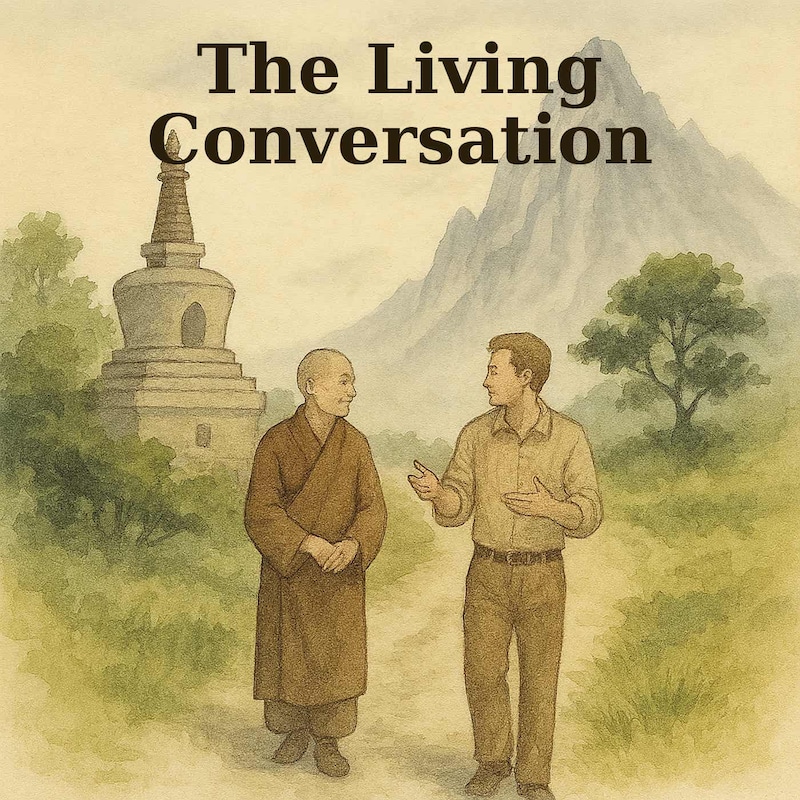
Shownotes
I speak with Tara Mae Temple about practical coping strategies for inner peace. She presents a three-part framework: change your environment, reframe your mindset, and practice compassion for yourself and others. We discuss grounding practices like walks in nature, journaling, and a method she calls negative thought cancellation. She shares how leaving a stressful corporate job and changing her life led her to write a workbook, Life Hacks for Healing and Harmony, with exercises and journaling pages. I ask about creativity, audience, and technology, and we emphasize balance, mindfulness, and small daily practices that build self-acceptance.
Takeaways:
- I explain that our dialogue concentrates upon pragmatic coping strategies to cultivate inner peace and self-acceptance, as presented by Tara Mae Temple in her recent work.
- We delineate a tripartite framework—change your environment, reframe your mindset, and cultivate compassion—that structures the book's prescriptive and experiential guidance.
- I recount my personal transition from a high-pressure corporate vocation to a tranquil domestic environment, which enabled sustained mindfulness, restored health, and renewed creative purpose.
- We emphasise grounding practices including regular nature immersion, journaling, breath awareness, and sensory anchoring as prophylactic measures against chronic stress and dissociation.
- I describe the negative thought cancellation technique in detail: observe the thought, lightly interrupt it, visualize release, and overwrite it with affirmative statements.
- We advocate daily disciplined mental practices such as guided meditation and cognitive reframing to forestall distorted thinking and to preserve relational equilibrium.
- I underscore that authentic transformation is iterative and protracted, necessitating continual self-compassion, pragmatic planning, and committed journaling as conduits for sustained rebirth.
Transcripts
I'm Anthony Wright and I am your host today on a Living conversation with my co host, Adam Dietz.
Speaker B:Welcome.
Speaker A:And we are here with our guest, Tara May Temple.
Speaker A:Welcome, Tara.
Speaker C:Thank you so much for having me.
Speaker C:It's so good to be with both of you.
Speaker A:And you are a person who is interested in offering practical coping strategy tools for inner peace.
Speaker A:So can you talk to us a bit about or what is that?
Speaker A:What are the practical tools?
Speaker C:Well, I have the book kind of set out on three elements of ease foundation and I kind of break it up from.
Speaker C:I'll give you the first one.
Speaker C:It's called change your environment to promote healing.
Speaker C:The second one is reframe your mindset.
Speaker C:And the third one is having compassion for yourself and others.
Speaker C:So I use that framework to go on a healing journey and show people that it's possible to attain inner peace not only from a practical standpoint, but learning what your blind spots are as a human being.
Speaker C:So coming from a sociology background, I talk about Maslow's hierarchy of needs and the highest on that pyramid is self actualization.
Speaker C:And I think that goes hand in hand with finding inner peace.
Speaker C:So my whole mission with this book is to teach people not only the practical tools, but, you know, give themselves some grace.
Speaker C:I integrate a bit of spirituality in there, but a lot of human behavior and sociology concepts as well in order to belong and come back home to ourselves and learn how to come to a place of self acceptance.
Speaker C:So yeah, there's a ton of tools I talk about in there.
Speaker C:I can go into them for days and days, but I won't touch upon that now.
Speaker C:Well, too much.
Speaker C:Unless you want to.
Speaker C:It is called life hacks for healing and in harmony and it was just released this year in January.
Speaker C:Yeah, thank you so much.
Speaker C:I.
Speaker C:Right under the pending tirami temple.
Speaker C:And my whole hope for this book is to make a difference in the world of chaos right now and just help people realize that you do have the power to change and transform.
Speaker C:I never thought I had the potential or the ability to transform on my healing journey, but it really caught me by surprise.
Speaker C:And what people could do when they transform their pain and shift that into a place of purpose like I did with my writings in this book.
Speaker C:Book.
Speaker A:Okay, and so your background is in sociology?
Speaker C:Yes, and communications.
Speaker A:Oh, and communications.
Speaker A:One thing that I find to be very useful sort of in a beginning step.
Speaker A:And I would be interested to know what you have to say about grounding exercises.
Speaker C:Yes, I find that in grounding exercises that's extremely important in day to day life.
Speaker C:You know, some people, they're not aware that they have access to these tools.
Speaker C:But where I started in my healing journey in, you know, going through a health crisis and working, you know, years upon years in the corporate world in healthcare, fundraising, marketing and advertising, I just never felt at home in those places.
Speaker C:And you know, it was a constant grind of nine to five work, you know, working my corporate career and just trying to make a living for my family.
Speaker C:And what you don't realize is, you know, over time you just go through autopilot and all these things and at the time when you're busy raising a family, you get stuck in that grind that you don't realize that there are grounding practices out there available to you.
Speaker C:But you know, we don't, we seldom make time for it.
Speaker C:So come, you know, the year of the pandemic for everyone I think was a reset for pretty much everyone.
Speaker C:And for me I really decided to go down a different path because my intuition and my inner knowing was taking me to back to my, you know, my love for writing and storytelling.
Speaker C:And so I decided to write through all the experiences I went through in my life as a journaling practice, but more as a storytelling practice to tell my story.
Speaker C:And I thought, okay, well why not?
Speaker C:Since I have this love for studying human behavior, why don't I go into studying, you know, what would help us overcome these certain things that we deal with, whether that be anxiety, self image, struggles, identity crisis, loss, grief, all these things that we can relate to as human beings.
Speaker C:So yeah, I started off simple and just started jotting down experimen I did with connecting with nature again.
Speaker C:And I think that was my number one, my number one grounding exercise was getting out 20 minutes a day, three times a week in Mother Nature and just going for walks and really implementing that mindfulness practice where I would say to myself, may be happy, may be healthy and may be free from suffering and you know, everything would just fall away.
Speaker C:Like I felt all my problems and things that I felt like I couldn't carry on my shoulders anymore, just over time just went away with this consistent practice of being in nature.
Speaker A:Are you still working in the corporate world at that time?
Speaker C:No, at that time I decided, you know, like I moved out of the city with my family and I decided, okay, I'm going to resign from my position.
Speaker C:And I have this inner knowing that I need to follow my passion and for writing again and do, you know, doing editing of other people's non fiction books.
Speaker C:And I really found my Love for life again.
Speaker C:I never thought I would find that.
Speaker A:What a curious thing that working in a healthcare corporation would be so unhealthy.
Speaker C:Yes.
Speaker C:Yeah.
Speaker C:Who knew, right?
Speaker C:But they say, like, you're helping other people, like it feels good in that way, you're making a difference in that way.
Speaker C:But they don't tell you about the, the very toxic dynamics in the, in the workplace, at those different industries.
Speaker C:And it happens across the board, across different industries.
Speaker C:But, you know, I had the courage and was brave enough to say, enough of this, you know, ideologies of how our life should be.
Speaker C:I'm going to break out of this.
Speaker C:And for me, the everything, attachment to material wealth, appearance, status, what we're supposed to attain as human beings, that just, I had this detachment from it.
Speaker C:So that's what I try to practice now mostly is like that, that idea of not detaching from the outcome of everything.
Speaker C:And I love that in Buddhist tradition.
Speaker C:I'm not a Buddhist myself, I come from a Catholic background, but in my spirituality I believe in a lot of Taoists and Buddhist principles and things like that.
Speaker C:Yeah.
Speaker A:Question, Adam.
Speaker B:Well, a few things come to mind.
Speaker B:But I, I want to say like, this reminds me of an experience I had where it was like you could say, come to Jesus moment, right?
Speaker B:In my, in my Philosophy 101 class as a, as a, as a freshman in college that we started studying like Socrates and it was, it was basically saying, like, what else do you want to do with your life than study about wisdom traditions?
Speaker B:And, and then learning about Plato's Cave.
Speaker B:Right, Learning about Plato's Cave.
Speaker B:So, so when you're, when you're speaking, it reminds me of, you know, Plato's Cave is like, we have all these shadows on the wall which are like, are in my opinion, which are a lot like our preconceived notions.
Speaker B:You were mentioning money, wealth, status.
Speaker B:And then, and then, you know, the teacher comes and reorients you to truth and reality and you can go on a journey up.
Speaker B:I remember the translation said, upward journey of the soul towards the light to go out of the cave.
Speaker B:Does that imagery correspond to your experience?
Speaker B:And then how did you have the bravery through all the.
Speaker B:You must have been very tumultuous when you first started to make those moves.
Speaker B:So how did you stay true to yourself and also navigate the ex.
Speaker B:The daily life type of challenges?
Speaker C:Yeah, that's a great question.
Speaker C:Because, you know, we don't.
Speaker C:It's not when, it's only when we start to believe in taking care of ourselves first and Putting our mind, body, spirit, insanity first.
Speaker C:That we're able to release people's expectations and opinions of us.
Speaker C:And I really believe that, you know, we can't come to our truth without first going on that big voyage of self discovery and exploration.
Speaker C:And for some people it could take months, years or your whole lifetime.
Speaker C:And some people, you know, it's too scary for them to go down that healing path.
Speaker C:But for me it's, it's, it's simply a matter of admitting to yourself, can you live within the confines of what society tells you you should be and how you should be living your life?
Speaker C:And you know, when you do live within those confines, that is like being a prisoner in your own mind, body, spirit.
Speaker C:And this is how people have mental breakdowns and can't go on and you know, just everything is just life is way too much.
Speaker C:But when you, you know, give yourself the opportunity to explore what it is you desire from your life, what your true calling and purpose is, you know, you're being true to what you're meant to be on this earth.
Speaker C:And I'm not saying that everyone has to drop their professions and go, you know, exploring the purpose and you know, living a fairy tale life.
Speaker C:But you can also still be working a job you don't like and still fulfill your purpose, whether that be being in service to others in the community or whatever it is that you love to do.
Speaker C:So I think life is a constant exploration and it's a moving towards that light and coming to a place of where you're not in denial of your wrongdoings anymore.
Speaker C:And you can come to accept that, you know, we are going to mess up and have mistakes, but we're going to learn from that.
Speaker C:And my whole thing is teaching others.
Speaker C:You know, you don't need to, you know, feel like a failure your whole life or believe in what your self limiting beliefs are, is healing and finding that self actualization and fulfillment is a matter of disciplining the mind every day, whether that be through whatever grounding practice you like.
Speaker C:For me, my choice is to do the meditations, my guided meditations to clear the cobwebs in my mind every day.
Speaker C:Otherwise my thinking becomes distorted to the point that, you know, it's not in reality anymore.
Speaker C:And when we allow our brains and our minds to take over, that really affects our behavior and our relationships to the point that, you know, if we don't take care of the mind and discipline it, it could really, you know, bring our relationships and our concept of self to a really dark place.
Speaker A:Yeah, we're coming up on a short break.
Speaker A:I'm Anthony Wright and I am your co host on the Living Conversation with Adam Dietz.
Speaker A:And we're talking with our guest Tara Mae Temple, who has written a book called Life Hacks for Peace and Harmony.
Speaker A:And how can people contact you, Tara?
Speaker C:Yes, you can reach me through my [email protected].
Speaker A:Great.
Speaker A:All right, well, we're going to take a short break and be right back, so stay tuned.
Speaker A:I'm Anthony Wright and I am your host today, co host with Adam Dietz.
Speaker B:Yeah.
Speaker A:Welcome on the Living Conversation.
Speaker A:And we're talking with our guest Tara May Temple, who has written a book called Life Hacks for Peace and Harmony.
Speaker A:And before the break, Tara, you were talking about, and Adam had asked a question about, well, what was it for you to take the courage actually to step away from your corporate involvement?
Speaker B:Yes, I was wondering if you could say any, on that note, any maybe details of the, you know, the life path of coming out of a job.
Speaker B:You probably had a good sense of security.
Speaker B:You mentioned you had kids and, and it must have been like, just as far as the daily life details, must have been a big challenge.
Speaker C:Yes.
Speaker C:And I'll take you through that.
Speaker C:And I'm, I'm deeply spiritual.
Speaker C:So for me, when I was going through, you know, I was at the peak of my career, I had gotten to the top of my position in marketing, was running a team, and it was basically the dream kind of life that you get out of being, you know, raising a young family and just wanting to provide for your family at the top level.
Speaker C:And I hit all those marks.
Speaker C:And to me, I thought at the time that once you hit those marks of success that, you know, you'd feel fulfilled and everything would feel in alignment with your mind, body, spirit.
Speaker C:But that was the opposite for me.
Speaker C:I, you know, yes, I could provide financially for my family and didn't have a worry about finances at the time.
Speaker C:But my whole entire days in business days were even on weekends.
Speaker C:Like my mind would be stuck on work and there was no work life balance for me.
Speaker C:And I know that, you know, they say nowadays that's, that's all on the per individual dealing with that.
Speaker C:It's for you to, to make the work life balance happen yourself.
Speaker C:But it's not always the case when you're living a 9 to 5 corporate.
Speaker C:Um, so, yeah, it just felt very, you know, not at home in my body.
Speaker C:And when I was running, doing my business in the place of business, I just felt that A lot of different things.
Speaker C:Roadblocks kept coming up in my workplace and no matter how much I tried to resolve certain situations, size were very much pointing to.
Speaker C:This is not the right place for you.
Speaker C:So I heard an inner voice saying to me, you know, you need to be brave enough to walk away from this and there's going to be something greater waiting on the other side for you, but you need to go through this self discovery, healing journey.
Speaker C:And I'm not one to ignore my intuition.
Speaker C:So I, you know, I had, at first I was in denial, but then all these signs kept popping up that kept saying it's time to move on.
Speaker C:And then my, my health started breaking down.
Speaker C:Stress was very, on a high level, was going through health crisis.
Speaker C:And I said, you know, it's not worth it.
Speaker C:If I don't have my health, then what am I to my family and friends?
Speaker C:You know, I'm nothing.
Speaker C:I don't really have much to offer to, in terms of having enough capacity or energy to deal with anything.
Speaker C:So I had to face my demons head on and, you know, be brave enough to say, I'm gonna resign from this and I'm just gonna see what happens when I change my environment.
Speaker C:And that meant, you know, getting out of the noisy city.
Speaker C:You know, I love the city for, you know, my young 20s.
Speaker C:It was fun living there, living a cultured life and having lots to do.
Speaker C:But when you start having a young kid to raise and a family, your priorities change.
Speaker C:And we decided we want to go to more small, quiet town.
Speaker C:And that was perfect because when I went on my healing journey, that was a matter of, you know, getting silent again and listening to my inner voice and beginning to write what it is I truly wanted.
Speaker C:And you know, I know it's not possible for everyone to change their environment in a way of having to relocate.
Speaker C:So in the book, I consider different people's financial situations and propose different ways they can change their environment if they still have to live in the same town or city that they live in.
Speaker C:There's ways to, you know, go to a park or a green space to get back in tune with themselves.
Speaker C:So yeah, I can go on and on about this, but it's a matter of, you know, if you want, want something, plan for it and, and don't wait because life is too short.
Speaker C:And we, you know, during the pandemic, it was a matter of, you know, during lockdown planning, how are we going to move out of the city.
Speaker C:And we, we just made a little roadmap about how we're going to do that.
Speaker C:And it's a scary, it was a scary time because when you're selling your property and everything's in lockdown and people are afraid that they're going to get sick, it's not a good time to show your place to get it sold.
Speaker C:But I think there was a mass exodus of people moving out of cities during that time and we made it happen.
Speaker C:But that was the first step was just having that self awareness to, you know, go after what would make me better in mind, body, spirit.
Speaker B:How would you say that this transformation has then affected your daily life as you begin to, I would say maybe harmonize your life and, and listen to your inner voice like you were saying.
Speaker B:First, the first part of my question is we had multiple guests, Anthony Christian Crabtree and Vanya Lim both come to mind who mentioned that you're, you're, if you're under this kind of stressful environment, it can first affect you mentally, but then can, if it goes on for long enough, affects you physically.
Speaker B:My first part of my question is, was that your experience and second, how does your transformation affect your daily life?
Speaker B:Going through life with your kids and your relationships and whatnot?
Speaker C:Yes, it's, you know, it's definitely an ebbs and flows game as life ebbs and flows.
Speaker C:I wouldn't say that, you know, like, yes, I got to a place of healing.
Speaker C:I got to a place of awakening and seeing life differently, but knowing that things happen in life and we could fall down again and have to go through that healing process all over again.
Speaker C:So just being open to the fact that, you know, this whole healing journey is not a one and done thing and it's not a one size fits all.
Speaker C:So I don't like putting people in a box in the book saying, oh, you have to try this.
Speaker C:I give them the options of choosing what works best for, for you as a reader.
Speaker C:And you have to be open to knowing that transformation doesn't happen overnight.
Speaker C:And these things can happen in very small, gradual steps.
Speaker C:And what I'm finding is that through the hardship and through the struggle, there are little glimmers of joy and bliss that you can find in your everyday.
Speaker C:That, that do give you that little bit of harmony throughout your day because let's face it, life's not going to be all roses and, you know, happy smiles all the time.
Speaker C:We're gonna, we're gonna go through frustrations and all these things.
Speaker C:So coming to an acceptance that life can be chaotic, especially in raising young kids and all these different things, we're not going to get it perfect.
Speaker C:But if you can just put your best foot forward and learn from what you do every day and learn from others too, you know, that's giving compassion to yourself at the end of the day and knowing that we're all just human and you know, this isn't.
Speaker C:We're, we're not here to.
Speaker C:Yes, we, we're not here to get straight A's in this game called life where, where yes, we're here to go through some personal growth and expand as humans.
Speaker C:But yeah, if you give yourself just some grace and some leeway knowing that you're going to go through some different cycles of life where you're down and going through hardship, but you're going to also go chapters and seasons where you're rebirthing a new version of you.
Speaker C:And I found that in every life transition, I was rebirthing a new me.
Speaker A:Go ahead.
Speaker A:One of the things that I found so useful for myself when my family was going through a real tough patch, I the, the best piece of advice I had ever heard was to start journaling.
Speaker A:So I'm curious about how your, I would imagine it seems like your journaling practice has been going on throughout your life and how has that journaling practice contributed to your finding your way?
Speaker C:Yes, I think it's, I love that you bring that up because I, you know, since I was a young child I would always journal in my little book and write all these details of what went on in my day.
Speaker C:But it's not until, you know, I went through my self discovery journey that I began journaling.
Speaker C:Each of the experiences I went through that were the toughest for me and those journals actually turned into this, this book Life Hacks for Healing and Harmony.
Speaker C:And I create empty journaling pages at the of each chapter for the writer to go process each of their things that they're going through because, you know, that was cathartic for me.
Speaker C:I actually didn't know that my journaling practice was going to turn into a book until I just had this light bulb moment that I had to transform my pain into some purpose and I needed to have a passion project to keep my own sanity in my life and it really does do wonders.
Speaker C:So I'm happy that I went down that road and I, I went into the research about all the benefits of, you know, what handwriting can do for you on a day to day basis and it's a great way to just really cleanse your mind, body, spirit of toxic emotions and it helps you to really release what you're ruminating over.
Speaker A:Well, so you're, your book is actually a workbook.
Speaker C:Yeah.
Speaker C:There's, there's exercises in each chapter at the end.
Speaker C:Yes.
Speaker C:It starts off with storytelling and then gets into the tactical practical tools.
Speaker A:Right, right.
Speaker C:Bringing it back to the reader and showing them how they can overcome things.
Speaker C:And then the very end, they can go through the writing prompts and the journaling pages at the end and there's affirmations.
Speaker A:That's great.
Speaker C:Yeah.
Speaker A:Coming up on a short break, I'm Anthony Wright.
Speaker A:I'm your co host with Adam Dietz on the Living Conversation.
Speaker A:And our guest today is Tara May Temple.
Speaker A:And how can people get in touch with you, Tara?
Speaker C:Yes, you can reach me on my website, www.tarasuiteawakening.com and on Instagram @taramaytemple.
Speaker A:And your book is called Life Hacks.
Speaker C:For Healing and Harmony.
Speaker A:Great.
Speaker A:All right.
Speaker A:Well, we're going to take a short break and be right back, so stay tuned.
Speaker A:I'm Anthony Wright and I am your co host today with Adam Dietz.
Speaker A:Welcome back on the Living Conversation.
Speaker A:And today our guest is Tara May Temple.
Speaker A:And Tara has written a book called Life Hacks for Peace and Harmony.
Speaker A:And before the break, Tara, you were talking about the benefits of journaling and how, and I've noticed it too, that it kind of frees up that, I guess I would call it a mental buffer where you hold all these thoughts and then you journal for a while and it kind of empties out almost as a meditative practice and then you go for walks in the forest.
Speaker A:So can you offer us another tool then that has been of benefit to your transformation process?
Speaker C:Yes, I, a really big one actually is called negative thought cancellation.
Speaker C:And I want everyone to know that every thought that you do have doesn't have to be accepted as true because once you start to believe in all the thoughts you have, that's when you can go, you can drive yourself bonkers.
Speaker C:So when I talk about mindset reframing in the book, I really wanted to think about, okay, we all have these self limiting beliefs.
Speaker C:How do we overwrite them?
Speaker C:So my whole thing is I came up with the technique called negative thought cancellation.
Speaker C:So I'll give you an example.
Speaker C:One self limiting thought I had for the longest time, for decades even, was the fact that I thought that nobody likes me.
Speaker C:And that really affected my self concept and my identity and my relationships with others.
Speaker C:Because, you know, how could your relationships flourish when you're thinking that nobody likes you?
Speaker C:So how that negative thought cancellation works Is once you catch yourself having a thought, lightly give yourself a pinch on your hand or wherever, and I'm not advocating self harm here, but just to do it very lightly to a point that catches your attention.
Speaker C:And then imagine a balloon, a heart balloon, eating up that very bad thought.
Speaker C:And for me, like, not everybody is visual.
Speaker C:So you can even write down a new statement that says, I am loved, I am kind, of course everybody likes me.
Speaker C:And I'd write that out 10 times and also try to picture that balloon eating up the bad thought.
Speaker C:So that would be working my mind muscles again, disciplining the mind.
Speaker C:And it wasn't a matter of one and done.
Speaker C:I would have to do this at least consistently whenever I catch myself having a very negative thought.
Speaker C:So as I practiced this consistently over months and would write down the positive thoughts that would overwrite that really negative thought about myself, I began myself, I began to see myself feeling lighter and having more, you know, tolerance for self acceptance and self love and seeing myself through different lens.
Speaker C:So it's not only having bad thoughts about myself, but it was, you know, even having sort of like different fears about things.
Speaker C:I would, it's a great way, I call it a fear hack to overwrite some of the fears that you, you may have because we all know that thought can turn into form.
Speaker C:So when we try to trump those bad thoughts and those fears with something positive, that really does wonders.
Speaker A:One of the things that I had noticed actually in myself was when we become grounded and more sensitized, sometimes, first of all, we're offered, if you'll, you know, offered these ideas about, well, you should be afraid and if you'll be afraid with us, then you can belong and it's really good fear.
Speaker A:But then the other thing that came to mind, sometimes I would be hanging out and then this thought would pop into my head and I went, wait a minute, whose thought is that?
Speaker A:Where did that come from?
Speaker A:Well, I was more sensitized and maybe it came from the neighbor who was having a fight, you know, with their family or.
Speaker A:But I, I, I understanding that, I stopped identifying and saying, well, that's my thought rather than, oh, well, let's just watch it float by like a balloon like you were talking about.
Speaker A:So that's, that's really fun.
Speaker A:Do you have any, any, any thoughts about, any thoughts about this?
Speaker B:Yeah, yeah, that was exactly what I was thinking.
Speaker B:And so on that note, it's like, did you, did you almost have like this existential experience where you're noticing, well, who is the thinker?
Speaker B:Who is Observing.
Speaker B:And in Buddhism, sometimes they say, like, you watch.
Speaker B:You watch the thoughts pass by like clouds, and you don't attach to them one way or another.
Speaker C:You.
Speaker B:If it's a good thought, you notice it and let it pass by.
Speaker B:If it's a bad thought, you notice it and let it pass by.
Speaker B:And then you can be mindful and consciously choose what you want to make part of you or not what you want to.
Speaker B:You know, If I'm feeling sad, is it appropriate?
Speaker B:Okay, then I will feel sad.
Speaker B:It's appropriate.
Speaker B:I need to feel sad if I'm feeling, you know, kind of.
Speaker B:Kind of conscientious, consciously choosing as you notice these thoughts.
Speaker B:Did you ever have an experience like that?
Speaker C:Yes, I, you know, a lot of times, because I'm deeply spiritual, I, you know, I get to a point where I. I love just being the observer of my life because it's kind of like this movie going by that, you know, sometimes you have no control over in certain situations.
Speaker C:Right.
Speaker C:So, yeah, it feels like there's like this higher consciousness part of myself that's like, okay, this part here, this thought is just an illusion, you know, when I can experience this, experience my senses, and bring myself back to the present moment and practice some sort of mindfulness technique, like, especially when we're experiencing an emotion, that's when I feel like, okay, you know, this is the reality of what we're dealing with right now.
Speaker C:And sometimes when I feel like I don't have any control of anything, I just go back to the senses and what I can see, hear, and smell.
Speaker C:And I feel like that is peace in and of itself is being able to distinguish, okay, what's reality, what's illusion?
Speaker C:How can I have a little bit of harmony right now?
Speaker C:And I think mindfulness is a huge part of that.
Speaker C:And I really had to learn how to practice that and slow down over time and have moments of silence and prayer and not live on auto autopilot anymore.
Speaker C:Because I really did go through a point where I was.
Speaker C:I think I was going through numbing behaviors because I feel the anxiety or whatever pains I was going through.
Speaker C:And so, yeah, I would numb in different ways that people do and, you know, just be in total denial of things.
Speaker C:But once I learned these peace practices that I could implement in my day to just cope with life, things began to transform and kind of flow into my life naturally.
Speaker C:I was able to, you know, manifest things for the first time and, like, go deeper into learning about how to manifest.
Speaker C:And I'm a big believer in Dr. Wayne W. Dyer's work.
Speaker A:Oh yeah.
Speaker C:And I learned his, his, my, his meditation techniques of how to manifest things.
Speaker C:And I really feel that in going deeper into other people's works as well, I was able to learn a thing or two into making my life what it is today.
Speaker C:But it, it goes without saying, I, I didn't make myself like this book didn't get published as a result of my own work.
Speaker C:I really believe that there is a higher power in God that had a hand.
Speaker C:Sometimes I feel that through my writing and my messages that deceased authors and people that kind of speak through me in different ways and giving me ideas of what to write about next to help people.
Speaker B:So it's a very, very, the creative process.
Speaker B:Sometimes we talk about on the show, it's almost like a flow state.
Speaker B:So when you're describing the way you're writing that almost like you're channeling something, does that sound about right?
Speaker B:Do you enter almost a flow state when you're writing?
Speaker C:Yes, definitely.
Speaker C:I, I, I write things down and it feels, feels deeply spiritual.
Speaker C:It kind of, it just flows to a point where I don't use my logical mind.
Speaker C:And, and then when I read through it after I've written it, I, I just wonder how did that appear there?
Speaker C:And, and then my editor, when I had my editor go through my book and I said, going through the developmental editing stage, she really said that you have a way of just putting words to emotions that people can't articulate themselves.
Speaker C:And so my hope is that I can persuade people to not be afraid about going on a healing journey.
Speaker C:It can be very cathartic to write down what emotions they're going through.
Speaker C:But there's just something on the other side that I never thought I would get here.
Speaker C:Like, I was really weighed down by a lot of things and my inner conflict was felt intolerant to a point where I didn't know that it could keep going on before I, I had healed.
Speaker C:But I went through a lot of light bulb moments after that where it was like, you know, in my heart, a voicing.
Speaker C:Write your story.
Speaker C:The time is now.
Speaker C:And then I started studying about how everybody, how other people do it, how other writers go through the process of how do you, how do you start writing your story?
Speaker C:And I'll actually show you a note that I wrote for myself.
Speaker C:This was like four or five years ago, but it steps to a goal or dream.
Speaker C:And this is what I wrote before I started writing.
Speaker C:And it says, number one, research.
Speaker C:Number two, study esteemed authors.
Speaker C:Number three, read other Books.
Speaker C:Four, make notes.
Speaker C:And then number five, start writing.
Speaker C:The story will start to unfold.
Speaker C:So then I just wrote a picture here that says, do not give up.
Speaker C:And then I just pretended like that was my book cover.
Speaker C:That's my real name.
Speaker C:I write under a pen.
Speaker A:But wow.
Speaker A:So that it was something you could actually see there.
Speaker C:Yes, because I want to look at this every morning.
Speaker C:When I got up in the morning, it was on my mirror.
Speaker C:And I would look at it every morning and read it before I went to bed.
Speaker C:And I just really feel like this had a hand in helping me manifest.
Speaker A:But your viewers, I would imagine you would say that everyone needs to make their own list.
Speaker C:Yeah.
Speaker A:We're coming up on a short break here.
Speaker A:I'm Anthony Wright and I'm your co host today with Adam Dietz and on the Living Conversation.
Speaker A:And our guest today is Tara May Temple.
Speaker A:And Tara has written a book called Life Hacks for Peace and Harmony.
Speaker A:And how can people contact you, Tara?
Speaker C:You can reach me on my website@tara sweetawakening.com or on Instagram and Facebook.
Speaker C:Tara May Temple.
Speaker A:Great.
Speaker A:All right, well, we're going to take a short break and be right back.
Speaker A:So stay tuned.
Speaker A:I'm Anthony Wright, and I am your co host today on the Living Conversation with Adam Dietz.
Speaker A:And we are talking with our guest, Tara Mae Temple, who has written a book called Life Hacks for Peace and Harmony.
Speaker A:And one of the things that you were talking about before the break, Tara, was about your writing process.
Speaker A:And I'm brought to mind, and I'm blanking on her name, and I have to be careful about using the correct language to be on the radio here.
Speaker A:But there was a. I always, I think it's Annie Lamott who spoke about a book called Bird by Bird, and she talks about the crappy first draft.
Speaker A:And it's just, you start writing and never mind.
Speaker A:Don't have the creator and the editor in the same time frame, because the editor will always shut it down and try and make it perfect, and the creator just does it.
Speaker A:And one of the persons I continue to be astonished by is the.
Speaker A:The figure skater Alyssa Liu, because she just did it, and it was as perfect as it could be when she didn't care.
Speaker A:So can you talk to us about the creative process of writing?
Speaker C:Yes, I, I think it's so important to get all your thoughts and ideas onto that first draft.
Speaker C:And, you know, just don't hold back.
Speaker C:Yes.
Speaker C:Don't, don't be afraid about what anyone's gonna think or whatever, because you're gonna have so many eyeballs on it and feedback that, that you're gonna go, you know, it's gonna drive you crazy just going through all that feedback.
Speaker C:But I think that constructive criticism definitely helps.
Speaker C:And for me, what I did do during that creative process, I would just write my stories into.
Speaker C:I think I started off with eight to 10 chapters and I just journaled about my experiences.
Speaker A:Just shut it down.
Speaker A:You didn't have any editing or anything like that?
Speaker C:Yes, exactly.
Speaker C:And then I, you know, like I connected with people in the writing world and he said it's really important for you to still get beta readers to read it and it'll give you another perspective on how to strengthen your stories and have some sort of a structure.
Speaker C:But thankfully for me, as I, I had practice through my own editing work was I, you know, I knew what a structure, sound structure was for non fiction books and I knew that I would.
Speaker C:It's important to anchor the reader in through storytelling.
Speaker C:So yes, it was, it was a matter of trying to meet the reader where they are in for memoir.
Speaker C:Since mine is self help slash memoir hybrid.
Speaker C:They say memoir is appeals to the senses.
Speaker C:So I tried to think about when I was storytelling, how can I appeal to all the five senses to really get the reader to keep on reading and be captivated into the story?
Speaker C:So I had to consider all those elements and but for me, writing was very therapeutic and so that just came naturally for me to integrate all those aspects.
Speaker C:But what I really enjoyed also is, you know, not only the storytelling, but doing the research behind it.
Speaker C:And I just loved going through different books.
Speaker C:Like there's one called the Comfort Crisis.
Speaker C:And I really learned through there the whole connecting with nature again.
Speaker C:You know, basically the Comfort Crisis is we're all stuck in our comfort zones and we're not out in nature or the wilderness enough.
Speaker C:And what if we go and do more convening with nature?
Speaker C:How does that help our, our health and mind, body, spirit?
Speaker C:So when I explored those different concepts, I started going out to experiment with these tactically in my own day to day life.
Speaker C:And then I come back and write about how, how did I feel in spirit when I got back from that nature walk?
Speaker A:Forest bathing.
Speaker C:Yes.
Speaker A:I can't remember the Japanese name of it, but it's very much like that.
Speaker C:Yes.
Speaker C:So it was like I felt like I was on a voyage where I would, you know, I would observe all these experiences that I learned through reading these books and listening to these different podcasts of people's stories.
Speaker C:And I wanted to find a way that it would be practical to, you know, get people excited about trying out these harmony strategies themselves.
Speaker C:Because sometimes a lot of books, they talk about different concepts on a theoretical level.
Speaker C:But what if I bring it down to a more practical, simple to follow by that people can, can come back to again and again when they're going through different life issues, whether that be grief, illness, dealing with the ego in our shadow selves, and then finding purpose and things.
Speaker A:One of the things both Adam and I are focused on writing.
Speaker A:And Adam, you've been doing some writing and offering to various journals.
Speaker A:And we have.
Speaker A:He and I have conversations about, well, who is the audience and how do we write for the editor and how do we be able to touch base or be really effective in getting through to.
Speaker A:To an audience.
Speaker A:So what do you.
Speaker A:Do you have some advice about finding our.
Speaker A:Finding our audience?
Speaker C:Yes, I think it.
Speaker C:Because I'm so interested in human behavior and psychology, it's a matter of, you know, putting yourself in the other people, those people's shoes in your audience and thinking about how can you make them feel less alone and understood?
Speaker C:Because I think in life, when we're going through our interactions, a big thing that people do say is they just wish that they were not misunderstood and that they'd find someone to be on the same page with them.
Speaker C:So if you can get to a point where your writing is speaking to them, acknowledging what they're going through, and then proposing some sort of solution that can help them overcome certain things.
Speaker C:They know that your story or your message is coming from a place of truth where you want to be helping them with your learnings.
Speaker C:So I found, you know, like little bit of hand holding there and understanding what they're going through really pays forward.
Speaker C:So I found that when I delved into studying what people's motivators were and what they really.
Speaker C:What really would help them to transform, that created a better understanding of, you know, what message can I get out there that would really resonate with them?
Speaker A:Because one of the things I'm so concerned about is how so many people.
Speaker A:But you know, Adam and I have taught undergraduates, freshmen and sophomores how these kids have got their nose stuck in their phone and how do you connect with people in that who have grown up with the phone since they were 12 years old?
Speaker B:Yes.
Speaker A:This is one of my own things here, so forgive me, but what, what are your thoughts about that?
Speaker C:You know what, I'm, I'm happy that you mentioned that because I'm in my early 40s.
Speaker C:But I, you know, I've never been an early adopter of technology and all this stuff and I just, I have no attachment to social media and all this different stuff.
Speaker C:So, you know, I think it's a matter of, yes, meeting them where they are, but helping them to understand that there's more to life than just our digital screens.
Speaker C:And they kind of need to get their phones taken away from them, I think, from my standpoint.
Speaker C:And you need to put them in social situations or more livable experiences to show them that there's more to life than just our screens.
Speaker C:And you know, I struggle seeing the younger generation on their screens all the time and I, I worry about it as a parent myself because I don't want to be giving my, well, she's 11 now, my 11 year old daughter phone too early.
Speaker C:I'd rather, wait, I'd rather be that bad parent that doesn't allow their kid to have that phone too early because I, I've heard so many studies about, you know, just, you know, mental health declining as a result of being too attached to our, our devices.
Speaker A:Dopamine addiction.
Speaker C:Yeah.
Speaker C:And I'm not willing to go down that road.
Speaker C:When you're raising somebody young, right.
Speaker C:It's, you know, like we have to make them understand that there's different values that we need to kind of bring into our lives to realize more joy and happiness.
Speaker C:And if we can get kids or the young, younger generation understand that there's more to life than, than this technology, I think we can break through to them because, you know, it's not, life's not fun when you don't have that face to face connection with other human beings.
Speaker A:And, and just to be aware of that.
Speaker A:So we're coming to the end of the show.
Speaker A:And Adam, do you have anything further before we're done?
Speaker B:Well, I have a little, a little counterpoint.
Speaker B:I wrote a piece in Buddhist Door Global.
Speaker B:It was about the middle way to deal with AI.
Speaker B:So it's not a savior.
Speaker B:It's not a savior and it's not a devil.
Speaker B:Right.
Speaker B:So in fact, in my own experience, speaking of journaling, I actually journaled more with AI recently than I probably ever journaled in my life.
Speaker B:Just because the way that you interact with it in different apps is very helpful.
Speaker B:And so I wanted to, I wanted to say.
Speaker B:But I think the difference is I have, you know, I'm not 12.
Speaker B:I, I already have years of balance.
Speaker B:I know I need to, I know.
Speaker B:And I take joy in doing the dishes most of the time.
Speaker B:I know most of the time.
Speaker B:I know I have to do the laundry, I know I have to feed myself.
Speaker B:So I have, I'm able to have more balance.
Speaker B:But I just wanted to, you know, make a point that you know, there's, there's a middle way to deal with lots of things and it's, it started all the way back for us learning how to deal with fire and the wheel and all different kinds of technology.
Speaker C:Yeah, yeah, I love how you mentioned that because it's all about, yeah, dealing like there's always those gray areas.
Speaker C:But if we can use technology and our, our wisdom to find common ground, I think it helps us in very many ways to progress as human beings and to get to a place of higher consciousness.
Speaker C:So we do need to utilize what we have available at our fingertips.
Speaker C:And yeah, I do see AI helping us in, in different ways with you know, like admin stuff and our day to day life.
Speaker C:No one likes doing their taxes.
Speaker B:Right.
Speaker B:When you mentioned this higher connection, it's like oneness when you, when you're more soulful, then you can resonate with other people's souls, you know.
Speaker C:Yeah, exactly.
Speaker A:The thing that's really important is we are able to use tools but we got, we have to put the tool down and to connect with each other.
Speaker C:Yes, you have limits to that.
Speaker C:I agree that, you know, tools have its limits and then.
Speaker C:But we also need to make, take advantage of using them to help us in our day to day lives too.
Speaker C:Yeah.
Speaker A:I'm so sorry, but we're out of time.
Speaker A:I'm Anthony Wright and I am your co host today on the Living Conversation with Adam Dietz.
Speaker B:Thanks for joining us everyone.
Speaker A:And we've been talking with our guest Tara May Temple.
Speaker A:And Tara, you have written a book called Life, excuse me, Life Hacks for Peace and Harmony and it's Strategies for Practical Coping for Inner Peace.
Speaker A:And how can people contact you?
Speaker C:Yes, so you can contact [email protected] and on Facebook and Instagram.
Speaker C:It's at Tara May Temple.
Speaker C:T A R A M A E T E M P L E. And yes, you could get the book Life Hacks for Healing and Harmony on any Amazon marketplace and throughout different retailers around the world.
Speaker C:Right, thank you for having me.
