Shownotes
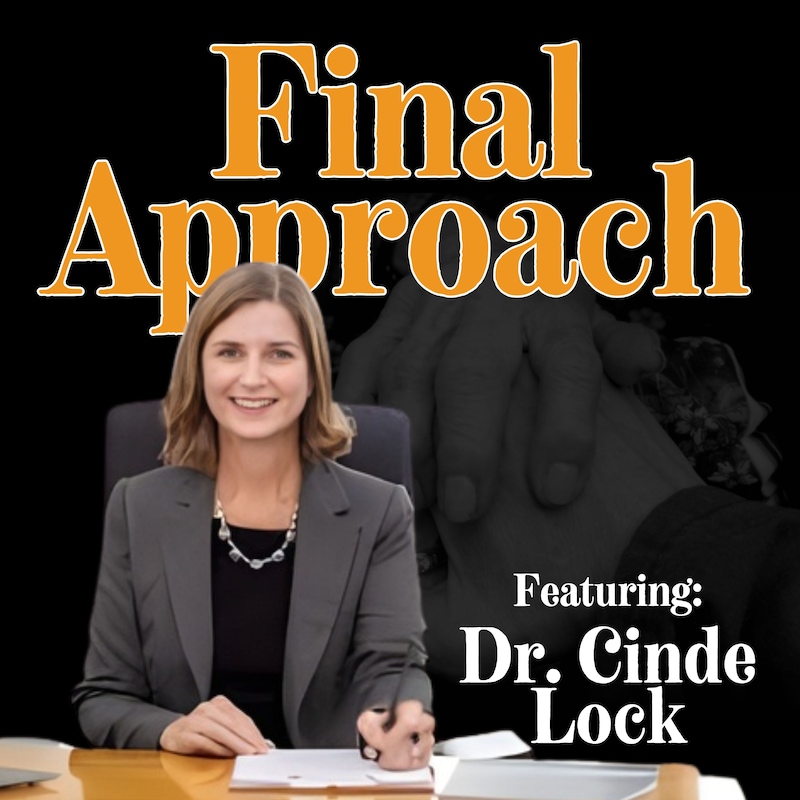
Hey everyone, it’s Jonathan Knaul here, and welcome to another episode of Final Approach. In this very special conversation, I’m reconnecting with Dr. Cinde Lock—an inspiring leader, educator, and friend who’s currently the Head of Pickering College. For all our listeners curious about leadership, innovation in education, and the real-world challenges of caregiving, this episode is packed with insights and authentic stories that will resonate with you.
In this episode, I have the privilege of catching up with Dr. Cinde Lock about her journey from international educator to becoming the first female head of Pickering College. We delve into her extensive background in global education, touching on her leadership roles in countries like South Korea, Trinidad and Tobago, Morocco, Saudi Arabia, Egypt, and the Ivory Coast. Dr. Lock shares how these experiences shaped her perspective and fueled her passion for helping students find purpose and confidence.
We reflect on the unique values at the heart of Pickering College—rooted in Quaker traditions, simplicity, inclusion, innovation, and integrity—and discuss how these values shape the school’s community and drive its educational vision. The episode also opens up a deeply personal space as we talk about the challenges and emotional journey of family caregiving, sharing our personal stories about supporting loved ones through chronic illness. Dr. Lock provides heartfelt insight into how caregiving shaped her family dynamic, offering wisdom for balancing personal aspirations with the responsibilities we face at home.
As always, we tie it all together by exploring the role vulnerability and presence play in leadership and education, arguing that being truly present—for students, staff, and family—is key to making a real impact. Plus, we touch on the innovative approaches now being championed at Pickering College, from project-based learning to reimagining the student experience.
Key Takeaways
- Pickering College’s rich history and commitment to vision-driven, inclusive education is paving the way for future innovators.
- Dr. Cinde Lock’s global experience brings a unique perspective to leadership, blending international best practices with the heart of Canadian independent schools.
- Vulnerability and authentic presence are crucial for effective leadership, especially when supporting diverse communities.
- Being a caregiver—whether for a family member or within a school community—can be emotionally taxing, but it also fosters resilience, empathy, and strengthens relationships.
- Innovation in education starts with the individual student, tackling real-world problems and fostering mentorship, rather than rigid curriculum-first models.
- The values of diversity, equity, and inclusion must be protected and championed, especially in challenging times.
- Storytelling, both in writing and through personal connection, has the power to give hope and understanding to caregivers and those navigating life’s difficult journeys.
If you enjoyed this episode and want to learn more about innovative leadership and education, or if you’re navigating your own caregiving journey, I invite you to check out my book, which is written for caregivers searching for hope and connection, at finalapproachbook.com. For listeners interested in Pickering College, visit their website at PickeringCollege.ca and be sure to tune in to their radio station, CHOP FM 102.7, to get a taste of the vibrant school and local community.
If this conversation resonated with you, please share it on your favorite social channels, leave us a review, and reach out with your own stories—we’d love to hear from you!
Thank you for joining us on Final Approach. Until next time, let’s keep building community, fostering innovation, and supporting one another through the challenges and joys of life.
Best in care,
Jonathan
Transcripts
By the way, again, it's so good to see you and I appreciate your time so much. Of course I miss everybody at Pickering College. I miss the hilltop. So. But let's talk a bit about you. Please tell us about how you got to being head of Pickering College, because I think that's just the coolest thing. You're head of an independent school. I mean, I'll let you do the talking.
Jonathan Knaul [:Tell us a bit about Pickering College. And I mean, this is, I think it's pretty cool.
Dr Cinde Lock [:Yeah, Pickering College is a pretty incredible school. So it was founded in 1842 and you are a proud alum. When did you graduate? In the 80s?
Jonathan Knaul [:87. 87?
Dr Cinde Lock [:I was going to guess 86. It's 87, yeah. School's changed a lot since then, so it's now co ed jk to 12. It's a pretty incredible space. And yes, you're right, I'm the first female head of school ever in the almost 200 year history of the school. And I feel very excited about that. But I also feel like maybe it's just a non issue because, you know, maybe it's just about the person. It doesn't really matter what gender you are or what background.
Dr Cinde Lock [:It just matters that you're a good person and that you believe in the values and the identity of the school and that you want to, you know, help bring it forward. So I think that's, I think that's what I hope that that's what people feel when they see me. They're not looking at me and thinking, oh, well, finally ahead of school, that's a female. I don't think they think that. But anyway, this is my first time back in Canada after about 25 years. I worked overseas at independent schools, international schools in a lot of countries over the years. And when my children came back to Canada to go to university, I just thought, now is my time to come back to Canada and find a school that resonates here. And I was so lucky to find Pickering.
Jonathan Knaul [:I think Pickering was lucky to find you. If you want my personal feedback. I think people look at you as a star person leading the school. I think they're happy to see it. I think it's good to have a change of gender other than what we traditionally had for so many years. But I think that you're. I don't think people look at you that way. I think they look at you as a person and a leader and an educator and a star in all those realms.
Jonathan Knaul [:A, a mom, a wife and somebody who's very personable, and I, I think that you're. I think, I think people see you in a very, very strong light for who you are as a person and, and a really good leader of a, of a school that's not easy to lead. So, like any organization, every organization has its challenges of leadership. So, yeah, that's, yeah, all that to say. But. But I mean, can you say a bit more about how you got here? Because, I mean, I think, I think you worked in the Ivory coast for a little bit with the US Government. I mean, you, you have a doctorate. Part of me, it's more appropriate to say Ph.D.
Jonathan Knaul [:in, in education. Am I right? It's an education.
Dr Cinde Lock [:And education and math.
Jonathan Knaul [:Yeah. My. By the way, just like your students. Most of my students don't like math. When I come up and say, you gotta do math.
Dr Cinde Lock [:I wish they did.
Jonathan Knaul [:I wish they did, too.
Dr Cinde Lock [:You liked math.
Jonathan Knaul [:Did you know I like math? Yes. It's not easy for me, but I do like math. But anyways, I mean, your background is really strong, so can you just say one or two lines just about how you got to be head of Pickering College?
Dr Cinde Lock [:Yeah. So, yeah, I've spent the. Before coming here, I was eight years at a school in Jeju, South Korea, on a. On a small island south of South Korea that was set up, you know, almost. It was a brainchild of the Korean government to try to stop people going overseas, their young people going overseas, and then never coming back to the country. So they said, we'll bring in some of the best schools that we can around the world and bring in from all different countries and have an international city, an English language international city inside South Korea. And it was really cool. And I had the opportunity there to work first as head of academics and then head of senior school and then head of school.
Dr Cinde Lock [:During the time that I was there, and I was there for eight years, it gave me the opportunity to learn about different levels of leadership and to have a chance to guide a school forward. And I think that it was, it was that experience that, you know, gave me the confidence to apply to Pickering College. You know, Pickering is interesting because there's, you know, about 120 borders that are international. So in many ways it's an independent school in Canada, but it's also an international school. So there were a lot of overlaps with, you know, my previous life and, and working and living in international schools and then coming back here. But before Korea, I was in Trinidad and Tobago at the international school, Port of Spain. Before that, I was in Casablanca, American School in Morocco. I worked for a number of years in Saudi Arabia, just halfway between the Jordanian border and Jeddah in the middle of the Arabian sands.
Dr Cinde Lock [:And then of course I've worked in Egypt just outside of Cairo and then Ivory coast in Abidjan, Cote d'. Ivoire. So I've had lots and lots of experiences in different schools, had, you know, built a real perspective about the world and education, what it can look like in different places and finally getting a nice chapter to come back to my roots in Canada at Pickering again.
Jonathan Knaul [:That's so impressive and I think it's so cool that you are head of Pickering College. I think it's a coolest thing. I really do. I just, I always think it's cool. So then my next thing is, is education is a tremendous passion for you. So who was your biggest inspiration in your career?
Dr Cinde Lock [:I don't know. I've been so lucky to have so many. But the person that always comes back to me is my PhD thesis supervisor, Bob Wilson. And you know, it's funny because I was doing, you know, it was cross appointed with mathematics and education and I was looking at the large scale assessments and the influence on teaching and learning. So it was very, it was very statistical, you know, like there were, there were a lot of data points and, and with like it was, it was layered math because I was helping to build the first assessment of mathematics for Grade 9 for the province of Ontario and looking at the validity and reliability measures within the test, the influence of kind of project based assessment or performance based assessment within an assessment and then the effect of that on teaching and learning. So you'd think that this guy who was my advisor would talk all about math and stats and you know, assessments. He was always, always. We started off, every time that we met, we started off by looking at a poem I'd never read.
Dr Cinde Lock [:His favorite poet was Robert Frost and I'd never read much poetry. And he, he'd say let's analyze this and let's think about, you know, what was, how could this be interpreted in multiple ways? And what does that mean in terms of, you know, what the intent of the, the author and the, the poet might have been. And it was just so fascinating because that led me into really understanding how to write and how to think about organizing my, my thoughts in print. Because even, I mean my undergrad was chemistry with a minor in math. So I know how to write a really good technical report but writing something that somebody will want to read and telling it through a story. So that it propels people. That's what I learned under his guidance and that was the first time I'd ever had that mentorship at that level. Yeah.
Dr Cinde Lock [:And I think about your book. I mean, you know, think about how you went through the iterations of how you tell the story and how you weave in the resources or keep them separate, or how you think about the different aspects of your perspective, your mother's perspective, your father's perspective, and how you seamlessly wove that through the tale of what you wanted to say within the thesis as well. And I think how powerful is that to get that opportunity to fine tune that? And yeah, when I think of my mentor, that's what I learned with them. And I hope that you had a mentor that helped you through that and that you feel that there was a real learning journey for you as you pub your book too.
Jonathan Knaul [:It's really kind. It was a real journey. It still is. I'm, I'm, I'm thankful to have it. It's, it's not an easy journey, writing as you well understand. I'm, you know, doing a doctoral thesis, for example. I mean, when you get down to writing, I think it's probably like this for any writer, even if you like writing, it's hard. You know, I, I think the book took me about 1500 hours total.
Jonathan Knaul [:Recording in studio was a very long 40ish hour experience. That's another story. But the bit about weaving it together, that's a true sense of satisfaction. I like to say about the book that the podcast was. This episode's supposed to be about Cindy Locke, but I appreciate you giving me a bit of time for the book. That's really kind. But of course, Pickering College played a huge role in, in, in, in my, in who I am, who I, who I developed into and, and my abilities and, and skills and, and writing is, is more an art than it is a skill anyways. Being able to, to do that's a huge satisfaction.
Jonathan Knaul [:What I like to say about the book is that the book is about me, but it's not for me, it's for the reader. And, and that bit about caregiving, which I really appreciate the start when we, when we picked up here a few, you know, half an hour ago about how important caregiving is and I really wanted to make that interesting for the reader and to be able to be vulnerable and to tell them what the story is about. In particular, I think Pickering taught me a lot about vulnerability and it's really unusual in my industry. I'm a test Pilot and my colleagues do not walk around being emotional and, and vulnerable. But, but I, I think that's a strength.
Dr Cinde Lock [:The two of us are very alike that way.
Jonathan Knaul [:Yeah, yeah.
Dr Cinde Lock [:Because you've got a very technical job and you're writing about vulnerability. Vulnerability. And I've got a very human job and my writing is about the technical. It's. It's interesting how maybe we need all the sides of ourselves.
Jonathan Knaul [:Oh, no, absolutely. And, and you've got. At your job also, you're a leader. And you're a leader in an independent school that is, I think it's best to say multi gender because it's not just male, female. And so you have challenges with communicating with different people across genders. You also have to manage staff and faculty and lead them as well. And you have to be able to communicate and lead and interact with the entire community, which is all the parents, alumni, people like me. And I mean, this is not an easy leadership role and your ability to do that and to communicate in that way is part and parcel what we're talking about.
Jonathan Knaul [:And that is not easy. I think you do it quite well and I'm sure that you come across many different challenges and you have to. I'm sure sometimes I didn't see that one coming. I'll figure out how to communicate for that situation and, and that's another. But anyways, I'm going a little bit off key here. But anyways, I think that to bring it back to, to you, to that ability to communicate is really unusual and, and to being vulnerable as a leader. So, I mean, I come from a military background where I think that being vulnerable as a leader is important. At the right time, in the right place, you've got a different challenge.
Jonathan Knaul [:And I think you have to be vulnerable all the time and that must be very difficult.
Dr Cinde Lock [:Yeah, I mean, I think maybe it's not so much vulnerability, but just being really present, like being with. Because, you know, you jump from. It's a people enterprise. Right. So you jump from person to person and all the conversations that you have in the course of any given day and you have to be really present and open and I don't know, just like responsive. Because at the end of the day it's almost like, you know, it's like the doctor. Right. No one comes to the doctor to hear how the doctor is.
Dr Cinde Lock [:Right. So you have to be vulnerable, but they don't want to hear your vulnerability, they want to hear how you're supporting them. Right. So it's a different kind of thing. And and it, it's also got a layer of fundamental importance to it. Maybe I'm making, you know, education too, too heavy, but the, the truth is, there's no other business on this planet where the, the end result of all of your work is a person. Right? Like, we're, we're helping people find themselves and figure out what their path is in life and, and how they, how they treat others, how they are able to communicate with other people or build confidence or have a sense of passion or purpose in life. Like all of that comes from the work we do with children every day.
Dr Cinde Lock [:And, and then you think, well, it's so important. But then when you're talking to a parent, you want to be partnering with them, but they might not always see the world in the same lens. If there's been a conflict or something happened. And you have to figure out, how do we, how do we get on the same page that we, we come back to consistently the, the person, and what does that person need and how do we help that person by being a partnership and, and with teachers, you know, as you always want to be, thinking, well, what's the best way to help children grow and evolve and, you know, develop and feel good about themselves in the process? And, you know, some teachers have been doing their craft for a long time, right? So you think it's very hard to help them think about doing something differently or innovating or thinking about what the future of education could look like and all of that while you're kind of having all the conversations with the different people and making sure that everyone, no matter who they are, feels good about themselves so that they can also help to make sure that the student experience is the best it can be. Because if you, if you do something and a teacher disagrees with you or they think, no, I'm, I'm frightened to do this, or I, I don't feel confident with what you're asking for, you know, this new approach or this, this different way to think about teaching or assessing. Well, if they don't feel good, they're the front face with the person, person with the, the students in the classroom. And then you've done like a double negative. You know what I mean? So, so I think, yeah, the communication is about just being present, being with each person for where they are, you know, day by day and, and trying to kind of nurture the whole community along the way.
Dr Cinde Lock [:Yeah, it's an interesting job. It's, it's a really amazing job to do. And I feel like I don't know, I feel very fortunate to do it, but I also feel like it's, it's a really important way to spend my life. Like, I feel as if gives me a sense of purpose, myself to wake up and think I'm, I'm doing something that is really valuable because it's helping in my small way, in my small space in this one school. You know, I'm, I'm hopefully helping to make a small difference that will shape how young people move out into the world tomorrow and how they, you know, think about what they can contribute or who they can be.
Jonathan Knaul [:Well, this is coming from me as a test pilot. I'm telling you that I think your job's pretty cool, and I really do, because you have such a varied, I mean, everything you discussed, you have a very diversified responsibility and you see new things every day and you are, you're helping grow young minds and you're building, which is all what Pickering College is about. You're building community. So I think that that's pretty cool. Is there. I just, just looking over my list of questions, is there a person or a thing at Pickering College or one or two that in particular stand out, that really inspire you personally, that really have an impact on you?
Dr Cinde Lock [:I think the, the identity of the school has a day by day impact on me because it's, we're really purpose driven school. We're a vision, values driven school, and our roots come from a Quaker background and they form that identity of, you know, the values that we share. What I really love is that it's not related to, you know, a religion or a group or to, you know, anything, you know, exclusive. It's a very, very inclusive set of, of values that help shape the community. So I think that that has had much more of an influence on me in the past three years than I thought it would have. And, you know, the values are, you know, simplicity, focusing on what matters most and what your priorities are and not surrounding yourself in clutter, you know, peaceful resolution of conflict, integrity, community, quality, stewardship, like all the things that if we do right, we do create community around ourselves and that hopefully will spread. So that's definitely one thing. The other thing that comes with it is that those Quaker roots, the Quakers were innovators.
Dr Cinde Lock [:They were leaders and visionaries. And there is a huge, strong feeling of innovation at the school. And that also influences me and I get really excited about that. I love really trying to push the boundaries about what a school experience should and could be. And we've been in such an antiquated education system for so long. If we can show another way that students can positively experience school and we can spread the word and show other people how it can be scaled up and maybe we can make a difference.
Jonathan Knaul [:Yeah, and I, and I was reading a little bit about. I think it was a recent interview. You had some questions and answers. I saw it. And your bit about changing traditional thought approaches towards education and looking for the more innovative approaches. And I think that that's echoing what you just said. I think that's really. It's great.
Jonathan Knaul [:It's awesome.
Dr Cinde Lock [:Yeah. We're almost turning education a little bit on its side because teachers begin with curriculum typically, and they begin with, well, what are the things that student needs to learn in my class, and it's my little box of my class and this group of students going to travel like a pack and I'm going to teach them X and then assess them as a group on X and you get, you know, ranked and give a. Given a grade and whatever we're saying, well, okay, yeah, you could do that. But what if instead we started with a connection point and a real problem that students needed to solve with experts and mentors, and now students get to pick what project they might want to join in. And, and now we say do something that's of meaning and value to you, and we'll embed the curricular pieces into the projects that the students do and then track you individually for your growth and learning. And then all of a sudden, the starting point is the, the individual student, not some line of curriculum.
Jonathan Knaul [:You know, I like that. You got me thinking, if there's a way I could use that at, at my test pilot school. But I think that, that now, yeah, I'm going to look into that. That'll be a hard one because we, we have accreditation organizations we answer to. But anyways. But I think that what you're doing at Pickering is. I think it's wonderful. I think it's really cool, Cindy, to, to deviate a little bit.
Jonathan Knaul [:And again, back to you. You're a mom, you're a wife, you're a leader in a school. Is there anybody in your life that you've had to care for or you envisioning caring for in any way that you might be able to reference that and, and how you've been able to. Or you envision you might be able to balance everything? Because I think that's the, the one of the messages I'm trying to get across is caregiving for someone in any regard is really absorbing. I Mean, it takes a lot, as it should, but you can. You can in some regards. I don't mean lose your life, die. Well, you can, but I mean lose your life in terms of your aspirations, your goals, your thoughts, the things that really inspire you.
Jonathan Knaul [:You can't do them anymore. But I don't think that that's the end. Yeah, that's the message I want to get across. Yeah, that's a message I want to get across because I got to still keep my career anyways. Please, I'm really, really interested to hear what you have to say about that.
Dr Cinde Lock [:Yeah, it's funny because I think it's not just the. It's not the physical and the time component. It's the emotional that really can throw you off the rails. And then you have to, because that takes any amount of time that you can't even predict what it's going to be as you're dealing with loss and caregiving, all of that. So for me, when I was quite young, my father had a heart attack when he was 31, and I was just a young girl. And in that heart attack, he lost two thirds of his heart function. And then from the age of 31 to 55 when he died in that block of time, he had eight heart attacks, three strokes, diabetes. Like, he just.
Dr Cinde Lock [:He just went downhill to the point where, you know, the last year of his life, the doctor. His doctor kept saying, oh, I'm so surprised to see you, Mr. Locke. You know, like, he was walking on, like, you know, 10% of his heart function. It was unbelievable. But he was very, very sick for a very long time. And he held on and held on. And even, you know, when he did pass away, I remember, you know, my sister, you know, she tells the story often because she's just so shocking because we'd all been caregiving for him for so long, and it was really hard on our family.
Dr Cinde Lock [:And when he did pass away, you know, she. She was not yelling at the doctors, but, you know, was so pushy. Like, I don't think you understand. He didn't die. He doesn't do that. He. He's on his deathbed, and then he comes back and he's fine again. He's done this so many times.
Dr Cinde Lock [:He didn't die. And they were like, no, he really did. And we couldn't even accept it because we'd been so used to this roller coaster of a life for so long. And I was quite young, and I guess he was. He was 27. Something like. I was 27 when he finally passed away. So that whole journey of, you know, my high school experience, my university experience, and then my first job, that was all, you know, during a time when we were dealing with a very sick person in our home and someone who was.
Dr Cinde Lock [:Yeah, very. It was very difficult. It was. It was really challenging emotionally, physically. And, you know, there were conflicts and disagreements with what he needed, how to. How to care. You know, it's not as if it wasn't just me and. And him.
Dr Cinde Lock [:It was my family. So I have a brother and a sister and. And my mom, and. Yeah, it took a toll on every person and every person differently. You know, like my. My. My brother, I would argue, felt like he didn't have a dad. And when he really needed a role model, he.
Dr Cinde Lock [:He didn't have that, but there still was a person there, and he, you know, was feeling like no one helped him understand what it means to be a man, you know? And then my mom was trying to hold the pieces together forever and didn't really have any. You know, she was caring for, you know, three young children and then three young adults and a very sick husband and had to put all. All of her own aspirations or anything. Just sat waiting for a long time. Yeah, it was. It was very different for each of us, how we. How we handled it and how we still reflect back on it now.
Jonathan Knaul [:Did you find that in the longer term, this may have been more after your father's passing, that it brought you all together more as a family in some regard?
Dr Cinde Lock [:Yeah, I think so. I think. I don't know. I don't know. Maybe it's more my mom now who's bringing us all together because she's elderly and struggling with health issues of her own. And maybe. Maybe we're all closer because we know how much she was a caregiver in her life and how we want to make sure that we do right by her more than maybe we might otherwise think of that. You know what I mean?
Jonathan Knaul [:I do. And it sounds like you and I didn't know what siblings you had, if you had any, but it sounds like you, your sister and your brother are uniting in efforts to how you're going to care for your mom, which I think is really amazing because it can be such a divide between siblings in some families. So all to say that I don't know your brother and sister, but I'm glad to hear that that's happening, that you folks are working together. I think we're getting close to wrap up, and I wanted to just say a huge thank you for letting me be on, which also I want listeners to hear about, is that Pickering College has its own radio station, which I think is really super cool. Chop FM 102.7, which is more than just a Pickering College radio station. I think it's a community radio station that. Well, radio waves go far, further than just the campus, and it goes to the greater Newmarket and into the Toronto community. It was such a privilege to be on last week, being interviewed by Rex Taylor.
Jonathan Knaul [:I thought that was just. It was phenomenal, and I'm really thankful for that opportunity to.
Dr Cinde Lock [:Yeah, he talked to me about that afterwards. Well, he felt the same way.
Jonathan Knaul [:Yeah. Well. Well, I'll say this. That too. Yeah. To come full circle with a teacher and have that discussion some 40 years later was. Was pretty neat. And.
Jonathan Knaul [:And I want to put it back to Pickering College, that Pickering College having its own radio station and having that additional capability to communicate part of me to the community, I think is pretty amazing. So my hat's off to Pickering again.
Dr Cinde Lock [:Before we sign off, though, I do want to hear, you know, just one thing. When you think about your. Your book and the impact it might have, what do you hope is its most valuable contribution and support for others? Like what? What are you hopeful for?
Jonathan Knaul [:I think that it gives the caregiver hope and it gives the caregiver understanding. People don't plan to be caregivers, similar to, I think, what maybe you experienced, if I may, with your father. He didn't plan to have a heart attack. Your family didn't plan for him to have a heart attack and to be reduced to 10% of his cardiovascular capability. And then all the complications you had to sort through, that was life. But you loved your father. People end up in caregiving situations that they didn't plan for. And it's not quite the right term, but it can feel like a tremendous burden.
Jonathan Knaul [:It can be a tremendous burden even when you love the person. So I hope that the book gives people hope and understanding. And there are a lot of really good caregiving books out there. I mean, I can recommend a ton, but a lot of them are just not particularly exciting to read. So I wanted to make something that was interesting. So it's. I hope that the reader gets hope for their own situation. I hope that they can relate to me because a book is for them and that.
Jonathan Knaul [:And that they can get things out of there that make. So they know that they're not alone, that there's hope, that their life that's been taken over is not over, that they can they can do better as caregiver for the person being cared for, because that's really important. And also I just wanted to preserve that memory of my parents. They were really extraordinary being able to tell their amazing stories. I just wanted that to go on forever. So it's in print. So I think in some regard it's always going to be there. So that's what I hoped for.
Jonathan Knaul [:Thanks for bringing, I think you did that beautifully.
Dr Cinde Lock [:You know, I feel closer to you and close to your parents, whom I never knew through reading your book. So you've, you've really shared that story beautifully.
Jonathan Knaul [:Thanks, Cindy. Thanks for reading it. Thanks for the input and feedback you gave back to me that helped make it even better. And thanks for bringing it into this show. What I'd really like to do, I'd like to come back to Pickering sometime and if there's an opportunity to talk to the students about the book and maybe just about writing. Happy to talk about test piloting. I can talk about being a test pilot all day. That's always exciting.
Jonathan Knaul [:But I'd love to talk about also the academic things and those things that might be helpful to the students as they're growing and learning. So I'd love to do that if there's that opportunity sometime.
Dr Cinde Lock [:That opportunity is in spades. And you're always welcome. And think back to, you know, what we're doing with education. Right. Like, this is exactly the core of what, you know, we believe education to be is bringing people like you with multiple stories to share with different audience of students who might be interested in, you know, caregiving in test piloting and any of the other pieces, the history of your family and, you know, the stories in your book about your father and the Holocaust. Like, that's, that's in and of itself really impactful. That's the thing putting experts, mentors in front of students and having them share that journey together and have them be inspired by it. I mean, that's what it's about.
Dr Cinde Lock [:You are most welcome. You have to be careful because we could suck you right in and you'd be here all the time.
Jonathan Knaul [:I, I'd love.
Dr Cinde Lock [:Find your way out of California.
Jonathan Knaul [:Well, I'll be here for, I'll be here for a while at least. But I, I do plan to retire back in Canada because, and I miss, as you know, I, I love Canada and I miss Canada so much, particularly during these challenging times we're facing right now worldwide. I, you know, Canada, I think, is a real beacon of, of a lot of really wonderful things. And so I'll be back. And I'm not retiring yet, but as I do go into retirement, I think you'll see me more around the campus. And another two. I'll just say also that the wonderful thing that Pickering is doing that I care so much about being part of is that you, again, in these really challenging times, you uphold and protect diversity, equity, inclusion. I'm getting a little choked.
Jonathan Knaul [:So needed right now. And that Pickering makes that very much a hallmark is just. Thank you for doing that. So, okay, so I'll wrap it up. And Dr. Cindy Lock, my friend, thank you so much for being on this show. Thank you for your time. Thank you for opening up and thank you for everything you're doing at Pickering College.
Jonathan Knaul [:For a huge community, students, staff, faculty, parents, alumni, and a whole lot of other people. Thank you so much. Yeah, I don't know. I'll say thank you very much. Well, I think we'll just leave it there or else we're going to build into a group hug over top of the virtual, so.
Dr Cinde Lock [:Absolutely. It was so wonderful to connect with you, Jonathan. And I hope that. I hope that listeners, you know, find this podcast, you know, compelling and that as a result, they'll. They'll reach out to you and, and reach out to your book for that. Hope that they might be needing. It's a really important book.
Jonathan Knaul [:Thanks. And also, yeah, for listeners, if you want to learn more about Pickering College, very easy to find. You can just Google Pickering College or it's PickeringCollege on CA. PickeringCollege all. One word on CA, you'll get to the website, which is a very good website. So thanks again, Cindy. Thank you for your time on this Saturday afternoon and best. And I hope to see you soon.
Dr Cinde Lock [:I do, too.
Jonathan Knaul [:Okay, take care. Bye. Bye.
