Shownotes
In this episode, we unlock the mysteries at the heart of music: what makes it so powerful, and why does it move us so deeply, no matter our age?
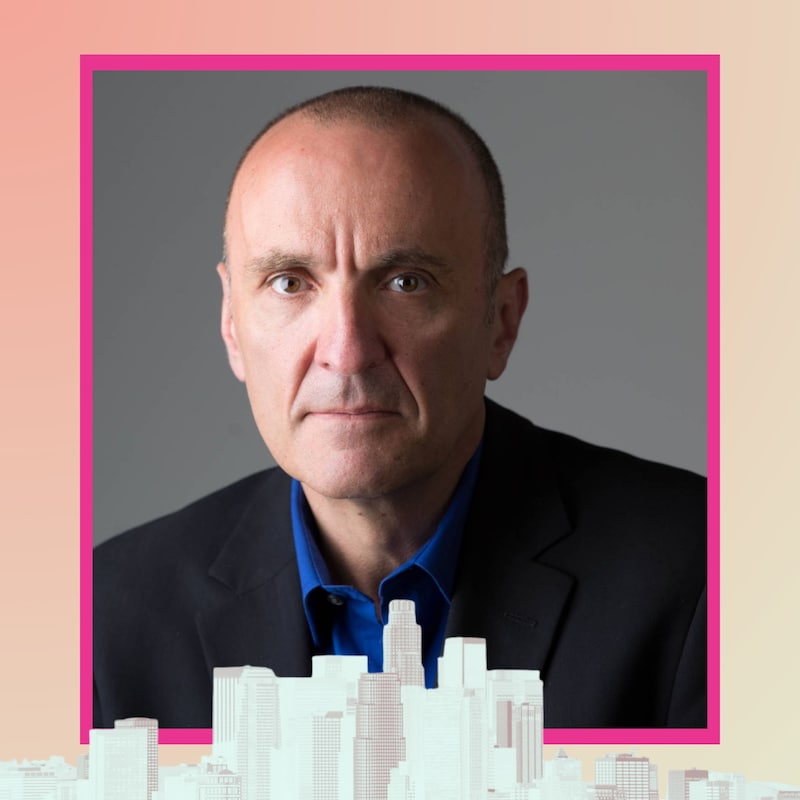
We sit down with musician, scholar, and interdisciplinary thinker Kurt Ellenberger to explore how music merges art, science, philosophy, and even evolutionary biology. Whether you’re a lifelong musician, a curious listener, or you’re thinking of dusting off your piano keys for a fresh start, this episode gives you a brand-new perspective on the sounds that weave through our lives.
Key Takeaways
- Our Brains Love Symmetry: Kurt explains why octaves feel “complete” and harmonious, tying music’s emotional impact to simple mathematical relationships (02:10, 04:31).
- Music Is More Than Notes: The mind-blowing realization that when we listen to, or make music, our brains are performing instant calculations to resolve tension and create “musical stories” and we all fill in the missing notes together (09:52, 22:01).
- Creativity Deepens with Age: It’s never too late to reinvent yourself. Studies show that learning music, even as a late bloomer, not only brings joy but can improve your cognitive abilities by up to 10 IQ points! (35:00)
- Universal Power of Sound: Birds, humans, and the natural world all crave order, symmetry, and consonance in sound and vision, underscoring music’s evolutionary significance (12:06).
- Genre Mashups: The roots of jazzy Christmas music reveal hidden overlaps between Broadway, jazz, and pop, showing how different disciplines and cultures continually influence each other (29:36, 31:04).
- Science Enhances Emotion: Understanding the mathematics or biology behind music deepens our emotional connection to it, making music not less magical, but more miraculous (33:25).
Are you ready to rediscover the joy of music or ignite your creativity? We challenge you: pick up a new instrument, join a choir, or simply listen more closely to the harmonies you love. You’re never too old to be moved or to make your own music!
If you enjoyed this episode, please subscribe to Late Boomers wherever you get your podcasts and on YouTube. Share this conversation with the music lovers in your life, and if you’re considering taking up music or are already on your journey, let us know! Leave a comment or reach out to us.
Want to ask Kurt a question or learn more? Visit him at kurtellenberger.com.
Let’s keep the music and the conversation going, because life doesn’t slow down after 50. In fact, it only gets better!
With gratitude,
Cathy & Merry
Mentioned in this episode:
Late Boomers is part of the eWomenPodcastNetwork.
Transcripts
Welcome to Late Boomers. I'm Cathy Worthington.
Merry Elkins [:And I'm Marielle Guinness. We're so glad you're with us today.
Cathy Worthington [:One of the things we love about doing this podcast is discovering how creativity doesn't fade with age. It deepens, it evolves.
Merry Elkins [:Absolutely. And today's topic touches every one of us.
Cathy Worthington [:Music.
Merry Elkins [:And not just as entertainment, but as science, mathematics, philosophy, and even evolutionary biology.
Cathy Worthington [:For instance, why does a minor chord make us feel sad? Why does an octave feel complete? How is it that our brains can hear mathematical symmetry?
Merry Elkins [:Yeah. And these are questions that bridge art and science. It's the kind of questions that our guest has dedicated his career to exploring.
Cathy Worthington [:We're thrilled to welcome Kurt Ellenberger, musician, scholar, and interdisciplinary thinker who blends music theory, cognitive science, philosophy, and evolutionary theory to explore how and why music moves us.
Merry Elkins [:Welcome to Late Boomers.
Cathy Worthington [:Kurt.
Kurt Ellenberger [:Hey, thanks for having me. I've been really looking forward to our conversation.
Cathy Worthington [:Me too. How does our brain hear mathematical patterns in music, like the geometric symmetry of octaves? And what does that reveal about human evolution?
Kurt Ellenberger [:Yeah, that's a. That's a great question. That's something I've been thinking about for a long time. Since I was a teenager. I was just really fascinated with the way that music moved me, the way that it grabbed me, the way that it pulled me in as a. As a career, but really as a. As a vocation for me, more or less, because it still moves me the same way. And so I started asking those questions as a teenager, and I wasn't getting answers in high school, so I took physics classes in college, and it started to kind of unfold for me.
Kurt Ellenberger [:And when I became a college teacher, I thought I would share that with my students because it's such a fascinating, fascinating topic. So I would do these exercises where I demonstrated how this works in all in at the beginning of every one of my classes. That was what every class got. And it was always kind of a mind blowing experience for the students because they just couldn't believe how this actually works. So, see, so you mentioned an octave. So I'll play an octave. Here's a C. And here's another C.
Kurt Ellenberger [:And here's another C and another C. And if I play them all together, it sounds like I'm kind of playing two or three notes that are the same note, just higher versions of each other. Right. So, but that's weird because they have different frequencies, so they're not the same pitch. But we as humans perceive something about the relationship of those pitches. That, that makes them sound like a higher version of each other. That makes them. And, and for that reason, we give them the name C.
Kurt Ellenberger [:Right. We wouldn't call that a different note. So when you look at the piano keyboard, you can see it's C, D, E, F, G, A, B, C. And then that pattern just keeps going all the way up. So, so what is it about those two notes that we call it an octave? I mean, even that's weird because they're, they are two different frequencies. But there's something very special about the frequencies that we can actually hear and ascertain in our oral faculty. And that's this. So if I play this C at play, they want an octave up from it.
Kurt Ellenberger [:There's a really peculiar relationship between those two notes. And that relationship is as follows. Let's say this first C I'm playing is on a string that's four feet long. The second C to hit the second C, I have to cut that string length in half and make it a two foot string length like our bone. And then to go, yeah, yeah. And an octave up, I have to cut it in half again. So it's one foot. So what we're seeing in the octaves is really a 1, 2, 1 to 4, 1 to 8 and so on and so on.
Kurt Ellenberger [:So what I've just described there is a mathematical sequence called the binary series. So 1, 2, 4, 8, 16, 32, 64. I mean us, us late boomers. I gotta get that in here somewhere. Thank you. Will, remember that that's what we used to buy in computer memory. It was always linked to the binary series, right? Remember, 128 megabytes, 256 megabytes and so on. So that numerical series is the foundation of the computers that we are using to converse with right now.
Kurt Ellenberger [:So it's found there. I mean, without the binary series, we wouldn't have computers. But it's also found here in music when we look at the octaves, because those pitches are in a 1, 2, 4, 8, 16, 32 relationship. And that not only corresponds to the string length needed, but it also corresponds to the actual waves. So if that first C is a wave of four feet, then the one above it is a two foot wave. And that fits perfectly into the forefoot because it cuts it in half. And that relationship of the twos is something that we just innately are really
Cathy Worthington [:good at,
Kurt Ellenberger [:performing, hearing and seeing. So for example, if I asked you to fold a piece of paper in half, you could say, oh yeah, I can fold an 8 and a half by 11 in half. No problem. But if I asked you to fold it into 13 equal pieces, now we got problems, right?
Merry Elkins [:Yeah.
Kurt Ellenberger [:Yeah. You couldn't do that without a ruler.
Merry Elkins [:Yeah.
Kurt Ellenberger [:But you could do four.
Merry Elkins [:Are you describing proportional relationships? Is that what you're describing? So how does that connect to our broader preference for symmetry in both music, nature, and art?
Kurt Ellenberger [:Yeah, so what happens is that the brain has a preference for simple relationships. It doesn't like those complex waveform relationships. So when. When it hears those two Cs, it. It understands that they. They are entirely symmetrical. The one fits into the other one by cutting it directly in half. And the one above it cuts it into four.
Kurt Ellenberger [:And when you map those out on top of each other, the symmetry doesn't go away, no matter how high you go into the seas. But if you take a. Let's say a. How about 17? What if I map a 17 over an 8? Here it is.
Merry Elkins [:It sounds like people tuning up at an orchestra.
Kurt Ellenberger [:Yeah. Or the. Or a horror movie. Right. He's upstairs. Don't go into the bed.
Cathy Worthington [:No.
Kurt Ellenberger [:Don't open the closet. Right.
Cathy Worthington [:Don't look underneath.
Kurt Ellenberger [:That's. That's right. So. So what you're hearing there is your brain. The reason you. We're hearing that as dissonance is because the brain is hearing this asymmetrical, irregular, chaotic relationship between. Between those two waveforms, and that causes tension in us. So.
Kurt Ellenberger [:And we call that dissonance. But in reality, those are just two different pitches who have a. A different waveform relationship than the consonants of the two Cs. So that's really what lies at the heart of it. Your brain does that calculation when it's hearing music and it's saying, is this symmetrical? And if it's not, it actually has another faculty. That is really fascinating. This is what I looked at from an evolutionary perspective. It actually has the capacity to fill in the.
Kurt Ellenberger [:The closest symmetrical quote, unquote solution to the mathematical problem.
Merry Elkins [:So that's like.
Cathy Worthington [:That's like. And it's so universal that that relates back to human evolution because everyone feels it the same way and hears it the same way. Pretty much. Right?
Kurt Ellenberger [:Yes. It's not a cultural thing. You'd think, well, I learned how to do this. That's not really what it is. Can you two sing or are there any singers?
Cathy Worthington [:I sing. We both sing, but I don't sing anymore. But I sang a lot for years and years and years. Many, many things. Choirs, harmonies, and all that stuff.
Kurt Ellenberger [:Oh, cool. Okay. So. Well, if you don't feel like singing. You. You don't have to. You could just tell me what, you know, what note you think comes next. So I'll just play this little sequence here.
Kurt Ellenberger [:It's just 10 seconds, and then I'll say, what note do you think should come next? So here we go.
Cathy Worthington [:I was going down.
Merry Elkins [:Neither one of us.
Cathy Worthington [:I went. I went down. I just.
Kurt Ellenberger [:You were pretty close.
Cathy Worthington [:Yeah.
Kurt Ellenberger [:You're pretty close. So the weird thing is I didn't play that note.
Cathy Worthington [:No.
Kurt Ellenberger [:So somehow you.
Cathy Worthington [:It's resolving.
Merry Elkins [:We fill it in.
Kurt Ellenberger [:You fill it in. Why? Because what I played ended up with a. With a 9 and 11 against 8. And what's the closest factor of two? Well, the nine goes to the eight and the 11 goes to the 10. So your brain fills that in. And. And that's no small feat, because if we didn't have that. If we didn't have that faculty, we wouldn't have music.
Kurt Ellenberger [:I mean, it's. It's part. It's the engine that makes it run. Because if you're. If you're expecting a certain note, then the composer can give it to you or give you something completely different. And in so doing, creates a narrative in. In sound. Without that, there would be no reason for you to expect the tune to end, or you couldn't be surprised by the.
Kurt Ellenberger [:By the tune going in a slightly different direction. So it's really a curious faculty because from an evolutionary viewpoint, you would need to either that. That skill would need to either help you procreate more or to. Or to allocate more resources. And it's not entirely clear. It's not clear to me at all how the ability to predict that note could, you know, could save you from a tiger or could get you more food or would allow you to procreate more.
Merry Elkins [:Yeah, that's fascinating. Is that how you would describe its effect on nature? How it affects nature and even, well, art, painting that you can see, because art is often dissonant. But nature, what would be. What would the progression be with that?
Kurt Ellenberger [:Well, I think what we see in nature, too, is that same symmetry. When a tree grows, the leaves are all kind of the same. They're going out around. Around the tree in the same way, and we find those things beautiful. Or we look at a sunset that chops our vision right in half. The sun is going down above is the sky, and then low as the ground or the sea. You know, we enjoy those. Those things that are ordered and.
Kurt Ellenberger [:And symmetrical like that. But it's. It's not Just humans who do that. They've done studies with. With. With birds and with other animals where they will have a dissonant sound playing at a nesting spot and a nice consonant sound playing at a nesting spot, and the birds will avoid the spot with the dissonant sound and go to the spot with the. With the consonant sound. So it seems like there's.
Kurt Ellenberger [:There is kind of an appreciation or a. A search for symmetry and order that's kind of built into us at a really deep level.
Cathy Worthington [:Oh, yes. And birds, of course, sing all the time. They're singing. Their. Their entire waking time is singing. Well, how is your. How is your interdisciplinary approach blending music with science and philosophy shaped your teaching, especially in exploring tonality's narrative power?
Kurt Ellenberger [:Yeah. So I taught in the Frederick Meyer Honors College at Grand Valley State University here in West Michigan for about 16, 17 years. And I moved over there from the music department because I really wanted to teach more interdisciplinary stuff. I enjoy doing lessons and everything, but I've always been someone that explored those other areas, and I enjoy the challenge of bringing those topics to people who are not professional musicians or who don't have a lot of disciplinary knowledge. So that's what I spent my career doing, and that's what I started doing in terms of my writing and my outreach, and even what I'm doing now when I do podcasts is I'm trying to bring some of that information in a way that. That's. In a way that is easy to digest for an average listener, but also kind of, you know, opens the lid on it and shows how miraculous this. This thing that we take for granted, which we call music, really is in our lives.
Kurt Ellenberger [:So it's. It's really been right at the center of what I've done my. My entire career.
Cathy Worthington [:Oh, wow, that's. Yeah, I love that, that you've been able to do that. And obviously, you basically started as a musician then, right?
Kurt Ellenberger [:Yeah, I started. I've come from a very musical family. We did singing. By the time, you know, we were two or three, my sister and I would just be singing folk songs and cannons and rounds and whatnot with my father, who was a real choir guy, who spent a lot of time singing and was really into it. And then I started on the instruments, and then by the time I got to be a teenager, I just. Just got hooked, and I knew this was what I wanted to do. And I started practicing three, four hours a day. And by the time I was 16 or 17, I was working professionally in the Detroit area, and that was it for me.
Kurt Ellenberger [:I just. I just wanted to do music, and that's. That's what I focused on.
Merry Elkins [:You didn't want to be a rock star?
Kurt Ellenberger [:Well, you know, I. I wouldn't have complained if that came along, but. No, I was. I was always interested in more of the classical music and jazz music, although I love pop music, too.
Merry Elkins [:Yeah. What did you grow up with on the pop music scene?
Kurt Ellenberger [:Oh, geez. I came up in the 70s, so Elton John, Pink Floyd, Genesis, you know, all of those. All of those great classic rock bands. That was. That was really what I. What I came up with. But I always gravitated more towards the progressive rock stuff, so. Genesis, King Crimson, that kind of stuff.
Kurt Ellenberger [:Stuff. But I always, you know, I always liked the, you know, the. Just kind of the top 40 that was being played at that time, which is. I don't know, it seems to be somewhat timeless because all of my students, every year, that's what they're listening to. I'm thinking, man, why are you listening to the music that I grew up with in the 70s?
Merry Elkins [:Yeah.
Cathy Worthington [:Because it's way more melodic than what is happening now.
Kurt Ellenberger [:Yeah. You know, people grab onto those melodies.
Cathy Worthington [:Yeah, it is, though.
Kurt Ellenberger [:Yeah. I mean, I don't want to sound like the angry old man on the porch, but I don't either.
Cathy Worthington [:But it's. Let's face it, that music is more melodic, more chord structure, more harmonies than what we have now.
Merry Elkins [:Yeah. But then you get classical and jazz. I still listen to all the old songs on the pop charts, but I love jazz and classical now. Although the dissonance in progressive jazz is a little jarring for me.
Cathy Worthington [:But. But if you were like me, raised by a father who sang in choirs and stuff, which I came up with that also. My father sang in church choir, and then I joined church choirs and sang in church choirs for years. So you were probably exposed to all that too, right?
Kurt Ellenberger [:Absolutely. Yeah. It was just part of what our family did. That was it.
Cathy Worthington [:Right, right.
Merry Elkins [:And I sang madrigals a lot in school, and we had a lot of minor chords in madrigals. And I was always wondering why the minor chords. And I know that you have a thought on that, because it evokes kind of a sadness, kind of a different mood. And why do you think that is? And how do composers use that knowledge to enhance their storytelling? And especially in jazz and classical, but also rock and roll.
Kurt Ellenberger [:Yeah. It works the same in any genre. Right. Usually those minor key songs are going to evoke feelings of sadness, depending on the tempo. Right. If you have a minor key song that's really fast, you're not going to feel that, that, you know, that sadness. You're going to feel it in the slower tempos more so. But it works the same in, in pretty much in every genre.
Kurt Ellenberger [:So there's a couple things there. One is the tempo and the gestures in the music. So in the minor key music, it's usually a slower tempo, maybe 60 beats per minute, 70 beats per minute, which is roughly where our heartbeat is. So the pop music that makes us, that we put on when we work out or we're going to a party that's at, you know, 120, 125, 130 beats per minute. So humans react to those rhythms and the sounds in a mimetic way, meaning that we mimic them. So that's why you get pumped up when something is at a fast tempo is because your heart rate and your body is reacting to the rhythmic gestures in the music that are, that are twice as fast as your natural rhythm. But when you go to, you know, maybe a funeral or some other event where it's more somber, the music is going to be slow, probably a little minor key ish. And that tells your body, hey, don't, you know, don't, don't get excited here.
Kurt Ellenberger [:We're going at about 60 beats per minute. Everything's calm, quiet, respectful, don't call attention to yourself, etc. So we, we mimic those characters that we find in the music. Music, which is why, you know, since the Greeks, philosophers, and even governments have been worried about what kind of music people listen to, because they realize that the music changes how you, how you react to things.
Merry Elkins [:You know that that's very interesting because I'm a writer and you can write that way too, where you want to speed up the tempo or you want it, want the, to raise the heartbeat of the reader and then you can slow it down. It's fascinating to have you say that because I never thought of it that way.
Cathy Worthington [:Yeah, with the heartbeat.
Kurt Ellenberger [:Yeah. And I don't think a lot of creative people are. They're not doing that intentionally. They're just, they just know that this is. Hey, if I want to create this effect in writing or music, I can do it by using tempo because the slower tempo makes me feel a certain way or even, even in punctuation in writing. I find sometimes when, when they break the rules of punctuation and make me stop, it has that sort of whoa nelly effect and it changes the way I'm reading The actual text. So it works there very. In much the same way.
Cathy Worthington [:And. Yeah. And if any of our listeners have had the opportunity ever to watch a movie that they might know what it is without the music on it, you can't even relate to the movie at all. You don't even get it. You're.
Kurt Ellenberger [:You.
Cathy Worthington [:It won't scare you one bit if it's scary. I mean, it's just completely amazing. What the music. Film composers are so brilliant with that.
Kurt Ellenberger [:Yeah. Yeah. They're. They're manipulating the expectations that I described earlier, that you're expecting a certain sound and they're not giving it to you. And what that does is the anxiety in you increases. You're saying, I want to have the sea, but they're not giving you the C. And they stretch that out for miles and miles and miles. And the next thing you know, you're just gripped by what's on the screen because it's painting the.
Kurt Ellenberger [:The tension that's on the screen.
Merry Elkins [:Yeah. That is so true.
Cathy Worthington [:Yeah.
Kurt Ellenberger [:It's very cool.
Cathy Worthington [:One of my favorite things in the world is to go to a scoring session and watch the orchestra put the music onto the film. It's just magic. I want to ask you, since you've done a lot of teaching, what's the most memorable aha moment you've witnessed from a student?
Kurt Ellenberger [:Well, I have to say it's that exercise that I did at the beginning of each class, because it was the entire class. I would play the example that I played for you, and then I'd ask them to sing the note, and they all sang the same note. And I said, so, well, let me get this straight here. I played some sound. It went into your ears. Your. Your. Your ear converted the analog signal into an electrical signal that got sent to your brain, and your brain instantly calculated the symmetry between the sound waves and then sent a signal to your vocal cords to go to this note to get rid of the asymmetry.
Kurt Ellenberger [:And in every class, they just look at me, like, perfectly look over at each other and go, what did he just say? And then they just can't believe it. And then they would usually come back to the next class and say, I tried explaining this to the people in my dorm, and people thought I was crazy. Stuff like that. So that's just been a ton of fun for me.
Merry Elkins [:That gives me goosebumps because it's so primitive. It's so evolutionary, whatever the word is. Evolutionary or evolutionary. But if. I mean, basically, is that your test to test music's evolutionary origins? And. Or are there others? And if you could design another, what would it be and what would it focus on?
Kurt Ellenberger [:Well, so what I did was I started asking, I have some friends who are evolutionary biologists. And I said, so where do we get this from? Why are we able to predict the sound based on the asymmetry of one? And then we fill in the closest symmetrical underneath that, so that the 11 goes to a 10, right? So the 11 goes to a 10. That's the amen in every hymn. And you're yearning.
Merry Elkins [:I harmonize with it.
Kurt Ellenberger [:That was great. And you're yearning for the 10, right?
Merry Elkins [:Yeah, yeah, yeah. Yearning for it. And when you don't give it, it's like. But. But. So it's all very interesting to me. So it's. It's Darwinian in a way, but you think Darwin's theories and his fall short? Please explain that.
Kurt Ellenberger [:Yeah, so I did a pretty extensive survey of the evolutionary research on music. I spent about 18 months doing it. I don't know how many articles I read. And the further I got in, the more I realized they just really don't have an answer for this. First of all, they don't really know it. Like, most of them don't know that that's how it works, which kind of makes sense. It's out of your discipline. But they.
Kurt Ellenberger [:They have theories of, well, it provides social cohesion, which is probably true. It was a way for, you know, it helps children learn, which is probably. Well, we know that's all true. But to come down and say, well, there was someone was born with the ability to predict the next note, and then that had to give them and their progeny some kind of skill that would have increased their. Their ability to, again, procreate and allocate resources. And I just didn't find anything that even dealt with the issue. It was all very vague kind of social cohesion, singing to babies kind of stuff, it just. There was nothing there.
Kurt Ellenberger [:So I just don't think they've answered that at all.
Cathy Worthington [:Yeah, just. We haven't really quite figured it out on an intelligent level. Just. We just know it emotionally without being able to write it down. Right.
Kurt Ellenberger [:So, yeah, I mean,
Cathy Worthington [:so what role does genetics play in musicality, like lineages, like the Bach family? Is there research being done to map musical traits to inherited predispositions?
Kurt Ellenberger [:Well, they've looked at a lot of the families of musicians, and it doesn't seem to be a. A genetic thing. It seems to be sort of possibly a hearing gift, like an auditory, you know, you're just really gifted in the terms of the way that you hear or the way that your. Your. Your nervous system is built, something like that. But the Bach family, there were musicians that kept going on after bach until the 1800s. But it's also. They were trained, you know, from a very early age, so they're brought into the musical language.
Kurt Ellenberger [:So it's kind of hard to separate that because it's pretty rare that you have someone who. Let's say there's no music in the house and that's it. There's no lessons, no nothing. And then the kid just walks over to piano and starts playing Mozart. I mean, that. Just that, you know, you need to have some of that. You need to be hearing it. I mean, I'm not saying it couldn't happen, but it doesn't seem to anybody.
Cathy Worthington [:Yeah, anybody born into a musical family is going to be introduced to music on day one.
Kurt Ellenberger [:Yeah, it's hard to separate that out, I guess.
Cathy Worthington [:Yeah, the lessons are going to follow and the things. And even if there aren't any piano lessons, there are. Somebody is always singing, somebody is introducing it. I, I know. Possible to say that's. I mean, is that genetics or is that, you know, what do you call it? Environmental?
Kurt Ellenberger [:Yeah, I think it's probably a. A combination of the two. I mean, what, What I noticed with my students is I, I would have some students come in and they would practice a half hour a week, and they would get a little bit better and a little bit better over time. But then I had. I had other students who came in, and all of a sudden it's. They, they come back the next week and they've. They've gone way past where I asked them to go. And, and the other students who were just practicing a half hour a week couldn't do that.
Kurt Ellenberger [:So there's a. There is a talent thing there, much like you would see in sports. Right. You see a, you know, a teenager on the football. Football team, and he's just got a great arm. Well, where did that arm come from? I don't know, but he's got it right. So, I mean, we're just gifted in different ways. And if the student or if the young person is exposed to music and responds to it and has a gift like that, then they go from, wow, just playing a couple of notes to, you know, all of a sudden they're playing Beethoven sonatas.
Merry Elkins [:That is genius. So, Kurt, looking ahead, what's the next big question in music scholarship that excites you most?
Kurt Ellenberger [:Well, I'M still exploring the. I like to find the cracks between kind of what's popular and what's going on in the discipline. So I like to look at those areas. For me, that's really exciting to see how different genres kind of mingle with each other and without people in them actually even knowing that they're being. That they're being mingled.
Merry Elkins [:Oh, do you have an example?
Kurt Ellenberger [:Yeah. So, like, for example, in this came from a question that a student asked me, actually, or asked me over the years, I got the same question. Why is Christmas music so jazzy? And so I would give a little explanation and. But, you know, I hadn't really thought deeply about it, but I thought this is a really interesting question because, yeah, a lot of Christmas music is. Has a lot of jazz flavor to it. Right. It's not progressive jazz or. But it has that Ella Fitzgerald, 60s, Frank Sinatra, you know, kind of kind of vibe to it.
Kurt Ellenberger [:And so I thought, well, what is it really about it? So I thought, well, I'm gonna research it. I'm gonna write an article about it. And what I found out was that during the time that kind of our secular Christmas music was. Was coming to the fore, so in the late 30s, Rudolph the Red Nosed Rain or Santa Claus Is Coming to Town, Rudolph the Red Nosed Reindeer, all of that stuff. And then the films that they made from it, they were all. All of that stuff was being written by Broadway composers. So these composers were bringing the Broadway aesthetic into those songs and into the films as well. Well, what did jazz musicians use? Well, they used the Broadway Songbook extensively at the same period of time.
Kurt Ellenberger [:So a lot of the tunes that. In other words, the Broadway Songbook was the basis for so much of popular jazz in the 40s and 50s and 60s, but it was also the basis for those secular Christmas songs. So they have the same harmony, and so the Christmas songs lend themselves to kind of jazzy versions of them very well because they both have the same grandfather. Right.
Merry Elkins [:They're not a bit sound way.
Cathy Worthington [:Yeah, yeah, yeah.
Kurt Ellenberger [:I enjoy doing those kind of. Those kind of deep dives and.
Cathy Worthington [:And we have tons. And we also have tons of Christmas music that was written by Jewish composers.
Merry Elkins [:That's right.
Cathy Worthington [:Lots of them.
Merry Elkins [:Like almost all of Irving Berlin, you know, chestnuts roasting.
Cathy Worthington [:Yeah, A lot.
Merry Elkins [:A lot of them who was a jazz singer, basically.
Kurt Ellenberger [:Oh, yeah. And they were. So a lot of those composers were they. They cut their teeth in the. In the Tin Pan Alley era and in the 20s. Right. A lot of them were Eastern European immigrants of Jewish descent. And they were also well versed in Schumann, Schubert, Beethoven, Brahms.
Kurt Ellenberger [:And they brought a lot of that rich harmony into the popular music of the day. That's why it's so good for jazz musicians, because it has rich harmony in it that jazz musicians can use to improvise with.
Cathy Worthington [:Yeah, so you can have four saxophones in one piece. I love it. So how do you stay inspired balancing this analysis you do with, say, the emotional spark that you get from performance?
Kurt Ellenberger [:Well, you know, you'd think that maybe diving into it from a, you know, acoustical perspective and a scientific perspective would take away from it, but it really doesn't. For me, it just makes it all the more miraculous that. That we have this, because you look under the hood and you see this churning, you know, math and science going on, but the result of it is emotional, it's spiritual, it's. It's deep. But it has that as its engine. And to me, that's just endlessly fascinating.
Merry Elkins [:I think you just answered the question I wanted to ask you for our listeners who aren't musicians, how can the understanding of science, the science behind music, deepen their listening experience?
Kurt Ellenberger [:Yeah. I think once you realize that your brain is doing this automatic mathematical calculation, and it's doing it instantaneously, and your response to that is, this well of emotion makes you happy, it makes you sad, it makes you melancholic, it makes you anxious. All of those different shades of emotion are just governed by how a composer is using those mathematical relationships in really finessed and sophisticated ways to garner that response from you. You. I think, to me, when you realize that that's what's going on, it's not a demystification of it. It gets even more mysterious. Right. Why do we have that? But I'm not complaining.
Kurt Ellenberger [:I'm glad we have it. But to me, it makes it even more miraculous and more mysterious to know that that's what's churning in the background in our brains, that makes it happen automatically.
Cathy Worthington [:Yeah, I get that.
Merry Elkins [:Good point.
Cathy Worthington [:And on our Late Boomers podcast, we're always talking about reinvention. Never too late to start something new. And so, for our late boomers that are rediscovering piano lessons or joining choirs, what would you say about the lifelong relationship between the brain, our brains, and the music?
Kurt Ellenberger [:Well, there have been studies done. So if any of your listeners are thinking, wow, I'm too old to learn piano, you're not. There have been studies done where they've looked at groups of people in their 70s who have not played piano before, and they start playing piano, and their IQ goes up by about 10 points.
Cathy Worthington [:Oh, my gosh. Oh, my gosh.
Merry Elkins [:I think I should start again.
Cathy Worthington [:I need to recommence.
Kurt Ellenberger [:Yeah. And what it's tied to is when you have both hands doing things independently, what's happening in your brain is that there are connections growing between the hemispheres. And that is very healthy cognitively because you use those pathways when you're. When you're problem solving. So that's why it's really great for little kids to be playing an instrument like that, because it helps with their brain development. But the cool thing is it doesn't stop when you're 12 or 15. If you do that when you're in your 70s, you can actually increase your cognitive skills by. Like I said, I think if I remember that study correctly, it was about 10 points between the group that wasn't playing piano every day.
Merry Elkins [:Wow, that is an amazing point. I'm, in a way, still processing it.
Cathy Worthington [:I need to get my piano tuned right away.
Kurt Ellenberger [:Me too.
Merry Elkins [:But actually, while you were saying that, I was trying to think how I'm so terrible with my left hand on the piano, but the right hand is okay. And I think part of that, now that you say that, it's like, maybe I've got to get my brain back together here.
Kurt Ellenberger [:Yeah, it's kind of crazy when you think about it.
Cathy Worthington [:Yeah.
Merry Elkins [:Yeah. Anyway, this has been beyond enlightening and fascinating for me personally. I know our late boomers audience, both the listeners and the viewers on YouTube, have a whole new way to think about the sounds that we love or that maybe we should listen to and think about what we are listening to. Most of us don't think about it. We just listen and enjoy and let our brains and our emotions take over. So thank you.
Kurt Ellenberger [:Yeah, thank you for having me. It's been great pleasure.
Cathy Worthington [:From evolution to emotion to symmetry, it's remarkable how deeply music is woven into who we are.
Merry Elkins [:Absolutely. Totally woven. Time to get the piano lessons out again and to weave them more. But, Kurt, thank you for joining us. And for those of you in our audience who would like to contact Kurt, you can reach him on his website, Kurt Ellenberger.com and that's. Would you like to spell that for everyone? Kurt and I'll. Sure. It's all talk about any that you'd like.
Merry Elkins [:We didn't cover.
Kurt Ellenberger [:Sure. It's. It's all E's, E, L, L, E, N, B E R-G-E-R dot com.
Merry Elkins [:So, Kurt, with a Kurt.
Cathy Worthington [:Yeah. With a K. Yeah.
Merry Elkins [:Yeah.
Cathy Worthington [:And yeah. And thank you, all of you, for listening to Late Boomers.
Merry Elkins [:And please subscribe wherever you get your podcast and to late boomers on YouTube.
Cathy Worthington [:Share this episode with the music lovers in your life, please, please.
Merry Elkins [:And we'll see you next time. We're looking forward to it. Because life does not slow down after 50.
Cathy Worthington [:Nope. It gets old.


