Transcripts
Sonia Kampshoff
Welcome to Working with Languages, the podcast for language speakers ready to explore the range of opportunities involving languages. My name is Sonia Kampshoff. I'm a translator turned Google Ads specialist and a lifelong language enthusiast. Join me and my guests as we explore how they embraced languages in their careers and what working with languages looks like in the age of AI. Because finding the right inspiration can help you build or shift your career.
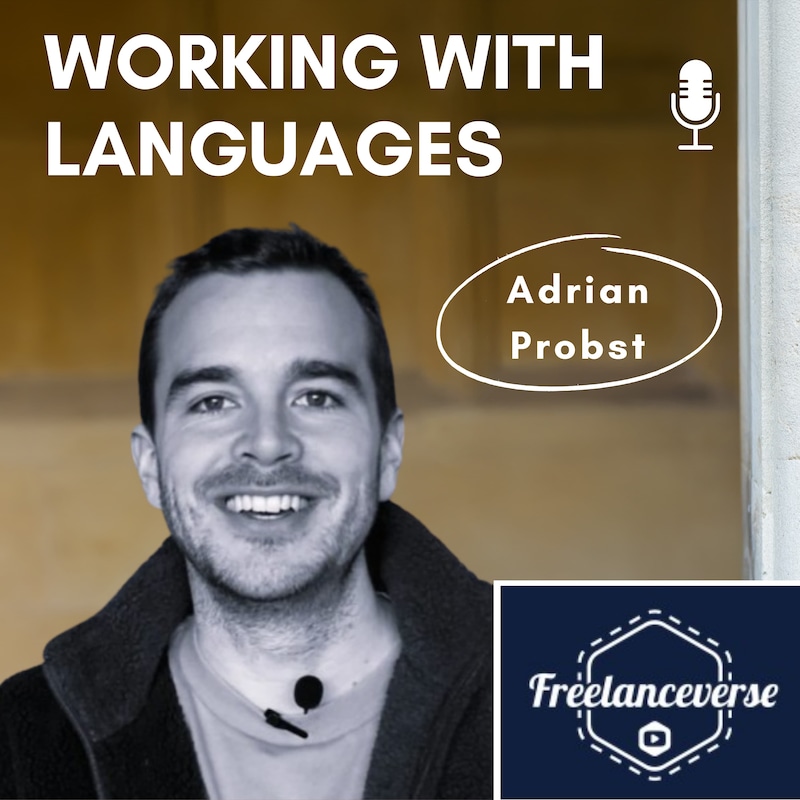
In today's conversation, I talked to Adrian Probst, a translator from Switzerland specializing in the sports industry. As someone who prefers to do translation work rather than go out selling his services, over the years he built his own YouTube channel where he talks about the life and work of a freelance translator. And by doing so, he built his own inbound sales channel. He also tells us more about Swiss German, translating for the Winter Olympics and the World Cup and life as a translator and YouTuber. Let's dive in.
Welcome back to the Working With Languages podcast. Today's episode's guest is Adrian Probst, originally from Switzerland. So, hello, Adrian Probst.
Adrian Probst
Hello Sonia, thanks for having me.
Sonia
Thanks so much for coming. It's such a pleasure. As you know, the first question is the same for everyone. So what is your favorite word or phrase in a language that you speak?
Adrian Probst
Yeah, sure. I was thinking about that. And there are so many weird words in Swiss German that are influenced by French and Italian, the two other languages from Switzerland. And one that I grew up saying all the time is very specific to my region. And it's called kremerle. And it comes from the French expression faire des commissions, so doing groceries.
And then it went from faire de commission to commissionieren to commisioner to kremerle. And I never knew that it's a word that is so specific to where I'm from, to the region. And then later I went to other regions in Switzerland and said this word and no one understood what I meant. So that has always been a word that is close to my heart. So it's, don't think there's not even a rule how to spell it. You just say kreml. You can spell it however you want.
Sonia Kampshoff
So what does it actually mean precisely?
Adrian Probst
Doing the groceries, going to the shop and doing the groceries.
Sonia Kampshoff
I would not have been able to guess it. I speak German, obviously not Swiss German, which people sometimes assume is very similar. It's not. And I would not have been able to guess it. That's a good one.
Adrian Probst
If I said commissionering, would you make the connection to food shopping?
Sonia Kampshoff
No, no. I would have thought something about commissioning or commission, but certainly not involving food.
Adrian Probst
Because even in French, they don't say anymore, they say no. But it's, guess I looked it up and apparently in Quebec and Canada, they still say that the commission. So somehow it moved away from France, but it's now used in the in the other French speaking countries.
Sonia Kampshoff
Wow, fascinating. So, you're originally from Switzerland. Can you tell us a bit about your background?
Adrian Probst
Yeah, sure. I grew up in the Swiss German speaking part of Switzerland, the German speaking part close to Bern in a small little village. I did a commercial apprenticeship after my high school. So I was in a company working for three years, exploring all different aspects of the business landscape. That was really cool for me. And it was a great start to get into the working, the workforce basically.
That's a really cool system they have in Switzerland. And then after that, I had the opportunity to explore university degrees. It depends on your grades. And I was fortunate enough to do that. And that was never really in my plans. So I was a bit overwhelmed whether I even wanted to do that and what I would study then. I knew that I'm really good with languages, not very good with everything else. So I thought if there is something where I don't really have to do lots of physics, lots of math, lots of history and stuff.
I might consider it. And that's when I first stumbled upon the degree in translation. Nowadays it doesn't exist anymore, but back then there was still a bachelor in translation at an applied university in Zurich. And I applied for that. I had to do an entry exam and I got in. I was very surprised and that was really a huge deal for me, you know, moving away from the small Bernese village to Zurich is already, for me, that was already a move across the world.
And then later it kind of snowballed into living all over Europe, let's say, not all over the world. But that was kind of the first step out of my childhood, let's say. And then I did this degree in translation. Then I worked for two years in a translation agency in Zurich. That was my first professional experience in the language industry.
Sonia Kampshoff
Sorry to interrupt, which languages did you study at university?
Adrian Probst
So my degree was in my source languages were English and French and my target language German. So all my translation courses were from either English to German or French to German. And then you also had specific language courses, specific cultural courses of the source countries. So we studied a lot about France, Belgium, the UK, the US, and Australia. You really deep dive into the countries where these languages are spoken. And then they also encouraged us to study more languages. I didn't go for that in the end. I wanted to really, you know it's not the most exciting language combination as a translator, English and French into German, but I've had this feeling that I really want to nail these languages down rather than spread myself too thin later on. So I decided to really focus on these three.
Sonia Kampshoff
And did you do anything about Swiss German specifically or was it just German generically?
Adrian Probst
They actually focused a lot on us being able to speak proper German without the Swiss accent because the people that went into interpreting another form of working with languages, they need to be able to switch off the accent. If you want to work in international conferences or something, it's not the best look, I guess, to have a strong Swiss accent. At least that's what they told us.
And I know that if people want to come work here in Brussels, where I'm based now, and work for the commission, you definitely can't have a strong accent, especially not Swiss because they're not a member state. There was a lot of focus to get us away from Swiss German and focus on the German. But yeah, there were no classes in Swiss German, but that's anyway, that never happens in Switzerland. Everything official life, everything school life is always in standard German.
The Swiss German language doesn't really exist in an institutional setting. The moment you go to school as a kid, it's high German.
Sonia Kampshoff
That's interesting because we'll get to this later on, but you do work also translating into German, but also Swiss German.
Adrian Probst
Yeah, so there’s always a need to make a distinction with the client that they really know what they order because often a client would order Swiss German and expect me to translate, you know, in the dialect. And then I need to tell them, I don't think you actually want that because that's really odd. No one, I mean, if you want the text written in Swiss German dialect, that's very niche and very specific. That maybe works for some kind of, almost a bit ironic, bit funny advertisement maybe that you actually have the dialect written out, but almost exclusively what people actually want is a standard German for a Swiss audience.
So that's, that's very similar to German for Germany, but there are slight differences. There are words that are exclusively used in Switzerland. They're called Helvetisms. There are certain orthographic changes that you would have to make and most likely the clients actually want that I always need to make sure that they actually know what they want.
Because there are no grammatical rules in Swiss German. It's a spoken language. If you write it down, you can do whatever you want. So when I text with my friends that are from a different region, texting is the only usage of written Swiss German, let's say.
Sonia Kampshoff
Yeah.
Adrian Probst
And if I text with them in Swiss German, they will write things completely different than I do because they have a different dialect.
Sonia Kampshoff
Well, so you can't even say, you spelled it wrong because there's no rules.
Adrian Probst
No, there is no such thing, no, there is no such thing.
Sonia Kampshoff
Very interesting. So going back to your career, you started working as a translator first for an agency, right?
Adrian Probst
So first in the agency, I was not a translator. I was a project manager. That was my first experience in the language industry. So I went to the other side. I was working for the middleman, basically. I was in charge of hiring freelancers that then worked for our end clients. So I was in the middle. And later on, that was very useful to have this experience because I had a better understanding of what it means to be a PM.
Freelancers can get frustrated with the PMs, but for me it was useful to be in the other position as well. I was the person on Friday at 4pm that needed to have something in 26 languages and it was calling all over the world. So I know how hard it is.
Sonia Kampshoff
Absolutely. It's always useful to have an understanding of both sides of the coin. But then you moved over to the translation side and now you work as a translator and you work freelance. How did that move happen? How did it go?
Adrian Probst
So I knew I wanted to do a master's degree as well after my experience in the translation agency, but I was not so sure anymore that I actually want to go into translation because that experience kind of turned me off of it. I saw what texts often these people have to work with and it didn't really seem attractive to me. So I was thinking to shift kind of towards the technical side.
maybe combining my technical knowledge with languages, going to natural language processing, machine translation, something like that. So I looked, and I knew I wanted to live abroad for a while. So I looked into master's degrees abroad and I ended up in the Netherlands. I got into a degree that I did exactly that. It's combined languages with technology. And that was a really cool master's. I did this for two years.
And it was so hands on, we really like working with robots. I did like it, we coded the natural language into the robot software. And like, this is very hands on, very technical, super fun. But then during that move, during living abroad, I realized I also needed a way to make money. And before I looked for student jobs, I thought I might as well try to put my bachelor's degree to use.
And I just next to my studies, you know, in the train on the weekends, in the night, I started working or trying to build a translation portfolio. And that's how that move kind of happened. By the end of the masters two years later, I had regular clients had maybe 40 50 % booked in a week, you know, so it was
ust went for it. And that was:And since then I've been doing that. So it's, it's coming up to 10 years now. Yeah. It's crazy. Whole decade.
Sonia Kampshoff
So when at the very beginning when you were still studying and translating part time, how did you find your clients?
Adrian Probst
So there are a bunch of platforms online for translators where you can sign up and make a profile and that they are kind of a dealers platform. So freelancers offer their services, the clients come as well and they post their jobs and then you can bid and you can say, look, offer this service, I'm specialized in this topic that you need. And then you can negotiate on this platform but you can also switch off the platform and discuss further there. So I just made project profiles on all of these platforms. And really quickly, like way too quickly looking back now, I found a client in the UK actually, it was a shoe brand that needed a chair, they were expanding into Switzerland, and they wanted to translate their website into Swiss German, it's German for Switzerland. And I just offered my services and they accepted and it was, you know, surprising, but
I didn't know how it works back then. So I just thought, okay, cool. My first job, but now looking back, it was incredibly lucky, like way too quickly. And they just didn't care that I didn't have experience. I still don't know why they didn't care, but this gave me a huge jumpstart, of course, because then I had this whole website that I could use as experience in my portfolio. So that was a big jump.
Plus, next to it, I had a lot of connections from university that ended up working in translation agencies all over the world after my studies. So once I told them that I'm trying this, I had at least two or three contacts that told me, oh yeah, I can get you in, you can work for us, you know. So the connections, the networking of the university paid off very well then.
So that's how I found my first two, three clients. And that was already enough because I didn't have much time next to studying. And then it snowballed from there. But it's also, it was 10 years ago. I feel like looking back, I had endless energy. I was just, you know, I don't know how I did that. Also writing the thesis while studying, while working, I just don't know. I couldn't do that anymore. So that's definitely a plus for starting young when you still have energy.
Sonia
Yes, absolutely. So remind me, where did you do your masters, at which university?
Adrian Probst
at the University of Tilburg in the south of the Netherlands.
Sonia Kampshoff
Okay. And so you said that you started working as a translator and you use both, you know, proactively these platforms to look for jobs, but also you used your network. You're now also in your field, you're a little bit of a YouTube celebrity by now, because you have a YouTube channel. When did that come into the picture?
Adrian Probst
I started in:I feel like it creates a lot of authenticity and can motivate people a lot. was the same for me. There was one specific YouTube channel when I started out that I followed very much. She was not only talking about translation, but mostly. I learned a lot from her.
And she was very interactive. You could ask things in the comments that she would always answer. So this was so beneficial to me that I knew I want to do something similar because what was not there at all was someone who actually tried to grow on the platform and tried to play the YouTube game, you know, with the thumbnails and the titles and really like obsessing about the back end, the keywords, the tags. And that's something I'm very passionate about. So I knew that I would be good at that.
But before I could start, I needed to gain experience. Otherwise, what do I say? Right. And even then after four years, I still didn't have enough knowledge to really tell people important things. So how I started was just sharing my experiences, sharing what I did, how I did it. I always tell people, take it with a grain of salt. This might not work for you. I'm just sharing what works for me. Maybe it helps you.
So yeah, I started this YouTube channel, it's called The Freelanceverse and I upload one video every Monday, except when I'm sick, like this week, I missed it, but usually every Monday. And it's usually about freelancing, translation, languages, anything related to that. I really don't put myself into a box because otherwise I ran out of ideas rather quickly. And now I've done that for almost six years. It's actually insane.
Sonia Kampshoff
Wow, I find it so interesting because I think as a freelancer, you need to go, yes, you have your contacts, but at the same time, you need to go out and find work. And this kind of selling yourself is something that not everybody likes. There's a lot of people who don't like selling and cold emailing and cold calling and so on. And this is really - your YouTube channel has become one of your sources of inbound leads and inbound work, hasn't it?
Adrian Probst
The only one. Really the only one. don't do anything else here. It's so cool because I'm exactly that person what you said I hate anything to do with client acquisition, code emailing, I'm really bad at it. So I needed to find another way and I knew kind of that there is probably potential there but when I started I didn't know how long I will keep this up but I thought
There is a potential there not only to earn some money from ads on YouTube, but also to actually use this as a way to sell myself, as you've just said, to clients. I was even considering shifting the videos to like, to the client side, you know, actually talking to translation buyers. I didn't do that in the end, but nevertheless, it still worked because if you now look up any, if you go on YouTube and you just type ‘translation’. It's my face all over.
So it kind of worked just through consistency, through always using the right keywords in every video. I was able to kind of take this whole video side of the internet in the translation field. So whenever someone now looks for a Swiss German translator on LinkedIn, for example, someone posts, we're looking forward to expanding to Switzerland. Does anyone know a linguist that works with Swiss German?
A lot of people that view my videos would then tag me and then I can just reach out to them and there is already a connection there. So it doesn't necessarily work as an inbound directly from the clients, but it works through referrals from people watching the video.
Sonia Kampshoff
You mentioned also doing testing and you mentioned thumbnails and keywords, for example. Is there anything that you find that works better or is there a way you can tell also if something brings you just more clients directly or is it just more visibility?
Adrian Probst
More clients directly is a tough one. I don't think I could tell you that. That's probably the best way, the optimal way for that is probably when I do a collaboration with a brand. There are certain brands like memoQ, it’s a big brand in the translation industry, they offer computer aided translation tools. This is the main tool that translators work with. And memoQ is a big manufacturer. How do you say that? Provider of a tool like that.
And they are very known in the industry and they were super kind to me. They have been supporting the channel since the very beginning. They have invited me to their annual conferences. So they are very present and they then also use my content to promote their stuff on social media. That's probably the way I'm visible to most direct clients or to most leaders in the industry that usually would not see my videos.
My videos are really tailored to freelancers. So getting into this industry is best through collaborations from brands that have more visibility. But for me personally, and I know, unfortunately, I know exactly which videos do well, which videos would generate a lot of attention and views, but it's always a bit of a, yeah, it's a two-sided sword.
I could technically make a video every, every Monday that I know does well, but it's not really what I want to do for this community. My goal is to actually help them, you know, and provide relevant content and not things that are just sensational in title and thumbnail. So sometimes it's useful because it creates,
Of course, if YouTube then recommends it, it creates a feedback loop and people actually find the channel and find also the useful videos later on. But I don't want to just create these videos that generate a lot of attention, but actually don't have any content. The best is if I can combine the two, that's ideal. Usually anything I talk, I title with AI or like the future of the industry or something that I know generates a lot of attention. But then if I do that, I don't want to use it lightly.
I actually want to say something in that video, you know, so, and if I want to do that, then it takes a lot of preparation, of course. And then the really niche videos, like how to make an invoice, how to do your tax declaration in Europe, what to pay attention to when you register as a freelancer. They don't, they are not sensational and they are just for my core audience, but they are very much appreciated by the beginners.
Sonia Kampshoff
So I'm assuming that also within the community of translators and maybe also interpreters, it may have some overlap. People talk about your channel and refer you on and maybe send links to videos and stuff. Is that right? Is that also how you have grown your channel?
Adrian Probst
Yeah, apparently. Yeah, it's been funny. Like when I go to conferences, sometimes people just come up to me and say, I've seen your latest video, people that I would never expect, you know. So it does definitely make the rounds. I still find it extremely cringe and I could never watch anything back or I hate when people start talking about them, but it has benefited me greatly. So that's also why I keep going. That's all, it's not always easy, right? It's an additional, let's say additional three, four hours a week of work that I do for a YouTube channel.
I was able to outsource a lot of it. So what I only do now is really the idea creation, the scripting, the filming and the editing. And then everything that's distribution, that's promotion publishing is done by someone else. So that already helps a lot because I don't really want to spend any time on social media. So I just do the production part and then I give it away.
And that way I never have to rewatch anything I make. But then it creates sometimes weird situations because someone says, yeah, I've just watched this video and you said this and this. And the video is maybe a year old and I have no idea what I said, you know? They tell me I said that, maybe I did. couldn't, I have no idea. I've said so much over the years.
Sonia Kampshoff
No.
Adrian Probst
So I have to be sometimes a bit conscious of what I say, what I put out there, because once it's out there, it's there. And it's my words that of course can be used now, especially with AI. Sometimes I see videos of me that I didn't make. Someone cut it up or something, but it's just published. And I obviously said that, but it's just published by someone else. Yeah, it's incredible.
Sonia Kampshoff
And do you do anything about that or do you just let it be?
Adrian Probst
On YouTube, it's very easy to take it down. So they have a great system, but anywhere else, it's near impossible. Unfortunately, it's a big problem. And even people use my identity to then scam people and send them job propositions on Telegram. And people think it's actually me and do like a full week of work and then they're not paid.
I try my best to let people know I post regularly. If it happens, I post on LinkedIn. Please be aware of these scammers. I would never ever post a job through Telegram. That's insane. Whenever you're unsure if it's me, like contact me directly. Cause I mean, usually I respond on LinkedIn or on YouTube. So I try my best, but unfortunately people still get scammed. Yeah. I guess that's the sad reality of putting your face online.
That's why I try to very strictly not reveal anything private. It's a really strictly professional channel and I want to keep it that way.
Sonia Kampshoff
And looking back at six years ago when you started your YouTube channel, why did you choose YouTube specifically? Why did you not choose, for example, LinkedIn or any other platform?
Adrian Probst
I think I was just already a big consumer of YouTube. So I knew that I would be good in that. LinkedIn, I used a little bit, but not that much. You know, there's much more I could do. I could publish all the videos on all the platforms. I could easily put my YouTube videos also on LinkedIn and it would probably generate more visibility for me.
But I can't honestly tell you why. When I think of YouTube content, when I think video content, it's immediately YouTube that comes to mind. So that was just the logical connection. I'm probably also yeah, I mean, in the beginning, it's really daunting to to start something like that. So it was the first two months, probably, I just put the videos on my channel, and I didn't tell anyone. So no one really knew that I did that. Right.
So if I put them on LinkedIn, everyone would know immediately. So it took me a good two months until I announced it publicly on LinkedIn. So that's probably also a reason why I had this nice anonymity, you know, in the first few months of like 30, 40, 50 subscribers that were just interested in the videos. That was a nice community of people I didn't know.
Sonia Kampshoff
Yeah, that's a good way of getting used to doing something completely new. You know, when you put yourself out there and you're nervous and you don't know what you're doing, and maybe it's not as good as it is now. It's actually a good way of, you know, doing it a bit in a way that is not all too visible at the beginning, but then you
Adrian Probst
Exactly. But then, you know, people still go back and watch the first ones. It's fine.
Sonia Kampshoff
So going back to the translations that you do, I know you specialize in sports, especially in winter sports, if I'm correct. What kind of translations do you do within this field?
Adrian Probst
Yeah, so it was a very busy month with the Winter Olympics. I was heavily involved in the German copywriting for the Olympics. That was very fun. Always these big sports tournaments or events like the Olympics, like the World Cup, I'm usually involved in the German team. And these are super fun because they're very fast paced, right? It's often push notifications that need to go out within minutes. So you have to be on call all the time.
So that's, these are the highlights of my year. Usually it's not that I only do sports translation, but it's just something I try to specialize myself in, especially working with direct clients. But when I go through agencies, I still also do generalist things, you know, most translations are business or in retail or just you know, marketing. So I still do that as well.
I just try to create the profile of being the Swiss German sports translator. And within that, it naturally happened that winter sports became just like most, brands I work with are specialized in outdoor clothing, you know, that are really specialized for climbing, for skiing for stuff like that. So it just naturally became my niche.
And once you are so niche down in a specific sector, it's much easier than to find other clients because people refer you to their colleagues. It's a very tight knit community amongst these outdoor marketing people. So often it happens that I get a new client through another client of mine already. So that's really cool. But that takes a lot of time. That's not how I started out at all.
When I first started out, I said I wanted to specialize in IT because I wanted to use my technical background. For years, I was just doing generalist translations. I tried to specialize in IT, but then, you know, there's almost always someone with a computer science background that is more knowledgeable than me. So it's, it's tough to specialize in one of the big, let's say like medical, legal, technical, one of the big specializations.
It's really tough if you are not an actual expert in these fields and you have previous experience. If you're actually a lawyer linguist with previous law experience, that's an incredible specialization and you're gonna make very good money. But if you want to specialize in legal without having that professional experience, it's very tough because there is always someone who's better. In sports, I didn't have this hurdle because there's not really...
probably around, yeah, around:Sonia Kampshoff
But I'm assuming that you also love winter sports. You know, it helps when you already know the terminology and you know what it's about. And do you do a lot of, I know you translated a book recently. So do you also do technical, but e-commerce and also books? How is the split of the type of translation you do within your field?
Adrian Probst
Absolutely. That's one. It's really, it's quite random. Like in January, it was a book for teenagers that was still linked to sports, but in a kind of satirical, funny way. So it was something completely new for me. So I don't even know if we would count it as sports or as literary. It's probably on a daily basis, I would say it's about 50% in my specialization and 50% other things.
Sonia Kampshoff
Okay, so quite a variety there.
Adrian Probst
Yeah, that's also what I like to keep it interesting.
Sonia Kampshoff
Going back to the Winter Olympics, I find it fascinating because people don't normally think about all the translators behind the scenes of such an important event. They normally just think about the athletes. Do you then work through an agency? How did that come about?
Adrian Probst
Yeah, it depends. Now with the Winter Olympics, it's not an agency. It's, or I guess it is, it's just the company that does the communication for the Winter Olympics. I guess you could call it an agency, but it's not a traditional translation agency, you know. But through, with other events, it is sometimes a translation agency, sometimes directly with the institution that organizes the event. That really depends. Now it was a communication for the Olympics.
And they don't only do the translation, they also do the whole copywriting, everything, all the marketing, etc. So there is probably more that you could be involved with as a translator than I was, because I was not involved with anything previous to the or prior to the event, you know, but probably there is also a lot of translation that goes into that. Now, I was just in the team that that was dealing with very fast paced
mostly results or athlete interviews after the events that needed to be subtitled for television or that needed to go through to the apps to mobile devices. So push notifications, breaking news, anything like that. That's usually now with the World Cup, with the football World Cup, it's all in English, the source language. With the Olympics, it's a lot of French source language because they're based in Lausanne.
So that's also, I guess, lucky for me that most sporting events are English and French based. Because, yeah, if, but I think almost all the translators, at least the ones that I know have English as a source language, that kind of makes sense, because that's by far the biggest market. If you have English as a source.
Sonia Kampshoff
Yeah, absolutely. There's so much communication going on in English. There's just more volume also of things to translate. Absolutely. Is there anything else that you would like to add that I haven't asked you?
Adrian Probst
because when I started out in:And I just had started as a translator next to my studies and I had after his lecture, I talked to him and I wanted to know his thoughts about that, how I could combine my technical knowledge with my translation business. And he kind of wanted to, you know, or he told me basically that, it's not a good idea what you're doing. You will not be needed within the next two to three years, max five years. So just be aware of that. If you want to do that now, go for it next to the studies, but make sure you pivot early enough.
And it's crazy to me that this was not 10 years ago and I still do what I love. And, you know, if I had listened to him, I would have never started. I don't know how long I can do this job, honestly, but I've done it now for 10 years. So I'm very happy that I didn't listen to this person and actually went for it.
Sonia Kampshoff
And where can listeners find you?
Adrian Probst
Yeah, if you want to reach out to me directly, LinkedIn is the best option. Adrian Probst on LinkedIn and on YouTube. If you also search the name Adrian Probst, also find me or the channel is called Freelanceverse like Universe, but for freelancers. And there as of next Monday will be again, a new video every Monday. It's been a bit tough with all the sicknesses lately, but I'm slowly getting back on track. So there you can find me.
And feel free to say hello if you watch a video you can write a comment that you came from Sonja's show.
Sonia Kampshoff
Great! Thank you very much for your time. It's been a pleasure.
Adrian Probst
Thank you too, it was fun.
Sonia Kampshoff
Adrian Probst is passionate about languages and does not shy away from testing and figuring out how to optimize how he works. Through his YouTube channel, he is now recognized as a specialist in his niche, and he gets recommended even when not in the room. At a time when AI is changing the rules of the translation industry, he has found a way of navigating these complexities. If you enjoyed this episode, please give it a five-star rating on Spotify,
Apple Podcasts or any other platform where you listen to your podcasts. And if you have a question, do let me know in the comments below.

