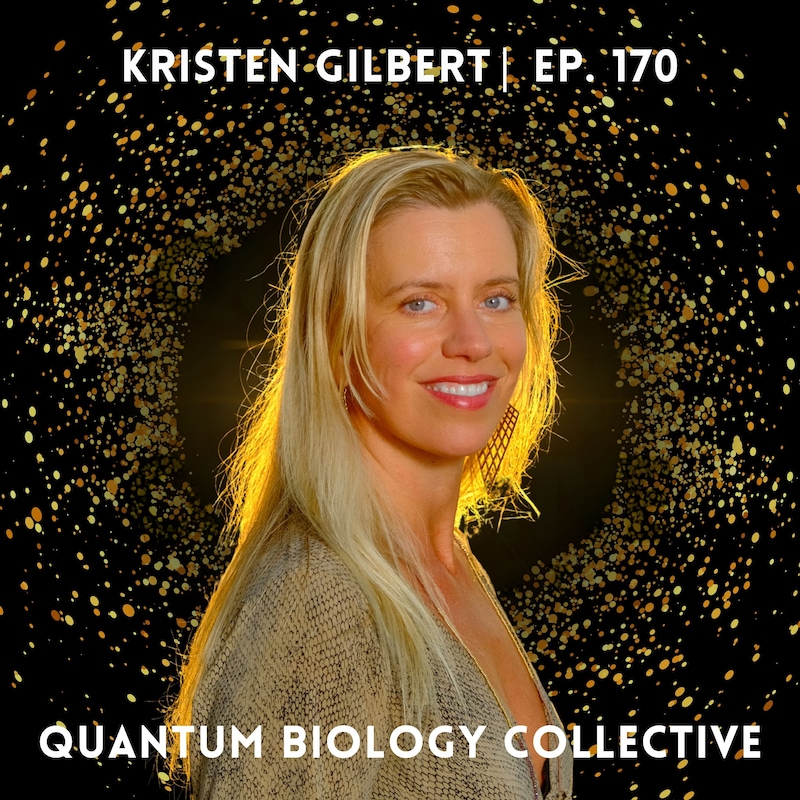
Shownotes
📺 Watch the Video on Spotify, YouTube & Rumble
“Music is absolutely like my lifeblood... I don't know where I would be without music,” says Kristen Gilbert, occupational therapist turned quantum biology practitioner, who joins the Quantum Biology Collective Podcast for a deeply personal—and profoundly practical—exploration of self-belonging, nervous system regulation, and the healing power of rhythm.
With ten years in mental health, Kristen shares how occupational therapy, with its individualized goal-setting and routine design, becomes a platform for championing quantum biology and circadian health. She reveals how simple interventions like light hygiene and mindful rhythms can catalyze radical change in clients—sometimes in just one week. Through stories of heartbreak, self-reclamation, and musical transformation, Kristen maps the journey from self-sabotage to joy, showing how belonging—to nature, to community, and to oneself—is foundational to healing and expansion.
Tune in to hear how Kristen integrates tools like the Enneagram, somatic therapies, and musical entrainment—whether performing electronic music or classical piano—to restore coherence within and without. Discover why regulating your nervous system isn’t just therapeutic: it’s an act of revolution, and why cultivating true self-belonging is the ultimate gift you can offer yourself—and your community.
5 Key Takeaways
- Belong to yourself first—cultivate inner coherence with nature, light, and darkness for true stability and joy.
- Slow down and get curious; mindfulness, breathwork, and body awareness help you break through self-sabotage and expand your capacity for joy.
- Give your nervous system what it needs—choose rest, connection with nature, and regulate before pushing forward, even if it feels boring.
- Embrace all parts of your experience, especially difficult emotions; meet anger and discomfort with curiosity and presence for personal transformation.
- Expand your joy and success ceiling by integrating quantum biology and circadian health—commit to practical routines like sunrise exposure, light hygiene, and nervous system regulation.
Memorable Quotes
"I went through quite a devastating heartbreak almost two years ago, and I just felt like I was completely in pieces for a long time. I leaned on my people, but there was a part of that journey I really had to walk alone. I had to meet the darkest, most scared, most in pain parts of myself from my highest self and steward those parts, truly being with all the parts of myself to put myself back together."
"A healthy nervous system is a flexible nervous system. When we can settle and drop into rest and digest, then we can go out into the world, feel the stimulation, and be grateful to return to that settled quality. For me, it's about connecting to nature everywhere I go."
"Our bodies need us to slow down in order to feel what's actually happening. When I'm tired, I rest. When I'm hungry, I eat. When I have to go pee, I go pee. I don't override my body and wait. To truly slow down in order to catch up with myself has been one of the greatest gifts of self-belonging for me."
Connect with Kristen
Website: https://kristengilbert.ca/
Instagram: www.instagram.com/sunhunter_cv
YouTube: www.youtube.com/sunhunter_cv
Resources Mentioned
Gabor Maté's Compassionate Inquiry (therapy and trauma program) - https://compassionateinquiry.com/
Connect with The Reverse Aging Club:
On Substack: reverseagingclub.substack.com
Visit The Reverse Aging Club: reverseaging.club
Join us for a weekly live hang out, Thursdays at 12noon ET https://zoom.us/meeting/register/j_07VPOWRbWYtZWbimO9bg
Institute of Applied Quantum Biology
RAC is a proud supporter of the non profit Institute of Applied Quantum Biology, a 501c3 dedicated to integrating quantum and circadian biology into health and wellness practice. Without ipublic support this science will take decades to become widely adopted.
Donate to launch JAQB: https://givebutter.com/AQBjournallaunch
You can join the FREE QBC online community here: https://qbcpod.com/freecommunity
The Institute of Applied Quantum Biology, a non profit organization translating the new science into practical application: https://www.iaqb.foundation/certification
Podcast website: reverseaging.club
Tools we use: https://qbcpod.com/products/
Recommended Products:
Lifewave phototherapy patches. Highly recommended for women 45+ or anyone with a condition or symptom they'd like to see shift. Start with x39.
Purchase retail: https://lifewave.com/qbcpodcast/store/products/40825027-6466-4cb8-92d3-dfc318d34a65
For more info from Meredith, fill out this form: https://qbcpod.com/patches/
Join Us On Social
Instagram: https://instagram.com/reverseagingclub
Facebook: https://www.facebook.com/QuantumHealthTV
Rumble: https://rumble.com/c/TheReverseAgingClubwithMeredithOke
X/Twitter: https://x.com/QBCPOD
IAQB Resources
Instagram: https://www.instagram.com/iaqb.ce
🎙️🎙️🎙️
This podcast uses the following third-party services for analysis:
Podscribe - https://podscribe.com/privacy
Transcripts
Kristen Gilbert, welcome to the Quantum Biology Collective podcast.
Speaker:It is a pleasure to have you here. Thanks, Meredith. I'm
Speaker:really grateful to be here with you. Okay. So you have 10
Speaker:years under your belt as an occupational therapist, and
Speaker:you have such a, a unique take on it cuz you say that
Speaker:occupational therapy is perfectly suited to champion
Speaker:quantum biology. I love that. So tell us a little bit about
Speaker:what kind of work you did and how you see those two things coming together.
Speaker:Yeah, so I was originally drawn to occupational
Speaker:therapy because of the breadth of this
Speaker:profession. Like, what you actually do in OT can be
Speaker:so broad, it can look like almost anything.
Speaker:And as someone who has a really
Speaker:diverse set of interests, this is super appealing for me
Speaker:and I think if we were called functional therapists, that would
Speaker:make so much more sense because I'm happy to
Speaker:advocate for defining what OT is. Most people don't know what
Speaker:it is, and it is such a valuable profession because what we
Speaker:do is we meet people where they're at and we
Speaker:assess how they're functioning in the world, and then
Speaker:we get to work with them on— in the mental health
Speaker:sector, what I've been doing for 10 years is so supporting people with
Speaker:individualized goal setting, setting up healthy
Speaker:routines. So with quantum biology and
Speaker:circadian health, I have found this to be
Speaker:absolutely foundational with my clients in public
Speaker:practice, especially when we can start with
Speaker:light hygiene. Because when I give people a pair of blue
Speaker:blockers— and I have a loaner pair, you know— when I set them up with
Speaker:that and when they can take it on to actually get outside in the morning
Speaker:Sometimes with people who are struggling, we have to start whenever
Speaker:you get up and slowly work it back to actual sunrise.
Speaker:But when people take this on, inevitably they come back a
Speaker:week later and they like, I feel like a different person.
Speaker:Wow. Yeah. And that's just after one week of—
Speaker:Yes. Light hygiene. Yes. And
Speaker:circadian rhythm optimization. It's so powerful. I,
Speaker:I I just continue to be amazed whenever I hear these stories.
Speaker:We just, it's, we dismiss it, we ignore it, we don't really think about it,
Speaker:but it's so, so powerful. It's incredible.
Speaker:And so what I started to see over time in clinical
Speaker:practice was like, I'd be helping people out, we'd set up
Speaker:routine, incorporating their goals, it's individualized,
Speaker:everything's going well, and then all of a sudden everything falls apart.
Speaker:They're like, I, I don't know why, I just stopped doing all the
Speaker:things. And so then I got really curious because that's
Speaker:as far as the traditional OT skill set
Speaker:extends. And I was like, what if there's this self-sabotage?
Speaker:What if there are these deeply seated illusory
Speaker:beliefs of lack of self-worthiness
Speaker:that's really what's causing people to
Speaker:sabotage their progress again and again. And so I
Speaker:did Gabor Maté's Compassionate Inquiry
Speaker:program. I studied that for a year and work with people
Speaker:with addictions. And then I also took
Speaker:somatic relational therapy, which is a, a branch
Speaker:of somatic experiencing. And that has
Speaker:been invaluable in terms of being able to work
Speaker:with people through the nervous system and to
Speaker:help them expand their capacity to hold
Speaker:joy. Because we all have this upper limit
Speaker:problem, right? It's a subconscious upper limit where we only allow
Speaker:ourselves to feel so good. And usually this gets
Speaker:dictated very early on in life. And as soon as we
Speaker:bump up against that upper limit, there will be— the
Speaker:sabotage comes in. Everything falls apart. We're not really
Speaker:sure what happens. And I mean, I don't think anyone is immune
Speaker:to this because so many people say, oh, I know I should
Speaker:be doing X, Y, and Z. I know I should be going outside
Speaker:at sunrise or eating a certain way, but
Speaker:I tried that and I had a New Year's resolution and then it just
Speaker:fell apart. Not sure why. Back to baseline,
Speaker:which isn't really where people want to be, but it's where they end up.
Speaker:And so this is really the work that I do with people,
Speaker:is like, how can we create self-care
Speaker:that facilitates coherence, right? And how
Speaker:can we expand the nervous system to hold
Speaker:this new rhythm of being as we integrate
Speaker:with the rhythms of nature and our own rhythms,
Speaker:you You know, how can we create this routine that supports
Speaker:that structure that then allows people to truly
Speaker:expand into the life that they
Speaker:fully desire? I love that. And Kristin, it's
Speaker:such an important piece. And I remember
Speaker:years ago, someone, you know, one of my mentors using the
Speaker:metaphor that it's like we've set like an internal thermostat to a
Speaker:certain temperature. And no matter what we do, you know,
Speaker:if we're trying to cool the house down and no matter how many windows we
Speaker:open, our being is going to try and find a way to go
Speaker:back to that. Cause that's where the thermostat, that's where the
Speaker:thermostat is set. So the thermostat is set to
Speaker:like, you can have like 33% joy, but no more.
Speaker:It's like, no matter what, when we start to go back
Speaker:past that, it's like, there's some kind of internal trigger that's like, no, no, no,
Speaker:no, no, no. Yeah. And then mentally, intellectually, we're like, we would—
Speaker:I would like to continue. I'd like to get to 40 or 50,
Speaker:but it just feels like we can't. There's like an invisible wall.
Speaker:Yes. And you bring up the head piece of
Speaker:like, we know in, in our head where we want to go, but unless
Speaker:we get our subtle body, unless we get all three
Speaker:centers of intelligence online with this idea,
Speaker:it's not going to happen. And we do that— I do that
Speaker:work with people through the nervous system. And I know you've talked a lot
Speaker:about the nervous system on this podcast, but
Speaker:for me personally and with my
Speaker:clients that I work with, so much of it is about slowing
Speaker:down and getting current with what's actually
Speaker:happening inside of us. And
Speaker:So that's why we work on— I work with mindfulness
Speaker:and breathwork practices to start to get to know, like,
Speaker:what's going on in my body, because so many people
Speaker:don't feel anything below the neck. And
Speaker:when we can start to feel the body, you know, there might be a lot
Speaker:of good reasons why the body is also— why we're cut off from
Speaker:the body. But when we can start to drop into
Speaker:the wisdom of the body, and when we can connect
Speaker:to proper light cycles, when we can connect to nature,
Speaker:when we go outside and we experience
Speaker:entrainment with the Schumann resonance, when we
Speaker:find this rhythmicity of being— this
Speaker:is like the foundation for the nervous system to start
Speaker:to settle. And the settling is required first
Speaker:for us to then be able to expand our capacity
Speaker:for joy. Beautifully explained. So the first
Speaker:step, and this is really important, especially for people who work with
Speaker:clients. I know so many like brilliant coaches and doctors
Speaker:and they're like, I'm giving, you know, I have all of this
Speaker:guidance for people that, but they're not doing it. So this
Speaker:is really helpful. And, or I have guidance for myself and I'm not doing
Speaker:it as you were saying. So we're talking about settling
Speaker:and that's where— I was on a, on a clarity call the other
Speaker:day with the doctor and talking about circadian rhythm. And she's like, well, will it
Speaker:help with mental health? And I was like, yes,
Speaker:yes, it will. Absolutely. Because what you're
Speaker:saying is that first step is to slow and
Speaker:settle into the rhythm of our bodies, which
Speaker:is connected to the rhythms of nature and light. And
Speaker:darkness. And like living in cities and our
Speaker:hustle culture, like that promotes
Speaker:dissonance. And then when we choose to go to
Speaker:nature, when we choose to be in nature,
Speaker:simply walking and breathing is such a tremendous
Speaker:therapy because it's one of the ways that we can start
Speaker:settling and slowing down. And this is
Speaker:revolutionary, right? When we are programmed for hustle
Speaker:culture and go, go, go, and You know, that's like a survival
Speaker:strategy. But when we can come into coherence
Speaker:with nature and with ourselves, this is an
Speaker:evolutionary strategy. And for me,
Speaker:learning how to belong to myself has been
Speaker:absolutely integral in my own evolutionary
Speaker:process. And I also— it's central to the work
Speaker:that I do with people is this idea of belonging.
Speaker:Beautiful. Yes, because that is also something I think
Speaker:that holds us back. If we're going to change or grow, there's a
Speaker:subconscious belief that will be
Speaker:rejected on some level, or not— you know, if we are different from
Speaker:the people who are around us, we won't belong there anymore. And also,
Speaker:like, yeah, just on that note of hustle culture, you know, I have different
Speaker:points in my life, you know, I really participate in
Speaker:like what I call like the, the regular world, you know, where people are out
Speaker:and they're networking and doing things and going to conferences and doing all
Speaker:the stuff. And in my experience, it's like, it's not that you need to not
Speaker:do that. People are like, oh, well, I don't want to move to a cabin
Speaker:in the woods and never talk to anybody, so I'm not going to do this.
Speaker:What— in my experience, if I can participate in what
Speaker:you're talking about of the slowing down and building
Speaker:that as the foundation of my life, then I can go out and
Speaker:participate in the the more hustly-bustly type stuff
Speaker:without being thrown into decoherence. It's when I— but if
Speaker:that's my source, then the burnout comes.
Speaker:Yes, yes, because a healthy nervous system is a
Speaker:flexible nervous system, right? So when we can
Speaker:settle and drop into rest and digest,
Speaker:parasympathetic, then, you know, we can go—
Speaker:and I feel it when I go to the city because I live in like
Speaker:a small somewhat urban area, but when I go to like a big city,
Speaker:I drive off the ferry and I'm like, whoa, and I
Speaker:feel this stimulation of that. And I'm so grateful that I can go
Speaker:back to the settled quality. And it
Speaker:is about just connecting to nature everywhere
Speaker:I go, for me. Yeah, I know what you're talking about. I was on the
Speaker:subway in New York City recently, which I
Speaker:hadn't done something like that in a long time, and it was like really busy
Speaker:time and the subway car was like packed with people and I was like,
Speaker:oh yeah, this is— forgot about this.
Speaker:But it was kind of fun because I, you know, sort of, I was grounded
Speaker:and I was like, you know, in coherence and in my body and it was
Speaker:like a fun adventure. So it's not that I can't, we can't
Speaker:do those things, but it's, I guess, this awareness
Speaker:that there's more. Yeah. And we all
Speaker:long to belong. And when we go to nature, we belong
Speaker:in nature inherently. And that's what
Speaker:creates this coherence, right? It's like allowing
Speaker:our physiological rhythms to
Speaker:entrain to nature. And, you know, you spoke
Speaker:to this external quality of belonging, and I think
Speaker:belonging in nature This is why it's therapeutic. One of the many
Speaker:reasons why is because we can entrain these
Speaker:rhythms, but also when we do the inner work,
Speaker:and this is one thing I've investigated a lot in myself,
Speaker:is like learning how to truly belong to ourself
Speaker:is an essential evolutionary
Speaker:strategy for being a successful human in the
Speaker:world. And that comes from
Speaker:being able to steward ourselves through difficult
Speaker:experiences. I went through quite a
Speaker:devastating heartbreak almost 2 years ago now,
Speaker:and I just felt like I was completely in pieces
Speaker:for a long time. And I really leaned on my people.
Speaker:I'm so grateful. I have so many wonderful friends that
Speaker:supported me through— that, and there
Speaker:was a part of that journey I really had to walk alone.
Speaker:And I had to meet the
Speaker:darkest, most scared, most in pain parts of
Speaker:myself from my highest self and steward those
Speaker:parts to really truly be with all the parts
Speaker:of myself in order to put myself back
Speaker:together. And this was an initiation. It was
Speaker:a really important initiation because I did collude
Speaker:in my own victim mentality with that for a long time, but
Speaker:there's dissonance with that, right? And it's
Speaker:like when I could truly meet myself with
Speaker:care and compassion for the oldest
Speaker:exiled parts of myself that were in so much pain
Speaker:This was essentially just a
Speaker:completely transformative experience in my life because
Speaker:I really truly developed this
Speaker:quality of self-belonging. And once you
Speaker:have that, that cannot be taken from you. Once
Speaker:you understand how to meet all the different
Speaker:parts of yourselves, it's a skill, and it's
Speaker:skill that I can now support others in
Speaker:discovering in themselves. And that
Speaker:was such a dark night of my soul, but I can say
Speaker:I am so much better for it now, and I
Speaker:have alchemized that experience
Speaker:into my soul offering and my inspired
Speaker:work. Yeah, you know, Kelly Ritter made the point to me that
Speaker:often finding the right practitioner, it can be about
Speaker:that person's specialized knowledge, but it's
Speaker:often about finding somebody who
Speaker:embodies where you need to go. Yes, because
Speaker:a stronger biofield will
Speaker:uplevel other weaker, weaker biofields around them,
Speaker:right? And this is also, like, in terms of
Speaker:quantum biology, we understand, like, we attract the
Speaker:people that are meant to work with us, and that
Speaker:is usually because we have these gems that
Speaker:alter our biofield. It's all out there to
Speaker:be perceived, you know, whether we're conscious of
Speaker:that or not. But it really is
Speaker:like— so much of the therapeutic relationship is about that
Speaker:quantum resonance. And it's such
Speaker:a beautiful experience when you click into that with someone
Speaker:as well. It's like, for me, it's
Speaker:nourishing, like doing this work with people. It doesn't take from
Speaker:me. It doesn't— I don't take on other
Speaker:people's stuff. I am able to— it
Speaker:nourishes me in a way that maybe wasn't
Speaker:possible before I understood things from the quantum
Speaker:biology perspective, from the subtle body perspective,
Speaker:from the perspective of the biofield
Speaker:and how we carry trauma in our bodies. All
Speaker:of these things— say more about that, because that's something that I
Speaker:find so empowering about studying
Speaker:quantum biology. I talk to a lot of
Speaker:scientists and doctors who approach it from a very
Speaker:almost materialist perspective, even though we're talking about things on
Speaker:the quantum scale. But I feel like quantum biology
Speaker:has the potential to be the bridge to give
Speaker:that scientific foundation to the types of things that you're talking about, such
Speaker:as the subtle bodies. Yes, absolutely.
Speaker:Well, Eileen McKusick talks— about how we store
Speaker:our trauma in our biofield. And so
Speaker:this is one way of looking at it. There's so many different ways to look
Speaker:at trauma and how we carry trauma and how we can
Speaker:release it, which is amazing. There's just such a myriad of
Speaker:ways. So we also store trauma in
Speaker:our metabolic water, in our exclusion zone
Speaker:water, and we don't have studies right now
Speaker:to prove this. But we also know that we store it in
Speaker:our fascia, which is likely in the metabolic water.
Speaker:And as body workers— body workers will tell you, you can
Speaker:press on a certain point and this flood of emotions come
Speaker:back. And these things bubble up in order to
Speaker:dissipate. But again, the nervous system has to be ready for
Speaker:trauma release, because if things come flooding back,
Speaker:then we end up— we can end up getting ensnared in them
Speaker:again. And so we need to feel regulated and often
Speaker:co-regulated for that to happen. But quantum biology gives us
Speaker:so much information about the layers of our subtle
Speaker:body as well. And I work with the
Speaker:Enneagram with my clients, whether they know it or not. Usually
Speaker:they know it. I like to introduce the idea. And
Speaker:on a subtle body, body level, the Enneagram talks about
Speaker:the three centers of intelligence. And we can
Speaker:store trauma in the belly or the body center. We can store
Speaker:trauma in the heart center where our emotional intelligence
Speaker:resides. We can store it in our heads. And when we can get
Speaker:all three of these centers communicating with each
Speaker:other, first we need to bring them online, and then when they get to talk
Speaker:talking to each other, then that is really when we
Speaker:can release what isn't serving us and come back to
Speaker:a regulated state and then move
Speaker:forward in a new way, in a more whole way. And this work
Speaker:happens in the subtle body. So when you're working with someone
Speaker:to move through that, you know, we started out by talking
Speaker:about raising the ceiling on our joy
Speaker:capacity or our success capacity or our
Speaker:financial stability capacity, or whatever it is. Those are probably the
Speaker:big three, or health capacity. So you talked about that first
Speaker:piece being to slow down
Speaker:and integrate into our rhythm, which is connected to the
Speaker:rhythm of nature, grounding, light and dark
Speaker:cycles. So then this— the next phase is moving up through
Speaker:these subtle bodies. Yeah. I think so.
Speaker:And so I have a 6-week course that I've
Speaker:designed, and in each week we learn— we get a different
Speaker:lesson about quantum biology and circadian health, and then we
Speaker:also get a different nervous system regulation
Speaker:technique. And in week 2, we learn the
Speaker:3 centers of intelligence meditation,
Speaker:and initially We're simply tuning into these parts of
Speaker:our body and becoming aware of what they
Speaker:represent. And when I first started working with one of my teachers, whose name
Speaker:is Carly Forrest, she was cueing us to
Speaker:feel our belly. And this was an entire
Speaker:retreat where I was like, what do you mean? I don't
Speaker:feel anything. Like, I don't feel anything
Speaker:in my belly. And then At the first retreat, I was kind of like,
Speaker:yeah, belly, whatever, cool, see ya. And then I came back a year
Speaker:later and she's still talking about the belly, and I was like,
Speaker:okay, why can't I feel this part of my body? And I find
Speaker:that curiosity is such a key
Speaker:way in of like, okay, obviously I have a
Speaker:belly, why am I cut off from my belly?
Speaker:And from there opened up like so many
Speaker:layers of social conditioning, you know, of like our
Speaker:bellies, how they're supposed to look, you know, as women, all
Speaker:this self-scrutiny. So these are like the
Speaker:layers of trauma as they're peeling back that show
Speaker:up when we start to steward these parts of
Speaker:ourselves. So learning how to meet what was in the belly was
Speaker:actually a process for me that took years.
Speaker:And it's an incredibly valuable process because
Speaker:our belly, it's like our gut instinct,
Speaker:right? It's like when we just know something in our
Speaker:bones, when we get that sacred no, I call it— the belly is
Speaker:like the home to the sacred no. When we just get that zing
Speaker:of like, nope, that's not okay. So it's home to our sense
Speaker:of boundaries and it's also home to anger.
Speaker:And so when we have a healthy belly, we
Speaker:can really develop— we can be in
Speaker:right relationship with anger, because anger gets
Speaker:set aside in a lot of spiritual communities.
Speaker:And it's a frequency, like, we need to have access to the
Speaker:full range of frequencies. And one of
Speaker:my Enneagram teachers was talking about being able
Speaker:to feel and hold the totality of anger when it
Speaker:shows up, to be able to contain that in the body, to not need
Speaker:to put it on anybody else, but to feel
Speaker:the powerful mobilizing heat of anger
Speaker:in its totality. And, you know, the reality
Speaker:is that emotions have a 90-second trajectory. So
Speaker:if we develop the awareness to
Speaker:meet ourselves in the experience that we're having, and we can
Speaker:hold on— hold it for 90 seconds, we can trust
Speaker:that zing of intensity will then move through
Speaker:us in a very short period of time. And then we can be in
Speaker:right relationship with anger, because anger shows up when boundaries
Speaker:have been crossed. Like, it's a healthy emotion. It's
Speaker:not healthy to get programmed into that frequency and run
Speaker:that frequency. Right. It's not healthy
Speaker:to get programmed in, to run on it, to use it as fuel,
Speaker:and it's not healthy either to just ignore it, pretend
Speaker:it's not there, but it is a powerful messenger. And I
Speaker:love this so much because I think a lot of the time we hold
Speaker:ourselves in a state of dysregulation or a state of
Speaker:dissonance by unconsciously trying to avoid certain types
Speaker:of feelings, right? Like our mind just like, oh, not gonna think that, or just—
Speaker:and so we're in this continuous state of like avoidance
Speaker:and duck and cover and like, because we can't just be with
Speaker:the totality of it because it's like, I don't know how to have that feeling.
Speaker:And so when we feel that little spark, it's like,
Speaker:nope. So this practice you're describing, it
Speaker:like opens us to feel the feeling, move through it and be like,
Speaker:oh, I'm still here. It didn't kill me. I also didn't kill
Speaker:anyone else. Like, I just sat here and felt it. And then
Speaker:like our— that expansion process is opened up.
Speaker:And I'm going to tell a quick story because I think this is like
Speaker:so key on the anger piece. This was years ago, but I
Speaker:got a piece of information about somebody who is
Speaker:relatively close to me. And it turned out that there had been information that had
Speaker:been withheld from me for a long time. And I— was told
Speaker:it, and I was just like filled with
Speaker:rage. And so at first— and there was a part of me that was
Speaker:like, okay, like, this doesn't actually directly affect
Speaker:you. Like, why do I feel so angry? And then it
Speaker:was like, oh, because I have been doing things
Speaker:I don't want to do to make this other person comfortable. I have been, you
Speaker:know, and I had— all of a sudden I could see the whole, like, the
Speaker:full dynamics of the relationship laid out and all of the ways that I played
Speaker:into it. So as opposed to this being like, oh, that was
Speaker:a dumb decision. Why'd she— like, it was like so
Speaker:much more because— but it was mine,
Speaker:not hers. Well, and way to
Speaker:be curious first and foremost, and
Speaker:then also take responsibility for your role in
Speaker:it. Because when we have— when we avoid
Speaker:these uncomfortable feelings, Often then we need
Speaker:some numbing, we reach for numbing strategies in order
Speaker:to cover them up. And even, you know, Gabor Maté
Speaker:talks about depression being repression, is like
Speaker:this pushing down of our human
Speaker:experience. But when we have a regulated nervous
Speaker:system, then we can come from a settled place,
Speaker:get activated, and in these, like,
Speaker:waves of resonance and resilience, come back to that
Speaker:place and be able to get curious. Wow, that was a
Speaker:strong reaction. What's underneath that for me? Because
Speaker:that is an evolutionary strategy, you know. This is
Speaker:how we learn, and this is how we become more whole
Speaker:humans, is to be able to experience the
Speaker:totality of what it means to be on this planet right
Speaker:now. Yeah, and being on this planet right now is
Speaker:like no joke. It's no joke. And if you're here listening to
Speaker:a conversation like this, like, you are most
Speaker:likely dialed right into it. It's advanced
Speaker:practice being on this planet right now, right? And all the
Speaker:more reason that we absolutely need
Speaker:healthy self-care. We need circadian strategies. We
Speaker:need to cultivate our own inner coherence to
Speaker:be able to navigate what's out there. Like, the
Speaker:world needs this work right now more than
Speaker:ever. Yeah. And I think it was Julie Shauna was talking
Speaker:about, like, stabilizers. She's like, I feel the call
Speaker:for stabilizers. And when I hear you describe your work,
Speaker:I'm like, okay, Kristen, is planting her flag as
Speaker:a stabilizer. Yes. And you know, if you're listening
Speaker:to this and you're like, oh, maybe I should, you know, work with someone like
Speaker:that. Yes. And I think you're sharing your story of the heartbreak
Speaker:was important because as you know, an author I
Speaker:used to read a lot of a long time ago used to say like spiritual
Speaker:growth isn't a pleasure cruise. But that word that you
Speaker:used, initiation. I think is so
Speaker:powerful because it gives it meaning. Yes. And for me, it
Speaker:was an initiation into healthy attachment
Speaker:with myself, which is another way of saying
Speaker:self-belonging, because I had to own in myself that I had an
Speaker:unhealthy attachment to this person, and that was what
Speaker:was creating the suffering for me. And
Speaker:the reality is, like, we are so good at creating our own
Speaker:suffering And when we can get out from under the
Speaker:victim mentality and see it, then we can
Speaker:really empower ourselves to liberate
Speaker:ourselves. And yes, most often we do need
Speaker:professional support for that too. And it can be such a
Speaker:beautiful process of co-regulation to be
Speaker:stewarded through that by someone else. Yes. 'Cause
Speaker:it's— once you enter that space where— and you put it so beautifully,
Speaker:right? Like, all the parts of myself are okay, and
Speaker:I'm not in disconnection from the
Speaker:darkness, from, you know, the worst things I've ever done and
Speaker:the worst I've ever felt and the worst I've ever been treated. Like,
Speaker:I can meet them and make peace with them,
Speaker:which then allows me to be of service to others.
Speaker:Yeah, well, it's a way of— I think of it as filling in my own
Speaker:holes. You know, if I have this like hole, this energetic leak where I'm
Speaker:like asking somebody else to fulfill
Speaker:something for me, then I'm like leaking them my
Speaker:power. And so as we learn how to more fully
Speaker:belong to ourselves, it's like we're sealing in these holes. We're like,
Speaker:I can take care of me. I don't need somebody
Speaker:else to do something for me in order for me to feel okay.
Speaker:Like I can do that for me and I can tend to my
Speaker:most exiled parts in a way that, you know, I have
Speaker:a regular relationship with my inner child now. Like
Speaker:we hang out, like we talk and I take her for ice
Speaker:cream
Speaker:sometimes. Which she loves, by the way. Yes. Yeah, they love that. Yeah. And
Speaker:all— that's a beautiful part of ourselves as well that we've often
Speaker:exiled. So you also have a strong background in music.
Speaker:Yes. Let's talk about how music and
Speaker:rhythm play into the rhythm of nature and the rhythm
Speaker:of everything we've been talking about. Yes. I love this. Thank
Speaker:you for bringing this forward, Meredith. Music
Speaker:is absolutely like my lifeblood. Like,
Speaker:I don't know where I would be without music. I actually have
Speaker:an undergrad in classical music,
Speaker:and there's an interesting story of
Speaker:self-belonging with music, because when I was in music school,
Speaker:by the time I was done classical music school, I felt like
Speaker:it had just ground the love out of it for me. Like, I was— I
Speaker:could produce on command, I could learn songs written by dead guys,
Speaker:I could complete all my assignments and get honors and all
Speaker:that, but it just became dry for me.
Speaker:And then I left classical music, and
Speaker:then 10 years— were you, were you the singer or a musician, or did you
Speaker:play an instrument, or what was your— I'm a piano
Speaker:player. Okay. And I did education and composition
Speaker:majors at U of T, so it's a very competitive music
Speaker:school. Wow. Okay, for the non-Canadians out there, Kristen and I
Speaker:are Canadian. Yes. The music program at University
Speaker:of Toronto is top tier. That is no joke. All right.
Speaker:Yeah. Rigor. A lot of rigor, but not a lot of soul is what I'm
Speaker:meaning. Yeah, absolutely. And then about 10
Speaker:years later, I just felt this call to learn how to DJ
Speaker:because I'd been going to festivals and enjoying electronic music. And
Speaker:I was like, I really want to express myself in this
Speaker:way. And having had all the classical
Speaker:background, it was just like, it began this process
Speaker:of belonging to myself by doing something completely
Speaker:different. Didn't really have anything to do with classical music. I was like, this is
Speaker:just for me. This is for me. And this feels so good
Speaker:and I love it. And I love performing. I
Speaker:love facilitating an experience. And on the
Speaker:surface, yes, DJing might seem like, seem like it is not so
Speaker:quantum because you're up late, you're
Speaker:in environments where there's blue light, you know,
Speaker:there— you're pushing your body. But what's
Speaker:magical about it is like kind of being
Speaker:the driver of the spaceship and facilitating an
Speaker:experience of oneness through rhythmic entrainment for
Speaker:people. Oh, what a great description of
Speaker:DJing! It has been a minute since I— actually, no, that's not true. I was
Speaker:going to say I haven't done that in a long time, but that's not true.
Speaker:I went to a music festival last spring and did that. Yes,
Speaker:it's amazing. And I just— a quick note, like, it's not quantum in
Speaker:the sense that we are, you know, it's out of alignment
Speaker:with circadian rhythm, but I do think participating in really
Speaker:high vibe activities is worth it and balances it all
Speaker:out. So. Absolutely. And, you know, talk about
Speaker:belonging, like the festival community. There's so
Speaker:much belonging there. There's so much communion. And
Speaker:what's happening with rhythmic entrainment is like all of
Speaker:our nervous systems are getting entrained to the
Speaker:same rhythm. And this is a very real phenomena. It's
Speaker:like similar to if you take a whole bunch of grandfather clocks and you put
Speaker:them in a room together and all the pendulums are
Speaker:swinging in different directions, an hour later, you'll go back to the room,
Speaker:and all the pendulums will be
Speaker:entrained. And that is a quantum phenomena. And
Speaker:that's what happens to our bodies when we're on a dance floor.
Speaker:And then we can also look at things from
Speaker:the perspective of our metabolic water.
Speaker:And I've been delving into Cymatics lately,
Speaker:which is so cool. It's such an amazing science to
Speaker:have a visual representation of the
Speaker:frequency of sound. And knowing that
Speaker:we're 75% water by mass,
Speaker:but 99% water by molecule,
Speaker:knowing that our internal waters are
Speaker:literally responding to frequency in a psychedelic way.
Speaker:And that we're all experiencing that, no
Speaker:wonder it's so powerful. It's so, so cool. That's
Speaker:so cool. Yeah. And so there's another piece
Speaker:to the music story that I'd like to tell, which
Speaker:is a reclamation that's happened this year
Speaker:that is also a part of more fully belonging
Speaker:to myself. So I got a free piano, a a
Speaker:few years back, and I started toiling around after
Speaker:20 years of not playing piano. I was like, I'm just gonna
Speaker:lift pop songs, I'm just gonna keep it fun, I don't want to play songs
Speaker:written by dead guys, I just want to do this for
Speaker:me. And— but then I was realizing I was not super inspired to
Speaker:play on that instrument because it wasn't really a quality instrument. And then
Speaker:a friend of mine bought a grand piano
Speaker:this spring or earlier this year, and I went over to his house
Speaker:and I played his grand piano, and I was
Speaker:like, oh my God, I was like, oh,
Speaker:actually, I think I need a grand piano. And I had told myself
Speaker:all these stories about how I couldn't have
Speaker:a grand piano. Like, I've always wanted a grand piano as a
Speaker:piano player, and I just told myself all these— I had all
Speaker:these reasons why I couldn't have one, and then I just realized that it was
Speaker:all BS, and I was like, I'm gonna buy myself a
Speaker:grand piano. Good for you, Kristen! I love to hear
Speaker:it. Okay, yeah. And so I went, I found my— I drove
Speaker:all over the island trying to find the piano, and I went to the
Speaker:mainland ultimately and bought an incredible
Speaker:piano. And I bawled my eyes out as I was
Speaker:driving home. I was like, I can't believe I actually did
Speaker:that. And it has been such a reclamation to have
Speaker:an exquisite instrument to play. It's
Speaker:been like— like full body chills with this. It's so good.
Speaker:Yeah, it's just been so incredible to sit and
Speaker:play and reclaim these old parts of myself, with my young self
Speaker:that just loved to play music and then just got really
Speaker:separated from that and Now I just— I play
Speaker:my piano every day and I'm so in love with it
Speaker:and it's just for me. It's so beautiful. I
Speaker:just am ecstatic and it has turned out to be a
Speaker:gift to my community as well because I've already had
Speaker:one piano concert and everyone was so excited to
Speaker:come. Like, they were like, piano concert, sign me
Speaker:up! Yeah, so I had 30 people come over and we all
Speaker:just cozied up and people were just like smiling and
Speaker:their eyes closed and listening. And, you know, DJing is
Speaker:about the body, it's about the booty. Piano is about the
Speaker:heart. And I really saw it received in like such a
Speaker:beautiful way. And so it's been
Speaker:amazing. I have a grand piano now. What a gift
Speaker:to yourself. Like, and that's You know, I mean, we started
Speaker:out talking about increasing our capacity
Speaker:for joy, and this is just the most perfect
Speaker:story to illustrate that, is to give yourself this gift
Speaker:of this exquisite instrument and to play it
Speaker:just for fun. Mm-hmm. To
Speaker:experience the beauty of music. And so I actually— I got
Speaker:the Symascope app. Oh, great. After
Speaker:I listen to your episode with Jon Stewart Reid, and then I'll put that
Speaker:on my piano while I play, and then I kind
Speaker:of like, what? And I look at it, so I just— oh my
Speaker:God, that's so good. And I think it would be so fun
Speaker:to like next piano concert actually like put that
Speaker:up on a big screen for people
Speaker:to witness as like, this is what's happening inside
Speaker:you. When you are in training to this specific
Speaker:resonance. Yes. Yeah. Oh, Kristen, you might
Speaker:have just invented something
Speaker:here. Cymatic— cymatic piano
Speaker:concert. It's gonna happen, I can feel it. Yes.
Speaker:Yeah. And, you know, I just also want to say, like, how beautiful it is,
Speaker:like, to have— to have your community gathered
Speaker:around the piano, like, that's— I mean, that's what we
Speaker:used to do. Yes, I saw, I saw, like, of
Speaker:course, you know, on, on
Speaker:Twitter/X, on my screen, but somebody had put a little cartoon from when the radio
Speaker:was first invented, and there was a, an illustration
Speaker:on the left of all of these people standing around the piano. Someone played
Speaker:and someone was singing, and then The illustration on the right, they were all
Speaker:just sitting on the couch listening to the radio, and it was like, technology
Speaker:is destroying
Speaker:community. Yes, I mean, this is what we've done for thousands of years,
Speaker:is gather, especially in, you know, it's the dark season
Speaker:right now. We get together and we
Speaker:gather by the fire. I actually have a wood stove in my space as
Speaker:well. And— Oh, nice. And there's infrared
Speaker:light. You've got it all covered. Infrared. I've got all these like
Speaker:red strip lights decorating my space, and so it's
Speaker:all totally circadian. And for people to come
Speaker:and again let their bodies entrain to
Speaker:that magical resonance, it's like such a
Speaker:beautiful gift to offer people. And it feels like a
Speaker:midlife transition, you know, because I have been
Speaker:DJing and festivaling and dance partying for so
Speaker:long. And I was really pleased with
Speaker:people's enthusiasm about the more
Speaker:quiet, contemplative, heartfelt piano
Speaker:experience. Yes. And do you play all kinds of music,
Speaker:like classical, pop, all of it? I do. Yeah.
Speaker:Now I play whatever I want. I love
Speaker:it. Yeah. No more rules.
Speaker:Yeah. So I wanna just reflect back, you know, talking to
Speaker:you, I'm really seeing something that I don't see all
Speaker:that often, which is like— which
Speaker:is the expansive,
Speaker:creative, woo-oriented, um,
Speaker:approach, but combined with like quite a lot of rigor and
Speaker:structure and discipline.
Speaker:And I, I think sometimes we make those
Speaker:things a little mutually exclusive or compartmentalized, right?
Speaker:And if it's like, if I'm the person who needs all— a study
Speaker:to prove every single thing all the time, then
Speaker:I can't go— I can't go into any of the spheres, you know, that we've
Speaker:been discussing here. Or on the other end, sometimes it's
Speaker:like, well, if I live in this creative,
Speaker:intuitive, energetic space, like, I can't I can't go over there
Speaker:and like put any structure or rigor around it, 'cause it'll wreck it or
Speaker:something. And, uh, you're just like a really nice example of how
Speaker:that's not true. Yeah. You know, my best friend, she
Speaker:likes to make collages and she made me this collage card
Speaker:for Christmas, which has like colorful zebra
Speaker:print in the back and then like half
Speaker:monk face to here. And then like party
Speaker:girl. I was like, wow, you see
Speaker:me. And you know, it's like, this is a— I love
Speaker:paradox. I love uniting opposing ideas.
Speaker:And like, you can be disciplined and
Speaker:wild at the same time. You know, we can embody
Speaker:these opposites because then we can also
Speaker:occupy anywhere along that continuum, and we
Speaker:don't do ourselves any favors when we put ourselves in
Speaker:boxes, you know, and we compartmentalize things of like, oh, I'm like
Speaker:this, so I should do X, Y, and Z.
Speaker:And really it comes back again and again to like
Speaker:touching into what is it I re— what is it I need right
Speaker:now? I need an early bedtime for the most part.
Speaker:And then every once in a while I can push myself. And go out
Speaker:and have fun and get fed in a totally different
Speaker:way. Because I find being in the boxes is like
Speaker:a way where things get dry, like they did in classical music
Speaker:school. And I've always just
Speaker:really followed my interests. And when I get interested in something,
Speaker:I go— like, I go for it, and I go down that
Speaker:rabbit hole, and I go down the whole way. And
Speaker:my curiosity feeds a lot of different parts of
Speaker:me. I have a little saying, nothing like a little obsession to get the job
Speaker:done. Absolutely. Yes. And it's
Speaker:like sometimes we are a little obsessed and mono-focused
Speaker:on something, you know,
Speaker:like it's, you know, in get— starting a new habit or getting through a tough
Speaker:time or whatever it is. Oh, we don't— yeah, but it's a
Speaker:little obsession. I love that. Yeah, it's like, it's okay. And then we go back
Speaker:to, you know, being a little more balanced. Yeah, but we have to be open
Speaker:to all the different ways of being because they all have their
Speaker:role at any given moment. Yes. And
Speaker:working with the Enneagram has also really taught
Speaker:me how to be a more well-rounded human
Speaker:because that little obsession could— can
Speaker:burn, burn us out, as you know, right? If it gets out
Speaker:of control. And so through working with the Enneagram,
Speaker:I've really developed like such a
Speaker:deeper understanding of how to slow down and
Speaker:what was driving the obsession, what
Speaker:was driving the busyness, the
Speaker:constant distraction. The constant productivity. Like,
Speaker:we cannot be constantly productive. You know,
Speaker:we look to nature and we look at the ocean and the wave, it
Speaker:crests and it builds and then it falls.
Speaker:And when we can— we can't just push and push and push and
Speaker:push and expect our lovely bodies to keep performing
Speaker:in that way. They're just at a certain point, they're going to be like, uh,
Speaker:excuse me. So
Speaker:again, coming back to the rhythms of nature,
Speaker:coming back to like, what am I feeling
Speaker:right now? I feel tired. I'm just gonna go lay on
Speaker:my daybed and close my eyes for 5 minutes, and
Speaker:I'm just gonna honor my hard-working body's
Speaker:need for rest right now. And like, just
Speaker:that practice has been so revolutionary for
Speaker:me of like, when I'm tired, I
Speaker:rest. When I'm hungry, I eat. When I have to
Speaker:go pee, I go pee. I don't like override my
Speaker:body and wait, you know,
Speaker:and to, to be able
Speaker:to truly slow down in order to catch up with myself because our
Speaker:bodies need us to slow down in order to feel what's
Speaker:actually happening, that's been one
Speaker:of the greatest gifts of self-belonging for
Speaker:me. Yes. Yeah, and back to that
Speaker:slowness piece, which is so, so key
Speaker:and challenging for some of us who are always— have a lot of
Speaker:things we want to be doing. But yeah, you reminded me too, like, irene lyons
Speaker:is like, regulating your nervous system is kind of boring.
Speaker:Like, like, you got to be like— it's, it's
Speaker:just be sitting still. And like what you're saying, it's like, you
Speaker:know, you're— I feel like always wanting to
Speaker:be stimulated and productive. It's like, take those things away
Speaker:and it's like, ah, but then move through that and you
Speaker:get to a new place. Yeah, we're so addicted to our
Speaker:phones, you know, and they're designed to be addictive. It's like as soon as we
Speaker:sit down and we don't have anything to do to do. There's such a strong
Speaker:compulsion to just like pull out the phone and scroll and doom
Speaker:scroll. And when we can just go, okay, just leave that just
Speaker:for a minute— like, the phones are
Speaker:constantly programming our nervous system. We know that blue light
Speaker:stimulates cortisol. We know that we get a dopamine
Speaker:dump when we're scrolling, when we're on our phone too much, like
Speaker:We need to keep that dopamine. And so it really is
Speaker:a revolutionary act to choose to go,
Speaker:I'm just gonna sit here and be a
Speaker:person. I'm just gonna like human it up for a minute.
Speaker:Yeah, be a human being, not a human
Speaker:doing, right? Yeah, so good. Um, okay,
Speaker:before we wrap, if you could just give a quick overview of the,
Speaker:of the Enneagram, because I realize people might not know what that
Speaker:is, and you seem to have a very, uh, interesting approach to it.
Speaker:So yes, I love the Enneagram. It
Speaker:is at first glance a personality typing system, and maybe you
Speaker:did a test at one point and be like, I'm a 2, or
Speaker:I'm a 7, or whatever. I think I was a 9. I
Speaker:I think. Yeah, I could
Speaker:see that. So, tracking? Yeah. Uh, but to me,
Speaker:the Enneagram is a psycho-spiritual map designed
Speaker:for personal transformation. Okay. And it was created
Speaker:by mystic psychiatrists, which is not
Speaker:an oxymoron, in the '60s and '70s in
Speaker:South America and brought to
Speaker:Berkeley Bartó Eszilén by Claudio Naranjo.
Speaker:And it is a living map that
Speaker:really shows us how we go to sleep. It's
Speaker:shadow work, and, and your type is very much based in what happened to you
Speaker:in your early holding environment as a very young person
Speaker:and how that shapes you. And the idea is that
Speaker:our personality is how we go to
Speaker:sleep. So our personality is made up of these strategies that
Speaker:we developed in order to hopefully
Speaker:get our needs met in that early holding
Speaker:environment. And as a parent, you know, like, there's no possible way that
Speaker:you can attune to all of your children's needs. And this is the
Speaker:human condition, is that we get separated from our
Speaker:essence as the personality construct forms as
Speaker:a survival strategy. And
Speaker:if as adults we're still defaulting to the
Speaker:survival strategy that we developed when we were 3, you could see
Speaker:that that can cause problems, especially if
Speaker:we're just going to sleep and doing the same things over and over again. And
Speaker:so the Enneagram shows us how to wake up.
Speaker:And whenever you're studying the Enneagram
Speaker:you are doing presence practices every day, like the
Speaker:three centers of intelligence, because the Enneagram
Speaker:says, if you're a Type 7, then
Speaker:you may be numbing through busyness and being go, go,
Speaker:go. And the Enneagram will show you how
Speaker:to recognize those cues in yourself and how to do
Speaker:it differently. So the example I just gave
Speaker:of choosing to notice when my body is tired, instead
Speaker:of pushing, pushing, pushing, and being able to
Speaker:rest. That's a simple example.
Speaker:And for me personally, I think the Enneagram
Speaker:has supported me more than anything else
Speaker:in my personal growth, and in becoming a more
Speaker:well-rounded human, because the idea is that we want to return to our
Speaker:essence, As adults, we want to return to embodying this essence
Speaker:that is our birthright, and
Speaker:that when we can be present and
Speaker:respond in situation, whatever it is,
Speaker:with presence rather than defaulting to
Speaker:the sleeping automatic way of doing
Speaker:things, then we can expand our capacity for
Speaker:joy. We can expand our capacity to be here. We
Speaker:can come from a regulated place. And
Speaker:so there's so much nuance with the Enneagram, and I love talking to
Speaker:people about it. And when people do a Rise
Speaker:and Shine course, we do get into it. We get into three centers
Speaker:meditation. We start to talk about the ways
Speaker:that— the patterns of like, oh well, That's a 9 pattern, what
Speaker:you're experiencing, and this is how we can recognize it
Speaker:when it shows up and have the freedom to choose
Speaker:something different. Yeah,
Speaker:the freedom to choose, and
Speaker:yeah, the— to have a template that supports
Speaker:us towards that freedom is so invaluable. So thanks
Speaker:for sharing about how that works. Uh, I'm gonna go
Speaker:back now and see. It's been— it was a long time. And it's funny, when
Speaker:I was doing my executive coaching training, I remember I picked
Speaker:like a really— somebody who was like very different from me so I
Speaker:could cultivate like different— a different, you
Speaker:know, just capacity and parts of myself. And he was like a very kind
Speaker:of blunt, gruff, you know, and he'd be like, all right, so this is
Speaker:executive coaching. We're here, though, we're talking to business people. He's like, if you're here
Speaker:with like some Enneagram shit or something like that, this is not good. This is
Speaker:not This is not the place for you. And I remember being like,
Speaker:okay, well, I love the Enneagram, but I will keep that to myself for
Speaker:this training. Oh, great.
Speaker:And he was, he was great. I learned so much from him and he made,
Speaker:he made me a much better coach, but that was just reminding
Speaker:me of that moment. He's like,
Speaker:oh, funny. Uh, um, okay. So
Speaker:you. You know, you spent 10 years in occupational therapy
Speaker:working in public services, and you have now shifted
Speaker:over to become a private practitioner. Yeah. So
Speaker:tell us how we can find you. You are certified by the
Speaker:Institute of Applied Quantum Biology as, as one of the pieces of
Speaker:the many pieces that you bring to your work. Um,
Speaker:so lead us there. Help— help the people find
Speaker:you. Thank you. Yeah, my website is my
Speaker:name, kristengilbert.ca,
Speaker:and I also have a YouTube channel
Speaker:called Sunhunter_CV. That's short for
Speaker:Comox Valley, where I live. I have a bunch of free
Speaker:meditations on there, and, um,
Speaker:also doing a free sunrise challenge starting
Speaker:March 7th and guiding people with that, just encouraging people to get
Speaker:out for sunrise, taking a little photo, posting it in the
Speaker:WhatsApp group. So nice and sweet and simple.
Speaker:I have a course that I've taken 5
Speaker:years to design, and it's gone through many iterations,
Speaker:and it's solidified more in the last 6 months. So I call it
Speaker:Rise and Shine. Nice. And Over the course
Speaker:of 6 weeks, people learn all the basics
Speaker:of circadian health and quantum biology, and they also
Speaker:learn 6 different nervous system regulation
Speaker:strategies. And that's like the foundation of
Speaker:what I want to establish with people. And then beyond
Speaker:that 6 weeks, the work that we do together is the
Speaker:more individualized work of What's holding us
Speaker:back? What's limiting the amount of joy that we
Speaker:can experience? How do we slowly
Speaker:expand our nervous system in an integrated way to be able
Speaker:to hold these bigger experiences and really
Speaker:give ourselves permission to live the life
Speaker:that our heart truly desires? So I'll be
Speaker:doing that as an online group. Starting at the end of March.
Speaker:So if you want to get on my email list, and you'll— I'll be letting
Speaker:people know when these things are starting, and I'd love to have
Speaker:you. Gorgeous. So that's
Speaker:kristengilbert.ca, and it's Kristen, K-R-I-S-T-E-N, Kris-ten Gilbert, dot
Speaker:ca. Uh,
Speaker:Kristen, thank you so much for being here. This has just This has been
Speaker:a really beautiful, expansive
Speaker:conversation, and I know that just listening to it is
Speaker:gonna be helpful for so many people. And thank you all for listening
Speaker:and tuning into this. Sometimes I'm having these chats
Speaker:and I'm like, oh yeah, other people are going to listen to this.
Speaker:Thank you so much for having me, Meredith. It was really beautiful to connect
Speaker:with you. Okay, well, we will do it
Speaker:again. Wonderful.




