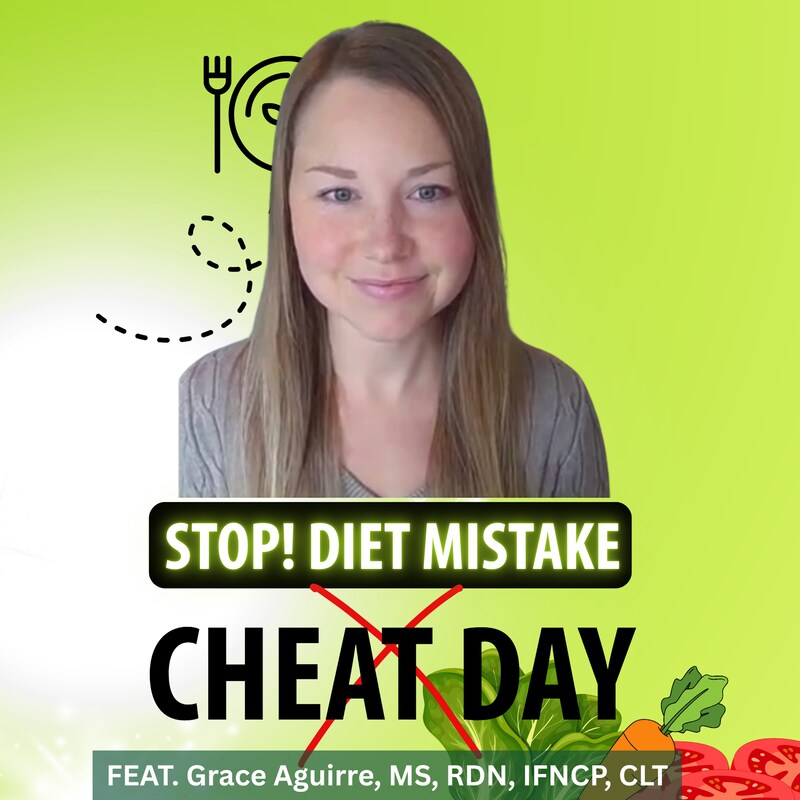
Shownotes
The focal point of today's discussion centers on the intricate relationship between nutrition and mental health, as we engage in a profound dialogue with Grace Aguirre, a Registered Dietitian Nutritionist and functional medicine practitioner. Throughout our conversation, we delve into the complexities of how dietary practices can significantly influence our emotional well-being and cognitive functions. Grace elucidates her philosophy that eschews quick fixes in favor of understanding the underlying causes of metabolic and nutritional challenges. By emphasizing the necessity for a holistic approach to health, she advocates for nourishing the body in a manner that fosters deep, enduring healing. As we explore these themes, we aim to equip our listeners with insightful knowledge that empowers them to make informed decisions about their health and wellness journeys.
The discussion primarily revolves around the intricate relationship between nutrition and mental health, particularly emphasizing the profound influence that dietary choices exert on one's cognitive and emotional well-being. Grace Aguirre, a registered dietitian nutritionist and functional medicine practitioner, elucidates her journey into the field of nutrition, shaped significantly by her mother's experiences with the standard American diet, which ultimately highlighted the detrimental effects of diet culture. Throughout the episode, Aguirre meticulously dismantles prevalent myths concerning metabolism, asserting that the common perception of metabolism as merely a measure of calorie expenditure is an oversimplification of a far more complex biochemical process. She stresses that metabolism encompasses a myriad of cellular activities, and understanding this complexity is crucial for individuals seeking to optimize their health through dietary interventions.
Takeaways:
- The podcast emphasizes the profound link between nutrition and mental health, underscoring how our dietary choices can directly influence our emotional and cognitive states.
- Grace Aguirre discusses the importance of addressing root causes of health issues rather than seeking quick fixes, advocating for a comprehensive understanding of individual health.
- The conversation highlights that metabolism is not merely about calories; it encompasses complex biological processes that regulate energy production and utilization in the body.
- Stress is presented as a significant factor affecting metabolism and overall health, as it can disrupt hormonal balance and physiological functions leading to various health complications.
Links referenced in this episode:
Companies mentioned in this episode:
- Lens of Grace Nutrition
- Ashley Koff
- Better Nutrition Program
- Dr. Sarah Gottfried
Transcripts
Hey, guys, this is Shobhna.
Speaker A:Welcome back to busy Free Mind, where we talk about mental wellness from all angle and also explore the powerful connection between nutrition and mental health because what we eat directly impacts how we feel, think and function.
Speaker A:Today, I'm so excited to introduce our guest, Grace Aguirre, a RDN functional medicine practitioner and the founder of Lens of Grace Nutrition.
Speaker A:Grace focuses on finding the real root causes behind nutrition and metabolic issues.
Speaker A:She doesn't believe in quick fixes.
Speaker A:Instead, she helps people understand what's truly going on in their bodies so they can heal in a deep and lasting way.
Speaker A:With her functional nutrition knowledge, she guides people to understand their health better, feel better in their bodies, and reach their full potential.
Speaker A:I'm truly honored to have her on the show today.
Speaker A:Let's dive into the show.
Speaker A:Hello, Grace.
Speaker A:How are you?
Speaker B:Thank you so much for having me.
Speaker A:Thank you so much for joining us.
Speaker A:Grace, tell us, how did you come into this field of nutrition and dietetics?
Speaker B:You know, just like everybody's story, it's.
Speaker B:It's always lots of things that come together, right?
Speaker B:It's a whole story, a whole history.
Speaker B:I want to say my earliest interactions with health and nutrition came from seeing my mom transform and her journey.
Speaker B:She just kind of grew up with the standard American diet, and that's kind of what we did when we were kids.
Speaker B:And then she would try.
Speaker B:She got stuck, stuck in the diet culture loop trying to manipulate her body size.
Speaker B:And I watched her kind of hate her body and she was taught to hate her body, especially as a woman.
Speaker B:And so I just was.
Speaker B:She talked a lot about healthy foods, so it was interesting to me.
Speaker B:And I learned that dieting is normal and, you know, you just.
Speaker B:You hate your body as a woman and all of that kind of stuff.
Speaker B:And so.
Speaker B:But she also came through a transformation where she learned it's not just about following a strict set of rules, but learning how to truly nourish the body and support your wellness from the inside out.
Speaker B:And learning how our bodies were designed and how we can support that through good quality food and nutrition.
Speaker B:So I went through a journey of disordered eating and dysfunction and poor relationship with my body.
Speaker B:And I.
Speaker B:And I also worked with thousands of individuals over the year, kind of learning from them and their journey and how everything is connected and how our health care system is kind of missing a lot of these links.
Speaker B:And so I just have grown through trying to come out of a toxic relationship with my body.
Speaker B:And my health destroyed my gut.
Speaker B:And now I'm passionate about bringing truth to people and helping them connect the dots for themselves in a way that feels accessible.
Speaker A:Beautiful.
Speaker A:Grace, my first question for you is, what are the biggest myths people believe about boosting metabolism?
Speaker B:Yes, this question is so fun for me.
Speaker B:It's.
Speaker B:I'll.
Speaker B:I'll not digress, but I'm.
Speaker B:I get very passionate about even just the topic of metabolism.
Speaker B:Just the word metabolism.
Speaker B:What does that mean?
Speaker B:So I think, I mean, there's so many myths around it.
Speaker B:I.
Speaker B:We could do a whole separate podcast just specifically around myths about metabolism.
Speaker B:But I want to.
Speaker B:I want to start with just saying, like, really what metabolism is.
Speaker B:The definition in and of itself is the biggest myth.
Speaker B:A lot of people use the word metabolism, which is confusing to other listeners of understanding metabolism in terms of, like, the calories in, calories out, like, how fast you burn calories and while calories, you know, the conversion of the food we eat into energy.
Speaker B:So calories is part of metabolism as it relates to energy.
Speaker B:It's really just such a tiny little fraction of the big picture.
Speaker B:So we're really doing our body a disjustice if we narrow it down to just how fast you burn calories.
Speaker B:Now, the truth is, metabolism is really just kind of a fancy word.
Speaker B:Ashley Koff from the Better Nutrition Program dietitian, she always says it's all the business going on inside your cells.
Speaker B:And I love that picture because we all know we have these cells that build up our body, and there's all this complicated stuff going on inside there, and we understand a little bit of it.
Speaker B:You know, what you learn in basic biology.
Speaker B:But there's so many complicated, amazing things that are happening inside our cells.
Speaker B:And that's the very essence of metabolism.
Speaker B:It's energy moving around so that your cells can do all of this hard work.
Speaker B:So you're taking the food that you eat and you digest, you absorb, it gets converted into a form that your body can use as currency called ATP.
Speaker B:And this ATP is what makes the world go round.
Speaker B:So if you have a slow metabolism, this has nothing to do with, you know, just blaming it on genetics or, like, you're a failure or you just need to go on another diet.
Speaker B:It's more.
Speaker B:There's a very complex, intelligent system inside your body that has resulted in the rate at that which your body is using and how it's choosing to use that energy in your body so it can increase the energy production, it can decrease the energy production, and it can allocate that energy or that ATP, that currency in your body to wherever is the highest priority.
Speaker B:At that time.
Speaker B:So it's so much more than just eat less and exercise more if you want to, you know, fix this slow metabolism.
Speaker B:And we'll get.
Speaker B:We'll touch on more of that later.
Speaker B:So.
Speaker B:But it's just so much more than calories.
Speaker B:It's a whole body system.
Speaker B:It's an orchestra, it's a symphony.
Speaker B:And something that we want to try to understand if we want to be able to kind of access health to the fullest potential.
Speaker B:Wow.
Speaker A:So why do some people gain weight even when eating very little?
Speaker A:And is their metabolism trying to protect them?
Speaker B:That's such a wonderful question.
Speaker B:And I want to say this is one of the hardest mindset barriers that I run into when I'm working with people, because this culture of dieting and body manipulation and hating fat and blaming fat for all of the health issues that we have, it's so much deeper than that.
Speaker B:And it's very hard for people to let go of that belief that if I just restrict my calorie intake and boiling it all down to just that number of calories, that I will then be able to burn my fat stores up and then be skinny and then all my problems are going to go away.
Speaker B:I'm going to be more confident, my diabetes is going to reverse, you know, so on and so forth.
Speaker B:Now, what I see the most is that my clients and my patients that I've been working with over the last decade, the ones that are eating the least are the ones that struggle the most with their metabolism and their weight health and weight balance.
Speaker B:Now, and when I talk about weight, I always want to preface and say, I don't believe that everyone should flee.
Speaker B:Focus on just getting as little fat down or getting to that perfect optimal fat ratio, because health is so much more than that number.
Speaker B:But there's a health around weight, and your body is going to be able to find that, that good set point for you or at least that range when your metabolism's working well.
Speaker B:Now, to answer your question about difficulty, losing excess body fat is usually what we're talking about when we say weight because we don't want to just go burn up all over our muscle or have you bones.
Speaker B:It's extra body fat that we're concerned about, maybe them producing extra hormones and creating dysfunction in our body, or if you just feel uncomfortable physically in that larger body and it's creating some other challenges to your joints or what have you.
Speaker B:Now if you're trying to lose some of that under.
Speaker B:Under consuming nutrients is going to further damage that body and Put your body into a flow further danger mode.
Speaker B:So there's this concept called the cell danger response.
Speaker B:Some people also recognize the term like starvation mode.
Speaker B:But what you're telling your body is there's not enough coming in.
Speaker B:And it's so much more than just a message that you're sending to your body.
Speaker B:There's actual compounds that your body needs and we usually use the word nutrients.
Speaker B:There's essential nutrients and then there's also nutrients that you can survive without.
Speaker B:But they add a tremendous healing benefit to your body.
Speaker B:So if you don't get enough nutrients for your body, and I'm talking about like protein, amino acids, which is what I mean when I say protein, I'm talking about fat molecules like omegas, different types of fat fatty acids that your body uses to build hormones and tissues and repair and manage inflammation.
Speaker B:And even carbohydrates, especially, especially this complex ones that feed the good bacteria in your gut that have a huge impact on your overall metabolic health.
Speaker B:Now beyond those macronutrients, the energy contributing ones, there's also vitamins and minerals and phytochemicals, which are compounds from plants that are used in a beneficial way in the body.
Speaker B:So when you deprive your body of these things, you're taking away the tools out of the toolbox that your body can use to expand things.
Speaker B:So your body's conserving.
Speaker B:Now I want to try to keep this answer as concise as possible so we can get to the other question.
Speaker A:No, no problem.
Speaker B:We love the answer build because it's all connected.
Speaker B:So I'm going to use this analogy.
Speaker B:Imagine there's a storm and it blows your fence down.
Speaker B:And maybe you really need this fence because you have animals you need to keep in.
Speaker B:There's other things you need to keep out of your yard and protect your space.
Speaker B:There's privacy value in.
Speaker B:There's a lot of reasons why somebody could really need a fence around their property.
Speaker B:Imagine a storm blows it down and you need to rebuild this fence or maintenance.
Speaker B:Right?
Speaker B:So what do you need to build this fence?
Speaker B:Well, you need materials.
Speaker B:You need the device that's going to drive the nails into the fence, whether it's a nail gun or a hammer.
Speaker B:Now nail gun is very efficient, Right.
Speaker B:Versus a hammer version.
Speaker B:Lot longer, a lot more work, but it can do the job, right?
Speaker B:It's an option.
Speaker B:Maybe you don't have a hammer, maybe you're using a rock, something, right?
Speaker B:Yeah, something to drive those nails into the fence.
Speaker B:You need enough boards, you need enough nails and you need Time and energy to pour into this project.
Speaker B:Yes, there's a lot that's going into this, right?
Speaker B:But it's necessary.
Speaker B:Now, what if you don't have enough of the resources that you need?
Speaker B:You're gonna, you'll do the project because it's important, but you're gonna compromise, right?
Speaker B:Maybe boards.
Speaker B:So you say, well, maybe we'll space the boards out enough to where they still do the job.
Speaker B:Maybe you're putting boards in a suboptimal position to help create that barrier in a way that it'll kind of stay up.
Speaker B:But it's obviously not ideal.
Speaker B:Maybe you don't have enough needles, so you have to set nails, you know, take nails and try to get the most out of it.
Speaker B:So maybe you're putting boards together in a way that's not really the most secure, but it's.
Speaker B:I can put these boards together in this way with this one nail versus using three or four or five, right?
Speaker B:Maybe you don't have enough time.
Speaker B:So maybe you're just kind of quickly trying to put things together because that's all the time that you have.
Speaker B:The point is you do the best that you can with what's available right now.
Speaker B:This is brilliant.
Speaker B:This is intelligent, right?
Speaker B:You don't just say, screw the project.
Speaker B:I'm just going to let you, you know, outside animals come in and destroy my property and hurt my animals and let my animals run off.
Speaker B:Or, you know, this is maybe of children.
Speaker B:There's so many reasons, right?
Speaker B:Why?
Speaker B:The point is it's an important project and you're just going to do the best that you can.
Speaker A:Now.
Speaker B:Your body's going to do the same thing.
Speaker B:It needs the resources, it needs the vitamins and the minerals.
Speaker B:It needs the, the energy, it needs the fiber to help keep gut bacteria balanced.
Speaker B:And it needs hydration, it needs rest.
Speaker B:It needs programming of your nervous system to spend time in that rest, digest and heal mode for maintenance.
Speaker B:It needs an environment that is lower in toxins so that the burden doesn't outweigh what it can repair.
Speaker B:So this is an environment that is supporting your body's ability to function optimally.
Speaker B:Now, if you don't have everything perfect, which who does?
Speaker B:But there's right this spectrum.
Speaker B:Now, if things are really far on the spectrum of not enough, there's a lot of stress on the body and not enough nutrients for damage control, maybe that storm just keeps coming, right?
Speaker B:The storm is coming, but maybe you've got all the resources to kind of keep up with things.
Speaker B:But then maybe you don't have those resources and the storm is still coming, it's not going to be able to do all of that.
Speaker B:So that's when we experience symptoms.
Speaker B:We're tired, we have digestive issues and we have skin issues, we have brain fog, our mood does not describe our true heart's personality.
Speaker B:And there's this complete disconnect now when it comes to fat.
Speaker B:Your body is just going to down regulate its metabolism.
Speaker B:And this can also affect hormone balances that could, you know, result in prioritizing stores.
Speaker B:So there's this whole mechanism now.
Speaker B:It's so, it's so warming in my heart when I have a follow up with a client and they say, grace, I was so scared to trust you because my whole life I've been restricting, restricting, restricting and I finally gradually started increasing my intake as you recommended, pairing with some of those other lifestyle support to my body.
Speaker B:And it's working.
Speaker B:I'm not gaining weight and I actually feel better.
Speaker B:And I think the scale is starting to shift in the right direction in terms of body composition right now.
Speaker B:That part doesn't change as quickly as the mental clarity, the energy, the just feeling better overall.
Speaker B:Less aches and pains.
Speaker B:Those are the early signs.
Speaker B:So that's kind of, you know, big picture how everything's connected.
Speaker B:Your body needs more resources to really be optimal.
Speaker B:So if we're talking about boosting your metabolism, it needs the tools to be boosted to be optimal is what we is a better term for it.
Speaker B:Right.
Speaker A:So we cannot go and just like that, follow any kind of diet that is available in the social media.
Speaker A:It differs from people to people and we have to get a proper consultation before we get into any diet, right?
Speaker B:Yeah, that's a wonderful question.
Speaker B:So when it comes to a diet, I mean there's so many different ways to use this term.
Speaker B:It's such a heavy term, right?
Speaker B:You see your diet, it means so much to so many different people.
Speaker B:When you're talking about just kind of literally what is diet?
Speaker B:It's you know, what you're eating, what you're routinely putting into your body.
Speaker B:Now if you go on a diet, this is usually terminology to say I'm following a step, set of rules or patterns of like, you know, restriction or obligation where I doing these things with the foods that I'm eating, you know, for whatever reason.
Speaker B:Now sometimes it's very medical, right.
Speaker B:If you have epilepsy and you know that very low carbohydrate diet and staying in ketosis is going to help keep seizures under control.
Speaker B:This is a diet that this person follows for a very positive health reason.
Speaker B:If you're on a calorie reduced diet to burn fat, you know, this is a pattern you're following.
Speaker B:Usually people aren't expecting this one to be lifelong.
Speaker B:Right?
Speaker B:It's the I just burn up all the fat and then I'll go back to eating, you know.
Speaker B:However, woman, right.
Speaker B:Calorie restriction isn't always bad.
Speaker B:You know, there's a time and a space for it.
Speaker B:Time restricted eating, sometimes just naturally, your body needs to slow things down for a reason.
Speaker B:Like when you're sick, body actually protects itself in this way.
Speaker B:That's another complex thing.
Speaker B:But yeah, going on a diet is something that you really want to understand what is the purpose.
Speaker B:And sometimes that professional guidance and outside, you know, information can be helpful to, for you to figure out what's really right for you and your body.
Speaker B:Do you need to be applying any kind of, you know, firm structure that it really depends on where something's at in their journey?
Speaker B:Right.
Speaker B:Somebody that's coming from severe eating disorder, they need guardrails, but in a way that doesn't restrict in the wrong kind of way.
Speaker B:So boundaries are important, but it's not necessarily in the traditional sense.
Speaker B:Right.
Speaker A:Can stress alone actually slow down metabolism even without overeating?
Speaker A:Is it possible?
Speaker B:Yes, this is, this is actually a very important question because.
Speaker B:Sometimes when I'm working with people on root causes of their health, they think that it's a diet issue when they come to me, or they think it's, you know, just like a gut issue, that something's wrong with their gut and they want me to help them fix it.
Speaker B:So we kind of look big picture now.
Speaker B:Nutrition is always super important, so we always address it.
Speaker B:Right.
Speaker B:And there's always areas where we can kind of further optimize.
Speaker B:But sometimes it's not necessarily that people are screwing up their diet or they're not exercising enough.
Speaker B:In fact, sometimes people try to implement exercise, they intensify it and this actually adds to the stress load of their body and it has kind of an opposite effect.
Speaker B:Not that exercise is always bad, but you know, how we go about it can really matter, especially if we're not addressing the stress piece.
Speaker B:So, you know, I always like to review what is stress, because stress is not always bad.
Speaker B:Right.
Speaker B:If you don't ever feel any sort of stress, there's no response to it.
Speaker B:So our body is designed to respond to stress.
Speaker B:You know, whether it's like your, your baby's crying or you need to figure out how to make some Money so that you can get the things that you need, right?
Speaker B:Or, uh, maybe there's like somebody's gonna try to hurt you, right?
Speaker B:The oldest analogy in the book is like you're running from a tiger or something like that, right?
Speaker B:So the stress is good.
Speaker B:Um, you know, obviously an overstressed environment.
Speaker B:It becomes, right.
Speaker B:The word over.
Speaker B:It's, it's too, can be overwhelming to the body to where it can't properly respond.
Speaker B:But if you have a dysregulation in your stress response system, then this can actually affect how your body is processing it.
Speaker B:So.
Speaker B:But stress as a whole, you know, it triggers a cortisol response, which is your body's stress hormone.
Speaker B:It gets a bad rap.
Speaker B:It's called, you know, the stress hormone.
Speaker B:And people like, not bad, but it's also like, I call it like your get up and go hormone, right?
Speaker B:Like it's there, it's, it's got a good job.
Speaker B:Cortisol levels are high in the morning.
Speaker B:They come up in that first hour and they help get you going.
Speaker B:And then it kind of slows down, drops throughout the day.
Speaker B:And you want low cortisol when you're trying to go to bed and high melatonin, right?
Speaker B:Then you have good healthy sleep.
Speaker B:Now imbalances in cortisol can happen.
Speaker B:We'll talk more about that as we go.
Speaker B:But the stress.
Speaker B:If it's an environment that is over stressful, maybe a toxic relationship, a bad work situation, maybe you've got financial strains that are just overwhelming.
Speaker B:Maybe it's a health issue.
Speaker B:These circumstances can add a lot of stress.
Speaker B:It can affect your thyroid, it can affect insulin response.
Speaker B:If you've got a lot of insulin being released constantly, this can contribute to fat stores and inflammation and kind of disrupted pathways.
Speaker B:Your body kind of starts responding to this stressor and it can affect your digestion.
Speaker B:So when we are having a digestion impact, it's like your body's trying to prioritize a stress response over digesting a meal.
Speaker B:You think digesting a meal is really important and it is.
Speaker B:But in terms of like, you know, somebody's chasing you or something, your baby's screaming.
Speaker B:Like, your body's not going to be like, okay, let's like break down this meal and figure out where we're going to organize these nutrients.
Speaker B:That is not urgent, right?
Speaker B:So this gets turned off when you're in your fight orf flight mode, which is that stress response mode.
Speaker B:And sometimes people have no idea they're even in this response mode.
Speaker B:So the stress can slow the Metabolism in the sense that it's prioritizing things completely differently when you're in that state.
Speaker B:Now, if your stress response system, you know, this is related to that topic of trauma that's getting really popular.
Speaker B:If your.
Speaker B:If your stress response system is dysregulated because of an event or programming, something that happened, then sometimes even just like the littlest thing can really trigger you into react mode.
Speaker B:It's like you just open up the mail and it's like, oh, no, like, I forgot to pay that bill on time.
Speaker B:And it's like.
Speaker B:Feels like the world is coming down on you and like this ongoing stress response through the day when it was just like this moment in time and your body has a hard time coming down from it, so it's easily triggered and it stays high.
Speaker B:And this more chronic stress response, especially this, like, if it's a dysregulation rather than just a circumstance, this can really affect the metabolism.
Speaker B:So circling back to when I first started answering your question, I very commonly see this dysregulation as a root cause, if not the primary root cause, and so many people's health issues.
Speaker B:So we do what we need to do in the area of nutrition, exercise, digestion and gut rehab, you know, hormone optimization, hydration, all these other really important topics.
Speaker B:But we cannot ignore this stress response.
Speaker B:And sometimes we do get therapy on board and other tools to help in the nervous system area.
Speaker B:Because if we do all this healing but this isn't addressed, then it just kind of continues to, you know, re affect these other areas.
Speaker B:So hard to heal.
Speaker B:So, yes, that's a very important question.
Speaker A:Beautiful explanation, Grace.
Speaker A:But I do have this doubt if the stress is coming from external factors.
Speaker A:Whatever we are treating inside, in our.
Speaker A:Inside our body, it is not going to help.
Speaker A:Right?
Speaker B:Yes.
Speaker B:I love that.
Speaker B:That's kind of in the category of myth, right?
Speaker B:This kind of connected to that, like all or nothing mindset.
Speaker B:Right.
Speaker B:Sometimes this is so limiting because we just feel like I've got to do everything to fix my health and be perfect or like for.
Speaker B:And we get overwhelmed.
Speaker B:Right?
Speaker B:Because you can't do everything.
Speaker B:There's too many barriers.
Speaker B:There's resources, there's circumstances, there's even internal vows and mindset barriers that can affect our ability to execute all the things we're trying to do.
Speaker B:So if we think like, oh, I have to do everything at once and kind of be perfect, this is like a big trap I fell in that resulted in disordered eating is.
Speaker B:Then there's no use, right?
Speaker B:Just throw everything out the window.
Speaker B:Right.
Speaker B:But you don't want to throw the baby out with the bath water.
Speaker B:Right.
Speaker B:Sometimes we need to let go of certain things so that we can focus on some of the more foundational pieces.
Speaker B:So if you have external stress, sometimes this creates more mental barriers.
Speaker B:Your brain is exhausted, you run into decision fatigue, you feel overwhelmed.
Speaker B:And this can result in behavior changes as a coping mechanism.
Speaker B:But does this mean that what is going into your body doesn't matter because you have this outside thing going on?
Speaker B:Absolutely not.
Speaker B:We just have to get creative and figure out what can I do in my.
Speaker B:Within my bandwidth that's going to help support my body.
Speaker B:So sometimes we need to let go of those excess expectations that, like, I need to have perfectly balanced meal that's cooked from scratch and no additives and sit down in the perfect environment and all these things.
Speaker B:And people are like.
Speaker B:And do all of it.
Speaker B:They're just like, forget it.
Speaker B:I'm just gonna go through the drive through and get, you know, like what?
Speaker B:And so.
Speaker B:But the tools that you put into your body, that good quality, minimally processed, kind of like back the way people used to eat before our system got kind of jacked, those nutrients and getting enough protein and, you know, those micronutrients to like, help your body manage that stress can really matter.
Speaker B:So we want to do the best that we can, you know, taking one day at a time.
Speaker A:Beautiful.
Speaker A:So is there a link between trauma and chronic digestive issues?
Speaker B:Absolutely.
Speaker B:Yes.
Speaker B:This is actually huge.
Speaker B:There's a book called the autoimmune cure by Dr. Sarah Gottfried.
Speaker B:And she talks so much about this and not specifically digestive issues on their own, but autoimmunity and just kind of chronic health issues.
Speaker B:How trauma in the literature, when they're studying the scientifically, I mean, there's a lot of anecdotal evidence, right?
Speaker B:People just saying like, oh, yeah, Trace it all the way back to like, I had a traumatic divorce experience or, you know, sexual abuse or something.
Speaker B:And then it's like kind of slowly starting from there, all of these health issues that come after that.
Speaker B:And then they feel like, why me?
Speaker B:Why do I have all of these horrible things happening to me all the time unknowingly, that the, the source of the dysregulation in their body came from the rewiring of their brain and their stress response system and how that affects your immune system, your hormone system, your digestive system, and everything alike.
Speaker B:So if we talk specifically about digestion, if your body is very sensitive, switching into fight or flight mode now this is a good time to mention the vagus nerve.
Speaker B:So when we talk about stress and the nervous system, the vagus nervous is really big topic and really been in the last, you know, 50 years, more even like 20 years, that they're starting to do a lot more research understanding this vagus nerve, the role that it plays.
Speaker B:And it's very clearly involved in a lot.
Speaker B:But it's one of those things where the more we learn, the more we learn how much we don't know about how powerful this thing is.
Speaker B:But trauma can actually affect this vagus nerve, what they call tone.
Speaker B:And there's still a lot of, like, theories about the vagus nerve nerve that they're trying to better understand.
Speaker B:But there's a very strong role in its effect in switching your body from fight or flight mode into rest and digest mode, and rest and digest mode to fight or flight mode.
Speaker B:So this is that very strong.
Speaker B:It's like a, you know, power switch in a, in a way.
Speaker B:But that's not its only job.
Speaker B:This nerve is also a very prominent nerve.
Speaker B:You know, you have two coming from your, your brain down to your digestive tract.
Speaker B:And this nerve is heavily responsible for that gut brain connection.
Speaker B:So if you've ever heard that term, the gut brain connection, this, this is a very important part of it.
Speaker B:So even just like the thought of something that makes you really anxious, you get that rush from your brain down to your stomach and that butterflies and you're feeling just like that.
Speaker B:Not.
Speaker B:And then the concept of like eating in that moment is just like your body's like, I'm not focused on eating right now.
Speaker B:There's something going on.
Speaker B:So it could be excitement too, or something scary, stress, you know, feeling in a negative way.
Speaker B:But trauma can affect this mechanism here.
Speaker B:And then this gut brain connection goes both ways.
Speaker B:So your brain sends signals to your gut, your gut sends signals to your brain.
Speaker B:This is, you know, related to topics, cravings and things like that.
Speaker B:When people feel, feel like, I feel like I'm not in control.
Speaker B:And sometimes it's more than just a willpower issue.
Speaker B:But when it comes to gut dysfunction, you get slower motility and you have overgrowth of bacteria and, you know, the wrong parts of your digestive tract.
Speaker B:And this result of symptoms, ibs, you know, this is the most common diagnosis.
Speaker B:Oh, I have ibs, you know, what does that mean?
Speaker B:I don't know.
Speaker A:Yeah, we don't know.
Speaker B:Nobody knows, right?
Speaker A:Yeah.
Speaker B:Oh, yeah.
Speaker B:So trauma is very heavily linked because of your nervous system is really running the show when it comes to coordination of everything in your body.
Speaker A:So when it comes to craving, why do we crave sugar or carbs the moment we feel stressed?
Speaker A:And what does it mean?
Speaker B:Oh yes, this is, this is a really wonderful question because I constantly talk to people about overeating and, or I'm sorry.
Speaker B:Yeah, cravings, right.
Speaker B:And they're like, I just feel like I just get these cravings all the time.
Speaker B:And that's a whole topic on its own.
Speaker B:But when, when we feel stressed.
Speaker B:Now there's two actually different things that can happen when it comes to appetite.
Speaker B:When you're stressed, some people are, are, you know, appetite suppressed and food avoidant when they're stressed.
Speaker B:And then that can lead to a cascade of nutrient deficiencies and also digestive issues.
Speaker B:You know, that's, that's one thing that uses starvation, right?
Speaker B:And then they're trying to deal with higher nutrient need situation with less nutrients.
Speaker B:Now a lot of people really resonate with like, I feel stressed and I just want to snack.
Speaker B:One of the biggest things that's happening here is that that rise in cortisol can kind of drive up, you know, appetite and desire to eat that hormone on its, on its own.
Speaker B:It's that get up and go hormone, right?
Speaker B:So it's, it's doing its job there.
Speaker B:There's also this kind of like brain coping thing that can happen where you are uncomfortable and you're, you're feeling kind of a suppress of feeling good.
Speaker B:And we kind of want a distraction or an escape.
Speaker B:Like I need some dopamine, I need a pick me up.
Speaker B:I need something to help me feel good or just escape this discomfort.
Speaker B:This can even happen with just like boredom, right?
Speaker B:You're just like, I'm doing this boring task for work.
Speaker B:Like I just need to, you know, go do something now.
Speaker B:There's a lot of options you can do to give your brain a break from the thing or that you're avoiding.
Speaker B:Right?
Speaker B:Like I, you know, I gotta go do that laundry, but I should just probably have a snack first, right?
Speaker B:Or that stress is like, this one's more intense because it's like I even find it sometimes I get like overwhelmed.
Speaker B:I've got, I have, I have young children and they're very needy.
Speaker B:They need mom for like everything.
Speaker B:Even when they don't actually need me, they just know like, oh, mom's, you know, she can fix this.
Speaker B:So it's just like sometimes they're both crying at me and I'm like, I can't really do the things that, that I needed to do.
Speaker B:And I just like a little bit shut down in that moment.
Speaker B:I'm just like, kind of like, I don't know, like, maybe I'll just like sit here and you know, munch on this, like, I don't know, that's been sitting here and just like mindlessly just kind of like while I'm trying to process it or just kind of escape for a moment that desire to eat.
Speaker B:So.
Speaker B:And you know, and there's more mechanisms too.
Speaker B:It can actually get really complicated and scientific.
Speaker B:Um, sometimes that gut brain connection can kick in and it can stir things in your digestive tract.
Speaker B:And that gut microbiome that is having such a huge impact on our metabolism, sometimes they can be sending strong signals up to your brain, like, hey, give us the good stuff.
Speaker B:And usually some processed foods.
Speaker B:So those can also be being stirred in.
Speaker B:But definitely those stress hormones, cortisol and the effect that it can play there.
Speaker A:Yeah, this happens to me whenever I see food drills.
Speaker A:You know, I wouldn't be hungry, but it's like, okay, let's have something.
Speaker A:I don't know, ways that coming into my mind.
Speaker A:But.
Speaker B:Well, why do you think that food reels are so popular?
Speaker B:I mean, Instagram really, the algorithm highly favors accounts that post food stuff because the, the sensory experience of eating, it's not even just like sweet or like, you know, fried or like really palatable tasty things, but also like just the sensory experience.
Speaker B:The crunch.
Speaker B:Right.
Speaker B:I.
Speaker B:A lot of people where they're like, I just like to snack on something that's like kind of crunchy or you know, just the cool thing so they'll like nibble on like Cheerios or popcorn or like little snacky snacks because it's like this oral stimulation that can.
Speaker B:It's like this habit forming thing.
Speaker B:There's a lot going on.
Speaker B:The, the whole like brain psychology of habit forming where it's like, I do this task and now I do, you know, I grab my snack, I do this task and I grab my snack.
Speaker B:Or when I feel overwhelmed, I grab my snack.
Speaker B:Or when I, you know.
Speaker B:And it can be very light and not super emotional for some people.
Speaker B:And for some people there's a huge emotional connection.
Speaker B:Right.
Speaker B:What happened in your childhood?
Speaker B:What was the food environment like there?
Speaker B:Was it a stressful environment?
Speaker B:Was food used as a reward?
Speaker B:Was there over restriction?
Speaker B:Was there, you know, how did your parents use food to.
Speaker B:Is it related to their stress?
Speaker B:And in their world, is food something that was always taught as a comfort thing for you?
Speaker B:Which isn't necessarily bad?
Speaker B:It's just sometimes understanding these connections and how our brain works and the role that Food food place can help us understand in the moment.
Speaker B:Like sit back and say, what is it that I really need in this moment?
Speaker B:You know, what am I?
Speaker B:What are my emotions?
Speaker B:Am I bored?
Speaker B:Am I avoiding?
Speaker B:Am I stressed?
Speaker B:Am I angry?
Speaker B:Am I just associating?
Speaker B:Like, oh, whenever my husband comes home from work and he grabs his snack before dinner.
Speaker B:I'm a social eater and I want to sit down and have a snack with him even though I'm not hungry.
Speaker B:Right?
Speaker B:Yeah.
Speaker B:Is that always bad?
Speaker B:No.
Speaker B:But just understanding your, your cues and where you're at and feeling like you're in control rather than your body just doing whatever and you're confused and then you think, I'm a failure, I have willpower issues.
Speaker B:What's wrong with me?
Speaker B:I'm pathetic.
Speaker B:And then the negative self talks, goes crazy, and then you have more negative thoughts that make you feel crummy.
Speaker B:And what do you need an escape from that.
Speaker B:So while you're shaming yourself for wanting something, snacks and eating and, or eating the wrong foods or whatever, your brain is like, ah, I need a way out of this.
Speaker B:And then what do you do?
Speaker B:You go to what feels comfortable and familiar and then you're sitting there thinking, I'm sitting here hating myself because I want to not do this.
Speaker B:And here I am doing it while I'm processing my negative emotions about it.
Speaker B:So it can be very cyclical, overwhelming.
Speaker B:But yeah, over restriction can create a lot of problems in this area or just, you know, what did you learn about food?
Speaker B:And so ideally, what we want to create is a positive relationship with food in our body.
Speaker B:And the first step that I take with people of empowerment is helping them just understand how their body works so that they can take the moral component away from it and the emotional component away from it and just say they feel like they've got this clear lens of, okay, now I can just kind of practice taking logistical steps to figure out, you know, how am I managing my stress.
Speaker B:Is it always bad to incorporate food in stress management?
Speaker B:No, but I mean, sometimes it can be a really good thing.
Speaker B:Right.
Speaker B:When you're stressed and well, I think I need to just have a nourishing meal and give myself some peace.
Speaker B:Sit down, say a prayer, take a deep breath before you eat.
Speaker B:Enjoy something that has color, you know, vegetables, some protein, foods that will nurture your body and kind of that ritual of self care.
Speaker B:Now you don't have to go and stuff yourself if you really don't have much of an appetite, but if you're avoider, you know, or maybe you're just kind of like I just feel like snacky, snacky, snacky.
Speaker B:Maybe you feel like I'm going to really treat myself and give myself some good nutrition.
Speaker B:You know, don't force yourself to eat things that you hate.
Speaker B:Right.
Speaker B:If you hate broccoli.
Speaker A:Right, right.
Speaker B:Still eat broccoli.
Speaker A:Yeah.
Speaker A:Is it true that dark chocolate immediately reduce the, the stress and it is healthy to take when you are in stress.
Speaker A:Is it true?
Speaker A:I'm hearing this often in the social media.
Speaker B:Yeah, there's a lot going on here with dark chocolate.
Speaker B:I'm a dark chocolate lover myself.
Speaker B:It's a regular grocery item and I feel very privileged in this new world to have access to chocolate all the time.
Speaker B:And we're talking about chocolate, we're talking about like the actual cocoa bean, right?
Speaker B:You grind it up and there's nutrients in it.
Speaker B:Not like, you know, Hershey's chocolate bar, but.
Speaker B:Sugar, dark chocolate.
Speaker B:It's, it just means that it's like higher percentage of actual cocoa.
Speaker B:It's, it's rich in magnesium and minerals that can really actually nourish your body.
Speaker B:Well, sometimes when your body is familiar that certain foods have certain nutrients that it needs, it can tell you create a, creating an association.
Speaker B:Sometimes we put a little bit too much weight on this, like, oh, my body just knows that I really need, you know, fruity Pebbles, bowl of fruity Pebbles when I, you know, feeling this way.
Speaker B:So.
Speaker B:But there's, there's truth to this.
Speaker B:Your body will know how to get nutrients sometimes if it has that training and familiarity.
Speaker B:The other thing is there's a really big like reward, reward system when we eat chocolate.
Speaker B:I mean it when something tastes delicious and the way that the chem, the chemistry hits, there's certain foods that have a really high like reward reaction with our palate.
Speaker B:And sometimes it's a natural food like dark chocolate and sometimes it's something more processed like you know, extracted added sugars and you know, ultra processed oils and things like that.
Speaker B:But you know, when you're feeling, you know, stressed and you eat something, I want to be very crystal clear, eating any food or doing, using any kind of vice, smoking, drinking, drugs, whatever they are serving their purpose.
Speaker B:When you are stressed and you go to a familiar escape and it is serving you well in that moment to help you escape that discomfort, comfort and that, that, that feeling like my brain just needs a way out of whatever I'm feeling right now.
Speaker B:If that's what you're, you're, you're doing right.
Speaker B:Some people don't feel that overwhelmed when they feel stress.
Speaker B:But your, your brain is looking for comfort and familiarity when it feels uncomfortable or insecure.
Speaker B:Now if you are using a vice to process stress in that moment, you might feel stress relief.
Speaker B:So your brain is doing the right thing by getting you that relief in that moment.
Speaker B:But then our wisdom can tell us, all right, let's come up with a long term plan, right?
Speaker B:How can we train our brain to go down a pathway that results in kind of a, we're going somewhere long term, right.
Speaker B:If you're on a path and then you take a little detour to go somewhere that, you know, maybe like a little, you know, you're stopping somewhere, it's not really getting you to your journey.
Speaker B:So if you keep going down the little detours, especially if it's taking you somewhere where maybe you get hurt like, you keep like tripping or getting hurt on rocks on that one.
Speaker B:But there's some kind of reward at the end.
Speaker B:It's like you're kind of slowing yourself down.
Speaker B:Every time I go down that path, I get hurt by all of the sharp rocks on it and the thorn bushes.
Speaker B:But there's like this, you know, reward up the side.
Speaker B:But if I just hold out and stay on the path and make this familiar and, and feel comfortable, then you can go down that path and kind of reach your long term goal.
Speaker B:And in that process you learn stress coping strategies.
Speaker B:Now, are you a failure, a bad person, because you go down the path your brain is doing, protect itself.
Speaker B:Right?
Speaker B:Yeah.
Speaker A:I had this personal opinion.
Speaker A:You know, when the, when the babies are very, very little, when they are infant, what will happen if the mother moves, move away from the baby?
Speaker A:They will get stressed.
Speaker A:They will cry even though they just had their milk.
Speaker A:They will be stressed if their mom is not nearby.
Speaker A:So we are starting to give the pacifier at that early age to reduce the stress so that they wouldn't cry.
Speaker A:So aren't we introducing the stress coping mechanism with pacifier?
Speaker A:Like put something in your mouth to calm your brain, you know, that's, that's a really good.
Speaker A:And, and just.
Speaker B:Yeah, no, I mean, because the connections are all there.
Speaker B:Right?
Speaker B:Yeah.
Speaker B:So as a breastfeeding mom, I breastfed both of my children and I've, I've actually thought about this a lot.
Speaker B:We didn't do pacifiers and it was more about, I didn't want to deal with like wing them off the pacifier.
Speaker B:I wanted them to self soothe.
Speaker B:Now there's no shame to.
Speaker B:If you use pacifiers and they work great for your family, that's fantastic.
Speaker B:That was just my thought why we didn't do pacifiers.
Speaker B:Now my son, he had other sleep crutches that he eventually shook.
Speaker B:But you know, I would nurse him and, and like hold him to sleep and then he eventually became a good sleeper.
Speaker B:But I like, I kind of wished earlier on he was a little bit better at self soothing.
Speaker B:Now my daughter, I taught her self soothing in the sense that I would withhold and allow her to practice.
Speaker B:I would not like run and jump in every time she had a little cry.
Speaker B:I would wait until there was signs of distress before I would come in and assure her everything's okay.
Speaker B:But during that time she found her thumb.
Speaker B:She thumbs up.
Speaker A:Exactly.
Speaker A:Yes.
Speaker B:So is this, so is there, is this a default in their biology that they find a way to soothe orally if we don't give them something?
Speaker B:Not necessarily.
Speaker B:Right.
Speaker B:I mean some dentists are very concerned about like their teeth are coming in and they're sucking all the time.
Speaker B:So there's times where they advise like you teach them, you know, different ways or you kind of gently help them to not depend on that as much.
Speaker B:Right.
Speaker B:As they're getting older, older.
Speaker B:And their teeth are really affected by that.
Speaker B:But sucking is something that babies are born with.
Speaker B:They're put that sucking is very, very strong.
Speaker B:Instance, they come out of the womb on your belly and immediately root and look for nipple and then they start sucking and they have a reflex until you know, for the first few months so you can touch their cheek and then you know, they go.
Speaker B:So this is built into them.
Speaker B:It's good, it helps them to get nourishment.
Speaker B:And also that bonding time between mom and baby when they're nursing is very important for, you know, human and brain development, connection, emotions and it's very important part stage in development.
Speaker B:So sucking is, is something that we're born with that is important for a lot of developmental reasons.
Speaker B:And if they continue to suck, to nurture during that stage, it can, can just be a tool to use to self soothe.
Speaker B:Now it does.
Speaker B:Allowing them to continue sucking.
Speaker B:Right.
Speaker B:As they get older.
Speaker B:Right.
Speaker B:You see like a three year old, four year old, five year old pacifier.
Speaker B:You know, there's, there's a lot of concerns around this from some people, while other people, like, I don't really think it's that big of a deal, but it just kind of shows that it's just a very strong instinct to us that we use Our mouth as a form to receive comfort and nurture.
Speaker B:So it's by design because in early life this helps us to develop in really, really important ways.
Speaker B:Right.
Speaker B:They get the nutrients just from a technical biological standpoint, but also all the neurological development that comes from the sucking and the bonding with mom and skin to skin time and that whole, you know, complex dynamic.
Speaker B:So just knowing this can help us again, take the shame away from.
Speaker B:I'm eating when I told myself I don't want to eat or I don't want to eat.
Speaker B:Those things take the shame away.
Speaker B:We are biologically wired to seek out oral comfort when we are uncomfortable, when we're afraid, when we're anxious, when we're angry, whatever.
Speaker B:You need some kind of soothing food and is widely socially acceptable.
Speaker B:Right.
Speaker B:And it's more accessible than ever before.
Speaker B:And there's an abundance of foods that are hyper palatable.
Speaker B:So this is like you taste it on your taste buds, immediately your brain explodes with pleasure.
Speaker B:So binge eating is very prevalent.
Speaker B:And also just eating in general.
Speaker B:I went, when I was struggling with disorder eating, I would binge and it wouldn't even necessarily be unhealthy foods.
Speaker B:It was just a.
Speaker B:And also part of the restriction was like, oh, I'm just going to like eat something.
Speaker B:So many vegetables because I can't stop, you know, wanting to.
Speaker B:That habit right now restriction resulted in my fixation with food.
Speaker B:But we can take the shame away from wanting that.
Speaker B:Right.
Speaker B:Sometimes it's smoking.
Speaker B:There's.
Speaker B:There's obviously more chemicals involved in the addiction aspect of that.
Speaker B:But a lot of things that are highly addictive are.
Speaker B:Yeah.
Speaker A:Beautiful.
Speaker B:Yeah.
Speaker A:So what is the biggest mistake that people do when they jump into the elimination or fad diet?
Speaker B:Biggest mistake.
Speaker B:I would say.
Speaker B:You remove without rebuilding.
Speaker B:And it's a.
Speaker B:It comes.
Speaker B:It's rooted in a reductionistic mindset.
Speaker B:You're just reducing your health down to following the strictest set of rules so that you can remove the things that you need to remove in order to, you know, prove that or accomplish this kind of like health outcome and sometimes even more like rocky foundation is.
Speaker B:It's superficial.
Speaker B:Right.
Speaker B:I want my body to look a certain way.
Speaker B:And so this takes away a lot of body attunement.
Speaker B:So if you're not understanding that the root of the issue that you're trying to address is a body that needs more poor areas, then you end up removing things that is like further removal of what your body's already had, like been deprived of.
Speaker B:This isn't always the case.
Speaker B:Sometimes a Fad diet is actually, in essence, a healthy diet, but the mindset going into it can really determine the experience you have during it and the programming in your brain for.
Speaker B:For when the diet is over.
Speaker B:A lot of times the diet is over when you officially call it and say, that's it, I'm a failure.
Speaker B:You throw everything out, and then you spiral and you get to a point where you say, I have.
Speaker B:I've had enough.
Speaker B:I'm gonna try again.
Speaker B:And it's a cycle.
Speaker B:I see this a lot with, like, Weight Watchers and stuff like that.
Speaker A:Yeah, true, true.
Speaker A:So are probiotics overhyped?
Speaker A:Who should not be taking them?
Speaker A:I'm giving my kids probiotic from Costco, you know, every day.
Speaker A:They used to have one probiotic juice.
Speaker A:Is it overhyped or is it really healthy?
Speaker B:Yeah, probiotics, that's a whole podcast different.
Speaker B:Right.
Speaker B:It's.
Speaker B:I don't think it's all hogwash, but there's so many nuances to probiotics.
Speaker B:Right.
Speaker B:We also have to remember there's a lot of money to be made in selling probiotics.
Speaker B:Have probiotics played a role in my household and my personal and my family's health journey?
Speaker B:Yes, but not all probiotics are the same.
Speaker B:You know, sometimes you get what you pay for, sometimes you pay more for a probiotic that's not really serving a purpose.
Speaker B:The most important thing to understand about probiotics is that if you're supplementing with probiotics, there needs to be a strategic plan for what purpose they're playing in a gut rehab journey.
Speaker B:So they certain strains of bacteria, or even if it's like fungi, like Saccharomyces boulardi, certain, you know, like a yeast, those can play a powerful role in helping with combating overgrowth of pathogenic bacteria and rebalancing things.
Speaker B:But usually just during the duration that you're taking it.
Speaker B:Sometimes people can repopulate their gut with certain strains of microbes that have become deficient.
Speaker B:You know, like there's certain really beneficial strains.
Speaker B:I don't want to get too jargony, because that can sometimes overwhelm people, but the supplementation can, in some cases, if you take it long enough in a high enough doses, repopulate the gut to some degree, our body.
Speaker B:But aside from supplementation, our biggest strategy around gut health and gut microbial balance should be around supporting the gut microbiome you already have and promoting diversity in that sometimes the amount of colonies and the volume of the beneficial microbes.
Speaker B:I say microbes because Most of them are bacteria, but there's also, you know, other types of microbes, you know, yeast, viruses and things like that that exist in your gut in cohesion, like creating, like a rainforest, healthy environment, ecosystem.
Speaker B:So we want to support what's already there.
Speaker B:You're born with a natural flora.
Speaker B:When you come out of your mom's, you know, vaginal canal, and then you're getting exposed to all the microbes of, like, people holding the baby and all this stuff.
Speaker B:Very important part of development.
Speaker B:Now, if you were born cesarean or your parents were germaphobes or whatever, it doesn't mean that, like, you're totally screwed, but there's.
Speaker B:There's a different, you know, journey for you in terms of supporting your gut microbiome.
Speaker B:It just becomes really important to really try to make sure you nourish what you have.
Speaker B:But diverse gut microbiome, getting those microbes at early age and then fostering them by eating foods that help feed them.
Speaker B:I mean, fiber is huge.
Speaker B:And fiber isn't just like, oh, fiber is one compound and it's in all these different foods.
Speaker B:No, there's actually.
Speaker B:I can't remember the exact count, but I want to say it's like thousands of different types of fibers that are like, in.
Speaker B:They feed different microbes in different ways.
Speaker B:So eating a diverse diet with lots of plants, lots of color, which America really struggles with because things really got reduced to the same foods processed in a bunch of different ways.
Speaker B:We think we're eating a lot of different foods, but we're not.
Speaker B:So this is why I built my tool, Eat the Rainbow, because it's so absolutely important not just to get the different nutrients that come from different colors, but also diversity in your diet.
Speaker B:Getting different plants to help really fuel the.
Speaker B:The different microbes and keep that diversity, keep it healthy.
Speaker B:Now, if things got out of whack, you can still support your gut by gradually adding in.
Speaker B:I don't always tell people, if your gut is messed up and you can't tolerate fiber, don't just go and dump a whole bunch more fiber or eat a whole bunch more plants if you're not digesting it.
Speaker B:Well, sometimes there needs to be a strategy, right?
Speaker B:So we go in and we remove the things that we need to remove for a designated time to help heal the gut.
Speaker B:And then we want to support digestion in the right way.
Speaker B:Sometimes there's supplements involved, sometimes there's certain exercises involved, like vagus nerve toning exercises and helping to get people's digestive systems into that rest.
Speaker B:Digest and heal mode.
Speaker B:So before they eat.
Speaker B:And then probiotics can be part of that rebuild stage.
Speaker B:So is it bad to just take pre probiotics and sometimes with prebiotics, or just eating that good diet, kind of like precautionarily, it's usually not bad.
Speaker B:And it can be beneficial for people.
Speaker B:It's just maybe not.
Speaker B:It's just like one piece of a big picture.
Speaker B:So sometimes people expect like this crazy outcome.
Speaker B:It's kind of like that magic bullet mindset, right?
Speaker B:Oh, if I just take this probiotic, if I just take this herb, if I just, you know, do this exercise, do this, it's like you want all of these issues things to come from it, but if you're only, you know, maybe adding one tool to the project, right, that toolkit, it's, it's maybe helping a little bit.
Speaker B:But there can also be a synergistic effect of applying different things.
Speaker B:So that's why I feel, I tell people, like, before you go and drop hundreds of dollars on supplements, I mean, if you're really confident that you know what you're doing, that's fantastic.
Speaker B:Maybe you, you've learned a lot about your body and things over the years, but if you can get some support to make sure you're very specific.
Speaker B:Whenever somebody takes a supplement, you should be asking, what exactly is this for and what's the plan?
Speaker B:Is this short term?
Speaker B:Is it long term?
Speaker B:You know, what happens if I take it long term?
Speaker B:Are there negative effects?
Speaker B:If I take it long term, Am I wasting my money?
Speaker B:And if you're kind of not really sure how to answer these questions questions, then maybe, you know, get some professional consulting.
Speaker A:Right.
Speaker A:So you were, you did mention about rainbow.
Speaker A:What is that?
Speaker A:I, I didn't get the point of rainbow.
Speaker B:Yes, I love that you asked that.
Speaker B:Sometimes it's not very clear.
Speaker B:They eat the rainbow.
Speaker B:It's actually an old, ancient proverb, right?
Speaker B:Eat the rainbow.
Speaker A:Colored.
Speaker B:Nutrition and health wisdom from like hundreds or, or even thousands of years ago was very different because we didn't have like the, the microscope technology and the controlled lab environment where we could see what's happening inside of our cells.
Speaker B:There was just like, we just see if you do this, like, you know, it was even like people when they, like armies, when they would fight, like, oh, this army's doing really well with their health and their strength and like they have access to like, protein and, you know, or like just stories like that where you look at populations and they learn and then they experiment in their own groups and then the oh, when people eat like this.
Speaker B:So ancient proverb, eat the rainbow.
Speaker B:Getting lots of color in your diet.
Speaker B:And when we're talking about color, I'm not talking about Skittles and Fruity Pebbles and Fruit Loops, things that have like, food dyes in them.
Speaker B:Talking about, like, you go and look at a garden and you've got your greens, you've got your reds, like red.
Speaker B:It's like radish and red bell peppers and strawberries and cherries.
Speaker B:Foods that actually have these pigments.
Speaker B:These pigments are actually phytonutrients.
Speaker B:Like, for example, red is usually lycopene.
Speaker B:And lycopene is a really powerful antioxidant that supports metabolic health and healing.
Speaker B:So it's in watermelon, it's in cherries, it's in tomatoes, it's in strawberries.
Speaker B:And, you know, the red.
Speaker A:Right.
Speaker B:Sometimes the color of the produce doesn't look exactly the color that of that nutrient that's in it because there's a mix of them.
Speaker B:So it creates its own color.
Speaker B:But there's different colors in their rainbow.
Speaker B:So there's your, your blacks and purples, there's your blues, there's your greens, orange and yellow and your reds.
Speaker B:And so the, the more color and variety you have coming from those real foods, the more it feeds the good bacteria in your gut creates that diversity from different fibers and things.
Speaker B:It also helps with fighting inflammation and different pathways.
Speaker B:So your eyes and your nervous system and your immune system and your skin and these different systems in your body really thrive on having sufficient amounts of different nutrients.
Speaker B:So that's, it's a, it's a way to make it simple.
Speaker B:Because nutrition can feel so overwhelming.
Speaker B:You just go online, you see some different stuff.
Speaker B:It's like, ah, I don't.
Speaker B:Yeah, I know I'm eating wrong and I don't know exactly how to get out of it.
Speaker B:So it's a simple first step is my Eat the Rainbow guide, which.
Speaker B:Yeah.
Speaker B:People can get.
Speaker B:Download it on my website and you can maybe put the link in the.
Speaker A:Yeah, yeah, I will put your website link in my description so people can go.
Speaker A:Yeah.
Speaker A:With so many fake.
Speaker A:Diet gurus on the social media, what is the most overrated guess?
Speaker A:Gut health hack you wish people stopped doing?
Speaker B:You know, I think that just all in all, like, sometimes it's oversimplifying it.
Speaker B:So something like just take a probiotic or, you know, sometimes people do things like they'll get like a colon cleanse or something.
Speaker B:They're, they're just trying to fix the Problem, you know, with this one approach, it's disconnecting the gut from the whole system.
Speaker B:So instead of addressing poor sleep, hygiene or proper nutrition or just food quality in general, or thinking about, you know, their stress response response system, or do I have neurological trauma, like capital T trauma, that that needs to be addressed, you know, before you rush and go and take a bunch of supplements or, or just go on a really restrictive diet and assume that that's the solution.
Speaker B:I think the thing I see the most is the below FODMAP diet.
Speaker B:I don't have a problem with the low FODMAP diet because it's very clearly in the literature and personal experience and professional experience helping reduce symptoms when people have imbalances in their gut.
Speaker B:The most common gut bacteria issue, that is people are having sibo or sifo, so they have a fungal or bacterial overgrowth and they're small intestines.
Speaker B:So small intestinal bacterial overgrowth, it's supposed to be mostly sterile in your small intestine.
Speaker B:And then most of your bacteria is in the distal part of your small intestine.
Speaker B:But in your colon is really where most of that like fermenting and things happening.
Speaker B:Now when you have an overgrowth coming into your small intestine, these bacteria are creating a lot of bloating and symptoms because they're munching away on your food before you finish digesting and absorbing it.
Speaker B:And they're creating byproducts and gases, so like hydrogen and methane gas.
Speaker B:And these gases create bloating and discomfort and actually can trigger inflammatory responses and further create dysfunction imbalances in the gut.
Speaker B:So if you've got this kind of thing going on and you're eating fermentable carbohydrates.
Speaker B:So FODMAP is fermentable oligo disaccharid, whatever.
Speaker B:It's basically fermentable carbohydrates.
Speaker B:I don't want to scare people the.
Speaker B:The lingo, but if you're feeding these bacteria when they're in a position, a place that's not where they're not really not supposed to be in abundance, then they just continue to grow and replicate and maybe even spread further and further.
Speaker B:Now cases where they're really close up to your stomach or even further down, the gases travel up, push into your stomach, and then they come up through your esophagus.
Speaker B:And what is this?
Speaker B:Reflux.
Speaker A:Reflux.
Speaker B:So then the doctor says, oh, you have high stomach acid.
Speaker B:There's no test that usually being done.
Speaker B:It's just you have High stomach acid because you're, you know, for whatever reason, they don't even talk about root cause of high stomach acid.
Speaker B:It's just assumed you have high stomach acid.
Speaker B:Well, the problem is the acid is sometimes okay, but it's splashing up where it's not supposed to be.
Speaker B:So you feel the burning.
Speaker B:So it feels like high stomach acid.
Speaker B:Or if you have low stomach acid, this can result in improper digestion, which can affect.
Speaker B:It can contribute to the development of sibo.
Speaker B:And this imbalance is more gases and reflux.
Speaker B:Now if you take stomach acid reducers, whether it's tums, like something over the counter pepcid, but most commonly I see doctors prescribe proton pump inhibitors.
Speaker B:So things like omeprazole or something like that, this is reducing the production of stomach acid sometimes already further than what has been suppressed by stress.
Speaker B:And then these, and then this poor digestion, especially of proteins and then breakdown of micronutrients is going to further worsen the issue.
Speaker B:Now you're, it becomes silent because now that the acid levels are lower, when it splashes up into your esophagus, you're not feeling it as much.
Speaker B:So there's less esophageal damage.
Speaker B:So then people are like, it's working.
Speaker B:I feel better now.
Speaker B:A low fodmap diet, before you even take stomach acid reducers to help ease your symptoms.
Speaker B:This can reduce symptoms because you're not feeding the bacteria as much.
Speaker B:So there's different categories of the FODMAPs.
Speaker B:You know, there's things that are contributing lactose, like, you know, the dairy category.
Speaker B:But like some people, they're like, oh, these ones don't bother me.
Speaker B:But like, I can't even, you know, think about eating onions and garlic.
Speaker B:And that was me.
Speaker B:I had sibo.
Speaker B:I had a methane dominant sibo.
Speaker B:It just the thought of garlic, I would blow it up like a balloon and be miserable all night and couldn't sleep and I had brain fog.
Speaker B:And now I can just like pile on the garlic after getting.
Speaker B:I love garlic.
Speaker B:And that was so sad for me.
Speaker B:I'll be able to eat it, like even just a little bit of ketchup with the garlic and onion powder.
Speaker B:I was super sensitive too.
Speaker B:Symptom management.
Speaker B:But if you are on the diet for too long and you don't correct the imbalance, you're actually just resulting in a more restricted diet and having the health outcomes of a restricted diet.
Speaker B:So really, if you are on the low fodmap diet, I highly recommend it be under supervision of a practitioner that understands your gut situation.
Speaker B:And there needs to be a plan.
Speaker B:Not low fodmap for life.
Speaker B:It's get symptoms manageable.
Speaker B:But if you're on a very low fodmap diet and you're doing a protocol to get rid of.
Speaker B:Rid of sibo, like an antimicrobial treatment, whether it's antibiotics or antimicrobial herbs, if they're not biologically metabolically active, eating those fermentable carbohydrates, those fodmaps, then killing them enough to get it under control can be hard.
Speaker B:So it's nuanced, I would say.
Speaker B:So just kind of reducing it to something so simple without addressing kind of the big picture can be a big picture crap.
Speaker A:It's so big, right?
Speaker A:Yeah.
Speaker B:And it can be overwhelming.
Speaker B:I do want to take a moment to pause because sometimes when we learn some of the complexities and nuances of health, it's discouraging.
Speaker B:Right?
Speaker B:Because people think, oh, there's no way I know that much or I'm not going to be able to, to help me Sometimes just starting with the simple things, is there something in your routine that you think, think could be a little bit better and you could shift your priorities a little bit and put something that feels urgent, that maybe isn't off so that you can maybe prioritize an earlier bedtime or better hydration or getting a little bit more whole real foods and replacing some of the foods that are maybe ultra processed or just learning a little bit about what is ultra processed.
Speaker B:Right, one, yes.
Speaker A:Yes.
Speaker B:Or if there's something that feels like, you know, this big mountain, like maybe you smoke and that's something that's rooted in trauma and that's, it's not like just, you know, quit it and forget it.
Speaker B:But maybe getting some help in that step can be a game changer.
Speaker B:So don't feel discouraged, like you have to go and fix everything.
Speaker B:But taking an assessment and saying, you know, what can I do by myself one baby step at a time and do I have access to.
Speaker B:Access to help to help me figure out some of the next steps is my biggest encouragement.
Speaker A:Is there a difference between stressed gut and unhealthy gut?
Speaker A:Or they are just both one and the same?
Speaker B:I mean, it's a spectrum.
Speaker B:So, you know, if you, your gut is, you know, it's your gut.
Speaker B:Right?
Speaker B:And so it's, it's there and it's doing the best that it can with, with everything that it's been through from the moment you were, you know, developing in your mom's womb and then you're born and then your flora, you know, development really happens and then you going through and whether you're formula fed or breastfed and how your parents fed you when you were younger and whether or not you had trauma and what's the toxin burden and you know, what is your like lifestyle habits?
Speaker B:What are your stress loads?
Speaker B:Everyone has a very unique story with their gut, like their whole body.
Speaker B:But your gut is really just so central to everything because it's just this hub for your immune system and hormones and digestion is breaking down an absorption of nutrients.
Speaker B:So if you have inflammation and dysfunction in there, your ability to put properly digest and absorb nutrients and, and utilize them can be impaired.
Speaker B:Or maybe there's a lot of inflammatory compounds, maybe you have leaky gut where the structural integrity of the gap junctions of those cells is impaired and toxins are going in and maybe you're getting, you know, food allergies and food sensitivities and things like that.
Speaker B:So we're all on the spectrum and it's just ebb and flow and like I'm, you know, gut health or nutritionist, like you know, person and I'm like, you know, the guru or whatever.
Speaker B:But it's like I still have a gut and it's still subject to everything that's in my mind and what I put in my body and the environment around me.
Speaker B:So I have days where I'm like needs a little support.
Speaker B:Actually I had a stomach ache last night and I was able to trace back to what it was.
Speaker B:But we're always like, you know, need to think about how can we support important nurture our body altogether and our gut alone.
Speaker B:So a stressed gut could be like more of a, a circumstance.
Speaker B:And that's if it's psychological stress or you know, metabolic stress, toxin stress, dysbiosis, whatever.
Speaker B:It just is really kind of like how well is it doing it at that time?
Speaker B:What kind of support does it need?
Speaker B:Sometimes it needs like this whole overhaul and sometimes just need a little bit.
Speaker B:Sometimes it feels like it needs an overhaul all but it really is just a shift in a few things that can build up and make a huge difference.
Speaker A:The final question that many people would want to know, why do people binge after dieting?
Speaker A:Is it willpower or biology?
Speaker B:Yeah, willpower.
Speaker B:That's my favorite words to talk about.
Speaker B:Okay, I don't love that it blamed for everything.
Speaker B:Part of the empowerment work that I do with people is understanding that it's biology way more than willpower.
Speaker B:Now sometimes willpower.
Speaker B:Which is like, if.
Speaker B:If I were to kind of describe it in a way that I would like for it to be seen is like this passion.
Speaker B:Your.
Speaker B:Why.
Speaker B:Why do I care about my health?
Speaker B:Or why do I care about changing this thing?
Speaker B:This is your lighthouse.
Speaker B:Like, what am I?
Speaker B:When you're lost at sea and you're trying to find your way through, what really is driving you?
Speaker B:Is it just like, I just want to be able to wake up and feel like I can think clearly and my mood isn't erratic.
Speaker B:So brain fog and mental clarity and mood stability.
Speaker B:Maybe it's.
Speaker B:You've got health issues that are impairing your ability to be a present parent or grandparent or a friend or a sibling or a child.
Speaker B:Maybe you.
Speaker B:So it could be just quality of life or it could be being there for people, whatever it is that really is driving you.
Speaker B:And sometimes it could just be superficial, like, I just want to look better.
Speaker B:Right.
Speaker B:We all, like, want that a little bit, but we want to find that drive that really makes sense.
Speaker B:Us feel passionate.
Speaker B:Now, this is important because when you're trying to make decisions that feel hard and you're pushing through, trying to be consistent and building new habits, willpower can be supported in this understanding of why you're making these decisions, why you're getting your support system.
Speaker B:But don't chalk it up to, I just have to do it by myself.
Speaker B:Having a support system and also understanding how your body works to some degree in certain areas can help take away that shame.
Speaker B:Because no matter how much you want something, just doing something because you want it isn't enough.
Speaker B:You need to.
Speaker B:You need to walk that journey and have those setbacks and learn from those setbacks.
Speaker B:It's information, not failure.
Speaker B:And so when you understand that when you are binging, there's something going on at the level of your gut, there's something going on at the level of your nervous system, there's something going on at the level of your mitochondria, which are the energy producers of your cell.
Speaker B:There's a lot of programming and outcomes that come from the very specific circumstances.
Speaker B:And your body is doing exactly what it was programmed to do to defend and protect itself and help you thrive.
Speaker B:Considering that situation.
Speaker B:So you can have rebound hunger hormones because maybe you're not getting enough nutrients.
Speaker B:You could have poor fat metabolism because your mitochondria are inflamed and dysfunctional for a variety of different things, like we've talked about before.
Speaker B:And so if you're not able to metabolize fat, well, then you don't be.
Speaker B:You can't go long periods of time without taking in carbohydrates because your body can use those carbohydrates and get quick fuel.
Speaker B:So if you're craving carbs and processed foods and sugar a lot, it's sometimes coming from your gut.
Speaker B:Usually it's coming from your gut and your mitochondria.
Speaker B:Like, we need some energy right now.
Speaker B:So if you feel like you feel really good after eating a high carb, especially if there's like sugar and simple carbs, you know, tortillas or things that are kind of like processed versions of, of grains, you get that you feel great.
Speaker B:And then kind of shortly after you might notice your mood, maybe some brain fog, maybe some gut dis, like, you know, not feeling super well and maybe feeling hungry already.
Speaker B:Again, that could be a sign that your body needs a little bit more support.
Speaker B:And like you said, after dieting, your body is a lot of times lacking.
Speaker B:There's, there's that like stress and emotional strain when you're dieting.
Speaker B:There's a lot of failure, negative self talk.
Speaker B:So we're looking for, to, for that to just kind of be over.
Speaker B:Well, I'll show you, you know, and then we just kind of like, screw it, do whatever.
Speaker B:Sometimes just kind of like, you know, try to get that like relief of discomfort as we talked about.
Speaker B:So like the dopamine, trying to get some pleasure.
Speaker B:And then there's also that like restriction mindset, like the Pandora's box.
Speaker B:Like the more you say, I'm not allowed to have that in a lot of cases, especially in the context of if you already have a damaged metabolism, so inflammation and some dysfunction going on in a biological or neurological standpoint, then the restriction is really intensified.
Speaker B:So it's like some people, they could just say, yeah, I'm not eating, you know, I'm not eating added sugar.
Speaker B:And they just do it.
Speaker B:And maybe their biology even improves during that time and their taste preference for it dissipates and then they don't really feel the urge to have it.
Speaker B:This is usually what happens when that metabolism maybe needs, has some room for improvement, but it's not so out of whack.
Speaker B:But if you just go and cut out added sugar and then you're like, you're not allowed to have any added sugar.
Speaker B:Like, and then if you eat it, you know, like all this negative self talk and stuff, it's like this forbidden fruit.
Speaker B:And then we just kind of go hard when we get to it, right?
Speaker B:Because it's like, well, I already broke the seal know I'm already here, so I'm just gonna go all in.
Speaker B:So.
Speaker A:Yeah.
Speaker B:Yeah.
Speaker B:So sometimes, like dieting, depending on how you go about it, your mindset, what's the approach?
Speaker B:Is it more about giving to your body rather than taking?
Speaker B:And restricting your body can really affect what kind of happens after.
Speaker B:Was your body healing during the diet?
Speaker B:Was your mindset healing during the diet?
Speaker B:Or were things kind of worsening and the root was never really addressed because that really result in this, like, rebound thing.
Speaker B:And then in the end you're just kind of like, I feel worse.
Speaker B:And then we go to extreme measures to try to fix things.
Speaker B:Right.
Speaker B:We're taking pulls and surgeries and stuff.
Speaker B:Not that, you know, those things are bad, but sometimes it's.
Speaker B:It's more intense than.
Speaker A:Yeah.
Speaker B:You know, if we nurtured our body at the root, what it needed initially.
Speaker A:And that's why we are always looking forward for the cheat day when we are doing dieting, you know?
Speaker B:Yeah.
Speaker B:And that's the word cheat too, right?
Speaker B:Because there's a connotation on the word cheat.
Speaker B:If somebody says, you know, like, my boyfriend cheated, we're like.
Speaker B:Bad person, you know, he che.
Speaker B:He broke the rules.
Speaker B:And rules.
Speaker B:There's a moral connotation, right?
Speaker A:Yeah.
Speaker B:Now if you just say, I'm eating this thing, this fun food, and I'm gonna enjoy it and I'm not going to obsess with over like, the nutritional value or the health compound.
Speaker B:I'm just going to eat it and enjoy it.
Speaker B:It's completely different biological experience and binge potential than if you were to say, this is my cheat, you know, I'm breaking the rules.
Speaker B:It's like, feels moral.
Speaker B:And that has a much deeper psychological and biological impact than if you were to just eat the food and be kind of neutral about it.
Speaker B:Yeah, absolutely.
Speaker A:Wonderful.
Speaker A:That sums up my last question.
Speaker A:Thank you so much, Grace, for beautiful and detailed explanation for all my questions.
Speaker A:Thank you so much for joining me today and to our viewers, I hope you love the show.
Speaker A:I'll put all the details about Grace in the description box.
Speaker A:Please go to her website.
Speaker A:If you need any help, you can contact her directly.
Speaker A:And please don't forget to subscribe for more interesting episodes and I'll see you in the next one.
Speaker A:Thank you.
Speaker A:Bye Bye.
