Shownotes
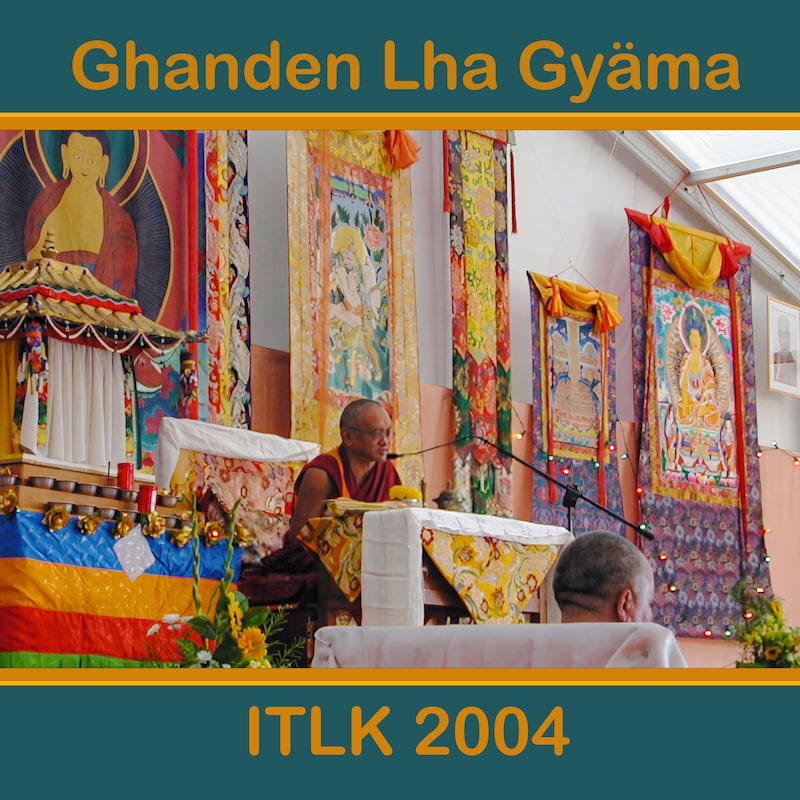
This teaching was given by Lama Zopa Rinpoche at Lama Tsonkhapa Institute in Italy as part of the Ganden Lha Gyama retreat between September 3-30, 2004.
00:00:00 The stanza "To not commit any unwholesome action, engage in perfect wholesome action, and subdue one's mind - this is the teaching of the Buddha" contains the Four Noble Truths.
00:16:06 The minute when one cherishes the I, one has a problem in life. The stronger one cherishes the I, even a small thing that didn’t happen exactly is regarded a huge problem, it become huge disturbance to oneself.
01:51:02 Doing actions with bodhicitta motivation is the best Dharma. Even eating, walking, sitting, sleeping, and doing jobs with a pure mind unstained by self-cherishing becomes Dharma.
02:04:05 The self-cherishing thought is the root of all problems in life. Cherishing the "I" brings no real peace or happiness, while cherishing others with loving-kindness brings joy and peace.
03:17:12 Guru devotion practice protects the mind. Looking at the guru as a buddha and following their advice is the "emergency practice" and brings quick realizations on the path to enlightenment.
04:31:00 Dedicating that all sentient beings never generate negative thoughts towards the guru, be guided by qualified gurus, and realize emptiness. May all the organization's projects, social services, and centers be successful and beneficial by receiving all necessary funding.
Find out more about Lama Zopa Rinpoche, his teachings and projects at https://fpmt.org/
Transcripts
So the, to not commit any unwholesome action, engage in perfect wholesome action and subdue one’s own mind, this is the teaching of the Buddha. So here, Kirti Tsenshab Rinpoche explained that, that this stanza contains the four noble truths.
The true suffering, true cause of the suffering, and true path and, the cessation of the suffering and true path. “Engage in perfect wholesome action” that might be true path. And “This is the teaching of the Buddha,” “Subduing one’s own mind” and “This is the teaching of the Buddha,” so I think that might contain, that this is the teaching of Buddha, that might contain the cessation of the suffering, how to say, oh, cessation of the suffering. Of course, that means including the cause; otherwise, suffering cannot be ceased.
So, to not commit any unwholesome action, that might contain true suffering; subduing the mind, that might be, that one might contain the true cause of suffering. Not a hundred percent sure, don’t recollect how Rinpoche, each one precisely I don’t remember, I don’t recollect, but I think first two might be like that. However, this stanza reveals four noble truths.
So, subduing one’s own mind, this is the teaching of the Buddha, so, that means Dharma that one is trying to practice, trying to so, so it has to be beneficial one to one’s own mind, to one’s own mental continuum. Then, when it becomes beneficial to your, to one’s own mind, one’s own mental continuum, then that time it become Dharma. That time then it become Dharma.
Even, not only eating, walking, sitting, sleeping, doing job, but even listening to teaching of the Buddha, reflecting, meditation, doing meditation, if it’s not becoming beneficial for one’s own mind, then the listening, reflecting, meditation, what activity what one does, it did not become Dharma. And so this beneficial doesn’t mean just listening to Dharma or reflecting or doing meditation, such as reciting mantra, it become, that it healed one’s own sicknesses or that it brought some peace of mind, some relaxation to the mind. So the listening, reflecting, and doing meditation, that reciting mantra, prayer, those are not counted part of, those are not counted what I mentioned benefiting, that by doing that healed sicknesses or that it gave some peace of mind, not just this, these are not included. So, benefit, what is beneficial to oneself, so just now in this teaching of the Buddha, this one stanza that is mentioned that, so beneficial, that it become beneficial to subdue one’s own mind, so that means that these mental factors, that by abiding in one’s own mental continuum that it, not only disturbing the mental continuum but it obscures one’s own mental continuum, that it disturbs, by rising, manifesting out or by rising that, making the mind unpeaceful or disturbing, not only that then obscuring one’s own mental continuum. So, able to cut this, the listening, action of listening to teaching, reflecting, meditating, so able to stop rising this and that which is able to stop rising this, then, able to eliminate, and also the self-cherishing thought, so able to stop rising, freeing oneself from the ego, self-cherishing thought, this very tight, very uptight, very tight mind, very uptight mind and when that’s very strong and which is also, when it’s very strong, kind of a pain, uncomfortable, can’t relax, can’t enjoy the life. And whenever the attitude, the minute when you cherish the I, there’s no real peace in your heart, inner happiness. The minute when one cherishes the I, there’s a problem in the life and that is the problem, cherishing, why you don’t really feel joy, peace, when there’s loving kindness towards others, opposite to self- cherishing thought, thought of cherishing others, there’s so much joy. So with this self-cherishing thought, so the minute when you cherish others there’s joy, there’s a holiday for the mind, there’s a holiday for the mind or the, there’s joy, there’s peace, there’s space in your heart. Open the heart and very easy to communicate, can understand the other person, the other person’s needs. So when one, the opposite when one cherishes the I, then it’s blocked, blocked the communication and can’t, then ?until that blocks, that making wall to understand the other person, other person’s needs.
The Minute When You Cherish The I, You Have A Problem In The Life
So however, the minute when you cherish the I, you have a problem in the life. So that itself is the biggest problem, cherishing the I. Then, due to that, then the stronger one cherish the I, stronger self-cherishing so there is, then any small, anything that, something very nonsense, insignificant, any small thing that not exactly according to self-cherishing thought want or not exactly according to the attachment, attachment want, so usually, yeah, so then it become a huge problem.
Stronger one cherish the I, even it’s such a small matter, small thing that didn’t happen exactly, it is regarded a huge problem, it become huge disturbance to oneself. By following, huge disturbance, harm, to oneself, to one’s own mind.
So the, so, you order food and then somebody bring, you order tea, then somebody bring cold tea, then it become a huge problem. Immediately you leave, go away, go to another restaurant or go to another, anyway. Or it’s too hot you complain, it’s too hot then complain. No, I mean it’s just, can be an example, anyway. Too hot, anyway. Or this, this flower should be here. [Rinpoche indicates a small flower arrangement on his table.] I like this flower to be there. But here I don’t like. So become huge problem that this flower is here, not being there. So, huge problem. Or like that. Or that decoration not being there. Anyway, so however, something which is very insignificant, nothing, but because you cherish so much the I, so strong, then anything what self-cherishing thought want, something very, hardly anything, no worth of to be upset, but then you make it, exaggerated or, due to self-cherishing thought then become, it become huge problem, it made, it appeared a problem, it is labeled a problem, with the self- cherishing thought labeled a problem, appeared a problem, then stronger you cherish the I, huge, bigger problem, that become bigger problem, more serious.
So, I was very surprised this, in the United States, that I saw in TV one elderly lady, mother, her daughter was kidnapped by a man, not by elephant. Not by elephant. Or zebra or, anyway, I’m joking. I’m joking. Anyway, one elderly lady her daughter was kidnapped by a person and at the end that daughter was killed by that same man. So this lady, in the TV, this elderly, I don’t think she’s a Buddhist, who’s been doing sadhanas, prostrations to the Thirty-Five Buddhas or the sadhanas, I don’t think, doesn’t appear like that at all. So she said, there was somebody interviewed to her and this lady said, I give forgiveness. This elderly lady, mother, said, I give forgiveness to this guy, who kidnapped and killed her daughter, gave forgiveness. Can you imagine? It’s her daughter, it’s her child. Of course, something that a mother cherishes the most. So that, to do that, to be able to practice that, to not, first of all to not get angry, that’s incredible, to not get angry.
That’s great achievement, to not get angry to that person. She’s not particular Buddhist like that. It’s amazing, to not get angry. Something that she cherishes most in the life. And took care for so many years, took care nine months in her womb, and then took care for so many years, and now kidnapped and killed, so can you imagine? So that is incredible, I mean sort of like a realization, just able to have tolerance, not get angry. First of all, to not revenge. First of all, she doesn’t think court case, revenge, she doesn’t think that. So that very gross way starting, so didn’t do that. Then, she then, more difficult, tolerance, no anger. Then, not only that, but gave forgiveness to the person. Not only kidnapped but killed.
And I met one man, when I was driving from Geshe Sopa’s, from Madison, after the course, to Washington, no, to where, to Aptos house, driving through. So then at the, we went in the restaurant, one spot, somewhere, then met a man. So while we are driving sometimes people they want, they’re very curious, because they haven’t see before, the robes they haven’t seen, some they’re happy, because they come to tell us, “Oh, I have met a Tibetan lama in the past,” yeah, maybe they come for tour, religious dance, something like that, or they have seen His Holiness, so then they come to tell us, so they’re saying that they’re familiar with it or I’m not sure.
Anyway, then, some very curious, want to know what kind of religion is this or what is this, what it means, what it is, anyway. So, we were going in the restaurant, so one guy said, I don’t know how the conversation came, he said, “If somebody shoot him, he will give forgiveness.” If somebody shoot him, he will give forgiveness to that person. I don’t think he’s joking; I don’t think he’s joking. He was somebody who’s kind of interested, person who is kind of interested, so he was asking us. I think he asked a question like do you believe in God or not? Something like that. He’s just curious. So this is what he said, if somebody shoot him he will give forgiveness. So that’s incredible. I don’t think he’s, he’s not speaking being drunk or having taken drug with hallucination, not like that. Just a normal person, kind of interested person.
So however, so all that means, what this, especially this lady, if she’s strongly cherishing I, then of course she will, like that, she will revenge, court cases or whatever she can, whatever harm she can give to that person, and stronger she cherishes I there will be stronger anger. So similar, normally so more cherish the I, those, the attachment to one’s own happiness will be stronger, one’s own comfort, one’s own needs, the worldly concern will be so much stronger, seeking for reputation, this life happiness, clinging the happiness of this life, seeking reputation and the food and clothing, so forth, all the needs of this life, so however, the attachment will be so much stronger. Similar, then jealous mind, all those other negative emotional thoughts, pride and so forth, jealous mind towards others, all these will be much easier to rise, so much easier to rise and much stronger. So, that, so stronger self-cherishing thought there is, then such small things that didn’t happen exactly what self-cherishing thought wanted, then become a huge problem. So by labeling a problem then appeared a problem, a huge problem, also that. Then also, so therefore, one find so many problems in the life, stronger and stronger self- cherishing thought there is, one find so many problems and that more the mind get trained in self-cherishing thought, habituated in that, so then, so easy and so easy to be disturbed, so easy to be irritated when other people, the way the other person the way of looking at you with the eye, the way they’re looking at you, down, keeping nose up, keeping the nose high, looking down, however, whether there’s a smile on the face or no smile, so it makes, it becomes huge differences to the mind.
Whether a smile or dark face, and the person’s manner of walking, so even physically way of behaving, so there’s something very small behavior there’s some mistake, mistake in the sense what self-cherishing thought doesn’t want, doesn’t want to see, something small thing that the person behaved, something very small, then it becomes a huge problem, then a huge disturbance, harm, hurt, how he or she dare to do like this to me. So it’s, so however, a huge, become again a huge problem in the life, so like that.
Then, the person’s way of speaking then that’s so much to do with the, the way of speaking, the arrangement, how the person put together the words, the sentences, how the words put together, arrangement of the words, so the, if there’s some words missing that you wanted to hear, that you wanted, the self-cherishing thought wanted to hear, there’s some words, there’s one or two words missing, some nice words missing, then it becomes great upsetting, great upsetting, great upset, great disturbance, hurt, harm. Just because this is not how self-cherishing thought want to hear, not exactly what the self-cherishing thought wanted to hear, so then, and this is, yeah, so therefore, then it’s labeled as harm, with self-cherishing thought mind, it’s labeled harm, bad, harm. Then, after one has labeled bad, harm, then believing in that, then appears, what the person says, bad, harm, then great upsetness or anger, then anger rises. So here one can see, anger rises then one hurt, physically angry face or if one doesn’t beat the other person, even doesn’t beat or kill, throw things on that person, but angry face, then angry words, so all this, hurt the other sentient being and makes that other sentient being suffer, besides oneself suffer. Engage in negative karma, then cause, you cause other person, the other sentient being to get angry and to engage in negative karma, harm you back, immediately to harm, you make the other, your self-cherishing thought make the other person to get angry and harm you back, so that’s not only you harm the other person but it makes you, it makes the other person to harm you back, get angry and harm you back. That without need to wait the karmic consequences in the future, the further result, suffering result, connected with that person, that harm received from that, so you made the connection this life by harming to that person, so in the future, the karmic consequence is then receive harm, you have already created the cause to receive harm from that person in the future, future in this life or future in the other lives, so besides that.
So however, so you can see how everything, all the problems of life is, came from one’s own mind, creation of one’s own mind. So, rooted the self-cherishing thought, so that become the root.
So, so strongly cherishing the I, so then wherever you are, so strongly seeking to receive praise from other people, reputation, praise from other people, because of that. The material, so strong grasping, attachment to the material receiving, comfort of this life and then praise, then reputation, like that, of this life. So, stronger attachment there is then the anger, when it happens the opposite of these four desirable things, then the anger is much stronger. So easy, unbelievable easy to rise anger, so easy, so strong.
When There’s No Kind Heart, Then Everything Becomes A Problem
So, many years ago, when we were in Sydney, Australia, in Sydney, nine, maybe nine, ten years, I’m not sure. Quite some, quite a long time ago. So there’s one student who always talks about billions and zillions of dollars. Who always talks very high number, billions and zillions of dollars. So anyway, so that student lived with one lady who is Kagyu, who is a student of Kagyu, Situ Rinpoche or the Sharmapa or something like that, who has a connection. She had a big house in Sydney, so because the student lived with her, so we were invited there and I stayed in that house. So, there’s, in the afternoon I was doing prayers, not doing prayer by laying down, but that time sitting, I think. Anyway, so there’s next neighbor, I think maybe around four or five o’clock, the lady whose house we’re staying has a swimming pool, and then the what’s it called that? Where the water comes here, here, where water shoots? [Ven. Yeshe: Jacuzzi.] Scuzi? Uh? [Ven. Yeshe: Either a hot tub or a jacuzzi.] Anyway, hot tub or scuzi.
So anyway, I think four, maybe five o’clock, Harvey, who did a lot of, Harvey and Peter, so they’re same student from university, from England, so then there’s also Roy, they were same student. They’re the ones who started the Manjushri Institute. They’re the ones who, I think Harvey was the director or I think, I don’t know who was the first director, might be Harvey or Peter. Anyway, they’re the ones who bought the center, put all the effort. So, what I’m going to talk about? Yeah, that’s right.
So back to, I’m going to England, so I’m now going back to Australia. I must go back to Australia, from England go back to Australia. So, from Manjushri Institute to go back to Australia, Sydney.
Anyway, so they, around four, five o’clock, I think, they jumped in the swimming pool, to swim, I think, to have relaxation, I think. Anyway, then I heard, after a little while, a car came. The car sort of like annoyed, the sound, way I heard is like it got annoyed, the car came and it dropped, woo-oo, like this, but, I was in the room but it sounds like the person got annoyed or the car got annoyed.
So anyway, so later I heard that the next family, because they jumped in the water, made noise, so the next family complained, they rang the police. They complained to the police that making noise. So they came all the way from town, on the mountain, maybe thinking some serious, anyway, they came. Then the owner of the house told, “Oh, they made noise, jumped in the water.” And the police, the police I’m sure they have so many billions of things to do in the city, I mean they must be so busy, with so many crimes, so many things, much more serious than that.
So then, I was inside the room, so I didn’t see. So what happened, when the owner of the house told this to the police, I think police got annoyed, just they drove the car, wooing, like that. So, went back, they went back to the city. But, you see, but at two o’clock I remember their children made a lot of noise, so much noise, I think around two o’clock, something. After lunch, around two o’clock, they made so much noise.
Anyway, so this, of course when you go into the water, I mean, always of course we make noise, there’s a swimming pool and of course you would swim there. Anyway, the neighbor complained, having made noise jumping in the water. So example like that. So when there’s no kind heart, then everything become a problem. When there’s no kind heart then everything becomes a problem to you, so strong self-cherishing thought. Even the bird making noise on the roof or outside, get angry and upset. Or even a dog barking outside you get angry, upset. So, twenty-four hours then you find so many problems in the life, one after another. So then you have no peace. All the time you find some problem, all the time your life full of complaints. So when you meet somebody then you go through all the problems, oh this and this and this. From this morning, from this morning this, then after this, then this happened, this happened. Even one day, so many problems. So the other person sooner or later get annoyed to you. Anyway, or sooner or later, other person says, Oh, I’m busy, or something like that. Or I have some engagement or something like that. Maybe excuse, even there’s no actual engagement or busy life, but anyway.
So in the Tibetan it’s said [Tibetan], so whatever appearance you have then everything, anything that exists, everything that appears, it appeared to your enemy, disturbance. So as Kadampa geshes they say, so it’s all a question of which way you train, whether you get habituated your mind with self-cherishing thought, ego, or with good heart, bodhichitta, so depending, the thought cherishing others. Depend on which way you train the mind. So, with good heart, bodhichitta, thought cherishing others, then with that, when the mind is in that state, that nature, then that person having anger towards to you only you feel regret, sorry for that person, and that person because creating negative karma, there’s no peace, it doesn’t give peace for the person. So, instead of getting angry, revenging, only sorry, and then only thought to rise to help, what can be done, to that person, to free from anger. So, concerned that person’s happiness and that person’s future life, liberation, enlightenment, concern, there’s great concern, so you help anything, besides stop giving harm, you do whatever one can, attempt for that. So it simply become object of compassion. And person who physically disrespect or manner of looking or talking or whatever, behavior, it doesn’t bother to your good heart, bodhichitta, cherishing that person, it doesn’t bother to you. It doesn’t upset. Because there is, because the attitude is cherishing that person. There is, when there’s cherishing thought to that person, there’s loving kindness, compassion to that person.
So, this person’s way of behaving, way of talking, the attitude, in the point of view of self-cherishing mind, harm, because it interpreted harm, labeled harm, so appeared harm, but to your positive mind, good heart, it is not harm. In the view of the patient mind, that attitude, the patience, it is, the person appears only the most kind, most precious, most kind friend, like guru, like that. Spiritual friend, that who helps you to path to enlightenment, paramita of patience, to practice and that you have, that we are able to practice this and complete and able to achieve enlightenment. So, only the most precious, most kind person helping your quick development of spiritual path, path to enlightenment. So like that, most kind, most precious.
Appearance and apprehending
And in the view of your wisdom realizing emptiness, of course then this, there’s no such thing there, there’s no such a, even there’s appearance, even there’s appearance a real person in the sense existing from its own side, and the person’s attitude angry to you, angry to oneself, real anger in the sense existing from its own side, then speech criticizing, real criticism in the sense existing from its own side, then the showing angry form, face, manner, the angry physical manner, appearing a real one in the sense existing from its own side, but even there’s this appearance but there’s no apprehending that it’s true. Even though there’s the appearance, but there’s no apprehending that this is true, because there’s understanding, discovery, understanding, as these things appear real one in the sense existing from their own side, but in reality there’s no such thing there. But in reality there’s no such thing there, empty, all these are empty. So, like when you recognize the dream is a dream, in the dream somebody shout at you, criticize you, get angry to you, physically showing anger, aspect anger, however, but in the dream, when you recognize dream is dream, when you recognize the dream, this is dream, this is not true, this is dream, when you recognize that, while you’re dreaming, while other person is angry and criticizing, showing the violence or the angry form, but at the same time you recognize this is a dream. So, you have the appearance, but you have understanding that this is a dream, this is not true, there’s no such thing, there’s no such thing there. So, it doesn’t upset.
Similar, magician person transformed a person who’s angry to you, abusing you, all this, but you know, but you realize, but you know that this is transformed by magician person, there’s no such thing there. So, you realize that, there’s no such thing there. Even though you have the appearance, the magician person illusioned your mind, your sense of eye, there’s no belief there. As it appears to you, there’s no belief. Your belief is, nonexistent. So it doesn’t affect to you. Like, it become like a theater, acting, it doesn’t bother to you. So, in the view of wisdom, there’s no such thing there. Even though there’s appearance, but there’s no such thing there.
So, in the view of all these positive minds, to all these positive minds it doesn’t bother, but only the self-cherishing thought, if your mind following the self- cherishing thought, then all these things become disturbance to you. Then, also, following the attachment clinging to this life, similar, then all this become disturbance, appeared as harm, because this is not what attachment want; attachment wants the opposite, saying nice words, respect, all this, other side, opposite behavior, something nice, kind to oneself. So, I mean, to the attachment. So, that’s why the way the person, attitude, way of talking, way of appearing, behaving, so this is not what the self-cherishing thought, what attachment wants, so it’s opposite to what they want, so then they labeled harm and appeared harm, and then that way upset, ego, upset the ego. So then oneself believe, then one believes, oh, then one totally believes, instead of analyzing, this is the view of this self- cherishing thought, this attachment, this is the interpretation and this is, interpretation, this is how it appeared, then harm, bad. Their creation, their projection, their creation. So instead of analyzing these things and being aware and this is not the problem in the view of all those other, so many other positive minds, it’s not a problem. The pure mind, it’s not a problem. So instead of being aware of this, then believe, then totally believe, “Oh, this person is really harming me.” So then everything taken seriously, everything taken on the self.
So then here that’s how we create sufferings, that’s how basically, how we create the problem by our mind. There’s no problem, but we, by following the impure mind, the self-cherishing thought, attachment, so forth, then the anger, following those, then create, then there’s a negative projection on that person, then that’s how one torture oneself. So that’s how the life goes, that’s how the whole life goes. So, in reality, something really, in reality something very funny, totally think, when you think, how, so all this creation of mind, how due to self-cherishing thought then due to that then there’s also anger, attachment, due to that, then, rises, then project, negative project on that.
Self-Cherishing Thought
Then, so when we analyze like this, it doesn’t, it’s totally nonsense, kind of childish, childish, totally nonsense. Then you spend the whole life believing this, you spend the whole life in this, creating, always follow self-cherishing thought and all this, attachment, anger, and this, this discriminating thought, this negative emotional thoughts, then create the label, create the projection, then one suffers for this. So, one live whole life like this. Then, yeah, then mind is so depressed, loneliness, so depressed, then really seriously believing I have this problem in the life. Then the life become so expensive. Do you understand? By following the self- cherishing thought, then the ignorance, anger, attachment, these, arise there, following that, then made life so expensive, by following what they say, what they tell you. And then, their reasons and the label and the appearance, projection, like that, then nervous breaking down, then freak out. Then court cases, spend so much money. Something that which self-cherishing thought labeled, attachment labeled, created, anger, something that attachment, self-cherishing thought want, doesn’t like, then the enemy. Even though so many, in the view of so many of your positive thoughts, there’s no enemy, but so you, one totally believe in that, by following these negative thoughts, totally believe in that. And then, of course, labeling harm, how they appear, which is dependent, how they appear to you, which is dependent on how you labeled. How you label depends on which kind of mind you follow. How you label depends on which kind of mind you follow. You follow bodhichitta or self-cherishing thought, ignorance or wisdom, angry or patience, so there’s totally different view of that same person. So then, of course, then by following those negative ?thoughts, then of course the person, their action is harm, then court case, spend so much money there. So then not sure whether you will win or, even that not sure whether you’ll win or lose. So then, now here you can see, this, the self-cherishing thought, the attachment here makes the life very expensive. What makes to spend money is by them, make life so expensive. Then there’s suicidal. When you are unable to, when there’s no space in the mind, you have no method how to deal with the problem, the relationship problem or whatever, all this, however, again here the same, to do with the self-cherishing thought, with the attachment, it’s all a projection of attachment, even in the case of relationship problem, it’s the same. So it’s all came, the creation of those minds, emotional thoughts.
So again here, makes the life so expensive, with these thoughts, by following these, makes the life so expensive, so much you have to spend. And then while one doesn’t have, then one borrow. So these negative emotional thoughts make life so expensive.
Then, suicidal, then after some time, lung or the, then become crazy, then become more crazy, however, then have to go to psychiatric hospital, anyway, all those. Anyway, all those. So however, so that, then, killing, stealing, telling lies, all these harms, ill will, all the so many harms to other sentient beings, so this root, the root, the self-cherishing thought, this angry thought, attachment, anger, so first of all the self-cherishing thought, then due to that, the anger, attachment rises. So makes to engage in so many heavy negative karmas in the life. Not only harming oneself, but harming others, other sentient beings, so like this.
So however, so the conclusion, eating, walking, sitting, sleeping, doing job, not only listening, reflecting, meditation, reflecting, then meditating, besides this, even eating, walking, sitting, sleeping, doing job, so forth, so this, while the self- cherishing thought, while those negative emotional thoughts, anger, attachment, ignorance, those negative emotional thoughts rises, while they are rising, then able to stop rising. Able to, weaker, smaller, eliminate, so that time, not only listening, reflecting, meditating, but even eating, walking, sitting, sleeping, doing job, everything become Dharma. When it benefits to the mind in this way, bringing peace in the mental continuum in this way, so whenever the listening, reflecting, meditating, eating, walking, sitting, sleeping, doing job, even those, whatever activity one does, so able to stop rising them, then to smaller, able to cut them, able to make smaller, less and cease, so then become actual Dharma.
So, the definition of Dharma, as normally explained, anything that benefits beyond from this life, means up to enlightenment, anything that benefits beyond from this life, so which means brings happiness beyond from this life, up to enlightenment, so anything that benefit beyond from this life is Dharma.
So that means the daily normal attitude is not anger all the time, twenty-four hours, in the whole life, anger, that for some people, very impatient person, in one day so many times anger rises, hatred rises to somebody, months and years, that can happen, but generally it’s the attachment, the common one all the time rises attachment clinging to this life. So even listening to teaching and reflecting, meditating, besides eating, walking, sitting, sleeping, doing job, everything, so anything these things done with the attachment clinging to this life, I mean, so why it’s related to this one is, of course, doing things out of anger, of course that’s also nonvirtue, but the attachment is the common one that almost all the time rises, activities that we do, so that thought is nonvirtue, so then actions, all these actions that I mentioned, done out of that, out of the attachment clinging to this life, then all those become nonvirtue. So that means the result is only suffering.
Not only that you can’t get any satisfaction, living the life with this motivation, attachment clinging to this life, even do listening, teaching or reflecting, meditating, or the eating, walking, sitting, sleeping, doing job, whatever, besides can’t get any satisfaction or can’t get any inner peace and happiness in this life, along with that motivation, which is nonvirtue, you can never achieve satisfaction, inner peace, happiness. Besides that, all the actions become nonvirtue, so result’s rebirth in the lower realms, so if it’s completed negative karma then, like that, so these nonvirtuous actions doesn’t cause, that they have no result happiness, it doesn’t result good rebirth next life, no happiness in next life, besides there’s no liberation, enlightenment. So, the result what one experience from that is only suffering.
So therefore, all this, including listening, reflecting, meditating, then all this eating, walking, sitting, sleeping, doing job, so forth, all this then did not become Dharma, because it doesn’t benefit beyond from this life, it doesn’t benefit beyond, it doesn’t cause happiness beyond from this life. So can understand that definition of what means Dharma.
And then, any action, if any action become a remedy to delusion, that is definition of Dharma. Any action that becomes a remedy to the delusion, then that becomes Dharma. So that’s the same thing what I mentioned before. So, not only listening, reflecting, meditation, but even eating, walking, sitting, sleeping, doing job, all those things, those things able to stop the self-cherishing thought then those other negative emotional, those delusions, able to cut, stop rising.
So, that, then what about the actions done unstained by the attachment to this life, but stained by the attachment seeking the happiness of the future lives? Like for example, practicing morality with the attachment seeking good rebirth next life, deva, human rebirth; practicing charity not with the attachment clinging to this life but with the attachment seeking wealth next lives, seeking samsaric perfection in next lives. So, because it’s unstained, because this activity is unstained by the attachment, done unstained by the attachment clinging to this life, the nonvirtuous thought, so it’s Dharma. But then it’s not antidote to attachment seeking happiness of future lives, so it’s not antidote, so it’s not Dharma, it’s not antidote to the attachment seeking happiness of future lives, so therefore it’s not Dharma. So however, there’s no problem that this doesn’t fit in that definition. If any action become remedy to delusion, become Dharma. Any action become support, cause to develop, become support delusion, then it’s not Dharma. So that definition, so here the, even though, how to say, this action is done with the attachment seeking happiness, clinging happiness of future lives, but this Dharma, still it’s Dharma, because unstained by the attachment, even though it’s done with attachment seeking happiness of future, but it’s unstained by the attachment clinging to this life happiness. So it still become antidote, antidote to not all attachment, but attachment to this life, so Dharma. So therefore it’s the same, antidote towards the delusion, the attachment to this life, become antidote to that. So, still that goes inside that definition of, if anything, any action become antidote to delusion, then become Dharma, so that how to say, there’s also a saying that, what you do is, is harmonize with common ordinary people, all the people, all the rest of the people, what you do is harmonize with all the people, then it’s not Dharma. If it’s not harmonized, what you do if it’s not harmonized with the rest of the people, then it’s Dharma. But, because common people, the majority of the people, what they do is, that they live life by following the thought of the eight worldly dharmas, worldly concern, the attachment clinging to this life. So, most of the people in the world, so this is how they live their life, this is how they do their deeds, activities. So, your, so what your actions opposite to all these other people, so means it’s Dharma, that means your attitude is unstained by the attachment clinging to this life. So all the activities whatever you do, not with that, so it is not harmonized, your activity is not harmonized with the rest of the people, so that become Dharma, so it’s like that. This is particular Kadampa geshes what they say, express.
So therefore, in our daily life when we do sadhana, commitment, even when we recite one mala of OM MANI PADME HUNG, always make sure beneficial to one’s own mental continuum. That even one does retreat or even one study Dharma, always make sure beneficial, make sure you make it beneficial to your mind, to your mental continuum. Even practicing morality, taking the vows, taking robes, make sure it is beneficial to your mental continuum, not become harmonized to delusion, but become antidote to delusion. So even wearing robes, taking vow, wearing robes, not harmonized to delusion, which means for, to achieve reputation from others, praise or to receive comfort, material offerings, so therefore one can have easy life, or to receive respect from other people, so which means for the ego, to receive respect from other people, other people something regard you special, regard oneself as special, so recognition that you are special, but this is by following the ego, so things like that. So, this is, taking robes and doing, taking vows, however, but however, so this, you are doing this but it’s harmonized with delusion, so it doesn’t really become beneficial to one’s own mind, one’s own mental continuum; it didn’t become ?ngon pai kyi ngenpo, antidote to delusion, that definition. If it become antidote to delusion, then it becomes Dharma, so it didn’t become that, if the motivation is just that, to receive respect from others, so that I can receive respect, other people think I am something special, high. Or to earn easy this life comfort, things like that, so did not become Dharma, it become service to delusion, to develop delusion.
Bodhicitta Motivation Becomes An Antidote To Self-Cherishing Thought
So then, not only when we study Dharma, listen to teachings, but eating, walking, sitting, sleeping, whatever we do, job, but if, of course, if it’s done with a bodhichitta motivation, all these with thought of benefiting others, okay that’s the best, best Dharma, purest Dharma, so then of course that become antidote to the attachment, delusion, the attachment clinging to this life, that become antidote to that and that become antidote towards the attachment the future lives, seeking future life happiness and antidote to specially self-cherishing thought, so that, doing everything with bodhichitta, doing everything with the thought of benefiting others, benefiting the, whether it’s one sentient being, whether it’s numberless sentient beings, all the sentient beings, so that become antidote to all this, the delusion then particularly the antidote to self-cherishing thought.
But here even eating, walking, sitting, sleeping, doing job, so forth, if we do this with the thought of benefiting others, this very pure mind unstained by self- cherishing thought, this one become cause to achieve enlightenment, the cessation, the complete quality of cessation and realizations, but the activity is done with the right view, in our daily life activities, doing job, not only studying Dharma, but studying Dharma, but doing job, so forth, however, all the, eating, sleeping, walking, sitting, whatever, whatever activity we do, even it’s done with the right view, unstained by the wrong concept, ignorance apprehending true existence, even it’s unstained by that, and of course, those actions do become remedy to attachment to this life, attachment to the future lives, seeking future life happiness, but I think it doesn’t become antidote to thought of seeking happiness for oneself. So that, only bodhichitta is antidote to this, the self-cherishing thought, thought seeking happiness for oneself. The arhats, I mean, as you heard, the highest by having realization of emptiness, without bodhichitta, highest what we can achieve is, you can’t even become bodhisattva, only highest you can achieve is arhat, achieve the liberation from, just merely from the suffering of samsara and the cause, the delusion and karma, the seed, the imprint of delusion, so free from that, so just only the state of arhat. So what you can achieve highest is only that; you cannot become even bodhisattva. So, yeah, like that.
It become antidote to the attachment, to the other, the ignorance, anger, attachment, also including attachment to future lives, seeking samsaric happiness of future lives, but it doesn’t become antidote to the thought of seeking happiness for oneself. So should check, should examine whether realizing emptiness, whether the doing activities with the right view, mindfulness of right view, with the understanding emptiness, then doing all the activities with that, seeing everything, understanding everything is empty or realizing that, so whether that become antidote to self-cherishing thought or not, that should be checked.
Every Time We Meditate On Compassion, We Are Helping Sentient Beings
Here I want to say something. It might appear as if we’re not doing anything. For example, there are wars and a lot of violence in Iraq and other countries, and it looks as if you’re doing nothing. It appears as if you’re meditating in a cave and doing nothing to help them. It appears like that, but, of course, it depends on what kind of meditation the person is doing in the cave or hermitage. People in the world might see it like that, that you’re doing nothing. However, every time we meditate on compassion, even in these four immeasurable thoughts, we’re helping them. We’re working not only for those people in Iraq, Africa and other countries, for all sentient beings. We’re working for every single sentient being in all the universes. Even with this practice at the very beginning of generating immeasurable equanimity, loving kindness, compassion and joy, we’re working for all sentient beings. We must know that.
When we generate loving kindness towards all sentient beings, we are collecting limitless skies of merit. For example, when we generate the immeasurable thought of loving kindness, I don’t remember very clearly, but I think you collect the merit to be born as a wheel-turning king a number of times equal to the number of sentient beings towards whom you generated immeasurable loving kindness. To be born as a wheel-turning king one time, in one lifetime, you need to collect infinite merit, inconceivable merit. However, when we generate immeasurable loving kindness towards all sentient beings, we create the cause to achieve enlightenment and to be able to bring the numberless sentient beings toward whom we have generated loving kindness to enlightenment. We are creating the cause for that.
Quite some time ago—not these days, as these days I have become lazy—I tried to include the government of Mainland China and all the Muslims when I generated the immeasurable thoughts. I wanted to be able to benefit. Even this initial practice has a lot to offer. You generate the good heart towards them and collect limitless skies of merit; you then give all those merits to them, for their happiness; so that they can have a better, happier life.
What I want to say is this. Each time we generate compassion for sentient beings, we are making our mind closer to actual realization of compassion that embraces all sentient beings. That then becomes the cause to actualize bodhichitta. That compassion is not just limitless compassion, which even arhats have, but great compassion, Mahayana compassion, which takes the responsibility upon yourself to free all sentient beings from all their suffering and its causes and bring them to enlightenment. You generate two things, great compassion and the special attitude wishing to free them from all their suffering and bring them to enlightenment by yourself alone. After that, as a means for success in that, you generate the thought of you yourself seeking to achieve enlightenment. As His Holiness often says, that attitude of bodhichitta has the two intentions: seeking the works for others and seeking enlightenment.
When you have realization of bodhichitta, it’s an incredible blessing to the country and to the world. It is a total transformation of the mind from self-cherishing thought; you totally abandon that, and no thought of seeking your own happiness arises even for one second. You have only the thought of seeking happiness for others. Whatever you do, you do it only to cause happiness to other sentient beings. So, if you have bodhichitta, it is a great blessing to the area where you are, to the country and to the world. It benefits all the beings in the area, even nagas and spirits. It is a great blessing, and it brings so much happiness and prosperity.
Then, by entering the Mahayana path, as you proceed higher and higher on the path, you are able to offer deeper and deeper benefit to more and more sentient beings. You can see what incredible benefit the eighth, ninth and tenth bhumi bodhisattvas can bring to sentient beings. It’s unbelievable. Then, of course, with the achievement of full enlightenment, even in every second one can enlighten numberless sentient beings, even with each beam emitted from one’s holy body. One can manifest numberless forms with the holy body, holy speech and holy mind— whatever fits the sentient beings. During a commentary on the tantric paths and grounds at Vajrapani Institute, Kirti Tsenshab Rinpoche explained that even very high tantric yogis who have achieved unification are able to manifest as bridges, water and so forth. Even before becoming enlightened, they are able to manifest as such things to benefit other sentient beings. I guess they must also be able to manifest as airplanes, jets. The reason should be the same. Since those who have achieved the path of unification are able to manifest as these things, there is no doubt about when you become a buddha. It’s unimaginable. Without any effort, just naturally, you are able to manifest in whatever exactly fits sentient beings, without the slightest mistake. Like this, you bring them from happiness to happiness, from life to life, bringing them to enlightenment.
Here we’re meditating on lamrim, and it’s not a simple thing. Even the four immeasurables at the beginning of the practice are not a simple thing. It’s benefiting all the sentient beings. It’s the same when we meditate on emptiness. By realizing emptiness, we liberate ourselves and we then liberate others. Here we’re actually benefiting all sentient beings. We are developing this capacity every day, in every session; and we collect inconceivable merit with every practice. In the Golden Light Sutra, it mentions the incredible benefits of rejoicing, as well as requesting to turn the Dharma wheel, requesting stable life and dedicating. The merit we collect is incredible, then at the end we give it all sentient beings. It is said in the teachings that it is impossible for rabjungs, those living in the ordination of renouncing the householder life, followers of Guru Shakyamuni Buddha, to die of starvation because Buddha has dedicated his merit to preventing that. And they will always find the means of living.
However, one then practices tantra, the quick path to enlightenment. Guru yoga makes one successful in receiving the blessings of the guru, which means all the realizations of the path to enlightenment, and as a result, one then enlightens all sentient beings. Therefore, guru yoga is benefiting all sentient beings, including all the people in Iraq, Africa and elsewhere. So, so much work is done every day to benefit all the sentient beings, gradually enlightening them. Even reciting one mala of OM MANI PADME HUM is dedicated to the six-realm sentient beings, not just to the people in Iraq or Africa. Each realm has numberless sentient beings who are suffering, so each OM MANI PADME HUM is dedicated to all the six-realm sentient beings; it’s recited for their happiness, to free them from all the oceans of samsaric suffering. So, reciting each mantra and dedicating for them benefit beings, liberating them from the lower realms. So, every single thing, especially any practice that begins with bodhichitta, is for sentient beings. The idea of generating bodhichitta at the beginning is so that all the rest of the practice is for all sentient beings.
Not only that, but as we learn and practice, we develop compassion and wisdom, and we then become an example to the world, to other sentient beings. We inspire others to become the same. Because of our example, many sentient beings are able to transform their minds in the path, to develop compassion and wisdom. We learn and practice as much as we can, and we then educate other sentient beings. In essence, the very foundation of all this is compassion, as well as wisdom. So, we educate other sentient beings in this world, and the process continues in this way.
We educate a certain number of sentient beings; each of then learns and practices, then educates other sentient beings, who learn and practice, then educate other sentient beings. As time goes by, many millions and millions of people in this world are then able to transform their minds, to generate compassion for all sentient beings. By learning about karma, and especially about compassion, they stop giving harm to others and only benefit them. As well as this, they develop wisdom.
By continuing these activities, by generating compassion and developing wisdom, we are able to bring so much peace and happiness in this world and to all sentient beings.
Another way of saying this is: first of all, by our practicing Dharma, understanding karma and practicing compassion, as well as wisdom, we ourselves stop giving harm to others. On top of that, especially by taking vows, we stop giving harm to all the sentient beings. Numberless sentient beings don’t receive harm from us, so that’s the peace and happiness that they receive from us. Not only do we stop giving harm by understanding karma and by taking vows, but on top of that, by developing compassion, we then benefit all sentient beings. We actually do something, the most practical thing: we stop giving harm to the world, to the rest of the sentient beings. On top of that, by developing compassion, we then benefit others. Again, others receive so much happiness from you. That is another practical thing. Otherwise, if this didn’t happen, if we didn’t meet Dharma, if we did not practice Dharma, we could become like any of those violent people, harming other sentient beings. Therefore, that is the start of peace in the world.
Golden Light Sutra And Medicine Buddha Puja For World Peace And Natural Disasters
So, as I was discussing the, here, Raphelo, that, the Italian Buddhist what? Buddhist View? Huh? Union. So, Raphelo is the leader of the Buddhist Union in Italy, so discussing that, there are many other things, tantric methods, there are many things to stop war, there are many things, but one thing that common that, that one thing that easy to do is that, there are big pujas, there are wrathful things and there are many things to do, but the one simple, very easy, most effective thing to do to bring peace in the country, that is to read the most precious Buddha’s teachings, Golden Light Sutra. So if you read Golden Light Sutra, if you are in the city, all the people who are sick in the city, it heals, it heals all the people, it is mentioned there in the text, the benefits. So it becomes, even a small way benefiting, it heals all the sick people in the city, how many millions of people there are, if you read Golden Light Sutra. Then, it brings, not only unbelievable purification to yourself, unbelievable merit, but, besides that, additional thing, special thing about it is brings so much peace and happiness in the country, in the country where you are. And then it helps, it gives so much power to the leader of the country, protection, if other country attacking, then it, they lose their power or they get defeated, lose their power. So, brings so much peace and happiness in the country.
So that, the Arya Sanghata Sutra, that’s unimaginable thing, another most precious teaching of Buddha, the unbelievable purification and the minute when you hear it purifies five uninterrupted negative karmas, and this means no question about ten nonvirtuous actions done in this life and in past, from past lives. And unimaginable merit, there’s no question. But here, particular to the Golden Light Sutra is, brings so much peace and happiness in the world. Then, direct your life towards enlightenment, so there’s so much benefit to others. So, but it’s also very good to, going, yeah, in those, go in those countries where there’s a lot of violence and then you go there and spend a few weeks or months just read the sutra, then also Medicine Buddha puja, the puja, the long version is not translated yet, one student, but didn’t translate yet, but the middle version is available, the Medicine Buddha puja, so however, in English.
So that’s, whenever there’s danger of fire in the country, any danger, Medicine Buddha puja, that’s easy to do and it’s most, it’s extremely beneficial, powerful. Because Medicine Buddhas when they were bodhisattvas dedicated so much to solve, to free the various problems of sentient beings and to help. So when they became enlightened they have all these qualities, power of prayer they achieved so then reciting their name, mantra, and then doing seven-limb practice, and then making offering to them, then dedicating, then collect inconceivable merit, each time when we make offering to Medicine Buddha same amount of merit we collected having made offering to all the buddhas, so then dedicate, besides reciting Medicine Buddhas name, mantra, then dedicate all these merits for whatever problems to stop and to have happiness, peace for others in the country. So that’s common, not complicated like very extensive rituals, tantra, not like that, so it’s something very powerful. So particular, I don’t know, but in those countries, to go there and to spend some time, recite, ?effective, can be very, to reduce and gradually to stop all the things, due to Buddha’s compassion and power. Yeah.
How wonderful it would be if all the sentient beings were free from all suffering and its causes. May they be free from all suffering and its causes. I will cause them to be free from all suffering and its causes. Please, guru-buddhas, grant me blessings to be able to do this.
How wonderful it would be if all sentient beings were not separated from the happiness of the upper realms and ultimate happiness. May they not be separated from them. I will cause them to not be separated from them. Please, guru-buddhas, grant me blessings to be able to do this.
To be able to achieve enlightenment quicker and quicker for the benefit of all the mother sentient beings, I’m going to practice the profound path of guru yoga.
Now read the English.
[The group reads Lama Tsongkhapa Guru Yoga in English, the short mandala and Lama Tsongkhapa requesting prayer.]
Guru Devotion
So, there is something left from the topic of guru devotion, from what I mentioned the day before yesterday and last night. As mentioned in Lam Rim Chenmo, the guru should be someone who lead, understanding the whole instruction, can lead you in the paths of the Lesser Vehicle, Paramitayana, and secret mantra, Vajrayana. The guru should be someone who can lead the disciple in all these paths so that they can bring the disciple to enlightenment. It is like the square dingwa, the Sangha seat cover: no matter which side you pull, the whole dingwa comes. All these teachings appear as instructions for graduated practice for one person to achieve enlightenment. There’s nothing to be left out; they are all related each other.
So, first we have to look for a qualified virtuous friend, then after we have found one, we then devote ourselves correctly to them. There are all many qualities as mentioned in the Guru Puja commentary on the yon ten jung ne tsul trim gya tso che... prayer and in other teachings. There are qualities to reveal Lesser Vehicle teachings, qualities to reveal Paramitayana teachings, and qualities to reveal tantric teachings. However, being able to find such a guru very much depends on past karma and on how much merit the disciple has.
However, even if from the guru’s side it was already enlightened inconceivable eons ago, the disciples do not necessarily see that guru as a totally pure, enlightened being. If from our side as a disciple we don’t look at the guru as buddha, a fully enlightened being, we don’t see them as a fully enlightened being. For example, as many of you are familiar with from lamrim, Gelong Lekpai Garma served Buddha for twenty-two years, but during those twenty-two years he never saw even one quality in Buddha. He was Buddha’s attendant for twenty-two years, but he never looked at Buddha as an enlightened being but only as a liar. He looked at the Buddha as only a liar, because when people made offerings, Buddha would make predictions about karma and so forth. One time when Buddha went for alms, a girl offered a handful of grain in Buddha’s begging bowl. Buddha’s omniscient mind can see every single result of each karma, so Buddha often made predictions. When they saw some very unusual suffering, the disciples would ask Buddha, “Why did this happen? Why does this being have so much suffering?” Buddha would then explain the karma, that an unimaginable time ago that being created such-and-such a karma and are now experiencing the result and that after this they will still go to the lower realms for a long time. Or Buddha would explain the karma where many people were wondering why something happened.
Buddha predicted to this girl, “Due to the karma of having offered this handful of grain, you will become Buddha [Tsen Sangye].” So, Lekpai Garma could not believe it; it didn’t fit his mind that as the result of that karma she could become a buddha in the future. He could not understand that from such a small thing, offering a handful of grain to Buddha, you could become a buddha. He thought that Buddha has telling lies.
Buddha then said to him, “Do you know that when you plant one small seed of a Bodhi tree, a huge tree can grow that can cover five hundred horse carriages with its branches? Do you know that?” (I’m not sure whether Buddha referred to a Bodhi tree or another tree, the Ashok, which has a huge trunk and many leaves; it is common in India, where many places are very hot.) Lekpai Garma said, “Yes, I know that.” Buddha said, “No, it doesn’t exist.” Lekpai Garma then said, “Yes, it exists, because it’s my experience that such a tree comes from planting a small seed.” Buddha said, “Well, this is also my experience. That the karmic result of her offering a handful of grain to me, the Buddha, will be that she becomes this buddha is my experience.” So, I found this story the best proof for reincarnation. Because you then can’t say anything. When Buddha said, “This is my experience,” Lekpai Garma couldn’t say anything.
Of course, there are other reasons to prove reincarnation; it all depends on the individual person, on how much obscuration they have and how much intelligence or merit. How quick a person is to understand and have faith in reincarnation is so much a question of how much merit and intelligence a person has and how much less their obscurations are. It depends on that.
Anyway, even though Gelong Lekpai Garma was Buddha’s attendant for twenty- two years, he only looked at him as a liar. During all those twenty-two years he didn’t see any good quality. Because from his side he didn’t look at Buddha as an enlightened being, he didn’t see Buddha has an enlightened being. Because he looked at Buddha as only a liar, so he saw Buddha as only a liar. This is all he saw during those twenty-two years. This is mentioned in the lamrim teachings.
Also, even if the teacher very bad-tempered or selfish or has many other faults, if the disciple correctly devotes by looking at the guru as Manjushri, then he will be able to see Manjushri, or whichever other deity one practice. By looking at the guru with that pure devotional thought, the disciple will actually see that enlightened being, that buddha. As explained by highly attained pandits and yogis from the four traditions—Sakya, Kagyu, Nyingma, Gelug—like Milarepa or Lama Tsongkhapa, if the disciple correctly devotes to the guru, the disciple can become enlightened before the guru.
Also, it’s mentioned by Kadampa Geshe Chen-ngawa, that even if a disciple is extremely foolish, as ignorant as a dog or a pig, if they devote themselves correctly to the virtuous friend, they will have no hardship in becoming like Manjushri. It won’t take long.
As Pabongka Dechen Nyingpo mentions in the lamrim teachings, if we correctly devote ourselves to the gurus we have met in this life, looking at them as Manjushri or Maitreya Buddha, in our next life we will find a guru with all the qualities of Manjushri or Maitreya Buddha.
This is very essential advice. This life has great responsibility for how our future lives are going to turn out, how easy it will be for us to practice in future lives and to have realizations. This life has great responsibility for how quickly and easily we will be able to achieve realization and to achieve enlightenment. This is very important advice. No matter how it is from the side of the teacher, if from our own side we devote ourselves to that teacher by looking at them as Manjushri or Maitreya Buddha, it creates the karma so that next life we are actually able to find a guru like that. It means that if we practiced like that in our past life, it will be the same in this life. We also have to understand in that way. It would mean we are to meet a guru like Manjushri or Maitreya Buddha in this life.
Now we’ll consider the purpose of developing guru devotion, seeing the guru as buddha by looking at it as buddha. I’m going to give a few reasons. One thing is that it makes it very easy to obey the guru. If you don’t have much faith in the guru, it is then very difficult to listen to and obey them. If you have a lot of bad thoughts towards a guru, you find it very difficult to obey what that guru advises you to do, even one piece of advice. But with the guru for whom you have a lot of devotion, it is different. You do whatever that guru says. Without any questions, you immediately, joyfully do it. With the guru for whom you have much devotion, there’s no hardship, only happiness, in following their advice. With devotion, especially a stable realization, it is so easy to follow whatever advice is given. You find no difficulties in following the advice.
That then means that every day you are able to collect unbelievable, limitless skies of merit and perform unbelievable purification. This happens every day, every hour, every minute. You are so fast in completing the merits, such as the three countless eons of merits, and in achieving enlightenment. To achieve enlightenment, you need to collect so much merit, but it so easy to complete by carrying out the advice of the guru, by correctly devoting yourself to the virtuous friend. With that devotion you then obey the guru’s advice and, as I mentioned yesterday, or make offerings and offer service. Because the guru is the most powerful object, it makes it very easy for you to achieve realization, to achieve enlightenment, the complete qualities of cessation and realization, and you are then quickly able to enlighten sentient beings.
Take the bodhisattva Taktungu, Always Crying One, for example. Even though he saw many buddhas, Taktungu still wanted to look for the guru with whom he had karmic connection in the past. When he finally found bodhisattva Chöpa, his guru, Chöpa was in the retreat for a long time. So, during that time, Taktungu cleaned outside of the temple. On the day that bodhisattva Chöpa was going to come out of retreat and give teachings, Taktungu arranged a throne outside and cleaned the ground to receive the teaching. Taktungu wanted to sprinkle water on the ground so the dust wouldn’t rise, as in the preparatory practice, but the maras, the evil beings, made the water dry up, because they wanted to interfere with the teachings. So Taktungu took blood from his body and sprinkled it on the ground to settle the dust. Like that he sacrificed himself.
Anyway, for seven years Taktungu sacrificed himself and correctly devoted himself to his guru, bodhisattva Chöpa, whom he cherished more than his life. Because of that dedication, during those seven years Taktungu was able to collect one countless great eon of merit, I think. In the sutra, you have to collect three countless great eons of merit. He collected this merit in seven years, without practicing tantra, just practicing sutra, because he had such dedication to his guru Chöpa.
So, with devotion, you find it very easy to obey the guru, when then makes it very easy for you to have realization and to achieve enlightenment.
The second reason is that having guru devotion causes you to receive the blessings of the guru in your own heart. Guru devotion is the cause of receiving the guru’s blessing, and guru’s blessing is the cause of realizations. That’s how it’s a dependent arising. That’s how this positive mind works, one thing is dependent on the previous one.
Now the third reason. Without practicing guru devotion, without seeing the guru as buddha by looking there’s no protection in your life. There’s no protection in your heart, in your mind. If you look at the guru as ordinary, anger, heresy and the thought of mistakes arise. As I mentioned the other day, Lama Tsongkhapa explained in Lam Rim Chenmo that just thinking that the guru is ordinary causes you to lose the realization or the experience you have gained. This is simply thinking that the guru is an ordinary being. So, this gives you an idea. There is doubt when heresy, anger or any of those other heavy negative thoughts arise toward the guru how they become obstacles to achieve realization.
Why do we need guru devotion, seeing the guru as buddha by looking at the guru as buddha? Without this stable realization, there’s no protection in the life, so heresy and anger arise. I mentioned before what Lam Rim Chenmo says, but when heresy and anger rise toward the guru for the duration of a finger snap, which according to the Mahayana is counted as 365 of the shortest units of time, it destroys the merits collected over 365 eons. That many eons of merit get destroyed, and because of that, realizations are delayed for that many eons. So there are these two shortcomings. The other shortcoming is that for that many eons one has to abide in the hell realm and experience suffering. And even that is the hell realm with the heaviest suffering. So, there are these three shortcomings: one destroys the merits, realizations are delayed, and one experiences that many eons of suffering.
Therefore, practicing guru devotion causes us not only to receive the blessing of the guru and actualize the path, but also these other things. So, if we don’t practice guru devotion, if we don’t have stable realization of that, there’s no protection at all in our life. We have no way to protect ourselves from destroying all those many eons of merit, delaying realizations, and rebirth in the hell realm, the very heavy one where we have to experience suffering for that many eons. We have no protection.
Therefore, guru yoga practice is urgent. Having the devotional mind that sees the guru as buddha by looking at it as buddha is the most urgent thing. Before we begin to practice, it’s the first thing to find out, to protect ourselves. Lama Tsongkhapa is very skillful in putting the guru devotion meditation at the very beginning of lam- rim, before meditation on perfect human rebirth and the graduated path of the being of lower capability. So, Lama Tsongkhapa was very skillful, very wise, in arranging the lamrim outline. Otherwise, if guru devotion comes much later, you would already have made many mistakes by the time you reached it. You would be like a broken table or like an old cloth with many, many holes. So, Lama Tsongkhapa was very skillful in introducing this subject first.
Gyalwa Ensapa says, “In short, whether you have great or small realization is due to whether you have great or small devotion to the guru. Reflect on the qualities of the qualified guru, who is the originator of realizations (this means your realizations, the disciple’s realizations), and never look from the side of the guru’s faults. Keep this instruction as your heart practice.”
Whether or not you say billions of words about guru devotion, “in short,” whatever great or small realization, great or small experience of meditation, of the path, comes from whether you have great or small devotion to the guru. That’s the reasoning. Among all the instructions, the main one is to look at the guru’s qualities and very at his faults. This is the experience of Gyalwa Ensapa; this is what enabled him to achieve enlightenment in a brief lifetime of the degenerate time.
That’s about it, I think. Since I had been talking on that part when I was reading the instructions of the secret migtsema, I thought to conclude it, so you know the many more reasons why guru devotion has to be practiced.
The last thing I want to say is that, of course, it’s very uncomfortable to talk about the guru devotion subject, because like telling others, “Oh, you should think of me as buddha.” Sometimes it becomes uncomfortable. Generally, of course, if the teacher himself has compassion, kindness, sincerity, knowledge and pure morality, without needing to explain about guru devotion, his example inspires the disciple to generate devotion and to practice. But it also depends on whether, from the disciple’s side, they look at the teacher as good or bad. I think you have heard many times the story of the two monk-disciples in Tibet. When they came back to the monastery from very far, they met their teacher, who gave them cold tea. One young monk thought, “Oh, the teacher is so kind. He knew we had come a long way, so he purposely kept the tea cold. He’s so kind.” The other disciple thought, “Oh, we came such a long way, and our teacher couldn’t even give us hot tea.” So he got angry, whereas the other one got devotion. So, good or bad comes from the disciple’s interpretation, from how the disciple thinks.
Pabongka mentioned another example in the lamrim teaching. I’m not just making this up—Pabongka mentioned it in the lamrim. He used the example of a disciple who is waiting for his teacher to go to bed, because normally if you’re living in the same house you’re not supposed to go to bed until your teacher does. So, if the teacher goes to bed very late and the disciple has to wait a long time, the disciple looks at that as a fault of the guru. Then, if the teacher goes to bed very early, the disciple then looks at that as a good quality of the guru. That is what Pabongka mentioned in the lamrim. I’m not just making it up. I just remembered this example. I think tonight is the first time that I’ve used this example. I have never mentioned that example before. Actually, I did not even remember it. But the example of the tea I have mentioned many times.
Therefore, if you want to protect the disciple from destroying all these many eons of merit, delaying his realization and having to be born in the hell realm and suffering there for so many eons, you have to protect them from rising negative thoughts toward the guru even for the duration of a finger snap. It is so heavy. (I’m not saying that I have compassion or anything, by the way. I’m not saying that at all by saying this.) So, with compassion the teacher explains to the disciple about guru devotion to help protect and guide the disciple, so that they never make mistakes and are then able to have success in achieving realizations of the path. So that they can guide the disciple without obstacle to achieve realization of the graduated path of the being of lower capability, the graduated path of the being of middling capability, and the graduated path of the being of higher capability, then realization of enlightenment. That is the correct way of teaching guru devotion, for the benefit of the other sentient being, the disciple.
Of course, if it’s not like that, there can be problems. But that way of teaching is correct. It is like you are in an airplane, just before or after you take off, and the stewards, male or female, one on one side and one on the other, introduce the safety features. It starts with the seat-belt, how to put on the belt. They then show you where the life-jacket is and how to wear it. They show you how to put it on, then you pull this one, then you blow this one to fill it up. Then there’s the light Then there’s the oxygen. Then there are the exits from which to escape, one there and one there.
After that it’s finished.
This is in case the plane lands very nicely, very comfortably, in the water and stays floating on the water. You can then do all this.
I think some year ago maybe in New York, one plane landed at the airport, but suddenly the whole plane inside became filled with smoke. I think there was a fire, but that time they could not open the exit door at all. And the people outside couldn’t open it, so all the people inside died.
Anyway, that’s all for safety, in case something dangerous happens. But I’m not sure about that one. Many planes have crashed in the sky and gone into the ocean, but I don’t know if anybody got ready with all this and got out of the exit. Of course, that is uncertain. I don’t know how many changes there have been due to that. But here, for safety in traveling with the lamrim to enlightenment, the life-jacket and all the other safety devices is the guru devotion practice.
So, I think that’s about it. Do what is left, the lamrim prayer.
[Ven. Sarah: Does Rinpoche want to do the torma?] Huh? [Ven. Sarah: Does Rinpoche want to do the torma?] Oh, yeah. Ah. [Ven. Sarah: Not tonight?] No, the lamrim, do the lamrim first.
Mig me tse wai (2x)
Read the lamrim. [Group recites lamrim prayer from Lama Chöpa] [Recitation of Maitreya mantra (7x)]
I don’t have the text, I don’t have the text to recite, the offering torma.
[Torma offering is about to be done in English.] [Ven. Sarah: Rinpoche, shall we do pal den tsa wai?]
Ah, yes, yes, yes, that’s right.
Päl dän tsa wäi la ma rin po chhe
Dag gi chi wor pä möi teng zhug la
Ka drin chhen pöi go nä je zung te
Ku sung thug kyi ngö drub tsäl du söl
Magnificent and precious root Guru,
Please abide on the lotus seat on my crown,
Guide me with your great kindness,
And grant me the realizations of your holy body, speech, and mind. (3x)
[Torma offering in English: blessing of inner offering, outer offerings, blessing the torma, offering the torma, outer offerings, inner offering, prostration.]
[Blessing of tea offering] So, Four-Arm Mahakala. [Group recites in English.]
Now, Palden Lhamo. Lead, lead. [Requesting prayer to Palden Lhamo, tea offering, other protector prayers]
[Dedication of Merits from Lama Chöpa]
Due to all the three-time merits collected by me, three-time merits collected by others, may the bodhichitta be generated within one’s own heart, in the hearts of all, one’s own family members, all of us, all the sentient beings. Next, then particularly bodhichitta to be generated, may the bodhichitta be generated particularly in the hearts of all the sentient beings. Then third time, particularly then may the bodhichitta be generated especially in the hearts of all the leaders of the world, and all the terrorists, all the people who create so much violence and harm others, in their hearts without delay even a second. That which is generated may it be increased.
Jang chhub sem chhog rin po chhe
Ma kye pa nam kye gyur chig
Kye pa nyam pa me pa yi
Gong nä gong du phel war shog
May the precious supreme bodhichitta
Not yet born arise.
May that arisen not decline,
But increase more and more. (3x)
Gang rii ra wä kor wäi zhing kham dir
Phän dang de wa ma lü jung wäi nä
Chän rä zig wang tän dzin gya tsho yi
Zhab pä si thäi bar du tän gyur chig
In the land encircled by snow mountains,
You are the source of all happiness and good.
All-powerful Chenrezig, Tenzin Gyatso,
Please remain until samsara ends.
Päl dän la mäi ku tshe tän pa dang
Kha nyam yong la de kyi jung wa dang
Dag zhän ma lü tshog sag drib jang nä
Nyur du sang gyä thob par jin gyi lob
May the glorious gurus’ lives be long and stable.
May all beings equaling the extent of space have happiness.
May I and others without exception accumulate merit and purify negativities,
And may we be blessed to quickly attain buddhahood.
Due to all the past, present, future merits collected by me, three-time merits collected by others, then, may oneself, one’s own family, all of us here, all the students, benefactors, those who give up their life to the organization doing service to sentient beings, teaching of Buddha, and all the rest of the sentient beings, then may we never be, may we be always guided in all the future lifetimes by Lama Tsongkhapa being direct guru and never be separated away from the path that highly admired by all the buddhas, even for one second.
Then, to not rise, due to all the three-time merits collected by me, three-time merits collected by others, then oneself, then all of us here, then all the sentient beings, may we never rise heresy to the actions of the guru even for a second and to be able to see only pure whatever action is done, then with this devotion may we receive the blessing of the guru in our hearts.
Due to all the past, present, future merits collected by me, three-time merits collected by others, that which appear truly existent in the view of the ignorance, but which is totally empty, nonexistent, that one is totally nonexistent, the view of the ignorance, doesn’t exist. May the I, who appears truly existent in the view of the ignorance, but that which in reality which is totally nonexistent, empty, achieve Lama Tsongkhapa’s enlightenment, which appears truly existent in the view of the ignorance, but which is totally nonexistent, empty, that which appeared truly existent, that one is totally, to ignorance, that’s totally nonexistent, empty. And lead all the sentient beings, who appear truly existent in the view of ignorance, but which is totally empty, that which is appeared to the ignorance is totally empty. Lead to Lama Tsongkhapa’s enlightenment, which appeared truly existent in the view of the, to the ignorance and that which appeared truly existent to the ignorance and that which ignorance believed or hold onto it, is totally nonexistent in reality, so it’s totally empty, by myself alone, who appears truly existent to the ignorance and believed truly existent by ignorance, this is totally nonexistent, empty.
May all the, due to all the three-time merits collected by me, three-time merits collected by others, may all the projects to be able to fulfill His Holiness’s wishes succeed immediately by receiving all the funding. And may the 500-feet Maitreya Buddha statue able to construct and complete as quick as possible and able to enlighten all sentient beings as quick as possible, by receiving all the fundings, all the needs for this. And then, may all the building monasteries, nunneries, all the support for the Sangha, then the conditions, the needs, food and so forth, all the things then, may all these projects succeed and then by receiving all the fundings for that without delay a second. And all the building, all the projects building holy objects in various parts of the world to cause sentient beings to achieve enlightenment as quick as possible, then may all the, receive all the fundings without delay even a second.
Then, all the social services including universal education, in different parts of the world, may it succeed, everything to be succeed immediately without any obstacle, by receiving all the fundings for this. Then, may all the fundings, all the centers who have debts and so forth, then, who need help then, may all the fundings be received to them, without delay even a second, and may all their projects be, immediately to be successful, and able to, most beneficial to all sentient beings and able to generate refuge, bodhichitta in their hearts and especially spread Lama Tsongkhapa’s teaching and bring them to enlightenment as quick as possible.
[Verses of Auspiciousness from Lama Chöpa.]
Due to all the past, present, future merits collected by me, three-time merits collected by others, I dedicate all the merits to be able to follow holy extensive deeds of bodhisattva Samantabhadra, Manjugosha, as they realized, and I dedicate all the merits in the same way three-time buddhas dedicated their merits.
The multiplying Buddha’s name, mantra, which multiplies each merit 100,000 times, whatever merit we collected today and then last Buddha’s name, which increases each merit 100,000 times, but not only that, all the prayers that one does it brings success. [Recitation of multiplying mantras]
Then, due to the eminent, the blessings of eminent buddhas, bodhisattvas, due to unbetrayable dependent arising, then due to my special attitude, may all my pure prayers succeed immediately.
And the general teaching of Buddha, particularly Lama Tsongkhapa’s, due to all the three-time merits collected by me, by others, the general teaching, particularly Lama Tsongkhapa teaching, may it spread in all the directions, may it be flourished forever in this world, by completely actualizing within oneself, one’s, all of us here, and then as well as in the hearts of all the students, benefactors in this organization, and everyone in this world.
Chhö kyi gyäl po tsong kha päi
Chhö tshül nam par phel wa la
Geg kyi tshän ma zhi wa dang
Thün kyen ma lü tshang war shog
For the Dharma king Tsongkhapa’s
Way of Dharma to flourish,
May all signs of obstacles be pacified
And all conducive conditions be complete.
Dag dang zhän gyi dü sum dang
Drel wäi tshog nyi la ten nä
Gyäl wa lo zang drag pa yi
Tän pa yün ring bar gyur chig
Due to the two types of merits
Of the three times of myself and others,
May the teachings of the victorious one, Losang Dragpa,
Shine resplendent forever.
[short mandala, short LZR long-life prayer (3x)]