Shownotes
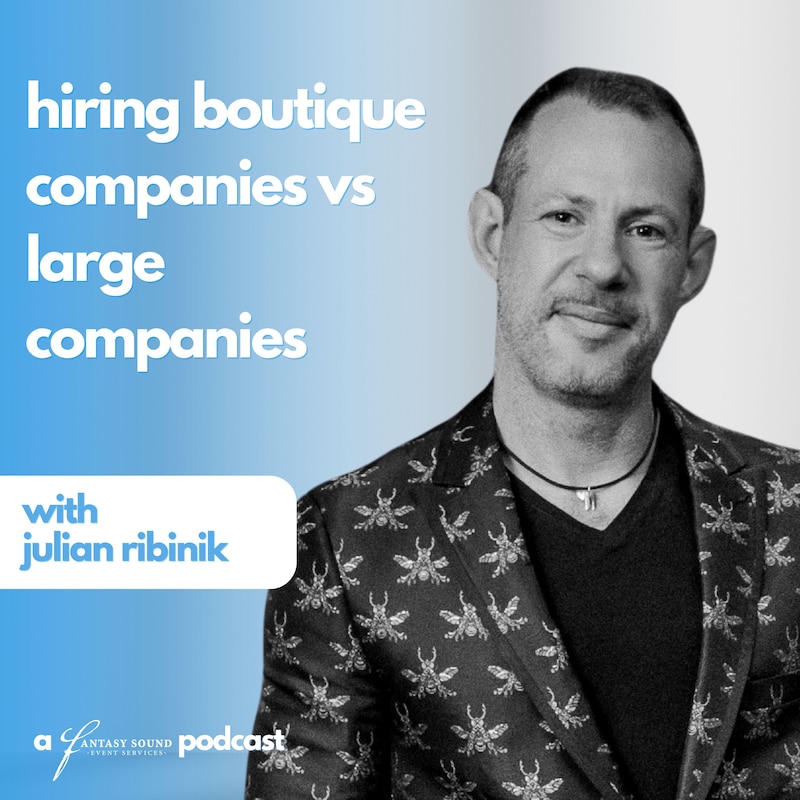
In this episode of Now That I’m Engaged, How Do I Get Married?, Kevin Dennis and August Yocher sit down with Julian Ribinik of Julian Ribinik Studios to break down one of the biggest decisions couples make when building their wedding vendor team: choosing between boutique vendors and larger companies.
Julian shares why the conversation is more nuanced than couples may realize, explaining that “large” doesn’t always mean experienced and “boutique” doesn’t always mean small. Together, they unpack how communication, personal connection, consistency, and trust all play major roles in shaping the wedding experience, especially when couples may not know who will be there on the wedding day.
The conversation dives into the pros and cons of both approaches, including the advantages of personalized service, the realities of larger multi-team companies, and why understanding a vendor’s process matters just as much as their portfolio. Julian also shares practical advice on the questions couples should ask during the booking process, the importance of knowing who will actually be handling your event, and why strong communication often matters more than trends or aesthetics.
You’ll also hear an honest discussion about pricing, associate teams, referrals, and how couples can identify the vendors who truly align with their priorities and personalities.
If you’ve ever wondered whether a boutique vendor or a larger company is the right fit for your wedding, this episode will help you better understand the differences and make more confident decisions when building your team.
Julian Ribinik is the owner and creative director of Julian Ribinik Studios, a boutique wedding photography and cinematography studio based in New York City. Originally learning photography alongside his father in the former USSR, Julian developed a documentary-style approach rooted in emotion, instinct, and storytelling. Together with his wife, Evgenia, he has built a studio known for creating imagery that blends honesty with elegance and candid moments with an editorial eye.
Highlights
• The difference between boutique vendors and larger wedding companies
• Why personal connection matters when choosing your vendors
• The risks of not knowing who will actually show up on your wedding day
• Questions couples should ask during the booking process
• The pros and cons of associate teams and larger vendor companies
• Why communication and trust matter more than trends
• How referrals and vendor relationships impact your experience
• What couples should prioritize when building their wedding vendor team
Connect with Julian:
Connect with Kevin & August:
Transcripts
All right, folks, welcome to another episode of Now That I'm Engaged, How Do I Get Married? And today we're here with Julian Ribinik. He's from a Julian Ribinik Studios and he's the creative director and he does whip a sponsor guru and all. He's he's amazing in all many levels, but ⁓ he does. He really does. But today we're going to be talking about hiring boutique companies versus large companies. But before we do, Julian, can you tell us a little bit about yourself and how we got you here today?
August Yocher (:He wears a lot of hats. Yeah.
Julian Ribinik (:Absolutely.
Absolutely. Thank you for having me once again. It's such a pleasure always. Yay. ⁓
August Yocher (:Yes!
Kevin Dennis (:It always has, on our side, it's a pleasure.
Julian Ribinik (:My name is obviously Julian Ribinik I am the owner of Julian Ribinik Studios. We are a boutique wedding photography and video studio in New York City and we work on all the East Coast with office in Miami now. So that is brand new. And how we got here today, I think...
August Yocher (:Mmm.
Julian Ribinik (:being a boutique company and competing and seeing large companies in the market for all the 18 years that I am in the market for good reasons make me kind of an expert on this and I do have my own perspective and I've seen it from.
August Yocher (:Mm-hmm.
Julian Ribinik (:only one side I haven't been a part of the enterprise. I did work for corporate company before which was not video or photo, it was software. But I can tell how those things work when you're working for someone who is not ⁓ necessarily even the owner or when you have people who work for you who don't have the stake in the company as well.
August Yocher (:Mm-hmm.
Yeah.
Kevin Dennis (:Hmm.
Love it. All right, Julian, we're going to jump right in. So when couples hire vendors, what's the difference between working with a boutique company versus a larger, more established company?
Julian Ribinik (:Okay, this is, I think maybe there is some controversy with the question itself. ⁓ Right, because larger and more established company does not mean it's not a boutique company.
Kevin Dennis (:Ooh, I love it.
August Yocher (:Hmm.
gonna be one of my questions like yeah what really is the difference between the two?
Julian Ribinik (:Yeah.
And if it is a large company, doesn't mean they are established.
Kevin Dennis (:Hmm.
August Yocher (:Mmm.
Julian Ribinik (:on any level, I think it's the nature of the company more or less. And I think also that large company can be boutique in general. We have companies that...
Kevin Dennis (:Mm-hmm.
Julian Ribinik (:are very, very established in the market and there is just one person there for 20 years. And we have companies who are two years old and have 20 people working there, right? And obviously it doesn't mean that that newer company would be bad because it might consist of all very established people.
Kevin Dennis (:Hmm.
Julian Ribinik (:but you wouldn't know until you do research and you look at the body of work and sometimes those unions don't really work. So I think it's really hard to talk about the difference unless you're looking at something specific ⁓ in terms of are you working with actual business owner? Are you working with someone who is really seasoned?
August Yocher (:Mm-hmm.
Julian Ribinik (:do you know who is going to be on site with you as a client or you have no idea and then it also might not matter if it's established company or not because there's human relations component, there's communication component and there's big part and maybe I'm getting ahead of myself but as a human,
August Yocher (:Mm-hmm.
Julian Ribinik (:you would always interact better with someone who you know, who you expected to be there, who you have some kind of rapport with, versus someone who just came to your wedding, or any other event.
August Yocher (:Mm-hmm.
Kevin Dennis (:Hmm.
August Yocher (:Right.
Julian Ribinik (:And for that reason alone, we do use associates. We also a company that has two people in charge, so me and my wife, we have four partners and we have multiple weddings. Even this year, we split and she does a wedding as a lead and I do a wedding as a lead. But that said, from the very start, our clients would work.
Kevin Dennis (:Mm-hmm.
August Yocher (:Mm-hmm.
Julian Ribinik (:with us separately. If she's doing that wedding, I might be on the calls in advisory capacity or just because I was a connection point, but she will lead all of that. If I have an associate doing an event, they will be in touch with the client way before the event starts. They will be the one that the couple would know as.
Kevin Dennis (:Hmm.
Julian Ribinik (:the lead, they would meet them ideally in person and if not there will be zoom, they will understand who that is and if there is any you know interaction the associate will be there because otherwise we get into that.
August Yocher (:Yeah.
Julian Ribinik (:non-established or well-established factory, ⁓ which probably we will need to discuss. So I don't think I answered your question. In terms of what the difference is, because I think that maybe ⁓ the question might be formed a little bit differently.
August Yocher (:Yeah. No, no, but I think...
Kevin Dennis (:You
August Yocher (:Yeah, well, and maybe it's like that saying where it's, I don't know what it looks like, but I know it if I see it just because it is so specific between those two. when we're looking for the distinction, when couples are looking for that, what should they be thinking about when they're in the interview and review process when selecting their vendors?
Julian Ribinik (:Mm-hmm.
I think that there's a couple of types of clients who are looking to hire.
a company that does more. And I think it also leans into part that, well, and specifically with photography, we also know that people combine photo and video, right? But you also have these different companies that provide everything.
August Yocher (:Yeah.
Julian Ribinik (:they will do photo, video, DJ, right? They will do lighting, they will do games, will like if it's, ⁓ they will do multiple things. And we just spoke recently on the previous podcast and I mentioned Alex Hormozi. So ⁓ one big thing that he taught me, not personally, of course, but virtually,
August Yocher (:One stop shop.
Julian Ribinik (:And what made me on the good level way more successful than I was two years before is the fact that you cannot really do more than one thing well. It's impossible. ⁓ No matter what things say, unless you're Elon Musk, right? it's very rare for people
to be able to do multiple things on a good level, right? And I used to run three completely different businesses, and as you know, one of them was wellness, and I had to scale one of them and to really reduce to others in order for the most profitable business to become more like a monster instead of trying to do things in parallel.
Kevin Dennis (:Mm.
August Yocher (:Yeah, and I think that's
what the review process is for, Because I think a company can maybe, like you were saying, you kind of have one focus and that's kind of your bread and butter, but they might have other add-ons. But I think that's why interviewing is so important, right? Because you're really trying to figure out what is this company's specialty and what are they really good at?
Julian Ribinik (:Yeah,
that's correct in a large level. And I will try to generalize because I obviously am doing photo and now video and I tend to lean into that, but I really want to go on a bigger level because it's not just a problem for video or photo. There is a lot of companies that do multiple things and...
August Yocher (:Mm-hmm.
Julian Ribinik (:I think when clients start searching for their vendors, most of them have no idea how the market works, who's on the market, who does what, what disciplines are there, right? They don't know, I need photo, video, flowers, and ⁓ the venue, right? And then they need.
August Yocher (:Mm-hmm.
Mm-hmm.
Julian Ribinik (:entertainment, they might not need, might not understand different categories, they might not know that there's florist, there's floral designer, there's, ⁓ you know, day of coordinator, there's full planning, partial planning, ⁓ there's a DJ, there is hybrid DJ, there is DJ that can.
Kevin Dennis (:you
August Yocher (:Mm-hmm.
Julian Ribinik (:never play a wedding because they never played a wedding and then they would go and hire just a DJ. I just saw a band doing a mitzvah that never was at the mitzvah and they just heard them somewhere and brought them and it was a disaster.
August Yocher (:Mm-hmm.
Kevin Dennis (:Mm-hmm.
Hmm.
August Yocher (:you
Kevin Dennis (:Hmm.
August Yocher (:Yeah.
Julian Ribinik (:because they have no idea what they're doing. And even venues who are not normally doing the type of an event, having doing that event and not prepared, they cannot do well because you have different setups, different things happening and you need to be prepared unless it's something very, very simple. So.
August Yocher (:That's not their specialty. Yeah.
Kevin Dennis (:Hmm.
August Yocher (:Right.
Kevin Dennis (:Yeah.
August Yocher (:Well, and I think like a photographer
who's just doing photography, right? They're not using their extra time to put into other baskets. Like obviously they're gonna be more honed in on their craft.
Julian Ribinik (:Absolutely. That said, it can be photographer who doesn't do weddings or doesn't do specific weddings or they don't know the tradition that they need to work with. And if I take, I don't know, someone who works in whatever state it is that doesn't have Indian weddings and they suddenly need to do Indian weddings for three days with things happening in multiple places and there's separate.
August Yocher (:Mm-hmm.
Kevin Dennis (:Mm.
Julian Ribinik (:several traditions that they need to understand, but the couple hired them just because they wanted to save them money, and this is what we're going to lean into, there will be big, big problem. So when people start, they...
Kevin Dennis (:Mm-hmm.
August Yocher (:Mm-hmm.
Julian Ribinik (:unless they are very high end and they come in from referrals and I'm not talking about these couples, I'm talking about regular couple, they're like, we have a wedding and we need a vendor, who do we need, right? So they only see the person that does something and they will just search for that thing. They don't know if it should be boutique, if it should be large company, they have no idea.
August Yocher (:Mm-hmm.
Right.
Julian Ribinik (:and usually without trying to offend anyone, that would be lower end market. People who don't have much money to spend or don't want to spend much money, people who don't do much research, and they simply don't know.
Kevin Dennis (:Hmm.
August Yocher (:Mm-hmm.
Julian Ribinik (:the higher the market goes, the more you have the people who go to events, who see what's happening, they start working on referrals and they hire vendors that someone else has hired. And obviously you will see that if in lower market you're working with a large company that sends whoever, and it might be a hit or might be a miss. And if it will be a miss, then that vendor is burned for that circle of friends. But it could be great.
Kevin Dennis (:Hmm.
Julian Ribinik (:or they might like it even if it's not great because they had their own subjective good experience. So that vendor will be inherited by the next friend who might have horrible experience, right? Or they care more, right? In my world ⁓ of photography, it's very subjective and no matter what most photographers say, like I'm an artist and whatever, you can take horrible photo and your client will love it.
Kevin Dennis (:Hmm.
August Yocher (:Mm-hmm.
Julian Ribinik (:⁓ and another client will hate it. Right? And it can be a band that plays really bad and the sound is really bad and the client loved it and they had fun and they had some drinks and everything was fine. And then they performed at their friend's wedding and it was horrible for that because, ⁓ they can't play and like.
August Yocher (:Yeah, it's true.
Mm-hmm.
Mm-hmm.
Julian Ribinik (:they don't know what they're doing and the rhythm and that people are falling asleep there, ⁓ Which, and those things are usually happening when the company generalizing instead of being specializing. So, and if I'm talking about boutique company, it's usually someone who is very specialized, who is doing, like one of you said,
they stick into their craft for years, they know exactly what they're doing, know exactly where not to be, where to say no, right? I don't do that. We are not qualified to do that. Versus companies who are generalizing and they will do whatever just to get the money, right? And if we have larger company that can, like, we do florals for everything, but...
August Yocher (:Mm-hmm.
Mm-hmm.
Kevin Dennis (:Mm-hmm.
August Yocher (:Mm-hmm.
Julian Ribinik (:then
they maybe don't know how to do anything. They can just deliver flowers. It's really important for the couple to actually understand what are we going for? What kind of florals we want to have? What kind of music we want to have? What kind of photography we want to have? And is it important to us to have a general contact or a personal contact?
Kevin Dennis (:Mmm.
August Yocher (:Mm-hmm.
Julian Ribinik (:Some people, especially again, people who don't pay much money, they can go to the venue and they don't care who's the salesperson. If that salesperson goes away and someone else is talking to them, they just want to get it done. And some people will be very attached who they started working with. We did our own event and salesperson was changed. We left the venue and dropped the deposit because the new person was not.
Kevin Dennis (:Mm-hmm.
August Yocher (:Yeah.
Yeah.
Julian Ribinik (:to our standard, we couldn't deal with them. Right, and it was very important to us personally to have that event on the level that we wanted, and it would be impossible if the person is not communicating well. Right, there are, and I'll go like for DJs, there are people who care how the music is going to be, and they care about who is DJing that, and there are people who just want a DJ.
Kevin Dennis (:Yeah, no. No, does make a lot of sense. Yeah.
Julian Ribinik (:if it makes any sense, right? ⁓
August Yocher (:Yeah.
Julian Ribinik (:And again, I would say that the more upscale the event is, the more connection and dependence they have on the vendor.
Kevin Dennis (:Mmm.
Julian Ribinik (:And you would also see that when people are business owners and they come to the job versus someone who is not the business owner, they're being treated completely differently. Right? If I am going...
Kevin Dennis (:Mm-hmm.
August Yocher (:I think it's like a reputation
thing too, right?
Julian Ribinik (:Right, and when people didn't pay much money, they also don't really care who is there on some levels, right? They're just like, there's a photographer, cool, they're taking photos. ⁓ When people invest in that, they really care who that is, but that someone doesn't need to actually do the job, because they just need to be there.
August Yocher (:Mm-hmm.
Yeah, and I feel like it's kind of based on, like you're saying too, like the couple's priorities as well. Like, I'm sure there are some areas, and we've talked about this on the podcast before, like maybe photography is extremely important to you. That's where you're putting the most money. That's where you're going to really want the personal connection to because you are spending all day with them, potentially engagement photos too, but maybe like, you know, cake is not as important to you. So you might not care.
as much about how that turns out. I think it's priorities as well.
Julian Ribinik (:or maybe the cake is very important and you want Ron Ben Israel to make cake personal and deliver to you, right? Ron, if you hear that, you owe me. ⁓
August Yocher (:Exactly. Yes, yes.
Kevin Dennis (:My son wants that. He loves that guy.
August Yocher (:Hehehehe
Yeah!
Julian Ribinik (:So there's another big component and I kind of mentioned it in passing that the larger companies, the more people you have working there and it means the potential less money they get and less control they have and the owner has less control over them. And in this industry,
Kevin Dennis (:Hmm.
August Yocher (:Mm-hmm. Yeah
Julian Ribinik (:usually people either care about the work and they want to be involved or not because it's very personal industry. Unless you are doing dance floors, right? Because no one really cares about the guy who puts, you know, the vinyl on the floor. No one does, absolutely. ⁓ And then you can, you're only as good as your work. Yeah.
Kevin Dennis (:Hmm.
Yeah, yeah.
Sorry all those guys.
August Yocher (:Hahaha
Well, and Julian,
can you speak a little bit more to kind of the biggest advantages of hiring a boutique vendor versus the biggest advantages of working with a larger company and specifically a larger company that's established, right? Like we just kind of want to know what advantages are we seeing in both?
Julian Ribinik (:When you're working with a boutique company, you almost always guarantee who you're working with.
Kevin Dennis (:Mm.
August Yocher (:Right.
Julian Ribinik (:And if you care about the person who will be there with you on the wedding day, or you care about the person who you will be communicating with most of the time, that is really important. And that goes for planning, it goes for florals, it goes for music, it goes for everything else.
If you spoke to the person before, if you know them, if you met them, if you trust them and they are there on the wedding day, you will have less stress. You will definitely enjoy your day more because you already connected and you understand that you are being supported.
August Yocher (:Yeah.
Mm-hmm.
Kevin Dennis (:Hmm.
Hmm.
Julian Ribinik (:versus if you spoke to someone or you spoke to something automatic or emails or whatever and you have no idea who or what that was and now in this day and age there's a what, which will be completely different conversation.
August Yocher (:Hmm.
Kevin Dennis (:Mm-hmm.
Julian Ribinik (:You either should not care because like you, I don't care who that is on my day and what they do as long as I get something. Or you might be very stressed and not having a good time because you will be wondering is that person doing what they need to? Will they deliver? Will I see them after? And like endless amount of ⁓ ifs.
Kevin Dennis (:Hmm.
August Yocher (:Mm-hmm.
Julian Ribinik (:even if it's an established company, because if you spoke to the owner, and they may be a very known person and like very, you know, presentable, and they send someone who you don't know, you might still have issues, even on just a psychological level.
August Yocher (:Yeah.
Kevin Dennis (:Mm.
August Yocher (:Mm-hmm.
Yeah, and you don't want to be thinking about that on the day of.
Julian Ribinik (:Absolutely, unless again, they are doing something that you're really not going to see them, you're not going to care about, like AV people, like you will never talk to them, right? They will probably doing something and you will just, they're not visible to you. So on the flip side.
Kevin Dennis (:Mm-hmm.
Julian Ribinik (:you're getting usually advantages of doing those things because you pay, most likely you will be paying less than having the owner there. And most of the time it works like this. And I think that's the only advantage of that, that you might be paying less. And by the way,
Kevin Dennis (:Mm-hmm.
August Yocher (:Mm-hmm.
Julian Ribinik (:if it's an established company, it sometimes might be a disadvantage to the owner to pay less. Because if it's themselves, they don't need to pay themselves. If I'm sending someone, I need to pay them money. So there's also that. So for example, we, when we send an associate, we don't price less anymore. We don't say, oh, like, you are...
Kevin Dennis (:Mm-hmm.
August Yocher (:Mm-hmm.
Kevin Dennis (:Mmm.
Julian Ribinik (:going to pay less and you will get this guy. Also, you think logically, if you're not getting someone that is the owner and you pay less, you can expect lower level of service, right? Which is not necessarily true when it's an established and good company because these people might be paying their associates a lot.
Kevin Dennis (:Mm-hmm.
August Yocher (:Mm-hmm.
Kevin Dennis (:Mm-hmm.
Julian Ribinik (:planners, know, DJs who work for them, whoever it is. But it's not the case most of the time. Most of the time you're doing this because you just want to scale and you want to be able to do more than one thing on the day. And for most companies, again, for most companies, it starts with like, let me get someone who will do something for me and I won't be there anyway so I can be caring less.
Kevin Dennis (:Mm-hmm.
Mm.
Julian Ribinik (:which is
August Yocher (:Mm-hmm.
Julian Ribinik (:where the problem starts. ⁓ Photography-wise, only know a handful of studios who hire really, really good photographers to pay them a ton of money, and they present these photographers to clients, and clients really pick up, I love this guy's work, and that guy's work. Like, let me choose by work, but most people would just send someone because that person is available.
August Yocher (:Mm-hmm.
Kevin Dennis (:Mm-hmm.
Julian Ribinik (:and they will not let the client choose based on the actual deliverables that they will get.
August Yocher (:That's crazy, actually.
Julian Ribinik (:That's the fact. ⁓ And by the way, with planners it's the same thing. I have encountered multiple situations in the past and ⁓ now we don't have that because we're working in a different market where this planning company, have five, six, 10, 12 planners and there's one salesperson and then the girl who comes, she might be new and not be useful at all.
August Yocher (:Mm-hmm.
Right.
Julian Ribinik (:or she didn't learn anything at all or she just came on board and doesn't know the client. So there are a lot of pitfalls there. ⁓ Now, if we're about the big downside of that part, as an owner, I will care a lot about what I do.
Kevin Dennis (:Hmm.
August Yocher (:Yeah.
Julian Ribinik (:because it's not just I'm getting the money, I need to make sure the client is happy, it's my personal relationship, it might be a referral, it might be anything really.
Kevin Dennis (:Yeah.
Julian Ribinik (:that will affect my livelihood, it will affect my ⁓ business, it will affect my relationships, and my reputation, right? And that's on top of me just caring about my clients. And by the way, let's be honest, not everyone cares. People are very different, for some it's just business, like I'm doing it because I want to do business, I'm not doing this because I...
August Yocher (:Mm-hmm.
Mm-hmm.
Yeah.
Kevin Dennis (:Yeah, that's true.
Julian Ribinik (:love weddings, love people, yeah, all of love. And maybe it started this way, but that was like 30 years ago. Yeah, right. So.
August Yocher (:your passion about it. Yeah, like you, yeah.
Kevin Dennis (:Nice.
August Yocher (:Mm-hmm.
Julian Ribinik (:It will be just with like, I have this analogy when I talk to my kids, like, you know, like when I was your age, I was, you know, not sitting on iPhone all day. was working and I was earning my money and I was working in the grocery store and trying to teach them a lesson, understand that like money didn't come from anywhere, nowhere, but they cannot relate to that. They never experienced that. They always had whatever they have and like,
August Yocher (:Yeah.
Kevin Dennis (:Mm-hmm.
August Yocher (:Yeah.
Mm-hmm.
Julian Ribinik (:Who cares that you that didn't have the money or like, and had to work at age of 14? No one cares. And we have the same thing here, right? Because like if you never experienced that, you cannot relate to that situation. People who work for other people are definitely not people who care as much as the business owner, period.
August Yocher (:Right.
Kevin Dennis (:Yeah.
Yeah.
Mm-hmm.
Julian Ribinik (:You can't argue that on any level, right? Because if I hired someone, they can work for me for 20 years, but unless they are equal partners, they cannot care as much as I care.
Kevin Dennis (:Mm-hmm.
Yeah, very true.
August Yocher (:Yeah, they're not
the same amount of invested as you. Yeah.
Julian Ribinik (:Correct,
right? And it's the same in corporate world. Because you can hire the best person ever and they might be killing themselves for you, but the second there's better offer on somewhere or the client wants to give them more, they will just go. Loyalty is not going to be their top priority because in the end it's money on the table. And.
Kevin Dennis (:Mm-hmm.
August Yocher (:Mm-hmm.
Julian Ribinik (:just personally on the human level, it's really hard to care about someone who is not your direct client, especially if the responsibility is not really yours. So larger companies, they hire people who come, they just there for the day, they don't have the relationship, they don't know the person, they, if anything, they will not be the ones who get the beating
Kevin Dennis (:Yeah.
Mm-hmm.
Julian Ribinik (:And the worst case, the worst case they might get fired or screamed at or whatever. And by the way, those larger companies who have, who are like more like factories, they don't really fire people easily too. Cause next one. And, there will be another bad review on Reddit or whatever, but we're big and not everyone checks on Google or Reddit or like.
Kevin Dennis (:Hmm. Hmm.
August Yocher (:Mm-hmm.
Mm-hmm.
Mm-hmm.
Kevin Dennis (:Yeah.
August Yocher (:Mm-hmm.
Julian Ribinik (:So, and maybe they don't have place to live with us. So, I think it's a downside on most levels unless you want to save money to work with a larger company. And if it's a larger company, you always want to know who you're working with. And of course, we're not talking about company who is manufacturing things.
Kevin Dennis (:That's true.
Hmm.
Julian Ribinik (:Because
product is a product, if they have good product, you get the product. We're talking about people who have, it's a service and you're working with humans who need to deliver on the human level, on the communication level, and also on the level of it's a craft.
August Yocher (:Mm-hmm.
Kevin Dennis (:Yeah.
August Yocher (:Right.
Julian Ribinik (:Right, because if I'm doing drapery, I'm doing drapery. Right, and in the end, it's a person in charge who is saying like how to do and checks everything. And it can be like 40 workers who like, we are okay, we don't need to be artists because if it would be artists, we wouldn't be here in the first place.
August Yocher (:Mm-hmm.
Kevin Dennis (:Mm-hmm.
August Yocher (:Mm-hmm.
Yeah, I mean, yeah, it's a lot different than just like, a rental item. you know, we're gonna place this couch here. Like, you don't necessarily need an expert to be doing that.
Julian Ribinik (:And you have other people to care
for that. will have the designer and the planner who's like, okay, this is where we put the couch. Right, and for the client is like, just like, do I like this couch or I don't like this couch? Does it look good or it's not blingy enough?
August Yocher (:Yes. Yes.
Kevin Dennis (:Yeah, move over here, do that. Yeah, yeah.
August Yocher (:Right? Yeah.
Kevin Dennis (:Hehehehe
That's funny.
August Yocher (:Yeah, but to
provide the service, you don't necessarily have to be like an expert in that area. What questions do you think couples should be asking to try to understand how like hands on or personalized their experience with their vendor is going to be?
Julian Ribinik (:I will ask with the most asked question that I get, and it's like, you going to be there on our day? I'm talking to you right now, and I love you and everything, are you going to be there?
August Yocher (:Mm-hmm.
Are you the one? Yes.
Mm-hmm.
Kevin Dennis (:Mm-hmm.
Julian Ribinik (:And
you as a client or a prospect need to ask that question?
Right? And you getting the answer that is not, you already should have a big, huge red flag because whoever you're talking to has to say right away, we have that date, it's not going to be me, it's going to be ABC. They should tell you, and of course, when we send a query for event and asking, you available? First, like if they talk to you,
Kevin Dennis (:Mm-hmm.
August Yocher (:Hmm.
Julian Ribinik (:they need to be available as a company, right? But they also need to start with, hey, we have availability, it's going to be this person. And it's going to be this person, right, because I'm not available, but my wife, Evgenia, will be there and she's equal part, she's amazing. ⁓ Or we are already booked for this date, but we have six teams.
Kevin Dennis (:Yeah, yeah.
August Yocher (:Mm-hmm.
Kevin Dennis (:Mm-hmm.
August Yocher (:Yeah, not after booking.
Kevin Dennis (:Hmm.
Julian Ribinik (:And personally, I cannot be there, but I will have this guy and this is his work. Right? And I say it upfront because otherwise it will never be set. then, or.
Kevin Dennis (:Mm-hmm.
Well, it's not like a bait and switch, you know?
August Yocher (:Mm-hmm.
Julian Ribinik (:Yeah, or
Kevin Dennis (:Yeah.
Julian Ribinik (:last minute we'll be like, by the way, like this guy is going to this goal is going to be like my associate planner is the one who's doing this. Right? If you didn't know that from the very start, and you got to the contract point and you go to the payment point, you pass that.
Kevin Dennis (:Mm-hmm.
Yeah.
Mm-hmm.
August Yocher (:Mm-hmm.
Julian Ribinik (:and then you, like, it's a big problem. So if you ask someone and they say, by the way, it's going to be someone else, you need to hang up the phone, you need to disconnect the Zoom, you need to be polite and say thank you, but it doesn't work for me, of course, but you should not continue because that person had to be very truthful and candid about it upfront. It's a huge threat flag.
Kevin Dennis (:Mm-hmm.
August Yocher (:Yeah.
Mmm.
Well yeah, and like
how can you trust them with any just deliverables in general moving forward? It's gonna be hard to work with that person.
Julian Ribinik (:That is correct. And I think that's a biggest single answer or question that should be taken care of. Also, question is how is your process? How are we going to get to the point of the wedding? What is happening between now and the wedding? And if that person doesn't have a process for you saying, oh, we'll be there on the wedding day.
August Yocher (:Mm-hmm.
Kevin Dennis (:Hmm.
Julian Ribinik (:that's a big, big right flag as well.
Kevin Dennis (:Yeah.
Julian Ribinik (:Because if you are established and you have a company, you should know exactly what to do and you should be guiding your client through the whatever time you have, it a year and a half, two years, four months before the event that is going to happen. You need to have a process. You need to be able to tell a client what is happening, when it's happening, how to be in touch. Ask them what methods of communication are preferred for you. And by the way, I know most are like, I'm just doing
email, right? We are not doing that. We're telling the client what is your preferred method of communication. I'm correct.
Kevin Dennis (:Yeah.
August Yocher (:Mm-hmm.
Mm-hmm.
Kevin Dennis (:Yeah,
meet them where they want to be met.
Julian Ribinik (:And ⁓ I think that's basically it.
August Yocher (:Mm-hmm.
Kevin Dennis (:Yeah, that's good. right, so what's one, like if a couple is deciding between two options, like one boutique and one large, or what ultimately should guide their decision?
Julian Ribinik (:Do they care?
Kevin Dennis (:Okay.
August Yocher (:Hmm.
Julian Ribinik (:And it sounds like a very stupid question because obviously everyone cares, but no. But no. When again, like if I'm looking at my industry.
Kevin Dennis (:Not every.
Julian Ribinik (:Many times we are being asked about video and this is why we started doing video as well. And by the way, we have someone who we hired and it's not their business. And this is because we are not in business of doing video. We're in business providing you that service should you want to do it with someone who is not specialized in that. And that's because most couples who come to us and ask about video, they don't even care who that is or the style.
August Yocher (:Mm-hmm.
Kevin Dennis (:Mm-hmm.
August Yocher (:The style even.
Julian Ribinik (:They just,
or the style, not everyone, right? But some people like, just want to have the video documentation of my date. That's it. They would spend hours on talking about what they want from photo and they just like, I just want a guy with a camera.
Kevin Dennis (:Pretty shocking. Yeah. Yeah.
August Yocher (:Yeah.
Yeah, yeah.
Kevin Dennis (:Yeah.
No, that's funny.
August Yocher (:Mm-hmm.
Julian Ribinik (:and that sucks, ⁓ but that's the situation, right? So it's very easy to bring someone who is doing video because they're not going to be even interested like what the name is, ⁓ which again is sad. And for many others, there are other situations where you bring someone and the client just doesn't care.
August Yocher (:Mm-hmm. The reality, yeah. Mm-hmm.
Mm.
Julian Ribinik (:Maybe they want to be connected to the DJ, maybe like, I don't care that it's a guy who plays something. And again, it's fair because if I don't care, I don't care. Whatever guys who do in my backyard, I don't care what the names are. Like maybe I'm a sh*tty person, but not right.
August Yocher (:Mm-hmm.
Kevin Dennis (:Yeah.
Yeah.
Julian Ribinik (:And someone will really want to go out and know everyone's name and make sure that they, right? Because we're all people, have different preferences and we care about different things. ⁓ And it doesn't make someone necessarily bad person, but you really need to ask yourself, do I care about who is going to do that? And then do I care about the outcome? Because if you do care about outcome,
August Yocher (:That's a really good example actually, yeah.
Kevin Dennis (:Yeah.
August Yocher (:Mm-hmm.
Mm-hmm.
Kevin Dennis (:Yeah.
Julian Ribinik (:You should make sure that you actually get in that. need to know what is that person like? Can you communicate with them? Do you have a report? Will they be doing on the wedding day what you want them to do? And will be you comfortable on being around? If it's a creative, can they actually deliver what you want?
Kevin Dennis (:Mm-hmm.
Yeah.
Julian Ribinik (:Right, be it a florist, be it a photographer or be it a planner.
August Yocher (:Mm-hmm.
Kevin Dennis (:Mm-hmm.
August Yocher (:Mm-hmm.
Julian Ribinik (:And I can talk about the planner specifically, right? Because you can talk to someone who has a business for 30 years, and they're very established, they've seen it all, but they're sending someone who's doing it for three years, and they will get stuck in the elevator with a group of groomsmen and panic and just like lose it, right? ⁓
Kevin Dennis (:Yeah.
Yeah.
August Yocher (:Mm-hmm.
Julian Ribinik (:or
something will be missing and they won't be able to handle it. They will come to you and say, my God, like we lost this or whatever, right? And you don't want that to happen. Unless again, you don't care or like, okay, people are people like at least I'm paying less money for that.
August Yocher (:Mm-hmm.
Kevin Dennis (:Yeah. Yeah.
Yeah, true.
August Yocher (:Right.
Julian Ribinik (:and absolute majority of people will say, well, I really do care about these things. I really do want to have a connection, I want to have a good profession, I want this and this and this. And then it kind of answers the question, do I want to go?
August Yocher (:Mm-hmm.
Julian Ribinik (:and get something more like faceless, even if that company is very established and runs for long time. ⁓ And by the way, I'll go back to that. The company can be there for 40 years. They still might be horrible company to work with. Like New York and New Jersey area have companies who doing entertainment since before I was born.
Kevin Dennis (:Hmm.
Mm-hmm.
August Yocher (:Mm-hmm.
Julian Ribinik (:They have a ton of client and when we used to do those lower end events, you don't understand why people hired these people because they dress horribly, they behave horribly. They have very random personnel there and ⁓ they like act like it's their own wedding and they try to dictate the rules and they really don't know what they're doing, but they are doing it for years and they have maybe 50, 60 people on the roster.
Kevin Dennis (:Mm-hmm.
Wow.
Julian Ribinik (:The same can be about, I know there's David Bridal who have photography branch.
Kevin Dennis (:I didn't know that.
August Yocher (:What? I did not know that.
Julian Ribinik (:Yeah,
here you go. ⁓ And then there are different factory companies that have crazy amounts of people who they just hire. And it used to be even through Craigslist, just to fill the slots and they would charge clients very minimal amount of money and we just send someone.
Kevin Dennis (:Mm-hmm.
Julian Ribinik (:but the results are the same. So you really want to pay attention to what's important. And if you cannot spend what your dream vendor wants, like in terms of money, ask them for recommendations who they can recommend, who would they trust?
Kevin Dennis (:Wow.
August Yocher (:Mm-hmm.
Julian Ribinik (:because when someone comes to me and they cannot afford me or we are not able to do it and people do ask for recommendations, I will pinpoint one or two people who I really trust who can be at least as good as I am in something. And by the way, I'm not an amazing photographer, right? And.
August Yocher (:Mm-hmm.
Yes you are.
Kevin Dennis (:Mm-hmm.
Julian Ribinik (:Maybe, but also
it's not up to me to say, but I am really, really good in being a human with clients. And I would...
August Yocher (:Yeah.
Kevin Dennis (:No, I get it. Yeah.
August Yocher (:Mm. Mm-hmm. Yeah. Yeah. You still want
what's best for them. You still want them to have a good day.
Julian Ribinik (:Correct,
and photography is very subjective. And they might like something or not, and there's like, everyone was orange and now everyone is brown and now everyone is blue and today, and now it's cloud dancer color and everything will be white. doesn't matter, it's all trends, but there's no trends in what is good communication. There's no trends in kindness.
Kevin Dennis (:Mm-hmm.
August Yocher (:Absolutely.
Mm-hmm.
Yeah!
Mm-hmm.
Kevin Dennis (:Mmm.
Julian Ribinik (:There's no
August Yocher (:Never
Julian Ribinik (:trends in empathy, right? That is just like you either that or you're not. You're either able to communicate with people and go and do your absolute best or you're not. And there's no anything as it's like, there's no trends, there's no fashion, there's no like, today I'm going to be mean person because it's like, you know, yeah, it's popular.
August Yocher (:goes out of style.
Kevin Dennis (:Yeah.
August Yocher (:Mm-hmm.
Kevin Dennis (:Or you can't.
Mm-hmm.
In vogue. ⁓
August Yocher (:In style, yeah!
Julian Ribinik (:And I think that is very, very important to understand because that report is what's going to make it or break it. So it's, in my opinion, it's always better to work with someone who will be there or you completely trust the person they are giving you that is in charge and it's not a random person. And of course,
Kevin Dennis (:Yeah.
Yeah.
Julian Ribinik (:wrong situations happens, like someone got sick or they got stuck on the road, like it's very, very.
August Yocher (:Yeah, that happened to
one of my friends. She got married, it was like two or three years ago, hired this photo team and they got COVID like two days before her wedding, but they had another amazing team that they recommended and they took care of the costs and everything and sent the other team and she still had amazing photos, but yeah, stuff like that happens.
Julian Ribinik (:And by the way, this is a really nice thing to say and very much in place because if a vendor doesn't have someone really good to recommend who they trust, there's something wrong with that vendor.
Kevin Dennis (:Yeah.
Julian Ribinik (:Because we all have people who will really trust that we gathered over years who will go and like do good job for us. And it might be different style or they might be different like DJ style, have DJ styles too, right? But they will be a person who can be trusted. Do not screw up your client. Do not screw you up to be there and then in cases of like photography, videography to deliver.
August Yocher (:Mmm, yeah.
Kevin Dennis (:Mm-hmm.
Yeah.
Julian Ribinik (:not just be a nice person and shoot the event, actually deliver the footage.
Kevin Dennis (:Yeah,
at the end of the day, months after the wedding. So, yeah.
Julian Ribinik (:Absolutely. ⁓
So the question ⁓ that always should be asked, and it does marry first but you cannot ask, what happens if you cannot make it?
Kevin Dennis (:Yeah, that's a good question. ⁓ all right. So as we wrap up, we're getting to the end here, Julian. If couples take away one piece of advice when choosing between boutique and large companies, what should it be?
August Yocher (:Mm-hmm.
Julian Ribinik (:I have a boutique. Always know who you're working with. And of course, it's self-serving.
Kevin Dennis (:Hahaha!
August Yocher (:personal connection.
Kevin Dennis (:Yeah, I love
it. I think that's the shortest answer you've ever given us, That's his mic drop. Yeah, mic drop. Julian out. All right, Julian. Well, with that said, we can't thank you enough for coming on and sharing your wisdom with all of our couples out there. So, ⁓ you know, where can folks find you, Julian?
August Yocher (:It doesn't need to be elaborated.
Julian Ribinik (:You told me to wrap up. I'm really trying.
You can always find me on Julian Ribinik Studios and it's with R-I-B-I-N-I-K on Instagram, or at julianribinik.com
Kevin Dennis (:Alright, and we'll have all of Julian's information in the show notes, And then don't forget to hit the subscribe button if you've not done that yet. Yes, please do. And then don't forget to send your stories or your questions to [email protected] and we'll be happy to cover them on the podcast. Julian, we can't thank you enough for being here.
Julian Ribinik (:subscribe.
August Yocher (:Subscribe.
Julian Ribinik (:Thank you so much. It's been an honor.
August Yocher (:Thank you, Julian.
Kevin Dennis (:All
Alright. Thank you, sir. Folks, we'll see you next time on another episode of Now That I'm Engaged, How Do I Get Married?


