Shownotes
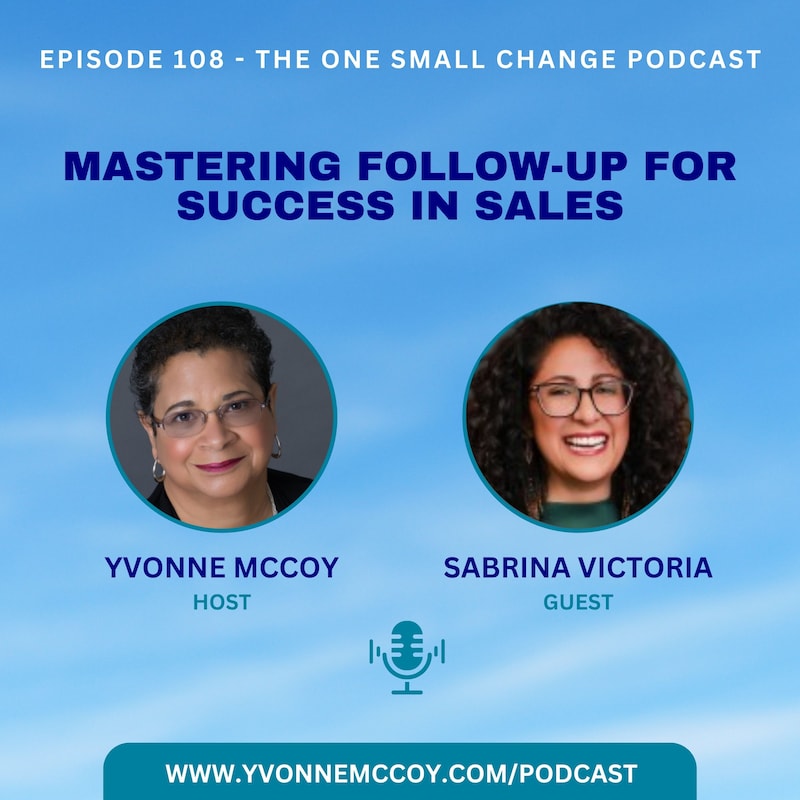
In this episode of The One Small Change Podcast, Yvonne McCoy welcomes Sabrina Victoria to unpack the real strategies that empower women business owners to move beyond survival mode toward thriving success. The discussion dives deep into the importance of community, how to overcome blind spots in business, the challenges women face in sales—especially around pricing and pitching—and practical tips to confidently close more deals. Together, they share heartfelt stories, actionable advice, and a generous mastermind invitation to help listeners accelerate their entrepreneurial journeys.
Guest Bio:
Sabrina Victoria is the founder of Her Nation Global, an empowering community supporting women in business through a podcast, digital magazine, and masterminds. With a background in high-pressure sales and leadership, she’s passionate about creating spaces where women can amplify their strengths, learn together, and transform their businesses from surviving to thriving.
Chapters:
00:00 Starting my first mastermind
04:28 Using mastermind to boost business
07:56 Enhancing remote communication skills
11:56 Product quality and customer feedback doubts
14:01 Overcoming pricing objections
18:27 Recognizing undervalued strengths
22:57 Keeping skincare convenient
25:36 Building trust for better sales
28:14 Incorporating numbers throughout a pitch
30:24 Encouragement to subscribe and share
Quote from the Guest:
“You only know what you know, you know? And sometimes there’s things that you don’t even know that you don’t know.”
Link:
Transcripts
Welcome everybody to The One Small Change. I am thrilled to
Speaker:embark on this journey of exploration and transformation with you. And if you
Speaker:haven't been here before, I'm your host, Yvonne McCoy, and I bring
Speaker:almost 30 years— actually over 30 years— of entrepreneurial
Speaker:experience. And I have an insane passion for
Speaker:discovering growth through the power of seemingly small change. And
Speaker:every week I try to bring you somebody who's interested
Speaker:interesting and can help you grow your business and help you
Speaker:expand your perspective on how to grow your business. And this
Speaker:week I am talking with Sabrina Victoria, and
Speaker:she is going to share with you what made her
Speaker:decide to do what she do— do what she does. Sorry
Speaker:guys, do what she does and makes her the
Speaker:best at it than anybody else. Victoria. Victoria.
Speaker:Sabrina, sorry. Thank you so much for being here,
Speaker:and I apologize for the, the weird lips I'm having. Girl,
Speaker:that's fine. I get called Victoria often, and,
Speaker:um, some people call me Samantha, dude. So I mean,
Speaker:yeah, well, I won't call you Samantha. Now that you've said that, I probably will.
Speaker:But so, so you have a really
Speaker:interesting story. Um, so tell everybody what you
Speaker:do and what happened that made you to be so good at
Speaker:this? Yeah, so what I do now, I run a community
Speaker:called Her Nation Global. Um, I run a media side, so I run a
Speaker:podcast and a digital magazine, and then I also run a mastermind. The,
Speaker:uh, idea or the mission behind the entire thing is to help
Speaker:women business owners create thriving businesses
Speaker:versus businesses that are barely surviving. I am all about
Speaker:community. I really do believe that when we're doing hard things It's
Speaker:best to do hard things in a group with other people that are doing that
Speaker:same hard thing. I absolutely agree. I
Speaker:mean, the very first thing that you said that was
Speaker:like, you know, made my antenna go up is community. Because
Speaker:I think one of the biggest things that
Speaker:people don't do early is get into community because that gives you an
Speaker:outside perspective. You know, you, you're automatically
Speaker:gonna grow your confidence, but, you know,
Speaker:too many people think I need to wait till I'm good enough before I can.
Speaker:But you add value just by being in the community.
Speaker:Yeah. Yeah, absolutely. I always say there's something that I
Speaker:know that you don't know, and there's something that you know that I don't know.
Speaker:And when we can get into a room and we can share those knowings together,
Speaker:then we both walk away one step up. And that's the whole idea behind the
Speaker:whole thing is you only know what you know, you know? So it's like, and
Speaker:sometimes there's things that you don't even know that you don't know. So it's like
Speaker:you don't even know what questions to ask because you don't even know to know
Speaker:the thing. So I remember this brings me back to when I first started my
Speaker:mastermind. It's so crazy thinking about this, but I actually started my
Speaker:mastermind on how to run a business before I even knew what
Speaker:a CRM was. Which is crazy to
Speaker:me. Uh, but one day I was like showing my ladies this like really thick
Speaker:binder that I had and I'm like, you got to get organized and you
Speaker:have to like get forms and they have to, and they're all looking at me
Speaker:like, girl, and I'm running it. They're like,
Speaker:why are you not on a CRM? I'm like, I don't even know what a
Speaker:CRM is. Okay. So I want to, I want to stop
Speaker:because there are a couple of things here. Yeah. That are really important.
Speaker:So the first thing is, the place that you don't know what you don't
Speaker:know is your blind spot. Okay? And you
Speaker:operate as if it's not there. And so it can be a really dangerous hole
Speaker:that you find yourself in if you don't have some perspective. And
Speaker:it's— other people can help you put up the guardrails so that you don't fall
Speaker:in. So that's the first thing. The second thing is,
Speaker:If you will notice, she said, I'm running
Speaker:this thing and there are people in it that know more than I know. And
Speaker:so I don't want you to, to not step
Speaker:out and do your business. Yeah. Right? Because you're going to be
Speaker:helpful. You're going to know things that other people don't know. And so you don't
Speaker:know— you're never going to know everything. That's the whole thing.
Speaker:Yeah. You are never going to know everything. You are never going to be good
Speaker:at everything. And so So there's no reason for you to put
Speaker:off doing what, what you do well.
Speaker:Yeah. Yeah. The whole thing started because I was trying to help women sell, right?
Speaker:So I'm really good at the marketing, promotions, and
Speaker:selling, right? But the whole organization of the whole thing, I had
Speaker:absolutely no idea. And I always say that it was so interesting
Speaker:opening the mastermind because my mastermind business
Speaker:exploded because of the mastermind. So I was
Speaker:using the mastermind just as diligently as the women
Speaker:investing in the mastermind were using it. And because I was so
Speaker:open and curious and asking so many questions using the
Speaker:mastermind, as you are supposed to, my business
Speaker:exploded 10 times faster than it would've if I would've done it on my own.
Speaker:Absolutely. Absolutely. So tell us what
Speaker:happened to get— that makes you so good at this, because this is an
Speaker:interesting story. Yeah. So I was raised as a Jehovah's Witness.
Speaker:So I always say I've been knocking doors since I was 5. I've been hawking
Speaker:religion since I was 5, or hawking something. I'm no longer a Jehovah's
Speaker:Witness, but I, um, got into door-to-door sales. I
Speaker:ended up in door-to-door sales pretty much straight outta high school. I started
Speaker:business-to-business, eventually went to door-to-door. And, uh,
Speaker:pre-COVID, I was running 150 sales reps, 6 offices,
Speaker:4 different states, predominantly men. Uh, very aggressive
Speaker:masculine sales, pulling in well over a million a year.
Speaker:And, um, yeah, I wound up converting during that COVID
Speaker:time because door-to-door got closed down into online sales. I didn't do it
Speaker:willingly. Um, and there's a huge difference between door-to-door.
Speaker:People don't realize there's a huge difference between door-to-door and online. Door-to-door, you have
Speaker:the, the vibration, the energy right there with you. You can touch people, you can
Speaker:go to their house, you can compliment their kids. You can kind of feed off
Speaker:the energy of the whole family, uh, versus online you're talking
Speaker:to, you know, individual boxes. You know, the
Speaker:vibe is different. You can't touch people or compliment people the same way you
Speaker:can when you're actually in person with individuals. So there was definitely a
Speaker:huge barrier for me when I first got on. I was like, how am I
Speaker:supposed to sell this person? I can't touch them, I can't smell them, I can't,
Speaker:you know, see what's happening in and around them. They're just confining to this
Speaker:little box. This is all they're letting me see. Um, so
Speaker:yeah, it was a, it was a huge change for me, and I've learned a
Speaker:lot as I've gotten into this. But that was, uh, that's the beginning
Speaker:story. So there's something that you're
Speaker:talking about that I think is really important. What you
Speaker:talked about was, you know,
Speaker:you had a physical person in front of you that that you
Speaker:could actually start building on. Yeah, building a
Speaker:relationship, building a connection, reading feedback kind of thing.
Speaker:How do we do that online? Because we still need to do that.
Speaker:Yeah, absolutely. So this is the way that I say it. I say we have
Speaker:5 senses. So we have hearing, seeing, smelling,
Speaker:tasting, feeling in real life. When
Speaker:you're online, you only have 2. We have seeing and
Speaker:hearing. That's it. So we have to amplify
Speaker:the seeing and the hearing times 10
Speaker:in order to overcompensate for the things that we don't have.
Speaker:So one of the things that I always teach my ladies is to make sure
Speaker:a lot of times when we're in public, we put— we move our hands, we
Speaker:move them down here. On camera, you can't see that. So you have to move
Speaker:your hands up here, go in and out of the camera, really
Speaker:using your voice. So going fast and going slow. Yeah. going soft and
Speaker:going high. So really using the 2 things that
Speaker:we do have, right? Seeing and hearing.
Speaker:Hearing, but you're hearing with your mouth in order to really capture someone's attention,
Speaker:to get them to feel the energy of what's going on. One of the biggest
Speaker:compliments that I get a lot of times is like, I've never met someone so
Speaker:dynamic over, over the Zoom call before. And that's because
Speaker:I've been working on this for a very, very long time. Like, how do you
Speaker:become dynamic when you're in a little box? How do you
Speaker:do that? So really working on certain things like that. There's, you know, a
Speaker:list of things that I go over with my ladies, and that's just a few,
Speaker:in order to really help individuals understand, um,
Speaker:you know, how to, to amplify the 2 things, the 2 things that you
Speaker:can use when you're in a box. I think there's another dimension
Speaker:to that. I mean, I absolutely agree with you because one of the things,
Speaker:one of the things that I found was that when I first started,
Speaker:I was using kind of my corporate persona, the kind of
Speaker:presentation structured, like, you know, da da da da da.
Speaker:And one of my clients said to me, I don't know who that person was
Speaker:doing that workshop, but it's not the coach I love working with, 'cause she had
Speaker:never seen my workshop. And I was like, oh my God, you know? And so
Speaker:now, you know, I'm like kind of a little goofy, you
Speaker:know? Yeah. In my thing. And people say to me when
Speaker:they book calls, they go, I love your energy. Yeah. Which means that the
Speaker:people that don't love my energy don't call, which is good because they would probably
Speaker:not like my energy working with me either. Yes. Right. So
Speaker:the other piece that I think that you're not talking about
Speaker:is not one of the senses, but a really
Speaker:important part of Making
Speaker:people understand that you get them. Ooh, love that.
Speaker:Right? If I don't think you
Speaker:understand my problem, there's no reason for me to listen to
Speaker:you. And that is a really important thing. And I
Speaker:mean, it's a simple curiosity thing.
Speaker:Like, you booked a call.
Speaker:What can I help you with? Or what are you having problems with? Or,
Speaker:you know, anything that kind of gets that engagement going,
Speaker:especially if it's an open-ended question. Mm-hmm. Right?
Speaker:You know, it's really simple. I mean, when I start my workshop and it, you
Speaker:know, the 3 things about being found is, um,
Speaker:getting, you know, consistent clients, getting confidence, getting
Speaker:clarity, right? And I'll say, which ones of these are you the
Speaker:most interested in? Clarity, consistency, you know, uh, what you call
Speaker:getting clients, or all, you know, more than one? You know, and that gets them
Speaker:thinking automatically, like, oh, so she's, you know, she's really trying to
Speaker:talk to me, right? Yeah. So I
Speaker:think that, that, you know, and then the delivery that you're talking about, you
Speaker:know, kind of gives you that exponential, you know, because they're listening.
Speaker:Yeah. So that, that's amazing. Um, what's the
Speaker:hardest thing that you think most women have
Speaker:dealing, you know, doing sales?
Speaker:It could be anybody, but since we both are, you know, into
Speaker:women. Yeah, I mean, there's so
Speaker:much, but I would say naming the price, pitching. So I would say
Speaker:pitching or closing, as people would say. They have no problem talking about what they
Speaker:do. They have no problem showing what they do. They have no problem giving
Speaker:value. But when it comes down to stating the
Speaker:price and actually pitching and saying, do you want this product? That
Speaker:last, like, minute of a call a sales call,
Speaker:networking call, a sales pitch, um, 1 to 3
Speaker:minutes at the end is where you're pitching, I think is where, um, women
Speaker:have the biggest, the biggest struggle as far as just like seeing
Speaker:the price, um, and, and asking for the sale.
Speaker:And what do you think their belief is about that that, that holds them back?
Speaker:There's a few things. One of the main things I believe is just, is their
Speaker:product any good? A lot of times When somebody buys your— not
Speaker:a lot of times— when somebody buys your product, they get your product, and
Speaker:then is the product going to be good, right? So
Speaker:like, there's a lot of just self-doubt around, are they going to like
Speaker:it? Is it any good? Is it stupid? Does it make sense? Are they going
Speaker:to get a transformation from it? And if they don't get a transformation, what does
Speaker:that mean? Are they going to do it? That's another one that I hear a
Speaker:lot. Like, I don't know if they're going to do it. Like, half the people
Speaker:don't even do the program, the course, the whatever it is.
Speaker:Um, and then the judgment on it. Like, is it going to be any good?
Speaker:I think it's a lot of times where they— why they have trouble, you know,
Speaker:even just selling the thing because, because it's like a direct
Speaker:reflection of like who they are. And are they— is the buyer going to think
Speaker:it's stupid? I think the thing that I see
Speaker:all the time is seeing
Speaker:selling as a service. It— when you
Speaker:are selling, it's like, you know, it kind of— people have this thing
Speaker:about the used car salesman. Do you know that, you know,
Speaker:but if you are selling as a service that this is going to
Speaker:help you, I know this is going to make your life better. I'm not doing
Speaker:you— I'm not helping you if I let you not make a
Speaker:decision about this, you know, because you told me that you
Speaker:need it. Yeah. So I think that's the first thing
Speaker:where you are saying what you're
Speaker:willing to hold people accountable. Like, you know,
Speaker:the decision is yours, but you need to make a decision, a conscious
Speaker:decision. Yeah. Right? Because it seems, it seems like we're
Speaker:not used to that. And the second thing about the pricing
Speaker:is we are much too, um,
Speaker:we have much too much empathy. It's like, I don't have the money. And we're
Speaker:like, oh yeah, I understand. Do you know? That's kind of not
Speaker:your job. Yeah. You know, because money and time
Speaker:are just the first things that people say. Yeah. Whether it's the
Speaker:real reason or not. Yep. So, I mean, when I first
Speaker:started, I would say, if this was free, would you do it?
Speaker:And if they said no, then I said, I can respect that. And
Speaker:that's the end of it. If they go, if it was free, I would do
Speaker:it, I go, okay, so it really isn't a, you know, it really isn't a
Speaker:money issue. Let's talk about what else is there. You know,
Speaker:um, I think that, you know, and one of the coaching— one of the best
Speaker:things that I ever heard a coach say is
Speaker:it is, it is much easier
Speaker:to have— buy— it's much easier to sell a
Speaker:product or program at a price point that you've already bought
Speaker:one. And it was like, it was interesting because, you know, if
Speaker:it was $200, it was like, hey, that's nothing, you know. And then it was,
Speaker:you know, if it was a couple thousand dollars, you know, I you know, I
Speaker:didn't have trouble pricing my stuff there because I had bought, I had
Speaker:bought some, you know, and then, you know, I bought some really high-ticket things for
Speaker:$25,000. So, you know, I don't have a problem
Speaker:having a product that's only a couple thousand dollars, right? So I
Speaker:think that's also part of it that they have not, you know,
Speaker:besides all the other doubt that's going on.
Speaker:Yeah. When you buy a product that's at the same price
Speaker:point as your product, It makes it a lot easier to sell it.
Speaker:Yeah, absolutely. And I, I was actually just talking about
Speaker:this recently in one of my, uh, one of my classes.
Speaker:Just whatever price you're comfortable
Speaker:saying with your mouth. So like whatever price,
Speaker:it doesn't matter if it's too low or too high, whatever, whatever price
Speaker:you can comfortably say with your mouth is the price you need to sell
Speaker:it at. So a lot of times people are like, oh, I have a coach
Speaker:and my coach says that I'm priced too low. Screw your coach.
Speaker:Just sell the product. Sell the product, whatever price that you
Speaker:can say with your mouth. Then as you start to get comfortable saying
Speaker:that price, then just raise it by $100, raise it by
Speaker:$500, raise it by $1,000 slowly, but just
Speaker:start to sell the product. A lot of times we're just stuck in this whole
Speaker:conundrum of like, oh, she tells me I need to sell it for $5,000 and
Speaker:I just don't feel it. So then we never sell it, girl. Like
Speaker:money, a little bit of money is better than no money. Which would you rather
Speaker:have? I always say, do you want a little bit of money or no money?
Speaker:A little bit of money. Well, then sell it for a little bit of money.
Speaker:Are you going to be overworked for a little while if it's a one-on-one? Yeah,
Speaker:but you sold a product and you've practiced selling and pitching and
Speaker:closing. The next time, once you realize—
Speaker:this is what happens once you realize, like, dude, that was a lot of work
Speaker:for that much money— then all of a sudden you'll be like, screw
Speaker:$2,000, dude, that was so much work, I need
Speaker:$5,000. Now you're more comfortable selling at
Speaker:$5,000. The issue is that they never sell it one time
Speaker:to even get the feeling of what it feels like and why your coach is
Speaker:telling you to sell it at $5,000, because it is a lot of work for
Speaker:2. So I always just say, just sell it, just
Speaker:sell it. You'll figure it out as you go, and you can raise the price
Speaker:as you go. And, you know, there— I think some of us feel
Speaker:like, well, you know, if I sell it to this person at this price, and
Speaker:I should always sell, you know, that kind of like, I have to be, I
Speaker:have to be fair. Yeah. The way that you're fair is say to somebody,
Speaker:I, this is, this is, um, you know, this is an
Speaker:early introductory offer. It won't be here forever. I mean, it's,
Speaker:I'm not being, you know, I'm only gonna give it to 5 people or something
Speaker:like that, you know, and then the price is gonna go up. And so then
Speaker:you're being authentic and you're being truthful about, about what you're doing. But you're
Speaker:absolutely right. I, I, Too many times when I was
Speaker:starting my— because I, I, I, um, like a lot of people,
Speaker:my business, you know, pivoted during COVID
Speaker:I was doing, I was doing, um, executive coaching for women
Speaker:who ran nonprofits. And so it was, you know,
Speaker:the company was paying for it. They were high-priced packages,
Speaker:um, you know, and a lot of it was solving
Speaker:problems on the run. It wasn't a you know, there was, you know, there was
Speaker:a framework and stuff, but it was kind of— there wasn't but so much
Speaker:prep that went into it, you know, I, you know, but
Speaker:when you're working one-on-one, there's a lot more that goes into it, takes a lot
Speaker:more time. And so it'd be like, you know, this, I'll do
Speaker:this thing. And I was like, darn, this has taken me a lot
Speaker:of time to do this. Yeah. You know, so I
Speaker:think, you know, just under, you know, one of the things I work with people
Speaker:a lot is Really
Speaker:recognizing what your
Speaker:undervalued strengths are. What are the things that
Speaker:you do naturally that are your gifts that you don't think? And one
Speaker:of the things I say this all the time, one of the clients said to
Speaker:me, I did a deep dive with her and she said, and we,
Speaker:you know, we basically reorganized all her, you know, all her
Speaker:products and courses and repriced them and gave them a
Speaker:framework with an acronym. And, you know, we did all this like in 2 hours.
Speaker:And she was like, I had no idea we would go this fast.
Speaker:And I was like, you've been struggling with this for years. Why wouldn't
Speaker:you, you know, why wouldn't you think I would take you through this fast? Because
Speaker:we need to solve this. But it was something that I never said,
Speaker:you know. And so what I have to say now is we will go as
Speaker:fast as you can go. Love that. Because some people
Speaker:can go really fast and some people They want fast
Speaker:results, but they don't wanna go but so fast. Yep, yep.
Speaker:So tell me 3
Speaker:things. No, I have another question for you. Okay.
Speaker:One of the other things that I find is a major issue is follow-up.
Speaker:Why don't people follow up? Ah, going back
Speaker:to your car salesperson, they don't wanna be a creepy car
Speaker:salesperson and annoy people. Um,
Speaker:but as you know, the money's in the follow-up. Yeah, you
Speaker:gotta follow up. So do you have one piece of advice? So if we do
Speaker:the 3 things you can do right, do one piece of advice that—
Speaker:You gotta get to 10. So majority of individuals, I think
Speaker:it's 80% of individuals stop the follow-up at number 3.
Speaker:Um, and then no one ever follows up with them. So I always say get
Speaker:to 10. 10 is when somebody becomes almost like your super fan. They recognize your
Speaker:voice, they recognize your face. And they know quite a
Speaker:bit about you. My whole thing is you
Speaker:follow up until they buy or die, like jokingly, but like kind of
Speaker:seriously. You just keep following up. And there's, there's people in my CRM that
Speaker:I followed up like 70 times, just back and forth over text, over
Speaker:email, over social media, just constantly. I mean, you
Speaker:know, I'm in their orbit. There's people that have bought into my,
Speaker:into my program a year later. I've been following up with them. for a whole
Speaker:year. It's the name of the game. It's all in the follow-up.
Speaker:People make decisions at a different rate. And people,
Speaker:people, I have a model that I use that has like 4
Speaker:steps in it. And the first step is that people may
Speaker:recognize a general problem. You know, people may
Speaker:recognize that women get breast cancer.
Speaker:If you're lucky, you never will get it. You will never know anybody that
Speaker:gets it, and you will never need a breast cancer survivor coach. Wow.
Speaker:Right? Yeah. But when you walk into
Speaker:the doctor's office and he goes, I'm sorry, I have bad news,
Speaker:you are ready to move. You're ready to start investigating a solution
Speaker:right away, which is not the same speed as somebody who's
Speaker:decided, my knees ache. I'd like
Speaker:to get better. I'd like them to stop aching. But, you know, it could go
Speaker:on for several months. And so that timeframe has a lot to do with the
Speaker:follow-up too, that you need to be in front of them more
Speaker:because they're taking a long time, right? Absolutely. So that when they
Speaker:get ready to make that decision, then they're ready. And,
Speaker:you know, the other thing I think that happens that doesn't happen with the
Speaker:follow-up that I'm just like starting to play with, and I call
Speaker:this the refrigerator question. Yeah. Where's your
Speaker:refrigerator? And the short version of this is I bought this thing
Speaker:for my girlfriends. It goes in your freezer. It's a beauty treatment. And
Speaker:I love it. I use it every single day. I bought 10 of them. It
Speaker:costs $5. It's like a silicone thing that you put beauty
Speaker:stuff in, right? And 2 weeks later, I called.
Speaker:I mean, and I, you know, I told them what to put in it. I
Speaker:sent them some stuff. I gave them directions. I mean, I put together a whole
Speaker:thing, right? So, 2 weeks later, I called them and nobody
Speaker:had used it. And I was like, what? What
Speaker:do you mean you didn't use this great thing? Because I didn't ask them
Speaker:where the refrigerator was. I have a refrigerator on the second floor.
Speaker:I go and take my medicine, I do my beauty thing, and I, you know,
Speaker:but if you have to go downstairs, you're not going to
Speaker:do that. It's too much trouble. I mean, the reason I got the silicone cube
Speaker:is I'm not going to do a full body plunge. I'm not going to do
Speaker:a big bowl. I mean, it's too much mess and bother, right?
Speaker:If I had said to them, where's your refrigerator? Maybe you would use this in
Speaker:the evening. when you want to have a little bit more energy in the evening
Speaker:for your personal life. Maybe you would use it on the weekend when you're giving
Speaker:yourself a spa treatment. Maybe you would only use it if you have a
Speaker:headache. Then they would have used it. When I went back and had
Speaker:that discussion, they were like, oh, I didn't realize that was what was
Speaker:keeping me. You need to have that where's your refrigerator
Speaker:question. You know, how do you see yourself using this?
Speaker:Yeah. You know, tell me more about how you would use it, when you would
Speaker:use it. This is how it applies to you. And I think
Speaker:when you are giving value about your
Speaker:program and stuff about how they are going to get the benefits,
Speaker:because they don't care that it has 7 steps and that it
Speaker:costs a certain amount, they want to know how they're going to feel on the
Speaker:other end. Yeah, absolutely. And that's, you know, and,
Speaker:and, and when you're feeling a little shaky, you're like, I'm going to give them
Speaker:the facts. I have a 7-step program. It's got this and this.
Speaker:It's 6 weeks long. It's, you know, and they're like,
Speaker:oh, this is just one more thing to take up my time. This is not,
Speaker:you know, how is this, how is this helping me? So, all right.
Speaker:Um, before we run out of time, because I'm having a good time.
Speaker:Um. What are 3 things that people can do that you can think of?
Speaker:Uh, for— to, to, from what you know about
Speaker:sales, to help them get more sales and close more sales. I, and I know
Speaker:one thing that I can add if you don't put it in. Yeah. Oh, okay.
Speaker:Um, what, 3 things that somebody do can to make more sales?
Speaker:Yeah. That they can get better at the process. Yeah. So one thing that I
Speaker:teach my ladies predominantly is learning to market. They gotta learn how
Speaker:to market themselves. If you can, I always say that you can, if you're a
Speaker:great marketer, you can be the worst salesperson. So if
Speaker:you're a person listening right now to Yvonne's podcast and you're like, hey,
Speaker:listen, I get it. Like, Yvonne, selling, I'm just not good at selling and I
Speaker:don't want to be creepy and I hate sales and I don't want to pitch
Speaker:and la la la. If you're that type of person, learn to
Speaker:market yourself. So I have what's called an
Speaker:AEEA method, which means make somebody aware of
Speaker:what you do. Make sure you tell emotional stories. Make
Speaker:sure that you're educating them on what you do and then making sure that there's
Speaker:actionable steps. This could be through blogging, podcasting,
Speaker:posting, lives, reels, whatever it is. Always
Speaker:make sure that you're doing one of those 4 every single time. And
Speaker:as those people are getting to know, like, and trust you— that's the know, like,
Speaker:and trust, that's how you start building that know, like, and trust— when you actually
Speaker:promote something, which is the second step— first you market something, then you promote
Speaker:something— once you actually promote something, the probability
Speaker:of selling— or I mean purchasing it when you're actually selling the
Speaker:product is way higher, number one, just in general. And
Speaker:then number two, when you're actually on a call with that somebody, confronting
Speaker:somebody, you have an ad out, you have a pitch out of some
Speaker:sort, um, then purchasing that product is a lot
Speaker:higher if you're marketing correctly. So I always say that if you're
Speaker:asking for 3, like market heavy, promote often,
Speaker:and then your sell is a lot easier. And then the thing that I would
Speaker:say is, and, and this goes so against me, but it's so
Speaker:important, is look at your numbers. Because it, to a certain extent,
Speaker:it is a numbers game. How many, how many contacts do I need
Speaker:to make to do whatever? And, and
Speaker:the more you look at that, the better you get to focus on the
Speaker:people that are the right people. Yeah. Right. And you get to see
Speaker:where you where you're, you know, so for instance, for my workshop, the signup rate
Speaker:is good, the attendance rate is good. You know, I wanna do
Speaker:better on, you know, I work on what do I need to
Speaker:do to make the, you know, people book a call with me better. Yeah. You
Speaker:know, it used to be when it, when I had really small numbers, it used
Speaker:to be about 25%. You know, the numbers got bigger, but the,
Speaker:you know, the absolute number stayed about the same. So it's like, hmm,
Speaker:that needs some work, right? And the other thing that I was gonna say that
Speaker:you didn't say, that I think almost everybody is
Speaker:guilty of, is, you know, when you talk about the last 3 minutes,
Speaker:your whole demeanor and voice changes, and you don't wanna do that.
Speaker:Do you know, you don't wanna be like, you know, you're like, ah, and then
Speaker:you're like, and I have an offer for you.
Speaker:Absolutely. Absolutely. That
Speaker:happens. And, and, and, and one of the ways that I found
Speaker:that makes that a lot easier is when you're talking to
Speaker:somebody, you know, at the very beginning, say, you know,
Speaker:part of the purpose of this call is to see if we can work together.
Speaker:Yep. Because you— and then you've already set the, the intention.
Speaker:Yep. So it's not a surprise at the end. Yeah.
Speaker:The other, the other thing that I always like to add in is to always
Speaker:to have more numbers in your pitch than just at the end. So if
Speaker:the only numbers that you mention is the price at the
Speaker:end, that could also feel very heavy. So another thing that I tell my women
Speaker:to do is make sure that you have numbers throughout the entire script—
Speaker:percentages, ratios, other dollar amounts, other
Speaker:comparisons— in your, um, your webinar,
Speaker:your pitch, your live, whatever you're doing. So this way, at the end, when you
Speaker:just say another number, which happens to be the amount that you're
Speaker:asking for, it's just another number. So it doesn't feel as
Speaker:heavy on you as far as like it's the only number that you
Speaker:mentioned the entire time. I have one other thing that I'm going to add and
Speaker:then we gotta, we gotta get going. Yeah. And one of the things that I
Speaker:find that works is what is the, you know, what is the cost of a
Speaker:client for you? Yeah. And so when you can, if,
Speaker:if their client is, you know, like $1,000 and your
Speaker:product is only, is only $500.
Speaker:If you get one client, you have paid for it twice. Absolutely.
Speaker:You know? All right. When was the
Speaker:last time you did something new for the first time? Oh,
Speaker:okay. So this— I just thought I wrote this down. Um, so
Speaker:my team and I just made our very first AI
Speaker:video. Was— yeah, it's a full, full
Speaker:1 minute long, uh, that has like people in it and it's
Speaker:moving and it's promoting my mastermind, House of Villani, and it
Speaker:looks Gorgeous and just
Speaker:super excited to be playing with that. Fantastic. Can you—
Speaker:I don't know whether you get— at some point, give me a link and I
Speaker:will add that to the notes. Yeah. Because I didn't ask you about your gift.
Speaker:We got so wound up, I didn't ask about the gift because that obviously is
Speaker:one step that you want to take. Yeah, definitely. Well,
Speaker:for the women in your group, I would love to invite them to the
Speaker:mastermind if they want to try out the mastermind. I can give out a free
Speaker:ticket or 2. to our mastermind if they want to just try it out, meet
Speaker:the ladies. It's great to network and kind of see how a mastermind is run.
Speaker:That's fantastic. And you will get so much even from
Speaker:one, from one session, just because
Speaker:you'll be with different people that you haven't been with and get a different
Speaker:perspective. You will learn so much. Okay, guys, we
Speaker:got to go. So make sure that you subscribe and share. I hope you will
Speaker:engage on social media with this and share this with other people. The
Speaker:reason that I do this is I want to give back to the
Speaker:community in a way that will fuel your growth and your impact. So
Speaker:I hope that you'll continue to join me on The One Small Change. And
Speaker:let's look at how the smallest shift, the smallest little
Speaker:change in insights can yield monumental transformation.
Speaker:And so, as you know, I like to talk. So if you haven't listened to
Speaker:the first episode or some of the other clarity Um,
Speaker:you know, Clarity episodes that I'm just talking all by myself, you check
Speaker:them out. So Sabrina, what's your last words? What would you
Speaker:like to say to people you want people to remember?
Speaker:My mantra that I've been carrying since I was in my late 20s is everything's
Speaker:gonna be okay. Sometimes in entrepreneurship it gets real hard. The
Speaker:tech is hard, the sales are hard, network, everything is just all
Speaker:the time, always. And I always say, remember all the hard things
Speaker:you already did. You're still here. Everything's going to be okay.
Speaker:So, remember that, guys. And if you're with other people,
Speaker:especially in Community, it definitely is going to be okay. All right. So,
Speaker:this is what I want to say that I say every time.
Speaker:Change may seem like it's simple, but it's not always easy. And it
Speaker:requires courage, resilience, and a willingness to step out of your comfort
Speaker:zone. If you are not feeling uncomfortable, you are stagnating. And if you're
Speaker:stagnating, you're not moving forward. forward, you're going
Speaker:backwards. So embrace the
Speaker:discomfort, know that it's part of the journey and that you're doing something
Speaker:good. And I hope that you will continue to join me with One Small Change
Speaker:as we do this. And until the next time, please stay
Speaker:very, very, very curious. Sabrina, thank you.
Speaker:Yes.