Shownotes
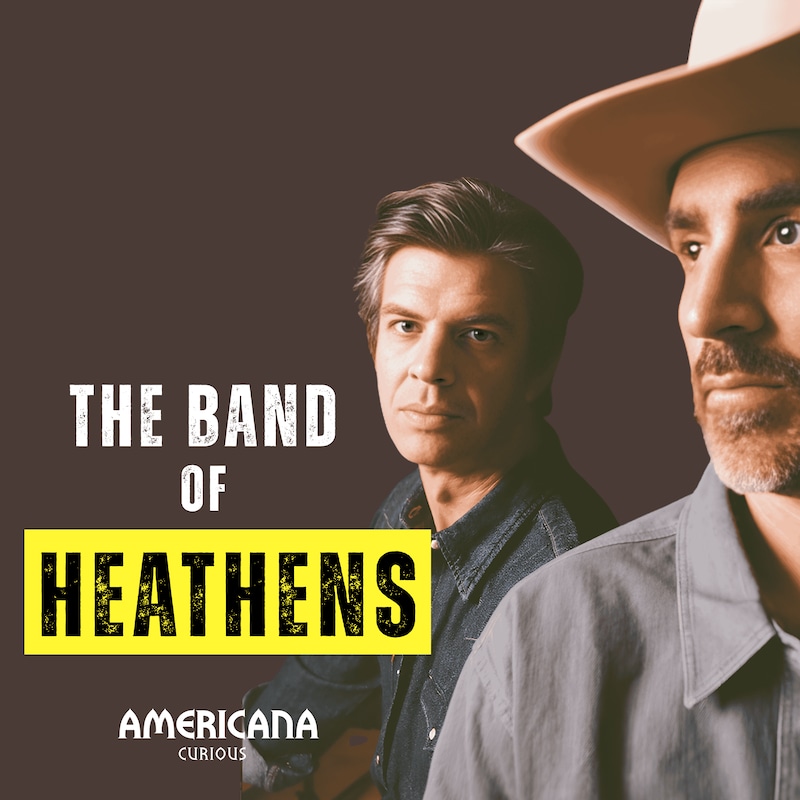
20 YEARS. 0 LABELS. 1 PLATINUM RECORD.
💿🔥 Most bands don’t make it past year five.
They call it the “Valley of Death” because 95% of indie artists don’t make it out alive.
But The Band of Heathens just crossed 20 years, went Platinum, and they never signed the lease to a major label.
How did they do it?
1️⃣ Surviving the Crossroads: At year six, the band almost folded. They had to ask: “Is the soul of the band intact enough to keep going?”. They chose the music over the exit ramp.
2️⃣ The "Lifer" Mentality: Success wasn't a pot of gold at the end of a rainbow—it was the ability to make one record, tour it, and pay for the next one.
3️⃣ Organic Growth: Their platinum hit didn't come from a million-dollar marketing budget. It took 14 years of organic, slow-burn growth where the music took on a life of its own in bars and cover sets across the world.
They aren’t chasing fame. They’re chasing the TRUTH!
🎧 Listen to the full story of how Ed and Gordy built their own ecosystem and why they’re still “high on their own supply.”
Transcripts
Most bands never make it past five years.
Speaker B:The band of heathens just crossed 20, went platinum and never signed the Leap.
Speaker C:There was a period where the band almost didn't make it. And we looked at each other and do we still want to do this? Is this still the Band of Heathens? Is the soul of the band intact enough to keep going?
Speaker B:Why not just fold it up and go home?
Speaker D:I think anyone that's ever been in a rock and roll band knows that, like, it's always on the verge of exploding or imploding.
Speaker C:That album was a disappointment to a lot of fans. It was a. A little too weird, maybe.
We would get text messages from friends like, hey, I just saw some cover band in a bar covering your song years after the record came out. So it had nothing to do with the promotion or anything we did. It was out in the world and the music was having a life of its own.
Speaker D:Once we kind of were able to get past the rubble of that, it's been smooth sailing would be the wrong way to put it, but we have a great relationship, you know, like we're friends.
Speaker A:You can hear that in the music, my friend.
Speaker E:Yes.
Speaker B:So how does a band go platinum without a label?
Speaker A:Raw, real road worn.
Speaker B:The artists we feature aren't chasing fame, they're chasing truth. I'm Ben Fanning with my co host Zach Schultz, and this is Americana Curious, where we spotlight the unsung heroes of Americana music.
You'll get new songs, hard earned lessons, stories behind the music, and a big shot of inspiration. Follow the show and rate us on Spotify and Apple and leave a review on Apple to help more people discover the power of Americana.
Let's get Americana Curious.
Speaker A:Ed and Gordy from the Band of Heathens. Welcome to the show, guys.
Speaker C:Thanks for having us.
Speaker D:Thanks for having us.
Speaker A:The first five years of an indie band is described as the valley of death because 95% don't make it out alive.
But by reaching your 20 year anniversary this year, you've outlasted the average band's lifespan of more than four times, all while staying independent.
Was there a specific moment or darkest hour along the way where you sat down, you're like, wait a minute, we might become one of those 95% if we don't change something or do something different.
Speaker C:I think we.
Speaker D:We had a.
Speaker C:There was a period where the band almost didn't make it. And I think we had just been really grinding hard, touring really hard. And that was maybe six years in, something like that.
Yeah, probably six, seven years in. And. And We, A couple of the guys in the band left the band and, And Ed and.
And Trevor, our keyboard player and I, we looked at each other and like, do we still want to do this? Is this still the band of Heathens? Is the. Is the soul of the bands intact enough to keep going and.
Or do we want to call it something else or start something new? You know, that was kind of the crossroads, but. And, and that was around the time we made a record called Sunday Morning Record.
That was the next record we made after kind of the shake up, but. But not. I mean, yeah, I'm glad we kept going, stuck with it.
Speaker A:Why did you keep going? I mean, you. You had just made the five year mark. So, like, guys, we survived the five years. The five year death march. Now we're ready.
Or did you just, like, why not just fold it up and go home?
Speaker D:I think. I mean, this sounds really cliche, but I think really, at the end of the day, the music has always been the thing driving what we do.
And specifically in this band, Gordy. And my partnership is songwriters and business partners and collaborators, you know what I mean?
And I think in us kind of having a conversation, a real frank conversation with each other at that particular moment in time, I think we still felt like we had some things to say, you know, use this as a vehicle to do it. So that was it. And I think.
I think in surviving that, you know, once we kind of were able to kind of get past the rubble of that, it's been smooth sailing would be the wrong way to put it because I don't think.
I think anyone that's ever been in a rock and roll band or been around a band knows that, like, it's always on the verge of exploding or imploding, depending on what direction people are pulling in, but have a great relationship, the band, everyone, you know, like, we're friends. Everyone in the band gets along. We go out to dinner together, we hang out with each other.
Speaker A:So, wow, you can hear that in the music, my friend. I mean, make it 20 years. You guys like, you too? Who else? Right? Right.
Speaker E:Not a lot of bands.
Speaker D:Stones A Stones, they've done pretty well. We've been together longer than any of Spinal Tabs drummers survived. So I think we're. We're on to something.
Speaker E:You know, I gotta say, I was doing a little research last night or the other night and Googled, you know, the Band of Heathens. And one of the frequently asked questions is, what kind of music does the Band of Heathens play?
And this list was Americana, alt country, roots, rock, blues, southern rock, pop, soul. So what are we?
Speaker D:Who?
Speaker E:What the heck have we boys been up to?
Speaker C:That's a great question. You know, it's. It's funny, the. The term Americana as a music genre wasn't really a thing when I think we started playing. Or maybe.
Maybe it was just kind of starting to become a thing. But I had never. Growing up, listening to music as a music fan, digging into songwriters.
Like, I had never use that word describing, like a music genre. So for me, it's like, when you say Americana, I'm like, well, is it bluegrass? Is it like 70, singer, songwriter? Is it rock and roll?
Speaker D:Is it.
Speaker C:You know, is it country? It doesn't. It's almost not specific enough for me to use it regularly.
But when I'm thinking about our band, I don't really know what to call it either. A lot of times, as well as country music, it's soul music. It kind of is all of those things jumbled up into one.
And sometimes on certain records, we lean harder into country music or blues or soul music, R and B. I don't know, I feel like we have moods and we kind of switch gears and lean different ways. But I don't know, we don't really think about it in terms of the genres.
We don't actually consciously call or go for a genre when we're playing music. We're just making something that's interesting.
Speaker E:You say that because Catch the Core kind of had the same answer to. I asked him what he thought about Americana, and he told us he wasn't actually that curious about Americana music.
Speaker A:He said, I just do my thing.
Speaker E:Yes. So the. The longevity of this band, though, that must be. I mean, it's something. How does. How do we do that?
How do we make it through these ups and downs? Band members coming in and out, how do we plow forward?
Speaker D:At least for me, I've never, like, been actively consciously thinking about that as we've been going.
I mean, within the last 18 months or so, as we kind of have started coming up on this 20th, and we knew we were getting ready to start working on a new record and we wanted to have a tour. I mean, you start to kind of organize things in your workflow as to how it's going to roll out.
But, I mean, you know, in like, year 11 or 6 or 14, it was like. It was never like, we're going to reach 20. It's going to be a finish line. I think for me at least. I think for Gordy.
And honestly, for everyone in the band, that's like. You know, I think the term that we probably toss around more regularly is lifers. You know, everyone got into this because they love playing music.
It wasn't about reaching a finish line or, know, cashing in on a pot of gold at the end of the rainbow. Although that would be nice. It would be nice to cash in on a pot of gold at the end of. At the end of the rainbow and keep playing music.
But that was it. I think the goal was to be able to, like, to make a record.
You know, when we started, it was like, hey, can we make a record, put it out, tour and pay for another record? And if we. If we can keep doing that, I think we would have all agreed that that was the level of success that we were comfortable with.
And that's kind of been. That's really been the litmus test, you know, since we've started, and that's. We've been able to keep doing that.
Speaker A:Well, to quote one of my favorite bands, the Band of Heathens, you're high on your own supply. Is that how you keep going?
Speaker D:Yeah, yeah. You know, not to be glue about it, but, yeah, I think that really is. That's sort of been. That's become our mantra, you know, and it's.
Our manifesto is sort of like, to build the world that you want to live in all around you, you know, and we do that with music.
We've been really fortunate that we've been able see our way through the world and grow, you know, have experiences, meet amazing people, have collaborations, travel, and see stuff all through writing and singing songs, which is like.
You know, I think when I was a kid in my room getting into music, if you had told me that I would get to do all this stuff simply by doing something I loved, I mean, it would almost seem to be too good to be true. You know what I mean?
Speaker B:Hey, this has been Americana. Music matters because it connects, it heals, it tells the truth.
And that's why Zach and I actually make Americana Curious, because we sit down with artists who carry the torch. The legends, the unsung heroes, and the voices writing the soundtrack to something bigger.
If you believe music can move us, you're in the right place. Subscribe to Americana Curious and share it with someone who still believes songs can change things.
Speaker C:Things.
Speaker A:I love that. And that's one of the reasons we love Americana, y'.
Speaker C:All.
Speaker A:Even though the genres can be questioned in terms of, like, trying to, like, pigeonhole different, you know, I don't want to pigeon all you guys, but really, I mean, high on your own supply, building your own ecosystem, doing what you love and doing it and letting the goodness come from that.
Speaker C:I mean.
Speaker A:I mean, it's such a great story for Americana. And I want to point something out of the listeners right now.
Major labels usually spend millions and millions of dollars trying to manufacture one single platinum song, right?
Speaker E:Just.
Speaker A:Just to try to get one. Y', all, these guys ban of Heathens, they're independent, they've stayed independent. And, baby, they just hit platinum with one. One of their songs.
And, y', all, it was organic. And the crazy part is, It's Facebook. Took 14 years to get there, but it did get there.
What was the moment like when you found out that this song had a life of its own, escaped your control, and was going to become a platinum monster one day?
Speaker C: third record. It came out in:I think that album was a disappointment to a lot of fans. It was a little. It felt.
Speaker A:What do they know?
Speaker C:It felt like. It felt like. This is weird. Like, I don't know. I think it was a. I don't know. It was like, a little. A little too weird maybe. We always liked it.
I don't know. I actually don't really know why.
But it did feel like the press and the fans were kind of, like, scratching their heads a little bit on that record over the course of maybe four or five years, six years after that, we would get, you know, text messages from friends like, hey, I just saw some cover band at a bar covering your song. And it was. It was this organic, like, you know, or.
Or hearing it in the background somewhere, you know, a couple years, years after the record came out. So it had nothing to do with the promotion or anything we did when we released the record. It literally just.
It was out in the world, and the music was having a life of its own. And, yeah, I don't know, it was really just kind of a slow build and then ends up on, you know, American Idol and, you know, people. It.
So it really was just this kind of slow, organic growth that none of us would have predicted. It's a song that. Too slow for radio. Too long for radio.
Like, no one I don't think would have predicted that that would have been the track that, you know, ends up having this kind of longevity.
Speaker A:Yeah.
Speaker E:I want to talk about a little bit About a process, but not go to in the inside baseball. But I read somewhere that you guys had some 30 some songs written for this new record, and he had to whittle it down to 11.
And kind of working collectively is a. Is a. Is that your guys's superpower as a band?
Speaker D:Yeah, I think.
I think from a songwriting perspective, like both Gordy and I being the primary songwriters, we have access to maybe twice as many songs than if there was just one songwriter in the band.
And then just collectively amongst the musicians in the band, you know, Gordy mentioned Trevor, our drummer, Clint Simmons, and our bass player, Nick J. There's just. Everyone is involved in so much music all the time and brings so much quantity of ideas and quality of ideas, you know.
So to your point, with the. With the 30 songs, that's not unusual.
I mean, I think both Gordy and I are writing kind of all the time, so we're really kind of just piling up songs.
We just keep a Dropbox folder where, you know, we're just kind of sharing songs with each other, things we're collaborating on or things that we're working on individually and kind of put them in a pool.
And then when it comes time to make a record, like in this record in this particular case, because they're all a little bit different, know, we just kind of sat down and went through the songs and it was like, you know, okay, here's a song. Is it a. Is it a plus? Is it a minus? Is it a maybe? You know, and that's kind of how we.
That's kind of how we started whittling it down and then bringing songs to the band and showing the guys getting their opinion on it. That's kind of how we arrived at 11. And I would say the only other thing that's different about this record as far as the number of songs is.
I mean, normally we were. We would record like 16 to 20 songs and have a bunch of songs left over, but this time actually we. We just.
We recorded 11 songs and that's what ended up on the record. This was much more of a. We went in for like six days. It was a much more condensed session and kind of. And just. And knocked it out really quick.
We wanted to just get a snapshot of the band at this one specific moment in time.
Speaker E:Wow, so you're saying we have two more albums coming? If I do my math correctly.
Speaker D:Well, I mean, there could be. There could be 12 more albums. But, you know, in the same way. Yeah, you know, we're like you had mentioned Ben before. We get on that.
You know, you put the record on and you kind of. The first list and everything was kind of hitting you. And. Well, we spent a lot of time on the sequencing and like, in.
In selecting which songs are going to work together. You know, we're really still into. You know, we grew up on albums, and we're still really into the idea of the album as a medium.
I know we all stream music. That's how I listen to most of my music. And what's great about that is that's kind of choose your own adventure.
Well, you know, our own adventure is sequencing a record, a vinyl and A and B side. And if people want to go and kind of check that out and see how that works for them, that's. That's great. We welcome that as well.
Speaker E:I am a nerd when it comes to sequencing on albums, and I love how you guys did it. It's almost like a journey through your career from start to finish.
Speaker C:Yeah, that's something that kind of hit us.
I don't know that we were consciously trying to do that when we were recording the songs, but then as we were sequencing, we kind of realized, like, oh, this is. This is a story of our 20 years. There's, you know, original. The beginning of the record is, you know, inspiration. Chasing this dream.
The adventure of being young and in a band and seeing the world. And then. And not literally, but just like the spirit of those songs and the. The. The feelings in those songs.
And then it gets to kind of a darker period in the middle of the record with some adversity and. And questioning and. And then at the end, it feels like we've reached a good place of kind of, you know, be.
Commit committing to something bigger than ourselves and. And making it work and finding a good place in there.
Speaker E:Who's singing with that falsetto on finish? Something I started. Holy moly.
Speaker D:Oh, yeah, that's me. Yeah, that's me.
Speaker E:Wow. That is.
Speaker A:Whoa. That's me.
Speaker E:The Heathens got rage.
Speaker D:It was. It was funny when you met. You guys mentioned nerding out on the sequencing of the album. I mean, if we could. I don't know how we would do.
But if we could share that. Gordy and I started a note, you know, on the apple, on the phone, like the shared note. And if you.
You could see the diabolical ramblings of a couple of mad people with the. The number of sequences, the ideas of the sequences, the narrative thread in the song. I mean, it's pretty there's a few different sequences.
Let me put it that way.
Speaker A:A funny story. I. I had the. The early release of the album playing in my car, and a buddy of a mile was like, man, I really love all this pedal steel in here.
And then in my preparation for the interview, I'm not sure if it was Ed or Gordy that was like, we might have gotten a little carried away with the pedal steel. My friend was like, never so epic.
Speaker D:Never.
Speaker A:And you. And you guys went hard with the pedal still. And no complaints on that. I'm loving it. How was that. What was that conversation like?
Were you, like, having a chat over that? Too much? Not enough.
Speaker C:So we've got a buddy, Jeff Clean, who we've worked with on various projects in the studio. He's an incredible guitar player and pedal steel player. And, yeah, it's one of those things. There's like one or two songs, you know.
Speaker D:Oh, yeah, we've.
Speaker C:This needs pedal steel. And then it was kind of like, well, if we're going to bring them in for one or two, we might as well get them on. On more than that. And.
And I think we just love. I love the sound of the pedal steel. We kind of just went all in and said, all right, that's going to be one of the.
The, you know, trademark sounds of this record is going to be the pedal steel. And I. It's. It's such an emotional, emotionally rich instrument. It can say so much. And.
Yeah, I feel like we're gonna have to figure out how we do this live. But it. I. I like to think of the pedal steel. It's like the. It's the redneck string quartet. It kind of can do.
It can do all the emotional lifting that a string section can do with all the bending and the, you know, harmonic richness with it. Can. It can both play chords, but also be bending melodies within the chords like a string section can do. And it's really beautiful.
Speaker A:Thank you for explaining why I love it so much. I never knew you'd be worse to my emotion. You're known for not having a set list now. You may have it now, but for a while, right?
It's a thrill for the audience for us to know you ain't got a set list, right? You're just, like, feeling it. But when's the time when this backfired on you? Where?
Speaker D:Oh, like, constantly.
Speaker C:The first five years of our career, every night.
Speaker A:Why. Why do you do no set list? Why. Why fail? You said you were failing.
Speaker D:Like, well, when we, you know, when we had, there was. Earlier on in the band, we had another singer, songwriter named Colin Brooks. And so it was, it was kind of a three headed monster.
Now it's just a two headed monster. And I could tell you exactly how it would fail. It would go down the line, you know, basically like we'd each do a song. We just take turns.
And you know, if. If you get to someone and they didn't know what they wanted to play or they wanted to play something, you're like, no, let's not do that.
I mean, we would like have arguments about what song we were going to play next in the set list. You know what I mean? So now it's like on stage? Yeah, yeah, totally. Absolutely.
Speaker C:I'm.
Speaker D:And I've always been a big fan of like, I like to improvise a lot. But I think the way that you can do that and be comfortable with it is you sort of, you create a framework.
So like, you make a set list and then it's like if you want to change a song out as you're going. And we do that quite often, but it's nice to sort of look at the set list and be like, okay, cool. Like we're doing.
This is the songs we're doing, this is the order we're doing them in. And then whatever else happens within that is totally open. You know, I think we've always left a lot of space to do that.
And I think over the years, as you play enough shows, you start to figure out what the rhythm of a show should be like, you know, so there's kind of a formula to that. There's. And it's not that we're playing the same songs every night or playing them the same way, but there's different songs in our catalog.
As we have like, you know, 10 records and a bunch of live stuff. It's like we have a lot of different songs to draw on that can kind of like serve in those positions, you know, to sort of.
If we need an up tempo number or we need a ballad or we need something acoustic, you know, we need something more reflective, whatever the mood might call for. We have all these little different pieces we can, we can put in there. I was gonna say we, we do.
Speaker C:Write set lists now, but we do, we write it, you know, two hours before the show. We're, you know, sitting down to like figure out, all right, what are we going to do tonight? And we're trying to mix it up and make it different.
And you know, and like Ed said throughout the catalog I kind of view, like, each song as, like, a blade on a Swiss army knife, and they each do a different job and for the flow of a show. And so it's fun to, like, mix it up and try out the different songs in different spots to see how they go.
But, yeah, almost writing the set list right before the show, you get to feel the energy of a city. Whatever city you're in, you feel the energy of the room. During soundcheck, you feel the city. And I feel like that informs the set list oftentimes.
And it's almost like another little exercise in improvisation is like, coming up with the set list right before the show.
Speaker A:So, yeah, that's.
Speaker E:So when I see you next month at the Road Trip to Raleigh. I don't know. Ben, are you going? I. I'm going. Well, can I.
Speaker A:If I don't see him there, I'll see in April.
Speaker E:It's a windjammer from the stage. I can't wait to see you guys there.
Speaker A:Heck's gonna start texting you recommendations for Road Trip to Raleigh.
Speaker E:Yes.
Speaker D:Bring it on. Come on, come on.
Speaker E:It's going to be wild Thursday night, right? You guys are playing at the Road Trip to Raleigh.
Speaker D:Yeah. It should be fun.
Speaker B:I'm.
Speaker D:Look, I mean, BJ and the guys in American Aquarium have been friends for a long time, and we've been trying to make this happen. I'm glad we. I'm glad we're able to finally do it.
Speaker E:It's a crazy small venue, but it gets packed and loud, and the energy in that place is going to be epic that night. Sorry.
Speaker D:It's a great venue.
Speaker A:Yeah. There may not be a better Americana onew punch right now with. With, like, Road Warrior bands, great songwriters.
I mean, you guys in American Aquarium, really special full band experience there. Y. We only got a couple minutes left, but I want to take you back to really early in your career and think about how you do albums now.
But there's this thing about you being so raw and real your first time in the studio. You guys worked with the Yoda of Texas music, Ray Wiley Hubbard. And I mean that.
Speaker E:He.
Speaker A:He was like. He had a message, I guess, about not being too perfect or too clean.
And one of the things that Zach and I like about music in Americana is just having it so rustic and raw. Thinking back the early time, those lessons you learned early on, was there a moment where Wiley had to pull you back? Like, did you say, hey, I need.
Like, this needs to be a perfect SAL. We need to. We need to rerecord it 10 times to get it perfect. And he's like, hey, you know, let it be, or how do you approach that?
And what was the early lesson?
Speaker D:First of all, we have. We have to thank Ray tremendously for his support. And I think that's one of the great things about being a Texas band.
There's a really great lineage of people mentoring younger artists, you know, and if you look across Texas music, you know, all these writers, they cover each other's music, they promote Texas music to the world, which is really great. And Ray, I think, in that tradition, kind of took us under his wing.
And he really did put a lot of grease on the music, you know, which was really cool. His vibe was informed, a lot of it.
And I would say, to your point, it's a great question, because whenever we would be working on something where it was like a little less greasy or it needed to be a little bit tighter or a little bit more pop sounding, for lack of a better description, he kind of just sit back, put his feet up on the table, and we'd ask, hey, Ray, how does this sound? He goes, sounds like you guys know what you're doing in there. That was it. You know what I mean? Like, so believe in yourself.
Speaker A:Okay, thank you.
Speaker D:Yeah, that's. I mean, that was it. He was, you know, so now if something needed to be greasier, he would.
He would certainly chime and say, that's really, you know, that's really good, but just do it again and do it cooler. And we knew exactly what he meant, right, Gordy? I mean, like, you knew what he meant by that.
Speaker C:One time. There was a tense moment in the studio.
We were probably arguing over something, and Ray stands up and everyone looks at him and he reaches into his boot, he pulls out a switchblade knife, pops it open, and then goes over to, like, a pallet of bottled waters and, like, cuts out bottle of water for himself.
Speaker E:And then.
Speaker A:The perfect tension in the studio. Oh, that's so good.
Yeah, and I love that because this is like 20 years later, you know, here you are and this seems like, you know, all those lessons, all those. All those road shows, setless, no sutless, all channel, this really incredible album and. And just, you know, really congratulations on it.
What's your.
Speaker E:My.
Speaker A:My last question here is, what do you think that.
What do you want the band of Heathen's legacy to be so thinking, like, you just run up your first 20 years after the next 20 years, what do you hope to have left behind.
Speaker C:That'S a great question. I think I would like our legacy to be one of the bringing people together in a pretty divided time in history in our country.
I feel like we have this really privileged position to be able to use the power of music to be a unifying force, regardless of all of the other things that we all may disagree on.
But to really, I don't know, music is just such a great unifier and such a great force for good, and I hope that that's kind of what we're remembered for. But I don't know. What do you think, Ed?
Speaker D:I was going to say, yeah, I think that's definitely important. And I think also that we've just done things our own way and that you can do that.
You can be independent, you can follow your dream, you can follow your heart and make your own path. And that's what we've done, really. We've created our own path and we followed it.
Speaker E:Love that.
Speaker A:All right, fellas, thanks for coming on the show. And everybody stay Americana Curious.
Speaker D:Thank you guys.
Speaker A:Thanks for joining Zach and I for.
Speaker B:This episode of Americana Curious. Subscribe where you listen to your podcast so you are notified when a new episode is released.
I'm Ben Fanning and it's been great sharing these artists and music with you. Until next time, stay Americana Curious.


