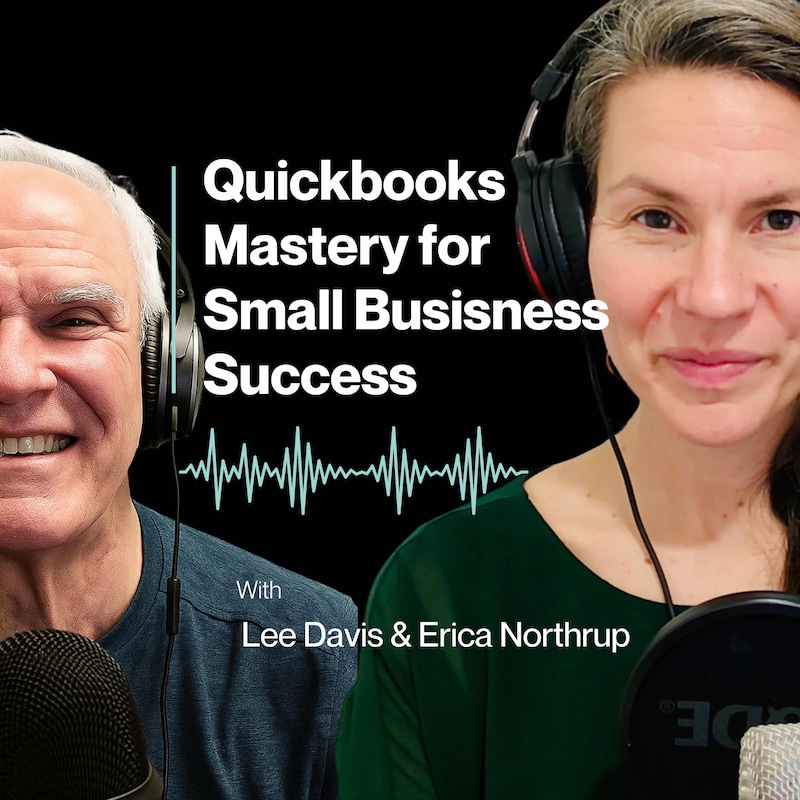
Shownotes
Episode 18: The 5 Financial Numbers Every Business Owner Should Know
In this episode of QuickBooks Mastery for Small Business Success, father-daughter team Erica Northrup and Lee Davis break down five of the most important financial numbers every business owner should understand.
Most owners know their revenue, but beyond that, the full financial picture often gets blurry. In this conversation, Erica and Lee walk through the numbers that reveal whether a business is actually healthy, profitable, positioned for growth, and able to support the owner long term.
They explain why revenue is only the starting point, how margins and profit affect real financial stability, why cash flow can feel tight even when a business looks profitable on paper, and why debt-to-income ratio matters more than many owners realize. They also close with a practical conversation around owner pay and why it needs to be part of a real financial plan.
If you’ve ever felt unsure about what numbers actually matter most, this episode will help you cut through the noise and focus on what really drives clarity.
Key Takeaways
- Revenue tells you how big your business is, but not how healthy it is
- Gross margin helps you understand pricing, costs, and scalability
- Net profit is what supports reinvestment, taxes, and owner wealth
- Cash flow explains why profitable businesses can still feel cash-strapped
- Debt-to-income ratio affects financial flexibility and future borrowing
- Owner pay should be planned, not random
Questions to Reflect On
- Do I know more than just my revenue?
- Can I clearly explain where my cash is going each month?
- Is my business actually set up to support me financially?
Mentioned in This Episode
Free QuickBooks Clarity Scorecard
Download at: https://lee-davis-and-company.aweb.page/unlock-clarity-free-scorecard
Send Us Your Questions:
Recommended Resources
- QuickBooks Clarity Scorecard: https://lee-davis-and-company.aweb.page/unlock-clarity-free-scorecard
- Lee Davis & Company: https://leedavisandcompany.com
Timestamps
00:54.000 - Episode introduction: the 5 financial numbers every business owner should know
02:48.000 - Number 1: Revenue and why it’s only the starting point
04:45.000 - Number 2: Gross margin and what it says about pricing and cost control
07:38.000 - Number 3: Net profit and why profit has to support the business
10:54.000 - Number 4: Cash flow and why profit does not equal cash
13:38.000 - Number 5: Debt-to-income ratio and why banks care about it
15:33.000 - Why business owners should track debt-to-income even before applying for financing
18:08.000 - Owner pay and why it needs to be part of the financial plan
20:17.000 - What to do if your numbers are not clear right now
22:00.000 - QuickBooks Clarity Scorecard and why clarity changes how you run your business
23:05.000 - Celebrating 1,500+ podcast downloads
23:33.000 - Final outro and next steps
Call to Action
If you enjoyed this episode, hit subscribe and stay connected with us at leedavisandcompany.com.
Download our free QuickBooks Clarity Scorecard to see whether your QuickBooks setup is giving you the financial insight you need.
Have a QuickBooks question? Send it to [email protected] — your question may be featured in a future episode.
Transcripts
Welcome to QuickBooks mastery for small Business Success.
Speaker A:I'm Erica Northrup.
Speaker B:And I'm Lee Davis.
Speaker A:I handle the tech and he handles the numbers.
Speaker A:And together as a father daughter team, we bring decades of experience helping small to medium sized businesses thrive.
Speaker B:We know that as a business owner, your time is best spent mastering your craft and growing your business, not getting lost in QuickBooks.
Speaker B:Managing finances can be confusing and you don't have hours to waste sorting through spreadsheets or fixing bookkeeping mistakes.
Speaker B:That's where we come in, helping you streamline QuickBooks so you can focus on building your business.
Speaker A:Each week, we break it all down into simple, actionable steps so you can focus on growing your business, not fixing your books.
Speaker B:Let's embark on this journey together.
Speaker A:This is episode 18, the five financial numbers every business owner should Know.
Speaker A:So most business owners know their revenue.
Speaker A:They usually know roughly how much money came in last year.
Speaker A:But beyond that, the picture often gets a little blurry.
Speaker A:You guys, things like margins, profit, cash flow.
Speaker A:These numbers aren't always as clear as they should be.
Speaker A:So, Papa, after working with so many businesses over several decades, I'm curious if you sat down with a business owner and wanted to quickly understand how healthy their business is financially, what are the key numbers you'd want them to know?
Speaker B:It's interesting, Eric, you asked this question because lots of times business, businesses really want to know is where is the cash?
Speaker B:How much cash do I have and where did it go?
Speaker A:Where did the money go?
Speaker B:Yeah, because oftentimes businesses will see the money coming in, but they won't see it going out.
Speaker B:And it's the analysis in between that can help them understand where the money goes and what they can do about it.
Speaker B:So it's timely because lots of times in the tax season, it's like when somebody said to me the other day, they thought they would be getting a refund, but they wound up having to pay in.
Speaker A:Oh dear, that's always hard.
Speaker B:And they said, I don't really understand.
Speaker B:So many times businesses don't understand when the accountants will say, oh, here's what you're going to owe, and they don't have that money and they don't know where it is.
Speaker B:And so helping them uncover those solutions, although quite frankly, some don't want to know.
Speaker A:No.
Speaker B:Okay.
Speaker B:I can be honest.
Speaker B:After dealing with a number of small businesses, they just prefer me to fix it.
Speaker A:Just fix it.
Speaker A:Just fix it.
Speaker A:Absolutely.
Speaker A:Okay, so when you do sit down, when you have that initial meeting with people with that business owner, what's the first number you usually want them to know specifically, what would that be?
Speaker B:Well, I think the first number I'd like to look at is how well their business is taking money in.
Speaker B:I want to look at how their invoicing occurs, how frequently they invoice.
Speaker B:Are there any lost revenue?
Speaker A:Right.
Speaker B:Believe it or not, there are lots of businesses who leave revenue on the table.
Speaker B:So sometimes before I jump right to the number, I like to understand their business and then I like to look at how they report revenue.
Speaker B:And it's quite a few times I'm able to help businesses increase their revenue by getting their revenue invoiced more timely.
Speaker B:And taking a company from spreadsheets to invoicing and QuickBooks is a major upgrade.
Speaker B:That company.
Speaker A:Absolutely.
Speaker A:No, I'm sure revenue doesn't tell the whole story.
Speaker A:It's all a part of the picture.
Speaker A:You know, I'm sure revenue tells you how big the business is, but it doesn't tell you how healthy the business is.
Speaker B:I just sat with a small business owner and she was really happy that we looked at the previous year comparison because it will tell us a lot about some revenue issues and it will also tell us if there are some uncovered expenses that we should have looked at or gathered.
Speaker B:And sometimes people may pay some of their expenses out of their personal account and those have to get accounted for.
Speaker B:So looking at the numbers in a comparative fashion, and sometimes I like to look at just one year, two years, three years, Let me see where the business is going.
Speaker A:Yes, absolutely.
Speaker B:And so a comparative analysis is extremely helpful.
Speaker A:Super helpful.
Speaker A:Okay, well, this leads to the next number.
Speaker A:So if revenue alone doesn't tell the story, story.
Speaker A:What's the next number?
Speaker A:Business owners should understand you want to
Speaker B:look at what is your net sales and to look at your cost of goods sold.
Speaker B:In other words, how much is it costing you to deliver that product?
Speaker A:Right.
Speaker A:What's your gross margin?
Speaker B:And quite honestly, the number that jumps out at most people is how much they're paying their employees and are they getting the return on investment on their employees.
Speaker A:Right.
Speaker A:So it's revenue minus cost of goods which equals your gross profit.
Speaker B:That's correct.
Speaker A:Dad, this is huge.
Speaker A:And I'm sure it shows whether your pricing is correct.
Speaker A:It really reveals your cost of control issues, and it probably also determines your scalability.
Speaker A:So if you want to grow, this is going to show you if that's even in the cards for you.
Speaker A:That's even possible for you.
Speaker B:Yeah, well, because employees are paid every week in some cases, some of these small companies that People live paycheck to paycheck and they pay their employees every week.
Speaker B:But if they're delivering a service that the employer is invoicing for, which that's the case, and when the wages for that go into the product, you have to make sure that they're turning over that income or that invoicing timely, that they're not taking two months to get a job that should be invoiced in two weeks.
Speaker B:And so that it needs to be clear on what their gross margin is because that might tell you that you better get out there on the job and get that particular problem solved.
Speaker A:And I'm sure this could be a huge moment for our listeners to understand.
Speaker A:You can grow revenue every year and still struggle financially if your margins aren't strong enough.
Speaker A:So understanding what those margins are really, it helps you to know if your business is actually growing.
Speaker B:Yeah, I think particularly when you're going to add another service, if you're going to add a new product and add a lot of overhead for that product, lots of times people will think that, oh, I can make all kinds of money in this product.
Speaker B:And in reality they might buy a business and they might absorb it into it and before you know it, there's a reason the person sold their business.
Speaker A:Right.
Speaker A:They're just inheriting is they weren't making
Speaker B:what they thought they should make.
Speaker B:And there are a number of reasons for that.
Speaker A:Totally understandable.
Speaker A:Okay, so we have revenue and gross margins.
Speaker A:What's the next number you'd want a business owner to understand?
Speaker B:I think you want to understand what your net profit is.
Speaker B:At the end of the day you must be profitable because your gross margin could be fine.
Speaker B:You're spending too much money on overhead.
Speaker B:So believe me when people tell me that they think they need to spend X on overhead, but the industry average is a lower number.
Speaker B:There is usually a reason for that and there could be for a number of reasons that people are spending too much on equipment or there are a number of reasons people are too much.
Speaker B:Debt service companies are under capitalized and they are overextended.
Speaker B:But your company has to be profitable.
Speaker B:Your net profit has to work so
Speaker A:important, otherwise you're not gonna be able to keep the doors open.
Speaker B:And if the profit has to support the business.
Speaker B:Businesses are in business to make money, right?
Speaker A:Absolutely.
Speaker B:And a lot of it, sometimes it flows to reinvestment in businesses.
Speaker B:It goes to owner pay.
Speaker B:And yes, you have to feed the tax man.
Speaker B:So there are many factors that support net profit.
Speaker A:It seems like many businesses actually operate with far thinner profit margins than the owners actually realize.
Speaker B:Yeah.
Speaker B:Because there are sometimes some indirect expenses that don't even get reported.
Speaker A:Right, right.
Speaker B:Some owners will pay out of their own pocket for things that they should be expensing through their business.
Speaker A:Absolutely.
Speaker B:And one big item that lots of times businesses don't take into consideration and that is depreciation.
Speaker B:That is a big expense.
Speaker B:That's a non cash expense.
Speaker A:Yep.
Speaker B:But it's definitely cash related because at some point they're going to have to replace that asset or that piece of equipment or that truck or whatever it is.
Speaker B:And so therefore they need to record the depreciation on that equipment every year.
Speaker A:Absolutely.
Speaker A:I was actually just thinking about, for our business, I feel like we need to start thinking about new technology, new customers, has.
Speaker A:It was probably a decade ago that we bought all new stuff.
Speaker B:I think it's going to be very timely, Erica, because as we expand our training company and we move into a new studio.
Speaker A:Yeah.
Speaker A:We got a lot of new things.
Speaker B:I mean we've got a very exciting plan coming up and that we're going to have a new technology center.
Speaker A:Yeah.
Speaker B:It's with new equipment and.
Speaker A:Yep.
Speaker B:That it won't be just what we've got now.
Speaker B:It'll be more technology driven and allow us to service our clients better.
Speaker A:Which is why we're here.
Speaker A:Which is what we're all about.
Speaker A:I do love that.
Speaker A:Okay, getting back to the topic at hand.
Speaker A:Profit is what allows businesses to actually build wealth for the owner.
Speaker A:Correct or incorrect?
Speaker B:That is correct.
Speaker A:Yes, absolutely.
Speaker A:Okay.
Speaker A:So something I hear a lot from business owners and I hear this from, from you a lot is that they're profitable on paper, but they still feel like there's never enough cash in the bank.
Speaker A:Why does this happen?
Speaker A:When you say all the time at the end of the year, where did the money go?
Speaker A:People say that a lot.
Speaker B:You oftentimes have to understand the cash flow and people could be borrowing money to keep their cash infused in their business.
Speaker B:But that's not net profit.
Speaker B:Okay.
Speaker B:That's a liability and eventually they're paying that money back.
Speaker B:Or they could have money tied up in accounts receivable and they could be over extended in their accounts payable.
Speaker B:And so there's a number of things.
Speaker B:But the cash flow report is what spells all of it out.
Speaker B:You can't hide it in the cash flow report because it takes every money in money out.
Speaker B:That's basically the cash flow report and it will tell a story of where you are and why you don't have the cash.
Speaker A:That makes a lot of sense.
Speaker A:You can have a profitable business and still run into cash flow problems if the timing of money moving in and out isn't managed well.
Speaker B:That's correct.
Speaker B:Yeah.
Speaker B:I can tell you that I worked with a busy hair salon and they had a lot of customers.
Speaker B:Right.
Speaker B:But she carried way too much inventory and she couldn't move it.
Speaker B:They had stuff on the shelf they'd had for years, and so she had to take a loss on the inventory, clean it up, and go to just three shelves of inventory, which is smart.
Speaker A:Sometimes I think about that, about my kitchen.
Speaker B:Yes.
Speaker A:I've had something on my shelf forever that I've never used and I don't want to get rid of it because I've spent money on it.
Speaker A:But it's just taking up space.
Speaker A:It's not paying rent in my house, it's not paying my mortgage.
Speaker A:So maybe I need to remove that thing and, and actually fill it with something I'm actually going to use instead of having to rifling through all these different things that don't actually belong there.
Speaker B:What the owner oftentimes has to realize is that it all flows back to them.
Speaker B:So if they allow their employees to order, for example, employee's just going to order.
Speaker B:If they like the salesperson, they might order 10 or when they should have just ordered two, they don't need to order a lot.
Speaker B:As a matter of fact, if they have a product that they can sell a lot of and it'll be reflected in their sales.
Speaker A:Right.
Speaker B:And they should look at their inventory, purchasing and make sure that they have the product that people want.
Speaker B:And so I think that looking at what you have tied up for whatever business you are right.
Speaker B:In your business for cost of goods sold, then it's helpful to understand that you can move that inventory quickly.
Speaker A:Most excellent.
Speaker A:Okay, Papa.
Speaker A:There's another number that probably doesn't get talked about very often by business owners, but it becomes extremely important anytime someone goes to a bank for financing, and I've heard you talk about this, can you explain what the debt to income ratio is and why it matters?
Speaker B:Yeah, that's a really important number because the banks will immediately take your financials based on the accrual basis, and they'll look at your income versus how much you're paying out in debt.
Speaker B:And this debt is your total monthly debt, okay.
Speaker B:All your payments, whether you're paying, your American Express, your Visa, all of it, all your loans, they add it all up.
Speaker B:And the lower your percentage is, the greater your chances are.
Speaker B:To get financing and a more attractive rate.
Speaker B:So what banks usually like, they may go a little higher, but they really like a 35% debt to income ratio.
Speaker A:That makes sense.
Speaker A:A lot of sense.
Speaker B:Yes.
Speaker A:I guess if your business brings in 20,000 per month, your total reoccurring debt payment should ideally be 7,000 or less.
Speaker B:That's correct.
Speaker A:Yeah.
Speaker B:Sometimes businesses will start out and their sales, it's going to take them a while.
Speaker B:When they particularly start out, they may have a higher debt to income ratio, but the bank looked at their performer and they could see that, yeah, they would expect.
Speaker B:And the bank may have some security on that loan.
Speaker B:They may have an SBA guarantee, for example, a Small Business Administration guarantee that says that if the borrower defaults, then the SBA will guarantee it.
Speaker B:So there are lots of things that factor into a debt to income ratio.
Speaker B:But the 35% is a good number for an established business to consider.
Speaker A:Absolutely.
Speaker A:So why should business owners track it?
Speaker A:Maybe you, our listeners, are thinking, I'm not planning on asking the bank for a loan anytime soon.
Speaker A:I'm not planning on anything.
Speaker A:So why should it matter to me?
Speaker A:Why should I track that?
Speaker B:And well, because the more you pay out in debt, the less you have to give to the owner.
Speaker B:And if you're paying out a lot in debt, then chances are there's a problem with your business and you have to look upstream.
Speaker B:Okay.
Speaker B:You have to look at your sales or you've got too much out in accounts receivable, you haven't contacted the person who owes you $20,000 or you're buying too much on your credit card, you're not paying your credit card timely, you're lapsing into large payments and paying a lot of interest.
Speaker B:So there are a number of factors that when I look at a business around their debt, I will usually advise them to cut back, right?
Speaker A:Absolutely.
Speaker A:And even if you're thinking about borrowing money now or doing any of these things, you still might in the future, a year from now, five years from now, 10 years from now, decide, okay, I'm ready to make these changes.
Speaker A:I need to borrow some money from the bank in order to accomplish this.
Speaker A:And then you go and it shows that you have financial flexibility, it shows your financial risk levels that they're low.
Speaker A:Look, I've been managing all the things.
Speaker A:I can do it.
Speaker A:I can absolutely do it.
Speaker B:I can tell you the time to get a line of credit for a business is when you don't need it, right?
Speaker A:Yeah.
Speaker B:Okay.
Speaker B:When business is good, you get that line of Credit, you stash it away and when you need it for cash flow, it's there.
Speaker A:Yeah, that's very smart.
Speaker A:Very smart.
Speaker A:If a business already has a high debt to income ratio, taking on more debt can become very risky very quickly, I am sure.
Speaker B:Right, yeah.
Speaker B:It's the number one reason businesses fail.
Speaker B:They're under capitalized.
Speaker A:Makes a lot of sense.
Speaker A:I'm sure.
Speaker A:Clean books allow business owners to calculate their numbers easily and confidently.
Speaker A:I feel like that's a huge reason why this is just important.
Speaker B:That's right, Absolutely.
Speaker A:Okay, so that was really helpful.
Speaker A:That was a really helpful number because it's not just about running the business day to day.
Speaker A:It's also about whether the business is positioned to grow when opportunities come along.
Speaker A:Remember you guys, it's not just about today, but it's about a year from now, five years from now, ten years from now.
Speaker A:Debt to income ratio measured on a monthly basis.
Speaker A:Take your monthly reoccurring debt payments, divide them by your monthly income.
Speaker A:Banks will use this ratio to determine ability to service debt.
Speaker A:And the last number, which I think is probably the one most business owners actually care about the most.
Speaker B:Yeah, it's their owner pay.
Speaker B:It's their owner pay.
Speaker A:And you don't care about getting paid, do you?
Speaker A:Do you, listeners?
Speaker A:You don't care about that at all.
Speaker B:And I think owner pay is oftentimes calculated differently depending on how much you take out of your business, what your business pays for.
Speaker B:Sometimes businesses pay for their truck payments, their travel, their cell phone, all of the expenses that you might pay without your business that you might pay yourself.
Speaker B:You look at items.
Speaker B:When you look at what can a business really afford to pay that owner in order to protect the cash that you need to operate.
Speaker B:Because you must have cash to operate the business.
Speaker A:Right.
Speaker B:And while the owner would expect to get paid, and they should, the business must be able to survive and stand on its own.
Speaker B:So it's important that there be a balance.
Speaker B:And depending on some businesses, maybe they are okay with an llc.
Speaker B:And then others would say, no, I want to be a subchapter S corporation and I want to receive a weekly paycheck.
Speaker B:Absolutely.
Speaker B:And it depends how comfortable the owner is in the different financial types of accounts, whether a corporation, an llc, whatever it is, Some people want to know that they get their money every week.
Speaker A:Yes.
Speaker B:And others are fine with being paid once a month, twice a month.
Speaker B:So again, it's really what the comfort level is for the people who are advising the owner and how the owner looks at his business.
Speaker A:Yes.
Speaker B:Or her business.
Speaker A:Absolutely.
Speaker A:I'm sure one of the goals of running a business should be that the business supports the life you want.
Speaker A:But that only happens if the owner pay is part of the financial plan.
Speaker A:So it's making those plans really establishing out exactly what it needs to be is going to help you determine what these numbers need to look like.
Speaker B:That's correct.
Speaker A:Absolutely.
Speaker A:Okay, so if someone is listening right now and maybe they know their revenue, but their numbers aren't immediately clear to them, what would you say to that business owner?
Speaker B:I would say what I usually tell them is let's start with the profit and loss and let's do a comparative.
Speaker B:Because quite frankly, the owner will know what their problems are.
Speaker B:I ask them a few questions and look at what's under their numbers.
Speaker A:Yeah.
Speaker B:And I can usually come away with a battle plan, if you will.
Speaker A:Yep.
Speaker B:To help them get a handle on their numbers and perhaps fix something immediately.
Speaker B:Or consider a plan of three to six months to get them to where they need to be.
Speaker A:Yeah.
Speaker A:Business owners were never taught these financial systems.
Speaker A:They just decided they saw a need in the marketplace.
Speaker A:They decided to start their business.
Speaker A:For whatever reason, they jumped in and they're just trying to make it work.
Speaker A:They're figuring it out.
Speaker A:They're just working on it one thing at a time.
Speaker A:So to have that system is huge.
Speaker A:Is massive.
Speaker B:You know, sometimes businesses start out with in the right direction.
Speaker A:Yeah.
Speaker B:But somehow they get turned around and they forgot what it meant to work in their business.
Speaker A:Yeah.
Speaker A:Coming back to the reason why you
Speaker B:started what you and that they got carried away.
Speaker B:Or they're working in other areas and they're neglecting their business.
Speaker B:So it's just important to stay focused on how your business is doing and how it's supporting your goals overall.
Speaker A:Yeah.
Speaker A:I love that.
Speaker A:And I'm sure once the numbers are clear, decisions become easier.
Speaker A:I feel like we talked about over and over again.
Speaker A:It's.
Speaker B:That's right.
Speaker A:This is why you look at your numbers.
Speaker A:So that the decisions you make are easier and clearer and you can just see it crystal clear.
Speaker B:That's correct.
Speaker A:Yeah.
Speaker A:I love that.
Speaker A:So when you understand these numbers, you just stop guessing and you start running your business with clarity, which I think is so key.
Speaker A:Absolutely key.
Speaker A:Papa.
Speaker A:I feel like that was another really great episode.
Speaker A:You know, guys, if you're listening and thinking, I'm not sure I could confidently answer these questions about my business, you are definitely not alone.
Speaker A:That's actually one of the reasons we created the QuickBooks Clarity Scorecard.
Speaker A:It's designed to help business owners quickly see whether their QuickBooks setup is giving them the kind of financial insight they need to understand numbers like the ones we talked about today.
Speaker A:You can find the QuickBooks Clarity Scorecard in the Show Notes or on our [email protected] and in the next episode, we're going to talk about something really important.
Speaker A:How clean books actually change the way you run your business.
Speaker A:Because once your numbers are reliable, it affects everything from pricing decisions to hiring to long term planning.
Speaker A:You want to tune in next week for this episode?
Speaker A:It's going to be huge, so I hope you enjoyed that.
Speaker A:As much as we have been enjoying recording this oh and a big shout you guys.
Speaker A: Over: Speaker A:We are both tremendously excited and grateful that you guys have all come along with us on this journey and are just enjoying what we've been putting out because we have certainly been enjoying recording these.
Speaker A:So have a great week and we'll see you next week.
Speaker A:Thanks for tuning in to QuickBooks mastery for small Business Success.
Speaker B:If you enjoyed this episode, hit subscribe and stay connected with us at leedavis
Speaker A:and company.com we know QuickBooks can be overwhelming, so we've put together a free resource to help you get started right away.
Speaker A:Grab your [email protected] and when you do, you'll also get access to our VIP email list where we share exclusive QuickBooks tips, business strategies and support, and we'd
Speaker B:love to hear from you.
Speaker B:If you have a QuickBooks question or a business challenge, send it our [email protected] we might feature it in a future episode.
Speaker A:We're here to help you simplify QuickBooks and grow your business one step at a time.
Speaker A:See you next time.




