Shownotes
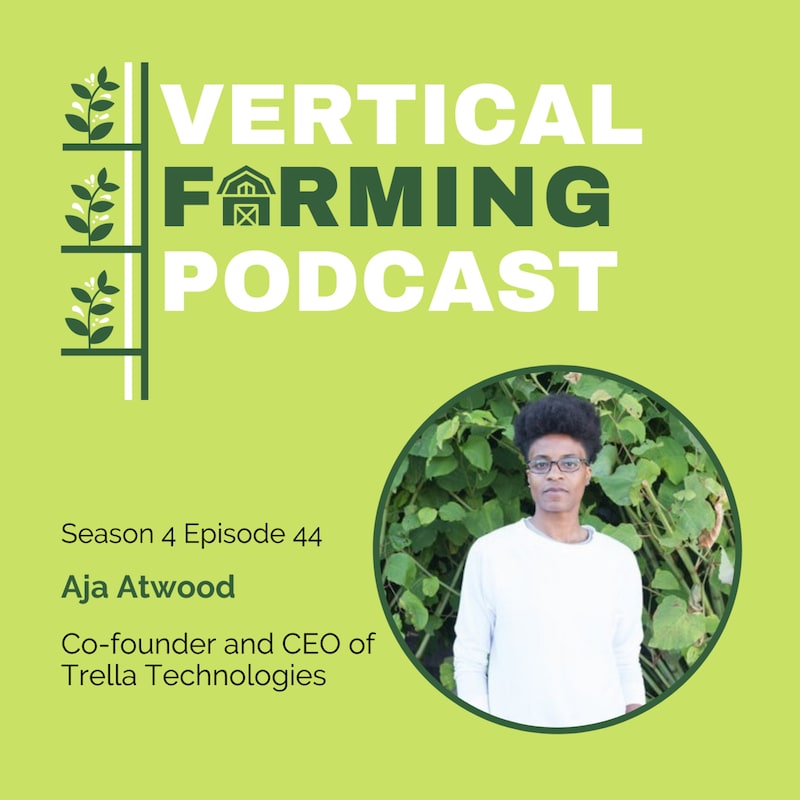
Join Harry Duran, host of Vertical Farming Podcast, as he welcomes to the show Aja Atwood. Aja is the co-founder and CEO of Trella Technologies, an organization that provides technical, innovative solutions to make indoor and urban farming a sustainable, long-lasting industry.
Today, Harry and Aja talk about the amazing technologies they’re developing at Trella, including automated plant-training robotics. Aja shares her entrepreneurial origin story which started with her natural curiosity and analytical mind and led her to building a company that aiming to change the vertical farming industry. She discusses the incredible work they’re doing with Trella’s partnership with Jean Charles Academy and speaks to the importance of fostering diversity in the workplace. Finally, Aja talks about what’s next for Trella and what excites her about the future of AgTech.
Episode Sponsor
Key Takeaways
- 03:41 – Harry welcomes to the show Aja Atwood, who joins the show to discuss her company, Trella, and her vertical farming origin story
- 11:00 – A curious and analytical mind
- 13:15 – Aja’s podcast origin story
- 18:39 – Partnering with Jean Charles Academy
- 25:33 – The Trella Story and the idea to grow plants horizontally
- 32:22 – No More Mondays: the decision to pursue entrepreneurship
- 35:35 – Biggest lessons Aja learned throughout her career
- 38:57 – Aja speaks to the market response to Trella
- 41:38 – What excites Aja most about the future of Trella and vertical farming
- 43:42 – Aja talks about some of the successful partnerships they’ve developed at Trella and some of the AgTech conferences she’s attended
- 46:55 – Aja comments on the lack of diversity in the AgTech industry
- 50:48 – A tough question Aja has had to ask herself recently
- 52:38 – Harry thanks Aja for joining the show and let’s listeners know where they can learn more about Trella and connect with Aja
Tweetable Quotes
“This is the time if you’re curious or you like to try new things. The world is open for you right now.” (13:07) (Aja)
“What’s interesting is there are some youths and some children that already know the importance of growing their own food.” (21:10) (Aja)
Links Mentioned
Sponsor Info:
🎙️🎙️🎙️
Podcast Production and Marketing by FullCast: https://bit.ly/3sxZ34y
See omnystudio.com/listener for privacy information.
Mentioned in this episode:
2025 Precision Ag Report by iGrowNews
2025 Precision Ag Report by iGrowNews
Transcripts
$680 million poured into precision ag last year.
Speaker:Autonomous weeding robots dominated, and John Deere made 2 acquisitions in 3
Speaker:months. A food company, not an equipment maker, bought a
Speaker:robotics startup to protect its own supply chain. The deals are
Speaker:accelerating, the money is moving, and the winners are already separating from the
Speaker:pack. If you're investing, building, or buying in this space,
Speaker:you need the full picture before your competitors get it. The 2025
Speaker:Precision Agriculture Intelligence Report From iGrow News is now
Speaker:available. Get your copy today at
Speaker:igrownews.com/precision. If you are starting a vertical
Speaker:farm and don't know where to begin or which technology would suit your needs,
Speaker:then reach out to the experts at Cultivated. As indoor farm brokers, they
Speaker:help connect you to the right technology and ensure your project is successful.
Speaker:Best of all, their service is free because they work on behalf of their
Speaker:partners. Visit cultivated.com to learn more. And
Speaker:that's spelled C-U-L-T-I-V-A-T-D
Speaker:dot com, or click the link in the show notes. So we
Speaker:got into what's called, you know, low-stress training, plant training techniques, tying
Speaker:things, but trying to figure out how could we do that with robotics and not
Speaker:having to rely on that manual operation so much. So what we came up with
Speaker:is a system that will automatically train a plant to grow
Speaker:sideways, horizontally. Essentially what it does is it
Speaker:tricks the top of the plant
Speaker:Welcome to the Vertical Farming Podcast, weekly conversations
Speaker:with fascinating CEOs, founders, and agtech
Speaker:visionaries. Join us every week as we dive deep into the
Speaker:world of vertical farming. With your host, Harry Duran.
Speaker:Vertical Farming Podcast, Season 4. Welcome back. If this is your first
Speaker:time listening, you're in the right place. This is the show where we interview fascinating
Speaker:CEOs and founders of the leading vertical farming companies from around the
Speaker:world. I'm your host, Harry Duran. In case you missed it, last week we had
Speaker:a great conversation with Samantha Johnson. Make sure you check that out, Episode
Speaker:43. This episode, I speak to Aja Atwood.
Speaker:She's the co-founder and CEO of Trella Technologies. It's an
Speaker:organization that provides technical, innovative solutions to make indoor and urban
Speaker:farming a sustainable, long-lasting industry. And in this episode, we talk about
Speaker:the technologies they're developing at Trella, including automated plant training robotics.
Speaker:She shares her entrepreneurial origin story, which started with her natural curiosity and
Speaker:analytical mind, which led her to building a company that's aiming to change the vertical
Speaker:farming industry. We discuss the incredible work they're doing with Trella's partnership with the Jean
Speaker:Charles Academy, and it speaks to the importance of fostering diversity in the
Speaker:workplace. Finally, Ada talks about what's next for Trella and what excites her about the
Speaker:future of agtech. This episode is brought to you by Freight Farms. Freight Farms
Speaker:manufactures and sells a leading vertical hydroponic container farm, the Greenery
Speaker:S. Built inside a 40-foot shipping container, the Greenery S uses
Speaker:innovative climate control technology paired with an IoT app called Farmhand
Speaker:to enable anyone to grow fresh food anywhere in the world. Visit
Speaker:freightfarms.com/verticalfarmingpodcast to learn
Speaker:more. This episode is brought to you by the Global Vertical Farming Show, taking
Speaker:place December 1st and December 2nd, It's a
Speaker:trailblazing global event bringing together the complete vertical farming value chain
Speaker:to explore the market, introduce brands, and make new connections. Learn
Speaker:more at verticalfarmingshow.com. So, Aja Atwood,
Speaker:co-founder and CEO of Trella Technologies, thank you for joining me on the Vertical
Speaker:Farming Podcast. Thank you for having me. Do you remember how
Speaker:we got connected? I think it was someone from your marketing team or someone who
Speaker:had been listening to the podcast previously. Yeah, one of our members of the team,
Speaker:Sherry, she's our community engagement lead. She reached out. Yeah.
Speaker:How about yourself? What's been your journey with the podcasting world? How do
Speaker:you listen or? Yeah, I enjoy podcasts, listening to
Speaker:podcasts a lot. In 2020, we did, well,
Speaker:on my personal brand, on my personal channel, I did a podcast where I
Speaker:interviewed some people in the industry, in the cannabis
Speaker:space, which is where I was focused a lot more at that time.
Speaker:It went really well. I enjoyed doing it, but it's a lot of work, Harry.
Speaker:So I give it up to you for doing all the editing and the processing
Speaker:and the finding of the guests. It's— there's a lot to it. So yeah.
Speaker:So the, the podcast journey for me started in 2014
Speaker:when I started my first one, which is Podcast Junkies. It's a podcast where I
Speaker:interview other podcasters. Oh, okay. And that's, that's been going since
Speaker:2014, 280+ episodes. Hour-long
Speaker:interviews. And then I started our agency Fullcast, which produces
Speaker:shows. So we have a team that produces everything I was learning
Speaker:through my first show. We started to do that for other business owners.
Speaker:So it handles all the production, it handles all the marketing. And then I started
Speaker:Vertical Farming Podcast after reading Peter Diamandis's
Speaker:book Abundance, which regular listeners have heard. But
Speaker:it took me down a rabbit hole, and then I realized I wanted to learn
Speaker:more and take listeners along the journey as I was
Speaker:discovering this really fascinating industry, which is why we're on season 4 now.
Speaker:Yeah, yeah, yeah, it is. I'm interested to hear how vertical
Speaker:farming was, you know, it's such a niche. Yeah,
Speaker:yeah, I think I've always been
Speaker:interested in new technologies. And, you know, this— that book is really interesting
Speaker:because it really just at the time introduced me to Dickson Despommiers'
Speaker:book Vertical Farming, which is like one of the very first books people come
Speaker:around or come across in this space. But I, I felt what was
Speaker:interesting, and the timing— I didn't plan it this way, but this is just how
Speaker:it happened— as I was getting started kicking off the interviews, COVID hit.
Speaker:And very quickly, you know, it started bringing
Speaker:to the, the forefront to people that are like me and
Speaker:introducing into these conversations this idea of access to local and fresh
Speaker:food, food deserts. And so it's been really interesting supply chain
Speaker:issues related to traveling and delivering and
Speaker:distributing food across large distances. I think people just
Speaker:take it for granted, the bananas that show up on their table
Speaker:or the citrus that comes from Florida or all that food
Speaker:that comes, the almonds from California. They don't think
Speaker:about these things, but I think what's been interesting in these conversations is more and
Speaker:more people are becoming And so going
Speaker:back to your history and your education, I'm curious
Speaker:when this idea of agriculture or,
Speaker:you know, maybe not specifically vertical farming, but when some of these
Speaker:ideas and concepts started coming to the forefront for you. Yeah.
Speaker:Well, I mean, it's been a journey and it's been, you know, seeds that were
Speaker:planted from when I was young and that have been, you know,
Speaker:fertilized and nurtured to today that got me to this point. I
Speaker:wouldn't, you know, You know, when I went into college as a mechanical
Speaker:engineering degree, I, if you told me that this is what I would be doing,
Speaker:I wouldn't, I wouldn't have believed you. But I did have some,
Speaker:some visions when I was younger of, uh, you know, I grew up in
Speaker:Philadelphia most of my life in South Philadelphia. It's an area where you
Speaker:don't have a lot of access to natural grow, you know, fresh food.
Speaker:And I was wondering, you know, what would it be like to just have a
Speaker:truck where I had a bunch of fruit on the back and I could like
Speaker:old school, you know, fruit cart down the street and sell fruit. And then
Speaker:kind of, you know, it was like, eh, well, you know, at the time, where's
Speaker:the money in that mentality? And, and let it go to the wayside.
Speaker:But then once I, I started actually
Speaker:discovering plant medicine, specifically
Speaker:cannabis, in like 2012, 2013, I started
Speaker:getting into it to help myself with some issues. I was, you know, an
Speaker:athlete and developed in my older age into like a weekend
Speaker:warrior type of athlete where I had a lot of issues
Speaker:that I was dealing with and decided instead of, you know, pain relief, what else
Speaker:could I do? And cannabis was a great solution for that.
Speaker:But while I was studying the plant and learning about the industry, I
Speaker:knew there wasn't a space for me within this agtech space, but I just
Speaker:didn't know where. And then I was approached by,
Speaker:you know, a friend of mine who wanted to design a system that would grow
Speaker:one plant in one container. And I got on
Speaker:board with that project to help as, you know, the CTO developing
Speaker:the technology, creating the prototypes, and enjoyed it and learned a lot
Speaker:from that experience. But it wasn't something that I was truly
Speaker:passionate about. It was, you know, it was kind of like, what do I want
Speaker:to do? I need something that really speaks to me. So I took a break
Speaker:from that project. And while I was on break, I was actually
Speaker:growing in my own home. growing cannabis at the time.
Speaker:And, um, also my corporate life. I mean, I was in corporate
Speaker:America for about 18 years. Yeah, me too.
Speaker:Yeah, so I traveled a lot at the time, so
Speaker:trying to keep up on top of my plants was a little bit of a
Speaker:hassle. You know, I found solutions online like a lot of people do to help
Speaker:with the light control and doing the, you know, feeding the
Speaker:water and checking pH levels, those things could
Speaker:be automated. Um, this is like 2015,
Speaker:2014, 2015 timeframe. Uh, but I couldn't figure
Speaker:out how to control the shape of the plant. And when I would go away
Speaker:and come back, it would be, you know, out of control growing all
Speaker:over the place. Yeah. So it was
Speaker:a problem that I had. And then I wondered, is there a way to come
Speaker:up with a solution for this? And that's what started Trellis Technologies. But before
Speaker:we went, you know, full-fledged into Trellis Technologies, I
Speaker:thankfully ran into an angel investor who said, before you
Speaker:spend a lot of energy on this, make sure that there's an actual
Speaker:need. So I took a pause and did like a
Speaker:6-week just deep dive into vertical farming.
Speaker:And time after time after time after time, I just saw that
Speaker:there's a need for indoor farming, vertical farming. We definitely need to move
Speaker:this industry forward. We need to move it forward with sustainable, you know,
Speaker:measures included. But I also noticed that a lot of the
Speaker:plants that were being advertised were
Speaker:microgreens, herbs, lettuce, small things.
Speaker:And that's when I said, ah, I think this is where Trella could come in
Speaker:handy because we could help to diversify the types of plants that you could grow
Speaker:in that environment. That's how it started. That's a fascinating
Speaker:journey. And I'm wondering, it's interesting, this marriage of these
Speaker:skills that you learned early on and you may not realize
Speaker:why you learned them. And then for you, mechanical engineering.
Speaker:And correct me if I'm wrong, but I get the sense that you have
Speaker:a sort of like a curious and analytical mind when it comes to trying to
Speaker:solve these problems. And I'm wondering, was that something that actually
Speaker:originally led you to pick mechanical engineering as something you wanted to study?
Speaker:Yeah, yeah, that was, um, that was it. You know, we had a, um,
Speaker:in high school we had a career day where a gentleman came in and, uh,
Speaker:spoke to the class, and he was a, a doctor and a biomedical
Speaker:engineer. And he was also, you know, a gentleman of African American descent.
Speaker:So to see someone that looks like me really
Speaker:went— made me open up my mind of what can I do? And I said,
Speaker:if he can be both a doctor and a biomedical engineer, I can be an
Speaker:engineer. So, you know, looked at all the different,
Speaker:you know, types of engineering that you could become and settled on mechanical because it
Speaker:had the most diversity and variety. Like at the time, it was
Speaker:one of the you know, verticals that you could go into that offered
Speaker:a lot of different opportunity, a lot of different industries. So I said, let's start
Speaker:there. And, um, luckily, I'm glad that I made that choice.
Speaker:It, it definitely fed my brain and it, it works. It suits me well.
Speaker:Yeah. Do you remember, or would your parents be better suited to
Speaker:answer this, how you— if that's how you were as a child? Like, were you
Speaker:naturally curious? Did you like, you know, playing with stuff or just asking questions about
Speaker:stuff to just try to figure them out? Yeah, yeah. If you would ask my
Speaker:grandmother and my mother, they would tell you that I was a very— I watched
Speaker:a lot, constantly watching, and I watched adults a lot too.
Speaker:That's interesting. And just kind of naturally had this
Speaker:way of being in the world where it was watch what's going on around you,
Speaker:figure out what you like, figure out what you don't like, and then go in
Speaker:that direction. So yeah, very observant.
Speaker:And also at the time, my mother was a single parent, and when
Speaker:something would break in the house or something needed to be repaired, it was, hey,
Speaker:it's you and me, let's get it going. So, you know, we
Speaker:would figure it out. And, you know,
Speaker:then it's such a great time to be alive because now with the
Speaker:internet and YouTube and Google, you could teach almost anything
Speaker:if you have enough patience and you really want to do it. So, you know,
Speaker:this is the time if you're curious or you like to try new things,
Speaker:the world is open for you right now. Yeah, yeah, absolutely.
Speaker:So I want to keep things in chronological order, so, and I do want to
Speaker:talk about the, the work you've done at uh, John Charles Academy.
Speaker:But you did touch on the podcast, and that looks like it started in
Speaker:2017. So is that— was that— is the timing right on
Speaker:that? Well, I did— I guest starred on a couple of podcasts, but I didn't—
Speaker:okay, we didn't have our own podcast until 2020. It was right when
Speaker:the pandemic started is when I— okay, got into it. Yep. And who were you
Speaker:listening to at the time, and what was inspiring you to take that leap? Wow.
Speaker:Well, Trying to think. I listen to a lot of talk
Speaker:radio. Some of those individuals have some podcasts. There's an
Speaker:individual by the name of Karen Hunter that I listen to a lot on SiriusXM.
Speaker:But who really got me thinking about it was my brother,
Speaker:my younger brother, who's a lot more into social media and kind of what's, you
Speaker:know, what's going on. And he's also a great supporter
Speaker:of mine and, you know, cheers me on. And even though he's younger,
Speaker:coaches me, you know, coaches me up. And he said, you know, I think this
Speaker:is something that you could possibly do. And I hemmed and hawed a little bit
Speaker:and then decided to take him up on it. And I think it was really
Speaker:during the time where we were in a pandemic and we couldn't really talk to
Speaker:people, it was a way for me to be able to share my thoughts and
Speaker:to stay connected. So. What would you say were some of the biggest
Speaker:takeaways or lessons that you learned from that experience of having the podcast?
Speaker:I would say I enjoyed it. There's a lot of work to it,
Speaker:however. And I think if I were to do it again, it would be
Speaker:a lot more well thought out and planned in advance. We
Speaker:kind of did it, you know, maybe with 2 weeks prior, we'd know
Speaker:what was coming, which caused a little bit of anxiety
Speaker:and exhaustion trying to get things done. I know that feeling.
Speaker:So I would say better planning would have been one of the things that I
Speaker:learned. And then the other is to keep, you know, make sure that you
Speaker:have a lot more guests. when we did it before, there were some
Speaker:episodes without a guest and some episodes with guests,
Speaker:and I enjoyed the one with guests a lot more. So I would do that
Speaker:on the next go-round. I don't know how the experience was for you, but
Speaker:what I've noticed is with my original show and with this show,
Speaker:having this opportunity to meet people that if it not for the
Speaker:podcast I wouldn't have met before, and getting—
Speaker:I love the idea of like long-form conversations as a way to get to know
Speaker:people a little better. Because, you know, a 15-minute chat, or,
Speaker:you know, in the past— I'm dating myself— but when you would see someone on
Speaker:the news or a special or a talk show, you'd get to hear them for
Speaker:like 5 minutes and you don't really understand. Like, they just tell you— they
Speaker:put their best foot forward. But I think getting to have at least in this
Speaker:long-form conversation with people really helps you
Speaker:connect with them on a more human level. And I'm wondering if that's something that
Speaker:you found through some of your conversations as well. Yeah. Yeah. You know, I
Speaker:enjoy the longer podcasts to listen to. The ones
Speaker:that are a little bit shorter, I tend to just, you know, either go past
Speaker:or not really get into it because I feel like I'm going to be gypped.
Speaker:It's not going to be the full complete picture. You know, it'll be out of
Speaker:context. So to be able to listen to
Speaker:it in long form is great. And then I also find personally
Speaker:You know, this is something that my team has been working with me on, is
Speaker:trying to do, you know, social media. And there are things like TikTok and these
Speaker:short-form videos where they're like, we just want you to say something in 30 seconds.
Speaker:And I'm like, I don't think— I hear you,
Speaker:I hear you loud and clear. I'm like, I'm 51, so
Speaker:I, I, I have it and I, I turn it on or I log in
Speaker:and then I very quickly log out. I'm just like, nope, this is way too
Speaker:much for me. Yeah, yeah, yeah. And So yeah, I have a hard time
Speaker:creating content in really short snippets. I'd rather it be long form.
Speaker:I do find it amazing, and I found this out, that my
Speaker:ability to talk on a podcast lends itself well
Speaker:to what I'm doing now because I like to speak, I like to talk to
Speaker:people. And now we're using more and more video just because of tools like
Speaker:Squadcast, but in the past you would just use the audio. And I
Speaker:think as people that create content or business owners that need in the
Speaker:beginning to wear all the hats, you know, you quickly realize, do
Speaker:I like writing? Do I like doing quick short videos? Do
Speaker:I just like speaking? And so finding that fit for you,
Speaker:I think, is helpful to figure out where, you know, where you
Speaker:naturally like feel at ease. And it's really important because I think
Speaker:in the beginning, like when especially as business owners, you're like, oh, you're supposed to
Speaker:be blogging. And I'm like, I don't like writing like these long
Speaker:blog posts. That's what marketers are for. That's what copywriters are for. Yeah,
Speaker:yeah, yeah. And that was, you know, when we first started out and we had
Speaker:a very small team and had to do all those things. I struggled with the
Speaker:writing. I'd much rather speak. Even, you know, on
Speaker:Slack they have that audio, like, version now, and I'm like, yes, audio!
Speaker:Yeah, or this— you probably— we all have our friends that, like, uh,
Speaker:I was just telling my partner this this morning, who have a preference for leaving
Speaker:those— even Facebook messages, right? Some people like the quick, even the
Speaker:SMS. That's another form of communication, right? Like, kids are breaking up
Speaker:nowadays via text messages.
Speaker:Yeah. Now, I— and, you know, my friends and
Speaker:family, they know I'm short with my texts. And but if you
Speaker:want to pick up the phone and talk, that's when we can really get into
Speaker:it. So yeah, yeah, I feel you. So
Speaker:talk to me a little bit about John Charles Academy for folks that may
Speaker:not be familiar with it. Yeah, yeah, Jean Charles Academy, the new school, just started
Speaker:this year, founded in 2019, but we had our first— we're in the
Speaker:crux of our first school year. It's
Speaker:created and founded by a woman, Nakia Navarro, who also
Speaker:heads up a nonprofit organization called Building Audacity.
Speaker:And Building Audacity is, you know, kind of the umbrella,
Speaker:and Jean Charles Academy is under that. But the goal of the
Speaker:school is to teach differently, think different, you know, come
Speaker:at this education aspect from a different approach. It's
Speaker:really centered around Black and brown individuals that
Speaker:are looking to learn different languages. So if you are,
Speaker:you know, fluent in Spanish, making sure that there's a teacher in the room that
Speaker:can teach you in your primary language and then supplement you with English.
Speaker:You know, the, the students that attend are from all different types
Speaker:of backgrounds. Some of them can afford the school, some of them cannot, but no
Speaker:one's turned away. So a lot of the funding is,
Speaker:you know, it's a nonprofit, so there are people that are, you know,
Speaker:partnering up and donating money to help with education.
Speaker:And it's in a location in Lynn, Massachusetts where there's not
Speaker:enough schools. We need more schools. So it's fitting, it's filling
Speaker:that need as well. One of the cool things about the John Charles Academy,
Speaker:Nakia, she reached out to me, I think it was Ooh,
Speaker:late 2019. And I
Speaker:met her previously, but she saw that I was, you know, doing ag tech
Speaker:hydroponics, and she wanted to create a hydroponics lab in the
Speaker:school. So we were able to
Speaker:identify and find some equipment, bring it into the school, get
Speaker:it set up. So we have about 5 and eventually 6 different
Speaker:stations, we call them, that are different types of you know, grow towers or,
Speaker:or NFT racks, all different types of equipment. And we're,
Speaker:you know, we're testing with them and growing with them, but we're also teaching, and
Speaker:the students get a chance to interact with all that equipment. And it's been
Speaker:interesting. It's been really interesting and fun to see how they
Speaker:respond and react to something like this. What's been the most
Speaker:interesting aspects? I mean, I know there's a lot of fun things that happen when
Speaker:you introduce some of these topics, some of these
Speaker:technologies to young minds who are open to discovering
Speaker:things like this? And what was— what were you seeing as you were introducing
Speaker:these and teaching them these topics? Well, what's interesting is that there are some
Speaker:youth, some children, and this goes all the way down to like kindergarten, first grade,
Speaker:that already know the importance of growing their own food. So that
Speaker:I assumed before that there would be a lot of
Speaker:having to teach the importance of why are we learning all of this stuff.
Speaker:But the parents, you know, have already started some of that stuff.
Speaker:I would say maybe 25% of them are already aware of the importance, and then
Speaker:it's the 75% that we're working with. But they get it. They see what's going
Speaker:on around them. Children are not, you know, they're not blind. They
Speaker:understand the importance of these things. So the
Speaker:bulk of them are extremely interested, which is great. The thing that's been interesting
Speaker:though is that a lot of them don't like vegetables. They don't like They
Speaker:love fruit, love the fruit. Vegetables, not so much. So when we talk about
Speaker:growing, you know, lettuce and kale, you kind of get a, mm.
Speaker:But what we decided to do was to allow each student to
Speaker:have their own plant. And we have their towers,
Speaker:lettuce grow towers. Maybe some of you listeners have seen or heard
Speaker:about those. You can get, you know, you can get them
Speaker:36-count plants or 24. So we have a few
Speaker:of those at the school, and we were able to dedicate one little spot per
Speaker:per student, so each student has their own plant. They planted
Speaker:it, they come in, they maintain it, and then it's time to harvest a
Speaker:little bit and test it. And we did that just a couple of weeks ago,
Speaker:and a big bulk of them actually were like, I like it. And I'm
Speaker:like, okay, thinking to myself, you like it because it's yours.
Speaker:And, you know, they're taking it home to their parents, and then, you know, last
Speaker:week I hear some of them saying that their parents made some things with it,
Speaker:made some salads. Wow. For me, it's been
Speaker:nice and cool to see how some kids that were kind of like,
Speaker:mm, that are now saying, yeah, I want to eat more. Like, can I take
Speaker:more off my plant? I'm like, no, we have to let it rest. It only
Speaker:has 3 leaves left. We have to leave it so that it can
Speaker:recover. That's funny. Do they get to name their own towers as
Speaker:well? They get to name their own plants. So some of them have decided to
Speaker:name their plants. It's been fun. You know, there are plants named Michael. Elmo, Oscar.
Speaker:That's cute. Yeah, it's been, it's
Speaker:been fun. But it's interesting what it teaches them, this idea—
Speaker:planning, care, nutrition,
Speaker:taking pride in things that they've created. And also this
Speaker:idea of supply and demand, you know, on a really tiny scale, but like
Speaker:that simple concept of like, no, you can't like take all the leaves because you
Speaker:need to give it room to grow and rest. And, and so
Speaker:it must be fascinating. And, and I don't know if you thought of all these
Speaker:things, but just all these little lessons that they've learned just from
Speaker:maintaining and being responsible for that one tower. Yeah, no,
Speaker:you know, it's been a learning experience for me as well. This is the first
Speaker:year, so we're working through the curriculum and kind of, you know,
Speaker:adjusting it on the fly as, as we need to. And sometimes the
Speaker:students will say something or ask about something that wasn't You
Speaker:know, wasn't on the game plan, but I say let's just let them lead and
Speaker:let them go in the direction that they take this class. So a lot of
Speaker:interesting questions, and because we're dealing with
Speaker:hydroponics, I think the other thing that intrigues them is the lack of
Speaker:soil. And, you know, at first some of them were like, no, you're still using
Speaker:soil, because they would see the little seed plugs that you use to
Speaker:start, and you'd have to— Yeah, no cheating.
Speaker:But yeah, it's been fun. And what were some of the questions that they were
Speaker:asking? How could we breed? Yesterday I had a really interesting
Speaker:question about trying to breed a tomato and corn together
Speaker:to see what would happen with that. That's
Speaker:interesting. Yeah, and could we start, could we start breeding plants? And I said,
Speaker:you're adding way too much to my to-do list this year. Maybe in
Speaker:the future we can, but that's a whole nother process. But yeah,
Speaker:well, it's fascinating because like young minds like
Speaker:that are still tapped into their like inner creativity.
Speaker:And you know, they're at that depending what age they are, but sometimes you have
Speaker:to just almost encourage them and just like not limit their— like there's no silly
Speaker:question because that's where some of the most amazing, I'm sure,
Speaker:ideas and inventions have happened in the past. Just letting like minds like that, young
Speaker:minds like that, to run free sometimes is exciting to see what they come up
Speaker:with. Yeah, yeah, it has been. So talk to me about the—
Speaker:it sounds like you created or invented something to help
Speaker:with the— to handle or address limited space in terms of which you have
Speaker:to grow. So is that tied directly to Trella?
Speaker:Yeah. Or— okay, can you talk a little bit about the origin story there?
Speaker:Yeah, sure. That's a product that we—
Speaker:it's called Trella Grow LST. So it's under
Speaker:Trella Technologies. It's patented. Just got our patent in January
Speaker:of 2021. When I was dealing with that problem,
Speaker:you know, back in 2016 of trying to control the height of my— of
Speaker:the plant, we were trying to figure out how can we
Speaker:automatically, when I'm not there, I could keep my lights at a certain height and
Speaker:I'm done. I don't have to like worry about it anymore. It's not going to
Speaker:grow into the light. So we got into what's called,
Speaker:you know, low stress training, plant training techniques, tying things,
Speaker:but trying to figure out how could we do that with robotics and not having
Speaker:to rely on that manual operation so much. So what we came up
Speaker:with is a system that will automatically train a plant to
Speaker:grow sideways, horizontally. Wow. Essentially what it, what it
Speaker:does is it, it tricks the top of the plant and it's, it's all by
Speaker:light. So there's no like genetic or, you know, chemical
Speaker:violation of the plant. It's just the plant is going through a
Speaker:green ring. And if anyone would like to see what this looks like, because visuals
Speaker:really help, you could go to our website at trellahub.com.
Speaker:And we'll be sure to have links to all that stuff in the show notes
Speaker:as well. Yeah, great. Thank you. But if you see what it looks like,
Speaker:there's a green ring with a hole in it, and the top of the plant
Speaker:goes through that green ring. And as the plant grows more and more, the green
Speaker:ring just moves to the side. So if the plant grows very
Speaker:fast, the green ring will move as fast as the plant is growing. So it's
Speaker:sensing growth rate and adjusting accordingly. So what
Speaker:it does is it, you know, during that vegetation phase,
Speaker:it trains the plant to grow from one side to the other. And
Speaker:then once you get done with the vegetation phase and you're ready to go into
Speaker:flowering or fruiting, depending on the plant that you're working with,
Speaker:you can allow those branches that have been trained to grow sideways to stretch
Speaker:up towards the light. And that stretch period will vary depending
Speaker:on the plant, but the bulk of that of the work of making
Speaker:sure that it's all at one height and taken care of during the vegetation phase.
Speaker:We also have a, you know, there's data always attached to everything. You
Speaker:can't have a hardware product without the software side. Yeah, yeah. So there's,
Speaker:of course, there's an app that is tracking that growth rate so that you can
Speaker:see how fast your plant's moving, but it's also tracking temperature,
Speaker:humidity, and CO2 so we can see if there's any correlation
Speaker:between your environment and how fast your plant grows. We're
Speaker:also testing correlations on how fast plants will grow
Speaker:with how often you interact with it. So if you go in and you
Speaker:prune and cut a lot of leaves, which you don't necessarily have to, but
Speaker:if you, you know, want to do so, will your plant slow down
Speaker:and how much? And, you know, how long will it take to recover? So we
Speaker:can track all of that with the app, which is pretty cool. Okay. Lots of
Speaker:questions here, but the big one is how Talk a little bit about
Speaker:your thought process, or how— I'm just curious, kind of like how your mind works,
Speaker:but like what starts to click, or how do you think about a
Speaker:problem like this? And maybe some of your obvious experience in mechanical
Speaker:engineering, and who did you work with to sort of brainstorm
Speaker:this at a high level, and then think about how you
Speaker:would actually put this into a viable working model? Yeah, yeah.
Speaker:Well, so when I thought of the idea, I got together with
Speaker:my co-founder Andres Chamorro. We call him Dre. He's a
Speaker:mechanical engineer as well. We went to school together at Northeastern University, had
Speaker:a couple of classes together, worked on some other projects post-college,
Speaker:and we work really well together, especially with brainstorming.
Speaker:So he and I got together after I came up with this
Speaker:thought or this problem and said, let's just jot down like a bunch of
Speaker:ideas. So we came up with like 12 different thing,
Speaker:methods that we thought would do it, all really based on
Speaker:phototropism, with the understanding that the plant will go in
Speaker:the direction where it sees the most light. So whatever we
Speaker:develop, we just have to make sure that we're using that as the basis.
Speaker:Sure. So we had a plethora of ideas, and then we
Speaker:narrowed that down to 3 that we thought were viable just by
Speaker:thinking it through, talking it through, and then With the
Speaker:3, we decided to build like a pseudo prototype
Speaker:that had elements of all 3 so we could try to figure out which
Speaker:ones made more sense. And we did that with no automation, no
Speaker:robotics. It was just really training it by
Speaker:hand, but doing it a certain way to see whether the plant would,
Speaker:would respond properly. And it worked,
Speaker:but it had several issues that we still had to figure out. How much space
Speaker:do you need to give the plant so that it feels that it's healthy and
Speaker:it's not stressed and cramped? And you have issues with mold that you
Speaker:have to consider when you're holding a plant in a certain configuration,
Speaker:making sure that you have enough airflow going through there. So we had to solve
Speaker:that problem. And over time, the device got bigger and
Speaker:bigger and bigger, but we wanted to keep it to a certain size
Speaker:constraint because we were visualizing putting it in containers, farms, or
Speaker:sitting it on shelves. So we wanted to make sure that it at least didn't
Speaker:get too large. And we, I
Speaker:think we did 7 designs and we built all of our prototypes
Speaker:in-house. My co-founder Dre is a tinkerer.
Speaker:He's a mechanical engineer as well. So, and he has access to a lot of
Speaker:equipment. So we were luckily able to prototype a lot of the stuff in-house, which
Speaker:saved on cost. And then we brought some more people on board to help
Speaker:with taking the design from the prototype stage to,
Speaker:you know, MVP and then production. So it's been,
Speaker:it's been a while. It's been a while. Yeah.
Speaker:How many years total then would you say from, you know, thinking up
Speaker:and coming up with the idea to that working prototype and
Speaker:to what you have now? So we talked about the idea in November of
Speaker:2016, and we had our first
Speaker:prototype by 2017. Okay.
Speaker:Early 2017. I think we filed our
Speaker:provisional patent around that time as well, then filed our
Speaker:formal patent in 2018 when we were in prototype number 3,
Speaker:and then finally got to our full patent this year.
Speaker:But, um, yeah, if you saw the first one, I think we've
Speaker:got— there's some pictures on our Instagram, like, if you, you know, we— and
Speaker:YouTube, if you go far enough back, You'll see where it started and you'll see
Speaker:where we are now, and it's a total difference.
Speaker:What was the thought process around
Speaker:creating a company around this? Because obviously having
Speaker:something that works is one thing, but then deciding like, is this
Speaker:viable? Is there a market for this? And then all the things
Speaker:that have to happen starting up and running a company and starting to build a
Speaker:team, some I'm curious if you could talk a little bit about that journey as
Speaker:well now. Yeah. I've always— well, not always. Let me be
Speaker:correct with that. Around the age of 30, I got the entrepreneur bug.
Speaker:What book did I read? No More Mondays or something like that.
Speaker:And a gentleman that I worked with
Speaker:passed away suddenly in his sleep. And he had been aiming
Speaker:for some like upper management position and had been
Speaker:passed over time and time again and then just suddenly passed away. And it was
Speaker:kind of an eye-opening, you know, thought process for
Speaker:me after reading No More Mondays and then watching what happened to this gentleman.
Speaker:And I said, I got to figure out how to take my life's
Speaker:direction in my own hands and to think a little bit bigger. So
Speaker:at that point, I knew corporate— me working for a company was
Speaker:not going to be my end-all, but it would be what I would have to
Speaker:do to get to that point. So I did I did a lot of
Speaker:side projects with other companies. I had my own
Speaker:software trading company. It was a little thing that I put together,
Speaker:but it was a way for me to figure out what does it take to
Speaker:at least have a business. And then when I was a part of the other
Speaker:startups, I got to see a little bit more about what it takes to have
Speaker:a business and to be a leader. And I was working with a coach
Speaker:who understood where I was trying to go, so helped me to develop my
Speaker:You know, self-talking, you know, getting my
Speaker:brain together and then figuring out how to be a good leader
Speaker:and how to manage. And then once I felt that this was something that I
Speaker:really wanted to do, I just created a plan of escape. I call it
Speaker:escaping out of corporate America. The matrix. Yep.
Speaker:Yep. And was able to do that April of 2019.
Speaker:So it wasn't, it hasn't been very long. But yeah,
Speaker:that's what I think pushed me in this direction that
Speaker:I have a lot of different ideas.
Speaker:I want to be a good leader. I want to create a
Speaker:company where people are thrilled and excited to come
Speaker:to work. They feel like it's a part of something. It was almost like I
Speaker:was trying to create— I'm trying to create something that I never had. And
Speaker:that's what fuels me today is when things are hard, it's like, no,
Speaker:it's We'll get there. If it was that easy,
Speaker:everybody would, would have it. So. Yeah, I think back in my
Speaker:experiences, the managers that I remember the most are the ones
Speaker:who supported you and made you realize that
Speaker:there's no such thing as a bad question. So they would, you know, they
Speaker:let people speak whatever they wanted to and what was on their mind without any
Speaker:judgment on that. And then, uh, so you had some room to make mistakes.
Speaker:And also just supported you in your growth. And I definitely resonate
Speaker:with that. And to that point, what are some of the things that you've
Speaker:picked up along the way that have been helpful for you as a new leader
Speaker:for your company? I think you kind of touched on it a little bit. My
Speaker:apologies, I thought I silenced that. Okay. You kind of touched on
Speaker:it a little bit. It's having the ability to let people be flexible
Speaker:and to try new things. I found that
Speaker:A lot of corporate America is very, you're, this is the way we're going to
Speaker:do it. Yeah. You just showed up. Yes. You might have a, you know, another
Speaker:idea, but this is the way that we've been doing it. And there isn't that
Speaker:flexibility, but when you have a
Speaker:startup and then when you also make sure that it's part of the culture, you
Speaker:can allow that flexibility. And I think it makes
Speaker:people a lot more easy. They're at ease that they're not going to get in
Speaker:trouble, that they can try different things. And
Speaker:my team, that's what they do. And then they also,
Speaker:each of them have their own personal goal
Speaker:that might be tied to Trello. You know, there's some aspect of
Speaker:Trello where they're learning something so that they can do something else. And
Speaker:I think some companies might say, ooh, you know, you don't
Speaker:really want— you know, you want people that are going to be dedicated to the
Speaker:company, you know, from year over year over year. And I'm like—
Speaker:No. I want them to be dedicated to their craft and their skill set and
Speaker:what they like to do. And then I hope that they can give that value
Speaker:to Trello for however they feel fit. That amount of time is
Speaker:the amount of time they want to give it. And then they're free to move
Speaker:on to something else because I think it allows them to really
Speaker:get into Trello and to learn and be creative,
Speaker:knowing that they can take whatever they're learning somewhere else if they
Speaker:decide that That's what they want to do. So,
Speaker:yeah, what's interesting about that is this is a complete paradigm shift. Like, the old
Speaker:way of thinking, like, you know, back in the day, if you got to work
Speaker:for the same company, like, like, you can work for IBM for your whole life,
Speaker:or GM, or something, or Boeing, and like, you were set for life and you
Speaker:had the pension. But I think, I think what's been a wake-up call,
Speaker:especially with COVID and remote work and thinking about like this new
Speaker:generation, you know, how they respond to this
Speaker:9-to-5 box and this 40-hours-a-week box. And as
Speaker:managers and business owners adjusting to that, like this new reality
Speaker:of this is the workforce. And so there's a mix of that. Then to your
Speaker:point also, if you really are truly invested in the
Speaker:growth of this person who at the time is your employee, but as a person
Speaker:you want to see them grow, I think what you just outlined makes a lot
Speaker:of sense. Like it may not be at company that they're at now.
Speaker:And I think as a business owner, and, uh, it's important
Speaker:to have that trust that if, if and when that person can leave and grow
Speaker:to a better opportunity, that you can send them on their way. And then you,
Speaker:you'll trust that the right person will come in to, to fill up that slot.
Speaker:It's a good— that's a good fit for your company. Yeah, that's— that is,
Speaker:you know, I think having— there's so many people in the
Speaker:world, and especially now when you can work with people all over the
Speaker:world, you'll find someone. You know, everyone
Speaker:can be replaced, including the CEO, including me. Will it have the
Speaker:same flavor? Maybe not, but I could be replaced.
Speaker:So let's work together while we can and
Speaker:while we want to. And then when we decide we're not having fun anymore,
Speaker:move on to the next thing. Very good. What's the
Speaker:What's the response been since the product's been introduced to the market?
Speaker:So the response has been like, it's like one side versus the, you
Speaker:know, we have a pretty wide spectrum where people are like,
Speaker:wow, I've never seen anything like that before. And
Speaker:it's like one of a kind. Wow. You know, and they understand that
Speaker:this isn't just about growing in a container, but it's where else could we
Speaker:grow? We could grow in space. We could take this into, onto
Speaker:railway, you know, railroads where you have rail cars that are
Speaker:growing food. while they're moving, you know, growing food in transit.
Speaker:So a lot of people see, when I explain it to them, they see
Speaker:how big this could possibly be. And then on the other side of things, it's,
Speaker:I like doing it by hand. Okay, like we're not for everybody
Speaker:and it's not, you know, priced for everybody. It's priced for
Speaker:people who are doing this at scale to some degree and also
Speaker:are working with certain types of plants that have that, you know,
Speaker:revenue generation that makes it worthwhile. Yeah. But if you're just
Speaker:growing tomato plants at home because you enjoy the process of growing
Speaker:tomato plants at home, this isn't something that's for you. And I
Speaker:think we have to get better as a company at explaining who
Speaker:our target customer is. And we've
Speaker:luckily been able to bring some people on board this year to help us with
Speaker:that. And then I saw that you also have a WeFunder page,
Speaker:so you're looking to crowdsource some investment as well? Yeah, yeah. We
Speaker:have always been supported financially by the community.
Speaker:You know, when we started out, it was myself and my co-founder who bootstrapped and,
Speaker:you know, put the money up for the start. And then we did an
Speaker:Indiegogo campaign to raise a little bit more money. So that was, you know, mostly
Speaker:friends that knew us. And we did a Regulation A
Speaker:crowdfunding campaign to get a bulk of the money. We raised
Speaker:about $360,000 on that round. And then
Speaker:We're opening it up again for our next round on WeFunder.
Speaker:And, you know, that's one of the things that I like about
Speaker:crowdfunding is that it really allowed us to do 2 things at once,
Speaker:to test the market. You know, a lot of our investors are our
Speaker:customers, a lot of our customers are investors. So
Speaker:not only were we able to find money capital, but we were actually able to,
Speaker:you know, find the market and to prove that, that part of the concept.
Speaker:So it's worked out really well for us. Moving forward,
Speaker:will we only do regulation crowdfunding? I would say
Speaker:no, but I would always like to have regulation crowdfunding open so that those in
Speaker:the community can be a part of our journey. Yeah.
Speaker:So what do you see as the opportunities going
Speaker:forward when you look at the experiences and
Speaker:conversations and connections you've made up until this point?
Speaker:What has you most excited when you, when you look out for the next 2
Speaker:to 3 years for Trella? Well, I think what has me most excited is
Speaker:that, and, you know, we talked about this a little bit, the momentum
Speaker:in the vertical farming space, the pandemic, and that people are
Speaker:a lot more aware about it because prior to this, it was
Speaker:not a lot of people really thought that this was important or was, you know,
Speaker:had a lot of opportunity from a financial or investment perspective.
Speaker:But they see it now, and there are a lot of people that are out
Speaker:there working on solutions that we could partner up with and that could couple
Speaker:and supplement what it is that we're trying to do. You know, I shared
Speaker:that vision that I have of growing food in transit, and in
Speaker:order to do that, you need to automate several things.
Speaker:Automating the plant training and maintenance aspect is something that
Speaker:Trella can help out with, but we're going to need to find individuals
Speaker:that are developing those container systems and that are automating other things, and they're
Speaker:doing it. There's lots of options out there now. So what's exciting to
Speaker:me is that, you know, when we thought about this back in 2016,
Speaker:2017, and we pictured, you know, growing something
Speaker:on a spaceship or in a rail car, we were like, wow,
Speaker:that's going to be— that's a huge system, like the whole thing, picturing the whole
Speaker:thing. It's a lot. Sure, sure. And, you know, part of me said,
Speaker:There's other people working on this. We'll just have to find them. And sure enough,
Speaker:there are a plethora of other people that are working on the solution. So
Speaker:what's been great is we are now starting to find those individuals
Speaker:and see synergy from nonprofit
Speaker:organizations, educational institutions, universities,
Speaker:and even just communities as a whole. We
Speaker:have a Native American tribe that's interested in using our technology
Speaker:for what they're doing in Montana. It's, um,
Speaker:it's going to be crazy to see where this goes in the next 2 to
Speaker:3 years. Can you highlight 1 or 2 of the
Speaker:partnerships or companies or other groups that you've had
Speaker:some success working with? Yeah, well, we have a few. We call them our
Speaker:R&D partners, and they are basically just individuals
Speaker:who are looking to help us test the product to figure out how many different
Speaker:types of plants can we, can we grow with this thing. So right now
Speaker:we're developing partnerships with the University of DC. They have an urban
Speaker:ag department there, and we were able to go out and meet with them, talk
Speaker:about what we're trying to do. They loved the idea and
Speaker:putting some units together for them for early 2022.
Speaker:I also talked about the tribe, it's the Chippewa Tribe, Turtle Mountain Band,
Speaker:and had a chance, you know, they're doing something in Montana, but when we first
Speaker:started talking, it was North Dakota. So I had a chance to go out there
Speaker:and to speak with them and find out what they're trying to do. And,
Speaker:you know, they're excited to get their hands on our units. We've had testing done
Speaker:with some hemp farmers local to Massachusetts, one farm called
Speaker:Terrapin Farm, who's owned by— we call her, she's an
Speaker:activist. She's like one of the, you know, the big activists in the cannabis and
Speaker:hemp space here in Massachusetts. And, you know, she's been
Speaker:really great. You know, these R&D partners like Linda, they
Speaker:give feedback. on not just the product, but also on the potential of
Speaker:like what you, you know, what you can do with this type of stuff. So
Speaker:they, they're willing to, you know, share their network
Speaker:and all types of stuff. So it's been really great to work with these R&D
Speaker:partners. And as I say to everybody, you know, this is, this is
Speaker:something new. It's never been done before. It's ready for the market, but it
Speaker:can be so much more. And we want to work with, with people who want
Speaker:to test it, try it out, give us some feedback so that we can tweak
Speaker:it and make it That's very exciting.
Speaker:Have you, given the timing of when you started working on
Speaker:Trella, did you make it to any of the conferences or were you
Speaker:able to connect any of the other players in the space? Sorry, can you repeat
Speaker:that one more time? Just given the timing of when Trella started and
Speaker:obviously the pandemic timing threw a lot of things
Speaker:in disarray, but were you able to attend any of the agtech
Speaker:conferences or vertical farming conferences? I haven't been to any of the
Speaker:conferences since the pandemic started. I will be going to one in
Speaker:December. It's actually a cannabis conference in Chicago.
Speaker:Uh, NECAN, it's called N-E-C-A-N, and it's the Northeast
Speaker:Cannabis— I don't want to mess up the— mess up saying the acronym right way,
Speaker:but, um, we can look it up. Yeah. And prior to
Speaker:that, like 2018, 2019, we hit it hard on the streets. We went
Speaker:to a lot of events. We did some, some trade shows,
Speaker:mostly in the New England area. And then when it was
Speaker:time to, you know, go that next step, that's when the
Speaker:pandemic hit. And it actually caused us to have to
Speaker:change our manufacturing approach. So we spent a bulk of
Speaker:2020 and some of 2021 adjusting
Speaker:how we were going to manufacture these things. So that took precedence.
Speaker:And now that things are getting, you know, things are opening up
Speaker:again, I won't say back to normal, are opening up again, it's time to get
Speaker:back out there. Yeah. I'm curious, I've
Speaker:mentioned it a couple times on this show, but I'm cognizant of the fact that
Speaker:there's very few people of color in the vertical farming
Speaker:industry. I'm Latino, and so I'm conscious, and
Speaker:I've been— even just women CEOs and founders and
Speaker:founders that are of color, Black and brown, like folks in the
Speaker:space, and I'm Is that something that was obvious to you when you were
Speaker:entering it, or has it just become noticeable for you? I'm just
Speaker:curious what your thoughts are on that as you've been working in the industry. Yeah,
Speaker:I mean, I'd have to— I feel like my
Speaker:entire adult life has
Speaker:been working with people who don't look like me, or working in spaces with people
Speaker:who don't look like me. And the vertical
Speaker:farming, indoor farming industry is no different. Being a mechanical
Speaker:engineer at Northeastern University, there weren't a lot of— there was
Speaker:only one other woman of color that I know of, so I'll be
Speaker:clear on that, that was in my classes
Speaker:in my senior year. But it's always been kind of,
Speaker:where are we in this space? And what I will say though is
Speaker:I am seeing now more involvement from— and more—
Speaker:I won't say involvement because I believe people were always involved, they just weren't being
Speaker:highlighted and shown. or didn't have a platform to
Speaker:showcase their work. And now that we have all these platforms to do so,
Speaker:I can find now a lot of other examples of people doing great work
Speaker:in the farming space in general. That's, you know, if I need to
Speaker:find someone that looks like me, I can find them. But in the beginning, it
Speaker:was, you know, pretty, pretty rough. Well, it's interesting because earlier in
Speaker:our conversation, you mentioned that one of the— I think it was the teachers or
Speaker:professors that you admired in the space as well. And this
Speaker:continues to happen. You know, I have to imagine there's already
Speaker:young boys and young girls of color that are looking to you and inspired
Speaker:by you and the work that you're doing. And when they see that, that this
Speaker:is a career that's possible and this is a future that's possible,
Speaker:and it's an important one because it's something that's doing good for
Speaker:the world. And I, I really, you know, hats off to you, and I'm
Speaker:truly inspired. by your story. And I think telling the story, and I
Speaker:think seeing you in action, I think is really important
Speaker:for, you know, kids that are in, you know, these low to moderate income
Speaker:neighborhoods who don't— to your point at John
Speaker:Charles, like, didn't have the concept of fresh food and
Speaker:what's bad food or what's good food. And so
Speaker:all these things, there's so many things happening, but I think it's all trending towards
Speaker:the positive. Yeah, yeah. I think representation is
Speaker:totally key. You know, it obviously had a huge impact on
Speaker:me when I was young, and I know that it has an impact on some
Speaker:of the other youth and children that I'm around. I think it's
Speaker:also made me think about how I'm
Speaker:showing up in these spaces, being authentic. Yeah. Because
Speaker:if I really want them to feel like they can be themselves in this space,
Speaker:I have to be myself in this space. So, you know, If you looked
Speaker:at my corporate, you know, outfit back in
Speaker:the day, you know, 5 years ago, you know, had the suit
Speaker:on, you know, then and all that. And, you know, but now I'm like,
Speaker:this is, this is something that I'm creating and I want to show how
Speaker:you can do this authentically. And maybe I'm not for everyone. It's
Speaker:all good. But for the people that I'm for, I want them to see me,
Speaker:um, and to, to really feel you know, that they know what they're
Speaker:dealing with and who they're, who they're working with. And then we can
Speaker:make sure that we're in proper alignment versus representing myself
Speaker:differently. So yeah, it's a lot more comfortable there.
Speaker:It's a little bit, you know, strange from time to time, but,
Speaker:but at the— I would say overall, I love it. I love it. I would
Speaker:not go back at all. And not at all. Yeah, super
Speaker:exciting and inspiring. What's a tough question you've had to ask
Speaker:yourself recently? Wow, there's been a lot.
Speaker:There's been a lot. I
Speaker:think when you're at a point where you're trying to, you know, we've had supply
Speaker:chain issues like some of the other, you know, people that might
Speaker:be listening to this podcast have been dealing with. And with electronics, we
Speaker:have some components that you cannot find
Speaker:for a long amount of time. So we had to make some tweaks and that
Speaker:caused, you know, some backups. And when you're hitting
Speaker:the wall with things like this, you're like, is this not the right— is this
Speaker:the right time? Did we make the right decision in manufacturing
Speaker:it ourselves? Should I hit the pause and figure out, you know,
Speaker:is it now the time to pivot? I think those are the hard questions
Speaker:is when you hit a hurdle or a wall of some sort.
Speaker:Am I supposed to persevere through this or should I pivot?
Speaker:And I think in those times it's really great to have
Speaker:people around you who know what your mission is and can remind
Speaker:you, and you can bounce these things off of them and go, what, what are
Speaker:you seeing? Because I trust you, so I want to know what you see. And
Speaker:they can say, or no, hey, remember
Speaker:when you said XYZ? Stay the course, stay the course. That's good. So yeah,
Speaker:it's those types of individuals are key in your life too, to help you with
Speaker:those hard questions, those hard questions. Yeah, it's— and it's interesting,
Speaker:sometimes just a little bit of encouragement is all you need to hear in that
Speaker:moment. moment to realize that you are on the right path. Because we all, as
Speaker:entrepreneurs, you know, we go through our imposter syndrome moments and
Speaker:our self-doubt. And especially when we have people that are counting on us, I think,
Speaker:you know, trusting the advice of people who have been there, who have your best
Speaker:interest at heart, it's really important to have a circle like that. Yeah,
Speaker:yeah, it is. And if my circle is listening, thank you very much. Of
Speaker:course. So, Asia, thank you so much for
Speaker:taking the time to join me on the show. The hour goes by pretty quickly
Speaker:when you're just riffing a bit. And I'm really inspired by your
Speaker:story. I'm just grateful for the way these
Speaker:paths line up sometimes. And, you know, again, if not for the podcast, we would
Speaker:not have met. And I just feel honored at the, uh, opportunity
Speaker:to tell your story. So I want to thank you for sharing it. Yeah, Harry,
Speaker:and thank you very much for setting aside some space for me to share the
Speaker:story with your audience. You know, it's incredibly valuable to
Speaker:be able to talk to so many people through you. And if you would've
Speaker:said no, then this wouldn't have happened. So thank you very much. Yeah,
Speaker:no, I mean, it's just exciting to get
Speaker:to— like I said in the beginning, I'm learning along the way. So
Speaker:I have the sort of enthusiasm of a child sometimes when I hear about this.
Speaker:I'm like, oh, this is really cool. Like, this is exciting what you're doing. And
Speaker:I want that to be carried through to the listeners as well. So
Speaker:I do appreciate it. Where's the best place for folks to learn more about
Speaker:Trella and to connect with you? So you can go to our website,
Speaker:trella.io. And if you want to learn more
Speaker:about me, I also have a website,
Speaker:ajaatwood.com. And if you want to learn
Speaker:more about the product Trello, go to the website. But you can also check out
Speaker:YouTube, Instagram. Those are our heavy hitters. It's right there. So
Speaker:@trelletech. And we'll make sure all of those are listed in the show notes as
Speaker:well. Excellent. Thank you. Okay. Thanks again, Aja. All right. Have a good one, Harry.
Speaker:Thanks again to Asia for coming on the show and sharing her story. Full show
Speaker:notes available at verticalfarmingpodcast.com. Thanks again
Speaker:to Cultivated for being a fantastic sponsor. If you're looking into a vertical
Speaker:farm and don't know where to start or which technology would suit your needs, make
Speaker:sure you reach out to them today. The best part about it is that their
Speaker:service is free, and it's because they work on behalf of their partners. So
Speaker:head on over to cultivated.com, just leave off the last E.
Speaker:That's Another
Speaker:reminder, if you're enjoying the show, please leave us a rating and a review at
Speaker:ratethispodcast.com/vfp. We'll be sure to
Speaker:read those out on future episodes. Until we meet again, here's to your health.
Speaker:Thanks for listening. To read the full show notes for this episode, which
Speaker:includes any links mentioned in the episode, as well as a full show
Speaker:transcription, visit verticalfarmingpodcast.com.
Speaker:There, you can sign up for our email list To be notified when new
Speaker:episodes are published.
Speaker:$680 million poured into precision ag last year.
Speaker:Autonomous weeding robots dominated, and John Deere made 2 acquisitions in 3
Speaker:months. A food company, not an equipment maker, bought a
Speaker:robotics startup to protect its own supply chain. The deals are
Speaker:accelerating, the money is moving, and the winners are already separating from the
Speaker:pack. If you're investing, building, or buying in this space,
Speaker:you need the full picture before your competitors get it. The 2025
Speaker:Precision Agriculture Intelligence Report from iGrow News is now
Speaker:available. Get your copy today at
Speaker:igrownews.com/precision.




