Shownotes
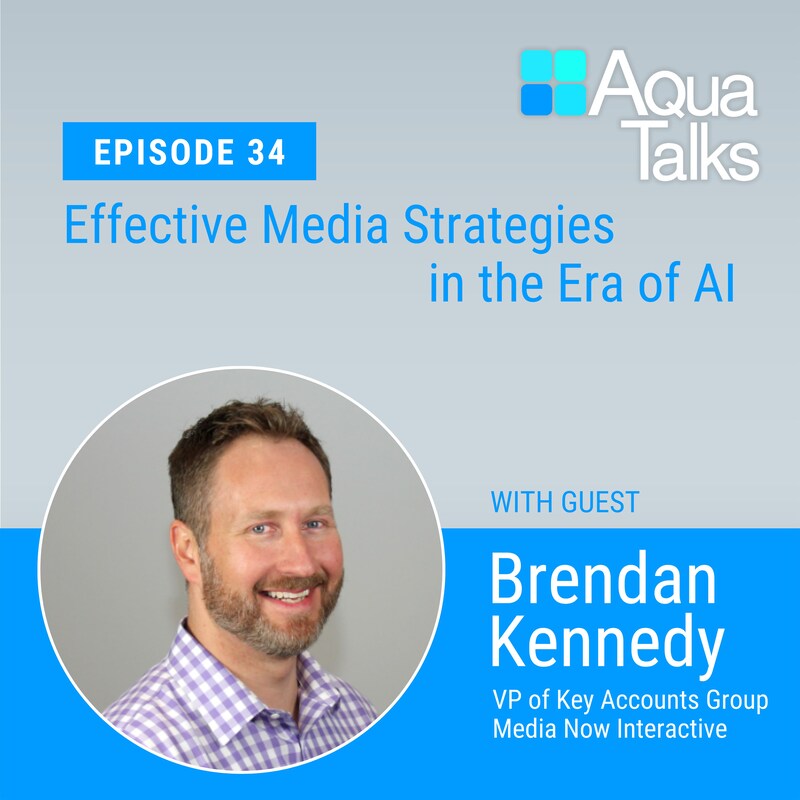
This podcast episode features an insightful discourse on the evolving landscape of digital marketing, particularly emphasizing the transition from a focus on mere access to a more nuanced approach that values quality engagements. We, the hosts, Larry Aldrich and Mady Dudley, are joined by esteemed guest Brendan Kennedy, who brings over 15 years of experience in the digital marketing realm. Our conversation delves into the implications of artificial intelligence on marketing strategies, highlighting the historical context of programmatic advertising and its recent advancements. Furthermore, we discuss the resurgence of contextual advertising in response to privacy concerns, underscoring its significance in crafting relevant messaging that resonates with audiences. Ultimately, this episode serves to illuminate the necessity for marketers to adapt to these changes, ensuring they remain effective in capturing and retaining consumer attention in an increasingly complex digital environment.
IN THIS EPISODE:
- 00:07 - Introduction to Aqua Talks: Engaging Marketing Insights
- 06:51 - The Evolution of AI in Digital Marketing
- 08:11 - The Shift from Machine Learning to AI in Advertising
- 19:10 - The Shift from Access to Quality in Advertising
- 25:47 - The Revival of Contextual Advertising
- 31:27 - Adapting to AI in Marketing
- 38:18 - Navigating the Marketing Landscape
TAKEAWAYS:
- The evolution of digital marketing has shifted from mere access to strategic placements that yield measurable results.
- Understanding consumer behavior in the digital landscape requires a focus on genuine engagement and meaningful interactions.
- The integration of AI and machine learning into marketing practices has transformed how ads are targeted and optimized.
- Contextual advertising is experiencing a resurgence as privacy concerns prompt marketers to explore less invasive targeting methods.
- Today's marketers must adapt to the changing landscape by prioritizing quality over quantity in their advertising efforts.
- Collaboration between paid media and public relations strategies is essential for maximizing campaign effectiveness and achieving desired outcomes.
ABOUT THE GUEST:
Brendan Kennedy is the VP of the Key Account Group at Media Now Interactive (MNI). MNI provides targeted digital and print advertising programs, and offers clients a single point of contact for multi-platform, customized, demo- and geo-targeted advertising.
Brendan joined MNI as an Account Executive in 2012. Working with advertisers and agencies on marketing campaigns across a variety of industries, he was able to see first-hand the power of digital advertising to impact his clients’ bottom lines. Understanding the importance of collaboration and precision within the digital space helped him to achieve growth of over 700% within his market.
In 2017, he accepted the role of Director within MNI’s strategic digital accounts division. With a focus on understanding the true goals of his clients’ marketing efforts, he was able to tailor digital strategies that work in conjunction with their traditional media and PR efforts, while delivering quantifiable results. MNI’s unique position in the digital universe allows Brendan to stay up-to-date on the latest technologies in the digital space, and know what products will maximize his clients’ ROI.
Transcripts
Welcome to Aqua Talks, where marketing meets bold game changing ideas.
Join your hosts, Larry Aldrich and Maddie Dudley as they explore the art and science of cutting through the noise, capturing attention and fostering meaningful connections with your audience.
Whether you're a destination marketer, government contractor, or simply passionate about the transformative power of marketing, Aqua Talks offers engaging discussions, fresh insights and actionable strategies designed to inspire and inform.
Mady:Hi and welcome back to Aqua Talks, the podcast for marketers. Whether you're just getting started out or you are a pro within the industry, my name is Mady.
I am the public relations director for Aqua Marketing and Communications. This podcast is sponsored by Brensys Technology and I am joined by my co host as always, Larry Aldrich.
Larry:Hi, I'm Larry Aldrich, President CEO of Brensys technology and Aqua Marketing Communications. Today we're here with Brendan Kennedy with MNI. Hello, Brendan. How are you?
Brendan:I'm doing well. I'm doing well. Thank you all so much for having me. I really do appreciate it. It's, it's exciting to be here.
I know you guys have been doing a lot of podcasts. This is my first one of the day. So I'm, I'm excited. I'm ready to go.
Larry:Yeah, we're pretty excited also. So before we get started, Brendan, tell us a little bit about yourself, your bio, your company.
Let's start there so everyone understand and get to meet you, get to see, hear about you.
Brendan:Yeah. So I've actually been in the digital marketing space for over 15 years, which I think makes me the most tenured person in digital marketing ever.
Because the digital marketing space changes so fast. Honestly, when I first started it was really more just kind of selling a website, if you will, or selling a publisher space.
Then we got into actually creating networks. I don't know if you remember networks, but it's like you'd pull together a few hundred like minded sites and start placing ads there.
In fact, that's really where Em and I started in the digital space. When I started with Em and I, we were actually a division of Time Inc. So that's a little blast from the past.
Mady:Time Inc.
Brendan:Isn't even around anymore and they started out really selling the regional ads in national magazines. And so when the Internet kind of came to be, Time Inc. Was like, well, let's let, let's let Em and I figure it out.
They're already kind of targeted media specialists, so let's see how they would approach it.
So we approached it in the way that somebody from the Time Inc. World would, which is let's put together a bunch of sites, aggregate them, place ads there and then as soon as Programmatic started we got to be at the forefront of it because we had Time Inc. Money behind us but an understanding that audiences were starting to come into vogue and not just publisher sites.
So I was there at the beginning of that and kind of got to watch the pros and cons of Programmatic advertising, especially early on in Programmatic Advertising. And so got to work with that and then started working with new tech.
And then part of the beauty of M and I is we're not beholden to anything we own so we get to work with all the different tech that's out there. And because of that I've stayed in the same place for 15 years now.
that time I was, I was a rep and then I kind of moved over to our strategic accounts division and I've kind of continued to move up throughout the organization and now I'm the VP of our Key Accounts group. And Key Accounts group is kind of a, a fancy way of saying these are the accounts that really could use a little more hands on approach.
Can use everything that's within the M and I universe and we really start to understand what your clients goals are so that we can tailor make the best possible digital plan to reaching those goals.
I think far too often people will just say hey, we need a search team or we need someone to just place some display ads for us and we start with what are your goals, what are you trying to accomplish? And then build out the plan from there.
So see a lot of the different digital options that are out there and seen the good and the bad of most of them, know what smoke and mirrors and know what's reality.
And in this day and age the digital space just keeps on changing and there's what's new today is going to be old tomorrow, but you take what worked in the new and you keep building on it. So exciting time to be in the digital space as it has been for a long time.
Mady:Yeah, thank you.
And in that same vein, I mean as someone who works purely in earned media, I'm very curious about the mindset shift within the paid media realm from a decade ago to now.
Brendan:I think a decade ago, even going back maybe a little further than that, it really was just how much access to inventory do you have? Can you get a lot of impressions to go out there and be in front of people? Can you scale up against an audience?
Whereas now you're really trying to look for results and how do you get results?
And part of that is taking a step back from pure audience targeting and really looking at people who are in a specific mindset or who are interested in taking an action and then getting in front of those people and staying in front of those people to help educate them.
So it has to be a much more genuine conversation in this day and age where it's really kind of following that Flight of the Bumblebee, because let's be honest, none of us consume media in the same way.
And so if you're chasing an audience with one particular tactic, you're probably missing out on a lot of opportunity to be in front of people and educate them and inspire them. And I think inspiration is critical.
Mady:I love that.
Brendan:Yeah.
Larry:So moving into trends or news, is there anything top of mind that you might feel is trending or in the news when it comes to where we are in media?
Brendan:There's a lot to unpack there, Larry, let's be honest.
Mady:Yeah.
Larry:It'S very vague, but I left it open. I left it open for anything that you might want to talk about or you might want to convey, if I may.
Mady:I know before the discussion, you were talking about how paid media has essentially been using AI for decades, and now it was just called something else. So I don't know if you want to speak to that, but that was a really interesting.
Larry:We were. Yeah, we started that conversation and then we moved to something else. But do you want to elaborate more on that? That'd be great.
Brendan:I'd love to. So I find it interesting.
I do all these talks on AI, and I'm talking to digital marketers and media people, and they're all asking, well, how do we use it? How do we leverage it?
The truth is, the day Programmatic Advertising came to be, we started buying impressions based on who was on the other side of that screen. Right. And we were doing it in real time.
And in order to do that, we were bidding very quickly using computer algorithms, and we were using something to optimize that we called machine learning at the time. And AI inherently is machine learning.
So it's always kind of funny to me when media people in the digital space are concerned about what are we going to do now that AI is here? Because I'm like, look back 15 years, and you were using machine learning, which is effectively the definition of AI. Machines that learn.
This is how we were optimizing, and nobody felt uncomfortable in that scenario. This is how we were purchasing media. No one felt uncomfortable there. This is how we were aggregating Reporting, no one felt uncomfortable there.
And then in:But we've been doing this for a very long time and I'd like to think that we were at the forefront of AI before it was in this easily digestible format that is large language models. So we've been building this and pushing it out there and using it and it's been working.
We've gotten more effective at advertising, we've gotten more efficient, we've driven better results. All of that on the back of machine learning. And now we've changed the name and it's, it's mind blowing to everybody in the space.
But I feel comfortable using AI because I've always used AI to actually make sure that we're getting the best possible results.
Larry:Yeah, I can relate to that in a little bit of a different way from federal procurement and all of a lot of different programs that we're working on that were out there. It was machine learning this, machine learning that.
It was almost like one day, one conference, we're going to turn it to AI and then the next day we start calling it AI.
Brendan:That was it.
time and it was somewhere in:And there's a reason why Google and Meta and these companies are actually at the forefront of it. And Amazon, these are the same companies we've been working with this entire to move your digital campaigns in the right direction.
So it's not surprising that they changed the name, remarketed it, now it's AI, but I think it's AI because it's more accessible to everybody else in the world. We're using Chat GPT all the time, right. Or Claude or some of these other programs that are out there.
Where it's really interesting is seeing how AI is starting to change the creative process of marketing where if you give us enough information on the front end, we can actually make sure that the ad that goes to that person is tailor made to that person based on who that audience is. So we used to go after just audiences and use the same creative and then do AB testing and see if one Worked better than another.
We don't really have to do that anymore, because we know if this person was interested in fishing and this person was interested in food in the particular destination, for example, that you're. You're working with, well, show that person a fishing ad and show that person a food ad. That has been a real change that AI has allowed us to do.
But again, it's still kind of just part of that programmatic delivery of ads.
So it's not totally unique, but it's making us far more efficient, because when people see an ad that they relate to, they're far more likely to take an action.
Mady:Yeah, it's been getting a little scary for me in terms of how they're advertising to me, just very specific. But it does. It feels more intentional and thoughtful and.
Brendan:Then sometimes nervous about, you know. You ever seen Minority Report? And, like, everywhere he's going, he's seeing, like, ads talking to him or it's got his image. I'm.
It'll be interesting to see when that comes to be.
Larry:Because that'll be interesting.
Brendan:I don't know how far away we are from that. I've actually seen some, like, digital out of home now.
We can actually change the ads based on the phone that's approaching the screen or moving by, and we can actually deliver based on what we know of. Of that phone. That's right there. That is really the beginning of some of that true personalization out there in the wild.
Larry:And it's funny to talk about sticking with the theme going from then verse now the media industry shift.
But before I go there, kind of touching what you were just talking about back then, it was like I kind of asked my kid just playing around, I said, do you know what a dial tone is? And he just looked at me. And when you were talking about the different types of phones, he didn't even know where to start.
When I said, what's a dial tone?
Brendan:Yeah, they don't. I play those games with my daughters too, and, like, see what I can stump them with. But it's always interesting to see what they come up with.
And I'm like, I have no idea what you're talking about. So that. That cut cuts both ways.
Larry:Yeah, it does. And then he brought his computer downstairs and put it on the table, took it all apart, rebuilt it, and put it back together.
And then looked at me, and I was like, okay, all right. Too short.
Mady:That's impressive.
Brendan:Yeah.
Mady:Who cares about your downtown? And then I'm just trying to be cool with the young and like 6, 7.
Brendan:That comes up more often than I'd like to admit. Even to the point now that I pick up on it, which means it's over. Because when I pick up on it, it's done. It's done.
Mady:I feel the same way. I'm just trying to relate and it's. I just most of the time feel very old.
Larry:And again, sticking with that theme then versus now, but from a media industry shift, what were some of the organizations really selling a decade ago? Even if they didn't say it out loud, I guess just so from then and now, what were media organizations selling a decade ago?
A decade ago, excuse me, as compared to now, how has that shifted?
Brendan:I think back then, honestly we were looking at tonnage more so than, than strategic placements. You know, if you could get a million impressions in front of somebody, that was great because you were going to drive a lot of clicks.
And clicks don't have a ton of value in my mind.
I mean, sure, if you have a new website and you're trying to get people to go to that site so you can build a retargeting pool or understand what somebody who visits your website versus somebody who converts looks like, I see the value in driving a lot of clicks to the site.
But in this day and age with machine learning, that is AI, we are able to actually follow people much further down the funnel and drive conversions and look at dwell time on a website or get somebody to take a very specific action.
I think this is the main, the main difference that I would rather have less tonnage, go out into the world and find the right people who actually take an action beyond just a click.
In my world, it's far more valuable to get somebody to actually become a believer and an advocate for your brand who's out there talking about it versus just driving people to come to the site.
And I think programmatic advertising, what nobody talked about at the very, very beginning was there was a lot of just kind of bad clicks that we were driving just people to sites that didn't really matter or weren't necessarily converting. I think nowadays it's quality versus quantity.
If I had to really narrow the focus of your question, Larry, it's nowadays we focus a lot more on quality and I'll pay a higher CPM to get a connected TV ad in front of somebody that I can actually see if that person came to my site and made a purchase and track that through and see all the touch points that mattered versus just cheap impressions. And that's a big difference. And I think it's only getting better as we unify all of the data that we have at our fingertips.
And that actually is leveraging some amount of AI to actually be able to create those kind of device graphs and make sure that we're finding the right person multiple times, moving them through the funnel, and getting them to take a very specific action.
Mady:I feel as though this is.
You've sort of touched on it, but I'm really curious about the answer to this question, which is at what point did Access stop being the differentiator?
Brendan:I think it really started being the differentiator the day that people started taking all of those promises we made in the digital space about being able to track conversions and actually understand the audience. I think access stopped being as important.
Access is still very important because you have to be able to get in front of the right people, wherever they are.
I had alluded to it earlier, that flight of the bumblebee that we all follow now, where there's a moment of inspiration and it can occur anywhere, whether it's a conversation with a friend or streaming something, or, you know, you're watching something on. On TV and you see that moment or you read an article, that's the inflection point.
And then you have to be able to follow that person and stay in front of them. So access still matters because you have to be in all of those places.
But I'm looking through the lens of access when I say that more so about being like Omni Channel, being in all of the different places where somebody might be social media, connected tv, streaming audio, what it may be. Yeah, it used to be Access was just. I have the ability to find this many people in the US and it wasn't really any conversation around.
In what inventory that is the connected tv, the digital out of home, all of these other things. It was more generic.
And as we've started focusing to a more strategic approach where you surround somebody, the right person, with the message and inspire them to take an action. That's when access stopped being so important. I recall years ago, I was at a conference and I was talking to this.
This person who worked for another company, and they were doing really, really well in the political space.
And I was talking to them about, well, what if we could actually help you find the right audience, the people who are truly like undecided voters or people who don't know how they feel about a specific topic.
And he laughed in my face and he said, but I have access to all these impressions, so I can spend all their Money, I can actually put that tonnage out there into the world. And I thought, well, that's kind of foolish. Like what if we were better about spending the money than you could drive a particular outcome?
Genuinely laughed at me. And that company for a couple years just kept eating my lunch in that particular segment because they had tonnage.
And it wasn't until the last like eight years or so that their perception changed. And that's when I knew access was no longer important. Because they were really thinking, wait, these are the people I need to be talking to.
Other people are set in their ways. Why am I wasting my time? There's a pocket of the population I should be talking to.
And that's when I saw the change really occur because it went from access being the most important differentiator to strategic placements and tight geos with people who you want to talk to. And it, that's when I think it all, it all kind of changed for me at least.
Larry:Was that shift gradual or did it feel sudden from where you sit?
Brendan:From where I was sitting, it was gradual until it wasn't.
And what I mean by that is you could hear people talking about it, you could hear people wanting to work smarter and be more intelligent about their digital advert, but they weren't willing to do it.
And so that part took a couple years where it went from just tons of impressions to maybe we should be a little bit smarter about this until somebody actually did it.
And then when they started winning out, whether that was in market share or whatever it may be, then everybody came rushing because once somebody beats you and you're like, how did that happen?
But when the status quo is the status quo, it was really nice just to talk about it and not do anything about it because the path of least resistance is always easier to follow. So it was gradual until it wasn't. And that's kind of a convoluted answer, I understand that, but that's the truth.
It was talked about a lot and then everyone did it.
Mady:Yeah. So curious. I mean this is all really interesting to me just because in terms of KPIs, like media value is something that PR utilizes to showcase.
This is how much it would have cost as a paid ad versus what we earned and what's organic. So I'm curious how KPIs or like media value has shifted amongst all of this change too. Perception of it.
Brendan:That's kind of my point. I'd rather pay more to drive a more efficient outcome. Like pay more on the front end and PR's always been. Been great about this because it.
It feels more genuine. Right. And media has always felt less genuine because I'm just pushing my story in front of you.
Whereas PR gets found, it gets discussed, people talk about it, they share it with other people.
And social media helped to blur the lines between the two of those, because then it started being ideas and then people could very quickly share them. And so it was when social media kind of blew up that I really started to see the line between PR and paid media start to blur.
But I think you need to have both. You have to have that earned, you have to have that paid. Because if you're.
If you're not doing that, then you're missing a massive part of the equation. And when paid media is coming on the heels of genuine information that's going out there, everything becomes more effective.
And it helps us reach our KPIs. It helps you reach your KPIs. And I've been glad to see those walls come down a little bit, because you can't have one without the other.
And far too long.
It was like there was this siloed approach where, like, PR was over here, paid media was over here, and then social media kind of blew the whole thing up. And it was like, wait, people are talking. How do we get to be part of that conversation on both sides of the coin?
Mady:Yeah, that's such a good point. I feel like successful paid media campaigns these days really do rely on.
I mean, not rely completely, but the virality of things or like, even the strategic approach to some sort of paid media opportunities. Having a PR professional there to sort of like, put the. Not emotion or.
But just like, think of the earned and organic value of how we could further stretch a paid. How any paid content. Like, I don't know. I feel like everyone that's a millennial and Gen Z, like, wants to be advertised to.
I know that's a very broad statement, but, like, I just came across this.
All these Instagram accounts are doing paid ads where they're posting collabs with like, one I just saw was Liquid Death, and it was on Deuxmoi, which is like a gossip Instagram. But for some reason they partnered because they wanted to target that audience.
And it was just really cool how they utilized a PR story and spun it into then. I mean, it's a tale as old as time.
If someone's dating someone, then they'll capitalize on that and make a paid story out of it, and then everyone involved is gratified.
But yeah, I just I think it's really interesting how we're really working hand in hand and like want to stretch the paid dollars a little bit more with earned media coming in and strategizing too.
Brendan:Yeah, I, I even, even within our, our organization here at M and I, whenever we do a paid campaign, like to promote all the things that we're doing, there's always a PR element behind it because if you don't have one or the other, what, what's going to happen when people decide they want to take a deeper look and they don't just want to go to my website, but they want to go to Ad Exchanger and see what they. But what's really being said? Well, there's where my PR can live and then people can get talking about it there.
And then you can hear from trusted people in that space and with the advent of Reddit these days, how much people are talking, those people are reading press releases, they're talking about it. It generates a far more organic conversation.
So I think of the paid media as increasing the reach, the PR of adding some credibility to the whole situation. You bring those two things together and it's really powerful.
So even we do it, we absolutely make sure we have both elements running at the same time.
Larry:With all the things that we were discussing, the changes, the then verse, now the rise of AI optimization, intelligence, efficiency and consequences. And so all of the then verse now the changes.
Is there anything that sticks out that hasn't changed or anything you want to speak on that hasn't changed?
Brendan:What is old is new again, right? The number one, I think the number one thing that, that got poo pooed on was, was contextual advertising.
Contextual advertising went away because we had audiences now. And what do I care about contextual? Then you started running into privacy concerns and people started wondering how their data's being used.
And all of a sudden, you know what became really hot again was contextual advertising. And you lose sight of the fact that if I'm reading about a topic, it's telling you everything you need to know about me.
Just because I may not fit into the exact bucket that you are going to define your audience for your brand. I'm signaling to you that I care right now, today.
If I may never have been interested in financial services until today, then I'm not in one of those buckets.
But if I'm reading it right now, I should probably be in that bucket and I'll be in that bucket in three months and they'll, they'll start sending ads to Me. But that mindset of contextual advertising is back and it's back in a big way. One, because it addresses privacy concerns.
It doesn't require any kind of pixels or cookies or any of the things that keep going away. But you're in a mindset and you're, you're actively pursuing information in that moment.
And so contextual targeting is back and it's getting a lot cooler.
So I've seen some, some companies right now that even have the ability to say, you're streaming this particular show and in this show, these people just visited this beautiful destination and I can ensure that the next ad they see is for the destination when it breaks to a commercial break. Like we can look at that level of detail of what somebody's consuming to make sure that they see it in real time right after.
And I think that's really, really powerful.
But that is kind of the, the crossroads of using AI to understand what people are either reading or viewing and then placing an ad in front of them that's relevant in the moment, less so than worried that the person on the other end is actively, you know, falling in that, that pre defined bucket. And I think that's great. Contextual advertising is back. So it's what, what's old is, is truly new again and it's compliant in every way.
So publishers are back.
Mady:What would you say to consumers that do have privacy concerns for contextual marketing?
Brendan:I mean, privacy concerns are very real. I mean, what are these people doing with your information? How are they harnessing it? What are they actually seeing?
I think everybody has, has a right to kind of control that. And fortunately the industry is moving in a direction where we, where we can do exactly that as it relates to contextual targeting.
If we're not following you around and we're just talking to you in that moment, there's not really a lot of privacy concerns there. But if we're capturing personally identifiable information and using that to then target you, I can see how that's clearly concerning.
And being somebody who's from 9 to 5amarketer, there's, there's eight hours in the day where it's like, yeah, look at all this information we have and all this data.
But somebody who's also like a father, you know, all day I have my concerns about what they're, what they're tracking, how much they're tracking, how they're using this. I've kind of given up on me, but I worry about my kids. Right. I want them to be safe in this space and what, what do these big companies really know?
And that can be concerning. So I think it's a conversation we need to continue to have.
And fortunately, Europe started it years ago and now many states here in the US are starting to pick up on it and they're putting things in place. And I feel like we're more protected than we've ever been.
The reality is though, that as we get smarter and smarter, we need less and less personally identifiable information to give you relevant ads in the moment. And we've kind of circumvented a lot of that stuff.
It's almost like they put, they put things in place to protect you, but then the workaround ends up being even more specific. It's really, it's really kind of a slippery slope. The good news is we're not collecting that information, or at least they say we aren't.
I think we've all been privy to this weird phenomenon they say doesn't happen though, where you're talking about something with somebody and then you're like, how is that on my phone right now? That's always a little od. And they always have ways to explain it away. But I have my own, my own beliefs.
Larry:So if we're looking ahead, what do you think leaders need to unlearn to stay relevant?
Brendan:That's a good question. But they need to unlearn. I think a lot of that comes down to kind of those old school beliefs of how, you know, marketing's working.
You need to unlearn some of that and really look at the results that we are able to drive now. And some of that requires not just relying on what somebody in my position tells you is success.
Like, yeah, really taking the time to understand what your goals are and diving into that and looking at metrics that maybe fall outside of the dashboards that we're able to show you because there's a ton of information that, that's out there. I can show you that somebody saw an ad and somebody converted and that's great. But did you see your website traffic go up?
Have you seen more people talking about you in social media?
Larry:Are.
Brendan:There's, there's all these other metrics that I think people need to believe in and really start looking at because your first party data will tell you more than any data that, that anybody can give you in any seat anywhere in this industry. Your first party data is important to understanding your audience and finding your audience, and it's important to understanding what success is.
So don't just rely on what I'm Saying like, be collaborative. And my, my best clients are the ones that are very collaborative with us.
They tell us, hey, we've seen this on our end or this metric is working and maybe not this metric.
And by sharing that with your media company or with your agency, we're all able to row in the same direction versus just assuming that here's the answer, I gave it to you all is, well, that's success. Take the time to really understand your company and look at it a little more.
And in some respects, the executive teams have gotten too used to just saying, yep, clicks are up, that's great, we're moving in the right direction.
Larry:So with that, are you seeing shifts in the metrics? And I say that because in conversations with our DMO partners, they're seeing less traffic on their websites because of AI.
So customers and potential customers are search, use, searching for information differently. So are you seeing any shifts? And it's not a bad thing.
It's just, we have to, we just have to adjust how we're helping potential clients and customers prepare for those shifts and make it easier. So are you seeing any metric changes that you want to bring up just.
Brendan:Like our DMO partners brought up? Obvious one.
And it's going to continue to impact everybody is we're predicting that search queries, search results, search traffic that you're going to drive is going to drop by about 25%. And that number was based on where we see AI today.
But every time I go to Google or any other search engine, if I ask it a who, what, when, where, why type question, it gives me an AI overview first. And so you've entered into this space of zero click, there's, there is no click.
So even if I advertise to show up, I'm not at the top because I'm below the AI results. And that 25% is based on what we were seeing last year.
If I continue to look at the acceleration of AI and how it's providing results, not to be like the sky is falling, but I think we are, we may see more than a 25% decrease in that.
So I think people need to wrap their heads around that and stop leaning into search as kind of the end all, be all, you'll still get results and I think you certainly need to be there. But even look at how Google has been allowing us to buy advertising with them.
They're starting to push us towards that PMAX offering, which includes YouTube, includes display ads, puts ads in Gmail and it has search and you don't really have a lot of control of kind of how it does that. That's because Google doesn't want to lose their money.
Mady:Right.
Brendan:They want to continue to keep the same amount of budget coming in, but drive similar results. So how are they doing it? They're diversifying where they place your ads based on the things that you're searching for.
That's them insulating kind of what, what they're doing. But it's also a sign of the times that search is a little less valuable as it once was as it relates to the DMOs.
This is probably where they're seeing some of that drop off is those AI results show up, they learn about it, they feel like they've, they've gotten the information they need. That doesn't necessarily mean it's a, it's a bad thing. You just need to change the way your site kind of reacts and talks.
And so it's a matter of making your site be a little more conversational. So when those questions do come up, maybe the AI grabs your DMO's information and puts it out there.
And then if someone wants to take a deeper dive, we can find our way back in through the AI response and get them to do this. So it's changing the way you, you actually create the content on your site.
This can be as easy as frequently asked questions that are more conversational so that your answer seems to be a little more conversational. That'll allow AI to grab it. That'll insulate you a little bit because you'll show up. It's the same with voice searches, voice queries. We all do it.
We ask whatever operating device we're on to give us an answer, and it finds an answer and spits it back. That also comes down to this conversational nature on your site. The AI isn't creating these, these answers. It's looking for the right answer.
And that answer would have to be conversational. And if you want to show up on those voice devices, you need to make sure that your site is optimized to respond to instantly.
It used to be that you would worry about people getting annoyed because they go to a website and it would take a few seconds to load. AI has far less tolerance for that stuff than we do. AI is like, it didn't load instantly. I'm out of here.
I'm going to the next site because I have milliseconds to figure this out. So if your site is written in a conversational manner, answering direct questions in particular with voice ones like are you near this?
Are you by this. People ask that stuff. Where are restaurants near me? What's the best attraction near me? This is how we talk to those things.
So if it answers those questions and loads instantly, you're about to show up in the voice search. You're about to show up in the AI that will insulate you and that, that will help. And that's not. I'm a media person. I want, I want you to buy paid.
That's not how you. I'm not selling you anything here. This is just the fact of it. You need to have it be that way.
And it'll only help you in the end because then people will find you. There's still gonna be people who find you in search, but allow the AI to find you too. So you kind of have to play both sides of it.
And I do think to go back to that word I used at the beginning of this. I like to think about inspiration for DMOs. Oftentimes it's moments of inspiration and you know what you're good at. You know what you're the best at?
Best wine region. You have the best food, you have the best attraction for the kids. Like know what you're good at.
Align with those moments of inspiration that occur there. Don't rely on that bottom of the funnel type things like the expedias of the worlds and the travelocity.
Sure, you want to be there, but everyone's there if you can be the first touch point.
So that contextual kind of alignment, that mindset targeting, if you can find somebody when they're in that mindset, you're likely to be the top of mind thing when they go do the search or when they end up into those OTAs at the bottom of the funnel. So it's more important than ever to diversify your approach to align with moments in time where people are finding inspiration, genuine inspiration.
Mady:I love that answer. I mean, especially because you want to have an integrated approach.
Like what's going to be educating these search or language large language models is public relations articles like they're pulling from earned media pieces that we can secure.
So I think in general too, just having, I'm taking from this too just the importance of having a media strategist or like someone who speaks the language because they say like the media cycle and news and everything is learning a different language. Just having someone who is fluent on your side is extremely important and just needs to be top of mind for all business owners and brands these days.
Brendan:Absolutely critical. Absolutely critical. Yeah. Matt, you and I would get along Just fine. Because we understand you gotta have both.
You can't just rely on one to drive results in this day and age.
Larry:So thank you, Brandon. Usually we would close out with maybe asking to discuss one of your.
Brendan:Case.
Larry:Studies, but however, given the time of year, it's trade show time of year, everyone's going to conferences here, there. So any interesting conferences you have coming up that you'll be attending that you might want to just throw out there.
Brendan:Yeah, I did a lot already, so they're in the past and now I'm just starting to get my year in front of me. I think the next one I'm doing is going to be in la and I just found out about it yesterday, so I can't even promote it properly.
But I will be on a panel in LA in February, but I don't know all the details, so I apologize, I can't promote anything.
Mady:No, that's okay. We'll follow up with you and we have a website where we'll put all of your information and then we can place great the conference that it is.
Larry:Just update your LinkedIn and we'll make sure we have all of your socials and how to get a hold of you on the aquatox.com site, your bio and everyone could go there to follow up with you, see what you got going on.
Brendan:I really appreciate you all having me on. This was actually the most fun part of my day for sure. The rest of it's obviously reviewing reports and this is.
It's great just to kind of talk and understand what you're seeing in the space, kind of what we're seeing in the space and collaborating. This was a lot of fun. I really do appreciate it.
Larry:Thank you. And I look forward to you. I look forward to seeing you out there in our travels.
Brendan:Oh yeah, well, I'm around.
Larry:I'm around.
Brendan:So looking forward to it.
Larry:Thank you.
Mady:Thank you.
If you're interested in learning more about Brennan or about his company, Please go to aquatacs.com we have information on Brennan there and we'll also have information on his conference once we get confirmation. You learn more about myself and Larry there and just about Aqua marketing in general. Thank you for joining us again. Have a great day.
Larry:Thank you.
VO:You've been listening to Aqua Talks where marketing innovation takes center stage with bold ideas and actionable insights. Ready to take your strategies to the next level?
Visit aquatacs.com to book your free consultation and explore resources that empower you to thrive in today's fast paced marketing world. Until next time. Stay bold, stay inspired, stay imaginative.