Shownotes
📺 Watch on YouTube and Spotify
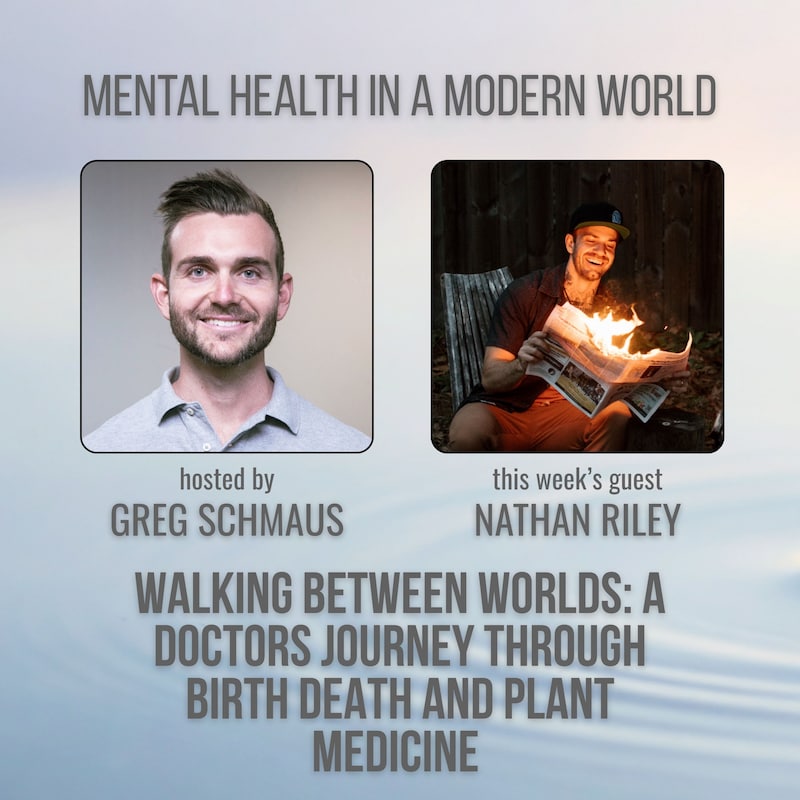
“It's the whole Dionysian Apollo dilemma… We don't value this sort of just oozing with, like, some sort of naturalist phenomenon that maybe came to you through a walk in the woods or standing under a waterfall and picking fresh fruit off of a tree or just trying to eat some flowers or berries from a bush. Like, ugh, who said that was okay to do?” says Nathan Riley, Western-trained OB-GYN, who joins Mental Health in a Modern World to share how a journey through plant medicine—guided in part by legendary shaman Hamilton Souther—upended his traditional medical training and transformed his understanding of birth, death, and our collective crisis of embodiment.
A trailblazer at the intersection of holistic health and psychedelic medicine, Nathan Riley recounts his leap from pharmaceutical and surgical protocols to Amazonian wisdom and deep ceremonial work with psilocybin and ayahuasca, where practical and mystical insights now inform everything from postpartum care to the existential crises surrounding parenthood. He delves into the humbling lessons learned as both practitioner and student; the surprising, intuitive healing that emerges from surrendering to these master “allies”; and why reclaiming sovereignty over our bodies may be the most revolutionary act in today’s world.
Tune in to his powerful conversation with Greg Schmaus for a candid exploration of how ancient plant teachers—and the simple act of being in our bodies—hold the keys to meaning in the modern human experience.
5 Key Takeaways
Unlock transformative healing and deeper self-connection by embodying these insights from the conversation:
- Develop a regular practice of intentional plant medicine or psychedelic ceremonies to foster personal growth, humility, and direct guidance from inner wisdom.
- Set clear, authentic intentions when entering any ceremony or healing space—ask the plants or your own subconscious specific questions and state your desired focus for maximum clarity and empowerment.
- Make yourself truly available for spirit, intuition, and deeper insight by cultivating stillness, subtracting distractions, and spending time in nature or silent space.
- Reconnect with your body’s natural intelligence by tuning into somatic signals, emotional releases, and intuitive guidance, especially during moments of challenge or transition such as birth, parenting, or grief.
- Trust and honor your unique path—embrace remembering who you are at your core, rather than constantly seeking external validation, gadgets, or additions to fill internal gaps.
Take one of these steps today: set aside time for stillness, reflect on your true intentions, or simply listen to your body's wisdom. Transformation begins with one choice.
Memorable Quotes
"I made an agreement with myself that every two to three weeks I would do a deep dive with psilocybin, nourish my own mushrooms, set up an altar, and have a conversation with the mushrooms to set intentions. Initially, it was very hard—months of just going through my own stuff. But at some point, I started the ceremony by talking to the mushrooms out loud and saying, 'I want to see your playful side' or 'I want to know how you want me to comport myself to be able to offer this medicine in a safe environment for others.' And then they show you."
"When you’re in the river, you’re not going to die—not with these medicines. There’s a part of you that might be left behind, but that’s stuff I didn’t need to carry as baggage anyway. There are strange allegories that come through, and it’s a full send—surrender, leaping into the waters and treading for a while, instead of grabbing onto a rock for dear life, just letting the current take me downstream."
"What’s most important is that many Eastern mystics have seemed to be on board with this for centuries. Since the age of enlightenment, if it’s not measurable, it’s not important—that, of all things, is just not useful to me anymore. There’s nothing more than you in this moment. If you want the world or your life to get better, you have to be willing to just be."
Connect with Nathan
Website - www.bornfreemethod.com
Instagram - www.instagram.com/nathanrileyobgyn
Resources Mentioned
Abundance Archetype (program by Jason Picard) – https://jasonpicard.org/abundance-archetype/
Sanctuary (offerings and teachings by Hamilton Souther) – https://www.bluemorphointernational.com/sanctuary
Connect with Greg
Website - https://www.healing4d.com/
Instagram - https://www.instagram.com/4d_healing/
YouTube - https://www.youtube.com/@gregschmaus
LinkedIn - https://www.linkedin.com/in/greg-schmaus-22929589/
🎙️🎙️🎙️
Podcast Production & Marketing by FullCast: https://fullcast.co
Discover the best podcast services in the world at The Podosphere: https://www.thepodosphere.com/
Mentioned in this episode:
Embark on The HTM Journey
Embark on The HTM Journey
Transcripts
We've never been incentivized to be in our bodies.
Speaker:It's the whole Dionysian Apollo dilemma.
Speaker:We have this well boundaried, well figured man
Speaker:who's out there doing the man thing. And then there's this other man that's
Speaker:very androgynous, that's got maybe rolls of fat and is just
Speaker:engorging themselves on grapes and indulging in
Speaker:everything that comes with nature's bounty. Like, ooh,
Speaker:that sounds gross. We don't value this sort of just
Speaker:oozing with, like, some sort of naturalist
Speaker:phenomenon that maybe came to you through a walk in the
Speaker:woods or standing under a waterfall and picking fresh fruit off of a
Speaker:tree or just trying to eat some flowers or berries from a
Speaker:bush. Like, ugh, who said that was okay to
Speaker:do? In a world moving faster than our minds were designed to handle,
Speaker:mental health is becoming one of the defining challenges of our time. Welcome to
Speaker:Mental Health in a Modern World with holistic health practitioner
Speaker:Greg Schmauss. After overcoming severe anxiety and OCD
Speaker:in his own life, Greg dedicated the past decade to helping others
Speaker:heal through a fully integrated approach to mental health, combining
Speaker:lifestyle coaching, psycho emotional healing, mindfulness,
Speaker:and archetypal work. Over the years, he's facilitated thousands of
Speaker:sessions guiding people back to peace, clarity, and a deeper
Speaker:connection with themselves. Each week, Greg shares powerful solo
Speaker:insights, conversations with leading voices in holistic healing, and
Speaker:immersive live coaching sessions that take you inside the healing process
Speaker:itself. New episodes every Friday, follow the show and start
Speaker:reclaiming sovereignty over your mind in a modern world. Here's
Speaker:Greg Nathan. Welcome to the podcast, man.
Speaker:Good to see you again, Greg. Thanks for having me. Yeah. I was so excited
Speaker:to see you on one of Hamilton's calls a few weeks back.
Speaker:Yeah, Hamilton. What a guy. Yeah. I don't want to say he took me under
Speaker:his wing because in essence, we're all kind of under his wing. He's, like, kind
Speaker:of speaking to the world. But I had, like, a little
Speaker:epiphany, you could call it, with actually the help of Jason Picard.
Speaker:He. He took me through a BUFO experience, and it was a
Speaker:very small, like, relative to what I've done in the past with psychedelics. It was
Speaker:a relatively, like, brief, you know, quote unquote easy sort
Speaker:of thing. But the set and setting were just so that it felt like
Speaker:love pouring in. And there was all this, like, religious iconography,
Speaker:which is not typically my jam, but it's a part of
Speaker:Jason's journey. And. And anyways,
Speaker:for those who don't know Jason Picard. He has this great program called
Speaker:Abundance Archetype. Everybody should check it out because he's a really interesting cat. But
Speaker:he, he's a friend of mine and we did this experience and I remember leaving
Speaker:feeling like this message like you need to learn from plants, you need to sit
Speaker:with plants. And I wasn't using plant medicines. I toad
Speaker:five meo and am I supposed to be doing something with this? And I thought
Speaker:maybe that means I'm supposed to be doing herbalist work or whatever. And then it
Speaker:was like, no, it's not that. It's the thing that maybe I haven't been
Speaker:avoiding. It was like the tool that is hard to harness
Speaker:as a tool. It's not learning what an herb does or a plant does.
Speaker:It's, you need to go deeper and sit with these master allies, these, these
Speaker:mushrooms and ayahuasca. And that's exactly where it led me.
Speaker:So I have a lot of, you know, credit to do to, to,
Speaker:to provide back to Jason that the first person I called was
Speaker:Hamilton. And Hamilton Souther is a, he wouldn't use this word, but
Speaker:he's a, a shaman living in, in Peru. He's a
Speaker:medical vegeta lista, which is what I'm training to be now. And
Speaker:I called him up because I was like, I'm getting this calling, man, I think
Speaker:it's time. And he was like, yeah, you've probably always been getting that calling
Speaker:and it was just a matter of time before you kind of situated in that.
Speaker:And so I'm a Western medical doctor trained to do surgery and
Speaker:pharmaceuticals and all this other stuff. And, and what I kind of
Speaker:rounding out my understanding of that calling is that there's
Speaker:just certain things that you can't do, a lot of things you can't do
Speaker:with the most medical approach. There's a lot of things you can do I couldn't
Speaker:do in these strange worlds of birth and death, which is where
Speaker:I focused all my medical training. And,
Speaker:and you know, he was like, well, let's get to work.
Speaker:And, and that's how, you know, I get invited to those calls that you get,
Speaker:you know, that you're sitting with. And I'd be curious, Greg, are you also looking
Speaker:to do more work and maybe start facilitating that? Is that your journey
Speaker:too? Yeah, I started Palchak was my first
Speaker:introduction to psychedelics and plant medicine work. And a few years
Speaker:ago I, I started assisting our mutual friend Payam's
Speaker:ceremonies. Oh yeah, uh huh. So I had been assisting
Speaker:for about three, three or four years, his ceremonies.
Speaker:And last year, he and I were
Speaker:facilitating together a small men's group. And one of my
Speaker:clients who sat with us in that ceremony
Speaker:had a few years back, sat with Hamilton, and he
Speaker:mentioned it that weekend. And when we were in ceremony, I just got
Speaker:that intuition that I need to study with Hamilton.
Speaker:And so I had reached out to Hamilton, had a conversation with
Speaker:him, and he said, look, if you want to join the academy, like, love to
Speaker:have you. And it was just a full yes. Earlier this year, I
Speaker:started that. That journey. And it's really been beautiful,
Speaker:really taking some of the principles of his
Speaker:teachings and working with Sanctuary and a lot of his offerings
Speaker:and bringing that into the ceremony work that I was
Speaker:assisting in, but now moving into kind of a different role.
Speaker:For me, psilocybin has been my greatest
Speaker:teacher. Same for me, that's the medicine that
Speaker:when I work with it, it's just such a
Speaker:beautiful relationship of
Speaker:learning, of discovering. There's for me just so much
Speaker:humility that I feel when I'm sitting with those teachers.
Speaker:And just the wisdom that pours in for me is just
Speaker:invaluable. And my. My work has been a lot of
Speaker:mental health and working with the psyche and working in the
Speaker:archetypal realm. And psilocybin has really
Speaker:connected so many dots that otherwise were
Speaker:missing. Yeah. And so, yeah, I'd love to
Speaker:hear your journey in that realm as well.
Speaker:Yeah. I mean, you and I are very similar in that regard, where there's
Speaker:a deep humility to the work as well, where it's like, gosh, I'm going to
Speaker:start doing this now. Like, and you've done your. You have your
Speaker:whole. All of the programs you've developed, you've been focusing on
Speaker:doing this a certain way. And then I don't know if this is true for
Speaker:you, but for me, it's like you hit a point where it's like, I can't
Speaker:go any further here. I need to find some other path. It's like walking up
Speaker:a stream on a trail and you have to cross a river.
Speaker:And it's like there's nowhere to go unless I go backwards, which sometimes we
Speaker:do, and we look for other trails, and those get us just so far. And
Speaker:then we eventually have to cross this, like, bubbling,
Speaker:you know, raging rapids is sometimes what it seems like.
Speaker:And the questions I had are like, where do babies come from? Like, what is
Speaker:birth? What is death? Where do we go? Where do we come from? This mental
Speaker:health stuff just. It's just crippling Our
Speaker:society. And sure, it's a societal issue. It's not
Speaker:like a deficiency in psilocybin or psilocin or
Speaker:DMT or whatever. However, you know, however, when you start
Speaker:to have those experiences and you start deepening your relationship. I love that you use
Speaker:that word with the plants. They start to pull back layers of this
Speaker:veil that is very thin for me right now. So much so that some of
Speaker:the insights I'm getting through these journeys are like
Speaker:directly practical things that I then try and they work.
Speaker:So I don't think that there's like necessarily a right or wrong
Speaker:way for me to go about this. It's just a full send
Speaker:surrender. Leaping into the waters and then treading for a while
Speaker:instead of grabbing onto a rock for dear life, just letting the
Speaker:current just take me downstream. And maybe there's a trailhead down there,
Speaker:maybe there isn't. But I know I'm a strong swimmer, I can get out of
Speaker:the river at any time. And, and it's
Speaker:also kind of like knowing like, hey, this is controlled like this,
Speaker:this. I don't want to say it's a simulation, but like, when you're in the
Speaker:river, you're not going to die. Not, not with these medicines. There's
Speaker:a part of you that might be left behind, but that's stuff that maybe I
Speaker:didn't need to carry as baggage anyway. So there's these strange
Speaker:allegories that come to, you know, come through and, and
Speaker:for me that I,
Speaker:I sort of made an agreement with myself that every two to three weeks I
Speaker:would do a deep dive with psilocybin and that I nourish my own
Speaker:mushrooms. I have access to all of that. I set up an
Speaker:altar, you do the sage, you do all the things and then
Speaker:you have a conversation with the mushrooms and you set some intentions. And,
Speaker:and, and that initially was very hard. It was like
Speaker:four months maybe of just going through my own stuff. And that's what people
Speaker:call like a bad trip where, you know, you take three and a half grams
Speaker:or something and you're just rolling around kind of crying, maybe reaching out for
Speaker:something. And there's just this desperation feeling. It was
Speaker:never really quite a desperation for me, but a lot of people feel that. So
Speaker:I'm just saying that to reflect that back to people. Like, it's not easy work.
Speaker:But what was interesting, and this is where the actual like facilitator
Speaker:process comes in, is that at some point it was like, you know, I'm tired
Speaker:of going through the stuff like from my Childhood. I'm
Speaker:tired of going through this weird dance that my mom and I do or the
Speaker:past stuff with my dad, who he's since passed away, so there's no resolution to
Speaker:that. Anyways, I would literally start the ceremony
Speaker:by talking to the mushrooms, like out loud and saying,
Speaker:hey, I want to see your playful side. Or hey,
Speaker:I want to know. I'm doing this now. Like, I'm in here, I'm with you.
Speaker:I need to know what you want me to. How you want me to
Speaker:comport myself in order to be able to offer this medicine in a
Speaker:safe environment for other people. And then they show you, like, the Council
Speaker:of mushrooms or whatever it is. And that's a really neat
Speaker:thing, isn't it, Greg? Where you, like, actually can get like a direct
Speaker:response at times. I'm glad you
Speaker:brought this up because one of the experiences that I've had
Speaker:until working with Hamilton is
Speaker:I always entered ceremony with medicines just
Speaker:open to whatever they had to share. And
Speaker:a lot of times it would go back to childhood. It would go back to
Speaker:emotional processing and stuff like in my system that still needed to be
Speaker:worked there. And I get that. Yeah, yeah. But then hearing from
Speaker:Hamilton, where it's like, you can tell them what you want.
Speaker:It's like, hey, I want to work on this, or I want to focus on
Speaker:this, or I want answers to this. Right. And there was so much more,
Speaker:almost like spiritual agency that you
Speaker:are allowed to bring to the relationship
Speaker:that now, for me, I feel so much more empowered
Speaker:going into the ceremony. Like, I am stepping into
Speaker:a relationship and, yeah, this is what I would like to get out of it.
Speaker:And as long as it's in integrity, they will
Speaker:participate in that. I love that. Like now you're not just
Speaker:get like getting thrown around the tide, so to
Speaker:speak, of consciousness, you're able to really use intention
Speaker:and create that relationship with more sovereignty.
Speaker:Yeah, yeah. There's really no control here.
Speaker:It's more of a setting up the
Speaker:path. And then when you're in, you have to let go and just go down
Speaker:the path. You've asked for the path. And so if you go in thinking,
Speaker:I don't want to do this, I don't want to do this, I don't. You
Speaker:might be unintentionally setting a path that you really don't want to have. And that's
Speaker:what I think. The fear piece that Hamilton actually speaks quite a bit about.
Speaker:Like, what are you afraid of? I'm
Speaker:afraid of having a bad time. Well, buckle up, buckaroo. But if you're actually
Speaker:afraid of. Maybe you're not afraid. Maybe you go in and you're like, I'm really
Speaker:excited to learn to meet a new ally. Like a new spirit animal or
Speaker:something, which has happened to me now several times. And I
Speaker:document it in my journaling. I draw them and I like, there's these strange
Speaker:figures. He's like, oh, yeah, I want to know all the allies. Hamilton. He's like,
Speaker:there's like infinite number of these little things that are a part of. I think
Speaker:they're little slivers of our own psyche that emerge and then they actually
Speaker:can be used in different ways. But if you ask the right questions and
Speaker:you set the right intentions, and it's all in integrity, it's all
Speaker:authentic. It's not like, hey, mushrooms,
Speaker:like, you're not negotiating. They're like, well, like, we're not gonna. First
Speaker:off, they're not gonna give you more than you can handle, which kind
Speaker:of draws into. Into my sort of consciousness or my
Speaker:awareness, this notion that, like, God doesn't give you more than you can,
Speaker:you know, can carry or whatever. I'm not a Christian, but. But there's that essence.
Speaker:And I do wonder if a lot of those ideas came out of, you know,
Speaker:some of these psychedelic experiences back in the day. And we won't get into, like,
Speaker:was that. What's that guy's name? The immortality key guy? Yeah, yeah.
Speaker:That the original Eucharist was maybe a psychedelic. Yeah, something. I mean,
Speaker:there's very compelling reasons, I think, for us to believe that, because what you
Speaker:can see here is the veil starts to thin. You're no longer
Speaker:you. Greg's no longer Greg. We're in some other space. And you
Speaker:have an infinite, unlimited, I should
Speaker:say, range of opportunity there to ask
Speaker:the right questions. Even in the ceremony, you can get clarification on things. And
Speaker:so the work of working with Hamilton now, I'm.
Speaker:I'm honing those skills. And even in
Speaker:offering ceremonies to others, which I've started to do, but very, very
Speaker:humbly, I don't charge money for it. It's like for a really good
Speaker:friend's 50th birthday, I just did something for him. And.
Speaker:And you then also start to pick up on even. Even a low dose
Speaker:of mushrooms, like, I don't know, maybe like 2 grams or something, and they're on
Speaker:like a 3 and a half, 4 gram dose or something. I have my full
Speaker:composure, but I'm still feeling like, whoa, that veil is really thin right now. And
Speaker:you start to Get a feeling like, huh, we need more Kapal over here. Or
Speaker:we need a different type of music or we need to shake some rattles or
Speaker:we need to maybe play something on the tarongo. Like there's all these other elements
Speaker:where you actually start to be able to move and play with that energy. And
Speaker:then they come out and they're like, I don't know what you were doing, but
Speaker:that was amazing. And it doesn't seem like you're doing anything. You're just
Speaker:intuitively kind of feeling your way through the space, not just randomly making noise or
Speaker:randomly doing this or that you start to actually pick up on. Like, I think
Speaker:we need this. And then you try it and you feel something move away
Speaker:from them. It's really, really beautiful. So that's the journey right
Speaker:now, Greg, is every couple weeks heavy, you know, heavier and
Speaker:heavier doses. Call these meso doses, like a 4 gram dose. So it's not
Speaker:more than 5 or 6, which is when you get into like, I'm melting into
Speaker:the floor land. But there's enough there where I'm like, I have
Speaker:to lay down and I have to like really kind of compose myself because it
Speaker:is a bit of a treacherous, you know, uplifting there.
Speaker:And then you go for as long as you need to go and, and then
Speaker:you reconcile it, you start journaling it and then you improve. Yeah,
Speaker:there was one. One other thing I'll say is that these direct,
Speaker:practical things that are coming through now are quite interesting because
Speaker:deep inside of me, let's say, I have a deep longing or a deep
Speaker:yearning to help my wife with a problem. And then like
Speaker:a, an implement will come through and then I will try it and it will
Speaker:work like something locked up in her pelvis or something like that.
Speaker:Using a rattle to this particular song at this cadence, after
Speaker:wrapping her belly with like a postpartum, like a cotton wrap, you
Speaker:know, around her abdomen, really, really tight, the mushrooms will say directly, like,
Speaker:you need to help her come back together, come back to center. And that sounds
Speaker:like a bunch of woo, woo, whatever kind
Speaker:of stuff. But they're like, if you do it this way, it'll help her come
Speaker:back to center. And we try it and it works. So my wife had
Speaker:like this really, really bad back pain and it was probably related to
Speaker:iliopsoas tightness, which is a big muscle that runs from your lower back down to
Speaker:your like mid thigh. And it helps flex your, your knee towards your,
Speaker:towards your chest. And it's a part of your, the hip flexors as we
Speaker:call them. And after having babies, I think this
Speaker:has been like a. A tightness for her. And you could. You could look at
Speaker:it as a pelvic issue, you could look at as a musculoskeletal issue alone.
Speaker:These muscles oftentimes are the. The place where a lot of emotional
Speaker:stuff gets stored up. It's very emotionally sensitive part of our body, the pelvis, which
Speaker:is the second chakra, it's the root chakra. It's like this whole. Even the solar
Speaker:plexus is involved here. And so in your work, I'm sure, I mean, this is
Speaker:like a big part of what you do. So we've got all this emotional stuff
Speaker:tied up based on stories we've told ourselves, based on things other people have
Speaker:imprinted into our own energetic bodies and into our minds and in
Speaker:our souls at that level. And so you could go to the PT
Speaker:and they'll do some work. And the acupuncturist, they'll do some work. You could get
Speaker:some hydration and electrolytes, magnesium, breakthrough, like, whatever it is. And that
Speaker:may help, but what's actually going on in here? And so when
Speaker:I was given this message, I said, let me try this. And I laid her
Speaker:down and I immediately took this rattle and put it. I
Speaker:was told, put it halfway between the heart and the uterus and just press
Speaker:there. And then at this point in the song, it like, even told me, pick
Speaker:up the rattle at this point in the song, you're going to go,
Speaker:like, on that spot. And immediately my wife, well, afterwards,
Speaker:she said, when you put the rattle there, it was a tender spot. She's like,
Speaker:I don't know why I would have pain there. It doesn't make any sense to
Speaker:me, but it was like, oh. And there was a bit of an emotional release
Speaker:just from having the rattle in that spot. And then we're going up and down,
Speaker:up and down, up and down at this particular cadence. This beautiful
Speaker:Peruvian. I wish I knew the name. Her. Her name. But this Peruvian
Speaker:charangista, this little charongo, this an Indian.
Speaker:And she's playing this song. It's like eight minutes long, and the whole time I'm
Speaker:rattling. And she
Speaker:said there was this crazy emotional release during it. And it could be. My
Speaker:skeptical mind is it could be that her husband, who loves her so much, is
Speaker:just taking time to care for her. That's a part of it. But there was
Speaker:also, she said, a very physical something happening just by having the rattle in that
Speaker:spot. And the second time we did it, it was like overly sensitive. So I
Speaker:had to just like kind of, kind of roll the rattle on her belly.
Speaker:The reason I'm saying all this is that I, I don't know if we have
Speaker:a mechanism that explains why that worked, but it did work. And now
Speaker:it's on us to say, well if it worked, let's try to
Speaker:reproduce that. And if that then becomes a tool that I've learned in less
Speaker:than a year of really deep, a deep intensive study on this, so
Speaker:to speak, experiential study on this, then you can imagine how
Speaker:somebody who grows up, let's say in the Amazon, right? I'm not comparing myself
Speaker:to a shaman, but somebody, a small child who's sort of been gifted
Speaker:with some extra sensory perceptibilities in the Amazon,
Speaker:is raised with ayahuasca, for example.
Speaker:And they're just learning these things, like they're just
Speaker:getting told the jungle has this to offer and there's this plant and
Speaker:there's this way of being and there's this way of eating. You just develop
Speaker:all of these tools over maybe 60 years and then you're a 70
Speaker:year old quote shaman and you just know what to do.
Speaker:Like oh, Greg has this issue, let's do this thing. Oh, that didn't work well
Speaker:in my experience. Then we do this thing after that and maybe that will help
Speaker:resolve it and maybe you need to come back again. But you can imagine
Speaker:how over so many years of studying medicine and surgery, you learn all the
Speaker:tools. Well, if you study this and experience this for so many years, you,
Speaker:you broaden a toolkit that is very un, very
Speaker:dissimilar to what we learn in the western sciences, so to
Speaker:speak. But it's just as scientific, it's empirical and
Speaker:through oral tradition, many of these people were saying, hey, you don't even need to
Speaker:experience it. I know this other tool. And then, well, I have this tool and
Speaker:you have that tool and they're all exchanging this information. That to me is so
Speaker:much more interesting and exciting than what I had been doing for most
Speaker:of my 20s and 30s. Yeah, I'll stop there.
Speaker:No, it was really beautiful what you were sharing. And it's so
Speaker:resonant with one of my experiences over the last few years.
Speaker:Stepping into, in assisting and co facilitating
Speaker:role is taking like you said, like
Speaker:1, 2, let's say grams of psilocybin and stepping into that
Speaker:role as facilitator. There's
Speaker:this intelligence that's within you
Speaker:that's now just directing you and it's like, oh. Like, it's
Speaker:like I know exactly what needs to be done. I don't know how I know
Speaker:this, but I know I need to put my hand here. I need
Speaker:to use my breath this way. I need to use this rattle in this way.
Speaker:I need to place a little Palo santo right here and
Speaker:press on this part of the body. And all of a sudden, it's like I'm
Speaker:just being guided. I'm being moved in a way that I
Speaker:have never felt like or experienced before.
Speaker:And, you know, even, like, working on people's bodies,
Speaker:because I was a massage therapist for a long time, and working on
Speaker:people's bodies with psilocybin was just a whole nother experience
Speaker:of being moved to how the body needed to
Speaker:receive therapeutic touch. And
Speaker:it was such a profound experience the initial few times where you were just,
Speaker:like, receiving instruction and you were just moving
Speaker:accordingly. And I asked the
Speaker:medicine once. I'm like, this is really profound. Like, how.
Speaker:How can I really apply this and integrate this outside
Speaker:of ceremony? And the message I received is, you're already
Speaker:doing it. You just don't fully trust it. And it
Speaker:removed the barrier of mistrust in
Speaker:myself and in my own intuition. And it was almost
Speaker:like this. This idea of, like, unconscious competence, of,
Speaker:like, let me show you what you're already doing but
Speaker:aren't aware of it. And let's remove the barrier
Speaker:of mistrust. And now, like, the channels are open.
Speaker:Yeah. And it was really, really beautiful to come to
Speaker:that awareness.
Speaker:It kind of sounds like growing up. Yeah. In, like, the opposite
Speaker:direction, though, because, like, kids, you've got a bunch of
Speaker:stepchildren, correct? Four, maybe three.
Speaker:Three, okay. Yeah. And when you see these little kids, they're not
Speaker:trying to perform for themselves or anybody else. They're literally
Speaker:just letting their bodies and minds be guided by something.
Speaker:And there is some fancy there. It's not just that they're seeing real things
Speaker:and that they see the grid and we don't. I mean, maybe. Maybe babies. I.
Speaker:I don't know who. Who knows? It doesn't really matter. But they
Speaker:haven't yet. The point here is that they haven't yet been conditioned to do
Speaker:things based on somebody else's expectations. So
Speaker:if you were to. I mean, pretty much every. Every level of our
Speaker:society, there's like, an instruction book imposed
Speaker:upon you, and you're conditioned to read that instruction book for everything from
Speaker:paying taxes to whatever
Speaker:navigating civil responsibility to, I don't know, tending
Speaker:a garden. What's your yard supposed to look like you're supposed to have short grass,
Speaker:not just to have an edible forest in your front yard that goes against
Speaker:the whatever city, you know, regulations or.
Speaker:So there's this like myriad of things that tell you not to trust
Speaker:yourself is kind of important. And in my work in birth, this is like a
Speaker:big part of what you have to work on families with. And I still don't
Speaker:have a clear answer for people, but there's no right way to have a baby
Speaker:and there's no right way to die either. And
Speaker:for many women, we beat these drums. We're like, you need
Speaker:to stand up for yourself and advocate for yourself. And meanwhile, they've had maybe
Speaker:33 years of listening to somebody else to
Speaker:approve of how they're living their lives or what they're, you know,
Speaker:agreeing to. They're, they're, they're consenting to or what
Speaker:they're declining. And then you add to that layers of community
Speaker:whereby you don't want to become excommunicated because you did things differently. We saw
Speaker:this happen during COVID People are just not used to listening to their
Speaker:own internal compass and to
Speaker:harp on the parenting thing again. I read this book by Alfie Cohn called, I
Speaker:think it's called Unconditional Parenting. And he, he makes this point
Speaker:the whole, his whole thesis in this book is that when we
Speaker:guide children, especially at these young ripe ages,
Speaker:to do the things that we want them to do using a risk
Speaker:reward system, we're basically telling them you have to fawn
Speaker:for the affection of superiors in order to
Speaker:not only be valuable, but also in order to
Speaker:survive. So cast out your own internal
Speaker:sort of moral compass of good and right and wrong.
Speaker:Do it this way and you'll, you'll be okay. And so we see
Speaker:that in the path to becoming a doctor. Like the doctors are such
Speaker:compliant people. They have been so good at saying yes sir and yes ma'
Speaker:am their whole life, that when you get to the point where you want them
Speaker:to change their practices or you want them to maybe open their minds to home
Speaker:birth or something, it's just not possible. They don't even have a
Speaker:framework. Even if there is a little something, a little glimmer
Speaker:of like maybe that is a good idea. They've been so conditioned to look to
Speaker:other authority figures as a means of
Speaker:finding guidance for how to, to do their job or to live their life.
Speaker:Yeah. And when you're in these mushrooms and you start getting this stuff coming
Speaker:through, it's. I agree with you. It's sort of like, are the trees
Speaker:always that green? Like, I even feel like we have,
Speaker:like our senses are dulled because it's too
Speaker:exciting to see the woods and hear the power of nature. So let's
Speaker:just like, condense it down into this very
Speaker:pinpoint lived experience. Now how do we
Speaker:trust that, like, those insights that you're getting are true or not? I, I
Speaker:don't know and I don't really care. Yeah, if it works for Greg
Speaker:and it feels right to Greg, maybe we should honor that. Greg intuitively
Speaker:feels like this is the right way to go. You know what? I actually need
Speaker:to go this way. But Greg is being told, go that way. And Greg,
Speaker:go for it, man. Go for it. Do that thing
Speaker:or receive that, that medicine or,
Speaker:I don't know, bend over and smell that flower. Something really good's gonna happen.
Speaker:And we do this to little kids, going back to the kids. We have
Speaker:places to go. You can't be doing that. You can't be doing this. And they
Speaker:might be exploring, like, pollen for the first time
Speaker:on, you know, some flower that's in the garden. So
Speaker:something guided them there, like, let them do that. There's some reason that
Speaker:they're smelling this flower. And it's not just to learn about pistols and
Speaker:stamens. It's that there's something there that is moving
Speaker:them towards doing this thing. And we've gotten so caught up here.
Speaker:The biohacking space, the doctors of all types. It's not
Speaker:just the mds, it's the nds, it's the chiropractors.
Speaker:Everybody's so caught up here because they want to create that new viral
Speaker:reel and that new marketing scheme that's going to get them a little extra
Speaker:business or help them outshine the others when we really need to be
Speaker:dropping into here. This is where all of those feelings come from.
Speaker:And we've never been incentivized, Greg, you know, this is better than anybody.
Speaker:We've never been incentivized to be in our
Speaker:bodies. You know, it's, it's the whole
Speaker:Dionysian Apollo dilemma. We have this,
Speaker:this well boundaried, well figured man
Speaker:who's out there doing the man thing. And then there's this other man that's
Speaker:very androgynous, that's got maybe rolls of fat and is just
Speaker:engorging themselves on grapes and indulging in
Speaker:everything that comes with nature's bounty. Like, whoa,
Speaker:that sounds gross. We need this. We need
Speaker:regimented, articulated
Speaker:intelligence, not this other thing, which is also
Speaker:intelligence. We just don't value it. We don't value this sort
Speaker:of just oozing with, like, some sort of
Speaker:naturalist phenomenon that maybe came to you
Speaker:through a walk in the woods or standing under a waterfall, which we just did
Speaker:at Havasupai Falls, or going and picking fresh fruit off of a
Speaker:tree or just trying to eat some flowers or berries from a
Speaker:bush. Like, ugh, who said that was okay to
Speaker:do? Right? So, anyways, I'll. I'll stop there. Again.
Speaker:Beautiful. Absolutely beautiful. And what was coming up for me, as you're sharing is just
Speaker:the filter that
Speaker:societal familial conditioning creates over
Speaker:reality and how over time, we see
Speaker:a narrower and narrower and narrower lens of
Speaker:perception. And how, from my experience,
Speaker:what these medicines do is they give you a moment of removing the
Speaker:filter. And I know we talked a little
Speaker:bit about what we're learning. Like, we're learning all these incredible new
Speaker:things, but I think it's more of a remembering.
Speaker:We're more remembering the things that we
Speaker:implicitly knew but forgot because of the filter.
Speaker:And so I feel as though these medicines
Speaker:are helping us remember the things we forgot
Speaker:rather than learning something new. One thing I'm really curious about
Speaker:is because so much of your work, really, your.
Speaker:Your entire professional career has been around the two most
Speaker:important transitions, and you could say ceremonies,
Speaker:which is the entrance and the exit, the arrival
Speaker:and the departure. And so I would love to hear how your
Speaker:work with these plans has begun to shape or
Speaker:reshape your work with those two
Speaker:ends of the human experience.
Speaker:It's validating in some ways, and in other ways, it is
Speaker:made. Has made it far more confusing. I'm still desperately
Speaker:looking for some answer to where babies come from.
Speaker:And yet there's, like, little hints of it when you're in these
Speaker:ceremonies. So ayahuasca is interesting. It's different from
Speaker:psilocybin. And so, yeah, let me relate to
Speaker:ayahuasca for a second. I hadn't ever done used ayahuasca or
Speaker:sat with ayahuasca for, you know, all the
Speaker:years that everybody's been talking about psychedelics. It just was never a
Speaker:calling for me. It was never like a, hell, yes. So I was
Speaker:invited. It was always like, do you want to do this? Maybe I
Speaker:should pursue it. And it was never really there. And then. And then, you
Speaker:know, as soon as I met Hamilton, my wife actually had already signed me up
Speaker:for an ayahuasca retreat, because I was like, you know what? I think I'm ready.
Speaker:And then the epiphany with Jason came. And then I talked to Hamilton. I was
Speaker:like, it's funny. I'm going to sit with Ayahuasca in a couple months when I,
Speaker:you know, had kind of started this training.
Speaker:So I went down to Costa Rica and, you know, you take a big cup
Speaker:and then you take more. And then, like, when you take more, it's like you
Speaker:go over the edge and some weird stuff starts really happening.
Speaker:I don't even know if I would have needed to go the extra cup. But
Speaker:at one point, I mean, I'll give you this example. And
Speaker:this actually does tie into even Rudolf
Speaker:Steiner's kind of worldview. And actually what's, what's funny is
Speaker:the story I'm about to tell. There was a signal that came through that said
Speaker:Steiner was right. And I don't know if that was me telling myself that
Speaker:or if it was from the council, the Ayahuasca Council in this case, but
Speaker:at least about this thing, Steiner was right.
Speaker:So I
Speaker:entered a direct dialogue with. I don't know, people would say God,
Speaker:and I'm not sure if that word is suitable because it doesn't really matter what
Speaker:you call it. There's this access to
Speaker:literally everything. And in the dialogue, it was
Speaker:like there was this new model of how life is created. And it
Speaker:was a very passive process almost that, like, the universe
Speaker:or nature can't help it. And
Speaker:I don't have this model yet dialed in, but since you asked about the
Speaker:birth thing, if everything is being created passively, and I have a
Speaker:story about becoming a plant as well, which actually validates a little bit of this.
Speaker:But I was said, it was told to me, okay,
Speaker:imagine that there's like a, a creative impulse.
Speaker:It's almost like, like a, like a sky hook being dragged. And
Speaker:it's, it's just bound to pick up something on its way. Like, it's.
Speaker:It's bound to pick up something. What is it, what is it going to pick
Speaker:up? It's going to pick up a song which is this feminine property
Speaker:in the universe, and then that song is going to be molded. And if you
Speaker:want to look at, like, staffs of, you know, musical notes, this is
Speaker:not only the notes, but also how the cadence,
Speaker:how that music was going up and down the scale,
Speaker:maybe the bars. Like all of that boundary making is
Speaker:the masculine. And with the feminine, you get the song. With the masculine, you actually
Speaker:get the, the. The musicality of it. And.
Speaker:And yet there's a creative impulse that's kind of pushing this forward. And so
Speaker:when you get the masculine and feminine rolling around you end up with this
Speaker:product which has masculine and feminine, feminine qualities
Speaker:and we call it music. So I'm
Speaker:still working on that model. And how the. The feminine, like
Speaker:a female body in the womb, space, this center of life force energy,
Speaker:the urus, how this actually plays in. But I don't think it's
Speaker:any different from what happens when new stars are formed in the sky,
Speaker:in the, in the cosmos, whatever. And so
Speaker:I don't know if I was fully, like, when I took the second
Speaker:cup, this is just one of the ayahuasca experiences. There was a one
Speaker:cup. I got this interesting little, like, literally on a whiteboard. Greg. It
Speaker:was pretty wild. And then I took the second cup and the voice went
Speaker:away. And then something more came through and I became a plant.
Speaker:And in the jungles down there in the tropics, there's
Speaker:so much noise, there's so much growth happening.
Speaker:And the council was like, this is what
Speaker:it feels like to be a plant. And it was like being stretched
Speaker:in every direction, every cell or whatever. I don't really
Speaker:believe that there are cells until you're dead. But there's a living
Speaker:protoplasm, this thing that is Nathan. I could feel every bit
Speaker:of myself vibrating and being pulled in some
Speaker:direction. They were like, do you see, like, how connected the plants are?
Speaker:Like, we have been here for so long
Speaker:and you guys come in, you're brand new here. The
Speaker:animals were here first, and then the humans came. And you guys are pretty special
Speaker:because you're the youngest ones here and you haven't yet learned how to
Speaker:cooperate with nature. You are not separate from. You were a part of
Speaker:this. And when you learn that, everything else will change your entire
Speaker:worldview of how this story that we've told us, humans being the shepherd
Speaker:of planet Earth, that's nonsense. We're like the babies, they're taking care of us
Speaker:and just making sure that our mistakes are corrected and
Speaker:we're guided in some way or the other. And. And so we can get into
Speaker:like, environmentalism or anything. I. I was, you know, it was sort of like, yeah,
Speaker:you poison the stream and the frogs, they call back their population,
Speaker:and then other organisms go in and clean up the stream, and then the frogs
Speaker:come back. Like, we're all in this together. You guys don't have that
Speaker:much power. You're babies and you're knocking over blocks
Speaker:and we're just picking them up. That was kind of the message. The reason that
Speaker:those two things connected was. It was even like, you can't break
Speaker:a branch off and expect that we're going to even notice because we are constantly
Speaker:creating. There is an impulse to create
Speaker:every moment of every day. For time immorium,
Speaker:there is creation happening everywhere, from the subatomic all the way
Speaker:up to the cosmic. And you guys feel so
Speaker:important. You guys feel like everything you do is so relevant.
Speaker:And it is relevant, but it's not the whole story. Like, we're
Speaker:not here juggling whatever humans put out there. We're
Speaker:trying to just keep you guys from killing yourselves.
Speaker:And if you do kill yourselves, that's fine, you'll be back. Like, that's just how
Speaker:this process works. So feeling that that passive
Speaker:creation process for me really drew into quite
Speaker:a bit of what I would regard as probably a part of
Speaker:what's become pre and perinatal psychology. I'm not sure how familiar you are with that,
Speaker:but Stan Groff, Tom Verney they were just describing
Speaker:what a baby might remember while in the womb or before
Speaker:coming into the womb, and then pontificating based on
Speaker:observations for children that develop into adults with various, what we call
Speaker:mental health disord, even anxiety and depression and
Speaker:unwillingness to work on hard problems. Like all of this stuff struggling in school.
Speaker:In other words, all of this stuff they were able to associate with not only
Speaker:how were the babies conceived, but how the babies came into the world. And
Speaker:many people are remembering what happened in the womb. We're not supposed to remember that
Speaker:or what happened before they were in the womb. And we get into the spirit
Speaker:babies conversation. So all of these really abstract themes
Speaker:started coming together. And then when I started having these experiences with
Speaker:some of the plant medicines, including mushrooms, it wasn't just. It wasn't just ayahuasca.
Speaker:It was like, oh, maybe babies and mothers do choose each other.
Speaker:That's fine, maybe. But what's more important here is there is a passive
Speaker:creation process. There's this impulse to procreate
Speaker:that is not really in our control.
Speaker:And if birth is not in our control, then death can't be in our
Speaker:control either. Because when one door closes, one door opens. I don't know which one's
Speaker:first. Doesn't really matter. We're talking about the immaterial or the material
Speaker:that there's this magical thing that is happening where we get from a little whiff
Speaker:of time, like a little blink, we get to be in this physical
Speaker:form and whatever happens afterwards is fine. There's going to be this
Speaker:creative impulse for not us like me maybe
Speaker:to be reincarnated, but Some essence of me to be
Speaker:reincarnated. Because essence just isn't destroyed. And when people
Speaker:say you come back as a butterfly, it's not like Nathan's going to have wings
Speaker:and be like, oh, my God, this is great. It's. There's some essence of Nathan
Speaker:and the butterfly. Which is why when your father passes away and you're getting visited
Speaker:by cardinals, maybe there is something to that. I don't know
Speaker:what's most important, Greg, and then I'll. I'll shut up for a few minutes, is
Speaker:that many of the Eastern mystics and the Eastern philosophies have
Speaker:seemed to have been kind of on board with this
Speaker:for many, many, many, many centuries. And so since
Speaker:our. Whatever you want to call it, the age of enlightenment, this
Speaker:sort of age of this scientism, this thing, if it's
Speaker:not measurable, it's not important. That of all
Speaker:things, is just not
Speaker:useful to me anymore. It's useful if you chop off your arm and
Speaker:I need to put it back on or something. It's not. Go to a different
Speaker:type of doctor. That's not me. But anyways, let me. I'll just pause there. I'm
Speaker:sure there's a lot coming up for you. Well, it's really, really beautiful.
Speaker:And actually what was coming up for me was before we got
Speaker:on to recording, we were talking about the darkness. Yeah.
Speaker:And my time, my time in the darkness was so much about
Speaker:going back into the womb and going back
Speaker:into what felt more like a cosmic womb. And
Speaker:by day, I'd say by day three in there,
Speaker:Started to really tap into this
Speaker:creative energy of the cosmos
Speaker:and how the real intention and the
Speaker:real kind of basis of the cosmos is creation.
Speaker:We're here to create. We're creative beings.
Speaker:And how much our Western culture
Speaker:and modern society has turned us into
Speaker:consumptive beings. Yeah. And
Speaker:how the whole model of consumerism
Speaker:has disconnected us from our own divinity,
Speaker:because our own divinity is creation.
Speaker:And coming out of the darkness, all I
Speaker:wanted to do was create. I didn't want to consume, I
Speaker:wanted to create. And now integrating
Speaker:back into modern society, I
Speaker:see how strong that gravitational pull into
Speaker:consumption is and how much that
Speaker:disconnects us from our connection to source.
Speaker:And so really just. Just a beautiful
Speaker:reminder of that
Speaker:deep, deep desire to create.
Speaker:And that being the, I think, what is
Speaker:called the will pleasure of God, which is
Speaker:creation. Can I add something, please? Go.
Speaker:Yeah. You had mentioned before we started recording, you mentioned there was a deep feminine.
Speaker:Or you. You alluded to it here, too. This Deep feminine quality
Speaker:to being in the darkness. Yeah. And we brought up, like, sleep
Speaker:or not sleep deprivation, sensory deprivation, tanks, and.
Speaker:And how, like, profound it can be. And people are talking about the magnesium and
Speaker:this and that. Like, no, it. It is really neat to just not have any
Speaker:sensory input except for maybe like a little bit of a
Speaker:water feeling, like I'm a little wet, but even that kind of goes away in
Speaker:the tank. I haven't done the darkness retreat yet, but I'm leaving tomorrow for
Speaker:Aspen for this. And what you shared about this feminine
Speaker:quality in this sort of impulse to create, which I also
Speaker:had experienced so deeply in.
Speaker:In Costa Rica, It.
Speaker:It actually really pays. It should turn our
Speaker:attention to not just the importance of creating
Speaker:life, but to creation in and of itself.
Speaker:And the fact that you had said that it was a deeply
Speaker:feminine property really draws into question a lot of the
Speaker:feminist notions of, like, what's important about
Speaker:women. And so I'm not going to go down that path too far.
Speaker:But there is a feminist author named Camille
Speaker:Paglia. I don't know if you heard of her before. No, I haven't. She wrote
Speaker:a book that you would really love. What I know about your work, it's called
Speaker:Sexual Persona. It's like 36 hours on audible. It's a
Speaker:big book. It's actually quite dry, too. You take it in small sips.
Speaker:But her whole thesis is that most of what
Speaker:we see in civilization is due
Speaker:to men's desire to try to show
Speaker:that they can be creative, too. And so
Speaker:there's a line, I think it's from her book, but maybe it was somebody
Speaker:paraphrasing her work. But it said something like, there will never
Speaker:be a female Shakespeare. For the same reason there will never be a female Jack
Speaker:the Ripper. Women don't have to do spectacular things
Speaker:in order for their magic to be known. And when we say magic, we're
Speaker:not talking about mystic, we're talking about magic tricks. There is a magic trick
Speaker:that a woman can do in creating a human being inside of her.
Speaker:That is practical magic happening in front of your eyes. Which is
Speaker:what drew me into this work to begin with. The mystical is more of
Speaker:the intuitive kind of feeling your way through
Speaker:and getting the insights from here and there. Like, that's really,
Speaker:really great, too. And it doesn't discount or
Speaker:it's not exclusive to magic. But without even
Speaker:trying, a woman can create life.
Speaker:Now, I'm not saying it's not an effort and all that. Like, that's not what
Speaker:I'm saying. It is it is an impulse that when it gets picked
Speaker:up and it's maybe facilitated by something from the man and
Speaker:something from the woman meeting, that's all fine and dandy.
Speaker:The men can't do that. And if you imagine like years and
Speaker:years and years ago that you see this magic trick happening,
Speaker:what can men do that's even comparable to that? We
Speaker:can write the greatest poetry. We can come up with incredible
Speaker:literary works that survive 600 years.
Speaker:We can build bridges and skyscrapers
Speaker:and bank accounts and
Speaker:whatever bit blockchain.
Speaker:We can do all of this really cool. And most of it is done by
Speaker:men. Does that mean that women are not competent? No, it's because men are trying
Speaker:their very best to show that they're also a little magical.
Speaker:And whether you think that's magic or not, it's not really the point. Women are
Speaker:gifted, this. And so why would women have the impulse to create
Speaker:skyscrapers? They have the ultimate impulse inside of
Speaker:them at all times. There's something
Speaker:really beautiful, Greg, about what you said about being in the womb, where you actually
Speaker:get to feel that again. And maybe men
Speaker:also have this, but they haven't ever been incentivized or
Speaker:rewarded for tuning into it. And maybe we never will have
Speaker:it and we shouldn't have it, but it certainly does bring into
Speaker:reverence our relationship to the feminine. This incredible. And I
Speaker:wouldn't even say it's just the feminine, it's the impulse that happens to live
Speaker:inside of women and not men. At least this time
Speaker:around, I don't have that impulse. So the
Speaker:whole Jack of the Ripper thing is what and whatnot is. Is an interesting allegory
Speaker:because it's like we men do these incredibly big,
Speaker:sometimes terrible things because we want
Speaker:the world to know that we are special, too. And women don't have to prove
Speaker:that to anybody. Yeah. So when we get into archetypes and we
Speaker:get into all this type of stuff, it's like the story of Iron John and
Speaker:all of that. It's quite interesting that, like, women kind
Speaker:of just like, can just brush it aside. My wife is a great
Speaker:example of this. Like, I don't need to do an Iron man
Speaker:triathlon. I'm a fucking woman. I give birth.
Speaker:Yeah. We're far more Dionysian than Apollonian,
Speaker:which is so interesting. Yeah. We're. We're in this
Speaker:desperate search for our own innate sense of
Speaker:value. Yeah. Men. Men are men. Men, men. Yeah.
Speaker:Women have that built in. And it's just. It's right there. And
Speaker:I could see how Us men can become overly
Speaker:ambitious, overly performative, overly in pursuit
Speaker:of this, which can become this externalized
Speaker:sense of value in the world, which I do think archetypally also goes back
Speaker:to our experience of our father. But I was actually in a ceremony
Speaker:two days ago with our friend Payam and with a small
Speaker:group of men, and I was working with this young man, beautiful
Speaker:young man, on his innate sense of value
Speaker:and how a lot of it gets externalized. And we were all in medicine
Speaker:together, and all of a sudden this bee
Speaker:flew into my awareness. So this beautiful
Speaker:bee. And the bee flew
Speaker:into his root chakra
Speaker:and the beast said to me, speak these words
Speaker:to him. Root your value
Speaker:in your being.
Speaker:And how a lot of times when we
Speaker:externalize our value, we become the
Speaker:bee that leaves our center, that leaves
Speaker:our kind of our root, and goes and tries to
Speaker:pollinate a million different flowers
Speaker:trying to prove its value. But the bee
Speaker:said, come back to your root and root your value
Speaker:in your own being. And
Speaker:it was just. It was a beautiful play on words. Yeah, totally. The
Speaker:bee. The bee, yeah.
Speaker:And the other piece that was coming through in that
Speaker:moment was also when we're trying
Speaker:to pursue this externalized sense of value, we're trying to
Speaker:search for our sense of belonging.
Speaker:And the bee also said, remove the longing
Speaker:and root in being, and you have that word
Speaker:belonging. And it was just. It was so poetic
Speaker:and so simple and so beautiful. And that's what I love
Speaker:about the medicine, is when. When spirit is speaking.
Speaker:It's not complex when spirit
Speaker:is speaking, it's simple, but in its
Speaker:simplicity, it carries so much power
Speaker:and almost a poetic nature to it.
Speaker:And I find also we as humans, we love to complicate things,
Speaker:but just the simplicity of what the bee spirit,
Speaker:or what I perceived as the consciousness of the bee
Speaker:and what it had to offer in terms of our innate sense
Speaker:of being and value. And rooting in that was just. Was
Speaker:really a beautiful moment for myself too. Just
Speaker:as. As a man, as a masculine being.
Speaker:Yeah. I just shared with one of our men's at born free method. We have.
Speaker:This is like my pregnancy fertility pregnancy postpartum
Speaker:parenting support program. And we have a men's group that meets every couple weeks.
Speaker:And I had just shared there was like a little prompt somebody had put in
Speaker:the Telegram thread. And I said, you know, it was basically like, what
Speaker:was the prompt? I don't know. My response was, you know, I'm not sure at
Speaker:what point I'm going to be okay with feeling like I don't have to
Speaker:be relevant, you know, and we use all these excuses
Speaker:for why we need to do more things or make more money or, I don't
Speaker:know, post again on Instagram or whatever. And it shared, like, it's a
Speaker:little bit of an insecurity for me because it's like. Like, do I have to
Speaker:be 65 and the world just stops looking at me because I'm now an older
Speaker:person that I have to get comfortable with being, like, less
Speaker:relevant or. It's not so much that I want more,
Speaker:Greg. It's like, shouldn't I be
Speaker:wanting more? Shouldn't I be doing more? It's that. That thing that nags so
Speaker:much of us and so many of us. And
Speaker:what came to mind for me when you were speaking is that, you know, people
Speaker:want to go into this, like, pathway to ascension. You know, they're gonna
Speaker:live in an ashram for so many years, and then suddenly
Speaker:it'll work. What came to mind when I was hearing you speak about
Speaker:the belonging thing, that. That piece is so beautiful, and you're right.
Speaker:So simple. But, man, can you unpack that? I'm going to be chewing on that
Speaker:for my whole flight tomorrow to Aspen. So thank you for that little
Speaker:gift. What came to mind was this guy, Chogyam Trungpa Rinpoche.
Speaker:Have you heard of this guy? Yeah. So his whole story, for those who know,
Speaker:is he was, you know, selected very early on in Tibetan in
Speaker:Tibet, as you know, he's going to be a llama. This is going to be
Speaker:like, a big deal. And he did. He came into the robes and live that
Speaker:life. And then, of course, in this. This is like at the time of
Speaker:the civil rights movements and Vietnam protests and the, you
Speaker:know, Summer of Love, like, that whole thing was happening in the United States, probably
Speaker:a very exciting time, but also very confronting for. For
Speaker:society. And he was like, I'm going to go to the United States, and I'm.
Speaker:I'm creating this story myself. But he did go to the United States, and he
Speaker:left his robes there, and he was received a lot of criticism. But I imagine
Speaker:it was like, if I believe all of this stuff, I should be able to
Speaker:go into the heart of the beast and. And see the delusion
Speaker:and see the temptation, and I should be able to work through it. And he.
Speaker:He self imploded. But what's interesting about what
Speaker:he would say in the way he went about it is that some of his
Speaker:closest followers thought he actually did it intentionally in order to prove a point.
Speaker:Like, he died of alcoholism at 47. That's like how his story ends.
Speaker:But his, the people he was teaching were people like Tapema children. And Ron
Speaker:Dass was one of his students. I mean, like, this was a big not name
Speaker:person who doesn't get a ton of credit because he, quote,
Speaker:imploded or he, he caved and he wasn't living
Speaker:it out. And there's a story where he is holding a beer on stage. He's
Speaker:so drunk that he like can't even make words. And then he drops the beer
Speaker:and he looks at the audience and says like, oh, accidents
Speaker:happen, you know, and then he just gets, he just starts getting so like
Speaker:belligerent that staff comes and carries him off the stage. And while
Speaker:he's seemingly passed out, he looks at one of them and opens his eyes and
Speaker:says, how did I do? And then closes his eyes, smiles, and
Speaker:like gets carried off. So there's something funny about this guy where
Speaker:it was like he wanted to push it as far as he could and he
Speaker:did. And then he fell apart. That the falling
Speaker:apart was almost like the ultimate lesson he could have given to his students. And
Speaker:whether or not he did it intentionally is like, I don't know, maybe I'm romanticizing
Speaker:it, but there's a lot of people there in his circles that it felt like
Speaker:he was trying to, to get people to
Speaker:reflect on their own stuff, you know, what
Speaker:are we going to do about the violence out in Vietnam, man? Well, I want
Speaker:to talk about the violence in this room. It's another quote from him.
Speaker:And so what he was doing is showing everybody a big
Speaker:giant mirror and saying, look at who you are.
Speaker:And there's another story where he throws everybody's weed. Bring your best weed.
Speaker:We're going to go to the new temple. And he throws it all into the
Speaker:fire and talks about self delusion. So complicated
Speaker:character, this Chogyam chumpa. But the question of
Speaker:like, we're on the linear path to ascension, he would say, if
Speaker:you're asking that question, you've, you're already on the wrong path
Speaker:because there is no path to ascension. There is only right here,
Speaker:right now, what is going on. And it has
Speaker:nothing to do with what you're being told to focus on in the media or
Speaker:on Instagram or on, on this podcast
Speaker:that you're missing the point if you're looking for the answers externally
Speaker:to who and where you should be going. Yeah, and
Speaker:what's so interesting about what you had said about the this B experience
Speaker:is that I actually feel like all of these psychedelic
Speaker:medicines, they're. They're actually becoming the second.
Speaker:This new renaissance of psychedelics was actually
Speaker:perpetuated by the plants. They actually want
Speaker:us to succeed because if we don't, there's going to be a
Speaker:whole bunch of other stuff happening ecologically and everything else in
Speaker:the world. And they want us to be. They're like, well,
Speaker:let's try teaching them in this way. And then you have these direct
Speaker:experiences and people are like, well, it was your imagination. I'm like, yes, it was
Speaker:my imagination. And Jung would say, that was very, very helpful to be able
Speaker:to articulate what I experience. It's not fanciful like children. Samuel
Speaker:Coleridge distinguishes between imagination and fancy. It's not
Speaker:just fancy. There's something real that happened for you in that be.
Speaker:In that message that came through. It's up to you now to take it,
Speaker:be present with it. And that actually is the path to ascension, whatever
Speaker:ascension actually even means, because it certainly isn't just being a monk in
Speaker:robes and Tibet. I think that there's more to it than that, even though
Speaker:that's what the New Age movement wants us to believe. There's actually something so deeply
Speaker:unique in the unique genius that's expressed by Greg
Speaker:Schmauss or Nathan Reilly or your wife. My wife, like my
Speaker:children. Your children. Like, there's something really unique there. And I'd
Speaker:mentioned Steiner before. Steiner. This is. Everything that he
Speaker:teaches is like, there is nothing more than you in
Speaker:this moment. Then if you want the world to get better, if you want your
Speaker:stuff to get better, you have to be willing to just be.
Speaker:And that's where I think the darkness is going to be the most challenging. Going
Speaker:back to that. Yeah, beautiful. And when you were just
Speaker:sharing that, I was once again taken back into the
Speaker:darkness. And I went into the
Speaker:darkness with one question, and it was a question
Speaker:that was posed to me by a shaman that I've worked with for
Speaker:many years. And the question was,
Speaker:what is my original frequency? That
Speaker:was the question, my original frequency before
Speaker:I. I didn't have more than just those words. What is my
Speaker:original frequency? And
Speaker:I spent four days with that question.
Speaker:And on the last day, I
Speaker:felt like I touched it. And it wasn't something that I could put into
Speaker:words or describe, but it was a feeling, it was a
Speaker:sensation, it was an experience within myself. And the reason I
Speaker:bring this up is when you were talking about where do babies come from?
Speaker:And you were mentioning this idea of a song,
Speaker:and song being music and music being
Speaker:frequency, and that each Person
Speaker:coming into this incarnation, into this
Speaker:dimension, with their own song, with their own
Speaker:music, with their own tone, with their own frequency.
Speaker:And so that was a big moment for me of
Speaker:really feeling now going forward from the
Speaker:darkness. When am I in my original
Speaker:frequency? What am I doing? What's the environment that I am
Speaker:in? Who am I with? You know, what am I
Speaker:experiencing when I feel as though I'm touching that original
Speaker:frequency? And that was a huge moment
Speaker:for me. That's beautiful, Greg. Keep going. I'm just.
Speaker:I'm, like, staring out the window, just letting my imagination, my, like, kind of
Speaker:heart run with that. That's
Speaker:a few days later when I came out of the darkness
Speaker:and I was just in meditation and I asked,
Speaker:what else is there for me to know about my original
Speaker:frequency? And I just
Speaker:had a vision of a deer.
Speaker:And when I went into ceremony after that, one of the
Speaker:things that was coming through is that the deer as an animal
Speaker:is the animal that most closely matches my
Speaker:original frequency. Do you feel that to be true?
Speaker:Yeah. Yeah. And so the deer,
Speaker:as an ally, has been one of my greatest teachers.
Speaker:So much so that I was recently sitting
Speaker:and I was in a deep process. And, you know, when you're either
Speaker:in medicine or a deep practice, and the body releases through
Speaker:shaking, a lot of times, whether it's like, in your abdomen or
Speaker:your extremities, a lot of shaking. It's big practice in qigong.
Speaker:And I was in this process of shaking and releasing. And I opened my eyes,
Speaker:and 20ft in front of me, there was a deer staring right. Right at me
Speaker:in the eyes, and it was shaking with me.
Speaker:And it started taking its front right leg.
Speaker:Leg or. Yeah. And started pounding it and making this.
Speaker:Almost like there was like an aggression, like a little, like,
Speaker:anger. It was kind of like a power move.
Speaker:And I actually stood up and backed away.
Speaker:And in that moment when I stood up and backed away, I started laughing because
Speaker:I got the teaching. And the deer was like, you're afraid of your
Speaker:own power. I'm mirroring you back to you,
Speaker:and you're trying to retreat away from me.
Speaker:Oh, Greg. And I just laughed, and I sat back down
Speaker:and I said, thank you for the teaching. And a few minutes later, the deer
Speaker:just walked away. And so it
Speaker:just. A lot of dots connect
Speaker:when you make yourself available. And that's
Speaker:the last thing on my. On my monologue that
Speaker:I will say is I feel as though what
Speaker:the medicine offers, what going into ceremony
Speaker:offers, but even just going into the darkness or in silence,
Speaker:what we're doing is we're making ourselves available.
Speaker:We're available for spirit. We're available
Speaker:for guidance. And living in a world
Speaker:with weapons of mass distraction,
Speaker:people are not available. And so
Speaker:that's a big thing for me is
Speaker:when it comes to spirit, I'm not going to be a moving target
Speaker:anymore here. I'm going to be available
Speaker:by sitting still and
Speaker:giving spirit an easy target to hit, and it
Speaker:just comes through availability. And so that.
Speaker:That has been the last thing that I would say, has been a huge,
Speaker:huge message for me, is how available
Speaker:are you? And it's inversely proportional
Speaker:to how distracted you are.
Speaker:And I'll. I'll pause there.
Speaker:Yeah. What's probably most fresh and
Speaker:kind of moving through me right now is I think.
Speaker:A lot of people probably listening to your podcast, a lot of people that come
Speaker:to my podcast, even a lot of people that go to our favorite, you know,
Speaker:our Mutual friends podcasts are looking for some answers.
Speaker:And it's so easy to market
Speaker:a new device or a new. Even like a new program,
Speaker:like a new step. Follow these steps and you'll get better at this thing.
Speaker:Even the idea of taking medicine, like plant medicine,
Speaker:it's all, like, rooted so deeply in
Speaker:materialism. So what's coming. Coming to me
Speaker:is like, we're all, like, harping on the right
Speaker:nutrients and the right food and fish oil is good for you, and then it's
Speaker:not good for you, and then Shilajay is good for you, and then it's not
Speaker:good for you, and then Pepto, it's just, like,
Speaker:so boring and uninspiring.
Speaker:And yet, you know, you just shared some really profound
Speaker:insights that require nothing external. Yeah. It's
Speaker:not even measurable. In fact, it might even be laughable
Speaker:because of the way that society views those types of shares.
Speaker:I mean, you have to be careful. You don't just start sharing that with somebody
Speaker:on an airplane. Right. Because they're probably going to scooch
Speaker:over a little bit and think you're a total weirdo. And yet somehow going back
Speaker:to what you had said about remembering it feels like
Speaker:probably like, oh, that's right.
Speaker:This is who I am. And, like,
Speaker:man, there isn't a comparable amount of therapy
Speaker:or gadgets or supplements that could get Greg to feel like that.
Speaker:And so what I'm not saying is we're doing it wrong. What I'm saying is
Speaker:everybody has their own path. And I actually think that the weapons of mass
Speaker:distraction have also
Speaker:preyed on our need to have for somebody else to have
Speaker:an answer for us. Don't pay attention,
Speaker:don't go inward. Don't spend too much time sitting
Speaker:and contemplating or not contemplating and just being.
Speaker:Edmund Knighton always brings up the fact that like you can't go anywhere on the
Speaker:earth and it's quiet. And what most people hear is there's
Speaker:airplanes or there's cars or whatever. It's ah, there's so much civilization.
Speaker:Civilization's not the problem. If you go into the woods, there's a lot of civilization
Speaker:there. It's not human civilization, but there's nowhere even in the
Speaker:dead of winter that it's completely silent. There's something there to be
Speaker:heard. And you've just been told that whatever you're hearing isn't relevant
Speaker:to you, it's not a part of you. But man, once you're, you become
Speaker:available for spirit. Those little things,
Speaker:call them coincidences if you want. It doesn't really matter to me. But those
Speaker:little things start to emerge. We're like this. There's always a white
Speaker:butterfly around. What is going on with this white butterfly or moth or
Speaker:whatever? This is where I feel like people who are just
Speaker:spending more time outside without their headphones on, they're just out there
Speaker:being bored, if you want to call it that. In their garden in the
Speaker:woods in Havasupai Falls. We were just
Speaker:hiking there. Like you have no self service. You're just talking. Maybe you're not talking,
Speaker:you're just hearing the dirt under your boots. There's something
Speaker:really spiritual about that, which is maybe why the Japanese
Speaker:prescribe forest bathing or something. But when
Speaker:you're really honest with yourself, there's so much out there and it's scary as
Speaker:hell to start hearing the jungle or hearing the forest or
Speaker:hearing the stream. Because there's something that I think is
Speaker:we attune to that is a remembering of that power that you
Speaker:described. And I think many of us are so
Speaker:happy to outsource that power because we don't know how to
Speaker:harness that power. It's really
Speaker:scary to be a man and to know how big and strong you are at
Speaker:times. And yet like the strongest people I know.
Speaker:Kyle Kingsbury is a great example. He knows how to harness that strength. Like he
Speaker:would never hurt me or you or his wife or his kids. But
Speaker:God, he could rip my freaking head off without even,
Speaker:you know, batting an eye. He's just big, strong, incredibly
Speaker:just muscly guy.
Speaker:So we become so afraid of being who we are that we outsource even our
Speaker:identity to Somebody else tell me who I am, who I'm supposed
Speaker:to be. Because if I was to really be who I.
Speaker:Who I'm. Maybe I. I am. Maybe it's not a deer. Maybe it's a. I
Speaker:don't know, a python. I don't know. I don't.
Speaker:That's pretty darn scary. It's pretty darn scary to have this.
Speaker:Like, I'm gonna just do what feels right right now. I want to do
Speaker:whatever is calling to me at this moment. Because the world expects you to
Speaker:be something that maybe you don't even feel is intuitively in alignment with who you
Speaker:are. Yeah, that. That deer story is great.
Speaker:Beautiful. You know, when you're talking about the Omegas and the
Speaker:shilajit and the peptides, you know. Recently starting to
Speaker:outline a new course on addiction. And
Speaker:I was just kind of sitting and contemplating. I was going with it,
Speaker:and I realized that the word addiction is one letter off from the word addition.
Speaker:It's the word addition with a C. And I
Speaker:was like, oh, addiction is just a perpetual
Speaker:coping through addition. You know, every
Speaker:addiction is just adding something, adding something, adding something.
Speaker:More of something, more of something. And we're conditioned
Speaker:to always believe in our culture that if something's off, add something.
Speaker:If something doesn't feel right, add something. But what we're
Speaker:talking about is a perpetual process of
Speaker:subtraction. Darkness is the ultimate
Speaker:subtraction. It's the ultimate
Speaker:removal of everything that's getting in the way of that
Speaker:availability that we were just speaking of. So,
Speaker:really so grateful for this conversation.
Speaker:We got to meet up in person at some point. Maybe it'll be through payam.
Speaker:But I've really loved this. This has been like a really, really nice time just
Speaker:to reconnect and to. To be curious together.
Speaker:That's all that it is. There's no answers. I don't think we came to a
Speaker:single conclusion about anything. About the world, about ourselves.
Speaker:Yeah. But there's some comfort sort of mutually
Speaker:in being aware of how
Speaker:aware we can be and the sort of curiosities
Speaker:that arise when you're just a little bit more aware. I think that
Speaker:is something we can conclude that we can agree on. And it opens up
Speaker:a can of worms for the next 50 years that we're here. Maybe as
Speaker:to, like, when is it enough? Like, I don't know. And maybe it doesn't have
Speaker:to be anything more than it is now. And everything I do
Speaker:from this point forward could just be becoming more
Speaker:aware and more present, more still and more grounded.
Speaker:Maybe that's enough. Maybe that's. Maybe that's where we're headed. Nobody's going to
Speaker:advertise that on Instagram that's not marketable into a Netflix show or
Speaker:not going to make me more money necessarily. Or maybe it will, but that
Speaker:sounds really nice. It sounds really nice to be doing more of this with you.
Speaker:Same here. Any closing
Speaker:remarks, insights, contemplations, anything
Speaker:that's present for you? Just that you might want to
Speaker:leave our listeners with. I mean, they have plenty to chew on, that's for
Speaker:sure. I just want to check in and see if there's anything.
Speaker:Yeah. Excuse me.
Speaker:I. I haven't really talked about why I think
Speaker:that the medical. Medical vegetalista route is. Is
Speaker:appropriate for me. But what I will say in
Speaker:my final remarks is that there are a variety of things that arise
Speaker:in this procreation process. This thing about
Speaker:having kids and raising your family and, and when you become a
Speaker:parent, it's very isolating. It's very lonely. And
Speaker:we have all these. These psychiatric disorders, you know, we call them
Speaker:postpartum mood disorders, everything from postpartum psychosis to postpartum
Speaker:depression. And then there's naturally a traumatic
Speaker:element of childbirth. And so these are the big areas
Speaker:that matter the most to families. And yet we don't have answers for them.
Speaker:We just say, go speak to social worker, maybe. Maybe go to a pelvic floor
Speaker:physical therapist or whatever. But what we're really lacking is
Speaker:in society is like real community around the
Speaker:magic of bringing children into the world. And so much so that women
Speaker:are expected to not only have kids, but then go back to work in so
Speaker:many months and still make money and still look, you know, beautiful
Speaker:and still do all the things. Like we all know this stuff. And so without
Speaker:society changing, I think it's very, very hard for women and
Speaker:families to do well in the postpartum space. That's. That. That's a given.
Speaker:Having said that, I think that we have quite a bit of
Speaker:tools, or I shouldn't say we, people who are working with
Speaker:psychedelics have far broader toolkits
Speaker:that could be very useful not only for
Speaker:families getting into their bodies, this sort of embodiment
Speaker:work, and working through that stuff maybe before, during,
Speaker:or after having a baby. And I mean that maybe even during,
Speaker:maybe you're on ayahuasca or mushrooms during your birth. Like,
Speaker:that's not maybe for me or for you or for anybody else, but I am
Speaker:open to that possibility because giving birth into a world that
Speaker:feels like a sick Society doesn't feel like what most people really, really
Speaker:want. There seems to be something we're missing. And it's not just
Speaker:less vaccines and all this other boring, low hanging fruit. It's
Speaker:our society needs to shift its perspective here. But then
Speaker:we also have birth workers who are coming in and they're
Speaker:indoctrinated into a system of control and many of them want so badly to
Speaker:peel out of that, but we're stuck up here and we need to get into
Speaker:here. And that's where I think these plant medicines actually are the most
Speaker:useful. And if I was most honest with myself, I am not useful or valuable
Speaker:to society as a person person who does surgery or prescribes pharmaceuticals
Speaker:or whatever, does procedures, does biopsies.
Speaker:There's plenty of people doing that. What I think
Speaker:everything that we've talked about here, I think that some of these technologies, if I
Speaker:can call them that, that where they're not being utilized and maybe where they
Speaker:can best be utilized is actually in the birth space with
Speaker:doulas, ob gyns, midwives, birth workers of all sorts
Speaker:and families in order to help, help them remember who
Speaker:they are, help them become re. Infatuated with the living
Speaker:essence of, of whatever it is that comes up in the darkness, with stillness,
Speaker:with solitude, with groundedness, with
Speaker:nothing but sunlight on your skin. And, and so
Speaker:that's where I'm headed. Those are closing remarks in order to, to,
Speaker:to preface maybe the many chapters that
Speaker:are to come. But I, I do think great that what you're doing and what
Speaker:I hear you speaking to, it's refining itself into
Speaker:a really, really fun sandbox
Speaker:where we can go deeper into these conversations and we can, we can
Speaker:maybe humble, humbly, just say, I
Speaker:don't know, let's as a community kind of work on this together.
Speaker:And if you don't have a means of, of nudging you out of
Speaker:these sort of oppressive systems of control, which they all are. And
Speaker:we get a lot of benefit from control. Like there's no doubt that we have
Speaker:money and we have shared streets and we have clean water because of
Speaker:society. But we're also missing out on the opportunity to remember that we're not
Speaker:separate from, we are a part of nature. And the plant medicines can help just
Speaker:nudge us just a 1 degree off of what we think is
Speaker:normal in order to appreciate that maybe this is abnormal.
Speaker:And if we're going to build something together and become
Speaker:cooperative contributors of our larger ecosystem
Speaker:of the cosmos, whatever, that we have to start somewhere. And I think in this
Speaker:birth space. I think that's a really right place for us to just
Speaker:validate that something doesn't feel all that right and
Speaker:that maybe drifting over here and jumping into the waters
Speaker:could be. Could be really, really cool. Very refreshing.
Speaker:Beautiful. So Nathan, I just want to thank you for
Speaker:what's rising up in me is for bringing the sacred
Speaker:back into the two most important ceremonies that
Speaker:all humans go through. Yeah.
Speaker:Thank you Greg. Yeah.
Speaker:Where can people find you? They'd like to learn more, connect with you, work with
Speaker:you. Oh, just send me an email.
Speaker:Nathanaelovetholistics.com I got too many websites and other things
Speaker:but if you send me an email I do all of my own. I don't
Speaker:have an assistant. I just a dude with kids and a great wife.
Speaker:Nathan, beloved holistics.com is my email. Just start there.
Speaker:Beautiful. Nathan, thanks again for coming on the show. Thank you Greg. It
Speaker:was a. A real pleasure. Thank you. Beautiful.




