Shownotes
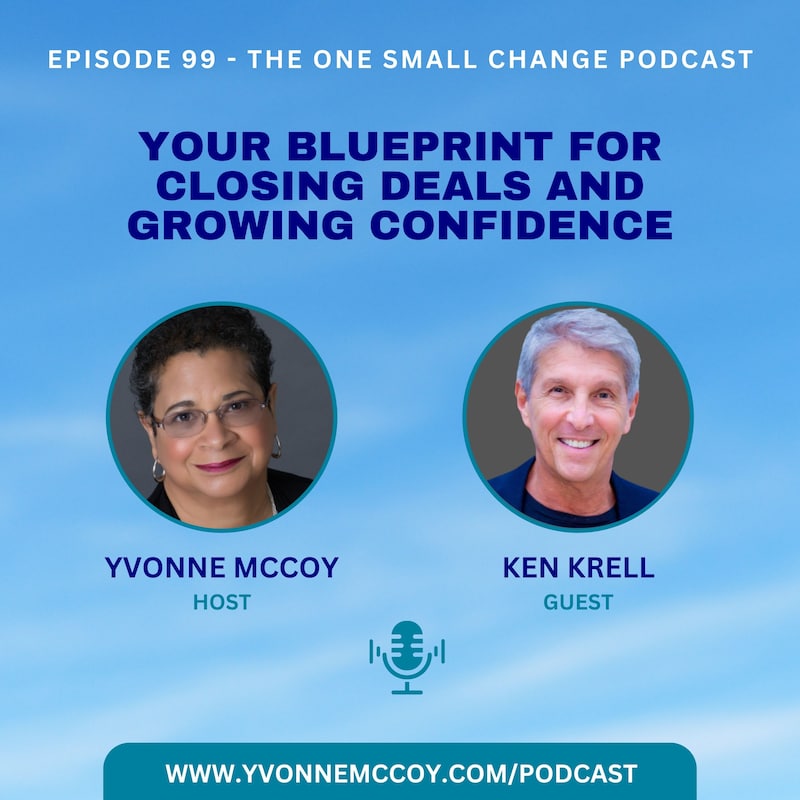
In this episode of The One Small Change Podcast, Yvonne McCoy welcomes high energy sales expert Ken Krell to break down the challenges and breakthroughs of selling high-ticket offers, especially when moving from group presentations to one-on-one conversations. Ken Krell candidly shares his journey from struggling with closing individual deals to developing an AI-driven tool that analyzes sales calls, pinpoints conversation shifts, and sharpens close rates. The duo discusses the pitfalls of relying on scripts, the necessity of making every interaction relevant, and the often overlooked power of silence in conversations. Insights around corporate sales, actionable tips for immediate improvement, and a special free offer cap off this value-packed, motivating discussion.
Guest Bio:
Ken Krell knows firsthand what it’s like to battle uncertainty and imposter syndrome in the world of sales. Like many, he once found himself second-guessing every move—caught up in his own head, missing the subtle cues happening right in front of him. One pivotal moment shifted his perspective: a sales conversation he thought was a done deal until the prospect ghosted him completely. That humbling experience sparked Ken’s next chapter—dedicating himself to mastering the nuances of high-stakes sales and overcoming self-doubt. Now, by sharing his journey and lessons learned, Ken helps others navigate tricky sales situations, manage objections confidently, and turn uncertainty into opportunity.
Chapters:
00:00 Introducing guest Ken Krell
06:07 Using AI to improve sales skills
06:38 Using Alex the Sherpa tool
12:06 Getting decision-makers involved
14:51 Navigating corporate sales challenges
18:13 Identifying deal shifts in sales
21:31 Ken's generous free offer
26:22 Need for personalized information
30:05 Encouraging podcast engagement
31:41 Conclusion and motivational message
Quote from the Guest:
"People don't lose deals because they're bad at sales. They lose them because they don't know what they're doing wrong."
Link:
Ken will personally analyze a real sales call or transcript and show exactly where the deal broke—and what should have happened instead.
Transcripts
Hello, everybody. Welcome to the One Small Change. I am thrilled
Speaker:that you're here with me to embark on this journey of exploration and
Speaker:transformation. And if you don't know, I'm your host, Yvonne
Speaker:McCoy, and I bring almost 30 years of entrepreneurial experience,
Speaker:and I have a passion for discovering growth through
Speaker:the power of seemingly small change. And what I
Speaker:try to do is bring you somebody really interesting that maybe you have
Speaker:never heard of or don't know and have them share their story
Speaker:with us each week so that it's a way for you to grow.
Speaker:And I have to tell you, this is somebody I has who has been in
Speaker:my world for a long time and is about
Speaker:as high energy as you can get. So today I want
Speaker:you to learn something exciting and
Speaker:meet Ken Krell. Did I say your last name right, Ken?
Speaker:Beautifully. But one syllable makes it really easy. Well, not
Speaker:necessarily. Everybody who listens to me knows that I can mess anything
Speaker:up. So, Ken, I am so excited that you're here
Speaker:today and that you're gonna share with us some.
Speaker:Some thing that happened to you that makes you the expert
Speaker:that you are at what you do. So tell people what you do and
Speaker:tell them what happened, how you got there. Well, I was born.
Speaker:That's what happened. It's all because of my mom. You know,
Speaker:we. We can thank her and we can blame her. So, and, and, and she,
Speaker:she'll take both effortlessly. So
Speaker:let me. I'll kind of backtrack into this. For the past 40 plus years, so,
Speaker:I mean, lots, four decades, it's crazy. I've
Speaker:been selling from the stage. I've been traveling all over the world, selling multiple millions
Speaker:of dollars of products and services for me and for others
Speaker:on stages from the U.S. canada, Australia,
Speaker:Singapore, Thailand, the Philippines,
Speaker:I mean, you name it, India. And I've done really well.
Speaker:There are those that say I'm among world's best, which is kind of cool. Thank
Speaker:you very much. But what I found interesting is
Speaker:that. And that's one of the ways that we know each other. Because,
Speaker:Yvonne, you were part of my pride event during
Speaker:COVID produced ridiculously irresistible digital events. I went from
Speaker:in person to live on Zoom.
Speaker:Anyhow, one to many is my sweet spot.
Speaker:I'm really good at that. But one to one and doing sales one to
Speaker:one. Up until recently. I'd rather get a root
Speaker:canal. It was really painful because
Speaker:one, you can. You can gauge a group. You can feel the group's energy. You
Speaker:can go with the group. You can, you can. You can create a dynamic where
Speaker:when you're in the trenches and you're one on one, you can't really hide.
Speaker:You're right in there. And if you don't catch the nuances of the way
Speaker:someone glances or the way, you know what someone says, it's.
Speaker:It's interesting. And if you're uncertain, your level of
Speaker:uncertainty, whether it be imposter syndrome
Speaker:or just the fact that you're not sure what the hell you're talking about
Speaker:or how to handle objections, you don't see the nuances because you're so busy in
Speaker:your head. That's what kind of shifted everything for me in terms of
Speaker:what my. One of my next parts of the journey are, is
Speaker:how do you do, or how do you manage that sales
Speaker:situation where you feel it's going down the tanker really quick or,
Speaker:or you misread the whole thing. You think, I got this. They are sold
Speaker:and then they ghost you. And you are so sol.
Speaker:Right. You're just. Let me just backtrack a little bit. Yeah.
Speaker:Those people who've never sold to a group.
Speaker:Yeah. Are definitely advantages to that. Oh
Speaker:yeah. One advantage is that leverage your time and your effort.
Speaker:Two, it gives you credibility because probably
Speaker:somebody has invited you to come speak. Sure.
Speaker:You don't have, you have credibility. And then the energy,
Speaker:the room has a way, I think, of kind of convincing
Speaker:other people. So if you've never sold to a group or spoke on a
Speaker:summit, that kind of thing, there's a benefit to that. But
Speaker:at some point you, you have to get to the one on one.
Speaker:Yeah. If you're going to sell a high ticket offer you. If you're going to
Speaker:sell something, you know, for whatever. Listen, even if it's selling
Speaker:a 200 product, you still have that, that one to one connection. And
Speaker:you're right. The, the group dynamic. Well, the funny thing. Let me stop back for
Speaker:a second, Yvonne. There are people that would rather
Speaker:get a lobotomy than speak on a stage. It's one of the worst fears people
Speaker:have. And the funny thing is for you and I, it's like it's our
Speaker:sweet spot. We have no problem with that at all. But you find me in
Speaker:a cocktail party or in a place where I got to do small talk. Oh,
Speaker:I will hide in the corner. It's just, it's weird. It's very biz. And no
Speaker:one ever thinks that I could be an introvert.
Speaker:So the challenge with these sales kind of getting back
Speaker:to the problem today is, you
Speaker:know, you do the call. And I had a great
Speaker:webinar for another group a few years back for a
Speaker:terrific office. $25,000 offer. It was a great offer that would get
Speaker:people $120,000 of Google Ad credit every single year
Speaker:by using Google's incredible ad grant program. I had like 60
Speaker:plus phone calls. I didn't close a single one.
Speaker:60 calls. Now, I blame the leads.
Speaker:I blame. I was like, these are not qualified people. These are. One
Speaker:guy, he was in, he was hot. He was ready. Ghosted me
Speaker:completely. Like, what the hell happened? And I didn't know. I had no idea. This
Speaker:is now a couple years ago. Fast forward to just even a few months ago.
Speaker:I was like, this, this is, this is a problem. What's, what's the common thing
Speaker:here? Is it the 60 people or is it me? And so
Speaker:I went to town and I ended up building
Speaker:a tool called Alex the Sherpa that analyzed what I
Speaker:did. And it said to me, ken, you're wonderful. And you
Speaker:miss this, this, this, this, and this. You know, if
Speaker:you fix that, you'll close. And we ended
Speaker:up role playing. We actually, I built the AI to role play the whole thing.
Speaker:And, you know, I closed what's going to be a $50,000 deal
Speaker:effortlessly. I closed what'll be a $30,000 deal effortlessly
Speaker:because I went through and identified where I was, where I was uncomfortable,
Speaker:where I was missing the nuances of the conversation and
Speaker:realized the problem wasn't them. The problem was me.
Speaker:And in some cases where they're. And we've run a bunch more things through the
Speaker:process to see where we thought we had a deal. There was never a deal
Speaker:in the beginning at all. It's just they would be nice on the phone just
Speaker:to get rid of me. You know, it, it's fascinating when you have
Speaker:those kind of tools to use and then do you build confidence? Yeah,
Speaker:you know, so we, we built this whole tool called Alex the Sherpa that
Speaker:now allows you to actually prep for your call.
Speaker:So, you know, if we're, If I was going to do a high stakes call
Speaker:with you right now, and you want to enroll you in a
Speaker:$25,000 program that I, by the way, do not have. I don't, I don't
Speaker:even want to sell high ticket that way anymore because I don't want to be
Speaker:in the coaching business. But I could get on the, I could get with
Speaker:Alex and actually talk it back and forth because text play is
Speaker:nice, but it's not immediate. You know, you can give me something and,
Speaker:and tell me to respond, then I got 15 minutes to try and figure out
Speaker:what. What I want to say. But if you're asking me a question, like, live,
Speaker:like we're doing right now, if, if I'm like,
Speaker:that doesn't work very well. You're not going to close anything. So
Speaker:the big thing was I couldn't see it, and now I can.
Speaker:And now I'm prepped for whenever I get on a call, and I have notes
Speaker:in front of me so I can make sure I hit the hot buttons and
Speaker:so on. I mean, it's incredibly empower, empowering. And that's
Speaker:changed everything for me. Now I don't mind calls like that because I know
Speaker:I can close them. Let me, Let me ask you a question, because a lot
Speaker:of times people, you know, they go to a workshop and they. And. And people
Speaker:go, I'm going to give you this script. Yeah. Okay.
Speaker:So I never really found that helpful.
Speaker:Yeah. Because it didn't feel natural for me. Yep. Tell me
Speaker:the difference. Tell me. Yeah, you know why it didn't feel natural? Because it
Speaker:wasn't for you. It wasn't your specific situation with your specific
Speaker:person. So what. What we built was something that
Speaker:is. Let's just say that we're having a call and you say X
Speaker:and it'll come back, the tool come back. Alex will come back and say,
Speaker:Yvonne's thinking about this. She's saying this. But her whole
Speaker:behavior to this point has been that, here's what you got to do. This is
Speaker:specific language versus, you know. You know,
Speaker:when they say, I got to talk to my wife or my. Or my husband
Speaker:or whatever, you know, there's that stock answer that you, that
Speaker:you give. But when we know what's going down the pike and we see the
Speaker:whole history of the conversation, then the language is very specific.
Speaker:It's like, you know, in math class, do you really care about the two trains
Speaker:that are going in different directions? No. But the smart teacher
Speaker:talks about, you know, if you, if you go into the, to. To the record
Speaker:shop, I'm going to die back a year, a few years. And, you
Speaker:know, and you, and you can. You have like, $25. You can only buy three
Speaker:albums. You got John Lennon. You know what? You know, then it's relevant,
Speaker:and that's. That's the difference. So, you know, this is something
Speaker:that some, Everybody should take away as adults
Speaker:only want things that are relevant, that we can see ourselves using.
Speaker:Yeah, is. I mean, that is a nugget that
Speaker:you need to stick a pin in, because it doesn't matter
Speaker:what you think, the problem, or even what you know the
Speaker:real problem is, if they, if the person can't
Speaker:see themselves using your solution,
Speaker:then they're not going to be interested because it's not relevant. So I want to
Speaker:go back, I want. I. If for a second and pick your brain because.
Speaker:Ouch, ouch. Sorry. I have
Speaker:to talk to my. I have to talk to my spouse is. Is
Speaker:one of those classic objections. Yeah,
Speaker:yeah. And so I'm sure everybody's had that.
Speaker:And so I'll tell you what I say, all right. And just see what
Speaker:happens. So usually what I say is. All right, let me ask you a question.
Speaker:If you could make this decision on your own if there was no spouse
Speaker:involved, no judgment, is this something
Speaker:you can see yourself using?
Speaker:Yeah. And if they go, no, then I, I don't care about
Speaker:the spouse. Right, right, right. Exactly.
Speaker:Exactly. If they say yes, then I say,
Speaker:then let me help you. Because, you know, if you're not totally
Speaker:convinced or you don't. Can't explain it, there are two things
Speaker:I can do. We can get on a call with your spouse, or
Speaker:I can answer some of the questions that you think that they will have so
Speaker:you're better prepared. Yeah. I mean, that's
Speaker:what I say. Yeah. And it's good. And it works for you. You
Speaker:know, the key to all of it, just as you were saying earlier,
Speaker:why scripting doesn't work for most people is because it's not their
Speaker:language, their voice to their deal. Right. You know,
Speaker:because the spouse is one spoke smokescreen. There's the money smokescreen, which
Speaker:is usually all bs, Right. There's the time, you know, when it could be.
Speaker:And it may come down to the fact that they don't believe they can do
Speaker:it at all. It may come down to they don't believe you. It may come
Speaker:down that you're just not listening to them. You're mismatched. You know,
Speaker:the most powerful thing you can do is ask questions, good questions.
Speaker:So, you know, that's why the, the whole thing I built
Speaker:is based around the specifics of that deal. I mean,
Speaker:there's a lot of sales training stuff out there. I mean, and a lot of
Speaker:it's really good, and a lot of it's really bad.
Speaker:But what's most important is who are the people we're talking to,
Speaker:you know, and if I know what your hot button is, if I know what
Speaker:your fear point is, if I know, you know, that
Speaker:you're, you're. You're giving me smokescreen stuff, because we. Because the language is
Speaker:there. If I miss it, I've lost the deal, you
Speaker:know, and you'll say, send me some information, like, okay, I'll send it to you.
Speaker:And that's. Just get Ken off the phone. Yeah, but I'm happy to send you
Speaker:something, but what do you need? You know, what. What's missing that you're.
Speaker:You know, that you need this for? Because clearly, if you want something in writing,
Speaker:which I can give you in two seconds, you know, what do you need? I
Speaker:need to show it to whatever, right? Then let's get that decision maker on board.
Speaker:And one of the first things of course, to do is, you know, are. Do
Speaker:you have the capacity to make the decision and stroke the check? If not,
Speaker:then I kind of don't want to talk to you, you know, but if you're
Speaker:the first in a corporate setting, if you're the first person that I've got to
Speaker:get through, then let's get you. Let's make you the hero of this, and then
Speaker:let's get someone else on board so you feel comfortable that you're not going to
Speaker:embarrass yourself. You know, we got to get to what that is, you know,
Speaker:and at the end of the day, it's, you know, my. My. My buddy Perry
Speaker:Belcher says this eloquently. Don't sell what you want to sell. Sell what they
Speaker:want to buy. Absolutely, absolutely. And that's what it
Speaker:comes down to. You know, it's like, what's. What's your hot button? And if we
Speaker:don't know that, we lose. And that's where the problem is,
Speaker:and for so many people, Yvonne, is that we're so
Speaker:wrapped up on our head, what do I say next? That we're not listening and
Speaker:we're not present? You know, when you know what you're talking about,
Speaker:you don't. You don't need me to be in your head. You can be present
Speaker:to the person you're talking to. But if you're like, oh, what's next? You know,
Speaker:you. You're too busy thinking about what you're going to say next. You haven't heard
Speaker:what they. What they have said, and you miss the nuances of. Here's where the
Speaker:real fear is, because they'll tell you. They may not always
Speaker:know what they're telling you, but they'll tell you. Their face will tell you. They're.
Speaker:You know, that's why I love Zoom calls, you know, and. And I
Speaker:crafted this whole thing because I live on Zoom. Because I'm. I'm. I'm a digital
Speaker:nomad that
Speaker:I can take. The beauty is I can take the transcript, and I can pop
Speaker:it into the AI, you know, into the tool. And within seconds, I
Speaker:got. Here is where it is. Here's where. Here's where it was. Here's where the
Speaker:traps were. Here's where the energy shifted. You know, here's. You know, here's
Speaker:the moment where that deal was gonna die, and for deals I'd make.
Speaker:And here's the thing that's really interesting for deals that I've made, and
Speaker:I was really proud of myself. I ran it through also, and
Speaker:the response was, you were damn lucky, kid, because that deal was
Speaker:dead three times in there. But they had so much pain that they
Speaker:overcame your ineptitude. Now, the tool,
Speaker:Alex was not obnoxious to me that way, but that's what I read. It was
Speaker:like, you know, you're just lucky, kiddo. Although Alex did tell me I was
Speaker:lucky because I made the deal. The net bottom line
Speaker:is great. We have a celebration. But getting it was messy.
Speaker:Yeah, Was messy. I just want to say one
Speaker:thing, because I don't normally talk about this, and we kind of alluded to it.
Speaker:Yeah. So I just, you know. And that's corporate sales.
Speaker:Yeah. Yeah. Sales are a whole different animal.
Speaker:And I just want to tell people that if you're going after corporate sales or
Speaker:larger business sales, you need to make sure who the
Speaker:decision maker really is. Right. And it takes a
Speaker:lot longer. And so what you are basically
Speaker:doing, in my experience, is having that person that you
Speaker:talk about want it so much that. That they're willing to champion
Speaker:it for you and take you through, you know,
Speaker:and spearhead it for you with that corporation. So they can say,
Speaker:you know what? You know, if we have
Speaker:this price, if it's below this price, there's a lot less, you know,
Speaker:hoops and hurdles that you go through. What have you got in there
Speaker:that we can get started? Because once you get your foot in anyway. So that's
Speaker:a whole different conversation, but. Well, I want to stop you for a
Speaker:second there, because I'm going to disagree with you. Yeah. And by the
Speaker:way, I have hated the idea of corporate sales because I'm an entrepreneur,
Speaker:so I have no patience with corporate mentality. I. I just don't, which is why
Speaker:I've never been a corporate guy. But here's the thing. If what
Speaker:your product or service does can save them,
Speaker:you know, $100 million a year every day, that they
Speaker:don't take action, it's going to cost them a ton of money.
Speaker:Right. So, so closing a deal that is a big deal
Speaker:like that, that can save them money can be very fast
Speaker:because they can't afford to lose that. If it, if this, if we're selling
Speaker:pens, you know, someone, we're talking about a 25, 000 sale, they don't
Speaker:care. You know, that's, that will take whatever time. And if someone's got a discretionary
Speaker:budget, budget, fantastic. But if we're talking about something that can
Speaker:make a giant difference, for example, just Alex, the Sherpa with the, the
Speaker:product service I'm creating for a sales team and
Speaker:I haven't put together a corporate thing. This really is more geared towards entrepreneurs like
Speaker:us. But let's just say I was going to do a corporate sale on this.
Speaker:Well, here's the thing. If I can improve your sales by 10%, what's that going
Speaker:to do for you? Probably about $200 million. Deciding on, on the company. That
Speaker:means let me give something I can divide by four. Yes. 50. If that's $50
Speaker:million a quarter, you know, that's what that. $16
Speaker:million a month, that's what, half a million dollars a day,
Speaker:something like that. You know how many more days we want to lose a half
Speaker:a million dollars? That's what we can do. Yeah. And it's like, oh, I better
Speaker:hurry. And they're thinking that in their head. Right. So that's what we have to
Speaker:get it down to is what's the impact of them not taking action.
Speaker:And if you don't, if you don't have anything compelling. Yes. You'll be in that,
Speaker:you know, six month cycle or whatever. That's the difference.
Speaker:If you're compelling and the pain is that big, they will
Speaker:take action and that person will be a hero because they, they've solved
Speaker:that problem. Right, right. So that's where. So otherwise.
Speaker:Yes. 100%. Right. In traditional situations, it's like, I'd
Speaker:rather get a root canal in this situation. Done. Right. You can
Speaker:accelerate the process. I think the message that we're both
Speaker:saying is if there, if you, if there's a match
Speaker:and there's a need, there's a way. Yep. You and you have
Speaker:to kind of go at it in what's right for that situation. So
Speaker:again, we're back to being relevant. Yeah. Yeah,
Speaker:exactly. All right. Before we run out of time. Oh my
Speaker:God, we just got started. I know one of the things
Speaker:that I always say is what are the three Things that people can
Speaker:do right away that are listening to this. Okay, number
Speaker:one, number one, after your next call, write down the exact
Speaker:moment you felt the deal shift. Where did something
Speaker:suddenly feel uncomfortable? Where something just got weird. Number
Speaker:two, listen. Record everything, right? So listen to the recording and
Speaker:find out where the prospect's tone changed. Where did things
Speaker:shift from that recording? And number three, ask yourself,
Speaker:what did I say right before that shift happened?
Speaker:What did I say just before that? But because the key is to watch what
Speaker:you did. And I'll tell you as a speaker, when I used to record all
Speaker:of my, all my talks and
Speaker:I had a coach actually out on the road, it cost me a fortune to
Speaker:have him travel with me. Boy, I'm glad that he
Speaker:did. But holy mackerel, that hurt. Because as he played the recording, I'm seeing
Speaker:myself doing and ah. And saying the stupid things from the stage because I
Speaker:wasn't paying attention and I mean it was just horrible. But that's how you get
Speaker:good. You get good by looking at that and recognizing, oh
Speaker:boy, you know, and may. And you'll be really hard on yourself, harder than
Speaker:anybody else will. And even on deals you've, you've saved. You
Speaker:know, people, people ask me all the time, how come you're so good? Because I've
Speaker:got 40 years of doing this and screwing up really bad at the beginning
Speaker:and being heckled and all this stuff. You know, people are not the instant,
Speaker:instant star. They've been through
Speaker:the mill. They've been in, you know, chewed in and spit out. I, I had
Speaker:an event I did years ago in Can
Speaker:St. Louis and I remember I bombed. I mean I
Speaker:bombed. And that whole weekend I was like suicidal because I was
Speaker:like, oh my God, my life is over. I mean, this is part of the
Speaker:process. So being able to look at what you've done, to review
Speaker:it and to keep your sense about you, which is why we built the tool,
Speaker:is like, know, yeah, you bombed on this. But there are some good parts
Speaker:too. And next time, and we'll play it, we'll role play it, you know, so
Speaker:next time you'll be ready. You know, it's that wax on, wax off thing.
Speaker:Right. And, and that's what makes the difference.
Speaker:One of the things, one of the biggest mistakes that I see with people just
Speaker:in general. Yeah. Is when something is successful.
Speaker:Yeah. They're like, yay, I'm going to use this all the time. And you
Speaker:don't know why it was successful. Right. I mean, when we're not
Speaker:successful, we pick it apart, we, you know, do all kinds of stuff, but
Speaker:need to do that when you're successful as well.
Speaker:So you can see why it worked. Yes, yes.
Speaker:That way you. It's transferable and you can use it in. In other
Speaker:situations and you know how to. So those are.
Speaker:Those are three really good tips. But. And you also have a free
Speaker:gift for us. I do see that. I love.
Speaker:You know, free is my. One of my favorite F words. It's that and fun.
Speaker:So. So I mean. Yes. Yeah, it's. It's free and food. Excuse
Speaker:me. And fun is the other one. So. Yeah. So here's. Here's what I want
Speaker:to do for you guys. Next deal you have, whether
Speaker:it's one you won or one you lost, send it to me and
Speaker:I'll. And I'll run it through Alex for you at no cost and tell you
Speaker:where you did great and tell you where you could have done better. And we'll
Speaker:have a link for you in, you know, in the show notes. Do you have
Speaker:it? And absolutely zero cost.
Speaker:That is fantastic. That is a great offer, Ken.
Speaker:I'm, I'm just. I'm just, like, blown away. So.
Speaker:So you know, the information that you shared. And
Speaker:I also know, for those of you, you know, because I know Ken,
Speaker:this free offer is worth so much more than
Speaker:he's like, oh, just send it to me and I'll go through.
Speaker:You need to think about the fact that this is going to take his
Speaker:time, his insight, and could
Speaker:potentially put dollars in your pocket.
Speaker:So you really. It will. You don't want to just go,
Speaker:oh, that's a nice thing. This is really a very valuable
Speaker:gift. This isn't a PDF. This is. We're talking about relevancy.
Speaker:This is your life we're talking about. Give me a recording of. And you know
Speaker:what? Doesn't even have to be a sales call. Give me a recording. You did
Speaker:a zoom call with someone. That, that, that was an important call. There were consequences,
Speaker:whatever that was, whether you're. Whether you're looking. Trying to negotiate a raise,
Speaker:whatever it may be. Right? Give me that recording. And
Speaker:again, you should be recording everything. Realistically, you should be recording everything.
Speaker:Give me that recording. And even if it's just audio, we can transcribe it. It's
Speaker:not a big deal. I will. I will get that analyzed for you and again,
Speaker:show you that. Because here's the thing. People don't lose deals because they're bad at
Speaker:sales. They lose them because they don't know what they're Doing wrong.
Speaker:So we can show you. I mean, an example. We're speakers,
Speaker:typically. We have a tendency to not shut up. Yes.
Speaker:And. And if we talk too much, we'll talk ourselves out of the deal.
Speaker:So. And. And that. That pregnant pause, you know, of.
Speaker:You say something and then there's silence. That's not a
Speaker:bad thing all the time. That silence may be when they're thinking about, how
Speaker:do I do this? Oh, yeah. Yes. But if you jump in and you
Speaker:over and you get in the way of that silence, you killed your deal.
Speaker:It. It's so funny that you said that, because
Speaker:I have a working chat right. On my
Speaker:workshop, and it'll come back and go,
Speaker:you didn't give. You talk too much. And when it redoes
Speaker:the thing, it puts in pause. Pause. Yeah, yeah, yeah,
Speaker:yeah, yeah. 100 too much.
Speaker:You didn't. You know, whatever. Yeah. And so
Speaker:the silence, which is really hard sometimes because
Speaker:it just. It. It's excruciating. Yeah.
Speaker:Probably your best friend. Yep. Oh, yeah. You
Speaker:know, they say that wisdom is the. Is the silence between words,
Speaker:and the other thing is the silence.
Speaker:If it's. I had a great thought, but I don't know how to say it.
Speaker:But in the silence, they can form a question
Speaker:that. About what they need to know. Yeah. If you keep
Speaker:going, then they're like, next on to the next thing. They never have a
Speaker:chance to internalize what it is that you're saying and say, well,
Speaker:wait, what does that mean for me? Exactly. They got a
Speaker:process. See, here's the thing. We know what we're saying typically,
Speaker:and for those of us from the Northeast, and we learn to
Speaker:talk fast. One of the biggest things I had to learn to
Speaker:do is slow down was when I get excited, you
Speaker:know, and even in my talks and I've done this in. In the events that
Speaker:you were at, I would tell people, here's what I want you to do. Raise
Speaker:your hand, turn your hand like this. If I go too fast,
Speaker:do this. And that will tell me to slow the hell down,
Speaker:because I can talk faster than you can think. And
Speaker:it's true, you know, so that's important
Speaker:is. Is to recognize all those pieces and. And
Speaker:be comfortable with what you've got and confident that you can serve
Speaker:them. Because at the end of the day, it's not about you. It's
Speaker:about how you serve them in whatever way. And
Speaker:it may be that your solution isn't for them. And that's fine. Get off
Speaker:the phone. Shut the hell up. There's no more Time. Don't waste any more time.
Speaker:Their time or yours. And. And they'll trust you for that?
Speaker:Yeah, they'll give you referrals for that. I mean, all day long.
Speaker:And, you know, just be. Just be cool. And that's like my biggest lesson of
Speaker:sales. No matter whose philosophy you follow, that
Speaker:doesn't matter. It's just. Just basic common sense.
Speaker:Just think back to Christmas movies, Miracle on 34th Street. You know,
Speaker:Kris Kringle sent people from Macy's to Gimples, and Macy's business
Speaker:exploded. You know, it's that sort of thing. Just serve the
Speaker:customer. Especially today. Especially
Speaker:today. Because even if you think you're giving away the form, telling them too much,
Speaker:they're not going to do anything. You tell them, you know that, you know, you
Speaker:give them the keys to how you can make a million dollars online, they're going
Speaker:to say, would you do it for me? Because they're too damn lazy anyway. You're
Speaker:still going to make the sale. Well, the other thing I think is that there's
Speaker:information everywhere, and people have an
Speaker:overload. What people don't have is what information
Speaker:is right for me. And so that it's
Speaker:personalized, and how can I implement? How can I
Speaker:actually use it? So it used to be experts
Speaker:with a person when information was just in books and it was hard to get
Speaker:to. Used to be. That was what made, you know, because you read all
Speaker:these books, that's what made you the expert. Expert. But now
Speaker:making you the expert is how do I help you in your
Speaker:specific situation? You know,
Speaker:actually implement the right information so that you can use it.
Speaker:And. And there are patterns, and that's why your. Your clients fall in
Speaker:the same kind of categories. They've got the same kind of situation,
Speaker:which makes you even more of an expert. Okay, believe it or not,
Speaker:we need to kind of wind this up a little bit. I don't want
Speaker:to, but we're gonna. So
Speaker:the question is, when was the last time you did something new for the
Speaker:first time? Oh, my gosh. Something new for the first time. It's not redundant.
Speaker:Something new for the first time.
Speaker:All right. When was the last time you did something new? Now that
Speaker:you know, it's. It's a good question. I would say
Speaker:that building this whole tool out is something brand new for me. I wouldn't have
Speaker:thought to do it. I didn't plan on doing it. I. I created it
Speaker:because I needed it for me. And then after,
Speaker:I don't know, a couple weeks of playing with it, I was like, and telling
Speaker:people what I was doing, they were like, can I have it? And that's the
Speaker:best thing of everything, is to be able to build something that people can actually
Speaker:use to solve a problem. So, you know, it's either that
Speaker:or making, making a great chicken soup the other night. That was amazing.
Speaker:And those are fun things. I asked the question because one,
Speaker:I think it shows us our curiosity. Yeah, right.
Speaker:What is, you know, something, you know, whatever. And the other thing is, I think
Speaker:it gives people great ideas. Do you know,
Speaker:there's. I, I was, it's funny, I was at the gym last night and I
Speaker:ended up. I, I'll typically like, surf through YouTube or whatever to
Speaker:find a good video to listen to while I, while I work out because I
Speaker:want to make the most of my time. And I found a 60 minute segment
Speaker:about these two guys from, from Bondi beach in, in
Speaker:Sydney, Australia that these are the guys that
Speaker:created afterpay. And I didn't know how big
Speaker:afterpay was. I, I've used, I was living in Sydney for a number of years
Speaker:as a guest. Just for anyone watching. I was a guest. And
Speaker:it's a big deal there because that's where it began. But it's, it's a,
Speaker:it's like, I don't, I forget how big the business is. It's massive. Two
Speaker:guys just come up with an idea and solved a problem and revolutionized the way
Speaker:people buy things globally. They're in 16 different countries right now.
Speaker:And it's changed the way people, way people actually buy things and finance things
Speaker:without impacting on credit or being ripped off by creditors charging
Speaker:74% interest and all that kind of thing. It's really cool.
Speaker:So here's the question. Be curious. Where are there
Speaker:problems? Where, where is there breakage out there? And there's plenty of places that we
Speaker:can optimize. And what can you fix? I mean, like,
Speaker:like even right now, with what we're talking about with Alex the Sherpa, there are
Speaker:plenty of sales coaches out there, plenty of them, but there's no one doing what
Speaker:we're doing at the level that we're doing it at the specific
Speaker:specificity that we're doing it that solves a problem
Speaker:directly rather than generically, you know,
Speaker:and, and other. Right. So what can you do in your
Speaker:business? Because AI can't replace that. Yep, yep,
Speaker:yep. Okay, guys, time for the commercial.
Speaker:One of the things is, if you liked what you heard, be sure to subscribe
Speaker:and share the podcast and engage on social media
Speaker:and One of the reasons I did it was I wanted to give you something
Speaker:that I thought would supercharge your business. And it's my
Speaker:way of giving back to the community because I want us to be a vibrant
Speaker:community, and I want us to be growing. And so I want you to make
Speaker:sure that you check in with all the episodes that are on
Speaker:the One Small Change. And everybody has a fabulous gift.
Speaker:You can listen to the episodes that I do every quarter
Speaker:just to see what's kind of going on. But the real thing is I want
Speaker:you to dive in the possibility of your bold vision and
Speaker:your innovative opportunities. So,
Speaker:Ken, what. What. What last words have you got? First, before we go, what do
Speaker:you know? What is one of your favorite things that you say or what you
Speaker:want us to remember? Oh, my gosh. You know, here's the thing.
Speaker:It's. We sometimes give ourselves the hardest
Speaker:time at who we are, what we do, what our capabilities are.
Speaker:But the bottom line is we have all the tools in the world right now
Speaker:to help us and support us. So I guess the best thing I can say
Speaker:to anybody out there is, you got this. There's no reason to feel
Speaker:alone. There's no reason to feel inept. There's no reason to feel unsupported.
Speaker:And that's it. I'd say just know that you've got what it takes.
Speaker:And, you know, the thing that I will kind of add to that is because
Speaker:there's somebody who needs exactly what you have right
Speaker:now. Yeah. Yeah. All right, guys,
Speaker:we gotta go. So I want you to remember that
Speaker:change may be simple, but it's not always easy. And it requires
Speaker:courage, resilience, and a willingness to step outside your comfort
Speaker:zone. And I always say that, you know, if you're not
Speaker:uncomfortable sometimes, then you're stagnating, because it means you're doing
Speaker:the same thing over and over again. So with that in mind, I hope that
Speaker:you will continue to join me for the One Small Change podcast,
Speaker:and we are going to keep diving deeper on this journey of bold
Speaker:vision and innovation. Until the next time, stay very,
Speaker:very curious. Ken, thank you so much.
Speaker:Von. It has been a slice of heaven.
Speaker:Bye, everybody. Bye. By.