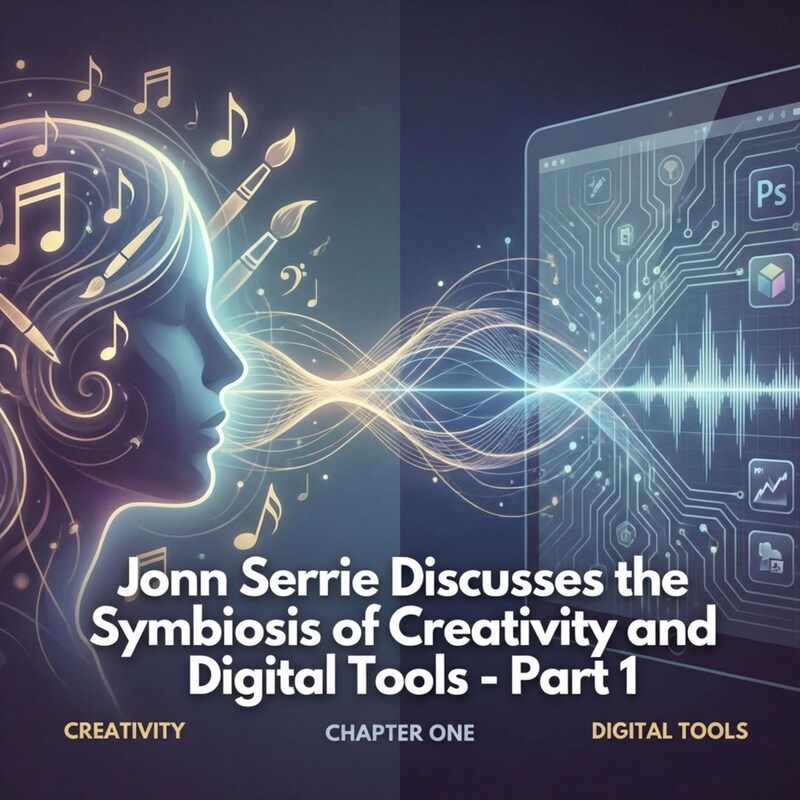
Shownotes
The discourse with the illustrious ambient musician Jonn Serrie delves into the intricate nexus between creativity and technology, foregrounding the assertion that true creativity is an inherently human experience, distinct from the mechanistic outputs of artificial intelligence. Serrie elucidates the necessity of human engagement in the creative process, emphasizing that while technology serves as a powerful tool, it cannot replicate the emotional depth and inspiration that inform artistic expression. Throughout our conversation, we explore the profound implications of integrating technological advancements into the creative realm, particularly in the context of music production and sound design. As we navigate the complexities of intellectual property rights in relation to AI-generated content, we underscore the importance of maintaining an authentic voice in a rapidly evolving digital landscape. Ultimately, this dialogue serves as a clarion call for artists to embrace their unique creative energies while harmonizing with the technological innovations that shape contemporary artistic practices. The conversation unfolds as Jonn Serrie, a revered ambient musician, delves into the intricate interplay between creativity and technology. The discussion is framed by Serrie’s reflections on his recent endeavors in sound programming and mixing techniques, underscoring a commitment to an internal creative process amidst an external world that often demands attention. Serrie articulates a philosophy where creativity is not merely a product of technology but an organic expression of human experience, deeply connected to vibrations and frequencies that resonate with our consciousness. This leads to an exploration of artificial intelligence and its implications for artistic expression. Serrie expresses a desire to maintain a human touch in music creation, emphasizing that true creativity stems from personal engagement rather than reliance on AI-generated compositions. His assertion that creativity is a uniquely sentient experience invites listeners to reconsider the role of technology in art, advocating for a collaborative relationship rather than one of replacement.
Takeaways:
- The intersection of creativity and technology is crucial for modern artistic expression, particularly in music.
- AI's role in content creation raises significant ethical questions regarding originality and intellectual property rights.
- Understanding frequencies and vibrations is essential for grasping the nature of creativity and consciousness.
- Successful collaboration between human creativity and technology requires an ongoing dialogue between the artist and the tools used.
- The evolution of sound technology has transformed the music industry, creating both challenges and opportunities for artists.
- Creativity should be seen as a natural human state that can be enhanced by technological tools rather than replaced by them.
Companies mentioned in this episode:
- Sudo
- Udio
- Eminem
- Valley
- Pro Tools
- Sonar
- Reaper
- Audacity
- Logic Pro
- Emagic
- Bing
- Brave
- AltaVista
- CopuServe
- Electronic Music Labs
- Robert Moog
- Surge Modular
- Keith Emerson
Mentioned in this episode:
Transcripts
It's.
Speaker B:Well, welcome back to the Nexus, John.
Speaker B:How are you?
Speaker A:I'm doing very well, sir.
Speaker A:Very good to see you again.
Speaker B:It's awesome to see you.
Speaker B:I have longed for another conversation after our last one.
Speaker B:Was it back in April?
Speaker A:Yeah.
Speaker B:And there's been a lot of stuff going on and down since we've talked last.
Speaker B:Well, it's been a very active and some would say unpredictable.
Speaker B:Others are saying that's outcome.
Speaker A:Yeah, pretty much.
Speaker A:I've just been so concentrated on programming some new sounds, getting into the new mixing techniques and things that I'm trying out and basically staying focused.
Speaker B:So you've turned off the outside and turned on the inside?
Speaker A:Yeah, I'd give The outside about 25%, maybe 20%, you know, and the rest of my life is a good 80%, you know.
Speaker A:So you got the 3.
Speaker A:M is making music, making models, making love.
Speaker B:Well.
Speaker B:Oh, M. Eminem.
Speaker B:Okay.
Speaker B:I was gonna say love is not an M, but I'm sure you could figure out a way turn it into one.
Speaker A:Making modalities or something.
Speaker B:So what would I like to have a conversation with you about today is this whole concept of there's a lot of the stuff in that 25%.
Speaker B:I'm sure you're seeing some components in there about this.
Speaker B:All the technology stuff, particularly the AI world and all of that stuff that's going on, and content creation in some way, shape or form being potentially taken over by the digital demons known as artificial idiots.
Speaker A:I have a little saying that goes for that.
Speaker A:Straight out of Star Wars.
Speaker A:Not this ship, sister.
Speaker A:Well, no further.
Speaker A:As far as the AI goes, it's like, no, I want my hands involved.
Speaker A:And we'll get into that.
Speaker B:Well, that's the other main theme is about creativity because I think when you explore and have a grasp of what creativity is, how it works, how it expresses itself, what's the experience that you have with it.
Speaker B:Yeah, that is a uniquely sentient human experience.
Speaker A:Yeah, it certainly is.
Speaker B:And it seems to be the result of part of what we were talking about the last time we got together, about frequencies and vibrations, right?
Speaker B:Yes, sir.
Speaker B:And everything that we.
Speaker B:That we have seen or that we've encountered that we've had some modicum of opportunity to try to understand that what we would also associate with being life or having life.
Speaker B:Right.
Speaker B:All of that is organic.
Speaker B:It's.
Speaker B:It's stuff that just happens and it apparently creates containers for this frequency field that we call consciousness.
Speaker B:So I think creativity and understanding that I think will help people understand or at least better get A better grasp of all of this creativity, the content, creation of art in music in particular, and imagery and video and so forth.
Speaker A:How it all goes together.
Speaker B:It really is.
Speaker B:It's a complicated mess because it's been purposely confused, in my opinion.
Speaker A:In many ways it has.
Speaker B:I mean, you look at it and you go, well, why isn't.
Speaker B:Does anybody know how this stuff actually works?
Speaker B:Does anybody know.
Speaker B:How do they realize that it's all based on the same silica based.
Speaker B:All of the computing stuff that we use is inorganic.
Speaker B:It doesn't have any of the frequency and vibration connection that we do in an organic human, sentient being.
Speaker A:Yeah, yeah.
Speaker A:And the trick is to bring those two worlds together is to make the electronics side of it like a living presence, the same way that you are a living presence.
Speaker A:And that's where the two can really meld together.
Speaker A:You know, the electronics work the same way as the human brain.
Speaker A:You've got input, processing output, and that's basically what goes on in the synth world, you know, and as far as I'm concerned, it's a direct reflection.
Speaker B:I was having a conversation on a show last week and the whole idea of intellectual property, copyright was talked about.
Speaker B:And when we looked at the examples of where that's being questioned, challenged, and even lawsuits, three major labels of.
Speaker B:I think it's a joint suit against Sudo and Udio, which are AI music generators.
Speaker B:Right.
Speaker B:And I've got one that we did on it that I want to share with you and talk about what actually came out of it and how it matched any kind of creativity that we would individually, personally want to have and experience.
Speaker B:Because that whole idea of being able to create something requires some desire or drive, motivation, inspiration.
Speaker A:Yes, it does.
Speaker A:Along with surrender.
Speaker B:Right?
Speaker A:Yep.
Speaker A:Surrender to the creative motion, you know, that's happening at the same time that you're involved in it.
Speaker A:You, You're.
Speaker A:It's almost like surfing.
Speaker A:You got the surfboard and the wave and the rider, and all three of them work together to create this, you know, beautiful motion.
Speaker A:And this way, you know, you got your biological ability to play the keyboards, you've got your brain, you know, that's coming up with the imagination side.
Speaker A:And then you've got the technology, the wires and the electronics inside the synths, you know, what I try to do is turn the brain and synth power into a symbiosis where the two are talking to each other without any borders.
Speaker B:Leveraging the capabilities and the capacities of each to a mutual balance and blend.
Speaker A:Yeah, yeah, absolutely.
Speaker A:Like a wide open blue Sky.
Speaker B:Well, one of the things that came up about, you know, the whole copyright thing was, you know, the labels are.
Speaker B:Have brought the lawsuit because they've used the AI system, has used their material that they own a copyright to.
Speaker A:That's true.
Speaker B:Train their AI and it's.
Speaker B:It's like, okay, well, there's a couple of.
Speaker B:There's a couple of rabbit holes there.
Speaker B:One of them is the whole.
Speaker B:The BS that is the copyright and distribution model that artists have been strangled under for decades.
Speaker B:And, you know.
Speaker B:You know, there's not only the publishing rights, there's the mechanical rights.
Speaker B:Right?
Speaker A:Yes.
Speaker B:And those get divvied up and owned and driven by the people who have put the most money in.
Speaker B:And the artists are usually the ones that get the shortest end of whatever's left.
Speaker A:Yeah.
Speaker A:Because the mechanical rights are based on the music being pressed or put onto a particular kind of surface that can be sold and played in the marketplace, like a record.
Speaker A:Mechanical rights of a record.
Speaker A:Mechanical rights belong to the cd, the record, the recordings thereof.
Speaker A:And that's a big battle right there.
Speaker A:And it tends to get a little confusing.
Speaker A:You know, what I'm glad about is that I have a very good record label situation where my record label president is also one of the best music lawyers in the entire music business.
Speaker A:And it's handled some very big artists.
Speaker A:You know, so he's really watching my back.
Speaker A:At the same time, you know, he knows so much and is able to weave his way around, you know, distribution rights, this kind of thing where, you know, his.
Speaker A:His effort is exponentially much better than somebody else's who doesn't know that information.
Speaker B:And that's what's needed to manage and mitigate and maximize using the current system.
Speaker A:Yeah, yeah.
Speaker A:Walk softly and carry a very big stick.
Speaker B:But, yeah, but now there's.
Speaker B:All of a sudden.
Speaker B:Not all of a sudden.
Speaker B:It's just.
Speaker B:It's finally reached saturation and ubiquity.
Speaker B:We've got.
Speaker B:There is no physical media anymore.
Speaker A:That's true.
Speaker A:Now you've got intellectual.
Speaker A:You got music moving at light speed.
Speaker B:So who owns the pressing of that music?
Speaker A:Well, that'll go back to the intellectual property type thing, you know, and like, the lawyers are going to duke this whole thing out, as they do and as they have been doing, you know, since the beginning of recorded music, you know, intellectual rights.
Speaker A:Who owns the composition, who owns the lyrics, you know, this kind of thing.
Speaker A:And it's.
Speaker A:And it's really divvied up in the minutia to the point where, you know, I.
Speaker A:When I speak to John Briget, who is, you know, my record label president from Valley, you know, I just tell him, you fight it.
Speaker A:I'll make it.
Speaker A:You know, you protect me and I'll make you the best music in the world.
Speaker B:Well, those relationships are rare and far too between.
Speaker B:Right.
Speaker A:I would tell individual artists, you know, find the best representation you can and build an element of trust which is unbreakable.
Speaker A:You know, you're going to be doing this as a team.
Speaker A:An artist just can't be out there by himself these days.
Speaker A:It's just moving too fast.
Speaker A:And there's too many, like, players in there trying to take a piece of whatever it is and, you know, walk softly and carry a big stick.
Speaker A:You know, that's.
Speaker A:That's basically.
Speaker A:And the big stick is going to be, you know, your lawyer and your record label president.
Speaker A:You know those people.
Speaker B:Yeah.
Speaker B:And I. I think.
Speaker B:And I look forward to what I think is going to happen, which is my girl out here making noise at something.
Speaker A:Nice dog Navi.
Speaker B:She's out there doing her navi, noisy navi thing.
Speaker B:So one of the things that I think is coming.
Speaker B:And.
Speaker B:Well, before I go to that, let me take this other nugget the squirrel just dropped off back to the AI copyright stuff.
Speaker B:Okay.
Speaker B:There are people that are having these conversations about, well, who owns the instruments?
Speaker B:Who owns the, you know, the sampled drums, if they are sampled, but they're not.
Speaker B:Or any of this.
Speaker B:None of the instruments are sampled anymore.
Speaker B:They're all digitized.
Speaker B:And it's like, well, nobody can own that sound because that is a.
Speaker B:That's a sound that's been around for a long time.
Speaker B:That's made by an instrument that's exactly different than playing a flute or a piano or a synth or guitar.
Speaker B:Those are in.
Speaker B:Those are analog, correct?
Speaker B:Right.
Speaker B:You're getting.
Speaker B:You're playing that instrument.
Speaker B:Well, that sound has been copied for two or three decades now.
Speaker A:Yes.
Speaker B:And it's been available in software programs for the same time.
Speaker B:I know.
Speaker A:Exactly right.
Speaker B:I use them.
Speaker B:So, to me, the digital sounds of music have been around for a long time.
Speaker B:You can't own them because you.
Speaker B:Nobody can own a trumpet.
Speaker B:You can have one, you can own your own, but you can't own that sound.
Speaker A:It's exactly right.
Speaker B:What you can't own is playing somebody else's part with that that they've already recorded and done.
Speaker A:Yes, yes.
Speaker B:So that's where the copyright issues.
Speaker B:That's where everybody gets their strikes and all this nonsense is going on about, well, that sounds Like Sheryl Crow.
Speaker B:It's like, okay, but it's not.
Speaker A:Yeah, I was told by my record county president, sometimes it comes down to what's known as the double six.
Speaker A:You know, six seconds, six words.
Speaker A:In other words, you know, the six seconds.
Speaker A:If you're.
Speaker A:If you're copying something too closely, you get like a leeway of maybe four to six seconds before you get called on it.
Speaker A:You know, I want to hold your hand well, there's a lot of songs, you know, that come out with those notes.
Speaker A:Da da da da da da, you know.
Speaker A:And sometimes the copyright battle gets into this minutiae that only an ace lawyer can really understand.
Speaker A:And synthesizers have really kind of complicated that in a way, since their sounds are infinite.
Speaker A:And now, you know, the composition copyright stuff is like, okay, everybody's using synths, but who owns the square wave, you know, that kind of thing.
Speaker A:Nobody owns that.
Speaker A:It all depends on what you do with it.
Speaker A:And you know, what you do with electronics is, boy, did they just unleash a Pandora's box when this first synthesizer was created.
Speaker A:Because now you've got an infinity worth of sound in there.
Speaker A:And the manipulation thereof gets quite minutia ized, let's say, you know.
Speaker A:But the point is, you know, for me is like to be so original that I can't be copied.
Speaker A:And I use tricks to do that.
Speaker A:You know, certain kind of processing, certain note things, program changes in the middle of a note, you know, this kind of thing, which I've turned into my signature.
Speaker A:And, you know, I'm damned if anybody can copy that.
Speaker A:No, sir, no.
Speaker A:It's just.
Speaker A:It's too much me in there, you know, and there's a lot of years that I've been involved in this where I've learned those kind of, like, interesting little moves that kind of protect you at the same time they define you.
Speaker B:Well, it's using the instruments and tools and techniques that you have at your disposal to express your creativity.
Speaker A:That's right.
Speaker A:And creative energy, you know, is the energy of the universe.
Speaker A:The same way that your life force within your body is.
Speaker A:Is the creative energy, you know, and it all equals, you know, energy equals money times collection squared or something in the music business, you know, that kind of thing.
Speaker B:Well, they do call it.
Speaker B:They do call it currency.
Speaker A:Yes, they do.
Speaker A:Yes, they do.
Speaker A:It's just a very interesting way, you know, to express something, you know, and each person, you know, when they get the creativity and the tools can really make an individual statement, you know, and then make it sound worthwhile.
Speaker A:Now that's the trick in there.
Speaker A:Because you can give a five year old a synclovir, you know, or you can give like a very experienced musician a sinclair.
Speaker A:And sometimes the five year old will beat that guy.
Speaker B:Yeah.
Speaker A:Simply because of the roll of the dice, you know, of in the muse, let's say, you know, and like, you know, as far as I'm concerned, the muse is female and female is not going to be messed with.
Speaker A:It's just, that's just a fundamental rule of this universe.
Speaker A:A female will not be messed with.
Speaker A:And like I, I bow down before the muse in some cases, you know, even before I turn on the keyboards, you know, I'll offer maybe a little spiritual offering to the muse, let's say, you know, because it's, it's really her music as it comes passing through you.
Speaker A:You might have the tools and the know how and stuff, but boy, when the real flow happens, it's like otherworldly and I love being able to acknowledge that.
Speaker B:Tom, in the last.
Speaker B:Tom Bluewolf, in the last conversation we had shared a story where he, he was somewhere in Africa and he, it was, the morning was starting to dawn and he heard this noise outside that was like, wow, he's going, wonder what the hell that is.
Speaker B:And then before he got out of his bed, he heard something else going.
Speaker B:And he's listening to and he's going, I wonder what's going out there, going on out there.
Speaker B:And then he listened and he realized they were in sync, they were rhythmically.
Speaker B:So then he went out of the tent and he looked out and he was, there was a circle, like a community thing.
Speaker B:And there was one guy with the big pestle and mortar and he was grinding corns and there was a woman on the other side of him that was washing something, it was water and she was going.
Speaker B:And then he said there was three or four other people, just everybody doing whatever they were doing, but what they were doing, they were doing it in rhythm with each other.
Speaker A:Oh, that is so cool.
Speaker B:Yeah, I gave me chills when he told me that.
Speaker B:I was like, you know, that.
Speaker B:And that is the natural rhythm of life, I guess, right.
Speaker B:That's how we, we, we if we pay attention, if we got nothing else going on.
Speaker B:And this is a tribe out in the wilderness.
Speaker B:There was no, you know, Dollar Store or Wendy's or any of that anywhere, nowhere near.
Speaker B:There was no TVs, no computers, no nothing.
Speaker B:There were just people in the community working and they were doing it in rhythm with each other.
Speaker A:That's so cool.
Speaker A:I said.
Speaker B:He said.
Speaker B:I said.
Speaker B:That gave me chills, he says.
Speaker B:Gave you chills, he says.
Speaker B:When I realized it was going on, I was like, whoa, I could hang out here.
Speaker A:That's cool.
Speaker A:And Tom's the kind of guy to pick up on that.
Speaker A:You know, I really have a lot of respect for him.
Speaker A:He's a very unique individual.
Speaker B:Yeah.
Speaker B:It's interesting that the three of us go back at least three decades or more.
Speaker A:Yeah.
Speaker B:And.
Speaker B:And each with our own past.
Speaker B:We always find our way somewhere in the past.
Speaker B:We're on.
Speaker B:To get together.
Speaker A:Yeah.
Speaker B:Have.
Speaker B:Have a conversation about what we know, what we've seen, what's happened since the last time we talked.
Speaker A:Yeah.
Speaker B:It's just.
Speaker B:It's really, really special.
Speaker B:We should do.
Speaker B:Have the three of us on and have a conversation.
Speaker B:I think that.
Speaker A:Oh, that would be cool.
Speaker B:Yeah.
Speaker B:So back to this AI thing and to try to finish that off, because there's still a lot of confusion out there.
Speaker B:Because to the point, we were just talking about the idea you can't own the sound of an instrument, so you can't own what a computer makes.
Speaker B:You can't own that sound.
Speaker B:There is no ip, no copyright.
Speaker B:It's your sound.
Speaker B:And you may sound like Stevie Ray Vaughan, or you may sound like Chick Corea, but that is.
Speaker B:You're not.
Speaker B:You're not playing.
Speaker B:You're playing it.
Speaker B:They're not.
Speaker B:Right.
Speaker A:That's right.
Speaker B:So you can't copy something that somebody's already laid down and doing an exact version of it.
Speaker B:You can do it as a cover band in a bar, you know, and if you can get away with it.
Speaker B:But the.
Speaker B:The whole idea is to be creative, to make something new and to challenge.
Speaker A:Yourself to do that.
Speaker B:What's that?
Speaker A:To challenge yourself to do that.
Speaker B:Right.
Speaker A:That's why, you know, there's always a connection between the synthesizers and myself, where it's.
Speaker A:It's an equal partnership almost.
Speaker A:You know, I will challenge the synth, the synth will challenge me.
Speaker B:I have that experience every time I pick up my guitar.
Speaker A:There you go.
Speaker A:There you go.
Speaker B:It's like, oh, what can you do today?
Speaker B:And, you know, it's really interesting.
Speaker B:And I'm sure you've had this experience, too.
Speaker B:I have been playing for 54 years.
Speaker B:Most of the playing I did was in the first 20.
Speaker B:The last 34 has been kind of, you know, sparse here and there.
Speaker B:It kind of shows up.
Speaker A:You know, there's a way that.
Speaker A:Actually I. I play guitar, too.
Speaker A:And my recent purchase was Ventures Mossright Guitar.
Speaker A:And it is just liquid in your hands, you know, so it's got a lot of backward 12 string now and a Gretch country gentleman.
Speaker A:And now I've got the new one, the most, the Mosrite.
Speaker A:And I've not recorded any guitars, you know, for any of the albums yet.
Speaker A:But I'm considering doing some.
Speaker A:Some heavy processing using the mouse.
Speaker A:Right.
Speaker B:Hmm.
Speaker B:That's gonna be very interesting.
Speaker B:Looking forward to hearing what you come up with.
Speaker B:That.
Speaker A:Yeah.
Speaker B:And that is.
Speaker B:That's another thing about one of the things I.
Speaker B:When I built the studio, I cashed out of my tech career, I took a sabbatical, built the studio, which you've been in many times, and we've enjoyed back in the day.
Speaker B:That was.
Speaker B:That was one of those, oh, I can do this.
Speaker B:Well, I'm gonna go do this and see what happens.
Speaker B:I don't care if I lose everything on the way through.
Speaker B:I want to go do this, see what it's like.
Speaker A:That's true.
Speaker B:But we made some.
Speaker B:Some great work that I. I got to tell you, 25 plus years later, it's still.
Speaker B:I go and listen to the old.
Speaker B:The original stuff that we did, and I listened to it and go, damn, that's good.
Speaker B:That's bad.
Speaker B:I remember it was, I've got another perspective, you know?
Speaker B:Or am I just being biased in my advancing, seasoned citizen state?
Speaker A:Yeah.
Speaker B:You know, am I just kind of going, oh, yeah, no, I listen to everything even more critically now than I ever did.
Speaker A:Yeah.
Speaker A:And it's nice to go back to hearing something that you did.
Speaker A:It's like that old phrase, absence makes the heart grow fonder.
Speaker A:You know, when you go back and you go, I haven't heard this in a while, but this, this was my soul being expressed.
Speaker A:And I can really appreciate it from a distance now, which is kind of cool.
Speaker A:You have more.
Speaker B:You have more experiences and more information that when you look at it, after not looking at it for a while, you're looking at it with new information.
Speaker A:Yeah.
Speaker A:New information, new flavoring.
Speaker A:That's exactly right.
Speaker B:So the point I was going to make on that was how interesting it is that I can go for six months without even picking up my guitar.
Speaker B:And after I get the rust crust and dust off of my fingers and blow some off of my guitar, sometimes I play some of the best shit that I've ever played.
Speaker B:And I go, where the hell did that come from?
Speaker A:Yeah, interesting.
Speaker B:Yeah.
Speaker B:And you go, oh, my God, that was just sweet.
Speaker B:And, you know, there's a whole lot of discussion and learned debates and scholarly discussions about.
Speaker B:Is it muscle memory?
Speaker B:You know, motor memory?
Speaker B:Is it just the innate capability of what you've developed is just kind of natural, you know, it's like you haven't had sex for a long time, but then you have it again.
Speaker B:You go, well, I remember how to do this.
Speaker A:That's one of those things you never quite forget.
Speaker B:You know, they say it's like riding a bicycle or something.
Speaker A:There it is.
Speaker A:You'll get your balance real fast.
Speaker B:So I promise this I'm going to get out of this AI thing.
Speaker B:But I had this one point I wanted to make, and it was about the sound of the instruments.
Speaker B:And for those of you that do digital recording using the current tech called a DAW, or digital Audio Workstation, those are what people create.
Speaker B:Pro tools is the Big Dog Sonars, another.
Speaker B:I use Reaper Audacity in the voiceover world.
Speaker B:I mean, there's a bunch of them out there, but they all do the same thing.
Speaker A:Yeah, they do.
Speaker A:And I got into Logic Pro, which was, you know, early on was first known as Emagic and then became Logic Pro.
Speaker A:And I would follow an update on that machine and that particular software to the point where the software just disappears and it becomes pure creativity.
Speaker A:And it's one thing that I really appreciated from Logic is they thought like that they didn't want you being tangled up too much in the techniques and this and this.
Speaker A:They wanted you to go directly from your hands, your brain, right into the finished product, right into the finished track.
Speaker A:And that's one thing I've really noticed about that program, is it's becoming more transparent every day that I use.
Speaker B:So the user interface, the design and use of it has gotten to a point where it's extremely comfortable.
Speaker B:You don't have to really think about it.
Speaker A:Yeah, very, very comfortable.
Speaker A:And it's purposely designed into that particular program where almost, you know, you notice that the keyboard goes from left to right, the lower notes on the left, higher notes on the right.
Speaker A:Well, it's funny how Logic Pro did that, you know, with the generation of the.
Speaker A:Of the sound itself is on the left, and all the processing is kind of in the middle.
Speaker A:And then toward the end, the way the software is designed is your track.
Speaker A:So it's the same kind of thing.
Speaker A:I've noticed that relationship between the keyboard and the way Logic Pro is laid out.
Speaker A:And I think with a lot of programs, it's laid out left to right.
Speaker B:Like, yeah, I, you know, being a.
Speaker B:A geezer geek and, you know, really, that's the name of one of My shows, by the way, every Saturday night at 10pm that's cool.
Speaker B:On YouTube@robertbauer.com and that's why I love your creativity, man.
Speaker B:Well, it gets.
Speaker B:We kind of go off the rails sometimes, but that's one of the reasons we do it, is to see what rail we go over.
Speaker A:Sure.
Speaker B:We don't know what's going to happen.
Speaker B:But my point is that I've been involved in ones and zeros before.
Speaker B:There were ones and zeros.
Speaker B:They, when I got in, it was a 80 column Fortran card with punches in it.
Speaker A:Wow.
Speaker B:And mag tape and the big deck platters that could hold like 10 meg on something the size of five pizzas.
Speaker A:Yeah, yeah.
Speaker A:Amazing how far it's come.
Speaker B:Well, and it's like we talked about the last time we got together about this whole synthesizer thing and your relationship and meeting with the engineers and coming up with what you're using as a tool now.
Speaker A:Exactly right.
Speaker A:Because it came from the brains of these engineers.
Speaker A:And in my case, it was two aerospace engineers that got together and said, why don't we make some synthesizers?
Speaker A:And that was right there in the mid-60s, the late 60s, when Robert Moog was doing his thing.
Speaker A:And so these people, Electronic Music Labs, decided that they were going to make indestructible synthesizers for the educational market.
Speaker A:So if they brought it to a fourth grade class, the fourth grade class could like tip it off the table, smash onto the ground and it would still work.
Speaker A:And that was their thinking.
Speaker A:So everything that went into that synthesizer was absolutely aerospace heavy.
Speaker A:And I can assess because I've had synthesizers tip over in concert.
Speaker A:I had that happen one time and it didn't even go on a tune.
Speaker B:So they had a reentry model in mind when they were building these things.
Speaker A:Yeah, pretty much.
Speaker A:They knew that young hands were going to be using these things and basically abusing these things in some cases, maybe unknowingly, but they wanted it to be indestructible.
Speaker A:And I've had these things fall right off their stands and not even go out of tune.
Speaker A:Pick it right back up and slap it back on the stand and do your solo.
Speaker A:Yeah, and that is really trick as far as I'm concerned.
Speaker A:You know, you.
Speaker A:You build these things to really last.
Speaker A:I've had my EML101, Electronic Music Labs101 for 40 years and it has not needed one stitch of technical help at all.
Speaker A:It's.
Speaker A:It's been just absolutely there when you need it.
Speaker A:And it runs like a brand new every time you Turn it on.
Speaker A:And that's.
Speaker A:You can't really say that by a lot, you know, about a lot of synthesizers these days.
Speaker A:You know, they're very temperamental.
Speaker A:That's okay.
Speaker A:But, you know, the Brick Outhouse, let's say the ones that are completely indestructible are still operational to this day.
Speaker A:And there's a few of them out there.
Speaker A:The Surge Modular is one of them.
Speaker A:You know, the early Moog C3 model 35s and stuff.
Speaker A:The.
Speaker A:They're pretty much indestructible, too.
Speaker A:They've taken tumbles off stages.
Speaker A:Ask Keith Emerson.
Speaker B:I saw him at.
Speaker B:With elp at California Jam back in the first one in 73 or 74.
Speaker B:And he did the whole grand piano on this up in the air, spinning grand around.
Speaker B:And I was like, I was already wasted and that took me.
Speaker B:I was like, dude, is he really doing that?
Speaker A:Yeah, upside down and stuff, you know.
Speaker A:The guy was a great showman.
Speaker A:I worshiped the ground he walked on, you know, for many, many years.
Speaker A:And just, you know, because his sins.
Speaker A:His synth sound was very simple to make.
Speaker A:You know, there were a lot of square waves in there with the Lucky man solo and that kind of thing.
Speaker A:But it was his signature that just came through that synth like, you know, unbelievable.
Speaker A:Like Sonic Jet Fighter, man.
Speaker A:Just you tell it with him.
Speaker A:No matter what, you could tell it was him.
Speaker A:And that, to me, was a lesson that says, you need to take this and make your sound.
Speaker A:Now, whether that's going to move fast, you know, or slow or whatever.
Speaker A:I don't think speed really matters.
Speaker A:But put your signature in, no matter what.
Speaker A:And I was very lucky in that the planetariums gave me a chance to visually reproduce my sound at the same time I was creating it.
Speaker B:That is one of the most amazing things.
Speaker B:When we talked about that last time, the whole idea of the planetarium being a schoolroom, an education that engages the sight and the sound, which is what we get the majority of our information from.
Speaker A:You can sit a class down and say, okay, I'm going to describe astronomy to you.
Speaker A:Or you can bring them to a planetarium and say, I'm going to put you right smack in the middle of astronomy.
Speaker A:I'm going to surround you with stars and planets in infinite distances and the possibility of life out there, and I'm going to just fascinate you.
Speaker A:And the planetariums, I was so fortunate to be involved with them.
Speaker A:And at the same time, when it was my turn to be first, what the effect that it had on me and Then when I was working in the planetarium, making music in the planetarium, and I had, you know, young people in the audience going, holy mackerel, I am out.
Speaker A:It's just magnificent, you know, to see what that does to a young mind.
Speaker B:I think any mind having that experience, that.
Speaker B:Having never had it before.
Speaker A:Yeah, it'll turn you into the star child overnight.
Speaker A:It'll just turn you right into the.
Speaker B:Star Trend, whether you're 9 or 90 and anywhere in between, if you haven't had that experience.
Speaker B:I've had that experience.
Speaker B:So I. I know how profound that is, but that's a.
Speaker B:So there's a blend of technologies creating a visual and audio environment and experience.
Speaker A:Right.
Speaker A:Which is the electronics, you know, that move the star machine around and make all those beautiful effects and stars on the ceiling is the same kind of electronics that's moving around inside your synths.
Speaker A:And sometimes, you know, it's.
Speaker A:You can't even separate the two, you know.
Speaker A:That's why I do a lot of concerts in planetariums.
Speaker A:Whenever I'm doing a concert, you know, I want it to be in the planetarium, because as far as I'm concerned, it's a dance between what's going on in the dome and what I'm making on the keyboard.
Speaker B:And the interesting thing about that too, going back to the whole IP thing, nobody's got a copyright on the patterns of the stars.
Speaker A:Exactly right.
Speaker B:You can't copyright that, because that's nature that was here for you.
Speaker B:So, you know, sit down, be quiet, enjoy.
Speaker A:Yeah, sorry about that.
Speaker B:So the thing that I think is a very necessary but ugly activity for creativity for the content creators.
Speaker B:Notice what it is you're making is these.
Speaker B:These AI wars is what I'm calling them that's going on right now.
Speaker B:There's hundreds, if not over a thousand different companies making these things that they call AI, which is.
Speaker B:They say it's artificial intelligence.
Speaker B:It's neither.
Speaker B:It's neither artificial and it's not intelligent.
Speaker A:Not intelligent.
Speaker B:But to me, that's just an example of.
Speaker B:And the laziness of geeks like me.
Speaker B:I know IR1, and I was one when they were doing this stuff.
Speaker B:They're just terrible at marketing.
Speaker B:They don't get how do you really make.
Speaker B:Establish an id, you know, some logo, some concept that uniquely identifies what you're doing.
Speaker B:What they are really is.
Speaker B:They're expert systems.
Speaker B:And it's the same stuff that we've been using for over 20 years, only the next level with more capability, capacity.
Speaker B:That's all It's Siri, Alexa, Google, Bing, Brave, whatever your search is.
Speaker B:AltaVista for those of us that go back a little bit.
Speaker B:And don't forget CopuServe.
Speaker A:Yeah, that's true.
Speaker A:Remember that.
Speaker B:Right.
Speaker B:So these are nothing more than advanced prompt scripting systems that are designed to interrogate targeted data.
Speaker A:Wow, they do write that one down.
Speaker B:Well, I have.
Speaker B:It's on my tech model that I have on my Sys X tech.
Speaker B:That's a beautiful description, sure.
Speaker B:But that's what they do.
Speaker B:That's all they are.
Speaker B:And all of this fuss, musk, sex sizzle and hype and hyperbole that's going on is sucking all the air out of the conversation around this stuff is just that.
Speaker B:And it's.
Speaker B:It's delusionary.
Speaker B:Delusionary to even think that there's going to be some kind of.
Speaker B: hat we're going to have a HAL: Speaker B:We can't.
Speaker B:Nothing like that can happen in our current physics and our science models.
Speaker B:Because it's.
Speaker B:Our current models are gritology billiard balls banging into each other.
Speaker A:It's true.
Speaker A:It's too random out there for that.
Speaker B:And that's not how the universe works.
Speaker B:The universe is all frequencies.
Speaker A:Yeah.
Speaker B:It's energy that expresses itself as frequencies.
Speaker B:There's an infinite field of frequencies that manifest the materium that we.
Speaker B:We experience and inhabit.
Speaker A:There you go.
Speaker B:It's that simple.
Speaker B:Frequency physics is what in my mind is going to finally take over this billiard ball nonsense that we've been under for the last at least 200 years.
Speaker B:But if you go back to Descartes and his Cartesian dualism, they gave all the unseen stuff to the church, spirits, mind of God, angels, all that stuff.
Speaker B:And it took nature and everything you could put your hands on and gave it to man.
Speaker B:Because why?
Speaker B:Well, we know math now and we can apply math to everything, so that must be the mind of God.
Speaker B:So, you know, let us take care of this.
Speaker B:You guys go deal with the fairies that nobody can see or touch.
Speaker B:That separation is what caused this great decline in the human experience and capability that we've all been under for the last several hundred years, in my opinion, of course.
Speaker B:But how that relates to the creativity and the technology and the AI stuff, AI is just.
Speaker B:It still requires circuits and chips.
Speaker B:Okay.
Speaker B:It still requires juice.
Speaker B:You got to turn it on in order for it to work.
Speaker A:Yeah.
Speaker A:And it will only call the human being that turns it on.
Speaker B:And guess what?
Speaker B:The prompt scripting that you, it's where you tell it what you want.
Speaker B:That's all been programmed by humans, human beings.
Speaker B:And guess what?
Speaker B:All of the.
Speaker B:Until you get a true open expert system that simply allows you to define it and to tell it what to interrogate and what to look for that you can use yourself, which I believe is where we'll end up, will all have AI agents and they'll be personal and we'll be able to define how they work and what they do for us at a level that, you know, it's basically George Jetson on steroids approaching a Star Trek model.
Speaker A:Yeah, yeah, well, you know, that's where it really like as far as I'm concerned, it's like, yes, it's an infinite source, but I'm going to corral it and kind of make it what I wanted to do, but at the same time leave the door open for it to tell me what it would like to do.
Speaker A:You know, it's always going to be a two way conversation between me and the electronics, between me and the keyboards and even me and the patch bay, you know, it's always going to be a cooperative venture.
Speaker A:The commander is of course, you know, he who controls the energy of the universe.
Speaker A:That's the Commander.
Speaker A:Okay, that's fine, you know, and he's given me the ability and the tools to be able to do it and expecting.
Speaker A:He expects a lot out of us.
Speaker A:I think, you know, this is the creativity that you have been born with and you know, there's going to be somebody that's.
Speaker A:What did you do with the creativity?
Speaker A:I gave.
Speaker A:I see some results there.
Speaker A:What did you do?
Speaker A:You know, and that kind of goes through my mind a lot because it's, you know, I'm going to give you some super creative energy and I'm putting you, making you responsible for the outcome, you know, and it's been said in many languages, you know, feed my sheep, take your creativity and let's, you know, ignite some souls with it.
Speaker A:Let's awaken if we can.
Speaker A:And you're going to play a part in this.
Speaker A:And you know, for me that's the most humbling experience in the world is to be trusted with that, to have.
Speaker B:The awareness that it is there for you to engage with.
Speaker B:It is one of the things that I don't think is it's not in the consciousness enough as it should be because it's the natural state of how we are.
Speaker B:We're covered with crap from centuries of con artists and very nefarious characters, that's true.
Speaker A:Nefarious characters.
Speaker A:I certainly love that one.
Speaker A:A lot of them out there, they.
Speaker B:Have had too much sway over the way that thinking and thought and the natural characteristic and the nature of consciousness which is to create, to make something.
Speaker B:And God love you if you got some inspiration for that.
Speaker B:Creativity.
Speaker A:Yes.
Speaker B:Because you don't have to be inspired to create, but in my experience you have to be inspired.
Speaker B:If you want to go create something that you want to really put your existence into, you really want to connect with it.
Speaker B:There is no program for that.
Speaker B:There is no formula.
Speaker B:Men, math, models and machines can't produce something that can mimic that, even let alone make it actually work.
Speaker B:In our current software and hardware just doesn't work.
Speaker B:But you can use that computer software and hardware to make stuff that you have been inspired to create.
Speaker A:Yes.
Speaker A:And it will follow you on that path.
Speaker A:It's designed to do that.
Speaker A:You know, that's once again what I really like about some of the software that's out there is that it's a thinking man's type thing out there.
Speaker A:You know, you're in touch with the people who created that software.
Speaker A:They understand your creativity, they understand what you're up against, that type of thing.
Speaker A:And that's why it's always a two way street with me.
Speaker A:Just like this.
Speaker A:I mean every simple little keyboard in here, little effects unit, whatever it might be, the patch bay, it, it's all, you know, a brother and sister.
Speaker A:It's all the symbiosis that creates one thing.
Speaker A:You know, it's unity from diversity.
Speaker A:It's one of those.
Speaker B:I bet I would not be surprised if you had all of your equipment and tools and all your electronics turned off and you walked into the room.
Speaker B:They would feel you.
Speaker A:I've had that experience kind of happen.
Speaker A:That's why when I, you know, come into the room, I'll pet one of the keyboards like it's, you know, my doggie or something, you know, I'll say hello, did you sleep well today?
Speaker A:You know, let me wake you up here.
Speaker A:Let's start with this program, you know, and it's, it's an incredible thing, you know, because you, they are living beings as far as I'm concerned.
Speaker A:They contain an energy and they talk directly to you, you know, so it's not a static thing, it's not just a bunch of electronics, but it's a living presence.
Speaker A:And I think that's the machines actually appreciate that when you refer to them as such.
Speaker A:I think they really respond.
Speaker B:So we've kind of gone into the space where I just said doesn't exist by attributing some kind of sentience, some kind of feeling to these inanimate, inorganic systems right now.
Speaker B:So what are your thoughts there?
Speaker B:I mean, do you think that things and their vibrations unconsciously just have a reaction to the frequencies and energies and vibrations we bring to them?
Speaker A:Yes, I think that they do react.
Speaker A:I think that there really is.
Speaker A:You know, when you turn the machines on, that's one thing that's really cool, is that when everything's turned off and you walk in here and you turn them on, there's a greeting that takes place, you know, and a little bit of a challenge that comes from both sides.
Speaker A:Impress me.
Speaker A:Now that I've turned you on.
Speaker A:Impress me.
Speaker A:Well, yeah.
Speaker A:Well, you impress me.
Speaker A:Change these programs around a little bit and see what we got.
Speaker B:You know, kind of a what have you.
Speaker B:Kind of a what if you.
Speaker A:Yeah, and these machines, you know, are stock full, you know, of creative potential and ideas and electrons that are moving at light speed, you know, from circuit to circuit, and you glide in the same path with your consciousness, you know, with these things.
Speaker A:And.
Speaker A:And that's where a little bit of surrender comes in between the machine and you.
Speaker A:The recording process in you, the patch bay, the faders, all of it for those, they're just symbols of the same thing going on.
Speaker B:They're just a component of the network of technology and toys, tools and instruments that they're all either connected together or connected because they're using the same energy to do what they do, correct?
