Shownotes
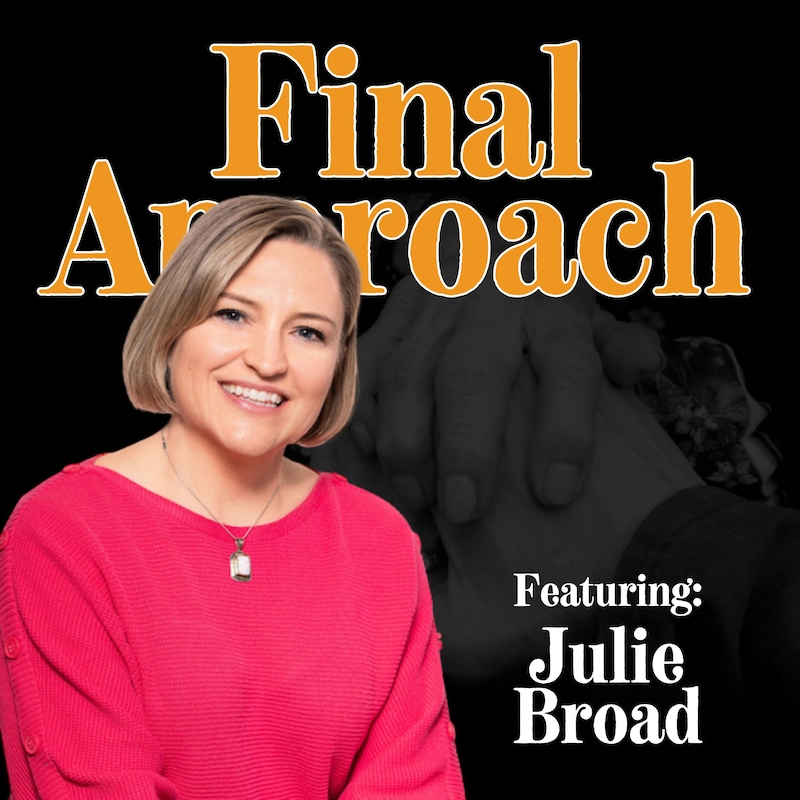
Welcome back to Final Approach. In today’s special episode, I’m thrilled to interview Julie Broad, the dynamic CEO and founder of BookLaunchers. Julie and her talented team helped me produce my own book, Final Approach: A Test Pilot’s Story of Caring for Loved Ones, and I’m excited to dive deep into what makes their work so impactful for nonfiction authors, the real stories behind publishing, and how meaningful books can truly change lives.
BookLaunchers is a powerhouse in the nonfiction publishing world that prides itself on producing “no boring books.” We discuss how Julie’s philosophy—that every book should be written for the reader, not the author—has helped more than 800 authors launch books that make a difference. Julie shares the holistic approach her company takes to guide authors through book creation, editing, design, marketing, and positioning, ensuring their stories have maximum impact.
We also get real about the challenges and successes of running a business in today’s fast-changing publishing landscape, including shifts brought on by artificial intelligence and online scammers. Julie opens up about her transition from Canada to Las Vegas, balancing entrepreneurship with family life, and her resilience through the 2008 economic downturn. She highlights memorable stories from authors whose books have helped communities and inspired change—like Dr. Cynthia Pan's book on end-of-life strategies and Jonathan Stanley's viral journey sharing heart-centered leadership in the corporate world.
Julie wraps up the conversation with practical advice for anyone wanting to write a nonfiction book, urging writers to focus on a specific reader and their hook, and emphasizing the power of self-publishing to produce books that look and feel traditionally published, but remain entirely yours. We close with actionable resources and how listeners can connect with Book Launchers to get started.
Key Takeaways
- No Boring Books: Nonfiction doesn’t have to be dull; impactful stories must engage and serve readers—not just the author.
- Write for the Reader: The book may be about you, but it’s written for a specific person with a problem or need; targeting your audience is key.
- Holistic Publishing Approach: Success comes from alignment throughout editing, design, and marketing, with a clear vision of the target reader.
- Self-Publishing Power: Today’s authors can publish professional, widely distributed books without storing copies in their garage—self-publishing is legitimate and accessible.
- Resilience in Business: Being adaptable and facing challenges head-on, like the 2008 recession and recent shifts in the market, is essential for entrepreneurship.
- Family and Business Balance: Parenting and launching a business in a new country requires determination, planning, and support.
- Author Impact Stories: Books like Dr. Cynthia Pan’s Exit Strategies and Jonathan Stanley’s Purposeful Performance have changed lives—and even gone viral—by connecting authentically with readers.
- Book Launchers Resources: Practical guides, a thriving YouTube channel, and hands-on help are available for anyone looking to write and publish nonfiction.
Feeling inspired to share your own story in a nonfiction book? Visit booklaunchers.com/sevensteps to grab Julie’s free guide, "7 Steps to Write a Book That’s Set Up to Sell." Dive into BookLaunchers’ YouTube channel for expert insights and connect with Julie’s team for dedicated support. Let’s keep making no boring books, telling real stories, and helping readers on their final approach.
If you enjoyed this episode, don’t forget to subscribe, leave a review, and share Final Approach with friends who want to make a difference through storytelling and community. Thanks for listening—see you on the next Final Approach!
Best in care,
Jonathan
Transcripts
This is my first interview. I'm with Julie Broad, who is the CEO of Book Launchers. And I'm really excited to have Julie on my podcast. My. My first interviewee. My sister interviewed me as the first one, but you are the first person I'm interviewing. And, and I'm so excited, Julie, because you and your team have helped me out so much to produce my book, Final Approach. This interview is not about me.
Jonathan Knaul [:I mean, it's about caregiving and it's about people. And so I really wanted to touch base with how, who you are, how you got to be the CEO of or what you founded the company, how you developed book launchers, and what it's done for people. Because I think you're up to over 800 authors so far in something like seven or eight years, which is really astounding. And I mean, it's so impressive. I mean, it's. Your books are about no boring books, and it's about books that are about reality. It's not fiction. And there's a lot of books in there that are out there helping people.
Jonathan Knaul [:And so I guess my first question is, please just tell us about Book Launchers.
Julie Broad [:Yeah, I mean, you did a great intro as far as what we're about, which is no boring books. My philosophy, you know, there's kind of a few things that were behind me starting the company, but one of the things was, I believe, believed that just because you wrote a non fiction book, so it's going to help, somebody's going to teach them something, didn't mean that you can write anything boring. Because in fact, I think when you're not famous, I think the bar gets even higher for you to write a great book because you didn't write the book just to put your cover, put your face on the COVID Right. Or on the back cover or whatever it was, you wrote the book to have an impact and perhaps grow a business or build a brand or tell a story. And that doesn't happen if somebody doesn't read the book. So you have to write a book that a reader wants to read. And, and I saw a big need for this kind of messaging in the marketplace because there's been a lot of people saying, write a book, you can write a book, write a book in 90 days, do this. But I think at the end of the day it kind of misses the point.
Julie Broad [:And the point of a book is to be read. So that was part of it. The other part was, especially in the nonfiction space, you can hire somebody to help you with pieces of all of the journey. But if it's not done on a holistic fashion, you're setting yourself up for a lot of struggle when you go to market the book, because you really have to have the whole picture of who the reader is, how the book is positioned, and that has to be there while you're editing, while you're designing. All the choices that you make are going to impact the ability to actually reach that reader that you want to help with your book. So I really saw a need to create a company that. That put all of that under one roof to give an author a better chance of success.
Jonathan Knaul [:So on that one, could you tell us a little bit more about. There's this one message that you deliver. I mean, I've watched so many of your YouTube videos. How many do you have now? Like, is it over a thousand?
Julie Broad [:Over a thousand?
Jonathan Knaul [:Yeah. I'm not surprised. I mean, they're. They're what? They're 10 minutes or less, More or less videos, and they get to the point. I think they're great. By the way, I haven't watched a thousand, but I've watched so many of them and I. And I've read two of your books, and I've gotten a lot out of it. One of the messages that you deliver that I love is the book is about you, but it's not for you.
Jonathan Knaul [:And that's the message I'd really like to get across. Can you talk about that a bit more? Because it resonates with people. It resonates with the audience, with readers, listeners.
Julie Broad [:Yeah, I think that's. Of everything that I talk about, you took away the most important thing. Because so many people, they write a book, been told to write a book often because they have a really great story to share, and then they kind of lose sight of the fact that it might be their story, but it's not for them. It's for a particular reader that is going to take away a particular part of that story. And when people lose sight of that or they. The other thing that happens is people get hung up, hung up on the fact that their book is for everyone. They're like, well, it's going to inspire, like, great. Who's it going to inspire? Well, everyone.
Julie Broad [:And it's really. It's impossible to market to everyone, and everyone is not going to be interested in the same thing. And one of the best ways I can illustrate this is talking about. There was somebody who came to me with a book on heart health, and, you know, his argument was, everybody has a heart. So this book is for everyone. And I said, okay, but who's going to want to buy the book right now? Like, who needs this book today? And he said, well, I guess it, you know, maybe it's somebody who's just been diagnosed with some sort of, you know, impending heart issue. And I'm like, okay, great. So now it's not for everyone.
Julie Broad [:It's for that person who is dealing with a heart issue. And you can see immediately how your messaging changes, right? Because now you're dealing with a specific problem and the book is offering a specific solution for that person. And that gets lost in, in a lot of the messaging for some authors. And what happens is a book that is really good, but there's nobody there that's going to buy it because it's not set up to. To really appeal to that particular person. It ends up too generic. So it is the most important message, I think, of everything that I share. So I'm glad that that's what resonates with you.
Jonathan Knaul [:Oh, yeah, big time. You know, I mean, in my book, I really wanted to be vulnerable and I really wanted to make it clear that I have a story. But that story is for the reader. It's not for me. And I learned so much from you and your team about, about really honing in on that. But on that note, if I could extend that a bit further because you have over 800 authors so far, so you've seen a lot of people, and I'm sure you've even seen more than just 800. If you have eight, 800 authors. Is there because, like, my area or my book is about helping people.
Jonathan Knaul [:It's about helping caregivers in particular and, and helping people to take care of somebody else. And it's a bit of what my podcast is about too. Is there one or two authors that maybe really stand out in your mind that really helped in that area or was really helpful to the community or to people in an intimate sort of sense in that way?
Julie Broad [:Oh, that's a great question.
Jonathan Knaul [:I didn't send that one to you ahead of time. Sorry. I surprised.
Julie Broad [:That's okay. There's a couple authors that come to mind. I always feel bad when I pick certain ones because then I feel like the ones I don't pick, I'm like, leaving them out like children. It's like the other 798 authors are going to feel left out. But the two that come to mind, probably just because I had them on our author showcase recently, you know, which people can watch on book Launchers, tv. But Cynthia Pan, she wrote her book. It's called Exit Strategies, and she wrote it, and I'll mess up some of the details, so forgive me on that. This is where Sarah, on our team, is awesome.
Julie Broad [:Because she's, like, ready to pitch every book.
Jonathan Knaul [:Everybody on your team, frankly, Julie, is awesome. They really are.
Julie Broad [:Oh, thank you. Yeah. So she would have the pitch down, but Cynthia wrote the book because she felt like people at end of life, they have a lot of questions, and they're kind of. They stop living at that point. And so she was really addressing kind of what's happening in those last days, months, you know, weeks of life. And the book, I think, is really. She did a great job of bringing humor into it, answering all the questions, you know, the ones that people are afraid to ask. Like, one of the ones she always talks about that makes me crack up is like, are people that are about to die still thinking about and having sex? Right.
Julie Broad [:And it's stuff like that that you kind of go, oh, my gosh, she's gonna go there. But it's also so helpful, I think, for families and for the people that are kind of getting into that last. That last phase of life. So she did a beautiful job. And I think with all of the marketing and promotion that she's doing, I mean, this is not for her. Right. This is for the families and for the people that she's impacting with. Book.
Julie Broad [:The other one that comes to mind, I think is. Is not. Maybe not quite the way you intended it, but it's just a beautiful story that I. I love so much. One of our clients wrote. He wrote. He wrote a book that really was intended to bring more heart into the corporate world. His book, I think it's called Purposeful Performance.
Julie Broad [:And he was doing a book signing at Barnes and Noble, which. I always tell people those things look way cooler than they are. Right. If you ever do a book signing at. As an author, here's what you can expect. You're sitting at a table for two hours watching people walk by you, and the people that come up to you, and you get all excited, they're about to talk to you about your book. They go, do you know where the cookbooks are? Or do you know where the Starbucks is? Like, and then you sell a few books. But it's.
Julie Broad [:It's a lot. It's. It's a lot of not what you think it is for the few minutes that it is. And so Jonathan was doing this at a Barnes and Noble, and a mom and her Daughter walked by and saw him and they were watching the people walk by him and not talk to him. So, so they went up and they bought a book and her daughter was really inspired by him and said she wanted to be an author. And for him, he went home that day and told his wife that he sold 12 books. And the day was a success because he had had this interaction with that little girl. But meanwhile they had filmed a TikTok video, posted it, and that video, for whatever reason, it just went viral.
Julie Broad [:It just hit people's hearts and next thing you know, a million views, 5 million views, and now it's been viewed a hundred million times. Yeah. And so for our client, this was one of those things that it was like life changing. He was on People magazine, interviewed him, Good Morning America, Today show, cnn, all the things. He has a big announcement coming out here pretty quickly. But it couldn't have happened to a better human. Right. And he wrote this book.
Julie Broad [:So much for helping people in the corporate world, you know, really just create impact in their jobs and not do it just for profit. Right. Kind of if you put the people first, the profits come kind of messaging. And so, yeah, we're really excited for, for him. And I think that that's one great example of, of somebody that's out there impacting people and, and something great happened while he was doing it.
Jonathan Knaul [:I love that story. And I was just writing so Exit Strategies by. What's her name again?
Julie Broad [:Dr. Cynthia Pan.
Jonathan Knaul [:Okay, I'm, I'm going to get that. And, and the other person, which was Jonathan Stanley. Yeah. Purposeful performance. I'm going to get that. I love those, I love both those stories. Julie, can we talk a little bit about how you got to where you are? Because on top of it's like book launchers, which was already successful, is now exploding. And again, your company is so impressive and what you do, but you had to get there and you have your own story.
Jonathan Knaul [:I mean, you're Canadian like me. Woohoo. Canada. And you moved to Las Vegas and, and literally set up shop there. And it, it has not been an easy go. And along with all that, you are a wife, you're a mother. I mean, that takes up a lot of time and energy and is the most important thing in your life. And yet you are doing book launchers, amongst other things.
Jonathan Knaul [:So can, can you tell us a little bit about your story? It's so impressive.
Julie Broad [:Well, thank you. And I mean, it's not without, it's interesting because it's not without its struggles in A lot of ways. Like right now, one of the things that we've talked about a little bit, you know, the, the market, the market for books has changed so much in the last year. AI has come on strong and there's so many companies, many of them are scams, which is really frustrating for me. But there's so many companies doing portions of what we do, and like I said, many of them aren't doing them well. But it just impacts what we do so much more because it gets harder for the customer to kind of go, okay, this company's legit. This is the one I should go with because now a confused mind says no and there's too many choices out there. So it's been a really interesting, you know, in some ways exciting and fun because we've been leaning into the AI side of things and building our own software and kind of that side.
Julie Broad [:But it's also been interesting because what we, what worked even a year ago to bring in new clients and to support people through this journey, it's not working today. And so we've really had to evolve quickly. But you know, I guess that kind of going back to your question of my story, that's kind of what I'm best at is landing kind of going, okay, don't know what to do now. So I'll just take, I'll make a decision, Go, learn, find out if that was the right decision. Sometimes I learn a lot. Sometimes I'm like, okay, that worked, we can keep doing that. And you kind of go down that, that path. But in Canada, I started a real estate training and education company as well as I started real estate investing back in 2001.
Julie Broad [:I read as many people who got into real estate in the early 2000s did. I read Rich dad, poor dad. And I immediately was like, I got to get my money working for me. And so I stopped. I bought two investment properties in 2001 and just kind of kept going from there. And by 2008, um, I always tell people, don't, don't talk to me for timing advice. But in 2008, I quit my full time job and went full time in real estate, which I think allows me to know I can survive anything. If you go full time in real Estate in 2008 and come out the other side smiling, I think, I think you're going to survive anything.
Jonathan Knaul [:Wow. Yeah, because that was a big time. That was a big economic upset. Sorry, please keep going.
Julie Broad [:No, no, I mean, I think some people, it's funny because it's been so long since 2008 happened that there is a whole generation of people that don't, you know, that are the banking collapse and the fact that you couldn't get a single bank to fund a real estate deal for almost two years. Right. Like it became a really hard time for investors. But anybody who owned houses and in the U.S. you know, it was a foreclosure crisis. So you know, it was a, it was quite a time to then, you know, stick your flag in the sand and go, I'm full time doing this real estate thing at the very time that banks won't lend a penny towards doing real estate deals. But that's kind of why I know no matter what happens, I'm going to be able to charge ahead, find a path and create success. Because I was able to do that in 2008.
Julie Broad [:Now in 2008 I did move back in with my mom and dad.
Jonathan Knaul [:Really.
Julie Broad [:But I did, yeah, newlywed too. It was, it was, it was glorious. It's what every newlywed dreams of doing. But my husband, my husband was a commercial mortgage broker and so here's me going full time in this real estate thing and my husband is a commercial mortgage broker where there's zero deals getting funded and they're 100 commission. So yeah, our income went from six figures to almost nothing. We still have, we had rental properties, but yeah, almost nothing very quickly. So, but it was great because we moved acne with my mom and dad for, for almost a year and everything that I was making, we were able to pour back into that investment and the investment company and the training and education company and build from there. So it's not every newlywed's dream to, to move in with their in laws or their parents.
Julie Broad [:But it was a great gift and I got to spend lots of time with my parents, which, you know, you don't always get to do as an adult. So yeah, so that was kind of part of the journey and that's what led to me writing my first book. Because in 2000, you know, investing from 2001 all the way to, you know, 2008, 2009, 2010, I learned a lot and I started writing a blog and this blog that didn't even have an opt in like we have today. You know, it was back back I had to learn how to code in order to do my own website. I had to learn how to code. So I know some HTML and all of that fun stuff. But I.
Jonathan Knaul [:You don't cease to impress me.
Julie Broad [:Seriously. I get it done. That's. That's the thing, right, is that's my personality, is I find a problem and I'll find, give me a problem and I'll find the solution. But yeah, so this blog started taking off without there being a website. People would have to email me and say, add me to this list. So that's where I started the education and training company off of was this newsletter list that I had built and it just kept going from there. And I started speaking, I started a YouTube channel, and then I got approached by Wiley in Canada to write a book, but they had me write a proposal about a book idea.
Julie Broad [:They didn't like my book idea. And then after all of that they ended up rejecting me and saying that they didn't think I could sell enough books. And so that was really the one of those pivotal moments where I was crushed and thought everything was, you know, everything was going wrong. And yet it was the greatest thing because I eventually recovered my ego after they had rejected me. But given two of my friends book deals and I self published and I took the book to number one overall on Amazon and I saw the power and the possibilities of what actually self publishing books can do. And, and then, I mean, it wasn't immediate that I launched Book Launchers, but it's kind of, it was seeing that and experiencing that that opened my eyes to this whole world of self publishing and it was a whole lot more fun than tenants and toilets. So eventually that's kind of what led me to Book Launchers.
Jonathan Knaul [:And what about, what about the move to the US because both of us, we've both experienced this, this journey, so to speak. I mean, I live in, in Palmdale, California. You've moved just down the road. Before I got to California, you were over in Las Vegas. But I mean, with your family and it's not easy coming to, coming to the United States and, and you set up shop here.
Julie Broad [:Yeah, and it's funny because people, people think we came to the US to start Book Launchers, but I started Book Launchers to come to the US So my husband got into acting and I don't know, he was like three or four years into it and, and I'm not, I'm like, let's go all in. If you're doing something, let's go all in. And so I'm not super patient. And in Canada, a lot of the roles that he wanted were auditioning out of la, but filming in Vancouver. Vancouver is one of those cities that plays every other city in the world. It never plays itself, but it plays every Other city. So there's lots of filming going on there. But he was just getting like little bit parts, like two lines here and a line here, and he wasn't getting any meaty roles.
Julie Broad [:And I just said, well, look, like, why, why stay in Vancouver when we could move to la? So I set about figuring out how we could get there. And I went through all the visa options and in the end, the best One was the E2 Investor Visa, which would give my spouse the opportunity to work in anything. It's the only visa that kind of gives that space spousal open employment options. So I was like, okay, fine, let's just start a business to move to the U.S. it sounds crazy when I say it out loud, but yeah. So I, I started working on the business plan for Book Launchers, but fun thing to tell you is kind of back up a little bit right around the same time we kind of decided, okay, well, you know, I'm getting up there in age. And I said, you know what? Like, I think I might want to have a kid. So.
Julie Broad [:So we started trying to have a child and nothing was happening. And I was like, okay, fine. And I just kind of focused on building the business, getting the. Or not building the business, building the business plan, getting the visa, and winding down my real estate training company. I was licensing off the courses and supporting all the people that were teaching the courses all across Canada. And then, you know, of course, I. No sooner have I submitted the visa than surprise, you get to be a mom. So my parents naturally assumed that I was going to cancel this.
Julie Broad [:This crazy plan to move to the US But. But no, I, I didn't. And then I. Yeah, go ahead.
Jonathan Knaul [:I was gonna say, how many kids do you have? Two now, I think. Or three.
Julie Broad [:No, just one.
Jonathan Knaul [:Oh, okay.
Julie Broad [:No, I. I was, I was old. And then this is the thing. Not only was I40 when I had my son, but also I was in the middle of this process. So we moved. We had to wait till he was born because once I disclosed to my lawyer that I was pregnant, they're like, oh, you can't move down there until you had the child. So. Because he needs a birthday and he needs a name in order to get the documentation.
Julie Broad [:So we had to wait till he was born. So as soon as he was born, we finished the application and we ended up coming down to the States three months later. So here I was, three months, three month old baby, launching a brand new business in a brand new country. There was no more children. Sure. I had enough going on.
Jonathan Knaul [:But still on that note, Julie, what you accomplish in a day makes me dizzy a little bit when I think about it. I hear about it, and I just hear snippets because of my business or business or technical association with you and your team. But how do you manage? Because it's impressive. I mean, you're a mom, you're a wife, and you're managing this really vibrant, fast moving, pretty busy company with a relatively small team.
Julie Broad [:Yeah, well, I mean, it's the team. So I think that, you know, none of this I would have done on my own right from day one. And I can thank the visa process for this. I had to hire people. It was a requirement of. Of the visa that I was. You know, basically, the E2 investor visa is a job creation visa. You have to come into the States and create jobs.
Julie Broad [:And so from day one, I hired. I hired one person who still works with us. She started her own business, and now she's a contractor behind the scenes. But, you know, she was a key person to help me because she was very process oriented and really helped me. Not only has she done the whole book process for other people, but she just thinks in that way of, how do we automate? How do we, you know, how do we make this easier and repeatable? So it was really, really key to have somebody like that on my team early on. But, you know, as you noted, my team is. They're fantastic people. They're great at what they do, and they care deeply about authors, and it makes everything else easier to do because I can trust that my team is taking great care of the people that we're working with so that I can focus on the other things.
Jonathan Knaul [:I will shout out to you and your team again, because I think you guys are awesome, and you've helped me out so much. I know we don't have much time left, so I'm just looking at a couple of other questions I may have. You know, for somebody writing a book, whether they're writing, let's just say it's nonfiction. Not boring. Underline, not boring. What's your number one piece of advice?
Julie Broad [:Well, we kind of hit it already, which is write it for a specific reader in mind. But I would take it a little further and really focus on that hook, which even if you're writing a memoir, you know, the hook is still necessary, and I think the hook is still an outcome of an outcome for that specific reader. So, again, going back to the example where somebody said their book's inspirational to everyone, you know, changing that to Be inspirational to a specific person for a specific reason. Now you've got a hook that at least allows you to stand out in a sea of other memoirs because somebody with the very same story or the very same situation, they're going to go, oh my gosh, that book is speaking right to me. So I think that hook is vital. And you'll know that you don't have a good hook when you finish your book and you go, hmm, I don't know who's going to read my book.
Jonathan Knaul [:Yeah, exactly, I understand. That's good. So again, I know we don't have much time left and so maybe we'll wrap it up. Could you let listeners know, I mean, if they're interested in writing a book, if they're interested to get expertise from book launchers. Where do they go? How can they. And can you tell us also a little bit about. I'll tag on to that. So please give us information about book launchers, your YouTube channel, your books, your website.
Jonathan Knaul [:And. But in addition to that, I think still today there are a tremendous number of people because I get that question, hey, who you published a book? Who are you publishing with? I'm like, I self published. What do you mean? And they don't understand. They think that I just sort of crafted some. Crafted something in my garage and photo or photoshopped and. Or printed a bunch of copies and cranked it out. Sorry, please go ahead. Can you talk a bit about that and about, about how people can find out about book launchers?
Julie Broad [:Yeah, for sure. I mean, I think it's interesting today it's such a great time to be an author because you can look like you were traditionally published and yet you own the book in its entirety. You know, it's something you can, It's a legacy that you've created that you own. You can do whatever you want with this book, but it looks like a traditionally published book. It's distributed everywhere that traditionally published books are distributed. So it's a pretty phenomenal time period to be in. In the old days, people had to buy a thousand books and store them in their garage and, you know, sell them out of the trunk of their car. But we are so, so, so past that now.
Julie Broad [:It is, it is fantastic. But of course, you can self publish really cheaply and fast and have garbage on the market. So it's really up to the author to be their own gatekeeper. Because that is the difference with self publishing is there's nobody gatekeeping to say this book isn't good enough. You can publish anything. So that's kind of that side of it. But book launchers.com the best thing to do to kind of get all the things rather than me give a whole bunch of URLs is we have a guide that's seven steps to write a book that's set up to sell. It talks about your reader, your hook, and some of the other things we touched on today.
Julie Broad [:And you can go to book launchers.com forward/the number seven and steps, and I'm sure Jonathan will put that in the show notes for you after. But book launchers.com seven steps, and that'll get you your workbook, it'll get you my email, it'll get you all the links to all the things. So you can check us out and reach out if you want any help.
Jonathan Knaul [:I am going to put that in a show notes. So, I mean, we're recording now, so this is not going to come out or this will not come out for a while, but I will make sure it's in there. Yeah, look, Julie and I know you've got to go in a couple of minutes, so we will wrap up. I want to thank you so much for agreeing to be my first interviewee on my podcast. Totally exciting for me. You are such a vibrant person and real pleasure to speak with you, and I really appreciate your time. And again, I think Book Launchers is awesome. And I think what Book Launchers is doing and I think getting out, you know, getting nonfiction authors out there, no boring books.
Jonathan Knaul [:And amongst all the authors, the many hundreds, you're approaching a thousand, I'm sure soon that have been your clients. There are so many out there that are helping people and helping community and. And I'm, I'm very thankful for that. So thank you very much for being on the show.
Julie Broad [:Yeah, thank you for asking me. It was fun to connect with you again.
Jonathan Knaul [:All right, thanks, Julie. I'll. We'll wrap it up there and have a good day.
