Shownotes
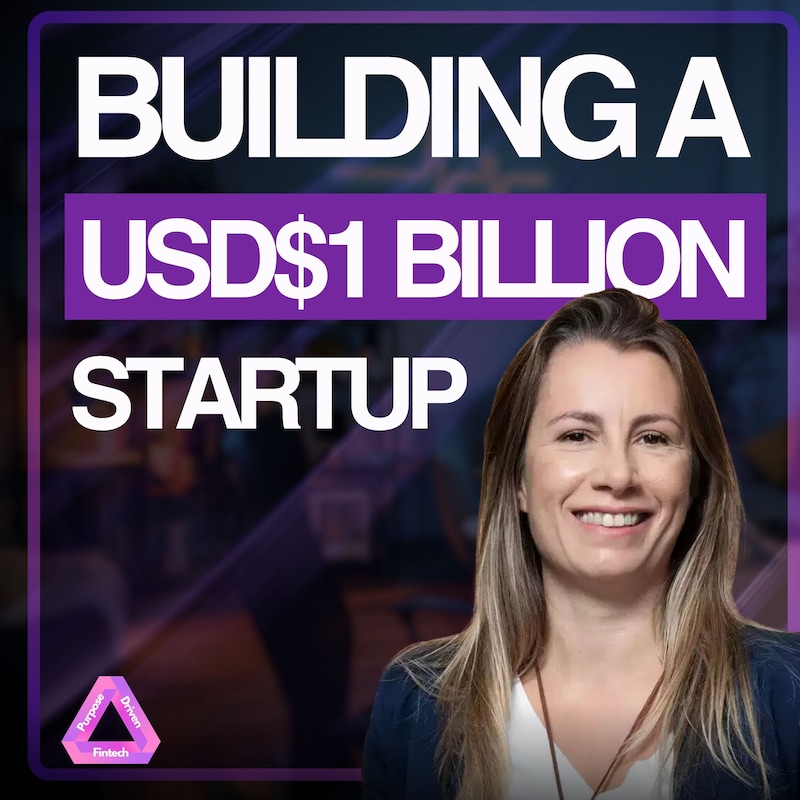
My guest today is Daniela Binnati, Co-founder and CTO at Pismo. Pismo is global leader in cloud-native core banking and a card issuing platform and Daniela to me is one of the most inspirational women in FinTech. Earlier this year Visa signed an agreement to acquire Pismo for USD $1 Billion.
In today’s episode, we go through Daniela’s journey. It was not easy. From working 45 days Sunday to Sunday, juggling being a mom, self shame of not being there for the kids, getting started investing her life savings, to selling the car to pay for school fees…
Daniela and the team went from struggle to struggle, and built a Unicorn. We talked about how she reinvent herself, designed a strength based org design and created a people centric company culture.
If you enjoy this episode it would mean the world if you subscribe and give it a follow so that we can have more impact
Let’s dive into it!
👉 You can find Daniela here
- LinkedIn: https://www.linkedin.com/in/danielabinatti/
- LinkedIn Pismo: https://www.linkedin.com/company/pismo/
- Website: https://www.pismo.io/
- Pismo in the news: https://www.pismo.io/news/visa-to-acquire-pismo/
👉 And you can find Monica here:
- LinkedIn: https://www.linkedin.com/in/monicamillares/
- YouTube: https://www.youtube.com/@moni_millares
- TikTok: https://www.tiktok.com/@moni_millares
- Website: https://moni-millares.mystrikingly.com/
If you enjoy this episode it would mean the world if you subscribe and give it a follow so that we can have more impact. Remember to connect in YouTube or LinkedIn to keep the conversation going.
In this Purpose Driven FinTech episode we cover:
(0:00:00) Financial struggles and sacrifices made to launch Pismo
(0:02:47) Success and resilience
(0:05:08) Advice on embracing change and leaving comfort zones
(0:07:36) Building purposeful FinTechs by providing access to financial services
(0:09:32) Daniela's motivation to start Pismo and its legacy
(0:11:34)Overview of Pismo's services for banks and FinTechs
(0:12:24) Acquisition by Visa for $1 billion and future plans
(0:14:21) Mission to lead the transformation in payments and banking
(0:15:37) Daniela's inspiring background and upbringing in Brazil
(0:19:00) Secret to Daniela's success: Going above and beyond
(0:21:27) Balancing work and motherhood
(0:24:30) Coping with feelings of not being good enough
(0:32:21) Overcoming panic attacks and anxiety disorder
(0:34:11) Investing everything and struggling financially
(0:35:00) Series B fundraising round brought stability and growth
(0:36:36) Lessons in reinventing oneself and not feeling inferior to others
(0:38:20) It's all about people
(0:43:56) Creating a good culture and onboarding remotely during the pandemic
(0:47:59) Message to women: overcome obstacles, believe in yourself
SEARCH QUESTIONS:
- How to build a FinTech unicorn from scratch?
- What is cloud-native core banking infrastructure?
- How to balance motherhood and startup leadership?
- What is strength-based organizational design?
- How to overcome imposter syndrome as a woman in tech?
- What are the challenges of family business in tech?
- How to create people-centric company culture?
- What is the journey from employee to entrepreneur?
- How to pitch to investors as a technical founder?
- How to deal with self-blame as a working mother?
- What is resilience in entrepreneurship?
- How to build lean financial services solutions?
- What are the benefits of cloud-native banking platforms?
- How to leave legacy systems behind in banking?
- What is the role of gratitude in leadership?
- How to reinvent yourself in your career?
- What are the challenges of being CTO and mother?
- How to design organizations around team strengths?
- How to get acquired by Visa?
- What advice for women in FinTech leadership?
—
Production and marketing by Monica Millares. For inquiries about coaching, collabs, sponsoring the podcast or creating or editing your podcast email [email protected]
Disclaimer: This episode does not constitute professional nor financial advice and does not represent the opinion nor views of my current, past or future employers. The guest has agreed to record and release our conversation for the use of this podcast and promotion in social media.
Transcripts
As I said, self blame was all the time when I was working. I was thinking about them when I was off then I was thinking about work and I that feeling of I'm not good enough in anything that I'm doing. I'm not a good mom. I'm not a good wife. I'm not a good professional. And it took a while.
And by the time when I was transitioning my career, when I was leaving the previous company and thinking about and decided to launch Pismo, as I said, they were seven and five years old. And the school was all the time calling me and saying what's going on? They have a weird behavior, especially the oldest one.
I come back home, they were [:different and again, here I am again, launching another payments and banking company
Monica Millares: Hi Daniela, it is an absolute pleasure having you today with us in the show. Thank you. How are
Daniela Binatti: you? Thank you. Thank you so much for having me. Great to meet you here.
Monica Millares: Thank you.
You just became a unicorn, pismo. Is a big unicorn now, we were acquired by Visa.
So it's a huge success story from a Latin American FinTech with a female co founding team as well.
Yes. So it's a fascinating story. It's a fascinating success story in so many angles. But before we go into Pismo's story I want to ask you like a few questions about you and your mindset so that then we get to know you a little bit better.
Starting with what is your definition of success?
a Binatti: My definition of [:What I believe it's the best way to treat people. It's something that it makes me really, happy.
Monica Millares: Oh, I love that definition because especially at the end that you say how we treat people, it is so important. So important. Yes.
Daniela Binatti: Yes. I dreamed about building a company where people could be themselves and I think I could do that.
If you talk to the team, I think this is my, I'm so proud of that.
en I think it was attributed [:And I felt. That I couldn't be the Latin me that I was, and it was so hard. So being you at work is so important. Yes. To build on that, of course, building a startup is not easy. Building a unicorn is definitely not easy. So I'm sure there's been. Tough times, and we'll talk through that at some point.
How do you, in general, as Daniela, how do you deal with life when you have those tough times?
times change today, you are [:You are not. And then you're good again. Everything goes you have just to be grateful when you are good and be resilient when you are, when the tough times come. And I think this is extremely important for everyone, especially for women in the, professional life, like by the time you have your kids and they are there's a lot and, being resilient, it's extremely important.
Monica Millares: Yes, and it takes a lot of strength, but not just like core strong strength, like you say, like gratitude. It also takes a little bit of faith to be resilient. Yeah, definitely. Yes. And then what is a piece of advice that you wish somebody told you when you were starting your career? Now that you are an accomplished mature woman.
years in [:You have the courage to face that and to change yourself to adapt. I think it took a while for me to learn that.
Monica Millares: Yes, definitely. Because it's, like you say, we get, by definition, comfortable in the comfort zone, even though the comfort zone sometimes It's not a happy place to be, but it's the comfort zone.
It's the familiar zone and we're more scared about the unknown rather than living wherever we might be. Yes.
Daniela Binatti: Yes.
techs and products with more [:What is your opinion on how we as an industry can build more purposeful fintechs?
Daniela Binatti: I think , it's something that we talked a lot about this by the time we were launching Pismo, like me and my three co founders, we, although Pismo is a young company, we've been doing this for 25 years already.
And by the time we left and we didn't let the previous company to launch Pismo, but we realized there was so much to do because it's. An industry that relies on very old legacy systems and they are expensive and it's hard to find talent and you spend a lot of tons of money in infrastructure.
instruments and things like [:And I think we could prove the thesis, especially here in Brazil, where we have a more mature operation, because there are some products that our clients are building on top of Pismo that they couldn't build on top of the previous solutions. And now. We are able to provide access to people who previously didn't have access to it.
So, thinking about how you can build lean solutions and just offer what you are saving in different products for different people. It's something that every company could do, in my opinion.
wo sided question, like what [:Daniela Binatti: I was not educated to be an entrepreneur. And this is something that it was really hard for me because I had that feeling saying, you. Have the opportunity to do something different because my career was all in, in technology. And by the time I left the previous company, I was looking for something that could be like, I could work for consulting.
, you could see like digital [:And that They would still be expensive and it was hard for me at the same time that I believed I could do something, it was hard to think about starting something from scratch, investing everything that I saved during my whole career in something that I was not sure. It would be successful. It could be like, it's not easy to do something from scratch and especially in countries like, here in Brazil.
And, but I think I had the courage to face that. And I believe that if Pismo was successful, we could. Be able to be the new generation for payments and banking infrastructure. And I think we are, on our way.
before we go deeper, can you [:Daniela Binatti: Pismo built. A whole infrastructure for financial services. Starting from. Payments products to core banking or corporate banking, or even here in Brazil, we provide services for the stock exchange as an infrastructure for financial services. Everything that. Incumbent bank or a FinTech, every kind of financial service product provide tools banks can build their solutions.
So credit cards, debit cards, prepaid cards credit accounts, digital wallets, everything.
g piece of news, right? That [:A. How does that feel? And then B. Now what? What happens
Daniela Binatti: next? If. Yeah. It feels, I don't even know. I think I was it was a long process, like a long negotiation process. We are still subjected to legal and to regulatory approvals here in Brazil. But it's awesome because being backed by a company, like it's the biggest fintech in the world, so they can help us like having access to.
o build what I dreamed about [:Actually, I think the mission and what we were trying to accomplish it remains the same. We still be an agnostic company and we always said that your short term mission was established the operations in the market that we are. And then establish the second medium term establish like global footprint and then be leading the transformation in this industry unleashing a new era of payments and banking, a new way of doing things.
So it remains the same. The mission is the same.
fast. And even though we've [:Just being enabled by all this new technology.
Daniela Binatti: Yes. And there's so much to do. It's really exciting.
Monica Millares: It is very exciting times. Okay. So now moving on to you as Daniela, the, we had a chat the other day. And then within five minutes, I was like, Oh my God, Daniela is one of the most inspiring women in FinTech right now.
, you are a very strong role [:And of course, we all have a story and a background and you have a very interesting upbringing as well. So can you bring us back to Daniela the woman in growing up in Brazil? Can you tell us about your family and your upbringing? How did that help you become who you are today?
Daniela Binatti: It's a interesting story.
Like my parents, they worked at the fields and then came to Sao Paulo where we live now when they were young, but they studied only until nine years old. I'm the oldest of three daughters. So I have two sisters, Julie, which is my partner here and Camila, the youngest one.
ort of educated family. Like [:Manage a computer. And that was like, I am 46 years old. So at the time we didn't have not even windows. So it was like black screen with, I was trying, I was learning clipper, the programming language. And I said, this is what I want to do, but [00:16:00] we started all of us, we started in public school, the whole life public schools here in Brazil, the whole life, which is not the same as public schools in the United States.
So we lived in the suburbs here. And it was hard when I joined the university, I could be able to have access to a private school without paying because my parents didn't have conditions to pay for me. But I found an internship course on the first year. And the traffic department here in Sao Paulo, and at the same time that I was learning how to program over the weekend, I was those people holding, they stop sign in front of a shopping center because I had to help them on also on the traffic department and it was nice.
ed that I could be something [:And that was extremely important. That's
Monica Millares: super important. I think I can relate to that story as well, like my mom always was like, yeah, we may not come from a rich family, but you're a smart girl like you have to study, you have to study, you have to go to uni, you have to get a good job and that's it.
. Your first, not your first [:Daniela Binatti: I think the secret at that time was like doing much more than I was expected to do.
I was. Workaholic in a way, like I could spend 24, 30 hours at the office doing things because although I was not at this company was the previous company was the time that we built another payments processing platform here in Brazil, although I was not a partner of the company, I always say that if that company was mine, I wouldn't do anything more because I did I gave everything that I had to help building.
So we started as four people [:And I think this was important for me. Yes,
Monica Millares: I can definitely see that you put, and I can see myself in you as well. It's you put your heart into it. And even though you're not the founder and you're not like you act as if. I know it's your own company and, you just drive it. Yeah, definitely.
ing. With crazy hours. Yeah. [:Was there any self blame of not fitting into the quote unquote old traditional model of being a mom where you have to be there all the time and not work and you were doing the opposite you were working, while being a mom. How was that for you? It was.
Daniela Binatti: It was very hard. It was very hard.
As I said, self blame was all the time when I was working. I was thinking about them when I was off then I was thinking about work and I that feeling of I'm not good enough in. Anything like that. I'm doing. I'm not a good mom. I'm not a good wife. I'm not a good professional. And it took, a while.
to launch Pismo, as I said, [:And I think the reason why I went through the last project that I did in the previous company, I was working for 45 days Sunday to Sunday. I was barely seeing them. They woke up in the morning. I was not here already. And then when I come back home, they were sleeping and it was hard. And this was one of the reasons why I decided to leave and look for something.
Different and I said, I would never work with infrastructure anymore. I was the infrastructure director at that point. But then I decided to learn cloud computing and again, here I am again, launching another payments and banking company. But at least since the very beginning, I could spare some time to be with them.
And I think that [:They went to, my oldest one was saved this week. Like it took a while for them to really understand what I was doing. I think today it's different because I'm also a role model for them, but it took a while. They were blaming me all the time for not being there. Oh,
Monica Millares: that must be very tough. Yeah.
but how did you cope with it [:Daniela Binatti: Yeah, overcome is hard. Yes, I know.
Monica Millares: How did you cope with it better?
Daniela Binatti: I tried hard being there when I was with Dan, I tried to focus on, call it time and not quantity. And at the same time, even when I, had that feeling of working during the night or spending 16, 17 hours a day working, I was like, no, I had, they need me.
And It doesn't matter what happened before, but I, must try hard here to be up there. It's not easy. Like you catch, I catch myself all the time thinking about, oh, I'm not doing this in a good way and self blaming. But I think I try, at least I try to. So when I had the time, I took them to the movies to watch a movie.
to be with them. I tried to [:Monica Millares: that is so important as well. And it was probably very receptive from both of you, as in from you, as in how to approach them and them to be like, mom is trying very hard and at the same time, it's I crossed that bridge of saying, yeah, it's hard, but we're doing it. Yeah.
Daniela Binatti: And openly talking I say I am a human being like everyone. I made mistakes sometimes, especially when the oldest one, she questioned me like, why you are acting with Livia, the youngest one with me was not like that.
And I say, yeah, it was not like that because I'm also learning. I made, I make mistakes all the time and I'm trying to do my best. So that's why I learned that. This was not the best way and I'm gonna try and doing different this time and talking and talking. It's extremely important.
I think that's a very humble [:How did you go about finding the money and investing into getting the company starting?
pany was extremely important.[:But for me personally, it was hard because my whole experience was in technology. And I was the kind of people who work. Internally, I was not talking to many people outside, especially investors. And it was hard because I didn't know how to approach, how to pitch something, a new idea. And of course his support was extremely important, but since the very beginning, I was the one willing to learn how to do that.
until raising the series B in:And this is something that we were working for a group of women in the company, and I said a past week to them. If there's something that you are not good at and you understand that you have to learn, you have to face and know and be there, and it's hard, but you have to be open to learning and to listening.
Most of the time I'm in listening mode. When I was him at the very beginning, reading a lot and listening to podcasts on the topic. So every time I thought I should. Go deeper in some specific topic, and this is something that I do all the time. And until now, I just pick the right books, the right podcast, the right articles, the right people.
And I read and listen and listen until I can absorb and be able to have a more, a broader repertory to be in a meeting. For example, I
ly with women. And sometimes [:And I tell them these, but now I'm like, yeah, you're validated what I say that I'm like if you want to get into the industry, you have no experience. Today, it's easier than 20 years ago. There's tons of books, newsletters, podcasts. You have to go listen. Absorb the knowledge and then be able to have a smart conversation about the topic with the language that we use in the industry.
And it seems that's what you did to get into, to learning how to do fundraising,
Daniela Binatti: basically. Yes, exactly. And I, exactly. I used to say the same. Today, like there's an infinite amounts of resources online. So you just have to search for, and you'll be able to learn pretty much everything that you need.
nversation. Yes. Yes. And be [:Daniela Binatti: Yes, exactly. So
Monica Millares: we, when we spoke, we mentioned there was like a specific timeframe that we were like, Hey, the first three years were really tough and then something changed.
And then it started to become less tough, less difficult as such. What changed? What, at some point, was there like a switch?
and my phone was ringing [:And then suddenly I was at home. With a blank page and. It's I think this is the most difficult part when you are not only you have to start from scratch, but you are questioning your decision. Should I look for another job? It should be much easier. Should I invest in this and I've been struggling with panic attacks and anxiety disorder for I think anxiety disorder I had my whole life, but it became stronger when I was 35.
panic attacks became worse. [:Maybe it was I'm not that anymore because I'm not good enough. I'm, I cannot just. Find another job imagine like just launching another company. So it was hard for me. And even though I was feeling that way, I was trying to study. I was going to training course on big data and cloud architecture.
I was like back to the training room. And I think when I started, like when I was able to. Put that in a paper what I was thinking about what would be an infrastructure for the industry and people started I could find some reassurance and what I was doing. So this was the part was difficult for me.
ut then Marcelo, my husband, [:We were not traveling. We couldn't buy toys or gifts or whatever. And then we sold the car to pay, to keep paying for the school. And I think that was the moment where we said, Jesus Christ, we are like, we are investing a hundred percent because it's the, both of us were working on that. But then thank God there was the series B fundraising round in 2021.
hings could became, because, [:If you are distracted thinking about money at home. So let's, give you a condition where you could at least pay the bills and be so you can focus on work. And I think it was the time when we could just shift to a more accelerated growth.
Monica Millares: I'm in awe with your story.
n FinTech because it's about [:What I've learned from my experience and friends as such, people like you is whenever you go through a tough time, it's also an opportunity. It's like life is telling you, here you go, here's a challenge. And it's an opportunity to reinvent ourselves. This podcast came up as an opportunity to reinvent myself out of a challenge, for example.
It seems like you had to reinvent yourself twice. One is when you change from being an employee to then starting the company, what we were just talking about. And the other one is reinventing yourself to. Be able to work with investors as such. And I was like now you're a unicorn, right?
u obviously did both things, [:Daniela Binatti: yourself? I think the biggest lesson is at the end of the day, it's all about people. It's all about people, like every single person in the world, me, you, Elon Musk, Jeff Bezos. Everybody is struggling with something, everybody has anxiety, everybody's concerned about the kids, everybody's thinking about self blaming, and we have we...
sful stories are being told, [:So I think I learned that. And at the same time, I try to tell. Not the good part of the story to other people, because especially now everybody looks at, Oh, we were unicorn Jesus. You are so successful. It was easy though. It was not easy. It was hard. We didn't know exactly what to do all the time.
There's no silver bullet. There's no, like you have to learn all the time and you have to learn how to navigate with. The challenges at work with the challenge, your personal challenges. So everybody's going through the same. It's all about people. Don't, feel less than anyone in the world. I think this is the important lesson for me.
Monica Millares: Don't feel less than anyone. That's very powerful too. When you say it's all about the people, what do you mean?
Binatti: I mean that people [:I think this is what I mean. Don't feel intimidated by titles, by money, by anything because we are all equal. We are all the same. We are all. human beings struggling and trying to learn all the time. I think that's it. Yes.
gling while at the same time [:It is a yin yang. It's yeah, you enjoy the struggle, but at the same time it can be very tough, but at the same time we're striving for happiness. Yeah. Yes. But I like that. Don't be impressed by titles. I think it's by the persona that we all project, especially in whether that's social media or just because of your role title at work, doesn't even have to be social media.
It's like we all go to the office and the Monica or the Daniela that is at home or with friends may behave in a little bit different way than the one that shows up at work. So it's like. We have those personas, don't be impressed by personas. The other thing that's unique about you and Pismo, it's like, it is a family business.
We, whenever we talk family [:Daniela Binatti: Yeah, I think again, and although SMO is a young company, we've been learning, we've been working together since the beginning of the previous company.
of us, we were working in [:So Marcelo is more on engineering. I'm more on architecture and infrastructure and Julie's more on product. So we had. Tough times, very tough times, especially me and Marcelo, because when you are working for the same company, when it's a hard time for me, it's also a hard time for him. So it's hard to share, especially like the, duties with the kids, because if there's something happening at the company, we are both involved. So it was hard to manage. And every single Sunday lunch at my mom's house was like a board meeting.
Monica Millares: Of course, because you got the family there.
Daniela Binatti: Everybody was like, Jesus. And the girls were like, can we just one day over dinner talk about other things?
t's not easy, but I think we [:I'm not good at. Doing like daily repetitive tasks and making sure a project's happening. I'm good in thinking about roadmaps and like solving some hard challenges. And he, on the other hand, is doing the best with the team managing operations and engineering and delivery. So we built an arc design that is not so common in other companies.
But in a way that works very well for us here. And I think this is our, strength. Awesome.
her than a title based or an [:Daniela Binatti: Yes.
Monica Millares: I'm conscious of time, but then I do want to know about this.
The culture at Pismo, what have you done to create a good culture? In the company and what is the culture?
we have, like back in March,:So we hired 300 people during the pandemic and by the time everything was closed, we had to learn how to work remotely because you were, everybody [00:43:00] was at the office and we have to learn how to onboard people remotely and we started hiring all over the country and then in other countries. So it was hard, but I think we had, especially.
Because of the pandemic, we had the opportunity to practice and deliver this, what we believed was a people centric company. So people were struggling during the pandemic with like young people was alone at home and moms are struggling with smaller kids and schools close it. And at the same time, people were getting sick.
talk about music, talk about [:And I think we could. Like me, Julie, especially me and Julie, we were openly talking about our struggles in groups of people. So there are moments that we called like coffee with founders where there was like a smaller group of people talking to us when we openly talking about challenges and struggles and other things.
So I think when we. Talk openly about our struggles that encourage people and they feel that is a safe space to to be themselves. I always said that, and I love Bernie Brown, and she says that you have to build a place where people just can leave the armor at home to go to work so they can be themselves.
think we were successful in [:Monica Millares: And I think given the pace of our industry, that is not that easy to do either. So you've done an amazing job in not only building the company, but also building the culture within the company. So again, kudos to you. Thank you. Where can we find you and Pismo?
Daniela Binatti: You can find me on LinkedIn pretty much, and Pismo, our website is pismo. io. There, there are a bunch of resources talking about the company. There are blog posts talking about the company, the culture, the products, and there are many on Twitter. You can find us on Instagram pismo.
io. Yeah. And. Just reach me out if you like anyone who needs anything on LinkedIn, I can, we can talk on there. Thank
you. And then as a very last [:Daniela Binatti: remark?
a bunch of resources online. [:People are today much more open than they were 20 years ago, so learn from everyone. Don't feel intimidated and go over there. You can do it.
Monica Millares: Believe in yourself. Believe in yourself. Yes. It's believing in yourself. It's the mindset. , it's all of that. You said it beautifully that I will not repeat in my words Daniela, it's been a amazing pleasure.
I'm honored to have you in the show. Thank you so much.
Daniela Binatti: Thank you. Thank you so much. It was really great to meet you. Thank you for having me.
f you have any questions, of [:
