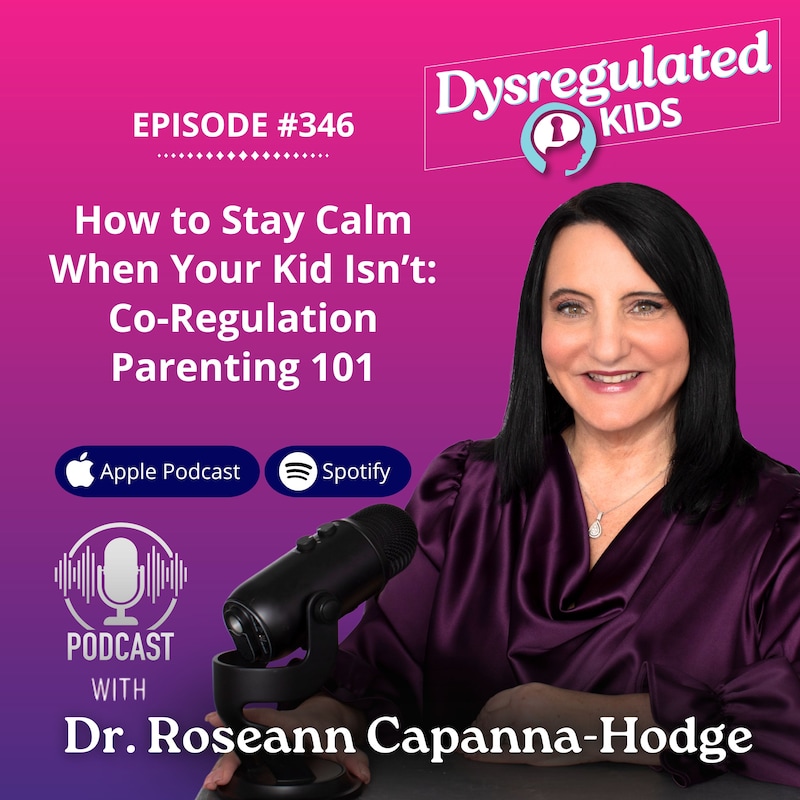
Co-regulation parenting helps children learn emotional regulation by borrowing your calm before they can create their own. In this episode, I explain why co-regulation parenting is one of the most powerful tools for reducing meltdowns, building resilience, and helping children develop lifelong emotional skills.
Some days it feels like your child's emotions are too big and your own stress boils over too. That's often co-dysregulation—two nervous systems stuck in survival mode together. The good news is that co-regulation parenting can help both you and your child return to calm.
In this episode, you'll learn:
• What co-regulation parenting really means
• Why children mirror your nervous system
• Practical ways to stay calm during emotional moments
• How co-regulation builds long-term self-regulation skills
Why does my child's meltdown affect me so much?
When your child is distressed, your nervous system naturally reacts.
This can be intensified by:
• Chronic stress and fatigue
• Past experiences and learned coping patterns
• Emotional overwhelm in the moment
Children often learn regulation through observation. Your calm presence teaches far more than words alone.
Behavior is communication.
It's not bad behavior—it's a dysregulated brain.
How can you stay calm during big emotions?
• Pause before reacting
• Take a deep breath and soften your body language
• Use a calm, steady tone
• Focus on connection before correction
Children feel safer when adults remain predictable and regulated.
Parent tip:
Kids don't simply hear calm—they experience it through your regulated presence.
Want practical tools that help stop meltdowns before they spiral?
Quick CALM provides step-by-step strategies that help children reset and return to regulation.
What are simple co-regulation strategies you can use today?
• Practice slow breathing together
• Use gentle, reassuring connection
• Model healthy emotional language
• Practice coping skills during calm moments
Co-regulation parenting isn't about fixing emotions. It's about providing safety, structure, and support while children learn to manage difficult feelings.
What if my child stays dysregulated?
• Track your own triggers and stress responses
• Stay present without rescuing or over-correcting
• Focus on consistency rather than perfection
• Seek additional support when needed
Research and clinical experience show that repeated experiences of co-regulation help children develop stronger emotional regulation skills over time.
You don't have to do this perfectly.
Every calm response, pause, and repair helps build resilience and emotional safety.
Get the FREE Regulation Rescue Kit and learn practical tools for handling difficult parenting moments with calm and confidence.
Become a Dysregulation Insider VIP at www.drroseann.com/newsletter
Need personalized next steps? Use the free Solution Matcher to discover brain-based support for ADHD, anxiety, mood challenges, and emotional dysregulation:
www.drroseann.com/help
Dr. Roseann Capanna-Hodge helps parents understand emotional dysregulation in children and teaches practical nervous system regulation and co-regulation strategies through her Regulation First Parenting™ approach.