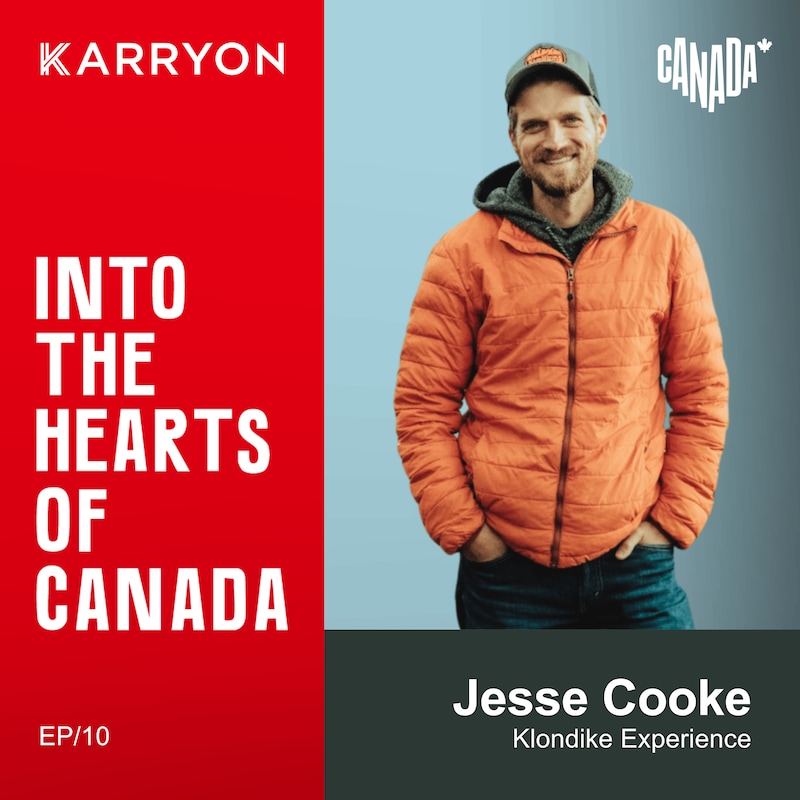
Shownotes
In this final episode of the series for Karryon Into the Hearts of Canada, hosted by Matt Leedham, we head into the Yukon, a territory that’s 80 per cent wilderness and seven times the size of Tasmania, yet home to only around 42,000 people.
In the heart of this vast northern landscape, Dawson City sits, a Gold Rush town rich in history, character, and wide-open space.
And it’s here that today’s guest, Jesse Cooke, has built The Klondike Experience — a locally owned transport and touring company connecting travellers to the Yukon’s seasons, stories and extraordinary wilderness.
From scheduled services to Tombstone treks and Goldfields tours, Jesse has created a business deeply rooted in the land and its surrounding community.
His journey is essential listening for anyone curious about northern travel and the realities of building tourism in one of the most remote regions on Earth.
Learn more about the Klondike Experience here
Into The Hearts of Canada is presented by Karryon, in partnership with Destination Canada.
Subscribe to Into The Hearts of Canada Podcast here
Visit: www.destinationcanada.com for more on Canada
Visit: karryon.com.au for more from Karryon
Presented by Karryon, Into the Hearts of Canada takes you beyond the guidebooks and into the heart and soul of one of the world’s most progressive travel destinations. Hosted by Karryon’s Matt Leedham, this 10-part series explores the people, places, and powerful ideas shaping the future of travel through a Canadian lens. From Indigenous knowledge-keepers and local changemakers to iconic landscapes and regenerative tourism pioneers, each episode offers an intimate conversation with the people reimagining what travel can be:
For the traveller, communities, and the planet. Whether you’re a curious wanderer or a travel professional seeking fresh insights, this podcast invites you to see Canada with new eyes and an open heart.
Into the Hearts of Canada is presented by Matt Leedham.
Mentioned in this episode:
ITHC midroll updated 14/07/2025
Transcripts
Carry on together in travel.
Speaker B:This podcast series is brought to you by Destination Canada.
Speaker B:A land of breathtaking natural beauty, meaningful experiences and warm, welcoming people.
Speaker B:Canada is a place where every journey connects you more deeply to nature, culture and community.
Speaker B:Start your journey today at www.keepexploring.com.
Speaker A:i first came up here for the adventure of it, right, and for the wide open spaces.
Speaker A:But then I stayed because of the culture and the people.
Speaker A:For me, what makes the Yukon feel so different is the way of life and the pace of life.
Speaker A:Just the way people interact with each other, genuine people and a lifestyle.
Speaker A:You can see people are living on the land here.
Speaker A:People are living in the communities.
Speaker A:We, we live with each other and we help each other out.
Speaker A:And you realize there's something even more special too, and that's the people.
Speaker B:Welcome to into the Hearts of Canada, the podcast where we share the stories of extraordinary people transforming tourism across this remarkable country.
Speaker B:I'm your host, Matt Leadham, checking in from Byron Bay on Bundjalung country.
Speaker B:Today we're heading into the Yukon, a territory that's 80% wilderness and seven times the size of Tasmania.
Speaker B:Yet amazingly, it's home to only around 42,000 people.
Speaker B:In the heart of this vast northern landscape sits Dawson City, a gold rush town rich with history, character and wide open spaces.
Speaker B:And it's here that today's guest, Jesse Cook, has built the Klondike Experience, a locally owned transport and touring company connecting travellers to the Yukon's seasons, stories and extraordinary wilderness.
Speaker B:From scheduled services to Tombstone treks and goldfields tours, Jesse has created a business deeply rooted in the land and its surrounding community.
Speaker B:His journey is essential listening for anyone curious about northern travel and the realities of building tourism in one of the most remote regions on Earth.
Speaker C:Well, good morning, Jesse, or should I say good evening to where you are.
Speaker C:And thank you so much for joining us on this episode of into the Hearts of Canada.
Speaker C:It's absolute pleasure to have you on board with us today.
Speaker C:And I think, look, that's a great starting point.
Speaker C:Are you joining us from today?
Speaker A:Hey, Matt, I'm in Dawson City, Yukon.
Speaker C:Whereabouts does it sit geographically and how would you describe Dawson and the place you live?
Speaker A:Okay, Dawson is north of Whitehorse.
Speaker A:Whitehorse is the capital of the Yukon.
Speaker A:It's just above the 60th latitude and you know, for a little more context, I guess the Yukon is right next to Alaska.
Speaker A:Of course, Dawson City is 550km north of of that.
Speaker A:So we're just below the Arctic Circle, really, just about in the middle of nowhere.
Speaker C:Well, it's quite apt because Yukon tourism, I know uses the phrase it's a different world up here, which I'm sure you can absolutely relate to.
Speaker C:So I mean from your perspective, what is it that makes Yukon feel so different from anywhere else on earth?
Speaker A:I always tell people I first came up here for the adventure of it, right.
Speaker A:And for the wide open spaces.
Speaker A:But then I stayed because of the culture and the people.
Speaker A:For me, what makes the Yukon feel so different is the way of life and the pace of life.
Speaker A:Just the way people interact with each other.
Speaker A:Just a different, a different pace of life, you know, genuine people and a lifestyle.
Speaker A:You can, you can see.
Speaker A:People are living on the land here, people are living in the communities.
Speaker A:We live with each other and we help each other out and it's that kind of lifestyle that I think sets us apart.
Speaker A:Not to mention like while I did mention the wide open spaces, the adventure, that's why it first came, right?
Speaker A:And that's, I think that's a draw for people.
Speaker A:Once you get here you realize there's something even more special too and that's the people.
Speaker C:You grew up in Windsor, Ontario, which is a very long way away from where you are now and incredibly different.
Speaker C:So what were your first impressions when you arrived?
Speaker A:Oh, wow.
Speaker A:You know how I first got here?
Speaker A:I was a student at the University of Ottawa.
Speaker A:We had a field course out here in Kluane which is just outside of Whitehorse.
Speaker A:And I got on a Greyhound bus and it was 100 hour bus ride from, from Ottawa to 100 hours and I had never seen a mountain.
Speaker A:I had never been west of Ontario before that.
Speaker A:And So I spent 100 hours on the bus and they dump you at the, just next to the Tim Hortons downtown Whitehorse at four in the morning.
Speaker A:And then you're on your own.
Speaker A:And then from there the adventure began.
Speaker A:I, I did a course in glaciology with the U of O.
Speaker A:Spent that first summer out here.
Speaker A:That's a long time ago now.
Speaker A:That's over 20 years ago.
Speaker A:I just had the time of my life and kept coming back a few summers in a row.
Speaker A:I did that bus ride again the following year.
Speaker A:I tried to paddle the entire Yukon river, it's 3,000 km long.
Speaker A:And tried to get all the way out to the Bering Sea with my cousin.
Speaker A:I do say tried because we didn't make it.
Speaker A:So we made it about halfway and pulled the plug on the trip.
Speaker A:Yeah, I hitchhiked all around Alaska that summer and I just kept ending up Back in Dawson City.
Speaker C:Well, it's quite a journey.
Speaker C: n your business, which was in: Speaker C:Which I loved reading.
Speaker C:And I think you were a musician and a teacher before that as well.
Speaker C:So, I mean, this is.
Speaker C:This is quite the story already.
Speaker C:Jesse, you're.
Speaker A:You're asking me all the.
Speaker A:I want to know.
Speaker A:I want to ask you where.
Speaker A:Like, how did you do your research?
Speaker C:Well, this was all the information that I found in my trawling of.
Speaker C:Of the Internet.
Speaker C:And really, I was really blown away by your backstory.
Speaker C:It's just.
Speaker C:It's just such an eclectic one.
Speaker A:So I was a teacher here in Dawson.
Speaker A:I taught high school, and I taught here for nine years.
Speaker A: And it was in the summer of: Speaker A:And I was thinking about that in those days, because I was thinking, hey, when I.
Speaker A:When I first got here, I got as far as Whitehorse, and there was no way to get up to Dawson, and I had to hitchhike to get up to Dawson.
Speaker A:And so I thought, well, why don't I start a little van company, right?
Speaker A:So it would be for anybody.
Speaker A:Anybody could get on there.
Speaker A:We had a website.
Speaker A:You could get yourself a little van, ride up to Dawson City.
Speaker A:And so that's what I did.
Speaker A:And as I say, I was teaching school in those days, so I had summers off and I had, you know, free time.
Speaker A:That's it.
Speaker A:I got a couple of vans and started running a bus service, and I met all kinds of people that way,
Speaker C:and I learned all kinds that way.
Speaker A:Oh, it was great.
Speaker A:It was great.
Speaker A:The passengers we had.
Speaker A:And over the years, of course, you know, we've expanded recently.
Speaker A:I mean, we do all kinds of things.
Speaker A:We operate year round and all kinds of different adventures, summer and winter.
Speaker A:It's been a lot of fun.
Speaker C:Yeah, it certainly looks like.
Speaker C:It certainly looks like you've grown the business exponentially over that time as well.
Speaker C:But what I'm hearing from you is that the central core to all of this was people.
Speaker C:You genuinely said you met so many fascinating people in those early days, and that was really what sort of drove you to, I guess, explore that side of the business even more.
Speaker A:You know, I don't know what you know about Northwestern Canada or Canadian history.
Speaker A:This is a relatively new place as far as, if you want to call it, contact, you know, like we have a rich, rich first nations history here.
Speaker A:A beautiful first nations history and culture.
Speaker A:But when you think about it, it's not all that long ago that outsiders, newcomers, if you will, grow it up.
Speaker C:Yeah.
Speaker A:My point there is that I've.
Speaker A:In those bus days, I've.
Speaker A:I've.
Speaker A:I've had passengers that grew up in the bush, you know, speaking their own language.
Speaker A:I got to ride around with elders that had stories like you wouldn't believe, living out on the land and Trapp.
Speaker A:And so it's not all that long ago that a lot of people out here were living that lifestyle.
Speaker A:And still today you see a lot of that.
Speaker A:So that was my favorite part about the bus days, was just driving around and hearing the stories of these people from the communities along the way.
Speaker C:Yeah, yeah.
Speaker A:Really cool.
Speaker C: In: Speaker C:How did that recognition influence your journey after that?
Speaker A:I was honored and surprised and touched.
Speaker A:That was a national award.
Speaker A:It was awesome.
Speaker A:But it's nice to get a recognition here and there along the way and just know that you're doing a good job and I guess know that you've been noticed and people are paying attention.
Speaker A:Just to say that I care a lot, I try really hard, and our business is well known and I think we are doing a great job.
Speaker A:So.
Speaker C:Well, I think it's inspiring, isn't it?
Speaker C:Not just for yourself, but for everyone else who works with you as well.
Speaker C:It's a great recognition, as you say, of doing good things.
Speaker C:Yeah.
Speaker A:Well, you mentioned.
Speaker A:And I didn't think that we'd be talking about myself in this way, but I'll just say one more thing.
Speaker A:I most recently got the employer of the year for the Yukon in Yukon tourism, too.
Speaker C:Wow.
Speaker C:Congratulations.
Speaker A:So, thanks.
Speaker A:So when you say, you know, the people that work with me too, we've got a great team here and I've got guides that have been with me for 10, 12 years now.
Speaker A:And it's a great atmosphere.
Speaker A:People love the job.
Speaker A:Our office is the Yukon.
Speaker A:We do the wide open spaces, we drive up the Dempster highway, we hang out the mountains and in the tundra with people.
Speaker A:And it's a lovely job.
Speaker A:So.
Speaker A:And it sounds a little cheesy, but I've always told people that my favorite part about the job is experiencing it for the first time over and over again, but through a new set of eyes.
Speaker A:Right.
Speaker A:So if you come out there as our guest and you're sitting in the passenger seat with me, we've got the same view, the wide open spaces up ahead.
Speaker A:We're driving the road together.
Speaker A:So it's the dream job.
Speaker A:Frankly, I love it.
Speaker C:You mentioned a couple of things there, but there is, without giving away your special secret sauce, are there any things in particular that you really, you know, you really feel strongly about that helped you win that award, do you think from the culture that you have there within the team or particular initiatives that
Speaker A:you might have done to be a great employer?
Speaker A:Our team here, that's what makes the business and that's ultimately that's what makes the experience as well for guests.
Speaker A:So I spend a lot of time thinking about that.
Speaker A:I guess the main thing is, well, it doesn't hurt to pay them well.
Speaker A:I mean, that's a great start and I ask a lot and I'm very, very demanding, frankly, as an employer.
Speaker A:When we get busy, we get really busy and there's a lot that needs to be done.
Speaker A:But then I think that in return I offer a lot of flexibility too.
Speaker A:And the main thing is I just treat everybody with respect and I see everybody as other human beings with lives and commitments and things on the go as well.
Speaker A:So try to take that all into account and just try to create an environment where, you know, that people want to be a part of and somewhere they want to keep coming back to.
Speaker A:So.
Speaker C:Yeah, well, congratulations.
Speaker C:It sounds like you've created a great culture there.
Speaker C:So.
Speaker A:Yeah, well, it's a lot of fun too.
Speaker C:Yeah, I can imagine.
Speaker C:I can imagine.
Speaker C:Now let's talk about the Klondike experience as a bit of a destination connector.
Speaker C:So again for listeners, you know, a lot of listeners I guess won't be that familiar with the Yukon necessarily.
Speaker C:What do your experiences offer there?
Speaker A:Our peak season is summertime and we're right on the doorstep of Tombstone Territorial Park.
Speaker A:So this is scenery and you know, an environment and landscape unlike anything else out there.
Speaker A:So we, you know, we do day trips and multi day trips into Tombstone and we can organize anything from, you know, road based, land based activities, day hiking, heli hiking and multi day camping back in the mountains, photography workshops and groups, groups, wildlife viewing, all that type of stuff.
Speaker A:We offer transportation of every kind.
Speaker A:So we do, you know, we work a lot with events and conferences and meetings, but you know, large tour groups and then, and then the very small as well.
Speaker A:So just your, your individual travelers coming through.
Speaker A:So I like to think we have something for everybody, but, but we started it as a bus company.
Speaker A:So I suppose our main, our main thing is transportation, facilitating transportation, getting to places but we're guides too, and we're great storytellers and, and we make things happen in the wintertime.
Speaker A:We focus on northern lights, the aurora borealis.
Speaker A:We've got snow machines.
Speaker A:We do snow machine adventures and, you know, snowshoeing and getting out on the land.
Speaker A:We're just big outdoors people.
Speaker A:And so the more you get out on the land and experience it, the better it sounds.
Speaker C:Beautiful.
Speaker C:I mean, can you give us a bit of a sense of the kind of wildlife we might see if we were to come with you on one of your tours as well?
Speaker A:Yeah, sure.
Speaker A:This time of year, for me, as we sit here and chat with each other, it's November.
Speaker A:It's late November.
Speaker A:Yep.
Speaker A:We've got grizzly and blackbird here.
Speaker C:Yes.
Speaker A:But they're all, they're all tucked in for the winter now and then moose and caribou.
Speaker A:So between moose, caribou and, and, you know, black bear and grizzly, those are your big animals that you can hope to see out here.
Speaker A:And then all the little critters, you know, all your fox and wolves and lynx and different birds of prey and it's.
Speaker A:It's great.
Speaker C:Yeah.
Speaker C:Gosh, so much, so much diversity.
Speaker A:Yeah, diversity in.
Speaker A:In terms of, in terms of wildlife and in terms of people, too.
Speaker A:Like, one of the things I love the most about the Yukon is I did touch on it earlier, the culture here, the people.
Speaker A:And another thing that we do a lot of is try to facilitate First Nation experience too.
Speaker A:So there's wonderful local people here that.
Speaker A:Whether it's medicine making workshops or storytelling or artists that want to share some of their life and their culture.
Speaker A:Yeah.
Speaker C:So can you give us a bit of a flavor of the kind of experiences that we could sort of expect to take part in or immerse ourselves in on one of your trips?
Speaker A:Yeah.
Speaker A:So Dawson City, a little more context.
Speaker A:Like we sit on.
Speaker A:On traditional territory of the trondhequichin people.
Speaker A:Most people around the world probably have never heard that name.
Speaker A:It's the, the local people here in the Trondhe Kwiczyn, they've been here maybe about 10,000 years.
Speaker A:And you know, traditionally the Tronic Kwiczin would be hunters and gatherers and, you know, and.
Speaker A:And along the way, of course, you know, they, they've picked up all kinds of traditions like, you know, willow weaving and basketry and the different arts and different medicine making.
Speaker A:And after all these years, that tradition is alive and well and the people here are happy to share it with visitors too.
Speaker A:So you might find yourself at a Woman's home in her studio in a wall tent, you know, weaving willow together and hearing stories about her grandparents.
Speaker A:Right.
Speaker A:And the old days, that kind of thing.
Speaker A:Or you might find yourself over at my place across river in a yurt, you know, doing a medicine making workshop with local elder or something like that.
Speaker A:So really hands on, really intimate and really real and authentic and, and that's, I think that's what people love.
Speaker A:Small groups and just a chance to connect with each other and beautiful experiences.
Speaker C:So I'm guessing for a lot of people, perhaps it's the first time they've even had that kind of experience with, with some of the first nations community or individual.
Speaker C:So can imagine the personal effect that it would have on you, on your travelers.
Speaker A:Oh absolutely.
Speaker A:Like I say, it's authentic and that's what people walk away with and that I think people are searching for that, that immersive, authentic experience.
Speaker A:You know, the Yukon may be, I, I don't know, maybe one of the last places in the world where it still exists.
Speaker A:It's.
Speaker A:And, and that's again, it's back to the, back to the people and back to the, the whole reason why, why I stayed here all these years so much.
Speaker A:Yeah, yeah.
Speaker C:Now when I was doing my research, I was, you know, I was blown away by the fact that Yukon is 80% wilderness with just 0.1% per square kilometer, which you know, is probably not, not that different from Australia.
Speaker C:That said, for Australian context, that's.
Speaker C:The Yukon is seven times the size of Tasmania, which is one of our states here in Australia.
Speaker C:And we're a big country.
Speaker C:But that is a, that's a huge difference.
Speaker C:So I mean, how does operating in a remote region shape the way that you run your tours?
Speaker C:I can imagine there's some, a lot of logistics there to work through and a lot of.
Speaker C:Awful lot of moving parts.
Speaker A:Yeah, absolutely.
Speaker A:I often say that the Yukon, the Yukon's about the size of France but it's got the population of maybe a couple of apartment blocks in Toronto.
Speaker C:Yes.
Speaker A:So.
Speaker A:Right.
Speaker A:So I mean 40,000 people, you can, you can fit, fit that many people in a few blocks in the big cities.
Speaker A:And of course there's great distances between which, which the Aussies know all about, don't they?
Speaker C:Sure.
Speaker A:Yep.
Speaker A:Yeah.
Speaker A:Yeah.
Speaker A:But of course out here, you know, you might have great distances and 40
Speaker C:below and a lot of changing seasons too as avenue as well is the other big thing.
Speaker A:Well, the big change too, like in seasons, of course.
Speaker A:We have nearly 24 hours of darkness in the winter.
Speaker A:And nearly 24 hours of daylight in the summer.
Speaker A:So that's a phenomenon unlike any other too.
Speaker A:So you asked about some of the challenges and logistics.
Speaker A:Dawson City is 500 plus kilometers north of Whitehorse and there's not very much in between.
Speaker A:So if you're driving well, that's a long way and you know, a spare tire is a must.
Speaker A:And a second, a second spare tire is a very good idea too because you're almost certainly going to use the first one, you know, so.
Speaker A:Right.
Speaker A:So supplies, you know, satellite communications, of course.
Speaker A:Yeah.
Speaker A:Long, long stretches with no cell phone communication.
Speaker A:And so there's, there's a real kind of self sufficiency that you need as a, as any traveler here.
Speaker A:You know, you've got to be ready for, for anything.
Speaker A:But Aussies generally are your adventurous people, as are Yukoners.
Speaker A:So.
Speaker A:And then as I said, in the winter, of course, it adds a whole other element with the temperatures.
Speaker A:Right.
Speaker A:So it's just about being prepared.
Speaker C:I think it's interesting because these are the logistical realities that nobody really necessarily thinks about certainly travelers so much.
Speaker C:You know, I think you're just going to turn up and do this great tour and no one's really knowing what's going on behind the scenes and all of those the dots that you've got to join up to make it a successful and seamless trip.
Speaker C:So I think it's a huge, a huge deal, particularly for, you know, the environments that you're operating in there.
Speaker A:I will add though too, Matt, that like, we're very well served by our local airline.
Speaker A:You know, everything's so far away.
Speaker A:It's true, it is.
Speaker A:But we've got this great airline locally that, that gets you to and from Dawson City and back and forth from Whitehorse to Vancouver and beyond.
Speaker A:And they serve all of Western Canada and even as far as Toronto.
Speaker A:So of course we're, we're a little remote, but everything's just a quick flight away now.
Speaker A:So.
Speaker C:Yeah, well, I think, yeah, for us Australians here, we'd absolutely be flying into Vancouver and then on to Dawson.
Speaker C:I don't think many of us will be taking on the 100 hour greyhound trip.
Speaker A:Absolutely.
Speaker C:All right, so let's talk about sustainability and again, thinking about the community here.
Speaker C:So how does the experiences and the business that you run there benefit the community there in Dawson, do you think?
Speaker A:Like I was saying before, we offer transportation, but then everything outside of that we partner with other local businesses.
Speaker A:So whether it might be a river tour operator, be a local museum or the, you know, the Restaurants, the hotel, the gift shops, and it goes on and on.
Speaker A:So one great example is just partnerships.
Speaker A:So I like to think that we bring a lot of business to the community that way, and we certainly would rather partner than try to do it all ourselves anyway, because everybody's got their expertise, whether it's culinary or accommodations or any other kind of experience.
Speaker C:And you mentioned a little bit before about Tombstone, the national park there, which looks phenomenal from the photographs I've seen.
Speaker C:And you talked about, you know, the first first nations aspect, of course, to that.
Speaker B:How do you approach the sort of
Speaker C:stewardship and responsible tourism side of that when you go into.
Speaker C:Into those areas?
Speaker A:Yeah, well, whether it's Tombstone Territorial park or anywhere else on Toronto, Kwitchin Traditional territory or anywhere else in the Yukon, I'd like to think that I approach it the same way.
Speaker A:It's a question of respect when you're in the park.
Speaker A:Of course, we have a license to operate in the park, and we have to abide by, you know, there are park rules, but these are same types of things that you would do anywhere else.
Speaker A:I would never want to just trample through the park with.
Speaker A:With hordes of people.
Speaker A:Right.
Speaker A:So we're a 1 to 12 guide to guest ratio, for example.
Speaker A:So we, We.
Speaker A:We use the park in small groups.
Speaker A:But I mean, anywhere you are out here, for me, it's a question of respect.
Speaker A:We're visitors on this land.
Speaker A:Not only the guests and the tourists, but myself, I'm a newcomer as well.
Speaker A:I've been here over 20 years, but I'm a newcomer to this land.
Speaker A:And.
Speaker A:And ultimately, we're all.
Speaker A:We're all guests here.
Speaker A:And so I've learned a lot from the local people over the years.
Speaker A:It's also ma like not just the physical presence on the land, but also the story that you're telling and the attitude that you have when you're out there, and the spirit of the place, too.
Speaker A:And so I guess what I mean by that is you don't just pass through a place and consume and take it all in.
Speaker A:You've got to experience it.
Speaker A:And so you've got to try to understand the backstory of the place, too, and the cultural significance of where you are and of your actions, too.
Speaker A:And so I try to bring a lot of that into our story storytelling, into our tours.
Speaker A:I like to think of myself and our guides as ambassadors between the guests and the place.
Speaker A:So I see stewardship that way, too.
Speaker A:Not only environmentally speaking, but culturally too.
Speaker C:And you mentioned that you touched on it a Little bit there.
Speaker C:But I can only imagine how much you've kept tweaking what you do based on everything you're learning all the time in terms of delivering that experience and the knowledge that you're gaining through all
Speaker A:of this as well, 100%.
Speaker A:When we first started, you asked earlier, you asked me a little bit about the journey and how we started.
Speaker A:And I told you it was a summer business and we had these couple of vans and.
Speaker A:But I'll tell you, I didn't know what I was doing.
Speaker A:And I tell this story often, so I'm not embarrassed to say that, you know, for example, I didn't have a park license, I didn't have the rent licenses, I didn't show what kind of paperwork.
Speaker A:You know, there's nobody out there to tell you no, of course, you know, so you learn as you go.
Speaker A:And we started just simply.
Speaker A:People would ask us, hey, can you get us up the Dempster Highway?
Speaker A:And so we just started bringing groups up the Dempster Highway.
Speaker A:But I didn't even really have a story to tell.
Speaker A:I was so new to this place.
Speaker A:And so over the years, yeah, of course, the experience has just gotten better and better because I'm fully immersed in this community.
Speaker A:I have been for 20 years and I'm raising my kids here.
Speaker C:Yeah, well, it'd be fair to say that a lot's changed in that 20 years as well, from a cultural perspective, from a, you know, society perspective, really, hasn't it?
Speaker C:Which was probably very different 20 years ago.
Speaker A:Yeah, hard to say, because I'll tell you, 20 years ago, I. I wouldn't have known.
Speaker A:I certainly wasn't paying attention to what travel trends were or who was doing what.
Speaker A:But I can tell you today it's.
Speaker A:It's adventurers.
Speaker A:It's people that really want to get off the beaten track and that have kind of been there, done that, and in some of the more traveled places and they're.
Speaker A:I think they're looking for that authenticity and that and that special experience that I've been talking about.
Speaker C:You must have had so many transformational moments from your travelers who've been on tours with you.
Speaker C:Are there any particular stories that stick out for you from travelers that have just had these huge, you know, life changing moments?
Speaker A:Yeah, there's been lots of moments as well.
Speaker A:It's actually more common than you think that people return to Dawson City, people that have had a connection to the Gold rush in some way.
Speaker A:So I would say that every summer I have the pleasure and frankly, the honor of Connecting with some folks that are retracing family history.
Speaker A:So I'll get to go on these special, unique.
Speaker A:These private tours where people want to find a particular claim.
Speaker A: great grandfather was back in: Speaker A:Maybe their family member was a store owner or a gold miner or something like that.
Speaker A:And we find these places and you might compare a black and white photograph with today's landscape, and you look up top on the hilltops and it's the same.
Speaker A:And, you know, you're in that spot and.
Speaker C:Yeah.
Speaker A:And you can just see the experience that the person.
Speaker A:Because people have very strong connection to family.
Speaker A:I think it's even stronger than we can understand, you know, scientifically.
Speaker A:But when your ancestor has been on that very same spot and you're standing there and you're taking in that same scenery that your ancestor, you know, so those experiences are always really nice.
Speaker A:So it's really cool to.
Speaker A:To experience that.
Speaker A:And then of course, there's.
Speaker A:There's people that have come, you know, for the northern lights, for example, and.
Speaker A:And, you know, maybe it would be a. Deceased family members.
Speaker C:Yeah.
Speaker A:You know, dream vacation that.
Speaker A:That never happened.
Speaker A:But then I. I get.
Speaker A:I receive a couple here that.
Speaker A:That comes here to kind of live out that dream for a.
Speaker A:A family member that never got the chance, you know, and then we're together in the middle of a.
Speaker A:A field in the middle of night underneath the aurora borealis.
Speaker A:So, like I say, I do re.
Speaker A:Experience it every time through new set of eyes.
Speaker A:So every traveler that comes and when they have that moment of awe and wonder standing there on a mountaintop alongside them, and so I get that feeling you're talking about that special moment.
Speaker A:I actually, I get that feeling all the time.
Speaker C:Oh, what an absolute gift that is to feel that.
Speaker C:Yeah, it's nature putting on its most brilliant show, isn't it?
Speaker C:Intertwined with the first nations culture and there's so much natural phenomena there to tap into sometimes there's probably no words
Speaker B:for it at all.
Speaker A:Absolutely.
Speaker A:And on that, I have nothing to add.
Speaker C:That's the end of our podcast.
Speaker C:We'll just end it.
Speaker C:I've never been to the Yukon.
Speaker C:I would absolutely love to visit.
Speaker C:I've been lucky enough to travel a little bit in Canada and see some of the different areas, but it just looks.
Speaker C:Yeah.
Speaker C:Just literally out of this world, as the slogan goes.
Speaker A:You've mentioned you've never been here.
Speaker A:I opened this up telling you, hey, you know what?
Speaker A:We are in the middle of nowhere.
Speaker A:We're way up by the Arctic Circle and that's all true.
Speaker A:And at the same time we're two and a half hour flight from Vancouver.
Speaker A:Folks from overseas will typically tie in a visit to the Yukon with something else in western Canada.
Speaker A:You're thinking Vancouver, Banff, Whistler.
Speaker A:You're thinking maybe a ski vacation, the Rocky Mountain.
Speaker A:Some of these destinations that your listeners probably know so well you come up to the Yukon and really the main centers here for visitors would be Whitehorse and Dawson City and a couple of days in each location you know you can spend easily in the summertime, spend a week or more and in the winter as well.
Speaker A:So it's for all the remoteness it's also very accessible.
Speaker C:The Yukon tourism have certainly done a brilliant job down under and promoting the Yukon particularly recently.
Speaker C:So I think there's a lot of interest so I think Europe absolutely going to see some more Aussies coming to say g' day pretty soon by the looks of things.
Speaker A:That's great.
Speaker A:Yeah, that's our favorite bunch of people.
Speaker C:Yeah, well very like minded like you say.
Speaker C:So let's just stay on that, on that sort of vibe for a second and you know we've got a lot of travel experts listening to this show and you've touched on this a little bit already.
Speaker C:But what kind of travelers are most drawn to the Yukon?
Speaker A:I'm going to say there's something for everybody and it's the truth.
Speaker A:Right.
Speaker A:Because it is increasingly accessible and the type of travelers coming everything from group tours and older folks, baby boomers, seniors to younger folks looking for adventure in the summertime paddlers are bigger, kayakers and hikers and outdoor enthusiasts, White Horse and Car CR Cross and now Dawson City have have vibrant mountain bike scenes.
Speaker A:Really nice trails people.
Speaker A:When I say paddlers I'm talking about there's the Yukon river but there's a whole network some really beautiful remote rivers.
Speaker A:So I think for a lot of canoers and kayakers it's a bucket list kind of a place.
Speaker A:And then there's the hiking and the big destinations for hiking are you know Kluane and Tombstone.
Speaker A:So the Hayes Junction area and the Dawson City area just world class trails and, and, and peaks and valleys and just you're up on the mountains past the, past the tree line and the subarctic tundra.
Speaker A:It's just unbelievable.
Speaker A:So definitely the outdoor adventures but then as I, as I said before the you know older folks and yeah frankly, frankly soft adventure and what I mean by that is yep world class scenery with the Comforts of a hotel stay.
Speaker A:Dawson City's got an award winning restaurant here locally and the, the food scene and Whitehorse is excellent too.
Speaker A:So.
Speaker A:So I do say there's something for everybody.
Speaker C:Yeah.
Speaker C:Soft adventure particularly is a very fast growing trend for us here in Australia as well.
Speaker C:I think it's a term that people generally know and yes, that's great to hear.
Speaker C:You got that covered as well?
Speaker A:Absolutely.
Speaker A:We take people out to our northern lights viewing site.
Speaker A:It's only a few kilometers from town.
Speaker A:You get there, you are in the middle of the woods.
Speaker A:We've got a campfire going, we've got a warming hut there.
Speaker A:Not a sound.
Speaker A:There's no light pollution.
Speaker C:Oh, wow.
Speaker A:Overhead you're just.
Speaker A:And of course you're just a 15 minute bus ride from your hotel.
Speaker C:Oh yeah, sounds beautiful.
Speaker C:Well, look, our last question today, Jesse, and it's something I love to ask all of our guests on this series is, you know, what's your message to the trade here, to the travel trade that is particularly, you know, about why travelers should come and say g' day to you guys over there?
Speaker A:Well, my message to the travel trade is come on and find out for yourself, Come visit, look me up and then I'll show you around and I'll tell you all about it.
Speaker A:And I would talk about authenticity and this pace of life and just meet the people, see the communities, get a feel for Yukonners.
Speaker A:I think you touched on it actually, Matt.
Speaker A:We have a lot more in common than you might think.
Speaker A:Australians just love it out here.
Speaker A:So you're going to meet some people and make some new friends and likely you'd probably come back a second time too.
Speaker C:Well, it sounds like you got a lot of repeat visitors coming back already.
Speaker A:Yeah, we have, yeah.
Speaker C:Yeah.
Speaker C:Beautiful.
Speaker C:I've enjoyed our conversation today, Jesse, immensely.
Speaker C:So thank you so much for taking part and having this chat and you know, huge congratulations to you on everything you've been able to achieve as well already.
Speaker C:It's, it's just really inspiring to hear and as I said before, I think you can look forward to welcoming a lot more Aussies to Dawson very soon, by the sounds of things.
Speaker C:And hopefully one day I'll get the chance to come and say g' day myself soon and we can go and head out to that campground for some s' mores and have a look at the, have a look at the, the lights there which would just be out of this world.
Speaker B:Jesse's story captures the Yukon spirit.
Speaker B:Rugged, welcoming and full of possibility.
Speaker B:His journey shows what happens when when passion meets place and how tourism in remote regions can thrive when it's grounded in community and respect for the land.
Speaker A:Carry on together in travel.






