Shownotes
Season #25 Episode#:47 Shaun Boyce & Bobby Schindler
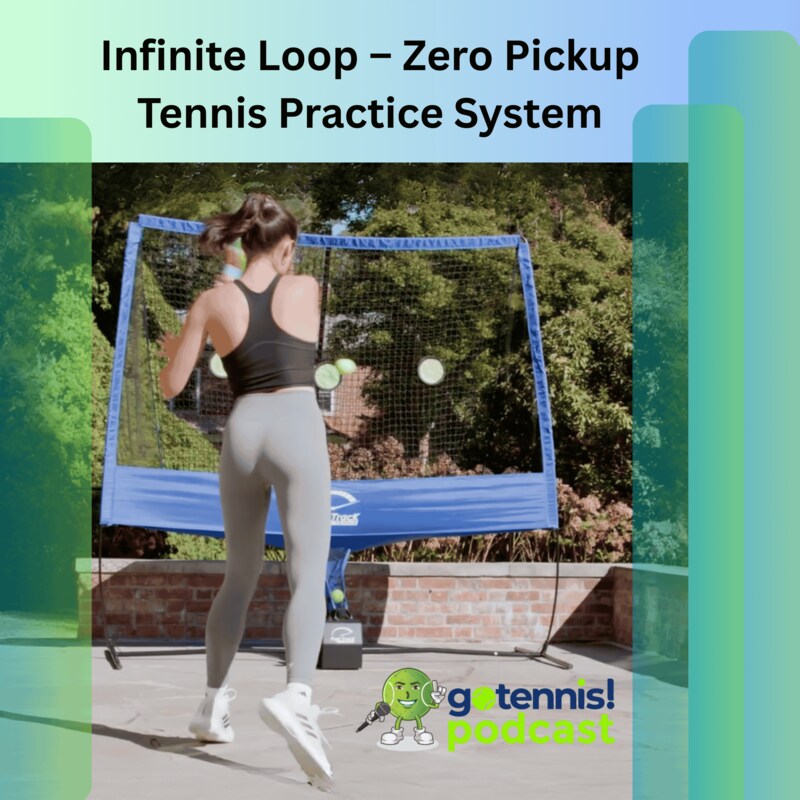
In today's episode, you'll discover the greatest tennis feedback system with Infinite Loop and Zero Ball Pickup. We talk to the inventor, John Davey. Have a listen and let us know what you think.
Be Our Next Guest
You can also share your actionable insights. If you are a racket sports coach, club manager, technology expert, industry insider, athlete, or just a tennis enthusiast who has some interesting tennis stories to share, we’re welcoming you! Maybe you have actionable tennis tips for beginners or pickleball tips for advanced players. You could be on one of the best tennis podcasts online. It's possible you have tennis news, pickleball news, or want to share a tennis product or pickleball paddle with our audience. You can visit https://americanracketsportsassociation.com/ and complete the podcast guest form.
Buy Your Fast Track Tennis System Here: https://letsgotennis.com/product/fast-track-tennis-feedback-system/
Full YouTube Video Interview: https://youtu.be/SFSHycYd3TQ
King of Tennis Answer:
Shaun Boyce USPTA: shaun@tennisforchildren.com
https://tennisforchildren.com/
Bobby Schindler USPTA: schindlerb@comcast.net
https://letsgotennis.com/windermere
Geovanna Boyce: geovy@regeovinate.com
https://regeovinate.com/
This podcast is powered by GoTennis!: Membership has its privileges
https://letsgotennis.com/
https://letsgotennis.com/join/
https://shop.letsgotennis.com/
https://letsgotennis.com/podcast/
Do you want to read about some good things going on in the world of tennis?
https://letsgotennis.com/stories/
Check out our GoTennis! Atlanta Facebook page for deals, updates, events, podcasts, news, stories, coach profiles, club information, and more
https://bit.ly/gt_facebook_page
Also, you can support this show (and save some $) by shopping at
https://letsgotennis.com/shop
Or, donate directly HERE
Want donate with Bitcoin? Here’s the address: 3EqTU1gQBLoieMeFLC1BQgCUajPpPMCgwB
Considering your own podcast? We (obviously) recommend Captivate: This podcast is hosted by Captivate, try it yourself for free.
Transcripts
(upbeat music)
Speaker:Welcome to the GoTennis! Podcast.
Speaker:Our conversations are uniquely engaging
Speaker:and our tips will help you to win more matches.
Speaker:Our mission is to keep you well informed,
Speaker:give you what you need to improve your game
Speaker:and help you save money.
Speaker:We invite you to become a GoTennis! Premium member
Speaker:and join our community today.
Speaker:(upbeat music)
Speaker:Hey, hey, this is Shaun with the GoTennis! Podcast,
Speaker:powered by Signature Tennis.
Speaker:Check out our calendar of Metro Atlanta Tennis events
Speaker:at LetsGoTennis.com.
Speaker:And as you're listening to this,
Speaker:please look in your podcast app
Speaker:where to leave a review and do that for us.
Speaker:We would love to earn your five-star reviews.
Speaker:And now let's get into our recent conversation
Speaker:with John Davey.
Speaker:John invented an infinite feedback loop for tennis players
Speaker:and you have got to check it out.
Speaker:You can now practice indefinitely
Speaker:without picking up balls.
Speaker:Have a listen and let us know what you think.
Speaker:(upbeat music)
Speaker:John Davey, thank you so much for making time.
Speaker:I really appreciate it.
Speaker:Looking forward to hearing about the fast track
Speaker:and I wanna start with our first question,
Speaker:which is who are you and why do we care?
Speaker:- That's an interesting question.
Speaker:All right, well, if you ask my kids or my wife,
Speaker:they probably just tell you that,
Speaker:I'm some sort of old fart idiot,
Speaker:but who I am is I'm an entrepreneur
Speaker:who's invented a really cool device
Speaker:that makes it easier, faster, less expensive
Speaker:and more fun to learn, practice and play tennis.
Speaker:- Easier, faster, more fun.
Speaker:- Okay, let's use our all good words.
Speaker:- Yeah.
Speaker:- For a product.
Speaker:- Yeah, that's it.
Speaker:- Okay, so tell us about the product.
Speaker:So if you're not gonna say I'm very interesting,
Speaker:which is good, a lot of people don't,
Speaker:what's interesting about the product.
Speaker:Tell us about you've got a unique product
Speaker:and we love it already, but tell the audience about it.
Speaker:- Yeah, I mean, look, I could spend hours talking about it.
Speaker:Appreciate the opportunity to be here and share with you.
Speaker:As you said, you guys have seen it.
Speaker:What it is is it's kind of a hit capture return system, right?
Speaker:So it's a solo training device,
Speaker:kind of like a simulator where you hit a ball into the net.
Speaker:It drops back down, little ball machine pops it back out again,
Speaker:you hit it back in, so it's like a continuous loop.
Speaker:You can set it up anywhere you want.
Speaker:It's really designed to go into a driveway,
Speaker:a garage, a basement, something like that.
Speaker:It doesn't have to be on a tennis court
Speaker:and it works on a small footprint.
Speaker:So the notion is that you can practice anytime,
Speaker:anywhere, because tennis traditionally,
Speaker:you haven't had that option, right?
Speaker:There's maybe that ball on the rubber band that you see.
Speaker:- The ball on a string.
Speaker:- Yeah, or ball on a stick.
Speaker:There's a few of those that are out there,
Speaker:but this is more dynamic.
Speaker:And then basically, you can hit it as hard as you want.
Speaker:I've worked with guys at MIT.
Speaker:I've worked with designers, engineers
Speaker:to kind of come up with this whole thing.
Speaker:We've got a patent on it, which is really cool.
Speaker:But basically any level player, whether you're a beginner,
Speaker:I get high level players, they'll come and they'll hit it,
Speaker:we'll soft into the net and I'll say, come on,
Speaker:I can hit it harder than you can.
Speaker:And I show them and then they start ripping it.
Speaker:And so it's designed so that any level player
Speaker:can really work on it.
Speaker:And not to similar to say, you've seen this Spanish method,
Speaker:right, where coaches are hand feeding balls, right?
Speaker:So it's very much like that, where you can be just,
Speaker:hitting balls and working on your technique.
Speaker:And then we've got some really cool software
Speaker:that does ball tracking.
Speaker:So that you can see where the ball would have landed
Speaker:on a real court, it tracks your ball speed, your spin.
Speaker:We've got a leaderboard game where you can be playing against
Speaker:anybody anywhere in the world.
Speaker:We've got coaching videos.
Speaker:So it's really kind of a comprehensive tool
Speaker:for learning, practicing and playing tennis.
Speaker:- I couldn't have said it better myself, which is good,
Speaker:'cause it's your job to say it well.
Speaker:I think I've had a couple of conversations
Speaker:where the guys looked at me and said, Sean,
Speaker:that well described, but I don't need to say it again.
Speaker:Bobby, we've played with this a little bit.
Speaker:Where would you, what do you wanna ask John?
Speaker:Like if there's some secret, I mean,
Speaker:it's pretty straightforward and easy to use
Speaker:and we've loved it.
Speaker:- Well, absolutely.
Speaker:I mean, when I found it, I was like, whoa,
Speaker:this is really cool.
Speaker:Again, the footprint is small.
Speaker:Even the little nuances and it's evolved
Speaker:since our initial conversations with John,
Speaker:as he's gotten more into the software side of it.
Speaker:But even from the simplicity of, you develop a tempo.
Speaker:As a coach, you always tell the kids, stay on tempo.
Speaker:Say, just the rhythm that the ball machine makes
Speaker:creates a tempo and it's a subtle thing,
Speaker:but you're even getting that out of
Speaker:by hitting on this and, hey, anytime you get more reps
Speaker:as a coach, you're always excited about it.
Speaker:It's a great workout and as I tell people,
Speaker:as you get older, it sure beats the hell out of the elliptical.
Speaker:We did the little promotional video for our fan festival.
Speaker:I think I hit with it for two minutes while I was talking
Speaker:and I was like, I'm tired, I'm good.
Speaker:And we were doing, I was not standing in one place.
Speaker:So I think you can get out of it pretty much anything
Speaker:you want, you put into it.
Speaker:We put it out at the fan festival.
Speaker:It was the hit of it, of course,
Speaker:having your two-year-old son out there hitting into it
Speaker:as well was a great selling tool.
Speaker:It's always good to be able to sell your children.
Speaker:But yeah, our biggest disappointment down here
Speaker:is we've had a bad winter.
Speaker:So every time that we've subsequently thought about
Speaker:putting it out, I've got a few people coming.
Speaker:We've either been frozen or rained,
Speaker:but looking forward to the spring.
Speaker:And as we said, speaking to some folks
Speaker:who are in the industry that want to pony onto it
Speaker:and make it even bigger.
Speaker:So we're fired up about it.
Speaker:- Yeah, a couple of things there,
Speaker:just to highlight what you were saying,
Speaker:the rhythm, ball comes out every three seconds.
Speaker:So that's 20 shots in a minute, right?
Speaker:Which is really incredible when you think about,
Speaker:you could spend an hour and get 1200 hits, right?
Speaker:No one's gonna do that.
Speaker:Your arm's gonna fall off before you hit 1200 balls.
Speaker:Average point in tennis is what, maybe, six, seven shots.
Speaker:So you're not used to getting this kind of reps.
Speaker:It's also timed in that sense, three seconds,
Speaker:where Bobby, if you and I were playing,
Speaker:obviously you hit it much faster than I do.
Speaker:But if I hit 1,000, 2, 1,000, 3, 1,000 hit,
Speaker:so it's timed to replicate what it would be like
Speaker:hitting on a court.
Speaker:And then if you throw some footwork cones
Speaker:and things in there, you can get an amazing workout.
Speaker:And again, it doesn't have to be on a tennis court.
Speaker:It can be in your basement or your driveway.
Speaker:So that's the whole point to it.
Speaker:Yeah, John, sorry Bobby.
Speaker:John and I, I think I exchanged a video with you
Speaker:where we were at Bobby's facility
Speaker:with a bunch of 10 and under beginners.
Speaker:And we had them put them in a line doing split step pivot,
Speaker:hit the ball into the net and then go to the back of the line.
Speaker:Split step pivot, hit the ball on the net.
Speaker:And it's a coach, a single coach can work with more players.
Speaker:So the coaches can use it in really unique ways.
Speaker:The kid misses the net, they gotta go get it.
Speaker:And it's actually sometimes harder than people think
Speaker:to hit a ball straight ahead into that target.
Speaker:And you've got targets that we can put out onto the net.
Speaker:But Bobby would want to connect this.
Speaker:We've talked about connecting it with the high school coaches.
Speaker:And I want to bring that in because, John,
Speaker:you've told us you've even had some high school coaches
Speaker:do some essentially coaching in your apps.
Speaker:So you've got three different apps.
Speaker:Can you tell us about those?
Speaker:Yeah, so the whole premise behind this
Speaker:is learn, practice, play.
Speaker:And one of the initial reactions that I've gotten
Speaker:was when I first rolled us out was some of the more salty tennis
Speaker:pros would say, well, you're not practicing the right way.
Speaker:You can practice poorly and the ball doesn't land on the quarter.
Speaker:I want to see where the ball lands.
Speaker:So that's why we kind of came up with the whole software.
Speaker:So you virtually, you can see where the ball would have landed
Speaker:with spin and speed.
Speaker:But part of it also is people can go on YouTube, watch a video,
Speaker:and then they can kind of--
Speaker:like when I was growing up, you watched the US open and Wimbledon,
Speaker:and then you went out and practiced it.
Speaker:Right?
Speaker:Yeah, that's kind of what you did.
Speaker:Nowadays, you can go to YouTube.
Speaker:But I put together an app where we have coaches
Speaker:who've done short videos instruction.
Speaker:And it doesn't have to be just using the FastTrack machine.
Speaker:But you can certainly use it to practice.
Speaker:And on that video or on that app, and it's called FTT Learn,
Speaker:FTT Practice, FTT Play.
Speaker:So Learn Practice Play, FTT, of course, is FastTrack tennis.
Speaker:But we've got an interview with one coach in particular
Speaker:who's out in Michigan.
Speaker:And he's used this thing.
Speaker:And he's bringing kids from elementary school up the curve
Speaker:so fast, and he's building his high school program,
Speaker:getting more people into it.
Speaker:And so what I'm trying to do is just create kind of that platform.
Speaker:And like you say, Sean, people can figure out how to use it.
Speaker:I mean, that's not my job to tell you how to use it.
Speaker:And it's interesting.
Speaker:I get videos from people doing stuff like,
Speaker:I never would have thought of that in a million years.
Speaker:But it's pretty good idea.
Speaker:So that's what's kind of fun about this.
Speaker:But I want to give everybody the tools
Speaker:that they can learn, practice, play tennis better.
Speaker:And again, the denominator here is that tennis is a technical sport.
Speaker:You need to get a lot of repetitions in order to get better.
Speaker:And if we can do that, guess what?
Speaker:People are going to stick with the game.
Speaker:People don't like doing stuff that they're not good at.
Speaker:So let's let them get better quicker.
Speaker:And guess what?
Speaker:They're going to need new shoes and new rackets
Speaker:and get their rackets restrung and the whole thing.
Speaker:So the app strategy is super cool.
Speaker:We use computer vision for ball tracking.
Speaker:That's why we've got these orange balls
Speaker:so that the camera can see the ball in 3D space
Speaker:and track where it would have gone.
Speaker:We're tracking the spin on the ball
Speaker:so you can get your spin rate.
Speaker:So any kid that's wanting to see how fast
Speaker:am I hitting the ball?
Speaker:How much RPM?
Speaker:Am I getting--
Speaker:Oh, they care about you.
Speaker:That's it.
Speaker:People are like, well, I want to know my score.
Speaker:I'll go to a tennis lesson, kind of like what you showed me.
Speaker:And kids will line up 15, 20 deep because they want to get
Speaker:their turn and they want to see what their score is.
Speaker:So we're working on that, the hardware and the software.
Speaker:And it's really cool.
Speaker:And Bobby, I think I knew where you were going earlier.
Speaker:Sorry to interrupt.
Speaker:With watching the coaches, Bobby's
Speaker:got a facility where the high school coaches come out
Speaker:and they're working with the kids.
Speaker:Well, many of the high school coaches
Speaker:aren't professional tennis coaches.
Speaker:They are teachers that are helping
Speaker:and they are organizing.
Speaker:And they don't have something that just helps in a way
Speaker:that this fast track can.
Speaker:Bobby, we've seen some coaches out at your facility
Speaker:that just they can't really feed a ball.
Speaker:They're not able to really do all the things they can do.
Speaker:And I know Bobby's got ideas.
Speaker:Like this can change high school tennis.
Speaker:Well, let me interrupt for just a second there.
Speaker:Guys, is that I spent a lot of time on the road now going
Speaker:to I just got back from Texas.
Speaker:They've got something called TTCA Texas
Speaker:Tennis Coaches Association.
Speaker:650 high school coaches go to this.
Speaker:I'm heading out to Michigan next week.
Speaker:And Missouri, Illinois, I've been to Wisconsin, Ohio,
Speaker:Indiana.
Speaker:A lot of states have these high school tennis
Speaker:coaches association meetings because, like you say,
Speaker:it's the math teacher who also coaches.
Speaker:They don't have the resources.
Speaker:So when they see the fast track tennis,
Speaker:they say, oh my god, I can set this up in the gym
Speaker:for the hallway for when it's raining out.
Speaker:Preseason rehab, you name it.
Speaker:High school is definitely a place
Speaker:where we're getting a lot of traction right now.
Speaker:Probably I can see this at your place.
Speaker:I mean, and you think about I love the fact just
Speaker:do that as John said, the math.
Speaker:And we all use the mythical 10,000 hits.
Speaker:You can get that in eight days.
Speaker:If you paid eight hours, you'd be at your-- now, again,
Speaker:we can argue semantics of whether or not
Speaker:they're going to be-- but it hits all the buttons.
Speaker:You're getting your reps, videotape yourself, watch.
Speaker:You can-- which the kids don't do enough of.
Speaker:They don't watch enough tennis.
Speaker:So they don't see a personal balance.
Speaker:The things that we take for granted.
Speaker:So you're getting that immediate reinforcement
Speaker:and the great part about it for the adults per se.
Speaker:You can do this.
Speaker:It fits the footprint fits in your basement in your garage.
Speaker:You can do it with music on by yourself.
Speaker:So while you're going through the beginning of the S curve,
Speaker:nobody's seeing it.
Speaker:So you can go home in your cramming all the time
Speaker:from one week to the next.
Speaker:Your ability is jumping and people are like, well,
Speaker:what the heck is going on?
Speaker:Well, I didn't want to tell you because it's my secret.
Speaker:Well, this is what I got.
Speaker:And down here, especially with the folks that we deal with,
Speaker:they financially, it's not a question.
Speaker:A ball machine, a couple of thousand dollars,
Speaker:gets into a realm.
Speaker:This-- and it gives you the feedback with the software.
Speaker:This is the slam dunk down here.
Speaker:Like I said, our biggest--
Speaker:of course, we get the winter from Hades.
Speaker:But we're excited I've taken this to a new level
Speaker:because I just see it as just having
Speaker:seen it at the fan festival, such as centerpiece
Speaker:as an attention grabber.
Speaker:And forget about just high school.
Speaker:I would love to see my daughter went through how many years
Speaker:of school and didn't do gym.
Speaker:My god, this should be in elementary schools.
Speaker:Forget about high schools.
Speaker:Just let the kids do something during the day.
Speaker:They don't sit still.
Speaker:Well, they don't do anything.
Speaker:Here you go.
Speaker:Let them go hit a ball for 10 minutes.
Speaker:They'll slow down a little bit.
Speaker:So it's got so many opportunities that we have looking forward
Speaker:to really working with the folks who've
Speaker:already demonstrated the huge interest.
Speaker:So one of the things that I talk about a lot
Speaker:is this notion of--
Speaker:I mean, you guys talking about high school teachers.
Speaker:We're also coaches.
Speaker:All those high school teachers give homework, right?
Speaker:I mean, that's not a foreign concept.
Speaker:I talk about when my kids were younger,
Speaker:they'd take piano lessons.
Speaker:They'd go to the ladies' house, learn something,
Speaker:and then she'd say, go home and practice.
Speaker:And that's never been sort of a viable option with tennis,
Speaker:right, other than that ball-on-restring kind of thing.
Speaker:So that's really what this is.
Speaker:Is that now you can go--
Speaker:guy who's taking tennis lessons maybe once a week, twice
Speaker:a week at most, right?
Speaker:Doing a group lesson on Saturday and Tuesdays.
Speaker:What are they doing the other five days?
Speaker:Well, they can be home hitting balls
Speaker:so that then when they get back to the next lesson,
Speaker:they're progressing quicker, right?
Speaker:There's not as much review.
Speaker:And this whole notion of not having to spend time picking up balls,
Speaker:that's really what I'm trying to do.
Speaker:Is make it, like I said, easier, faster, less expensive,
Speaker:more fun to learn, practice, and play tennis.
Speaker:I think that's a winning combination.
Speaker:I mean, obviously, so do you.
Speaker:You're doing it.
Speaker:And one of the things we love about it is that,
Speaker:say, like Bobby said, most people at this price point,
Speaker:it's not a problem.
Speaker:Do you suggest that I raise my prices?
Speaker:Is that what you guys are doing?
Speaker:I am not in a place to give you business advice, John.
Speaker:But I'm happy to help you get it into the market here.
Speaker:Well, I will tell you this.
Speaker:Price is very much, it's very important to me, not in terms
Speaker:of maximizing revenue or profits, but in terms of keeping
Speaker:it at a price point where everybody can afford this.
Speaker:And now, obviously, tennis players are generally
Speaker:more affluent.
Speaker:But my sort of passion project here is that I want to get this
Speaker:down into places where it's not traditional, right?
Speaker:Where you can get kids that maybe can't afford to do
Speaker:the traditional path, take lessons and summer camps,
Speaker:and all that kind of stuff.
Speaker:So I am doing everything I can to keep the price
Speaker:as affordable as possible for everybody.
Speaker:My wife thinks I'm crazy, but you guys obviously are probably
Speaker:more in her camp.
Speaker:But no, I'm working hard to keep the price where it is.
Speaker:Well, we appreciate that.
Speaker:But you've got to pay your bills.
Speaker:A business is a business.
Speaker:And it isn't necessarily always, especially in the tennis
Speaker:world.
Speaker:It isn't always how much money you can make.
Speaker:A business's job is to stay in business.
Speaker:So as long as you're doing that and you can keep your price
Speaker:point where it is, we can find creative ways
Speaker:to continue to sell.
Speaker:So if your margins are there, we can talk business.
Speaker:That's fine.
Speaker:But in this case, it's more of a sales pitch to our audience
Speaker:to say, hey, guys, this is a really cool thing.
Speaker:Right now, before John raises his prices
Speaker:after this conversation, you can go get 20 bucks off
Speaker:at our website.
Speaker:But I think about things like our Gotenis Foundation,
Speaker:Bobby, where one of our initiatives
Speaker:is to get equipment to high school coaches.
Speaker:This is easy because it's cheaper than a ball machine.
Speaker:It's more efficient to carry around.
Speaker:It's easier to store.
Speaker:And let's say 100 of these go to 100 high schools.
Speaker:The only problem there is you should have five per high school,
Speaker:because you can set them out on the court.
Speaker:And more kids can do more work.
Speaker:So John, we're all in.
Speaker:We don't have to ask the question of,
Speaker:why are you unique in the industry?
Speaker:Because the product answers that question itself.
Speaker:And we love what's going on in the direction you're taking.
Speaker:Well, I appreciate that.
Speaker:And I've been working hard on this.
Speaker:Certainly, it hasn't been without.
Speaker:It stumbles along the way and some issues here and there.
Speaker:And making a consumer product is hard.
Speaker:No doubt about it.
Speaker:Adding in software makes the degree of difficulty even higher.
Speaker:But I've been committed to this, and I am committed to it.
Speaker:So the results that I'm seeing from people that use it
Speaker:and are getting better quicker, the interest
Speaker:that I'm getting globally is outstanding.
Speaker:So I'm loving working with guys like you.
Speaker:And I appreciate having the opportunity
Speaker:to be on this and to work with you guys.
Speaker:Bobby, you got anything else you want to chat with John
Speaker:about before I hit him with King of Tennis?
Speaker:I just think about how I would have done this as a child
Speaker:listening to ACDC.
Speaker:I can still shoot eight out of 10 baskets.
Speaker:Because if I could do it by myself, I was golden.
Speaker:I just needed another person with tennis.
Speaker:So it's so many buttons.
Speaker:And John, having been a poor kid and knowing
Speaker:his financial stress that he put on my family
Speaker:to put me into the limited that I did play,
Speaker:we appreciate the fact that you're thinking about big picture
Speaker:and helping folks out.
Speaker:Because if you certainly could, you do have room to wiggle.
Speaker:But we like where it's at right now.
Speaker:Well, I'll just leave you guys with this statistic,
Speaker:is that the industry--
Speaker:I don't know, I've seen varying statistics anywhere
Speaker:from 10 to 20 million tennis players in the US,
Speaker:which basically tells me--
Speaker:that's a fine niche market.
Speaker:But what that tells me is that there's probably--
Speaker:what's that leave?
Speaker:330, 340 million people that don't play tennis?
Speaker:I like that market.
Speaker:And so if we can make it easier for people to come up the curve,
Speaker:that's gold.
Speaker:So my strategy is long-term greedy.
Speaker:I'm not trying to cut and run here.
Speaker:I want to build something that really works.
Speaker:It has efficacy to it.
Speaker:And people enjoy and like.
Speaker:And so that's what I'm doing.
Speaker:It's cheaper than a palaton.
Speaker:It's cheaper than a stand-ass--
Speaker:and the statistics say tennis players live longer.
Speaker:So it's a great combination.
Speaker:And you can do it in the privacy or home.
Speaker:Home home, nobody's going to see you do it.
Speaker:So it's a great way to get exercise.
Speaker:Totally great.
Speaker:Well, and John, again, thank you for thanking us.
Speaker:But we appreciate you being here as well,
Speaker:because we want this out there.
Speaker:I also love the idea.
Speaker:And I would call this potentially
Speaker:gamifying beginner tennis as well as giving somebody
Speaker:a chance to just poke the ball back in the net
Speaker:and just get that going.
Speaker:I'm looking forward in the spring to getting our two-year-old
Speaker:on it.
Speaker:Because right now, he's got the little foam balls
Speaker:and the pickle ball paddle.
Speaker:And I think he's going to love this thing.
Speaker:Anything that shoots a ball at him infinitely,
Speaker:he's going to be fine.
Speaker:But I do want to ask the question that I hope you know
Speaker:is coming to find out.
Speaker:It's my favorite question.
Speaker:We love to ask at the end is, if you were king of tennis,
Speaker:and I would guess other than the obvious of everybody
Speaker:go by my product, if you were king of tennis,
Speaker:whether it's the whole world, just your area, just
Speaker:the United States, professional, social, anything,
Speaker:if you were king of tennis, is there anything
Speaker:you would do or change?
Speaker:You mean like get rid of pickle ball?
Speaker:Something like that.
Speaker:That is an idea.
Speaker:Yes.
Speaker:You know, look, it's an interesting question.
Speaker:And I guess from my standpoint, lower the cost,
Speaker:flatten the learning curve, compress the timeline,
Speaker:do the things that I'm trying to do.
Speaker:So I guess, I won't say I am the king of tennis.
Speaker:I'm maybe more like the Joker.
Speaker:But those are the things that I think are important
Speaker:to grow in the game.
Speaker:And that's my mission, right, is to make tennis available,
Speaker:make it easier, faster, less expensive, more fun
Speaker:for people of all backgrounds so that everyone can enjoy
Speaker:the rewards of playing tennis.
Speaker:And like you say, the research shows.
Speaker:You play tennis, you live longer.
Speaker:So if I were king, that's what I would do, which I'm doing.
Speaker:That's even better, Bobby.
Speaker:Do we have the numbers?
Speaker:We have the percentage on king of tennis
Speaker:that the answer either actually does even
Speaker:have potential to happen.
Speaker:But also, he's actually doing it.
Speaker:He's working toward his own goal.
Speaker:We're not even just-- we're accomplishing it.
Speaker:This is a first, I think.
Speaker:Yeah, this is a big, high first one.
Speaker:That's good.
Speaker:Well, John, great answer.
Speaker:Love it.
Speaker:And we're happy to help as much as we can.
Speaker:Look, you're talking to the company.
Speaker:So if somebody has a problem, they call me, they get me.
Speaker:I'm a small business.
Speaker:And so word-of-mouth is great.
Speaker:I love getting feedback from people,
Speaker:posts on social media, that kind of stuff,
Speaker:and tell your friends.
Speaker:But basically, this is something that--
Speaker:Bobby, I would have worn it out too.
Speaker:I made it for me when I was 12 years old.
Speaker:But it's not just for little kids.
Speaker:I mean, I've got women with babies.
Speaker:I've got older people that their knees are not what they used to be.
Speaker:So it kind of runs the gamut.
Speaker:And I hope that more people can try it out.
Speaker:And I hope we get more people playing tennis.
Speaker:Well, there you have it.
Speaker:We want to thank reGeovinate.com for use of the studio
Speaker:and signature tennis for their support.
Speaker:And be sure to hit that follow button.
Speaker:For more racket sports content,
Speaker:you can go to LetsGoTennis.com.
Speaker:And while you're there, check out our calendar of events,
Speaker:great deals on racket sports products, apparel, and more.
Speaker:If you're a coach, director of any racket sports,
Speaker:or just someone who wants to utilize our online shop,
Speaker:contact us about setting up your own shop collection
Speaker:to offer your branded merchandise to the racket sports world.
Speaker:And with that, we're out.
Speaker:See you next time.
Speaker:[MUSIC PLAYING]
Speaker:[MUSIC PLAYING]
Speaker:(soft music)






