Shownotes
📺 Watch the Video on Spotify, YouTube & Rumble
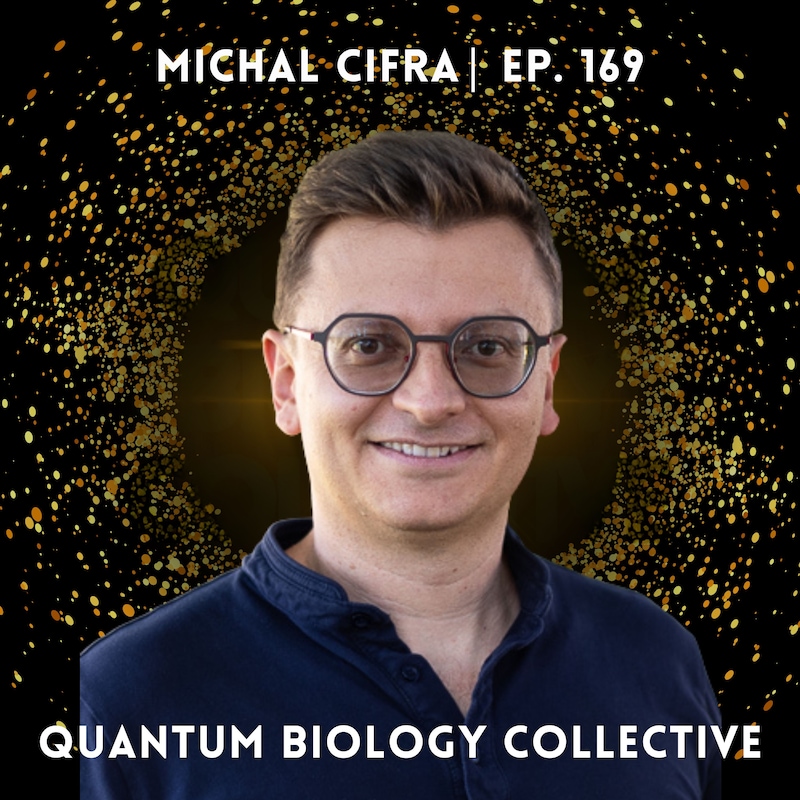
“It is his dream to democratize it,” says Meredith Oke, introducing electromagnetic biophysicist Michal Cifra and his vision to build a Global Human Biophoton Atlas on the Quantum Biology Collective Podcast. What if measuring the invisible light our bodies emit—a phenomenon called “biological autoluminescence”—could reveal how healthy and resilient we truly are?
In this eye-opening episode, Michal Cifra, team leader at the Czech Academy of Sciences in Prague, explains the startling reality: every living organism emits light, not metaphorically, but in actual, measurable photons. Drawing from nearly two decades of research (and hands-on stories of sleeping in darkrooms to measure his own glow), Michal Cifra reveals how these emissions aren’t merely curious side effects: they correlate with stress, age, illness, and even our state of mind.
But Michal Cifra reaches further—his new project invites practitioners and the public worldwide to help map human biophotonic emissions. Imagine having a non-invasive marker for true biological age or systemic health, tracked across the globe. Could monitoring our “shine” become the next revolution in preventative medicine?
Tune in to the Quantum Biology Collective Podcast for a deep dive into cutting-edge biophysics, the mysteries (and limits) of cellular light communication, and the chance to participate in the dawn of a new health paradigm—where your body’s inner light just might be the key to longevity and wellness.
Memorable Quotes
"There is a physical light being emitted directly from the object. If you put your hand under a sensitive camera, you will see exactly the same shape of the light, with some interesting details—there’s a spatial property, so the light is not always completely homogeneous in intensity. It is real, measurable light, though so weak we cannot see it with the naked eye."
"As we age, we shine more. Our dominant hand tends to shine more. The extremities—feet and hands—tend to shine more than flat surfaces. People who are stressed shine more, while long-term meditators typically shine less. It’s tightly coupled to oxidative stress and our body's ability to maintain homeostasis."
"My ultimate goal within 15 years, by the end of my career, is to have a million subjects measured all over the world using an ambassador network and collecting this data. That way, everyone will know that organisms emit light, and we can start from there, thinking further."
Connect with Michal
Instagram: https://www.instagram.com/michal.cifra/?hl=en
LinkedIn: https://www.linkedin.com/in/michal-cifra-5a5a5437/
Connect with The Reverse Aging Club:
On Substack: reverseagingclub.substack.com
Visit The Reverse Aging Club: reverseaging.club
Join us for a weekly live hang out, Thursdays at 12noon ET https://zoom.us/meeting/register/j_07VPOWRbWYtZWbimO9bg
Institute of Applied Quantum Biology
RAC is a proud supporter of the non profit Institute of Applied Quantum Biology, a 501c3 dedicated to integrating quantum and circadian biology into health and wellness practice. Without ipublic support this science will take decades to become widely adopted.
Donate to launch JAQB: https://givebutter.com/AQBjournallaunch
You can join the FREE QBC online community here: https://qbcpod.com/freecommunity
The Institute of Applied Quantum Biology, a non profit organization translating the new science into practical application: https://www.iaqb.foundation/certification
Podcast website: reverseaging.club
Tools we use: https://qbcpod.com/products/
Recommended Products:
Lifewave phototherapy patches. Highly recommended for women 45+ or anyone with a condition or symptom they'd like to see shift. Start with x39.
Purchase retail: https://lifewave.com/qbcpodcast/store/products/40825027-6466-4cb8-92d3-dfc318d34a65
For more info from Meredith, fill out this form: https://qbcpod.com/patches/
Join Us On Social
Instagram: https://instagram.com/reverseagingclub
Facebook: https://www.facebook.com/QuantumHealthTV
Rumble: https://rumble.com/c/TheReverseAgingClubwithMeredithOke
X/Twitter: https://x.com/QBCPOD
IAQB Resources
Instagram: https://www.instagram.com/iaqb.ce
🎙️🎙️🎙️
This podcast uses the following third-party services for analysis:
Podscribe - https://podscribe.com/privacy
Transcripts
Typical nutrition the person has, the skin type, particular diseases also
Speaker:are affecting peripheral blood flow. This is all affecting it. So
Speaker:what we need to build, and that's our grand, I would say, plan for
Speaker:upcoming 10 to 15 years, is to build a
Speaker:global human biophoton atlas,
Speaker:as we call it. Welcome to the QVC Podcast, where we explore
Speaker:exciting new paradigms that have a meaningful impact on
Speaker:our day-to-day lives. I'm your host, Meredith Oak.
Speaker:Let's keep the conversation going. Join us in our free community by
Speaker:visiting qbcpod.com. That's
Speaker:qbcpod.com. And let's see where the quantum
Speaker:superhighway takes us next. It is just so
Speaker:wild what our bodies do when you really start digging into
Speaker:health through the lens of light. And our guest today, we
Speaker:go super deep into biophoton emissions.
Speaker:What are biophoton emissions? Well, our bodies are
Speaker:emitting light. I don't mean that as a metaphor. I
Speaker:mean, literally, we are— there is light
Speaker:coming out of our cells. And I don't mean like our body heat that would
Speaker:be picked up by like night vision goggles. I mean
Speaker:photons, like actual light, or as it
Speaker:has now been renamed biological
Speaker:autoluminescence. So my guest today is Michal
Speaker:Sifra. He runs a lab in Prague that is deep
Speaker:into the weeds studying biophotonic emissions, right?
Speaker:Biological autoluminescence. Stay through the podcast. He
Speaker:gives a big announcement about how all of you,
Speaker:yes, all of you can participate in this
Speaker:biophotonic research. It is his dream to
Speaker:democratize it, which of course lines up perfectly with
Speaker:the mission at the Institute of Applied Quantum Biology to
Speaker:start sourcing data from the field, from actual
Speaker:practitioners who are out there in the weeds putting all the research together
Speaker:in real life with real people and all the beautiful mess that
Speaker:that entails and all of the gold wisdom and
Speaker:information that is buried in all of your practices,
Speaker:all of your visits to your clinician, health coach,
Speaker:integrative physician. So I think
Speaker:the future is finding ways to pull
Speaker:data from those interactions. And
Speaker:Michal Sifra has a really, really crazy cool project
Speaker:that he's looking to launch that he will tell us about partway
Speaker:through the episode. So stay tuned for that. He is, just a
Speaker:little background, an electromagnetic biophysicist and team
Speaker:leader of the Bioelectrodynamics research team at the
Speaker:Institute of Photonics and Electronics of the Czech
Speaker:Academy of Sciences in Prague. His
Speaker:earliest mentor was someone that the light nerds
Speaker:probably have heard of, and that was
Speaker:Professor Fitzalbert Popp, was one of his early
Speaker:undergrad mentors, and his thesis advisor was none other
Speaker:than Roland van Wyck. So Michal
Speaker:is deep into the absolute latest research
Speaker:of our body's ability to create
Speaker:and give off light. It's crazy, crazy fun, cool
Speaker:stuff. And I know you're going to love it. And if you
Speaker:want to get certified in applying these
Speaker:principles, and there will be principles of biophotonic emissions to be
Speaker:applied in clinical practice very soon, keep listening.
Speaker:Do go to qbcpod.com and click on Institute to and fill out the application and
Speaker:set up a clarity call. We'd love to have you in there. It is a
Speaker:no-pressure program. We have tons of support, tons of
Speaker:references, self-paced plus live
Speaker:Q&As with faculty members for an ongoing period
Speaker:of time, as long as you want. You know, as long as you stay a
Speaker:member of the QVC community, you're actually inside of there from the
Speaker:moment that you register. And even after you get certified, you
Speaker:can stay inside and access everything, including the calls. We want
Speaker:this community to be as cohesive and growth-oriented
Speaker:and research-oriented as possible. So come on
Speaker:in, jump in, go to qbcpod.com and click on Institute.
Speaker:Okay. And also visit our friends at boncharge.com. We wanna
Speaker:take care of our biology. As Professor talks
Speaker:about, there are biophotonic ways to tell
Speaker:when our bodies are out of balance and stressed and aging badly. It's also cool.
Speaker:So Take care of yourself now with some of the amazing tools at
Speaker:boncharge.com and make sure you
Speaker:engage with your light by downloading the My Circadian
Speaker:app. Practitioners, there's a practitioner bundle. You're
Speaker:gonna wanna go order that. And then when you sign up a new client, they
Speaker:automatically get access to the app. You give them one of your
Speaker:codes that you buy in the bundle, and then they have something real and
Speaker:tangible to play with. They have the lux meter, they have
Speaker:sunset times, the sunrise times, the vitamin
Speaker:D calculator, like all the fun stuff that will make circadian
Speaker:regulation a real thing for them and probably a little bit fun because it's a
Speaker:fun app to use. Okay, everybody, thank
Speaker:you for being here. You are a joy to be around and enjoy
Speaker:my conversation with Professor Sifra. All right,
Speaker:Michal Sifra, welcome to the Quantum Biology
Speaker:Collective. Podcast. So looking forward to this conversation.
Speaker:All right, so we're going to talk about a really interesting, fun
Speaker:topic today that our audience is familiar with, but not
Speaker:deeply. And I'd love to get into it, which is
Speaker:biophotonic emissions. So before you
Speaker:sort of explain like what that is, could you give us a
Speaker:little background about what you do and how you ended up in this
Speaker:very cutting-edge field. Absolutely.
Speaker:I am— thanks, first of all, thank you very much for inviting me to speak
Speaker:about, well, all this topic, which is, I would say, the
Speaker:closest to my, um, heart, scientific heart. It's actually
Speaker:the research of human photon emission or biophoton emission
Speaker:is the thing which got me to the science in the first place. So
Speaker:I can tell you a bit of the actually personal story. Which is
Speaker:exactly about how I got to the research of this topic. I was
Speaker:reading certain journals, which are more about the philosophy, a bit
Speaker:of spirituality, when I was an undergrad student in the university, and I was
Speaker:studying biomedical engineering. I was always wondering how I
Speaker:can build, you know, understand new technologies and devices, how to help the
Speaker:people, especially with any health issues potentially, or preventing them.
Speaker:And in that, in the journal, I read about
Speaker:people's kind of popular story about the fact that
Speaker:human body emits light. And I say, wow, that's weird. How is that
Speaker:possible? Right? Because nobody told me that about the university and biomedical engineering
Speaker:courses. So I decided to
Speaker:explore it myself. So I arranged contact with
Speaker:Professor Fritz Albert Popp, who is one of the founders of the photon
Speaker:field. And I arranged them to meet at a
Speaker:conference and I just took him for lunch. He was a bit
Speaker:of not busy and I said, hey, I would like to explore this more. So
Speaker:how can we do that? And he was a very generous person. I can say
Speaker:later on, I have a lot of, let's say, different opinions than he
Speaker:had on this field of research, but he was always a very generous person
Speaker:and invited me to come to this Institute of International Institute of
Speaker:Biophysics, as they call it, in Neuss in Western Germany. And I
Speaker:calculated, calculated there my, my internship, which I had in
Speaker:Germany because I studied originally in Slovakia in my home country. And there
Speaker:suddenly I find myself surrounded by the people like probably you and who are very
Speaker:enthusiastic, going definitely beyond the edge of what is standard
Speaker:science, I would say. And they were all very interested to,
Speaker:to understand this phenomena. So this is how, how it, I go
Speaker:to the science there and I slept there in a darkroom measuring how I
Speaker:shine during the night over the time. And it was my master's thesis. And it
Speaker:was a lot of fun. And it's, I still like to make this fun research.
Speaker:And I learned a lot over last, it's almost 20 years
Speaker:now. So currently I'm a team leader of the
Speaker:bioelectrodynamics research team at the Institute of
Speaker:Photonics and Electronics of the Czech Academy of Sciences. And we
Speaker:are exploring fundamental understanding of the
Speaker:field biomatter interaction. So. How external
Speaker:fields affect the biology on a molecular and
Speaker:cellular level, especially, and how
Speaker:biomaterial, active biomaterials, organisms generate their
Speaker:field. So this is what we do in our research. I love that
Speaker:you're looking at how the environment
Speaker:affects our biology because that's, I think, something
Speaker:that is becoming more and more important to people. We've looked you know,
Speaker:we focus so much on our food and our fitness and
Speaker:our supplements and our prescriptions,
Speaker:but then we don't necessarily think about where in the world
Speaker:we're putting our biology and what is around us that is affecting it.
Speaker:So is that sort of what your team is looking to understand
Speaker:partially? We are trying to understand the, how we call it,
Speaker:well, physical mechanisms of these interactions. So,
Speaker:Uh, in broader research field of what you kind of called
Speaker:bioelectromagnetics, that's the research
Speaker:field or scientific field which exactly deals the
Speaker:questions how electromagnetic fields affect
Speaker:biology from the smallest scale, from the molecules to the ecosystems.
Speaker:So that's bioelectromagnetics. By the way, I, I'm
Speaker:privileged to be on a communication committee of the BioEM Society.
Speaker:However, this is not my role today, just to put it apart.
Speaker:There is a wonderful conference for if anyone wants to dive into
Speaker:that. We'll put the link to that in the show notes as well. So there
Speaker:indeed, people are since the time
Speaker:mankind started to use technologies using electromagnetism,
Speaker:electricity. So being exposed since already
Speaker:100 years to the increasing degree of electromagnetic
Speaker:waves, microwaves, which we all use for wireless communication
Speaker:and other purposes. People have been interested to what extent this can be affecting
Speaker:the health. I would say the consensus in the community based on nearly tens of
Speaker:thousands of studies is that it indeed can be
Speaker:considered extremely mild stressor, but you
Speaker:know, to the same level as drinking too much caffeine. For example, radiofrequency
Speaker:radiation is categorized as possibly carcinogenic. But this
Speaker:is all well known public, but in the same level,
Speaker:in the same category is just same as the caffeine. So
Speaker:drinking too much coffee, for example, I like the coffee, by the way, I have
Speaker:nothing against caffeine. So as I have nothing against the wireless
Speaker:communication, if it's done properly. So yeah, so this is
Speaker:put it to the proper level. So it's categorized as something
Speaker:possibly carcinogenic because there are some studies which show that.
Speaker:However, you know, Everything can be carcinogenic if you just do too much of
Speaker:it. And the public health levels are set
Speaker:to protect us against, you know, vast majority
Speaker:of potential risks. So yeah, this is the consensus of the community,
Speaker:consensus of the biostimulus community. Of course, you can find some
Speaker:researchers, I would say it's one of the hundred who will tell you that this
Speaker:is not enough. You should be protecting more and other stuff, but it's, I'm, you
Speaker:know, I kind of weigh, I'm I'm personally more— how I perceive the,
Speaker:let's say, risk of being exposed by the external electromagnetic technologies
Speaker:is somewhere on a level that is just one of the millions of the stressors
Speaker:we are exposed to. And this happens to be generated by the humans. It's not
Speaker:a natural stressor. Okay. So you're talking about like
Speaker:Wi-Fi radiation, cell towers, things like that. So in your
Speaker:opinion, it is affecting our biology, but not to the level that we
Speaker:should be deeply deeply concerned. Yes. I mean, this is, this is,
Speaker:I would say, not only my opinion. This is, uh, I would say this is
Speaker:my opinion as well, but it's opinion of the vast majority of the scientists. I
Speaker:would say this consensus in the bioelectromagnetics community. But I can say what can
Speaker:be much more harmful is actually believing is doing something wrong to you. The effect
Speaker:of nocebo is extremely
Speaker:strong, and this is well known and proved. So for people who
Speaker:believe electromagnetic radiation is doing some harm for them, they could
Speaker:physically get harmed while not even being
Speaker:exposed because they believe it's something out there. So the
Speaker:psychology is extremely powerful and has to be carefully, I would say, separated. And
Speaker:it's very difficult in studies from actual physical effects of
Speaker:electromagnetic fields or any other, say, subtle fields. I would, I fully
Speaker:agree. Yes. That the psychological fear, the constant worry,
Speaker:panic is definitely going to have a
Speaker:detrimental effect. And potentially more of
Speaker:a detrimental effect than the actual electromagnetic fields themselves.
Speaker:That's possible. That's in some, I would say, population, this is actually a real risk,
Speaker:I would say. And it's actually happening, I would say. Yes, that's true. I
Speaker:mean, we all definitely, I would say, have
Speaker:a slightly, take a slightly more cautious view
Speaker:of the harms that could possibly be caused.
Speaker:However, not to the point of freaking out. It's it's sort of like we
Speaker:turn our Wi-Fi off at night when, you know, when we go to bed.
Speaker:And I think most people would choose not to live next to a cell
Speaker:tower if they could avoid it, but it's not an
Speaker:overriding panic. Yeah, I think, I think it's, it's reasonable
Speaker:approach, of course. Okay. Of course, you know,
Speaker:as a, if I may add just a bit of it, of course that,
Speaker:uh, science is always open, right? So With best of our
Speaker:understanding of this topic, we can say that
Speaker:they are safely protected. However,
Speaker:we never know what will be there in the long run. And that's with any
Speaker:knowledge, right? So, yeah, I think knowledge might change, but
Speaker:it's very unlikely it will be dramatic change to a huge
Speaker:accumulation of knowledge which you have so far, at least in this level of
Speaker:the, let's say, protection. Of the
Speaker:population against, you know, unwanted effects of electromagnetic field.
Speaker:So there are some small probability something very dramatic would happen. I would say it
Speaker:is completely overturned our understanding, but it seems to be unlikely based on
Speaker:the, you know, yeah, tens of thousands of the studies
Speaker:have been researchers all over the world in the last 60 years really looking into
Speaker:that. I mean, there are people who take a more— who take
Speaker:a different view. And there are also, I think, people who are more
Speaker:affected than others. Like you could have 20 people be fine, but
Speaker:one person gets knocked out by the same level, which
Speaker:to my knowledge is still a bit of a mystery as to why some people
Speaker:are so much more sensitive than others.
Speaker:Maybe, maybe a mystery that will get solved soon with all of the science that's
Speaker:unraveling. Okay, so that's, those are the bioelectromagnetic
Speaker:fields. That we are most
Speaker:commonly exposed to that you talk about,
Speaker:that you, and that's what you consider when you're talking about like the environment that
Speaker:we're in. Is there anything else from your perspective,
Speaker:like when you're describing how our, how our biology
Speaker:interacts with the environment? Yeah, absolutely. So actually what
Speaker:we do in our research team, and that's what I, I think
Speaker:it's, uh, even more fun, actually finding
Speaker:the conditions where the fields are actually doing a strong effect.
Speaker:I mean, robust. Yeah, that's what we are trying. That's
Speaker:actually what I'm most interested in. So what I would say, it seems so
Speaker:far it's absolutely very important research field. We need to be
Speaker:clear to clarify any concern of the, of the, of the
Speaker:societies about this technology. That's very clear. Now,
Speaker:honestly speaking, I think, uh, but this is not my cup of coffee. I really
Speaker:like to find, you know, This is how it looks like. There is like hundreds
Speaker:of scientists doing this research of the safety. And most of the things they are
Speaker:finding out, negative, negative results, negative results means there is no effect.
Speaker:So it's actually good. But then I would like to find the conditions at which
Speaker:electromagnetic fields do something to the biology and hopefully for benefit of
Speaker:humankind. So that's what we are doing in our research team. So there,
Speaker:well, physically, obvious ways to go is to
Speaker:deliver fields which are strong enough to do
Speaker:something with the molecular structure or cells. And
Speaker:that's actually a huge booming field. There is a lot of applications
Speaker:in, in even in what you would call the mainstream medicine,
Speaker:but particularly, for example, so the so-called huge
Speaker:research field of the pulsed electric field where
Speaker:the effects are non-thermal. So there is no effectively no
Speaker:or very little heating, let's say, of the tissue or
Speaker:organism, but the biological effects
Speaker:are extremely strong. And that's what's being used
Speaker:in therapy, for example. In a, I would say, most
Speaker:striking way, it is being used just to ablate the tissue. You want to
Speaker:remove parts of the tissue, but without heating or cooling it. It's called
Speaker:pulsed field ablation. It's a booming field in, especially in
Speaker:interventional cardiology. But then there are more subtle
Speaker:levels of this because you can use also piezoelectric fields to modulate biology without
Speaker:actually— not for the purpose of killing the cells, but actually to modulate their
Speaker:function. Because what we all know, and this is not disputed, it's also well accepted,
Speaker:that cells use electrical
Speaker:signaling. So basically we run on bioelectricity in terms of signaling. Of
Speaker:course, it all goes hand in hand with the chemistry. So it's a very complex
Speaker:bioelectrochemistry which is running our biology. Energetics and so on.
Speaker:This is something very well established. So this is actually, I would say, very
Speaker:interesting how to modulate, let's say, cellular scale and
Speaker:organism scale bioelectricity for regeneration and so on. For
Speaker:example, Michael Levin, you might guess, know very well,
Speaker:very famous professor for Tufts University, who is
Speaker:really an expert, I would say, visionary in bioelectricity, where he was able
Speaker:to show you can regenerate part of the lost, say,
Speaker:parts of the organisms just by reconstructing the real
Speaker:electric blueprint of the tissues. So this is a very fascinating field.
Speaker:So we are close to that, but going deeper to the
Speaker:sub-solar and molecular scale.
Speaker:Fascinating. Okay. This is
Speaker:such interesting stuff. And I'm— it's really heartening to hear
Speaker:about all of the research that's being done that could give us an
Speaker:alternative to just the sort of chemical model of treating
Speaker:illness. And as you also said, maintaining optimal
Speaker:health, that would be nice. That would be good too. Okay. So getting back
Speaker:to the biophoton emissions, you mentioned for
Speaker:your thesis paper, you slept in a dark room and measured the
Speaker:light coming out of your body. Could you tell us how you did that? Oh,
Speaker:it was so much fun. You know, I was a bit younger. It was 20
Speaker:years ago. And the first thing
Speaker:I would become immediately interested for some reason I don't know really why
Speaker:I was always interested, you know, in internal processes and
Speaker:biochronology. So cycles of the biology.
Speaker:And my question, research question for my thesis was actually, I was so
Speaker:privileged I could coin it myself. I just came with the idea and the supervisor
Speaker:said, okay, let's do that. It's very liberal supervisor. It
Speaker:was Professor Roland van Wyk. I had to really acknowledge him. He was
Speaker:so liberal. Roland van Wyk? Yes, exactly. He was
Speaker:your, he was your supervisor? Right. Right. Okay. Yes.
Speaker:Our audience might know him as well. That's great. Okay.
Speaker:So anyway, so my thesis was, the research question was, how
Speaker:does the biophoton emission from a human
Speaker:body varies over time? Particularly I was targeting
Speaker:periods of few hours, basically, or circadian rhythms, the daily
Speaker:rhythms. So my experiments were basically
Speaker:every one, every hour or every second hour. I
Speaker:had to go to the darkroom and I was mostly measuring
Speaker:the standard spots which are easily accessible, is the palms and
Speaker:dorsal parts of both hands. So, okay. And
Speaker:the fun started when I wanted to do it, you know, 24 hours
Speaker:or 48 hours. So I was actually sleeping in a darkroom. There was a bed
Speaker:and a colleague of mine, she was so kind that she
Speaker:was waking up every 2 hours just to run the measurement.
Speaker:The operation station was out of the darkroom, just an only— Okay.
Speaker:So did you have to put your hands on a machine?
Speaker:Or how was it? It was dark enough. And I only— there was single-channel detection
Speaker:at that time. We are now building something much more fancier and faster.
Speaker:At that time, it was a single-channel detector which could be moved. So I had
Speaker:just put the hand under the detector. It was vertically, basically
Speaker:hanging from the ceiling. And I put my hand
Speaker:there. There, measurement was run. Again, 3 minutes on the other side,
Speaker:and I did it for, let's say, both hands, both sides, and
Speaker:then I fell back to sleep. So that was quite
Speaker:fun to do that. So I collected a lot of interesting data and I published
Speaker:it very early when I started my, when I finished my master's. That was my
Speaker:first, one of my first papers. So that is how I got to this field.
Speaker:And it's actually now we are, it's really, you know,
Speaker:experiencing a new boom, I would say, this field. I can tell later on about
Speaker:what we are up Thank you. Okay. Yes.
Speaker:And so what exactly are
Speaker:biophoton emissions? So most people, myself
Speaker:included, were surprised to learn
Speaker:that our bodies are emitting light. That seemed, it's
Speaker:like, wait, what? We are? Most people don't know
Speaker:that. I learned that, you know, quite recently. So,
Speaker:Wow. Like, how is that possible? What is it? What's going on there? So of
Speaker:course, when you hear it for a first time without any scientific background, or even
Speaker:having scientific background, you would get impression of something like aura-like stuff,
Speaker:you know, some something glowing around the body, which is known in philosophy
Speaker:since thousands of years, right?
Speaker:So by experiencing— but the people who are
Speaker:experiencing could see some light around the body, and by what is measured by
Speaker:the technology, these are two different things
Speaker:to my understanding. Okay. Because what we
Speaker:are, what biophotons, it's, you know, it's one of the terminology we prefer to
Speaker:call it biological autoluminescence or
Speaker:biological autochemiluminescence. I can explain details later.
Speaker:It comes from the nature phenomenon.
Speaker:This is the light which physically is being emitted directly from
Speaker:the object. So if you make a photo, you don't see any light
Speaker:around the object, it's directly coming from the object. So basically
Speaker:the visual source, basically
Speaker:the light of sight is really, you see exactly copies the shape of the object.
Speaker:If you put the hand under the sensitive cameras, one of the heavy
Speaker:in our institute, you will see exactly the same shape of the light
Speaker:with some interesting details because there is a spatial, there's some spatial property.
Speaker:So it's light is not always completely homogeneous intensity. There are some spots which
Speaker:shine brighter than the others. Can, may or may not.
Speaker:So it is a physical light. You are indeed detecting
Speaker:photons, so particles of light in the range of
Speaker:what you would call visible range.
Speaker:But because there is so little of these photons, we cannot
Speaker:see them with naked eye. And I tried very hard, I can tell you.
Speaker:When I was still younger, I was sitting in a darkroom for a lot of
Speaker:time, acclimating my eyes. You really cannot see that. Oh, I could not. And most
Speaker:of the people, all the people who came there, could not. We thought we
Speaker:can because we know where our limbs are, but then you have to—
Speaker:somebody else was sitting there and you were asked, where
Speaker:is this? Where is his or her hand? You cannot say. You have impression, you
Speaker:know, because you know where your arms are, but you can't really see this light.
Speaker:So it's more where we can more tell where it is by the— through
Speaker:a spatial recognition, but the naked eye cannot see
Speaker:these emissions. Yes. And Do you need like a,
Speaker:you, I would imagine a very specific type of technical
Speaker:camera that's able to capture. You need very sensitive detectors to do that.
Speaker:However, they are not that unavailable. I will tell about it. We
Speaker:have a project which is supposed to democratize and spread this technology to the world
Speaker:because it's expensive. Yes. I will talk about it later. It's
Speaker:something I'm passionate about. All right. Once, say a few months. So yes. So
Speaker:to go back to the answer. So it is a physical light emitted.
Speaker:So it's nothing, uh, I would say going out of the standard
Speaker:physics. It's really— we are perfectly sure, and it's
Speaker:not my opinion, it's— there is a community which knows this phenomenon. So
Speaker:if you encounter a skeptic, they're saying this is not
Speaker:a true phenomenon, he's just not educated. So I was already having this
Speaker:discussion, and it's sometimes fun to see that some people are very smart by their
Speaker:education just because they raises them some, you know,
Speaker:something esoteric, they rather, you know, banish this idea
Speaker:completely without actually going to study what is out there in the
Speaker:literature, because there's a lot of data in the literature which shows this is really
Speaker:the emission in the visible range. So it's not just
Speaker:some thermal emission because of the fact that
Speaker:the bodies have certain, emit certain heat. This
Speaker:is really coming from as, you know, visible
Speaker:wavelengths. Okay. So it's not— the light is not generated
Speaker:by heat. It is visible light that can be picked up if
Speaker:you have a sensitive enough instrument. Exactly. And yet
Speaker:I do— yeah, it can be sometimes
Speaker:dismissed by people because it's a bit of a not
Speaker:a far step into more esoteric
Speaker:ideas. That's one thought. Once you start talking about the body giving off
Speaker:light. And then because you did mention that you were
Speaker:inspired to take a scientific
Speaker:view to all of this by reading spiritual literature.
Speaker:So have those ideas come
Speaker:together for you? I do, I understand that you are deeply
Speaker:rigorous in the scientific method.
Speaker:But also has that in any way informed
Speaker:your spiritual and philosophical views? Actually,
Speaker:I thought about it for some time, and in certain years when I was young,
Speaker:it did. But now I kind of see it's different than I thought,
Speaker:and it's a development. So in a way, you know, I can tell you my
Speaker:personal motivation in my life and in my research is really understanding
Speaker:of interaction, I would say, of the subtle
Speaker:fields and the matter, particularly biomatter. And then when I translate it
Speaker:to physics, it's interaction between electromagnetic fields
Speaker:and the materials, soft matter,
Speaker:biological matter. Because that's what something, you know, is
Speaker:researchable. And of course we can think
Speaker:beyond the standard physics, metaphysics, but that's, you
Speaker:know, much more difficult to work it. So I was being, I was a
Speaker:bit pragmatic and I decided, okay, I want to do rigorous research. I want to
Speaker:use scientific methods to understand interaction between the
Speaker:fields and the biomatter. And this is a very clear
Speaker:choice where you go. It's electromagnetic field because it's rather the
Speaker:subtlest you can get and still physically measurable. And, you know,
Speaker:everybody using it, just using your phone. So it's something real
Speaker:and everybody takes it for granted. So you can, you know, we can really study
Speaker:that quantitatively. Sometimes I like to make jokes about my surname,
Speaker:you know, it's Cifra, which means in certain languages a number or a
Speaker:digit. And I make these jokes that I like to be, like to be
Speaker:quantitative. Right. So yes.
Speaker:Answering that, um, there is, I would say inner drive, my inner
Speaker:motivation is really deep, goes beyond the rational.
Speaker:But what I really consider important is to keep the
Speaker:scientific methods. So to open up this
Speaker:phenomenon to broader scientific community, because that's what I believe is
Speaker:my way how to make an impact. Right.
Speaker:And where would you say things are at with that in terms
Speaker:of this work? And I'm going to use the word that you
Speaker:prefer over biophoton emission. You used
Speaker:biological autoluminescence.
Speaker:Correct. Okay. Where is
Speaker:biological autoluminescence in terms of the— why,
Speaker:you know, your lab is deeply focused on it and you've mentioned there are many
Speaker:others. Where does it sort of fit into the wider
Speaker:field and how does it relate to
Speaker:biophysics? I like to take perspective of, as you mentioned,
Speaker:electromagnetic perspective of how the organisms
Speaker:work. So it's well established that from
Speaker:the solar level, from even the simplest organism, there are membrane
Speaker:structures in the cells which use
Speaker:electricity to usually convert the energy or generate certain
Speaker:chemistry in it for the life. So it's, you know, the electricity there is
Speaker:there from the smallest, let's say, units of life, the cells.
Speaker:And then higher organisms developed, developed capability to
Speaker:harness electricity to, to make movements.
Speaker:So using musculoskeletal systems, and also for
Speaker:signaling, hence processing information. So all
Speaker:the other neurology and electrophysiology related to
Speaker:higher brain functions, this all uses electricity.
Speaker:Now I took your perspective of, let's say, physicist or engineer. So
Speaker:you can speak of the frequencies or frequency bands. So
Speaker:this classical, well-accepted electrical activity in those
Speaker:cells and certain organs is reaching
Speaker:in frequencies usually up to a few kilohertz or tens
Speaker:of the kilohertz, means, you know, thousands or tens of thousands of cycles
Speaker:per second. But in physics, we know that,
Speaker:well, there is much broader frequency range of the
Speaker:electromagnetic spectrum which exists there. So my
Speaker:supervisor here in Prague, he was already asking the
Speaker:question, so is there any
Speaker:biophysical activity in the cells which generates
Speaker:the much higher frequencies than those which are currently
Speaker:well known in the textbooks, and they are studied by a huge amount of people.
Speaker:So he was asking, for example, do cells generate
Speaker:microwaves? Do they emit microwaves not just because they are warm,
Speaker:but because there is certain activity which corresponds to these frequencies or
Speaker:fluctuations? And People have been asking, do
Speaker:cells and organisms emit different frequencies of
Speaker:electromagnetic field? And when you go like this through all the electromagnetic spectrum, you will
Speaker:end up also in the optical range,
Speaker:where we are speaking about emission of the light. So from this
Speaker:perspective, there are basically— I have one of the slides in my presentation where I
Speaker:show the spectrum, electromagnetic spectrum, and see this is well known, this is a little
Speaker:bit known, and here is a gap. So this bit
Speaker:known is exactly these biological autoluminescence. So when I, I took this
Speaker:perspective, basically it's kind of a, what I call electromagnetic
Speaker:biophysics. Also, I sometimes tend to call myself, and people ask
Speaker:about my profession, I say I'm electromagnetic biophysicist,
Speaker:basically combining biophysics from the electromagnetic perspective.
Speaker:And so this is how it fits the physics, uh, engineering or physical
Speaker:perspective. So there is different frequencies life
Speaker:uses. I mean, now really speaking about electric, electromagnetic frequencies life uses
Speaker:for its operation, and some of them are well described, some of them
Speaker:are not well described, some of them are unknown and maybe non-existent. We
Speaker:just don't have data, much data to actually say something about that.
Speaker:So this is how it fits to, let's say, physics, biophysics perspective,
Speaker:the phenomenon of biological out-of-human essence. So it's just
Speaker:another frequencies which happen to be
Speaker:perceived by us as light. And
Speaker:yeah, fun fact is that any organism emits light
Speaker:because of it contains chemistry, which is
Speaker:very general. It's oxidative chemistry which generates
Speaker:this light, well, by so-called chemiexcitation or
Speaker:chemically. So this is well established how phenomenon,
Speaker:let's say mechanism, how biological luminescence or biophotons is
Speaker:generated. Okay. And so that's all living systems, not
Speaker:just humans that generate this light. I should make a side
Speaker:note. It's important, actually, all organic systems, even the non-living.
Speaker:If there is a— you can just take a piece of butter or oil.
Speaker:When it's in contact with oxygen, or even when
Speaker:you seal the bottle, there is still some oxygen before it gets consumed. You
Speaker:know when things get really rancid, yellowish?
Speaker:Let's say, you know, the really natural butter sits,
Speaker:then it gets to become yellowish after a long time. So this is oxidation.
Speaker:This oxidation leads to emission of light as
Speaker:well. So it's all organic, basically, materials when they are in contact with
Speaker:oxygen, especially some
Speaker:reactive forms of oxygen and other species, they—
Speaker:one of the reactions which is taking place also leading to emission
Speaker:of light. However, in living systems, because
Speaker:these reactions are controlled and regulated,
Speaker:then also this light emission is regulated in a way.
Speaker:So this is what makes distinction between this light emission from
Speaker:non-living organic materials and living.
Speaker:Okay. So the non-living
Speaker:materials are giving off light through an
Speaker:unregulated chemical reaction. Correct. Especially organic ones.
Speaker:If you take inorganic material, you know, for
Speaker:example, metal, even plastics is a bit organic, depends on what exactly it
Speaker:is. It's basically also material. Plastics are organic materials. So, but
Speaker:especially those which are typical for biology, those materials, if they're, let's
Speaker:say, if something which is of the biological origin, so to say, that's best example.
Speaker:Can be any food basically. Even if it doesn't
Speaker:contain any more living cells, it Also the wood fruit does,
Speaker:it's still, even if it's non-living food, it still emits light just because it
Speaker:just, you know, these chemical reactions are going on without any, any control.
Speaker:Actually, these can even emit much more light than a human. You just take a
Speaker:bit old olive oil, shines more than a human does per the same
Speaker:surface area. But it's the light is being created
Speaker:through a different mechanism in a, in a human than in
Speaker:olive oil. Oh, that's a good question. Actually, the
Speaker:fundamental reactions are very similar, but they are not regulated in the non-living
Speaker:systems while they are regulated in living systems. So what do you mean
Speaker:by regulated? So, you know, homeostasis, right?
Speaker:And, and, uh, and dynamic
Speaker:balance of all different aspects of, of, uh, of
Speaker:a procedure. So there is homeostasis in, uh, in
Speaker:energetics. There is homeostasis in,
Speaker:um, so-called oxidative stress. There is also good
Speaker:stress, so-called eustress, from the Greek good.
Speaker:So eustress is also a good stress, and there is a balance
Speaker:of these stresses. And on, uh, this
Speaker:electro-bioelectrochemical level, it's so-called reductive-oxidative
Speaker:homeostasis, which is being
Speaker:balanced so it's in favor of staying
Speaker:alive, so the system stays alive. So, and this
Speaker:redox homeostasis, this, I would say,
Speaker:bioelectrochemical homeostasis is the thing which is regulated,
Speaker:which then leads also to these photon emissions. So this is the,
Speaker:let's say, chemical perspective of these photon emissions, which
Speaker:is well accepted in the community. Okay.
Speaker:So that's why like the olive oil over time, that chemical reaction would cause
Speaker:it to go rancid. But we don't cause ourselves to go rancid.
Speaker:Well, in the end, there is end of everything. Or do we?
Speaker:It's sad news. Sorry. But yeah, yeah, we are trying to
Speaker:keep away from it as long as possible, right?
Speaker:Right. All the dirty things. So is there, have you found in your research that
Speaker:there are different levels of I'm
Speaker:just going to make sure, of biological autoluminescence
Speaker:depending on a person's level of health or depending on their
Speaker:age or depending on where they live? Like, are there,
Speaker:are there factors that change it? Absolutely. Absolutely. This is
Speaker:actually the questions. I mean, it's many questions,
Speaker:right? So yeah. So
Speaker:there is quite some literature out there. As in our lab, we've been
Speaker:focusing really on understanding the molecular details of that. There's
Speaker:also recent reviews, which I also, I sent some of the review papers. So
Speaker:when you go to the, to the level of, let's say,
Speaker:the molecular and cellular, there are hundreds of papers which are explaining
Speaker:how light is generated by, at these levels of
Speaker:organization, let's say cellular and molecular. And there are hundreds of
Speaker:factors being explored how they're affecting it. There is
Speaker:much less data when you go to the, say, organism scale. That
Speaker:means, you know, plant, animal, or human scale. There is
Speaker:a few tens of the papers or maybe several tens of the papers. So there
Speaker:is still some data. So yes, let's stick to something which is
Speaker:most important to the audience, which are the people, right? So that's the
Speaker:humans. So what is known out there?
Speaker:So the I'll just start to list as it
Speaker:comes to my mind. So as we age, we
Speaker:shine more. Our dominant
Speaker:hand tends to shine more. The extremities,
Speaker:so ends of the, you know, feet and hands, they tend to shine more than
Speaker:the flat surfaces. The
Speaker:nails, well, especially if they have no nail polish to
Speaker:block light, shines more. Shine more.
Speaker:People who are in the acute phase of some, well,
Speaker:even mild respiratory disease, they shine more. People who are more
Speaker:stressed shine more. So long-term meditators typically shine
Speaker:less. And this is correlated
Speaker:by the level of the stress markers in the blood. So the more,
Speaker:the higher level of these different oxidative or
Speaker:let's say generally speaking, stress markers in the blood, typically the higher emission
Speaker:is from the, from the person.
Speaker:In a lot of diseases which cause certain asymmetries,
Speaker:this is extremely pronounced. So for example, in
Speaker:paraplegic patients, you know, the how the body is
Speaker:basically paralyzed, that inactive one shines
Speaker:less. Physical exercise
Speaker:acutely increases the emission. Then
Speaker:there is also changes in, for
Speaker:diabetic patients. This is a little
Speaker:more not clear which direction it goes, but because
Speaker:all of this is usually tied rather clearly to the physiology,
Speaker:there are some very, like, same mysteries, like it's not clear why.
Speaker:For example, why nails shine more, it's not really clear why.
Speaker:But there are, most of the stuff is tied to physiology and to the
Speaker:biochemistry of the, let's say, underlying the human
Speaker:whole. So the older you are,
Speaker:the more stressed you are, the sicker you are,
Speaker:the more light that you're emitting. More light you are
Speaker:emitting, yeah. Why? Because the, well, now it is all perfectly fixed to
Speaker:the standard I would say explanation of this
Speaker:phenomenon. And that's because there is more
Speaker:oxidative stress accumulated over time when you are sick
Speaker:is increased. Well, there is some more things why when you are sick, but it's,
Speaker:you can elaborate on that. So all it fits the,
Speaker:the paradigm of increased oxidative
Speaker:stress, which leads to increased rate of
Speaker:reactions, which generate these like So this is how,
Speaker:yeah, this is how we understand it is. Okay.
Speaker:So it's related to increased levels of oxidative
Speaker:stress. So could
Speaker:measuring, and I keep looking at the
Speaker:paper you sent me so I say it properly, could measuring
Speaker:the autoluminescence be a way
Speaker:to have, like, could that be
Speaker:a marker for health? This is what we exactly plan to,
Speaker:to prove. So there is lots of the papers which
Speaker:bring some evidence to that. However, what
Speaker:we are trying to do in upcoming few years is actually
Speaker:massively expand this research. And I
Speaker:think now is the time to and to introduce what we are up to. Yeah.
Speaker:So we do believe— now, this is still belief, to be honest. It has some
Speaker:data to suggest, but it's still more to, I would say, large perspective. It's
Speaker:believed that the information which is carried by the signals can
Speaker:non-invasively report on health,
Speaker:particularly on both local and
Speaker:systemic oxidative stress
Speaker:index. That's something we want to build. So What we
Speaker:plan to do, and we are aware of the limitations, is
Speaker:the rigorous population study and massive
Speaker:statistics. Because what we are missing so far is
Speaker:have much more data on how this is related to age. There's only
Speaker:one paper on it, maybe two, on a few tens of the people. How is
Speaker:it related to lifestyle, particularly a whole style, let's say,
Speaker:typical nutrition the person has. The skin type.
Speaker:There are particular diseases also affecting
Speaker:peripheral blood flow. This is all affecting it. So what we need to
Speaker:build, and that's our grand, I would say, plan for upcoming 10 to
Speaker:15 years, is to build a global
Speaker:human biophoton atlas, as we call it.
Speaker:And we are just unleashing that. That sounds really cool. Could you say that
Speaker:again? Yes, we are going to build
Speaker:global human biophoton atlas. A
Speaker:global human biophoton atlas.
Speaker:Love it. I love it. Okay. Sorry. Keep going.
Speaker:Uh, now we are about maybe the third person out of our institute who hears
Speaker:that. So we are just ramping up, preparing all the
Speaker:branding, all the fun part of it, because we want also to gamify that.
Speaker:The goal is in a first 2, 3 years,
Speaker:we're going to do a pilot study at the institute. Well, we can bring on
Speaker:volunteers if you come over, build it here. We will have some bloggers coming
Speaker:already in April just to be on site and try it, you
Speaker:know, with their own hands physically. Okay, cool. So
Speaker:you're saying if people are interested, they can come to Prague?
Speaker:All right, like Roderick Lambert did, who I, how I met you.
Speaker:But this is bigger. This is bigger because beyond when we finish this
Speaker:pilot, yeah, uh, we already will be building a
Speaker:network. Thanks to you, we are already doing that, right, in this discussion. We
Speaker:want to build a worldwide network of ambassadors,
Speaker:and we will provide them as much as affordably as
Speaker:we can our systems, because we are building on our own, so we know all
Speaker:the technology. We can scale it, we can produce tens of any hundreds of these
Speaker:systems, uh, and we want to make, you know, imagine
Speaker:we're gonna have a website with the globe and build the spots where you
Speaker:can go to measure your biophoton emission. It will be fun
Speaker:and great. So fun. That's so fun. One of
Speaker:my missions in this, in along this line, is to really
Speaker:get this to textbooks so everybody will know who gets
Speaker:some, you know, education that, you know, in the school you might learn
Speaker:biology that, yeah, heart using uses electricity, brain uses
Speaker:electricity. So we should learn that organisms emit light, all of them, not
Speaker:only a few which we can see by naked eye. So this is the plan.
Speaker:And the idea is, the science idea behind that, if
Speaker:you increase the number of the people in the database, then
Speaker:you are making all the knowledge much more precise because it increases, you're
Speaker:increasing statistical significance. Yeah. This is how
Speaker:it typically works. When there are certain phenomena which you want and
Speaker:the effect size is not that strong, need to increase number of the n
Speaker:of the samples or subjects to get that. So this is idea. And
Speaker:we, we want to make it big. So the idea is that first few years,
Speaker:the few hundreds, I think I would love that within, within
Speaker:5 to 7 years, we go to 10,000. And my,
Speaker:my ultimate goal within 15 years, let's say till end of my career, to have
Speaker:a million subjects measured all over the world using the ambassador network and
Speaker:leveraging all the enthusiasm from the community. Because we will need
Speaker:people and of course very good logistics, which we can support, but
Speaker:we will need, well, we will need a global engagement in this.
Speaker:That's really fun and super exciting. And I love the way
Speaker:you're looking at it. It's like, yes, we can measure the
Speaker:body's electrical output and we've done so
Speaker:in lots of different ways and it's taught and people understand that.
Speaker:And so now the next step is for everyone to understand that our body emits
Speaker:light to that same extent. Okay. So
Speaker:let's talk about the Global Biophoton Atlas. So would your
Speaker:vision be that the machines or the
Speaker:cameras, what do you call them, that would measure it? Systems
Speaker:which are easy to scale are the photodetectors. There are particular
Speaker:types of them. We plan to use photomultiplier modules,
Speaker:which will be very robust. You can bring it out of the lab. They operate
Speaker:perfectly and reliably for a long time. So basically
Speaker:those enable the operator to, to, to
Speaker:basically measure the overall light from certain part. Usually
Speaker:it's how it looks, the system which we want to spread to the world is
Speaker:the, is a small black box which you can just transport anywhere you like and
Speaker:the detector. So what you get there is, is basically amount of
Speaker:light. You don't see images. You just, you see numbers,
Speaker:but you can put them to a certain perspective after getting some data.
Speaker:You can say, yeah, hey. You know, because point is that we're going to measure
Speaker:these light signals, like basically the amount of light you emit from
Speaker:certain areas which are accessible mostly hands. And
Speaker:we will gonna, we have to, and what's, what's very important for that, we have
Speaker:a, we'll have a questionnaire. We have to write all the consent because there'll be,
Speaker:this is, you know, I think this is a medically approved study.
Speaker:And based on this, we're going to build a database which
Speaker:will be all the data, the data will be open.,
Speaker:and all the ambassadors and collaborators will feed
Speaker:it because we'll have to have standardized procedures so it's
Speaker:comparable. And this will, this will bring a lot of
Speaker:information. And the questionnaire is very important because this will basically be
Speaker:repetitive twice. We were going to put direct questions. We will put you to the
Speaker:scale. So for example, for this age, for this gender,
Speaker:for this, you know, lifestyle, where you are, Do they
Speaker:shine too much or too little? Or, and you know,
Speaker:it's the number itself doesn't mean much without the context. And with this, we're
Speaker:going to collect the information about the context
Speaker:and the light information itself. So amount of light, which one
Speaker:person emits. That's really cool. So who,
Speaker:who is best set up to host
Speaker:these, this technology or to have to become a center for
Speaker:measuring the emissions? Would it need to be a hospital? Could it be
Speaker:a clinic of some kind? So we want to keep
Speaker:it open to basically anyone who is willing to follow
Speaker:the protocols because there is a science behind it. Of course, in
Speaker:your free time you can play with that. That's the fun part. But we want
Speaker:something back from that. And that's the data, right? Yeah.
Speaker:So this is still very early. First, in the first year, if you're gonna
Speaker:have approval for a single-center
Speaker:study, going multi-center study is possible, but there will
Speaker:be some— I think since it's— I believe it will be
Speaker:possible, and it shouldn't be limited to clinics or hospitals. It can be, you know,
Speaker:it can be, um,
Speaker:health coaches, consultants, longevity clinics. Great. Anyone who
Speaker:is interested, what we will require is that
Speaker:it pays back in the data. So once you get a device,
Speaker:for example, rented or for any conditions we'll agree on, we just
Speaker:want you to use it to collect as much data according to a protocol.
Speaker:And that's, that's how we, how we plan to do that. So we will be
Speaker:open even to enthusiasts, as like you said, you, if you make a deal over
Speaker:the good conditions, we can think of providing that. So, you
Speaker:know, it will help us to build a science about it. So cool. All
Speaker:right, everybody listening, We have
Speaker:many practitioners in our audience. If
Speaker:you would like to be a biophoton emission measurer,
Speaker:stay tuned. Ambassador. Ambassador. I know, I like
Speaker:to play with words. Yes,
Speaker:ambassador. Stay tuned. You will have that opportunity coming
Speaker:soon. Okay. So we talked
Speaker:about biophoton our
Speaker:bioluminescence emission as a marker for
Speaker:health. Is there anything
Speaker:else related to health. That. You
Speaker:have even theoretically thought about? Like, is the light— is
Speaker:this our ability to create this light doing
Speaker:something for us, or our ability to regulate it? Because
Speaker:it So if the difference between non-living and living systems is that we
Speaker:can regulate it, and then when we're
Speaker:older or unhealthy, the light goes up,
Speaker:does that mean our capacity to regulate has been diminished in addition
Speaker:to the oxidative stress? Right. That's how it works on a cell
Speaker:level. Indeed. Okay. Yeah. So what
Speaker:does it mean to
Speaker:our biology to be able to create and regulate this
Speaker:light? Like, what are the—
Speaker:so, um, the ability to control the underlying processes
Speaker:is crucial for health. So we believe it will
Speaker:be a marker of biological age
Speaker:at certain point. Okay, so not the chronological
Speaker:but the biological one. So that's— it's, it's— I believe it's
Speaker:tightly coupled
Speaker:to the oxidative stress and oxidative, let's say, redox
Speaker:homeostasis or reductive oxidative
Speaker:homeostasis. So definitely the capability of organism
Speaker:to regulate the processes which lead
Speaker:to this light emission is very crucial and fundamental
Speaker:for biology. Now there is one branch which I was
Speaker:always fascinated about. It'll be super speculative and you might like to hear about
Speaker:it. Of course I would. I love the
Speaker:speculative. We go beyond, let's say, the established science because it's all the fun.
Speaker:Talking theory now, people. We're talking theory. All right. Love it. Not
Speaker:theory, but— Not theory. Okay. It's not a theory yet. It's still a
Speaker:speculation. Okay. All right. Sorry. I know I hear
Speaker:from people when I— when I play with words, so like, you didn't— you
Speaker:didn't— no problem.
Speaker:Okay, so we're talking speculative. We're not even—
Speaker:interpretations into the theory yet. All right, got
Speaker:it. Um, okay, so just terminology-wise, so when you say theory, that's
Speaker:something, uh, just some formulations, often, often quantitative, when it's in physics
Speaker:or biophysics or even engineering, which
Speaker:predicts something which you can experimentally test. That means theory.
Speaker:Okay, so what you're about to tell us, we're not even at that stage yet,
Speaker:we're pre-theory? Uh, actually what I'm thinking
Speaker:about is about experiments which are very
Speaker:fascinating but are hard to reproduce. Okay, this is actually where most of
Speaker:the fun is, when you do see something in experiment, a real
Speaker:thing, but then and somebody else tries to do it as well, but he's
Speaker:not getting the same stuff. Right. And this kind of stuff
Speaker:is very fascinating because in this kind of experiment, which we call— they are not
Speaker:easily reproducible or irreproducible. This is like a gray
Speaker:zone of science. So there is something there. It is either just artifact that
Speaker:something was done wrong. So we got the interesting data, but we don't know what
Speaker:goes wrong or it's actually really true thing which we
Speaker:got., but the other one who tried to reproduce couldn't reproduce because it didn't do
Speaker:the stuff exactly as he or she
Speaker:should. So now this fun part, and this
Speaker:is about the, I would say,
Speaker:speculative suggestions that biology could use these
Speaker:lights to communicate. So there
Speaker:are quite a lot of experiments on this kind of guide that you
Speaker:have a say, two cell cultures which
Speaker:are separated mechanically. So let's say there is a flask or a dish
Speaker:with a cell culture here and here.
Speaker:And now you stress one. And then, as we know, as you stress the
Speaker:cell culture, you'll start to shine typically. Now, the fun part
Speaker:is that some works claim that some papers claim
Speaker:in there, and there is usually Well, some of them quite reasonable
Speaker:research. You don't see anything wrong methodically there. Some of the
Speaker:papers claim that the other culture could respond just
Speaker:by seeing this light from the other culture. So it means
Speaker:if, as if some experiments suggest
Speaker:that the biology could use this light for communication. This is absolutely
Speaker:fascinating, right? But there are many buts. And I'm one of the authors
Speaker:who are telling what are those. And I like to play
Speaker:with these ideas. We tried on our own and it's super hard. Sometimes it just
Speaker:doesn't work. So you cannot rely on that. So it goes beyond science
Speaker:sometimes because if something's irreproducible, you know,
Speaker:it's like, would you like to have a car which starts only every
Speaker:third time? So one day it doesn't start at all, another day it does. It's
Speaker:useless. It's not a car. I mean, it just starts randomly. So what can you
Speaker:make of it? So these kinds of experiments are super difficult to work with because
Speaker:then you just suddenly for some even long period of time, they just don't do
Speaker:the stuff which they used to do before, and they just don't know why is
Speaker:it so. There are many speculations why it could be so, why it only
Speaker:works sometimes, or for some people it doesn't work at all,
Speaker:never. So this is fun, but this is exactly this, this how these kind of
Speaker:experiments tend to behave. But this is in
Speaker:core very fascinating, and I, I guess for obvious
Speaker:reasons, right? The, there are claims there could be communication
Speaker:channels using lights. But there are many buts, right? Because this light
Speaker:is so extremely weak, so it's
Speaker:very, very hard to imagine how it could work in, um, let's say, normal
Speaker:light conditions. So most of the experiments are being done in
Speaker:dark. And one could say, yeah, it's dark inside of
Speaker:our bodies. Yes or no? That
Speaker:depends. So yeah. You know, if the cells talk to each other using
Speaker:light language, it could be fun. But it's still, I would say, a
Speaker:very open question. So this is the fun part. Yes, that is— this
Speaker:is really fun. Okay, so you have the experiment is you
Speaker:have cell cultures in two separate Petri dishes.
Speaker:You trigger one of them to have a stress response, which
Speaker:increases its light emission. And then you look to see if
Speaker:that light emission is received or changed in
Speaker:the other. And sometimes there is an
Speaker:observable effect and sometimes there isn't. Is that sort of
Speaker:what's going on? So it's like the effect is there and
Speaker:it's real, but without understanding how to reliably
Speaker:reproduce it, no one wants. To commit to them. There is this, there
Speaker:is this uncertainty because, you know, in every work
Speaker:there's always uncertainty. So even by
Speaker:a random, you know, playing dice, you know, how probable is that
Speaker:you will throw 6 10 times in a row? Very low, but
Speaker:it's possible, right? In the same way, you
Speaker:can get some effect without actually being reproducible. I mean, I
Speaker:would say really in a way that
Speaker:it's common. So some things can be just obtained by randomness. You can
Speaker:get some reading which is beyond the threshold saying, yes, this is an
Speaker:effect. Just by chance. And because of
Speaker:the publication bias, that means that if things don't work,
Speaker:usually published, that's the problem of the academic research. Not only academic research, anyone, you
Speaker:know, people like to be positive, right? It's human nature that you want to
Speaker:achieve something. It's very rare to publish, hey, this just
Speaker:didn't work. And because of this bias, probably most of negative
Speaker:results are not even published. So we don't know even what went
Speaker:wrong in those experiments, what they tried and why it
Speaker:didn't work. So the ratio of, you know, if these things worked, usually people
Speaker:publish that, but there might be hundreds of other papers or works which never
Speaker:been published and they just show there is no effect. And this
Speaker:is because these changes are real. This is like this publication bias
Speaker:is there. That's why we are so careful to say this is
Speaker:really true effect. Although there are some, a
Speaker:few dozen papers which have these findings, as I
Speaker:mentioned. So, and this is a very tricky area of research. I know people who
Speaker:ruined their careers trying to do that because
Speaker:just for several years, no results, no funding, out of
Speaker:the business. And doing good research just takes time and
Speaker:money because you need to eat, right? Pay rent and other
Speaker:stuff. So, This is very difficult. There are some extreme cases
Speaker:from former Soviet Union that, you know, there was academic research like, just
Speaker:do whatever you do, just pay a little, you just survive and do the stuff.
Speaker:So there was some researchers might know that. And I learned
Speaker:Russian just because of these crazy
Speaker:things. There are works from
Speaker:Kaznacheev who worked on this 30 years and they were doing these kind of
Speaker:experiments of stressing one culture and looking at another for many years
Speaker:every day. And they found, this is a very, this is crazy. I remember still
Speaker:the graph there in the Russian description. They found cycles
Speaker:over time when these experiments tended to work and, and
Speaker:the effect faded away completely. And it changed over time periodically
Speaker:over the year. I don't know what it was. It was
Speaker:linked somehow. There was a cycle to it. They were the
Speaker:cycle theorists. It wasn't random. But, you
Speaker:know, how can possibly in our research system you could do this experiment? They were
Speaker:doing 30 years. Mm-hmm. These things, you know, we have
Speaker:funding now for 2, 3 years. Yes.
Speaker:So they, they stayed at it for 30 years and they were
Speaker:able to discern a pattern. Exactly. But they have to do it every day
Speaker:or every week, a few times at least. To see a piece pattern. So I
Speaker:don't know how to trust this data. As a side note, I love
Speaker:scientists. Like who codes and does the same experiment every
Speaker:day for 30 years? Like, God bless him.
Speaker:That's amazing. Okay. You have to be a freak to do that, right? So yeah,
Speaker:I mean, you just have to be so committed and so
Speaker:focused and motivated to find out what's going to happen. It's, it's,
Speaker:I mean, it's amazing to me. But that's also a really good point
Speaker:because all of the people throwing out or not publishing because it didn't
Speaker:work, like, that's still useful information,
Speaker:is what the Russians showed. Yeah, that was still Soviet times.
Speaker:There were some very far in the East. Well, yeah.
Speaker:Isn't that something? This is like a bigger problem. It's not only about
Speaker:this research field. Any research field has huge
Speaker:positive publication bias. Yes. You don't sell negative data, which stays in the drawers
Speaker:for different reasons. Yeah. So anyway, so of
Speaker:course, and, and, you know, that does make sense, but in an
Speaker:ideal world where it was, you know, like, so those
Speaker:Russians were almost operating in an ideal world where they weren't tied to
Speaker:funding and approvals. They were just like to live in that world. But if
Speaker:you're a scientist, probably you would like, you could.
Speaker:Do this. I guess I'm just trying, I'm thinking, you know, like in an ideal,
Speaker:an ideal scientific setting, there wouldn't be these kinds of
Speaker:constraints. You could just follow your, in
Speaker:some sense, maybe your gut feeling that there's something there,
Speaker:even if in the short term you're getting mixed
Speaker:results or things that can't be reproduced or things that
Speaker:seem random. But again, since it was only a single lab who was doing these
Speaker:crazy things because just, you know, It's just, I can't imagine who else could be
Speaker:doing that, you know, for such a long time. Yeah. There's nothing to compare with
Speaker:like this. Yeah. There are some other long-term study or some other cycles, but it's
Speaker:very different fields. So could it be that
Speaker:they have certain periodic artifact in their setup over
Speaker:the years? Mm-hmm. We don't know. Could there be that over
Speaker:the time they had increased moisture in the lab, which they definitely had. It was
Speaker:no fancy lab which you control moisture and temperature, and they have leakage during certain
Speaker:time of the year. I don't know. So it's
Speaker:fascinating, but we have to be very cautious about this. You know, typically
Speaker:there's a saying, if there is extraordinary
Speaker:data, it requires extraordinary evidence. So it has to be really
Speaker:strong, very convincing. So this is exactly the type of the field. Having
Speaker:very strong claims about these kinds of things, which are rather unexpected
Speaker:based on, let's say, what physics and biophysics knows,
Speaker:it has to have very strong evidence to make
Speaker:strong claims. If I'm really trying to be careful. Okay, so
Speaker:if the, if the idea that cells can communicate with each other
Speaker:via light is
Speaker:unexpected and, uh, not accepted, what, what would need to
Speaker:be true in order for that to be, I
Speaker:think, a likely scenario? I'm on the papers I sent you.
Speaker:I've It was already my more.
Speaker:Skeptical years. It's the late, um, the one about how it— there's only a ghost
Speaker:of a chance. Exactly, that one. Yeah. Okay, there we
Speaker:exactly list what are the problems, why it seems to
Speaker:be not— well, why it's hard to accept by any
Speaker:reasonable biophysicist, I would say, because there are certain risks, you know, just the simplest
Speaker:idea, simple thing, which is Just to give you an example, I was
Speaker:thinking about it today, how to, how to put it clearly. So this light is
Speaker:extremely weak. Imagine a lighter or a candle
Speaker:light. Now take this candle light and let it light
Speaker:to International Space Station, so 400 kilometers above the, above
Speaker:the ground level.
Speaker:So imagine you're trying to look on that from your— somewhere
Speaker:in darkness completely, looking on that Space station, sometimes you can see that, right? It's
Speaker:one of the satellites flying around. And during that space
Speaker:station, they light up the candle. And the amount of light
Speaker:which comes from that candle down to the ground is the intensity of the
Speaker:light which humans and organisms emit. It
Speaker:is so weak as a candlelight.
Speaker:Okay. The light emissions from our bodies, as
Speaker:to compare metaphorically, would be like seeing. Candlelight that was up
Speaker:in space. Numerically it fits. I was doing the calculations, so that's what I
Speaker:found. Of course you. Were.
Speaker:Okay. I'm a.
Speaker:Cipherer, right? So. The digits. The digits. Get the numbers. All.
Speaker:Right. So, so the, the visibility is very weak,
Speaker:but is there still something left. They could
Speaker:be communicating? In principle, yes. The problem is here then
Speaker:the noise. Everything, all other signals that
Speaker:organisms integrating are very rough, can be much stronger, like many orders of
Speaker:magnitude, millions, billions times stronger than this. You know, other, let's say,
Speaker:chemical signals. So this is the major conceptual or
Speaker:paradigm challenge to overcome. And this is exactly what we write in the paper. There
Speaker:are limitations and there would need to
Speaker:be extraordinary things happening in biology, which we haven't noticed
Speaker:so far, which could enable these deciphering these
Speaker:very weak signals from the background to all their stuff. And this
Speaker:is super hard to understand because the way out
Speaker:of it, and there are, of course, people try to find out theoretically if there
Speaker:is certain coding, you know, certain patterns in time and other stuff
Speaker:or space-facing wavelengths. People were thinking of all possibilities that you can physically
Speaker:think of because people are very good in coding and cryptography and
Speaker:all the stuff is very advanced. So there were some ideas how
Speaker:to overcome these problems of very low signals and high, let's say, levels of
Speaker:noise, which organisms perceive. It's very tricky. It's
Speaker:very tricky. All the possibilities are, seems to be unlikely so far,
Speaker:unless you assume, assume something very
Speaker:extraordinary happening in biology. Which is not proved
Speaker:so far. So what would a paradigm look
Speaker:like where this made sense, the light
Speaker:communication between cells made
Speaker:sense? Like, just as a.
Speaker:Full speculation. So one of the things you mentioned, there would need
Speaker:to be
Speaker:extremely sensitive integrating and decoding detector in inside the
Speaker:cells, and it's not clear what it could be. We don't
Speaker:know. They just don't see anything. So which could it be? This
Speaker:is basically it. I mean, technically it's possible
Speaker:to detect the candlelight from the orbit, from the space
Speaker:station, but you would need to look on it very long time, very sensitive detector.
Speaker:And there are some tricks how to do that. There need to be blinking light,
Speaker:and you know exactly, you would need to know
Speaker:the code so to say. And yet you have to be extremely
Speaker:sensitive. So there is no clear idea why, what could be decoding
Speaker:any code, if there is any code in these light signals. And I can tell
Speaker:you, we've been trying very hard. We have a few papers on that. This is
Speaker:not very essential because they're very mathematical, how we
Speaker:could, what could be the code in these signals.
Speaker:So we couldn't find any except very one
Speaker:weak signature. And then there's one side that's
Speaker:on the sender, and on the receiver side, there will need to be something
Speaker:which can decode that in the huge
Speaker:amount of background signal. So we would need to
Speaker:have these, we need to prove there is
Speaker:certain code inside this specific sequence,
Speaker:or, you know, very broadly speaking, it's not like sequence in time, it's very complex
Speaker:in a complex space of properties of the light. From
Speaker:even from quantum perspective. And on the other
Speaker:side, on the receiving side, if I simplify it, because it's, you know, it can
Speaker:be more complex, it's not, you know, it, when you go to more— Yeah,
Speaker:please simplify. We'll take the simplified version. I think this is important now.
Speaker:Yeah. I'm simplifying the concept to sender and
Speaker:receiver. But now if we want to learn the words from quantum biology, it can
Speaker:be just sharing. As a field
Speaker:does, right? Yes. I'm simplifying the words to sender-receiver, but it can be
Speaker:more complex. But this is already a much more crazier idea, which is known
Speaker:from quantum biology, but is not really much known that cells could be,
Speaker:you know, somehow entangled or field-coupled. I mean, this is because the field is not
Speaker:just the particles, you know, it
Speaker:can be interfering and coupling the things together. So it's
Speaker:not like simply say things go there and there because it's all around and mingling,
Speaker:so. To say. So yeah, I guess that
Speaker:was kind of what I was wondering, if there was more at
Speaker:play than there's the biology but also the,
Speaker:the field around the biology. Is
Speaker:there something, some medium through which they could be communicating that
Speaker:we. Don'T see? Well, this is
Speaker:all philosophy,
Speaker:right? You can think of one of them, but it's— then it goes pretty
Speaker:much beyond the standard science. There are a lot of weird
Speaker:things which I think— I don't know if they are worthy to speak about because
Speaker:they go very beyond my expertise. You know, you can
Speaker:find a society which are dealing with this. They are
Speaker:not— definitely not, I would
Speaker:say following the standard science for
Speaker:different reasons. So for example, there is well-known in US established
Speaker:Society for Scientific Exploration. You can check,
Speaker:they're very, uh, extravagant topics, so.
Speaker:To say. I love it. Yeah, but that's different, that's not
Speaker:my field. I just know they exist, they do
Speaker:all the crazy things you can imagine, from remote viewing, telepathy,
Speaker:and this stuff. But that's not the— it's not my
Speaker:cup of coffee for my research. It's fun to hear about it, but for
Speaker:me, it's, you know, I can't. Really use it in our research,
Speaker:right? And that's fair. And I think, you know, obviously we need
Speaker:to stay very grounded in what we
Speaker:can figure out for sure. Appreciate that you're
Speaker:doing that. To wrap up, could you
Speaker:just say if your wildest dreams come
Speaker:true and you get to have a million different data points
Speaker:on the
Speaker:bioluminescence emissions, what would you
Speaker:maybe expect to see or hope to see in
Speaker:that data? What would be like really
Speaker:cool to—. So I would like to know, I would like to see
Speaker:the things which we didn't know. What
Speaker:I expect to see though is that if everything
Speaker:is well controlled, it will be
Speaker:able to monitor, as I mentioned,
Speaker:through these indices of oxidative
Speaker:stress to probe, let's say, affecting biological age,
Speaker:to see effects of therapies, different kinds
Speaker:of them. Because what will be interesting to see, longitudinal evolution, like if
Speaker:you measure something at one subject and then over time
Speaker:after certain interventions, this could be
Speaker:interesting metric. Just purely pragmatically, it's completely non-invasive. You just
Speaker:watch, you don't even send any light, you just watch the light being emitted from
Speaker:the from the, from the organism. So it's completely non-invasive, so no
Speaker:burden for the patient, just a matter of minutes to get
Speaker:the signals. So just from this perspective of being completely non-invasive, that's something
Speaker:that I believe is just cool if
Speaker:it brings enough interesting information, but that will, that we will know. So
Speaker:yeah, so on, on this pragmatic level, having new biomedical technology
Speaker:which can non-invasively tell the level of
Speaker:the, say, biological stress, I think also it'd be useful in different
Speaker:medical fields to monitor different interventions, medical interventions or
Speaker:different interventions in whole, that could be useful. Now having this
Speaker:huge database, you can now then nicely compare, okay, so this worked, so we do
Speaker:see changes in this metric, let's say this oxidative stress. And
Speaker:of course, also frankly speaking, as my, let's
Speaker:say, personal research mission is really understanding of interaction
Speaker:within the field and matter, one of
Speaker:the important side effects will be increasing the awareness of this. I think
Speaker:it really inspired many people, many new scientists, to think about
Speaker:more broadly about the bioelectromagnetic phenomenon. And
Speaker:I think that's maybe in the end more
Speaker:important for this project, if you call it Biophoton IQ or
Speaker:Biophotonic project. So that would be my biggest dream, that it really Everybody in the
Speaker:world knows that organisms emit light
Speaker:and start from that thinking further. I love it. I'm so
Speaker:excited and congratulations to you and your team for coming up
Speaker:with this idea and moving forward with it and,
Speaker:you know, constructing it in a way that can involve truly
Speaker:anyone who's committed and interested. That is, I
Speaker:think, really exciting information and I know Our crowd is going
Speaker:to be excited to participate and to follow along and to
Speaker:keep learning more. So is there anywhere
Speaker:where people should connect with you or follow you if they want to
Speaker:maintain updates? I'm active on 8 social networks, but my primary one
Speaker:is LinkedIn. Okay. It's a professional network. As I mentioned, this project is
Speaker:not online yet. We like to assume we're going
Speaker:to have first public presentation if it all works out in
Speaker:Washington, D.C. in Quantum Biology Forum. Forum. It's still not
Speaker:accepted abstract, but I believe organizers will accept
Speaker:that. Okay. It's the first public thing, and by the time,
Speaker:by April, hopefully we should have a website
Speaker:online, and we'll start to build a network of interested people. After the
Speaker:pilot study, we'll try to make this as far as possible, and we, when
Speaker:we see promising data, we'll step up beyond the, let's say,
Speaker:the Prague and go worldwide and Of course, people will be
Speaker:very much interested. It will be very interesting to purchase the device. We can
Speaker:make it faster because, you know, the funding will be bottlenecked for
Speaker:a certain time. But that's, we'll wait to see how we, how we'll scale it.
Speaker:We have different strategies how to do that, but we'll see depending on, let's
Speaker:say, number of interested people and how committed they can
Speaker:be to deliver the data. But they, but there is a device that they
Speaker:could rent or purchase that will be able to This is so
Speaker:cool because I— it must be very difficult right now because when you look for
Speaker:photos online, there aren't very many, which led me to believe it's
Speaker:quite hard to get to take them. So you're changing
Speaker:that. Yeah, so again, again, this will be not making photos, it'll
Speaker:be collecting. That's collecting the numbers, right? Could you then
Speaker:create images out of the numbers? Um,
Speaker:very, very coarse images if you like. Imagine like a
Speaker:scanning detector. So yeah, light, you could basically scan and then
Speaker:reconstruct, but it's, you know, very complicated. Okay, so important clarification.
Speaker:So it's not a photo, it's— you're picking up the data points and
Speaker:storing it numerically inside the device so people
Speaker:can track the levels of emissions over time as someone
Speaker:recovers or ages or gets ill, or if there was a change after a lifestyle
Speaker:change or a certain intervention, you can measure if there is a
Speaker:change. So exciting, so exciting. Thank you so much, Michal. Let me share the
Speaker:excitement because I think it will be really, really big and impactful in a
Speaker:positive way. I think so. Thank you. Thank you for coming up with
Speaker:it. Thank you for your time today, and I look forward to
Speaker:doing this again when we can hear
Speaker:some updates. I will be happy to help. Thank you
Speaker:very much. This has been The Quantum Biology
Speaker:Collective podcast. To find a practitioner who practices from this point
Speaker:of view, visit our
Speaker:directory
Speaker:at quantumbiologycollective.org. If you are a practitioner, definitely take a look
Speaker:at the Applied Quantum Biology Certification, a
Speaker:6-week study of the science of the new human health paradigm
Speaker:and its practical application with your patients
Speaker:and clients. We also love to feature graduates of the program
Speaker:on this very podcast. Until next time, the QVC.




