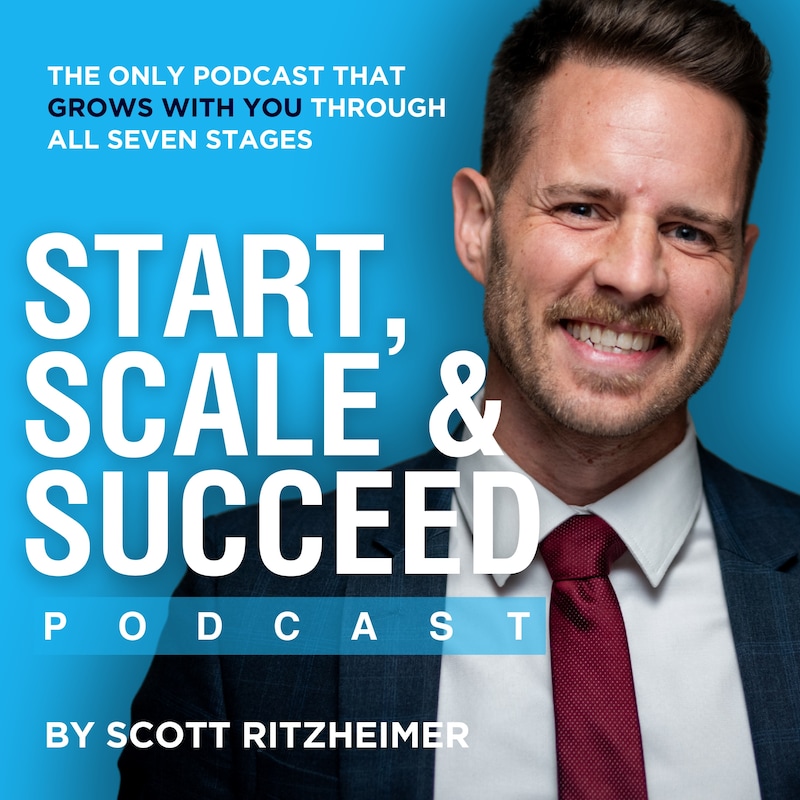
Shownotes
In this engaging episode, John Whitt, Owner of BusinessWhitt, shares how to break free from the founder's trap and turn ideas into money. If you struggle with overwhelm and scaling, you won't want to miss it.
You will discover:
- How to prioritize clarity to guide your business strategy
- What team-building steps boost your growth potential
- How to use testing to validate ideas before scaling
This episode is ideal for for Founders, Owners, and CEOs in stage 2 of The Founder's Evolution. Not sure which stage you're in? Find out for free in less than 10 minutes at https://www.scalearchitects.com/founders/quiz
John Whitt is an experienced coach and the author of Checkmate!: Translating Ideas Into Money, a book that uses chess as a metaphor for business strategy. John brings over 30 years of experience helping both corporations and small businesses shift their culture, boost results, and improve profitability. As a leadership coach and business growth strategist, he specializes in assisting founders to move from high-stress hustle to structured, values-aligned scale.
Want to learn more about John Whitt's work at BusinessWhitt? Check out his website at https://businesswhitt.com/
Grab a copy of his book Checkmate!: Winning Tactics for Translating Ideas into Money at https://www.amazon.com/Checkmate-Winning-Tactics-Translating-Ideas/dp/1947341979
You can follow John through his Facebook at https://www.facebook.com/BusinessWhitt/ and connect in LinkedIn at https://www.linkedin.com/in/coachjohnwhitt/
Mentioned in this episode:
Take the Founder's Evolution Quiz Today
If you’re a Founder, business owner, or CEO who feels overworked by the business you lead and underwhelmed by the results, you’re doing it wrong. Succeeding as a founder all comes down to doing the right one or two things right now. Take the quiz today at foundersquiz.com, and in just ten questions, you can figure out what stage you are in, so you can focus on what is going to work and say goodbye to everything else.
Transcripts
Hello, hello and welcome. Welcome once again
Scott Ritzheimer:to the Start scale and succeed podcast. It's the only podcast
Scott Ritzheimer:that grows with you through all seven stages of your journey. As
Scott Ritzheimer:a founder, I'm your host, Scott Ritzheimer, and there's a
Scott Ritzheimer:pattern that I see constantly, one where founders who've
Scott Ritzheimer:finally gone full time, who are in their business, they're
Scott Ritzheimer:generating revenue, they're doing their thing, they've got
Scott Ritzheimer:clients, and they're drowning the salesperson, the delivery
Scott Ritzheimer:person, the accountant, the marketer, the janitor, and
Scott Ritzheimer:everything in between. You wake up every morning, and the first
Scott Ritzheimer:thing you have to do is get through all the admin that you
Scott Ritzheimer:missed yesterday and the day before and the day before that
Scott Ritzheimer:before the clients start, and everything goes crazy. And so
Scott Ritzheimer:what do we how do we deal with it? How do we focus to grow?
Scott Ritzheimer:Especially because you have these ideas, you know that
Scott Ritzheimer:they're going to change the very nature of the game, but you just
Scott Ritzheimer:can't seem to get to them. And what's really challenging about
Scott Ritzheimer:this stage, what makes it so brutal, is that you're pretty
Scott Ritzheimer:good at the stuff that you do, too. That's why folks have hired
Scott Ritzheimer:you. But you can't keep this up. You can't keep this cycle going.
Scott Ritzheimer:And so how do we shift this? How do we turn it around? I'd tell
Scott Ritzheimer:you if I knew, but I have something better for you. I've
Scott Ritzheimer:got the one and only John Witt, who's been doing this for 30
Scott Ritzheimer:years. He's been helping founders to break this cycle,
Scott Ritzheimer:and he's also the author of the book, checkmate, translating
Scott Ritzheimer:ideas into money. It's a book that uses chess as a metaphor
Scott Ritzheimer:for business strategy. John brings over 30 years of
Scott Ritzheimer:experience helping both corporations and small business
Scott Ritzheimer:owners shift their culture, boost their results and improve
Scott Ritzheimer:profitability. As a leadership coach and Business Growth
Scott Ritzheimer:strategist, he specializes in assisting founders to move from
Scott Ritzheimer:high stress hustle to structured, values aligned
Scott Ritzheimer:scale, and he's here with us today. John, welcome to the
Scott Ritzheimer:show. So excited to have you here. Love the name of the book,
Scott Ritzheimer:Turning ideas to money, that is the game, isn't it. Why is that
Scott Ritzheimer:so hard to do?
John Witt:Well, Scott, first off, let me say thanks for
John Witt:having me today. I really appreciate it. It's it's hard to
John Witt:do because most people haven't done it before. If you've done
John Witt:it and again, when you, when you think about transiting ideas
John Witt:into money or it's a goal, starting a business is a goal. I
John Witt:want to start a business. I want to generate revenue. You've
John Witt:never done it before. I actually teach a program called Achieving
John Witt:uncommon events, because getting going from zero to a successful
John Witt:business is not all that common. There are a lot of people that
John Witt:go from zero to an unsuccessful business as opposed to
John Witt:successful, and it's really it's a system and a process, and it's
John Witt:all brand new. And you're learning a lot, really fast. And
John Witt:when you're learning a lot, a lot of times, you make some
John Witt:mistakes, and man, you have to have some perseverance it's a
John Witt:discipline, and you got to keep getting back up and getting in
John Witt:the fight, because if you give up, it's over.
Scott Ritzheimer:Yeah, one of the things that you talk I've
Scott Ritzheimer:heard you talk about, is this idea of judgment mode, and it's
Scott Ritzheimer:something that keeps us stuck, even when we have good ideas.
Scott Ritzheimer:What is judgment mode and why is it so dangerous?
John Witt:Well, it's a preset condition. Instead of, you know,
John Witt:an open mind, it's a fixed mind. And so judgment mode shows up
John Witt:when I'm working with a client, and I've worked with many of
John Witt:them in this space, and sometimes this is what we have
John Witt:to get through first. And I'll say, so you want to save some
John Witt:time, you need to get some more time. So why don't we? Why don't
John Witt:we hire a virtual assistant? Right? That's a real common
John Witt:process. And they'll say, oh, no, I can't do that. I've
John Witt:already tried that. It doesn't work. Well, see, they tried it,
John Witt:that's true, and it didn't work. That's true, but that doesn't
John Witt:mean they did it, right? So so really, they're kind of stuck.
John Witt:And so when somebody says no or that doesn't work, that's like
John Witt:turning the light switch off. So then we have to say, okay, but
John Witt:well, maybe, you know, there are other people that have done this
John Witt:and had made it work. You think maybe you could try it a
John Witt:different way, and it could be any number of different things,
John Witt:but the, you know, they're preset because they've, they've
John Witt:made a decision that that won't work, and it's, it's false
John Witt:information, you know, they basically, it's only in their
John Witt:head where it doesn't work.
Scott Ritzheimer:Right, right. Now, you've got a framework in
Scott Ritzheimer:the book the five key attributes for success that help to
Scott Ritzheimer:translate ideas into money. I'm wondering if you could just kind
Scott Ritzheimer:of briefly walk us through those and how someone could take that
Scott Ritzheimer:structure and start to put it to use today.
John Witt:Yeah, absolutely. So step number one is clarity. And
John Witt:clarity is king. In the in the chess world, the queen is the
John Witt:most powerful piece on the board. In the business world,
John Witt:clarity is the most powerful piece on the board, and it's not
John Witt:clarity at the 60 or 70% level. You want to get it as high as
John Witt:you possibly can get it. You want to know what you're trying
John Witt:to accomplish, who you're going to do, what there's, there's a
John Witt:whole litany of things that you want to work with. And the
John Witt:second step is Team people. And sometimes you need some people
John Witt:to help you figure out the clarity, because you don't know
John Witt:all that, all the answers, right? So most, most
John Witt:solopreneurs, they start up, they're not a marketing expert,
John Witt:so they probably should bring somebody from marketing onto
John Witt:their team to help them. And. Are the marketing type
John Witt:questions, right? So we have clarity, and again, super
John Witt:detailed. Bring the marketing team, bring the person on board,
John Witt:and then we get into testing and validation. And that's typically
John Witt:the step that gets skipped first, right? Let's, so let's,
John Witt:let's spend a little money. And I know it's tough when you're
John Witt:getting started your solopreneur, you're not looking
John Witt:at a lot of money left over. But let's spend a little money and
John Witt:make sure money and make sure that we're going to get the
John Witt:results that we want. And based on those responses, we can go
John Witt:back and we can make some changes, or we can go forward
John Witt:and build a plan to launch our product, or idea, our business,
John Witt:our service. So the fourth step is plan, and it's a strategic
John Witt:plan. It's not just, you know, let's do X, Y and Z things.
John Witt:You're really what are the things are most important to do?
John Witt:When to do it, who needs to do it? So your team is going to
John Witt:change often, very frequently, through the process. And then
John Witt:the last step is, is absolutely critical, and that's a change
John Witt:management system, because you don't get to decide what comes
John Witt:in the door tomorrow, right? Adversity shows up. You don't
John Witt:get to decide when it shows up. You get to decide how you want
John Witt:to respond, but if you're not paying attention, then you don't
John Witt:notice the change in the first place. That means you can't
John Witt:respond and you end off, off course and so frequently,
John Witt:especially with a business, especially when you get started,
John Witt:you need to have a weekly change management cadence in the
John Witt:manufacturing world that I grew up in way back when, you know,
John Witt:we're making big products a big manufacturing facility. And so
John Witt:there'd be lots of people that say, Well, I wish it would do
John Witt:this, or I wish it'd do that. Sales guys came in and said,
John Witt:yeah, they wanted to change the product because the consumer
John Witt:wants something a little bit different. But they couldn't
John Witt:just willy nilly change everything. So they'd have a
John Witt:change control board where, you know, whoever was looking for
John Witt:the idea had to fill out all the information and go to the board,
John Witt:and then they would, you know, decide whether they wanted to
John Witt:accept that or not. I'm not saying that you need to change
John Witt:control board as a solopreneur, but a system and a process that
John Witt:reviews what you're doing, where you're going, on a frequency
John Witt:basis, so that you don't end up off course. Yeah, those are the
John Witt:five steps.
Scott Ritzheimer:As folks hear that, there's kind of this
Scott Ritzheimer:visceral reaction to that's five steps that I don't have time
Scott Ritzheimer:for. So how do you start spinning that, that snowball, if
Scott Ritzheimer:you will, in the right direction? Where can you use
Scott Ritzheimer:these five steps to actually create time to do the five steps
Scott Ritzheimer:right?
John Witt:Well, okay, so create time. That's the first
John Witt:objective. And for many of these solopreneurs, that is, without a
John Witt:doubt, the first objective, and that's what I try to help them
John Witt:do, because that's where they get a little breath, that's
John Witt:where they can reduce a little stress. But we'll say, Okay,
John Witt:well, let's bring on an assistant. Let's bring on a
John Witt:virtual assistant, or let's find somebody that we can delegate
John Witt:these things to. Well, a, they may not know how to do that, so
John Witt:there's some training and coaching in that space. Or B,
John Witt:they're like, I can't afford that. So okay, well, then, then
John Witt:we got to figure out, how do we get more money into the system?
John Witt:And you do a couple things, you can increase your sales
John Witt:conversion rate, right? Get better at sales, but that just
John Witt:means you have to sell more and that. So it takes more time to
John Witt:sell more. That's not going to be as effective. The most
John Witt:effective solution that I've found over 15 years is raise
John Witt:your prices. Raise your prices so that you can afford to hire
John Witt:an assistant. Now, most people say, Well, I can't do that. You
John Witt:know, my competitors. And they'll give you some story. And
John Witt:it's like, you know, here's the thing, there are seven
John Witt:attributes. No, what is it? It's money is the seventh attribute
John Witt:in the buying decision. So there are six other attributes that
John Witt:are more important than money when it comes to making a buying
John Witt:decision. We want to sell on value, we want to sell on
John Witt:convenience. We want to sell on a lot of other things besides
John Witt:price. Because we all make decisions to buy a better
John Witt:quality product or better system. We don't naturally run
John Witt:to the cheapest thing. We know better in many ways. Yeah, so
John Witt:let's figure out how to raise your prices. Now. There's a
John Witt:process for doing that. I don't think you could just, like, flip
John Witt:a switch and double your rates, but there is, you know, you're
John Witt:letting your customers know. You're letting the marketplace
John Witt:know. It's a it's a message. But you know, if you could raise
John Witt:your prices by 10 or 15% or 20% that probably pays for an
John Witt:assistant. Now you got 20 hours that you can spend some more
John Witt:time doing something else, and all of a sudden, now we're we
John Witt:got the snowball going in a different direction.
Scott Ritzheimer:Yeah, I love that. I love that the time value
Scott Ritzheimer:of money is such a big deal. Was such a clever thing, because
Scott Ritzheimer:most folks, especially in like professional services, are
Scott Ritzheimer:charging too little, especially for the amount of time that
Scott Ritzheimer:they're spending doing the work that they're doing this. Yeah,
Scott Ritzheimer:what a great strategy there. There's another thing that comes
Scott Ritzheimer:up, so let's say we've done it. Let's say we've got a little bit
Scott Ritzheimer:of time, we've got an idea that we're ready to execute on, but
Scott Ritzheimer:just saying we want to do it, and actually going out and doing
Scott Ritzheimer:it are a couple different things, right? And and so
Scott Ritzheimer:there's these stages to learning, and you've cited the
Scott Ritzheimer:four different stages to learning. But how do you get
Scott Ritzheimer:through that stage when you realize you have no. Idea what
Scott Ritzheimer:you're doing.
John Witt:Yeah. Okay, so stage one is what I think it about.
John Witt:This is unconscious incompetence. Unconscious. I'm
John Witt:not aware I'm incompetent. I don't even know what I'm unaware
John Witt:about. And so what owners have to do founders is they have to
John Witt:put themselves in positions to where they can get exposed to
John Witt:net new information, net new ideas, net new concepts, on a
John Witt:frequency basis. So that's not 40 hours a week. Maybe that's a
John Witt:couple hours a week. Maybe you're at a conference, maybe
John Witt:you're here. Maybe there's a lot of places where you can get
John Witt:exposed to different information, different
John Witt:information, and depending on what your idea is and what your
John Witt:service is, maybe there's an association, maybe there's a
John Witt:trade show. Maybe there's a couple different ways you could
John Witt:do it, but you have to invest that time, or else you'll never
John Witt:get the direction, the guidance that you're looking for. And
John Witt:you're going to get exposed to hundreds of things. That doesn't
John Witt:mean you need to do 100 things, right? Once you're exposed, now
John Witt:you can make a decision, oh, out of those 100 things, I think
John Witt:this one's interesting, and now it's in your control. So you
John Witt:could decide whether you want to go do it, but you have to put
John Witt:yourself in stuff. You know? The great example is AI, right? So
John Witt:AI is just killing everybody right now, and it's been a
John Witt:couple years, right? There were a lot of businesses that didn't,
John Witt:weren't aware of the AI. Call it revolution, until the last six
John Witt:months, and they're behind the curve. However, if you had put
John Witt:yourself in a situation where you could be with people, learn
John Witt:from technologists, you would have found out about a lot
John Witt:sooner, and you would have started to figure out, hey, how
John Witt:does this fit into my business sooner.
Scott Ritzheimer:Right? Right? That's really important. I've
Scott Ritzheimer:actually found that something that folks one of the reasons
Scott Ritzheimer:why it's so underdeveloped and underutilized at this stage is
Scott Ritzheimer:because we missed the need for it in the previous stage.
Scott Ritzheimer:Everyone's in such a rush to get out there, start their business,
Scott Ritzheimer:do the thing, hang the shingle, you know, bring in the revenue
Scott Ritzheimer:that they don't take the time to set up that learning
Scott Ritzheimer:environment, and they pay for it in the long run. Love the way
Scott Ritzheimer:that you brought that, brought that back into the equation
Scott Ritzheimer:here, because it's so easy to miss. But I've got a question
Scott Ritzheimer:that I'm going to get to in just a moment. But one thing I want
Scott Ritzheimer:to do before we get there is you talk about this idea of a
Scott Ritzheimer:founder's trap, and our our listeners who, especially those
Scott Ritzheimer:who tune into the show regular are overwhelmingly founders, and
Scott Ritzheimer:this is something that I mean we all faced at some point in time.
Scott Ritzheimer:So tell us, what is the founder's trap? How do we know
Scott Ritzheimer:if we're in it, and what do we do to get out?
John Witt:So the founders trap is a wonderful place to be, but
John Witt:it also keeps you stuck. Means that you've found a niche, that
John Witt:you've got a way to make money. It's consistent, it's
John Witt:sustainable. Maybe you have a small team, and you're able to
John Witt:manage all of that yourself, and you've got a consistent revenue
John Witt:stream coming in. And some people, some founders, just say,
John Witt:hey, look, this is fine. This is all I want. But some people want
John Witt:something more than that. Well, now the question is, how do I
John Witt:scale? Right? So how do I and there's two ways to scale. You
John Witt:can scale with technology and you can scale with people, and
John Witt:generally you're scaling with both. But now let's say you have
John Witt:a team of five, and you can kind of watch over them on a frequent
John Witt:basis. You know what they're doing. You can correct them,
John Witt:etc, etc. But what happens if you want to go to a team of 20
John Witt:you? I mean, you're not gonna be able to look over their shoulder
John Witt:and watch, right? So now you have to, you have to bring in
John Witt:some leaders, right? And so now you have to learn to lead, to
John Witt:lead leaders. So when you want to scale, and when you bring
John Witt:that extra people in, you're going to have to bring in
John Witt:additional processes. You're going to have to be able to
John Witt:teach them and train them and help them grow to the next
John Witt:level. And so it's really systems and processes that are
John Witt:associated with people and technology that allow us to
John Witt:scale beyond that small founders space and like, say it's only a
John Witt:trap because you're stuck there until you do something else.
Scott Ritzheimer:Yeah, John, there's a question that I ask
Scott Ritzheimer:all my guests, and I'm interested to see what you have
Scott Ritzheimer:to say. And the question is this, what would you say is the
Scott Ritzheimer:biggest secret that you wish wasn't a secret at all. What's
Scott Ritzheimer:that one thing you wish everybody watching and listening
Scott Ritzheimer:today knew?
John Witt:Well, you know, it's a secret because most people
John Witt:don't know it, but that doesn't mean nobody knows it. And I
John Witt:think it's a two part secret. The first one is generosity.
John Witt:Generosity goes a long way in many, many ways. I mean, it
John Witt:covers a lot of errors. It covers a lot of mistakes. Covers
John Witt:a lot of whoops, the idea is to be generous with your time and
John Witt:your talent, and I would say your treasure, and that will
John Witt:come back to you and your business in the long run.
John Witt:Generosity always, always, always delivers better long term
John Witt:results. And the second one that kind of goes along with that,
John Witt:and this is where people get tangled up. You know, if they
John Witt:have an employee that comes in and has an issue or a problem or
John Witt:a grudge, or, you know, wants to change something, the owner
John Witt:feels like they have to respond right away. And I wish everybody
John Witt:would learn the art of the pause, which is to pause and
John Witt:say, Hey, listen, I hear you. I understand. We need to have a
John Witt:conversation about. About this, but now's not the right time. I
John Witt:want to give it the time it deserves. Let's set some time
John Witt:for this afternoon, or let me get back to you with a better
John Witt:time, and so that stops you from spontaneously saying something
John Witt:inaccurate or wrong or inflammatory. You know, it all
John Witt:happens, right? If you have that pause, that little pause, then,
John Witt:then you have the time to think through what's the right
John Witt:response. There's a little bit of time between stimulus and
John Witt:response. The better you use that time, the better results
John Witt:you're going to have.
Scott Ritzheimer:So true. It's so true. John, there's some
Scott Ritzheimer:folks listening, and they want to know more. How can they find
Scott Ritzheimer:out more about the work that you do? And where can I connect you
Scott Ritzheimer:with you or get a copy of your book?
John Witt:Well, the books on Amazon. It's called checkmate,
John Witt:translating ideas into money. And if you search amazon.com,
John Witt:forward slash author, forward slash, John Witt, you'll go
John Witt:right to the page. My website is business wit it's a play on my
John Witt:last name, businesswit.com so www.businesswit.com there are
John Witt:places where you can see all the different tools and strategies
John Witt:and things that we have. There's a lot of, I would say, free
John Witt:stuff there too, and then there's certainly a Contact Us
John Witt:space. So if you want to spend spend some time and have a
John Witt:conversation, you can certainly do that. I'd be happy to do
John Witt:that.
Scott Ritzheimer:Fantastic, fantastic. Well, John, thanks
Scott Ritzheimer:for being on the show today. Really was a privilege and honor
Scott Ritzheimer:having you here. I really enjoyed this conversation, and
Scott Ritzheimer:for those of you watching and listening, you know your time
Scott Ritzheimer:and attention mean the world to us, I hope you got as much out
Scott Ritzheimer:of this episode as I know I did, and I cannot wait to see you
Scott Ritzheimer:next time. Take care.