Shownotes
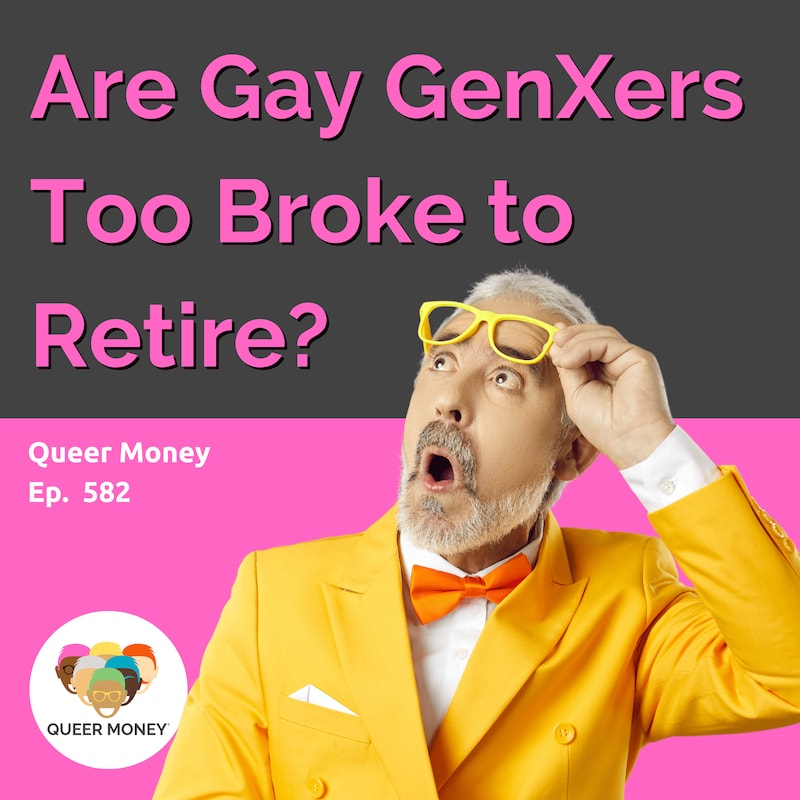
Are Gay GenXers Too Broke to Retire?
Are gay Gen Xers destined for a financially fabulous retirement 💸✨, or are we teetering on the edge of a financial faceplant? On this episode of Queer Money, we spill the ☕️ on whether our generation is doomed to work ‘til we drop or if there’s still time to secure that dream retirement—one with bottomless brunches 🥂 instead of bottomless debt. 😵💳
With inflation throwing tantrums 📈, the cost of living strutting up like it’s on a runway, and traditional retirement benefits ghosting us like a bad Tinder date, it’s no wonder nearly 50% of Gen Xers are at risk of retiring broke. 😨 And let’s be real—LGBTQ+ folks often juggle even heavier financial baggage, from higher debt to fewer assets, making retirement planning feel more like an Olympic sport. 🏆
But don’t clutch your pearls just yet! 📿 We’re here to dish out the strategies, tips, and hard truths you need to turn your financial future from meh to magnifique. 💅💖 Tune in, take notes 📝, and let’s get serious about securing that rich, restful retirement we all deserve! 🏝️💃💵
Takeaways:
- Let’s be real—too many gay Gen Xers are staring down retirement with more financial anxiety than a drag queen lip-syncing for her life. 💰😱
- A shocking number of LGBTQ+ adults over 45 are sweating over their financial future—because let’s face it, "winging it" isn’t a retirement plan.
- Inflation and the cost of literally everything (looking at you, $8 avocados 🥑💸) are making it even harder for our community to get ahead.
- It’s time to stop playing defense with our money and start making some power moves—financial planning and debt slaying are the new self-care. ✨💅
- We love taking care of our chosen family, but honey, if you’re not putting your own oxygen mask on first, your retirement dreams might be DOA. 🚨🏖️
- Investing—even just a little—is the VIP ticket to a cushy retirement, especially now that inheritances and pensions are as rare as a Grindr date that actually wants to grab coffee first. ☕💸
Topics Covered:
- 00:00 - Understanding Retirement for Gay Gen Xers
- 02:51 - Economic Anxiety and Retirement Challenges for Gen Xers
- 05:30 - Financial Security and Generational Struggles
- 09:41 - Taking Control of Our Financial Future
- 14:02 - Ditching the Rich Uncle Mentality
Let's connect:
Mentioned in this episode:
Get Your Portugal Golden Visa Here!
Your fabulous retirement in Portugal is calling!
Ready to turn your IRA assets into a gateway to living in Europe? With the Optimize Portugal Golden Opportunities fund you can do just that. Join hundreds of other U.S. investors taking control of their retirement and using the assets they have to open doors to freedom. Click below to get your Portugal Golden Visa!
Transcripts
Are gay Gen Xers too broke to retire?
Speaker B:We're breaking that down on Queer Money, episode number 582, brought to you by the Happy Gay Retirement Club, a community of gay folks from their 20s through their 60s, building financial freedom through retirement and beyond.
Speaker B:So with that in mind, David, we are gay Gen Xers.
Speaker B:How on track or not on track are we for retirement?
Speaker A:Well, to be honest, I will say several months back when I built out the Happy Gay Retirement calculator and we were putting our numbers in and trying to figure out what it, what retirement would look like for us and our sources of income and things like that, I was actually feeling really good because I felt like we were in that space of somewhere between a basic and a happy retirement and could see us on track for actually having a fabulous retirement.
Speaker A:And I will say that was five or six weeks ago.
Speaker A:I am feeling totally effed right now because I just don't know what the heck is going on.
Speaker A:We don't even know.
Speaker A:One of the factors of that calculator was that how we were measuring adding in how much Social Security was going to have an impact on whether what kind of retirement you would have between tragic, basic, happy and fabulous.
Speaker A:And now we just don't effing know are we who's going to get rid of Social Security and when?
Speaker A:Right.
Speaker A:That's just all up in the air.
Speaker B:So there are a lot of factors playing against every community right now.
Speaker B:Inflation is up.
Speaker B:Eggs have never been more expensive, ironically because they were supposed to go down day one, day one, January 21, the cheapest eggs in history, but now they're the most expensive eggs in history.
Speaker B:Gas is probably going to go up because we have a tariff on Canada and Canada is reciprocating with tariffs on US Consumer sentiment is down.
Speaker B:More and more people are unemployed.
Speaker B:It's because we've laid off half of the federal workforce and just costs aren't going down.
Speaker B:So a lot of people are feeling a lot of anxiety and the stock market has after there was that little bit of a bump after the election.
Speaker B:The stock market has been pretty much in a free fall since weirdly about November 8th.
Speaker A:Yeah, well, to be 110 it was.
Speaker A:I.
Speaker A:We were looking at the chart earlier and I thought it was so funny that it was like Valentine's Day.
Speaker A:Everything has fallen off a cliff since Valentine's Day.
Speaker A:It's Bitcoin is way down.
Speaker A:The magnificent seven, which are the big seven tech stocks that have have lifted the market so much are down.
Speaker A:Facebook or Meta is in A correction after having this, like, amazing run of like, 40 days in a row where the stock was up every single day.
Speaker B:Only is going to be handing out less meat than normal.
Speaker A:Right.
Speaker B:There's a lot going on.
Speaker B:And so when you think about it, you know, AARP came out with a study a couple weeks ago that showed that 50% of Gen Xers, gay or otherwise, are at risk of not having enough money in retirement.
Speaker B:But then we also know that from a myriad of studies, including our own, that we've done over a couple of years, that LGBTQ people, especially Gen Xers, are having feeling a lot more stress and burden right now.
Speaker A:Right.
Speaker B:There are fewer pensions than before, but fewer LGBTQ people have access to fewer pensions than the general population.
Speaker B:We carry more credit card debt, we have more student loan debt, we have more personal debt, but we don't have as much mortgage debt, which is the good kind of debt.
Speaker B:There's just a lot of additional stress that the LGBTQ community is feeling.
Speaker B:And LGBTQ + couples accumulate less retirement savings over their lifetime, according to National Institute on Retirement Security.
Speaker B:So I think that while we were feeling good there for a period of time, I think that was a bit of a privilege.
Speaker B:And now we're feeling anxious.
Speaker B:But relative to many in our community, they're probably, probably still somewhat privileged.
Speaker B:But I think we need to do something about it now.
Speaker A:Yeah.
Speaker B:All of us, regardless of what demographic we fall in or what age group we're in or how we're feeling, we need to start taking action now, because some of the solutions that people are proposing online to not outlive their money are pretty fatalistic.
Speaker A:Yeah.
Speaker A:You know, when we talk about Gen Xers, we're really talking about people who are basically between the ages of about 45 and 60, give or take a couple of years on either side, depending on what groups you.
Speaker A:You ran with.
Speaker A:But these are supposedly individuals who are at the height of their career.
Speaker A:And look, you look at this community we have experienced over and over.
Speaker A:I know millennials like to say this, that they're.
Speaker A:They've experienced the most.
Speaker B:Most volatility and uncertainty.
Speaker A:Yeah.
Speaker A:In.
Speaker A:In their life, threats to their security.
Speaker A:But you look at all of the various ways in which Gen Xers we were born in, many of us were born into difficult financial times in the 70s, in the late 60s and early 70s especially.
Speaker A:And we have lived all of these different experiences.
Speaker A:And we're.
Speaker A:So we're supposed to be these individuals that are at the height of our earning careers, but we're also a generation that Right now is getting sandwiched.
Speaker A:Many of us have parents who either are asking for or desperately need for physical or financial help.
Speaker A:At the same time, many of us have kids.
Speaker A:And so those kids are demanding.
Speaker A:Either they're either young millennials or Gen Z who are either demanding that we pay, help, pay for their college, or helping them live a lifestyle that they have become accustomed to because of living with us.
Speaker A:So we're getting our incomes squeezed and for many of us, we just don't have the money to be saving for retirement like we were before.
Speaker B:That is not the type of pork sandwich I've ever imagined being.
Speaker A:Yeah, but I think that there's this.
Speaker A:You mentioned this idea about fatalistic attitudes.
Speaker A:I was having an interesting conversation with someone on TikTok when I was post.
Speaker A:I had posted about one of our retirement, talking about retirement for the LGBT community.
Speaker A:And the individual said, oh, I'm just going to.
Speaker A:I don't have to worry about.
Speaker A:I'm not gonna be.
Speaker A:I'm not gonna make it to retirement.
Speaker A:They said, what do you mean you're not gonna make it to retirement?
Speaker A:And then he used the phrase euthanasia.
Speaker A:Y O U T H I N A S I A But we all know what he was saying.
Speaker A:He basically is.
Speaker A:And I followed up with him and he basically says that if he runs out of retire money in retirement, he's just going to off himself.
Speaker A:And I thought, how fatalistic is that, that you want to live a lifestyle today and you are willing to sacrifice yourself, your future in order, and not just your financial future, your literally your life, so that you can have.
Speaker A:I want, I would love to have a brand new Audi.
Speaker A:I that's something I would absolutely love to have.
Speaker A:But I'm not going to say I'm going to kill myself earlier so that I can have a brand new Audi today.
Speaker A:And I'm not saying that you can't ask for and want to have nice things, but if we don't have a pathway to providing ourselves with a lifestyle in the future that gives us some joy.
Speaker A:It really is going to be a difficult life for us.
Speaker B:So I'll say this.
Speaker B:The Williams Institute came out with a study not that long ago that showed that one in three LGBTQ plus adults over the age of 45 stress about not having enough money to carry them through retirement.
Speaker B:They're going to retire, they're going to run out of their money before they pass away.
Speaker B:And that's probably a higher percentage now than when they actually took that study because of everything we've dealt with over the last three months or so.
Speaker B:What we need to do now is not get down the dumps, not get fatalistic, not come up with dumb solutions that we're going to offer ourselves before we pass away naturally.
Speaker B:What we need to do is take action.
Speaker B:We need to get clarity on our financial situation.
Speaker B:We need to get honest about our financial situation.
Speaker B:We need to start talking about our financial situations, and then we need to start coming up with solutions to address those challenges you've talked about.
Speaker B:There have been market crashes and wars and horrible presidents and whatever and all that before.
Speaker B:And granted, this is a completely unique situation.
Speaker B:I get that.
Speaker B:But history has shown us that over time, we can probably get through this.
Speaker B:And while it might seem like there's not going to be, there's not light at the end of the tunnel today, more often than not, it does eventually work out, at least post World War II.
Speaker B:So we need to lean into the idea that there are likely solutions.
Speaker B:There are things that we can do.
Speaker B:So we need to not just get down the dumps about this.
Speaker B:We need to start taking action as a community today.
Speaker B:And that starts with each of us as individuals taking action for our own selves or for our household.
Speaker B:If you're married or live in a throuple or more of relationship.
Speaker B:Yeah, I know.
Speaker A:And I would say that you said 1 in 3 LGBTQ adults is over 45, is worrying about not having enough money for to.
Speaker A:To live in retirement.
Speaker A:I think there's probably a third of our community is completely ignoring it.
Speaker A:They don't even.
Speaker A:They don't even know what they need.
Speaker A:They're not paying attention to that, in part because we are so distracted.
Speaker A:There's so many distractions.
Speaker A:Both difficult, really hard to deal with distractions like what's going on in.
Speaker A:In politically in our country, but also so many of the distractions that allow us to basically escape life, whether that's through shopping or alcohol or or so social activities, drugs, things like that, that allow us to basically numb ourselves into not thinking about what our life is going to be like or could be life in the future.
Speaker B:And we know firsthand personally from our own experience, as well as many of the people that we've coached over the years, that taking action to improve your financial situation, even just making a plan, can reduce your financial anxiety.
Speaker B:And that has a re.
Speaker B:A rippling effect to every other aspect.
Speaker A:Of your life and other people in your life.
Speaker A:Right?
Speaker A:Yeah.
Speaker B:It's just creating a plan.
Speaker A:Yeah.
Speaker A:So what.
Speaker A:What can we do, John?
Speaker A:What are some things Gen Xers can do.
Speaker B:Well the first thing we know from all the people that we've worked with, Most Americans, including LGBTQ + folks have more debt, more high interest rate debt than we should probably have relative to our income or the amount of assets that we have.
Speaker B:So we highly encourage everybody.
Speaker B:The number one thing you can do to make the most progress with your financial situation is to do whatever you can to pay off that high interest rate debt.
Speaker B:We've talked about our debt last method on the Queer Money podcast many times before.
Speaker B:Reach out to us if you want help with that.
Speaker B:We still help people pay off their debt that with that program or you can get more resources available through queermoneypodcast.com or simply signing up for the Queer Money newsletter.
Speaker A:One of the other things that is really important for us right now is to make space in our budget so that we can invest there is the only way that you're going to have any significant amount of money in retirement is through investing.
Speaker A:The likelihood that you're going to inherit money from your parents is to be able to pay for retirement is pretty much near zero.
Speaker A:I think that the that the latest data we saw was that only 9% of individuals will inherit money from their parents.
Speaker A:That's in part because retirement is becoming so expensive government and oligarchs are sucking away as much of that money as possible.
Speaker A:So they don't we don't have that to hand on generation that corporate socialism.
Speaker A:Right.
Speaker A:That generational wealth is not being provided.
Speaker A:So figure out a way put more money into your 401k.
Speaker A:Start a 401k if you haven't.
Speaker A:What in our LGBTQ money study with the Motley fool we found that out that 23% of individuals who had access to a retirement employer response retirement account were not contributing to that.
Speaker A:So it's really important for us to set aside money for our future and invest it.
Speaker A:And the reality is all of the things there might be a lot of uncertainty.
Speaker A:You might be feeling fear right now about what is happening in the market.
Speaker A:We just talked about how the market's been down.
Speaker A: inue to slowly invest back in: Speaker A:Those are some of the people who are out at the front because they bought when it was so low.
Speaker A:And so the, as John always likes to say, what is it?
Speaker B:There's no part of the economy designed for success quite like the stock market.
Speaker B:All of these rich billionaires and trillion, soon to be trillionaires, they have a lot of money invested in the stock market and they're not going to shoot themselves in the foot even to hurt us.
Speaker B:So the sooner you can become a part of the investing class, the better.
Speaker A:Yeah, so invest, get that, that going.
Speaker A:Even if it's just five or ten dollars a paycheck, get that started.
Speaker B:And you want to do that through a strategic strategy, dollar cost averaging, not just putting all of your money into the stock market, especially one investment at one time.
Speaker B:You want to spread that risk out a little bit.
Speaker B:The other thing that we want to encourage folks to do is one of the biggest costs, not the biggest, but one of the biggest costs in retirement will be housing.
Speaker B:So get creative, think, start thinking about solutions of what kind of housing situation.
Speaker B:What do you want to live in?
Speaker B:What can you create for yourself to reduce some of the expense as well as some of the burden of housing when you're in retirement.
Speaker B:For many of us, we're thinking about the golden girl sort of situation, but there are a myriad of other solutions that you can come up with.
Speaker B:Start thinking about that now so you can prepare for that when the time comes.
Speaker B:And this is for those of you who aren't familiar with this is exactly what we help people do with the fabulous life planner in the Happy Gay Retirement Club.
Speaker B:We go through an exercise where we figure out, what does your ideal retirement look like?
Speaker B:What do you most want?
Speaker B:Where are you living, who are you with, what are you doing, how often are you traveling, how often are you going out to eat, Getting crystal clear on what it is you most want in retirement.
Speaker B:Then what we do with folks is we reverse engineer that and think about, okay, what do we have to start doing today so that you can have that ideal retirement tomorrow?
Speaker B:So if you're interested in that, you can check out the Happy Gay retirement club@queermoneypodcast.com or we might have a QR code popping up on the screen right about now.
Speaker B:We will see.
Speaker A:The last thing here is to ditch a mentality, a mentality that to be honest, John and I have acquired and used over the years.
Speaker A:And that is this idea that we are the rich guncles or aunties syndrome, whether it's nieces and nephews, godchildren, maybe it's even your siblings, where your siblings are saying you're responsible for taking care of mom and dad financially or time wise because you don't have kids.
Speaker A:We need to ditch this mentality that we are responsible for everyone else.
Speaker A:We are responsible for ourselves first to make sure that we are stable and that we have the money that we need to be able to live out our lives.
Speaker A:And you don't always have to be the one that picks up the tab for everybody.
Speaker A:Whether it's the shots at the bar or at brunch or lunch or dinner or whatever the case is.
Speaker A:Make sure that you're taking care of yourself.
Speaker A:This is a mental health issue as well as a financial health issue.
Speaker A:We need to ditch this mentality because the reality is that not not as many of us who have this mentality have the money to actually be Richie Rich.
Speaker B:Yeah, we you just simply can't give from a depleted cup.
Speaker B:Yeah, you need an overflowing cup and then you can share.
Speaker B:So thank you for joining us for another episode brought to you by the Happy Gay Retirement Club.
Speaker B:Get your Queer Money takeaway and the resources mentioned in this episode from this week's Queer Money newsletter.
Speaker B:And until next time, stay fabulous.




