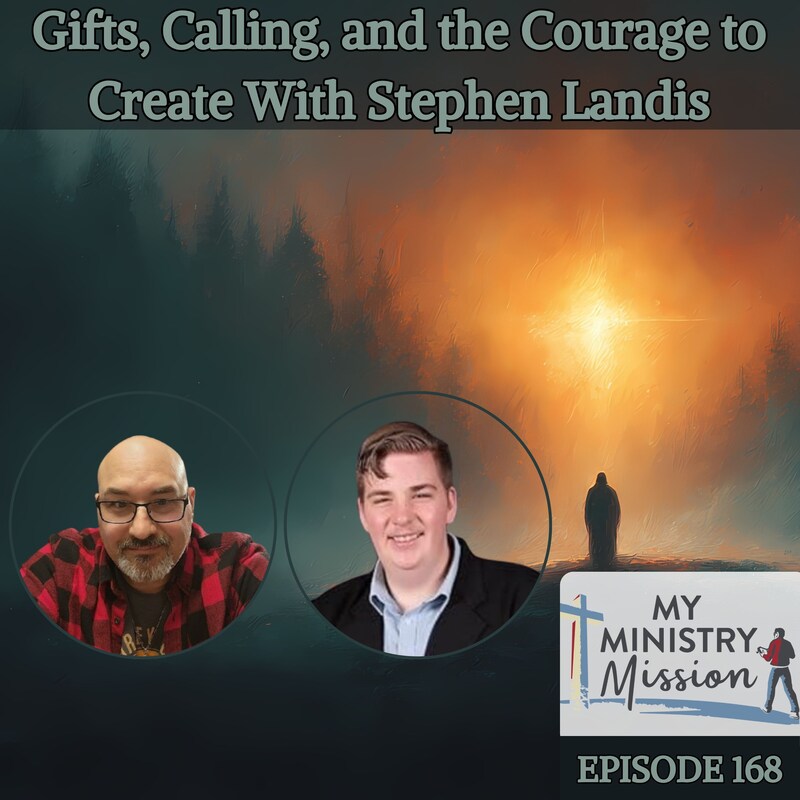
Shownotes
In this episode, I sit down with Stephen Landis, a Christian poet and author from Albuquerque, New Mexico, and founder of Dust Bunny Poetry, for a deeply honest conversation about what it means to use the creative gifts God has placed in us. Stephen shares his faith journey, from rededication at sixteen to a defining moment at nineteen when the truth of Ephesians 2:8-9 anchored him in grace over works, and how that foundation now fuels everything he writes. We talk about the courage it takes to create for God's glory, the beauty of wrestling with calling, and why stewardship of your gifts is an act of obedience.
Stephen's story is a reminder that God doesn't call the polished or the finished. He calls the willing. Whether you are an artist, a teacher, a parent, or a podcaster, this conversation will stir you to pick up what God has placed in your hands and trust Him with where it goes. You can find Stephen's work, including his award-winning collection Grace and Other Poems, at https://dustbunnypoems.online. I hope this episode blesses you and lights a fire under the gifts you may have quietly set aside.
Guest Links:
References to Bible Verses:
Ephesians 2:8–9
My Ministry Mission Information
- Website: https://myministrymission.com/
- Become a Guest: https://myministrymission.com/guest
- Support the Show: https://myministrymission.com/support
- Contact Me: https://myministrymission.com/contact
- Free Christian Resources: https://myministrymission.com/resources/free-resources/
My Ministry Mission Social Media
- Facebook: https://www.facebook.com/myministrymission
- Twitter: https://twitter.com/MyMinMission (or @MyMinMission)
- Instagram: https://www.instagram.com/myminmission (or @MyMinMission)
- YouTube: https://www.youtube.com/@myministrymission
Support The Show
If you are enjoying the content and would like to support this show, consider giving me a tip. It's not required or expected, but certainly appreciated
Credits:
Cover Image & Music from Pixabay
Transcripts
---
Jason McConnell: Thank you for listening and welcome to the podcast. I am your host, Jason McConnell. Today I'm sitting down with a Christian poet and author from Albuquerque, New Mexico, Steven Landis. Steven is the founder of Dust Bunny Poetry, and he has published several collections including Grace Other Poems and Joy in the Verse: Christian Poems to Stir the Spirit.
He has rooted his writing in faith and aimed it squarely at pointing people to Christ, not through heavy-handed preaching, but through words that are accessible, honest, and spiritually grounded. And today we're gonna talk about something I think maybe a lot of believers quietly wrestle with. What does it mean to use the creative gifts God have given me?
And what happens when we let them sit unused? Steven brings real-world perspective to that question, and it's not a polished ministry answer but a real lived one.
[:---
Jason McConnell: So Steven, welcome to My Ministry Mission.
Stephen Landis: Hello. Good, you?
[:---
Jason McConnell: with, you know, your favorite Bible passage, and you put Ephesians 2, which is a kind of a big, rich chapter. What is it about that passage that specifically keeps maybe drawing you back to it?
Stephen Landis: Um, I think it's like, well, basically like just like how it shows like, like the unity we have in Christ because it's like-- Well, like at first off it like explains like, like that there's like nothing we can do like, like to earn like, like, uh, to like earn favor with God on, on our own. Like it's-- Like of course like the most famous verse from that chapter is verse eight and nine which says like, uh, well, like it, like it's not a works list like any man can boast basically.
So, uh, but, but
Jason McConnell: Mm-hmm. Mm-hmm.
Stephen Landis: just like awesome that it shows like, uh, like that, and then it shows like transitions into like both a Jew and Gentile and anyone under Christ is, is unified in Christ. that's kinda what draws me to it.
Jason McConnell: Nice. Has your relationship with that passage changed over the years or does it hit pretty much the same every time you read it?
Stephen Landis: Um, I mean, it's, changed overall because like, uh, well like, uh, it has to do with like part of like my testimony. Like of course I explained that like grew up in a Christian household, but like, like, and then like got saved or like rededicated when I was sixteen. But, but then like after that I started like studying more like about like, uh, like who God is and like, a-and like, uh, certain qualities about Him.
So like as I've studied more about that, like, uh, like Ephesians two has like changed overall for me.
Jason McConnell: Nice.
[:---
Jason McConnell: So Dust Bunny Poetry, it's not a name you're gonna forget. It's, it's kind of unique and I like it. But where did it come from? What does it, what does it mean to you?
Stephen Landis: Um, yeah, so it basically came, like, from a poem I wrote, like, with the same name, like The Dust Bunny. And, and, like, like, The Dust Bunny is, like, kinda whimsical, like, but, like, also sort of serious, where it's, like, have, like, this, like, dust bunny floating around not giving a care about, like, the earthly things.
Like, he's, like, focused on above. And, and so, like, I kinda, like, uh, like, felt I did, like, really well on that poem. And so, uh,
Jason McConnell: I
Stephen Landis: and so I kinda used that, like, for my branding to kind of, like, have the
Jason McConnell: like it.
Stephen Landis: of idea when you fe- see mine, uh, or when you see mine, uh, brand.
Jason McConnell: Yeah.
[:---
Jason McConnell: A- and you write poetry, prose, devotionals, and now children's books. Um, when you sit down to write, how do you know what's coming out that day?
Stephen Landis: Um, well, it really depends. Like, if, uh, uh, like, if I have something on my mind,
Jason McConnell: And are there, are there any big literary influences, uh, in, that you've kind of piggybacked off of or that, that have inspired you?
Stephen Landis: Um, I would say one of the biggest is actually, uh, C.S. Lewis, uh, in terms of, like, at least my children's book because, like, like, The Chronicles of Narnia is, like, the most, like, famous he did. But, uh, well, so, like, I used that as inspiration for my children's book. And then, and then I guess, like, another one would be, like, Shel Silverstein.
Like, I've been told that, like, some of my more, like, whimsical poems, like, well, like, kinda, like, are, sound similar to, like, his types of, like, children's poetry. So, and yeah, like, I grew up on a lot of his poems and so did, like, even my dad, my grandparents, I believe, so kinda funny in that sense.
Jason McConnell: Nice. So , excuse me. Uh, sorry about that.
[:---
Jason McConnell: Um, so your, I mean, your work is available online, but it's, it's also, if I recall, in Albuquerque bookstores and libraries. I mean,
Stephen Landis: Yeah.
Jason McConnell: been kinda neat seeing something you made actually on a shelf?
Stephen Landis: Yeah, I mean, like, it's just kind of cool more than anything, like, uh, like I, I, like, I would have always thought that, like, it would have been, like, more of, like, a moment of, like, of like, "Whoa, this is actually on shelves. What the heck? That's so cool." But like, like, when, like, now that I'm actually in that position, it's just like, oh, cool, this-- like, I'm, I'm doing something here, so it's, like, different than I would have imagined, but also, like, very cool at the same time.
Jason McConnell: Yeah, it's like this real world object is, is a thing that you made and, and other people are, are buying it . It's crazy.
Stephen Landis: Right. Yeah, 'cause it's like you can spend a whole lot of time online, like, of course, I've seen, like, the book cover online, like, just working through the process of, like, making the book and finalizing it, so the actual cover, like, dozens of times. But like, actually seeing it in your hands, it's, like, a whole 'nother thing.
Jason McConnell: Oh yeah, absolutely.
[:---
Jason McConnell: So, uh, transitioning into some, some faith-related topics, you, you said the prayer, I guess, or you, you dedicated yourself at age seven, but it was really 16 where something shifted and you started seeing other worldviews kinda pressing in, and maybe you had to ask yourself, do, what do I actually believe?
So I don't know if it, you'd be willing to walk us through what that season was like for you.
Stephen Landis: Um, yeah, so like, essentially, like, course, like, I grew up in a Christian household, like, like, and like, I've always had, like, Christian people, like my parents and, family friends and stuff, like, pouring into my life. Like, so I've always known, like, Christianity and, like, you're-- when I was younger, it's like, that's all I knew, so it's just like, oh yeah, everybody knows about God, everyone knows about Jesus. But then when I got older, I started, like, having friends, like, particularly online, like, were, like, atheist or, like, other religions and, and they, and they were like, um, and like, I started, like, realizing, like, I, I grew up this way, so like, uh, so like, what-- have I put faith, like, myself, like, like in Christ? Or did I, like-- did I just be like, "Oh," like, like, "Everyone knows about God," and then that was it, so you know what I mean? And
Jason McConnell: Yeah. Yeah, it's like you, you don't realize that there are maybe other people who believe other things until you encounter them in the real world. I mean, if you grew up in a Christian household, that's, that's a foreign topic.
Stephen Landis: Exactly. And,
Jason McConnell: So I, I imagine, I mean...
Stephen Landis: Here, one second.
Jason McConnell: Go ahead and tell me what you're gonna say.
Stephen Landis: uh... Oh, I'm g- I'm kind of glad I did, like, come across those people though, like, just so that, like, I could examine, my faith because, like, the Bible does say, like, to give an answer for, for what you believe. So, like, I'm glad God used that in my life overall.
Jason McConnell: Oh, yeah. Absolutely. I love that.
[:---
Jason McConnell: Now, when we first spoke, uh, I think during the course of our conversation, I made an analogy of using or not using your spiritual gifts, your God, God-given creative gifts, and aligned it sort of to Matthew 25, the parable of the bags of golds, uh, where the servant's entrusted with something and they have to decide what to do with it.
Now, when you, when you hear that parable through the lens of a creative calling, I mean, how does that speak to you? What does that say to you?
Stephen Landis: Um, so like whenever I read the story, like, it's like when I think about it, like, uh, like one- like the guy, like, who entrusted in servants, like, had like I think like eight bags of gold total, and like one bag is like 20 years' worth of work from what I've heard. So it's like had like about 160 years' worth of work, and that number is assuming like a six-day work week and whatnot.
But, uh, but then like the two of the servants like doubled like, like what they had, or at least one of them doubled it. so it's like... like, wow, imagine like doubling like, like five bags, which would be like 100 years of work into like 200, uh, 200 years. Like, like that l- like is a pretty big blessing if you're able to like, uh, like double something.
And like, a creative sense, I think it works the same. Like, uh, like if you want to create something and you have an asset, like, you'll like the asset. But, but also like I think on the other end, like, like a guy had like one bag and like he like buried it. He didn't like double it. Like, he wanted to play it safe and then like he ended up getting reprimanded. So, so it's like... So I think like at least in a creative sense, it's like when we stand before God, like, it's not gonna be like a salvation issue, but it's gonna... But he still will ask us like, "Hey, I gave you like the ability to sing or the ability to-" Paint or the ability to write and, and you didn't use it, like, why?
Like, why didn't you use it when I gave it to you? So, yeah.
Jason McConnell: Yeah. No, that makes sense. I mean, it's, you know, we, we, we're saved through Christ, but, you know, there-- a lot of-- I think a lot of Christians forget that there's a judgment seat of Christ at the end, and we have to be-- we have to answer for what we've done or haven't done, uh, in the name of, of Jesus.
Stephen Landis: Yeah, yeah, d- we definitely do, and, like, I mean, God will still let us into he- i, into, like, le- heaven by His blood alone. But it's like if God gives you something, like, that's a blessing, so it's like, you'll, you'll want to use it. Like, even, like, like even without, like, the account of, like, the, the seed of Christ and standing before Him, like, you'll want to, like, use it because He gave it to you.
But especially with that included, like, um, like, we're gonna stand in, like, an account of what we've done.
Jason McConnell: Yeah, absolutely.
[:---
Jason McConnell: So the, the question I have for you is, have you ever felt like the servant who buried the talent? Like, was there a season of your life where you didn't use your gifts and, or you felt uncomfortable, and maybe what moved you out of that season?
Stephen Landis: Um, I have had, uh, times like that. Like, uh, like, 'cause a lot of times, like, I mean, like, whether creative or just, like, anything, I'm just, like, I'm just like, "Oh, oh, well, like, I have this stuff already. I, like, I've written f- like, oh, four or five books," so, like, like, God's, uh, God's already used me. Well, it says, so I'm like, "I'm just gonna stick with what I have."
But then, like, I read passages that say, like, um, like, hey, like, uh, like, you know, like, use what you have for God. I'm like, "Okay, I'll, okay, God, like, You're telling, You must be telling me to, like, keep going, so I will," you know?
Jason McConnell: Yep, absolutely.
[:---
Jason McConnell: So, um, you described writing as something meant to point people to Christ, and what does that, what does that look like practically in a poem? Meaning, you know, like a sermon has a clear structure. You know, here's the text, here's the application. So how does a poem do that without becoming a sermon?
Stephen Landis: Um, think it's, like, the context, like, like, I think really, like, any form of art, but, like, I think especially poetry, like, like, it's more, like, reflective of, like, who we are, like, like, you know, like, our humanity, like, like, what do we want out of this world? Like, like, and I think, like, most artists will, like, mention that, uh, like, at some level.
But I think even, like, specifically with poetry, like, we write down what we're, we're thinking, and I think, like, uh, like, we can see, like, through that, like- Well, like, like how, what other people have, like, gone through and what they've been feeling and, like, what they think about their own, like, humanity 'cause it's like a sermon.
It's like, it u- like, it could be, like, more generalized, like, like, "Hey, we all are, like, this way or that way." Like, like, "Here's a b- here's some Bible verses." But, like, poetry, like, I think it's, like, more intimate. Like, "Oh, here's what I'm going through. If you're going through the same thing, this is for you."
So,
Jason McConnell: Nice. Have you ever had a reader or somebody who read your poem tell you it landed differently than you, differently than you intended, and maybe pointed somewhere you didn't plan?
Stephen Landis: um,
Jason McConnell: Oh,
Stephen Landis: like, he doesn't, like, give much thought to, like, the, the world and, like, and, like, fears and whatnot.
But, like, a lot of people interpret that as, like, as, like, "Hey, this dust bunny is, like, i- is, like, calm." Like, he doesn't, like, g- he, he doesn't get, like, angry or into fights and stuff, and people interpret it that way. And, like, I can see why, like, and that's not a bad interpretation. But then, like, I kinda used that, like, in my children's book about, a dust bunny.
Like, I kinda, like, leaned more, like, into that, like, ultimately, so
Jason McConnell: that's good. You got some inspiration out of it.
[:---
Jason McConnell: So you mentioned that... I think you mentioned writing that helps you think through the characteristics of God. Is there any- Like in a specific example where you sat down to write and came out on the other side with, with a much better understanding about something God that, you know, shared with you that you didn't understand when you started.
Stephen Landis: Well, like, I, I would say, like, was, like, a pattern or, like, a period of, like, a few months where, like, started, like, reading, like, parts of the Bible where, like, where, where it's like, uh, where, where it's like, hey, like, things like faith without works is dead and, or, like, things like that. And it was like, hey, wait a minute, I thought, like, over here it said, like, like, you c- you can't do, like, works to get to God, and, like, things like that.
So I was re- wrestling and, like, I actually, like, wrote, like, a few poems, like, well, like, during that period. But then, like, I studied, like, more scripture and, like, God showed me, like, uh, w- like, uh, like, okay, like, yes, like, uh, like, it's, like, by grace, uh, w- like, by grace nothing you can do. But, like, the outcome, like, like, of that, like, is the Holy Spirit, like- Like working within you and like that's not yourself, that's the Holy Spirit.
And so, like I think like writing poetry during that time and then studying like, like scripture like helped me like, well, like with some like things that I was thinking through in that time period, so.
Jason McConnell: Yeah, sounds like you went through your own Ecclesiastes period.
Stephen Landis: Yeah, pretty much
Jason McConnell: Nice.
[:---
Jason McConnell: Um, well, I'm curious 'cause I, I'm, I'm not a writer. I, I've sat down to try to write a book and I'm, I, don't think it's in me. But what, what is the spiritual discipline of writing actually like for you? Like not, not the inspiring version, but the Tuesday morning, I don't really feel like doing it version.
Like how do you show up when it's really not flowing that day?
Stephen Landis: Um, I, I think like really like, uh, like it's just like, just doing it like anyways even if you don't like feel like it because like, uh, because like, like whenever you like do it, like you'll, "Oh, okay, I'll sit down for five minutes, get something out," and then like by the time you get doing it, it's like, "Oh, I've done five minutes, I might as well like, uh, like go more."
So it's like, mm, so it's like you end up like, like just writing more and more and like even if you didn't feel like it at first, like you end up, well, like writing. And so that's kind of like what it looks like for me, like, like in general.
Jason McConnell: Nice.
[:---
Jason McConnell: So you s- I think it, uh, the... When you want people to see their gifts as something meant to be used, not buried, I mean, that goes back to that Matthew 25. Where does that conviction come from personally? Like is there, is there a season in your own life that, that really made that in- uh, heavy influence for you?
Stephen Landis: Um, I don't think like there's like a specific like time point like, uh, like where that like happened. Like, like I think it was just like getting interested in poetry just in general like over time, and then like I think like o- like over like a period of time, like over the years that I've done it, like I just realized like, like slowly like, hey, like Go- like God has built this thing in my life, like He built this platform.
So like now that I'm like here at this point now, like what am I gonna do with, with, with like this, like, like that, uh, God has given me?
Jason McConnell: Nice. And, uh, what does it look like for your writing to be in that season of obedience versus a season of wrestling? I mean, are they different for you, or is kind of wrestling the part of the obedience?
Stephen Landis: Um, I think it's, the wrestling is very much like part of the obedience. I mean, like, uh, like especially like with poetry, like going back to what we were talking about like with it like, uh- like being, like showing like part of our humanity. I think like wrestling like, and you like want to write a poem about that, like, like you're, you're gonna like write about it.
It's like, "Oh, I'm dealing with this, so I'm gonna like express that like, well, like through mine and through mine art." So yeah, I think they're very much connected in a lot of ways.
Jason McConnell: Yeah. Sounds like, sounds like a Jacob moment bec- you know, because you've struggled with God and, and humans have overcome. So that's, that's pretty cool.
Stephen Landis: Yeah, we can see that a lot of like with King David in the Psalms too. Like, he wrote a lot about like his, his struggles, like even as a leader, like a king, like that.
Jason McConnell: Now, you seem pretty knowledgeable about biblical scripture. Is there, i- is there some defining point in your life where, you know, you mentioned the 16, but, you know, everyone seems to have that moment where things just kinda connect, and that's it. They're, they're in for it for God, for Jesus, for 100%. Was that that 16 moment, or did, you know, is there a more defining moment that came up at some point?
Stephen Landis: there is a more defining moment when I was like 19 or 20 because like, uh, like that was when I was like having like the conflict in my mind about like, or, uh, about like grace versus works and things of, and, and things of that nature, was like between 16 and 19. So like, I did rededicate at like 16, like, like I think God like brought me like through that like period of time or, uh, like self-doubt and like, and, and like things like that to like kind of like me to that point to where like, "Hey, I'm gonna do this for God, and this is gonna be like my brand."
Jason McConnell: I like that.
[:---
Jason McConnell: So I know when we started this process, um, and, and I, I admire this, you weren't concerned about the highlight of your works. You were just like, "I just wanna get there to talk about God."
Stephen Landis: Right.
Jason McConnell: to talk about your works, and you've got quite a few out there.
Is there, uh, you know, you mentioned Dust- the Dust Bunny poem, but is there anything, like any works that are your favorite that you feel like you need to point out and say, "Hey, if you're gonna buy anything that I've made, buy these"?
Stephen Landis: Um, the one that like I found to be like the most success is my book, like Grace & Other Poems. Like, um, a lot of people like have been in- like inspired by the poems and like, been the main point to where like, like you were saying like instead of like h- just having a product, like I've been able to like actually use this well, like, like a, as like a ministry because like, because like of how like, my book Grace & Other Poems has turned out like, and I just won an award for it as well, so, but
Jason McConnell: congratulations.
Stephen Landis: Thank you. And now, like I just released like my children's book too, so that's another one that like I'm really excited about like at the moment kind of like out, like out from poetry too. So,
Jason McConnell: Very nice.
[:---
Jason McConnell: Is there... And I'm, I'm, I'm gonna put you on the spot here, and if you say no, I'll just totally take this part out. But is there, is there any part or any poem that you would like to share f- while we're doing this interview?
Stephen Landis: um, well one, one that I like to share a lot with people is, uh, one called, For I Am But a Cloud. Uh, well like is it fine if I like recite it for you right now?
Jason McConnell: Absolutely, I would love that.
Stephen Landis: Yeah, so it starts off, uh, I am but a cloud sailing calmly in the breeze, though the wind may not care for the mar- marvel it frees. For today you shall find a new painting in the sky, but by sunset I'll pass with one last big goodbye. If there's one thing to leave, find the beauty in all, for I am a mere cloud and my time will be small."
Jason McConnell: That's great. That's great. Yeah, I don't have that talent.
Oh, Steven, this has been a very honest conversation, and I definitely appreciate that.
Stephen Landis: Thank you.
[:---
Stephen Landis: Um, one final thing I would like to say is that like, uh, like if you have a talent, like no matter what it is, like, uh, like use it for the Lord. Like, well, like 'cause like I use like poetry and writing but like, but, but like for example like you have this podcast and like you, you're using it for the, for the Lord.
So how I would encourage like no matter like where you're at or what you're doing, like, like to use it for, for God, use your talents for God.
Jason McConnell: No, absolutely. You know, it's funny, I tell people, "If you're not sure what your spiritual gift is, it's probably the thing you don't wanna do." For
Stephen Landis: Right.
Jason McConnell: lot of people,
Stephen Landis: Right.
Jason McConnell: the one thing you don't wanna do. And I, you know, I... sometimes I think that's the enemy working, but, uh, but you seem to genuinely enjoy writing, and I think that's wonderful.
Stephen Landis: yeah, and like the amazing things and thing too is that like we all have like different talents and like different like, like things like, like I wouldn't be, like
Jason McConnell: Mm-hmm.
Stephen Landis: like at audio or at like making podcasts, but like you, but like you would. But like as, as you mentioned, like, like I'm good like at poetry, so like we both like can use, use that and like, and like of course like I'm on this podcast so like we even like brought those two like things together like, like with each other, so
Jason McConnell: Yeah, absolutely. I like the way you think. And, um, I'll have to keep that in mind. You know, it's, it is a kind of convergence of talents and, and I think that's great. And the faster we can do or the better or the more broadly we can do that Acts one verse eight mission that, you know, to the ends of the earth, uh, the, the better we'll be.
Stephen Landis: Appreciate it. Appreciate
Jason McConnell: So thank you for being here and taking time to share your thoughts, your experiences with the listeners. Um, this conversation meant a lot, and I, I hope you know that.
[:---
Jason McConnell: What, what kinda strikes me the most about what Steven shared today is the honesty of it. He didn't come here- To have a neatly bow on top of his story.
He came as someone who is still in the middle of it, still building something real, surrendering it to God, picking it up again, and trusting that He is in all of it. And that's, that's not weakness. That is faith in motion. That's where everybody should be, because none of us have it all together. And I think that's exactly what a lot of listeners needed to hear today.
Um, there's, there's something very powerful, powerful about watching somebody lean into their calling, even if they can't fully explain it. And Steven is writing poems, putting them out there in the world, and trusting God will do what He will with them next. And that, that's courage, that's obedience, and it's a beautiful picture of what it looks like to walk by faith and not by sight.
So I, I want my listeners to follow what God is doing through Steven, so please head over to dustbunnypoems.online. I will have links along with the social media, um, that you gave me in the show notes. Uh, so go find him, encourage him. Let him know that his conversations have found you. So Steven, we're cheering for you.
We're praying for you. We cannot wait to see where God takes all of this. So God bless you, brother.
Stephen Landis: Yeah. Yeah, thank you so much for having me on your podcast as well. I really en-enjoyed talking to you and, and being on here and sharing my story. So, thank you so much
Jason McConnell: You are welcome, sir. And for the listeners, until next time, keep loving your neighbors. Dive into God's Word daily. May the Lord bless you and keep you and fill you with His peace. Take care, God bless, and I'll see you in the next episode.





