Shownotes
Episode Summary
In this peaceful and playful episode of Faithfully Explore!, we celebrate Vesak, the most important Buddhist holiday. Laura guides young listeners through the story of the Buddha, from his life as a curious prince to his moment of enlightenment under the Bodhi tree. Kids and families will learn what Buddhists believe, explore Vesak celebrations across the globe, and reflect on kindness, balance, and mindfulness.
🧘♀️ In This Episode, Kids Will:
- 🕯️ Hear the story of Siddhartha Gautama, who became the Buddha
- 🌍 Take a sound-filled journey to Sri Lanka, Thailand, and Indonesia to see how Vesak is celebrated
- 🎮 Play a silly freeze game called “Buddha Statues”
- 🪷 Try a calming Tree Pose yoga challenge
- 🐘 Listen to the wise tale of The Blind Men and the Elephant
- 🎒 Add symbols of peace to their Belief Backpack
- 💬 Hear a listener shoutout (and maybe send in their own!)
- 🧠 Reflect on how different beliefs can teach similar values
🛠️ Episode Resources
- 📥 Download your “Tree-mendous Tracker”
- 📥 Download "Buddha's Journey: A Path to Peace Game"
- 🌱 Explore more at: faithfullyexplore.com
💡 Parent & Educator Tip
Use this episode as a conversation starter about inner peace, beliefs around the world, and the value of listening to different perspectives. It’s great for morning meetings, mindfulness breaks, or family time!
Transcripts
Hey there, explorers. Welcome back to Faithfully Explore. I'm Laura, your guide on this journey. Today we have a glowing lantern lit adventure ahead.
We're celebrating a holiday full of peace, kindness and birthday cake. Well, almost. It's called Vasak Day. It's the day when millions of people around the world honor the life of someone super wise. The Buddha.
We'll learn what he taught, travel to some amazing countries, play a silly game, and do a calming challenge that will make you feel like a tree. No joke. So take a deep breath in and out. Let's begin. Learning together is our aim. Beliefs around the globe we'll track filling up our backpack.
A long, long time ago, around 2,500 years ago, there was a prince named Siddhartha Gautama. He lived in a big, shiny palace with peacocks in the garden, tasty treats at every meal, and the softest pillows in the land. Sounds pretty nice, huh?
But one day, Siddhartha peeked outside the palace walls and saw something he'd never seen before. People who were sick, old, and even dying. Whoa. He had questions. Big questions. Why do people suffer? Can anyone stop it? And then he saw a monk.
Not a monkey, a monk. That's someone who gives up fancy things to search for peace and truth. This monk looked calm and peaceful, even though he had almost nothing.
Wait a second. No golden throne, no breakfast buffet, and he's happy. So what did Siddhartha Gautama do? He left the palace. No more crowns, no more cake.
Just a walking stick, a heart full of questions, and a mission to help others. He tried being super strict with himself, barely eating, hardly sleeping. But that didn't work either. It just made him hangry.
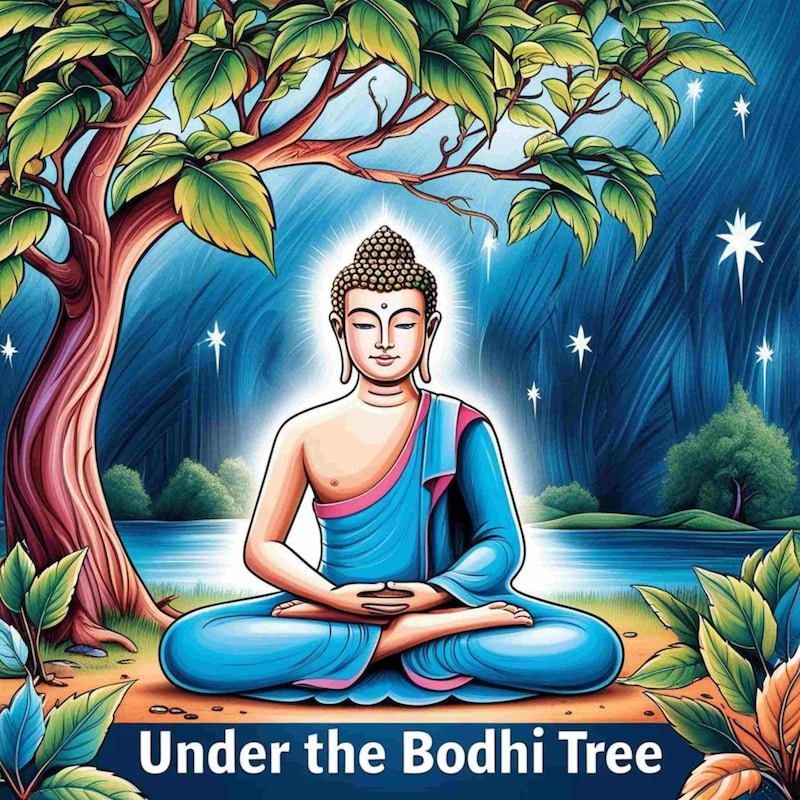
Eventually, he found something better. Balance. He sat beneath a big fig tree, later called the Bodhi Tree, and decided not to move until he found the answer to suffering.
He meditated for hours. Then something powerful happened. As the sun rose, Siddhartha felt a deep peace and understanding. He became enlightened.
Enlightened means that he woke up to the truth. How to live with love, wisdom, and kindness. From then on, people called him the Buddha, which means Awakened One.
He didn't keep his discovery to himself? Nope. He spent the rest of his life teaching others how to live peacefully and mindfully.
He taught that everyone can be kind and calm, even if they don't have a crown. So what do Buddhists believe? Great question, explorers. Just like Siddhartha learned under the Bodhi Tree.
Buddhists believe that all people can find peace inside themselves by being kind, mindful and wise.
They Believe that life has challenges like sadness or changes, but that we can respond to those things with calm inside, instead of getting stuck inside our frustration. One big idea in Buddhism is that everything changes. So even if you're having a rough day, it won't last forever.
Buddhists also follow what's called the Middle Path. Not too fancy like a royal palace, and not too extreme like skipping every single meal. It's all about balance, like Siddhartha found in his journey.
Or like Goldilocks, they try to find what's just right. Enough food, enough rest and enough kindness.
Another important part of Buddhist beliefs is compassion, which means caring deeply for others and trying not to hurt any living thing. That's why many Buddhists choose not to eat meat. And they try to be gentle with animals, people and even tiny bugs.
And here's something really beautiful. Buddhists don't believe you have to be a monk or live in a temple to grow wiser or more peaceful. Anyone?
Yes, anyone can learn to be calm, kind and connected to the world around them. That means you too. And guess what? Many of these ideas show up in other belief systems too.
Remember in our Baha' I episode, we learned about showing kindness and unity during Rezvan. Buddhists, Baha' Is and lots of others believe in caring for people, being peaceful and making the world a better place, just in their own ways.
So even if we believe different things, we can still share values like love, balance and helping others. Alright explorers, now it's time to go back to the night when Siddhartha became the Buddha. Imagine you're in a quiet garden in India.
The moon is full and bright above you. The grass is cool beneath you. A night bird is calling softly. In front of you is a huge beautiful tree.
Its branches spread like arms, welcoming you in. This is the Bodhi tree. Can you see the heart shaped leaves fluttering in the breeze?
Now look, there he is, Prince Siddhartha, sitting peacefully beneath the tree. He looks calm and kind. You walk over and sit beside him. He smiles and nods at you. You feel safe. You both close your eyes.
Let's take a deep breath together. Inhale and out. Good. Let's do that again. Nice. Deep breath in. Fill up your belly like a balloon. And breath out, letting any worry go.
Your body is still, your mind is calm. You feel a gentle warm light in your chest like kindness glowing gently inside you. It's almost like Siddhartha is feeling the same thing.
For a moment, you and the future Buddha are sharing this quiet peace. Now, very gently. Suddenly, Siddhartha opens his eyes they seem to shine softly in the moonlight. He has discovered the truth he was seeking.
He is now the Buddha. You sense his joy and serenity. Take one more slow breath. Now gently wiggle your fingers and toes.
If your eyes are closed, open them and the Bodhi garden gently fades. How do you feel? Maybe a little calmer. I know I do. You shared a moment of mindfulness. Doesn't that feel nice?
Even a short time sitting quietly and focusing on your breathing can help your whole day feel better. The Buddha loved teaching others to find peace inside themselves. And you just tried a bit of that.
Okay, explorers, now I've got a little joke for you to share with a friend. Ready? Why did the Buddha take a nap under a tree? Because he wanted to leaf his worries behind. Get it? Leaf like tree leaves.
Sometimes a little laughter is just what we need to feel light and peaceful inside. Now that we're smiling, let's dive into the beautiful Buddhist holiday called Vahsak. So what is the Saaq? Why don't you try saying that word with me?
The Sak Vesak is the biggest Buddhist celebration of the year. It honors three big events in Buddha's his birth, the night he became enlightened, and the day he passed into peace, which they call Nirvana.
Think about that. One holiday that celebrates a birthday, a breakthrough and a goodbye all in one. Pretty special, right?
May, on a full moon night in:First stop, Sri Lanka. Here, families hang colorful lanterns. Kids help make lanterns from paper, bamboo and bright lights.
People hand out free food and drinks to anyone passing by, even strangers. That's kindness in action. Next stop, Thailand. In the morning, people give food to monks wearing orange robes.
Later, they might set birds or fish free as a way of letting go of sadness or anger. At night, families walk around temples holding candles, flowers and incense. Last stop, Indonesia.
Thousands of people go to Borobudur, the biggest Buddhist temple in the world. Monks walk in peaceful circles and when the sun goes down, get ready for magic. Hundreds of glowing lanterns rise into the sky.
It looks like twinkling stars floating up into the night. Wow, wasn't that amazing? Different countries celebrate Vahsakh in different ways, and not always on the exact same day either.
But they all share the same message of kindness, mindfulness, and honoring the journey of the Buddha. Which celebration would you like to visit? Lanterns in Sri Lanka? Peace walks in Thailand, or monks in Indonesia? Let your imagination pick one.
Or maybe all of them. Now, who's up for a game? I am. This game is called Buddha Statues. Kind of like Freeze Dance.
But instead of dancing, we practice being calm, like the Buddha. Here's how it works. When I say Buddha statue, you freeze in place, like a meditating statue of the Buddha.
If you're at home or somewhere safe to move around, you can sit cross legged with your hands on your knees. Or maybe stand tall with your hands together. But if you're in the car, no worries. Just stay seated and imagine yourself as a calm, peaceful statue.
The key is to stay as still and as calm as you can, just like the Buddha. Then I'm gonna try and make you giggle or wiggle. If you move or laugh, that's okay. Just become a statue again. Let's see if you can stay Zen.
That means super calm through all the silliness. Ready to play Buddha Statues? Okay, everyone get in your pose and Buddha Statue Freeze. You're calm. You're focusing. Now imagine this.
A tiny tickly butterfly lands right on your nose. It flaps its wings. Tickle, tickle. Oh no. Can you stay still? Don't sneeze. Phew. It flew away. Did you move? If you did, it's okay. Reset.
Here comes another Buddha statue. Uh oh. A mischievous monkey shows up. He thinks you're hiding a banana. He tickles your toes and makes silly monkey sounds. Did you hold your pose?
Nice work. That monkey gave up. Okay, game over. You can unfreeze now. Shake out your arms and legs. How'd you do? If you giggled or wiggled, that's totally fine.
In our game, we practiced a bit of self control and focus. The Buddha had to do that too. When he was meditating, he had to ignore many distractions.
Staying calm isn't always easy, but it's something we can get better at with practice. Give yourself a pat on the back, statue champ. Before we build our friendship bridge, I need to shake out some energy.
So stand up and give me your best will. Maybe you can wiggle your fingers like glowing lantern lights. Now sway side to side like the branches of the Bodhi tree.
And one big stretch up high to the sky, reaching for those floating fossil lanterns. Nice. You're glowing with energy and ready to build some friendship.
Our friendship bridge is where we think of ways to be kind and curious with people who believe differently than we do. Each idea we come up with is like a wooden plank that connects Us. Plank by plank, we build understanding.
Our first plank, show respect for Buddhist practices. That might mean taking off your shoes before entering a temple, using a quiet voice, or never climbing on a Buddha statue.
Just like you wouldn't climb on your grandma's couch with muddy shoes, you treat other people's sacred spaces with care. Second plank. Try a vegetarian meal. Many Buddhists eat meat free meals, especially during Vasak.
Maybe your family can try a yummy veggie dish together. Who knows? You might discover a new favorite food. Third plank. Share a mindfulness moment. Invite your friend to take a few calming breaths with you.
It's a great way to connect, and you'll both feel more peaceful afterward. Want to make your friendship bridge even stronger? Think of your own ideas with a parrot or friend.
The more planks we add, the sturdier our bridge becomes. Keep building it whenever you meet someone who believes differently than you. It's time for our weekly challenge.
This week we have the tremendous challenge since we learned how the Buddha found stillness and enlightenment under a tree. Our challenge is to do a yoga pose inspired by a tree. It's called the tree pose. How perfect is that?
Our goal is to do that pose every day for seven days. Don't worry if you've never done yoga. I'll guide you through it.
This pose is about balance and calm, just like the Bodhi tree that sheltered the Buddha. All right, stand up. Stand up tall. Put your feet flat on the ground. Imagine your feet are roots pressing into the earth. Your body is the tree trunk.
Nice and straight. Roll your shoulders back gently so you feel proud and steady. Now slowly lift one foot.
You can rest it on your ankle, your calf above your knee, but don't put it right on your knee. Find what feels good for you for your balance. If you need to hold onto a wall or a chair for a moment, this might feel wobbly. That's okay.
Trees sway in the wind sometimes. If you fall out of the pose, just try again. Bring your hands together at your chest. Or stretch your arms up high to the sky like branches.
Whatever feels more stable for you. I like to put my hands together over my heart, palm to palm. Now you're officially in tree pose.
Focus your eyes on something in front of you that's not moving. It helps you balance. Take a deep breath in. And as you breathe out, imagine your standing legs foot is rooting even deeper into the ground.
Now we're going to switch legs, so try the other leg. I'll give you a moment while you switch. All right, we're going to hold it for five slow breaths together. Ready? 1. Breathe in, breathe out. 2.
You're steady and tall. 3. Sway a little. That's okay. 4. You're doing great. 5. Gently lower your arms and foot. How was it? Maybe one side is easier than the other.
That's totally normal. The challenge is to practice this tree pose every day. See if you can increase your time bit by bit. Perhaps today you did five long breaths.
Maybe in a few days you can do eight or ten breaths. You'll notice your legs getting stronger and your balance improving. Head over to faithfully explore.com to download your tremendous tracker.
Each day has a new suggestion like challenging a grown up to try tree pose with you. See who can hold it the longest. When you practice the tree pose this week, remember the Bodhi Tree.
Just like that tree helped the Buddha, your calm can help you grow too. After this episode, maybe you could draw your own version of the Bodhi tree or your peaceful tree pose.
Now that we're feeling rooted like trees, it's time to open up our Belief Backpack. Our Belief backpack is our special imaginary backpack where we collect symbols and lessons from each episode.
These help us carry what we've learned in our hearts and maybe even share it with someone else. Let's see what we can add from Fasak and the teachings of the Buddha. First up, a glowing lantern.
Buddhist light lantern on Vasak to remember the Buddhist enlightenment. The next time you learn something new or help someone understand something, imagine your lantern glowing a little brighter. Next, a Bodhi leaf.
This leaf comes from the very tree the Buddha sat under. It stands for compassion, which means caring deeply for others.
If you see someone who's sad, lonely, or having a tough day, let your Bodhi leaf remind you to offer a kind word or a helping hand. And finally, a tiny temple bell. Buddhist temples ring bells before meditation to help people pause and become mindful.
When you feel rushed, frustrated or distracted, take one deep breath and imagine this bell gently ringing, reminding you to slow down and feel calm again. Our belief backpack is now a bit heavier.
With wisdom, compassion and peace, these items will help us remember Buddha's be wise, be kind, be mindful explorers. This actually reminds me of our adventure into the Baha' I faith during the festival of Vrisvan.
The Buddha's teachings of peace and compassion connect beautifully with those values. Isn't it amazing how different faiths can guide us toward the same ideas? Like being kind, wise, and treating everyone with love. Now it's story time.
Get cozy, explorers, because I've got A traditional Buddhist tale that's been told for hundreds of years. It's called the Blind Men and the Elephant. Once upon a time, in a land far, far away, there lived a curious king. One day, he had an idea.
He invited six blind men from a nearby village.
Speaker B:I have something special I'd like to show you. An elephant.
Speaker A:None of them knew what an elephant was, so they were excited. The king brought out his gentle elephant and let each man touch a different palm. The first man touched the elephant's side. Oh.
An elephant is like a wall. Wide and flat and solid. The second man grabbed the tusk.
Speaker B:What are you talking about? It's a spear. Long and sharp and smooth.
Speaker A:The third man felt the trunk wiggle in the air.
Speaker B:No way. It's a snake. It's soft and moves.
Speaker A:The fourth man wrapped his arm around a leg. You're all wrong. It's a tree. Thick and round and sturdy. The fifth man touched the ear. Ha. This is a fan. It's flat, floppy and moves the air.
And the sixth man grabbed the tail. What are you talking about? It's clearly a rope. Thin and swishy. Then they started to argue. It's a tree, wall, rope. Fan.
Speaker B:Snake. It's a spear.
Speaker A:Each man thought he was right. They couldn't even hear each other anymore. The king raised his hand and smiled.
Speaker B:My friends, you are alright, but only partly. You each felt just one part of the elephant. If you listen to each other, you'll understand the whole truth.
Speaker A:The men paused. They took a breath and slowly they began to listen. They shared what they had felt and together they understood.
The elephant was all of those things and more. The first time I heard this story was in the form of a book called Seven Blind Mice by Ed Young.
It was when I was growing up, I came across this and I really enjoyed it. So if you would like to hear this tell again, but in this version it is seven blind mice that are exploring a mystery object.
Go to my website faithfully explore.com and I've got the link to that book Seven Blind Mice for you. You might want to check it out. But while I was thinking about this story, it made me think, have you ever seen something differently than a friend?
Like maybe you were playing a game and you thought everything was fair, but your friend didn't. Or maybe you had a different idea about how you were supposed to play the game or what the rules were. Now take a moment and picture that time.
Can you remember what it felt like? Now imagine what might have happened if you both listened to each other, just like the blind men in the story. What would you learn?
How might it help you understand your friend a little better this week? Try asking someone, what do you see? Or can you tell me more about how you feel? You might be surprised by how much you learn.
Just like the blind man with the elephant. Because just like the Buddha taught, listening with kindness can open up a whole new view of the world.
We're almost at the end of our Vasak adventure, but before we go, want a sneak peek of what's coming next? Next time on Faithfully Explore. We're tuning to something that people all over the world do every single day. Prayer.
Like the Buddha meditated to find peace. Many people pray to feel calm or thankful. But did you know that people pray in many different ways?
Some stand, some bow, some whisper, and some even sing. We'll discover what prayer looks like in different faiths and how it helps people feel connected, calm, or even brave. I hope you'll join me.
Time for a listener shout out. Sophie, age 7 shared with us. I like the part where we ran in place. I did it next to my dog and he thought I was playing with him.
That is adorable, Sophie. I bet your dog was so excited to join the fun. Thank you for sharing your joy with us. And keep it up, Explorer.
If you'd like to be featured on a future episode, make sure you send your recording or just a note like Sophie did to faithfully explore.com or on any of our social media. I want to thank you. Yes, you listening right now for joining me today.
By listening, you're helping make the world a little kinder, a little wiser, and a whole lot more curious. And I'm so glad you were here. If you celebrate Vahsak, I wish you a joyful day filled with peace and light.
And if you don't, now you know what it's all about and maybe you'll share that knowledge with someone else. Thank you for being a part of our faithfully Explore family. I'm Laura and until next time, I wish you lots of fun.
Exploring that means may all beings be happy. That's a wish many Buddhists say. And I wish it for you. Subtasuki Hantu. Goodbye for now, explorers.
