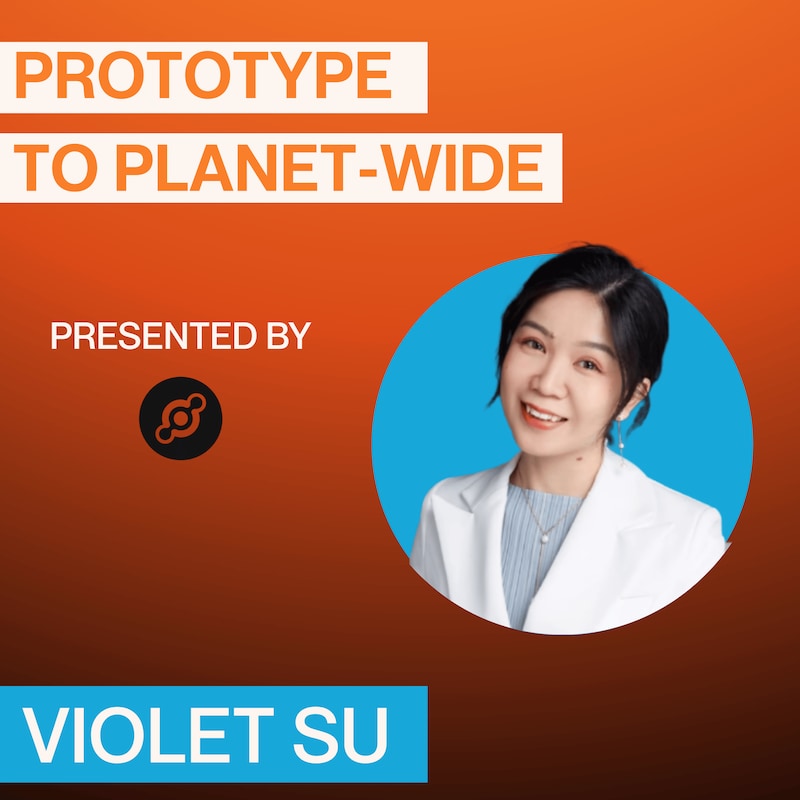
Shownotes
Violet Su, Business Development Manager at Seeed Studio, talks about how Seeed turns emerging technologies into practical LoRaWAN-ready solutions for industries, communities, and creators. She explains how the company bridges sensors, connectivity, and edge AI into a full stack that lowers friction for real-world deployments.
- Violet describes Seeed’s role as a hardware provider across the full chain: environmental, vision, and audio sensors; LoRaWAN, Wi-Fi, Bluetooth, and cellular connectivity; and edge devices for control and AI-driven analytics. She emphasizes Seeed’s mission to make cutting-edge technology accessible for prototyping and production.
- She walks through Seeed’s unique customization pipeline, which supports everything from a single prototype unit to large-scale manufacturing. This includes PCB services, assembly, certification, white labeling, and access to Seeed’s sales channels, enabling startups and solution providers to scale without building a supply chain from scratch.
- Community-driven development is central to Seeed’s strategy. Violet shares examples such as the LoRaWAN Data Logger, which emerged after repeated requests from users needing Wi-Fi-to-LoRaWAN conversion. She highlights how Seeed listens to feedback at events like The Things Conference, Helium meetups, and Maker Faire to inform new product iterations.
- Violet explains Seeed’s commitment to open source, including releasing tracker hardware that allows developers to modify firmware and adapt devices for unique needs. She discusses the balance between being a commercial company and fostering a thriving ecosystem where people can extend, hack, and repurpose hardware.
- Through the Tech for Good program, Seeed supports environmental monitoring, disaster response, marine conservation, and education. Violet outlines how Seeed sponsors hardware, collaborates with universities, and co-develops niche solutions that may not be commercially viable but deliver meaningful societal value.
- She highlights inspiring community stories, including Seeed Rangers like Robert Boggs, whose grassroots LoRaWAN projects in a small village gained global attention and demonstrated how open hardware and documentation accelerate innovation.
- Looking ahead, Violet is excited about AI+LoRaWAN capabilities: edge cameras that send only inference results, Semtech’s new chip enabling LoRaWAN image transmission, and the emerging potential of satellite LoRaWAN. She underscores that the protocol’s evolution continues to unlock new applications across conservation, smart cities, and remote sensing.
Guest Links:
- Helium Global IoT Coverage - Want to know if Helium coverage exists where you need it? Check out this map!
- Helium Foundation - The Helium Foundation's IoT Working Group (IOTWG) has generously provided support for the first 6 months of shows, please go check them out and consider using the Helium LoRaWAN as a primary or backup on your next deployment. With over a quarter million gateways deployed worldwide, it's likely that you have and can use Helium coverage.
- Support The Show - If you'd like to support the MetSci Show financially, here's where you can donate on a one-time or an ongoing basis. Thank you!
- MetSci Show - If you'd like to use our IoT or AI Data Value calculators, or you'd like to contact me, the MetSci Show site is the best way to do it.
- MeteoScientific Console - Use LoRaWAN - The MeteoScientific Console allows you to use LoRaWAN today. As long as you have Helium coverage (and you probably do, about 90% of populated areas in the world have a gateway within 2 miles), you can onboard a sensor. You can always check coverage at https://explorer.helium.com and switch to the "IoT" tab in the top right.
Transcripts
Today's guest
2
:on MeteoScientific's
The Business of LoRaWAN is Violet
3
:Su from Seeed Studio,
a global leader in AI and IoT hardware.
4
:Violet leads business
development at Seeed,
5
:where she helps turn emerging technologies
into real world solutions.
6
:From edge AI cameras on LoRaWAN
to full sensor to cloud stacks.
7
:In this episode,
8
:we get into how she thinks about hardware
for the LoRaWAN ecosystem,
9
:what meaningful
10
:customization looks like from prototype
through large scale manufacturing,
11
:and why open source and tech for good
are central to their strategy.
12
:We also talk about weather sensing,
community driven product
13
:development, and where Violet sees LoRaWAN
and AI heading next.
14
:This episode is sponsored
by the Helium Foundation
15
:as dedicated
to spreading knowledge about LoRaWAN.
16
:If you'd like to learn more
about the publicly available
17
:global LoRaWAN
they run, visit Helium.Foundation.
18
:Now let's dig into the
conversation with Violet Su.
19
:Violet, thanks
so much for making the time and coming on.
20
:You've got a busy schedule, so thank you.
21
:Thank you so much for having me.
22
:I'm so excited about joining this as well.
23
:It's I think you might travel
more than anyone else in LoRaWAN,
24
:or at least, as you said, over the past
couple of years, where where are you now?
25
:And we record this November 26th, day
before Thanksgiving.
26
:Currently I'm in Lymington Spa in England,
and it's a very cold here.
27
:A little, little chilly in England. Okay.
28
:Yeah. Cool.
29
:And for folks,
I can't imagine there's many of them.
30
:But for folks who don't know what you do,
can you walk me through kind of what
31
:your job description is and what you do on
maybe a daily or weekly basis?
32
:So myself my role is business
development assist studio.
33
:So Seeed is a company
focused on AI and IoT hardware.
34
:And my role as business development
basically my role in one sentence
35
:is I strengthen our existing partnership
and also look for new partnership.
36
:Right.
37
:And every time I go to a trade show
you are there for sure.
38
:So you get to to see a lot of what's going
on. Now.
39
:Seeed hasn't always been so hot and heavy
and I right.
40
:That's the last couple years.
41
:I remember getting a camera from you guys
maybe two years ago,
42
:and it was kind of,
it seemed like the beginning of our
43
:at least AI and LoRaWAN
for the general public.
44
:Yeah.
45
:I think for us, because zero is actually
in the middle of integrating technology,
46
:turn them into hardware
and then provide them either as open
47
:source hardware models or devices
for the industry.
48
:So we always try to adopt the emerging
technology and provide them as hardware
49
:so that people can access it more easily,
no matter for prototyping
50
:or for solutions.
51
:So in the past, it's not very heavy
52
:with AI, but recent years
it's been growing very fast.
53
:So we are right.
54
:The the AI camera with LoRaWAN.
55
:It was very new.
56
:We launch it.
57
:First in 2010, new tool
and LoRaWAN Expo in Paris.
58
:Yeah.
59
:And it was pretty exciting at the time
because it was the first kind of
60
:glimmer of, hey, let's do this
capture and compute right at the edge,
61
:and then just send the information we see.
62
:So I saw six people or whatever.
63
:We don't need to send the images.
64
:For me, that was a new thing back then.
65
:I'm sure for people in the industry,
66
:maybe it was not so new,
but it's pretty exciting
67
:because one of the things Seeed does
really
68
:well is make these really complex stacks
pretty accessible.
69
:If you think about,
70
:you know, camera vision
and putting all that stuff together
71
:and putting it into a lower one package
and then adding a camera
72
:and making the whole thing
work, like there's a lot of moving parts
73
:there, and Seeed does a really good job of
of putting all that together.
74
:When you think about what Seeed does,
how would you describe it
75
:to someone who's in the LoRaWAN business
who may not have heard of you guys?
76
:So I think,
77
:we can describe us as a hurry provider
who covers
78
:from the sensor part that it can allow you
to collect real world data,
79
:no matter is environmental or voice
or image or video.
80
:And then when you get the data
you need to transmit data.
81
:So we have different kind of connectivity
from LoRaWAN to Wi-Fi
82
:hello to Wi-Fi Bluetooth or cellular.
83
:And then when you get the data,
you need to know how to use the data.
84
:So we have the edge device
either for control
85
:or for more advanced video analytics
or with AI capabilities.
86
:So this is what we provide from sensors
to collect data, connectivity
87
:to transmit data, and edge
computing to process data.
88
:And then
89
:there's a fair amount of customization
that you guys do for customers as well.
90
:Right I know.
91
:I think Travis Teague
might have introduced us years ago,
92
:and he always pushes people to say,
hey, if you've got an idea
93
:and it's pretty cool, go to talk to Seeed
because they'll help you help
94
:you bring it to fruition.
Walk me through that process.
95
:What does that look like?
96
:Yeah, sure.
97
:So we do understand,
98
:like when we design a product,
we try to make it very comprehensive
99
:so that anyone in
any application can use it.
100
:But of course, be very comprehensive.
101
:Then it might be overkill
for certain scenario.
102
:Or sometimes
we think it might cover the knees.
103
:And in real world application
it might not.
104
:So we know that no matter how much you
want it to be perfect or to be suitable
105
:when it comes to a real world application,
it might not.
106
:So we open up our capability
to help customers with customization.
107
:So basically it goes
from the very beginning a prototype
108
:that you can use our model
to build your own prototype.
109
:And then when it's done
you can use our fusion PCB and piece
110
:be assembly service
to make a small batch or production.
111
:And then when you finish the small
batch production and then you manage
112
:a large volume of production,
113
:then we have our whole supply
chain manufacturing services
114
:to go to very large volume of production,
including like certification.
115
:And also even for some customers,
they say, oh,
116
:I have this batch that I can provide
for the customer, but what next?
117
:So we even open up our marketplace
like our online store,
118
:our sales channels
for selling them as well.
119
:So I think for customization
is in the whole like a package
120
:from prototype to production
and then also promotion and sales.
121
:And then when you're saying small batch,
at first
122
:there may be someone listening to this
that has an idea and they want to do,
123
:you know, 10 or 100 or a thousand.
What does small batch mean?
124
:Like what is that?
What are those numbers like?
125
:It's a very good question because I think
if you talk
126
:to a very traditional manufacturer
and say a small batch of them,
127
:I say 10,000 of them, there's a small
one for us, it is actually
128
:can go from one, one unit
or even or maybe five units.
129
:So it really depends because for example,
if you have a design ready
130
:and then you can upload the global file
and the build a material.
131
:And if you only manufacture one units
and it might be more expensive
132
:by the unit price. Right.
133
:But it can go from one or 5 or 10.
134
:So we we really try to make it very simple
135
:for people
to make what they want to make or like.
136
:When we talk about customization,
if we want
137
:the one that we have already, but
you want to the solution to be consistent.
138
:So your software is your brand,
but then you want the hardware
139
:or the whole solution
that you provide to the end
140
:customer is consistent
with the same brand.
141
:So for white labeling then
it can also start from very small batch.
142
:Maybe can like just make one.
143
:Of course
144
:it might be more expensive then say okay
maybe ten, then it's more reasonable.
145
:Yeah, that's super cool to know.
146
:But I've always got little projects to
to put in.
147
:I'm always like mucking about, okay,
148
:but maybe it's
just easier to go to see it,
149
:especially since you guys are so familiar
with LoRaWAN, which is where
150
:I usually kind of drift
to for for fairly obvious reasons.
151
:Walk me through the community piece
you guys are really big on community
152
:and that's a large part of your job.
153
:Tell me how you think Seeed fits
154
:into the global LoRaWAN community
and what you're doing with it.
155
:So I think it for as community
is always in the heart of our business
156
:and also the whole companies operation
because like the company
157
:was born out in the community
very beginning from Arduino.
158
:And then we have Raspberry
Pi series products.
159
:So when we design something,
we listen to the voice
160
:from the community about what they want
and then we make them so.
161
:And also for LoRaWAN, it's also from
the community like the things conference,
162
:like the things industry.
163
:And also helium is all community
based project.
164
:So for us, we we heard the noise or
165
:like behind the voice from the community
and learn about what they want.
166
:And then we make the product.
167
:And even when we, we know,
oh, maybe the customer want this one
168
:and they want to make them.
169
:But it's not that we think in our own lab
and make them.
170
:For example, one of the product
171
:that I am really proud of is
we have a LoRaWAN data locker.
172
:So it kept after we already
173
:launch a few units of the US,
no end nodes like sensors.
174
:And then people asked us like,
oh, do you have a data that can convert us
175
:for if I to LoRaWAN to oh, okay,
that seems interesting.
176
:But then when one person told us about it,
177
:we might market somewhere like,
no, didn't someone who owns it.
178
:But then we would talk to more people,
no matter
179
:from online or offline communication.
180
:We realized that a lot of demands
and that.
181
:So we talk to our team
and then we turn into products.
182
:So this is a very typical past that we
learned about the news from the community.
183
:And then we make them.
184
:And then when we heard more of the needs,
we might have new versions coming out
185
:that can cater to the wider niche
or maybe a smaller but niche needs.
186
:Got it.
187
:Yeah, it's super cool
188
:to see what you guys are doing
189
:and then walk me through this other
piece of open source.
190
:I know that's a really big part
of what you guys are doing.
191
:So for us,
when we talk about community, also,
192
:many people think about like,
how easy can I use the product
193
:and if it is open source
then it is easier for people to like
194
:put their somewhere on it
or even maybe change closure for it
195
:because we have all the design file
already there.
196
:So for us, we have a lot of our products
that are open source,
197
:or maybe at the very beginning
it is not open source.
198
:And later we realized that a lot of these
and by open sourcing the product,
199
:it will make it easier.
200
:So another example is we have our tracker.
201
:So we have our since capture 1000 tracker
a different version of them.
202
:And we have like the one version
have sensors, the other doesn't
203
:as AMD also have another version
that is supporting mesh tastic.
204
:And many people ask us and say, oh,
I wanted to use this,
205
:but with this other functionality like not
press button twice for S.O.S., but once.
206
:Or maybe I want to the lead color
with demand integration.
207
:Is that so?
208
:We are thinking,
it will be customized for them.
209
:On the one end, we need a lot of resources
within our team,
210
:and then maybe we have other projects
that occupy the team's resources already.
211
:So I think this year
we will release tracker
212
:and it is open
source two that is supporting LoRaWAN.
213
:And then you can put your own on there too
and develop for your own needs.
214
:So for us, open source
is also something that
215
:on the one hand people are thinking about
if it is open source,
216
:how can you make money?
217
:And on the other hand, people are thinking
about open source is really awesome.
218
:So for us, we understand when we open
source it, we might get copied.
219
:But on the other hand
we understand by open
220
:sourcing our products
it help the community thrive
221
:and help people adopt
and use our products in an easier way.
222
:So it is something that we always hold
dear to our heart
223
:and we try our best to balance this.
224
:Like on the one hand,
we are business companies
225
:that need to grow with our business,
but on the other hand,
226
:we want to see how we can grow together
with a community.
227
:Listen to their voice
and also to support them.
228
:And open source is one of the important
ways that we support the community.
229
:Yeah, yeah,
that's always the the question.
230
:I mean, for smaller makers,
it's a little bit easier to open source
231
:everything because for many projects
it just doesn't make sense for a company
232
:to come along, make 10,000 of something
that nobody really cares about.
233
:But for you guys, it's
it is pretty important.
234
:It's cool
to see that you guys are doing it.
235
:It's a nice segue into tech for good.
236
:Can you walk me through what what that is?
237
:Yeah, definitely.
238
:So I think it's all interlinked, right?
239
:Within all this different concept
that we hold as a like what we talk about
240
:and what we do.
241
:So when we talk about technology, on the
one hand, sometimes it might be daunting.
242
:People are thinking about,
243
:oh, this kind of technology,
is it more harmful or is it more useful.
244
:So on this, in this case,
245
:I think what we try to do
is we want to spread the technology
246
:at least like educating about it
to make it easier for people to use.
247
:So I think like currently
now we are talking in
248
:this podcast is a way to spread the word
about
249
:the positive side of LoRaWAN
and also about its application.
250
:So I think in this way
it can be put into the wide
251
:scope of education of the technology.
252
:So we do put a lot of efforts in that
no matter with individuals,
253
:we have some of our partners,
we call them arrangers.
254
:So the workshop in Local Community
Online is a tried to educate
255
:people about different kind of technology
to get hands on how to use them.
256
:And also we collaborate
with universities, institutes,
257
:with professors, students
and show them how to use the technology.
258
:So this is one thing.
259
:What about how we can make technology
easily accessible
260
:with the materials,
with the content, with the support?
261
:But on the other hand,
we also support the community
262
:with tech feel Good
about how we can use technology
263
:in a scenario that can alleviate disaster
or get an early response.
264
:Or maybe for like a marine conservation.
265
:Is that so?
266
:When we talk about LoRaWAN, I think that
the merit of it is very outstanding
267
:how it can be able to deploy it
and collect data from a very remote area.
268
:But in this case, some people, on the one
hand, they may not know this technology
269
:or on the other hand,
when they know this technology,
270
:it might be difficult for them to use it.
271
:If it is not robust enough
or if it is too complex
272
:with too high requirements
for like tech stack.
273
:So what we try to do is on the one hand,
we might sponsor some of the products,
274
:and then we also provide our team
or our community partners
275
:supported to
to help them with the deployment
276
:or the the integration
and on the other hand,
277
:when it comes to the specific scenario
about the knees,
278
:we might co-develop certain projects
together with the community,
279
:because the ones that we have right now
might not meet the needs.
280
:Then we can work with them together
and say, hey,
281
:we understand
this kind of data is important
282
:and we don't have them in our
in our roadmap.
283
:And it might not be enough to turn into
a product that can sell with a high ROI.
284
:And then in this case,
we would take it as a kind of project
285
:that we put it
under the program as so good,
286
:so we could develop this project,
and then it might not be profitable,
287
:but it will be able to deploy it
in this scenario.
288
:And then other people
see how it can be used in this way.
289
:Then it might attract more people
to use it as well, and eventually
290
:it might turn into a commercial project.
291
:And so the the partner who design it
with as
292
:they are able
to turn the ideas into products as well.
293
:So I think in.
294
:Net we could then divide it in a very
clear way about which one is for profit.
295
:And which one is not for profit.
296
:But what we always try to do
is to steer it in the way that we show
297
:technology is accessible, technology
298
:is like easy to use, like practical.
299
:Sure. Yeah. Nothing theoretical.
300
:And also technology is not something
that is up in there in the book,
301
:but also to the s that you can
302
:literally like solidly touch it
and then use it
303
:for something that is influencing
in our daily basis as well.
304
:Yeah, it's so cool.
305
:Super cool to see what you guys are
are doing with that.
306
:I would be remiss if I didn't mention that
that one of your Seeed Rangers
307
:is Robert Boggs.
308
:Yeah, and I don't think
I've seen anyone more stoked to.
309
:To go to what?
310
:He just went to the Maker Faire
in Shenzhen.
311
:Yeah, right.
312
:So yes, definitely.
313
:So I think it again, I think this is
an example of how something
314
:that can be tiny from a certain scope,
when you look at it like a robot always.
315
:That is from a small village and he's
building something that no one cares.
316
:But then, I mean, he's been inspiring
317
:a lot of people,
and now we are talking to like, Robert.
318
:And there's another a partner, Tom,
you ought to interview him, right?
319
:Oh yeah. Yeah.
320
:So I think they
they are some of the examples of like
321
:how an individual feels something that is
influencing that the local community
322
:and then gradually
it grows the impact to a wider audience.
323
:So he came to make a fish and then
and then he sort of spruce there.
324
:So what he did for the village,
with a lot of end solutions
325
:for environmental sensing, climate data,
and also about the swimming pool.
326
:And so many people are talking with him.
327
:And then some of them
might even not speak English well.
328
:And then they use translation.
329
:And then talking about
330
:how his documentation online will be able
to help them build their own solutions.
331
:So I think those kind of projects
or individuals,
332
:these are really inspiring us
to to move forward and say
333
:this is something that I'm proud of,
and then we want to do more.
334
:Yeah, yeah.
335
:It was it was rad to see his documentation
of the whole thing.
336
:And it's really cool to see that
you guys have this really kind
337
:of ecosystem
mindset versus just just product.
338
:Maybe we wrap this thing up with you've
seen a lot of what's going on in LoRaWAN.
339
:What are some things that you wish more
people knew about either Seeed or LoRaWAN,
340
:as you just travel the world and
and gain insight?
341
:Yeah, I think sometimes
when we talk about technology,
342
:it might be a little bit isolated
when it's like in this technology
343
:specifically because, for example,
I think when we first launch the camera
344
:that we mentioned earlier
during this conversation,
345
:the first thing people talk to is like,
346
:oh, a LoRaWAN couldn't send image,
then how can you do that?
347
:So I think there are two things
about LoRaWAN that excites me.
348
:And then I think I want more
people to know is on the one
349
:hand, you do not necessarily
send to the image, right?
350
:Because you just need the result,
351
:even though you send the image
through Wi-Fi or something,
352
:eventually you want to know
what happened in the image.
353
:So you all need the result.
354
:So the good thing about it is now
we can combine AI with LoRaWAN.
355
:So so is I kept saying like
with this camera, if you train the model
356
:for butterfly, then you're able to call it
a butterfly sensor.
357
:And then you send the data
when it detects butterfly or not,
358
:or maybe detect this kind of butterfly
or the other kind of butterfly, like for
359
:for conservation. Right.
360
:But on the other hand,
I know that Semtech has a new chip
361
:coming out and then it can support
sending image as well.
362
:So like we can never be limited
with the development of technology.
363
:So now like when I introduced the camera
I was like, oh I know Lora,
364
:when you couldn't send image of a Laurel
and now I need to change it to like, yes.
365
:Now you can send image by LoRaWAN as well.
366
:So this is something very exciting
and I know is very new with the chip.
367
:But I think we will have the development
kit coming out very soon.
368
:I couldn't help but thinking about
369
:what kind of application
that people can make with this new chip.
370
:And who knows, maybe
371
:in a few months or like in a year or two,
there will be other chips coming out
372
:and then we can get even more data
with LoRaWAN
373
:and or like
maybe it reach a wider range or like
374
:now we are also talking about LoRaWAN
with like satellite as well.
375
:So this yeah, just a lot of excitement
and a lot of possibilities
376
:which very excited about.
377
:Yeah, it's a great time to be alive
and in the LoRaWAN ecosystem.
378
:I know that Alper was talking
379
:just the other day in his AMA
about the satellite side.
380
:So that's super cool to see
come down the pipe,
381
:but I know you're super busy travel a ton.
382
:Thanks for carving out some time
to talk to us on The Business of LoRaWAN
383
:thank you so much for having me.
384
:I'm looking forward
385
:to learning more about different kind
of LoRaWAN applications from your podcast.
386
:That's it for
387
:this episode of The Business of LoRaWAN.
388
:I built this for you.
389
:The one person in about 100,000
who actually has an interest
390
:in how this tiny little slice of the world
works.
391
:Of course, this isn't just about you
and me, it's about everyone in law
392
:and how we can work together
to make an exceptional thing.
393
:LoRaWAN is a dispersed community
with little pockets of knowledge
394
:all around the world,
and most of them don't
395
:talk to each other as much as I'd like.
396
:So the first and best thing
we can do to make this show better
397
:is to get more guests
on who I don't even know exist.
398
:I want to talk to strangers.
399
:Strangers who are your friends.
400
:Please
introduce me to the most rad LoRaWANeer
401
:you know or point to my way, or reach out
and give me a name.
402
:When it comes to running down
LoRaWAN guests, I can track a falcon
403
:on a cloudy day.
404
:If you can remember Mexico,
you can find me.
405
:That's m e t s ci dot o w.
406
:That's Rico.
407
:Okay, so sharing knowledge
by getting great guests on is the first,
408
:and by far the most important thing
we can do to make this better.
409
:The next best thing for the show to do
is the usual stuff.
410
:Subscribe to the show, give it a review,
share it in your corner of the world.
411
:Again, that's Matt's sideshow.
412
:Finally, if you want to support the show
413
:financially, you can do that
over at support Dot Net Sideshow.
414
:You'll see options there
for one time donations.
415
:If you really like this show,
as well as an ongoing subscription option.
416
:If you think the show is worth supporting
for the long term.
417
:If you want to try LoRaWAN for yourself,
sign up for a scientific account
418
:at console dot medio Scientific Comm and
get your first 400 data credits for free.
419
:That's enough to run a sensor for
about a year if you're firing every hour.
420
:The show is supported by a grant
from the Helium Foundation and produced by
421
:Crystal King, Inc..
422
:I'm Nick Cox.
I'll see you on the next show.


