Shownotes
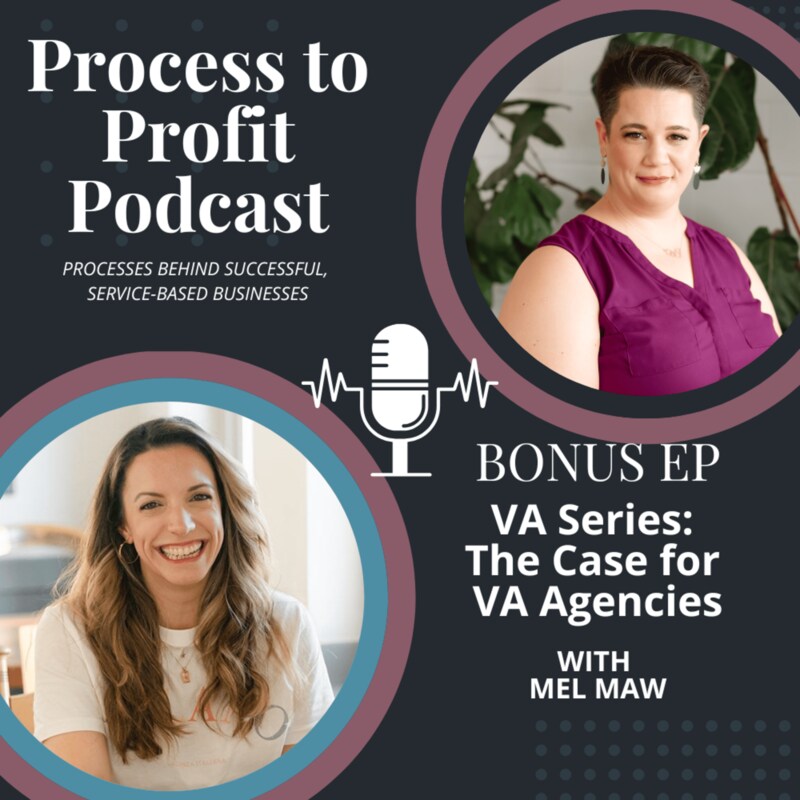
In today’s episode, we’re diving into a fresh perspective on hiring VAs—through agencies. Mel Maw, founder of Lifestyle Virtual Assistant Agency, shares why working with an agency can take the stress out of hiring and supporting a VA. If you’ve been skeptical about VA agencies, this conversation will open your eyes to the benefits for both entrepreneurs and VAs.
Connect with Mel:
- Threads: @lifestyleva_agency
- Free Guide: [Download Mel’s Service Guide Here]
Resources:
- VA Roadmap: Download at LaurenGlynn.com/resources
Show Notes: https://laurenglynn.com/20
Mentioned in this episode:
📌 Free Workshop — Realistic Week Planning for Delusional Entrepreneurs
Stop doing all the things and still feeling like you did nothing. Join Lauren’s free 60-min workshop on Thursday, July 31st at 12PM EST and walk away with a realistic plan that works for real life.
Transcripts
19.5 - Mel Maw Interview
===
Mel: if you're coming into an agency like mine, I've done all this interviewing and the screening of all these different VAs. I know exactly the qualities very quickly within a quick zoom with a possible VA as to whether they're going to be able to actually do the job
and then if there's any gaps, I will train them. I will fill in the gaps and I will be there to give them complete support Welcome to the process to profit podcast, where we find out about the key processes and productivity techniques that drive successful service based businesses. Whether you're just starting out or looking to scale, join us as we uncover practical strategies to streamline your operations and help you make more money by boosting your profitability.
Lauren: Let's get started. My guest today is Mel Maw. Mel is the host of the Delegate Like a CEO podcast and the founder of the Lifestyle Virtual Assistant Agency. They provide expert business and lifestyle support for impact driven CEOs, entrepreneurs, and change makers offering services from calendar and inbox support and business admin to travel expenses and personal lifestyle management. Mel thrives on making clients lives more productive and less stressful, enabling them to be happier and more time rich.
I wanted to invite Mel on the show to talk about my VA series that you all have been hearing lately so she can correct any mistakes that I have may have made and also give her view on hiring a VA using an agency because she runs a VA agency and I was maybe not super complimentary on agencies in my episode.
Mel has already listened to it so she So I wanted to invite her on to give you all another perspective and to maybe challenge some of my own views and, you know, see what the other side of the coin looks like. So Mel, thank you so much for being here.
Mel: Oh, it's my pleasure. And I love, I love these discussions because you've got to see it from all angles. So I'm all up for discussing it.
Lauren: Great. Well, I already gave your bio, but why don't you tell everyone a little bit more about your background and who you help and how you're running, we're used to be running two businesses and how maybe just running one, uh, tell us a little bit more about who you are.
Mel: Yeah. So, uh, long story short, I'm an ex music industry, um, person and I had a huge health life crisis and I took, Practically the most middle aged sabbatical that I could take from my job and went out to Bali, and I met all these digital nomads who told me everything about virtual assistants. And I thought, how did I not know this was happening?
Cause at the time I'd gone back to being like an executive assistant for CEOs and chairman and high net worth individuals. And I loved it. Cause it was my way of. Taking care of people by using my organizational geek side. And so, yeah, I came back from the sabbatical with a fully formed business and clients and moved back to London.
Um, and then the pandemic hit and it grew and within, I think, nine months I was hiring associates. which are, uh, VAs that I contract the work out to. And within, I think, two and a half years of the business, I'd actually stopped doing the VA work myself, um, so that I could grow the business and focus on the marketing.
Cause then another side of the business emerged, which was business coaching for VA. So basically the route that I'd taken, I was then helping other women get their businesses started. And it all got very overcomplicated. And so as of January this year, I stopped doing business coaching just purely to focus on the agency and come back to the thing that I just really love the most.
So yes, and we look after incredible people. I'm so ridiculously lucky with the clients that we have from people who are making apps that we all use across the world to ones that are trying to change legislation, campaigning for, you know, coding to be on the curriculum for education. We have worked with some amazing clients.
So. I've got to have a really strong agency to look after people like that and I'm very proud that we do.
Lauren: Yeah, it sounds like you're really supporting some important people. Are they all over the world? Are they locally based? How are you, who are they?
Mel: They are 90 percent within the UK. So they are all British entrepreneurs and founders and changemakers and entrepreneurs from like small businesses and solo entrepreneurs who sort of at that six figure tipping point to, you know, multinational global businesses, um, with hundreds of staff. So it's a real mix, but they're all very much impact driven, which I love.
So they're good people. They're nice people.
Lauren: Yeah, great. And what kind of criteria do you have for your clients? Or do you have criteria? Like, do they have to have certain processes in place? Do they have to, um, you know, have their business structured in a certain way? Or is it just, come to us and we'll figure out a way to help you? How does that work?
Mel: Good question. As you were saying that question, I was like, my criteria is no assholes allowed, but that's not what you finished up asking. I
Lauren: fair, that's a good criteria to have also.
Mel: Yeah, and in the beginning you do take all the clients, so you
Lauren: Mm hmm.
Mel: flags are. Um, but in terms of the business sizes, the, the main thing that I, I need those clients to be, have and do, I think is, Really have an open mind about receiving the support because there's so many people that get to the point where they're past needing support and then they bring us in, or they think that they're hiring in a hurry and they're off traveling for the next two weeks and then it just gets off to this rocky start.
So the size of the business or the structure of the business doesn't matter, but it does depend on. Really being quite firm with the boundaries of what we do, because a lot of people out there are like, I need someone to do my social media whilst doing my calendar. And we're talking about calendar inboxes for, you know, CEOs at global international levels with some of the most important people in the world.
And then you want the VA to also be really good at social media. So we hold a boundary around, we do the business side, but we don't do the creative and the social media. We can find that person for you, but we won't do that. So it's really. Helping business owners understand exactly what they need and what we do and how we fit into that.
And we always recommend out if it's something that we can't do. But the size and structure of the business doesn't really matter. It tends to be, and the reason I say it's six and seven figure, um, entrepreneurs and CEOs is that's usually the point where they've got enough profit to be thinking about these services or they've hit a plateau and they are really time starved and they're just in the weeds are doing a thousand tiny things like.
Table tennis, you just, you know what I mean, in their inbox, going back and forth, just get meetings set up. An hour spent doing that is such a waste of their time, which could be used way more profitably. So they're usually at that tipping point and the income is also at that kind of six, seven figure tipping point as well.
So they're really starting to think like, But how do I do this? Like, I don't, do I need some more full time? So it's usually that point where we catch them and then we help them build out their businesses in a more organized and streamlined fashion and just, yeah, nerd out on making sure they, you know, do everything on time.
And they can also just then be present with their loved ones. A lot of them just simply want to be able to switch off at the end of the day. And so that's kind of a, a nerdy but beautiful gift that we get to give them.
Lauren: Yeah. And that's, you know, similar to my clients. They're, they're at that tipping point. They know they want to do more. They just don't have the hours in the day to do more, you know, and I can, you know, you help them with the personal personnel side and I help them with sort of the more operation side. So do you also help with the operation side?
Like do people have to have the systems in place or is that something you can help them set up? What does that look like for business owners who are coming to you?
Mel: Well, I will always rely on between what, you know, the industry sees as an online business manager and a virtual assistant. So one is a strategic and big minded and planning online business management. And sometimes they're very tech savvy and they will get their systems together and build them versus a virtual assistant who is basically someone you're delegating your everyday tasks to, and they're responding and being reactive.
So we stay on that side of the fence, but there's a whole, you know, great big black book that we have of operations pros that we recommend clients deal with sometimes because I'll be the first person to say to a client you need systems before you need a VA because there's so much that you can automate and put in place where you're gonna have someone that you're expecting to you know move the the earth and the moon for you but they're just a VA so actually A lot of times in that discovery call I can figure out whether they actually need us or they need systems for Est and if it's systems then I will happily give them glowing recommendations of awesome pros that would really be way more beneficial.
Lauren: Yeah. Yeah. And I actually did a whole episode on the difference between a VA and OBM and an executive assistant. So I will link that below for anyone who wants to check out all of those differences. But it's, I agree. It's very important. You have to have those systems in place before you can bring someone in because that is not that person's role to help you.
They can help you refine the systems probably, and they can help you, you know, clean them up a little bit, but they are not the, the person who should be designing them.
Mel: No, and don't get me wrong. We are absolutely genius at setting up like a task management system like Asana or ClickUp or Notion. Those are the things that we will do. But at the most basic sort of level, I guess, to be able to run their lives and give them that flow of communication. That's what we can do.
But the bigger builds and, you know, the Dubsados bigger things, not, not our bag.
Lauren: And that's my bag. So you can talk to me about it instead.
Mel: Exactly.
Lauren: So one of the things I did mention in my finding a VA series was that agencies were maybe not always the best place to start because there is a lot of exploitation in the industry. And there are a lot of people that take advantage of, um, lesser developed countries and people who will work for less and then sort of pocket the difference.
So how does your agency handle that? Do you? Do you work with local people? Do you work with, um, you know, less local people? You know, how does that, how do you handle that? What does that look like in your particular agency?
Mel: Yeah. And I think when you talk about that exploitation, I think we have to be so aware of the relative cost of living in each country. We're probably talking here about, you know, hiring VA's from the Philippines for sort of 5 an hour, and that's relative to their national living wage. But when we have a much larger.
You know, national living wage ourself, and we're paying people in another country a fraction of that. That's when we get towards that kind of ick ness. And I think that's, it really depends because I'm not going to sit here and say you should never hire a VA from the Philippines. There are certain, you know, there's so many VAs out there that are incredible at what they do and they serve a purpose and they do it well.
And I'm all for that. I think it's about, I see a lot in Facebook groups and VAs in the UK. about, uh, people asking for associates, which are the subcontractors, basically the employees, but without payroll, um, in the UK. And they are asking, you know, them to do jobs for, you know, 12, 15 pounds an hour. And to give you the perspective, average for a VA out here should be 27 to 30 pounds an hour.
That's for, you know, a lead VA charging lead VA rates. And when they're asking them to come in so much lower that they're barely left at the, I actually wrote down the national living wage, um, for this country and it is 11 pounds, 44 an hour. So when you're looking at charging 15 pounds, someone's got to take all of their taxes and their expenses off.
So you're losing at least 30%, 40 percent even that brings somebody below national living wage, and I have such a huge problem with that. So I will practically pay. double living wage for everyone that works for me. They are UK based. I think 95 percent of my team are UK based. I've got a, an English expat working in South Africa.
Um, but that's it. Everybody is in the UK and they're paid fairly and squarely and in line with our industry rates as well, because. That's where the exploitation happens and you just get new VAs going, Oh, well, you know, I need to get experience and I'll just take this, you know, this client for 12 pounds an hour.
And then they set their baseline of expectation there, or that's the, that's the sum that they align themselves with. And it becomes very hard to suddenly go, well, you should actually be charging 27, 28 pounds an hour or, you know, and it's just so hard to come up from that. So I, that's, that's, I have a huge problem with that for sure.
Lauren: Yeah. And that's a big jump for someone to suddenly double their rates. And you know, there's, there's, it's a big psychological hurdle to get over. So it's, it's really hard to kind of Come up from that too.
Mel: And it's so hard when you start your business, you are solely responsible, especially if you've been an employee, you don't even understand at the beginning how much you have to spend on, you know, getting your Gmail app or your website, your software's or your zoom subscription. So there's all these little bits.
Plus you're suddenly trying to figure out. what to charge and it's a lot of pressure and you are sort of almost coded if you've been an employee somewhere previously that how dare I, who am I to charge this? You're like that seems audacious to actually earn more than my day job before if you broke down your like salary into your hourly that it's such a big mind gap, like mindset gap between even starting as a VA and then earning what you're actually paying.
Basically should be charging as a minimum. So it's, there's a huge mindset leap with money for sure.
Lauren: Yeah. So let's talk a little bit more about the business side. So what's the difference or the benefit between hiring, you know, I'm a business owner and I want to hire a VA. I already have a VA, but I'm going to hire another one. What's the difference or the benefit from me finding a VA on my own, uh, versus hiring your agency to hire a VA.
Mel: It's a good question. So I can only speak for the way that I do things. So that's, that's where I'll speak from. Um, for me having an agency and one of the, one of the most important things is the match with the client and VA, right? So whether you're going off to find that on your own, you still have to maybe meet a few people.
And you know, you're, you may not have a way to screen them. You may just be going, what do I need? How do I find this person? Uh, you know. Real sort of deer in the headlights. And if you're coming into an agency like mine, I've done all this interviewing and the screening of all these different VAs. And when I get to the level of the type of clients that I have, I know exactly the qualities very quickly within a quick zoom with a possible VA as to whether they're going to be able to actually do the job, you know, and so they're screened.
And then if there's any gaps, I will train them. I will fill in the gaps and I will be there to give them complete support so that there's never any, uh, Oh, I don't know how to do this. That VA has constantly got a backup of an agent, Siona and the entire team. So this is kind of almost knowledge pool as well.
So you get that plus. If, for instance, one of our team, um, one of our biggest contracts has gone off on maternity leave and we've just seamlessly organized the switch over and the client had a huge say in who was chosen. It was almost like the first process that I do, which is to get the download from the client, figure out who they are, what they need and.
Obviously, I've been doing it for so long that it becomes naturally to me to know exactly what you do need. You can be telling me something, a word formatting at me, and it's almost like I can just decipher exactly what that boils down to needing. And then I can find that person. And that's the kind of innate skill that you have within the agency owner, is they're not depending on the agency.
For me, I care very much about the match, right? It's for the benefit of the client long term benefit of the VA long term. And getting that match right means that You know, you have a better chance of having a happier client. And when you've got someone who goes, well, if I'm going to have another baby and what happens when they go on maternity leave, we just switch them out.
But we'll find you, we use exact same process all over again and find you the next best person. You know, they have big shoes to fill, but we always do it really well because just the level of care I think that I put into it, it just matters. These, these are human beings. You know, they're not just paychecks to me.
Hmm.
Lauren: you said, you know them very well, and so you know whose personalities are going to mesh, you know what skills they need, so it's helpful to have someone that already has a pool to choose from because, you know, in the episodes I talked about how, you know, you can put out an application, and then you do interviews, and then you might do a test project, and then you might do another interview, you know, if you have a lot of really great test projects, and
Mel: Well, yeah, you, you said. You said you had like 144 applications or something,
Lauren: Yes,
Mel: which is just terrifying to go through, right? And then you just think, and you're looking at words on paper and then you've got to meet the individuals as well. And you're hoping that, you know, you know what you need when you meet the person, it's a lot,
Lauren: Right. And it's, it's a lot of time for a business owner to be spending, you know, finding these people and then screening them. And then, you know, if it, if you do hire them and it doesn't work out, then you have to start all over again. So it, there are, it sounds like a lot of benefits to, to hiring an agency, but what is the, um, The cost difference.
So if I were to go out and hire someone directly in the UK, what would it cost me as a VA, uh, to find a VA versus hiring or working directly through your agency?
Mel: Most agencies cost the same, as the hourly rate is the same to work through an agency at the level of VA that you need, right? Because everybody charges differently. So we're, I would say, the higher end of the bracket with my agency, because of the calibre of VAs that we have to have for the clients that we need.
Um, so, if you were going off to find a VA on your own, you would literally be expecting to pay the exact same rate that I'm charging you. That's it. That's how it should be anyway. It's not always the way it depends. And then, as I said, I passed down a very fair, um, hourly rate to my team member at the same time to that VA.
So, you would really not see a lot of difference between hiring through an agency and hiring on your own in terms of cost.
Lauren: Okay. And how do you ensure that their work is quality, that it's consistent? You know, you're, I know you're hiring and you're interviewing them, but then you're kind of sending them off to just work with the client. So how do you know that they are maintaining that quality that you expect of them?
Mel: So it's all about the training and the onboarding for my team member. So my VAs that I bring in and then pass out to the clients, they are all very much trained. And for, as I said, for the knowledge gaps, we have a huge bank of SOPs. So I was very clear in the beginning. I was like, right, if I want someone to do work, like I do, and I have to step back for me, I was learning the art of delegation, you know, year into the business.
And that was just, you know, terrifying, the idea that someone's going to do work for me, but not maybe do it the same way. So I was like, how do I recreate this in a way that they can follow? So it became all of the SAPs. And it even just started with, I write a man, I wrote a manifesto that still stands five years later about who we are, how we do things, why we do things, the vibe, you know, everything from, you know, I always support my VAs to come exactly as they are.
Kids, dogs, get it done, you know, hairs a mess, makeups. Like, once the client is through the door, we're very much honest about who we are. We're not sort of like blouse and twin set and blow dries every day, you know, because getting the work done just, It doesn't matter. Just get the work done to the best standard.
So it's always about training, expectation setting, and then managing through, especially in that first month with the client, I will sit side by side and make sure that everything is done the way it should be done. Check in with the client. It's a very, uh, high communication process in the first month, especially with the, both the VA and the client.
Lauren: Okay, so it sounds like it's pretty hands on, at least at the beginning, but what happens when maybe your VA isn't meeting expectations? You know, maybe standards have slipped or they made a mistake that the client really didn't appreciate. What happens then,
Mel: We've all had that. Let's not lie.
Lauren: We're human. We all make mistakes. It happens, but
Mel: absolutely. And it's a really good question because there's humans and there's human error and things do go wrong. And sometimes you can correct the thing. So I've had it both ways with the clients had really good relationship with me. And I kind of act as the account manager every single, for that first month, there's a lot of check ins and then there's a monthly check in and I'm always nudging those clients.
And you know, they're sitting there going, everything's fine. Don't worry about it. I'm like, no, no, I need to see you for 10 minutes on a video to make sure, because I've seen it happen before where the client's gone. I'm fine. No, it's lovely. She's great. I'm fine. And then three months down the line, I find out that they're about to give a month's notice and I've got no concept of why, of what's happened, anything.
And it just boils down to. If you don't communicate well with the client and they don't communicate well with you about what's going on with the VA, you hit this trap, this sort of, uh, this point of difficulty. But if you communicate constantly with the client, check in and you build a really good relationship.
So it's on me also to build the relationship where the client feels like I can discuss these things with you. Then it makes catching anything that's perhaps not running smoothly so much easier. And that's actually happened recently because there will be. Ways that perhaps there's a miscommunication, and it's not been done well, and the client goes, Oh, it's just easier to do it myself, and they get frustrated, and you just have to step in and go, right.
Let's figure out a solution. Let's discuss how we can all move forward and make sure that this doesn't happen again. So we put things in place based on that situation. And then we go, you need to be open minded to let them make this right and to do it again in the right way. And then if everybody's agreeing, you go off and you work through it and then it's successful.
And then they go, I'm so glad I persevered with it. Like, thank you. And I'm like, yeah, I'm pushy for a reason because Everybody has to communicate, and when you don't, and when clients go quiet, I have a client that's, uh, T is in now, never wants to talk to me. And for my own sanity, because these things have happened before, everything's fine, everything's fine, fine, fine, disaster.
I literally say to him, I just need one line from you. Is it good? Are we okay? And he's like, Yes, Mel, it's fine.
Lauren: Leave me alone. It's fine
Mel: You know, cause there's trauma in my brain from clients going silent and me going, everything's great and going, actually it's not. So I'm like, just respond or they do. And I'm like, thank you.
I can just sleep well tonight. That's great.
Lauren: Well, also, you're here to help them. It's not like you're harassing them for fun. Like, it's not like, you know, this is your hobby. You're, you're trying to help them and help them make sure that they have the right fit and they have the support that they need, you know?
Mel: Yeah, and look, sometimes it goes really wrong, and sometimes that's on me, sometimes I, you know, no one's perfect, and there's definitely been times where I've got the match wrong. Like, I've just had a little seed of doubt in my belly, but I've matched the person, and it's not worked, and then that's on me.
So whatever cost it takes to switch them out, if the client's like, just fix it, I'm like, okay, I will sort this out. That's then on me to make sure that I find the next best person, and I do that handover really smoothly, and that's a cost that I cover, because That's my fault. If they decide for whatever reason out of the two VAs that I give them, the one they've chosen isn't working, that's a little bit more of a 50 50 we've got to work together on this.
But if it's on me, it's on me and I'll make it right and I will figure it out because at the end of the day, I want them to be happy and I want them to see just the magic and benefits of having a VA and how when you get it right, it can be really, you know, to be cheesy, life changing. That's, that's the words the clients use, you know?
Lauren: it. Yeah. And I, you know, I have a VA and it is life changing to have someone else that can do all these things for you, so you don't have to be doing them 24 7 . So. One of the things I did talk about a little bit in one of the episodes was data security, managing, you know, confidential and personal information.
How do you work with your VAs to keep confidential information secure? How do you handle that within your agency? Because if you're, you know, training backup VAs, then there's another person that knows your personal information. So you know, how do you handle all of that?
Mel: um, that's a really good question. I do all the boring GDPR training. That's fun for me, but so do the team. You know, and these are the things, as much as you go, I'm going to prop my eyelids open with matchsticks and get through this damn training. You do, you have to do these things in
Lauren: before I go, Before you go on any further for our American listeners who don't know what GDPR is, can you give it an explanation in a quick nutshell?
Mel: data protection and it's all about the laws and rights that people have when they give their personal information over to an organization, a business, a person. It's you, your rights are protected when you give your data over and the person handling your data has to do that securely or within certain ways or if you ask them to delete it, they have to.
So it's all the laws that protect our privacy and it's called in the UK, it's called GDPR. Thanks for reminding me to tell everybody what that is.
Lauren: I mean, I know what it is because I've been, you know, I've interacted a lot with the EU and the, and the UK, but I know that not everyone has heard of it. So thank you for explaining it. All right. So how do we handle all of this
Mel: How do we handle it? So we make sure that there's certain things in place. So we have the privacy policy that's always there. Um, we have, uh, all passwords, credit cards, passports, things like that are saved in encrypted, uh, password manager, like last pass or what's another one, one password or whatever the other one is.
Um, and so it, The file usually always originates with the client. So they then share with the VA. So they have the ability to, uh, cancel the VA's ability to see that or delete their access at any point. Uh, if they're sending us things like passport scans, we make sure that it originates on the client's email.
G Drive or Dropbox, because they then have the ability to pull back access. Those are the things in the beginning that I never knew about, and it was a lot of learning about, right, we can't originate documents on our G Drive, it has to be from the client and shared with us, because then it's password protected, or they have the ability to, like, withdraw that access, but They all sign non disclosure agreements as well.
We've got them on the associate and the VA side, and we've also got them at the client side. So we are with a vault of all secrets. You think about what VAs have access to and deal with, we have to be incredibly discreet and confidential. And that's one of the biggest sort of, uh, morals and values that we have as a business, because these are people who are trusting us with their businesses, their families, their livelihoods, their confidential information.
So we don't take that lightly at all. So we do everything we can to make sure that that's all safe. And if anything originates with us, I'm the controller. So I can get rid of anything, anytime and remove access. So it's all very sort of tightly buttoned up.
Lauren: Tightly controlled too. We, uh, we're not, we're not used to that tight of control of information here in the U. S. So it's good to hear that, that, uh, other countries are a little bit better than we are at that. So what's your, I, we've talked a little bit about sort of the first month or so where you're kind of involved in everything.
What's the ongoing relationship like between you? Between the VA and you and the client, are you, I know you do the check ins, but are you still kind of involving yourself in the meetings are, you know, how is the client interacting with the VA? What does that all look like?
Mel: So they find their rhythm with their VA within that first month. And sometimes they're like, Oh, I don't need a video call for the next two weeks. I'm like, no, please do one. I'm like, I'm like the boring, repetitive person. It's like, please bitch your VA, please do video calls. Please build the relationship because your word vomit of stuff and tasks that you need doing, that VA distills it down.
But you have to have that communication. So they find their rhythm and that's on us to kind of instigate a lot of that in the beginning. Then it falls into a rhythm where at least they're having weekly meetings. When you get into You know, a year deep in that relationship, those kind of siphon off a bit.
And sometimes I want to like the same client I was talking about before is like, I don't need to see this person. I'm like, okay. But they love their VA, but they just are so time starved. And they're like, she's amazing. I don't need to speak to her. She gets it all on Slack with the task management system.
And And because of the virtual nature of it, the task management system becomes really important. So when you've got a client on a set amount of hours per month, it becomes how much is it per day or per week. And then if stuff is happening whilst someone else is offline, you can wait that client can then wake up, look at their task management board instead of going, where is this?
Is it done? Are we, what, you know, communication is. Written, down and visible and so visible and so needed. So they find their rhythm. And me with the team, we all have monthly one to ones. And if that team member is new, they're every week and then every fortnight and then every month. And we have those check ins because they're so important.
And there's a lot of that and I'm sort of I wouldn't say that people management ever came naturally. It's a learned art for sure. So I've got better and I'm sure there's a hundred things I could do better to, uh, improve that process. But everything, everything is about communication and visibility with what we do.
Lauren: Yeah. And it's so funny because when you go from being a solopreneur to then having a team, um, you know, even a VA is considered a team, like it's, even though you're, they're not a full time employee necessarily, they're not someone that's on payroll, in the traditional sense, are still part of your team.
And, you know, you were talking about people managing, but even the clients have to do some people managing because they have to be able to articulate their ideas. They have to be able to, um, you know, be transparent with the things that they require. So how do you coach or guide your clients to best support your VAs, you know, sort of on the flip side, because we've talked about how you support the VAs, but how do you support the clients in setting the VAs up for success as well?
Mel: It's such a learning curve for clients. You're so right. Sometimes none of that comes naturally. The delegation, uh, the trust, the, uh, why can't you just do this thing? Cause you haven't explained it. You explain it to me once and you put that upfront time and it's like that time investment upfront to win it back later and win it back tenfold.
And so there's a lot of expectation setting in the beginning and our, Onboarding process in the agency is really thorough to counter this exact problem. Cause it's almost become like a science, especially with the amount of time I've had to focus on it this year is how do we get over any lumps and bumps in the first month and problems that occur and the problems that do occur are when the clients are like, be a mind reader.
I'm so busy. I've got no time for you. That's the problem. And so. I'm very clear from day one on that discovery call to onboarding, all of the things that are at the client's feet to do and expected of them as well, because you have to teach them how this process works. And in order to do that, it's things like, right, if you want this VA to start next week, there are actually a bunch of things that you need to do as a business owner.
Do they need an email address within your organization? Do you even know how to set one up? We've had clients go, I don't know who's doing my IT. Uh, and then you're wondering
Lauren: do you not know?
Mel: Oh gosh, it's painful. Sometimes genuinely is, or someone's, someone's doing tech for them in another country and it doesn't work.
And then they're like, well, it's two weeks in, I'm not getting an ROI from my VA. And you're like, well, so. In order to stop that happening, we have to be really upfront about what's on their, their, you know, their table to get done so that we can do our jobs. But also then it's about teaching them. Like I've, I've been recording a lot of podcast episodes lately about this process and what to expect in the first month because I can then send it to the clients that say, here's your full expectations, like what your first month looks like.
Cause I'm, I just repeat the same thing. So I'm like, let's just record a podcast episode. It's so much easier and little loom videos and things like. It's the simplest of things you sometimes have to break down. Like I had one example that I have recorded as like an instructional video is When you've got a VA in your inbox who's responding to things for you They don't know you or your business or your tone of voice yet And instead of saying just watch my inbox understand it all that's burning hours Instead do what?
And this is one of my first clients did this and I thought genius lady, genius. And this is what I tell every client to do now is they will be, you know, you're coming into the, they're already in the full throes of their business and you're coming in and they're going, they respond to somebody asking for a meeting in their very busy diary and they go looping mail to find a time in my diary and I'm going, who are you?
When do you need a meeting? How important are you? What do I need to know? No idea. Then. She does a second thing, she forwards that email to me again with a note that says this person is priority A. So that means any team meetings that are in my diary, if you need to move them, move them. Plus see if my COO can be there.
Things like that. And I'm like, great, got it. And she's like timeline this week or next week or next three days. You're like, that is all I need to do my job. And when the client gives you that extra minute or two of their time up front, the learning gets. easier and faster for the VA. So it's things like we teach our clients to do this from the very beginning.
So it's like, I was about to say puppy training for clients, but I don't mean it derogatory, but you know what I mean? It's like, it's like training your clients to like, this is how life is with the VA. You've got to put the time in to tell them how you like things in the beginning and allow them to, you know, maybe not get it right and allow them to, you know, with a bit more guidance.
To get it right. And then you're off to the races and it's all going well.
Lauren: Yeah, so it's great that you support your clients, especially in the beginning. What happens when a client starts to need sort of more and more from you? Their business is growing. They have more things that they want to pass off. What does that look like with how they interact with your agency? Do they, do you give the hours to the same VA?
Do you hire a different VA? Are they specialized? What does that look like?
Mel: I'm like a little hawk watching their hours every Friday, I check in and I'm like looking at everyone's hours going, Oh, we're tracking nicely for this month. Oh, you're 40%. Do we need to, so I'm always watching what they're doing, especially in the beginning and I say this because I don't have hundreds of clients yet, so it's a nice steady growth and I'm, I'm able to do these things and then I will put them into SAPs, but for the time being, I'm looking at everything really closely.
And if the client is completely zooming through the hours. You know, 50 percent, uh, if they're halfway through their month and they've zoomed through the hours, we check in. Do you want to bolt on five hours or 10 hours or two or how are you feeling? Is it budget constraint or just want us to run the hours so you can get everything done?
Or do you want us to manage them? So we have these conversations around, um, Those things because it's important. Sometimes they're budget constrained and they're like, oh no, then you go Well, this might be a problem if you are where if you've got like 10 hours a month and you need 40 We're gonna see that really quickly.
And if you say we don't have the budget for 40 hours We're going to really struggle with that. Or we're going to just sit down and go, Right, your priorities are this. What is the most important thing you need that VA to focus on with the time that you have the budget for? And you boundary that expectation around that set priority.
Otherwise, it's like, do this, do everything. We can't get that done for you. And then obviously there's the conversation around capacity and availability with the VA. So that was also, I'm in the background sort of like, it's like a graph chart in my brain of like, they've got 10 hours with this one, they've got 30 with that one.
Let me check if they've got 10 for another client or five for another. So there's, my job in the background is a lot of moving pieces like jigsaw puzzles that constantly move But that's my job and I love it and it, in the end, everybody's happy. So I, I think I'm doing it right.
Lauren: It sounds like it. It sounds like your clients are happy and your VAs are happy. So how do you, because of all of this, help maintain that work life balance for both your clients and your VAs? How do you help to make sure that people aren't burning out through this whole process?
Mel: they only work the hours. Asset. That's the main thing because again if we're looking like they're running through their hours we have the conversation if they have capacity, they. work into that extra capacity, but they all do it within nine to five. I'm very, very, very clear on don't work out of hours unless you want to, you know, if you're a lot of my team of moms, you know, so this is, this is brilliant for their life.
You know, they can do pickups and drop offs to school, be there for their kids. And sometimes that does look like they'll clock off at two o'clock. And if they want to clock back off at sort of six, seven in the evening and continue doing it, but they're not working over time to get it done, But if they're choosing the hours and it works for the client, that's completely fine.
I usually encourage them to schedule send their emails
Lauren: Right? You
Mel: so that it doesn't encourage the
Lauren: o'clock at night.
Mel: Exactly. So the client's like, Oh, it's a 9 p. m. message. So it just kind of re continues to set the boundaries of the client around time. But the expectations are. within nine to five or 10 to four or 10 to three, whatever their working hours are, get the job done.
Don't work overtime. If the client's causing problems, that's what I'm here to help with. I'm like agony aunt. So, you know, it's all as balanced as it can be, but it's important for everybody to have work life balance on the other side, the client side. They get to have a life and it's been so over the years, it's just been so lovely watching the different things that they're able to do with it.
They're like, one of them I think said it was a lovely quote he gave and it was something along the lines of, I'm getting to actually close my laptop after dinner instead of going back on it, I'm getting to close it and be with my kids. And he said, it's 30 hours a month, but that's priceless. That's what it's allowing me to do.
And I was like, I think I'm going to cry. This is so lovely. It's why I do it, you know, and it's, and, and that's it gets to give them a better quality of life. And it's the same for the team as well.
Lauren: Yeah, that's, that's wonderful. And it's good that you're looking out for them on kind of both sides. So that they do have that agony aunt, sort of, on their shoulder, making sure that everything is fine. is going smoothly. So looking ahead, what do you see, or how do you see the role of the VA, the age, the VA agency sort of evolving in the next few years?
What do you, what changes do you think are coming or what sort of, uh, impacts do you think, you know, the world is going to have on the, the world of the VA?
y we had this massive boom in:So that kind of cracked open the possibilities for our industry, because I think it was such to me, and I could be quite ignorant with this, but the virtual assistant world was so heavily birthed and Going on in America and in the UK, it seemed like it had happened, but we were late adopters and the business owners were late to adopt virtual assistants.
No, no, I need someone physical. I need to look them in the eye and give them the task. And that changed with the pandemic. So that was such a, in a horrific time, are really positive. And that allowed a lot of mums and previous executive assistants, like me, I was a burnt out executive assistant thinking, this is not my life.
I don't want this anymore. It's allowed me to have a better life. It's allowed the team to have a better life. And I think it's just keeps getting better. The only thing that I see people go is, well AI is going to replace virtual assistants. I'm like, it's not, you still need a human to operate the AI. And you still need that personal touch, you know, and it's, we use AI in the business for our clients, but it's not going to replace the human touch, the human knowledge, the abilities that they have to serve the clients the way they do.
Um, but I think the industry is just getting better. I think people are getting tired of really big agencies where it's. I mean, horrible looking corporate websites and people who are just, you know, fake stock images of blazers and, you know, people typing and then you just get smooshed with God knows who, uh, hasn't been matched properly, but the, the business doesn't care.
It's a numbers game. And I'm seeing a lot of agents, a lot of business owners. Get tired of that. They actually want the personal touch. They really want someone who's going to be, you know, their right hand for a long time. And so as far as I'm concerned, having a BTEC agency, I don't need it to be massive.
It's never my goal for it to be, you know, hundreds of staff and this. I'm like, it gives me a great life. And I'm just scaling like slowly and gently. But I want to maintain the standards of working for the team, the amount of capacity I have to give it to do that, and the same on the client side. It has to work for everybody.
It's just not a numbers game. Sure, more profit would be lovely, but not at the cost of any of the humans involved.
Lauren: Well, and that's all wonderful, you know, and it's important that you can sleep at night, you know, and you're, you, you're building a business that you want to be running as opposed to one of those big giant agencies that's nameless and faceless. So, all right, well, as we wrap up, What is one final piece of advice you would like to give people who are considering hiring a VA?
Maybe they've thought about it. They're not sure if it's the right fit for them. You know, they're a business owner, you know, either something you've already said that you want to reiterate or a new piece of advice. What is the last piece of advice you'd like to leave them with?
Mel: If you're thinking of hiring a VA, do your research, but also the first place I think to start is to write a, what I call the everything list. So either at the end of every day or, you know, once a week, sit down and write down all the tasks that you've done that you don't enjoy, that you could take your hands off enough to give to someone else.
There's some tasks in a business that the business owner is never going to be able to give up or give over in terms of, uh, what it is. Yeah. But it starts with just writing it all down because coming to a discovery call with a VA with a whole list. So, you know, going, can you do any of these things? And the VA can sit there very honestly and go, yeah, yes, no, no, but I can learn actually that one I could do.
And it's so helpful, but it also gives the business owner a really easy A clear idea of the kind of VA they need because as I've said you can Be out there searching for a unicorn who does everything and there are VAs that do everything But I don't believe they do everything well So if you can define what you need you can then go after the right kind of VA for you And if you don't know ask someone like me I'm always happy to get on calls with people and help them decide what they need Never a pushy salesperson always up for a chat.
Lauren: Yes. And I actually have a whole workbook that helps me figure that part out. So part of the VA The workbook does have a task list where you figure out sort of what you might want your VA to work on. So that's the VA road map at larynglyd. com slash resources. So thank you so much for being here. I really appreciate it, Mel.
If people want to get in touch with you, what is the best place for them to do that?
Mel: So I'm currently loving hanging out on threads. Um, so that's the lifestyle underscore agency, uh, lifestyle VA underscore agency on threads. And it's the same handle everywhere on Instagram. Um, so threads and LinkedIn are my favorite places at the moment. And I'm sure you'll leave the details in the show notes, but yeah, come find me and have a chat.
And even if you're an aspiring VA always love having chats with people as well.
Lauren: Yes. And that's how we found each other. I've responded to a threads post that you had done talking about VAs. And so I was like, I want her on the podcast. So wonderful.
Mel: good.
Lauren: And, and do you have a free gift for our listeners today?
Mel: So if you're thinking of working with VA and you're a little bit curious about what my agency in particular does in terms of the lifestyle stuff, cause that's always fun. People are like, you can sort my life out as well as my business. Yes. So we do both. And so, uh, it's a, just a PDF service guide for us.
So to give you an insight, it's also just beautifully designed. So why not download it and find out and be nosy if you're a competitor, I get those a lot.
Lauren: Or just, you know, VA curious, you know, good
Mel: Exactly.
Lauren: I want to aspire to hiring a VA. It's a good place to start.
Mel: absolutely. Yes. Come and be nosy and find out all about what we do and how we do it.
Lauren: Yes. And I will link that in the show notes and the YouTube description as well. Mel, thank you again so much for being here. It was wonderful talking with you. I'm glad that I could get a different perspective on an actual, you know, well run VA agency. So thank you so much for coming on.
Mel: Oh, it's been a pleasure to chat. Thanks for having me.
Lauren: Sure. And everyone else, you can check out that free resource at LaurenGlynn. com slash resources. And if you want to reach out to Mel, you could do that at the links in the show notes. Thank you so much. Bye bye.