Shownotes
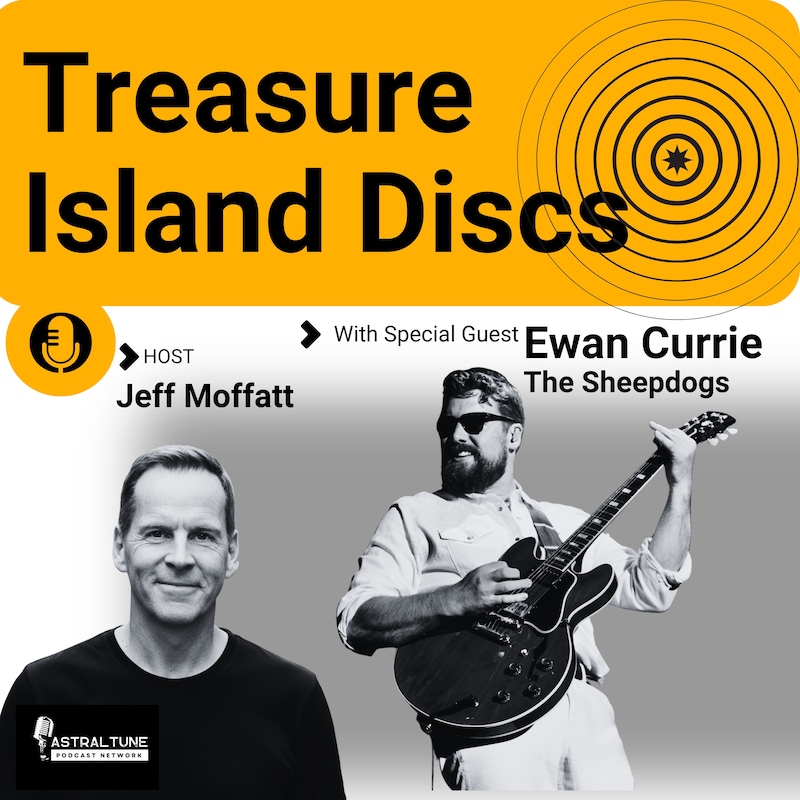
Ewan Currie, the lead singer and frontman of The Sheepdogs, is joining us today, and trust me, you won’t want to miss this chat! With a mind that’s essentially an encyclopedia of musical knowledge spanning rock, jazz, RnB, classical, and more, Ewan brings a refreshing perspective to the table. We’ll dive into his journey from growing up in a musical household to becoming a household name in Canada’s rock scene. Get ready for a fun-filled, deep musical conversation-packed episode where music and life collide in the most entertaining way!
Takeaways:
- Ewan Currie's deep love for music comes from his family, where his dad was a classical composer and his mom sang in the choir, fostering a rich musical upbringing.
- In our chat, Ewan reveals his incredible encyclopedic knowledge of diverse music genres, from rock and roll to jazz, making him a fascinating guest filled with unique insights.
- The Sheepdogs have been rocking the Canadian music scene for nearly two decades, and Ewan shares exciting details about their upcoming album, 'Keep Out of the Storm', set to release in February.
- Ewan reflects on the evolution of the music industry, emphasizing how much harder it is for bands today to thrive compared to when they started in the early 2000s.
- The conversation takes a playful turn as Ewan shares hilarious anecdotes about early band experiences, showing that even seasoned musicians have their goofy moments.
Companies mentioned in this episode:
- The Sheepdogs
- Toronto Blue Jays
- LA Dodgers
- Bryan Adams
- J.J. Cale
- Stevie Wonder
- Paul McCartney
- The Beatles
- George Martin
- Thin Lizzy
- Creedence Clearwater Revival
- Ray Charles
- Henry Mancini
Transcripts
Welcome to Treasure Island Discs. Get ready to set sail with your host, Jeff Moffatt, as we dive deep into the stories behind the music, one Treasure island disc at a time.
Speaker B:Hi, I'm Jeff Moffatt, and welcome to.
Speaker C:Another episode of Treasure Island Discs, the.
Speaker B:Show where we talk music, life, and whatever else we stumble upon with some of the most interesting artists and people you could ever hope to meet. And today is no exception. On this episode podcast, we sit down with Ewan Currie, the frontman and lead singer of the Canadian band the Sheepdogs.
from the Canadian Prairies in:Now, we recorded this episode last fall, and besides the great conversation we have about music, we couldn't not talk about one of Ewan's great passions, the Toronto Blue Jays. At the time we recorded the episode, they were making an epic run in the World Series against the LA Dodgers.
Ewan grew up in a household surrounded by music, and you can hear how deeply he immersed himself in studying and playing. From a very young age. You'd have a hard time finding a guy who was more dialed into music from every generation.
He has an encyclopedic knowledge of classical, jazz, R and B and rock.
and there's no letting up in: oss Canada run in the fall of:And Ewan's ready for that full volume live Sheepdogs experience again as they launch a headlining Canadian tour beginning in March. As far as conversations go, this one was really fun to do, and I guarantee you're going to love the next 45 minutes getting to know Ewan Curry.
So, without further ado, here's my conversation with Ewan Ewan Currie.
Speaker C:Great to have you on the show.
Speaker A:Good to be here.
Speaker C:Where do I find you today, Matt?
Speaker A:I'm in Dartmouth, Nova Scotia now.
Speaker C:Is that home for a while?
Speaker A:It's pretty recent, yeah. I Nova Scotia for the last year, a little more, and then just this summer moved over to the dark side, as they call it.
Speaker C:Because you're a prairie boy.
Speaker A:Yeah, yeah. I lived in Saskatoon from age 11 until 29 and then I lived 10 years in Toronto and then now I live here. But I grew up.
I was born in Australia and I lived there for the first 10 years of my life.
Speaker C:Why the East Coast?
Speaker A:Just for love. For the love of a good woman and looking to start a family and all that kind of stuff.
Speaker C:Beautiful.
Speaker A:So it's a great place. I don't know if you've been, but it's, you know, there's a lot of tourism here.
But, you know, you go a little deeper, there's just great people and it's a great place to be.
Speaker C:That's awesome. Awesome. So you're settled in? Are you getting there?
Speaker A:You can see some boxes.
Speaker C:Yeah, yeah, yeah. Exactly as we were recording this today.
I don't know if you're like following this or into this, but have you been in a Blue Jays watcher for the last few weeks?
Speaker A:Oh, yeah, yeah. For the last 30 years. Yeah. I'm a big Jays guy.
Speaker C:Yeah. So what are you thinking, man? Like, this. Tonight's a big night.
Speaker A: believe. I moved to Canada in: e year I moved to Toronto was:2015 and 16, they were legit contenders and I went to like 33 games a season. Like I was. I would travel to go see games. I was.
I love the Jays, you know, I'm a huge NFL guy, but the one team that I like above all the teams is the Blue Jays. And I just love watching them. So I was up till 4am here watching that 18 inning game. It was insane.
Speaker C:You stuck that one out, huh?
Speaker A:I couldn't stop. Like, I can't walk away.
Speaker B:Oh, man.
Speaker C:I know, I. Look, I say I, I dipped in the ninth inning on that one. I thought. I just, I don't like. But for it to go 18 innings, man, like, incredible.
Speaker A:Yeah, it was, it was, it's. It's been really fun. I will be glad when it's over. And hopefully it's over with a Blue Jays win.
Speaker C:What's really cool about this thing is kind of taken on a life kind of of its own where at this particular point in time, given everything that's gone on with the, you know, the US Canada conversation in the last, I don't know, 12 months, whatever this thing has become such a galvanizing thing for Canada, would you not say?
Speaker A:Yeah, absolutely. I mean, it's. You know, I. I started watching baseball out in Saskatchewan.
So, you know, I was always aware that it was more than just Ontario or the GTA or whatever, but, like, you know, bc there's crazy fans that go down to the games from Vancouver to Seattle. I know certainly here in Nova Scotia, they love baseball as well. So it's. And, you know, given all the current tensions that are.
Exists between us, you know, it's. It's especially, you know, going back to that hockey game. It's just nice to see Canada get one over on the States. Not gonna lie.
Speaker C:Agreed. The Four nations cup was another whole thing earlier this year with our song.
Speaker A:As the goal song. I just want to throw in just to bring it back to music.
Speaker C:Yeah, there you go.
I have a buddy that played on that team, and he was just saying kind of the same thing where this thing became much, much larger than just, you know, a series of hockey games. He said they could really feel it as players, how. How much Canada was behind them.
Speaker A:Yeah, that's. I mean, that makes it all the more better. Like, when two teams. This isn't exactly the way this was, but when.
When teams hate each other, it makes the series better. Like, my dad would wax on about the Soviet series from 72 or whatever. It was like Russia versus Canada all the time.
And that's got geopolitical implications and certainly, what, the 80, Miracle on Ice, the US versus Russia. It just makes it more fun and more. It just takes it to another level.
Speaker C:I want to talk a little bit about your early life growing up and how music came into your world. Was your family a musical family?
Speaker A:Yeah, we were. My dad was a musician. He was a piano player and a classical composer. So, you know, a different world than what I'm in. But he also really liked.
He wasn't like, you know, only listening to, like, Brahms and, you know, highfalutin stuff. He enjoyed rock music and pop music, especially from the 70s, because that's when he was a young man and.
Yeah, so in my family, and my mom was, you know, she loved music. She would sing in the choir and things like that.
So in our household, we would listen to lots of stuff from, like, you know, when they were teenagers and 20 something. So a lot of 70s stuff.
Speaker C:When did you pick up guitar?
Speaker A:Not really until high school. I played piano first, like at the age of six, I think.
Did kind of like formal lessons and all that kind of stuff, and then kind of like got out of it. My dad started teaching me, which was probably a bad idea in hindsight.
And then I played clarinet, which is a real chick magnet of an instrument, I tell you. And the old liquor stick. And then yeah, I picked up guitar in high school. Like I was. My high school had like a fine arts survey that you could do.
It was a regular high school. It wasn't a fine arts school, but they had a, like a one semester they'd break it up into four chunks and it was like guitar, you know, drama.
I can't remember what the other things were, but the guitar was one of them. Did I learn how to play? You know, like that I was looking around to see if I got the.
You know, like you'd have a nylon string guitar and you'd put it on your left knee and your foot would be on a wood block.
Speaker C:Like Segovia.
Speaker A:Exactly.
Speaker C:Yes.
Speaker A:Very, very formal, very. Not what you want to do when you're a teenager. And so. But I took like. I learned how to play some chords and it was an access to a guitar.
Like we weren't a guitar family, we were a piano and woodwinds family.
And so I started kind of like, you know, once I figured out like, okay, here's how you play a bunch of chords, right away I was like, oh, I can just like write my own songs now. Like it was. It was like not like learning another language, but like maybe like learning like to code or something like that.
Where all of a sudden you've got this creative language in some kind of way. And.
And then you know, also figuring out how to like solo a bit like, you know, what's the pattern that you can play a solo with, you know, and just all that kind of stuff.
Speaker C:Did you form a band when you were in high school?
Speaker A:No, I was pretty loaded up with extracurriculars. Like I was playing football and basketball, baseball and in the musicals in high school. And.
Speaker C:So.
Speaker A:And I wasn't like. I really didn't start playing guitar more really till I got out of high school.
And then I think When I was 19, I bought an electric guitar from the local music store in Saskatoon. And then me and Ryan and Sam, we started what would become the Sheepdogs. That was my first band.
So we were 19 years old and we just started jamming in the basement of Sam's parents place.
Speaker C:What kind of stuff were you listening.
Speaker A:To when you were a teenager in high school? It was like I was very much like ignoring the radio. Like the radio at that time was like it's like maybe the worst era of music.
Like it was like pop was right about at its peak. Like NSYNC and Backstreet Boys were like the most ever selling CDs and stuff. But it's about to crash. Like it's about to be decimated by Napster.
And rock was like Creed and Limp Bizkit. So it was like heavy and sludgy and the rapping and so I was listening to the Beatles and Led Zeppelin and Napster was a thing.
So I could download, you know, if I got into Jimi Hendrix, then I could check out Cream or I could check out, you know, whatever. Like it, that was cool because it was like, you know, I wasn't reliant on like the model of going to the music store and seeing what was new anymore.
I could go online, find information about Jimi Hendrix, hear who his influences were or who Cream's influences were, or the Beatles, and then download illegally at the time. But, you know, more, more music to check out. So my, my brain was a real sponge for that, that stuff.
So it was like the perfect storm of access and wanting to learn about the music.
And then in grade 12, the strokes first record came out and that kind of pulled me back into newer music because I was really interested in what they were doing because it was like cool and fun because rock music got really unfun. Like, it was really like a lot of like guys with like dyed black hair with tattoos playing dower music. And I want like, I like good time music.
f made that resurgence in the: Speaker C:This was kind of a dark period for music in general.
Speaker A:I would say yes, it's good for hip hop was pretty good. Like if, you know, the, the popular hip hop songs were really fun. But the rock music, not so much.
Speaker C:Not so much. But you and your, you know, growing up in the music, you were surrounded by a lot of 70s stuff.
And I know you've heard this a thousand times, but I just, you know, when I see you guys, I think of Skynyrd and I think of the Allman Brothers and roots guitar based bands that were in a lot of ways playing good time music. But I found like the Sheepdogs, it's kind of a recurring thing with you guys with that sound. Would that, is that fair to say?
Speaker A:Yeah, I mean, we just always, you know, my dad, like I said, he was a classical Composer. But he really said, you know, like, just start by mimicking what you like. He's like, all the greats did that. Mozart, Beethoven, yada, yada, yada.
Like, you know, people who are geniuses, they didn't create this out of thin air. They're all inspired by our heroes. So I just. Yeah, every musician borrows and copies their heroes.
h we were making music in the:It was like ska bands and emo bands and metal bands, and we kind of liked the Stones and. And Zeppelin, and we wanted to hear that kind of stuff, so there just was nothing like it.
Speaker C:When you started writing, I think early on with the Sheepdogs, you guys, from the time you started to the time you put out your first. Was it an ep, the first thing you put out?
Speaker A:Yes.
Speaker C:Yeah. So there wasn't a lot of time, right between the time you started the band and the first release that you did?
Speaker A: ink we probably put it out in:I mean, it might be somewhere, but not on, like, you know, the usual places. So it's pretty amateur hour. Yeah.
Speaker C: back, that we'd be talking in: Speaker A:If you talked to me when I was 19, starting the band, I think I would have maybe not exactly like this, but we were very confident in a naive kind of way, which I think a young band has to be, because I like to say if I had to do this all over again, I probably wouldn't even bother trying because it's a lot of work and you have to take a lot of lumps, a lot of disappointments and do a lot of crappy things. You know, it's difficult.
So you need to have that kind of, like, that sort of irrational confidence in your crappy band to, like, take it over the top. So I probably would have been like, yeah, we're gonna make it. You know, I believe we're gonna do it and all this kind of stuff. So.
But, yeah, just cocky young man stuff.
Speaker C:A lot's Changed in the industry since you started?
Speaker A:Yeah. Oh, yeah, yeah. It's been constant. It's still shifting at all times. Like it's. It's crazy.
Speaker C:Do you have the same enthusiasm for writing, recording and doing what you're doing as you did back then now? How do you feel now?
Speaker A:Absolutely. I love writing and recording. That's my favorite part of this whole gig.
It's just that it's such a small percentage of what we do and it's probably less of a percentage of what a band does nowadays compared to like the old days. Because so much of what a band does now is about promotion, self promotion with social media. And we, you know, we don't.
Bands don't make the money off of the product selling music as much as they did, so they got to do more tours to sell more physical product, T shirts, records, and they got to promote their band through playing live and doing on social media stuff. So it's very. There's more duties, it's more diverse and requires more work, more hustle. But I love the writing and the recording. It's why I'm here.
It's so fun.
Speaker C:You just came off Cross Canada tour with Bryan Adams. I was saying to you earlier, I saw the band in Ottawa and it was an outstanding show. The band was just firing in all cylinders.
And have you recovered from these last couple of months?
Speaker A:Yeah, it was fine. I mean, we were doing 50 minutes a night. Pretty cushy gig, getting to open up for Brian. It was no problem.
Speaker C:I think you won some new fans.
Speaker A:Good. That's why we did it.
Speaker C:So what's coming up next? What are the Sheepdogs got planned? They got a new album in the works?
Speaker A:Yeah, we do. We got a new record coming out in the new year.
It hasn't been announced yet, but we've just been basically getting it to the finish line, you know, mastering and mixing and all that stuff. But we put out one song from it back in October. It's called Nobody but yout. And yeah, new record, lots more to come.
Speaker C:Beautiful. And what about live gigs?
Speaker A:Yeah, we're about to announce a tour as well. We got. It's as fun and cushy as it is to do this Bryan Adams opening tour.
I'm really looking forward to doing our own shows, playing to our crowd, so that's going to be a real treat.
Speaker C:Awesome, awesome. One of the big parts of your musical life, Ewan, is your solo stuff. You've got a couple albums out now. When we talk about your solo work, it is.
I Would say, distinct from your work with the Sheepdogs, there's a whole different kind of feel to the music that you write as a solo artist. Talk about how you write differently than you would for the Sheepdogs for your own solo stuff.
Speaker A:Sure. Well, I just kind of come up with ideas musically pretty often.
Like, even, like, for example, I was just driving back from an appointment this morning, and I just had to sing into my phone because I had a little idea that just kind of came to me, which is my favorite way to write. Just to have something come into your mind.
And then usually I have a pretty good idea of where that song is going, like instrumentation wise or stylistically. And, you know, with the Sheepdogs, we're a rock and roll band.
We're a guitar band, you know, and we kind of have things that we do that are staples of our. You know, like, we often have guitar interplay, sometimes harmonizing together or trading a lot of vocal harmonies. And we love kind of like just.
Yeah. That sort of classic rock combo of stuff. So if the song doesn't really lend itself to that, I might put it aside.
And then when I have a chance to kind of pick up and switch over to solo un. Then I kind of dig into that bag of things. And there's no restrictions on that. I don't tour, and so I can kind of go wherever I want.
If I need to hire musicians to do something, I hire them. Whereas the Sheepdogs is about the guys in the band and they have a certain style. So solo is more free. I can do whatever I want.
And you can see some of my records behind me. I have a lot of. A variety of interests. You know, there's. There's not just. It's not just like 100 Bob Seger records back there.
There's like, you know, Stevie Wonder and, you know, lots of. Lots of soul music. There's like, crazy exotica records. There's jazz. There's all kinds of stuff which really.
Speaker C:Comes out, especially in your solo stuff, where you can see all of those influences. You can see the soul, you can see the R B. You can see the folk stuff. I feel that it's almost a.
A really necessary part of you creatively to have that outlet, if you will, you know.
Speaker A:Yeah. I mean, the greatest natural high I get is from writing a song that I think is good. That's like the greatest, you know, shot of dopamine. So it's.
That is something I love to do. And, yeah, it is an outlet. I do. I want to do this for the rest of my life, you know, until I can't.
My goal is to build a studio at the back of the yard so that I can just kind of throw the slippers on and pad my way down there, even if I'm 75, ideally, and just keep working. So that's the goal.
Speaker C:Let's talk about the artists and the music that you feel would form the soundtrack of your life. If there were four or five artists or albums, who would those be that represent you and Curry?
Speaker A:Sure. I mean, I'm going to start with. I'm going to start with Paul McCartney because the Beatles are my favorite band.
He's my favorite Beatle, although I love all of them. You don't. Just because you love one doesn't mean you have to hate. You don't have to hate John because you love Paul and vice versa. And I love George.
And Ringo is maybe the greatest drummer of all time in my opinion. His style is unmatched.
Speaker C:Okay, let's talk about that for a second.
Speaker B:Sure.
Speaker C:I love that you said that because my opinion is I think Ringo was really underrated as a drummer.
Speaker A:Yes.
Speaker C:The four of them. And Ringo did. Played the right part at the right time.
And some of the stuff he played is so creative and so tasty that you don't even notice it almost, you know that so many of the things that he did were just perfect for the song.
Speaker A:Absolutely.
Speaker C:He.
Speaker A:Yeah, he's not flashy. He always played the right fill. His unique feel because he's left handed. So the way he starts his fills sounds different.
And you just take it for granted because the Beatles, they just were always there and it's like to me, the Beatles music, it's like a sacred text or something. It feels like it's ancient and has existed from the gods or something. That's how much I revere them. But Ringo's amazing. I just love him.
And I was listening to Yellow Submarine a bunch recently and just how his voice is so perfect for that song. It's just incredible.
But I'll bring it back to Paul because the album I'm gonna pick is actually is Ram by Paul and Linda McCartney, which is the second solo record by Paul. And pound for pound, it's just one of the greatest albums ever. Amazing songs.
It's always an inspiration to me when I make a solo record because there are so many songs in that record that it's just bursting with imagination.
And there's a number of songs that have that McCartney thing of like there's two and a half songs worth of riffs and hooks and ideas crammed into one song. That's how prolific and incredibly creative he was because he just. It's.
That song is just overflowing with creativity, and it's such a vibrant record, and it's one that I just. I can't get enough of.
Speaker C:Interesting. That's. I'm not surprised you said that, but Band on the Run would be my choice for McCartney.
Speaker A:Great record.
Speaker C:Not a single bad song on that record. Every. That is a masterpiece as well. Okay. Fair enough. Yeah, yeah, yeah, yeah, yeah, yeah.
Speaker A:That's a skip for me, but fair enough.
Speaker C:Yeah, yeah. But on Ram Uncle Albert, right?
Speaker A:Unbelievable song. You don't like that one?
Speaker C:I love it.
Speaker A:Yeah. Okay. Yeah, yeah. That song's incredible. It's like. It's just so. Man, it's just an amazing record. I just don't think it gets enough love.
So if you haven't heard that one, check it out.
Speaker C:Okay. That's a great, great choice. What's number two?
Speaker A:I've got so this guy, Stevie Wonder. My dad loved Stevie, and we used to listen to him all the time in our house. And I just have memories of, like. I remember one.
At some point, he bought Inner Visions on cd, and we would listen to that over and over again. I would play battletoads on the Nintendo Entertainment System, the original Nintendo, and listen to interventions like, over and over.
And it's such a great record. It's got, like. Some of the big hits are like, you know, don't you worry about a thing? And that kind of stuff is on.
Speaker C:Living for the City's on that album.
Speaker A:Living. Okay. When you're a kid and listening to Living for the City.
Speaker C:Yeah.
Speaker A:That is like, whoa, what is going on here? There's a. It's seven minutes long. There's like a little, like, scene in the middle with voices of. Like, you're learning about.
I'm like, why is it, you know.
Speaker C:What'S going on here?
Speaker A:There's so much to unpack, you know, about the political and social message and story is being told. And just. And then Stevie is singing at the end with that gritty voice. And. And then musically, just. That album is filled with.
It's the same thing as McCartney.
Like, I think Stevie and McCartney are very similar in that they're deserving of the genius title, but they write songs, but it's not like they don't write songs.
Like, I've got an acoustic guitar and I'm writing chords and lyrics on a thing, and anyone can play this song, they write songs with sounds and they're like Stevie's like overdubbing a million Arp and cloud parts to create these like, textures.
Speaker C:Yeah. And layers.
Speaker A:Layers. He's playing the drums. McCartney's doing the same thing. Like that ram. It's, it's. It's not just the words and music.
It's the, it's the, the instruments that he's like.
You know, they're painting these pictures like they're, they're painting on grand scales that both those guys really influenced me in that way that don't be limited to just, you know, like, obviously love the simplicity of a John Prine or Bob Dylan or Townes Van Zandt. There's something so pure and genius about that.
But I was really taken by the, like, grand scope of Stevie and Paul, the way they would use all those sounds in the studio.
Speaker C:They're master classes in songwriting, those guys on that album also. Higher Ground is an amazing, amazing.
Speaker A:Higher ground. Yeah, yeah. Higher Ground. Jesus. Children of America. I'm just thinking of. Offhand, I haven't got the listed for me, but yeah, it's so good.
Visions, Golden Lady.
Speaker C:Yep.
Speaker A:So good.
Speaker C:We play. We actually played Living for the City in jazz band in high school. Just a crazy, killer, killer song.
Speaker A:There's a great. There's a great Ray Charles version of it too that you should check out. This is like.
And he kind of ad libs the middle section and it's just like, man, Ray Charles can do no wrong.
Speaker C:We're gonna link a lot of this stuff into the show notes as well.
Speaker B:Right.
Speaker C:So people go right on and go and discover it for sure.
Speaker A:Perfect.
Speaker C:For sure. What's number three, man?
Speaker A:Number three. I kind of cheated. I got Credence Clearwater. Revival. It was another. Another artist that my dad would play a lot.
I think we had a tape, a really bad, like, mixtape that wore out. That was a big feature of my childhood was having like cassette tapes that were like dubbed off of vinyl.
Speaker C:Yeah, yeah.
Speaker A:That's what my. And because we didn't have a lot of like, bought albums, we had a lot of those. But then I would wear like. I wore out.
I had Stevie Wonder talking book. Wore that out. This Credence tape, I wore out. And so my dad bought the. The Chronicle cd. So that's the greatest hits.
Speaker C:Yep.
Speaker A:But that is. So it's a bit of a cheat.
But that is such a. I mean, I love four or five of those Credence records, but if you get that, that 20 song chronicle and if you Have a jukebox with that in it. You're in for a good time. And, like, anytime I go to a bar and there's a jukebox, I will just go straight to Herta. Through the grapevine.
I go right on Susie Q. You know, Born in the Bayou. I mean, all those songs. Green River, Proud Mary. Yeah, there's. There's like, 20 good songs on.
It's like, the only greatest hits. That's like 20 songs, and it's, like, immaculate all the way through.
Speaker C:What. Like. What a band. Did you ever see. You've seen video of them playing live back in the early 70s, right? They were just.
Speaker B:They were.
Speaker C:They were a force, man. Like, yeah, those four guys were a force. And John Fogerty, obviously, great, great, great writer. For me, one of my.
My introductions to guitar, there was a couple. One of them was Richie Blackmore. But the riff on up around the Band, I. That is just a killer riff.
Speaker A:Yeah, I've been playing that in the dressing room recently. I just been, like, burning. Yeah, it's. It's. It's a combination of his. It's Fogarty's voice and his guitar. Huge fan of his guitar playing.
And then he just had that knack for, like, kind of taking roots and rock, like, kind of like that sort of. It's sort of that folky country blend of rock somehow putting a swamp thing on it, even though they're from Northern California.
Speaker C:Agreed.
Speaker A:And then, like, those songs, it's like that, to me is like, look, I'm not American, but that's like Mark Twain level, like, kind of canonical shit. Like, it's.
Speaker C:Yes.
Speaker A:He's. He's hitting, like, these, you know, wonder if my rope's still hanging from my tree. You know, all those lyrics, they're like.
It's just so evocative of a time and place, and it's, like, kind of magical that he was, like, 24 and from, you know, the Bay Area writing that stuff.
Speaker C:It's incredible. Like, so how the hell did he ever.
It's almost like a guy writing, like, you say, like a Mark Twain or someone writing a book or a story, that when you hear Credence, you don't think of Northern California, man. You think of Louisiana, you think of Mississippi. That's what you think about. That's how it feels.
Speaker A:Yeah. Well, I took a lot from. I mean, I often tried to emulate John singing. Guitar playing.
But also I took great comfort in knowing that, you know, he wasn't a Southerner, but he wrote from that. He took that music and let it inspire him.
And, you know, the Southern rock is a genre, which is a funny genre, because, like, some of the most, you know, prominent proponents of it are like, you know, Credence, the Doobie Brothers, also from the Bay Area, I believe, you know, and then certainly, like, I love, like, you know, when the Kinks would do, like, kind of like that sort of their version of that music, like that Muswell Hill, Billy's Wreck, and certainly the Stones. There's a lot to be learned, a lot to be gleaned from these guys. And Fogarty as a singer, as a guitar player, massive influence.
Speaker C:Awesome. Number four.
Speaker A:Yeah. Bit of a deep cut. This is an artist called the Bees. They're from England, from the Isle of Wight.
e Bees, which I think is from:And then as a result, they got a record deal. And they said, well, what do you guys want to do for your follow up? And they. They said, can we record at Abbey Road, Studio A?
And that's what they got to do. And they made this record that is kind of like a touchstone of like, all their favorite sort of 60s, 70s rock influences.
me, when I first heard it in:But if you like the Sheepdogs, there's a good chance you may like this. And it was a blueprint that we followed for a lot of the stuff we recorded.
And eventually I managed to track down the man who kind of was responsible for the sonics of it, Paul Butler. He's the singer and the songwriter, and he produces and records everything, and he produced my first solo record.
Speaker C:That's a really cool story.
Speaker A:Yeah, that was a highlight for me, for sure.
Speaker C:Right on. Okay. That's cool. I don't know it. So you've just turned me on to something that I'm going to follow up on.
Speaker A:Check it out. It's really cool.
Speaker C:Absolutely. And do you have a fifth?
Speaker A:I do, yeah. I got JJKL Troubadour, which is. So I knew JJ Kale never really clicked for me. And I was down in San Francisco recording with Paul Butler in.
I think it was:And I was asking him about this one song that's on the album after Free the Bees, but I was like, I love that song. What was the inspo for it? And he's like, we were trying to rip off this J.J. kale song.
And he told me what it was, and it's Ride Me high off of Troubadour.
And so I started listening to Troubadour and I was staying in this little Airbnb in San Francisco, and I would walk down the hill about 40 minutes to get to the studio each day that we were recording. And so I would just put on Troubadour. And I just listened to it every morning as I walked down to the studio.
And next thing you know, I was absolutely obsessed with J.J. kale. I would put that record on. I mean, I listen to all his records all the time, but that was my go to.
And, you know, you get those, like, Spotify year in review kind of things where they tell you what you listen to. J.J. kale is my number one artist every single year.
Speaker C:No kidding.
Speaker A:Always and almost always the number one song is hey Baby, which is the first song on Troubadour. I think what really appeals to me and what I maybe, I mean, I try listening to them when I was younger and such. He's very mellow, he's very.
He's very guitar based and he's groovy. And stylistically, it's all the things I like. But I think that when I was younger, I always wanted everything to be like. I wanted to be Zeppelin.
I wanted it to be like attacking and aggressive and big and in your face.
Speaker C:Yeah, yeah.
Speaker A:And it's kind of like after a while, you appreciate subtlety and nuance.
And also, to be quite honest, you come home from a tour and you want to sit in your backyard and listen to something that's like, a little more easy to enjoy. So, you know, my ears are tired when I come home from tour, but.
Speaker C:It'S interesting when you get those replays for your year, the stuff that comes up. And if you're a lover of music, it's usually pretty. Pretty diverse.
had come out with an album in:But this may sound a little bit odd, but this year I have gone back to a lot of classical stuff. I've gone back to a lot of the. The. The Henry Mancini and that kind of stuff, which is way out there.
Speaker A:I'm a huge Mancini fan. I've got.
Speaker C:Are you?
Speaker A:Yeah, probably like 15 to 20 Mancini records back there.
Speaker C:Right. That's so interesting you say that because I thought, am I the only guy doing this? But, yeah, you. And I love to. I love this music and I love.
I love the aesthetic of the music. I love the orchestration. I just love the way that these things are recorded.
Speaker A:Yes.
Speaker C:It's amazing.
Speaker A:Yeah. The. The Mancini's Mr. Lucky record. And then there's Mr. Lucky Goes Latin. Those are two of my favorites. Yeah, it's.
It's funny because I put them on all the time and some people are like, this is the best. And other people are like, what is this elevator music?
Speaker C:Or whatever.
Speaker A:But it's like. It's kind of like hi Fi cocktail music. You know, Mad Men. It's. But I love it. Yeah. Mancini is a huge.
He influences, like, my brother and I with our bros. Stuff. We will sneak in some Mancini stuff now and then, and I put it on all the time. We'll party to it if we're hanging out.
It's another thing that I put on in my backyard a lot is Mancini and that kind of like Les Baxter and Xavier Kugat and all those kind of guys.
Speaker C:Yeah, it just kind of brings the vibe down and it just calms everything down. And it's just like putting on, like a warm jacket and a pipe, you know, it's just beautiful. Beautiful.
Speaker A:Just hanging out, music, cocktail and a cigar. And I'm happy.
Speaker C:Yeah, 100%. Listen, if you had a dream collab, who would you love to do a collab with?
Speaker A:Well, the guy I thought of was. Is dead, unfortunately. But, you know, I don't think George Martin gets his due enough.
He's the producer of the Beatles, and there's a lot of people that get the fifth Beatle moniker, like Billy Preston, you know, whatever. Eric Clapton came and played on all my guitar, Gentle Reese.
But when you read about the Beatles and get, you know, get deep in the lore and read about how all the albums were made, George Martin is so critical to how those records turned out. He was a guy that recorded Peter Sellers spoken word albums. And then he kind of gets handed like, hey, record this.
There's this new music called skiffle or rock and roll. Like, here's the record the. These guys. And then He. Not only does he record them, he figures out how to.
Every time they go, hey, what if we did this crazy outlandish thing? He was the guy that was like, okay, well, first of all, let me not. Not only will I not shoot you down and be like, we don't do that.
I'll listen to what you say, and then I will figure out how to put that into practice.
And so he would go and get the string section, and he would orchestrate the string section for Eleanor Rigby, and he would figure out all these practical solutions to their fanciful desires. And it's so valuable because as a musician, you want to be free to do all, you know, follow your creative whims.
But there's so many impedances, whether it's just the speed that you're working at or technological things. Like, the Beatles only had so many tracks. Well, what if we dump the tracks down under the tape and we can keep adding more?
And so I just think George Martin was an absolute genius in terms of being buttoned down, neat hair, working with these guys with crazy mustaches and outfits and realizing that they were creatives and geniuses, too, and not sort of looking down his nose at them, but instead, he enabled them to be what they were. And I just think that's the most valuable characteristic of a producer.
Speaker C:What are you listening to these days?
Speaker A:Oh, that's a good question.
Well, I've been listening a lot to Little Beaver, who was a guitar player in the 60s and 70s who played on a lot of, like, hits out of Miami and had a real. They say he influenced Jimi Hendrix in his style playing. But he. He has a couple of solo records that I really recommend.
It's like that kind of early 70s vibe with, like, a drum machine, lots of, you know, kind of a stone funk kind of vibe. Really cool. I've been kind of wearing that record out and then just. Yeah, I don't know. A lot of Thin Lizzy this year. I just really.
If I go to the gym, I'm putting, you know, one of those classic Thin Lizzies, Jailbreak is up there. I like fighting even more.
Speaker C:Oh, yeah. Fighting's good.
Speaker A:And nightlife is. Those three are. Any of those three are top shelf.
Speaker C:I. I gotta tell you, man, I saw Thin Lizzie. Well, I don't know how old I was. Ten maybe. And I. They were. They were touring with Queen.
Speaker B:They were.
Speaker C:They were supporting. Unbelievable. So I was front row because, you know, I'm right against the. The. The rail. Front row. Phil's in front of me.
And Ewan, it was life changing, like, to God, to be in the front row with him and he would look at you like, I was just a kid and he's looking at you. He does this thing, you know, he. Phil always did this with his bass like this, and he's doing this.
Speaker A:He's. He's such a cool guy, man. Like, I don't get.
Like, I love rock and roll music so much, but, like, I don't, like, go and do a lot of, like, cheesy tourist stuff. But when I went and saw his statue in Dublin, I had to get a photo. I was just like, this rules. Like, I really love Phil. Finn Lizzy are underrated.
They're so important. Like, man. Yeah, they. As a guitar band, like, their dual guitar thing is so awesome and just.
I don't know, just that kind of like, in the riff rock world. Like, great songwriters and just unique the way that some of their songs, when they're like, almost like traditional Irish sort of flavors in it.
I love that stuff too. Like, it's just so cool.
Speaker C:Like those songs like Emerald, like, it's. And just the guitar parts in that song.
But like, you say the twin lead, the Scott Gorham, at the time I saw him was Scott Gorham and it was Brian Robertson.
Speaker A:That's the best. That's the best lineup.
Speaker C:That's what I think. That's what I think.
Speaker A:Yeah.
Speaker C:Yeah. And those two together, man, like, just. It was unbelievable.
Speaker A:That stuff does. That never gets old for me. Like, I just. The guitar work is so fun. Like, that's kind of like I'm not a metal guy at all. That's like.
I think Thin Lizzie really influenced metal because they have that, like, heavy riffing. Like, I know Metallica love Thin Lizzy, and that's about as hard as I get. But that, to me is like the perfect.
The perfect amount of, like, aggression. And it's just. It's nasty stuff, but it's so fun.
Speaker C:Guitars, you. You're a guitar player and you love guitars. So have you got a bit of a collection going?
Speaker A:Not too bad. I gotta. I keep moving, so I have to keep getting rid of stuff.
I got a few here, but I. I hate having too many guitars because I don't like when guitars just sit. Like, I came up with this idea for a rock and roll Robin Hood foundation where I would, like, take guitars from blues.
We call them blues lawyers or, you know, dentists that just buy some beautiful vintage guitar and then they slap it on a wall.
Speaker C:Yeah.
Speaker A:And meanwhile, you Know kids are toiling away on some epiphone that feels uncomfortable. I got. I have three Les Pauls that are from the early 70s. Like I got two 71 Les Paul Customs one's, black one's, whatever you call it. Tobacco burst.
Maybe it's 73. I can't remember the years. 73. And then I got a 74 Les Paul Deluxe, which has the mini humbuckers. So that's like the Thin Lizzy guitar. Maybe even.
Did Ace Frehley use that too? Maybe. I don't know. Rest in peace.
Yeah, but mostly Nowadays I use 335s because I was really fucking up my shoulder with the Les Paul's because they're so heavy and they sit like this. So now 335, it's light, it's space style, it's hollow.
And they're beautiful guitars as long as you got somebody to constantly tweak them because they are tough to travel with.
Speaker C:But you're a Gibson guy.
Speaker A:Yeah, I have a Strat. It's pretty cool. Our old guitar player Jim Bosefield gave it to me. It's a tokai strap from like 78. So it's a lawsuit guy. Yep, it's pretty awesome.
So that's pretty cool. And I always wanted a Telly, but it's hard. I really like Gibson's. I got so used to putting my, my hand on the big. The big Tunomatic bridge.
That's how I play. And so it's hard for me to play like a through body bridge or whatever because I'm just so used to anchoring my hand right on there.
I'm very big on streamlining your choices in the studio. And on stage I don't really switch guitars because I want to focus on all the other things. Because on stage I'm trying to be a band leader.
I'm trying to make sure I'm singing well, I'm paying attention to the set.
In the studio, you want to have some different flavors, but you also want to focus on the song and you want to also maintain momentum because if you get bogged down, you can audition amps and guitars forever. And at the end of the day it's like you're just going to be shooting yourself in the foot.
Speaker C:I really appreciate the conversation today. It was awesome to meet you.
Speaker A:Yeah, great.
Speaker C:Talk music. Yeah, yeah, awesome. Great to talk music. And I know the collection behind you we could talk about all day long.
I think you've got more records than me. I'm pretty sure I've got I downsized. It's.
Speaker A:This thing's full. I got more upstairs, and I had to downsize before I moved because it was out of hand. But it's pretty.
I tell you, what I got here is it's pretty dialed in. It's nice. There's no chaff. It's only wheat.
Speaker C:I love it. I have carved out space in my house for my albums, and my wife really doesn't understand it, doesn't understand why I don't sell them all.
But I'm never selling my vinyl. Ever.
Speaker A:Yeah, Yeah, I, I, I don't know. It's too hard. I put too much work into it. I could never get enough money for it to make it worthwhile, you know, it's like I've turned around.
The first record I see is like a. Is Revolver. So let's go, you know?
Speaker C:Right.
Speaker A:How could I get rid of that?
Speaker C:You're not going to, man. You're not going.
Speaker A:No.
Speaker C:You an awesome. Thanks so much, man.
Speaker A:Thanks, Jeff.
Speaker C:You bet. Appreciate it.
Speaker A:Cool. All right, Take care.
Speaker C:You too. Take care. Hey, thanks for joining us on the podcast today. Such a humble, talented, and interesting guy and a great conversation.
If you have a chance to see the Sheepdogs live this year, by all means, take advantage of it. If you enjoyed the episode, please feel.
Speaker B:Free to share it, and we'll see.
Speaker C:You soon on Treasure Island Discs.
