Shownotes
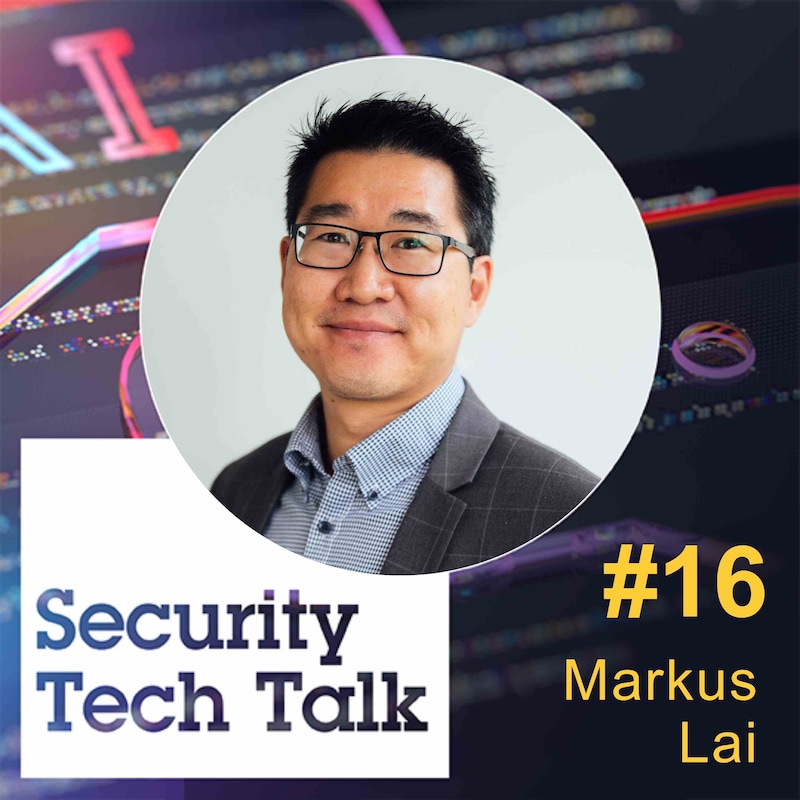
Markus Lai joins Steve in-studio in Lund, Sweden to explore the significance of education and professional development in the security technology industry. As the Regional Manager Engineering & Training - Northern Europe, Markus discusses various learning styles, the importance of certifications, and the role of employers in facilitating continuous learning. Steve and Markus also highlight the value of vendor training and the need for adaptable learning methods to meet individual needs. The discussion emphasizes that education is not just a personal benefit but also enhances the overall quality and competence within the industry.
About our guest:
Markus Lai has been a part of the Axis Northern Europe sales team since 2011. Acting as a part of a team of trusted advisors within the engineering team he has worked with partners and customers in various roles throughout his time at Axis. Today he is Regional Manager Engineering & Training Northern Europe. Previous to joining Axis, Markus worked with software and hardware development within segments such as CNI, Industry and Telecommunications.
Connect with Markus on LinkedIn
Chapters:
(03:00) - The Value of Education and Certifications
This chapter explores how education and certifications serve as key differentiators in career advancement and provide external validation and credibility.
(09:00) - Vendor-Led Training and Its Benefits
The discussion highlights the insights and innovations that vendor-led training can offer, emphasizing its role in continuous professional development.
(15:00) - Adapting Learning Methods
The conversation shifts to the need for adaptable learning methods that cater to individual needs and preferences, ensuring effective knowledge acquisition.
(21:00) - Industry Regulations and Continuous Learning
This section covers the impact of industry regulations on the necessity for ongoing education and how it ensures compliance and up-to-date knowledge.
Resources:
Learn more about Axis Communications Academy
Get info on AXIS Plugin for Autodesk® Revit® and Axis Site Designer - but also the AXIS Tool Set for Bluebeam® Revu®
Get more info on ASIS Education for Security Professionals, including PSP and CPP certifications
Learn more about BICSI
Read up on the Saudi Council of Engineers
Meet your host Steve Kenny: Steve has spent 14 years in the security sector undertaking various roles that have seen him take responsibility for key elements of mission critical, high profile projects across a number of different vertical markets. For the last several years, Steve has focused his attention on how technologies can best compliment day to day operations and specifically address operational issues by supporting the A&E consultant community across EMEA. Steve is a committee member for ASIS International focusing on Education for the security sector and the UK technology advisor for TINYg (Terrorist Information New York group).
Connect with Steve on LinkedIn
More about Axis Communications: Axis enables a smarter and safer world by improving security, safety, operational efficiency, and business intelligence. As a network technology company and industry leader, Axis offers video surveillance, access control, intercoms, and audio solutions. These are enhanced by intelligent analytics applications and supported by high-quality training.
Axis has around 5,000 dedicated employees in over 50 countries and collaborates with technology and system integration partners worldwide to deliver customer solutions. Axis was founded in 1984, and the headquarters are in Lund, Sweden.
Find out more about Axis Communications - Innovating for a smarter, safer world
Transcripts
Okay, so if I go here, it's really good if I go here, it's really bad
Steve Kenny (:So does that mean that when I ask him difficult questions, I can look him in the eye at the same time?
Kieran Byrne (:And then I can go to the side and you can't hear me.
Steve Kenny (:Yeah, I think we're good to go. Hi and welcome to today's episode of Security Tech Talks. Today I'm delighted to be joined by my colleague and fellow A&E manager in Access Communications, Kieran Byrne. So Kieran's new to Access in that he's been with us about three years, running our A&E program across the UK and Ireland, and has been in the industry for nine years maybe, is that about right?
Kieran Byrne (:Something like that.
Steve Kenny (:Excellent, so it's always nice to get a nice fresh perspective on the discussions that we're having and today we're going to be focusing on sustainability. We're to be looking at total cost of ownership and we're going to be looking at how these new initiatives are starting to drive the way tender specifications are being written, how it's important, but more importantly, what sustainability means as a whole. I know from my experiences, we've always looked at sustainability being a green initiative, but when we consider the topic as a whole, it's far greater, much deeper and the way it impacts businesses and the way systems are being designed.
It has significantly changed over the last couple of years in terms of legislation. So Kieran, thank you for taking the time and welcome to today's podcast.
Kieran Byrne (:Thank you very much for having me.
Steve Kenny (:Kicking it off, Kieran, I know that when I've always focused on the topics around sustainability, it's always been on green initiatives. But I know from your experience, you've spoken around sustainability being a far deeper and more ingrained topic in the way that systems are being designed today. So could you just give us an overview on the things you've been speaking about this year?
Kieran Byrne (:Yeah, I mean, to be honest, that was similar to my approach until I really dived into the topic. If you'd have asked me a year ago, two years ago, what my thoughts were on sustainability, it's probably like many other people, it's recycling, it's being more green and yes, it's the environmental stuff you see kind of published mainly on the news outlets. But yeah, it covers so much more than that when you look at human rights, code of conducts, it's such a broader topic than maybe is people first think.
Steve Kenny (:I think when we've spoken about this at an event and we looked at how we were going to challenge the audience in their views and opinions of that and we looked at obviously the sustainability from power consumption, we looked at the green initiatives, but I think I was quite excited when you started to bring into it different pieces of legislation, because ultimately that is what motivates businesses to change and we can't always encourage people to do the right thing, so legislation sort of demands that to some extent. And then obviously when we went dig deeper and you look at some of the human rights considerations, you look at welfare, you look at the global UN compact agreements and what all of that looks like, there's all of these different areas that are impacting what happens today and how things need to be considered moving forward.
Kieran Byrne (:Yeah, I completely agree. I think we've spoken about it. It's gone from a voluntary action point of view towards becoming a mandatory action. And in the presentations that we've done together and the one I've done last week at the Access and Genetech UK consultant event, before we actually moved on to looking at all of the legislation and the best practices, I actually touched upon some poor examples of sustainability. And they are sad cases that we've seen in the world. So the first one was the Rana Plaza collapse, which was a fashion industry disaster. Yeah, it's a factory in Bangladesh where lots of garment workers were raising that this building had structural issues, told they had to keep coming to work, and the building collapsed. And it wasn't just a building failure, it was an ethics failure. There's lots of big brands that use this factory as part of their supply chain. So yeah, there's lots of sad examples that you see like that. And I think that's what really made it kind of hit home for me to look at these examples and whether that's from an ethics perspective or from an environmental perspective, looking at things like deforestation and the materials that go into products. I think that's really what makes people kind of tick and start thinking about it bit more.
Steve Kenny (:know when we've looked into it and we've researched, you've got all of the big sort of taglines that organisations, you've got their corporate social responsibility, you've got their sort of slogans, their mission statements and they are, they are all very heavily aligned to being better, being more ethical organisations and making sure that they are doing the right thing. What's your views on how that sort of trickles down through within their own organisation? Do you find that actually people within their own organizations are embracing that and they are incorporating that into their everyday of work or is this just a nice, dare I say green washing which has been sort of the accusation thrown at lots of organizations?
Kieran Byrne (:I mean, I think it is great when leadership come out with statements to promote what they're doing from a sustainability and ethics perspective and fantastic if it filters throughout the organization. I think it needs to be based on real targets, real data. Lots of us can sit here and say, we are very sustainable, but towards what? What is the target you're trying to meet? What is the actual data point that you're trying to hit? Yeah, I think it's got to be something that's measurable. And the way we can look at that being measurable is having the science-based targets. You can have third-party creditations such as your eco-vardies and so on. It's great to have statements, but the statements need to be backed up by meaningful data and practices.
Steve Kenny (:And I think when you've referenced Ecovardis there, and when we've spoken to people, they've often said it's very difficult to sometimes specify organizations and their sustainability outcomes. Or someone writes into a specification or you're trying to do your due diligence on an organization. If you say you need to have Ecovardis, gold, silver, bronze, whatever that may be, at least you know a third party organization that is internationally recognized has gone and done the checks for you. And they've done the checks and balances, they've identified all the important areas within your business and someone else has validated it. So you don't need to go and do all the heavy lifting yourself anymore. Allow your supply chain to go and get third party approvals and allow that to be your, your sort of benchmark that you work with them. So moving forward, when we look at this from a compliance perspective, I think 2024 was a bit of a year where all of a sudden we were in the spotlight in terms of all of these different European and international requirements coming out. So you've got the Corporate Sustainability Due Diligence Act, and then you look at all of the different sort of the framework and the criteria of compliance within that. What I think is quite interesting is the fact that this is now a deep evaluation on the organisations and their supply chain. From my side, it is also looking at the behaviour of access and what we do, but it also looks at the behavior of our supply chain. And ultimately our supply chain can make access non-compliant to these regulations. But further up the food chain, likewise, we can impact that of our customers. So the customer evaluation has never been so important in terms of these regulations, because there are big fines, there's sanctions. So I think this will take a while like the old GDPR or what we've seen recently with the NIS2 directive. This is now a supply chain around sustainability and making sure that ethically businesses are doing the right thing. Do you think you'll start to see that trickling into the space where big construction companies, main contractors, system integrators, they're going to have to start both specifying this application or this framework, but also they're going to have to start doing their own due diligence on their organization and their supply chain?
Kieran Byrne (:I think it should. And when we look at things like the corporate sustainability diligence directive, the CS triple D, it has got phased approach. So first of all, in 2028, when the first companies have to comply, that is the largest organizations then will follow that phased approach. So smaller organizations down the line will also have to comply. But when we look at say, Systems Integrator, for example, they are working with some of the biggest companies on the planet. They are part of their supply chain, so they need to be mindful if they want to continue supporting these large global corporate companies, they need to be aligned with their sustainability goals.
Steve Kenny (:Well, I think when we start looking at the compliance aspect of it, compliance is no longer a nice to have. This is a business critical area that people will need to comply to because ultimately all the big organizations, they want to make sure they're doing the right thing because obviously their reputation is hugely important and no one wants the next scandal to hit the press. So I think compliance is one. Sometimes we have to motivate people to do the right things and if they don't, we have to find them. So we've seen that heavily adopted across the EU. I want to touch on the sort of certifications like a BREAM, which I found is quite an interesting one because this is the sort of the gold standard of a sustainable building. Organizations are proud to go out and demonstrate that they have this, it improves their reputation. If you're a developer, it increases the tenancy contracts or the value of those contracts. And it makes you an appealing business because it aligns lots of different areas. What is interesting is we've also started to see now a security needs risk assessment being completed that will give organizations that BREAM credits for their certification. How are you finding that now from your point of view being designed into these systems?
Kieran Byrne (:So yeah, we're certainly having more consultants talk to us about this topic. So that's clearly a positive that we're receiving the news that this is being undertaken more. And we're also seeing that security is being part of a kind of a wider group within a smart building. So security isn't just an isolated approach now. It's part of a smart building too. And if you can get a credit for your BREAM certification, for how your security platform is performing, that can only be a benefit. The more points you get towards a certification such as BREAM, the better that is and more beneficial that can be to that business.
Steve Kenny (:I think BREAM with it being internationally recognized as well, it is a massive procurement tick when organizations are filling out any pre-qualification questionnaires or looking to engage with their customers. I'm really glad that you brought up the sort of discussion around smart buildings because I think that is one of the areas or the direction of travel that a lot of organizations aspire to have a smart building. And it's not just about being smart in terms of the way staff or its clients or its customers, visitors will interact with the building. It's actually the behavior of the building, the interoperability with systems. But it comes down to if we do this correctly, it's going to save money like electricity. So the power consumption and how can different systems improve the behavior of the building and save money at the same time. And I know you've spoken at various sort of prop tech events and you are, have been a big advocate of looking at smart buildings from a technology point of view. How do you feel that security systems will impact the energy consumption of a building moving forward? Even if they are just small bits, how do you feel that they'll support?
Kieran Byrne (:So first of all, touching on that smart buildings point, when smart buildings first really started to kind of make waves and make noise within the UK, there was a bit of a battle, to be honest, between the security teams and the smart buildings teams. Security, clearly defensive and don't want people to touch their systems, touch their network, but the smart buildings teams were saying, but this is all the benefits and we can get them benefits from using security systems. When I've spoken to smart buildings companies, they like that you don't have to duplicate sensors. So perhaps in the past, you'd have to use a separate device to count the people that are coming in and out of the building. But if you can use a camera to do that, that's one less sensor. And yeah, you touch on the point of the energy consumption of the devices. We've done some comparisons. One which I've presented a couple of times was with a data center end user, and it was a consultant that specified access on a project and a systems integrator had been involved in a competitive tender situation and had presented an alternative and naturally the procurement team had considered that because there was a lower upfront cost to that system. So I sat down with the consultant, we went through the different aspects of the system, the color fidelity of the images and the image clarity and the frame rates and all of the usual things that you'd look at when comparing a surveillance camera. But the thing which actually really stood out was the power consumption between the two different devices and it was five watts against the 10 watts. We compared that on the local energy tariffs at the time and it was 12 pounds against 25 pounds per camera. But then when we looked at that across a thousand cameras over five years, it was the difference of £62,000. So yes, you can be more energy conscious, which is contributing towards better sustainability credentials, but there is also that business advantage at the same time. I think it kind of breaks that possibly a misconception that you have to do without if you want to be more sustainable. I think that is sometimes what people think. You're missing out on something if you want to make a more sustainable choice, but I think this just one example and it's quite a simple but just a powerful example of literally just comparing the energy consumption of cameras and there were so many other things to a system, I get it. Just that one simple comparison really stood out for this end customer.
Steve Kenny (:And I think just from a basic, that is one thing that can be run very, very easily. What is the power consumption of device A versus device B? That's black and white.
Kieran Byrne (:Yeah, at the time when I first started putting these together, I was just using online electricity calculators and there's plenty of them. If you stick it into Google and have a look, there's lots of different examples but we've actually just released in Axis site designer total cost of ownership calculator. So rather than looking at a complicated and clunky spreadsheet that I might have put together to add all of this up. It's now built into Site Designer. You literally just have to enter your local energy tariff and it will take in the quantity of all the devices, power consumption of those devices, and it will calculate that for you. And it will also give you a means of say, calculating the cooling of the server and also compare that against a different system. So, yeah, let's be honest. When someone is looking at a new system, they probably will look at different systems and different manufacturers. So to make that comparison, not just on the upfront cost, but against a long-term life cycle of a system between two different vendors, probably isn't something that's been as commonly done. But hopefully, yeah, we're seeing more people do that. And I am also aware of other manufacturers talk about total cost of ownership, not just access. And people have actually approached me saying, “that total cost of ownership message you've been talking about, I've seen some of your competitors talking about it as well”. And I say, well, good, because if they're talking about it as well, then it can only be a positive for the industry that we're actually looking at investing in a long-term sustainable way, rather than going with the upfront cost and perhaps being stuck with a system which might cost us a bit more money, but also negatively impact our sustainability credentials.
Steve Kenny (:On an earlier podcast, we had Ben Yoxall from SecureLogicon and one area that he spoke about, apart from servers being arguably the most boring topic in the world, which Ben agreed with, he did also say how the elements of compression techniques is, it's so important. And when everyone looked at the device and everyone looked at the device cost, what they don't always look at is the compression elements of that and the wider impact. What do we need in terms of the server architecture? What do we need in terms of switches? All of that good stuff or the power consumption of the switches. But he was saying it's such a massive difference depending on manufacturer A versus manufacturer B that actually it'd be better to spend a little bit more on the device because the savings in other areas on day one are substantial as well. And then you've got all of the additional power consumption savings in terms of the server architecture. If it's adequately cooled, you need less service, you need less cooling. And then again, that starts to increase the amount of saving year on year on year. And then one statement that came out from one end user, and I always find it quite interesting. He said, the cost of doing nothing is significantly greater than the cost of doing something. And that was just based on upgrading the cameras and the servers because the operational costs related to the power consumption and the cooling were so vast that they had to do something.
Kieran Byrne (:Absolutely, and yeah, Ben has been very helpful to us and the both of us have worked with Ben and the Secure Logic team to look at how they calculate the systems and how total cost of ownership can be factored into that. And yeah, I mean, I've even said to people when they look at the results and let's say on one example, Axis needs one server and then the closest competitor is saying that they need three servers. If people are say to me, well, of course you'll say that because you're AXIS and you're going to say that you need less servers. And I say, well, do the calculations for yourself. And you'll see it's not just AXIS coming up with these numbers. The numbers that you're seeing produced in terms of how many servers you want for the amount of devices is coming from that actual manufacturer's own design tool. And yeah, Ben has been very helpful in supporting that. What also, like you say, opened my eyes is all of the infrastructure that surrounds that. And yeah, it's no secret that the more servers is going to use more electricity, but you will also need more cooling. And that has got associated costs and also will affect your sustainability at the same time.
Steve Kenny (:So I want to revisit the smart buildings because obviously we've had on the podcast, we've had Dan from smart spaces, we've had Mike Gillespie from Advent and they've both touched on those podcasts, things that you've just referenced. So you've got the smart buildings teams wanting to open up the systems. They want the systems to start to behave and interact with each other. And ultimately the goal is to improve the operational efficiency of the site and then hopefully save some money at the same time in terms of power consumption. But the only way for that to be achieved is to have strong cybersecurity measures in place and to have technology that has a cybersecurity strong sort of culture within the organization and following things around zero trust. How do you find now that devices are no longer dumb devices or dare I say they're no longer a device that's just going to provide a nice video feed? There is an expectation now that when we look at business intelligence that these devices are going to provide critical data that other systems can use. Where's that discussion taking us now today?
Kieran Byrne (:I mean, I think you're seeing the discussion a lot more. Like when I referenced it earlier, you had your smart buildings team sitting at one side of the room and security over the other, and sometimes they didn't really talk to each other. And I think they probably don't have a choice anymore. If I look at London, for example, where a lot of the projects I support are being built, there probably isn't many commercial buildings being built without some form of smart building aspect. And like you say, the cameras should no longer be seen as just a device for surveilling for security purposes. There were so many smart things that you can do that, yeah, you'd argue it isn't actually just a camera anymore. It is essentially a mini computer with a lens attached. But yeah, from the smart buildings perspective, still most of the conversations that I'm having are around occupancy. And traditionally, if we look at the way occupancy works from a camera, you'd have to have a camera above a doorway and it would look down and you'd have some form of line.
Steve Kenny (:Fairly rudimentary counting in and out.
Kieran Byrne (:Exactly yeah, so it would work from the perspective of getting you accurate data of counting but unless you can recognize people very well from looking at the top of their head it's not going to work very well from a security perspective so you would then in the past have to have another device. But if we look at the way technology has moved on and become more intelligent at least with AXIS
we have the object classification and the ability to count people, count objects, cars and so on. So you're no longer having to potentially have two devices perform one task because there's so much more flexibility around the placement of these devices.
Steve Kenny (:And I take it when we're speaking around the occupancy now, we're starting to have conversations with the facilities management team where we're starting to say, okay, well, we know you have to see 200 in this environment, but you've only got 25 people. And that will start to change the behavior of the air conditioning or the HVAC system. Likewise, lighting controls. We've even seen people looking at space management. So we have an office floor with 200 hot desks in but the system's now saying, you're only at 30 % capacity so they can start to work in a smarter way. And is that being designed by the same teams that you see, or is this going to be designed by additional consultants working on the same project, but a different stakeholder? How are you finding that?
Kieran Byrne (:I think it depends on the designer that's been instructed to work on the project. Typically in the past you would have a smart buildings consultant and a security consultant and for much of the case that probably still is happening. But we are seeing from both sides, we're seeing security consultants rebrand themselves to also be security and smart buildings consultants. And on the other side, we're seeing smart buildings consultants take on the security function and the security aspect of the design and engineering of a project. So yeah, I think it's important that both departments learn and collaborate with each other.
Steve Kenny (:I guess it is that building convergence, isn't it? And making sure that everyone can sit down, have meaningful conversations. Because ultimately everyone shares the same common goal, especially when we look at total cost of ownership and sustainability, things like that.
Kieran Byrne (:We want a building to be a nice place to be, but also secure at the same time. And I think office space is generally battling to get people back into the office. Everyone got so used to working from home during COVID and it probably has been referenced by some of the smart building guests you've had on in the past. But if people have been working from home for the best part of two years, trying to get them back into the office might be a bit of a challenge. But if they're coming into a place where it's genuinely a nicer place to be based on the smart building functionality that they've got, it can only be a positive.
Steve Kenny (:Absolutely. I know we've written articles around this and it's a fairly contentious subject that we've spoken about and it's around the term equal and approved and it'll be performance based. Now, I know that from my own experience, we've seen it being abused in the past. I'd just like to get your views on how you see that that single term being used in the discussion that we've had now around sustainability and how we've seen it in terms of the power consumption and the green environmental aspects. Do you think that is an applicable term that we can see or how do organizations moving forward? Is that a term that is sort of no longer a value because the equal and approved aspect of that when we consider technology from a sustainability, a compliance, green ethics, et cetera, et cetera. Is that a valid term anymore?
Kieran Byrne (:I think it comes back to the motivations that we've discussed so the motivation of the end customer is likely to have something that is equal and approved that will meet the sustainability credentials that they would like and strive towards and commit towards within their own business. But if that motivation is coming from someone that is in a really competitive tender situation, then I'm not going to knock any
contractors or installers, because I've sat in their shoes and I understand it can be incredibly difficult to win a piece of business when you've got so many people involved. And sometimes that does come at the cost of trying to be a bit more creative. But at the same time, you will see that creativity often affecting the quality of what's going into place and if that is going to be affecting the sustainability credentials, that can ultimately have a direct effect on that end user. We're seeing the legislation that's coming into place and it's getting stricter. Fines will be coming into place. So yeah, we want the best sustainability credentials that we can have. So I think if it were me, just try and be a bit more prescriptive. I appreciate, I'm not a consultant and I understand how difficult the job can be. But yeah, we need more detail, especially when it comes to legislation and sustainability credentials.
Steve Kenny (:Yeah, I think the legislation one is something that everyone will have to get on board with when we're talking around legal aspects and legal compliance to regulations and standards. They are one of the things that people can't hide behind or say it wasn't my responsibility or it was someone else's responsibility. Actually, it's everyone's responsibility.
Kieran Byrne (:I think before we get to the legislations and the legislations are coming fast, I think in general we need more awareness around it. When I've had conversation in the industry and there is kind of some laugh and joke around it, but people often say, well, I've never lost a tender for not being sustainable. We generally win it based on price and yeah, we might not have as good as a sustainability credentials as others and perhaps right now they are getting by without not committing towards the best sustainability practices but maybe in the future that might not be the case.
Steve Kenny (:I'm sure I've seen some research and some papers that have been written and it talks around the consumer by behavior aspects of the decision-making process. And I'd go and say probably maybe 15 years ago, we have people in decision-making positions that this won't be important to. This conversation isn't important to them, but there I say sort of the next generation, this is hugely important to them. And we have seen people choosing not to shop in certain shops because of scandals or reputational damage. And I think the sort of the leaders of the future that are making decisions today, this is important to them and it is something that our industry has to embrace because it is the direction of travel that we are seeing. So just to wrap up, what would you say your next steps are? What is the final message? We are in an industry where we work in security. The technologies we provide are there to address the sort of security needs assessment, whatever threats or risks that we need to address and align that to the operational requirements. However, we are now speaking around sustainability ethics. What is your takeaway for the audience that are listening today just to help them on their journey of which many will be at the start of their journey?
Kieran Byrne (:I think first of all I'd say we can all influence more than we think I mean when we speak about the data center example and the energy consumption of devices, yes a camera might not consume as much electricity as say all of the other pieces of equipment that you have within a data center. But all the little one percents add up and if we can all do a little bit more then that makes a greater impact overall so yeah, I would say think that you can have more responsibility than maybe you might think you do right now. And also actually spend some time in terms of learning more about sustainability. And I'd even take that upon myself. And until we both committed to speaking at our kickoff event on the topic of sustainability, it was an area that I lacked education in and ill be open and honest about that but since I have really delved more into the the subject yeah read lots of literature on it and probably watched too many documentaries if you look at my Netflix history now.
Steve Kenny (:You can't watch too many documentaries.
Kieran Byrne (:But yeah, I would say educate yourself more on the topic and actually spend time enjoying the journey of learning about it and see how you can make a difference and then champion that within your own company. And yeah, it can also be a business advantage at the same time, whether you're an end user trying to save costs or whether you are, say, a systems integrator trying to win a project and having better sustainability credentials should put you in a better position than someone who doesn't.
Steve Kenny (:Absolutely. And I think, I think your comment right at the start where you're saying all those little 1% as they do always add up. And I think doing nothing because someone else is doing nothing doesn't feel like a good justification because ultimately we've all got to start to do the right thing and that's around recycling and things.
Kieran Byrne (:Comes back to the statement that you mentioned before on the cyber security topic when we've heard people say, well, I've been alright up until now, so surely I'm fine carrying on the way that I always have done. And I think that is also relatable to the topic of sustainability, where we're seeing more legislation come in place. Maybe in the past, things weren't mandatory, but they are starting to become so and is also seeing more credit in terms of our voluntary action at the same time.
Steve Kenny (:So I'm going to wrap up now and really thank you so much for taking the time. I've learned so much. We got a huge challenge ahead of us in terms of the legal requirements, the different compliance aspects. But at the same time, we've got great opportunities. Use technology in a creative way. We can save power. We can reduce our carbon initiatives and we can absolutely support customers in the right way in terms of total cost of ownership. And I think when people explore this, they will see great opportunities to win new business. And I think that's got to be one of the takeaways. When people understand this subject, they will empower their organization, win new business, and ultimately win new customers, which I think is really exciting moving forward. So Kieran, thank you very much for taking the time to join us on Security Tech Talk today. And I really look forward to future discussions.
Kieran Byrne (:Thank you very much for having me, Steve.
Steve Kenny (:Thanks for tuning in to Security Tech Talk. If you've enjoyed today's episode, be sure to check out the other episodes for more insightful discussion and expert perspectives. Don't forget to subscribe so you never miss an episode. This podcast is brought to you by Axis Communications. Axis enables a smarter and safer world by creating solutions for improving security and business performance.



