Shownotes
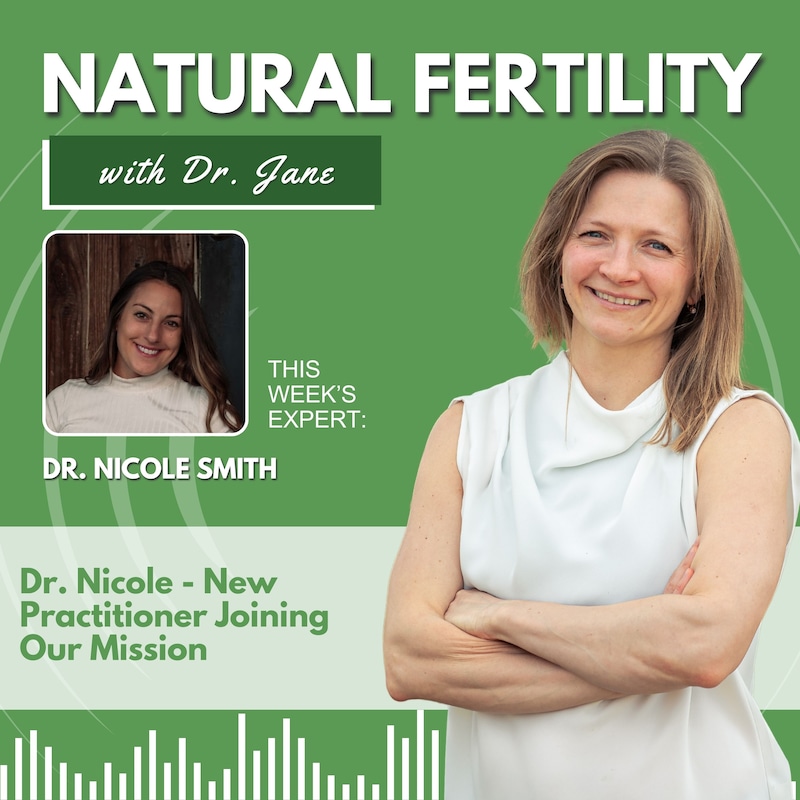
I'm thrilled to introduce you to Dr. Nicole Smith, the newest member of our team dedicated to helping couples overcome infertility and bring healthy babies home. Dr. Nicole is a Doctor of Chiropractic and Functional Medicine with a special interest in brain and nervous system health. She draws from her own pregnancy and postpartum journey—along with the challenges she faced with her son—to empower other couples and help prevent similar struggles. I can’t wait for you to meet her!
==========
STOP wasting time and grasping at straws. Let’s navigate your fertility journey together, so you can feel more confident and in control for this next BIG chapter of your life. Within the Fertility 101 membership, you'll join me - Dr. Jane, Naturopathic Doctor and a Natural Fertility expert, to learn how to optimize your hormones, improve egg quality and enhance your fertility naturally.
Every month, Dr. Jane takes on 2 couples where she works with them 1:1 to identify and overcome the root cause of their infertility.
==========
Key Takeways
5:14 Differences between chiropractic practices in US vs Canada
7:02 Childhood health struggles and their impact
13:55 Dr. Nicole's challenging postpartum experience
22:26 Key steps in Dr. Nicole's healing process
27:13 Recognizing progress during health transformation
30:23 Health journeys are not linear
35:57 Evolving approach to fertility treatment
39:13 Dr. Nicole's perspective on supporting fertility patients
42:16 Transformation required in fertility and parenting journeys
Memorable Quotes
"I'm here to support you and to give you a safe space to be in, to feel and to experience, but then also to be your detective. To flip over every stone and find everything that's missing and to be very honest with you about it."
"I definitely had those moments where I felt like I was doing all these things and it wasn't working, but it was. Going back and seeing a difference in my energy, my skin starting to look better, not looking as tired - those were signs I was moving in the right direction."
"We need to remember that your healing journey is not just going to be linear. We're going to have peaks and valleys. But the goal is that they become less frequent and less intense over time."
Connect with Dr. Nicole Smith
Instagram - https://www.instagram.com/docnicole/
Connect With Dr. Jane Levesque
Click Here To Sign Up For Dr. Jane’s Hormones Masterclass
Website - https://www.drjanelevesque.com/
Instagram - https://www.instagram.com/drjanelevesque/
Facebook - https://www.facebook.com/DrJaneLevesque/
YouTube - https://www.youtube.com/@dr.janelevesque7319
🎙️
Podcast Production & Marketing by FullCast
Transcripts
I definitely had those moments where I felt like I was doing all these things and it wasn't working, but it was. And there was a couple things that came into play, was going back and seeing a difference in my energy. So I'm a big journaler, so I would journal essentially what I was feeling, what I was experiencing. I took pictures of what I looked like at the start of this journey, then every couple months took pictures. So I would go back and it's like, oh, okay, my skin's starting to look a little bit better. Even just on my face. I don't look as tired. I don't look like I'm 70 years old when I'm only in my 30s. And same thing with the weight loss. I started to notice that number changing. So I'm like, okay, well, that's a positive. So some of that inflammation that I'm just holding on to is starting to decrease.
Dr. Jane Levesque:Pregnancy is a natural process. So if it's not happening or if it's not sticking, something is missing. After having a family member go through infertility and experiencing a miscarriage myself, I realized how little support and education women have around infertility. I want to Change that. I'm Dr. Jane Levesque. I'm a naturopathic doctor and a natural fertility expert. Tune in to every Tuesday at 9am for insightful case studies, expert interviews, and practical tips on how you can optimize fertility naturally. If you've been struggling with infertility, pregnancy loss, women's health issues, or you just want to be proactive and prepare yourself for the next big chapter in your life, this show is for you. Today, I'm excited to sit down with another practitioner that I've recently hired, Dr. Nicole Smith. She's a doctor of chiropractic and a functional medicine practitioner. And she is joining forces with myself and Tina helping couples who've been struggling with infertility conceive and bring healthy babies home. She has a wonderful story of her own pregnancy and postpartum journey and what has led her to start specializing in fertility and why she's so passionate about helping couples do exactly that. Bring healthy babies home and what really goes into being able to do that. I'm so excited to join forces with her. I think she's a wealth of knowledge and I can't wait for you guys to meet her. Hey, Nicole, thanks for being here.
Dr. Nicole Smith:Hi. Thanks for having me.
Dr. Jane Levesque:I'm excited to have you be part of the team as another practitioner joining the Dr. Jane fertility tribe. Yeah, give people a little Bit of an intro who you are and why fertility.
Dr. Nicole Smith:Yeah. So I'm Nicole. I am a doctor of chiropractic and also a certified functional medicine practitioner. I would say if I really had to dig into why fertility? It kind of goes way back. I grew up being a child who was just always sick. If you ask anyone from my childhood, they'll tell you, like, I always had a stuffy, runny nose. I was always, you know, down for the counts, struggling at the Christmas parties or family parties. And it wasn't until I was in high school that I was head to head with one of my really good friends for a spot to run a relay with the varsity team. And my sister was a senior, so I was going to be with her. I was going to be with a couple other seniors. I was only a freshman, and as a freshman in high school, that's like, it's everything, right? That's your whole world. But my coach had pulled me aside and was like, your health is unreliable, and unless you can figure out something to do about it, we're going to have to give the spot to her. Even though my times were just slightly faster for what they needed to be then, which, I mean, she could probably outrun me now, but back in the day. But essentially I panicked, and it was kind of that kick I needed to start investigating, okay, well, why is this happening? Why am I always sick and other people aren't? Fortunately, I had a really great pediatrician at the time who was like, well, next time you get sick, just stop taking over the counter medications. Like, just see what happens. Let your body fight it. And I slowly started doing that. And then after high school, I ended up working in a chiropractic office. And that was when I really started to learn to question, you know, why I was always being sick and what it actually meant to be healthy and to start eating better. So I used to be the kid who was like, Wendy's. Every day after track, I would go have my Wendy's burger, my fries, my soda. Once working for them, it was, okay, we're done with fast food, we're done with soda, we're done with all of these things. Which was hard because everyone else in my life and in my circle was doing those things. But working in that office, it was a husband and a wife. And the wife worked primarily with pregnant women and children in early childhood. And she also had a lot of clients that were struggling with fertility. So learning how chiropractic can play a role in the neurology and help support that, and then when I stepped into chiropractic school, it was like this whole other world just opened up with the science behind not just chiropractic, but health and supplementation and exercise and what it means to really just be like a, well, living human being. And so all through school, I kind of stuck on the track of learning about fertility, pregnancy, early childhood, after graduating, stayed within that realm, within practice. And then seeing so many friends and family members struggle with their own fertility journeys. And my own journey postpartum after having my son really led me down deep into that path of functional medicine.
Dr. Jane Levesque:Yeah. For those who are in Canada, chiropractic, like, I want to differentiate, because in Canada, you think of a chiropractic doctor that is just going to go ahead and like, crack the back and the neck and the, you know, and the hips and then maybe make some lifestyle recommendations, give you exercises. Whereas if you're in the U.S. you're essentially, you're running functional lab tests and you're recommending supplements. You're running a little bit more of an appointment. And yes, there's a physical component to it as well. But I just wanted to differentiate that in case someone's listening and being like, I don't understand how a chiropractor. Yeah, I think it really just depends on the person, too, because there's, you know, naturopaths that don't run testing. There's naturopaths that don't run, you know, and don't do any physical therapies. Like, I don't do any acupuncture. I don't do any physical therapies, even though we were taught that in school. So I think it just like, really depends on the person and where they're going to go.
Dr. Nicole Smith:No, you're 100% right. And even in the States, a lot of people have that same mindset around chiropractic as being kind of like the back cracking, fix your disc issue. We are seeing a big wave of it becoming more neurologically focused, which is where I really enjoy. And I think I bring that into the functional medicine as well as understanding, okay, what's happening with this person's nervous system and how is that affecting the way that their body's going to function. And you start to see that shift. There's actually, I feel like there's not as many chiropractors as there should be, really diving into functional medicine and testing, but some of that state regulations. But it is nice to see that shift going away from the building blocks of the spine and into the whole system functioning well.
Dr. Jane Levesque:Yeah. And that's like being an integrative practitioner.
Dr. Nicole Smith:Right.
Dr. Jane Levesque:It's just actually looking holistically instead of segmenting every different part. There are certain parts that play a bigger role, like spine is one of them, but you still have to look at everything. I have a couple of questions from that story. I mean, first of all, why do you think you were sick all the time?
Dr. Nicole Smith:I think part of it was I very much had, like, a go, go, go lifestyle. I didn't really understand how to take a break. It was like, you know, some days I would go running at 4am, then I would go to school, and then after school I had sports, and then I maybe had another sport, and then I was home doing homework. But in the time that I was home, you know, my mom used to always get mad because she was like, all you do is eat junk food when you get home, and then you're never hungry for dinner. And, you know, at the time, I'm like, oh, she's just being a pain. But she was right. Like, I would come home and I would just eat whatever junk I could get my hands on immediately. And then, yeah, I didn't want to eat, like, a good cooked meal. And we were really spoiled. My grandmother from Portugal lived with us for most of my childhood, and she would cook these amazing, like, dinners, and she'd spend all day working on them. And then you would have me just like, oh, I'm not hungry because I ate a whole bag of Doritos or, I mean, popcorn. I used to actually just open a can of corn and cook the corn and just eat the bowl of corn, and that was it. And that was my after school meal. So I just didn't have the connection or the understanding of how food was either helping or harming my body. And so I always just went for whatever was gonna be really easy. And at the time, the stuff that I had that was easy was not the stuff that I would even think about eating now.
Dr. Jane Levesque:Yeah, so it sounds like it was more in your teenage years versus, like, as a kid.
Dr. Nicole Smith:Yeah, it was kind of both. I think it led through all of it. And a lot of it was stress, too. I mean, always having that go, go, go lifestyle. I used to have panic attacks in, like, middle school and high school, which is really, really young. But it was just I constantly was at this heightened level where I was just always really anxious and then really fearful because of it.
Dr. Jane Levesque:Yeah, I mean, you know, when I look at fertility cases, I'm always looking back really far. And I used to see a lot of kids in practice. And because I was like, we can get the kids healthy, then the adult will be healthy. But then when you're working with kids, you're actually just working with their parents. And it depends on if you can. It's like dog owners, right? Like, if you can get the owner to do it, then the dog will be fine. But if you can't get the owner to do it. And so then I'm like, but pregnancy, like, pregnancy is. That's really when the foundation. But, like, turns out when you're pregnant, you can't really do much. Obviously, there's a lot that we can do to support. But, like, if there's big issues, this is exactly what the conventional system is for. So it kind of led me to this point. I'm like, oh, infertility. So when I take history down, I'm taking it from, like, you know, that kind of stuff is interesting to me. Like, oh, why were you sick? What was the pregnancy like with your mom? What about, you know, what are those things? And obviously, we don't need to dig into those, but it's just seeing how we end up where we end up. Because that was. I don't want to say that was the quick answer of, like, fly fertility. We talked about this when I first interviewed, like, why would we choose fertility space when it is actually a really difficult space to be in?
Dr. Nicole Smith:You know, it is, and it's tough, like you said. I noticed that same trend with chiropractic, where I started off working with the kids and then was like, okay, I need to get before the kids. So we start looking at pregnancy, and then, okay, that's too late. We need to even go before that. And I remember working with a practitioner who did both functional medicine and chiropractic, and I was telling him some of the stuff I had going on, and immediately he was like, you had forceps when you were born, huh? I'm like, yeah, I did. And that was kind of when a light bulb went off of like, oh, there are these patterns that show up in your adult life that have started as far back as when you were born. Or, you know, I could see patterns with my parents and specifically my dad and certain things that he struggles with his health also showing up in my health throughout my youth. And now I look back and I'm like, man, if I could just get him to do X, Y and Z, he could be over here with me now instead. Right?
Dr. Jane Levesque:Yeah. How did the chiropractor or the functional doctor know that you had forceps, like, what's the actual sign?
Dr. Nicole Smith:So with him, some of it was more structural. So stuff structurally that was going on with my face in the alignment. And then also there's so, like, some. How some kids will have a deviated septum or they'll have a cleft lip. I essentially have those same structural signs, but without those outcomes. So he was able to pick up on that. But then there's things that kind of correlate to it. So when you come into the world in an already stressed environment. Right. So whether it be, I mean, it could be a natural birth or it could be a C section, or there's interventions. If it's just that stressful environment, those things create the blueprint in your nervous system that you're going to carry on later. Right. And that's why I know you really advocate for bringing healthy babies into the world, because we understand that we're building that blueprint and that foundation for them where I think there was a lot of stress that led up to my birth that then came into play with me after birth that kept me in that fight or flight, fearful response always.
Dr. Jane Levesque:That's fascinating. And this is the goal for myself to find, because I can spot a lot of things, but, like, I can't spot if someone had forceps or not. And obviously I've realized that that is a different, you know, field. But I just find it fascinating when people can see that and they can see it based on the nervous system and how. Because, yeah, like, we assume that it doesn't matter, but, you know, it does. It does change the nervous system.
Dr. Nicole Smith:Oh, yeah. That's like, one thing I love looking at is, like, heart rate variability. Especially when you are, like, supporting the pregnant woman, looking at the heart rate variability and being able to say, like, okay, we need to address this now, because otherwise that your little one's gonna come in carrying all of this with them. So it is cool to see that pattern neurologically, but also in their health. Right. So we often talk about, like, the placenta and how the placenta is. It's not just feeding the baby, but it's also, you know, it's giving them their nutrients. It's giving them the mom's stress, mom's emotions, mom's entire experience is being shared between them.
Dr. Jane Levesque:Yes.
Dr. Nicole Smith:So it's kind of neat to see, like, how you can, even just by proper supplementation with mom, change her heart rate variability, change her mood, change whether or not she's anxious or she's sleeping. And that creates a whole different start in this world for that little one.
Dr. Jane Levesque:It gives me goosebumps. And, I mean, there's a lot of things that I wish I would have done differently with my first, but I also share. And, I mean, even with my second. But with my first, for sure. And that's why I share these experiences and, like, the pains that I still walk around with, you know, postpartum. And because it's like, you know, I see my daughter every day, and there's certain things where I'm like, yep, I didn't work on that, and now I have to help her work through it because I was unaware. So lots of forgiveness, lots of. But again, the reason that we're in the fertility space is because we want to help you guys prevent those.
Dr. Nicole Smith:Yeah, absolutely.
Dr. Jane Levesque:Yeah. Tell us about your postpartum experience. Like, I'd love to hear it.
Dr. Nicole Smith:Yeah, postpartum was really interesting. So I was pretty blessed in the sense that I got pregnant pretty quickly. However, during the time that I did, I had just done a bunch of lab testing and was on supplement protocols and, you know, was in the sauna, was doing all the things. So then we got pregnant pretty quickly. Pregnancy overall was good, but kind of like you said, there were certain things that I. And being a practitioner, I should have picked up on stronger, and I didn't. One of which was there were definitely points where I was very emotionally stressed and I was working in a clinic at the time, that just was not a good fit for me. And it left me coming home, like, very emotional constantly. And I can see some of that showing up in my son now. So it's kind of a mirror reflection. But after he was born, my postpartum recovery, I couldn't even go for a walk without suddenly getting feverish and being down for, like, three days. And this was a while afterwards. Like, we did the whole, you know, five days in bed, five days near bed, just kind of staying close. But I really, really struggled, and I think a lot of it was depletion. My son started having absent seizures, which made me realize again, there was a lot that was happening in utero during pregnancy. And even prior that I didn't properly address. And I think some of that is that fight or flight response that I had been in. Fortunately, we've been caring for him, and we're really, really particular about his diet, and he has not had one for quite some time. But always monitoring, always paying attention to it. But then also postpartum, I didn't realize that there was a big Disconnect or depletion going on with me because as a practitioner you sometimes think like, oh, that won't happen to me. I know all the things, I know what I'm supposed to do. I know, you know, I'm not going to experience that. Like I've got it down. And that's just not true. You can't always be your own practitioner. You sometimes need somebody else to have a more removed because you're too emotionally invested. Right. And it's the same thing with my son. Like I'll have other chiropractors work on him because I'm too invested in him emotionally. But we had a day. It was during the summer. It was a beautiful day. My emotions had gotten so intense that I went into the bedroom, shut the door, sat on the floor and was just so lost in what I was feeling that I actually, and I hate to admit it and to admit it publicly, but I think it's important. But I was so upset that I like leaned forward and then I whipped myself back and I hit my head off the dresser. And my husband came running in and was like, are you okay? What happened? And I just started crying some more and was like, I don't know what's wrong with me. I don't know why I feel like this. You know, this isn't myself. And I don't know what to do about it. I don't know why I hit my head. And that was my wake up call of like, okay, there's something really, really missing in my health and so I need to do something about it. And shortly after that, my milk supply also disappeared. So again, another major sign that something was missing. Because I was only about four or five months postpartum, I should have been able to keep nursing. And it was like almost night and day. I had a full supply and then all of a sudden I didn't. So once I stopped nursing, I started diving into functional testing even more. I did a blood panel, I did stool testing, I did different nutrient testing, toxic element testing, and just looked at it from every angle I could find and then started studying like a mad woman. And there was a lot that was missing. There was a whole lot of things that I look back and I'm like, oh, I thought I was doing good and I wasn't. But I didn't know because I didn't take the second to like stop and evaluate. I just assumed I was doing everything right.
Dr. Jane Levesque:Thank you for sharing that. That's a lot.
Dr. Nicole Smith:It's hard.
Dr. Jane Levesque:It's like, it's hard to reflect back. And I think when we see. Like, when I see you now, I just assume things have always been easy. You know, when people look at me, they just assume that things are always easy. And it's like, no, it's not easy. We just don't let somebody else tell us what's wrong. You know, we figure it out. And sometimes we're stubborn, and we don't ask for help because we think we can figure it out on our own because we have all this knowledge. But like you said, having another person to bounce back and just hold space for you, even, you know, or provide a different perspective is huge.
Dr. Nicole Smith:Absolutely. And that's part of the reasons, I mean, you and I had talked about this early on with interviewing, that I was so excited to join a team, is because even for clients, it's really nice to have multiple people who have different backgrounds, different perspectives to all look at it, because you can have that moment where you're like, man, I've been working with this client for so long, and we've gotten this far, but there's just something that seems to be missing. And then you bring it up to one of your teammates or colleagues, and they're like, oh, it's obvious. It's just this.
Dr. Jane Levesque:Yeah.
Dr. Nicole Smith:Oh, there's that piece. And, you know, so it's really exciting to be able to be here with you and then also with Tina and get all the different lenses.
Dr. Jane Levesque:I'm just as excited.
Dr. Nicole Smith:Yeah.
Dr. Jane Levesque:Because we do have. And my vision on, you know, really helping people bring healthy babies home. And I think that differentiation versus just getting you pregnant, I think, like, it's. You can zoom out and see the whole picture and understand that. I have a couple right now that just got pregnant. And, you know, I talked about them on the team meeting, like, send some prayer, some love to these people because they've been through a lot. She had a couple of losses, one of them at 37 weeks, which is probably, you know, like, one of the most traumatic things that get so triggered. Like, I remember crying on their first appointment, meeting them, because it's just like, how can you go through so much? You know? And so when you have now, you can have a team of people that can support, you know, depending on what it is that you need. So, yeah, I'm excited to have you here and understand the process that, like, when someone's pregnant, we're just getting started. Yeah, that's it. It's like, we're not. We're cautiously optimistic, but we know that there's so much that still has to happen throughout the entire pregnancy and then the delivery and the postpartum period in order to ensure that the goal that we set from the beginning actually happens.
Dr. Nicole Smith:Absolutely. And it is tough. We actually. Our doula is. Was a good friend of mine, and she was pregnant pretty much the same time as me. She was due a couple weeks afterwards, and unfortunately, she had a stillborn. And, you know, my mind just went to all those places of, like, okay, you know, what was missing, what would have had. Have been done different? You know, what can we do just with people we work with to try and, you know, prevent that from happening and to help their bodies to be able to handle it. It is really, really tough. And then it's tough seeing, you know, people close to you who. They want to start a family so bad. And I know that feeling. I've had that feeling of looking at, you know, my sister and her two kids and thinking, like, man, I'm probably never going to have that. And that's a. It's a hard place to sit. So then to be able to kind of step in for someone and say, no, we can have that. Like, we can look at all the pieces and figure out how to have that.
Dr. Jane Levesque:Yeah. And you have to look at testing. Like, I'd love to say that I have a magic ball and I can tell, you know, the crystal ball that tells me everything that happens, but it's actually just data. And, you know, I see you wearing an aura ring, and we all talk about how we collect data for patients and looking at the lab testing and just doing our due diligence, because there's a lot that can go wrong, and there's a lot that we can do to prevent it.
Dr. Nicole Smith:Absolutely. And I think it's good, like we said, to have different mindsets on it, too. I know. I was talking to a couple recently who was recommended that they take baby aspirin to help because she had a couple early miscarriages. And it's like, okay, well, you know, we need a question. Why, like, why would you need to take the baby aspirin? What's happening? So it's always nice to, like, they're working with a fertility clinic. They're having a great experience. But then us, on the other hand, can kind of look at it from another angle, which is really nice.
Dr. Jane Levesque:Yeah. Do you mind sharing a little bit? So, like, you went in and you did all the testing, and obviously I just see the finished product, but just, like, some of the stuff that you worked on on yourself and I'm sure you implemented a bunch of that with your clients as well as you learned about it. I don't know if you find that. When you find something in yourself and you're finding it on all your clients, too, and it's like God or the universe was trying to teach me something.
Dr. Nicole Smith:Oh, yeah, absolutely. I did a lot. So I did try to take pictures and track my progress throughout the months. And it's actually really neat to see to the weight loss that happened, which wasn't my main target, but it kind of just happened with everything. But I had gained, I want to say, like, 85 pounds during pregnancy. I gained a lot. I was. I want to say I was 120 when I got pregnant, and I was like 185 or 160, 70 when I had my son. And then I just kind of hung around there until I started making changes in my health. And so I did the testing. One of the first things I did was kind of go through a bit of a detox and a gut cleanse. So I had a lot of inflammation that showed up on my stool testing, as well as overgrowth of certain good bacterias, bad bacterias. I grew up being someone who was prone to constantly getting yeast infections. And that was, like, through the chart, like, it was showing up on my stool test, which tells me that it was more of a systemic problem than just like a vaginal problem. So that was one of the first areas I started, was kind of working through that, working on bringing my stress down. Even the people I was working with at the chiropractic clinic at the time could see. So we ran. We had a heart rate variability scan there, as well as some thermal scanning. So we ran some of those tests on me, and everything was just, like, through the roof. So I started getting adjusted regularly. I started working out at Hot Works so that I could take a benefit from the sauna that's there. And even days, I mean, there were so many days that I just went and laid in the sauna because I just didn't have the energy down to the cellular level to get myself to work out. But I knew that I needed to. So I just started kind of trying to detox in any which way I can. I cut sugar, I cut gluten completely. I can partially thank my son for that, because anytime I had gluten, he would flare up in a rash if I did nurse him. So during nursing, I had started cutting it out, but we did that, and then in. So I would say it was about September.
Dr. Jane Levesque:I'D love to pause on that for a second because I think that a lot of babies now, like, you know, I have a couple of couples now that I'm thinking about. We had to do exactly that, like, cut out gluten and dairy because he started to. The baby started to get really mucusy. And, like, the conventional system is always like, oh, they'll go out of it. Or it's just whatever we give them, you know, mucinex to break up the mucus. And it's always like, no, what's mom doing? What's happening with mom? If mom is stressed? If mom. And, like, just changing the mom's diet will absolutely change what's happening with the baby. I just, like, I hate how we've normalized so many things about, oh, it's. The baby's going through this. Let's just medicate it. And it's like, no, if the mother is. That is how the baby is getting primary food when they're young. It's like, change the mother's diet, change her state. If she is calm versus anxious. It's like night and day. And what happens with the baby, it's crazy.
Dr. Nicole Smith:Yeah. They told me it was just his baby acne. I go, it's just baby acne.
Dr. Jane Levesque:Yeah, but, like, what's baby acne? Do you know what I mean? Like, that's where I'm always like, okay, so tell me, what's baby acne? It's like, it's an imbalance in the microbiome, and there's liver and, you know, you have to look at all those things.
Dr. Nicole Smith:Yeah, absolutely. But, yeah, so I had to work through that, which was really good. And it took a while, too. At first I thought it was dairy, and then we realized it was gluten, I would say. As far as everything else I did during that postpartum journey, I had gotten sick with what I believe to be Covid. I never actually went and tested, but just assuming it was a nasty virus, essentially, I flared up in a skin rash all over my body. And my ears were swollen, they were peeling. I was itchy, even a few cracks. See a rash, it was still just itchy. And that's when I started red light therapy. And that ended up being a big game changer as far as my skin healing. And then I had to go back and put myself through the same detox I did in the beginning. So I think I did about three rounds of detoxing until I finally got to a place where I felt like myself again. And I actually had booked of just a fun photo shoot with a friend of mine who was starting with photography. And I was like, I just want to feel beautiful again because I have been through so much in the last year of, like, just trying to. To figure out who I am as a mom, as a person, and then in my health. And she did a great job. We had a ton of fun. We went to the beach and just did this for fun photo shoot. And it was around Mother's Day too, so it was a nice treat. But. But, yeah, it was a. Probably an ugly year leading up to it. And, you know, I give my family a lot of credit because they had to deal with the ups and downs and my emotions and, you know, being more irritable and then being tired. And then all of a sudden I'm on this high and everything's great and I'm ready to go, and then I crash. So they definitely took some punches that year as well, for sure.
Dr. Jane Levesque:How did you know you were moving in the right direction? I think that's a very common thing where we're flaring and things are not good, and it's like, it's hard to know if you are moving in the right direction. If there is a light at the end of the tunnel, how do you know that you're moving in the wrong direction and they're, you know.
Dr. Nicole Smith:Yeah, that's actually a really great question. So I definitely had those moments where I felt like I was doing all these things and it wasn't working, but it was. And there was a couple things that came into play, was going back and seeing a difference in my energy. So I'm a big journaler, so I would journal essentially what I was feeling, what I was experiencing. I took pictures of what I looked like at the start of this journey, then every couple months took pictures. So I would go back, and it's like, oh, okay, my skin's starting to look a little bit better. Even just on my face, I don't look as tired. I don't look like I'm 70 years old when I'm only in my 30s. And same thing with the weight loss. I started to notice that number changing. So I'm like, okay, well, that's a positive. So some of that inflammation that I'm just holding on to is starting to decrease. And then I fortunately, just being in the field, have a lot of friends who are practitioners of different kinds, so to reach out to them and just get that encouragement. And I remember being on this protocol to help with my adrenals. But also with my gut health and talking to a friend of mine, she's like, well, why don't you just stop everything and, like, see how you feel? So I'm like, okay. So I just stopped, took a break, and it was like, I just shot backwards. I was right in the middle of a detox, and it was the worst of it because I was detoxing so heavily, and I just needed to keep going forward. And I would have had that light at the other side, but because I stopped, it just, like, shot me right back and I didn't feel good. And the worst part was I stopped taking my binder. So I feel like all of this that my body was learning to get rid of was then just accumulating in my body. So I got really, really sick and struggled after.
Dr. Jane Levesque:How long did you stop for?
Dr. Nicole Smith:I stopped for. I want to say I stopped for about a month. Almost two months. Yeah. I tried to give it a good amount of time, and then I slowly just started to pick things back up and was like, I'm backtracking. So I knew I was headed the right way had I not chosen to stop.
Dr. Jane Levesque:Yeah, it's really hard to tell the difference between going up a hill versus moving backwards is kind of what I'll tell my clients, because this. And you kind of pointed it out. This is where I rely on data a lot, because sometimes it doesn't feel good, but your data is improving, and it's like we're moving in the right direction. Like, even though you don't feel great, and sometimes people are feeling great, but they'll have a flare. And, like, the skin flares are the hardest, especially if they're somewhere around the face, because obviously it's something that's, like, in your face. You're dealing with it all the time. But we know that skin is a detox organ, and so it's just purging some stuff, and it's just being able to facilitate that for people and ourselves.
Dr. Nicole Smith:Yeah, definitely. I think I constantly try to remind people when there's stuff going on with the skin that the body's just. Especially during a detox, the body's just trying to push it all out and get rid of it. But it's. Yeah, it can be tough. And I know a lot of times I'll tell clients, you know, we need to remember that your healing journey, it's not just going to be linear.
Dr. Jane Levesque:Right.
Dr. Nicole Smith:It's. We're not rocket launching. We essentially have. We're going to have these, like, peaks and valleys. But the Goal is that they become less frequent and less intense. Right. So over time that kind of decreases. And then it's not that we're never going to get sick again. Like we're always going to come across things in our life, but being able to have the adaptability to handle those things and overcome them versus them just completely shooting us down is part of the goal.
Dr. Jane Levesque:Or even just like knowing how your body works, you know, I think we have like unrealistic expectations. In the fertility 101 group, we had a chat and she's talking about, okay, I'm tired and this. And I'm like, how much are you sleeping? Oh, I'm only. That's not good. I need more help there. I'm sleeping six to seven hours a night. Okay, why are you doing that? And then you like break down her day and she's working from nine to nine and there's some breaks in the middle. She's trying to wake up in the morning to get her exercise in, but then there's like a waist in the. And I'm just like, you're tired because you're not sleeping enough. That's the problem. Like, there is no B vitamin that I need to give you or anything in that matter is like, you just need to go to bed early in your work schedule. And as soon as she did this, she's like, okay. Confirmed. It was the lack of sleep, like literally message the next day. I do feel better now that I'm not angry anymore. And I'm like, yeah, that's just how your body talks to you when you didn't get enough sleep or when your blood sugar is dysregulated or, you know, and I think so many of us are disconnected from that. Unless you're tracking the data, which of course most people aren't, you just have no idea how your body works. So it's this unrealistic expectation that, like, why I'm detoxing, why am I getting a rash? Like, why am I getting worse? You know?
Dr. Nicole Smith:Absolutely. Yeah. I think there was something you had posted recently that I just like, loved because you had talked about how important it is to prioritize sleep over exercise if you have to choose between the two. And I think that a lot of people don't realize that because we have this like societal norm that you have to be working out. Like, you have to be this high intensity athlete and you don't. It's good to be working out and moving. Of course we want to be doing that. But if you really have to choose, like not if you're not sleeping from that workout. If you're not sleeping. Exactly, yeah.
Dr. Jane Levesque:Can't work out unless you're sleeping. I think we adapt because my husband and I own a gym and I coached, you know, CrossFit gymnastics for a long time. And so it's like we're adapting what athletes are doing, but then you also have the 9 to 5 job or the 9 to 7 job. And then you're not eating what the athletes are eating. You're not prioritizing your sleep. And so it's like, no, no, you're just breaking your body down. Whereas these guys are like, that's their full time job, you know, so big differentiation.
Dr. Nicole Smith:Yeah, absolutely.
Dr. Jane Levesque:Tell me, I know you. We've been learning a lot from Leah and I'd love to kind of get an insight of what you have learned in just the last little while that you've been kind of following along Tina and myself and just the program and all of that and how we do things.
Dr. Nicole Smith:Yeah, it's hard to try to narrow it down because I feel like I have learned so much. I think I sent, I may have sent you a message where I was like, my whole world has just opened up in the fertility space. I'm like, I see everything differently now and there's a lot of it. I mean, in chiropractic school I studied this book in and out called Before We Were Born. And it's essentially like the science of what happens during that fetal development, but it doesn't look at it from a functional perspective. So then going and looking at it with your lens and Leah's lens and Tina's lens of, okay, here's, you know, what's happening within the body and how these hormones play a role. So one of them that I've been like, just diving deep into is progesterone. Because that's one that I feel like hasn't been very talked about very much. I mean, during pregnancy, yes, but otherwise it doesn't play or. Not that it doesn't, but people think that it doesn't play a huge role in your overall health. And then I find it even fascinating. Dr. Leah kind of dove into what it does for you postpartum as well and for the baby and how progesterone is created in certain parts of the brain and can actually help with that brain function and health. And so that tapped into, you know, the neurology side of me that was like, oh, here again is this big connection between the brain and the nervous system. And then what's happening in the fertility space and how the two are interconnected. So that was like, I feel like it just lit a match or an additional fire to the passion that I had. Cause I'm like, oh, this is where I like to connect the dots and to learn. So that's been really neat. And then even just I go back and I listen to a lot of your podcasts or your calls with people and sometimes, you know, going through things that you've done with past clients and just seeing these little tidbits that connect again. It's just like connecting the dots where I'm like, oh, I don't know that I had thought about it from that perspective, but it makes such a big difference. And, you know, one of things I posted about recently was a conversation you had about, like, not eliciting our own worry. Like, you can literally make yourself sick from worrying too much about the process. So again, just seeing how like, okay, this is a full and comfortable encompassing approach that we're taking. Not just science, like we're looking at the data, we're looking at the research, but we're also taking into play the mental health and the spirituality and how all of that is going to be interconnected to what the person experiences and their outcome. And then of course, the biggest thing being, you know, their belief in their self to get there.
Dr. Jane Levesque:Yeah, it's. I mean, I've evolved so much as a practitioner. Dr. Leah in the last year has shaped a lot of that. And I mean, I'm excited to have a team of like minded. You know, when I was interviewing you guys, the big things that I was looking at is like, how are they approaching a case? You know, because I know that when I first jumped into fertility, it's like some of the stuff I'll counsel my patients on now. I'm like, I did not think I would be talking about this, like marriage counseling. And do you envision the soul of your baby? Do you see it in manifestations? Like, I never thought that would be an important part of, you know, what I do, but in reality, like, you have to strip it down to the soul level and be like, why is this couple sitting in front of me? What are they here to teach me? And what is it that they need to know in order to help them get through, you know, to their family goals? Because I always compare it to you're climbing Mount Everest. Like, it's not an easy track. And yes, it's easy for some people to get pregnant, but, like, you're a perfect example of how like it was not easy even if the pregnancy was okay. Like there was a lot of stuff that you went through after. And someone today on the Live actually was like, how come some unhealthy people get pregnant and people who are healthy can't? And I'm just like, define healthy, define unhealthy. And what was the rest of the journey? Because again, we said healthy babies home and like healthy kids. That's like two years postpartum is what we're talking about. That sets the foundation. You know, you're thinking about what do I need to do just to get pregnant. It's like you have to be able to see the whole journey, not just the little bit. And yeah, it's fascinating. I don't know if you've already learned some stuff and like implemented for yourself as well, like if there's been aha moments for you.
Dr. Nicole Smith:There has actually there's been, I mean, there's been a couple supplements that I have gone and ordered for myself where I was like, oh, I didn't realize that this is probably where I need a little bit of support until my diet kind of kicks in to do it for me and then I can wean off of that supplement. So there's been some things there that have kind of come into play, especially with just like the mental health and being able to sustain things. I have, you know, my two year old, so my energy with him is like, it's so scattered, you can't finish a task or a thought. So trying to make sure that I have all the tools and things in place. So even simple things like I do my red light every single day. That kind of started before when I had the skin condition, but it's become a very, very important part of my routine to make sure do it. I just purchased or was gifted actually a sauna, the guys in home sauna. So and that was something where like I knew the benefits of it and how important it is. But then being on these calls, talking with you, you talking about your time in the sauna, I'm like, man, I really got to get one of these. So that's going to be an exciting addition to just my overall health routine.
Dr. Jane Levesque:You can make videos in the sauna as well.
Dr. Nicole Smith:Yes. Yeah, join. Well, it's like that's my quiet time.
Dr. Jane Levesque:It's this little box and I'm not. Nobody's bothering me. The kids are asle for the most time and it's like I can just sit and think for a minute. So I have to do it before the phone overheats.
Dr. Nicole Smith:Yeah. That's fair.
Dr. Jane Levesque:Yeah. Anything else, Nicole, that you want to share with listeners, Couples that are, you know, choosing to work with you?
Dr. Nicole Smith:You know, first and foremost, I'm just really excited and I think being able to be in this space and to work with people on this journey, it's a very delicate place to be, but it's also a really exciting place. And like I was saying with a friend of mine, where it's like, you know, I'm here to support you and to give you a safe space to be in, to feel and to experience, but then also to. You've hired me to be your detective. Right. To flip over every stone and find everything that's missing and to be very honest with you about it. And yes, it's kind of an, you know, an extreme or silly analogy, but it's like your personal investigator. Right. Like if you sent them out to go explore your spouse and what your spouse was doing and they came back with dirty the photo. I just picture like the manila envelope with. But you. That's what they were there for. To tell you that here, this is the ugly truth of what's going on. And I think that there's a balance of doing that and being able to be that person for a couple going through such a hardship, but also with such a delicacy. And I'm excited to be that person for you. And I say you speaking to our listeners just because I know that what's on that other side of it is going to be so beautiful and it's going to be so worth the journey. It's an honor to be able to be a part of that with you and to do it with you and to just guide you and teach you and help you. And then at the same time, every client I've ever worked with, I've learned so much from and just I am a very like, I will be emotionally invested in your journey, but I will also be the rock that you need to get through it.
Dr. Jane Levesque:Yeah, it's hard not to be emotionally invested. Like every couple that I have, I can feel their, you know, their pain and their sorrows and the desire to help. And I love what you said. It's truth is hard to hear. And I will find the answer of what is going on. Whether it's unexplained infertility or endometriosis or, you know, recurring pregnancy loss, endometriosis, like, you name it. There's always a reason as to why you're not getting pregnant, not staying Pregnant, something is, you know, or you have a diagnosis and you're trying to figure it out, it's just not usually. It's just not what you thought it was going to be. Usually the journey is a lot longer or a lot tougher. You know, you have to do a lot more than you thought. Even for us who have the tools and the resources to a lot of stuff. Like when I first started out as a practitioner and I look at myself now, I'm like, the big difference is that I did only a fraction of what I'm doing now. And so, of course, like, some people, that's all they needed. They just needed a little beep and they were good. But for most of us, we don't. We need an overhaul, you know, and whether it's sitting in the sauna for three months straight or taking all of these supplements in the castor oil pack and meditating and blah. But, like, you are transforming. You need to transform. I always tell my couples, like, the couple that's sitting in front of me today is not the same couple that gets pregnant.
Dr. Nicole Smith:Absolutely.
Dr. Jane Levesque:So it's like, what is the transformation that we're gonna go through? We'll just start one step at a time and go from there, you know?
Dr. Nicole Smith:Yeah. And then you go through it again. Because when you are on the other side and you are a parent, it's a whole other version of you to be able to do it. And I've said it before, but it's like some people go through it on the front end with their fertility journey, and then some people, they get pregnant easy and they gotta figure it out while they're trying to raise a kid on the other side. But one way or the other, you're going through that transformation.
Dr. Jane Levesque:Yep. I agree. I went through it after, and I so deeply wish that I didn't. But again, I wouldn't be here, you know, and I wouldn't have done things differently. So I have a lot of gratitude for my firstborn, and I have a lot of, you know, forgiveness and all of that practice that I do all the time, almost on a daily basis. Because I do find that it's confronting to be a mother. It's confronting to be a parent. And there's nothing easy about the journey. So the question that I had in the live today about, like, why do some people. It's like, don't wish for it to be easy. Wish for it to be. To give you strength. Because it's not easy. Nothing about parenting is easy. It's super confronting, especially when there are issues with your kid. It's easy to say, oh, it's just genetics, but it's like, but you're the genetics.
Dr. Nicole Smith:Yeah.
Dr. Jane Levesque:You know, like when I look at my parents, I'm like, I know that some of that's I could go in that path if I do X, Y and Z. Or I could do something different. So, like, it's a big reflection for us.
Dr. Nicole Smith:Absolutely. 100%.
Dr. Jane Levesque:Thanks for being here, Dr. Nicole. I'm excited to have you jump in and have more podcasts and jump on the lives as well and bring your insights. I know you've have a lot and you're very organized, which I love. With all your protocols, you're stuck so you can help all of us. It's like everybody has a little piece that we're adding and I'm really excited to just keep building this out and helping more people.
Dr. Nicole Smith:Yes, me too. I'm super excited to be here and thank you.
Dr. Jane Levesque:Thank you so much for listening. To read the full show notes of this episode, including summary, timestamps, guest quotes, and any resources that were mentioned on the episode. Visit drjanelec.com podcast and if you're getting value from these episodes, I'd love it if you took 2 minutes to share it with a friend. Rate and leave me a review@ratethispodcast.com Dr. Jane the reviews will help with the discoverability of the show. And who knows, I might share your review you on my next episode. Thank you so much for tuning in and let's make your fertility journey your healing journey.




