Shownotes
- Shame Is Universal: Whether you have too little or more than enough, shame around money is common. Recognizing this helps reduce isolation and encourages open, productive conversations about finances.
- Money Personalities Matter: Linda’s money personality assessment demonstrates that understanding your natural approach to money—whether spender, saver, security seeker, avoider, or risk-taker—can help inform better financial decisions and remove judgment.
- The ME! Money Method: Setting aside separate guilt-free funds for yourself (and your spouse or partner) empowers you to enjoy life and eliminates the guilt often associated with spending, especially for security seekers struggling in retirement.
- Self-Awareness Leads to Better Choices: Linda’s work, including her own experience and her husband’s, shows that having a structure around personal spending makes you more mindful and intentional without feeling restricted.
- Financial Wellness Is Human: True financial wellness is about more than numbers—it’s about understanding psychology, behavior, and emotions, which can free retirees to enjoy their resources without fear or guilt.
Mentioned in this episode:
Don't Retire... Graduate! is presented by BFG Financial Advisors
BFG Financial Advisors helps individuals and families design a financial future that supports the life they want to live—not just the numbers on a page. From retirement income and tax strategies to legacy planning and investment management, our team builds personalized plans designed for clarity and confidence. Ready to take the next step? Visit bfgfa.com to schedule a free consultation and start planning your next chapter.
Transcripts
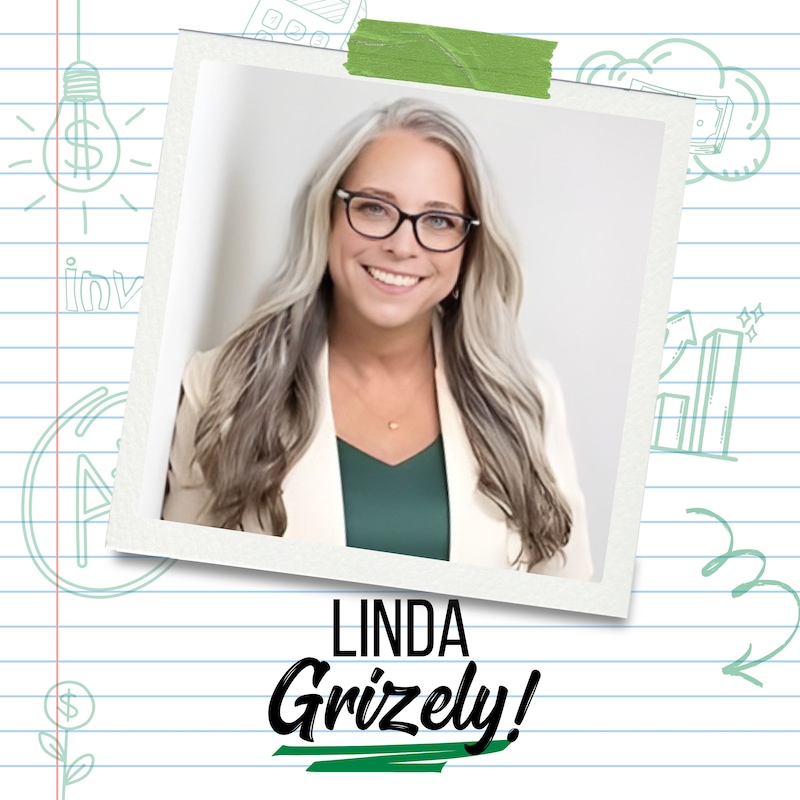
Welcome to Don't Retire, Graduate, brought to you by BFG Financial Advisors. We're here to rethink what retirement really means to you so you can graduate into your next chapter of life with purpose and with passion. I'm your host, Eric Brotman, and in this, our 7th season, we're bringing you interviews with guests who will share their money stories with us every other Thursday. If you haven't already done so, please subscribe so you never miss an episode. Today, I'm pleased to be joined by Linda Grizely. Linda is a personal finance expert and a financial wellness speaker who helps people build confidence and clarity with their money. She shows individuals and organizations how to turn financial overwhelm into empowerment by making money feel approachable, practical, and human. And today she's here to talk to us about graduating from guilt, how to finally feel good about spending in retirement, which is kind of a scary thing for a lot of us.
Eric Brotman [:So, Linda, welcome to Don't Retire, Graduate.
Linda Grizely [:Thanks, Eric. I'm so much looking forward to this conversation.
Eric Brotman [:Well, it's, it's fun to finally connect. You know, we met some 6 months ago or so and, and have been talking about putting an episode together about this. And what I'm excited about especially is that there's a quiz on your website that I'm going to take in real time. So that you can help me make my money feel approachable, practical, and human. And we can see sort of how you work. But let's start by, by learning a little bit more about your history, how you got into this, and why financial wellness is so important to you.
Linda Grizely [:Well, I could go back and tell a really long story, but we don't have that much time. So the short answer, Eric, is when I was doing financial planning and advising and I was talking to clients, I would always hear these stories, you know, like, my brother's doing this, you know, he's in this investment and I want the same thing. And then I would have to explain to the client why that wasn't a good idea for them. You know, your brother has a lot more money than you. You're not living within your means. You can't take that risk. But yet they still wanted that thing. And I started to discover that there was this whole mindset and psychology behind finance, right? And as I dove deeper into that, I started to think about money personalities and how people interact with money.
Linda Grizely [:And I learned, you know, I read all the books. I, you know, read The Millionaire Next Door. And, you know, Brad Klontz has the book where he talks about the different scripts and how we learn them when we, when we're growing up and just really got super interested in all of this. And that's how I started to focus on financial wellness and bringing the person into their finances. So not just talking about the numbers, but understanding why they're doing the things they're doing and the choices that they're making with their money and how their personality comes into that. So bringing that person in helps them be more successful in their plans because we're working with them instead of against them.
Eric Brotman [:So it, it's interesting because financial advisors, the CFP curriculum now includes a component on behavioral finance, and I I think financial wellness and behavioral finance have a pretty strong confluence, and it's something financial advisors historically were not really trained to do, to your point, but something that clients need/want. And financial advisors, we have to be adept at that because we have to be able to talk about the why and the why decisions are being made or why mistakes are being made or how to avoid making the same mistake twice or just the emotional baggage. I mean, money is a very personal thing. It's almost as intimate as medicine. And people are ashamed of it. They're guilty about it. They're afraid to talk about it. It's like taboo.
Eric Brotman [:Is there a chance we're going to break that cycle? Is that part of your mission, to break the taboo-ness, if that's a word, of, of money in individual situations?
Linda Grizely [:Absolutely. It's a big part of it because there is so much shame around it. And the idea is that people feel guilty and they feel like they should know more, they should have done more, they feel like they're behind. But what they don't realize is that everybody— I shouldn't say everybody, but so many people are that way. And they feel like they're alone and it's just them because nobody's talking about it. Nobody's talking about the idea that they're behind. And, you know, I was having a conversation on a different podcast where we were talking about like how people showcase money. You know, they buy the fancy car, they buy the fancy house.
Linda Grizely [:And we're talking about like the book The Millionaire Next Door, how they, they uncovered that really the people that are more likely to be millionaires are not the ones who have those things. And, you know, we just have this general conversation. And I realized that I had this epiphany that it's because we don't talk about money. But if you have the fancy car, it's like saying you have money without saying you have money. So it's your way to show people that you have money, but in reality, you're probably worse off than the person who's driving the economy car, you know?
Eric Brotman [:Well, and in Texas, I believe they refer to that as big hat, no cattle, where the idea is it looks flashy and it's, you're trying to impress somebody with the car or the house or the suit or whatever it is, but it means you might be spending more than you should. Real wealth isn't something most people brag about. It really is. People who are really truly wealthy sometimes are even ashamed of their own wealth, which is sort of an interesting thing to unpack as well. We've worked with people who are ashamed because they haven't saved enough, but we've also worked with people who are ashamed because they have so much more abundance than they want anyone to know, which is kind of an interesting thing that the more successful you are, often the more humble you're likely to be and the less flashy you're likely to be. There's a chicken and egg there, right? Like the person who's less likely to be flashy is more likely to be successful and therefore less likely to be flashy. So it's a self-fulfilling prophecy. So you have a personality quiz, and I have failed these before.
Eric Brotman [:I have no personality. But you have a personality quiz and an assessment that I guess helps you determine the starting point for some of the work that you do with folks. And it's free. It's available to anybody who wants to take it. Is that— am I— tell me more about that. First before I subject myself to it on the air.
Linda Grizely [:Of course. Okay, so first of all, nobody can fail. No matter what your result is, there's no wrong result. There's no wrong money personality. The idea is, is that by taking the quiz, and it's really not a quiz, it's an assessment, so to speak. By taking it, you uncover who you are and how you interact with money, what your personality is, which helps you understand why you do things and why some things might not work for you. And I want to go back really quick and just say the one thing that you said when you were talking about like people that had money and didn't have money, the common denominator was shame. You said there was shame in having money and shame in not having money.
Linda Grizely [:And that's the big thing. That's the part that we want to get rid of. We want to get rid of the lectures about money and we want to get rid of the shame and guilt.
Eric Brotman [:Well, there's, there's a lot of folks out there preaching the thou shalt nots when it comes to money, or this is the only way to do it, or this is the best way to do it. Or if you haven't hit this, you're an abundant failure. If you don't drive this car, you clearly aren't successful or there's so much noise. Financial pornography, which is kind of a made-up term, but it doesn't feel made up, is real. There's so much out there and there's so much that you can digest and most of it's bunk that it's really hard to know when you're getting true financial wellness, either education or even edutainment versus something that is really a sales pitch that's seeking to force people into decisions they won't want to make, sort of that upselling. You know, a really good server at a restaurant knows how to get you to order dessert, like they're going to upsell you on the craft cocktail. I think some of that happens in a very large way. But, but so talk to me about this, this assessment.
Eric Brotman [:We won't call it a quiz despite the fact that I studied, but let's call it an assessment. Tell me more about it before I subject myself to it, because I'm going to do this. I've never seen it. And I'm going to do this on the air and I'm going to be transparent about it. And I don't know if some of the questions are going to be terrifying to me or not, but we're going to try this and see what happens.
Linda Grizely [:I guarantee you they're not going to be terrifying. I shouldn't say guarantee. I can't say that, right?
Eric Brotman [:You can't say guarantee on a financial podcast. No, there is no guarantee.
Linda Grizely [:I don't think— I don't believe that they are going to be terrifying to you. Okay, so let's see. You're going to get 1 of 5 results. Okay. So the results going from one end to the other, and again, one end is not bad and the other end's not bad, is security seeker, which is a person who likes everything planned out. The next level is saver, which is someone who likes to save but maybe isn't as, as super regimented as the security seeker. The avoider, who doesn't like to pay attention to their finances. Uh, the, the spender, and the spender could be someone who spends on themselves or on other people, is a giver.
Linda Grizely [:Like, so spender's not a bad thing. And then the risk taker, that's a person who's like, go big or go home. I wanna do all the things. And that's the, that's the short version of the 5 different money personalities.
Eric Brotman [:And each of these results, there's pros and cons to all of them. So this isn't a, this isn't judgmental, it's just, uh, self-awareness.
Linda Grizely [:Exactly. It's completely self-awareness. It's not judgmental. It's not meant to be a label. It's just meant to be like, hey, recognize that this is how you interact and who you are naturally with money. And then that will help you understand what to do next or why you're doing things that you're doing.
Eric Brotman [:All right. Well, this is fun because hearing those 5 things, I actually don't know where I'm going to wind up. And I feel reasonably confident in, in my money, both knowledge and behavior, but now I have no idea how this is going to work out. So Our incredible producer Russ Reba is behind the scenes. He's going to pull this up. Uh, Linda, you can walk me through the questions. I'm going to give you answers and we're going to see how this works out in real time.
Linda Grizely [:All right, sounds good. All right, so the first thing you want to do is go to my website, which is LindaGris.com, L-I-N-D-A-G-R-I-Z.com. And then you're going to find in the upper right-hand corner, take a money personality quiz.
Eric Brotman [:All right. So folks can do this while, you know, from home right now if you want to, or you can just, just watch what I go through and then decide if you want to do this. I'm super excited to learn my money personality. Let's, let's get going.
Linda Grizely [:All right. When the first question, when it comes to money, your biggest priority is stability and a clear plan, enjoying life while you can, Avoiding stress or conflict around it. Watching it grow. Or taking bold action on big ideas.
Eric Brotman [:Oh, that's really good because so many of them apply to me. So like everyone else, I've got 2 or 3 answers that could be the answer. But because I'm only allowed to check one, I'm going to say taking bold action on big ideas. And I figure I started a company. That's got to be the answer, although I also like to watch it grow. And I also, you know, I also absolutely like to enjoy it while I can. So that's a tough question. We're already one question in.
Eric Brotman [:I'm already having all kinds of— not anxiety. There's no anxiety. I'm ready. All right. Number 2.
Linda Grizely [:Yeah. All right. And keep in mind that you can have multiple money personalities. You know, you can, you can be bipolar, you can be schizophrenic, whatever you want to call it.
Eric Brotman [:I have, I have financial multiple personality disorder. Is that— that's a thing now. I don't know if I've been diagnosed with something. Okay. All right.
Linda Grizely [:I'm not a, I'm not a therapist. I'm just a, a display person. All right. What do you usually do with your paycheck? Do you automatically move part of it to savings? Um, it goes in, bills go out, keep it simple, invest in a business or take a calculated risk, pay bills and follow a structured budget, or treat yourself or someone you love?
Eric Brotman [:Automatically move part of it to savings. I teach people to pay themselves first and I take that advice. So that is the first thing I do is put some away.
Linda Grizely [:All right. Sounds good. Next question. If you found $200 you forgot you had, you would tuck it into a safe spot for later, put it toward your latest idea or project, add it to your emergency fund, spend it on something fun you've been eyeing, or let it sit until you decide what to do with it?
Eric Brotman [:I would spend it on something fun. If I find $200 in a pair of pants or something and the, we're going to dinner. That's just, that's found money, therefore I will have fun with it.
Linda Grizely [:Yep. All right. Your idea of the perfect weekend is staying in and scouting deals online, booking something fun, even if it's last minute, hanging out with friends, no plans, no pressure, diving into a new adventure or challenge, or knocking things off your to-do list and prepping for the week.
Eric Brotman [:Oh, this does start to get personal, doesn't it? I, I'm gonna book something fun even if it's last minute.
Linda Grizely [:Yep. And remember, this is the perfect weekend, not what you do every, every weekend.
Eric Brotman [:Right. No, I certainly don't do that every weekend. Fair enough.
Linda Grizely [:All right. Next one, budgeting or focusing on cash flow, because really cash flow is also a form of budgeting. Watching that feels like it's empowering, you like knowing where everything goes. Boring or restrictive, you'd rather not think about it. Encouraging, you like to see your accounts grow. Frustrating, you can't seem to stay in the lines. Or unnecessary, you've got bigger things to focus on.
Eric Brotman [:All right. This is funny because I, on our show, I refer to budgeting as the B-word. We don't use the B-word. And I do like to focus on cash flow and I don't like to focus on budgeting. So the answer is going to be when we talk about budgeting, it's going to be unnecessary. I'm not a fan of budgeting. I'm certainly a fan of cash flow, but I'm going with unnecessary. I got bigger, bigger fish to fry.
Linda Grizely [:Okay. And keep in mind that that's why I put or focusing on cash flow. Most people don't know when they're taking the quiz, what cash flow, what is cash flow? You know, we know, but do they?
Eric Brotman [:Well, cash flow, I do track where everything is going, but I don't budget. So I'm going to go with unnecessary. I think that's the answer here.
Linda Grizely [:All right. That was a trick question for you. All right. What's your attitude toward financial risk? As far as risk goes, you avoid it at all costs. You embrace it. No risk, no reward. A, you'll take a risk if it feels worth it, you don't really think about it, or you run the numbers and decide carefully.
Eric Brotman [:I, I'll take a risk if it feels worth it. You know, I, I will certainly look at it. I'm not gonna say I run the numbers on everything, but I, I will say that I, um, that if I feel like there's a, a reward that is commensurate with the risk, I'll, I'll typically take it. Okay.
Linda Grizely [:All right. You've been invited on a trip. You say yes to the trip if it sounds fun and who needs a reason. You've already set aside money for an opportunity like this. It's off the beaten path and it sounds epic. Your friends are going and they've handled all the details. Or you've reviewed the full itinerary and know all the details.
Eric Brotman [:It sounds fun. Who needs a reason? Let's just go.
Linda Grizely [:All right. Next, which quote, which of these quotes speaks to you the most? A penny saved is a penny earned. Use it or lose it. Keep it simple. Nothing ventured, nothing gained. Better safe than sorry.
Eric Brotman [:Nothing ventured, nothing gained.
Linda Grizely [:All right. When it comes to money conversations, you usually avoid them because they're too awkward or intense. Lead them. You've always got good ideas to share. You stick to the facts and the plan. Offer your favorite budgeting tip or savings hack. Talk about your latest treat or splurge.
Eric Brotman [:All right. You use the B word again. We're not doing it anymore. No, I would say I would lead them. First of all, it's what I do for a living. And second of all, I do think I like to lead conversations about money and make it less, less taboo and more accessible.
Linda Grizely [:Absolutely. All right. People would describe your money style, people looking at you, as spontaneous and fun, ambitious and unconventional, chill and easygoing, organized and disciplined, or frugal and intentional.
Eric Brotman [:Um, ooh, again, there's several. I'm gonna go with organized and disciplined because I, I, that, that I think speaks most to me, although I'd like to think I'm also spontaneous and fun.
Linda Grizely [:All right.
Eric Brotman [:So then you can ask your— now, Russ, put your, yeah, Russ, put your name and email in there so that we can get one, I guess, is the best way to do this. Yeah.
Linda Grizely [:Or you can put mine, whatever. Put something in there to get the results. You're going to enter your first name, last name, and your email address, and it's going to pop up. It'll also email you, but it'll pop up with a response.
Eric Brotman [:Oh, good. All right. All right, Russ, this is you. No, no pressure. Uh-oh.
Linda Grizely [:So you came up as the spender.
Eric Brotman [:Uh-oh.
Linda Grizely [:Remember, there's no bad, there's no wrong money personality. So it's not good or bad.
Eric Brotman [:I got it.
Linda Grizely [:And here's what it says. I'm with you. It says you're generous, joyful, and fully invested in the now. Whether it's buying cheese or spontaneous travel, you use money to create memories and express love. And here's where you can use my ME! Money Method to bring mindfulness, not restriction, to your habits. So see, you thought spender, when you heard that, you originally thought it's bad, but if you read the description, no, it's a, you're, that's a great thing to be.
Eric Brotman [:Well, and it's, it's, it's spot on actually. Now that I see the definition, it, it, it's spot on. That's absolutely true. So talk about the ME! Money Method a little bit and sort of what you would do. I, I now have come to you. I said, Linda, I need you. I go through this, I've sent it in, you're now gonna start counseling me. What does that look like?
Linda Grizely [:Right. So the first thing that we're gonna do with me money is we're gonna set aside an amount of money that is just for you to spend however you want. If you have a partner or spouse, you're gonna set aside the same amount of money for them and they're gonna do the same thing if they're on board. The idea is, is that this part of money that's gonna be your me money, it's money that's just for you. You're gonna be able to spend it on anything that you want, whether it's buying, you know, treating people to dinner, treating yourself to dinner, going on the trip, whatever it is that you wanna do. And to figure that out, you're gonna, if you wanna go through cash flow, obviously as a financial, working in the financial planning advising business, you understand cash flow. So really the ideal way is to go through your cash flow and figure out what that number is. But for people that aren't in that space, they could just pick a number and start with it and see how it goes.
Linda Grizely [:But if they track it for a couple— track their personal savings for a couple of weeks and get a number, and then add in anything that's going to be like one-time things or special things or seasonal things. Like if you're a golfer, you'll want to add in that money that you're going to spend and kind of like escrow for it into savings over time so that you're always having that same exact number monthly or per paycheck or however you want to do it. Hopefully that's making sense. Are you, are you, are you with me so far? Everything sounds good.
Eric Brotman [:Yeah. So far, so far it sounds like fun.
Linda Grizely [:All right. So it's not a budget, but it is a budget depending on how you look at it. But it's not. The reason for it is because it gives you freedom. Okay. So if you think about in retirement, there are some people in retirement, if you look at the money personalities that I, that I identify, if you're a security seeker in retirement, because this is what it's about, don't retire, graduate, right? And you're a security seeker, it can be really hard for you to spend money. It can be really hard for you to go on a trip or to do the things that you want to do because you can have fear of running out of money. So by having me money set aside, it allows you a set item that you know that's structured that you're allowed to spend, and it gives you permission to spend the money without asking yourself.
Linda Grizely [:It's— I love it there for you.
Eric Brotman [:Now, if you're a spender like you— well, before you get on to a spender, before— forgive me, but before you go on to a spender, let's talk a little bit about this, because, you know, we've seen a lot of people who have enough abundance that they, they are not going to run out of money. And yet there is still that psychological— I don't think it's guilt, but I do think it's fear that they can't take the trip or they can't treat themselves. And some of these folks unfortunately wind up not enjoying the last 10 or 20 years of their lives like they absolutely could. And it's all in their minds. It really is. It's not fact. It is behavioral and it's psychological. And I think this is a really neat way to start to overcome that.
Eric Brotman [:So I love it. Let's talk about spenders.
Linda Grizely [:All right.
Eric Brotman [:Well, since I am one apparently.
Linda Grizely [:Now let me just elaborate on the security seeker there for a minute too.
Eric Brotman [:Okay.
Linda Grizely [:So if you're taking this amount of money and you're putting it aside and you're in, you're a security seeker and you're retired. So you're, you know, you're, you're spending down your income, you're in the accumulation or whatever you want to call it phase. And you're setting aside this money, even if you're a security seeker and you're not spending it, you're setting it into a separate account and you're just, you know, every, every month you're putting this amount into your separate account. That's your me money. And maybe you're still a security seeker and you're not actually spending it, but at some point something comes up and you're like, I wouldn't normally do that, but I already have the money set aside. And you're giving yourself permission to do that. You know, let's say that someone invites you on a trip or, you know, you get a chance to go do something that you wouldn't normally do, some, some event, and you're like, I always wanted to do that, but I never you never would have justified affording it or doing it if you didn't already have it set aside. And when it's already set aside there, it just reframes your thinking on it.
Linda Grizely [:You're like, it's already there, it's already paid for. I can do this.
Eric Brotman [:I love that. That's a great idea.
Linda Grizely [:Okay, so spender, you're a person who likes to do things. You like to spend, you know, like you said, you can be a giver, like you want to, you want to do that, that spontaneous trip or go on a trip if somebody asks you, things like that, right? So it's easy to go from spender to kind of like the avoider mentality where you're just spending to spend because you're like, yes, I wanna do this. Yes, I wanna do this. You're saying yes a lot. So having the money set aside in a separate account for you to make those choices from just helps you make better choices. So the, the example that I give is actually the Me Money origination story, like how it started. Which is because I put my husband on this Me Money budget. I said, I'm going to get— I didn't call it Me Money then because I didn't know that was the thing.
Eric Brotman [:You know, it's allowance. When you give your husband money, it's called an allowance.
Linda Grizely [:He said the same thing. He's like, you're giving me an allowance?
Eric Brotman [:That's what it is. Yes.
Linda Grizely [:Yeah. So keep in mind, I track everything because I'm a financial person and I'm just weird. So I already know how much money he spends and he has no idea how much money he spends because I would say things and I'd say like, you know, that fishing trip, whatever. He'd like, oh, we just shared a cabin with the guys and blah, blah, blah. And I'd be like, Um, you have a boat, you pay for the boat storage, you pay for gas, you pay for insurance, you pay for all these things that go into the fishing trip that you are not adding in. When you add it all together, you know, it's not like you're putting out one big chunk for an all-inclusive vacation, you know, where you're like, this is how much it costs because everything was included. You know, you got all these little things that add up. Anyway, so I put him on this budget and I said, you have to live within this allowance.
Linda Grizely [:You have to live within the means of this money and you have to save up for the other things. And again, I already knew how much he was spending. And my point wasn't to restrict him. Um, it was to make him more aware of what he was spending because it was clear that he wasn't aware of that.
Eric Brotman [:So how did that go?
Linda Grizely [:Well, yeah, we did it for a couple of months and I said, how is it going? He said, it's going fine. And I was like, okay, fine. What does that mean? And he said, well, I'm just making better choices. And I was like, oh, tell me more. This is going even better than I thought it would. Better choices. Tell me about this. I just wanted you to be aware and now you're telling me this.
Linda Grizely [:So he gave the example that he saw a golf shirt that he wanted and he had an upcoming golf trip. And so he thought about it and he thought, if I buy this golf shirt, I won't have this money to spend on the trip. So I didn't, he didn't buy the golf shirt and he just saved the money for the trip. And I said, How do you feel about that? He said, fine. Of course he just says fine. I said, okay, so the, do you feel bad that you don't have the shirt? And he said, no, I have a million other golf shirts. I don't need that golf shirt. And I'm like, do you wanna go back and buy the golf shirt right now? And he's like, no.
Linda Grizely [:He's like, I didn't need the golf shirt. I said, but if you didn't have this allowance, this, this money set aside for you, would you have bought the golf shirt? He's like, yeah, I would've. And I would've gone on the trip. Right. So he would've done both. He would've spent both. And so I said, do you feel like this is restrictive or that I'm controlling you? And he said, no, not at all. Like, you know, he's never had to answer to me for what he's spending.
Linda Grizely [:You know, we got married older, we're a blended marriage and we got married later, second marriage for both of us. So we've never answered to each other. So he's like, no, I'm just making better choices. So he's all good. And I'm like, okay, but flip back to when I asked him to do it. He said, are you going to do the same thing? And I said, sure. I will do the same thing. So I'm doing the same thing and I'm setting the money aside.
Linda Grizely [:Now remember, I'm the one who is tracking all the money, doing all the things, and I'm a saver. Um, and when I say I'm a saver, that doesn't mean I don't spend money on myself because I absolutely do. The difference is, is that like I'm a bargain hunter and I, and I justify things based on like the price. So I'm someone who would never buy a $100 face cream for myself, but I could buy 10 face creams for $10 and justify it 10 different times. So the idea behind it is that I am always feeling guilty if I spend money on myself, right? So now I have this money and I'm setting it aside and now I can do the things I want to do without, without like answering to myself. So I have removed the guilt from myself because the money is already there and I can spend it and I feel like I can buy the things that I wanted to buy. So now I might buy that $100 thing, or I am buying that $100 thing rather than those 10 $10 things. You know, I'm just thinking about my money differently.
Eric Brotman [:I love that you're doing this yourself because a lot of times, you know, if you— if a chef doesn't eat in their own restaurant, don't eat there. Right. It's important to eat our own cooking. You know, my financial plan and financial model is exactly the same format and the same design as everyone that we have for clients. You know, I go through the same process. With multiple advisors in the same way everybody else does, because I think it's really important that we have a shared experience and that it's— all of our plans are, of course, unique to us, but the process is the same so that we know what it feels like. We need to get to the other 3 before we run out of time today. So let's talk about the other 3.
Eric Brotman [:We talked about you and we talked about me. Let's talk about those other folks.
Linda Grizely [:Okay. So, well, we did talk about the security seeker because we talked about that person in retirement. Yeah. So we got that one. And we got the saver, which is me. And then we have the avoider. The avoider is someone who doesn't like to pay attention to their money. If what's coming in, what's going out, as long as everything is staying in flow and there's no late fees or bounced checks or, or anything like that going on, they're okay.
Linda Grizely [:And a lot of reasons a person is an avoider because they don't know where to start and everything seems so overwhelming. Like if they start doing something with their money, they're going to have to think about all these big things. And the ME! Money Method gives them a place to start where it's simple and it's not overwhelming. Another reason a person could be an avoider is, let's say that their parents always argued about money. And so money is like bad to them. Like it has these negative connotations around it. So they just try not to pay attention to it. Um, okay.
Linda Grizely [:Then we have the spender, which is you or my husband, right? More on that line. And we talked about how that's not a bad thing because you can be a spender and spend on other people. Um, it's really just about wanting to live your life, and there's nothing wrong with that. Um, then there's the risk taker, which I thought maybe you might end up in the risk taker category, Erik, based on some of the questions that you were answering. So you, like I said, you might have multiple personalities depending on what day you're— how you feel like that day that you're answering it. But the risk taker likes to take those, those big, uh, things. So let's say in retirement you're a person who wants to take the safari to Africa. You wanna go visit New Zealand or Australia.
Linda Grizely [:Like you wanna do all these great things. And there's nothing wrong with that. But this is where a person in retirement could get in trouble because they're spending too much money. As you know, looking at like, you know, outliving your money and how you, how you spend down that mountain of money that you've built. If you're a person that wants to have all these experiences, you wanna be sure that you're doing that in a framework so that you're not putting yourself at risk in, in running out of money in retirement.
Eric Brotman [:So do you find yourself mostly working with individuals or couples?
Linda Grizely [:I work mostly with individuals, and that doesn't mean they're not part of a couple, but usually it's one person, usually the woman that comes to me. I work mainly with women, but I'll work with anybody.
Eric Brotman [:Okay.
Linda Grizely [:And it— there's a lot of different dynamics in that. And sometimes they'll get with the Me Money Method, they'll get the other person on board. Sometimes they won't. But it still works if it's just you. It works for single people as well because it allows them to put some structure behind it. Because when you're, when you're single, you don't answer to anybody. You're just able to do whatever you feel like doing. So it gives you some structure and some framework around that too.
Eric Brotman [:Yeah, I would just be curious if one spouse is a spender and one spouse is a risk-taker, for example, or any combination, how that would potentially impact that dynamic. Because you now have 20 different combinations that actually 25, because they could be the same. You have 25 different combinations that are possible and the dynamics in those relationships. I think you have a book waiting to happen on that. I think we should definitely write a book about the 25 combinations. That could be a fun project. We're almost out of time. This has been fun and no one's ever called me a spender before.
Eric Brotman [:I don't think so. And I'm taking it as a compliment or as a, I guess, a neutral event, which is fine. I got to ask you, What's next for you? What do you want to be when you grow up?
Linda Grizely [:I want to be a beach bum.
Eric Brotman [:Oh, okay. Could you do that or would you be bored after 3 weeks?
Linda Grizely [:I would probably be bored after 3 weeks. I don't know though. I keep myself pretty busy. I would find, I would find projects. I would keep myself busy. But you're right. I probably would be.
Eric Brotman [:Yeah, I could see myself spending meaningful time at the beach. I would do that immediately. But I don't know. I couldn't retire fully. I just couldn't. I'd be busy like you, staying active and involved and engaged. So we talked a little bit about the website. Let's, let's tell people how they can get in touch with you if they're curious about this.
Eric Brotman [:The quiz is, of course, free, and folks can go check it out and, and now know what to do with some of that information. But if they want to get in touch with you, what's the best way?
Linda Grizely [:Well, my website is the best way because it'll have My contact information is on there, my phone number, my email. There's all different kinds of resources that you, that you can pick up for free on my resources page. There's a contact form if you want to fill that out. But yeah, and all my social media is there, so you can find me at my website, LindaGris.com. Find me on LinkedIn, connect with me there. I'm on all the socials.
Eric Brotman [:So I love that it's Linda Gris because before we went on the air, I said I was just going to refer to you as the Gris, and I was mostly teasing. And yet you've already, you've already done that. So from now on, you are the Gris. Linda, thank you. Thank you for being here. This was as much fun as I knew it would be. It was good to see you, and I wish you continued success and keep helping people change that narrative and reduce their own guilt, particularly when it comes to spending in retirement. That is a really heavy topic, and you're tackling it with panache, and I thank you for that.
Linda Grizely [:Thanks, Eric. Thanks for having me on.
Eric Brotman [:I'd love to thank everyone for listening and watching today. If you enjoy our show, please Share it with friends and family so they can join you on your journey to financial freedom. We'll be back in 2 weeks with another engaging guest. And in the meantime, next Thursday, be sure to check out BFG Financial Advisors webinar series, Diary of a Financial Advisor, which you can find at bfguniversity.com. For now, this is your host, Eric Brotman, reminding you, don't retire, graduate. Securities offered through Kestra Investment Services LLC, Kestra IS, member FINRA/SIPC. Investment advisory services offered through Kestra Advisory Services LLC, Kestra AS, an affiliate of Kestra IS. Kestra IS or Kestra AS are not affiliated with Brotman Financial or any other entity discussed.

