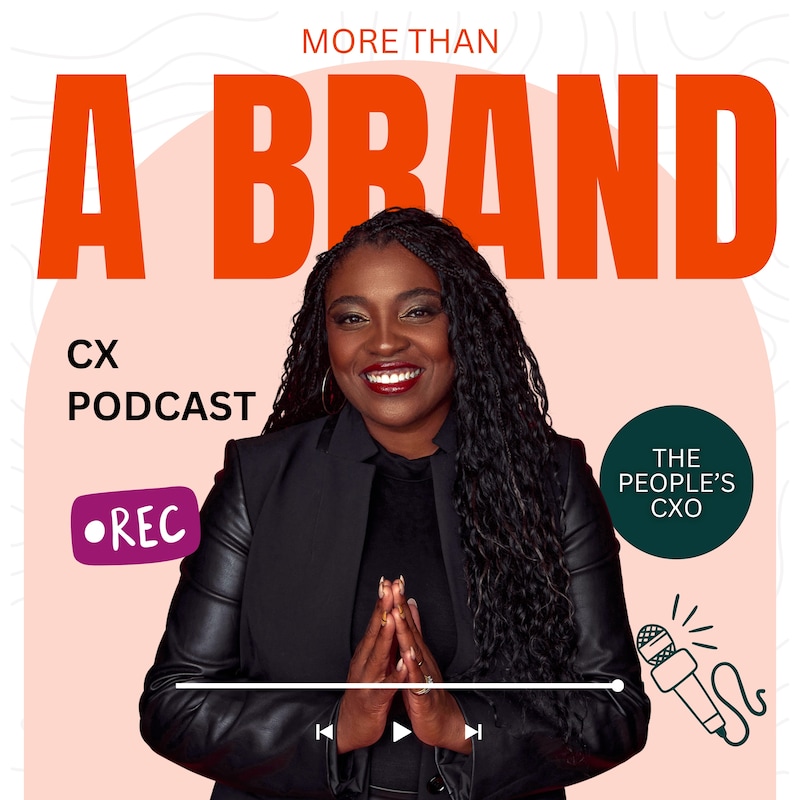
Shownotes
Could Your Team Run the Business Without You?
Building a Shared Client Relationship Standard Lindsay Tramel-Jones shares a story about a client who was seriously injured in a car accident and couldn’t communicate or physically work, yet her team successfully ran a pre-scheduled in-person event, made sales, and proactively contacted customers about potential order delays with transparency and a request for grace. Lindsay explains that as service businesses grow, a CEO’s instinctive standards often get “translated” and watered down across hires, creating inconsistent client experiences. She argues that SOPs, onboarding, and supervision don’t define what clients should experience; what works is a shared, intentionally built relationship standard grounded in the brand’s mission and voice, created with the team so they can carry the mission when the CEO is out. She closes by urging CEOs to assess whether their team can represent the brand without them and notes this is what FlowTribe helps build.
https://www.instagram.com/fierceified.agency
00:00 Client Accident Wake Up Call
01:16 Podcast Intro And Mission
01:58 Why Standards Get Lost
03:33 Copy Of A Copy Problem
04:14 Team Runs Event Without CEO
05:40 Proactive Client Communication
07:29 Beyond SOPs And Onboarding
09:33 The One Question For CEOs
10:38 How To Fix It Flow Tribe 11:08 Client Update And Closing
Mentioned in this episode:
FlowTribe Team Engagement
68% of clients leave service businesses not because of price or a competitor — because they felt unappreciated. That is not a marketing problem. That is a relationship problem. And it almost always lives in how your team shows up when you are not in the room. FlowTribe is the two-week team engagement Lindsay Tramel-Jones built to fix that. Not a course. Not coaching for the CEO. A facilitated engagement for your whole team — using your FlowLab data to diagnose exactly where the client relationship is breaking down, train the team to build a stronger standard, and assign clear ownership to every touchpoint. By the time FlowTribe ends, your team knows how to build the client relationship without you in every conversation. Applications are open. Founding client spots are available at a reduced investment. Go to Flowtribe.co to apply.
Transcripts
I wanna start today's.
2
:Episode off with a story about one of
my clients, and I'm not gonna share
3
:the name of her business because if
you're following her or if you're
4
:one of her clients, you already know.
5
:But what I do want to share and what's
really important is what happens
6
:because every CEO who has a team.
7
:Definitely needs to hear this.
8
:roughly about two weeks ago, my
client was in a car accident and
9
:it was no simple fender bender.
10
:It was a real accident.
11
:And what's so crazy about this
accident is that I was actually
12
:on the phone with her and we were
discussing business and how things
13
:were going, and the accident happened.
14
:Imagine being on the
phone with your client.
15
:They get in an accident while
you're on the phone, you hear them
16
:scream and then the phone goes dead.
17
:The injuries were so bad
that she couldn't walk.
18
:She had to get surgery, and when
it comes to her business, she
19
:couldn't get back to her kitchen.
20
:She could barely go to
the bathroom on her own.
21
:It was a whole ordeal.
22
:The big part about this is while
she was laying in that hospital
23
:bed, her team was able to run
an in-person event, make sales.
24
:Also reach out to every current customer
to let them know that there might be
25
:a delay in the Ask them for Grace.
26
:And they did it all without her.
27
:welcome to More Than a Brand, the podcast
for growth stage service business CEOs
28
:who are tired of watching clients they've
already earned quietly walk out the
29
:back door while they keep spending money
in the bring new ones in the front.
30
:I am Lindsay Tramell Jones,
the CEO of Purify consultant.
31
:I am a client relationship
strategist and an army veteran.
32
:This show is about the one thing
most business advice skips entirely.
33
:The relationship your team builds
with clients every single day.
34
:This isn't about marketing a
it is about the relationship.
35
:You've done the hard part.
36
:Let's make sure your team
can sustain what you build.
37
:This is more than a brand.
38
:Let's get into it.
39
:All right.
40
:All right.
41
:Okay.
42
:Let's jump into this episode.
43
:I know that y'all are tired of
me beating this dead horse, but
44
:I am always going to beat it.
45
:Okay.
46
:And it's because I don't think
it's sad enough, but when you're
47
:building your business, when
you're in that building phase.
48
:You're building your service business or
whatever kind, even if it's a product,
49
:you are building it around yourself.
50
:That's your values, your standards,
your relationship, and the way you
51
:would handle a , difficult client
conversation or a follow-up or an event.
52
:It is built around you and 90% of the time
you are not writing it down because it's
53
:instinctive to you and you didn't need to.
54
:Because you built that business
around you, it lived in you and
55
:in your instincts and your habits
in any way that you showed up.
56
:And for a long time that was enough
because you were the business.
57
:Now, let's fast forward to the part that
everybody wants to do and that is grow.
58
:When you grew in your business,
you started hiring, maybe that was
59
:interns, employees, contractors,
whatever that looked like for you.
60
:You built a team and.
61
:what most CEOs assume at that point,
they assume their team will be able to
62
:figure it out because they write SOPs.
63
:They hire people to work
in their zone of genius.
64
:They walk them through their onboarding
and they introduce them to clients.
65
:But then when they step back and they
hope what they built personally will
66
:somehow transfer to the people they hired.
67
:sometimes it does, but more often
it translates not transfers.
68
:As you already know.
69
:If you listen to the last episode The
first person you hired absorbed your
70
:standard by being in the room with you.
71
:'cause that's your ride
or die, that's your og.
72
:The next person got the 80% of the version
filtered through someone who had already,
73
:who had already been translated once.
74
:It's like making a copy
of a copy of a copy.
75
:I may be showing my age, but the
more you make a copy of that mix tape
76
:that you made back in the eighties,
nineties, the worst, the quality guy.
77
:Right now in your business, you do not
have one team delivering one standard.
78
:You have as many versions of your
standard, no matter how bad or watered
79
:down it is, and it starts creating
problems inside your business.
80
:Now, let's go back to my
client and the accident.
81
:What I want to do now is walk you
through what her team actually
82
:did because the details mattered.
83
:So yes, she was in this horrible
accident and when the accident
84
:happened, she couldn't communicate
the way she normally would like.
85
:She was going through surgeries,
pain, multiple breaks.
86
:she was managing her own recovery.
87
:She was not in the position to be
the CEO of anything because she was.
88
:Focus on her family and her
health as she should be.
89
:Her team had a pre-scheduled in-person
event and most small teams in that
90
:situation would have called to cancel.
91
:They probably would've sent some
vague message and hoped the clients
92
:would understand or they would've
waited for the CEO to tell them what
93
:to do, but her team did none of that.
94
:They ran the event.
95
:They showed up, they set up, they
executed, and they presented the brand the
96
:way the brand demands to be represented
with warmth, professionalism, the down
97
:to earth vibe that her business has,
and the level of care that her clients
98
:expect every single time they interact
with her brand and her business.
99
:this wasn't because they had some
kind of script for this scenario.
100
:It is simply because they understood
what the business stood for, and they
101
:knew that the mission did not pause
because the CEO was not in a room.
102
:Here's the part that I want to
sit with for a moment, they also
103
:communicated with her current customers.
104
:They reached out proactively to
let them know that there might
105
:be a delay in processing orders.
106
:They didn't wait for the clients
to notice something was off
107
:or try to hide the situation.
108
:They got transparent so
that people did not wonder.
109
:They were honest and they asked for grace.
110
:Because as entrepreneurs and
as small business owners, grace
111
:and being transparent will help
build stronger relationships.
112
:When they reached out to the clients,
they also did it in the voice of the
113
:brand, not their own voice, not the
way they think it should be done.
114
:They were trained and the voice of the
brand was ingrained in their minds and how
115
:they do business, that it felt seamless
to the customers and it made sense
116
:that is a relationship standard.
117
:It's not a SOP, it's not a process.
118
:It is a standard that is woven
throughout your business so that when
119
:your team has to step up, when the CEO
leaves the room, things stay the same.
120
:And those things are able to stay the same
because there's a shared understanding
121
:of what this business is committed to
delivering to every client in every
122
:situation, including the ones that
were never in the onboarding document.
123
:My client did not build
that standard by accident.
124
:She built it intentionally.
125
:She built it with her
team, not for her team.
126
:And when the moment came, that
required the team to carry
127
:on without her, they did.
128
:So what made it possible for her team
to execute at that level without her?
129
:I want to give you a real
answer and not a vague one.
130
:It wasn't an SOP.
131
:SOPs definitely tell your team what to
do, but they do not tell your team what
132
:the client is supposed to experience
133
:it was not the onboarding.
134
:Onboarding tells your team
how the business works.
135
:It does not tell your team what great
looks like in the moment that we're
136
:never in the onboarding document.
137
:It was not supervision because
she was in a hospital bed
138
:and there was no supervision.
139
:What made it possible was this, her
team understood the mission, or in other
140
:words, they understood the assignment.
141
:They understood the assignment
because it was a lived, shared,
142
:agreed upon understanding of what
this business is committed to and
143
:what the client is supposed to feel
at every stage of their experience.
144
:They knew what the brand demanded
because they had been a part of
145
:building what the brand demanded.
146
:They were not executing
someone else's standard.
147
:They were executing their own one that
they had helped define, had committed to,
148
:and had practiced enough that it lived in
them the way that it lived in their CEO.
149
:And that's the difference between
a team that needs to CEO in the
150
:room and a team that carries the
mission when the CEO cannot be there.
151
:Now I feel like I'm preaching, but this
is very important I want you to understand
152
:this does not happen on accident.
153
:It doesn't just happen because you hired
the right people for the job you wanted
154
:them to do, or that your values are
written on the back of your business card.
155
:It happens because you built the standard
together in the same room, and every
156
:person on your team owns a specific
piece of it that they take onus of
157
:and they understand the implications.
158
:They stand behind 10 toes down, what your
brand delivers and how to ensure that
159
:your customers feel like they are valued
160
:I always have to leave
you with one question.
161
:If something happened to you tomorrow,
and I'm not talking about a planned
162
:vacation long weekend, or some conference
where you are just unreachable, like
163
:something real that puts you completely
out of pocket for a week or more,
164
:would your team know what to do?
165
:And I'm not saying is it just gonna
be operationally ready or the task is
166
:still gonna get done, but would they
know how to show up for your clients
167
:in a way that your brand demands?
168
:If you could not show up for your
clients, would they know how to
169
:represent the business in a way that
makes your client feel like nothing
170
:has changed, even though everything has
changed because you're not in the room.
171
:The honest answer is yes.
172
:You have built something.
173
:Businesses rarely ever build.
174
:You have a team that carries on the
mission, that understands the assignment,
175
:but if that answer is no, or even
maybe it's not a failure, that's the
176
:most common situation in every growing
service business I've ever walked into.
177
:And fortunately for you, it is fixable.
178
:Now it ain't fixable by just
hoping the right people figure
179
:it out or writing a better SOP.
180
:it is fixable by building a standard
together in the same room so that
181
:every person on your team knows
exactly what they own and exactly
182
:what great looks like in their role,
and exactly what this business is
183
:committed to delivering to every client.
184
:And that is exactly what
we do with Flow Tribe.
185
:So I know you're probably thinking
what happened to the client.
186
:She's currently still recovering.
187
:She sent the message that she is ready
to start working, not standing, but
188
:administratively working and, back
to running and growing it and making
189
:it to everything she built it to be.
190
:What I've seen from her is that she
is so grateful and so appreciative
191
:to the fact that her team was
able to survive without her.
192
:Not once during that week in the
hospital, did she lie in a bed and
193
:wonder whether her business was okay.
194
:She knew her team, she knew her
standard, and she knew what they had
195
:built together was so strong and it
was strong enough to hold even when
196
:she could not, and that is the goal.
197
:The goal isn't just that the business
grows, it's that it holds your
198
:clients and your customers in a way
that they always feel appreciated.
199
:Always feel valued.
200
:That's all I have for you this episode.
201
:Share it with the CEO, who's
building a team and wondering
202
:whether the business would survive
if he or she had to step away.
203
:Thank you for listening.
204
:Remember, your business is more
than a brand, and your customers
205
:deserve to believe that too.
206
:See you in the next episode.
207
:I hope you enjoyed this
episode as much as I did.
208
:Remember, hit that subscribe button
so you can stay up to date find us on
209
:social media at Fierceified dot Agency
on Instagram or find us on Facebook
210
:at Fierceifed Creative and Consultant


