Shownotes
Download Our Free Guide to Self Directed IRAs!
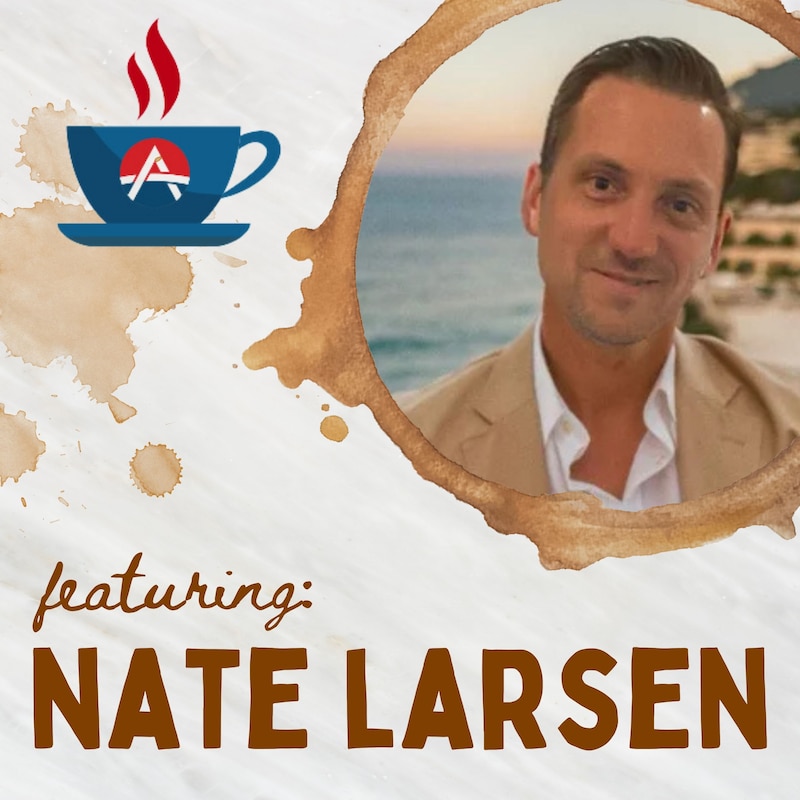
Welcome back to another episode of the IRA Cafe podcast! Host Kyle Moody sits down with Nate Larsen, CIO of the Mid-Atlantic Fund and founder of Credo Capital Management, for an insightful exploration into private lending and its intersection with self-directed IRAs.
In this episode, Nate shares his extensive background as an economist and banker and explains how the Mid-Atlantic Fund was born from a desire to create a more efficient, personable, and flexible lending environment, blending local bank sensibility with institutional resources and technology.
You’ll get a look at the evolution of the Mid-Atlantic Fund, its operational model, and how it offers investors diversification and protection, particularly for those using self-directed IRAs. The conversation covers the fund’s SEC registration, its conservative risk management practices, and the crucial role of collateral, character, credit, and capacity—the four C’s—in their lending philosophy. Nate breaks down how Credo Capital Management works behind the scenes as an asset manager, while Mid-Atlantic Fund remains the investor-facing brand, ensuring a seamless and transparent experience. Whether you’re new to private lending or a seasoned investor considering self-directed IRAs, this episode delivers practical insight and strategic advice.
Key takeaways:
- Mid-Atlantic Fund’s Approach: The fund operates as a SEC-registered private credit fund, focusing on debt-backed assets rather than equity, providing monthly income to investors and offering built-in diversification across a portfolio of real estate-backed loans.
- Local Expertise and Market Focus: Most assets are concentrated in the Mid-Atlantic region, especially metro Atlanta, leveraging deep knowledge of local markets for efficient risk management and strong investment prospects.
- Conservative Risk Management: The fund maintains a strict collateral policy, lending at approximately 65% of asset value, with tangible assets backing every loan. Additional safeguards—such as life insurance policies, redundancy protocols, and backup servicing—further protect investors.
- Flexible and Efficient Lending: Nate emphasizes the advantages of private lending over traditional banks, highlighting efficiency, flexibility, and responsiveness to local opportunities, making it an appealing choice for self-directed IRA investors.
- The Four C’s of Lending: Collateral, character, credit, and capacity form the foundation of the fund’s lending decisions, with stringent borrower selection and relationship-driven business practices resulting in a track record of over 500 transactions with no losses and 195 consecutive monthly distributions.
Tune in to discover how private lending through a self-directed IRA can provide both financial security and diversified growth, and learn why Mid-Atlantic Fund stands out as a trusted, relationship-focused partner in the investment landscape.
Transcripts
For those of you that are looking to experience private lending with your self-directed IRA, have we got a treat for you. We sit down with Nate Larson of the Mid-Atlantic Fund, who's going to tell you everything you need to know about how his company lends and funds different real estate projects. You don't want to miss it. Hi everyone, this is Kyle Moody coming to you from the IRA Cafe powered by American IRA, and wherever and whenever you are listening to us. We are so glad that you have decided to spend some time with us today. So one of the things that you know that you can do with your self-directed IRA is of course invest as a private lender, right? Or invest in private equities out there that they take care of the private lending for you. We're really happy to have our guest with us today who's going to tell you a little bit about both the history of the company, his background as well, and then what someone can expect when they are using their self-directed IRA to invest as a private lender. So without further delay, I would like to welcome in Nate Larson of the Mid-Atlantic Fund.
Kyle Moody [:Nate, thank you so much for joining us today, and tell us a little bit about how you learned about American IRA and a little bit of your background as well.
Nate Larsen [:Sure. So we have, um, in the process of building some great relationships with IRA custodians like y'all, and We got connected a few months ago and it's been a really great relationship so far and we really look forward to growing that further as we, as we grow together.
Kyle Moody [:Fantastic. And tell everyone out there a little bit about Nate Larson, your background and how you came to be part of MidAtlantic. Sure.
Nate Larsen [:So my background is an economist and focused in real estate and been in banking for years and years, mostly with Wells Fargo for a long time. And the other partners and stuff that we started this with were also in banking. And just over the years of being in banking, we had sort of came together and decided there's got to be a better way. There's got to be a more efficient mousetrap. There's got to be a faster, easier, more common sense way of doing business and banking where you can If we don't turn over a huge portion of the profits back to our investors, if we don't have 7 layers of management and an ivory tower that's 50 stories tall in every downtown, how can we manage a business like that more efficiently without taking on any more risk than a bank would? And so that was really the genesis of the idea, is creating a local business feel, a local lending feel like you would have with your old school local bank. Or representative, but have the products, the technology, and all the services that go along with a big institution, but make it feel small and efficient and personal.
Kyle Moody [:You know what, I'm really happy to hear that because if you have spoken to us before and definitely any of our incoming clients who have talked to me on the phone and also what they have experienced with American IRA, one of the things that we talk about is that we don't have to be the biggest out there. The one thing that, uh, someone can experience with their, uh, self-directed account with us is that hometown bank feel, and that really goes a long way, uh, especially these days and when folks are talking about their finances. So, uh, you, you kind of started putting all this together, and tell us a little bit about now, uh, the history of, of MidAtlantic, and for folks who are looking to possibly invest with MidAtlantic, or really this is going to be their first venture into private lending. Tell them a little bit about the company now coming together and how it operates. Sure.
Nate Larsen [:So we operate as a, as a private credit fund. So we are an SEC-registered debt fund, which is similar to an equity fund, but our asset class is debt versus equity in businesses. And we raise capital through debt versus equities and LP partners. But other than that, there are lots of similarities. So our asset class, like I said, is debt, and we will make loans on projects and to businesses in our communities, and those loans pay payments to us every month. Those are secured by real estate or other tangible assets. And we pass 85, 90% of those payments that we get in every month along to our investors. And we worked on a real estate syndication model from 2010 to about 2019.
Nate Larsen [:And then in 2020, we switched over to a fund model, just adapting to the marketplace adapting to real estate as prices were going up, projects were getting bigger and market dynamics were changing. In order to simplify and keep our operations manageable and cost and scalable and to manage risk for our investors, we went to a fund model. So the investments are tied to the company as a whole, the fund as a whole versus individual investors. Being tied to a specific property. So if you want to look at it like this, it's, it's more like if you invest in the business, you may, instead of having 100% security in one property, you may have 1% security in 100 properties. The benefit to doing that is that one investment has built-in diversification across the entire portfolio. The point is you can never have too much concentration risk that way because you're not having one investment that's tied to one builder, one business owner, one part of town, one jurisdiction, whatever that may be. If things change in real estate, you've got 100 different things diversifying you versus one.
Kyle Moody [:Gotcha. So if somebody is wanting to check you out and they go to the website and again, this is one of their first times they're doing some due diligence, uh, they're, they're hearing this podcast for the first time. Well, one thing they've heard about, you know, on here is the Fund This and the Fund That. And of course, we introduced you as the CIO of MidAtlantic Fund, but then you're also the founder of Credo Capital Management, which it seems like, uh, the fund works with. So can you give a little bit of flavor on maybe the differences of, you know, when you talk about MidAtlantic Fund, the advisory group, the fund itself, and then how Credo Capital Management plays in there.
Nate Larsen [:Yeah. So the advisory group is the fund sponsor. So if you've ever heard of, when we've all been investing, you hear the so-and-so group of funds, right? Well, those group of funds always have a fund sponsor, and that the sponsor is the one that creates the model, creates the asset class, dictates the rules, the return goals, the risk goals, and everything that needs to be abided by within the fund. The Mid-Atlantic Secured Income Fund is where the assets are held. It's where the income comes into from all of the assets, all the receivables we have, and it's where all the investors are paid out of. So think of it like a bucket and there's interest pouring into the bucket every month and there's income being paid out to investors every month, but it's not an operating entity. It's a reservoir for the assets and a pass-through entity for the income. Uh, Kredo Capital is an asset manager.
Nate Larsen [:So Kredo Capital is the one that's on a day-to-day basis pulling the levers. It's transacting the, um, lending, it's managing the risk, it's following all the instructions that the fund sponsor has given us. And then Kredo does the day-to-day functionality of that. So anything else that is asset classes that don't fit into our specific core or non-core assets within that fund is handled by Kredo. So there's some lending that we do with Kredo that's outside the scope of risk for the fund because it's designed to be very, very low risk and very stable income. Kredo Capital also does a lot of consulting work and asset management for other businesses.
Kyle Moody [:So basically, when folks call even us for the first time and self-direction is new to them and they say, well, Kyle, the difference between, you know, you've got the custodian side of things and then this TPA or this third-party administrator side, it's almost a mirror like that. So Credo is carrying out the duty side of the Mid-Atlantic Fund, or at least the advisory group itself?
Nate Larsen [:It's very— I'll give you a good way to simplify it, but Mid-Atlantic is the brand name. It's the customer, investor, and borrower facing, right? So the investors that would be listening to this really wouldn't have any interaction with Credo on a day-to-day basis. Gotcha. They would be at state— they would get statements from Mid-Atlantic, they would get interest income deposited monthly from Mid-Atlantic. That's the face of the business that they're going to see. Credo's just behind the scenes making sure everything runs, runs smoothly. A good way to look at it is like this. Think about if myself and maybe you, most of our investors that are listening may have had a rental property right over time.
Nate Larsen [:So think of it like you as an individual or the sponsor of that, right? The rental property is the fund. It is the asset. It is where that asset is held, the balance sheet where it's held. You as an individual are going to determine what property you want, how you're going to manage it, what you're going to charge in rent, what's included in rent, what the rules of the rent are. And then if you don't manage that locally, let's say you live out of town, you may hire a management company. The management company is going to look at it and go, talk to you and go, what are the rules? What is the rent? What are the rules? What's the lease need to look like? When is the rent considered late? How long is the lease term? So that management company is carrying out all the decisions about that asset that you, you as an individual has made. And so you as an individual is like our sponsor. We create the asset, we create the rules, we create everything.
Nate Larsen [:And then your management company is like Credo. They're going to be the ones collecting the rent, but the rent's paid to the, to the building. Right. And that's the easiest way to think about the relationship between the businesses.
Kyle Moody [:Now, I mean, that is really, really great. So any of you out there who have been doing the real estate, looking to get into the private lending, he just laid it out for you. So that probably makes some of the best sense that I've heard in a while. So thanks for indulging me a little bit on that and telling us about that. So let's look at the— let's look at the word Mid-Atlantic. Mid-Atlantic here. Is the company specific really to the territory of, of the properties or, or the funds, um, uh, you know, or, or how, how large, uh, is your group, is your investment pool, or maybe where you're investing? Sure.
Nate Larsen [:So most of the assets, um, in the investment pool are in the Mid-Atlantic area, right? We're heavily focused in Georgia in the Atlanta metro area, but we do business in South Carolina, North Carolina, Virginia, a little bit in Tennessee, a little bit in Florida. But to a large degree, we feel like specifically real estate and doing business, doing business in your backyard where you know it the best and where you have an intimate involvement in those communities and interaction about what's going on in those communities is the best way to manage risk. And we're very, very fortunate that in the Atlanta metro area, it's really a microcosm of everything we see in the country from the price points to the development stages to how different parts of the city are growing and how those economies work with many, many Fortune 500 companies located here, the world's largest airport, 10,000 people a month are moving to the metro Atlanta area. That's an average over the last decade, 12,000, 10,000 people per month, 10,249 to be specific. But we just feel like it has so much built-in diversification with employment and transportation and migration here. Um, we're very fortunate to have that. Many, many cities do not.
Kyle Moody [:No, that's, that's probably over 10,000 a month. That's, that's astounding. Um, let me ask you this, the, the projects, do certain projects really determine where you raise the capital, or does every project, you know, is it the same where and who that you would get the funding from?
Nate Larsen [:Yeah, so to a degree there is some specifics to that. We have institutional partners that we borrow from in order to reduce our blended cost of capital. We borrow money a lot of times based on SOFR or based on prime rate. So we can pay a less amount of money for that, that interest, and that allows us to pay more money to our private investors because when we blend the two, we get a blended cost of capital that's sufficient for our profit margin and desirability. But blending that lower, shorter-term interest rate money from institutions in with our investor pool allows us to maximize our investor returns. So, you know, we will look and figure out which each, with each property and the loan type, the loan size, the location, what's the lowest cost of funds that we can access for a project like that. So we look at that on a day-to-day basis, but, you know, for the most part, we're We're pooling money together as, as money liquidates, as loans pay off, it comes back into the pool. It sits in cash.
Nate Larsen [:We generally speaking have 5 to 7% of our portfolio sitting in cash at any time so that we're ready, willing, and able to invest in a project, you know, at short notice when they arise.
Kyle Moody [:Why do you think that private lending has really established a more dominance or a dominant relevance now in the investing world? It seems like it's, you know, you always heard, you know, real estate was the top asset class that someone's going to use a self-directed account for. And it still is. I mean, because of how multifaceted it is. But man, I tell you, it seems like every time I turn around or every time I'm on a podcast or listening to a webinar or whatever, it's private lending, private lending. Why do you think that is?
Nate Larsen [:Well, I think it's a combination of banks having incredibly insufficient mechanisms to service local markets and being insufficient in terms of flexibility. They're also limited very much to lending in certain boxes, right? So if you look back, you know, The sort of downfall of this local bank scenario was the Dodd-Frank Act that got passed during the Great Recession to keep banks safe, to keep their investors and depositors safe. But what happened is that it pigeonholes banks into doing very specific projects, very specific types of lending, and maximizes where those concentrations are within the bank. So even if they're really great at doing something, one or two types of of banking products, they still have to have this broader way of banking products. And each of those niches have caps within those banking rules that they have to abide by if they want to remain, you know, FDIC insured. So the other issue with it is that when a bank wants to develop a product, if it can't find a pathway to a half a billion or a billion dollars worth of receivables that will go into that box eventually, it's just not really worth their time to create an entire product and train management teams and salespeople around this product because they can't just do it on a one-off basis, right? That's just not how banking works these days. And so, What that's caused is a lot of inflexibility in the banking market, inefficiencies, but also inflexibility. And what, where our advantage is and where the advantage of a lot of private capital is, is that you, you can combine this, the local, fast, flexible banking and flexible decision-making with technology like we're doing today, but, but also with You know, the ability to invest and be tied to real estate, but do it at a reasonable level and a reasonable entry point, right? So if one of our investors wants to invest in real estate and you said, hey, real estate's been this, the king of the asset class, right? But we're living in an environment where affordability of real estate, just for most folks to buy a house, has become kind of absurd, to be honest.
Nate Larsen [:And so to be able to buy a house and to be able to invest in real estate on top of that, even entry-level commercial real estate or reasonable entry-level multifamily homes can be millions plus, right? You can have a company like ours who operates extremely efficiently at a very high rate of efficiency, much more than a bank. And we have investors that can come in for $50,000 or $100,000, and have a diversified investment in a diversified portfolio of real estate. Whereas if they want to come and do it themselves, they may have to pay $400,000 or $500,000, $700,000 as an entry-level point for that. Well, if you've got $600,000 in your IRA and $400,000 of it has to go to one investment, that's not a very great way to be diversified for your retirement funds. But you can come to us. Put that same money with us and you're diversified over an entire platform of real estate products.
Kyle Moody [:Gotcha. And one of the things you were talking about, the bank lending is all the rules and platforms and regulations, whereas, you know, the private lending, it may have more of the efficiency and flexibility. But, you know, sometimes, and I'm sure you talk to these folks the same way I do, one of the things, you know, that they're thinking is, okay, you know, they're They're particular over their money. They want to know that things are going to be protected. So, you know, for someone who is looking to move forward into private lending, give them— give our listeners a little bit of a flavor on investing, say, with a self-directed IRA and what safeguards your company has in place, you know, for anyone who wants to invest in the debt. Sure.
Nate Larsen [:So we, we manage the safeguards and manage those risks on a day-to-day basis. It's, it's, it's something we're obsessed over. It's— it never stops, um, the level to which we manage that safety. So the biggest and most important thing that to consider how that risk is managed is that every loan we have has a real tangible asset behind it, right? So it's not just the promise to repay the debt, but it's the asset behind it, right? So if we lend out $650,000, we're going to have a million-plus in tangible assets that support the repayment of that debt. And so that's, you know, around 65% of that total asset value is, is, is where we land as a portfolio as a whole. So right now it's like 64.8%, something like that. So for, for every $650,000 we lend out, we have $1 million in collateral. And so the first aspect of managing that risk is knowing that there's the ability to exit the loan with full repayment, right? So even if they don't pay us well, or we have, we have a borrower maybe pass away or leave the country, we have an asset that we have a position on that we can immediately take back.
Nate Larsen [:And in the very, very few times that we've done that, it actually creates a windfall for the business because number one, the reason it doesn't happen much is if you've got a, if you and I have borrowed money, together, why would we walk away from $1 million in assets not to pay $650,000 back, right? It just doesn't happen much. And in the rare cases it happens, we now have a million-dollar asset that we can sell, and the fund actually has a windfall of income when that happens. So the first way to manage that risk is by having tangible collateral and sufficient collateral. The second way is at an operational level, right? So we all have, number one, have key man life insurance policies on all of us. So if anything happened to us, any of us, the fund would receive multiple millions of dollars to manage that and to fill that gap if a key man ever went away. We also have many, many redundancies, right? So we have a contracted backup servicer in place. We have 3 levels of CPAs going through all of the books and going through all of the management and the operations material, we have a full 50-page playbook of policies and procedures. So we could hand it, literally hand that over to someone and within a day or so they could start managing our business, right? So it doesn't hinge on me as an individual.
Nate Larsen [:It doesn't hinge on one particular borrower, one particular product or their ability to repay. And it doesn't hinge on our ability internally to manage it. So we have developed dozens of different ways to manage that risk. And in fact, I think last month we celebrated our 195th consecutive monthly distribution to investors. So 16+ years without missing, you know, missing one, one distribution to investors, I think, tells the whole story.
Kyle Moody [:Well, and then you couple that with, I believe that I did see 500 transactions with no losses. Anything else other than that background that you were talking about there that also leads to that success? Anything you want to add?
Nate Larsen [:Yeah, I think it's just a conservative mindset, right? We, we get, having been in this business for 20-plus years, going back to our banking, early banking days, we have a return customer that we work with that comes back to us year in and year out. And a lot of folks that we've lent money to for projects, we may have done 50 transactions with them, right? So The big benefit we have is knowing, knowing who we're lending to and doing it through relationship structure versus a marketing structure. So we don't pay anything for our leads. We don't advertise at all to get new loans or new, new builders or new businesses. They're calling us at a level that's almost difficult to manage. So we have the benefit of those calls coming in for free and being able to cherry-pick the best possible projects and the best possible borrowers to do business with. So that experience and that timeline has led us to a really great blessing of business falling in our lap, really at a rate that's higher than we can process or fund.
Kyle Moody [:Credit, collateral, character, and capacity. These are the 4 C's that your company highlights when working with individuals, if you can just enlighten us all with a little bit on the— of your take on the 4 C's.
Nate Larsen [:Yeah, no, great question. So, you know, the most important 2 we always focus on first are collateral and character. So the collateral is what we were talking about, right? So the 65% of the asset value, we have $1,000,000 backing $650,000 in lending. The million dollars is the asset and that's the collateral, right? So we start with that. And the second thing we look at is the character, right? We're very big proponents of doing business with the right people, associating ourselves with people of character that we want to do business with for years to come. So we're very picky on who we associate ourselves with and who we lend to. Credit is also a function of that, right? Credit is the representation, the physical representation of how that character plays out over time. So a business's or an individual's credit should be and likely is a reflection of that character, but it's a way to document it and measure it in a tangible way.
Nate Larsen [:Capacity is simply someone's ability to make the debt service payments. Right? So in a lot of cases, the capacity is to repay something. So in a lot of cases, we will have our borrowers actually pay or capture 6 to 9 months of interest upfront that we will escrow into and hold in escrow and distribute to our investors and as income as the project continues. So we look at every possible way to keep that cash flow scenario as consistent and even keel as possible. So we collect them on automatic payment or we collect months and months of it upfront at closing so that it's already taken care of prior to even getting off the ground. So those are the basic forces of lending that we look at every day.
Kyle Moody [:Nate Larson of the MidAtlantic Fund and Credo Capital Management. Nate, it's been a pleasure, man. I'm glad we could connect and make this happen. And I look forward to seeing the partnership grow and maybe hopping on here and doing another one of these. And then I know that at some point too, you're going to be hosting on our webinar platform. So folks are always going to be able to get information there. So if you're listening to this and have not seen his webinar platform yet, you'll always be able to check that out on the YouTube channel or always hop it over to American IRA.
Nate Larsen [:I'd encourage anyone to check out the website, and I'm available to anyone. We work on a very much of a boutique investment management basis, so I like to have one-on-one interaction, always available to field questions.
Kyle Moody [:So, and anyone who has heard us before and one of our current clients, you know that that's exactly what you get with American IRA. So it sounds like we both really align line on that. Well, for everyone who has taken some time here and listened to us and you've got to get on with the rest of your day or evening, we greatly appreciate you sitting down and having a little bit of a rest and learning what you have here on another episode of the IRA Cafe powered by American IRA. For everyone here at American IRA, we thank you again, and we'll see you next time.
Voiceover [:American IRA, LLC, a North Carolina LLC. American IRA LLC acts as a third-party administrator for New Vision Trust Company, a state-chartered South Dakota trust company. As a neutral self-directed IRA administrator, American IRA does not recommend or endorse any investments, individuals, or entities, including financial representatives, promoters, or companies. American IRA and The IRA Cafe are not responsible for others' statements, representations, or agreements, nor do we evaluate the quality or profitability of any investment. Disclaimer: American IRA does not endorse guests on the IRA Cafe podcast. Guest opinions are their own and do not necessarily reflect the views of American IRA, its subsidiaries, associates, or custodian. Participation in the podcast is voluntary and no compensation is provided. American IRA is not a fiduciary and cannot offer financial advice.
Voiceover [:Please consult your CPA or another professional before making financial decisions.
