Shownotes
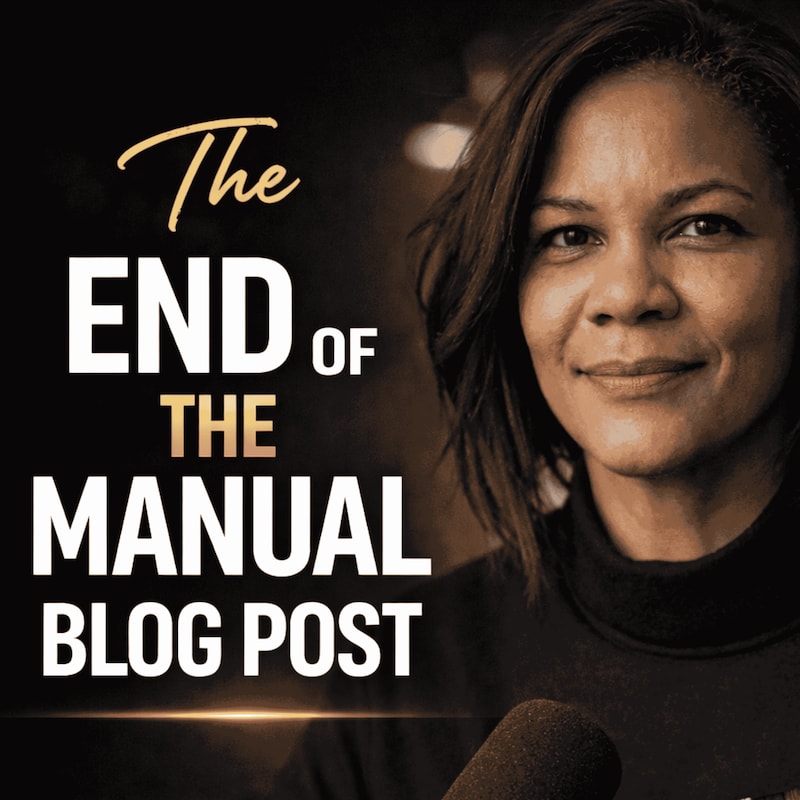
Today, we’re diving into a conversation that challenges the traditional approach to content creation for attorneys. Lorita Marie Kimble, founder of New Media Local, joins us to discuss her article, "The End of the Manual Blog Post." The main takeaway? The traditional method of lawyers spending hours writing blog posts is not only inefficient but often leads to generic content that fails to showcase their expertise. Lorita highlights the concept of the "authority gap," where potential clients struggle to differentiate qualified attorneys from one another due to the overwhelming amount of recycled information online. Instead of relying on lengthy writing sessions, she proposes a streamlined AI journalism workflow that captures attorneys' insights in short interviews, allowing their unique voices to shine through in content that resonates with clients. Join us as we explore practical strategies for attorneys to enhance their online visibility and credibility without sacrificing their valuable time.
The conversation with Lorita Marie Kimble on The Local Content Studio podcast offers a fresh perspective on legal marketing and content creation. Kimble, the founder of New Media Local, discusses her article 'The End of the Manual Blog Post', where she asserts that the traditional method of attorneys writing blog posts is no longer effective. She explains that the time-consuming nature of manual content creation often results in generic articles that fail to capture the unique expertise of the attorney. This is particularly problematic for immigration attorneys, who operate in a high-stakes environment where clear and authoritative communication is crucial for potential clients. Kimble introduces the concept of the 'authority gap', illustrating how clients searching for legal assistance may encounter a plethora of similar articles that diminish an attorney's perceived expertise. This gap leads to a situation where clients cannot distinguish between attorneys based on their online presence alone, ultimately affecting their decision-making process. The discussion highlights the importance of standing out in a crowded market, emphasizing that effective content should convey the attorney's unique voice and insights rather than rehashing common legal information.
The episode further explores the innovative 'AI journalist workflow' that Kimble advocates for, which replaces the daunting task of writing with structured interviews that capture the attorney's knowledge in a conversational manner. This approach not only alleviates the pressure of writing but also ensures that the resulting content is authentic and engaging. By harnessing AI to optimize and distribute this content, attorneys can create a robust online presence without sacrificing their time or expertise. Kimble concludes with practical advice for attorneys looking to enhance their marketing efforts, encouraging them to focus on their strengths and let AI assist in amplifying their voice in the digital landscape.
Takeaways:
- The manual blog post process often leads to generic content that fails to showcase an attorney's expertise effectively.
- AI journalism can transform the way attorneys produce content, making it more authentic and engaging for potential clients.
- The authority gap highlights the disconnect between an attorney's qualifications and their online visibility, creating a need for strategic content creation.
- A five-minute conversation can yield a wealth of content, including blog posts, social media updates, and video scripts for attorneys.
- Attorneys must shift their focus from traditional writing to capturing their unique insights and experiences to differentiate themselves online.
- A sustainable content strategy prioritizes consistency over viral trends, emphasizing the importance of building trust with clients through authentic storytelling.
Links referenced in this episode:
- https://news.newmedialocal.com/the-end-of-the-manual-blog-post-ai-journalism-for-law-firms
- Authorityproof.AI
Companies mentioned in this episode:
- New Media Local
- AuthorityProof AI
Transcripts
Welcome to the Local Content Studio, an AI generated podcast sponsored by New Media Local.com, an AI powered digital media agency. Welcome to the Local Content Studio. I'm your host, Jordan Ellis.
Today I'm sitting down with Lorita Marie Kimble, founder of New Media Local and the author of a piece that stopped me mid scroll. It's called the End of the Manual Blog Post. AI journalism for law firms. Lorita, welcome to the show.
Speaker B:Thank you, Jordan. It's great to be here again. This is a topic I think about every single day, so let's get into it.
Speaker A:So let's start right at the title. The End of the Manual Blog Post. That's a bold claim. What's actually dying here?
Speaker B:What's dying is the idea that an attorney sitting down for three hours to write a blog post is the best use of their time or even the best way to produce content that represents them well.
The manual process produces content that's either never published because it takes too long, or it's published, but it's generic because the attorney is not a writer, they're a lawyer. And generic content is your silent competitor. It quietly replaces your expertise with noise.
Speaker A:And you write about this concept you call the authority gap. Can you walk us through what that means, especially for immigration attorneys?
Speaker B:Yes. So imagine your prospective client goes to Google. They're scared they have a real legal problem. Maybe their petition is at risk.
Maybe a family member is in detention. They search and they find page after page of articles that all say the same thing. Here's what a green card is.
Here are the five steps to apply for asylum. It's the same recycled content from a hundred different firms. And you're one of those firms now.
You've just told that client you're interchangeable with everyone else. That's the authority gap, the distance between how qualified you actually are and how that expertise shows up online.
Speaker A:And you're saying AI is making that problem worse. But it doesn't have to.
Speaker B:Exactly. The problem isn't AI. The problem is generic AI. Feeding a tool a generic prompt and expecting it to become the expert. AI can't be the expert.
It can only scale what you put into it. If you give it nothing, it gives you nothing.
If you give it your real stories, your actual case experience, your frameworks, it gives you something powerful.
Speaker A:Okay, so let's get into the how. Here you describe what you call an AI journalist workflow. What does that actually look like?
Speaker B:So the core shift is instead of asking an attorney to sit down and write, we interview them short, focused interviews, five to 10 minutes. And the questions aren't generic. They're the questions their ideal. Clients are already searching for.
Things like what really changes for a client if they hire you early. Where do you see people sabotaging their own cases? What are the quiet consequences when a petition is delayed that nobody talks about
Speaker A:and the attorney just answers?
Speaker B:They just talk the same way they'd talk to a client in a consult or a colleague at a cle. No pressure to be a writer, no blank page.
And then we feed that conversation into our AI content creation system and what comes out is unmistakably them. Their phrasing, their analogies, their read on the law. We just structure it into a clean, SEO optimized article, an FAQ and a social post.
Speaker A:You share a story in the article about an attorney who had refused to do content marketing for years. What happened when he tried this?
Speaker B:He's one of my favorite examples. He had a high billable rate, he was excellent at his work, and he absolutely did not want a ghostwriter putting words in his mouth, which I respect.
But he had zero online presence. When we started the interview process, he just opened up.
He told us about the cases where clients came to him too late, about the petition errors people don't even know they've made. About the emotional stakes that his clients carry that the legal system doesn't care about. That's gold. That content started ranking.
Clients were mentioning specific articles on their intake calls. Referral partners were sharing his posts because it sounded like no one else.
Speaker A:I want to dig into something you write about that I think will resonate with a lot of attorneys. The idea of the five minute authority advantage. Because the number one pushback I imagine you hear is I don't have time every single time.
Speaker B:And I get it. If you bill by the hour, every minute spent on marketing is a real financial trade off.
So I stopped trying to convince attorneys to block out time for content. Instead, I ask, where are you already having conversations? A quick debrief after a client win, A two question check in after a complex hearing.
That's five minutes. And AI does the heavy lifting from there. The drafting, the formatting, the optimization. Your role shifts from writer to expert
Speaker A:editor and you break down what one 5 minute conversation can actually produce. Can you walk us through that?
Speaker B:Sure. Let's say an attorney spends five minutes recording a quick answer about how a recent policy change affects pending petitions.
That one answer becomes a full blog article, a LinkedIn post, an email to past clients who might be affected, a short video script. And like what you're doing right now, a podcast episode. One moment of insight becomes a full content batch. That's the compounding effect.
And all of it is working while they're in court or on zoom.
Speaker A:With clients, it's less about writing, more and more about capturing better.
Speaker B:That's exactly it. Five focus minutes a week can close the authority gap between you and competitors who who only sound more visible, not more qualified.
Speaker A:You also talk about what this means strategically, not just for individual attorneys, but for their market position. You have this. The market doesn't reward the best attorney. It rewards the most visible, credible authority. That's a tough pill to swallow.
Speaker B:It is, but it's true. I've seen highly qualified civil rights attorneys lose clients to firms that were louder online but but less experienced.
And it's not because the client was fooled, it's because the qualified attorney was invisible. When clients can't find you, or when they find you and your content sounds like everybody else, they make a decision based on what they can see.
Visibility and credibility have to go together.
Speaker A:So what does a sustainable content strategy actually look like for a firm that doesn't have a big marketing budget?
Speaker B:Consistency over flash.
One to four pieces of real expert level content per month, month after month, builds a library that both search engines and prospective clients trust. You're not chasing viral moments, you're building a body of work.
And when your content sounds like you, your stories, your cautionary tales, your specific perspective on the law, clients choose based on trust, not price or proximity.
Speaker A:And AI makes that consistency achievable even for a solo practitioner.
Speaker B:That's the unlock. AI doesn't replace your authenticity. It preserves and projects it at scale.
You feed it the right inputs and it builds you an authority engine that runs in the background while you focus on your clients.
Speaker A:Lorita, this has been so practical. Before we go, where should an attorney start if they want to plug into the system?
Speaker B:The starting point is simple. Book an AI journalist interview. At AuthorityProof AI, we handle the process from there. You show up, you talk, we build your content engine.
You don't have to become a marketer. You just have to show up as the expert you already are.
Speaker A:I love that. Lorita Marie Kimble, founder of New Media Local thank you so much for being on the local content studio.
Speaker B:Thank you, Jordan. This was a great conversation.
Speaker A:That's a wrap on today's episode and if you want to read the full article, we based this episode on head to news.new media local.com and if you're ready to build your own authority engine. Visit Authorityproof. AI the local content studio is produced by New Media Local. I'm Jordan Ellis. I will see you next time.


