Shownotes
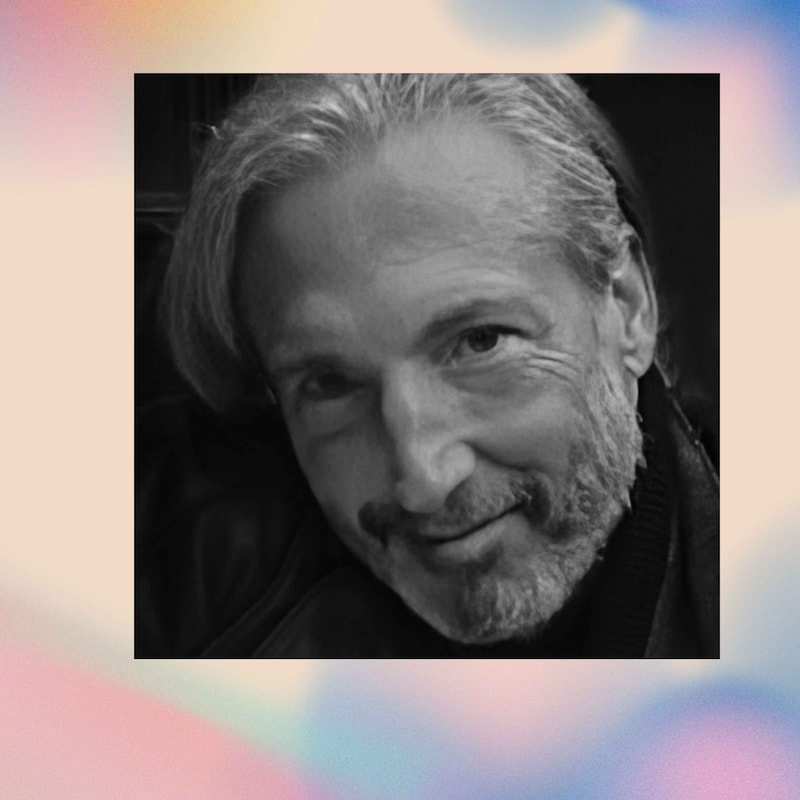
Today, we delve into the transformative journey of Anthony Freda, a multifaceted artist whose work has transcended the boundaries of commercial art to embrace a deeply spiritual calling. Anthony's remarkable story takes us through his moral crises sparked by his experiences in the advertising world, including a pivotal moment while working on the Joe Camel campaign, when he questioned the ethics of marketing cigarettes to children. His path leads to a profound reorientation towards Christian art, driven by a renewed faith and a desire to illuminate truth through his creative expressions. We explore how his understanding of art as a spiritual battle shapes his current projects, including the ambitious Jesus Park, a sculptural earth garden designed for prayer and meditation. Join us as we reflect on the intersection of faith, art, and personal transformation, and consider how each of us can contribute to a culture that values truth and beauty in a world that often seeks to obscure them.
Exploring the transformative journey of Anthony Freda, a multifaceted artist and professor, we delve into his remarkable evolution from commercial illustrator to a creator of Christian art. With a background steeped in the elite circles of the art world, including accolades from prestigious publications like The New Yorker and Rolling Stone, Anthony's path took a profound turn following a harrowing personal crisis. The episode unfolds a gripping narrative as he recounts a life-altering incident involving his partner's near-death experience and the subsequent spiritual awakening that reshaped his artistic vision. In this candid conversation with host Keith Haney, Anthony reflects on how his moral dilemmas in the advertising world—specifically his involvement in campaigns like Joe Camel—prompted a deep introspection about the implications of his work. He candidly shares how these experiences compelled him to pursue truth and faith, ultimately leading him to embrace a mission of creating art that glorifies God and engages the spiritual battle he believes is at the root of societal issues. This episode not only illuminates Anthony's artistic journey but also serves as a call to action for listeners to engage in their own moral and spiritual introspections, reminding us that our creative pursuits can be a reflection of our faith and values.
Transcripts
Welcome to Becoming Bridge Builders, a podcast where we explore stories of transformation, truth and courage that it takes to build bridges across divides. I am your host, Keith Haney.
Today my guest is Anthony Frieda and a multifaceted artist, writer and illustrator whose award winning work has appeared in New Yorker Time, Rolling Stone, the New York Times. He's a tenured professor at Fashion Institute of Technology in New York.
As a permanent exhibit in the 911 memorial, Anthony's artistic journey has passed through moral crisis, cultural controversy, and ultimately faith in Jesus, leading him to reorient his craft toward Christian art and spiritual reflection. We'll dive into how truth, art and conscience inform his path and how he now sees the battle as profoundly spiritual. Anthony, welcome to the podcast.
Anthony Freda:Keith, great to be here. Thanks so much for having me.
Rev. Dr. Keith Haney:This should be a great conversation. I'm looking forward to your insights and you wowing the audience with the way God is using you now. So I'm looking forward to this.
Anthony Freda:Thank you.
Rev. Dr. Keith Haney:I'm going to ask you my favorite question. What's the best piece of advice you've ever received?
Anthony Freda:Well, the best piece of advice I ever got was not from words so much as the actions of Jesus and the way he taught us that through his ultimate suffering of betrayal and torture and being unjustly convicted and sentenced to death, you know, painful, brutal death.
Rev. Dr. Keith Haney:Is.
Anthony Freda:That the path to redemption, the path to salvation, the path to transcendence, is through suffering. He suffered for all of us. He paid for all of our sins. And that's the model. Right?
So that's the model for us is to bear our suffering nobly and with the spirit of forgiveness. And that lesson, I don't think there's any more important lesson. I think that's the essence of Christianity.
Rev. Dr. Keith Haney:I love that.
And it's so true because it really is that model of the suffering servant, which we don't usually look at him that way or think about it that way, oftentimes is powerful for us as we have this journey that God puts us on.
Anthony Freda:Amen.
Rev. Dr. Keith Haney:So let's dig into your beginning. How has your work influenced your journey to Christ?
Anthony Freda:Well, I've been doing this for 40 years, so it's a long story, Keith, but maybe we'll start at the end and go back to the beginning, if that's okay.
So two years ago on, it's going to be December 14th, two years ago, my fiance, my partner and I were laying in bed and it was a cold December night like it is here today in New York and, you know, enjoying the creature comforts of domesticity, watching Netflix, which is usually a bad idea, but we put it on anyway. And there was a. I don't know if you heard of this show called Leave the World Behind. It was produced by the Obamas.
Rev. Dr. Keith Haney:Yes.
Anthony Freda:Which is interesting. It's interesting. So many levels because Obama's left politics and they got into movie making. Right.
I don't think they have some burning passion to make movies, but they know that politics is downstream from culture. So you want to influence politics by influencing the culture. So I get that. So I knew the whole thing was this kind of apocalyptic fear porn.
I mean it was really sort of for political reasons to keep us in a state of anxiety and fear and to have a convenient scapegoat, which is the right for this state of fear and for a target for all of your problems to be blamed on. So I knew that going in and we watched it anyway, unfortunately. But so watching this thing, it's very stressful by design.
And my partner who's extremely fit, I mean she's just like, you know, athlete level fit, never had a health problem in her life and watching it and she says, I'm having these chest pains, anxiety. I said, well it's probably from this movie, like let's turn it off.
And no, as soon as she say that, that she starts wildly shaking your head back and forth and staring at me with a look he like the most terrified look I've ever seen on a human face in 63 years. And then she went into sort of this thousand yard stare non convulsive seizure. And I was terrified. I didn't know what was going on or what to do.
And I felt so inadequate at that moment. I didn't know what to do. I just, I called 911 and they said the robot got on the phone and said, you call is very important to us.
There are eight calls ahead of me.
Rev. Dr. Keith Haney:Oh my goodness.
Anthony Freda:That wasn't that important. Yeah, it wasn't that important to the robot. But so then I got my son who was here to call on his phone and the MTs got here in about 20 minutes.
And during that interim I didn't know what to do. I just, I held her and I prayed and I thought she was dying in my arms. And I felt like she's dying because I don't know what to do.
So she just tightened up so stiffly and blood and foam started coming out of her mouth. And we found out later she nearly bit her tongue in half because she tensed up and seized so, so violently.
And then she's in this state of complete tension and fear. And then somehow she just. It all became released and she went into this state of profound peace. And she started laughing.
And I said, what is going on here? Was this whole thing a joke? You know? But that's not her personality at all. So I knew it wasn't a joke.
And then I had this wave of something I can't even describe come over my body. This wave of understanding that she was on the other side. Like she was with Jesus, she was with God.
And she was at a place, unlike our world, that's filled with peace and love and understanding. And her expression expressed that. And I thought she was on the other side. I still believe that.
But then as soon as she went into it, she came back into it, into our world, the world that's filled with fear and pain and suffering. And she clenched up again and she seized. And it turns out she had a brain bleed that was triggered by something. We don't know what.
I blame Obama, but that's. That's my. That's my scapegoat. So.
Because the whole movie has this theme in it where there's this unexplained noise and we don't know that it's causing people to extreme stress and anxiety. And it may be an acoustic weapon or a sonic weapon, we don't know. It's never really explained in the movie.
But in real life, she's experiencing this as if she was attacked by some sort of spiritual weapon. Anyway, long story short, this is. It was two years ago in three days, and she's had a long convalescence.
75% of the people that go through when she went through die. So she's here for a reason. And she's here, thank God I was there with her. If she lived alone, she'd be dead.
And she did leave alone a year before that. So it made us both really lean into our faith. I was raised Catholic. We really, really come.
Both come to understand that this is a spiritual battle we're engaged in. Forget all the politics and the culture wars and all the other insanity that everybody's sort of preoccupied with.
The answer is to get right with God.
The answer is to find God, who's in your heart, open up your heart to him freely and completely, and become this fractal expression of God's love and God's infinite power that's in you. It's not separate from you. He's in us. Jesus is in us. And his spirit now informs everything I do.
Rev. Dr. Keith Haney:Wow, that's a powerful story and powerful testimony.
Anthony Freda:Amen.
Rev. Dr. Keith Haney:Let's walk through your unconventional early career and starting with your Joe Camel campaign, and kind of walk us through kind of what your career arc.
Anthony Freda:Okay. So I got out of Pratt, which is, you know, good art school in New York, commercial art school. And I had this. As a young man, I had this dream.
I wanted fame and fortune, right? I wanted to be this famous, successful artist. I was trying to figure out how you do that.
And between you and me, it's not easy, Keith, to make it as an artist. But I was determined. I said I never had a fall back plan because I think that's sort of surrendering before you even try, right?
So tried a few different things. Nothing was working. I got into advertising art, right? And at that time in the 80s, advertising art was very lucrative.
Started my own advertising art studio and I started doing work for Fortune 500 companies. Became very successful. Bought a condo in Manhattan. I thought I was on top of the world. I got into my 20s and I'm just killing it, right?
So living the dream and working on this one campaign for Philip Morris. Joel Camel. I don't know. Probably before your time.
Rev. Dr. Keith Haney:No, I remember it, unfortunately. Oh, yeah. I mean, it was. No, it was.
Anthony Freda:I'm sorry.
Rev. Dr. Keith Haney:It was so impactful though. Joe Campbell was. I mean, I was.
Anthony Freda:Well, yeah, he was. So. Yeah, he was cool, right? So that was the whole purpose.
We drew these, like, cool, you know, cartoon camels playing pool and then there's a hot Camel chick behind him, the whole thing, right?
And then the FTC one day determines that the campaign is illegal because they determined that we were illegally marketing cigarettes to children by using cartoon imagery. So I had this moment of moral crisis where I said to myself, wow, like, I didn't become an artist to sell cigarettes to kids. Like, what am I doing?
You know, and that idea that you can't serve Mammon and God, you know, it's like I was. I was pursuing money that was losing myself in the process. And I was out of alignment with God and with my. My purpose, which is to be.
I think I'm put here to sort of shine a light in dark places to help us reveal the truth with my imagery and my words. So I started working for what I thought as a naive guy in his 20s, were the good guys, right?
I believed the New York Times and Time magazine and all these other publications. I worked for all, all the mainstream legacy media at a very high level.
And once I was in there, I got to see how the sausages were made, and it wasn't pretty.
And I worked for the op ed page of the New York Times, which is sort of where they elite message each other and tell each other what they're going to do next.
And I'm working on this piece that was penned by then secretary of state Condoleezza Rice, and it was outlined what we know now are the fraudulent pretexts for the Iraq war invasion. And I talked to them about it, and I said, they said, every word we print here has to be vetted by the state department. I said, yeah, you're writing.
You're writing op EDS that are. You're printing out beds that are written by the state department. So I said, I. So I said, what if it's not true what they're saying?
They said, well, we just, you know, we don't. This is what we do. So I said, wow, I thought you were here. To get to the truth was your mission, and it wasn't.
It was no better than pravda in Russia. I had another moral crisis, Keith, and it just was a really dark night of the soul where I said, wow.
I went from selling cigarettes to kids to selling war to the people. Made a worse. Yeah. To the world. And somehow I don't know how I found myself in a worse position morally and ethically.
So I said, now I want to bite the hand that feeds me right now.
movement of the online, early:The guy with the website needed content, visual content. So I embraced that.
And I had found this new community of who I believe to this day, I'm working with a lot of just my heroes, you know, people who risk everything to expose the corruption at the government level and the corporate level and in big pharma and all these other institutions that had become just captured and compromised and corrupt and exposing the corruption at great personal risk, you know, so that's what I started doing. And I haven't. I've been. That's been my home as an artist ever since.
Rev. Dr. Keith Haney:Well, you. You missed one other moral crisis. You ran into the whole COVID 19 thing. Oh, yeah, well, because, you know, that's probably two more. But.
But that one really is starting to unravel in people's minds now. That we were. We were kind of locked into and sucked into something that really locked us down for two years.
And the veil is being pulled back on that story, too.
Anthony Freda:Yeah. So early on, you know, being who I am, I guess a skeptic by nature and knowing a little bit about history and a little bit about psyops.
The number one way you can tell if it's a psyop is if you can't question it. And the way they were censoring doctors like Dr. Malone, who invented the technology, he wasn't allowed to talk. You know, wait a minute.
Like, this guy invented the thing that you want to inject in every one of our veins on the planet. Like, he doesn't even get to talk. So that was a huge red flag.
. Saying that in real time in:And I mean, on a personal level, on a family level, on a business level, on every platform. And I've never seen anything like it. I'd never seen a bigger psyop in my life.
And so I started working with all these people that were writing books about and the truth, and they all paid a dear price for it. A dear price. Some of them are actually my friend CJ Hopkins, who I did his book cover questioning the COVID narrative two weeks ago.
He lives in Berlin. He's an American, but he lives in Berlin.
The police in the morning, came with guns, raided his house, interrogated him and his wife, seized his computers, and charged him with the crime of disseminating Nazi propaganda. Because I made. All because of me.
Because I made this cover where I showed a Covid mask, and then faintly, under the COVID mask, there's a swastika to make a commentary about the Nazi tactics being used in this sort of operation. And there's nothing Nazi propaganda in this book, and they know it. And even what he did is protected by German law, because satire is protected.
You know, the law is designed. So you don't actually promote Nazi propaganda, which he never did.
So if you look at Der Spiegel or Stern, popular German magazines, they use Nazi imagery and iconography all the time. If you put. They have a cover with Trump in a Nazi uniform. The swastika on it, it's okay. It made a selective enforcement, but it's beyond that. It's.
It's selective punishment because they do that with impunity. But if you question them rather than the right, you're going to go to jail.
Rev. Dr. Keith Haney:Wow. So you've pivoted from being in that world to in the Christian art world. How has your faith influenced your creative vision?
Anthony Freda:Well, I do a lot of Christian art now, and I love it because my heart and my soul is in it. But every. I don't only do Christian art, but I still do social, political commentary.
And it doesn't matter now, because now I realize everything I do, every stroke of my pen, is a devotion to God. I get in alignment with Jesus, Spirit within me and the purpose that he put me on this planet for and the gifts that he gave me.
And I honor those gifts every stroke with a pen, no matter what I'm doing. And that's the way Christ has imbued me with this sense of purpose and mission and this quest for the truth.
And I'm playing my small part and you're doing your thing. And if we all do that, I think it's incumbent upon us as Christians, because, my God, the Enemy is dedicated, devoted, determined.
They're playing to win. And we've been asleep at the wheel for a long time. The enemy took over every institution.
They took over education, and they took over publishing, and they took over tech, and they took over everything. I mean, really, academia, every single institution that helps form a society, they have 95% control over.
And that's a disproportionate, you know, allocation, because 95% of the country is not, you know, woke jihadis, but those are the people running the institution. So really that's on us. I mean, we let that happen in the last 50 years, and. But I think the sleeping giant is waking up, thank God.
But I think we can still turn this around, but we have to be as dedicated and determined as they are.
Rev. Dr. Keith Haney:When I started this podcast, right before the pandemic hit, one of the things I was addressing early on was this whole racism thing. Because I started the podcast right about the time of the George Floyd incident.
And as I was talking about racism to mostly white audiences, I kept saying, you're approaching racism from the wrong perspective. This is a spiritual battle.
And you mentioned that early on in our conversation that what you're seeing and what you're dealing with is a spiritual battle rather than political even. What does that mean to you, and how does that inform the way you approach things?
Anthony Freda:Well, there's been a war. The spiritual war is a war against the soul of humanity. Right.
So the first step, the first strike they took against us was to convince us that we don't have a soul. The first attack on the soul was to say, you don't even have one. It's not real. That's why in Soviet Russia they said God is dead. There is no God.
The state becomes God. So they, it's, it's a program, it's a plan and it's an evil plan. And it's working. Look around you.
I mean, so when you, so when you take away God, you leave with deep, tropical, the God shaped hole, right? That hole needs to be filled. So what are they filling it with?
They're filling it with evil, filling it with porn and this weird intersectional politics and transgenderism or things that are. The inversion of God's plan, right? That's the devil's symbol, the inverted cross. And that's not, that's by design. Because everything has become.
It's the law of reversal, the inversion principle, where good is bad, man is woman, black is white, everything is upside down and backwards. And they've confused this whole generation.
I have a 21 year old son and thank God he has me because he's been able to sort of counter this incredibly pervasive and relentless attack on his soul from the culture and from academia. Because I don't preach to them as much as I just ask them to question it and give him an alternative viewpoint.
That's the other reason a key component of their plan is censorship, right? Because give somebody choices and let them make up their own mind what makes the most sense.
And whichever idea has the most validity will stand up to scrutiny and hopefully become the dominant way of thinking.
But if you don't even let the other side have a chance to speak, you shoot them in the neck or whatever you do, then there's only one way of thinking that you've been exposed to. So of course you're going to believe that. So I think censorship is evil.
Censorship is always used by powerful people for their own nefarious purposes. It's never the good guys who are censoring. See anybody censoring. And they always say it's in, you know, for the greater good. And you know what?
They're full of it and they know it. They're censoring you because they don't want your idea to gain traction, because they know to expose that their ideas are not valid.
Rev. Dr. Keith Haney:Right? So let's get into one of your most ambitious projects, your Jesus Park. It's a sculptural, sculptural earth garden designed for prayer and meditation.
Tell us about the project. What inspired it and where is it at?
Anthony Freda:Well, this was sort of a download from God as vision.
I don't know what you want to call it, but I saw this beautiful landscape and God instructed me to take the only materials that are available, the trees and the rocks. So the trees become his crown of thorns. I mean, full scale trees and the rocks become his face.
And this place becomes this sort of place for prayer and meditation and tranquility. Using the medium is God's earth. The medium itself is. Is what he created.
Rev. Dr. Keith Haney:And.
Anthony Freda:I'm going to make it real. I mean, I'm right now looking for places to do it. I'm talking to some churches. There's churches around here that have a lot of land.
And I haven't quite figured out where or when, but I'm working on it.
Rev. Dr. Keith Haney:Well, that should be really fascinating. Let us know how that goes when you find that place because we'd like to support that and also promote that for people.
Anthony Freda:Thank you. Yeah, I will.
Rev. Dr. Keith Haney:So you have a new book out too, the Thought Crimes of Anthony frieda. You're compiling 40 years of imagery. And so what's your response? You're hoping the people who pick up this book get from it?
Anthony Freda:Well, again, everything I do is sort of a quest for the truth. And I want people to. I want people to question their own beliefs like I had to do multiple occasions in my life.
And takes humility to say, like, you know, maybe I was wrong. You know, maybe everything I've been taught is a lie. And I just, maybe because I'm an artist, I'm more open minded, though a lot of artists are not.
And I saw that in Covid. I lost a lot of my heroes. They were all, you know, against me, 90% of them. So I'm sort of used to being an outlier.
But I want to speak truth to power in my work. I want to speak truth to con, to corruption.
I want to expose that by shining a light in these dark places and trying to do it with a little bit of humor, a little bit of humility. But every one of my works is a conversation. I don't want to be didactic and preach to people about it, you know, because that turns them off.
I want to engage them in this conversation so there's a little bit of mystery. And I want the viewer to bring with. I want them to just think about things from a different angle.
And that's my greatest hope, that people can sort of open their mind to by at least entertaining other points of view without shooting people in the neck. Just let them speak and listen. Maybe something they say has some truth to it. So that's my hope for this book.
And I'm reworking it right now because the publisher. Because I have so much stuff after doing this for 40 years that it's kind of all over the place.
ht now, but it will be out in: Rev. Dr. Keith Haney:All right. Awesome. That should be great. I'm looking forward to it. So what other projects are you working on?
I noticed that you've been doing some work on the MAHA campaign. What's the mission and how you want to contribute? And then what impact do you hope to see from that?
Anthony Freda:Well, so this is kind of another testimony that I've just been blessed with in my life. I mean, I saw what Kennedy was doing when he was running as an independent, and I prayed that I could be working in his campaign as an illustrator.
Right. I didn't even know if such a position existed, much less if I could ever get it or even how to get it.
And I prayed on it and I prayed on it, and then I get an email one day, do you want to be an illustrator for the RFK Junior super pac? And it was a paying position. It was exactly the job that I had envisioned. I mean, you can't make this up, right? It was just. It's a miracle.
And I've been blessed with this series of miracles in my life because everybody's against me in the world that I'm in, Like, they don't like me, Keith. And they let me know.
But believe me, because all the gatekeepers to the two worlds I'm in of academia and art that think about things very differently. So I work for him.
And my hope is that he said he prayed for 12 years every day to God that he would be in a position to distill it down to the simplest mission, to provide safer drugs and food for the American people and to end the corruption between corporations and the regulatory agencies. That's it. It's like, how could anybody be against that? So that's all he wants to do. And I know for a fact that's all he wants to do.
But he has these huge, powerful forces against him. The media lie. I mean, what I saw, the way they lied about him every day in the New York media and in the national media. Just disgraceful.
And they did all the. When I was in the campaign, I got to see the dirty tricks. And I mean, stuff that's illegal.
I mean, having people come in the campaign pretending to be signature gatherers and purposely knowingly doing it wrong so they could have the signatures disqualified so he wouldn't get on the ballot. I mean, bringing moles in. I mean, the sneakiest, dirtiest stuff. The Republicans just left him alone.
You know, Trump would say something nasty about it once in a while. That was about it. But the Democrats were just, like I say, they're determined, man, and they're not fooling around.
And in New York, they own all the courts, they own the media, they own everything. So then they cover each other's backs.
If one entity commits a crime, nobody's going to prosecute it, and even if they do, the judge will let them off. So it's sort of this, you know, circular protection gang. It's like the Mafia.
Rev. Dr. Keith Haney:So.
Anthony Freda:I'm very involved with the health freedom movement because I think it's critical, I mean, that.
That we just figure out a way, you know, to get to the real science, not the corporate science, and to weed out the corruption and the corruption actors in these systems who are making billions of dollars selling us things that we don't need, as a matter of fact, are making us sick and killing us and reform. He's a reformer, and I believe that.
And I know a lot of people don't believe that, and it's just tragic because they've been told that by his enemies and it's just not true.
Rev. Dr. Keith Haney:Yeah, I just saw a report in my newspaper today that the demo. Some Democrat people are. I've just promoted articles of impeachment against him to get him removed as Secretary of Health and Human Services.
Anthony Freda:So, yeah, like I say, they're never going to stop. But we have.
I believe we have the truth and God on our side, and I believe he's a man of God and he's not perfect, but none of us are, you know, so who cares, you know, if he's not a perfect human being? I mean, he became. He submitted. He became a heroin at 14 after the CIA shot his father in the head.
You know, I mean, that'll kind of mess you up a little bit watching your father get murdered by your own government on tv. And then his uncle got murdered in the same fashion.
So I like that we have a guy in government who knows just how evil certain elements of this government are. They killed his father and his uncle, okay? And he knows it. And now he has some power to change things. We should all be thanking him, Say, thank God.
Thank God.
Rev. Dr. Keith Haney:That's really interesting. So how do you keep yourself encouraged after you've been on the inside of mainstream media?
You've seen so much things that most of us maybe are just starting to kind of get a picture of. How do you stay encouraged even with the work you're trying to do with all the things, you know? I guess I would say, yeah, well.
Anthony Freda:It'S no fun being ahead of your time, Keith, because I knew all this Epstein island stuff. I knew about the whole global blackmail ring. I mean, half of Congress is compromised.
Either, you know, some foreign entity is putting, you know, $50 million in a Swiss bank account, or they got pictures of them doing horrible things with little kids. Like it's one or the other, or they threaten their family. Like, half of them, half of Congress is. You ever wonder why would they vote on that?
Because if they don't, they're in a lot of trouble. So they vote against their own conscience. They vote against their own principles.
They vote against their own statements and promises because they have to. They have to because they're up against some hardcore demons who will hurt them very, very badly if they don't, or reward them.
You know, it's carrot and stick thing or both. So how do I keep going? Because I believe that goodness will prevail. I believe that the truth will prevail.
It's like the truth is like trying to keep a beach ball underwater. Like, you can hold it under there for a long time, but eventually it pops up, slips out of your hands, and there it is for everybody to see.
And it takes a long time. It takes a lot longer. I hope I live to see it.
But we're seeing little cracks in the dike with little floods of water starting to crack through the wall that they built to hide all of their crimes and their lives. But I believe that wall is going to come a tumbling down.
Rev. Dr. Keith Haney:I like that. So I'm curious, as you think about the work you're doing with your Jesus park project. What's next on your artistic journey?
Anthony Freda:Well, like I said before, politics is downstream from culture.
And I think it's incumbent upon us, and I think the most important thing we can do, as if you're in the media or if you're an influencer or if you're somebody who's passionate about these things and about the values of Judeo, Christian, Western civilization. We have to be engaged in the culture, right?
We have to create parallel and powerful media and entertainment spaces to rival the Netflixes, to Rival the Amazons.
So I'm working with a production company now where we're called Man Alive Productions and we're creating films and series and content that's, that's artistic at the highest level we can create. That's beautiful and inspiring and it reminds us of who we are and where we came from and what's worth preserving. Right.
Conservative means conserving. Conserving what's good. Progress isn't necessarily good just because change.
It's this idea that like progress, progressivism, that any change is somehow a forward movement for humanity. No, sometimes you have to go back because we left a lot of good stuff behind.
So sometimes just moving forward with something new or novel doesn't mean it's better. This is different and usually it's worse. So let's conserve.
If you are a conservative in the best purest sense of the word, if you are a Christian, you need to fight for Christendom and what you believe in. Because the devil is fighting and his minions are fighting and they're winning. Do you want them to win?
Do you want your children to live in some demonic techno dystopia that we're about to be pushed into? We're like inches away from. Which is informed by this soulless demonic spirit. Anti human, replacing human, making humans obsolete with AI.
Is that the world you want your children to live in? I mean, stop watching sports and these other things that are there to distract you and focus on what's important.
Your tribal instinct to protect you and your tribe and your family and your culture and your faith have been usurped and have been put into these places where they're meaningless, they're trivial. You have that instinct for a reason. To protect your family, to protect your tribe, protect their lives and their futures.
That's why we have the tribal instinct.
Rev. Dr. Keith Haney:Good point. So for listeners who are wrestling with their own moral and spiritual journeys, what advice would you offer to them since you've been there?
Anthony Freda:Well, it starts with humility. Get on your knees. You know, it was interesting to me. Like that whole take a knee thing was like, they're right, you should get on your knees.
But you should be on your knees to God. Get on your knees. And again, that's that replacing the God shaped hole with something else. Right?
Take a knee to God and get right with God and get right with the best part of yourself. Your better angels. Let them inform you. You can't change the world by going to all these protests and all that nonsense. It doesn't work.
I've done it Believe me. So I'm not judging anybody. I've been to a million of them. I organized them. I organized peace protests. They don't do anything. I really don't. So.
But think about it this way. Like, instead of going outward, if you go inward, like, I'm going to fix myself. I'm going to look in a mirror and say, what's wrong with me?
What could I do better? How can I be a better person?
Because if everybody on earth just didn't lie, cheat, sin, steal, be corrupt, you know, do horrible things, like the whole world gets lifted up, but it starts at the individual, inward, individual inward process, not an external process. If we can get our souls clean and focused on being the best we can be, then all of humanity will be uplifted. And God is the model for that.
That saying, what would Jesus do? Like, start with that.
Rev. Dr. Keith Haney:I love it. Where can listeners engage with you with your work and support the upcoming projects like your Jesus park and your new book?
Anthony Freda:Anthonyfrida.com is my website, really. You go there and there's a link to my Instagram. You can see all my thought crimes there. And like I said, I've been doing it for.
I try to do something every day like some sort of comment on what I see in the world because for me, it's sort of.
It's cathartic, you know, I want to be able to transform these negative emotions I feel about what I see in the world around me through the creative process into something that's hopeful, something that's hopeful.
Rev. Dr. Keith Haney:I love it. I'm going to ask you my other favorite question. What legacy do you want to leave behind?
Anthony Freda:I want to be known as a guy who tried to tell the truth, who tried to expose the lies that have hurt so many people. I mean, these are not trivial lies. When they lie us into war, millions of people are murdered and maimed and ruined psychologically.
When they lie to us about plagues and pandemics, millions of people were damaged by their horrible interventions. These are not trivial things. These are extremely consequential. And I want people to be more skeptical about everything that they hear, even from me.
Like, you know, just when somebody tells you something, just say maybe. When you hear something on the news, maybe could be. Or it could be a psyop. It could be a lie. I don't know.
But the way people invested in the official narrative and things like 9, 11 and things like the COVID debacle, the way they just so easily and reflexively latched onto the official narrative and didn't question it and weren't allowed to question was just so disheartening. I hope we learn from that. All we can do is hope we learn from our own personal mistakes. And this was a huge societal mistake.
So my hope is that we can learn from it. And then I play my small part in getting people to question and to come up with better answers.
Rev. Dr. Keith Haney:That's awesome. As we wrap this up in season six, we have a new thing we do. We would do a surprise question.
Pick a number between one and eight for your surprise question.
Anthony Freda:Oh, eight.
Rev. Dr. Keith Haney:If you got stuck in an elevator and were forced to listen to only one song, what song would you pick?
Anthony Freda:Oh, man. I think Mozart's Requiem.
Rev. Dr. Keith Haney:Ooh, that's good. Not heard that one yet.
Anthony Freda:Oh, my God. It's the last thing he wrote, and it literally killed him.
So as an artist, like, to put your heart and soul into something so extensively that it literally kills you. And he was writing this funeral mass, which is the requiem for an unknown person that you see in the film Amadeus.
This mysterious figure asked him to write a funeral mass. The whole piece is a mass. And then he came to the realization that he was writing the requiem for his own funeral.
Rev. Dr. Keith Haney:Reminds me a little bit of Michelangelo in the Sistine Chapel going blind. I think it was painting it, right, if I'm not mistaken.
Anthony Freda:Yeah. So, I mean.
I mean, to be great, Listen, I knew early on if I wanted to be great, like a Mozart or Michelangelo, like, you have to pretty much, you know, forsake the rest of your life. You have to put everything you have into it.
I mean, you could read stories about Beethoven when he was living in squalor, and every ounce of human energy had only went into his work. He didn't eat. He didn't sleep. He lived in squalor. He didn't care because he was. He gave. He literally gave everything.
And when you do that, you're sacrificing your life for your art. And I wasn't willing to make that bargain. But to achieve true greatness at the level of these people that do superhuman things is something I admire.
At the same time, like, I'm not going there.
Rev. Dr. Keith Haney:It's like, yeah, no, thank you.
Anthony Freda:Yeah.
Rev. Dr. Keith Haney:Well, Anthony, thank you so much for sharing your journey, your convictions, and your heart with us to our listeners. Explore Anthony's work and current projects. We've linked everything in the show notes below.
If today's conversation resonated with you, please subscribe on your favorite podcast platform, leave a rating and a review and share this episode with someone who values thoughtful, faith centered art. Until next time, I'm your host, Keith Haney. Keep building bridges. Keep seeking truth and humility, and walk boldly with God.
God bless and thank you so much, Antony.
Anthony Freda:Thank you, Reverend doctor.






