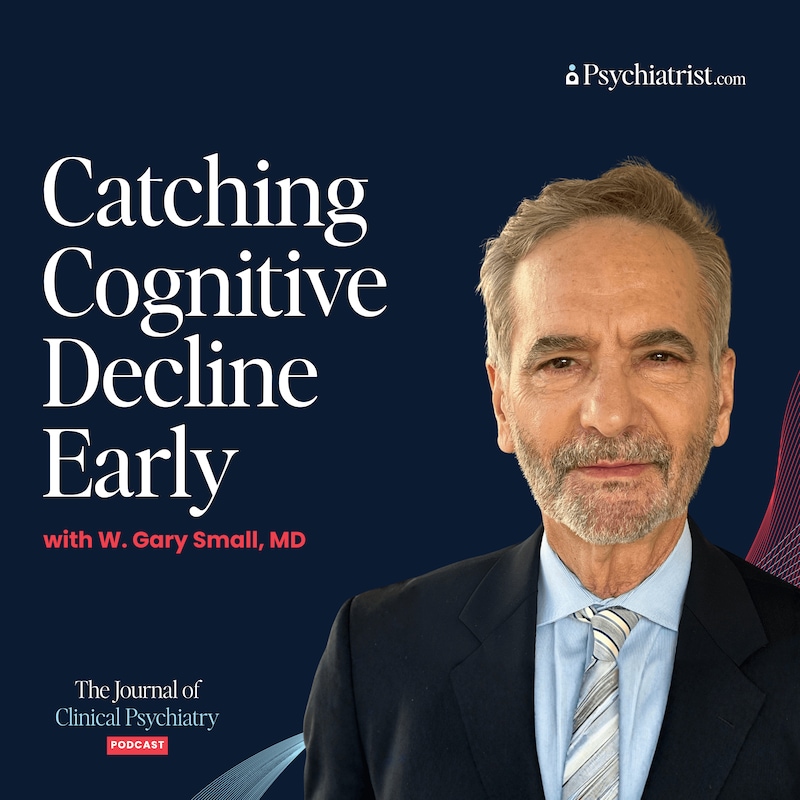
Dr. Gary W. Small, Director of Behavioral Health Breakthrough Therapies at Hackensack Meridian Health and Professor of Psychiatry and Behavioral Health at the Hackensack Meridian School of Medicine, shares decades of clinical and research insight as he discusses the early detection and treatment of age-related cognitive decline. In this episode, he explores the continuum from normal aging to mild cognitive impairment to dementia, the real-world role of biomarkers, the promise and limits of current pharmacologic options, and the lifestyle interventions—especially aerobic exercise—with the strongest data behind them.
For most patients, cognitive decline unfolds gradually rather than suddenly, and the tools we have to detect it have outpaced the clarity of what to do next. Amyloid and tau assays, PET imaging, and APOE genotyping are increasingly available in primary care, but they raise as many questions as they answer, and disclosure can have real psychological consequences. Emerging evidence points to inflammation as a shared mechanism across many forms of decline, with anti-inflammatory drugs, curcumin, Omega-3s, sleep, and exercise all converging on the same target. Dr. Small frames a pragmatic, patient-centered approach: educate, contextualize tests, rule out reversible causes, treat symptomatically and aggressively when appropriate, and above all, move.
🧠 PROTECT, DON’T REPAIR [05:10]:
“It’s easier to protect a healthy brain rather than try to repair damage once it becomes extensive.”
Dr. Small articulates the case for early detection and prevention that has shaped his entire career.
🔬 TREAT THE PERSON, NOT THE SCAN [23:40]:
“You don’t treat a blood test, you treat a person. The good news with some of these early anti-amyloid drugs—the brain scan looks great. The bad news is, you’re going to forget this conversation.”
Dr. Small urges clinicians to resist reflexive, biomarker-driven treatment and instead anchor decisions in symptoms, goals, and risk–benefit conversations.
🏃 ONE RECOMMENDATION ABOVE ALL [44:50]:
“Physical exercise. There’s no question about it. We have the strongest data on it… Get on the treadmill, or even better, get outside and take a brisk walk or jog.”
Asked for a single, universal recommendation for brain health, Dr. Small is unequivocal.
CHAPTERS:
00:00 - Introducing Dr. Gary W. Small
02:20 - From Math to Metaphysics to Medicine
03:30 - Finding a Path into Psychiatry
04:20 - The Road to Geriatric Psychiatry and the Case for Early Detection
06:10 - Defining the Continuum: Normal Aging, MCI, and Dementia
09:00 - Interpreting Cognitive Complaints and the Weight of Information
12:30 - The Biology of Cognitive Decline and the Role of Inflammation
16:00 - What Is Lost When We Wait, and the Curcumin Story
20:20 - The PCP’s Role in Early Intervention and Lifestyle Counseling
22:10 - Biomarkers and Imaging: From Research Tool to Clinical Reality
25:00 - Biomarker vs. Surrogate Marker
27:20 - Differential Diagnosis and the Brain as a Rheostat
29:30 - Pharmacologic Treatment: Symptomatic vs. Disease-Modifying Drugs
32:40 - Lifestyle Modification and the Evidence for Aerobic Exercise
35:40 - Train, Don’t Strain: Exercising the Mind Socially
37:50 - Knowing When to Refer and Building Specialist Relationships
41:00 - Comorbid Conditions and the Whole-Person Approach
42:40 - Looking Ahead: The Next 5–10 Years
44:20 - The Single Best Recommendation: Physical Exercise
45:30 - Closing Thoughts
Links:
Full transcript and show notes: https://www.psychiatrist.com/jcp/ep14-early-detection-cognitive-decline-gary-w-small/
Journal of Clinical Psychiatry: https://www.psychiatrist.com/jcp/
Dr. Gary W. Small: https://www.hmhn.org/find-a-provider
#CognitiveDecline #AlzheimersDisease #GeriatricPsychiatry #BrainHealth