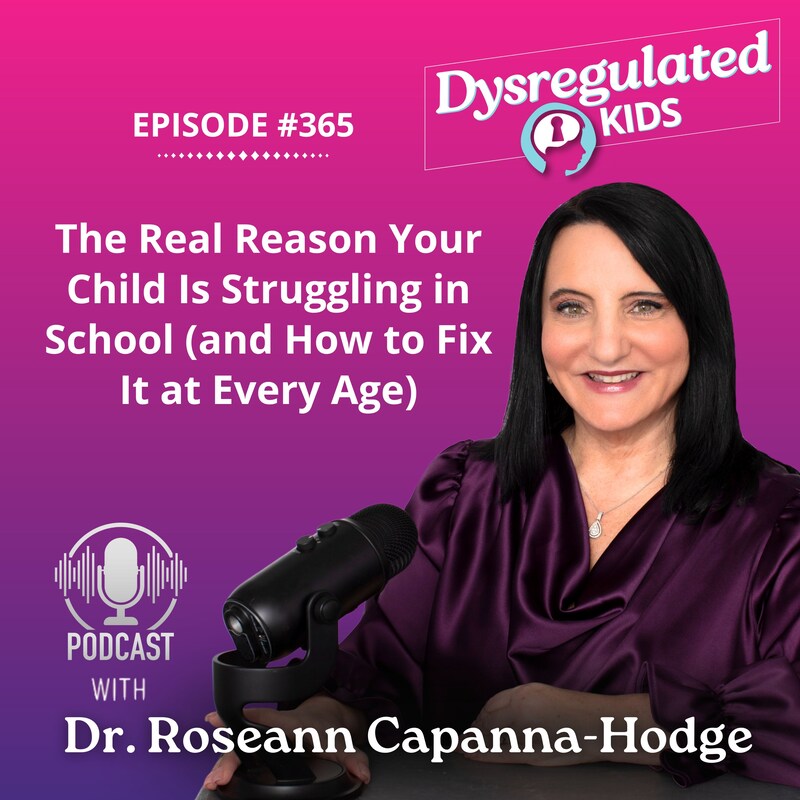
Struggling in school doesn't always mean a child is lazy, unmotivated, or not trying hard enough. In this episode, I explain why struggling in school is often connected to nervous system dysregulation and how Regulation First Parenting™ strategies can help children calm, focus, learn, and thrive.
Many parents feel frustrated when homework, transitions, testing, or classroom expectations turn into daily battles. The truth is that learning depends on regulation. When a child's nervous system is overstimulated or under-stimulated, even bright and capable students can have difficulty succeeding in school.
In this episode, you'll learn:
• Why children can be struggling in school despite being intelligent and capable
• How emotional dysregulation impacts learning, focus, and motivation
• Why nervous system regulation must come before academic success
• Practical ways to support children from preschool through college
When a child is struggling academically, the root issue is often not effort or attitude. Nervous system overload can lead to:
• Homework resistance and avoidance
• Emotional meltdowns during learning tasks
• Difficulty focusing and completing assignments
• Anxiety, perfectionism, or shutdown behaviors
Younger children may become overwhelmed by expectations that exceed their developmental readiness. Older children and teens often struggle with executive functioning demands such as planning, organization, time management, and emotional regulation.
How can parents help?
• Break large tasks into smaller, manageable steps
• Use short nervous system resets before homework or difficult tasks
• Validate feelings before offering solutions
• Partner with teachers and school staff to create supports
A child refusing homework may not be defiant. They may be overwhelmed and unable to access the skills needed to begin.
Behavior is communication.
It's not bad behavior—it's a dysregulated brain.
For middle school and high school students, chronic stress can show up as procrastination, anxiety, perfectionism, or declining grades. For college students, challenges with executive functioning, sleep, stress, and self-advocacy often become more visible.
A simple shift you can make today:
• Focus on regulation before academic performance
• Support executive functioning skills with structure and routines
• Encourage small, consistent self-regulation practices daily
• Work collaboratively with educators whenever possible
Only a calm brain can learn.
Whether your child struggles with focus, [motivation], anxiety, or executive functioning, Regulation First Parenting™ strategies can help create meaningful improvements at every age.
Support mental health with counseling, family support, or tools like Quick CALM for nervous system regulation.
Get the FREE Regulation Rescue Kit and learn practical tools to support your child through challenging moments.
Become a Dysregulation Insider VIP at www.drroseann.com/newsletter
Need a personalized plan? Use the free Solution Matcher to discover brain-based support for ADHD, anxiety, OCD, executive functioning challenges, and emotional dysregulation:
www.drroseann.com/help
Dr. Roseann Capanna-Hodge helps parents understand emotional dysregulation in children and teaches practical nervous system regulation and co-regulation strategies through her Regulation First Parenting™ approach.