Shownotes
James Gray Pope is the Distinguished Professor of Law and Sidney Reitman Scholar Emeritus at Rutgers University. Before joining Rutgers in 1986, he worked in a shipyard and represented labor unions at the Boston law firm of Segal, Roitman & Coleman. He has a doctorate in politics from Princeton and specializes in constitutional law, constitutional theory, and labor law.
Douglass Collective is a community of lawyers and activists working to promote a more inclusive vision of the Constitution. We believe that the abolition of slavery and the Reconstruction Amendments provide a powerful blueprint for a world where we are all more free. By raising awareness of the Constitution’s abolitionist roots, and building community and power around that vision, we will chart a more free and equal future.
Intro Music: "Fantastic Negro Type Beat 'Nigga Song Remix'" by BarzMakesBangers: https://youtu.be/egdj0jlsQHA?si=ddBCdOMxCvMIP4hT
Transcripts
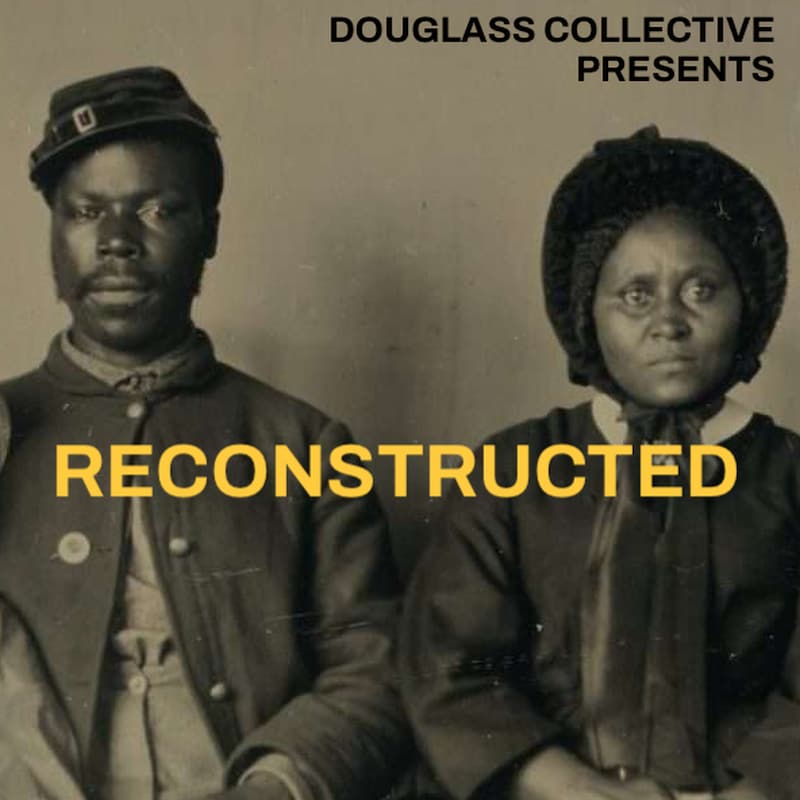
Welcome to Reconstructed, a podcast where we talk about the Constitution, how it shapes our lives, and how we can reclaim it as a force for good. I'm your host, Taonga Leslie and today we're tackling the history of race and labor in the law. To help us understand how these powerful forces intersect, we're joined by Professor James Pope. Professor Pope is a distinguished professor of law at Rutgers. Before joining Rutgers, he worked in a shipyard and represented labor unions.
at the Boston firm of Siegel, Reutman, and Coleman. He also has a doctorate in politics from Princeton. Professor Pope specializes in constitutional law, constitutional theory, and labor law. Welcome to the podcast, Professor Pope.
Jim Pope (:thanks for inviting me and thanks to all the listeners who are tuning in.
Taonga Leslie (:We're really thrilled for our discussion and to learn about your research. but I would love to learn a little bit about your background too. you're actually definitely the first scholar who I've interviewed with or even met who's worked in a shipyard. and so I'm curious if you talk a little bit about those career origins, how you ended up coming from there to work in labor, and then what made you want to become a professor.
Jim Pope (:I worked in the shipyard starting in nineteen seventy-six. I had worked in a few other factories, like a lot of other young people at the time. we had been active in the civil rights and anti war movements and were wondering how we could help things improve in this country, and a lot of us thought, well,
workplaces are where really different kinds of people come together, different races, colors, backgrounds of all type and it seemed like a good place to organize and a place also where
I go into the shipyard, it's:got me thinking in the direction of law. we the first day of the strike we had an enormous and spirited picket line at the main gate it was terrific. You could feel the power that we had by going on strike.
Then a a police officer comes down and serves an injunction, and the injunction limited us to a few spread-out pickets. our union officers and our union lawyers went along with that.
And so by afternoon we just had a few picketers at the gate, and the strike was deflated. The feeling of being involved in a common endeavor and having some power had fled. this felt really wrong. I didn't know anything about the law. I didn't know how to critique it. we hadn't done anything violent.
And that got me thinking, well, maybe I should go into law. I don't see we shouldn't be able to make some kind of legal fight out of this.
later on when I got to law school, became apparent that law and and this is what this I think this whole series of podcasts is about, laws are subject to many different interpretations and different uses, not just a set of rules. And so when I got to law school I got interested in going more deeply into it and
looking at provisions like the Reconstruction amendments that are vaguely worded and could have many different meanings and really thinking about that and trying to research it seemed to me like a worthwhile way to go.
Taonga Leslie (:between the shipyard and becoming a professor, you also did some union side work, right?
Jim Pope (:I did. I I worked for a labor side, a union side firm in Boston, and I actually at one point got to participate in an arbitration for my old workmates down at the shipyard.
Taonga Leslie (:and what made you, I guess, move from that work to maybe the more theoretical space?
Jim Pope (:when I got to law school I decided pretty quickly that I wanted to teach, but I also thought I shouldn't be teaching until I got some experience at doing what my students were gonna be doing. So actually by the time I took the job at the law firm, I already knew I wanted to teach. And the move toward teaching had to do with
Realizing how complex the legal environment is.
You know, you have lawyers, they don't necessarily act in the interest of the people that you would think they're supposed to act in. our union lawyers, for example, were hired and fired by our union officials. Our union officials weren't that good at the time. a lot is going on there. I didn't feel like we as workers in the shipyard really had good legal representation.
And the picket line and the injunction were just the most dramatic aspect of that. So I was interested in all of the different aspects of this, and especially in the different ways that you can look at a legal provision like a constitutional amendment and come up with very different answers to questions of what it means in practice.
Taonga Leslie (:One of the questions that I think has been in a lot of your scholarship is this connection between race and also the labor movement. and it's interesting because honestly when I was in law school at least, I don't know if it's changed a bunch, they were just very much separate threads of people. Like, you know, you'd have they're they're friendly to each other, but there is d definitely a
civil rights group of people and that was a certain lane there was kind of a labor group of people and that was their lane. what made you want to think about these questions together?
Jim Pope (:Well, at that time in nineteen seventy-six we were a lot closer to a period where there was a strong left movement in the United States and so the lines between those different cultures and tracts were less sharp.
at Harvard Law School at that time, the National Lawyers Guild had substantial groups in each of the sections
that was the period during which critical race studies got started. There were sit-ins at the law school, and so things were more integrated at that point than they are now, judging from my experience teaching at Rutgers. so that was part of it.
the race thing came out of shipyard experience, the interest in how race affected the labor movement and how it affected working people in the United States, came more out of the shipyard.
Taonga Leslie (:How did you see race showing up in in your workplace?
Jim Pope (:large industrial workplaces bring workers together of different races, colors, and at that time there weren't many women working in the shipyard, but a significant number were there and they tended to be
pretty strong people to be able to exist there in that male-dominated culture. And so we had the makings of movement there that could cross lines of race and gender.
But on the other hand, the racial polarization was intense. Some of the trades were virtually all white. They tended to be at the top of the hierarchy. The only trade that was predominantly workers of color was cleaners, the only really unskilled job in the yard. And so it was pretty much a replica of racism in the society at large. And on top of that, this was the middle of the Boston busing crisis. And
that's a distant memory.
people now, but at the time it was huge thing. The court had ordered the Boston schools to desegregate, and that provoked a lot of resistance from tight-knit working-class communities, especially South Boston, which had Irish
background you know, the people there felt like, you're shipping all the black folks here, why don't you ship out to Wellesley where all the rich white people are and stuff like that. So there was a lot
complicated and nasty, really nasty stuff going on. Race was on everybody's mind. If you wanted to do anything in the shipyard to promote the common good and you know, all of us had an interest in higher wages and safe working conditions, it was a very dangerous workplace. But if you tried to get people together on those issues, race would often intervene and make that very difficult.
Taonga Leslie (:I went to school in Boston, so the history of like tensions over race and class definitely is resonant. One thing that I think is really novel about your scholarship is you suggest that law has actually exacerbated or made it harder for us to organize across lines of race and class
I'm wondering, even in nineteen seventy six, did you see that? do you feel like that was part of the story, there?
Jim Pope (:Well that's a really interesting question because you certainly read my work correctly. I do think that. And yet at the time, I think with the situation in that shipyard at that time, the main this is a local union and a lot of
what I think makes it more difficult to organize across race lines is when you draw back a little bit and you're dealing with more than one workplace. At that time, this was where Title VII of the Civil Rights Act of nineteen sixty four
was still working itself out. in the shipyard there were d all these trades that were basically all white, and part of that was that Title VII hadn't been enforced strongly in those trades. The workers in those trades went back and forth to the construction industry where their unions had been lily white for a long, long time and were integrating only very slowly under intense
pressure but also where in the shipyard
There was a need for more tradesmen than were available in the construction industry. And so they were training people as well. And Title VII was operating there, and that meant that large numbers of workers of color were coming into the shipyard. those workers, especially black workers, tended to understand the need for cross-racial solidarity a lot more than a lot of white workers, and they provided
leadership and an energy for creating a cross-racial movement. So at that particular moment I would say that the law, particularly Title VII, had overall a very positive effect.
Taonga Leslie (:right, well let's get to the meat, 'cause I love the title of your article, the first article I want to talk to you about is Why There Is No Socialism in the United States, which I think a lot of people are scratching their heads over now. you go back to this moment after Reconstruction and you talk about this quote that I think is from
Du Bois, which basically says that the highest potential for a cross-racial labor movement in the US happened after the end of slavery and Reconstruction. it's a provocative claim but very interesting. and maybe we could start by just setting the scene. What was going on after the end of slavery that created some possibilities?
Jim Pope (:for the first time in United States history and you know, going back into the colonial era, workers of color and particularly black workers could organize without being murdered or tortured, whipped,
so all of a sudden black workers become a force to be reckoned with. prior to that, one of the things that I have a little trouble with today, even though I'm sympathetic with the impulse, is to morally judge everybody first.
And look at their circumstances second. So, you know, there's so many hideous acts of racism during this period, a lot of which are by workers themselves. It's very easy to condemn workers morally, but I think it's very important to consider the circumstances that they're And prior to the end of the Civil War, for workers who wanted white workers who wanted to consider allying with black.
black workers, it meant that you were going to support the struggles of workers who were not allowed to organize, were not allowed to vote, not allowed to strike.
And of course the demographics were that there were very, very few black people in the north, almost all the black people in the United States were in the south, so they were also separated geographically. Whereas after the Civil War, all of a sudden white workers have an incentive to ally with black workers.
you know, you could go way back, and I know we don't have time in this podcast, but we could go way back to Bacon's rebellion in sixteen seventy-six. There's always been a tendency of black workers and white workers to cooperate. That doesn't mean necessarily that there's deep solidarity, principled solidarity, the kind of solidarity we'd morally celebrate, but a willingness to cooperate.
Which is step one and is extremely important. ever since Bacon's rebellion, there have been efforts by elites to keep this from happening and very successful up to the end of the Civil War. But at the end of the Civil War, all of a sudden, black workers become a force to be reckoned with.
Taonga Leslie (:Since
you mentioned it, what was Bacon's Rebellion? 'Cause I very vaguely recall this being maybe
Jim Pope (:Ha ha ha.
Taonga Leslie (:before the Revolutionary War, but I'm not sure who it was or what they were
trying to do.
Jim Pope (:Yeah, well it's a it's a fascinating story. Nathaniel Bacon was a total opportunist, but he was a brilliant opportunist. What he really wanted to do, he had two plantations out on the frontier. Bacon's rebellion was sixteen seventy six. you know, that's basically a century before seventeen seventy six, you know, the American Revolution.
this was a long time ago in a universe far, far away. Bacon, because he had these two plantations out on the frontier, he wanted to fight Indians. He wanted to kill indigenous Americans. that's what Bacon was initially about. however, happened is in order to do that, he had to fight the colonial government of Virginia, which had a different policy.
a not a good one, but one that was different from Bacon's. And that struggle took on its own dynamic and Bacon found himself in bad need of troops. And so what he did was he promised freedom to indentured servants who would join his army. And that category at the time was not in a hard edged way distinguishable from
people enslaved in a chattel relationship. you actually had some black plantation owners who owned slaves, married white women. I mean not that many, but this was a fluid time.
Bottom lined, by doing that, Bacon brought black workers, well, workers, not the way we think of them today, but yes, black workers and white workers together, they cooperated in Bacon's rebellion. the rebellion went on for some time, they burnt down the capital of the colony, and they posed a very, very serious threat. And if Bacon, who was a charismatic leader, hadn't died in the middle of it, we'd
Don't know how it would have come out. Bacon was looking for allies in New England states. I mean, it was a it was a pretty crazy situation. But the point I wanted to make with Bacon's revolution was just that the impulse for black people and white people cooperate, fighting elites that are making their lives miserable, is one that will come out at different times when the opportunity arises. And one of those was after.
the civil war.
Taonga Leslie (:Okay, so we have this new opportunity 'cause now we have black free workers. one thing that's mentioned in this article was this narrative that black people came out of slavery and they were very bootstrapped and they were very like, I'm just trying to individually make my way. And so maybe
organized labor wasn't so appealing or top of mind. how were people getting organized? Were they trying to get into the white unions? Were they doing their own thing? Like how were they thinking about their relationship to organizing around?
Jim Pope (:I think it would be helpful maybe to take one step back from that. Most black laborers you know who had been working on plantations and their families had been working on c plantations, they did not want to be part of the working class. They wanted to own their own property.
And they thought that they were owed that as compensation for labor expended under slavery, which they had not been paid for. they thought they had a earned a right to land. And of course this is famous, you know all about it, and our audience I strongly suspect us too. The famous slogan forty acres and a mule.
came out of this and that was the main objective of black laborers immediately following the Civil War. the most radical of the radical Republicans did support this demand in Congress, but they failed to get a majority to drive it through. And there were even class divisions among black people. The more prosperous black people were were not pushing
land redistribution so hard, even Frederick Douglass was silent on the issue and he later recanted on that and said, oops, I I made a a mistake there.
But that was a moment that was lost. And that moment it was the possibility for black laborers in the South to own their own means of production, to be independent, economically independent of their former masters. it was only after that was not gonna happen.
that black workers turn to organization of all types
Taonga Leslie (:as they start to turn to organized labor, what did they look like? What were their organizations like and how did they sort of connect to the white labor movement that had already existed?
Jim Pope (:Yeah, some of them were explicitly labor organizations or explicitly unions. the Colored National Labor Union was kind of a federation, but also a national organization and it
Tried to organize workers throughout the southern states. There were black unions in a number of states, and those tended to be the organizations that would officially approach white unions. at the time there was a a national union federation, the first
labor federation that could claim to be national in scope in the United States called the National Labor Union. The leaders of the National Labor Union said we've got to include black workers and
As one National Labor Union publication put it, formerly enslaved workers would either become an element of strength or an element of weakness in the movement, and accordingly, quote, the interests of the labor cause demand that all working men be included within its ranks without regard to race or nationality. This was just light years ahead of the social attitudes of
most white workers in the United States and especially of of white workers in the South. But it was a an understanding on the part of those leaders that indeed black workers were now forced to be reckoned with.
by far the most effective black labor organizations were general purpose organizations. you can just imagine this, you know, you've got people who have been living on plantations toiling away, developing strategies of survival and strategies of resistance, conducting, slowdowns. slowdowns are very common form of
Resistance for enslaved people, but no experience at all of being out in the open, openly claiming rights, exercising those rights, no knowledge of those rights. And so what you have upon emancipation is kind of chaos with everybody trying to figure out what they're going to do. And into that situation comes an organization called the Union League, which had been a wartime loyalist association.
Association organized by white Republicans and some black Republicans, relatively prosperous free black people. But the Union League organizers came down and they started educating people on their rights. the organizers were both black and white.
the Union League became an organization of propertyless black laborers. And that organization did everything. It staged strikes, supported workers in bargaining with employers, organized paramilitary formations to escort people to the poles when terrorism was running high.
politically organized for the Republican Party, which incidentally called itself the Radical Party in the South. it was the Union Leagues, multi-purpose organizations that were the main form of labor organization.
Taonga Leslie (:to what degree were the overtures to actually collaborate successfully? Do you have examples of people actually being able to collaborate across the racial divide from that era?
Jim Pope (:Yes. the most successful efforts were in port cities in the South. you know the South was an overwhelmingly agricultural area but the port cities
had a a lot of workers working on the docks and in related fields like teamsters, mule drivers, warehouse people, some manufacturing. So it was in the southern port cities primarily that you would see labor organization, black labor organization especially developing. New Orleans was exhibit number one for that.
where you had black unions and white unions. There was no attempt to integrate the unions. As far as I know, I doubt the black workers wanted that, although I can't tell you that for a fact. I think they probably were happy to have their own organizations.
But the black workers and the white workers unions would lie on the New Orleans waterfront. And if the white workers decided to pursue a racially exclusionary course, the black workers could organize their scabbing and say, Look, y you know, you're excluding us from membership.
So you can't really blame us if we're going to work during your strike. And with tactics like that, the labor movement in New Orleans was able to operate pretty effectively for a while, and New Orleans was the city in the South with the least hardened racial core codes.
a lot of observers attributed that to the unions.
I like this quotation here coming from Samuel Gompers, who was not exactly radical or even liberal on labor and race for the most part, but
New Orleans general strike of: Taonga Leslie (:so I'm seeing these glimmers of possibility, obviously still a time of extremely brutal racism. so we're not trying to paint the utopia, but it seems like there's some possibility there.
How would you describe sort of like the attempts of I guess the elites in response to this? Like how were they thinking about the demands on labor and what strategies were they using?
Jim Pope (:Everything was tied together,
labor situation, the unions, the strikes were all tied into politics. And this was I would say, the biggest difference between the northern overwhelmingly white labor movement and the southern labor movement, which had a substantial number of black people in it in various kinds of formations.
the survival of black rights of any kind depended on the Republican Party prevailing in elections.
For northern white workers, many of them were Republicans, but many, many were not, especially in New York, immigrant workers were Democrats. The Democratic Party had greeted people off the ships and said we're the party of the immigrants and a lot of loyalties were built up there.
Although the leaders of the National Labor Union might say we've we've got to admit people and we really have to have a united labor movement, don't think white workers in the North really understood what that would mean, what it would take to keep black workers in action as allies.
the forces pushing them together were too weak across the geographic divide, the industrial divides, etcetera. And
I'm not really answering your question. Your question was, what are the elites doing? Well, they're trying reestablish white supremacy in the South, but the strategy they use, and this is in a wonderful book by Heather Cox Richardson called The Death of Reconstruction, the strategy they use is of course, constant racist.
propagandizing and electioneering for the White Man's Party as they called it, the Democratic Party.
But also appeals targeted at northern capitalists who were facing a lot of labor unrest during this period. One thing I think we need to grapple with in this period, and everybody needs to keep in mind that I don't think people do keep in mind very much is that the eighteen sixties, beginning of it, the Civil War is about to happen, at the end of it, the Civil War is over and all the Reconstruction Amendments are enacted.
It's a critical decade in American history. At the beginning of it, most economic actors in the United States are independent laborers. They're people who own their own
Productive property, they own their own farm or their artisans and they own their own shop. at the end of that period, wage workers outnumber the independent laborers by more than two to one. So this is a period of rapid flux. And this appeal by southern former slave owners to northern capitalists is sensationally successful.
workers are striking all over the place. It's lot of labor unrest. And northern capitalists say, Wow, all these workers they're just too unruly, we we can't deal with them. even people who had been labor progressives and racial progressives, like Yale Godkin just
a few years before are now saying socialism is the problem. South Carolina, which was sixty percent black and had an enormous black contingent in its legislature. It's socialist, all these people don't want to work, they just want to tax everybody else. so I think elites were coming together. The capitalists were coming together. had the divide of the war to overcome, but they didn't have a racial divide to overcome.
Taonga Leslie (:it's interesting and you've mentioned them a couple times, so maybe this is a good time to talk about the Reconstruction amendments themselves and the spirit in which they were passed. especially curious about the Thirteenth Amendment, because it abolishes slavery and also indentured servitude. but you've written that
at at least a point in time there was also a more expansive theory of of freedom of labor that was being talked about and and put forward by the Congress that passed it. you talk a little bit about that?
Jim Pope (:actually before the thirteenth amendment was declared ratified, and the thirteenth amendment says neither slavery nor involuntary servitude shall exist within the jurisdiction of the United States except as a punishment for crime whereof the person shall have been duly convicted
command comes down.
And the Southerners say, well, we can reestablish the domination of capital over labor. And I want to emphasize here that that's the kind of language that people used at the time. Today we don't talk much about conflict between capital and labor, but back then that was the way people talked. They understood that there was capital and there was labor. They had different views about how much the interests conflicted and who exactly was capital and who was labor.
But
That's the way they thought. So the former slave masters were out to regain control, and they enacted what we call today the Black Codes, which granted the newly freed people a huge number of rights they didn't used to have, and withheld a huge number of rights as well, including rights to contract, to own property, and to participate in.
assed the Civil Rights Act of:suddenly have a full set of civil rights, at least in theory. The
Southerners and their Democratic allies in Congress were totally outraged by this because the Thirteenth Amendment, only prohibited slavery and involuntary servitude. And they said, if you wanted to do that, you needed to pass an amendment that guaranteed civil rights, not one that just prohibited slavery and involuntary servitude. So the Republicans
they said the amendment directly prohibits denial of all the rights that are guaranteed in this Civil Rights Act, even though it only says slavery and involuntary servitude. Well, how could that possibly be?
Because slavery and involuntary servitude can be something other than one person being forced to serve another person.
You can get a result that includes the evils of slavery or involuntary servitude by skewing the background rules governing contract, property, participation in court, other kinds of rights, so that capital or employers or the white race has enormous advantages over other.
people, so much so that we think it amounts not to literal chattel slavery, but to a different form of slavery or involuntary servitude, because it takes away the right of the free people to enjoy practical freedom.
and they put the label on that slavery to society. That's or slavery they called it different things. Slavery to society, slavery to the community. Frederick Douglass used that phrase.
Taonga Leslie (:So this concept of slavery to society, how broad is that? are they mainly thinking about the people who were formally enslaved? Did they have thoughts that it might walk past that to to more general? Like what did that mean to them?
Jim Pope (:It was not a worked out theory.
one reason that I feel confident emphasizing it as much as I do is that it is the formulation that came out from the leading Republicans at the moment that they had to defend the Civil Rights Act. That is how they defended They said
Thirteenth Amendment directly prohibits denials of these civil rights because denials of these civil rights amount to slavery to society, or what Frederick Douglass had called slavery to the community. it's clearly in the thinking, and I dove into the sources, it's all over the place, including in key texts. So I think it gives us a handle.
Your question is what exactly did that mean? one thing about this period is everybody is figuring out how to respond to this new situation.
Everybody agreed on both sides, Democrats and Republicans alike, that the 13th Amendment eliminated the slave labor system and replaced it with a free labor system. one question is, what is slavery to society? And the other question is, what is its opposite? Freedom. What is a free labor system? And so they started to work that out on a case-by-case basis.
while the Civil Rights Act was pending in Congress.
The southern states and localities started enacting race neutral codes that instead of covering black people or people of color or non-whites or whatever terminology they were using, covering, say, agricultural laborers or some other category of people that was race neutral.
today we think about standards of proof and how do you prove that it's racially discriminatory. They didn't have any of that. So a race neutral law appeared to be a race neutral law at this point. And in the debates in Congress they treated it as such. also, of course, these race neutral laws could be applied to white people and in fact were
everybody knew they were mainly motivated by trying to control black labor, no question about it. But on the other hand, everybody also understood that they could be applied to white labor and you know, as I said, they later were.
they went at least that far to identify mechanisms, labor laws that they thought were unfair. And we could go into some of those.
Rules like the rule of entireties, according to which a worker would enter into a year-long contract, didn't get paid his or her wages until the end of the year. That was called entireties, which meant that if you wanted to quit, you had to sacrifice all of the labor, the wages for the labor you'd already expended. They thought that was pretty clearly a form of slavery or involuntary servitude, whether it was race specific or race neutral.
The same with specific performance of contracts, where if you violated your contract to work for an employer for X amount of time, then you could be forced to do so by court order. they thought that was clearly slavery or involuntary servitude, notwithstanding whether it was race-based or not. There are other examples, but
The question that you ask, how far would it go, was never really answered because there was a violent counter-revolution and Reconstruction was terminated before there was a full opportunity to develop the thinking under the Thirteenth Amendment.
Taonga Leslie (:one last example that I would love to hear you touch on before we get to how that ended, is maximum hours laws. But I I was very surprised see that
they'd considered
that 'cause it seemed so like nineteen thirties to me, maybe as like, okay, that's when we start thinking about labor conditions. how did they come weigh and consider that?
Jim Pope (:one thing I did mention in a piece was maximum wage laws. that's something that
Planters tried to do on their own. They formed cartels and they would agree among themselves not to pay their laborers more than a certain wage. So, under that system, you could quit your job and you could try to find another employer, but no employer was going to offer more than the wage you were getting from your current employer. And that posed an issue because
under the narrow view of the thirteenth Amendment, all it guarantees is the right to quit, right?
But what if you go out into the labor market and your right to quit doesn't get you anywhere except working for another employer who's paying you a sub living wage.
I think that might be a little far from where we're going, but I do think the maximum wage situation is a good example of why the right to quit, which is all you get under the narrow interpretation of the thirteenth amendment that prevails today in the courts, is not enough to
convey any kind of meaningful freedom of labor consistent with what anybody would call a free labor system.
Taonga Leslie (:so you've kind of described this time of reconstruction. they're figuring it out what they mean by these laws. There's also overtures from the South to try to get northern capitalists on board. So it's it seems honestly very dynamic. Like we don't know where the stories are gonna shake out. but you have argued that the Supreme Court actually
played a pretty big role in sort of the demise of Reconstruction. you specifically named this case Crookshank this case that the court definitely kind of gutted some possibilities. let's back up what was the Crookshank case about? I barely recall it from law school. and sort of what's its significance
Jim Pope (:Everybody knows Plessy versus Ferguson. In my mind, Plessy versus Ferguson is a pipsqueak compared to Crookshank for a lot of reasons. so Crookshank arose out of what I call, and some other people call, the Battle of Colfax Courthouse, which happened on Easter Sunday.
in:So usually when you think about armed white supremacists in the South killing black people, trying to suppress black rights, you think of the KKK.
A bunch of cowards who put on masks, ride at night, show up in force at one house where they outnumber the person in the house by twenty to one or whatever it is, and kill anybody, not random black people, but black people who stand up for their rights, black people who are really good farmers and are competing successfully economically.
passes the Enforcement Act of: ping the Ku Klux Klan. And by:But the white supremacists regrouped and came up with a different strategy. And the new strategy was they'd come out in daytime, they wouldn't wear masks, they would constitute themselves as regiments or leagues of virtuous citizens protecting the white people against the rapacious black people. The Battle of Colfax.
Courthouse was the big test for this shift. And the circumstances of the battle were basically that there had been a disputed election in Grant Parish. So many unique things about this, but it was a majority black parish, and the Democrats claimed that this majority black parish.
had elected officials from what they called the white man's party, the Democratic Party. Not very plausible, but that's what they claimed. they had threatened to take over so the white Republican sheriff of Grant Parish at the request of
very active black members of the community, some of whom had been part of a black militia. swore in a number of people, I think maybe about 70 or so as deputy sheriffs, and they convened at the courthouse to defend the courthouse. They dug a trench, a circular semicircular trench, and the white supremacists
Who had been mobilizing in all the surrounding counties converged, and there was a battle in which the white people outnumbered the black people by two to one or more, but more significantly they were enormously better armed with military-grade weapons versus the hunting rifles are muskets that a lot of the defenders had, if they had any firearms at all.
But they nevertheless held out for three hours in a sustained battle, eventually were overcome. the white supremacists well they ended up murdering thirty captives they took more than that some of them escaped. So that was the battle. this looked pretty good from the white supremacist point of view.
It looked like a strategy that could work. But there was the problem of prosecution for crime. In the end, three of the white supremacists were convicted by a mixed race jury in New Orleans of violating the federal rights of some of the defenders.
one of those people was Kruokshank. Krukshank was a prominent local planter who had led the people who had actually murdered the captives.
This was a serious threat to the white supremacists. This was the moment where the question was raised: is the rule of law going to prevail? The same question had been raised against the Ku Klux Klan, and it had been settled in a large number of trials, especially in South Carolina and Mississippi, and the result was: yes, the rule of law is going to be enforced.
the planters who had led KKK groups had to flee to Canada. The rank and file ended bearing the brunt of the prosecutions. But now with this new tactic, what was going to happen? So after the trial and the convictions, the
Two justices met, Justice Joseph P. Bradley of the United States Supreme Court was doing what they call riding circuit. That is, he was in the circuit that covered Louisiana.
And he accompanied the regular circuit judge, William Woods, during the trial, during parts of the trial, and afterwards. And Bradley wrote a decision that Woods dissented from that said that the prosecutor's complaint had
not stated a cause of action, that it had exceeded Congress's authority under the 13th, 14th, and 15th amendments. the two key things were that the charges, the indictment, had not alleged racial intent.
as opposed to political intent, and that it had not alleged in the case of the Fourteenth Amendment state action and also the Fifteenth Amendment, although less clear on the 15th. and also that the privileges or immunities clause of the 14th
did not incorporate the Bill of Rights. when you add these three things together, they made it impossible to enforce black rights in the South. Of course, this was only the circuit court. It still had to go up to the Supreme Court.
But Joseph P. Bradley was a leading justice on the court. And so most people thought that what he did in the circuit court was going to be what the Supreme Court was going to do. And that white supremacists took this as authorization, open season on black people, there was no way the law could be enforced to to prevent white people from murdering.
black people. And so they proceeded to conduct similar battles in
Numerous southern cities In eleven counties in Louisiana, they just went in in the daytime and openly ousted the Republican administrations and installed Democratic administrations. They moved into Mississippi. They did the same kind of thing in Mississippi, a big battle in Vicksburg. And finally, 60% black South Carolina.
Mississippi and Louisiana were also majority black at the time, but much more narrowly. South Carolina was a much tougher nut to crack, but they eventually did that also using these new tactics, open daylight challenges to Republican authority, implicitly
immunized from federal law enforcement first by Bradley's circuit court opinion and later by the Supreme Court opinion in eighteen seventy-six.
Taonga Leslie (:seems like Justice Bradley really plays the central role in creating this opinion.
that would have the practical effect of defanging the federal government's ability to protect rights in this space. why did you think that is?
Jim Pope (:well with Bradley I think it's relatively clear. Bradley had been a circuit judge in the South before the he was appointed to the Supreme Court. He stayed at the homes of members of the white elite. They hosted him and fed him and he became friends with them.
In eighteen sixty-seven he wrote a letter to his daughter that's just an astounding piece of writing. It goes on for six pages and basically lays out his philosophy of what was going on after the liberation of black workers in the South. And his position is entirely in sympathy with plantation owners who want to force.
black workers to work. he goes through, he says, Well, you you know, how are they gonna get these people to work? Because once people are liberated
They say, wow, I can go to another city. I can find my lost family member. I can hook up with them and I can do things. I don't have to stay here. Bradley views that as a very evil thing because the workers are leaving the plantations and the plantation owners are left without their workforce.
Truly astounding is how to return the labor of the South to its normal condition. Well, the normal condition of the labor he's talking about is slavery. in answer to the argument that maybe the planters ought to pay them good wages. He
completely buys the planter's position that black workers cannot be induced to work by mere wages. They have to be forced to work. This is a Republican who's soon to be appointed to the Supreme Court and is in the key position
when it's time to decide Cruikshank. He writes the decision it for the circuit court. US Supreme Court follows his opinion right down the line. basically Bradley and there's considerably other evidence in his background he felt that solidarity of
Northern and Southern capitalists, even though northern and southern capitalists were culturally and industrially.
Mostly quite dissimilar, with the southern ones based primarily in agriculture, northern ones based primarily in industry. Culturally, the Southerners not part of the Republican free labor, opportunity, economic freedom at all, rather an aristocracy that used to be despised by northern capitalists. But Bradley saw past that and as Heather Cox Richardson document.
documents for the non-Supreme court actors, that class solidarity proves strong.
Taonga Leslie (:knowing sort of how this has been handicapped, what could the Thirteenth Amendment mean for labor rights today? Do you see any untapped potential there that we could still connect to?
Jim Pope (:the twentieth century labor movement used the Thirteenth Amendment
in a way similar to the way that the second amendment has been used by the gun rights movement, the fourteenth amendment was used by the twentieth century civil rights movement, the labor movement of the twentieth century used the thirteenth amendment to argue
Maybe the simplest claim to put out there that the right to strike is guaranteed by the Thirteenth Amendment. nobody disputes that the Thirteenth Amendment guarantees the right to quit. does it guarantee the right to associate with your fellow workers in ceasing work? you know, there's a lot of
technical questions involved in that, but the case for a thirteenth amendment right to strike is especially strong, partly because if you're interested in original meaning, the Republicans
were confronted by the largest strike in American history in eighteen sixty and Abraham Lincoln was running for president. he said, this is an illustration of the difference between freedom and slavery. You you have the right to strike. the case for that I think is strong. more generally once you
Move beyond, as the Republicans clearly did, move beyond the idea that the thirteenth Amendment covers only compulsory servitude of a particular person for a particular person, then you have to distinguish ordinary laws that are acceptable from those that confer so much power on
employers that they amount to subjecting workers to involuntary servitude. Where to draw the line becomes an issue. There's a huge amount of scholarship out there discussing all kinds of issues, especially immigrant workers' rights, for example, but also other labor rights.
Taonga Leslie (:still to this day, the labor movement and civil rights movements don't have as great a relationship as they could. What can we learn about how to build successful cross racial movements from the history that you've studied?
Jim Pope (:That is a terrific question.
when I think of it as the civil rights movement, I have more trouble answering the question than the way you put it in a previous communication, which was racial justice. I think bridging the racial justice and labor movements is primarily a matter of
how to make the labor movement as inclusive as possible, how to deal with racial divisions. Right now in the United Auto Workers, for example, there are a lot of supporters of Donald Trump, and yet you have a leadership of the auto workers that's extremely progressive on
all issues including race, how do you deal with that? that is a very difficult question. But I I think at bottom it depends on developing inclusive cultures and focusing on the workers in the workplaces and not so much on union leaders and staffers
I mainly wanna punt on that. I wanna say read Bill Fletcher Jr.'s book, Solidarity Divided. Bill Fletcher has a lot of articles on inclusiveness in the labor movement. can't lose
going in that direction. But I'd also like to say that I feel based on the differences in my experience back in the 70s and today, the way that people who support both racial justice and labor
Is that back in those days what really mattered was who was putting their bodies on the line for solidarity. And nowadays it seems like people are more concerned with the language people use. There's a tendency, I think, to really come down hard on people who are actually quite close to you politically. left just seems to love to eat its own.
I would say, you know, for one thing, everybody needs to treat people with respect, including people who haven't been socialized you know, to look at what people are doing and not so much whether they are using the correct language and to approach people where they're at and listen to people.
I have to say I didn't do a very good job of that back in the day, but I really think that's just so important to listen to people white people need to listen to black folks, black folks need to listen to white folks, but mainly leftists need to listen to leftists, progressives need to listen to progressives and stop stop attacking each other.
Jim Pope (:Recommend Michael Goldfield's The Color of Politics, which goes through American history basically up until the new millennium, and shows that at certain points in time, and this seems like one of them, the ordinary operation of institutions is weakened as a force, and people are considering alternatives that they wouldn't normally consider, like right now.
Democratic socialists keep winning elections in spite of strong opposition from even Democrats, mainstream Democrats who want things to go on as before. And of course, the right wing is completely destabilizing things. This seems like one of these moments in history like Reconstruction, like the New Deal, maybe like the populist era, maybe like the civil rights era where
possibilities are open.
Taonga Leslie (:Thank you so much for joining us on the podcast, Professor Pope. really appreciate you.
Jim Pope (:Thank you so much for inviting me and yeah, thanks for everybody who managed to hang in this long.