Shownotes
AI-driven podcasting is revolutionizing the legal industry, offering a powerful tool for busy professionals to establish their authority with minimal effort. In this episode, we explore how AI technology is enabling lawyers, especially immigration attorneys, to create consistent and accessible content without the hassles of traditional media production. With over 60% of legal professionals trying AI podcast generators in the last year, it’s clear that this shift is not just a passing trend; it’s a game-changer. We discuss the significant time and cost savings involved, as well as the ability to reach diverse audiences through multilingual content.
Join us as we dive into the specifics of how this technology can streamline your workflow and boost your practice’s visibility in an ever-evolving field.
The episode takes a thorough look at how AI-driven podcasting is revolutionizing the legal landscape, particularly for immigration attorneys. With the legal field facing a myriad of challenges from overwhelming caseloads to rapidly evolving laws, the discussion revolves around how AI can streamline the process of establishing authority and trust with clients. Drawing from the article by Lorita Marie Kimble, we explore the staggering statistic that over 60% of legal professionals have tried AI podcast generators, a clear indicator of a significant shift in the industry.
We break down the traditional pain points of podcasting—such as the need for expensive equipment, considerable time investment, and the daunting task of audio editing—and contrast them with the effortless capabilities offered by AI. This technology allows attorneys to focus on what they do best while AI handles the production aspects, enabling them to generate weekly content that keeps them relevant and accessible to clients. The episode also emphasizes the critical role of accessibility in legal communications, highlighting how AI tools can provide content in multiple languages and formats, thereby reaching a broader audience.
As we discuss various real-world success stories, it becomes evident that harnessing AI in podcasting is not just about saving time; it's about expanding market reach and enhancing client relationships. The overall message is clear: the future of legal content creation is here, and embracing AI tools can lead to significant growth and authority in the crowded legal marketplace.
Takeaways:
- AI-driven podcasting is revolutionizing the legal field by allowing professionals to create authoritative content effortlessly.
- With over 60% of legal professionals using AI podcast generators, the adoption rate indicates a significant shift in the industry.
- AI technology enables busy attorneys to produce quality podcasts without the need for extensive technical skills or equipment.
- The ability to produce regular content helps establish a consistent presence, enhancing client trust and authority in the legal sector.
- Automation of podcast production saves attorneys both time and potential earnings, allowing them to focus on their core work.
- Accessibility features in AI-driven platforms ensure content reaches diverse audiences, breaking language barriers and catering to various needs.
Links referenced in this episode:
- www.newmedialocal.com
- https://news.newmedialocal.com/unveil-the-secret-of-ai-driven-podcast-creation-for-easy-production (Source Article)
Companies mentioned in this episode:
- New Media Local
- Lorita Marie Kimble
Transcripts
Welcome to the Local Content Studio, an AI generated podcast sponsored by New Media Local.com, an AI powered digital media agency.
Speaker A:Welcome back to the Deep Dive.
Speaker A:This is where we break down the most important articles and research to get you straight to the insights that matter.
Speaker A:Today we're looking at a huge technological shift that's really reshaping a very high stakes industry, the legal field specifically, we're diving into how AI driven podcasting is becoming this, well, this massive tool for building authority.
Speaker A:And our mission here is to figure out how this tech can turn a super busy legal professional into a trusted voice, but with, you know, minimal effort.
Speaker A:We're pulling our insights from a great article by Loretta Marie Kimball, who's the founder of New Media Local.
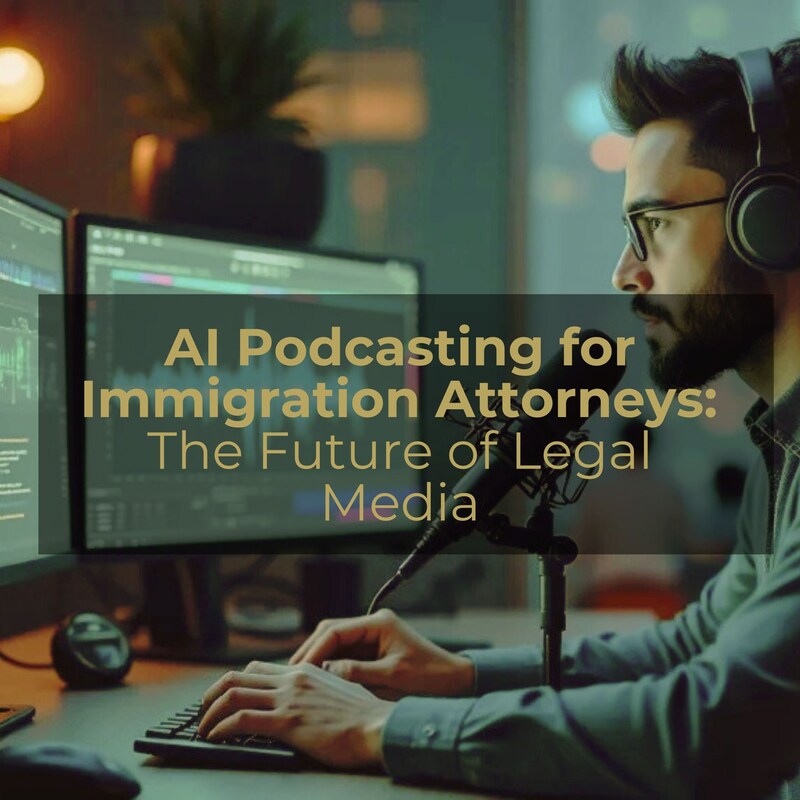
Speaker A:It's called AI Podcasting for Immigration.
Speaker A:The future of legal media and central.
Speaker B:Idea here is, honestly, it's fascinating.
Speaker B:The barrier to creating media, to becoming an authority has just crumbled.
Speaker B:We're watching professionals, people whose entire value is their knowledge, find a way to scale that knowledge and build client trust without ever touching sound engineering software.
Speaker A:And the data really backs this up.
Speaker A:The sources point to something pretty surprising.
Speaker A:Law is one of the fastest growing sectors for this exact technology.
Speaker A:Get this, over 60% of legal professionals have tried out an AI podcast generator just in the last year.
Speaker B:60%.
Speaker A:That's not just a trend, that's a tectonic shift.
Speaker A:So let's unpack this.
Speaker A:Why is that adoption rate so incredibly high?
Speaker B:Well, it makes perfect sense when you look at that.
Speaker B:The specific group the article focuses on, immigration attorneys, they're dealing with what you could call a perfect storm of professional challenges.
Speaker B:Okay, first, you've got immense caseloads.
Speaker B:It's pretty standard.
Speaker B:Second, the laws they work with are changing.
Speaker B:I mean, sometimes daily.
Speaker A:Right.
Speaker A:Constantly in flux.
Speaker B:And third, there's this critical need for really clear communication with clients who are often anxious and need complex info delivered simply and often in multiple languages.
Speaker A:Which is why traditional media just doesn't work for them.
Speaker A:It's an information overload problem meeting a severe time poverty problem.
Speaker A:So AI becomes a solution.
Speaker A:It lets them launch and more importantly, consistently grow a podcast that builds authority without them needing a production team or, you know, learning to edit audio.
Speaker A:The key is consistency without the effort.
Speaker B:And that's what's driving the surge.
Speaker B:It's the competitive edge that automation gives you.
Speaker B:You know, in the past, a busy solo attorney might, what, put out 10 podcast episodes a year?
Speaker B:Maybe 12 if they're lucky.
Speaker B:Right.
Speaker B:With AI Automation, they can publish 52 a weekly professionally produced source of authority, they're instantly out.
Speaker B:Competing rivals still stuck in that old manual process.
Speaker A:It's not just about being faster, it's about being ever present.
Speaker A:Your voice, or I guess your digital voice clone is there, answering FAQs 24, 7, reaching people all over the world.
Speaker B:Long after you've closed the office for the day.
Speaker A:Okay, but let's ground this a bit.
Speaker A:Before AI, what were the actual pain points?
Speaker A:I mean, traditional podcasting sounds daunting.
Speaker B:Oh, it was.
Speaker B:You had to buy all this complex gear, find hours of your billable time to record in a quiet space.
Speaker B:And then the worst part, the editing.
Speaker B:The editing.
Speaker B:Learning to edit audio is a notoriously steep and frankly frustrating learning curve.
Speaker B:Most professionals just don't have time to become sound engineers.
Speaker A:No way.
Speaker B:And that brings us to the time and money savings, which is really the most compelling argument here.
Speaker B:The time saved with these AI platforms isn't just a little bit, it's exponential.
Speaker B:They automate almost every step.
Speaker B:We're talking intelligent script assistance, hyper realistic voice production, all of it.
Speaker A:So let's put a number on that.
Speaker A:What once took, say, 10 to 15 hours of an attorney's time per episode.
Speaker B:Yeah.
Speaker A:Now takes what, minutes?
Speaker B:And think about the value of that time.
Speaker B:A lawyer billing at, let's say, $300 an hour, spending 10 hours on production, is losing $3,000 in potential billings.
Speaker A:For one episode?
Speaker B:For one single episode.
Speaker B:So the AI doesn't just save you the cost of hiring an editor, it saves you the opportunity cost of your own time.
Speaker A:That's where it gets really interesting, right, the cost contrast.
Speaker A:Yeah, traditionally you've got studio fees, editing costs, maybe hiring voice talent.
Speaker A:It could be hundreds, even thousands per episode.
Speaker B:And that's just not sustainable for smaller firms trying to grow their content.
Speaker A:But with the AI driven model, you.
Speaker B:Get rid of most of that.
Speaker B:These platforms run on affordable monthly subscriptions or pay as you go models, so a solo attorney can generate professional scalable content without that huge upfront investment.
Speaker B:The economics of it just it works.
Speaker A:The financial argument is definitely strong, but the real value, the real roi, comes when that content actually reaches the people who need it.
Speaker A:And that brings us to accessibility, which in a field like immigration law, is everything.
Speaker B:It's absolutely critical.
Speaker B:The audience for this kind of content is by its very nature incredibly diverse.
Speaker B:You have different language preferences, people with limited time, other accessibility challenges.
Speaker B:A standard English only podcast just isn't going to establish you as a comprehensive authority.
Speaker A:So how does the AI solve that accessibility gap?
Speaker B:It's all in the features that Handle complexity just seamlessly.
Speaker B:The platforms have realistic voices in multiple languages, automated and really accurate transcription.
Speaker A:So you get closed captions automatically.
Speaker B:Ah, exactly.
Speaker B:Closed captions.
Speaker B:Easy sharing tools, content formatted for any device.
Speaker B:It makes sure your expertise reaches every potential client, no matter where they are or what language they speak.
Speaker B:It's instant market expansion with zero extra effort.
Speaker A:That's incredible.
Speaker A:It's not just about client care.
Speaker A:It's a business growth tool.
Speaker B:It is now.
Speaker B:For anyone listening who's thinking about this, you have to look past the marketing and at the key technical features that really make this work.
Speaker A:Okay, what should people be looking for?
Speaker B:First?
Speaker B:The voice technology.
Speaker B:It has to be top tier.
Speaker B:We are way beyond those robotic voices from a decade ago.
Speaker B:The best platforms let you customize everything.
Speaker B:The tone, the pacing, the pitch each, even the accent.
Speaker A:And I have to pause you there because the most mind blowing part of this is the voice cloning.
Speaker A:I'm a little skeptical about the time investment here.
Speaker A:Does the source say how long this takes to set up?
Speaker A:A busy attorney can't spend days in a studio.
Speaker B:That's a great question.
Speaker B:And it's a critical one.
Speaker B:The best platforms, the ones the source highlights, only need a short sample.
Speaker B:We're talking maybe 15 minutes of you speaking, recorded once.
Speaker A:15 minutes?
Speaker B:Just once.
Speaker B:The AI takes that brief recording and creates a digital avatar of your voice that can then read hundreds of hours of new content in your exact tone and cadence.
Speaker A:So 15 minutes of initial work for basically infinite perfectly branded audio content.
Speaker A:That sounds like the ultimate unfair advantage.
Speaker B:It is.
Speaker B:The second thing to look for is ease of use.
Speaker B:The interface has to be simple drag and drop guided steps.
Speaker B:The whole point is to avoid a technical learning curve.
Speaker A:Right.
Speaker A:It has to handle the quality control for you.
Speaker A:Like making sure the volume is right for Spotify and Apple podcasts.
Speaker B:Precisely.
Speaker B:And the third feature, which is maybe the most important for a field like immigration law, is the intelligent input.
Speaker B:The NLP powered suggestions.
Speaker A:What does that mean exactly?
Speaker A:It's not just suggesting generic topics, is it?
Speaker B:No, that's the nuance.
Speaker B:It's an AI that scans for new Federal Register changes or flags recent court rulings, and then it integrates those facts directly into suggested script outlines for you.
Speaker A:So it's doing the initial research.
Speaker A:It ensures your content is up to the minute, relevant and legally sound.
Speaker B:It's a huge time saver.
Speaker B:And finally, you need robust advanced social media integration.
Speaker B:The platform can't just spit out an audio file.
Speaker B:It needs to schedule posts, create those little shareable audio snippets with the animated captions and push it all out automatically to LinkedIn and Twitter.
Speaker B:That's how you maximize visibility.
Speaker A:Okay, so that's the whole digital marketing playbook.
Speaker A:Automated.
Speaker A:Let's walk through the actual workflow step by step, from idea to distribution.
Speaker B:Let's do it.
Speaker A:Step one, ideation.
Speaker A:The attorney quickly looks at the timely topics the AI suggests.
Speaker B:Step two, scripting.
Speaker B:They write or just refine the script.
Speaker B:And the AI helps make sure the legal terms are right and can even offer instant translations.
Speaker A:Voice selection.
Speaker A:You choose your cloned digital voice for that authentic, consistent brand sound.
Speaker B:Step four is where the magic happens.
Speaker B:Podcast generation.
Speaker B:The platform takes the script, applies the voice, does all the post production, noise reduction, leveling, and produces the final episode in minutes.
Speaker A:And finally, step five, publishing.
Speaker A:One click, it goes to Apple, Podcasts, Spotify, and it creates and posts all those social media clips.
Speaker A:A multi day process becomes a seamless workflow.
Speaker B:And we have real world proof this works.
Speaker B:The sources provide some very specific examples of the business results.
Speaker A:Yeah, like the attorney in Los Angeles.
Speaker A:She used an AI generator to launch a weekly Q and A series.
Speaker A:That consistency, which she couldn't have done manually, grew her client base by 25%.
Speaker B:25% in six months.
Speaker B:That's massive growth driven purely by content automation.
Speaker A:And then there's the attorney in Houston.
Speaker A:He specifically credited the AI's voice customization and translation for helping him bridge language gaps.
Speaker B:By offering content in Spanish and Vietnamese, he reached whole new immigrant communities.
Speaker B:He expanded his entire market.
Speaker A:So what this all means for you, the professional listening to this, is that this technology does the heavy lifting for you.
Speaker A:From research and scripting to editing and sharing.
Speaker B:It ensures your message, keeps its authenticity through these hyper realistic voices while getting you maximum visibility.
Speaker B:It's about being everywhere without burning out.
Speaker A:The future of professional content isn't defined by how big your budget is anymore.
Speaker B:It's defined by how quickly and consistently you can share your expertise.
Speaker B:When you adopt these tools, you're getting a marketing asset that is always working for you.
Speaker A:So if you're feeling inspired by all this, here's a final thought to take with you.
Speaker A:Think about a holistic approach.
Speaker A:It's not just about podcasts.
Speaker A:What if a full suite of AI tools could automate your blog posts, your social media graphics, your video shorts, all of it.
Speaker B:You're automating your entire content ecosystem.
Speaker B:The future of professional content isn't on its way.
Speaker B:It's here.
Speaker A:And since this is our last deep dive of the year, it really is the perfect time to start planning for growth.
Speaker A: In: Speaker B:Absolutely.
Speaker B:This is the ideal time to be proactive about building your authority for the year ahead.
Speaker A:So if you're ready to unlock this kind of effortless AI driven content creation, if you want to grow your authority and stop putting off this technological leap, your next step is very, very simple.
Speaker B:You need to get started where the experts are.
Speaker A:Discover how the AI powered podcast show options from New Media Local can elevate your entire practice in the new year.
Speaker B: and client growth all through: Speaker A:Newmedialocal.Com take that step today.
Speaker A:We'll see you next time for the next deep dive.


